- Base Value(2025): 951.8 Mn
- Forecast Value (2035): 1408.9 Mn
- CAGR (2035): 4.0%
Dog Carrier Bags Market Outlook 2025 to 2035
The global dog carrier bags market is projected to increase from USD 951.8 million in 2025 to USD 1,408.9 million by 2035, with an annual growth rate of 4.0%. This growth trajectory shows how dogs have changed from being just pets to beloved family members.
This change has led to a demand for products that are comfortable, stylish, and practical for including dogs in everyday life and travel. The market now focuses on convenience, safety, and looks, pushing manufacturers to create new materials, designs, and functions.
Quick Stats on Dog Carrier Bags Market
- Dog Carrier Bags Market Size (2025):USD 951.8 million
- Projected Dog Carrier Bags Market Size (2035):USD 1,408.9 million
- Forecast CAGR of Dog Carrier Bags Market (2025 to 2035):4.0%
- Leading Bag Type Segment of Dog Carrier Bags Market:Soft Sided Carriers
- Leading Price Segment of Dog Carrier Bags Market:Economy
- Key Growth Regions of Dog Carrier Bags Market:United States, China, Japan
- Prominent Players in the Dog Carrier Bags Market:Sleepypod, Texsens, U-Pet, ALEKO Products, Pawaboo, Others
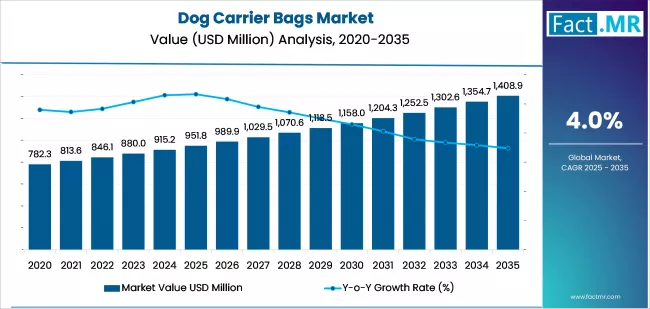
Dog Carrier Bags Market Market Value Analysis | Source: Fact.MR
| Metric | Value |
|---|---|
| Industry Size (2025E) | USD 951.8 million |
| Industry Size (2035F) | USD 1,408.9 million |
| CAGR (2025-2035) | 4.0% |
Source: Fact.MR analysis. Updated Sep 1, 2025
The global dog carrier bags market is poised for moderate yet consistent growth, with market value expected to increase from USD 951.8 million in 2025 to USD 1,408.9 million by 2035, expanding at a CAGR of 4.0%.
On a year-over-year basis, this translates to a steady incremental rise, driven by evolving pet ownership patterns and increasing consumer preference for convenience-driven, lifestyle-oriented pet products.
The growing humanization of pets has elevated demand for travel-friendly solutions, particularly among urban pet owners who frequently travel, commute, or engage in outdoor activities with their pets. As a result, functional and airline-compliant carrier bags are gaining prominence.
Rising environmental consciousness among consumers is accelerating the shift toward sustainable materials such as recycled fabrics and organic fibers, prompting manufacturers to innovate in both design and materials.
The integration of smart features such as ventilation systems, modular storage, temperature control, and GPS tracking reflects the increasing emphasis on both pet comfort and owner convenience.
Moreover, digitalization and the expansion of e-commerce and omni-channel retail strategies are enabling broader product accessibility and customization, strengthening market penetration globally.
While the projected CAGR suggests a maturing market, the category remains dynamic, fueled by premiumization trends, product innovation, and shifting consumer behavior.
The market's long-term trajectory remains positive, supported by the convergence of functionality, sustainability, and lifestyle alignment, positioning dog carrier bags as a key component within the broader pet accessories market.
Analyzing Key Trends in the Global Dog Carrier Bags Market
Drivers and Challenges in the Dog Carrier Bags Market
The dog carrier bags market has witnessed considerable growth over the past few years, driven by shifting consumer lifestyles, rising pet ownership, and the premiumization of pet care products. As pets continue to be regarded as integral family members, their comfort and safety during travel has become a priority for many households.
The market also faces hurdles related to cost, regulation, and competition from substitutes. Understanding both the drivers and challenges is crucial to assessing the market’s trajectory and identifying opportunities for stakeholders.
Rising Pet Humanization and Lifestyle Changes
The growing perception of pets as family members has transformed purchasing behavior among consumers. Pet owners increasingly seek products that ensure safety, comfort, and convenience for their pets, mirroring how they shop for their own needs.
This shift has created strong demand for premium dog carrier bags that provide features such as breathable materials, padded interiors, and ergonomic designs. Such products are no longer viewed as luxuries but as essentials for maintaining pets’ well-being during travel.
Additionally, urbanization and busy lifestyles are fueling the demand for portable and stylish pet accessories. With more pet owners commuting in cities, traveling via public transport, or embarking on short vacations, the utility of carrier bags has become more pronounced. Integrating pets into daily routines, whether at workspaces or social outings, further reinforces the need for reliable and fashionable carriers.
Growth of E-Commerce and Omni-Channel Retail
The rapid expansion of e-commerce has opened new avenues for dog carrier bag sales. Online platforms provide consumers with access to a wide range of designs, price points, and brand options, often supported by customer reviews and convenient home delivery. This accessibility has empowered buyers to make informed purchasing decisions, contributing significantly to the market’s growth.
Moreover, the adoption of omni-channel retail strategies by established pet brands is boosting market penetration. By blending offline experiences with online convenience, these companies enhance consumer engagement and trust.
Discounts, seasonal promotions, and loyalty programs further incentivize purchases, creating a steady demand pipeline for dog carrier bags across diverse customer segments.
Rising Travel and Tourism with Pets
The increase in pet-friendly tourism is a strong growth catalyst for the dog carrier bags market. Airlines, hotels, and transport services are gradually becoming more accommodating to pets, leading to a surge in the need for secure and regulation-compliant carriers. Pet owners who wish to include their dogs in vacations or relocations prioritize high-quality bags that adhere to safety standards while ensuring comfort.
Domestic travel and short-distance outings with pets are also on the rise. Whether it is a road trip, a visit to the vet, or a shopping excursion, portable carriers are indispensable for many owners. This growing culture of traveling with pets continues to drive steady demand for functional and stylish carrier bags worldwide.
High Cost of Premium Products
While the demand for high-quality carrier bags is increasing, their elevated price points act as a barrier for a large segment of pet owners. Premium carriers often incorporate advanced materials, durability features, and innovative designs that drive up manufacturing costs. For price-sensitive consumers, particularly in emerging economies, such carriers may be perceived as non-essential, restricting market penetration.
Additionally, with inflationary pressures on consumer goods, discretionary spending on premium pet products is under scrutiny. Many owners still prioritize core necessities such as food and healthcare over accessories, which limits growth potential for higher-end dog carrier bags. Manufacturers must therefore strike a balance between affordability and quality to expand their consumer base.
Stringent Airline and Transport Regulations
A major challenge faced by manufacturers is the variability of airline and transport regulations related to pet carriers. Different airlines impose distinct size, weight, and design requirements, making it difficult for companies to create universally compliant products. Consumers often face confusion about whether a carrier will be accepted during travel, which can discourage purchases.
Moreover, frequent changes in safety and hygiene rules further complicate the market landscape. Manufacturers must constantly adapt their designs and invest in testing to remain compliant, which increases production costs and time-to-market. This regulatory complexity acts as a bottleneck for both consumers and producers.
Competition from Substitutes and Informal Products
The dog carrier bags market also contends with competition from substitutes such as traditional cages, crates, and strollers, which serve similar functions at different price ranges. Many pet owners, especially in rural or semi-urban areas, may opt for these alternatives due to their lower cost and familiarity. This makes it difficult for carrier bags to achieve mass adoption across all demographics.
The presence of unorganized and low-cost local manufacturers further adds to the challenge. These products, often made with cheaper materials, are widely available in informal markets and appeal to cost-conscious buyers. While they may lack durability and safety features, their affordability undercuts the sales of branded and premium products, hindering market expansion.
Regional Trends of the Dog Carrier Bags Market
The global dog carrier bags market reflects distinct regional dynamics shaped by cultural preferences, economic conditions, and pet ownership trends. North America dominates due to high pet ownership rates and significant spending on premium, fashion-forward carriers.
A culture of pet humanization in the United States and Canada drives demand for products that combine comfort, safety, and style, with established brands competing alongside boutique startups offering unique designs. In Europe, sustainability and ethical production take center stage.
Consumers in markets such as Germany, France, and the United Kingdom increasingly seek eco-friendly carriers made from recycled or organic materials, creating opportunities for brands that emphasize environmental responsibility.
The Asia Pacific region is emerging as the fastest-growing market, fueled by rapid urbanization, rising disposable incomes, and the growing trend of treating pets as family members. Countries like China and Japan are key drivers, with urban pet owners showing a preference for compact, convenient carriers suited to smaller breeds and modern lifestyles.
The blend of traditional and contemporary ownership practices, combined with demand for innovative, practical, and aesthetically appealing designs, positions Asia Pacific as a dynamic growth hub in the global landscape.
Country-Wise Outlook
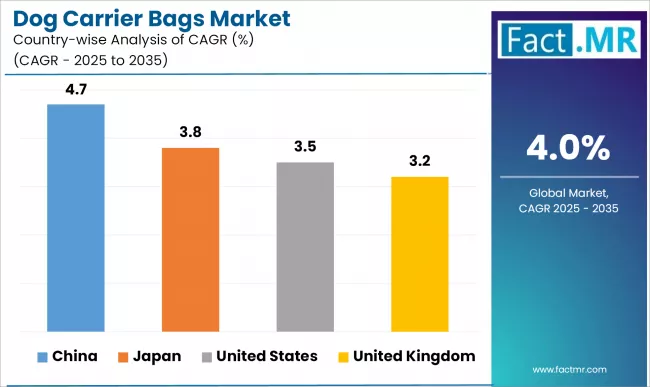
Dog Carrier Bags Market Cagr Analysis By Country | Source: Fact.MR
| Countries | CAGR (2025-2035) |
|---|---|
| United States | 3.5% |
| China | 4.7% |
| Japan | 3.8% |
Source: Fact.MR analysis. Updated Sep 1, 2025
The United States’ Drive for Premiumization and E-Commerce Dominance Sustains Growth
The United States leads the global dog carrier bags market, thanks to its size, high consumer spending, and strong culture of pet humanization. Pet owners increasingly view carriers as both practical necessities and lifestyle accessories, driving demand for stylish, high-end bags alongside rugged, functional options for outdoor use.
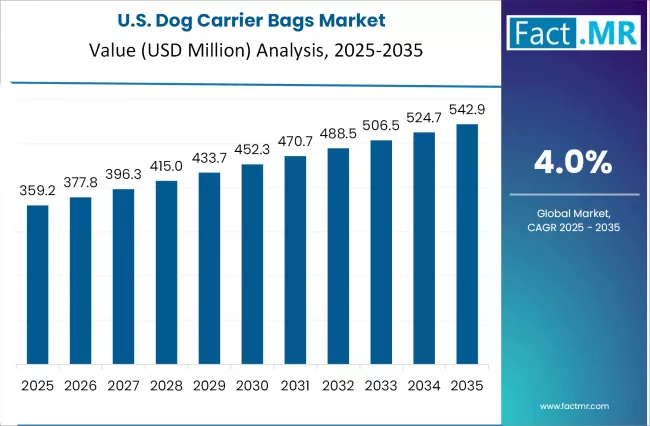
Dog Carrier Bags Market Country Value Analysis | Source: Fact.MR
E-commerce and social media heavily shape buying behavior, with influencer marketing and digital campaigns helping brands stand out. There is also growing interest in smart carriers featuring GPS tracking, built-in fans, and other tech-enabled features.
- Premium, stylish, and functional carriers are in strong demand
- E-commerce and influencer marketing dominate sales channels
- Interest in smart features like GPS and climate control is rising
China’s Market Expansion Fueled by Urbanization and Digitalization
China’s market is expanding rapidly due to urbanization, smaller living spaces, and the rising popularity of small to medium dog breeds. E-commerce giants such as Taobao and Tmall provide easy access to a wide range of products at competitive prices, making online shopping the key growth driver.
Younger consumers are particularly influenced by social media trends, KOLs, and pet influencers, fueling demand for visually appealing carriers with bright colors, unique designs, and practical features. The result is a highly dynamic and trend-driven market.
- Urbanization and small-breed ownership drive carrier demand
- E-commerce platforms dominate product discovery and sales
- Younger buyers seek stylish, innovative, and affordable designs
Japan represents a Mature Market with Quality and Compact Design Focus
Japan’s dog carrier bags market is mature and highly competitive, supported by one of Asia’s highest pet ownership rates and a culture emphasizing compact living. Consumers favor high-quality, durable, and thoughtfully designed products that balance style with functionality.
Demand focuses on airline-approved, easy-to-clean, and space-saving carriers that integrate seamlessly into daily life. Rather than rapid expansion, the market prioritizes steady improvements, with companies refining designs, materials, and features to maintain loyalty and consumer trust.
- Mature market emphasizes durability, quality, and compact design
- Strong demand for airline-approved and space-efficient carriers
- Market growth is steady, focusing on refinement rather than disruption
Analyzing Key Categories of the Global Dog Carrier Bags Market
The dog carrier bags market can be segmented by factors such as bag type and price range, each with distinct consumer preferences and market dynamics. While some segments benefit from versatility, affordability, and widespread adoption, others thrive on innovation, premium features, and design-driven appeal. Understanding these segments is essential to gauge demand patterns, competitive strategies, and opportunities for growth.
Soft-Sided Carriers: Leading Share by Bag Type
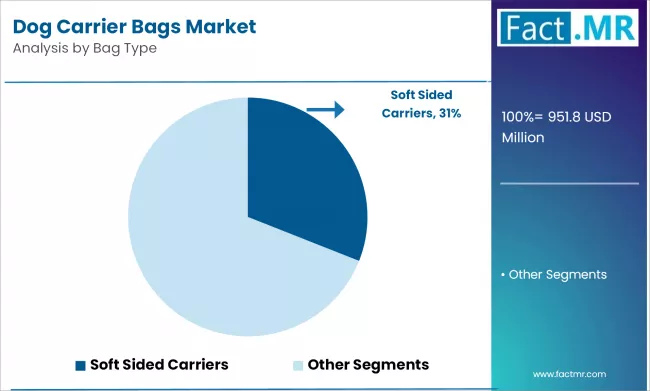
Dog Carrier Bags Market Analysis By Bag Type | Source: Fact.MR
Soft-sided carriers are expected to dominate the market among bag types, owing to their versatility, lightweight design, and ease of storage. Typically made from durable fabrics such as nylon or polyester, these carriers are collapsible and adaptable to different environments, including airline cabins where compact storage is essential. Their affordability compared to hard-sided crates makes them attractive to a broader consumer base.
Continuous innovation in this category has further strengthened demand, with manufacturers introducing breathable fabrics, padded interiors, and ergonomic designs to enhance pet safety and comfort. The wide variety of colors, styles, and patterns also appeals to owners who seek both functionality and personal expression in their purchases.
- Versatile, lightweight, and collapsible designs drive popularity
- More affordable than hard-sided alternatives, appealing to mass consumers
- Innovation in materials and stylish options enhance comfort and appeal
Economy Segment: Leading Share by Price
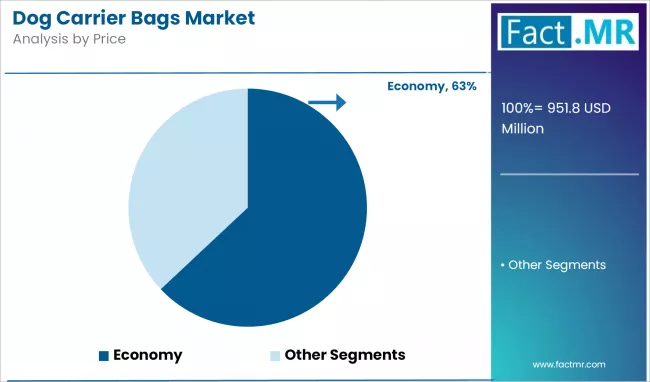
Dog Carrier Bags Market Analysis By Price | Source: Fact.MR
The economy price segment is projected to hold the largest share, driven by accessibility and affordability. This category caters to a wide audience, including first-time pet owners and those who require carriers only for occasional use, such as vet visits or short trips. While the premium segment is growing, budget-conscious consumers continue to rely on economy carriers for basic transport needs, ensuring this segment’s resilience.
Competition, however, is intense in this space, with brands competing primarily on price rather than loyalty or innovation. Success often depends on efficient supply chain management and the ability to deliver reliable, cost-effective carriers at scale. Despite tight margins, the economy segment remains the backbone of the market due to its widespread appeal.
- Most accessible option, appealing to first-time and budget-conscious owners
- Strong demand for basic, affordable solutions keeps the segment dominant
- High competition and price-driven dynamics limit profitability
Online Channel: Fastest-Growing Sales Avenue in the Dog Carrier Bags Market
The online channel has emerged as the most dynamic sales platform for dog carrier bags, offering unmatched convenience, variety, and accessibility for consumers. E-commerce platforms, brand-owned websites, and pet-focused marketplaces have made it easier than ever for pet owners to compare products, read reviews, and purchase carriers from the comfort of their homes.
The breadth of designs and price points available online appeals to diverse consumer segments, from budget-conscious buyers to premium shoppers seeking exclusive designs. This accessibility has helped the online channel grow rapidly, especially in urban centers where digital adoption is high.
A key driver of online sales is the influence of digital marketing and social media. Pet influencers, product demonstrations, and user-generated content on platforms like Instagram, TikTok, and YouTube strongly shape purchasing decisions. Younger consumers, in particular, are drawn to stylish and innovative carriers that align with lifestyle trends.
Online platforms also enable smaller and niche brands to reach global audiences without the need for costly physical distribution. However, challenges remain in ensuring product authenticity, maintaining consumer trust, and overcoming the drawback of customers not being able to physically test carriers before purchase.
- Online platforms provide unmatched convenience, variety, and competitive pricing
- Social media and influencer-driven promotions strongly influence purchases
- Niche and emerging brands gain global exposure through e-commerce
Competitive Analysis
The competitive landscape of the dog carrier bags market is lively, marked by fierce competition among big global companies and nimble, specialized manufacturers. Brands like Sleepypod, Texsens, U-Pet, ALEKO Products, Pawaboo, and HOOPET are in a constant struggle for market share. Their success depends on a mix of strategic actions.
A main strategy is ongoing technological innovation, which includes smart features like built-in fans for ventilation and GPS trackers for security, rather than just basic design. Product diversification is another important approach, as companies shift from a one-size-fits-all model to highly customized products designed for specific breeds or travel needs.
These initiatives often receive support from strategic partnerships, as brands work with pet influencers or online sales platforms to increase their market presence and brand recognition. This fierce competition forces companies to provide products that are not only safe and comfortable for pets but also stylish and convenient for their owners, changing the market from a simple industry into one focused on fashion and lifestyle.
Recent Developments
- In 2025, Sleepypod is known for pet safety. The company is still focused on products that have been tested for crashes. Recently, its carriers were among the first to receive top safety ratings in new crash tests at the Center for Pet Safety.
- In 2025, The American Pet Products Association (APPA) released its 2025 State of the Industry Report. It shows that pet ownership is increasing a lot among Gen Z and Millennials. This group is pushing a notable change towards products that are both practical and visually attractive, fitting into their digital-first lifestyles.
Segmentation
Segmentation of Dog Carrier Bags Market
-
By Bag Type :
- Soft Sided Carriers
- Backpack
- Others
-
By Price :
- Economy
- Premium
-
By Sales Channel :
- Modern Trade
- Franchised Outlets
- Specialty Store
- Online Channel
-
By Region :
- North America
- Latin America
- Western Europe
- Eastern Europe
- East Asia
- South Asia & Pacific
- Middle East and Africa
Frequently Asked Questions
What is the Global Dog Carrier Bags Market Size in 2025?
Who are the Major Players Operating in the Dog Carrier Bags Market?
What is the Estimated Valuation of the Dog Carrier Bags Market by 2035?
What Value CAGR Did the Dog Carrier Bags Market Exhibit over the Last Five Years?
Who worked on this report


Preview the report firsthand - request a free sample
Free SampleGet the brochure for pricing and purchase details
Download PDF