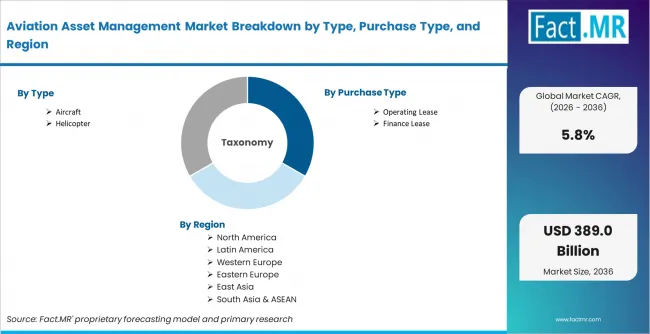
Aviation Asset Management Market Size, Share, Growth and Forecast (2026 - 2036)
The Aviation Asset Management Market is segmented by Type (Aircraft and Helicopter), Purchase Type (Direct Purchase, Operating Lease, Finance Lease, and Sale and Lease Back), Service (Leasing Service, Technical Service, Regulatory Services, and End-to-End), End Use (Airline Operators, Leasing Companies, Cargo Operators, MRO Service Providers, and Commercial Platforms), and Asset Age (New-generation Aircraft, Mid-life Aircraft, and Aging Aircraft) and Region. Forecast for 2026 to 2036.
Fact.MR opines that the aviation asset management market is entering a restructuring phase. Rising narrow-body lease demand is changing aircraft ownership patterns across commercial aviation. Faster retirement of aging fleets is increasing the role of independent lessors and asset managers with better remarketing capability.
Aviation Asset Management Market Forecast and Outlook By FACT MR
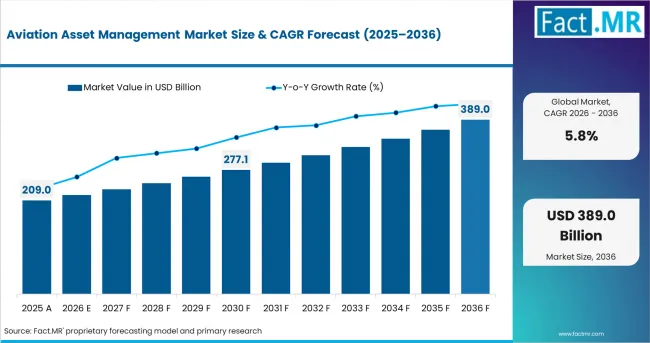
- In 2025, the aviation asset management market surpassed a valuation of USD 209 billion. Based on Fact.MR analysis, the market is estimated to grow to USD 221 billion in 2026 and USD 389 billion by 2036. Fact.MR projects a CAGR of 5.8% during the forecast period.
- The market is projected to generate nearly USD 168 billion in additional revenue between 2026 and 2036.
- Growth is linked to long-term fleet expansion as airlines continue adding aircraft capacity. Aircraft delivery delays at Airbus and Boeing are increasing dependence on leased fleets.
- Persistent pilot shortages are encouraging airlines to choose flexible fleet management models over direct aircraft ownership.
Summary of Aviation Asset Management Market
- Demand Drivers
- Aircraft delivery backlogs at Airbus and Boeing are pushing airlines to extend leases and source aircraft from secondary lessors. This is increasing demand for aviation asset management services.
- Fuel efficiency rules are speeding up retirement of older aircraft. Asset managers are needed for technical transitions and aircraft part-out coordination along with remarketing activity.
- Airlines are controlling capital spending after pandemic-era restructuring. More fleet expansion is shifting toward operating leases over direct ownership, which increases assets managed by aviation specialists.
- Key Segments Analyzed
- By Type: Aircraft hold 82% share in 2026 because commercial passenger fleet expansion continues driving most global leasing and asset management activity.
- By Purchase Type: Operating lease accounts for 46% share in 2026 due to rising airline preference for flexible off-balance-sheet fleet arrangements.
- By Service: Leasing services capture 43% share in 2026 as airlines and cargo operators increasingly depend on lessor-supported financing and aircraft placement.
- By End Use: Airline operators account for 49% share in 2026 since commercial airlines remain the leading institutional users of managed aviation assets globally.
- By Asset Age: Mid-life aircraft hold 38% share in 2026 as airlines and lessors continue favoring lower-cost leased aircraft with proven operational history.
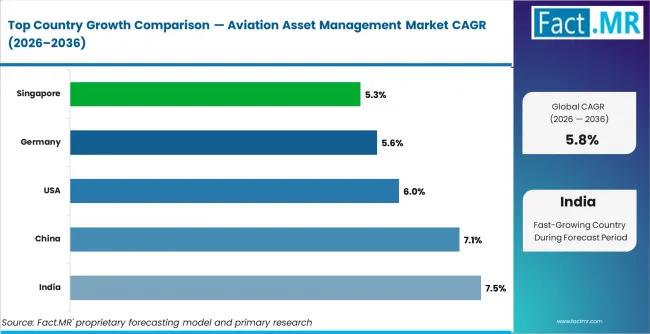
- By Region: Asia Pacific leads demand with India and China projected to record the leading CAGRs at 7.5% and 7.1% respectively through 2036.
- Analyst Opinion at Fact.MR
- Shambhu Nath Jha, Principal Consultant at Fact.MR, opines, ' This market will find that long-term aviation asset management growth is being shaped less by passenger traffic recovery and more by structural changes in airline fleet financing. Operating lessors and independent asset managers are positioned to capture a growing share of fleet ownership and lease transition value across global aviation markets.'
- Strategic Implications
- Aircraft lessors with strong remarketing networks in Asia Pacific are better positioned for long-term expansion. Fleet growth in India and China continues to support aircraft placement demand.
- Companies investing in digital asset tracking platforms can reduce lease transition cost. Predictive maintenance systems improve aircraft redeployment speed between operators.
- MRO-linked asset managers are improving customer retention through integrated fleet solutions. Combined technical oversight and lease origination services are improving airline client relationships.
| Metric | Value |
|---|---|
| Estimated Value in 2026 | USD 221 billion |
| Forecast Value in 2036 | USD 389 billion |
| Forecast CAGR (2026 to 2036) | 5.8% |
India is projected to record the leading CAGR at 7.5% through 2036 due to aggressive fleet expansion by domestic carriers and rising regional connectivity demand. China is forecast to grow at 7.1% by 2036 as airlines continue replacing older aircraft after pandemic-era fleet restructuring. The United States is expected to grow at 6.0% due to refinancing and replacement demand across its large installed fleet base. Germany is projected to grow at 5.6% by 2036 supported by restructuring activity and MRO-linked asset management demand.
Segmental Analysis
Aviation Asset Management Market Analysis by Type
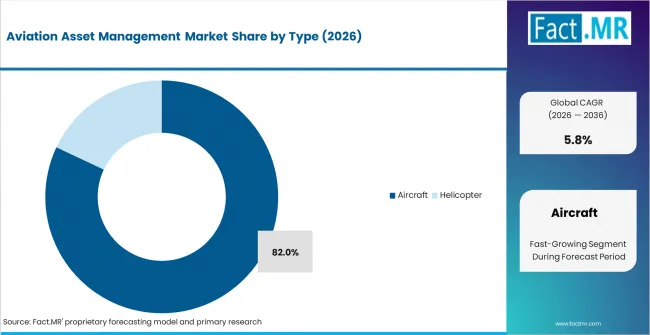
Aircraft hold 82% share in 2026 as commercial passenger aviation drives most leasing and asset management activity. Airlines depend more on specialized lessors for financing and technical oversight services. Dubai Aerospace Enterprise Ltd. and Blackstone Credit & Insurance launched the “Equator” aviation leasing investment program with a target deployment of nearly US$1.6 billion annually for commercial aircraft assets. [1] The partnership supports aircraft leasing and aviation asset servicing across global airline markets.
- Commercial Fleet Expansion: Large aircraft purchase programs are increasing long-term asset placement and financing management activity across airline networks.
- Narrow-body Aircraft Dominance: Narrow-body aircraft continue to form a major share of new managed fleet additions globally.
- Helicopter Segment Limitation: Offshore helicopter activity remains weaker than commercial fixed-wing aviation demand across managed asset portfolios.
Aviation Asset Management Market Analysis by Purchase Type
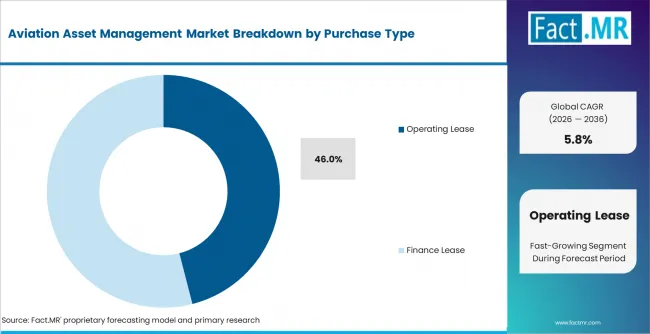
Operating lease accounts for 46% share in 2026 because airlines prefer flexible fleet financing with lower ownership exposure. Sale and leaseback activity is rising across commercial aviation markets. Avolon Aerospace Leasing Limited placed an order for 90 Airbus aircraft to expand its global leasing portfolio and support rising airline fleet modernization demand. [2] The deal strengthens growth in aircraft leasing and long-term aviation financing activities in commercial aircraft markets.
- Sale-Leaseback Growth: Airlines are increasingly monetizing owned aircraft fleets to improve liquidity and reduce balance sheet pressure.
- Lease Rate Recovery: Narrow-body aircraft lease rates are strengthening due to limited aircraft availability and delivery delays.
- Finance Lease Decline: Accounting regulation changes are reducing airline preference for finance lease structures.
Aviation Asset Management Market Analysis by Service
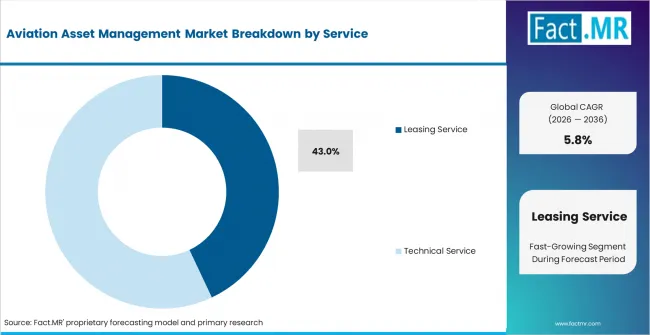
Leasing services capture 43% share in 2026 as airlines rely on lessor-arranged financing and aircraft placement support. Technical oversight and compliance management services are gaining importance across aging fleet portfolios.
- Technical Transition Demand: Aircraft redelivery and maintenance services are generating higher value across lease transition programs.
- Regulatory Compliance Expansion: Updated airworthiness and leasing regulations are increasing demand for specialized compliance support.
- Integrated Platform Adoption: Airlines are increasingly selecting asset managers that offer lifecycle support from lease origination to aircraft retirement.
Aviation Asset Management Market Analysis by End Use
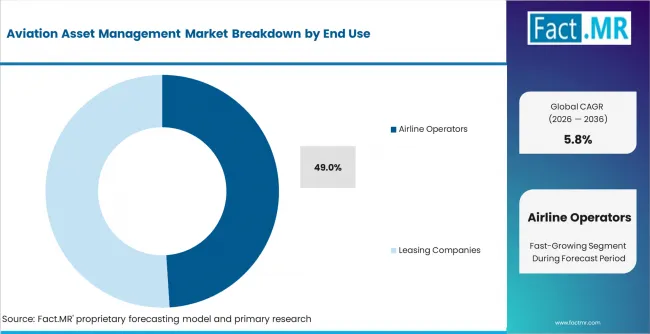
Airline operators account for 49% share in 2026 because commercial airlines remain the main users of managed aviation assets. Fleet renewal and lease negotiation activity continue to support strong asset management demand.
- Cargo Fleet Replacement: Cargo airlines are replacing freighter aircraft across global logistics networks.
- MRO Integration Growth: Aviation service providers are combining maintenance and asset management capabilities for airline support.
- Digital Asset Platforms: Aircraft valuation and digital trading platforms are changing commercial aircraft transaction management.
Aviation Asset Management Market Analysis by Asset Age
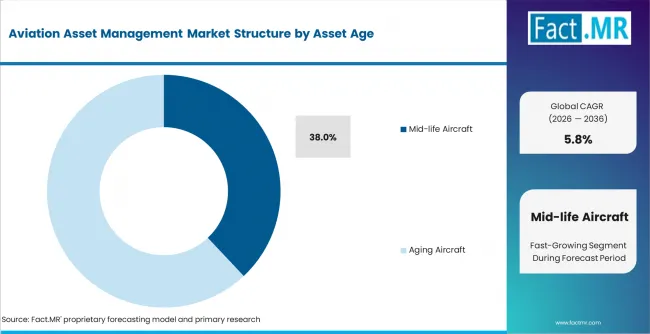
Mid-life aircraft hold 38% share in 2026 as airlines prefer lower-cost aircraft with proven operational history and faster availability. OEM delivery constraints are extending the service life of existing fleets.
- Residual Value Strength: Mid-life narrow-body aircraft are maintaining stronger residual values due to continued supply shortages.
- New-generation Delivery Constraints: Limited production availability is slowing entry of next-generation aircraft into managed fleet.
- Aircraft Part-out Expansion: Rising retirement activity is increasing demand for end-of-life asset management and aircraft dismantling services.
Drivers, Restraints, and Opportunities
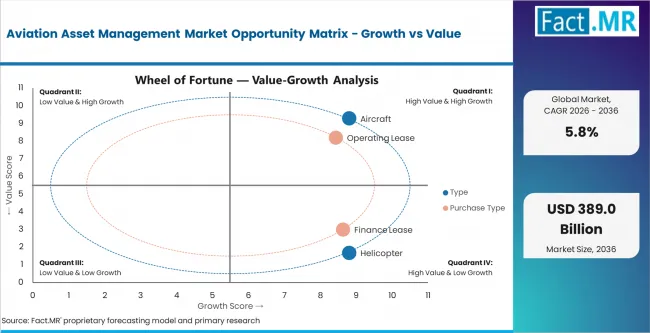
The aviation asset management market has become a core part of commercial aviation finance. Rising use on leased fleets is increasing the role of independent lessors and asset managers in global airline operations.
Airlines are choosing flexible fleet financing over direct aircraft ownership. Barings acquired a commercial aircraft portfolio valued at more than US$200 million, including 12 narrow-body aircraft and associated leases, through its Capital Solutions platform. [5] The deal highlights rising investment activity in aircraft leasing and aviation portfolio optimization amid ongoing global aircraft supply constraints.
- Aircraft Delivery Backlogs: Delivery delays at Airbus and Boeing are increasing lease extensions and secondary aircraft placements across airline fleets.
- Fleet Modernization Pressure: Fuel efficiency standards and emissions compliance are speeding up retirement of older aircraft models.
- Asia Pacific Fleet Expansion: Rapid airline growth across India and Southeast Asia is increasing narrow-body aircraft leasing demand and reducing aircraft vacancy periods.
Regional Analysis
.webp)
The aviation asset management market is analyzed across North America, Europe, Asia Pacific, Latin America, and the Middle East and Africa. Country-level forecasts are provided for India, China, the United Arab Emirates, the United States, Germany, and Singapore. The full report includes market attractiveness analysis by region and country.
| Country | CAGR (2026 to 2036) |
|---|---|
| India | 7.5% |
| China | 7.1% |
| United States | 6.0% |
| Germany | 5.6% |
| Singapore | 5.3% |
Source: Fact.MR analysis, based on proprietary forecasting model and primary research
North America Aviation Asset Management Market Analysis
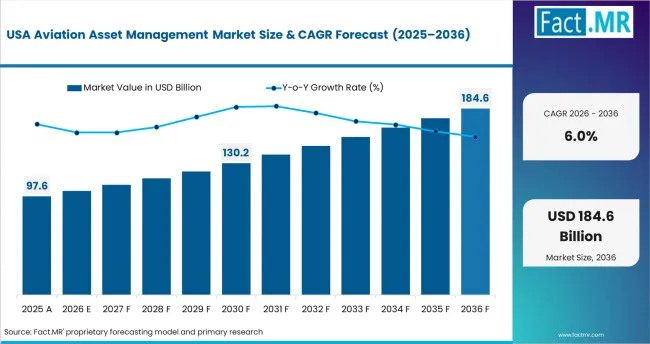
North America remains the leading aviation asset management market due to strong lessor presence and mature aviation financing. Deep capital market access and established aircraft trading networks support fleet leasing and asset transition activity.
- United States: The United States is projected to grow at 6.0% CAGR from 2026 to 2036. Airlines are refinancing pandemic-era fleet deals through operating lessors and third-party asset managers. Rising placement of next-generation aircraft across airline networks is increasing leasing and technical management activity.
Europe Aviation Asset Management Market Analysis
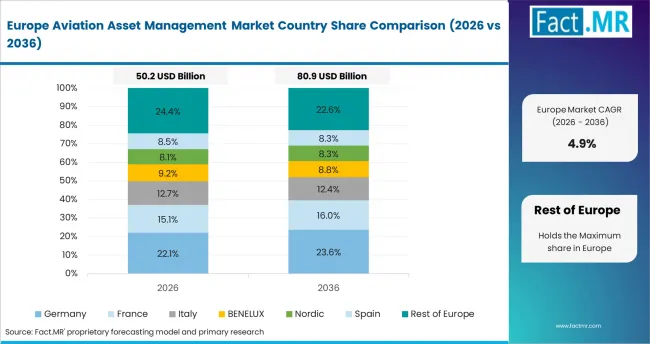
Europe is as a major center for aviation asset management and airworthiness compliance. Regional airlines and lessors work under strict continuing airworthiness standards that influence fleet management practices. AerCap raised its 2025 profit guidance after recording strong gains from aircraft, engine, and helicopter asset sales amid continued global aircraft supply shortages. The company also expanded its aviation asset portfolio to more than 3,500 assets. [4]
- Germany: Germany is forecast to grow at 5.6% CAGR by 2036. Fleet modernization programs across major airlines are increasing lease transition and aircraft disposition activity. Investment in MRO infrastructure is strengthening technical oversight for leased aircraft portfolios across Europe.
Asia Pacific Aviation Asset Management Market Analysis
Asia Pacific is the fastest-growing destination for managed aviation assets globally. Airline expansion and narrow-body fleet demand are increasing leasing activity across the region. Singapore remains the leading aircraft leasing hub for Southeast Asia.
- India: India is projected to record the leading CAGR at 7.5% by 2036. Airline fleet expansion and regional route development under government aviation programs are increasing demand for leased aircraft and asset management services. Large aircraft orders are also creating long-term financing and fleet transition needs.
- China: China is forecast to grow at 7.1% CAGR. Expanding deliveries of domestically made commercial aircraft are creating new opportunities for fleet oversight and residual value management. State-owned airlines are also adding more leased aircraft to commercial operations.
- Singapore: Singapore is projected to expand at 5.3% CAGR. The country remains Asia’s leading operating lease hub due to strong financial infrastructure and established aircraft registry systems. Regional aircraft placement and leasing activity across Southeast Asia continue to support Singapore’s market position.
Competitive Aligners for Aviation Asset Management Market Players
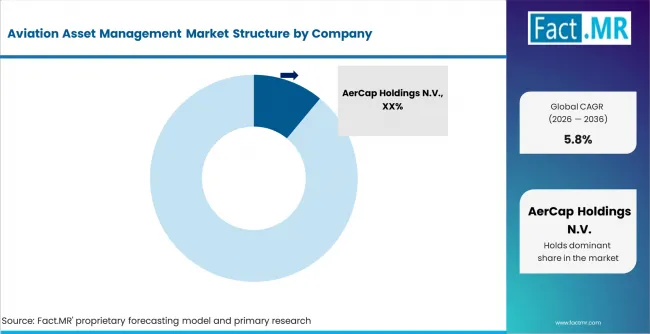
Aircraft lessors and aviation asset managers are strengthening their positioning through larger narrow-body portfolios and stronger airline placement networks. Demand for fuel-efficient aircraft is rising across commercial aviation markets. Companies with access to A320neo and 737 MAX fleets are gaining stronger lease pricing power.
Operating lease structures remain the main revenue driver in global aviation finance. Airlines prefer flexible fleet access over direct ownership due to delivery uncertainty and capital discipline. Asset managers with strong refinancing capability and secondary market reach are improving long-term portfolio utilization.
Digital asset tracking and predictive maintenance platforms are becoming major competitive factors. Airlines prefer managers that reduce aircraft transition downtime and improve maintenance visibility across leased fleets. Integrated technical oversight also improves customer retention in long-term leasing contracts.
Mid-life aircraft management remains another important opportunity. OEM delivery delays are extending operational life for aging fleets and supporting residual values for mid-life aircraft. Asset managers with teardown and part-out capability are also benefiting from rising retirement activity. Asia Pacific expansion is reshaping global asset placement strategy. Airline expansion in India and China is increasing demand for experienced lessors with regional financing and remarketing relationships.
Key Players in the Aviation Asset Management Market
- AerCap Holdings N.V.
- BOC Aviation Limited
- SMBC Aviation Capital Limited
- Avolon Aerospace Leasing Limited
- Dubai Aerospace Enterprise Ltd.
Bibliography
- Dubai Aerospace Enterprise. (2026, April 9). DAE and Blackstone Credit & Insurance announce multi-billion dollar global aviation leasing investment program.
- Avolon. (2025, July 24). Avolon orders 90 Airbus aircraft.
- Apollo Global Management, Inc. (2025, September 2). Sumitomo Corporation, SMBC Aviation Capital, Apollo and Brookfield to acquire Air Lease Corporation in 100% cash transaction.
- AerCap Holdings N.V. (2025, October 29). AerCap Holdings N.V. reports record financial results for third quarter 2025 and raises EPS guidance.
- Barings. (2025, April 8). Barings’ Capital Solutions Platform acquires $200+ million aircraft portfolio.
This Report Addresses
- Provides market intelligence for aviation asset management professionals evaluating fleet financing, leasing strategy, and asset lifecycle decisions through 2036.
- Delivers global market size estimates for 2025 and 2026 alongside a ten-year forecast to 2036 at a 5.8% CAGR, with values stated in USD billion.
- Maps growth opportunity by identifying high-CAGR country markets including India at 7.5% and China at 7.1% with supporting fleet expansion and regulatory context.
- Provides segment-level forecasts across five dimensions: aircraft type, purchase arrangement, service category, end-user type, and asset age classification.
- Assesses competitive strategy across major lessors and asset management platforms, covering portfolio positioning, OEM relationships, and regional placement strategies.
- Tracks CORSIA compliance requirements, EASA regulatory updates, and Cape Town Convention protocol adoption as factors reshaping asset valuation and fleet retirement decisions.
- Analyzes regulatory impact of ICAO, EASA, FAA, and DGCA rule changes on lease structuring, airworthiness documentation, and CAMO obligations across covered regions.
- Report is available in PDF and editable Excel formats, with data tables exportable for integration into internal financial models and fleet planning tools.
Aviation Asset Management Market Definition
Aviation asset management covers the professional oversight, valuation, leasing, financing, and technical maintenance coordination of commercial aircraft and helicopters on behalf of airline operators, leasing companies, and cargo carriers. The market includes services that span the full asset lifecycle, from initial acquisition structuring through mid-life lease transitions to end-of-life disassembly and part-out decisions.
Aviation Asset Management Market Inclusions
This report covers global and regional market sizing for aviation asset management from 2026 to 2036. It includes segment-level forecasts by type, purchase arrangement, service category, end user, and asset age. Pricing trend analysis, lessor market concentration data, and cross-border fleet placement activity are covered within the scope.
Aviation Asset Management Market Exclusions
The scope excludes aircraft manufacturing and original equipment supply chains. In-house airline fleet management operated entirely by carrier staff without third-party involvement is not included. Military aerospace and aircraft management, space vehicle leasing, and drone fleet oversight programs fall outside the boundaries of this report.
Aviation Asset Management Market Research Methodology
- Primary Research
- Interviews were conducted with senior executives at leasing companies, airline fleet planning teams, MRO operators, and aviation finance specialists across North America, Europe, and Asia Pacific.
- Desk Research
- Public data sources included ICAO traffic statistics, IATA economic reports, SEC filings of publicly listed lessors, aviation authority fleet registries, and trade publications including Aviation Week and Air Finance Journal.
- Market-Sizing and Forecasting
- A hybrid top-down and bottom-up model was applied. Top-down sizing used global fleet data and average asset value per aircraft. Bottom-up validation used lessor-level revenue data from annual filings cross-referenced against fleet placement activity.
- Data Validation and Update Cycle
- Outputs were validated through triangulation across three independent data streams. The model is updated semi-annually to reflect lessor fleet movements, IATA demand updates, and aircraft order book changes.
Scope of the Report

| Attribute | Details |
|---|---|
| Quantitative Units | USD 221 billion (2026) to USD 389 billion (2036) at a CAGR of 5.8% |
| Market Definition | Aviation asset management services covering aircraft leasing, asset valuation, technical oversight, remarketing, fleet transition management, compliance monitoring, and end-of-life asset disposition across commercial aviation markets globally. |
| Type Segmentation | Aircraft, Helicopter |
| Purchase Type Segmentation | Direct Purchase, Operating Lease, Finance Lease, Sale and Lease Back |
| Service Segmentation | Leasing Service, Technical Service, Regulatory Services, End-to-End Services |
| End Use Segmentation | Airline Operators, Leasing Companies, Cargo Operators, MRO Service Providers, Commercial Platforms |
| Asset Age Segmentation | New-generation Aircraft, Mid-life Aircraft, Aging Aircraft |
| Regions Covered | North America, Europe, Asia Pacific, Latin America, Middle East and Africa |
| Countries Covered | United States, Canada, Germany, United Kingdom, France, Italy, Spain, Nordic Countries, BENELUX, China, India, Japan, South Korea, Singapore, ASEAN, Australia and New Zealand, UAE, Saudi Arabia, Brazil |
| Key Companies Profiled | AerCap Holdings N.V., Air Lease Corporation, BOC Aviation Limited, SMBC Aviation Capital Limited, Dubai Aerospace Enterprise Ltd., Avolon Aerospace Leasing Limited |
| Forecast Period | 2026 to 2036 |
| Approach | Hybrid top-down and bottom-up model using aircraft lease rate benchmarks, airline fleet expansion data, OEM delivery schedules, secondary aircraft transaction values, and primary interviews with lessors, airline fleet managers, and aviation financing specialists. |
Aviation Asset Management Market by Segment
-
By Type:
- Aircraft
- Helicopter
-
By Purchase Type:
- Direct Purchase
- Operating Lease
- Finance Lease
- Sale and Lease Back
-
By Service:
- Leasing Service
- Technical Service
- Regulatory Services
- End-to-End Services
-
By End Use:
- Airline Operators
- Leasing Companies
- Cargo Operators
- MRO Service Providers
- Commercial Platforms
-
By Asset Age:
- New-generation Aircraft
- Mid-life Aircraft
- Aging Aircraft
-
By Aircraft Category:
- Narrow-body Aircraft
- Wide-body Aircraft
- Regional Aircraft
- Freighter Aircraft
- Business Jets
-
By Region:
- North America
- United States
- Canada
- Mexico
- Latin America
- Brazil
- Argentina
- Colombia
- Rest of Latin America
- Western Europe
- Germany
- United Kingdom
- France
- Italy
- Spain
- Nordic Countries
- BENELUX
- Rest of Western Europe
- Eastern Europe
- Russia
- Poland
- Hungary
- Balkan and Baltic
- Rest of Eastern Europe
- East Asia
- China
- Japan
- South Korea
- South Asia and Pacific
- India
- ASEAN
- Australia and New Zealand
- Rest of South Asia and Pacific
- Middle East and Africa
- Kingdom of Saudi Arabia
- UAE
- South Africa
- Rest of Middle East and Africa
- North America
- Frequently Asked Questions -
How large is the aviation asset management market in 2026?
The aviation asset management market is estimated at USD 221 billion in 2026.
What will the aviation asset management market size be by 2036?
The aviation asset management market is forecast to reach USD 389 billion by 2036.
What is the expected CAGR of the aviation asset management market from 2026 to 2036?
Fact.MR projects the aviation asset management market to expand at a CAGR of 5.8% between 2026 and 2036.
Which purchase type segment is poised to lead the aviation asset management market in 2026?
Operating lease is poised to lead with 46% share in 2026, as airlines across emerging and mature markets prioritize flexible, off-balance-sheet fleet arrangements over direct aircraft ownership.
Which country is poised to record the leading CAGR in the aviation asset management market?
India is forecast to record the leading country CAGR at 7.5% through 2036, driven by fleet expansion at IndiGo and Air India and government-backed regional connectivity programs.
How significant is the aircraft segment within the aviation asset management market?
Aircraft account for 82% of the aviation asset management market in 2026, making it the dominant type segment by a substantial margin over the helicopter sub-segment.
Table of Content
- Executive Summary
- Global Market Outlook
- Demand to side Trends
- Supply to side Trends
- Technology Roadmap Analysis
- Analysis and Recommendations
- Market Overview
- Market Coverage / Taxonomy
- Market Definition / Scope / Limitations
- Research Methodology
- Chapter Orientation
- Analytical Lens and Working Hypotheses
- Market Structure, Signals, and Trend Drivers
- Benchmarking and Cross-market Comparability
- Market Sizing, Forecasting, and Opportunity Mapping
- Research Design and Evidence Framework
- Desk Research Programme (Secondary Evidence)
- Company Annual and Sustainability Reports
- Peer-reviewed Journals and Academic Literature
- Corporate Websites, Product Literature, and Technical Notes
- Earnings Decks and Investor Briefings
- Statutory Filings and Regulatory Disclosures
- Technical White Papers and Standards Notes
- Trade Journals, Industry Magazines, and Analyst Briefs
- Conference Proceedings, Webinars, and Seminar Materials
- Government Statistics Portals and Public Data Releases
- Press Releases and Reputable Media Coverage
- Specialist Newsletters and Curated Briefings
- Sector Databases and Reference Repositories
- Fact.MR Internal Proprietary Databases and Historical Market Datasets
- Subscription Datasets and Paid Sources
- Social Channels, Communities, and Digital Listening Inputs
- Additional Desk Sources
- Expert Input and Fieldwork (Primary Evidence)
- Primary Modes
- Qualitative Interviews and Expert Elicitation
- Quantitative Surveys and Structured Data Capture
- Blended Approach
- Why Primary Evidence is Used
- Field Techniques
- Interviews
- Surveys
- Focus Groups
- Observational and In-context Research
- Social and Community Interactions
- Stakeholder Universe Engaged
- C-suite Leaders
- Board Members
- Presidents and Vice Presidents
- R&D and Innovation Heads
- Technical Specialists
- Domain Subject-matter Experts
- Scientists
- Physicians and Other Healthcare Professionals
- Governance, Ethics, and Data Stewardship
- Research Ethics
- Restraints
- Opportunity
- Trends
- Scenario Forecast
- Demand in Optimistic Scenario
- Demand in Likely Scenario
- Demand in Conservative Scenario
- Opportunity Map Analysis
- Product Life Cycle Analysis
- Supply Chain Analysis
- Investment Feasibility Matrix
- Value Chain Analysis
- PESTLE and Porter’s Analysis
- Regulatory Landscape
- Regional Parent Market Outlook
- Production and Consumption Statistics
- Import and Export Statistics
- Primary Modes
- Global Market Analysis 2021 to 2025 and Forecast, 2026 to 2036
- Historical Market Size Value (USD Million) Analysis, 2021 to 2025
- Current and Future Market Size Value (USD Million) Projections, 2026 to 2036
- Y to o to Y Growth Trend Analysis
- Absolute $ Opportunity Analysis
- Global Market Pricing Analysis 2021 to 2025 and Forecast 2026 to 2036
- Global Market Analysis 2021 to 2025 and Forecast 2026 to 2036, By Type
- Introduction / Key Findings
- Historical Market Size Value (USD Million) Analysis By Type , 2021 to 2025
- Current and Future Market Size Value (USD Million) Analysis and Forecast By Type , 2026 to 2036
- Aircraft
- Helicopter
- Aircraft
- Y to o to Y Growth Trend Analysis By Type , 2021 to 2025
- Absolute $ Opportunity Analysis By Type , 2026 to 2036
- Global Market Analysis 2021 to 2025 and Forecast 2026 to 2036, By Purchase Type
- Introduction / Key Findings
- Historical Market Size Value (USD Million) Analysis By Purchase Type, 2021 to 2025
- Current and Future Market Size Value (USD Million) Analysis and Forecast By Purchase Type, 2026 to 2036
- Operating Lease
- Finance Lease
- Sale and Lease Back
- Direct Purchase
- Operating Lease
- Y to o to Y Growth Trend Analysis By Purchase Type, 2021 to 2025
- Absolute $ Opportunity Analysis By Purchase Type, 2026 to 2036
- Global Market Analysis 2021 to 2025 and Forecast 2026 to 2036, By Service
- Introduction / Key Findings
- Historical Market Size Value (USD Million) Analysis By Service, 2021 to 2025
- Current and Future Market Size Value (USD Million) Analysis and Forecast By Service, 2026 to 2036
- Leasing Service
- Technical Service
- Regulatory Services
- End-to-End Services
- Leasing Service
- Y to o to Y Growth Trend Analysis By Service, 2021 to 2025
- Absolute $ Opportunity Analysis By Service, 2026 to 2036
- Global Market Analysis 2021 to 2025 and Forecast 2026 to 2036, By End Use
- Introduction / Key Findings
- Historical Market Size Value (USD Million) Analysis By End Use, 2021 to 2025
- Current and Future Market Size Value (USD Million) Analysis and Forecast By End Use, 2026 to 2036
- Airline Operators
- Leasing Companies
- Cargo Operators
- MRO Service Providers
- Commercial Platforms
- Airline Operators
- Y to o to Y Growth Trend Analysis By End Use, 2021 to 2025
- Absolute $ Opportunity Analysis By End Use, 2026 to 2036
- Global Market Analysis 2021 to 2025 and Forecast 2026 to 2036, By Asset Age
- Introduction / Key Findings
- Historical Market Size Value (USD Million) Analysis By Asset Age, 2021 to 2025
- Current and Future Market Size Value (USD Million) Analysis and Forecast By Asset Age, 2026 to 2036
- Mid-life Aircraft
- Aging Aircraft
- New-generation Aircraft
- Mid-life Aircraft
- Y to o to Y Growth Trend Analysis By Asset Age, 2021 to 2025
- Absolute $ Opportunity Analysis By Asset Age, 2026 to 2036
- Global Market Analysis 2021 to 2025 and Forecast 2026 to 2036, By Region
- Introduction
- Historical Market Size Value (USD Million) Analysis By Region, 2021 to 2025
- Current Market Size Value (USD Million) Analysis and Forecast By Region, 2026 to 2036
- North America
- Latin America
- Western Europe
- Eastern Europe
- East Asia
- South Asia and Pacific
- Middle East & Africa
- Market Attractiveness Analysis By Region
- North America Market Analysis 2021 to 2025 and Forecast 2026 to 2036, By Country
- Historical Market Size Value (USD Million) Trend Analysis By Market Taxonomy, 2021 to 2025
- Market Size Value (USD Million) Forecast By Market Taxonomy, 2026 to 2036
- By Country
- USA
- Canada
- Mexico
- By Type
- By Purchase Type
- By Service
- By End Use
- By Asset Age
- By Country
- Market Attractiveness Analysis
- By Country
- By Type
- By Purchase Type
- By Service
- By End Use
- By Asset Age
- Key Takeaways
- Latin America Market Analysis 2021 to 2025 and Forecast 2026 to 2036, By Country
- Historical Market Size Value (USD Million) Trend Analysis By Market Taxonomy, 2021 to 2025
- Market Size Value (USD Million) Forecast By Market Taxonomy, 2026 to 2036
- By Country
- Brazil
- Chile
- Rest of Latin America
- By Type
- By Purchase Type
- By Service
- By End Use
- By Asset Age
- By Country
- Market Attractiveness Analysis
- By Country
- By Type
- By Purchase Type
- By Service
- By End Use
- By Asset Age
- Key Takeaways
- Western Europe Market Analysis 2021 to 2025 and Forecast 2026 to 2036, By Country
- Historical Market Size Value (USD Million) Trend Analysis By Market Taxonomy, 2021 to 2025
- Market Size Value (USD Million) Forecast By Market Taxonomy, 2026 to 2036
- By Country
- Germany
- UK
- Italy
- Spain
- France
- Nordic
- BENELUX
- Rest of Western Europe
- By Type
- By Purchase Type
- By Service
- By End Use
- By Asset Age
- By Country
- Market Attractiveness Analysis
- By Country
- By Type
- By Purchase Type
- By Service
- By End Use
- By Asset Age
- Key Takeaways
- Eastern Europe Market Analysis 2021 to 2025 and Forecast 2026 to 2036, By Country
- Historical Market Size Value (USD Million) Trend Analysis By Market Taxonomy, 2021 to 2025
- Market Size Value (USD Million) Forecast By Market Taxonomy, 2026 to 2036
- By Country
- Russia
- Poland
- Hungary
- Balkan & Baltic
- Rest of Eastern Europe
- By Type
- By Purchase Type
- By Service
- By End Use
- By Asset Age
- By Country
- Market Attractiveness Analysis
- By Country
- By Type
- By Purchase Type
- By Service
- By End Use
- By Asset Age
- Key Takeaways
- East Asia Market Analysis 2021 to 2025 and Forecast 2026 to 2036, By Country
- Historical Market Size Value (USD Million) Trend Analysis By Market Taxonomy, 2021 to 2025
- Market Size Value (USD Million) Forecast By Market Taxonomy, 2026 to 2036
- By Country
- China
- Japan
- South Korea
- By Type
- By Purchase Type
- By Service
- By End Use
- By Asset Age
- By Country
- Market Attractiveness Analysis
- By Country
- By Type
- By Purchase Type
- By Service
- By End Use
- By Asset Age
- Key Takeaways
- South Asia and Pacific Market Analysis 2021 to 2025 and Forecast 2026 to 2036, By Country
- Historical Market Size Value (USD Million) Trend Analysis By Market Taxonomy, 2021 to 2025
- Market Size Value (USD Million) Forecast By Market Taxonomy, 2026 to 2036
- By Country
- India
- ASEAN
- Australia & New Zealand
- Rest of South Asia and Pacific
- By Type
- By Purchase Type
- By Service
- By End Use
- By Asset Age
- By Country
- Market Attractiveness Analysis
- By Country
- By Type
- By Purchase Type
- By Service
- By End Use
- By Asset Age
- Key Takeaways
- Middle East & Africa Market Analysis 2021 to 2025 and Forecast 2026 to 2036, By Country
- Historical Market Size Value (USD Million) Trend Analysis By Market Taxonomy, 2021 to 2025
- Market Size Value (USD Million) Forecast By Market Taxonomy, 2026 to 2036
- By Country
- Kingdom of Saudi Arabia
- Other GCC Countries
- Turkiye
- South Africa
- Other African Union
- Rest of Middle East & Africa
- By Type
- By Purchase Type
- By Service
- By End Use
- By Asset Age
- By Country
- Market Attractiveness Analysis
- By Country
- By Type
- By Purchase Type
- By Service
- By End Use
- By Asset Age
- Key Takeaways
- Key Countries Market Analysis
- USA
- Pricing Analysis
- Market Share Analysis, 2025
- By Type
- By Purchase Type
- By Service
- By End Use
- By Asset Age
- Canada
- Pricing Analysis
- Market Share Analysis, 2025
- By Type
- By Purchase Type
- By Service
- By End Use
- By Asset Age
- Mexico
- Pricing Analysis
- Market Share Analysis, 2025
- By Type
- By Purchase Type
- By Service
- By End Use
- By Asset Age
- Brazil
- Pricing Analysis
- Market Share Analysis, 2025
- By Type
- By Purchase Type
- By Service
- By End Use
- By Asset Age
- Chile
- Pricing Analysis
- Market Share Analysis, 2025
- By Type
- By Purchase Type
- By Service
- By End Use
- By Asset Age
- Germany
- Pricing Analysis
- Market Share Analysis, 2025
- By Type
- By Purchase Type
- By Service
- By End Use
- By Asset Age
- UK
- Pricing Analysis
- Market Share Analysis, 2025
- By Type
- By Purchase Type
- By Service
- By End Use
- By Asset Age
- Italy
- Pricing Analysis
- Market Share Analysis, 2025
- By Type
- By Purchase Type
- By Service
- By End Use
- By Asset Age
- Spain
- Pricing Analysis
- Market Share Analysis, 2025
- By Type
- By Purchase Type
- By Service
- By End Use
- By Asset Age
- France
- Pricing Analysis
- Market Share Analysis, 2025
- By Type
- By Purchase Type
- By Service
- By End Use
- By Asset Age
- India
- Pricing Analysis
- Market Share Analysis, 2025
- By Type
- By Purchase Type
- By Service
- By End Use
- By Asset Age
- ASEAN
- Pricing Analysis
- Market Share Analysis, 2025
- By Type
- By Purchase Type
- By Service
- By End Use
- By Asset Age
- Australia & New Zealand
- Pricing Analysis
- Market Share Analysis, 2025
- By Type
- By Purchase Type
- By Service
- By End Use
- By Asset Age
- China
- Pricing Analysis
- Market Share Analysis, 2025
- By Type
- By Purchase Type
- By Service
- By End Use
- By Asset Age
- Japan
- Pricing Analysis
- Market Share Analysis, 2025
- By Type
- By Purchase Type
- By Service
- By End Use
- By Asset Age
- South Korea
- Pricing Analysis
- Market Share Analysis, 2025
- By Type
- By Purchase Type
- By Service
- By End Use
- By Asset Age
- Russia
- Pricing Analysis
- Market Share Analysis, 2025
- By Type
- By Purchase Type
- By Service
- By End Use
- By Asset Age
- Poland
- Pricing Analysis
- Market Share Analysis, 2025
- By Type
- By Purchase Type
- By Service
- By End Use
- By Asset Age
- Hungary
- Pricing Analysis
- Market Share Analysis, 2025
- By Type
- By Purchase Type
- By Service
- By End Use
- By Asset Age
- Kingdom of Saudi Arabia
- Pricing Analysis
- Market Share Analysis, 2025
- By Type
- By Purchase Type
- By Service
- By End Use
- By Asset Age
- Turkiye
- Pricing Analysis
- Market Share Analysis, 2025
- By Type
- By Purchase Type
- By Service
- By End Use
- By Asset Age
- South Africa
- Pricing Analysis
- Market Share Analysis, 2025
- By Type
- By Purchase Type
- By Service
- By End Use
- By Asset Age
- USA
- Market Structure Analysis
- Competition Dashboard
- Competition Benchmarking
- Market Share Analysis of Top Players
- By Regional
- By Type
- By Purchase Type
- By Service
- By End Use
- By Asset Age
- Competition Analysis
- Competition Deep Dive
- AerCap Holdings N.V.
- Overview
- Product Portfolio
- Profitability by Market Segments (Product/Age /Sales Channel/Region)
- Sales Footprint
- Strategy Overview
- Marketing Strategy
- Product Strategy
- Channel Strategy
- BOC Aviation Limited
- SMBC Aviation Capital Limited
- Avolon Aerospace Leasing Limited
- Dubai Aerospace Enterprise Ltd.
- AerCap Holdings N.V.
- Competition Deep Dive
- Desk Research Programme (Secondary Evidence)
- Assumptions & Acronyms Used
List Of Table
- Table 1: Global Market Value (USD Million) Forecast by Region, 2021 to 2036
- Table 2: Global Market Value (USD Million) Forecast by Type , 2021 to 2036
- Table 3: Global Market Value (USD Million) Forecast by Purchase Type, 2021 to 2036
- Table 4: Global Market Value (USD Million) Forecast by Service, 2021 to 2036
- Table 5: Global Market Value (USD Million) Forecast by End Use, 2021 to 2036
- Table 6: Global Market Value (USD Million) Forecast by Asset Age, 2021 to 2036
- Table 7: North America Market Value (USD Million) Forecast by Country, 2021 to 2036
- Table 8: North America Market Value (USD Million) Forecast by Type , 2021 to 2036
- Table 9: North America Market Value (USD Million) Forecast by Purchase Type, 2021 to 2036
- Table 10: North America Market Value (USD Million) Forecast by Service, 2021 to 2036
- Table 11: North America Market Value (USD Million) Forecast by End Use, 2021 to 2036
- Table 12: North America Market Value (USD Million) Forecast by Asset Age, 2021 to 2036
- Table 13: Latin America Market Value (USD Million) Forecast by Country, 2021 to 2036
- Table 14: Latin America Market Value (USD Million) Forecast by Type , 2021 to 2036
- Table 15: Latin America Market Value (USD Million) Forecast by Purchase Type, 2021 to 2036
- Table 16: Latin America Market Value (USD Million) Forecast by Service, 2021 to 2036
- Table 17: Latin America Market Value (USD Million) Forecast by End Use, 2021 to 2036
- Table 18: Latin America Market Value (USD Million) Forecast by Asset Age, 2021 to 2036
- Table 19: Western Europe Market Value (USD Million) Forecast by Country, 2021 to 2036
- Table 20: Western Europe Market Value (USD Million) Forecast by Type , 2021 to 2036
- Table 21: Western Europe Market Value (USD Million) Forecast by Purchase Type, 2021 to 2036
- Table 22: Western Europe Market Value (USD Million) Forecast by Service, 2021 to 2036
- Table 23: Western Europe Market Value (USD Million) Forecast by End Use, 2021 to 2036
- Table 24: Western Europe Market Value (USD Million) Forecast by Asset Age, 2021 to 2036
- Table 25: Eastern Europe Market Value (USD Million) Forecast by Country, 2021 to 2036
- Table 26: Eastern Europe Market Value (USD Million) Forecast by Type , 2021 to 2036
- Table 27: Eastern Europe Market Value (USD Million) Forecast by Purchase Type, 2021 to 2036
- Table 28: Eastern Europe Market Value (USD Million) Forecast by Service, 2021 to 2036
- Table 29: Eastern Europe Market Value (USD Million) Forecast by End Use, 2021 to 2036
- Table 30: Eastern Europe Market Value (USD Million) Forecast by Asset Age, 2021 to 2036
- Table 31: East Asia Market Value (USD Million) Forecast by Country, 2021 to 2036
- Table 32: East Asia Market Value (USD Million) Forecast by Type , 2021 to 2036
- Table 33: East Asia Market Value (USD Million) Forecast by Purchase Type, 2021 to 2036
- Table 34: East Asia Market Value (USD Million) Forecast by Service, 2021 to 2036
- Table 35: East Asia Market Value (USD Million) Forecast by End Use, 2021 to 2036
- Table 36: East Asia Market Value (USD Million) Forecast by Asset Age, 2021 to 2036
- Table 37: South Asia and Pacific Market Value (USD Million) Forecast by Country, 2021 to 2036
- Table 38: South Asia and Pacific Market Value (USD Million) Forecast by Type , 2021 to 2036
- Table 39: South Asia and Pacific Market Value (USD Million) Forecast by Purchase Type, 2021 to 2036
- Table 40: South Asia and Pacific Market Value (USD Million) Forecast by Service, 2021 to 2036
- Table 41: South Asia and Pacific Market Value (USD Million) Forecast by End Use, 2021 to 2036
- Table 42: South Asia and Pacific Market Value (USD Million) Forecast by Asset Age, 2021 to 2036
- Table 43: Middle East & Africa Market Value (USD Million) Forecast by Country, 2021 to 2036
- Table 44: Middle East & Africa Market Value (USD Million) Forecast by Type , 2021 to 2036
- Table 45: Middle East & Africa Market Value (USD Million) Forecast by Purchase Type, 2021 to 2036
- Table 46: Middle East & Africa Market Value (USD Million) Forecast by Service, 2021 to 2036
- Table 47: Middle East & Africa Market Value (USD Million) Forecast by End Use, 2021 to 2036
- Table 48: Middle East & Africa Market Value (USD Million) Forecast by Asset Age, 2021 to 2036
List Of Figures
- Figure 1: Global Market Pricing Analysis
- Figure 2: Global Market Value (USD Million) Forecast 2021-2036
- Figure 3: Global Market Value Share and BPS Analysis by Type, 2026 and 2036
- Figure 4: Global Market Y-o-Y Growth Comparison by Type,2026 to 2036
- Figure 5: Global Market Attractiveness Analysis by Type
- Figure 6: Global Market Value Share and BPS Analysis by Purchase Type, 2026 and 2036
- Figure 7: Global Market Y-o-Y Growth Comparison by Purchase Type,2026 to 2036
- Figure 8: Global Market Attractiveness Analysis by Purchase Type
- Figure 9: Global Market Value Share and BPS Analysis by Service, 2026 and 2036
- Figure 10: Global Market Y-o-Y Growth Comparison by Service,2026 to 2036
- Figure 11: Global Market Attractiveness Analysis by Service
- Figure 12: Global Market Value Share and BPS Analysis by End Use, 2026 and 2036
- Figure 13: Global Market Y-o-Y Growth Comparison by End Use,2026 to 2036
- Figure 14: Global Market Attractiveness Analysis by End Use
- Figure 15: Global Market Value Share and BPS Analysis by Asset Age, 2026 and 2036
- Figure 16: Global Market Y-o-Y Growth Comparison by Asset Age,2026 to 2036
- Figure 17: Global Market Attractiveness Analysis by Asset Age
- Figure 18: Global Market Value (USD Million) Share and BPS Analysis by Region, 2026 and 2036
- Figure 19: Global Market Y-o-Y Growth Comparison by Region,2026 to 2036
- Figure 20: Global Market Attractiveness Analysis by Region
- Figure 21: North America Market Incremental Dollar Opportunity,2026 to 2036
- Figure 22: Latin America Market Incremental Dollar Opportunity,2026 to 2036
- Figure 23: Western Europe Market Incremental Dollar Opportunity,2026 to 2036
- Figure 24: Eastern Europe Market Incremental Dollar Opportunity,2026 to 2036
- Figure 25: East Asia Market Incremental Dollar Opportunity,2026 to 2036
- Figure 26: South Asia and Pacific Market Incremental Dollar Opportunity,2026 to 2036
- Figure 27: Middle East & Africa Market Incremental Dollar Opportunity,2026 to 2036
- Figure 28: North America Market Value Share and BPS Analysis by Country, 2026 and 2036
- Figure 29: North America Market Value Share and BPS Analysis by Type, 2026 and 2036
- Figure 30: North America Market Y-o-Y Growth Comparison by Type,2026 to 2036
- Figure 31: North America Market Attractiveness Analysis by Type
- Figure 32: North America Market Value Share and BPS Analysis by Purchase Type, 2026 and 2036
- Figure 33: North America Market Y-o-Y Growth Comparison by Purchase Type,2026 to 2036
- Figure 34: North America Market Attractiveness Analysis by Purchase Type
- Figure 35: North America Market Value Share and BPS Analysis by Service, 2026 and 2036
- Figure 36: North America Market Y-o-Y Growth Comparison by Service,2026 to 2036
- Figure 37: North America Market Attractiveness Analysis by Service
- Figure 38: North America Market Value Share and BPS Analysis by End Use, 2026 and 2036
- Figure 39: North America Market Y-o-Y Growth Comparison by End Use,2026 to 2036
- Figure 40: North America Market Attractiveness Analysis by End Use
- Figure 41: North America Market Value Share and BPS Analysis by Asset Age, 2026 and 2036
- Figure 42: North America Market Y-o-Y Growth Comparison by Asset Age,2026 to 2036
- Figure 43: North America Market Attractiveness Analysis by Asset Age
- Figure 44: Latin America Market Value Share and BPS Analysis by Country, 2026 and 2036
- Figure 45: Latin America Market Value Share and BPS Analysis by Type, 2026 and 2036
- Figure 46: Latin America Market Y-o-Y Growth Comparison by Type,2026 to 2036
- Figure 47: Latin America Market Attractiveness Analysis by Type
- Figure 48: Latin America Market Value Share and BPS Analysis by Purchase Type, 2026 and 2036
- Figure 49: Latin America Market Y-o-Y Growth Comparison by Purchase Type,2026 to 2036
- Figure 50: Latin America Market Attractiveness Analysis by Purchase Type
- Figure 51: Latin America Market Value Share and BPS Analysis by Service, 2026 and 2036
- Figure 52: Latin America Market Y-o-Y Growth Comparison by Service,2026 to 2036
- Figure 53: Latin America Market Attractiveness Analysis by Service
- Figure 54: Latin America Market Value Share and BPS Analysis by End Use, 2026 and 2036
- Figure 55: Latin America Market Y-o-Y Growth Comparison by End Use,2026 to 2036
- Figure 56: Latin America Market Attractiveness Analysis by End Use
- Figure 57: Latin America Market Value Share and BPS Analysis by Asset Age, 2026 and 2036
- Figure 58: Latin America Market Y-o-Y Growth Comparison by Asset Age,2026 to 2036
- Figure 59: Latin America Market Attractiveness Analysis by Asset Age
- Figure 60: Western Europe Market Value Share and BPS Analysis by Country, 2026 and 2036
- Figure 61: Western Europe Market Value Share and BPS Analysis by Type, 2026 and 2036
- Figure 62: Western Europe Market Y-o-Y Growth Comparison by Type,2026 to 2036
- Figure 63: Western Europe Market Attractiveness Analysis by Type
- Figure 64: Western Europe Market Value Share and BPS Analysis by Purchase Type, 2026 and 2036
- Figure 65: Western Europe Market Y-o-Y Growth Comparison by Purchase Type,2026 to 2036
- Figure 66: Western Europe Market Attractiveness Analysis by Purchase Type
- Figure 67: Western Europe Market Value Share and BPS Analysis by Service, 2026 and 2036
- Figure 68: Western Europe Market Y-o-Y Growth Comparison by Service,2026 to 2036
- Figure 69: Western Europe Market Attractiveness Analysis by Service
- Figure 70: Western Europe Market Value Share and BPS Analysis by End Use, 2026 and 2036
- Figure 71: Western Europe Market Y-o-Y Growth Comparison by End Use,2026 to 2036
- Figure 72: Western Europe Market Attractiveness Analysis by End Use
- Figure 73: Western Europe Market Value Share and BPS Analysis by Asset Age, 2026 and 2036
- Figure 74: Western Europe Market Y-o-Y Growth Comparison by Asset Age,2026 to 2036
- Figure 75: Western Europe Market Attractiveness Analysis by Asset Age
- Figure 76: Eastern Europe Market Value Share and BPS Analysis by Country, 2026 and 2036
- Figure 77: Eastern Europe Market Value Share and BPS Analysis by Type, 2026 and 2036
- Figure 78: Eastern Europe Market Y-o-Y Growth Comparison by Type,2026 to 2036
- Figure 79: Eastern Europe Market Attractiveness Analysis by Type
- Figure 80: Eastern Europe Market Value Share and BPS Analysis by Purchase Type, 2026 and 2036
- Figure 81: Eastern Europe Market Y-o-Y Growth Comparison by Purchase Type,2026 to 2036
- Figure 82: Eastern Europe Market Attractiveness Analysis by Purchase Type
- Figure 83: Eastern Europe Market Value Share and BPS Analysis by Service, 2026 and 2036
- Figure 84: Eastern Europe Market Y-o-Y Growth Comparison by Service,2026 to 2036
- Figure 85: Eastern Europe Market Attractiveness Analysis by Service
- Figure 86: Eastern Europe Market Value Share and BPS Analysis by End Use, 2026 and 2036
- Figure 87: Eastern Europe Market Y-o-Y Growth Comparison by End Use,2026 to 2036
- Figure 88: Eastern Europe Market Attractiveness Analysis by End Use
- Figure 89: Eastern Europe Market Value Share and BPS Analysis by Asset Age, 2026 and 2036
- Figure 90: Eastern Europe Market Y-o-Y Growth Comparison by Asset Age,2026 to 2036
- Figure 91: Eastern Europe Market Attractiveness Analysis by Asset Age
- Figure 92: East Asia Market Value Share and BPS Analysis by Country, 2026 and 2036
- Figure 93: East Asia Market Value Share and BPS Analysis by Type, 2026 and 2036
- Figure 94: East Asia Market Y-o-Y Growth Comparison by Type,2026 to 2036
- Figure 95: East Asia Market Attractiveness Analysis by Type
- Figure 96: East Asia Market Value Share and BPS Analysis by Purchase Type, 2026 and 2036
- Figure 97: East Asia Market Y-o-Y Growth Comparison by Purchase Type,2026 to 2036
- Figure 98: East Asia Market Attractiveness Analysis by Purchase Type
- Figure 99: East Asia Market Value Share and BPS Analysis by Service, 2026 and 2036
- Figure 100: East Asia Market Y-o-Y Growth Comparison by Service,2026 to 2036
- Figure 101: East Asia Market Attractiveness Analysis by Service
- Figure 102: East Asia Market Value Share and BPS Analysis by End Use, 2026 and 2036
- Figure 103: East Asia Market Y-o-Y Growth Comparison by End Use,2026 to 2036
- Figure 104: East Asia Market Attractiveness Analysis by End Use
- Figure 105: East Asia Market Value Share and BPS Analysis by Asset Age, 2026 and 2036
- Figure 106: East Asia Market Y-o-Y Growth Comparison by Asset Age,2026 to 2036
- Figure 107: East Asia Market Attractiveness Analysis by Asset Age
- Figure 108: South Asia and Pacific Market Value Share and BPS Analysis by Country, 2026 and 2036
- Figure 109: South Asia and Pacific Market Value Share and BPS Analysis by Type, 2026 and 2036
- Figure 110: South Asia and Pacific Market Y-o-Y Growth Comparison by Type,2026 to 2036
- Figure 111: South Asia and Pacific Market Attractiveness Analysis by Type
- Figure 112: South Asia and Pacific Market Value Share and BPS Analysis by Purchase Type, 2026 and 2036
- Figure 113: South Asia and Pacific Market Y-o-Y Growth Comparison by Purchase Type,2026 to 2036
- Figure 114: South Asia and Pacific Market Attractiveness Analysis by Purchase Type
- Figure 115: South Asia and Pacific Market Value Share and BPS Analysis by Service, 2026 and 2036
- Figure 116: South Asia and Pacific Market Y-o-Y Growth Comparison by Service,2026 to 2036
- Figure 117: South Asia and Pacific Market Attractiveness Analysis by Service
- Figure 118: South Asia and Pacific Market Value Share and BPS Analysis by End Use, 2026 and 2036
- Figure 119: South Asia and Pacific Market Y-o-Y Growth Comparison by End Use,2026 to 2036
- Figure 120: South Asia and Pacific Market Attractiveness Analysis by End Use
- Figure 121: South Asia and Pacific Market Value Share and BPS Analysis by Asset Age, 2026 and 2036
- Figure 122: South Asia and Pacific Market Y-o-Y Growth Comparison by Asset Age,2026 to 2036
- Figure 123: South Asia and Pacific Market Attractiveness Analysis by Asset Age
- Figure 124: Middle East & Africa Market Value Share and BPS Analysis by Country, 2026 and 2036
- Figure 125: Middle East & Africa Market Value Share and BPS Analysis by Type, 2026 and 2036
- Figure 126: Middle East & Africa Market Y-o-Y Growth Comparison by Type,2026 to 2036
- Figure 127: Middle East & Africa Market Attractiveness Analysis by Type
- Figure 128: Middle East & Africa Market Value Share and BPS Analysis by Purchase Type, 2026 and 2036
- Figure 129: Middle East & Africa Market Y-o-Y Growth Comparison by Purchase Type,2026 to 2036
- Figure 130: Middle East & Africa Market Attractiveness Analysis by Purchase Type
- Figure 131: Middle East & Africa Market Value Share and BPS Analysis by Service, 2026 and 2036
- Figure 132: Middle East & Africa Market Y-o-Y Growth Comparison by Service,2026 to 2036
- Figure 133: Middle East & Africa Market Attractiveness Analysis by Service
- Figure 134: Middle East & Africa Market Value Share and BPS Analysis by End Use, 2026 and 2036
- Figure 135: Middle East & Africa Market Y-o-Y Growth Comparison by End Use,2026 to 2036
- Figure 136: Middle East & Africa Market Attractiveness Analysis by End Use
- Figure 137: Middle East & Africa Market Value Share and BPS Analysis by Asset Age, 2026 and 2036
- Figure 138: Middle East & Africa Market Y-o-Y Growth Comparison by Asset Age,2026 to 2036
- Figure 139: Middle East & Africa Market Attractiveness Analysis by Asset Age
- Figure 140: Global Market - Tier Structure Analysis
- Figure 141: Global Market - Company Share Analysis