Low-Carbon Aluminum Market (2026 - 2036)

Low-Carbon Aluminum Market Size and Share Forecast Outlook 2026 to 2036

Core Findings

    Low-Carbon Aluminum Market Forecast Outlook 2026 to 2036

    The low-carbon aluminum market is anticipated to reach USD 9.3 billion in 2026, growing to USD 15.8 billion by 2036, with a CAGR of 5.4%.

    Key Takeaways from Low-Carbon Aluminum Market

    • Low-Carbon Aluminum Market Value (2026): USD 9.3 billion
    • Low-Carbon Aluminum Market Forecast Value (2036): USD 15.8 billion
    • Low-Carbon Aluminum Market Forecast CAGR 2026 to 2036: 5.4%
    • Leading Segment in Low-Carbon Aluminum Market: Long-term Offtake (59%)
    • Key Growth Region in Low-Carbon Aluminum Market: Asia Pacific
    • Key Players in Low-Carbon Aluminum Market: Norsk Hydro ASA, Rio Tinto Group, Alcoa Corporation, United Company RUSAL plc (RUSAL), Aluminum Corporation of China Limited (Chalco), Emirates Global Aluminium PJSC, Novelis Inc., Hindalco Industries Limited, Constellium SE, Century Aluminum Company
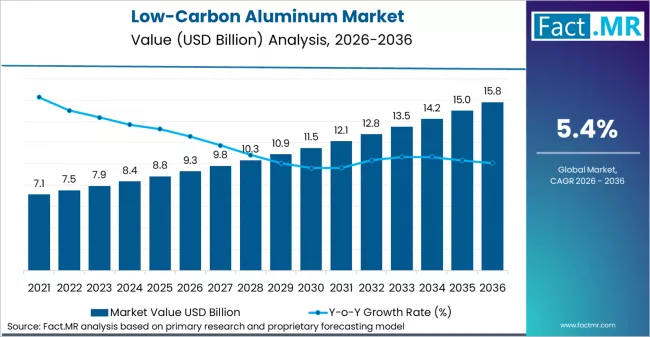
    Low Carbon Aluminum Market Market Value Analysis

    Regulatory oversight will be a key factor influencing market dynamics, with governments increasingly imposing stricter environmental standards and sustainability targets, pushing companies to adopt low-carbon production methods. The cost of compliance with these regulations could act as a barrier for smaller players, particularly those lacking the resources for extensive process upgrades.

    Certification complexity, driven by varying global standards and environmental protocols, adds further challenges to market entry and scaling. Vendors able to navigate these complexities will position themselves as leaders, capitalizing on their ability to meet high standards. As companies face growing pressure to prove their sustainability credentials, the market will favor those who invest in compliance-ready infrastructure and transparent reporting, while also managing the operational costs associated with low-carbon manufacturing.

    Low-Carbon Aluminum Market

    Metric Value
    Estimated Value in (2026E) USD 9.3 billion
    Forecast Value in (2036F) USD 15.8 billion
    Forecast CAGR 2026 to 2036 5.4%

    Category

    Category Segments
    Production Route Recycled or Secondary; Hydro-powered Primary; CCS or Low-Carbon Primary
    Product Form Ingots; Billets; Slabs; Rolled or Extruded Products
    End Use Automotive; Packaging; Construction; Electrical or Electronics; Other
    Certification ASI Certified; EPD or LCAs; Other or None
    Contract Type Long-term Offtake; Spot/Short-term
    Region North America; Europe; Asia Pacific; Latin America; Middle East & Africa

    Segmental Analysis

    What Is the Impact of Contract Type on the Low-Carbon Aluminum Market?
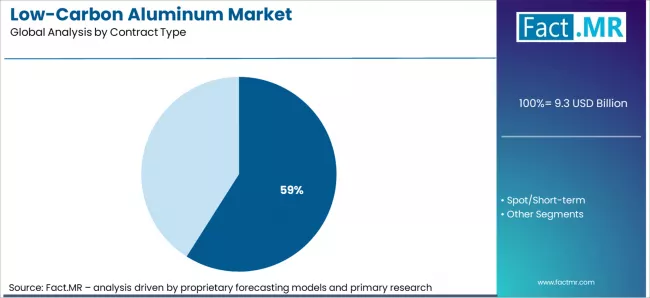
    Low Carbon Aluminum Market Analysis By Contract Type

    In the low-carbon aluminum market, contract type plays a crucial role in determining pricing stability and long-term relationships within the supply chain. Long-term offtake contracts lead the market with a 59% share, as these agreements offer stability and secure supply for both buyers and producers. Long-term contracts are favored by manufacturers and industries that require a consistent and reliable supply of low-carbon aluminum for sustainable production processes. These contracts provide price predictability, supporting long-term planning and investment. As demand for sustainable and low-carbon materials continues to grow, the preference for long-term offtake agreements will drive market stability and growth.

    What Is the Impact of Production Route on the Low-Carbon Aluminum Market?
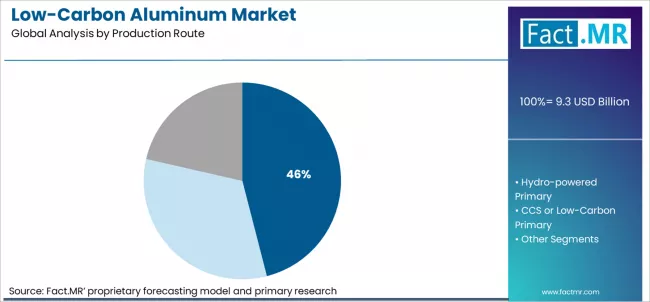
    Low Carbon Aluminum Market Analysis By Production Route

    Production route is a significant factor in determining the environmental impact and sustainability of aluminum production, with recycled or secondary production holding a 46% share. Recycled aluminum, produced from post-consumer scrap, offers a low-carbon alternative to primary aluminum production, significantly reducing energy consumption and greenhouse gas emissions. As industries and governments continue to prioritize sustainability and carbon reduction, the demand for low-carbon aluminum produced through recycling will continue to rise, positioning recycled or secondary production as a key driver in the market's growth.

    What are the Drivers, Restraints, and Key Trends in the Low Carbon Aluminum Market?

    • Drivers: Demand for low carbon aluminum is shaped by industrial and OEM requirements to reduce greenhouse gas emissions in material supply chains. Automotive, aerospace, building products, and packaging sectors specify aluminum produced with lower carbon intensity to meet internal decarbonization targets and respond to regulatory reporting frameworks. Procurement teams prioritize suppliers that can document emission performance with verifiable lifecycle data and support recycled content and renewable energy use in smelting operations. Growth in requirements for environmental product declarations (EPDs) and carbon aware sourcing influences material selection and long term contracts.
    • Restraints: Higher production costs for low carbon aluminum relative to standard primary metal constrain adoption where cost sensitivity is high. Some buyers face challenges verifying emission claims due to inconsistent reporting standards and limited certification infrastructure. Availability of low carbon supply at scale remains constrained in regions with limited renewable energy access.
    • Trend 1: Expansion of contractual frameworks linking purchase commitments to carbon intensity metrics.
    • Trend 2: Development of industry alliances to harmonize low carbon aluminum certification and lifecycle accounting.

    Analysis of the Low-Carbon Aluminum Market by Key Country
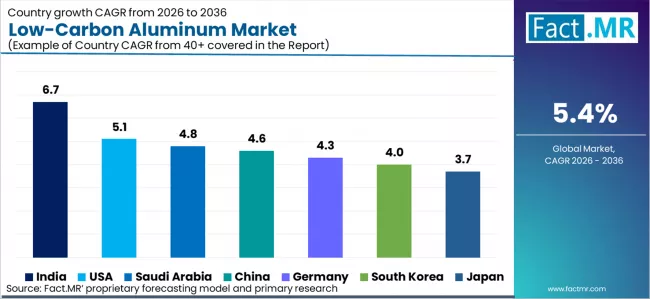
    Low Carbon Aluminum Market Cagr Analysis By Country

    Country CAGR 2026 to 2036
    USA 5.1%
    China 4.6%
    India 6.7%
    Germany 4.3%
    Japan 3.7%
    South Korea 4%
    Saudi Arabia 4.8%

    The report covers an in-depth analysis of 40+ countries; top-performing countries are highlighted below.

    What is the Outlook on the Low-Carbon Aluminum Market in the USA?

    USA market in low-carbon aluminum is projected to grow at a CAGR of 5.1% from 2026 to 2036. The demand for low-carbon aluminum is driven by the increasing focus on sustainable manufacturing practices across various sectors such as automotive, construction, and packaging. Low-carbon aluminum offers improved environmental performance, which is crucial as industries aim to reduce their carbon footprint. As the USA continues to prioritize sustainability and energy efficiency in industrial processes, the market for low-carbon aluminum is expected to grow steadily.

    What is the Demand for Low-Carbon Aluminum in China?

    China sales of low-carbon aluminum are expected to grow at a CAGR of 4.6% from 2026 to 2036. China’s growing demand for sustainable materials in industries like automotive, construction, and packaging is driving the market for low-carbon aluminum. The shift towards more environmentally friendly and energy-efficient production methods is a key factor behind this demand. With China’s commitment to improving environmental standards and reducing carbon emissions, the market for low-carbon aluminum is expected to grow steadily in the coming years.

    What is the Sales Outlook on Low-Carbon Aluminum in India?

    India demand for low-carbon aluminum is projected to grow at a CAGR of 6.7% from 2026 to 2036. The demand for low-carbon aluminum in India is driven by the country’s growing automotive, construction, and packaging industries, which are increasingly adopting more sustainable practices. As India’s industrial base expands and environmental regulations become stricter, the need for low-carbon aluminum, which offers better energy efficiency and lower emissions, will continue to rise. The market for low-carbon aluminum in India is expected to experience strong growth.

    What is the Demand for Low-Carbon Aluminum in Germany?

    Germany market in low-carbon aluminum is forecast to grow at a CAGR of 4.3% from 2026 to 2036. Germany’s advanced automotive, manufacturing, and construction sectors are increasingly focusing on sustainable materials like low-carbon aluminum to meet environmental regulations. The shift towards reducing carbon emissions and improving energy efficiency in production processes is driving demand for low-carbon aluminum. With Germany’s commitment to sustainability, the market for low-carbon aluminum is expected to grow steadily, supported by both local demand and international environmental standards.

    What is the Sales Outlook on Low-Carbon Aluminum in Japan?

    Japan demand for low-carbon aluminum is set to grow at a CAGR of 3.7% from 2026 to 2036. Japan’s manufacturing sectors, including automotive, packaging, and construction, are increasingly adopting low-carbon aluminum to meet the country’s stringent environmental regulations. These industries are focused on improving sustainability and reducing their carbon footprint, which drives the demand for low-carbon aluminum. While the market in Japan is more mature, steady demand for sustainable materials will continue to support moderate growth in the market.

    What is the Market Expansion Outlook for Low-Carbon Aluminum in South Korea?

    South Korea demand for low-carbon aluminum is projected to grow at a CAGR of 4% from 2026 to 2036. South Korea’s automotive, construction, and manufacturing sectors are increasingly incorporating sustainable materials, including low-carbon aluminum, into their production processes. With a strong focus on reducing emissions and improving energy efficiency, the demand for low-carbon aluminum is expected to grow steadily. South Korea’s industrial sector’s commitment to sustainability will continue to support the market expansion for low-carbon aluminum.

    What is the Market Expansion Outlook for Low-Carbon Aluminum in Saudi Arabia?

    Saudi Arabia sales of low-carbon aluminum are expected to grow at a CAGR of 4.8% from 2026 to 2036. Saudi Arabia’s increasing focus on sustainable development, particularly in the construction and industrial sectors, is driving the demand for low-carbon aluminum. With rising awareness about environmental issues and a push towards greener technologies, the market for low-carbon aluminum is expected to grow steadily. As the country continues to diversify its economy and focus on sustainability, demand for eco-friendly materials like low-carbon aluminum is anticipated to rise.

    How Are Key Players Competing in the Low Carbon Aluminum Market?
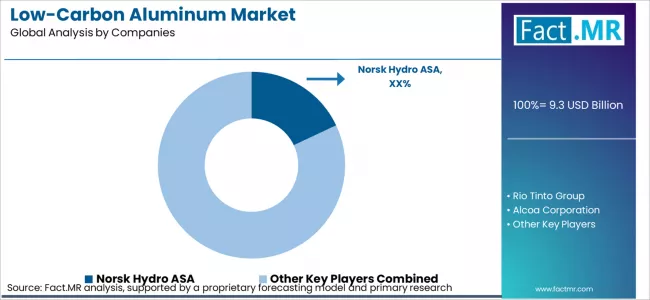
    Low Carbon Aluminum Market Analysis By Company

    Competition in the low carbon aluminum market is driven by emissions intensity reduction, traceable production practices, and alloy performance. Norsk Hydro ASA and Rio Tinto Group supply low carbon primary and rolled aluminum with quantifiable greenhouse gas metrics. Alcoa Corporation and United Company RUSAL plc (RUSAL) focus on smelting technologies that lower energy consumption and support renewable power integration. Aluminum Corporation of China Limited (Chalco) and Emirates Global Aluminium PJSC emphasise scaled capacity and cost efficient decarbonised production. Novelis Inc. and Hindalco Industries Limited offer recycled and low carbon rolled products for automotive and packaging sectors. Constellium SE and Century Aluminum Company concentrate on tailored alloy solutions with reduced carbon footprints. Competitive positioning is defined by carbon accounting transparency, production scalability, and alignment with buyer sustainability benchmarks.

    Key Players of the Low-Carbon Aluminum Market

    • Norsk Hydro ASA
    • Rio Tinto Group
    • Alcoa Corporation
    • United Company RUSAL plc (RUSAL)
    • Aluminum Corporation of China Limited (Chalco)
    • Emirates Global Aluminium PJSC
    • Novelis Inc.
    • Hindalco Industries Limited
    • Constellium SE
    • Century Aluminum Company

    Scope of the Report

    Items Values
    Quantitative Units (2026) USD Billion
    Production Route Recycled or Secondary, Hydro-powered Primary, CCS or Low-Carbon Primary
    Product Form Ingots, Billets, Slabs, Rolled or Extruded Products
    End Use Automotive, Packaging, Construction, Electrical or Electronics, Other
    Certification ASI Certified, EPD or LCAs, Other or None
    Contract Type Long-term Offtake, Spot/Short-term
    Regions Covered North America, Europe, Asia Pacific, Latin America, Middle East & Africa
    Countries Covered United States, Canada, Mexico, Germany, United Kingdom, France, Japan, South Korea, China, India, Brazil, and other countries
    Key Companies Profiled Norsk Hydro ASA, Rio Tinto Group, Alcoa Corporation, United Company RUSAL plc (RUSAL), Aluminum Corporation of China Limited (Chalco), Emirates Global Aluminium PJSC, Novelis Inc., Hindalco Industries Limited, Constellium SE, Century Aluminum Company
    Additional Attributes Dollar revenue by production route, product form, end use, certification, contract type, and region; regional demand trends, competitive landscape, technological advancements in low-carbon aluminum production, operational performance optimization initiatives, and product development strategies

    Low-Carbon Aluminum Market Key Segments

    • Production Route :

      • Recycled or Secondary
      • Hydro-powered Primary
      • CCS or Low-Carbon Primary
    • Product Form :

      • Ingots
      • Billets
      • Slabs
      • Rolled or Extruded Products
    • End Use :

      • Automotive
      • Packaging
      • Construction
      • Electrical or Electronics
      • Other
    • Certification :

      • ASI Certified
      • EPD or LCAs
      • Other or None
    • Contract Type :

      • Long-term Offtake
      • Spot/Short-term
    • Region :

      • North America
        • USA
        • Canada
        • Mexico
      • Europe
        • Germany
        • UK
        • France
        • Italy
        • Spain
        • Rest of Europe
      • Asia Pacific
        • China
        • Japan
        • South Korea
        • India
        • Australia
        • Rest of Asia Pacific
      • Latin America
        • Brazil
        • Argentina
        • Rest of Latin America
      • Middle East and Africa
        • Kingdom of Saudi Arabia
        • United Arab Emirates
        • South Africa
        • Rest of Middle East and Africa
      • Other Regions
        • Oceania
        • Central Asia
        • Other Markets

    Bibliographies

    • International Organization for Standardization. (2023). ISO 14064-1: Greenhouse gases - Part 1: Specification with guidance at the organization level for quantification and reporting of greenhouse gas emissions and removals.
    • European Committee for Standardization. (2023). EN 15804+A2: Sustainability of construction works - Environmental product declarations - Core rules for construction products.
    • International Aluminium Institute. (2024). Aluminium sector greenhouse gas pathways and decarbonisation roadmap. IAI Technical Report.
    • International Energy Agency. (2023). Emissions reduction in the aluminium sector: Tracking clean energy transitions. IEA.
    • World Economic Forum. (2023). Net-zero pathways for aluminium production. WEF Industry Report.

    Table of Content

    1. Executive Summary
      • Global Market Outlook
      • Demand to side Trends
      • Supply to side Trends
      • Technology Roadmap Analysis
      • Analysis and Recommendations
    2. Market Overview
      • Market Coverage / Taxonomy
      • Market Definition / Scope / Limitations
    3. Research Methodology
      • Chapter Orientation
      • Analytical Lens and Working Hypotheses
        • Market Structure, Signals, and Trend Drivers
        • Benchmarking and Cross-market Comparability
        • Market Sizing, Forecasting, and Opportunity Mapping
      • Research Design and Evidence Framework
        • Desk Research Programme (Secondary Evidence)
          • Company Annual and Sustainability Reports
          • Peer-reviewed Journals and Academic Literature
          • Corporate Websites, Product Literature, and Technical Notes
          • Earnings Decks and Investor Briefings
          • Statutory Filings and Regulatory Disclosures
          • Technical White Papers and Standards Notes
          • Trade Journals, Industry Magazines, and Analyst Briefs
          • Conference Proceedings, Webinars, and Seminar Materials
          • Government Statistics Portals and Public Data Releases
          • Press Releases and Reputable Media Coverage
          • Specialist Newsletters and Curated Briefings
          • Sector Databases and Reference Repositories
          • FMR Internal Proprietary Databases and Historical Market Datasets
          • Subscription Datasets and Paid Sources
          • Social Channels, Communities, and Digital Listening Inputs
          • Additional Desk Sources
        • Expert Input and Fieldwork (Primary Evidence)
          • Primary Modes
            • Qualitative Interviews and Expert Elicitation
            • Quantitative Surveys and Structured Data Capture
            • Blended A10oach
          • Why Primary Evidence is Used
          • Field Techniques
            • Interviews
            • Surveys
            • Focus Groups
            • Observational and In-context Research
            • Social and Community Interactions
          • Stakeholder Universe Engaged
            • C-suite Leaders
            • Board Members
            • Presidents and Vice Presidents
            • R&D and Innovation Heads
            • Technical Specialists
            • Domain Subject-matter Experts
            • Scientists
            • Physicians and Other Healthcare Professionals
          • Governance, Ethics, and Data Stewardship
            • Research Ethics
            • Data Integrity and Handling
        • Tooling, Models, and Reference Databases
      • Data Engineering and Model Build
        • Data Acquisition and Ingestion
        • Cleaning, Normalisation, and Verification
        • Opportunity
        • Trends
      • Scenario Forecast
        • Demand in Optimistic Scenario
        • Demand in Likely Scenario
        • Demand in Conservative Scenario
      • Opportunity Map Analysis
      • Product Life Cycle Analysis
      • Supply Chain Analysis
      • Investment Feasibility Matrix
      • Value Chain Analysis
      • PESTLE and Porter’s Analysis
      • Regulatory Landscape
      • Regional Parent Market Outlook
      • Production and Consumption Statistics
      • Import and Export Statistics
    4. Global Market Analysis 2021 to 2025 and Forecast, 2026 to 2036
      • Historical Market Size Value (USD Million) Analysis, 2021 to 2025
      • Current and Future Market Size Value (USD Million) Projections, 2026 to 2036
        • Y to o to Y Growth Trend Analysis
        • Absolute $ Opportunity Analysis
    5. Global Market Pricing Analysis 2021 to 2025 and Forecast 2026 to 2036
    6. Global Market Analysis 2021 to 2025 and Forecast 2026 to 2036, By Production Route
      • Introduction / Key Findings
      • Historical Market Size Value (USD Million) Analysis By Production Route, 2021 to 2025
      • Current and Future Market Size Value (USD Million) Analysis and Forecast By Production Route, 2026 to 2036
        • Recycled or Secondary
        • Hydro-powered Primary
        • CCS or Low-Carbon Primary
      • Y to o to Y Growth Trend Analysis By Production Route, 2021 to 2025
      • Absolute $ Opportunity Analysis By Production Route, 2026 to 2036
    7. Global Market Analysis 2021 to 2025 and Forecast 2026 to 2036, By Product Form
      • Introduction / Key Findings
      • Historical Market Size Value (USD Million) Analysis By Product Form, 2021 to 2025
      • Current and Future Market Size Value (USD Million) Analysis and Forecast By Product Form, 2026 to 2036
        • Ingots
        • Billets
        • Slabs
        • Rolled or Extruded Products
      • Y to o to Y Growth Trend Analysis By Product Form, 2021 to 2025
      • Absolute $ Opportunity Analysis By Product Form, 2026 to 2036
    8. Global Market Analysis 2021 to 2025 and Forecast 2026 to 2036, By End Use
      • Introduction / Key Findings
      • Historical Market Size Value (USD Million) Analysis By End Use, 2021 to 2025
      • Current and Future Market Size Value (USD Million) Analysis and Forecast By End Use, 2026 to 2036
        • Automotive
        • Packaging
        • Construction
        • Electrical or Electronics
        • Other
      • Y to o to Y Growth Trend Analysis By End Use, 2021 to 2025
      • Absolute $ Opportunity Analysis By End Use, 2026 to 2036
    9. Global Market Analysis 2021 to 2025 and Forecast 2026 to 2036, By Certification
      • Introduction / Key Findings
      • Historical Market Size Value (USD Million) Analysis By Certification, 2021 to 2025
      • Current and Future Market Size Value (USD Million) Analysis and Forecast By Certification, 2026 to 2036
        • ASI Certified
        • EPD or LCAs
        • Other or None
      • Y to o to Y Growth Trend Analysis By Certification, 2021 to 2025
      • Absolute $ Opportunity Analysis By Certification, 2026 to 2036
    10. Global Market Analysis 2021 to 2025 and Forecast 2026 to 2036, By Contract Type
      • Introduction / Key Findings
      • Historical Market Size Value (USD Million) Analysis By Contract Type, 2021 to 2025
      • Current and Future Market Size Value (USD Million) Analysis and Forecast By Contract Type, 2026 to 2036
        • Long-term Offtake
        • Spot/Short-term
      • Y to o to Y Growth Trend Analysis By Contract Type, 2021 to 2025
      • Absolute $ Opportunity Analysis By Contract Type, 2026 to 2036
    11. Global Market Analysis 2021 to 2025 and Forecast 2026 to 2036, By Region
      • Introduction
      • Historical Market Size Value (USD Million) Analysis By Region, 2021 to 2025
      • Current Market Size Value (USD Million) Analysis and Forecast By Region, 2026 to 2036
        • North America
        • Latin America
        • Western Europe
        • Eastern Europe
        • East Asia
        • South Asia and Pacific
        • Middle East & Africa
      • Market Attractiveness Analysis By Region
    12. North America Market Analysis 2021 to 2025 and Forecast 2026 to 2036, By Country
      • Historical Market Size Value (USD Million) Trend Analysis By Market Taxonomy, 2021 to 2025
      • Market Size Value (USD Million) Forecast By Market Taxonomy, 2026 to 2036
        • By Country
          • USA
          • Canada
          • Mexico
        • By Production Route
        • By Product Form
        • By End Use
        • By Certification
        • By Contract Type
      • Market Attractiveness Analysis
        • By Country
        • By Production Route
        • By Product Form
        • By End Use
        • By Certification
        • By Contract Type
      • Key Takeaways
    13. Latin America Market Analysis 2021 to 2025 and Forecast 2026 to 2036, By Country
      • Historical Market Size Value (USD Million) Trend Analysis By Market Taxonomy, 2021 to 2025
      • Market Size Value (USD Million) Forecast By Market Taxonomy, 2026 to 2036
        • By Country
          • Brazil
          • Chile
          • Rest of Latin America
        • By Production Route
        • By Product Form
        • By End Use
        • By Certification
        • By Contract Type
      • Market Attractiveness Analysis
        • By Country
        • By Production Route
        • By Product Form
        • By End Use
        • By Certification
        • By Contract Type
      • Key Takeaways
    14. Western Europe Market Analysis 2021 to 2025 and Forecast 2026 to 2036, By Country
      • Historical Market Size Value (USD Million) Trend Analysis By Market Taxonomy, 2021 to 2025
      • Market Size Value (USD Million) Forecast By Market Taxonomy, 2026 to 2036
        • By Country
          • Germany
          • UK
          • Italy
          • Spain
          • France
          • Nordic
          • BENELUX
          • Rest of Western Europe
        • By Production Route
        • By Product Form
        • By End Use
        • By Certification
        • By Contract Type
      • Market Attractiveness Analysis
        • By Country
        • By Production Route
        • By Product Form
        • By End Use
        • By Certification
        • By Contract Type
      • Key Takeaways
    15. Eastern Europe Market Analysis 2021 to 2025 and Forecast 2026 to 2036, By Country
      • Historical Market Size Value (USD Million) Trend Analysis By Market Taxonomy, 2021 to 2025
      • Market Size Value (USD Million) Forecast By Market Taxonomy, 2026 to 2036
        • By Country
          • Russia
          • Poland
          • Hungary
          • Balkan & Baltic
          • Rest of Eastern Europe
        • By Production Route
        • By Product Form
        • By End Use
        • By Certification
        • By Contract Type
      • Market Attractiveness Analysis
        • By Country
        • By Production Route
        • By Product Form
        • By End Use
        • By Certification
        • By Contract Type
      • Key Takeaways
    16. East Asia Market Analysis 2021 to 2025 and Forecast 2026 to 2036, By Country
      • Historical Market Size Value (USD Million) Trend Analysis By Market Taxonomy, 2021 to 2025
      • Market Size Value (USD Million) Forecast By Market Taxonomy, 2026 to 2036
        • By Country
          • China
          • Japan
          • South Korea
        • By Production Route
        • By Product Form
        • By End Use
        • By Certification
        • By Contract Type
      • Market Attractiveness Analysis
        • By Country
        • By Production Route
        • By Product Form
        • By End Use
        • By Certification
        • By Contract Type
      • Key Takeaways
    17. South Asia and Pacific Market Analysis 2021 to 2025 and Forecast 2026 to 2036, By Country
      • Historical Market Size Value (USD Million) Trend Analysis By Market Taxonomy, 2021 to 2025
      • Market Size Value (USD Million) Forecast By Market Taxonomy, 2026 to 2036
        • By Country
          • India
          • ASEAN
          • Australia & New Zealand
          • Rest of South Asia and Pacific
        • By Production Route
        • By Product Form
        • By End Use
        • By Certification
        • By Contract Type
      • Market Attractiveness Analysis
        • By Country
        • By Production Route
        • By Product Form
        • By End Use
        • By Certification
        • By Contract Type
      • Key Takeaways
    18. Middle East & Africa Market Analysis 2021 to 2025 and Forecast 2026 to 2036, By Country
      • Historical Market Size Value (USD Million) Trend Analysis By Market Taxonomy, 2021 to 2025
      • Market Size Value (USD Million) Forecast By Market Taxonomy, 2026 to 2036
        • By Country
          • Kingdom of Saudi Arabia
          • Other GCC Countries
          • Turkiye
          • South Africa
          • Other African Union
          • Rest of Middle East & Africa
        • By Production Route
        • By Product Form
        • By End Use
        • By Certification
        • By Contract Type
      • Market Attractiveness Analysis
        • By Country
        • By Production Route
        • By Product Form
        • By End Use
        • By Certification
        • By Contract Type
      • Key Takeaways
    19. Key Countries Market Analysis
      • USA
        • Pricing Analysis
        • Market Share Analysis, 2025
          • By Production Route
          • By Product Form
          • By End Use
          • By Certification
          • By Contract Type
      • Canada
        • Pricing Analysis
        • Market Share Analysis, 2025
          • By Production Route
          • By Product Form
          • By End Use
          • By Certification
          • By Contract Type
      • Mexico
        • Pricing Analysis
        • Market Share Analysis, 2025
          • By Production Route
          • By Product Form
          • By End Use
          • By Certification
          • By Contract Type
      • Brazil
        • Pricing Analysis
        • Market Share Analysis, 2025
          • By Production Route
          • By Product Form
          • By End Use
          • By Certification
          • By Contract Type
      • Chile
        • Pricing Analysis
        • Market Share Analysis, 2025
          • By Production Route
          • By Product Form
          • By End Use
          • By Certification
          • By Contract Type
      • Germany
        • Pricing Analysis
        • Market Share Analysis, 2025
          • By Production Route
          • By Product Form
          • By End Use
          • By Certification
          • By Contract Type
      • UK
        • Pricing Analysis
        • Market Share Analysis, 2025
          • By Production Route
          • By Product Form
          • By End Use
          • By Certification
          • By Contract Type
      • Italy
        • Pricing Analysis
        • Market Share Analysis, 2025
          • By Production Route
          • By Product Form
          • By End Use
          • By Certification
          • By Contract Type
      • Spain
        • Pricing Analysis
        • Market Share Analysis, 2025
          • By Production Route
          • By Product Form
          • By End Use
          • By Certification
          • By Contract Type
      • France
        • Pricing Analysis
        • Market Share Analysis, 2025
          • By Production Route
          • By Product Form
          • By End Use
          • By Certification
          • By Contract Type
      • India
        • Pricing Analysis
        • Market Share Analysis, 2025
          • By Production Route
          • By Product Form
          • By End Use
          • By Certification
          • By Contract Type
      • ASEAN
        • Pricing Analysis
        • Market Share Analysis, 2025
          • By Production Route
          • By Product Form
          • By End Use
          • By Certification
          • By Contract Type
      • Australia & New Zealand
        • Pricing Analysis
        • Market Share Analysis, 2025
          • By Production Route
          • By Product Form
          • By End Use
          • By Certification
          • By Contract Type
      • China
        • Pricing Analysis
        • Market Share Analysis, 2025
          • By Production Route
          • By Product Form
          • By End Use
          • By Certification
          • By Contract Type
      • Japan
        • Pricing Analysis
        • Market Share Analysis, 2025
          • By Production Route
          • By Product Form
          • By End Use
          • By Certification
          • By Contract Type
      • South Korea
        • Pricing Analysis
        • Market Share Analysis, 2025
          • By Production Route
          • By Product Form
          • By End Use
          • By Certification
          • By Contract Type
      • Russia
        • Pricing Analysis
        • Market Share Analysis, 2025
          • By Production Route
          • By Product Form
          • By End Use
          • By Certification
          • By Contract Type
      • Poland
        • Pricing Analysis
        • Market Share Analysis, 2025
          • By Production Route
          • By Product Form
          • By End Use
          • By Certification
          • By Contract Type
      • Hungary
        • Pricing Analysis
        • Market Share Analysis, 2025
          • By Production Route
          • By Product Form
          • By End Use
          • By Certification
          • By Contract Type
      • Kingdom of Saudi Arabia
        • Pricing Analysis
        • Market Share Analysis, 2025
          • By Production Route
          • By Product Form
          • By End Use
          • By Certification
          • By Contract Type
      • Turkiye
        • Pricing Analysis
        • Market Share Analysis, 2025
          • By Production Route
          • By Product Form
          • By End Use
          • By Certification
          • By Contract Type
      • South Africa
        • Pricing Analysis
        • Market Share Analysis, 2025
          • By Production Route
          • By Product Form
          • By End Use
          • By Certification
          • By Contract Type
    20. Market Structure Analysis
      • Competition Dashboard
      • Competition Benchmarking
      • Market Share Analysis of Top Players
        • By Regional
        • By Production Route
        • By Product Form
        • By End Use
        • By Certification
        • By Contract Type
    21. Competition Analysis
      • Competition Deep Dive
        • Norsk Hydro ASA
          • Overview
          • Product Portfolio
          • Profitability by Market Segments (Product/Age /Sales Channel/Region)
          • Sales Footprint
          • Strategy Overview
            • Marketing Strategy
            • Product Strategy
            • Channel Strategy
        • Rio Tinto Group
        • Alcoa Corporation
        • Value (USD Million)ed Company RUSAL plc (RUSAL)
        • Aluminum Corporation of China Limited (Chalco)
        • Emirates Global Aluminium PJSC
        • Novelis Inc.
        • Hindalco Industries Limited
        • Constellium SE
        • Century Aluminum Company
    22. Assumptions & Acronyms Used

    List Of Table

    • Table 1: Global Market Value (USD Million) Forecast by Region, 2021 to 2036
    • Table 2: Global Market Value (USD Million) Forecast by Production Route, 2021 to 2036
    • Table 3: Global Market Value (USD Million) Forecast by Product Form, 2021 to 2036
    • Table 4: Global Market Value (USD Million) Forecast by End Use, 2021 to 2036
    • Table 5: Global Market Value (USD Million) Forecast by Certification, 2021 to 2036
    • Table 6: Global Market Value (USD Million) Forecast by Contract Type, 2021 to 2036
    • Table 7: North America Market Value (USD Million) Forecast by Country, 2021 to 2036
    • Table 8: North America Market Value (USD Million) Forecast by Production Route, 2021 to 2036
    • Table 9: North America Market Value (USD Million) Forecast by Product Form, 2021 to 2036
    • Table 10: North America Market Value (USD Million) Forecast by End Use, 2021 to 2036
    • Table 11: North America Market Value (USD Million) Forecast by Certification, 2021 to 2036
    • Table 12: North America Market Value (USD Million) Forecast by Contract Type, 2021 to 2036
    • Table 13: Latin America Market Value (USD Million) Forecast by Country, 2021 to 2036
    • Table 14: Latin America Market Value (USD Million) Forecast by Production Route, 2021 to 2036
    • Table 15: Latin America Market Value (USD Million) Forecast by Product Form, 2021 to 2036
    • Table 16: Latin America Market Value (USD Million) Forecast by End Use, 2021 to 2036
    • Table 17: Latin America Market Value (USD Million) Forecast by Certification, 2021 to 2036
    • Table 18: Latin America Market Value (USD Million) Forecast by Contract Type, 2021 to 2036
    • Table 19: Western Europe Market Value (USD Million) Forecast by Country, 2021 to 2036
    • Table 20: Western Europe Market Value (USD Million) Forecast by Production Route, 2021 to 2036
    • Table 21: Western Europe Market Value (USD Million) Forecast by Product Form, 2021 to 2036
    • Table 22: Western Europe Market Value (USD Million) Forecast by End Use, 2021 to 2036
    • Table 23: Western Europe Market Value (USD Million) Forecast by Certification, 2021 to 2036
    • Table 24: Western Europe Market Value (USD Million) Forecast by Contract Type, 2021 to 2036
    • Table 25: Eastern Europe Market Value (USD Million) Forecast by Country, 2021 to 2036
    • Table 26: Eastern Europe Market Value (USD Million) Forecast by Production Route, 2021 to 2036
    • Table 27: Eastern Europe Market Value (USD Million) Forecast by Product Form, 2021 to 2036
    • Table 28: Eastern Europe Market Value (USD Million) Forecast by End Use, 2021 to 2036
    • Table 29: Eastern Europe Market Value (USD Million) Forecast by Certification, 2021 to 2036
    • Table 30: Eastern Europe Market Value (USD Million) Forecast by Contract Type, 2021 to 2036
    • Table 31: East Asia Market Value (USD Million) Forecast by Country, 2021 to 2036
    • Table 32: East Asia Market Value (USD Million) Forecast by Production Route, 2021 to 2036
    • Table 33: East Asia Market Value (USD Million) Forecast by Product Form, 2021 to 2036
    • Table 34: East Asia Market Value (USD Million) Forecast by End Use, 2021 to 2036
    • Table 35: East Asia Market Value (USD Million) Forecast by Certification, 2021 to 2036
    • Table 36: East Asia Market Value (USD Million) Forecast by Contract Type, 2021 to 2036
    • Table 37: South Asia and Pacific Market Value (USD Million) Forecast by Country, 2021 to 2036
    • Table 38: South Asia and Pacific Market Value (USD Million) Forecast by Production Route, 2021 to 2036
    • Table 39: South Asia and Pacific Market Value (USD Million) Forecast by Product Form, 2021 to 2036
    • Table 40: South Asia and Pacific Market Value (USD Million) Forecast by End Use, 2021 to 2036
    • Table 41: South Asia and Pacific Market Value (USD Million) Forecast by Certification, 2021 to 2036
    • Table 42: South Asia and Pacific Market Value (USD Million) Forecast by Contract Type, 2021 to 2036
    • Table 43: Middle East & Africa Market Value (USD Million) Forecast by Country, 2021 to 2036
    • Table 44: Middle East & Africa Market Value (USD Million) Forecast by Production Route, 2021 to 2036
    • Table 45: Middle East & Africa Market Value (USD Million) Forecast by Product Form, 2021 to 2036
    • Table 46: Middle East & Africa Market Value (USD Million) Forecast by End Use, 2021 to 2036
    • Table 47: Middle East & Africa Market Value (USD Million) Forecast by Certification, 2021 to 2036
    • Table 48: Middle East & Africa Market Value (USD Million) Forecast by Contract Type, 2021 to 2036

    List Of Figures

    • Figure 1: Global Market Pricing Analysis
    • Figure 2: Global Market Value (USD Million) Forecast 2021 to 2036
    • Figure 3: Global Market Value Share and BPS Analysis by Production Route, 2026 and 2036
    • Figure 4: Global Market Y to o to Y Growth Comparison by Production Route, 2026 to 2036
    • Figure 5: Global Market Attractiveness Analysis by Production Route
    • Figure 6: Global Market Value Share and BPS Analysis by Product Form, 2026 and 2036
    • Figure 7: Global Market Y to o to Y Growth Comparison by Product Form, 2026 to 2036
    • Figure 8: Global Market Attractiveness Analysis by Product Form
    • Figure 9: Global Market Value Share and BPS Analysis by End Use, 2026 and 2036
    • Figure 10: Global Market Y to o to Y Growth Comparison by End Use, 2026 to 2036
    • Figure 11: Global Market Attractiveness Analysis by End Use
    • Figure 12: Global Market Value Share and BPS Analysis by Certification, 2026 and 2036
    • Figure 13: Global Market Y to o to Y Growth Comparison by Certification, 2026 to 2036
    • Figure 14: Global Market Attractiveness Analysis by Certification
    • Figure 15: Global Market Value Share and BPS Analysis by Contract Type, 2026 and 2036
    • Figure 16: Global Market Y to o to Y Growth Comparison by Contract Type, 2026 to 2036
    • Figure 17: Global Market Attractiveness Analysis by Contract Type
    • Figure 18: Global Market Value (USD Million) Share and BPS Analysis by Region, 2026 and 2036
    • Figure 19: Global Market Y to o to Y Growth Comparison by Region, 2026 to 2036
    • Figure 20: Global Market Attractiveness Analysis by Region
    • Figure 21: North America Market Incremental Dollar Opportunity, 2026 to 2036
    • Figure 22: Latin America Market Incremental Dollar Opportunity, 2026 to 2036
    • Figure 23: Western Europe Market Incremental Dollar Opportunity, 2026 to 2036
    • Figure 24: Eastern Europe Market Incremental Dollar Opportunity, 2026 to 2036
    • Figure 25: East Asia Market Incremental Dollar Opportunity, 2026 to 2036
    • Figure 26: South Asia and Pacific Market Incremental Dollar Opportunity, 2026 to 2036
    • Figure 27: Middle East & Africa Market Incremental Dollar Opportunity, 2026 to 2036
    • Figure 28: North America Market Value Share and BPS Analysis by Country, 2026 and 2036
    • Figure 29: North America Market Value Share and BPS Analysis by Production Route, 2026 and 2036
    • Figure 30: North America Market Y to o to Y Growth Comparison by Production Route, 2026 to 2036
    • Figure 31: North America Market Attractiveness Analysis by Production Route
    • Figure 32: North America Market Value Share and BPS Analysis by Product Form, 2026 and 2036
    • Figure 33: North America Market Y to o to Y Growth Comparison by Product Form, 2026 to 2036
    • Figure 34: North America Market Attractiveness Analysis by Product Form
    • Figure 35: North America Market Value Share and BPS Analysis by End Use, 2026 and 2036
    • Figure 36: North America Market Y to o to Y Growth Comparison by End Use, 2026 to 2036
    • Figure 37: North America Market Attractiveness Analysis by End Use
    • Figure 38: North America Market Value Share and BPS Analysis by Certification, 2026 and 2036
    • Figure 39: North America Market Y to o to Y Growth Comparison by Certification, 2026 to 2036
    • Figure 40: North America Market Attractiveness Analysis by Certification
    • Figure 41: North America Market Value Share and BPS Analysis by Contract Type, 2026 and 2036
    • Figure 42: North America Market Y to o to Y Growth Comparison by Contract Type, 2026 to 2036
    • Figure 43: North America Market Attractiveness Analysis by Contract Type
    • Figure 44: Latin America Market Value Share and BPS Analysis by Country, 2026 and 2036
    • Figure 45: Latin America Market Value Share and BPS Analysis by Production Route, 2026 and 2036
    • Figure 46: Latin America Market Y to o to Y Growth Comparison by Production Route, 2026 to 2036
    • Figure 47: Latin America Market Attractiveness Analysis by Production Route
    • Figure 48: Latin America Market Value Share and BPS Analysis by Product Form, 2026 and 2036
    • Figure 49: Latin America Market Y to o to Y Growth Comparison by Product Form, 2026 to 2036
    • Figure 50: Latin America Market Attractiveness Analysis by Product Form
    • Figure 51: Latin America Market Value Share and BPS Analysis by End Use, 2026 and 2036
    • Figure 52: Latin America Market Y to o to Y Growth Comparison by End Use, 2026 to 2036
    • Figure 53: Latin America Market Attractiveness Analysis by End Use
    • Figure 54: Latin America Market Value Share and BPS Analysis by Certification, 2026 and 2036
    • Figure 55: Latin America Market Y to o to Y Growth Comparison by Certification, 2026 to 2036
    • Figure 56: Latin America Market Attractiveness Analysis by Certification
    • Figure 57: Latin America Market Value Share and BPS Analysis by Contract Type, 2026 and 2036
    • Figure 58: Latin America Market Y to o to Y Growth Comparison by Contract Type, 2026 to 2036
    • Figure 59: Latin America Market Attractiveness Analysis by Contract Type
    • Figure 60: Western Europe Market Value Share and BPS Analysis by Country, 2026 and 2036
    • Figure 61: Western Europe Market Value Share and BPS Analysis by Production Route, 2026 and 2036
    • Figure 62: Western Europe Market Y to o to Y Growth Comparison by Production Route, 2026 to 2036
    • Figure 63: Western Europe Market Attractiveness Analysis by Production Route
    • Figure 64: Western Europe Market Value Share and BPS Analysis by Product Form, 2026 and 2036
    • Figure 65: Western Europe Market Y to o to Y Growth Comparison by Product Form, 2026 to 2036
    • Figure 66: Western Europe Market Attractiveness Analysis by Product Form
    • Figure 67: Western Europe Market Value Share and BPS Analysis by End Use, 2026 and 2036
    • Figure 68: Western Europe Market Y to o to Y Growth Comparison by End Use, 2026 to 2036
    • Figure 69: Western Europe Market Attractiveness Analysis by End Use
    • Figure 70: Western Europe Market Value Share and BPS Analysis by Certification, 2026 and 2036
    • Figure 71: Western Europe Market Y to o to Y Growth Comparison by Certification, 2026 to 2036
    • Figure 72: Western Europe Market Attractiveness Analysis by Certification
    • Figure 73: Western Europe Market Value Share and BPS Analysis by Contract Type, 2026 and 2036
    • Figure 74: Western Europe Market Y to o to Y Growth Comparison by Contract Type, 2026 to 2036
    • Figure 75: Western Europe Market Attractiveness Analysis by Contract Type
    • Figure 76: Eastern Europe Market Value Share and BPS Analysis by Country, 2026 and 2036
    • Figure 77: Eastern Europe Market Value Share and BPS Analysis by Production Route, 2026 and 2036
    • Figure 78: Eastern Europe Market Y to o to Y Growth Comparison by Production Route, 2026 to 2036
    • Figure 79: Eastern Europe Market Attractiveness Analysis by Production Route
    • Figure 80: Eastern Europe Market Value Share and BPS Analysis by Product Form, 2026 and 2036
    • Figure 81: Eastern Europe Market Y to o to Y Growth Comparison by Product Form, 2026 to 2036
    • Figure 82: Eastern Europe Market Attractiveness Analysis by Product Form
    • Figure 83: Eastern Europe Market Value Share and BPS Analysis by End Use, 2026 and 2036
    • Figure 84: Eastern Europe Market Y to o to Y Growth Comparison by End Use, 2026 to 2036
    • Figure 85: Eastern Europe Market Attractiveness Analysis by End Use
    • Figure 86: Eastern Europe Market Value Share and BPS Analysis by Certification, 2026 and 2036
    • Figure 87: Eastern Europe Market Y to o to Y Growth Comparison by Certification, 2026 to 2036
    • Figure 88: Eastern Europe Market Attractiveness Analysis by Certification
    • Figure 89: Eastern Europe Market Value Share and BPS Analysis by Contract Type, 2026 and 2036
    • Figure 90: Eastern Europe Market Y to o to Y Growth Comparison by Contract Type, 2026 to 2036
    • Figure 91: Eastern Europe Market Attractiveness Analysis by Contract Type
    • Figure 92: East Asia Market Value Share and BPS Analysis by Country, 2026 and 2036
    • Figure 93: East Asia Market Value Share and BPS Analysis by Production Route, 2026 and 2036
    • Figure 94: East Asia Market Y to o to Y Growth Comparison by Production Route, 2026 to 2036
    • Figure 95: East Asia Market Attractiveness Analysis by Production Route
    • Figure 96: East Asia Market Value Share and BPS Analysis by Product Form, 2026 and 2036
    • Figure 97: East Asia Market Y to o to Y Growth Comparison by Product Form, 2026 to 2036
    • Figure 98: East Asia Market Attractiveness Analysis by Product Form
    • Figure 99: East Asia Market Value Share and BPS Analysis by End Use, 2026 and 2036
    • Figure 100: East Asia Market Y to o to Y Growth Comparison by End Use, 2026 to 2036
    • Figure 101: East Asia Market Attractiveness Analysis by End Use
    • Figure 102: East Asia Market Value Share and BPS Analysis by Certification, 2026 and 2036
    • Figure 103: East Asia Market Y to o to Y Growth Comparison by Certification, 2026 to 2036
    • Figure 104: East Asia Market Attractiveness Analysis by Certification
    • Figure 105: East Asia Market Value Share and BPS Analysis by Contract Type, 2026 and 2036
    • Figure 106: East Asia Market Y to o to Y Growth Comparison by Contract Type, 2026 to 2036
    • Figure 107: East Asia Market Attractiveness Analysis by Contract Type
    • Figure 108: South Asia and Pacific Market Value Share and BPS Analysis by Country, 2026 and 2036
    • Figure 109: South Asia and Pacific Market Value Share and BPS Analysis by Production Route, 2026 and 2036
    • Figure 110: South Asia and Pacific Market Y to o to Y Growth Comparison by Production Route, 2026 to 2036
    • Figure 111: South Asia and Pacific Market Attractiveness Analysis by Production Route
    • Figure 112: South Asia and Pacific Market Value Share and BPS Analysis by Product Form, 2026 and 2036
    • Figure 113: South Asia and Pacific Market Y to o to Y Growth Comparison by Product Form, 2026 to 2036
    • Figure 114: South Asia and Pacific Market Attractiveness Analysis by Product Form
    • Figure 115: South Asia and Pacific Market Value Share and BPS Analysis by End Use, 2026 and 2036
    • Figure 116: South Asia and Pacific Market Y to o to Y Growth Comparison by End Use, 2026 to 2036
    • Figure 117: South Asia and Pacific Market Attractiveness Analysis by End Use
    • Figure 118: South Asia and Pacific Market Value Share and BPS Analysis by Certification, 2026 and 2036
    • Figure 119: South Asia and Pacific Market Y to o to Y Growth Comparison by Certification, 2026 to 2036
    • Figure 120: South Asia and Pacific Market Attractiveness Analysis by Certification
    • Figure 121: South Asia and Pacific Market Value Share and BPS Analysis by Contract Type, 2026 and 2036
    • Figure 122: South Asia and Pacific Market Y to o to Y Growth Comparison by Contract Type, 2026 to 2036
    • Figure 123: South Asia and Pacific Market Attractiveness Analysis by Contract Type
    • Figure 124: Middle East & Africa Market Value Share and BPS Analysis by Country, 2026 and 2036
    • Figure 125: Middle East & Africa Market Value Share and BPS Analysis by Production Route, 2026 and 2036
    • Figure 126: Middle East & Africa Market Y to o to Y Growth Comparison by Production Route, 2026 to 2036
    • Figure 127: Middle East & Africa Market Attractiveness Analysis by Production Route
    • Figure 128: Middle East & Africa Market Value Share and BPS Analysis by Product Form, 2026 and 2036
    • Figure 129: Middle East & Africa Market Y to o to Y Growth Comparison by Product Form, 2026 to 2036
    • Figure 130: Middle East & Africa Market Attractiveness Analysis by Product Form
    • Figure 131: Middle East & Africa Market Value Share and BPS Analysis by End Use, 2026 and 2036
    • Figure 132: Middle East & Africa Market Y to o to Y Growth Comparison by End Use, 2026 to 2036
    • Figure 133: Middle East & Africa Market Attractiveness Analysis by End Use
    • Figure 134: Middle East & Africa Market Value Share and BPS Analysis by Certification, 2026 and 2036
    • Figure 135: Middle East & Africa Market Y to o to Y Growth Comparison by Certification, 2026 to 2036
    • Figure 136: Middle East & Africa Market Attractiveness Analysis by Certification
    • Figure 137: Middle East & Africa Market Value Share and BPS Analysis by Contract Type, 2026 and 2036
    • Figure 138: Middle East & Africa Market Y to o to Y Growth Comparison by Contract Type, 2026 to 2036
    • Figure 139: Middle East & Africa Market Attractiveness Analysis by Contract Type
    • Figure 140: Global Market - Tier Structure Analysis
    • Figure 141: Global Market - Company Share Analysis

    - FAQs -

    How big is the low-carbon aluminum market in 2026?

    The global low-carbon aluminum market is estimated to be valued at USD 9.3 billion in 2026.

    What will be the size of low-carbon aluminum market in 2036?

    The market size for the low-carbon aluminum market is projected to reach USD 15.8 billion by 2036.

    How much will be the low-carbon aluminum market growth between 2026 and 2036?

    The low-carbon aluminum market is expected to grow at a 5.4% CAGR between 2026 and 2036.

    What are the key product types in the low-carbon aluminum market?

    The key product types in low-carbon aluminum market are recycled or secondary, hydro-powered primary and ccs or low-carbon primary.

    Which product form segment to contribute significant share in the low-carbon aluminum market in 2026?

    In terms of product form, ingots segment to command 38.0% share in the low-carbon aluminum market in 2026.

    Low-Carbon Aluminum Market