- Base Value(2025): 900.0 Mn
- Estimated Value(2026): 1004.4 Mn
- Forecast Value (2036): 3009.9 Mn
- CAGR (2026 - 2036): 11.6%
Movement Disorder Market Analysis and Forecast by Fact.MR
- The Movement Disorder Market is expected to grow from USD 1,004.4 million in 2026 to USD 3,009.9 million by 2036, at an 11.6% CAGR.
- Driven by rising Parkinson disease prevalence in aging populations, expanding clinical adoption of targeted dopaminergic agents and deep brain stimulation systems, and growing pharmaceutical investment in disease-modifying therapies for neurodegenerative movement disorders, with dopaminergic agents accounting for 44.6% share.
- Parkinson disease contributing 58.9% share as companies invest in next-generation receptor-selective agonists, adaptive neuromodulation platforms, and gene therapy approaches.
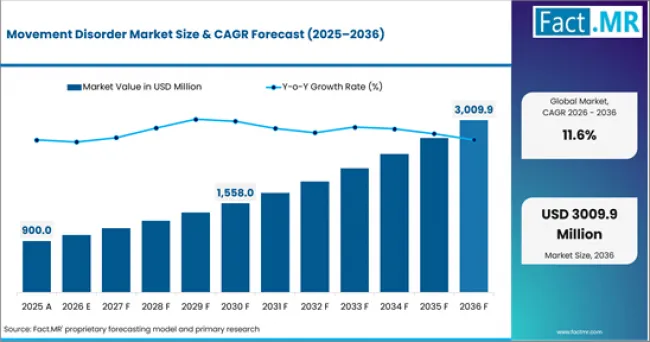
Movement Disorder Market Value Analysis | Source: Fact.MR
Summary of Movement Disorder Market
- Market Snapshot
- In 2025, the global Movement Disorder Market was valued at approximately USD 900.0 million.
- The market is estimated to reach USD 1,004.4 million in 2026 and is projected to attain USD 3,009.9 million by 2036.
- The movement disorder market is likely to expand at a CAGR of 11.6% during the forecast period.
- The market is anticipated to create an absolute dollar opportunity of USD 2,005.5 million between 2026 and 2036.
- Dopaminergic Agents accounts for 44.6% of therapeutic class segment share in 2026.
- China (13.0%) and India (12.6%) are the key growth markets during the forecast period.
- Demand and Growth Drivers
- Rising Parkinson disease prevalence driven by global aging demographics is expanding the patient population requiring long-term pharmacological and interventional movement disorder management.
- Growing clinical adoption of targeted dopaminergic agents with improved receptor selectivity is addressing unmet needs for better tolerability and sustained motor symptom control.
- Deep brain stimulation technology advancement, including adaptive and sensing-enabled systems, is expanding the interventional treatment options for medication-refractory patients.
- Pharmaceutical investment in disease-modifying therapies including alpha-synuclein targeting agents and gene therapies is creating a potential premium product tier.
- Expanding access to specialist neurology care in emerging markets is increasing diagnosis rates and treatment initiation for previously undiagnosed movement disorder patients.
- Product and Segment View
- Dopaminergic agents lead with 44.6% of therapeutic class share in 2026, reflecting the foundational role of dopamine replacement and agonist therapies in Parkinson disease management.
- Oral therapies account for 46.1% of route of administration share, supported by patient compliance advantages and primary care prescribing accessibility.
- Key segmentation includes:
- Therapeutic Class: Dopaminergic Agents, Anti-Tremor Agents, Anticholinergic Agents, MAO-B Inhibitors
- Disease Indication: Parkinson Disease, Essential Tremor, Dystonia, Huntington Disease
- Therapy Type: Pharmacological Therapy, Neuromodulation Therapy, Surgical Intervention, Rehabilitation Therapy
- These therapies address:
- Motor symptom management including tremor, rigidity, bradykinesia, and postural instability in Parkinson disease
- Interventional treatment through deep brain stimulation for medication-refractory movement disorders
- Symptom-specific management of essential tremor, dystonia, and hyperkinetic movement disorders
- Geography and Competitive Outlook
- China leads at 13.0%, driven by hospital neurology expansion, growing Parkinson disease diagnosis rates, and domestic pharmaceutical development.
- India at 12.6% and USA at 12.1% reflect expanding specialist neurology access and strong pharmaceutical adoption of advanced dopaminergic therapies.
- Europe shows steady growth, with Germany at 11.3% and UK at 11.2% supported by advanced neurological care infrastructure and DBS center networks.
- Major players include AbbVie Inc., Medtronic plc, Boston Scientific, Abbott Laboratories.
- Analyst Opinion
- Shambhu Nath Jha, Principal Consultant at Fact.MR, says "The movement disorder market is entering a period of pipeline-driven growth as AbbVie's tavapadon and other next-generation dopaminergic agents approach regulatory decisions. The fundamental growth driver remains demographics: Parkinson disease prevalence is rising in direct proportion to aging populations globally, and there is no disease-modifying therapy available yet. The commercial opportunity is concentrated in two areas: receptor-selective oral agents that improve tolerability over existing dopamine agonists, and adaptive deep brain stimulation systems that personalize neuromodulation based on real-time brain signal sensing."
Key Growth Drivers, Constraints, and Opportunities
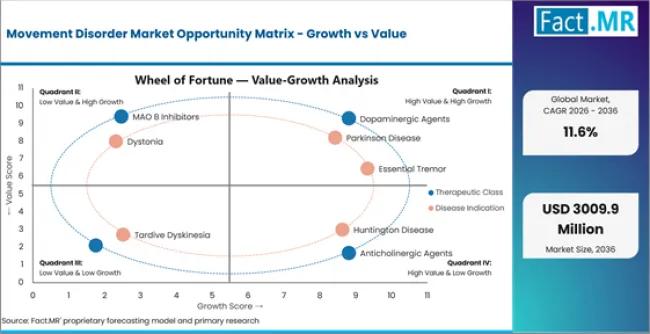
Movement Disorder Market Opportunity Matrix Growth Vs Value | Source: Fact.MR
Key Factors Driving Growth
- There is a greater incidence of Parkinson disease in older populations around the world, increasing the population of patients requiring ongoing pharmacologic and interventional management.
- Next-generation dopaminergic agents with improved receptor selectivity (including D1/D5 selective agonists such as tavapadon) overcome tolerability limitations of existing dopamine agonists.
- Real-time sensing of brain signals in adaptive deep brain stimulation systems is personalizing neuromodulation therapy to optimize symptom control.
Key Market Constraints
- Disease-modifying therapies remain elusive, limiting treatment to symptomatic management and creating a ceiling on per-patient therapeutic value.
- High cost of DBS systems and specialist neurosurgical requirements restrict neuromodulation access to well-resourced academic and tertiary centers.
- Levodopa-induced dyskinesia and motor fluctuations in advanced Parkinson disease create complex treatment management challenges that limit therapeutic effectiveness over time.
Key Opportunity Areas
- Disease-modifying therapies targeting alpha-synuclein aggregation and neuroinflammation represent the highest-value pipeline opportunity if clinical efficacy is demonstrated.
- Gene therapy approaches for Parkinson disease, including AAV-delivered enzyme replacement, are advancing through clinical trials with potential for single-treatment interventions.
- Emerging market neurology infrastructure investment is creating new patient access channels in markets with large undiagnosed Parkinson disease populations.
Segment-wise Analysis of the Movement Disorder Market
- Dopaminergic agents will garner a 44.6% share of therapeutic class in 2026. Dopamine-based pharmacotherapy is key to the management of Parkinson disease.
- Parkinson disease leads the disease indication with a 58.9% share due to the largest patient population and most extensive treatment protocol requirements.
- Specialty neurology clinics hold the end user share of 37.8% due to the specialist-driven nature of movement disorder diagnosis and treatment management.
The market is segmented by therapeutic class, disease indication, therapy type, route of administration, end user, and region. Pharmacological therapy share is 49.3% of therapy type. Neuromodulation is growing at a faster rate with the advancement of adaptive DBS technology.
Which Therapeutic Class Dominates the Movement Disorder Market?
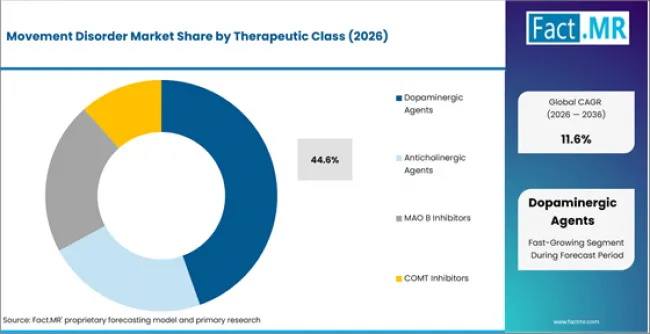
Movement Disorder Market Analysis By Therapeutic Class | Source: Fact.MR
Dopaminergic agents hold 44.6% of therapeutic class value in 2026. Levodopa/carbidopa combinations are the gold standard for the management of motor symptoms of Parkinson disease, with dopamine agonists such as pramipexole, ropinirole, and the investigational D1/D5-selective agonist tavapadon, which is approaching FDA review.
Adjunctive and early-stage treatment utilizes mao-b inhibitors and anticholinergic agents. Essential tremor and some subtypes of tremor in Parkinson disease are treated with anti-tremor agents. The therapeutic class mix is expected to change as next-generation receptor-selective agents come to market.
Which Disease Indication Dominates the Movement Disorder Market?
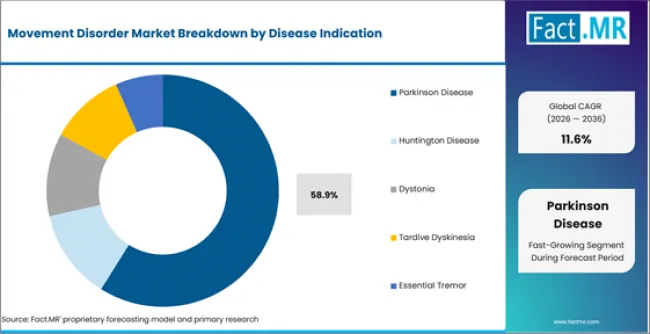
Movement Disorder Market Analysis By Disease Indication | Source: Fact.MR
Parkinson disease accounts for 58.9% of disease indication value in 2026. The chronic progressive nature of the disease leads to a persistent treatment demand of decades per patient and growing therapeutic complexity from the initial monotherapy to multi-drug regimens, and finally to consideration for a DBS intervention.
Essential tremor is the second largest indication, and is managed pharmacologically with beta-blockers and anticonvulsants, with increasing use of DBS. Dystonia and Huntington’s disease are smaller, but clinically meaningful segments with large unmet therapeutic needs.
Which Product Trend is Shaping the Next Phase of Growth in the Movement Disorder Market?
Receptor-selective dopaminergic agents are transforming the pharmacotherapeutic landscape of Parkinson disease. AbbVie’s tavapadon, a D1/D5-selective partial agonist, could improve on existing dopamine agonists, which are mainly D2/D3 receptor-selective and have higher risk of impulse control disorders and somnolence. If approved, tavapadon would provide once-daily dosing and a differentiated tolerability profile.
Meanwhile, the emergence of adaptive deep brain stimulation technology is turning neuromodulation into a personalized, sensing-enabled therapy, instead of fixed-parameter formulation. The first major commercial application of brain-computer interface technology for the management of movement disorders, BrainSense Adaptive DBS was launched in 2025 by Medtronic, with the ability to adjust stimulation parameters in real time based on neural biomarkers.
Regional Outlook Across Key Markets
- China leads at 13.0%, driven by hospital neurology department expansion, growing Parkinson disease awareness and diagnosis rates, and domestic pharmaceutical development.
- India at 12.6% and USA at 12.1% reflect expanding specialist neurology access and strong clinical adoption of advanced dopaminergic therapies and DBS technology.
- European markets grow steadily, with Germany at 11.3% and UK at 11.2% supported by established neurology center networks and DBS implantation infrastructure.
.webp "Top Country Growth Comparison Movement Disorder Market Cagr (2026 2036)")
Top Country Growth Comparison Movement Disorder Market Cagr (2026 2036) | Source: Fact.MR
CAGR Table
| Country | CAGR (%) |
|---|---|
| China | 13% |
| India | 12.6% |
| USA | 12.1% |
| Germany | 11.3% |
| UK | 11.2% |
| Japan | 10.9% |
Source: Fact.MR analysis. Updated Jun 17, 2026
Source: Fact.MR analysis, based on proprietary forecasting model and primary research.
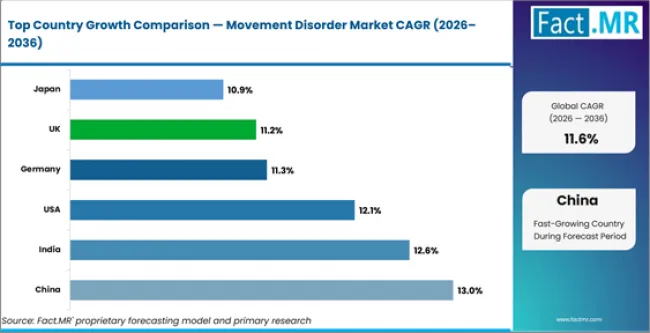
Movement Disorder Market Cagr Analysis By Country | Source: Fact.MR
China Movement Disorder Demand Trends
The China Movement Disorder Market is anticipated to grow at a CAGR of 13% through 2036. The VBP program is changing access to movement disorder treatments and the price of drugs through the growth of hospital neurology departments and centralized drug purchases. Domestically developed generic dopaminergic agents are supporting access to treatment.
- Hospital growth in Tier 2 and Tier 3 cities is improving access to neurology specialists for diagnosis and initiation of treatment for Parkinson disease.
- VBP purchasing cycles for generic dopaminergic agents are reducing drug pricing and increasing volume access.
- Technology self-sufficiency policies promote domestic development of neuromodulation devices to reduce reliance on imports.
Market Outlook for Movement Disorder in India
India Movement Disorder Market is expected to register a CAGR of 12.6% till 2036. The Ayushman Bharat scheme and private health care investment is improving access to neurology specialists in urban tertiary care settings. Cost-effectiveness criteria determine the uptake of generic dopaminergic agents in public health programs.
- The expansion of the Ayushman Bharat coverage is improving access to the diagnosis and treatment of neurological disorders in previously uninsured populations.
- Private hospitals are investing in neurology departments and DBS programmes in metropolitan and tier-2 urban centres.
- The cost effectiveness of generic levodopa/carbidopa formulations supports the initiation of treatment for both public and private health care.
USA Movement Disorder Market Growth Outlook
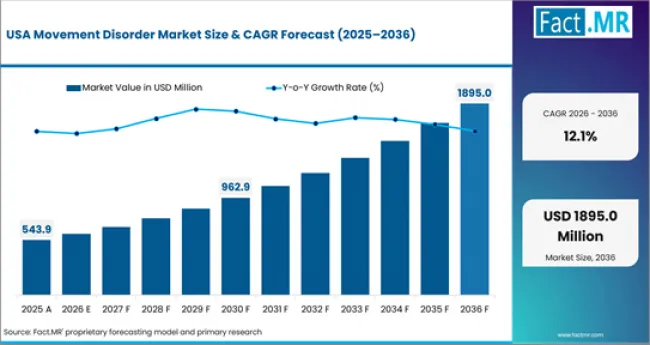
Movement Disorder Market Country Value Analysis | Source: Fact.MR
USA Movement Disorder Market to grow at a CAGR of 12.1% by 2036. FDA regulatory pathways including priority review and breakthrough therapy designations are helping to advance drug development in movement disorders. Medicare reimbursement structures affect the economics of the DBS procedure and pharmaceutical prescribing patterns.
- FDA priority review for tavapadon with decision expected H1 2026 could present a first-in-class D1/D5 dopaminergic advancement.
- Medicare reimbursement of DBS procedures supports academic medical centers’ investment in neuromodulation programs.
- Specialty pharmacy networks and patient support programs affect access and adherence to advanced Parkinson disease therapies.
Germany Movement Disorder Market Growth Outlook
Germany Movement Disorder Market is expected to grow at a CAGR of 11.3% during 2036 Treatment access is driven by the EU MDR/IVDR compliance requirements for neuromodulation devices and the GKV reimbursement system. Advanced university hospital neurology networks support DBS implantation and the management of complex pharmacotherapy.
- GKV reference pricing influences the uptake of generic dopaminergic agents and the pricing of branded products across the German health care system.
- University hospital neurology departments in Europe run the largest DBS implantation programmes with long-term follow-up of patients.
- EU-wide regulatory harmonisation provides uniform market access routes to movement disorder therapeutics through EMA.
Movement Disorder Demand Analysis in Japan
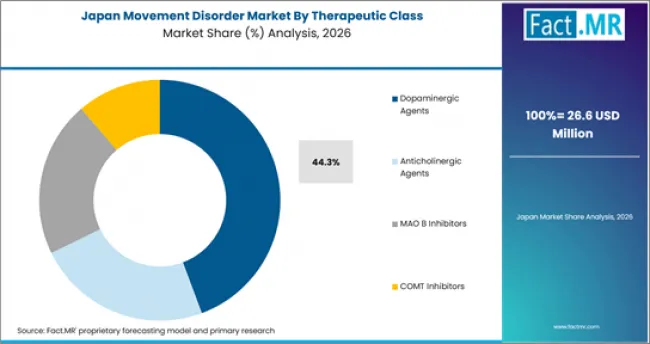
Movement Disorder Market Japan Market Share Analysis By Therapeutic Class | Source: Fact.MR
Japan Movement Disorder Market is projected to grow with a CAGR of 10.9% through 2036. Pharmaceutical launch strategies are affected by the approval process by PMDA and NHI pricing revisions. The prevalence of Parkinson disease is steady and increasing due to the aging population, requiring long-term treatment management.
- Aging populations are increasing the incidence of Parkinson disease, which is broadening the pool of patients available for pharmacologic and interventional treatments.
- The presence of pharmaceutical companies in the domestic market and PMDA regulatory pathways facilitate timely market access of movement disorder therapies.
- Periodic downward adjustments in NHI pricing revision cycles are shaping pharmaceutical product life cycle and pricing strategies.
Competitive Benchmarking and Company Positioning
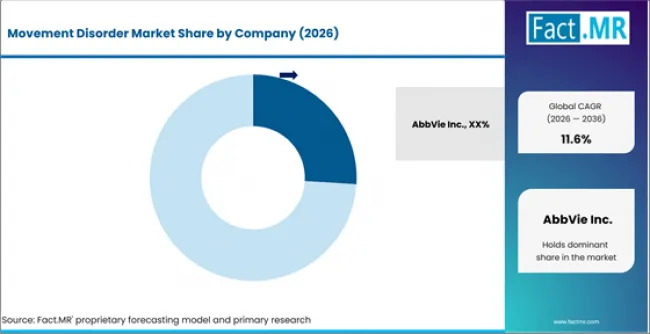
Movement Disorder Market Analysis By Company | Source: Fact.MR
Movement Disorder Market Analysis By Company
- AbbVie is a leading player in Parkinson’s disease pharmacotherapy segment Duopa/Duodopa levodopa infusion platform, growing movement disorder pipeline including tavapadon, and established neurologist relationships.
- Medtronic and Boston Scientific compete in the neuromodulation segment through DBS system portfolios, adaptive stimulation technology, and global neurosurgery center partnerships.
- Biogen, UCB, and Acadia Pharmaceuticals serve specific movement disorder therapeutic niches through targeted drug development and specialist neurology channel focus.
The competitive landscape spans pharmaceutical and medical device companies, with AbbVie holding the largest combined share through its Parkinson disease drug portfolio and pipeline. Medtronic expanded adoption of its BrainSense-enabled DBS platform, enhancing adaptive stimulation capabilities in Parkinson’s disease management.
Boston Scientific competes in DBS through its Vercise platform, while Abbott maintains a presence through its Infinity DBS system. The pharmaceutical pipeline is concentrated in next-generation dopaminergic agents and disease-modifying candidates, with AbbVie's tavapadon closest to potential FDA approval.
Key Companies in the Movement Disorder Market
- AbbVie Inc., Medtronic plc, Boston Scientific Corporation, Abbott Laboratories, UCB S.A., Teva Pharmaceutical Industries, Acadia Pharmaceuticals, Neurocrine Biosciences are the leading companies.
Recent Industry Developments
- AbbVie - Tavapadon NDA Submission for Parkinson’s Disease (September 2025)
- In September 2025, AbbVie submitted a New Drug Application to the U.S. FDA for tavapadon as a once-daily oral treatment for Parkinson’s disease. The filing was supported by the Phase 3 TEMPO program across early Parkinson’s disease and adjunctive treatment settings.
- Medtronic - BrainSense Adaptive DBS FDA Approval (February 2025)
- In February 2025, Medtronic received U.S. FDA approval for BrainSense Adaptive deep brain stimulation and BrainSense Electrode Identifier. The system adjusts stimulation using patient brain activity in real time, supporting more personalized neuromodulation therapy for Parkinson’s disease.
- Boston Scientific - DBS Lead Approval in China (February 2025)
- In February 2025, China’s National Medical Products Administration approved Boston Scientific Neuromodulation’s DBS Lead for marketing. The product delivers stimulation to the subthalamic nucleus and globus pallidus internus, supporting adjunctive treatment for mid-to-late stage levodopa-responsive Parkinson’s disease.
Key Companies in the Movement Disorder Market
- AbbVie Inc.
- Medtronic plc
- Boston Scientific Corporation
- Abbott Laboratories
- UCB S.A.
- Teva Pharmaceutical Industries Ltd.
- Acadia Pharmaceuticals Inc.
- Neurocrine Biosciences Inc.
Movement Disorder Market Segmentation
-
Movement Disorder Market Segmented by Therapeutic Class:
- Dopaminergic Agents
- Levodopa Based Therapies
- Parkinson Disease Treatment Applications
- Motor Symptom Control Products
- Dopamine Agonist Therapies
- Restless Leg Syndrome Applications
- Neurological Function Products
- Levodopa Based Therapies
- Anticholinergic Agents
- Central Acting Anticholinergics
- Tremor Management Applications
- Neurological Symptom Control Products
- Peripheral Anticholinergic Systems
- Movement Control Applications
- Adjunct Therapy Products
- Central Acting Anticholinergics
- MAO B Inhibitors
- Selective MAO B Blockers
- Parkinson Disease Progression Control
- Neuroprotective Therapy Products
- Combination MAO B Therapies
- Symptom Management Applications
- Long Term Care Products
- Selective MAO B Blockers
- COMT Inhibitors
- Catechol Metabolism Inhibitors
- Levodopa Enhancement Applications
- Motor Fluctuation Control Products
- Long Acting COMT Systems
- Advanced Parkinson Therapy
- Extended Release Treatment Products
- Catechol Metabolism Inhibitors
- Dopaminergic Agents
-
Movement Disorder Market Segmented by Disease Indication:
- Parkinson Disease
- Early Stage Parkinson Management
- Motor Function Improvement Applications
- Neurology Treatment Products
- Advanced Stage Parkinson Management
- Severe Motor Symptom Control
- Specialty Neurology Systems
- Early Stage Parkinson Management
- Huntington Disease
- Chorea Management Applications
- Neurodegenerative Disorder Products
- Movement Stabilization Systems
- Symptom Control Therapies
- Cognitive Movement Disorders
- Advanced Neurological Care
- Chorea Management Applications
- Dystonia
- Focal Dystonia Treatment Systems
- Muscle Spasm Control Applications
- Neuromuscular Therapy Products
- Generalized Dystonia Management
- Severe Movement Disorder Applications
- Specialty Neurology Care
- Focal Dystonia Treatment Systems
- Tardive Dyskinesia
- Drug Induced Movement Disorder Treatment
- Antipsychotic Side Effect Management
- Neurological Correction Therapies
- Symptom Reduction Systems
- Chronic Movement Disorder Care
- Specialty Pharmacological Treatment
- Drug Induced Movement Disorder Treatment
- Essential Tremor
- Benign Tremor Management Systems
- Daily Function Improvement Applications
- Neurology Care Products
- Severe Tremor Control Therapies
- Advanced Neurological Treatment
- Functional Movement Products
- Benign Tremor Management Systems
- Parkinson Disease
-
Movement Disorder Market Segmented by Therapy Type:
- Pharmacological Therapy
- Oral Drug Therapy Systems
- Outpatient Neurology Applications
- Chronic Treatment Products
- Injectable Therapy Systems
- Hospital Based Applications
- Acute Neurological Care Products
- Oral Drug Therapy Systems
- Device Based Therapy
- Deep Brain Stimulation Systems
- Surgical Neuromodulation Applications
- Advanced Neurological Devices
- External Neuro Stimulation Systems
- Non Invasive Therapy Applications
- Rehabilitation Products
- Deep Brain Stimulation Systems
- Surgical Therapy
- Functional Neurosurgery Systems
- Brain Targeted Intervention Applications
- Specialty Surgical Care Products
- Lesioning Procedures
- Movement Control Applications
- Advanced Surgical Systems
- Functional Neurosurgery Systems
- Rehabilitation Therapy
- Physical Therapy Systems
- Motor Function Recovery Applications
- Supportive Care Products
- Occupational Therapy Systems
- Daily Living Improvement Applications
- Neurological Rehabilitation Products
- Physical Therapy Systems
- Pharmacological Therapy
-
Movement Disorder Market Segmented by Route Of Administration:
- Oral Therapies
- Tablet Based Neurology Drugs
- Daily Management Applications
- Chronic Care Products
- Capsule Based Systems
- Extended Release Applications
- Long Term Treatment Products
- Tablet Based Neurology Drugs
- Injectable Therapies
- Intramuscular Neurology Drugs
- Hospital Applications
- Acute Symptom Control Products
- Subcutaneous Injection Systems
- Specialty Care Applications
- Advanced Therapy Products
- Intramuscular Neurology Drugs
- Transdermal Systems
- Patch Based Dopamine Delivery
- Continuous Symptom Control
- Non Oral Therapy Products
- Skin Absorption Systems
- Steady Release Applications
- Neurological Support Products
- Patch Based Dopamine Delivery
- Oral Therapies
-
Movement Disorder Market Segmented by End User:
- Specialty Neurology Clinics
- Movement Disorder Clinics
- Parkinson Treatment Applications
- Specialized Care Products
- Neuro Rehabilitation Centers
- Recovery Applications
- Functional Improvement Systems
- Movement Disorder Clinics
- Hospitals
- Tertiary Neurology Centers
- Complex Movement Disorder Treatment
- Advanced Therapy Products
- Multispecialty Hospitals
- General Neurology Applications
- Clinical Treatment Systems
- Tertiary Neurology Centers
- Research And Academic Institutes
- Neurological Research Applications
- Clinical Trial Systems
- Experimental Therapy Products
- Brain Research Institutes
- Advanced Neuroscience Applications
- Innovation Therapy Systems
- Neurological Research Applications
- Home Care Settings
- Patient Managed Therapy Systems
- Long Term Care Applications
- Chronic Treatment Products
- Caregiver Assisted Systems
- Daily Living Support Applications
- Neurological Assistance Products
- Patient Managed Therapy Systems
- Specialty Neurology Clinics
-
Movement Disorder Market by Region:
- North America
- USA
- Canada
- Mexico
- Latin America
- Brazil
- Chile
- Rest of Latin America
- Western Europe
- Germany
- UK
- Italy
- Spain
- France
- Nordic
- BENELUX
- Rest of Western Europe
- Eastern Europe
- Russia
- Poland
- Hungary
- Balkan & Baltic
- Rest of Eastern Europe
- East Asia
- China
- Japan
- South Korea
- South Asia and Pacific
- India
- ASEAN
- Australia & New Zealand
- Rest of South Asia and Pacific
- Middle East & Africa
- Kingdom of Saudi Arabia
- Other GCC Countries
- Turkiye
- South Africa
- Other African Union
- Rest of Middle East & Africa
- North America
Sources and Research References
- AbbVie. (2025, September 26). AbbVie submits New Drug Application to U.S. FDA for tavapadon for the treatment of Parkinson’s disease.
- Medtronic. (2025, February 24). Medtronic earns U.S. FDA approval for the world’s first adaptive deep brain stimulation system for people with Parkinson’s.
- Medtronic. (2025, September 22). Groundbreaking study published in JAMA Neurology demonstrates effectiveness of Medtronic BrainSense adaptive deep brain stimulation for people with Parkinson’s.
- National Medical Products Administration. (2025, February 19). DBS Lead approved for marketing.
- National Institute of Neurological Disorders and Stroke. (2026, May 1). Parkinson’s disease.
This bibliography is provided for reader reference and is not exhaustive. The full report contains the complete reference list and detailed citations.
Key Questions This Report Addresses
- What is the estimated size of the global Movement Disorder Market in 2026, and how is it projected to grow through the 2026 to 2036 forecast period?
- What incremental revenue opportunity is the Movement Disorder Market expected to create between 2026 and 2036?
- Which therapeutic class holds the largest share in 2026, and what prescribing patterns support dopaminergic agent leadership?
- How is the balance between pharmacological and neuromodulation therapies expected to shift over the forecast period?
- Which disease indication is projected to generate the most incremental revenue through 2036?
- Which countries are projected to register the highest CAGR through 2036, and what demographic and healthcare factors accelerate growth?
- How do treatment access patterns in the U.S. compare with those in China and India in terms of diagnosis rates and therapy adoption?
- What pipeline constraints, including disease-modifying therapy failure rates, could limit growth in the premium therapeutic segment?
- Who are the leading companies, and how are they differentiating through drug pipelines, DBS platforms, and neurology specialist relationships?
- What recent clinical trial results and product launches in 2025 are reshaping competitive positioning in the movement disorder market?
- Which therapeutic or technology trend is driving the next phase of growth in the movement disorder market?
- How is adaptive deep brain stimulation changing the interventional treatment paradigm for medication-refractory Parkinson disease?
- What role are receptor-selective dopaminergic agents and gene therapy approaches playing in reshaping the treatment landscape?
- What demand-side drivers sustain growth, and how do they vary between established and emerging market healthcare systems?
Movement Disorder Market Definition
The movement disorder market covers pharmacological, neuromodulation, and surgical therapies used to manage Parkinson disease, essential tremor, dystonia, Huntington disease, and other neurological conditions characterized by involuntary or impaired voluntary movement, across oral, injectable, implantable, and device-based treatment modalities.
Movement Disorder Market Inclusions
- Global and regional market size and forecasts for 2026 to 2036 across therapeutic class, disease indication, therapy type, route of administration, end user, and region.
- Demand analysis based on Parkinson disease prevalence, neurologist density, DBS implantation rates, and pharmaceutical pipeline progression.
- Competitive landscape including drug portfolios, neuromodulation platforms, and clinical development strategies of leading companies.
Movement Disorder Market Exclusions
- Spasticity management therapies including botulinum toxin for non-movement-disorder indications.
- Neurodegenerative disease therapies focused primarily on cognitive decline such as Alzheimer disease treatments.
- Physical therapy, occupational therapy, and rehabilitation services delivered without pharmacological or device-based intervention.
Movement Disorder Market Research Methodology
- Methodology combines secondary research from neurology journals, clinical trial registries, and pharmaceutical pipeline databases with primary validation.
- Market sizing covers 30+ countries with inputs including Parkinson disease prevalence, neurologist density, DBS center distribution, and drug prescription data.
- Primary validation includes 20+ interviews across neurologists, neurosurgeons, pharmaceutical companies, and neuromodulation device manufacturers.
Segmentation
Scope of Analysis
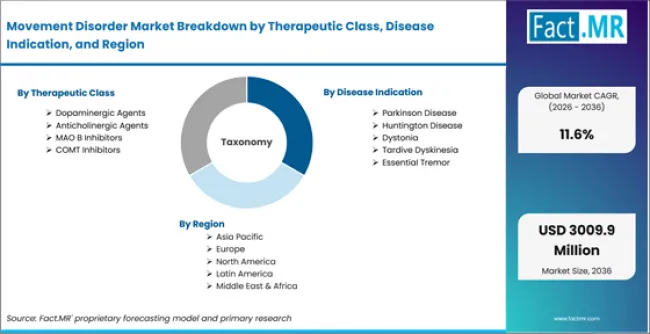
Movement Disorder Market Breakdown By Therapeutic Class, Disease Indication, And Region | Source: Fact.MR
| Parameter | Details |
|---|---|
| Quantitative Units | USD 1,004.4 million to USD 3,009.9 million, at a CAGR of 11.6% |
| Market Definition | The movement disorder market covers pharmacological, neuromodulation, and surgical therapies used to manage Parkinson disease, essential tremor, dystonia, Huntington disease, and other neurological conditions characterized by involuntary or impaired voluntary movement, across oral, injectable, implantable, and device-based treatment modalities. |
| Regions Covered | North America, Latin America, Europe, East Asia, South Asia and Pacific, Middle East and Africa |
| Countries Covered | China, India, USA, Germany, UK, Japan, 30 plus countries |
| Key Companies | AbbVie Inc., Medtronic plc, Boston Scientific Corporation, Abbott Laboratories, UCB S.A., Teva Pharmaceutical Industries |
| Forecast Period | 2026 to 2036 |
| Approach | Hybrid demand-side and top-down methodology built on Parkinson disease prevalence, neurologist density, DBS implantation rates, drug prescription data, and primary interviews |
Source: Fact.MR analysis. Updated Jun 17, 2026
Frequently Asked Questions
How big is the movement disorder market in 2026?
What will be the size of the movement disorder market in 2036?
How much will the movement disorder market grow between 2026 and 2036?
What are the key therapeutic classes in the movement disorder market?
Which disease indication segment is expected to contribute a significant share in the movement disorder market in 2026?
Who worked on this report


Preview the report firsthand - request a free sample
Free SampleGet the brochure for pricing and purchase details
Download PDF