- Base Value(2025): 5.34 Bn
- Estimated Value(2026): 5.84 Bn
- Forecast Value (2036): 13.50 Bn
- CAGR (2026 - 2036): 8.8%
Cognitive Assessment Market Forecast and Outlook Fact.MR
The global cognitive assessment market was valued at USD 5.34 billion in 2025. Fact.MR estimates it at USD 5.84 billion in 2026 and projects it will reach USD 13.50 billion by 2036, compounding at 8.8% CAGR over the forecast decade adding USD 7.66 billion in absolute market value.
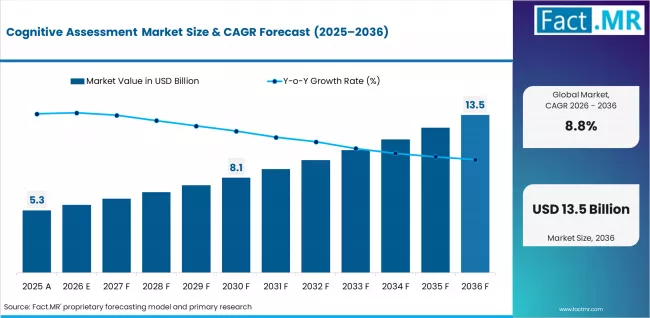
Cognitive Assessment Market Market Value Analysis | Source: Fact.MR
Summary of Cognitive Assessment Market
- Market Snapshot
- Global cognitive assessments market revenue stood at USD 5.84 billion in 2026 and is forecast to reach USD 13.50 billion by 2036 a 131% total value expansion over the decade.
- At 8.8% CAGR from 2026 to 2036, this market is set to expand ~2.3x in value, adding USD 7.66 billion in absolute opportunity.
- Cloud-based SaaS assessment platforms, projected at 12.1% CAGR. The reimbursement dynamics, remote administration capability, and continuous monitoring potential of SaaS formats are fundamentally superior to one-time administered legacy tools in nearly every end-use context.
- The biggest brake on faster market growth is not technology or demand it is the 3–7-year validation cycle required before a novel cognitive assessment tool achieves clinical guideline endorsement and insurance reimbursement eligibility.
- Demand and Growth Drivers
- According to WHO forecasts, the number of people suffering from dementia will grow from the current level of roughly 55 million to 139 million by 2050. Clinical practice guidelines issued in the US (USPSTF), UK (NICE) and across EU countries recommend early diagnosis through cognitive screening using validated tools. This is mandated policy-driven demand generation.
- In sports, there is an increasing need to validate and measure concussions following recent settlement cases in the NFL, new concussion protocols in the NCAA, and similar measures taken by rugby, cricket and football leagues. This market segment, despite having relatively small revenue potential, is growing rapidly and functions as a credible validation platform.
- There is a significant movement among leading companies toward monitoring employees’ cognitive functioning especially in safety-oriented industries like aviation, nuclear energy, oil and gas, and transportation. This B2B market niche represents substantial revenue generation potential for the Company and is rather price-insensitive.
- Product and Segment View
- With 12.1% CAGR Cloud-based SaaS solutions is the fastest-growing segment. Factors such as remote management capabilities, subscription-based pricing model, updating abilities, and integration with EHRs are structurally benefiting cloud-based SaaS platforms over traditional on-premises and paper-based methods.
- High-end solutions for cognitive behavioral assessments alongside neuroimaging biomarkers (fMRI, EEG, PET) grows at ~9.4% CAGR and caters to research institutes, academic medical centers, and specialty neurology clinics.
- Geography and Competitive Outlook
- North America represents 38.4% share of total global market revenue by 2026. Maintains its lead due to clinical reimbursement structure, highest concentration of specialty neurology and neuropsychology clinics, and budget allocation for wellness programs larger than other regions.
- Asia Pacific represents a structural high-growth market with India (12.4% CAGR) and China (10.8%) are building assessment infrastructure from near-zero baseline. Government health digitalization programs are the primary catalyst.
- The market is moderately fragmented with Pearson Clinical Assessment holds the largest single revenue share at approximately 18.4%, anchored by its legacy of validated test libraries. Digital-native platforms including Cogstate, Cambridge Cognition, and Lumos Labs are growing faster than the incumbents. The most defensible competitive position in this market is not technology it is normative data, the accumulated performance databases that allow individual scores to be meaningfully benchmarked against reference populations.
Cognitive Assessment Market — At a Glance
| Attribute | Details |
|---|---|
| Market Value 2025 | USD 5.34 billion |
| Market Value 2026 | USD 5.84 billion |
| Market Value 2036 | USD 13.50 billion |
| Absolute Dollar Opportunity 2026-2036 | USD 7.66 billion |
| Total Growth 2026-2036 | 133.2% (total basis) |
| CAGR 2026-2036 | 8.8% |
| Growth Multiple | 2.33x |
| Fastest-Growing Product Format | Cloud-Based SaaS Platforms (12.1% CAGR) |
| Fastest-Growing End-Use Segment | Workplace & Corporate (14.2% CAGR) |
| Key Demand Theme | Aging population driving clinical screening demand, workforce cognitive health programs, sports concussion protocols, and AI-enabled assessment efficiency gains |
| Key Application Areas | Clinical Neurology & Geriatrics, Occupational Health & HR, Educational Assessment, Sports Concussion Management, Military Readiness, Clinical Trials |
| Top Companies | Pearson Clinical Assessment, Lumos Labs, Cambridge Cognition, Cogstate Ltd, Axon Sports, Bracket Global |
| Segmentation by Product | SaaS Platforms, Standalone Software, Integrated Hardware-Software, Neuroimaging-Integrated, Paper-Based |
| Segmentation by End-Use | Clinical Neurology, Workplace/Corporate, Educational, Sports, Military, Research |
| Segmentation by Domain | Memory, Attention, Executive Function, Processing Speed, Language, Visuospatial |
| Segmentation by Region | North America, Western Europe, East Asia, South Asia & Pacific, Latin America, Eastern Europe, MEA |
Source: Fact.MR analysis. Updated Apr 10, 2026
The market forecast for cognitive testing solutions had previously seen some overly positive predictions come up that did not pan out due to lack of the necessary financial mechanisms despite the other two components being in place. What makes this particular cycle different is the fact that progress has occurred on all three fronts - the operational infrastructure for delivering such technologies is in place, guidelines for clinical implementation have been approved in several regions, and insurance coverage for the procedure is becoming available beyond what had been seen back in 2018 or even 2022.
The underlying disease burden arithmetic is also unambiguous. The global prevalence of dementia-spectrum conditions currently approximately 57 million people is projected to reach 82 million by 2036 on current demographic trajectories. Mild cognitive impairment (MCI), the clinically significant pre-dementia state that is the primary target for early screening programs, affects an estimated 69 million people globally today. Neither of those numbers declines. The question for market participants is not whether demand exists it clearly does but how much of it is clinically and commercially accessible through current assessment platforms.
Disease Burden & Demand Creation
Dementia is the single largest demand driver in this market, and its commercial weight will only increase through the forecast period. The WHO estimates 57 million people are currently living with dementia globally. By 2036, that figure reaches approximately 82 million on current demographic trajectories driven predominantly by population aging in East Asia, South Asia, and Western Europe. Equally important, the clinical need for cognitive assessment does not start with dementia. Instead, it starts way sooner, with MCI, where structured assessment is the key approach for identifying high-risk individuals prior to the onset of irreversible neuronal degeneration.
ADHD in Adults
The third major contributor to cognitive assessment demand is adult ADHD. Globally, it is estimated that about 366 million people, or approximately 5% of the world's adult population, are suffering from ADHD. Due to the previously underrecognized nature of the condition and the recent awareness regarding its significant impact on occupational functioning, there is a considerable number of patients referred for neuropsychological testing who overwhelm the existing structures that lack the capacity to deal with them using conventional clinical models.
Traumatic Brain Injury (TBI) and Concussion
Traumatic brain injury generates a specific and commercially well-developed cognitive assessment demand profile. Approximately 27 million new TBI cases are reported annually worldwide the majority classified as mild TBI or concussion. Sports medicine and occupational medicine applications are the most commercially viable ones among all because, unlike individual clinical referral, they include a mandatory structured cognitive assessment regimen on a recurrent basis (baseline/post-injury).
Schizophrenia, Parkinson's, and the Pharmaceutical Trial Demand Layer
In addition to those three key drivers, schizophrenia (24 million globally) and Parkinson's Disease (10 million globally) are two other diseases that represent a strong source of demand due to their cognitive components. Validated cognitive endpoints are routinely incorporated into the study design of CNS-targeting therapies. Cognitive impairment is a clinically significant feature of both conditions, and validated cognitive endpoints are embedded in the trial designs of the majority of CNS-targeting therapeutic programs in current development pipelines.
Why Is Cognitive Assessment Adoption Accelerating Now, After Decades of Slow Growth?
The Technology Finally Caught Up with the Clinical Need
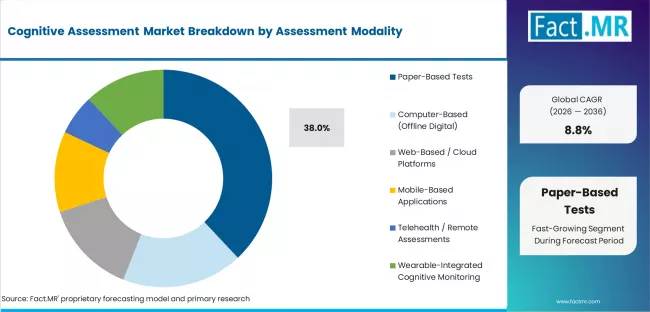
Cognitive Assessment Market Analysis By Assessment Modality | Source: Fact.MR
Cognitive assessment as a clinical discipline is not new. The Wechsler Adult Intelligence Scale has been in clinical use since 1955. The Montreal Cognitive Assessment (MoCA) was developed in 1996. What is new is the digital infrastructure that can administer, score, interpret, and longitudinally track cognitive assessments at a scale and cost-efficiency that makes population-level screening practically feasible for the first time.
The specific technological developments that have unlocked this transition are worth identifying precisely, because they explain which platform capabilities actually matter commercially. Computerized adaptive testing where test difficulty adjusts in real time based on the test-taker's responses has reduced assessment time from 60–90 minutes to 15–20 minutes without sacrificing psychometric validity. This single efficiency gain removes the administration burden that prevented routine cognitive screening in primary care. Telehealth infrastructure, dramatically accelerated by the COVID-19 pandemic, has normalized the concept of valid remote clinical assessment eliminating the geographic and access barriers that confined traditional cognitive assessment to specialist clinical settings. And smartphone penetration at population scale means that the device required to administer a validated digital cognitive test is already in the pocket of the vast majority of the target assessment population.
The convergence of these infrastructure elements with a genuine and growing clinical need an aging global population, rising dementia prevalence, growing recognition of mental health's impact on physical outcomes has created the conditions for accelerated adoption. What held the market back before was not lack of clinical need. It was the practical impossibility of meeting that need at the scale and efficiency required.
Regulatory Tailwinds Are Doing Real Commercial Work in This Market
Policy and regulatory developments are creating direct demand, not just enabling conditions. The U.S. Preventive Services Task Force's 2023 recommendation update on cognitive impairment screening has clinical guidelines implications that are still working through insurance reimbursement policy. The digital health strategy of the European Union promotes validated digital cognitive assessment tools. FDA approval was achieved for some digital cognitive assessment tools as clinical decision support software within the framework of its Digital Health Center of Excellence. Cognitive screening was also adopted into the national health checkup for adults 75 years old and older in Japan.
Each of these regulatory developments converts latent clinical demand into reimbursable, market-accessible demand. The commercial beneficiaries are platforms that have invested in the regulatory engagement and clinical validation required to meet the evidentiary standards these policy frameworks specify. Platforms that have not made that investment are watching their addressable market expand without being able to access it because they lack the clinical credentials required to qualify for insurance reimbursement and guideline endorsement.
The Validation Moat: Why Clinical Evidence Is the Most Durable Competitive Barrier in This Market
As opposed to many other healthcare technology markets where competitive advantages depend on technical capacity, access to distributors, or pricing alone, the competitive environment of the cognitive assessment industry is determined mainly by only one key issue. Namely, the quality and extent of the clinical validation of a platform will define its competitive advantage.
It is important since cognitive assessment tool users and purchasers (neuropsychologists, neurologists, directors of Human Resources departments, who may have exposure to legal liability, organizations that regulate the sports industry, etc.) make their decisions quite differently from other enterprise software customers. In this context, there are no features to compare and cost-effectiveness to calculate. Instead, there are risks to manage and liabilities to cover. The key question in the cognitive assessment market is not whether a product works but whether it works and can be proven.
The consequence is a competitive dynamic that does not follow normal technology market rules. First-mover advantage in cognitive assessment is not primarily about market share it is about being embedded in the normative databases and clinical guidelines that define what "normal" performance looks like. Pearson's Wechsler scales have been in continuous clinical use since the 1950s. The normative databases accumulated over that time represent decades of irreplaceable reference data against which individual scores are benchmarked. A new digital platform, however technically superior, cannot replicate that normative infrastructure without years of data collection at scale. This creates a structural protection for incumbents that has no equivalent in most other software markets.
For new market entrants, the implications are direct. Gathering evidence to validate the product is an investment in the future, not simply complying with regulations. Organizations that spend on publishing in peer-reviewed journals, developing databases based on normal values among representative demographic groups, and collaborating with clinical practice guideline organizations are constructing their moat against competition through premium pricing and loyal clinical buyers. Companies that launch platforms without this infrastructure are competing in a market where their most important potential customers are structurally predisposed to reject them.
Segment Analysis
Where Is the Real Economic Value Concentrated?
The Where Is the Real Economic Value Concentrated? 8.8% CAGR headline is directionally correct, but it compresses a market where growth is highly uneven and concentrated in a small number of demand layers defined by both scale and monetization dynamics.
Clinical diagnosis remains the economic anchor of the market, accounting for 70% of total revenue, equivalent to roughly USD 4.1billion in 2026, and contributing over USD 3.2 billion in incremental opportunity through 2036. Its 9.4% CAGR is not driven by adoption cycles but by non-discretionary disease burden expansion. However, the critical development is structural such as assessment shifts from episodic diagnosis to systematic testing and monitoring due to monitoring needs, reimbursement scope, and national screening initiatives. This transition increases both utilization frequency and revenue visibility, making clinical diagnosis the largest and most durable growth contributor in absolute terms.
Concurrently, the corporate and workforce segment evolves into the fastest-growing application category, growing at around 14.2% CAGR from around USD 0.6 billion in 2026 to around USD 2.3 billion by 2036, generating an additional USD 1.7 billion in value over ten years. Its growth profile is structurally different. Demand is not linked to clinical need or reimbursement but to risk, liability, and productivity optimization, particularly in safety-critical industries and increasingly across knowledge-based sectors. With penetration at 31% compared to 78% in academic medical centers, the segment remains in an early expansion phase with significant adoption headroom. The absence of regulatory friction and the shift of purchasing decisions toward operational budgets materially accelerate commercialization timelines and expand addressable demand.
Beyond these two dominant segments, growth is further amplified by a horizontal shift in delivery architecture, particularly toward SaaS-based cognitive platforms growing at 12.1% CAGR. This layer cuts across applications rather than existing as a standalone segment. Its significance lies in changing how revenue is generated like from one-time assessments to continuous, embedded monitoring, increasing utilization intensity across both clinical and non-clinical settings.
The result is a market where growth is not defined by segment boundaries alone, but by the interaction of demand inevitability, commercial accessibility, and scalable delivery models. Clinical diagnosis and corporate applications anchor the majority of incremental value, but the underlying acceleration is enabled by platforms that expand how often and how seamlessly cognitive assessment is deployed.
End-User Adoption Behavior: Hospitals, Clinics, Corporates, and Academic Institutions?
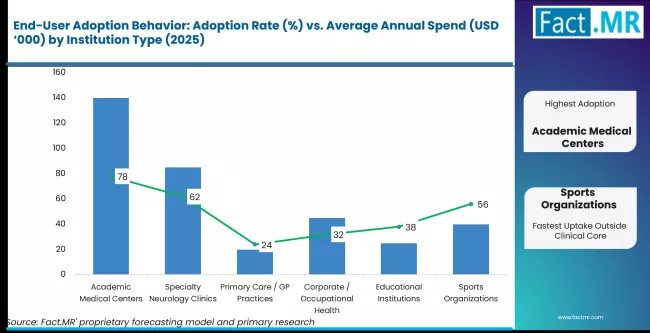
Cognitive Assessment Market Analysis By Adoption | Source: Fact.MR
One of the more consequential analytical errors in the cognitive assessment market is treating all end-user segments as if they behave the same way. They don't. Decision-making processes, evidence requirements, budget sources, procurement cycles, and selection criteria differ substantially across institution types and a commercial strategy that works for academic medical centers will fail in corporate HR. Academic medical centers sit at the top of the adoption curve, with a 78% adoption rate and average annual platform spend of USD 142,000. Selection decisions are faculty-driven and evidence-intensive, sales cycles run 12 to 24 months, and once a platform is embedded, switching costs are high enough that most AMCs stay put unless clinical limitations become genuinely untenable. Specialty neurology and memory clinics follow at 62% adoption, but their primary barrier isn't awareness or willingness to pay it's workflow friction. In a busy specialist clinic, a platform that creates even minor administrative steps faces clinician resistance regardless of its psychometric quality. EHR integration in this segment is not a feature, it's a prerequisite.
Primary care is the most under-penetrated high-potential segment in the market, sitting at roughly 24% adoption despite being the first point of contact for most patients with early cognitive symptoms. The gap is a design problem as much as a commercial one. Traditional instruments like the MMSE and MoCA require trained administration and consume a meaningful fraction of a standard appointment. A platform that delivers validated cognitive screening in five to seven minutes self-administered in the waiting room, auto-scored, and flagged within the EHR before the physician walks in would access the largest untapped institutional demand pool in the market. No current leader has fully solved it. The corporate segment sits at 31% adoption but carries the steepest upward trajectory, largely because corporate buyers operate outside clinical reimbursement logic entirely. Safety-critical industries are the current anchor aviation, nuclear, heavy transport where a cognitively impaired operator represents a liability exposure that motivates institutional action. The broader knowledge-work wellness application is earlier-stage, but pilots at Goldman Sachs, JPMorgan, and several major tech firms signal where the demand is pointing.
Sports organizations sit at 56% adoption, but the dynamic that drove it is distinct from every other segment adoption here was largely mandatory, not voluntary. When the NFL, NCAA, or World Rugby embeds a platform in its concussion management protocol, affiliated teams become effective users by compliance rather than procurement decision. Axon Sports and ImPACT built their positions through exactly this protocol embedding strategy. The commercial upside is concentration of sales effort at the governing body level, the constraint is that displacing an embedded platform requires protocol revision, which creates competitive stability for incumbents and a near-prohibitive entry barrier for challengers. Educational institutions follow suit at 38%, although predominantly for learning disability diagnosis over performance optimization, though the growing EdTech subset, which refers to cognitive assessments paired with adaptive educational delivery platforms, represents a large opportunity gaining traction in venture capital and pushing into a market far more expansive than neuropsychological assessment.
Growing Demand for Cognitive Assessment Beyond Healthcare?
Cognitive Assessment Market Analysis By Assessment Modality | Source: Fact.MR
Cognitive assessment is widely understood as a healthcare product, but that framing misses where the most consequential growth is actually happening. Corporate HR, sports injury management, military readiness, financial services, and EdTech are all expanding faster than the clinical segment and the reasons are structural in each case. In corporate settings, demand is concentrated around role-specific screening for safety-critical positions, fitness-for-duty evaluation, and executive wellness programs.
The legal landscape here is not optional cognitive testing in employment contexts carries genuine discrimination risk under the ADA and equivalent EU and UK frameworks. Platforms that have built around job-relevant assessment criteria, validated norms, and accommodation processes have defensible products. Those that haven't are building liability exposure for the clients they're selling to.
In sports, the growth is moving down the pyramid. Professional organizations remain the commercial anchor, but secondary schools and universities are increasingly adopting structured concussion management protocols driven by litigation pressure and a genuine shift in how coaches, parents, and athletes understand long-term consequences. The commercial problem is that pricing models built for NFL medical staffs don't work for high school athletic budgets. Platforms with tiered pricing that scale functionality to price point are the ones genuinely expanding their addressable market. Everyone else is competing for the same narrow top tier.
Military and financial services are the two segments most analyses underweight. Defense demand runs across pre-deployment screening and post-injury cognitive monitoring, with several NATO members actively replacing legacy tools procurement cycles are long, but contract values are substantial and multi-year. Financial services is earlier but potentially more disruptive: trading desk cognitive monitoring as an institutional risk management tool, and elder financial capacity assessment as a validated digital alternative to manual clinical evaluation, are both use cases where demand already exists and current solutions fall well short. EdTech follows a similar logic platforms combining real-time cognitive monitoring with adaptive curriculum delivery are surfacing struggling students that standard academic performance metrics were never designed to catch.
Is Remote Cognitive Testing the Next Big Healthcare Trend?
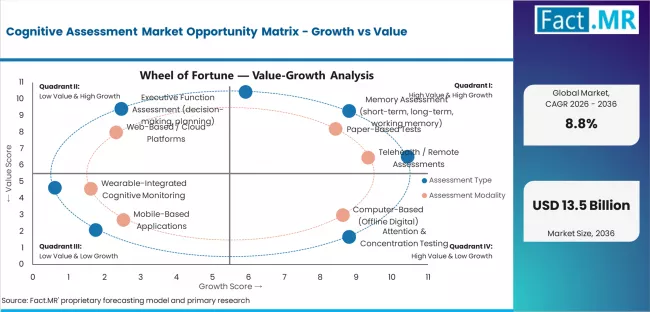
Cognitive Assessment Market Opportunity Matrix Growth Vs Value | Source: Fact.MR
Most cognitive assessment platforms have grown by expanding test battery coverage horizontally adding domains, conditions, and populations to a single platform architecture. This approach has practical commercial limits. A tool designed for clinical use does not serve the purposes of the wellness applications of the tool in the corporate world. A platform developed around sports concussion baseline testing requires too much clinical depth to effectively screen for dementia in a memory clinic. Trying to be all things to all buyers in a market where validation evidence is buyer-specific is a strategy that tends to produce a platform that is broadly mediocre rather than specifically excellent.
The portfolio strategy with the strongest evidence of commercial success in the cognitive assessment market is segment-specific depth, pursued sequentially. The clinical neurology segment particularly Alzheimer's and related dementias is where the most rigorous validation standards apply, the willingness to pay is highest, and the reimbursement infrastructure is most developed. It is also the most demanding entry point in terms of validation investment required. Platforms that have established credibility in this segment carry that clinical authority into adjacent segments including pharmaceutical clinical trials, geriatric primary care, and specialist memory services.
From that clinical anchor, platform expansion into workplace and corporate health markets is a commercially logical next step provided the platform architecture supports the very different user experience requirements of corporate administration (shorter sessions, self-administered, mobile-first) and the analytics outputs required by HR and occupational health buyers are built distinctly from the clinical reporting formats designed for neuropsychologists. Companies that try to serve corporate HR with the same product interface designed for clinical neuropsychologists reliably struggle with uptake despite having technically capable underlying assessments.
Regional Analysis
Regional demand dynamics in cognitive assessment are shaped by the interaction of four variables: the maturity of specialist neurology and neuropsychology infrastructure, the state of digital health reimbursement policy, the prevalence of age-related cognitive decline in the population (a direct function of demographic structure), and corporate culture around workplace mental health and performance. The regions that score highest on all four variables simultaneously are North America and Western Europe which explains their current market dominance. The regions with the most rapid movement on these variables are East Asia and South Asia, which explains their growth rate leadership.
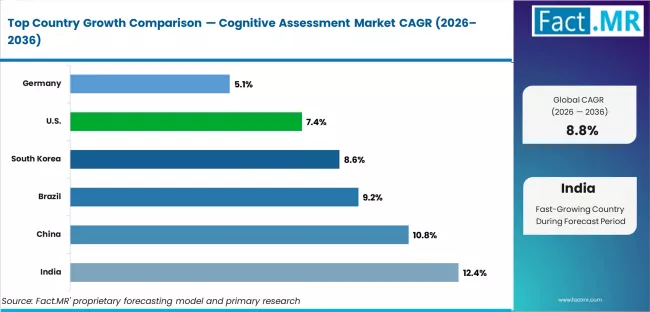
Cognitive Assessment Market Cagr Analysis By Country | Source: Fact.MR
| Country | CAGR (%) |
|---|---|
| India | 12.4% |
| China | 10.8% |
| Brazil | 9.2% |
| South Korea | 8.6% |
| U.S. | 7.4% |
| Germany | 5.1% |
Source: Fact.MR analysis. Updated Apr 10, 2026
Source: Fact MR (FMR) analysis, based on proprietary forecasting model and primary research.
North America
North America accounts for 38.4% of global market revenue in 2026 a share that reflects its combination of the world's most developed specialist neurology infrastructure, the largest corporate wellness program budgets, the most active pharmaceutical clinical trial market, and the most extensive digital health reimbursement framework. The FDA's Digital Health Center of Excellence has been especially pivotal in offering a regulatory path forward for digital cognitive assessment technologies that have existed in regulatory grey zones up until now. 7.4% CAGR is an optimistic outlook in a market segment where demand is no longer the limiting factor but, rather, the expansion of insurance coverage of novel technologies.
Western Europe
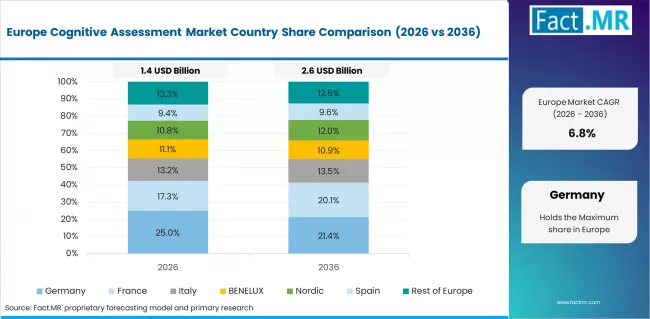
Cognitive Assessment Market Europe Country Market Share Analysis, 2026 & 2036 | Source: Fact.MR
Western Europe will contribute to 24.6% of total worldwide revenues in 2026. In terms of individual markets, Germany, the UK, and France are the leading three countries. Germany stands out due to the country's rapid aging, the presence of a robust health care system, with digital health reimbursement programs (DiGA program), and extensive research and development efforts within the pharmaceuticals industry. The UK's NHS, despite its bureaucratic complexities, has led on cognitive assessment technologies in dementia care pathways through the expansion of insurance coverage of validated screening solutions. Germany's CAGR is set at 5.1%.
East Asia
East Asia accounts for 16.8% of global revenue and is the highest-growth major region on a combined basis. Japan has the world's highest proportion of population aged over 65 approximately 30% as of 2025 and has integrated cognitive screening into its national health checkup program for older adults, creating a structurally mandated assessment market at population scale. China's 10.8% CAGR reflects market formation driven by government health digitalization programs, expanding neurology specialty capacity in tier-1 and tier-2 cities, and a growing corporate sector investment in workplace mental health. South Korea's 8.6% CAGR benefits from its world-class digital health infrastructure and a cultural emphasis on educational and occupational performance that makes cognitive assessment commercially relevant well beyond the clinical context.
South Asia & Pacific
India at 12.4% CAGR leads the global growth table for the forecast decade. The driver combination is distinctive: a mental health care gap that is being addressed by government policy for the first time through the National Mental Health Programme expansion, growing corporate awareness of workforce cognitive health particularly in IT services and pharmaceutical sectors, and the practical reality that India's neurology specialist-to-population ratio makes digital remote assessment not just commercially attractive but clinically necessary. Australia contributes stable demand from a mature healthcare system with established cognitive screening protocols in aged care.
Latin America
Latin America at 5.4% of global revenue is a market in earlier formation. Brazil at 9.2% CAGR is the dominant market driven by its rapidly aging population, expanding private healthcare sector, and growing pharmaceutical clinical trial activity. The challenge in Latin America is reimbursement: public health systems in most countries do not yet cover validated cognitive assessment tools, constraining uptake to private pay and corporate-funded pathways. That constraint will ease through the forecast period as health system digitalization expands, but it limits near-term market penetration relative to the demographic demand that exists.
Middle East & Africa
MEA currently represents only 1.4% of global market revenue. The growth potential over the longer term anchored by significant sovereign wealth fund investment in healthcare infrastructure across the GCC and the demographic youth bulge driving educational assessment demand across Sub-Saharan Africa is real but will take time to translate into structured commercial market development. The immediate near-term opportunity lies in GCC private healthcare, where UAE, Saudi, and Kuwaiti health systems are investing significantly in neurology and mental health service capacity.
Competitive Landscape
How Are Key Players Competing in the Cognitive Assessment Market?
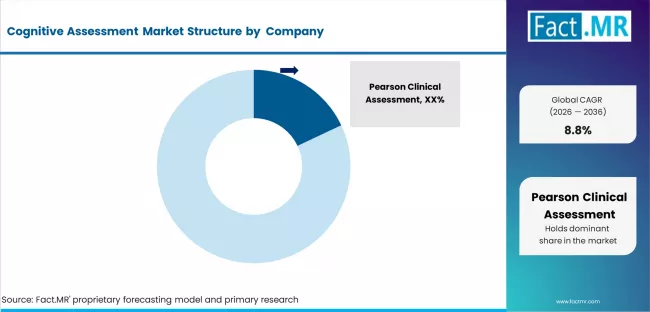
Cognitive Assessment Market Analysis By Company | Source: Fact.MR
The competitive field in cognitive assessment spans three distinct player archetypes, each competing on different dimensions and for partially overlapping buyer sets.
The legacy clinical publishers Pearson Clinical Assessment, PAR Inc., and Western Psychological Services built their positions over decades on the strength of validated test libraries, paper-based normative databases, and relationships with the clinical training programs that educated generations of neuropsychologists. Their competitive challenge in the digital era is managing the transition from high-margin paper test sales to SaaS-based digital platforms without destroying the pricing structure that funds their ongoing validation investment. Pearson's Q-global platform represents their most significant bet on digital transition, its commercial performance has been solid but not transformative relative to the competitive pressure from digital-native entrants.
The digital-native clinical platforms Cambridge Cognition (CANTAB), Cogstate, and Bracket Global have built their positions on computerized test precision, pharmaceutical trial validation, and clinical research partnerships. CANTAB's claim to competitive advantage is the accumulated clinical evidence base across thousands of published studies, which creates both scientific credibility and a practical switching cost for pharmaceutical researchers who have built decade-long study designs around its specific task battery. Cogstate has pursued a similar business strategy around clinical trial management, showing its platform can deliver drug effectiveness with fewer subjects than competing assessment products.
The consumer and workplace platforms Lumos Labs (Lumosity), BrainHQ (Posit Science), and Cognifit occupy the opposite end of the validation spectrum. Their commercial models are built on consumer subscription revenue and corporate wellness program contracts, where scientific rigor requirements are lower than in clinical contexts. Their challenge is sustaining growth as the market matures and corporate wellness buyers become more sophisticated in demanding evidence of behavioral outcomes, not just platform engagement metrics.
Recent Industry Developments
- TMA — Acquisition (March 2026)
- TMA acquired BrainsFirst, a neuroscience-based cognitive assessment platform, strengthening its talent analytics capabilities. The deal supports TMA’s buy-and-build strategy, integrating game-based cognitive testing to enhance workforce evaluation across industries and expand its global HR technology platform. (TMA) [1]
- Altoida — Mindspan Research Collaboration (Jan 2026)
- Altoida and Mindspan announced a research collaboration to evaluate AI and AR-powered digital cognitive assessments for personalized care. The initiative integrates Altoida’s NeuroMarker platform into Mindspan’s care model to enhance early diagnosis, clinical decision-making, and patient outcomes through scalable cognitive insights. (Altoida) [2]
- Cognivue — Healthcare Tech Outlook Recognition (Oct 2025)
- Cognivue was named “Top Cognitive Impairment Early Detection Solution 2025” by Healthcare Tech Outlook and featured as the October cover story, highlighting its FDA-cleared digital assessment technology enabling early detection and improved clinical decision-making in cognitive care. (Cognivue) [3]
- Cambridge Cognition — Phase 3 Autoimmune Trial Contract (Apr 2025)
- Cambridge Cognition secured a £1 million contract with a major pharmaceutical company to provide digital cognitive assessments for a Phase 3 autoimmune disease trial, strengthening its position in late-stage CNS and immunology research with global deployment across multiple countries and trial sites. (Cambridge Cognition) [4]
Key Players of the Cognitive Assessment Market
- Cambridge Cognition Ltd
- Cogstate Ltd
- "MedAvante, In
- VeraSci"
- Quest Diagnostic
- CogniFit
- Signant Health
- Posit Science
- Cognetivity Neurosciences
- Pearson’s Clinical Assessment group
- SonderMind
- BrainCheck
- MeritTrac
- Koninklijke Philips N.V.
- MoCA Test Inc.
- Lumos Labs, Inc.
Research Methodology
The Fact.MR study on the cognitive assessment market is based on primary research, secondary research, and quantitative demand modeling for the market with multiple segments. Sources used for secondary research include data from the Alzheimer's Association International Conference, surveys on assessment technology by the American Psychological Association, guidance documents issued by the Digital Health Center of Excellence at the U.S. FDA, NHS England service specifications, WHO Global Action Plan on Public Health Response to Dementia, and financial disclosures of publicly traded cognitive assessment companies like Cogstate, Cambridge Cognition, and Pearson.
Primary research involved interviews with clinicians, namely, clinical neuropsychologists, neurologists, geriatricians, occupational health physicians, directors of clinical operations in pharma companies, HR tech buyers, and sports medicine physicians in North America, Western Europe, and Asia Pacific. The insights from these interviews provide ground truth information about the factors influencing the decision-making process and procurement of cognitive assessment tools that cannot be obtained through secondary sources.
Market sizing uses the bottom-up approach, which relies on volume estimates of cognitive assessments made by specialists, recommendation frequency by clinical guidelines, patient trial numbers, number of corporations adopting wellness programs, and average revenue per assessment for each segment. This approach produces more reliable estimates in a multi-segment market than top-down revenue scaling, because the demand drivers and price points differ substantially across segments.
Analyst Opinion: The cognitive assessment market is genuinely at an inflection point, not in the overused marketing sense of that phrase but in the literal sense that several previously-limiting constraints are being lifted simultaneously. Administration time barriers are falling with adaptive testing. Geographic access barriers are falling with telehealth. Reimbursement barriers are falling with FDA and NICE engagement. Awareness barriers are falling as dementia, ADHD, and workforce mental health achieve mainstream cultural visibility. The question for market participants is not whether the market will grow, but which platforms will capture growth they are actually positioned to monetize.
Strategic Insights
- Primary care is the largest untapped demand pool: A validated, 5–7-minute self-administered digital screening tool that integrates within EHR workflows would address the single largest unmet need in the clinical cognitive assessment market. No current platform has fully solved the primary care administration problem, the platform that does will access an institutional demand volume that exceeds all other clinical segments combined.
- Disease-modifying therapy creates recurring assessment demand: Lecanemab and Donanemab approvals have established a new demand layer: treatment monitoring assessment in Alzheimer's patients on amyloid-targeting therapies. This is institutionally mandated, recurring, and tied to therapy adoption rather than to discretionary screening budgets — the most commercially durable demand profile in the market.
- Remote validation evidence is now a procurement prerequisite: Any platform not able to present domain-specific remote validation evidence is increasingly disadvantaged in tender evaluations for clinical, pharmaceutical trial, and occupational health applications. Blanket claims of remote validity without published evidence are being challenged by sophisticated institutional buyers. Building and publishing remote validation evidence is now a commercial investment, not a scientific afterthought.
- The non-clinical revenue pool will exceed clinical by the mid-2030s: Corporate, sports, military, educational, and legal/forensic cognitive assessment revenue collectively projected at USD 5.5 billion by 2036 — approaching the scale of the clinical segment. Platforms that have not begun developing non-clinical product variants and commercial infrastructure are building a structural revenue concentration risk into their long-term business model.
Cross-Segmental Demand Interplay & Solution Alignment in Cognitive Assessment Market
The cross-sectional structure of the cognitive assessment market reflects a tightly interlinked relationship between solution architecture, application requirements, and end-user context, requiring analysis beyond standalone segment evaluation.
In terms of solutions, cognitive testing platforms, cognitive assessment engines using artificial intelligence, and analytics make up the three main components of the market, however, the demand for them depends on how urgent the application is and what its purpose is. While clinical diagnosis requires platforms featuring high-validation and high-precision capabilities along with built-in analytics, corporate applications have different priorities, including fast and convenient administration of tests, and therefore SaaS-based and mobile-first platforms dominate there.
In addition to core offerings, the importance of complementary elements like analytics, reporting, and integration has increased, especially in cases where interpretation and decision support are important, for example in clinical trials and workforce management within an organization. This makes the core platform more valuable, as the focus goes beyond providing only testing results, but offering actionable information as well.
Ultimately, end-use segments will be the foundation of demand for the industry, as their needs dictate what solution providers need to deliver. Clinical validation and compliance in healthcare and pharmaceutical segments create demand for validated and regulatory-compliant platforms. The other segments of corporate, education, and consumer push the market towards scalable solutions that are designed with users in mind. Therefore, growth opportunities for the industry do not come from growing end-use segments themselves, but through addressing their needs effectively.
Demand Intensity Snapshot: Application × Solution Fit
| Application | Core Demand Driver | Winning Solution Type | Commercial Signal |
|---|---|---|---|
| Clinical Diagnosis | Disease burden + reimbursement-driven recurring demand | Testing Platforms + Decision Support | Largest revenue pool, high validation barrier |
| Clinical Trials | Endpoint precision + regulatory compliance | Testing Platforms + Analytics | Premium pricing, long-term contracts |
| Corporate / Workforce | Risk, safety, productivity optimization | SaaS Platforms + Analytics | Fastest growth, unconstrained demand |
| Education | Learning assessment + institutional need | Testing Platforms + Reporting | Moderate growth, price sensitive |
| Consumer Brain Health | Engagement + wellness tracking | Mobile + AI-based engines | High volume, low monetization |
Source: Fact.MR analysis. Updated Apr 10, 2026
Services as Value Enablers: Demand Intensity Across Applications
| Application | Core Service Need | Commercial Role |
|---|---|---|
| Clinical Diagnosis | Integration + interpretation | Mandatory for adoption |
| Clinical Trials | Protocol design + data reporting | High-value, recurring |
| Corporate / Workforce | Custom test design + benchmarking | Revenue expansion layer |
| Education | Training + reporting | Support function |
| Consumer | Minimal services, analytics-driven | Scale, not depth |
Source: Fact.MR analysis. Updated Apr 10, 2026
Case Study Cognitive Endpoint Strategy for a Global Pharmaceutical Company's CNS Pipeline
A global top-20 pharmaceutical company with a late-stage CNS pipeline spanning three Alzheimer's disease trials and two ADHD adult formulation studies commissioned Fact.MR to conduct a cognitive assessment platform benchmarking and selection advisory engagement. The clinical context was specific: the company's internal biostatistics team had identified that inconsistent inter-site cognitive assessment administration in two ongoing Phase 3 trials was introducing measurement variance that was artificially inflating sample size requirements a commercially significant problem at USD 40,000–60,000 per patient for a Phase 3 Alzheimer's trial.
The engagement had two distinct objectives. The first was a structured benchmarking of available validated cognitive assessment platforms against the specific trial endpoint requirements defined in their approved trial protocols ADAS-Cog 13 and CANTAB-PAL as co-primary endpoints in the Alzheimer's trials, and CANTAB-SWM plus a novel processing speed composite in the ADHD trials. The evaluation framework weighted inter-rater reliability, site administration standardization capability, remote decentralized administration feasibility, and regulatory precedent for each platform in approved FDA and EMA submissions.
The second objective was a regulatory risk assessment: mapping the evidence base supporting each shortlisted platform's acceptance as a trial endpoint against the specific indication, patient population, and outcome claim the company was pursuing. Two platforms on the initial long list were eliminated at this stage not because they were technically inferior, but because their published normative databases did not include adequate representation of the specific age and education level distribution that characterized the trial patient population, creating a genuine scientific risk to the validity of the endpoint interpretation.
Fact.MR's analysis identified one platform a specialist clinical trial cognitive assessment provider with FDA 505(b)(2) regulatory history as a trial endpoint in comparable Alzheimer's indication trials as the highest-confidence selection for the primary endpoint measurement role. A second platform was recommended for remote patient screening and longitudinal tracking between site visits, selected specifically for its validated remote administration protocol and decentralized trial capability. The implementation recommendation included a site training standardization protocol and central scoring review process designed to address the inter-site variance problem that had triggered the engagement.
The company implemented the recommendations across both programs. Early interim data from the standardized site administration protocol showed a 23% reduction in cognitive endpoint score variance compared to the prior assessment period translating directly to a reduced projected sample size requirement and an estimated USD 14 million reduction in trial completion cost, against a total advisory and platform transition cost that was a small fraction of that saving.
Bibliographies
- [1] TMA, “TMA completes second acquisition of 2026 with the add-on acquisition of BrainsFirst,” TMA News, Mar. 10, 2026.
- [2] Altoida, “Altoida and Mindspan announce research collaboration to use AI/AR-powered digital cognitive assessment to personalize cognitive care,” Altoida Blog, Jan. 13, 2026.
- [3] Cognivue, “Cognivue named Top Cognitive Impairment Early Detection Solution 2025 and featured as October cover story in Healthcare Tech Outlook,” Cognivue, Oct. 2025.
- [4] Cambridge Cognition, “Cambridge Cognition secures £1million contract for Phase 3 autoimmune disease trial,” Cambridge Cognition, Apr. 10, 2025.
- [5] World Economic Forum, “Dementia is rising fast – 5 surprising ways to protect your brain,” World Economic Forum, Mar. 2026.
Cognitive Assessment Market Definition
Cognitive Assessment Market is defined as global efforts towards development, validation, marketing, and administration of standardized devices and platforms designed for evaluating, tracking, and analysis of cognitive functioning of individuals in various settings including clinicals, occupations, education, sports, military, and other research facilities. Cognitive assessments target any one or multiple aspects of cognitive function such as memory and recall, attention and concentration, executive functions, reaction times, verbal abilities, and visual-spatial skills as compared to a validated norm.
Market definition includes cognitive assessment administered on digital platforms including desktop, tablet, and mobile devices, cognitive assessment delivered via computerized adaptive testing, paper and pencil cognitive tests, neuroimaging-supported cognitive assessments that include behavioral and neuroimaging and electrophysiology (EEG, fMRI, PET scan), and passive cognitive performance measurement devices that use behavioral data analysis to derive cognitive functioning levels. Both episodic and longitudinal assessments are included.
Market segments by end-user applications include neurology and neuropsychology practice, geriatric medicine and memory centers, psychiatry and behavioral medicine, primary care physician cognitive screening programs, cognitive assessment in pharmaceutical drug development, occupational medicine and employee performance programs, cognitive assessments for learning disabilities in education sector, sports concussion diagnoses, fitness for duty in military, and cognitive neuroscience research.
Cognitive Assessment Market Inclusions
- Segment analysis by Product Type, End-Use, Assessment Domain, and Region with country-level data for the United States, Canada, Germany, United Kingdom, France, China, Japan, South Korea, India, Brazil, and Australia.
- Competitive landscape assessment: market share, clinical validation investment, normative database depth, regulatory acceptance status, and digital platform capability.
- Reimbursement and regulatory environment analysis across key markets including U.S. Medicare/Medicaid, NHS (UK), GKV (Germany), and public health system coverage frameworks in Japan and South Korea.
- Technology assessment: computerized adaptive testing, AI-enabled interpretation, passive digital biomarkers, voice-based screening, EHR integration, and decentralized clinical trial administration.
- Consumer behavior and buyer analysis across clinical, corporate, educational, and sports end-use segments.
Cognitive Assessment Market Exclusions
- General intelligence testing and IQ assessment outside clinical neuropsychological contexts.
- Educational achievement and academic aptitude tests (SAT, GRE, GMAT) not specifically designed for cognitive function assessment.
- Brain training and cognitive enhancement platforms marketed as consumer wellness applications without validated clinical assessment capability.
- Neuroimaging hardware (MRI scanners, EEG equipment) not integrated with behavioral cognitive assessment platforms.
Segmentation
Report Scope
| Metric | Value |
|---|---|
| Quantitative Units | USD 5.34 billion (2025) to USD 13.50 billion (2036), at a CAGR of 8.8% |
| Market Definition | Standardized tools and platforms for measuring, monitoring, and interpreting cognitive performance across clinical, occupational, educational, athletic, military, and research contexts. Includes digital platforms, paper-based instruments, neuroimaging-integrated systems, and passive monitoring technologies. |
| By Assessment Type | Memory Assessment, Attention & Concentration Testing, Executive Function Assessment, Language & Verbal Skills Testing, Visuospatial & Motor Skills Assessment, Processing Speed & Reaction Time, Multi-domain Cognitive Batteries |
| By End-Use Segment | Hospitals & Academic Medical Centers, Specialty Neurology & Psychiatry Clinics, Primary Care Providers, Pharmaceutical & CROs, Corporate Organizations (HR / Occupational Health), Educational Institutions, Sports Organizations (Concussion Assessment), Individual Consumers |
| By Application | Clinical Diagnosis, Clinical Trials, Education, Corporate / Workforce, Consumer Brain Health |
| Regions Covered | North America, Western Europe, East Asia, South Asia & Pacific, Latin America, Eastern Europe, Middle East & Africa |
| Countries Covered | U.S., Canada, Germany, UK, France, Japan, South Korea, China, India, Brazil, Australia, UAE |
| Key Companies Profiled | Pearson Clinical, Lumos Labs, Cambridge Cognition, Cogstate, Creyos, VeraSci, Quest Diagnostic, Cognifit |
| Forecast Period | 2026 to 2036 |
| Approach | Bottom-up demand modeling by segment, primary interviews with neuropsychologists, neurologists, pharma clinical ops, HR technology buyers; reimbursement policy analysis, normative database depth assessment. |
Source: Fact.MR analysis. Updated Apr 10, 2026
Cognitive Assessment Market Key Segments
-
By Assessment Type:
- Memory Assessment
- Attention & Concentration Testing
- Executive Function Assessment
- Language & Verbal Skills Testing
- Visuospatial & Motor Skills Assessment
- Processing Speed & Reaction Time
- Multi-domain Cognitive Batteries
-
By Assessment Format:
- Paper-Based Tests
- Computer-Based (Offline Digital)
- Web-Based / Cloud Platforms
- Mobile-Based Applications
- Telehealth / Remote Assessments
- Wearable-Integrated Cognitive Monitoring
-
By Component:
- Solutions
- Cognitive Testing Platforms
- Analytics & Reporting Software
- AI-Based Assessment Engines
- Clinical Decision Support Tools
- Services
- Implementation & Integration
- Training & Certification
- Consulting & Custom Test Development
- Data Interpretation & Reporting Services
- Solutions
-
By Price Model:
- Subscription-Based (SaaS)
- Per-Test / Usage-Based
- Licensing (Institutional)
- Freemium (Consumer Apps)
-
By Application:
- Clinical Diagnosis
- Alzheimer’s Disease
- Dementia
- Mild Cognitive Impairment (MCI)
- ADHD
- Parkinson’s Disease
- Traumatic Brain Injury (TBI)
- Schizophrenia & Psychiatric Disorders
- Clinical Trials
- CNS Drug Development
- Patient Screening & Monitoring
- Endpoint Measurement
- Education
- Learning Disability Assessment
- Student Cognitive Profiling
- Early Childhood Development
- Corporate / Workforce
- Pre-employment Screening
- Cognitive Ability Testing
- Leadership & Skill Assessment
- Consumer Brain Health
- Brain Training Apps
- Cognitive Wellness Tracking
- Clinical Diagnosis
-
By End Use:
- Hospitals & Academic Medical Centers
- Specialty Neurology & Psychiatry Clinics
- Primary Care Providers
- Pharmaceutical & CROs
- Corporate Organizations (HR / Occupational Health)
- Educational Institutions
- Sports Organizations (Concussion Assessment)
- Individual Consumers
-
By Regions and Countries:
- North America
- US
- Canada
- Mexico
- Latin America
- Brazil
- Argentina
- Chile
- Rest of Latin America
- Western Europe
- Germany
- France
- UK
- Spain
- Italy
- Norway
- Denmark
- Sweden
- Belgium
- Rest of Western Europe
- Eastern Europe
- Poland
- Russia
- CIS Countries
- Balkan Countries
- Rest of Eastern Europe
- East Asia
- China
- South Korea
- Japan
- South Asia-Pacific
- Singapore
- India
- Thailand
- Philippines
- Malaysia
- Australia
- Others
- Middle East & Africa
- UAE
- KSA
- Qatar
- Israel
- Egypt
- South Africa
- Rest of Middle East and Africa
- North America
Frequently Asked Questions
What is the current size of the global Cognitive Assessment Market?
How large will the market be by 2036?
What is the expected growth rate of the market?
Which product segment is the fastest growing in the Cognitive Assessment Market?
Who are the major industry participants?
Which country is expected to show the highest growth rate in the market?
What is driving growth in the corporate and workplace segment?
How does clinical validation function as a competitive moat?
What role does pharma clinical trial demand play in this market?
Who worked on this report


Preview the report firsthand - request a free sample
Free SampleGet the brochure for pricing and purchase details
Download PDF