On-Demand Wellness Software Market Size, Share, Growth and Forecast (2026 - 2036)
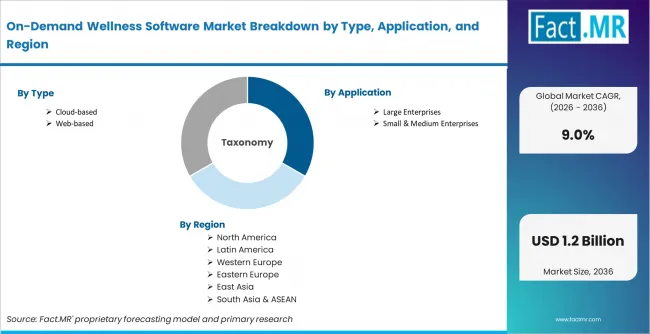
The On-Demand Wellness Software Market is segmented by Type (Cloud-based and Web-based), Application (Large Enterprises and Small & Medium Enterprises), Deployment Mode (Public Cloud, Private Cloud, and Hybrid Cloud), End User (Corporate Wellness Providers, Fitness & Health Centers, Healthcare Providers, Insurance Companies, and Wellness Consultants), Platform (Mobile Applications, Desktop Platforms, and Integrated SaaS Platforms) and Region. Forecast for 2026 to 2036.
Fact.MR states that the on-demand wellness software market is becoming more platform-led as employers and wellness providers prefer integrated SaaS systems. Large enterprise wellness contracts are supporting demand for platforms that manage scheduling and service delivery in one place. Smaller wellness providers face pressure to digitize faster as manual workflows limit scale.
On-Demand Wellness Software Market Forecast and Outlook By Fact.MR
- In 2025, the on-demand wellness software market was valued at USD 0.4 billion.
- Based on Fact.MR analysis, demand for on-demand wellness software is estimated to grow to USD 0.5 billion in 2026 and USD 1.2 billion by 2036.
- Fact.MR projects a CAGR of 9.0% during the forecast period.
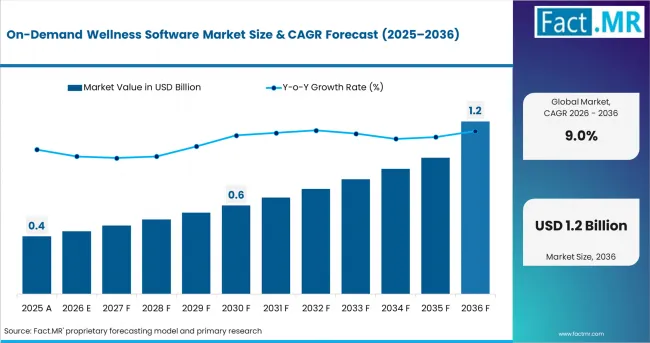
| Metric | Value |
|---|---|
| Estimated Value in 2026 | USD 0.5 million |
| Forecast Value in 2036 | USD 1.2 million |
| Forecast CAGR (2026 to 2036) | 9.0% |
Summary of On-Demand Wellness Software Market
- Demand Drivers
- Corporate HR departments are investing in wellness platforms to manage employee health programs. Mental health tracking is also gaining importance across organizations.
- Fitness centers and wellness consultants are replacing manual booking systems with SaaS scheduling platforms. Mobile-based engagement is helping improve appointment conversion and reduce administrative work.
- Health insurance companies are adding wellness software to member portals. Preventive health tracking is becoming more important under value-based care models.
- Key Segments Analyzed
- By Type: Cloud-based platforms hold 68% share in 2026 due to scalable deployment and lower IT management requirements.
- By Application: Large Enterprises account for 60% share in 2026 driven by rising corporate wellness spending and HR technology adoption.
- By Deployment Mode: Public Cloud leads with 48% share in 2026 because of lower implementation cost and faster onboarding capability.
- By End User: Corporate Wellness Providers hold 35% share in 2026 as employer-funded wellness programs continue expanding globally.
- By Platform: Mobile Applications account for 55% share in 2026 due to rising smartphone-based wellness tracking and virtual consultation usage.
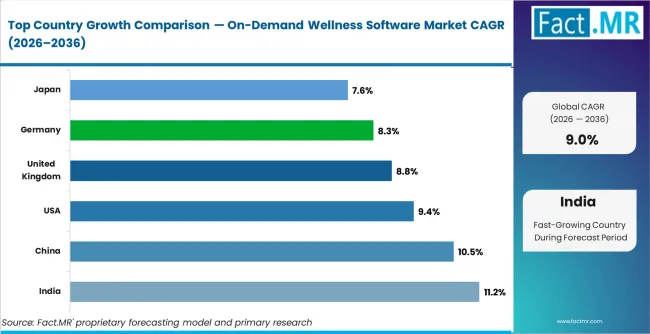
- By Geography: India leads at 11.2% CAGR through 2036 supported by digital health investment and rapid enterprise software adoption.
- Analyst Opinion at FACT.MR
- Shambhu Nath Jha, Principal Consultant at Fact.MR, opines, CXOs will find that platform integration with insurance systems is becoming a major competitive factor. Integration with enterprise HR tools is also improving contract retention across large mental wellness software customers.
- Strategic Implications
- Wellness software vendors targeting large enterprises should prioritize integration with HR systems such as Workday and SAP SuccessFactors. This can improve platform retention and reduce complexity.
- Platform developers serving SMEs should focus on mobile-first onboarding and automated appointment reminders. These features can reduce client churn and improve subscription revenue stability.
- Vendors expanding into India and China should pursue partnerships with insurers and digital health programs. This can lower customer acquisition costs across high-growth markets.
The market is projected to add nearly USD 0.7 billion in revenue by 2036. Growth is rising as employers move wellness programs onto digital platforms. Independent fitness and wellness providers are also using software for booking, coaching, and member engagement. Pricing pressure remains high because many SaaS platforms offer similar features. Mid-sized developers face margin pressure as users can shift to competing platforms with limited setup cost.
India is projected to expand at 11.2% CAGR by 2036. Mobile-first workforces and employer wellness programs are increasing platform use across corporate HR departments. China is forecast to grow at 10.5% CAGR. Large enterprises are digitizing employee health programs to improve participation tracking and program control. The United States is projected to rise at 9.4% CAGR through 2036. Employer spending on wellness benefits is increasing as companies look for tools that support employee health and reduce absenteeism. The United Kingdom is expected to grow at 8.8% CAGR. Mental health support and hybrid workforce engagement are increasing demand for corporate wellness platforms. Germany is projected to expand at 8.3% CAGR. Employer focus on occupational health programs is creating steady demand for wellness management software. Japan is forecast to grow at 7.6% CAGR. Companies are using digital wellness tools to support employee health monitoring and workplace engagement.
Segmental Analysis
On-Demand Wellness Software Market Analysis by Type
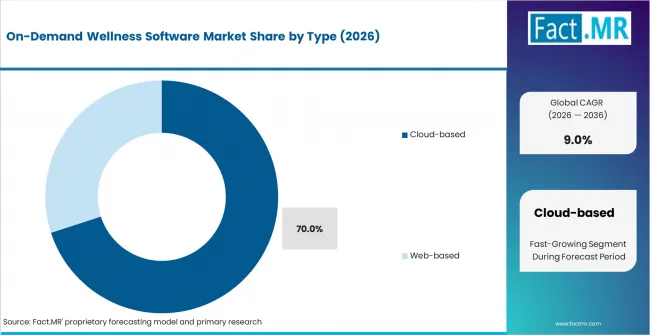
Cloud-based platforms hold 70% share in 2026 because enterprises and wellness operators prefer scalable deployment without high infrastructure maintenance costs. Multi-location wellness program management is also easier through cloud-hosted systems.
- Enterprise Cloud Migration: Large organizations are increasingly adopting cloud-native wellness platforms integrated with existing enterprise software ecosystems.
- Web Platform Accessibility: Web-based wellness portals continue expanding across employer-managed booking and centralized service administration applications.
- Basic-Fit Trials Wellhub in Spain: Basic-Fit started testing Wellhub across its gyms in Spain to expand corporate wellness access. Wellhub also added mental health nutrition and sleep partners after rebranding from Gympass. [1]
On-Demand Wellness Software Market Analysis by Application
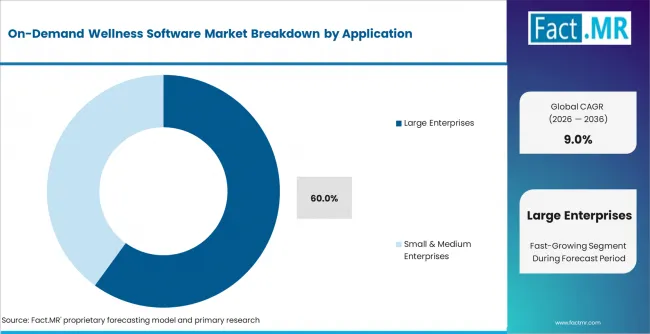
Large Enterprises account for 60% share in 2026 as employee wellness participation and workforce engagement metrics become more important across corporate HR strategies. Enterprise organizations increases spending on digital wellness and employee experience platforms.
- Enterprise Platform Expansion: Corporate employers are expanding digital wellness access across massage therapy, fitness, mental wellness, and lifestyle support programs.
- SME Digitization Growth: Small wellness businesses are adopting software tools to improve appointment scheduling, customer communication, and operational efficiency.
- Wellhub Expands in Italy: Wellhub acquired Fitprime to grow its corporate wellness business in Italy. The deal created Italy’s largest wellness network with more than 4,300 fitness and wellbeing partners. [2]
On-Demand Wellness Software Market Analysis by Deployment Mode
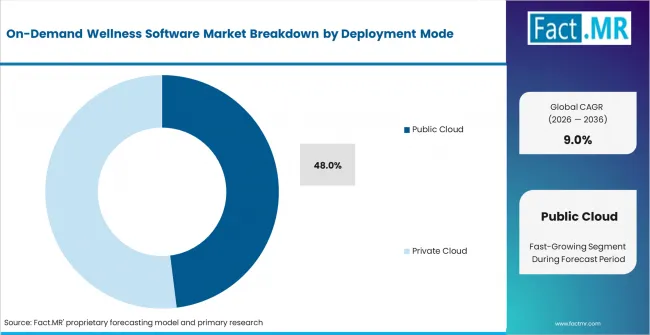
Public Cloud holds 48% share in 2026 because lower deployment cost and faster onboarding reduce adoption barriers across enterprise and mid-market customers. Subscription-based deployment models are also improving platform scalability.
- Public Cloud Expansion: Regional cloud hosting infrastructure growth is supporting faster wellness platform deployment across emerging enterprise markets.
- Private Cloud Security Demand: Healthcare and insurance organizations continue prioritizing private cloud environments for stronger employee data security and compliance management.
- Policybazaar Launches AI Health Assistant: Policybazaar for Business launched AiSHA an AI-powered health assistant for corporate employees. The platform uses a 30-second smartphone face scan to track health vitals and promote preventive care. [3]
On-Demand Wellness Software Market Analysis by End User
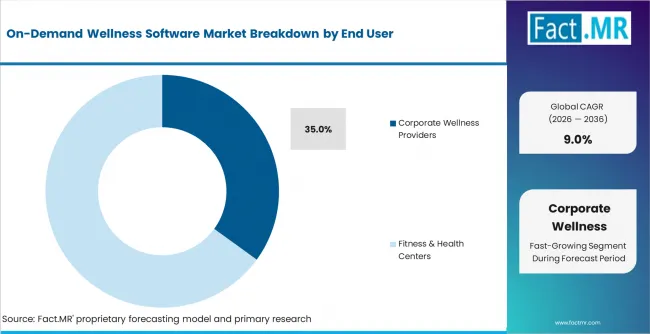
Corporate Wellness Providers hold 35% share in 2026 supported by rising enterprise wellness spending and expanding insurance-linked health engagement programs. Enterprise wellness contracts are helping providers to generate steady software subscription revenue.
- Fitness Center Software Adoption: Large fitness and wellness operators are expanding software usage for session management and customer engagement tracking.
- Healthcare Provider Integration: Hospitals and rehabilitation providers are increasing adoption of software-enabled wellness service coordination platforms.
- Volt Athletics Adds Mental Wellness Support: Volt Athletics acquired ZAMA Health to combine AI-powered training with athlete mental wellness services. The deal expands Volt’s platform with mental health tools support programs and therapy access for athletes. [4]
On-Demand Wellness Software Market Analysis by Platform
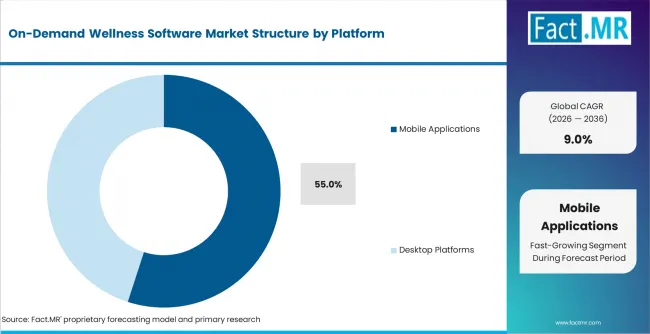
Mobile Applications account for 55% share in 2026 because smartphone-based wellness engagement generates higher participation rates than desktop-only systems. Employees increasingly prefer mobile access for booking and virtual consultation services.
- Mobile Wellness Expansion: Wellness service providers are increasing focus on mobile-first platform deployment across employee and consumer wellness programs.
- Integrated SaaS Platform Growth: Vendors are combining booking, billing, reporting, and provider management tools into unified wellness software ecosystems.
- Plum Expands Preventive Healthcare: Plum announced a ₹200 crore investment to grow its preventive healthcare business beyond insurance. The company also launched an at-home health screening service with AI-powered reports and over 200 biomarkers for early disease detection. [5]
Drivers, Restraints, and Opportunities

The on-demand wellness software market is becoming a faster-growing digital services space as companies move from basic booking apps to integrated wellness management platforms. Growth is tied to corporate HR software spending and wider digital health investment across enterprises. Remote work and rising attention to employee wellbeing are increasing demand for virtual wellness services beyond fitness centers.
The market is gradually shifting from single-purpose scheduling tools to platforms that manage booking, health tracking, reporting, and insurance integration in one system. Integrated platforms are generating higher contract values because enterprises need one dashboard to manage wellness programs. Smaller standalone apps face stronger competition from full-service SaaS providers.
- Corporate Mental Health Expansion: Employers are increasing investment in digital wellness tools focused on stress management, employee engagement, and virtual mental health support programs.
- Insurance Integration Growth: Wellness software platforms with insurance reimbursement and health benefit integration capability are gaining stronger adoption across enterprise wellness contracts.
- Asia Pacific Digital Health Growth: Rapid enterprise digitization and government-backed digital health initiatives are increasing wellness platform deployment across India and other Asian markets.
Regional Analysis
The on-demand wellness software market is assessed across North America, Europe, Asia Pacific, Latin America, and Middle East and Africa covering 40+ countries segmented by digital infrastructure maturity, corporate wellness program spending levels, health insurance digitization, and smartphone-based service delivery adoption. The full report offers market attractiveness analysis by region and country.
.webp)
| Country | CAGR (2026 to 2036) |
|---|---|
| India | 11.2% |
| China | 10.5% |
| United States | 9.4% |
| United Kingdom | 8.8% |
| Germany | 8.3% |
| Japan | 7.6% |
Source: Fact.MR (FACT.MR) analysis, based on proprietary forecasting model and primary research
Asia Pacific On-Demand Wellness Software Market Analysis
Asia Pacific is the fastest-growing regional market for on-demand wellness software. Growth is supported by rising digital health spending and wider use of HR technology platforms across large employers. Smartphone access is also helping companies offer wellness services beyond office-based programs.
- India: India is emerging as the leading high-growth market and is projected to expand at 11.2% CAGR through 2036. Corporate wellness spending is rising cross IT services and consulting firms. Employers are using digital wellness platforms to manage fitness access, mental health support, and employee engagement. Government-backed digital health programs are improving user familiarity with online health tools across urban business centers.
- China: China is forecast to grow at 10.5% CAGR by 2036. Large employers are adding digital wellness tools to employee management systems. Cloud-based platforms are gaining demand because companies need centralized dashboards for participation tracking and health program management. Manufacturing and technology companies are expected to support steady software deployment.
- Japan: Japan is projected to grow at 7.6% CAGR through 2036. Large companies are investing in employee health monitoring platforms as workforce health becomes a workplace priority. Aging workforce concerns are increasing demand for structured wellness programs. Digital wellness systems help employers track engagement and support preventive health initiatives.
North America On-Demand Wellness Software Market Analysis
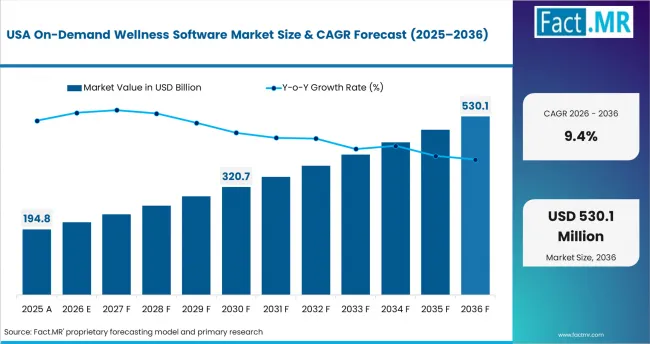
North America remains the leading commercial market for on-demand wellness software. Employer-funded wellness programs and advanced SaaS adoption support steady demand. Integration with insurance systems and HR platforms is becoming more important as companies look for one system to manage employee wellness programs.
- United States: United States remains the largest market for on-demand wellness software and is projected to expand at 9.4% CAGR through 2036. Employers are investing in digital wellness solutions to support preventive health programs and mental health access. Integrated platforms are gaining demand across technology and financial services companies because they help manage employee engagement and wellness participation in one place.
Europe On-Demand Wellness Software Market Analysis
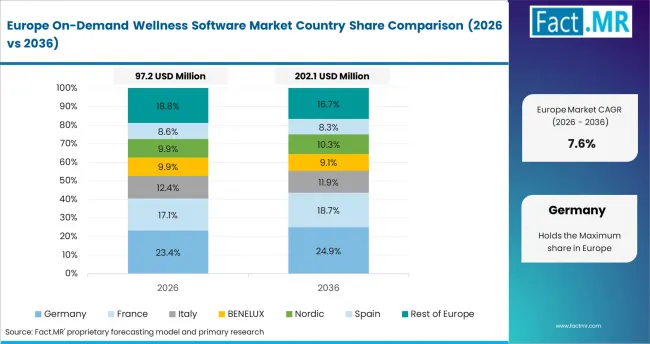
Europe is a regulation-driven wellness software market supported by employer health obligations and digital wellness reimbursement programs. The region continues witnessing stronger adoption of workplace wellness platforms as companies prioritize employee wellbeing and compliance-focused health management systems.
- United Kingdom: The United Kingdom is forecast to grow at 8.8% CAGR through 2036. Large and mid-sized enterprises are investing in digital wellness platforms to support employee wellbeing and hybrid workforce engagement. Stress management and employee engagement remain key focus areas. Corporate wellness adoption is also rising across hybrid work environments. Virtual wellness support is becoming more important for employers.
- Germany: Germany is projected to expand at 8.3% CAGR through 2036. Occupational health requirements and insurer-backed wellness programs are encouraging companies to use structured wellness platforms. Industrial and manufacturing employers are adopting these systems to track employee health participation and manage workplace wellbeing programs more effectively.
Competitive Aligners for Market Players

The on-demand wellness software market is becoming more competitive as enterprise clients demand wider platform functions and easier system integration. Vendors that combine scheduling and insurance integration in one platform are gaining stronger access to corporate accounts.
Cloud-based deployment gives vendors a clear advantage. Large employers prefer scalable platforms that reduce onboarding time and simplify wellness program management across multiple office locations. Mobile-first design is becoming more important because employees are more likely to use wellness services through smartphone apps than desktop systems.
Software companies are focusing on integration with HR systems and digital healthcare networks. Compatibility with enterprise platforms improves retention and supports long-term subscription revenue. Insurance reimbursement integration is becoming an important selection factor for employers. Mid-sized software vendors face pricing pressure from larger SaaS providers with wider service portfolios and stronger infrastructure. Smaller companies are responding through focused solutions in mental wellness and fitness engagement. Asia Pacific remains the fastest-growing regional market due to workplace digitization and rising corporate wellness spending. North America continues to lead software innovation, and Europe maintains steady demand through workplace health rules and employee wellbeing programs.
Key Players
- Booksy
- Soothe Inc.
- Urban Company Limited
- Priv
- Glamsquad
- Zeel Networks, Inc.
- Urban Massage Ltd.
Bibliography
- Hudson, K. (2024, April 15). Basic-Fit trials corporate wellness drive across its Spanish clubs. Health Club Management.
- Wellhub Newsroom. (2024, December 13). Wellhub joins forces with Fitprime in Italy, expands corporate wellness platform. Wellhub.
- Savant, A. (2025, December 23). Policybazaar for Business introduces AI-powered preventive health assistant AiSHA for corporate workforce. Elets eHealth.
- Sports & Fitness Industry Association. (2024, April 9). Volt Athletics elevates AI-powered athlete development platform with acquisition of ZAMA Health.
- Savant, A. (2025, July 15). Plum invests ₹200 crore in preventive healthcare; launches at-home screening solution. Elets eHealth.
This Report Addresses
- Strategic analysis of on-demand wellness software demand across type, application, deployment mode, end user, and platform segments.
- Market forecast from USD 0.5 million in 2026 to USD 1.2 million by 2036 at a CAGR of 9.0%, including absolute dollar opportunity analysis.
- Growth opportunity assessment across digital health initiatives, insurance-linked wellness programs, workplace health mandates, and employer mental health frameworks.
- Segment analysis across type, application, deployment mode, end user, and platform categories with regional and global growth forecasts.
- Regional outlook covering Asia Pacific, North America, Europe, and emerging markets with focus on corporate wellness software adoption trends.
- Competitive analysis of Booksy, Soothe Inc., Glamsquad, Zeel Networks, and Urban Massage Ltd.
- Regulatory analysis covering digital wellness data compliance, interoperability standards, and insurer reimbursement frameworks.
- Report delivery in PDF, Excel, and presentation formats supported by wellness expenditure data and industry interviews.
On-Demand Wellness Software Market Definition
The on-demand wellness software market covers digital platforms and SaaS applications that enable wellness service providers to schedule, deliver, and manage health and fitness services in real time. These tools support appointment booking, virtual consultations, workout session management, mental wellness tracking, and corporate health program administration. Primary users include corporate HR technology managers, fitness center operators, healthcare providers, and wellness consultants managing client engagement through mobile and desktop interfaces.
On-Demand Wellness Software Market Inclusions
The study covers global and regional forecasts from 2026 to 2036 across software type, application size, deployment mode, end user, and platform. It includes cloud-hosted and web-based wellness management platforms used across corporate wellness programs, fitness center operations, virtual healthcare delivery, insurance wellness benefits administration, and independent wellness consulting services.
On-Demand Wellness Software Market Exclusions
The study excludes standalone fitness hardware devices and wearable health trackers unless integrated with licensed wellness software platforms. It omits electronic health record systems used for clinical diagnosis and general telemedicine not configured for wellness program management. Consumer fitness applications platforms distributed outside B2B software licensing agreements fall outside the study scope.
On-Demand Wellness Software Market Research Methodology
- Primary Research
- Primary research includes interviews with corporate HR technology managers, wellness platform product directors, and fitness center operations leads. Insurance company digital health program managers and independent wellness consultant network operators across the United States, India, and Germany are covered.
- Desk Research
- Desk research draws on public disclosures from Booksy, Soothe Inc., and Glamsquad alongside US Department of Labor workplace wellness program data, NHS England digital health strategy documents, and company press releases covering 2024 and 2025.
- Market-Sizing and Forecasting
- Market sizing applies a hybrid top-down and bottom-up model. Corporate wellness program software contract values and fitness platform subscription revenue benchmarks form base inputs. Segment forecasts are built separately for enterprise and SME application tiers across deployment mode and end user categories.
- Data Validation and Update Cycle
- Data validation uses wellness software vendor revenue disclosures and corporate wellness program expenditure benchmarks validated against 2024 and 2025 company filings. Findings are cross-checked through interviews with HR technology specialists and digital health platform integration consultants.
Scope of the Report

| Attribute | Details |
|---|---|
| Quantitative Units | USD 0.5 million (2026) to USD 1.2 million (2036), at a CAGR of 9.0% |
| Market Definition | Cloud and web-based SaaS platforms enabling real-time scheduling, delivery, and management of wellness services across corporate programs, fitness centers, healthcare providers, and independent wellness consultants globally. |
| Type Segmentation | Cloud-based, Web-based |
| Application Segmentation | Large Enterprises, Small & Medium Enterprises |
| Deployment Mode Segmentation | Public Cloud, Private Cloud, Hybrid Cloud |
| End User Segmentation | Corporate Wellness Providers, Fitness & Health Centers, Healthcare Providers, Insurance Companies, Wellness Consultants |
| Platform Segmentation | Mobile Applications, Desktop Platforms, Integrated SaaS Platforms |
| Regions Covered | North America, Europe, Asia Pacific, Latin America, Middle East and Africa |
| Countries Covered | USA, Canada, Mexico, Germany, UK, France, Italy, Spain, Nordic, BENELUX, China, Japan, South Korea, India, ASEAN, Australia and New Zealand, Brazil, Argentina, Colombia, Saudi Arabia, UAE, South Africa, Rest of MEA |
| Key Companies Profiled | Booksy, Soothe Inc., Urban Company Limited, STYLEBEE (ASCN Inc.), Priv, Glamsquad, Zeel Networks Inc., Urban Massage Ltd. |
| Forecast Period | 2026 to 2036 |
| Approach | Hybrid top-down and bottom-up model using corporate wellness program expenditure benchmarks, SaaS platform subscription revenue data, health insurer digital wellness program disclosures, and primary interviews with corporate HR technology managers and wellness platform product directors. |
On-Demand Wellness Software Market by Segments
-
By Type
- Cloud-based
- Web-based
-
By Application
- Large Enterprises
- Small & Medium Enterprises
-
By Deployment Mode
- Public Cloud
- Private Cloud
- Hybrid Cloud
-
By End User
- Corporate Wellness Providers
- Fitness & Health Centers
- Healthcare Providers
- Insurance Companies
- Wellness Consultants
-
By Platform
- Mobile Applications
- Desktop Platforms
- Integrated SaaS Platforms
-
By Region
- North America
- United States
- Canada
- Mexico
- Latin America
- Brazil
- Argentina
- Colombia
- Rest of Latin America
- Western Europe
- Germany
- United Kingdom
- France
- Italy
- Spain
- Nordic Countries
- BENELUX
- Rest of Western Europe
- Eastern Europe
- Russia
- Poland
- Hungary
- Balkan and Baltic
- Rest of Eastern Europe
- East Asia
- China
- Japan
- South Korea
- South Asia and Pacific
- India
- ASEAN
- Australia and New Zealand
- Rest of South Asia and Pacific
- Middle East and Africa
- Kingdom of Saudi Arabia
- UAE
- South Africa
- Rest of Middle East and Africa
- North America
- Frequently Asked Questions -
How large is the global on-demand wellness software market in 2025?
The global on-demand wellness software market was valued at USD 0.4 million in 2025.
What will the on-demand wellness software market size be in 2026?
Based on Fact.MR analysis, demand for on-demand wellness software is estimated to grow to USD 0.5 million in 2026.
What is the projected on-demand wellness software market size by 2036?
The on-demand wellness software market is projected to reach USD 1.2 million by 2036, reflecting accelerating corporate wellness platform adoption and insurance-linked digital health program integration across enterprise HR technology markets globally.
What is the expected CAGR for the on-demand wellness software market from 2026 to 2036?
Fact.MR projects a CAGR of 9.0% for the global on-demand wellness software market during the 2026 to 2036 forecast period.
Which type segment is poised to lead the on-demand wellness software market?
Cloud-based platforms lead with 70% share in 2026 as scalable multi-site deployment capability and low IT management overhead attract corporate wellness program operators to cloud-native SaaS alternatives.
Which end user segment holds the leading share in the on-demand wellness software market?
Corporate Wellness Providers hold 35% share in 2026 as enterprise health program budget growth and insurance-linked digital platform reimbursement programs drive sustained corporate software contract expansion.
Which country shows the fastest growth in the on-demand wellness software market?
India leads at 11.2% CAGR through 2036 driven by National Digital Health Mission vendor integration programs and rapid enterprise HR technology adoption across large IT services and manufacturing employer bases.
Table of Content
- Executive Summary
- Global Market Outlook
- Demand to side Trends
- Supply to side Trends
- Technology Roadmap Analysis
- Analysis and Recommendations
- Market Overview
- Market Coverage / Taxonomy
- Market Definition / Scope / Limitations
- Research Methodology
- Chapter Orientation
- Analytical Lens and Working Hypotheses
- Market Structure, Signals, and Trend Drivers
- Benchmarking and Cross-market Comparability
- Market Sizing, Forecasting, and Opportunity Mapping
- Research Design and Evidence Framework
- Desk Research Programme (Secondary Evidence)
- Company Annual and Sustainability Reports
- Peer-reviewed Journals and Academic Literature
- Corporate Websites, Product Literature, and Technical Notes
- Earnings Decks and Investor Briefings
- Statutory Filings and Regulatory Disclosures
- Technical White Papers and Standards Notes
- Trade Journals, Industry Magazines, and Analyst Briefs
- Conference Proceedings, Webinars, and Seminar Materials
- Government Statistics Portals and Public Data Releases
- Press Releases and Reputable Media Coverage
- Specialist Newsletters and Curated Briefings
- Sector Databases and Reference Repositories
- Fact.MR Internal Proprietary Databases and Historical Market Datasets
- Subscription Datasets and Paid Sources
- Social Channels, Communities, and Digital Listening Inputs
- Additional Desk Sources
- Expert Input and Fieldwork (Primary Evidence)
- Primary Modes
- Qualitative Interviews and Expert Elicitation
- Quantitative Surveys and Structured Data Capture
- Blended Approach
- Why Primary Evidence is Used
- Field Techniques
- Interviews
- Surveys
- Focus Groups
- Observational and In-context Research
- Social and Community Interactions
- Stakeholder Universe Engaged
- C-suite Leaders
- Board Members
- Presidents and Vice Presidents
- R&D and Innovation Heads
- Technical Specialists
- Domain Subject-matter Experts
- Scientists
- Physicians and Other Healthcare Professionals
- Governance, Ethics, and Data Stewardship
- Research Ethics
- Data Integrity and Handling
- Primary Modes
- Tooling, Models, and Reference Databases
- Desk Research Programme (Secondary Evidence)
- Data Engineering and Model Build
- Data Acquisition and Ingestion
- Cleaning, Normalisation, and Verification
- Synthesis, Triangulation, and Analysis
- Quality Assurance and Audit Trail
- Market Background
- Market Dynamics
- Drivers
- Restraints
- Opportunity
- Trends
- Scenario Forecast
- Demand in Optimistic Scenario
- Demand in Likely Scenario
- Demand in Conservative Scenario
- Opportunity Map Analysis
- Product Life Cycle Analysis
- Supply Chain Analysis
- Investment Feasibility Matrix
- Value Chain Analysis
- PESTLE and Porter’s Analysis
- Regulatory Landscape
- Regional Parent Market Outlook
- Production and Consumption Statistics
- Import and Export Statistics
- Market Dynamics
- Global Market Analysis 2021 to 2025 and Forecast, 2026 to 2036
- Historical Market Size Value (USD Million) Analysis, 2021 to 2025
- Current and Future Market Size Value (USD Million) Projections, 2026 to 2036
- Y to o to Y Growth Trend Analysis
- Absolute $ Opportunity Analysis
- Global Market Pricing Analysis 2021 to 2025 and Forecast 2026 to 2036
- Global Market Analysis 2021 to 2025 and Forecast 2026 to 2036, By Type
- Introduction / Key Findings
- Historical Market Size Value (USD Million) Analysis By Type , 2021 to 2025
- Current and Future Market Size Value (USD Million) Analysis and Forecast By Type , 2026 to 2036
- Cloud-based
- Web-based
- Cloud-based
- Y to o to Y Growth Trend Analysis By Type , 2021 to 2025
- Absolute $ Opportunity Analysis By Type , 2026 to 2036
- Global Market Analysis 2021 to 2025 and Forecast 2026 to 2036, By Application
- Introduction / Key Findings
- Historical Market Size Value (USD Million) Analysis By Application, 2021 to 2025
- Current and Future Market Size Value (USD Million) Analysis and Forecast By Application, 2026 to 2036
- Large Enterprises
- Small & Medium Enterprises
- Large Enterprises
- Y to o to Y Growth Trend Analysis By Application, 2021 to 2025
- Absolute $ Opportunity Analysis By Application, 2026 to 2036
- Global Market Analysis 2021 to 2025 and Forecast 2026 to 2036, By Deployment Mode
- Introduction / Key Findings
- Historical Market Size Value (USD Million) Analysis By Deployment Mode, 2021 to 2025
- Current and Future Market Size Value (USD Million) Analysis and Forecast By Deployment Mode, 2026 to 2036
- Public Cloud
- Private Cloud
- Hybrid Cloud
- Public Cloud
- Y to o to Y Growth Trend Analysis By Deployment Mode, 2021 to 2025
- Absolute $ Opportunity Analysis By Deployment Mode, 2026 to 2036
- Global Market Analysis 2021 to 2025 and Forecast 2026 to 2036, By End User
- Introduction / Key Findings
- Historical Market Size Value (USD Million) Analysis By End User, 2021 to 2025
- Current and Future Market Size Value (USD Million) Analysis and Forecast By End User, 2026 to 2036
- Corporate Wellness Providers
- Fitness & Health Centers
- Healthcare Providers
- Corporate Wellness Providers
- Y to o to Y Growth Trend Analysis By End User, 2021 to 2025
- Absolute $ Opportunity Analysis By End User, 2026 to 2036
- Global Market Analysis 2021 to 2025 and Forecast 2026 to 2036, By Platform
- Introduction / Key Findings
- Historical Market Size Value (USD Million) Analysis By Platform, 2021 to 2025
- Current and Future Market Size Value (USD Million) Analysis and Forecast By Platform, 2026 to 2036
- Mobile Applications
- Desktop Platforms
- Integrated SaaS Platforms
- Mobile Applications
- Y to o to Y Growth Trend Analysis By Platform, 2021 to 2025
- Absolute $ Opportunity Analysis By Platform, 2026 to 2036
- Global Market Analysis 2021 to 2025 and Forecast 2026 to 2036, By Region
- Introduction
- Historical Market Size Value (USD Million) Analysis By Region, 2021 to 2025
- Current Market Size Value (USD Million) Analysis and Forecast By Region, 2026 to 2036
- North America
- Latin America
- Western Europe
- Eastern Europe
- East Asia
- South Asia and Pacific
- Middle East & Africa
- Market Attractiveness Analysis By Region
- North America Market Analysis 2021 to 2025 and Forecast 2026 to 2036, By Country
- Historical Market Size Value (USD Million) Trend Analysis By Market Taxonomy, 2021 to 2025
- Market Size Value (USD Million) Forecast By Market Taxonomy, 2026 to 2036
- By Country
- USA
- Canada
- Mexico
- By Type
- By Application
- By Deployment Mode
- By End User
- By Platform
- By Country
- Market Attractiveness Analysis
- By Country
- By Type
- By Application
- By Deployment Mode
- By End User
- By Platform
- Key Takeaways
- Latin America Market Analysis 2021 to 2025 and Forecast 2026 to 2036, By Country
- Historical Market Size Value (USD Million) Trend Analysis By Market Taxonomy, 2021 to 2025
- Market Size Value (USD Million) Forecast By Market Taxonomy, 2026 to 2036
- By Country
- Brazil
- Chile
- Rest of Latin America
- By Type
- By Application
- By Deployment Mode
- By End User
- By Platform
- By Country
- Market Attractiveness Analysis
- By Country
- By Type
- By Application
- By Deployment Mode
- By End User
- By Platform
- Key Takeaways
- Western Europe Market Analysis 2021 to 2025 and Forecast 2026 to 2036, By Country
- Historical Market Size Value (USD Million) Trend Analysis By Market Taxonomy, 2021 to 2025
- Market Size Value (USD Million) Forecast By Market Taxonomy, 2026 to 2036
- By Country
- Germany
- UK
- Italy
- Spain
- France
- Nordic
- BENELUX
- Rest of Western Europe
- By Type
- By Application
- By Deployment Mode
- By End User
- By Platform
- By Country
- Market Attractiveness Analysis
- By Country
- By Type
- By Application
- By Deployment Mode
- By End User
- By Platform
- Key Takeaways
- Eastern Europe Market Analysis 2021 to 2025 and Forecast 2026 to 2036, By Country
- Historical Market Size Value (USD Million) Trend Analysis By Market Taxonomy, 2021 to 2025
- Market Size Value (USD Million) Forecast By Market Taxonomy, 2026 to 2036
- By Country
- Russia
- Poland
- Hungary
- Balkan & Baltic
- Rest of Eastern Europe
- By Type
- By Application
- By Deployment Mode
- By End User
- By Platform
- By Country
- Market Attractiveness Analysis
- By Country
- By Type
- By Application
- By Deployment Mode
- By End User
- By Platform
- Key Takeaways
- East Asia Market Analysis 2021 to 2025 and Forecast 2026 to 2036, By Country
- Historical Market Size Value (USD Million) Trend Analysis By Market Taxonomy, 2021 to 2025
- Market Size Value (USD Million) Forecast By Market Taxonomy, 2026 to 2036
- By Country
- China
- Japan
- South Korea
- By Type
- By Application
- By Deployment Mode
- By End User
- By Platform
- By Country
- Market Attractiveness Analysis
- By Country
- By Type
- By Application
- By Deployment Mode
- By End User
- By Platform
- Key Takeaways
- South Asia and Pacific Market Analysis 2021 to 2025 and Forecast 2026 to 2036, By Country
- Historical Market Size Value (USD Million) Trend Analysis By Market Taxonomy, 2021 to 2025
- Market Size Value (USD Million) Forecast By Market Taxonomy, 2026 to 2036
- By Country
- India
- ASEAN
- Australia & New Zealand
- Rest of South Asia and Pacific
- By Type
- By Application
- By Deployment Mode
- By End User
- By Platform
- By Country
- Market Attractiveness Analysis
- By Country
- By Type
- By Application
- By Deployment Mode
- By End User
- By Platform
- Key Takeaways
- Middle East & Africa Market Analysis 2021 to 2025 and Forecast 2026 to 2036, By Country
- Historical Market Size Value (USD Million) Trend Analysis By Market Taxonomy, 2021 to 2025
- Market Size Value (USD Million) Forecast By Market Taxonomy, 2026 to 2036
- By Country
- Kingdom of Saudi Arabia
- Other GCC Countries
- Turkiye
- South Africa
- Other African Union
- Rest of Middle East & Africa
- By Type
- By Application
- By Deployment Mode
- By End User
- By Platform
- By Country
- Market Attractiveness Analysis
- By Country
- By Type
- By Application
- By Deployment Mode
- By End User
- By Platform
- Key Takeaways
- Key Countries Market Analysis
- USA
- Pricing Analysis
- Market Share Analysis, 2025
- By Type
- By Application
- By Deployment Mode
- By End User
- By Platform
- Canada
- Pricing Analysis
- Market Share Analysis, 2025
- By Type
- By Application
- By Deployment Mode
- By End User
- By Platform
- Mexico
- Pricing Analysis
- Market Share Analysis, 2025
- By Type
- By Application
- By Deployment Mode
- By End User
- By Platform
- Brazil
- Pricing Analysis
- Market Share Analysis, 2025
- By Type
- By Application
- By Deployment Mode
- By End User
- By Platform
- Chile
- Pricing Analysis
- Market Share Analysis, 2025
- By Type
- By Application
- By Deployment Mode
- By End User
- By Platform
- Germany
- Pricing Analysis
- Market Share Analysis, 2025
- By Type
- By Application
- By Deployment Mode
- By End User
- By Platform
- UK
- Pricing Analysis
- Market Share Analysis, 2025
- By Type
- By Application
- By Deployment Mode
- By End User
- By Platform
- Italy
- Pricing Analysis
- Market Share Analysis, 2025
- By Type
- By Application
- By Deployment Mode
- By End User
- By Platform
- Spain
- Pricing Analysis
- Market Share Analysis, 2025
- By Type
- By Application
- By Deployment Mode
- By End User
- By Platform
- France
- Pricing Analysis
- Market Share Analysis, 2025
- By Type
- By Application
- By Deployment Mode
- By End User
- By Platform
- India
- Pricing Analysis
- Market Share Analysis, 2025
- By Type
- By Application
- By Deployment Mode
- By End User
- By Platform
- ASEAN
- Pricing Analysis
- Market Share Analysis, 2025
- By Type
- By Application
- By Deployment Mode
- By End User
- By Platform
- Australia & New Zealand
- Pricing Analysis
- Market Share Analysis, 2025
- By Type
- By Application
- By Deployment Mode
- By End User
- By Platform
- China
- Pricing Analysis
- Market Share Analysis, 2025
- By Type
- By Application
- By Deployment Mode
- By End User
- By Platform
- Japan
- Pricing Analysis
- Market Share Analysis, 2025
- By Type
- By Application
- By Deployment Mode
- By End User
- By Platform
- South Korea
- Pricing Analysis
- Market Share Analysis, 2025
- By Type
- By Application
- By Deployment Mode
- By End User
- By Platform
- Russia
- Pricing Analysis
- Market Share Analysis, 2025
- By Type
- By Application
- By Deployment Mode
- By End User
- By Platform
- Poland
- Pricing Analysis
- Market Share Analysis, 2025
- By Type
- By Application
- By Deployment Mode
- By End User
- By Platform
- Hungary
- Pricing Analysis
- Market Share Analysis, 2025
- By Type
- By Application
- By Deployment Mode
- By End User
- By Platform
- Kingdom of Saudi Arabia
- Pricing Analysis
- Market Share Analysis, 2025
- By Type
- By Application
- By Deployment Mode
- By End User
- By Platform
- Turkiye
- Pricing Analysis
- Market Share Analysis, 2025
- By Type
- By Application
- By Deployment Mode
- By End User
- By Platform
- South Africa
- Pricing Analysis
- Market Share Analysis, 2025
- By Type
- By Application
- By Deployment Mode
- By End User
- By Platform
- USA
- Market Structure Analysis
- Competition Dashboard
- Competition Benchmarking
- Market Share Analysis of Top Players
- By Regional
- By Type
- By Application
- By Deployment Mode
- By End User
- By Platform
- Competition Analysis
- Competition Deep Dive
- Booksy
- Overview
- Product Portfolio
- Profitability by Market Segments (Product/Age /Sales Channel/Region)
- Sales Footprint
- Strategy Overview
- Marketing Strategy
- Product Strategy
- Channel Strategy
- Soothe Inc.
- Urban Company Limited
- Priv
- Glamsquad
- Zeel Networks, Inc.
- Urban Massage Ltd.
- Booksy
- Competition Deep Dive
- Assumptions & Acronyms Used
List Of Table
- Table 1: Global Market Value (USD Million) Forecast by Region, 2021 to 2036
- Table 2: Global Market Value (USD Million) Forecast by Type, 2021 to 2036
- Table 3: Global Market Value (USD Million) Forecast by Application, 2021 to 2036
- Table 4: Global Market Value (USD Million) Forecast by Deployment Mode, 2021 to 2036
- Table 5: Global Market Value (USD Million) Forecast by End User, 2021 to 2036
- Table 6: Global Market Value (USD Million) Forecast by Platform, 2021 to 2036
- Table 7: North America Market Value (USD Million) Forecast by Country, 2021 to 2036
- Table 8: North America Market Value (USD Million) Forecast by Type, 2021 to 2036
- Table 9: North America Market Value (USD Million) Forecast by Application, 2021 to 2036
- Table 10: North America Market Value (USD Million) Forecast by Deployment Mode, 2021 to 2036
- Table 11: North America Market Value (USD Million) Forecast by End User, 2021 to 2036
- Table 12: North America Market Value (USD Million) Forecast by Platform, 2021 to 2036
- Table 13: Latin America Market Value (USD Million) Forecast by Country, 2021 to 2036
- Table 14: Latin America Market Value (USD Million) Forecast by Type, 2021 to 2036
- Table 15: Latin America Market Value (USD Million) Forecast by Application, 2021 to 2036
- Table 16: Latin America Market Value (USD Million) Forecast by Deployment Mode, 2021 to 2036
- Table 17: Latin America Market Value (USD Million) Forecast by End User, 2021 to 2036
- Table 18: Latin America Market Value (USD Million) Forecast by Platform, 2021 to 2036
- Table 19: Western Europe Market Value (USD Million) Forecast by Country, 2021 to 2036
- Table 20: Western Europe Market Value (USD Million) Forecast by Type, 2021 to 2036
- Table 21: Western Europe Market Value (USD Million) Forecast by Application, 2021 to 2036
- Table 22: Western Europe Market Value (USD Million) Forecast by Deployment Mode, 2021 to 2036
- Table 23: Western Europe Market Value (USD Million) Forecast by End User, 2021 to 2036
- Table 24: Western Europe Market Value (USD Million) Forecast by Platform, 2021 to 2036
- Table 25: Eastern Europe Market Value (USD Million) Forecast by Country, 2021 to 2036
- Table 26: Eastern Europe Market Value (USD Million) Forecast by Type, 2021 to 2036
- Table 27: Eastern Europe Market Value (USD Million) Forecast by Application, 2021 to 2036
- Table 28: Eastern Europe Market Value (USD Million) Forecast by Deployment Mode, 2021 to 2036
- Table 29: Eastern Europe Market Value (USD Million) Forecast by End User, 2021 to 2036
- Table 30: Eastern Europe Market Value (USD Million) Forecast by Platform, 2021 to 2036
- Table 31: East Asia Market Value (USD Million) Forecast by Country, 2021 to 2036
- Table 32: East Asia Market Value (USD Million) Forecast by Type, 2021 to 2036
- Table 33: East Asia Market Value (USD Million) Forecast by Application, 2021 to 2036
- Table 34: East Asia Market Value (USD Million) Forecast by Deployment Mode, 2021 to 2036
- Table 35: East Asia Market Value (USD Million) Forecast by End User, 2021 to 2036
- Table 36: East Asia Market Value (USD Million) Forecast by Platform, 2021 to 2036
- Table 37: South Asia and Pacific Market Value (USD Million) Forecast by Country, 2021 to 2036
- Table 38: South Asia and Pacific Market Value (USD Million) Forecast by Type, 2021 to 2036
- Table 39: South Asia and Pacific Market Value (USD Million) Forecast by Application, 2021 to 2036
- Table 40: South Asia and Pacific Market Value (USD Million) Forecast by Deployment Mode, 2021 to 2036
- Table 41: South Asia and Pacific Market Value (USD Million) Forecast by End User, 2021 to 2036
- Table 42: South Asia and Pacific Market Value (USD Million) Forecast by Platform, 2021 to 2036
- Table 43: Middle East & Africa Market Value (USD Million) Forecast by Country, 2021 to 2036
- Table 44: Middle East & Africa Market Value (USD Million) Forecast by Type, 2021 to 2036
- Table 45: Middle East & Africa Market Value (USD Million) Forecast by Application, 2021 to 2036
- Table 46: Middle East & Africa Market Value (USD Million) Forecast by Deployment Mode, 2021 to 2036
- Table 47: Middle East & Africa Market Value (USD Million) Forecast by End User, 2021 to 2036
- Table 48: Middle East & Africa Market Value (USD Million) Forecast by Platform, 2021 to 2036
List Of Figures
- Figure 1: Global Market Pricing Analysis
- Figure 2: Global Market Value (USD Million) Forecast 2021-2036
- Figure 3: Global Market Value Share and BPS Analysis by Type,2026 and 2036
- Figure 4: Global Market Y-o-Y Growth Comparison by Type,2026 to 2036
- Figure 5: Global Market Attractiveness Analysis by Type
- Figure 6: Global Market Value Share and BPS Analysis by Application, 2026 and 2036
- Figure 7: Global Market Y-o-Y Growth Comparison by Application, 2026 to 2036
- Figure 8: Global Market Attractiveness Analysis by Application
- Figure 9: Global Market Value Share and BPS Analysis by Deployment Mode, 2026 and 2036
- Figure 10: Global Market Y-o-Y Growth Comparison by Deployment Mode, 2026 to 2036
- Figure 11: Global Market Attractiveness Analysis by Deployment Mode
- Figure 12: Global Market Value Share and BPS Analysis by End User, 2026 and 2036
- Figure 13: Global Market Y-o-Y Growth Comparison by End User, 2026 to 2036
- Figure 14: Global Market Attractiveness Analysis by End User
- Figure 15: Global Market Value Share and BPS Analysis by Platform, 2026 and 2036
- Figure 16: Global Market Y-o-Y Growth Comparison by Platform, 2026 to 2036
- Figure 17: Global Market Attractiveness Analysis by Platform
- Figure 18: Global Market Value (USD Million) Share and BPS Analysis by Region, 2026 and 2036
- Figure 19: Global Market Y-o-Y Growth Comparison by Region, 2026 to 2036
- Figure 20: Global Market Attractiveness Analysis by Region
- Figure 21: North America Market Incremental Dollar Opportunity, 2026 to 2036
- Figure 22: Latin America Market Incremental Dollar Opportunity, 2026 to 2036
- Figure 23: Western Europe Market Incremental Dollar Opportunity, 2026 to 2036
- Figure 24: Eastern Europe Market Incremental Dollar Opportunity, 2026 to 2036
- Figure 25: East Asia Market Incremental Dollar Opportunity, 2026 to 2036
- Figure 26: South Asia and Pacific Market Incremental Dollar Opportunity, 2026 to 2036
- Figure 27: Middle East & Africa Market Incremental Dollar Opportunity, 2026 to 2036
- Figure 28: North America Market Value Share and BPS Analysis by Country, 2026 and 2036
- Figure 29: North America Market Value Share and BPS Analysis by Type,2026 and 2036
- Figure 30: North America Market Y-o-Y Growth Comparison by Type,2026 to 2036
- Figure 31: North America Market Attractiveness Analysis by Type
- Figure 32: North America Market Value Share and BPS Analysis by Application, 2026 and 2036
- Figure 33: North America Market Y-o-Y Growth Comparison by Application, 2026 to 2036
- Figure 34: North America Market Attractiveness Analysis by Application
- Figure 35: North America Market Value Share and BPS Analysis by Deployment Mode, 2026 and 2036
- Figure 36: North America Market Y-o-Y Growth Comparison by Deployment Mode, 2026 to 2036
- Figure 37: North America Market Attractiveness Analysis by Deployment Mode
- Figure 38: North America Market Value Share and BPS Analysis by End User, 2026 and 2036
- Figure 39: North America Market Y-o-Y Growth Comparison by End User, 2026 to 2036
- Figure 40: North America Market Attractiveness Analysis by End User
- Figure 41: North America Market Value Share and BPS Analysis by Platform, 2026 and 2036
- Figure 42: North America Market Y-o-Y Growth Comparison by Platform, 2026 to 2036
- Figure 43: North America Market Attractiveness Analysis by Platform
- Figure 44: Latin America Market Value Share and BPS Analysis by Country, 2026 and 2036
- Figure 45: Latin America Market Value Share and BPS Analysis by Type,2026 and 2036
- Figure 46: Latin America Market Y-o-Y Growth Comparison by Type,2026 to 2036
- Figure 47: Latin America Market Attractiveness Analysis by Type
- Figure 48: Latin America Market Value Share and BPS Analysis by Application, 2026 and 2036
- Figure 49: Latin America Market Y-o-Y Growth Comparison by Application, 2026 to 2036
- Figure 50: Latin America Market Attractiveness Analysis by Application
- Figure 51: Latin America Market Value Share and BPS Analysis by Deployment Mode, 2026 and 2036
- Figure 52: Latin America Market Y-o-Y Growth Comparison by Deployment Mode, 2026 to 2036
- Figure 53: Latin America Market Attractiveness Analysis by Deployment Mode
- Figure 54: Latin America Market Value Share and BPS Analysis by End User, 2026 and 2036
- Figure 55: Latin America Market Y-o-Y Growth Comparison by End User, 2026 to 2036
- Figure 56: Latin America Market Attractiveness Analysis by End User
- Figure 57: Latin America Market Value Share and BPS Analysis by Platform, 2026 and 2036
- Figure 58: Latin America Market Y-o-Y Growth Comparison by Platform, 2026 to 2036
- Figure 59: Latin America Market Attractiveness Analysis by Platform
- Figure 60: Western Europe Market Value Share and BPS Analysis by Country, 2026 and 2036
- Figure 61: Western Europe Market Value Share and BPS Analysis by Type,2026 and 2036
- Figure 62: Western Europe Market Y-o-Y Growth Comparison by Type,2026 to 2036
- Figure 63: Western Europe Market Attractiveness Analysis by Type
- Figure 64: Western Europe Market Value Share and BPS Analysis by Application, 2026 and 2036
- Figure 65: Western Europe Market Y-o-Y Growth Comparison by Application, 2026 to 2036
- Figure 66: Western Europe Market Attractiveness Analysis by Application
- Figure 67: Western Europe Market Value Share and BPS Analysis by Deployment Mode, 2026 and 2036
- Figure 68: Western Europe Market Y-o-Y Growth Comparison by Deployment Mode, 2026 to 2036
- Figure 69: Western Europe Market Attractiveness Analysis by Deployment Mode
- Figure 70: Western Europe Market Value Share and BPS Analysis by End User, 2026 and 2036
- Figure 71: Western Europe Market Y-o-Y Growth Comparison by End User, 2026 to 2036
- Figure 72: Western Europe Market Attractiveness Analysis by End User
- Figure 73: Western Europe Market Value Share and BPS Analysis by Platform, 2026 and 2036
- Figure 74: Western Europe Market Y-o-Y Growth Comparison by Platform, 2026 to 2036
- Figure 75: Western Europe Market Attractiveness Analysis by Platform
- Figure 76: Eastern Europe Market Value Share and BPS Analysis by Country, 2026 and 2036
- Figure 77: Eastern Europe Market Value Share and BPS Analysis by Type,2026 and 2036
- Figure 78: Eastern Europe Market Y-o-Y Growth Comparison by Type,2026 to 2036
- Figure 79: Eastern Europe Market Attractiveness Analysis by Type
- Figure 80: Eastern Europe Market Value Share and BPS Analysis by Application, 2026 and 2036
- Figure 81: Eastern Europe Market Y-o-Y Growth Comparison by Application, 2026 to 2036
- Figure 82: Eastern Europe Market Attractiveness Analysis by Application
- Figure 83: Eastern Europe Market Value Share and BPS Analysis by Deployment Mode, 2026 and 2036
- Figure 84: Eastern Europe Market Y-o-Y Growth Comparison by Deployment Mode, 2026 to 2036
- Figure 85: Eastern Europe Market Attractiveness Analysis by Deployment Mode
- Figure 86: Eastern Europe Market Value Share and BPS Analysis by End User, 2026 and 2036
- Figure 87: Eastern Europe Market Y-o-Y Growth Comparison by End User, 2026 to 2036
- Figure 88: Eastern Europe Market Attractiveness Analysis by End User
- Figure 89: Eastern Europe Market Value Share and BPS Analysis by Platform, 2026 and 2036
- Figure 90: Eastern Europe Market Y-o-Y Growth Comparison by Platform, 2026 to 2036
- Figure 91: Eastern Europe Market Attractiveness Analysis by Platform
- Figure 92: East Asia Market Value Share and BPS Analysis by Country, 2026 and 2036
- Figure 93: East Asia Market Value Share and BPS Analysis by Type,2026 and 2036
- Figure 94: East Asia Market Y-o-Y Growth Comparison by Type,2026 to 2036
- Figure 95: East Asia Market Attractiveness Analysis by Type
- Figure 96: East Asia Market Value Share and BPS Analysis by Application, 2026 and 2036
- Figure 97: East Asia Market Y-o-Y Growth Comparison by Application, 2026 to 2036
- Figure 98: East Asia Market Attractiveness Analysis by Application
- Figure 99: East Asia Market Value Share and BPS Analysis by Deployment Mode, 2026 and 2036
- Figure 100: East Asia Market Y-o-Y Growth Comparison by Deployment Mode, 2026 to 2036
- Figure 101: East Asia Market Attractiveness Analysis by Deployment Mode
- Figure 102: East Asia Market Value Share and BPS Analysis by End User, 2026 and 2036
- Figure 103: East Asia Market Y-o-Y Growth Comparison by End User, 2026 to 2036
- Figure 104: East Asia Market Attractiveness Analysis by End User
- Figure 105: East Asia Market Value Share and BPS Analysis by Platform, 2026 and 2036
- Figure 106: East Asia Market Y-o-Y Growth Comparison by Platform, 2026 to 2036
- Figure 107: East Asia Market Attractiveness Analysis by Platform
- Figure 108: South Asia and Pacific Market Value Share and BPS Analysis by Country, 2026 and 2036
- Figure 109: South Asia and Pacific Market Value Share and BPS Analysis by Type,2026 and 2036
- Figure 110: South Asia and Pacific Market Y-o-Y Growth Comparison by Type,2026 to 2036
- Figure 111: South Asia and Pacific Market Attractiveness Analysis by Type
- Figure 112: South Asia and Pacific Market Value Share and BPS Analysis by Application, 2026 and 2036
- Figure 113: South Asia and Pacific Market Y-o-Y Growth Comparison by Application, 2026 to 2036
- Figure 114: South Asia and Pacific Market Attractiveness Analysis by Application
- Figure 115: South Asia and Pacific Market Value Share and BPS Analysis by Deployment Mode, 2026 and 2036
- Figure 116: South Asia and Pacific Market Y-o-Y Growth Comparison by Deployment Mode, 2026 to 2036
- Figure 117: South Asia and Pacific Market Attractiveness Analysis by Deployment Mode
- Figure 118: South Asia and Pacific Market Value Share and BPS Analysis by End User, 2026 and 2036
- Figure 119: South Asia and Pacific Market Y-o-Y Growth Comparison by End User, 2026 to 2036
- Figure 120: South Asia and Pacific Market Attractiveness Analysis by End User
- Figure 121: South Asia and Pacific Market Value Share and BPS Analysis by Platform, 2026 and 2036
- Figure 122: South Asia and Pacific Market Y-o-Y Growth Comparison by Platform, 2026 to 2036
- Figure 123: South Asia and Pacific Market Attractiveness Analysis by Platform
- Figure 124: Middle East & Africa Market Value Share and BPS Analysis by Country, 2026 and 2036
- Figure 125: Middle East & Africa Market Value Share and BPS Analysis by Type,2026 and 2036
- Figure 126: Middle East & Africa Market Y-o-Y Growth Comparison by Type,2026 to 2036
- Figure 127: Middle East & Africa Market Attractiveness Analysis by Type
- Figure 128: Middle East & Africa Market Value Share and BPS Analysis by Application, 2026 and 2036
- Figure 129: Middle East & Africa Market Y-o-Y Growth Comparison by Application, 2026 to 2036
- Figure 130: Middle East & Africa Market Attractiveness Analysis by Application
- Figure 131: Middle East & Africa Market Value Share and BPS Analysis by Deployment Mode, 2026 and 2036
- Figure 132: Middle East & Africa Market Y-o-Y Growth Comparison by Deployment Mode, 2026 to 2036
- Figure 133: Middle East & Africa Market Attractiveness Analysis by Deployment Mode
- Figure 134: Middle East & Africa Market Value Share and BPS Analysis by End User, 2026 and 2036
- Figure 135: Middle East & Africa Market Y-o-Y Growth Comparison by End User, 2026 to 2036
- Figure 136: Middle East & Africa Market Attractiveness Analysis by End User
- Figure 137: Middle East & Africa Market Value Share and BPS Analysis by Platform, 2026 and 2036
- Figure 138: Middle East & Africa Market Y-o-Y Growth Comparison by Platform, 2026 to 2036
- Figure 139: Middle East & Africa Market Attractiveness Analysis by Platform
- Figure 140: Global Market - Tier Structure Analysis
- Figure 141: Global Market - Company Share Analysis