Asthma-COPD Overlap Treatment Market (2026 - 2036)

Asthma-COPD Overlap Treatment Market Size and Share Forecast Outlook 2026 to 2036

Core Findings

    Asthma-COPD Overlap Treatment Market Forecast and Outlook 2026 to 2036

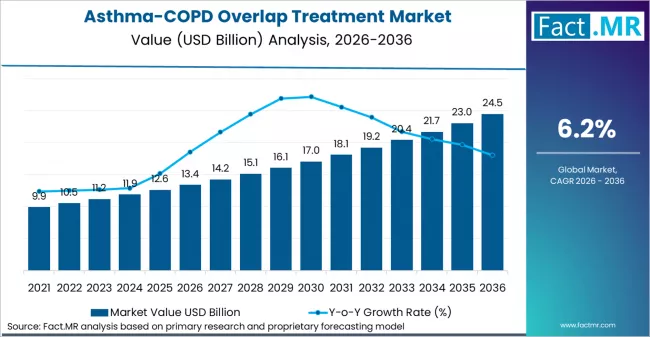
    The Asthma-COPD Overlap Treatment Market stands at USD 13.4 billion in 2026 and moves to USD 24.5 billion by 2036, which reflects a 6.20% CAGR.

    Asthma-COPD Overlap Treatment Market Key Takeaways

    • Asthma-COPD Overlap Treatment Market Value (2026): USD 13.4 billion
    • Asthma-COPD Overlap Treatment Market Forecast Value (2036): USD 24.5 billion
    • Asthma-COPD Overlap Treatment Market Forecast CAGR: 6.2%
    • Leading Type in Asthma-COPD Overlap Treatment Market: Triple therapy (ICS/LABA/LAMA)
    • Key Growth Regions in Asthma-COPD Overlap Treatment Market: North America, Europe, Asia Pacific, Latin America, Middle East & Africa
    • Top Players in Asthma-COPD Overlap Treatment Market: GlaxoSmithKline (GSK), AstraZeneca, Boehringer Ingelheim, Chiesi Farmaceutici, Sanofi
    Asthma Copd Overlap Treatment Market Market Value Analysis

    This segment serves patients who do not fit cleanly into single-disease treatment pathways, which shapes how care is planned and delivered. Therapy choices focus on maintaining stable symptom control over long periods rather than on short treatment cycles. Physicians rely on stepwise regimens, regular follow-up, and careful adjustment of inhaled therapies to manage changing disease patterns.

    Once a patient is stabilized on a given combination, changes are introduced cautiously since they affect monitoring routines and adherence. Prescribing patterns favor well-understood drug classes with predictable response profiles. Growth follows better recognition of overlap cases, wider screening, and longer treatment duration rather than rapid shifts in therapy approaches or frequent changes in clinical practice.

    Asthma–COPD Overlap Treatment Market

    Metric Value
    Market Value (2026) USD 13.4 billion
    Forecast Value (2036) USD 24.5 billion
    Forecast CAGR 2026 to 2036 6.2%

    Category

    Category Segments
    Drug Class Triple therapy (ICS/LABA/LAMA); Dual therapy (ICS/LABA or LABA/LAMA); Biologics; Systemic therapies
    Treatment Use Cases Exacerbation prevention in ACO phenotypes; Severe asthma with fixed airflow limitation; COPD with eosinophilic inflammation; Post-hospital discharge optimization; Comorbidity-driven management (OSA, obesity)
    End User or Channel Retail pharmacy channel; Hospitals; Pulmonology clinics; Primary care centers; Others
    Region North America; Europe; Asia Pacific; Latin America; Middle East & Africa

    Asthma-COPD Overlap Treatment Market Segmental Analysis

    Why Has Triple Therapy Become the Dominant Drug Class in Managing Asthma-COPD Overlap?
    Asthma Copd Overlap Treatment Market Analysis By Drug Class

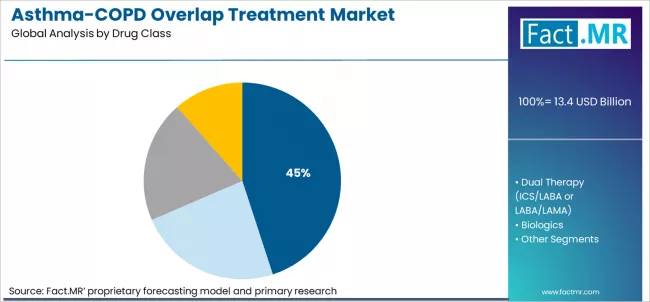
    Triple therapy combining ICS, LABA, and LAMA represents 45.0% of drug class usage in the asthma-COPD overlap treatment market. Treatment plans in this category aim to cover both airway inflammation and persistent airflow limitation within a single daily regimen. Clinicians often select these combinations for patients who show mixed features and frequent symptom recurrence. Inhaler routines remain simpler when bronchodilation and anti-inflammatory control are delivered together rather than through separate devices. Prescription patterns also reflect hospital discharge protocols that favor broad coverage from the first follow-up visit. Dual therapy, biologics, and systemic options remain in use for defined profiles. Most routine management pathways still start from triple combinations as the practical baseline.

    Why Does Exacerbation Prevention Drive the Largest Share of Treatment Use?
    Asthma Copd Overlap Treatment Market Analysis By Treatment Use Cases

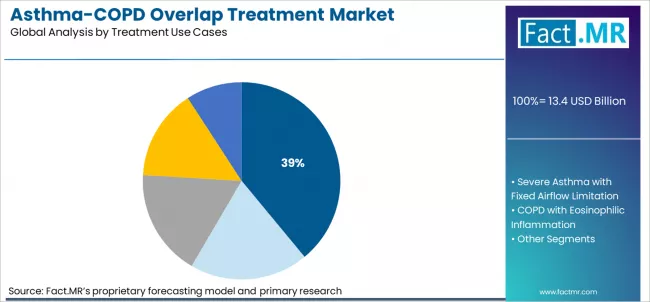
    Exacerbation prevention in asthma-COPD overlap phenotypes accounts for 39.00% of treatment use cases. Care pathways place strong emphasis on avoiding hospital admissions, emergency visits, and rapid lung function decline. Patients in this group often show unstable symptom patterns that require continuous control rather than episodic rescue. Follow-up schedules and medication adjustments focus on maintaining stability across seasons and infection cycles. Health systems also track this outcome closely due to cost and bed utilization impact. Severe asthma overlap, eosinophilic COPD, and post-discharge optimization remain important targets. The high clinical and operational burden of flare-ups keeps prevention as the main objective shaping treatment choices in this market.

    What are the Drivers, Restraints, and Key Trends of the Asthma–COPD Overlap Treatment Market?

    • Drivers: Recognition of Asthma-COPD overlap as a distinct clinical phenotype with unique management needs, increasing diagnosis in aging populations, and wider use of combination inhaler therapies and tailored treatment regimens are shaping the market for targeted therapeutic options.
    • Restraint: Diagnostic ambiguity between asthma, COPD, and overlap presentations, coupled with limited specific guideline consensus in some regions, restricts uniform treatment pathways and clinician confidence in prescribing overlap-focused therapies.
    • Trend 1: Expanded use of fixed-dose combination inhalers and dual bronchodilator-anti-inflammatory regimens designed to address both airway obstruction and inflammatory components.
    • Trend 2: Growth in patient stratification approaches, including biomarker-guided therapy selection and symptom profiling to optimize individualized treatment decisions.

    Analysis of the Asthma-COPD Overlap Treatment Market by Key Country
    Asthma Copd Overlap Treatment Market Cagr Analysis By Country

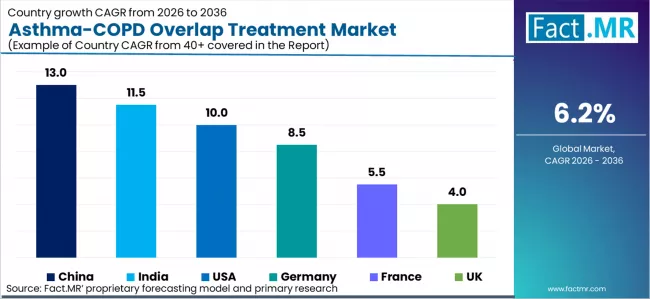
    Country CAGR 2026 to 2036
    USA 10.0%
    China 13.0%
    India 11.5%
    Germany 8.5%
    France 5.5%
    UK 4.0%

    The report covers an in-depth analysis of 40+ countries; top-performing countries are highlighted below.

    How Are Integrated Care Models Shaping the Asthma-COPD Overlap Treatment Market in USA?

    At about 10% per year through 2036, the Asthma-COPD Overlap Treatment Market in USA is being shaped by integration of pulmonology and primary care. Clinicians focus on identifying mixed phenotypes and stabilizing therapy using inhaled combinations familiar to both specialties. Formulary decisions prioritize adherence, device simplicity, and stepwise escalation rather than frequent switching. Purchasing follows integrated delivery networks and pharmacy benefit managers instead of individual clinics. Growth comes from better coding, earlier diagnosis, and coordinated follow-up. Education programs and guideline updates gradually align practice patterns, while payer contracts support scaling efforts across regions nationally today.

    Why Is Hospital Capacity Expansion Driving the Asthma-COPD Overlap Treatment Market in China?

    With growth near 13% per year through 2036, the Asthma-COPD Overlap Treatment Market in China follows expansion of respiratory departments and outpatient throughput. Many patients enter care through general clinics before referral to specialists. Treatment strategies emphasize symptom control and standardized inhaler regimens rather than individualized biologic pathways. Procurement favors large suppliers that can serve provincial hospital systems at scale. Formularies are shaped by essential medicine lists and reimbursement limits. Growth tracks rising diagnosis rates and urbanization rather than changes in clinical philosophy. Training programs and protocol standardization continue to define practice patterns across large public health networks.

    What Is Driving Structured Adoption of Therapy in the Asthma-COPD Overlap Treatment Market in India?

    At roughly 11.5% per year through 2036, the Asthma-COPD Overlap Treatment Market in India is being shaped by expansion of private hospitals and organized respiratory clinics. Many patients remain underdiagnosed, which makes basic screening and symptom classification central to growth. Treatment approaches focus on affordable inhaled combinations and consistent follow-up rather than complex step changes. Procurement decisions are influenced by hospital groups and regional distributors. Growth follows formalization of chronic care management and wider access to spirometry. Education of general physicians plays a large role, while specialist capacity continues to expand mainly in urban centers and larger secondary cities.

    How Do Guidelines and Reimbursement Rules Shape the Asthma-COPD Overlap Treatment Market in Germany?

    Running near 8.5% per year through 2036, the Asthma-COPD Overlap Treatment Market in Germany is defined by strict clinical pathways and reimbursement discipline. Physicians rely on structured diagnostic criteria before assigning long term therapy. Treatment emphasizes documented benefit and consistent device use rather than rapid switching. Procurement follows insurance contracts and regional tender systems. Growth depends on gradual increases in diagnosis accuracy and specialist referrals. Adoption remains cautious, with strong emphasis on documentation and audit readiness. Expansion comes from better recognition of overlap cases, not from rapid introduction of new therapies or aggressive promotional activity across care settings nationally.

    Why Does Public System Planning Influence the Asthma-COPD Overlap Treatment Market in France?

    At about 5.5% per year through 2036, the Asthma-COPD Overlap Treatment Market in France expands within a centralized healthcare planning framework. Treatment pathways are defined through public guidelines and reimbursement approvals. Physicians rely heavily on hospital based diagnostics and structured follow-up. Drug selection favors established combinations with clear cost justification. Procurement decisions are coordinated and cautious. Growth follows slow improvement in diagnosis rates and gradual expansion of specialist access. The pace remains measured because budget control and policy review shape adoption. Development depends more on system level decisions than on competition between products or changes in patient demand patterns.

    How Are Capacity Constraints Shaping the Asthma-COPD Overlap Treatment Market in UK?

    An annual pace near 4% through 2036 leaves the Asthma-COPD Overlap Treatment Market in UK constrained by staffing, referral capacity, and budget pressure. Many patients remain managed in primary care with limited specialist input. Treatment strategies focus on stability and adherence rather than frequent optimization. Access to diagnostics influences how many cases are formally classified. Procurement follows national frameworks and formulary guidance. Growth depends on incremental improvements in service capacity and coding accuracy. Expansion is limited by workload pressure in respiratory clinics, not by lack of available therapies or clinical awareness among practitioners across the health system.

    How Do Guideline Interpretation and Inhaler Platform Choices Shape Competition in the Asthma COPD Overlap Treatment Market?
    Asthma Copd Overlap Treatment Market Analysis By Company

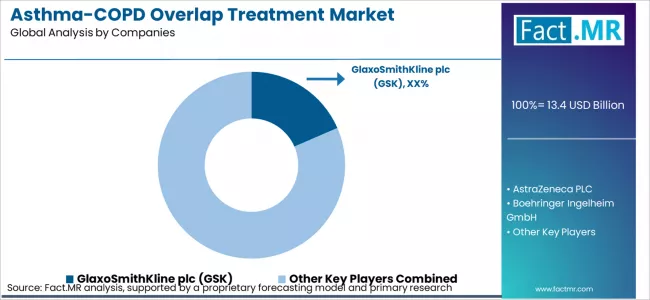
    Treatment selection in the asthma COPD overlap treatment market is governed by guideline interpretation, inhaler platform availability, and payer rules rather than by single product promotion. Clinicians first decide where patients sit along the asthma and COPD spectrum, then choose combinations that fit local protocols. GSK, AstraZeneca, and Boehringer compete through broad inhaled corticosteroid, LABA, and LAMA portfolios that allow stepwise adjustment without changing device families. Chiesi holds positions where extra fine formulations and specific delivery characteristics are preferred. Sanofi participates through biologic options used in severe or difficult to control cases that sit near the asthma end of the overlap. Formularies compare options using exacerbation reduction data, dosing simplicity, and training burden for inhaler technique. Procurement teams also weigh continuity of supply and device standardization across services. Once a pathway is set, switching is limited by patient training and follow up schedules. Volume growth follows diagnosis rates and pathway expansion rather than short term tender activity.

    Key Players in Asthma–COPD Overlap Treatment Market

    • GlaxoSmithKline plc (GSK)
    • AstraZeneca PLC
    • Boehringer Ingelheim GmbH
    • Chiesi Farmaceutici S.p.A.
    • Sanofi
    • Others

    References

    • World Health Organization. (2023). Chronic obstructive pulmonary disease (COPD). World Health Organization.
    • U.S. Centers for Disease Control and Prevention. (2023). Chronic obstructive pulmonary disease (COPD). Centers for Disease Control and Prevention.
    • European Medicines Agency. (2023). Guideline on the clinical investigation of medicinal products in the treatment of asthma and chronic obstructive pulmonary disease. European Medicines Agency.
    • U.S. Food and Drug Administration. (2023). Metered dose inhaler (MDI) and dry powder inhaler (DPI) drug products-Quality considerations. U.S. Department of Health and Human Services.
    • European Commission. (2023). Regulation (EU) 2023/607 amending Regulations (EU) 2017/745 and (EU) 2017/746 as regards transitional provisions for certain medical devices and in vitro diagnostic medical devices. European Commission.

    Scope of the Report

    Items Values
    Quantitative Units (2026) USD billion
    Drug Class Triple therapy (ICS/LABA/LAMA), dual therapy (ICS/LABA or LABA/LAMA), biologics, systemic therapies
    Treatment Use Cases Exacerbation prevention in ACO phenotypes, severe asthma with fixed airflow limitation, COPD with eosinophilic inflammation, post-hospital discharge optimization, comorbidity-driven management (OSA, obesity)
    End User or Channel Retail pharmacy channel, hospitals, pulmonology clinics, primary care centers, others
    Regions Covered Asia Pacific, Europe, North America, Latin America, Middle East & Africa
    Countries Covered United States, Canada, Mexico, Germany, United Kingdom, France, Italy, Spain, China, Japan, South Korea, India, Australia & New Zealand, ASEAN, Brazil, Chile, Saudi Arabia, Turkey, South Africa, and other regional markets
    Key Companies Profiled GlaxoSmithKline (GSK), AstraZeneca, Boehringer Ingelheim, Chiesi Farmaceutici, Sanofi
    Additional Attributes Dollar by sales by drug class, treatment use case, and end user; focus on exacerbation reduction and long-term maintenance therapy; demand driven by overlap recognition, diagnosis rates, and chronic care pathways

    Asthma-COPD Overlap Treatment Market Segmentation

    • Drug Class :

      • Triple Therapy (ICS/LABA/LAMA)
      • Dual Therapy (ICS/LABA or LABA/LAMA)
      • Biologics
      • Systemic Therapies
    • Treatment Use Cases :

      • Exacerbation Prevention in ACO Phenotypes
      • Severe Asthma with Fixed Airflow Limitation
      • COPD with Eosinophilic Inflammation
      • Post-Hospital Discharge Optimization
      • Comorbidity-Driven Management (OSA, Obesity)
    • End User or Channel :

      • Retail Pharmacy Channel
      • Hospitals
      • Pulmonology Clinics
      • Primary Care Centers
      • Others
    • Region :

      • Asia Pacific
        • China
        • Japan
        • South Korea
        • India
        • Australia & New Zealand
        • ASEAN
        • Rest of Asia Pacific
      • Europe
        • Germany
        • United Kingdom
        • France
        • Italy
        • Spain
        • Nordic
        • BENELUX
        • Rest of Europe
      • North America
        • United States
        • Canada
        • Mexico
      • Latin America
        • Brazil
        • Chile
        • Rest of Latin America
      • Middle East & Africa
        • Kingdom of Saudi Arabia
        • Other GCC Countries
        • Turkey
        • South Africa
        • Other African Union
        • Rest of Middle East & Africa

    Table of Content

    1. Executive Summary
      • Global Market Outlook
      • Demand to side Trends
      • Supply to side Trends
      • Technology Roadmap Analysis
      • Analysis and Recommendations
    2. Market Overview
      • Market Coverage / Taxonomy
      • Market Definition / Scope / Limitations
    3. Research Methodology
      • Chapter Orientation
      • Analytical Lens and Working Hypotheses
        • Market Structure, Signals, and Trend Drivers
        • Benchmarking and Cross-market Comparability
        • Market Sizing, Forecasting, and Opportunity Mapping
      • Research Design and Evidence Framework
        • Desk Research Programme (Secondary Evidence)
          • Company Annual and Sustainability Reports
          • Peer-reviewed Journals and Academic Literature
          • Corporate Websites, Product Literature, and Technical Notes
          • Earnings Decks and Investor Briefings
          • Statutory Filings and Regulatory Disclosures
          • Technical White Papers and Standards Notes
          • Trade Journals, Industry Magazines, and Analyst Briefs
          • Conference Proceedings, Webinars, and Seminar Materials
          • Government Statistics Portals and Public Data Releases
          • Press Releases and Reputable Media Coverage
          • Specialist Newsletters and Curated Briefings
          • Sector Databases and Reference Repositories
          • FMR Internal Proprietary Databases and Historical Market Datasets
          • Subscription Datasets and Paid Sources
          • Social Channels, Communities, and Digital Listening Inputs
          • Additional Desk Sources
        • Expert Input and Fieldwork (Primary Evidence)
          • Primary Modes
            • Qualitative Interviews and Expert Elicitation
            • Quantitative Surveys and Structured Data Capture
            • Blended A8oach
          • Why Primary Evidence is Used
          • Field Techniques
            • Interviews
            • Surveys
            • Focus Groups
            • Observational and In-context Research
            • Social and Community Interactions
          • Stakeholder Universe Engaged
            • C-suite Leaders
            • Board Members
            • Presidents and Vice Presidents
            • R&D and Innovation Heads
            • Technical Specialists
            • Domain Subject-matter Experts
            • Scientists
            • Physicians and Other Healthcare Professionals
          • Governance, Ethics, and Data Stewardship
            • Research Ethics
            • Data Integrity and Handling
        • Tooling, Models, and Reference Databases
      • Data Engineering and Model Build
        • Data Acquisition and Ingestion
        • Cleaning, Normalisation, and Verification
        • Synthesis, Triangulation, and Analysis
      • Quality Assurance and Audit Trail
    4. Market Background
      • Market Dynamics
        • Drivers
        • Restraints
        • Opportunity
        • Trends
      • Scenario Forecast
        • Demand in Optimistic Scenario
        • Demand in Likely Scenario
        • Demand in Conservative Scenario
      • Opportunity Map Analysis
      • Product Life Cycle Analysis
      • Supply Chain Analysis
      • Investment Feasibility Matrix
      • Value Chain Analysis
      • PESTLE and Porter’s Analysis
      • Regulatory Landscape
      • Regional Parent Market Outlook
      • Production and Consumption Statistics
      • Import and Export Statistics
    5. Global Market Analysis 2021 to 2025 and Forecast, 2026 to 2036
      • Historical Market Size Value (USD Million) Analysis, 2021 to 2025
      • Current and Future Market Size Value (USD Million) Projections, 2026 to 2036
        • Y to o to Y Growth Trend Analysis
        • Absolute $ Opportunity Analysis
    6. Global Market Pricing Analysis 2021 to 2025 and Forecast 2026 to 2036
    7. Global Market Analysis 2021 to 2025 and Forecast 2026 to 2036, By Drug Class
      • Introduction / Key Findings
      • Historical Market Size Value (USD Million) Analysis By Drug Class, 2021 to 2025
      • Current and Future Market Size Value (USD Million) Analysis and Forecast By Drug Class, 2026 to 2036
        • Triple Therapy (ICS/LABA/LAMA)
        • Dual Therapy (ICS/LABA or LABA/LAMA)
        • Biologics
        • Systemic Therapies
      • Y to o to Y Growth Trend Analysis By Drug Class, 2021 to 2025
      • Absolute $ Opportunity Analysis By Drug Class, 2026 to 2036
    8. Global Market Analysis 2021 to 2025 and Forecast 2026 to 2036, By Treatment Use Cases
      • Introduction / Key Findings
      • Historical Market Size Value (USD Million) Analysis By Treatment Use Cases, 2021 to 2025
      • Current and Future Market Size Value (USD Million) Analysis and Forecast By Treatment Use Cases, 2026 to 2036
        • Exacerbation Prevention in ACO Phenotypes
        • Severe Asthma with Fixed Airflow Limitation
        • COPD with Eosinophilic Inflammation
        • Post-Hospital Discharge Optimization
        • Comorbidity-Driven Management (OSA, Obesity)
      • Y to o to Y Growth Trend Analysis By Treatment Use Cases, 2021 to 2025
      • Absolute $ Opportunity Analysis By Treatment Use Cases, 2026 to 2036
    9. Global Market Analysis 2021 to 2025 and Forecast 2026 to 2036, By End User or Channel
      • Introduction / Key Findings
      • Historical Market Size Value (USD Million) Analysis By End User or Channel, 2021 to 2025
      • Current and Future Market Size Value (USD Million) Analysis and Forecast By End User or Channel, 2026 to 2036
        • Retail Pharmacy Channel
        • Hospitals
        • Pulmonology Clinics
        • Primary Care Centers
        • Others
      • Y to o to Y Growth Trend Analysis By End User or Channel, 2021 to 2025
      • Absolute $ Opportunity Analysis By End User or Channel, 2026 to 2036
    10. Global Market Analysis 2021 to 2025 and Forecast 2026 to 2036, By Region
      • Introduction
      • Historical Market Size Value (USD Million) Analysis By Region, 2021 to 2025
      • Current Market Size Value (USD Million) Analysis and Forecast By Region, 2026 to 2036
        • North America
        • Latin America
        • Western Europe
        • Eastern Europe
        • East Asia
        • South Asia and Pacific
        • Middle East & Africa
      • Market Attractiveness Analysis By Region
    11. North America Market Analysis 2021 to 2025 and Forecast 2026 to 2036, By Country
      • Historical Market Size Value (USD Million) Trend Analysis By Market Taxonomy, 2021 to 2025
      • Market Size Value (USD Million) Forecast By Market Taxonomy, 2026 to 2036
        • By Country
          • USA
          • Canada
          • Mexico
        • By Drug Class
        • By Treatment Use Cases
        • By End User or Channel
      • Market Attractiveness Analysis
        • By Country
        • By Drug Class
        • By Treatment Use Cases
        • By End User or Channel
      • Key Takeaways
    12. Latin America Market Analysis 2021 to 2025 and Forecast 2026 to 2036, By Country
      • Historical Market Size Value (USD Million) Trend Analysis By Market Taxonomy, 2021 to 2025
      • Market Size Value (USD Million) Forecast By Market Taxonomy, 2026 to 2036
        • By Country
          • Brazil
          • Chile
          • Rest of Latin America
        • By Drug Class
        • By Treatment Use Cases
        • By End User or Channel
      • Market Attractiveness Analysis
        • By Country
        • By Drug Class
        • By Treatment Use Cases
        • By End User or Channel
      • Key Takeaways
    13. Western Europe Market Analysis 2021 to 2025 and Forecast 2026 to 2036, By Country
      • Historical Market Size Value (USD Million) Trend Analysis By Market Taxonomy, 2021 to 2025
      • Market Size Value (USD Million) Forecast By Market Taxonomy, 2026 to 2036
        • By Country
          • Germany
          • UK
          • Italy
          • Spain
          • France
          • Nordic
          • BENELUX
          • Rest of Western Europe
        • By Drug Class
        • By Treatment Use Cases
        • By End User or Channel
      • Market Attractiveness Analysis
        • By Country
        • By Drug Class
        • By Treatment Use Cases
        • By End User or Channel
      • Key Takeaways
    14. Eastern Europe Market Analysis 2021 to 2025 and Forecast 2026 to 2036, By Country
      • Historical Market Size Value (USD Million) Trend Analysis By Market Taxonomy, 2021 to 2025
      • Market Size Value (USD Million) Forecast By Market Taxonomy, 2026 to 2036
        • By Country
          • Russia
          • Poland
          • Hungary
          • Balkan & Baltic
          • Rest of Eastern Europe
        • By Drug Class
        • By Treatment Use Cases
        • By End User or Channel
      • Market Attractiveness Analysis
        • By Country
        • By Drug Class
        • By Treatment Use Cases
        • By End User or Channel
      • Key Takeaways
    15. East Asia Market Analysis 2021 to 2025 and Forecast 2026 to 2036, By Country
      • Historical Market Size Value (USD Million) Trend Analysis By Market Taxonomy, 2021 to 2025
      • Market Size Value (USD Million) Forecast By Market Taxonomy, 2026 to 2036
        • By Country
          • China
          • Japan
          • South Korea
        • By Drug Class
        • By Treatment Use Cases
        • By End User or Channel
      • Market Attractiveness Analysis
        • By Country
        • By Drug Class
        • By Treatment Use Cases
        • By End User or Channel
      • Key Takeaways
    16. South Asia and Pacific Market Analysis 2021 to 2025 and Forecast 2026 to 2036, By Country
      • Historical Market Size Value (USD Million) Trend Analysis By Market Taxonomy, 2021 to 2025
      • Market Size Value (USD Million) Forecast By Market Taxonomy, 2026 to 2036
        • By Country
          • India
          • ASEAN
          • Australia & New Zealand
          • Rest of South Asia and Pacific
        • By Drug Class
        • By Treatment Use Cases
        • By End User or Channel
      • Market Attractiveness Analysis
        • By Country
        • By Drug Class
        • By Treatment Use Cases
        • By End User or Channel
      • Key Takeaways
    17. Middle East & Africa Market Analysis 2021 to 2025 and Forecast 2026 to 2036, By Country
      • Historical Market Size Value (USD Million) Trend Analysis By Market Taxonomy, 2021 to 2025
      • Market Size Value (USD Million) Forecast By Market Taxonomy, 2026 to 2036
        • By Country
          • Kingdom of Saudi Arabia
          • Other GCC Countries
          • Turkiye
          • South Africa
          • Other African Union
          • Rest of Middle East & Africa
        • By Drug Class
        • By Treatment Use Cases
        • By End User or Channel
      • Market Attractiveness Analysis
        • By Country
        • By Drug Class
        • By Treatment Use Cases
        • By End User or Channel
      • Key Takeaways
    18. Key Countries Market Analysis
      • USA
        • Pricing Analysis
        • Market Share Analysis, 2025
          • By Drug Class
          • By Treatment Use Cases
          • By End User or Channel
      • Canada
        • Pricing Analysis
        • Market Share Analysis, 2025
          • By Drug Class
          • By Treatment Use Cases
          • By End User or Channel
      • Mexico
        • Pricing Analysis
        • Market Share Analysis, 2025
          • By Drug Class
          • By Treatment Use Cases
          • By End User or Channel
      • Brazil
        • Pricing Analysis
        • Market Share Analysis, 2025
          • By Drug Class
          • By Treatment Use Cases
          • By End User or Channel
      • Chile
        • Pricing Analysis
        • Market Share Analysis, 2025
          • By Drug Class
          • By Treatment Use Cases
          • By End User or Channel
      • Germany
        • Pricing Analysis
        • Market Share Analysis, 2025
          • By Drug Class
          • By Treatment Use Cases
          • By End User or Channel
      • UK
        • Pricing Analysis
        • Market Share Analysis, 2025
          • By Drug Class
          • By Treatment Use Cases
          • By End User or Channel
      • Italy
        • Pricing Analysis
        • Market Share Analysis, 2025
          • By Drug Class
          • By Treatment Use Cases
          • By End User or Channel
      • Spain
        • Pricing Analysis
        • Market Share Analysis, 2025
          • By Drug Class
          • By Treatment Use Cases
          • By End User or Channel
      • France
        • Pricing Analysis
        • Market Share Analysis, 2025
          • By Drug Class
          • By Treatment Use Cases
          • By End User or Channel
      • India
        • Pricing Analysis
        • Market Share Analysis, 2025
          • By Drug Class
          • By Treatment Use Cases
          • By End User or Channel
      • ASEAN
        • Pricing Analysis
        • Market Share Analysis, 2025
          • By Drug Class
          • By Treatment Use Cases
          • By End User or Channel
      • Australia & New Zealand
        • Pricing Analysis
        • Market Share Analysis, 2025
          • By Drug Class
          • By Treatment Use Cases
          • By End User or Channel
      • China
        • Pricing Analysis
        • Market Share Analysis, 2025
          • By Drug Class
          • By Treatment Use Cases
          • By End User or Channel
      • Japan
        • Pricing Analysis
        • Market Share Analysis, 2025
          • By Drug Class
          • By Treatment Use Cases
          • By End User or Channel
      • South Korea
        • Pricing Analysis
        • Market Share Analysis, 2025
          • By Drug Class
          • By Treatment Use Cases
          • By End User or Channel
      • Russia
        • Pricing Analysis
        • Market Share Analysis, 2025
          • By Drug Class
          • By Treatment Use Cases
          • By End User or Channel
      • Poland
        • Pricing Analysis
        • Market Share Analysis, 2025
          • By Drug Class
          • By Treatment Use Cases
          • By End User or Channel
      • Hungary
        • Pricing Analysis
        • Market Share Analysis, 2025
          • By Drug Class
          • By Treatment Use Cases
          • By End User or Channel
      • Kingdom of Saudi Arabia
        • Pricing Analysis
        • Market Share Analysis, 2025
          • By Drug Class
          • By Treatment Use Cases
          • By End User or Channel
      • Turkiye
        • Pricing Analysis
        • Market Share Analysis, 2025
          • By Drug Class
          • By Treatment Use Cases
          • By End User or Channel
      • South Africa
        • Pricing Analysis
        • Market Share Analysis, 2025
          • By Drug Class
          • By Treatment Use Cases
          • By End User or Channel
    19. Market Structure Analysis
      • Competition Dashboard
      • Competition Benchmarking
      • Market Share Analysis of Top Players
        • By Regional
        • By Drug Class
        • By Treatment Use Cases
        • By End User or Channel
    20. Competition Analysis
      • Competition Deep Dive
        • GlaxoSmithKline plc (GSK)
          • Overview
          • Product Portfolio
          • Profitability by Market Segments (Product/Age /Sales Channel/Region)
          • Sales Footprint
          • Strategy Overview
            • Marketing Strategy
            • Product Strategy
            • Channel Strategy
        • AstraZeneca PLC
        • Boehringer Ingelheim GmbH
        • Chiesi Farmaceutici S.p.A.
        • Sanofi
        • Others
    21. Assumptions & Acronyms Used

    List Of Table

    • Table 1: Global Market Value (USD Million) Forecast by Region, 2021 to 2036
    • Table 2: Global Market Value (USD Million) Forecast by Drug Class, 2021 to 2036
    • Table 3: Global Market Value (USD Million) Forecast by Treatment Use Cases, 2021 to 2036
    • Table 4: Global Market Value (USD Million) Forecast by End User or Channel, 2021 to 2036
    • Table 5: North America Market Value (USD Million) Forecast by Country, 2021 to 2036
    • Table 6: North America Market Value (USD Million) Forecast by Drug Class, 2021 to 2036
    • Table 7: North America Market Value (USD Million) Forecast by Treatment Use Cases, 2021 to 2036
    • Table 8: North America Market Value (USD Million) Forecast by End User or Channel, 2021 to 2036
    • Table 9: Latin America Market Value (USD Million) Forecast by Country, 2021 to 2036
    • Table 10: Latin America Market Value (USD Million) Forecast by Drug Class, 2021 to 2036
    • Table 11: Latin America Market Value (USD Million) Forecast by Treatment Use Cases, 2021 to 2036
    • Table 12: Latin America Market Value (USD Million) Forecast by End User or Channel, 2021 to 2036
    • Table 13: Western Europe Market Value (USD Million) Forecast by Country, 2021 to 2036
    • Table 14: Western Europe Market Value (USD Million) Forecast by Drug Class, 2021 to 2036
    • Table 15: Western Europe Market Value (USD Million) Forecast by Treatment Use Cases, 2021 to 2036
    • Table 16: Western Europe Market Value (USD Million) Forecast by End User or Channel, 2021 to 2036
    • Table 17: Eastern Europe Market Value (USD Million) Forecast by Country, 2021 to 2036
    • Table 18: Eastern Europe Market Value (USD Million) Forecast by Drug Class, 2021 to 2036
    • Table 19: Eastern Europe Market Value (USD Million) Forecast by Treatment Use Cases, 2021 to 2036
    • Table 20: Eastern Europe Market Value (USD Million) Forecast by End User or Channel, 2021 to 2036
    • Table 21: East Asia Market Value (USD Million) Forecast by Country, 2021 to 2036
    • Table 22: East Asia Market Value (USD Million) Forecast by Drug Class, 2021 to 2036
    • Table 23: East Asia Market Value (USD Million) Forecast by Treatment Use Cases, 2021 to 2036
    • Table 24: East Asia Market Value (USD Million) Forecast by End User or Channel, 2021 to 2036
    • Table 25: South Asia and Pacific Market Value (USD Million) Forecast by Country, 2021 to 2036
    • Table 26: South Asia and Pacific Market Value (USD Million) Forecast by Drug Class, 2021 to 2036
    • Table 27: South Asia and Pacific Market Value (USD Million) Forecast by Treatment Use Cases, 2021 to 2036
    • Table 28: South Asia and Pacific Market Value (USD Million) Forecast by End User or Channel, 2021 to 2036
    • Table 29: Middle East & Africa Market Value (USD Million) Forecast by Country, 2021 to 2036
    • Table 30: Middle East & Africa Market Value (USD Million) Forecast by Drug Class, 2021 to 2036
    • Table 31: Middle East & Africa Market Value (USD Million) Forecast by Treatment Use Cases, 2021 to 2036
    • Table 32: Middle East & Africa Market Value (USD Million) Forecast by End User or Channel, 2021 to 2036

    List Of Figures

    • Figure 1: Global Market Pricing Analysis
    • Figure 2: Global Market Value (USD Million) Forecast 2021 to 2036
    • Figure 3: Global Market Value Share and BPS Analysis by Drug Class, 2026 and 2036
    • Figure 4: Global Market Y to o to Y Growth Comparison by Drug Class, 2026 to 2036
    • Figure 5: Global Market Attractiveness Analysis by Drug Class
    • Figure 6: Global Market Value Share and BPS Analysis by Treatment Use Cases, 2026 and 2036
    • Figure 7: Global Market Y to o to Y Growth Comparison by Treatment Use Cases, 2026 to 2036
    • Figure 8: Global Market Attractiveness Analysis by Treatment Use Cases
    • Figure 9: Global Market Value Share and BPS Analysis by End User or Channel, 2026 and 2036
    • Figure 10: Global Market Y to o to Y Growth Comparison by End User or Channel, 2026 to 2036
    • Figure 11: Global Market Attractiveness Analysis by End User or Channel
    • Figure 12: Global Market Value (USD Million) Share and BPS Analysis by Region, 2026 and 2036
    • Figure 13: Global Market Y to o to Y Growth Comparison by Region, 2026 to 2036
    • Figure 14: Global Market Attractiveness Analysis by Region
    • Figure 15: North America Market Incremental Dollar Opportunity, 2026 to 2036
    • Figure 16: Latin America Market Incremental Dollar Opportunity, 2026 to 2036
    • Figure 17: Western Europe Market Incremental Dollar Opportunity, 2026 to 2036
    • Figure 18: Eastern Europe Market Incremental Dollar Opportunity, 2026 to 2036
    • Figure 19: East Asia Market Incremental Dollar Opportunity, 2026 to 2036
    • Figure 20: South Asia and Pacific Market Incremental Dollar Opportunity, 2026 to 2036
    • Figure 21: Middle East & Africa Market Incremental Dollar Opportunity, 2026 to 2036
    • Figure 22: North America Market Value Share and BPS Analysis by Country, 2026 and 2036
    • Figure 23: North America Market Value Share and BPS Analysis by Drug Class, 2026 and 2036
    • Figure 24: North America Market Y to o to Y Growth Comparison by Drug Class, 2026 to 2036
    • Figure 25: North America Market Attractiveness Analysis by Drug Class
    • Figure 26: North America Market Value Share and BPS Analysis by Treatment Use Cases, 2026 and 2036
    • Figure 27: North America Market Y to o to Y Growth Comparison by Treatment Use Cases, 2026 to 2036
    • Figure 28: North America Market Attractiveness Analysis by Treatment Use Cases
    • Figure 29: North America Market Value Share and BPS Analysis by End User or Channel, 2026 and 2036
    • Figure 30: North America Market Y to o to Y Growth Comparison by End User or Channel, 2026 to 2036
    • Figure 31: North America Market Attractiveness Analysis by End User or Channel
    • Figure 32: Latin America Market Value Share and BPS Analysis by Country, 2026 and 2036
    • Figure 33: Latin America Market Value Share and BPS Analysis by Drug Class, 2026 and 2036
    • Figure 34: Latin America Market Y to o to Y Growth Comparison by Drug Class, 2026 to 2036
    • Figure 35: Latin America Market Attractiveness Analysis by Drug Class
    • Figure 36: Latin America Market Value Share and BPS Analysis by Treatment Use Cases, 2026 and 2036
    • Figure 37: Latin America Market Y to o to Y Growth Comparison by Treatment Use Cases, 2026 to 2036
    • Figure 38: Latin America Market Attractiveness Analysis by Treatment Use Cases
    • Figure 39: Latin America Market Value Share and BPS Analysis by End User or Channel, 2026 and 2036
    • Figure 40: Latin America Market Y to o to Y Growth Comparison by End User or Channel, 2026 to 2036
    • Figure 41: Latin America Market Attractiveness Analysis by End User or Channel
    • Figure 42: Western Europe Market Value Share and BPS Analysis by Country, 2026 and 2036
    • Figure 43: Western Europe Market Value Share and BPS Analysis by Drug Class, 2026 and 2036
    • Figure 44: Western Europe Market Y to o to Y Growth Comparison by Drug Class, 2026 to 2036
    • Figure 45: Western Europe Market Attractiveness Analysis by Drug Class
    • Figure 46: Western Europe Market Value Share and BPS Analysis by Treatment Use Cases, 2026 and 2036
    • Figure 47: Western Europe Market Y to o to Y Growth Comparison by Treatment Use Cases, 2026 to 2036
    • Figure 48: Western Europe Market Attractiveness Analysis by Treatment Use Cases
    • Figure 49: Western Europe Market Value Share and BPS Analysis by End User or Channel, 2026 and 2036
    • Figure 50: Western Europe Market Y to o to Y Growth Comparison by End User or Channel, 2026 to 2036
    • Figure 51: Western Europe Market Attractiveness Analysis by End User or Channel
    • Figure 52: Eastern Europe Market Value Share and BPS Analysis by Country, 2026 and 2036
    • Figure 53: Eastern Europe Market Value Share and BPS Analysis by Drug Class, 2026 and 2036
    • Figure 54: Eastern Europe Market Y to o to Y Growth Comparison by Drug Class, 2026 to 2036
    • Figure 55: Eastern Europe Market Attractiveness Analysis by Drug Class
    • Figure 56: Eastern Europe Market Value Share and BPS Analysis by Treatment Use Cases, 2026 and 2036
    • Figure 57: Eastern Europe Market Y to o to Y Growth Comparison by Treatment Use Cases, 2026 to 2036
    • Figure 58: Eastern Europe Market Attractiveness Analysis by Treatment Use Cases
    • Figure 59: Eastern Europe Market Value Share and BPS Analysis by End User or Channel, 2026 and 2036
    • Figure 60: Eastern Europe Market Y to o to Y Growth Comparison by End User or Channel, 2026 to 2036
    • Figure 61: Eastern Europe Market Attractiveness Analysis by End User or Channel
    • Figure 62: East Asia Market Value Share and BPS Analysis by Country, 2026 and 2036
    • Figure 63: East Asia Market Value Share and BPS Analysis by Drug Class, 2026 and 2036
    • Figure 64: East Asia Market Y to o to Y Growth Comparison by Drug Class, 2026 to 2036
    • Figure 65: East Asia Market Attractiveness Analysis by Drug Class
    • Figure 66: East Asia Market Value Share and BPS Analysis by Treatment Use Cases, 2026 and 2036
    • Figure 67: East Asia Market Y to o to Y Growth Comparison by Treatment Use Cases, 2026 to 2036
    • Figure 68: East Asia Market Attractiveness Analysis by Treatment Use Cases
    • Figure 69: East Asia Market Value Share and BPS Analysis by End User or Channel, 2026 and 2036
    • Figure 70: East Asia Market Y to o to Y Growth Comparison by End User or Channel, 2026 to 2036
    • Figure 71: East Asia Market Attractiveness Analysis by End User or Channel
    • Figure 72: South Asia and Pacific Market Value Share and BPS Analysis by Country, 2026 and 2036
    • Figure 73: South Asia and Pacific Market Value Share and BPS Analysis by Drug Class, 2026 and 2036
    • Figure 74: South Asia and Pacific Market Y to o to Y Growth Comparison by Drug Class, 2026 to 2036
    • Figure 75: South Asia and Pacific Market Attractiveness Analysis by Drug Class
    • Figure 76: South Asia and Pacific Market Value Share and BPS Analysis by Treatment Use Cases, 2026 and 2036
    • Figure 77: South Asia and Pacific Market Y to o to Y Growth Comparison by Treatment Use Cases, 2026 to 2036
    • Figure 78: South Asia and Pacific Market Attractiveness Analysis by Treatment Use Cases
    • Figure 79: South Asia and Pacific Market Value Share and BPS Analysis by End User or Channel, 2026 and 2036
    • Figure 80: South Asia and Pacific Market Y to o to Y Growth Comparison by End User or Channel, 2026 to 2036
    • Figure 81: South Asia and Pacific Market Attractiveness Analysis by End User or Channel
    • Figure 82: Middle East & Africa Market Value Share and BPS Analysis by Country, 2026 and 2036
    • Figure 83: Middle East & Africa Market Value Share and BPS Analysis by Drug Class, 2026 and 2036
    • Figure 84: Middle East & Africa Market Y to o to Y Growth Comparison by Drug Class, 2026 to 2036
    • Figure 85: Middle East & Africa Market Attractiveness Analysis by Drug Class
    • Figure 86: Middle East & Africa Market Value Share and BPS Analysis by Treatment Use Cases, 2026 and 2036
    • Figure 87: Middle East & Africa Market Y to o to Y Growth Comparison by Treatment Use Cases, 2026 to 2036
    • Figure 88: Middle East & Africa Market Attractiveness Analysis by Treatment Use Cases
    • Figure 89: Middle East & Africa Market Value Share and BPS Analysis by End User or Channel, 2026 and 2036
    • Figure 90: Middle East & Africa Market Y to o to Y Growth Comparison by End User or Channel, 2026 to 2036
    • Figure 91: Middle East & Africa Market Attractiveness Analysis by End User or Channel
    • Figure 92: Global Market - Tier Structure Analysis
    • Figure 93: Global Market - Company Share Analysis

    - Frequently Asked Questions -

    How big is the asthma-copd overlap treatment market in 2026?

    The global asthma-copd overlap treatment market is estimated to be valued at USD 13.4 billion in 2026.

    What will be the size of asthma-copd overlap treatment market in 2036?

    The market size for the asthma-copd overlap treatment market is projected to reach USD 24.5 billion by 2036.

    How much will be the asthma-copd overlap treatment market growth between 2026 and 2036?

    The asthma-copd overlap treatment market is expected to grow at a 6.2% CAGR between 2026 and 2036.

    What are the key product types in the asthma-copd overlap treatment market?

    The key product types in asthma-copd overlap treatment market are triple therapy (ics/laba/lama), dual therapy (ics/laba or laba/lama), biologics and systemic therapies.

    Which treatment use cases segment to contribute significant share in the asthma-copd overlap treatment market in 2026?

    In terms of treatment use cases, exacerbation prevention in aco phenotypes segment to command 39.0% share in the asthma-copd overlap treatment market in 2026.

    Asthma-COPD Overlap Treatment Market