The Breathable Paper Wrap Market is analyzed across its key product, application and end-use segments, with the study covering market dynamics, regional trends and demand outlook, forecast 2026 to 2036.
By Fact.MR Chemical & Materials DeskLead analyst:
S.N. JhaPublished :
Updated :
12 min read
Fact-checked under the Fact.MR editorial process
Breathable Paper Wrap Market Forecast and Outlook 2026 to 2036
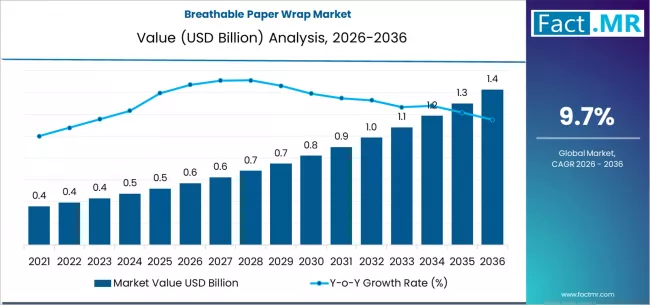
The global breathable paper wrap market is projected ttotal USD 0.57 billion in 2026, and is projected treach USD 1.51 billion by 2036, advancing at a 9.7% CAGR. This sustained growth is anchored in the fundamental shift within the fresh food industry toward sustainable, functionally intelligent packaging that actively manages product shelf life. Traditional plastic films are scrutinized, creating a decisive pivot toward paper-based solutions engineered with advanced breathability properties.
Breathable Paper Wrap Market Market Value Analysis | Source: Fact.MR
Summary of Breathable Paper Wrap Market
Market Snapshot
Global breathable paper wrap market revenue stood at USD 0.57 billion in 2026 and is forecast treach USD 1.51 billion by 2036.
At a 9.7% CAGR from 2026 t2036, this market is set texpand ~2.51x in value, adding USD 0.86 billion in absolute opportunity.
Growth is being driven by the shift toward sustainable, paper-based packaging solutions that replace conventional plastic films.
Increasing demand for packaging that actively manages shelf life through controlled air and moisture exchange is reinforcing adoption.
Advanced micro-perforation and coating technologies are enabling functional performance in fresh food packaging.
Demand and Growth Drivers
Shift toward sustainable and recyclable packaging materials
Increasing demand for shelf-life extension in fresh food products
Replacement of plastic films with paper-based breathable solutions
Rising demand from fresh produce, bakery, and dairy packaging applications
Need for solutions that provide:
Controlled oxygen and moisture exchange
Reduced spoilage and condensation
Improved freshness retention
Product and Segment View
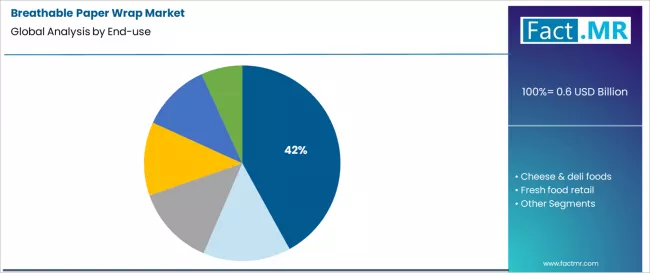
Fresh produce & bakery hold 42.0% of end-use share in 2026,emergingas the leading segment.
Paper wraps & liners hold 47.3% of packaging format share in 2026, positioning them as the dominant segment.
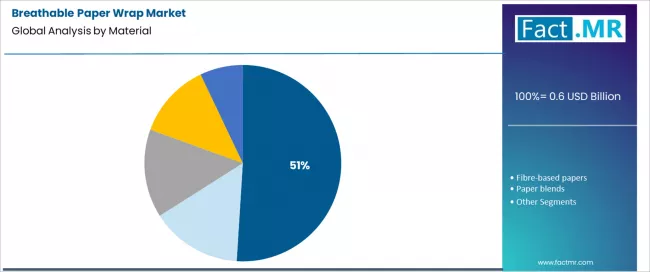
Micro-perforated kraft paper holds 51.0% of material share in 2026, reflecting core material dominance.
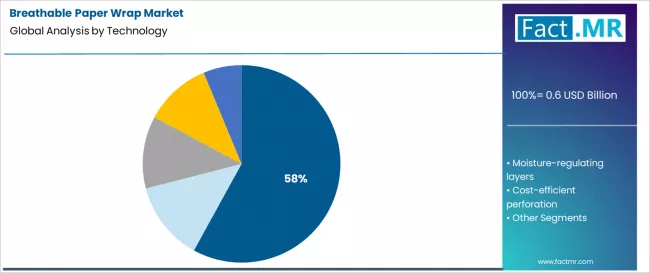
Controlled breathability coatings hold 58.0% of technology share in 2026,indicatingleading technology adoption.
Key product categories include:
Fresh produce & bakery
Cheese & deli foods
Fresh food retail
Fruits & vegetables
Local produce
Premium fresh foods
Geography and Competitive Outlook
Growth is supported acrossNorth America, Asia-Pacific, and Europe
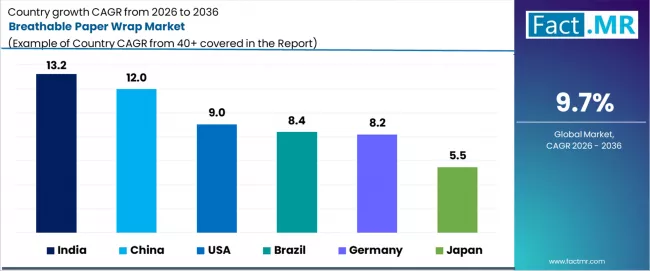
Key growth markets and CAGR:India (13.2% CAGR), China (12.0% CAGR), USA (9.0% CAGR), Brazil (8.4% CAGR), Germany (8.2% CAGR), Japan (5.5% CAGR)
Market expansion is closely tied to:
Sustainability-driven packaging transitions
Increasing demand for fresh food preservation solutions
Advancements in breathable paper technology
Key companies active in this marketinclude:Smurfit Westrock, Mondi Group, Nine Dragons Paper, ITC Paperboards, Klabin S.A., Oji Holdings, Graphic Packaging International
Breathable Paper Wrap Market — At a Glance
Attribute
Details
Market Value 2026
USD 0.57 billion
Market Value 2036
USD 1.51 billion
Absolute Dollar Opportunity 2026–2036
USD 0.86 billion
Total Growth 2026–2036
150.88%
CAGR 2026–2036
9.7%
Growth Multiple
~2.51x
Key Demand Theme
Shift toward sustainable packaging with controlled breathability for fresh food preservation
Leading Segment by End Use (2026)
Fresh Produce & Bakery
Segment Share (2026)
42.0%
Leading Segment by Packaging Format (2026)
Paper Wraps & Liners
Segment Share (2026)
47.3%
Leading Segment by Material (2026)
Micro-Perforated Kraft Paper
Segment Share (2026)
51.0%
Leading Segment by Technology (2026)
Controlled Breathability Coatings
Segment Share (2026)
58.0%
Key Growth Regions
Asia-Pacific, North America, Europe
Country CAGRs
India (13.2% CAGR), China (12.0% CAGR), USA (9.0% CAGR), Brazil (8.4% CAGR), Germany (8.2% CAGR), Japan (5.5% CAGR)
Top Companies
Smurfit Westrock, Mondi Group, Nine Dragons Paper, ITC Paperboards, Klabin S.A., Oji Holdings, Graphic Packaging International
Segmentation byEnd Use
Fresh Produce & Bakery; Cheese & Deli Foods; Fresh Food Retail; Fruits & Vegetables; Local Produce; Premium Fresh Foods
Segmentation by Packaging Format
Paper Wraps & Liners, Paper Sheets & Pouches, Wrapping Paper, Wrap Sheets, Others
Segmentation by Material
Micro-perforated Kraft Paper,Fibre-based Papers, Paper Blends, Kraft Paper, Others
North America, Latin America, Western Europe, Eastern Europe, East Asia, South Asia & Pacific, Middle East & Africa
Source: Fact.MR analysis. Updated Apr 24, 2026
This transition is not merely a material substitution but a technological upgrade. Modern breathable paper wraps utilize precise micro-perforation and specialized coatings tregulate the exchange of oxygen, carbon dioxide, and moisture vapor around respiring products like fruits, vegetables, bakery items, and cheeses. This controlled atmosphere extension slows spoilage and reduces food waste, delivering a compelling environmental and economic value proposition that aligns with stringent regulatory frameworks and heightened consumer demand for plastic-free, compostable fresh food packaging.
Category
Category
Segments
End-Use
Fresh Produce & Bakery, Cheese & Deli Foods, Fresh Food Retail, Fruits & Vegetables, Local Produce, Premium Fresh Foods
Packaging Format
Paper Wraps & Liners, Paper Sheets & Pouches, Wrapping Paper, Wrap Sheets, Others
Material
Micro-perforated Kraft Paper, Fibre-based Papers, Paper Blends, Kraft Paper, Others
North America, Latin America, Western Europe, Eastern Europe, East Asia, South Asia & Pacific, Middle East & Africa
Source: Fact.MR analysis. Updated Apr 24, 2026
How will Stakeholders Navigate this Dynamic Ecosystem?
Trend
Impact
EU Packaging and Packaging Waste Regulation (PPWR) Mandates
Directly phases out certain single-use plastic formats for fresh produce, creating a legislative pull for compliant, fiber-based breathable alternatives in a major market.
Makes lightweight, recyclable, and compostable paper wraps financially advantageous for brand owners compared to hard-to-recycle plastic laminates.
E-commerce Growth for Fresh and Ambient Grocery
Increases need for robust, breathable primary packaging that can protect respiring goods throughout the extended logistics chain without additional refrigeration.
Clean-Label and Plastic-Free Consumer Movements
Drives retailer private-label brands, particularly in Europe and North America, to adopt breathable paper as a visible sustainability claim on-pack.
Food Waste Reduction Targets (UN SDG 12.3)
Elevates the value proposition of breathable wraps that extend shelf-life, making them a tool for retailers and producers to meet corporate waste reduction goals.
Source: Fact.MR analysis. Updated Apr 24, 2026
Segmental Analysis
Which Technological Advancement is Central to Performance Parity with Plastic?
Breathable Paper Wrap Market Analysis By Technology | Source: Fact.MR
Controlled breathability coatings command a leading 58.0% share. This segment is critical because it moves beyond simple perforation, allowing for precise engineering of the paper’s barrier properties. These water-based or bio-based coatings can be applied in patterns or layers to create specific transmission rates for gases and moisture.
This technology enables paper wraps to match or exceed the functional performance of plastic films for specific fresh food applications, such as preventing moisture loss in leafy greens or controlling ethylene buildup around climacteric fruits, thereby justifying its premium over standard paper.
Which End-Use Sector is the Primary Battleground for Plastic Replacement?
Breathable Paper Wrap Market Analysis By End Use | Source: Fact.MR
Fresh produce and bakery constitute the primary end-use segment at 42.0%. These sectors represent the largest volume application for flexible plastic packaging that is now under regulatory and consumer pressure.
Breathable paper wraps offer a viable alternative for items like herbs, mushrooms, tomatoes, and artisan bread, where some gas exchange is necessary to maintain quality. Adoption in this segment is driven by supermarket mandates to reduce plastic and the high visibility of these products at the point of sale, making sustainable packaging a direct purchasing cue.
Which Material Configuration Dominates Current Commercialization Efforts?
Breathable Paper Wrap Market Analysis By Material | Source: Fact.MR
Micro-perforated kraft paper holds a dominant 51.0% share. This material leverages the inherent strength, sustainability credentials, and consumer familiarity of kraft paper, enhanced with laser or mechanical micro-perforations. This combination provides a cost-effective and scalable method to introduce breathability.
The result is a substrate that maintains the tactile, natural appeal of paper while delivering the functional respiratory control needed for short-to-medium shelf-life products, forming the backbone of early market penetration.
How do Various Dynamics Shape the Growth of the Breathable Paper Wrap Market?
Attribute
Expected Impact
Stringent Global Plastic Bans
Creates immediate, non-negotiable demand for alternative formats in regulated categories like produce packaging, directly substituting volume.
Higher Cost vs. Conventional Plastic
Constrains widespread adoption in ultra-price-sensitive fresh food segments and in developing markets, limiting growth to premium or regulated applications.
Development of High-Barrier Bio-Coatings
Enables expansion into more demanding applications like chilled dairy and prepared foods, significantly broadening the addressable market.
Integration with Active & Intelligent Packaging
Allows breathable paper to function as a platform for incorporating freshness indicators or antimicrobial agents, creating higher-value, differentiated products.
Source: Fact.MR analysis. Updated Apr 24, 2026
Analysis of the Breathable Paper Wrap Market by Key Countries
Breathable Paper Wrap Market Cagr Analysis By Country | Source: Fact.MR
Country
CAGR 2026 to 2036
USA
9.0%
Germany
8.2%
China
12.0%
India
13.2%
Brazil
8.4%
Japan
5.5%
Source: Fact.MR analysis. Updated Apr 24, 2026
How do Retailer-Led Initiatives and State Policies Shape the USA’s Landscape?
A 9.0% CAGR reflects a market driven more by corporate sustainability commitments and retailer mandates than federal law. Major grocery chains have announced ambitious plastic reduction goals, creating direct demand for breathable paper solutions from their suppliers, particularly for organic produce and bakery items.
The industry capacity for specialty kraft and coated papers is significant, supporting innovation. The demand driver is tightly linked to the fresh produce and premium bakery sectors, where packaging is highly visible to consumers.
What Characterizes Germany's Regulatory-first Approach within the EU Framework?
An 8.2% CAGR is underpinned by Germany’s rigorous enforcement of the EU’s Single-Use Plastics Directive and its own Packaging Act. This regulatory environment creates a compliance-led market where breathable paper is a preferred solution to meet recyclability quotas.
The domestic industry capacity for high-performance technical papers is strong. German retailers and brands, particularly in the cheese and deli segments, are early adopters of advanced moisture-regulating paper wraps to meet both legal and consumer expectations for sustainable, functional packaging.
What Underpins China's Push for Domestic Supply Chain Innovation?
Dual drivers fuel China’s 12.0% CAGR, the national Zero-Waste City policies that encourage sustainable packaging and the massive scale of its domestic fresh food retail and e-commerce. The government supports the development of a localized supply chain for functional paper materials to reduce import reliance.
This has spurred domestic industry capacity, with large paper manufacturers investing in coated and perforated paper lines. Demand is scaling rapidly in online grocery delivery for fruits and vegetables, where packaging must protect goods without plastic.
How is India's Formalizing Food Retail Ecosystem driving Adoption?
India’s leading 13.2% CAGR is propelled by the rapid growth of organized fresh food retail and online grocery platforms. The demand driver stems from the need to reduce post-harvest losses in a country with a vast fruit and vegetable output, making shelf-life extension a critical economic factor.
While national plastic bans create a regulatory push, the price-sensitive market fosters innovation in cost-efficient perforation and paper blends. Local paperboard giants like ITC Paperboards are strategically positioned to supply this growing demand with localized production.
Why is Brazil's Growth Linked to Agricultural Export Standards and Urban Retail?
An 8.4% CAGR is closely tied to the needs of Brazil’s large fruit export sector and modernization in urban retail. Exporters of premium fruits require high-quality, breathable packaging that meets international sustainability standards of European retailers.
Domestically, the expansion of supermarket chains in major cities increases demand for packaged fresh produce. Growth depends on balancing performance with cost, favoring solutions that utilize locally abundant kraft paper with functional but affordable coatings.
What defines Japan's Focus on Precision for Premium and Local Produce?
Japan’s 5.5% CAGR represents a mature, quality-focused market. Demand is defined by the needs of the premium fresh foods and local produce sectors, where presentation and absolute product preservation are paramount.
Converters and brand manufacturers in Japan seek ultra-precise breathability control to package delicate fruits, and premium cuts of meat for gifting. This requires sophisticated material combinations and often involves close partnerships between paper producers like Oji Holdings and specialty food manufacturers.
Competitive Landscape of the Breathable Paper Wrap Market
Integrated paper and packaging giants leveraging their vertical capabilities characterize the competitive environment. Global players like Smurfit Westrock and Mondi compete through deep expertise in papermaking, coating technologies, and direct relationships with multinational food brands and retailers.
Their strategy emphasizes secure, scalable supply and investment in pilot coating lines for next-generation barrier solutions. Regional champions, such as Nine Dragons in Asia and Klabin in Latin America, focus on dominating their home markets through cost-optimized production and tailoring offerings to local agricultural and retail needs.
Strategic partnerships are emerging as a key tactic, with paper manufacturers collaborating with chemical companies to develop proprietary biodegradable coatings and with machinery OEMs to optimize converting lines for delicate perforated papers. Channel strategy is bifurcated: supplying directly to large food processors and retailers, and working through distributors to reach smaller farms and local bakeries.
Key Players in the Breathable Paper Wrap Market
Smurfit Westrock
Mondi Group
Nine Dragons Paper
ITC Paperboards
Klabin S.A.
Oji Holdings
Graphic Packaging International
Bibliography
Ellen MacArthur Foundation. (2025). Upstream Innovation: A guide to packaging solutions that prevent waste.
FAO. (2024). The State of Food and Agriculture: Reducing food loss through sustainable packaging innovation.
Food Packaging Forum. (2024). Policy Brief: The global landscape of legislation on plastic food packaging.
Journal of Cleaner Production. (2025). Life cycle assessment of breathable paper wraps for fresh produce application.
UN Environment Programme. (2024). Global Commitment 2024 Progress Report.
World Packaging Organisation. (2025). Circularity by Design Guidelines for Fresh Food Packaging.
Comparative shelf-life extension analysis vs. conventional plastic; total cost-in-use modeling including potential EPR fee savings; study of composting infrastructure compatibility; analysis of supply chain resilience for specialty pulp inputs; impact on food waste metrics at retail level.
Source: Fact.MR analysis. Updated Apr 24, 2026
Market by Segments
End-Use :
Fresh Produce & Bakery
Cheese & Deli Foods
Fresh Food Retail
Fruits & Vegetables
Local Produce
Premium Fresh Foods
Packaging Format :
Paper Wraps & Liners
Paper Sheets & Pouches
Wrapping Paper
Wrap Sheets
Others
Material :
Micro-perforated Kraft Paper
Fibre-based Papers
Paper Blends
Kraft Paper
Others
Technology :
Controlled Breathability Coatings
Moisture-regulating Layers
Cost-efficient Perforation
Low-cost Breathable Coatings
Others
Region :
North America
USA
Canada
Latin America
Brazil
Mexico
Argentina
Rest of Latin America
Western Europe
Germany
France
Italy
Spain
UK
BENELUX
Rest of Western Europe
Eastern Europe
Russia
Poland
Czech Republic
Rest of Eastern Europe
East Asia
China
Japan
South Korea
Rest of East Asia
South Asia & Pacific
India
ASEAN
Australia
Rest of South Asia & Pacific
MEA
GCC Countries
South Africa
Turkiye
Rest of MEA
Questions Answered
Frequently Asked Questions
How big is the breathable paper wrap market in 2026?
The global breathable paper wrap market is estimated to be valued at USD 0.6 billion in 2026.
What will be the size of breathable paper wrap market in 2036?
The market size for the breathable paper wrap market is projected to reach USD 1.4 billion by 2036.
How much will be the breathable paper wrap market growth between 2026 and 2036?
The breathable paper wrap market is expected to grow at a 9.7% CAGR between 2026 and 2036.
What are the key product types in the breathable paper wrap market?
The key product types in breathable paper wrap market are fresh produce & bakery, cheese & deli foods, fresh food retail, fruits & vegetables, local produce and premium fresh foods.
Which packaging format segment to contribute significant share in the breathable paper wrap market in 2026?
In terms of packaging format, paper wraps & liners segment to command 47.3% share in the breathable paper wrap market in 2026.