Diabetes Management Supplements Market
Diabetes Management Supplements Market Size and Share Forecast Outlook 2026 to 2036
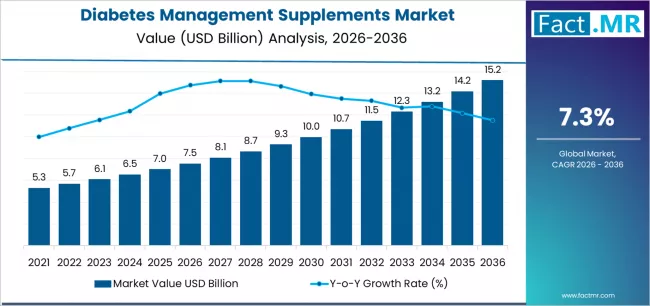
Diabetes management supplements market is projected to grow from USD 7.5 billion in 2026 to USD 15.2 billion by 2036, at a CAGR of 7.3%. Multi-ingredient Supplements will dominate with a 58.0% market share, while herbal extracts & botanicals will lead the ingredients segment with a 37.6% share.
Diabetes Management Supplements Market Forecast and Outlook 2026 to 2036
The global diabetes management supplements market is projected to reach USD 15.2 billion by 2036. Valued at USD 7.53 billion in 2026, the demand is set to rise at a CAGR of 7.3% during the assessment period. The overall market size is expected to grow by 2.0 times during the same period, supported by increasing global diabetes prevalence and growing consumer preference for natural blood glucose management solutions worldwide, driving adoption of herbal extracts and nutritional supplements with clinically studied efficacy across prevention and complementary therapy applications globally.
Quick Stats for Diabetes Management Supplements Market
- Diabetes Management Supplements Market Value (2026): USD 7.53 billion
- Diabetes Management Supplements Market Forecast Value (2036): USD 15.2 billion
- Diabetes Management Supplements Market Forecast CAGR: 7.3%
- Leading Type in Diabetes Management Supplements Market: Multi-ingredient Supplements (58.0%)
- Key Growth Regions in Diabetes Management Supplements Market: Asia Pacific, North America, and Europe
- Top Players in Diabetes Management Supplements Market: Herbalife Nutrition, Amway (Nutrilite), Nature's Bounty (Nestlé Health Science), Nature's Way Products, LLC, NOW Foods, Swanson Health Products, Glanbia plc, Vegatot, Glucose Health, Inc., Life Extension
The multi-ingredient supplements segment dominates market activity, driven by synergistic formulation approaches combining multiple bioactive compounds for comprehensive metabolic support worldwide. Consumers increasingly recognize the therapeutic potential of combination supplements, with typical product offerings providing multiple mechanism-of-action benefits at convenient dosing through established nutraceutical distribution channels.
The herbal extracts & botanicals ingredient segment demonstrates robust growth potential, supported by traditional medicine validation and growing consumer preference for plant-based solutions with established safety profiles. The capsules formulation segment emerges as the dominant delivery format, reflecting consumer preference for convenient oral supplementation and precise dosage control.
The offline distribution channel leads market activity, driven by pharmacy consultation availability and consumer trust in traditional retail settings. China leads country-level growth through rapid urbanization, expanding e-commerce adoption, and traditional herbal medicine integration, followed by India supported by rising diabetes prevalence and cultural acceptance of herbal supplementation.
Diabetes Management Supplements Market Key Takeaways
| Metric | Value |
|---|---|
| Market Value (2026) | USD 7.53 billion |
| Market Forecast Value (2036) | USD 15.2 billion |
| Forecast CAGR (2026-2036) | 7.3% |
Category
| Category | Segments |
|---|---|
| Type | Multi-ingredient Supplements; Single-ingredient Supplements |
| Ingredients | Herbal Extracts and Botanicals; Vitamins and Minerals; Amino Acids and Antioxidants; Omega-3 Fatty Acids; Probiotics; Others |
| Formulation | Capsules; Tablets; Softgels; Powders; Liquids; Others |
| Distribution Channel | Offline (Pharmacies and Drug Stores; Hypermarkets and Supermarkets; Others); Online |
| Region | Asia Pacific; North America; Europe; Latin America; Middle East & Africa |
Segmental Analysis
By Type, Which Segment Accounts for the Dominant Market Share?
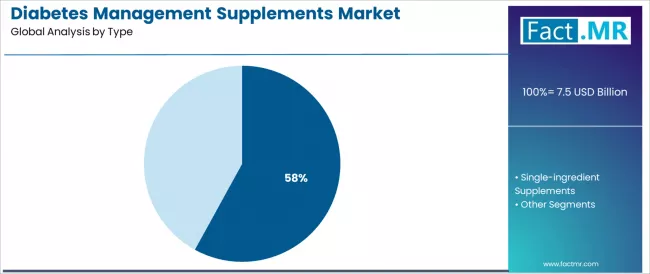
Multi-ingredient supplements represent the dominant force in the diabetes management supplements market, capturing 58.0% of total market share in 2026. This category encompasses synergistic combinations of multiple bioactive ingredients including herbal extracts, vitamins, minerals, and antioxidants, including advanced formulations with complementary mechanism-of-action compounds and bioavailability enhancement technologies that enable comprehensive metabolic support across glucose regulation, insulin sensitivity, and oxidative stress management applications worldwide.
Key therapeutic advantages driving the multi-ingredient segment include:
- Advanced synergistic formulation mechanisms with complementary ingredient interactions providing comprehensive metabolic support across multiple pathways
- Established consumer convenience allowing simplified supplementation routines without multiple product purchases and complex dosing schedules
By Ingredients, Which Segment Accounts for the Largest Market Share?
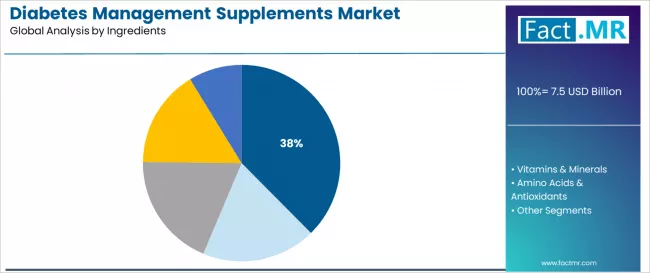
Herbal extracts & botanicals dominate the diabetes management supplements ingredient landscape with a 37.6% market share in 2026, reflecting the critical role of plant-derived compounds in supporting traditional approaches to blood glucose management and contemporary natural product development worldwide. The herbal extracts & botanicals segment's market leadership is reinforced by extensive traditional medicine heritage, growing clinical research validation, and consumer preference for natural therapeutic options with established safety profiles and holistic health benefits.
Key market dynamics supporting ingredient growth include:
- Herbal extracts segment expansion driven by traditional medicine validation and phytochemical research, requiring standardized extraction processes
- Vitamins & minerals modernization trends require bioavailable forms and therapeutic dosing beyond basic nutritional adequacy
By Formulation, Which Segment Accounts for a Significant Market Share?
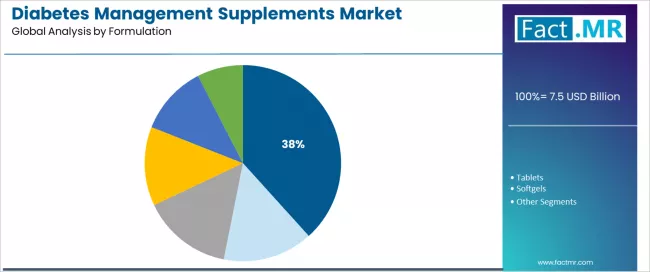
Capsules represent a leading formulation segment in the diabetes management supplements market with a 38.3% market share in 2026, reflecting consumer preference for convenient oral dosage forms supporting easy swallowing, precise dosing, and ingredient protection across diverse product categories. The capsules segment demonstrates consistent demand driven by versatile ingredient compatibility, masking of unpleasant tastes from herbal extracts, and perception of faster dissolution compared to compressed tablets.
Key formulation dynamics include:
- Capsules segment growth accelerating across multi-ingredient formulations with emphasis on ingredient stability and bioavailability optimization
- Tablets applications driving cost-effective manufacturing and controlled-release delivery system development
By Distribution Channel, Which Segment Accounts for the Dominant Market Share?
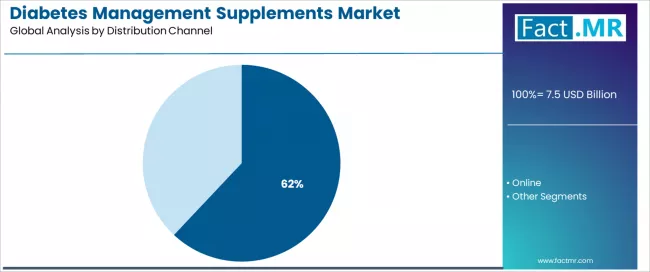
Offline distribution channels dominate the diabetes management supplements landscape with a 62.0% market share in 2026, reflecting the critical role of traditional retail settings including pharmacies, health food stores, and supermarkets in supporting consumer access, professional consultation opportunities, and immediate product availability worldwide. The offline channel's market leadership is reinforced by consumer preferences for face-to-face interactions with pharmacists and retail staff, ability to examine products before purchase, and established shopping patterns for health and wellness products.
Key market dynamics supporting distribution channel growth include:
- Offline channel evolution driven by professional consultation integration and experiential retail strategies, requiring trained personnel
- Online channel modernization trends require robust e-commerce platforms and digital marketing capabilities
What are the Drivers, Restraints, and Key Trends of the Diabetes Management Supplements Market?
The diabetes management supplements market is driven by rising global diabetes and prediabetes prevalence, expanding the population seeking complementary and preventive care options. Nutritional supplements offer accessible, non-invasive support alongside conventional therapies, supported by growing clinical evidence for ingredients linked to improved glucose control and metabolic health. Increasing consumer preference for natural and holistic health solutions is further encouraging adoption, particularly among individuals concerned about long-term pharmaceutical dependence.
Market restraints include inconsistent product quality and lack of ingredient standardization across manufacturers, which can undermine efficacy and consumer trust. Limited regulatory oversight in some regions and low adoption of third-party testing add to these concerns. The absence of insurance reimbursement places the cost burden on consumers, potentially affecting long-term adherence. Skepticism among healthcare professionals and concerns over herb-drug interactions also limit integration into standard diabetes care.
Key trends include the rise of personalized nutrition, using genetic data, metabolic profiling, and continuous glucose monitoring to tailor supplement use. Integration with digital health platforms is enabling data-driven supplementation, though advances in drug therapies or stricter regulations could affect future demand.
Analysis of the Diabetes Management Supplements Market by Key Countries
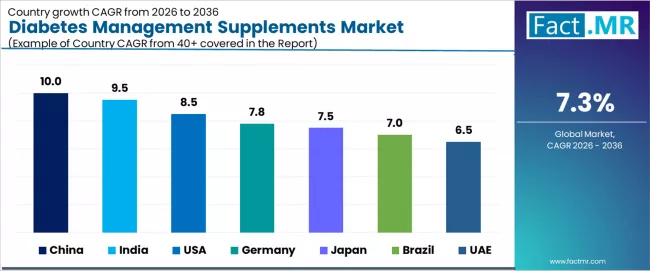
| Country | CAGR (2026-2036) |
|---|---|
| China | 10.0% |
| India | 9.5% |
| USA | 8.5% |
| Germany | 7.8% |
| Japan | 7.5% |
| Brazil | 7.0% |
| UAE | 6.5% |
How Is China Leading Global Market Expansion in Diabetes Management Supplements?
China demonstrates the strongest growth potential in diabetes management supplements, recording a CAGR of 10.0% through 2036. A rapidly rising diabetic population, strong cultural acceptance of traditional Chinese medicine, and the scale of digital commerce platforms enabling direct consumer access drive growth.
Urban centers such as Beijing, Shanghai, Guangzhou, and Shenzhen account for much of the demand, where higher disposable incomes and preventive health awareness support adoption of both herbal formulations and modern nutraceuticals.
Integration of traditional remedies with contemporary healthcare practices reinforces consumer trust, while dominant online platforms and pharmacy networks ensure wide distribution. Preventive health positioning and natural treatment preferences continue to expand supplement penetration among middle-income households.
Why is India Emerging as a High-Growth Market for Diabetes Supplements?
India is expanding at a 9.5% CAGR, driven by increasing type 2 diabetes prevalence and strong reliance on Ayurvedic and herbal health practices. Urban populations in cities such as Mumbai, Delhi, Bangalore, and Hyderabad are adopting supplements that combine traditional ingredients with modern formulations.
The country’s established Ayurvedic industry provides a strong foundation for product development, while growing pharmacy chains and digital health platforms improve access. Rising awareness of diabetes prevention and plant-based management options continues to support sustained demand growth.
What drives Market Maturity in the USA?
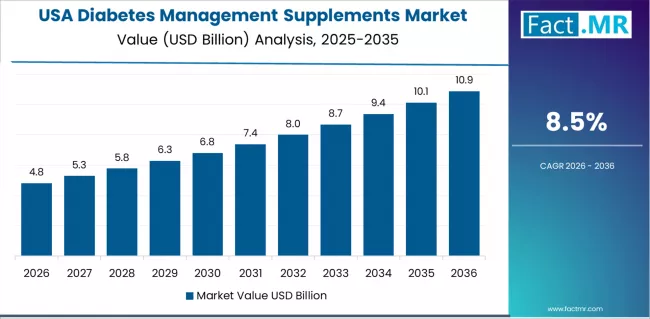
The USA’s market grows at a CAGR of 8.5%, supported by a large diabetic population and a mature nutraceutical industry. Consumers demonstrate high supplement usage and preference for evidence-backed products used alongside conventional treatment. Innovation remains strong, particularly in personalized nutrition and integrative health solutions. Market maturity and emphasis on clinical validation moderate growth compared to emerging regions. Ongoing adoption of data-driven health management tools supports steady expansion.
How does Germany Demonstrate Quality Leadership in Diabetes Supplements?
Germany records a CAGR of 7.8%, driven by strong regulatory oversight and consumer trust in standardized herbal products. Adoption is concentrated in pharmacy channels, where pharmaceutical-grade supplements with verified quality and consistency are preferred. German consumers prioritize documented efficacy and manufacturing rigor, particularly for botanical formulations. Research-backed development and stringent quality control continue to reinforce confidence and stable demand.
What Positions Japan for Functional Food Integration in Diabetes Management?
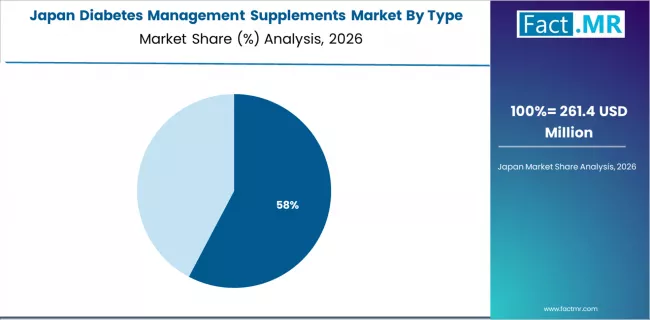
Japan grows at a 7.5% CAGR, supported by an aging population and advanced functional food ecosystem. Consumers integrate diabetes management ingredients into beverages and food products alongside traditional supplements. Strong emphasis on safety, clinical validation, and regulatory compliance shapes purchasing behavior. Preventive healthcare priorities and functional nutrition innovation continue to drive steady adoption.
How does Brazil Reflect Growing Healthcare Awareness in Diabetes Supplement Use?
Brazil demonstrates growth at a 7.0% CAGR, driven by rising diabetes awareness and expanding middle-class health consciousness. Urban consumers increasingly adopt supplements as part of preventive wellness strategies. Expansion of pharmacy networks and health retail channels improves product availability, while healthcare education initiatives support acceptance of natural metabolic health solutions.
What Characterizes the UAE’s Health Initiative-Driven Market Development?
The UAE’s market grows at a 6.5% CAGR, shaped by government-led diabetes prevention programs and high lifestyle disease prevalence. Health initiatives in Dubai and Abu Dhabi emphasize nutritional intervention and preventive care, supporting supplement adoption. High-income demographics favor premium products, while expanding healthcare infrastructure enables professional guidance and evidence-based recommendations.
Competitive Landscape of the Diabetes Management Supplements Market
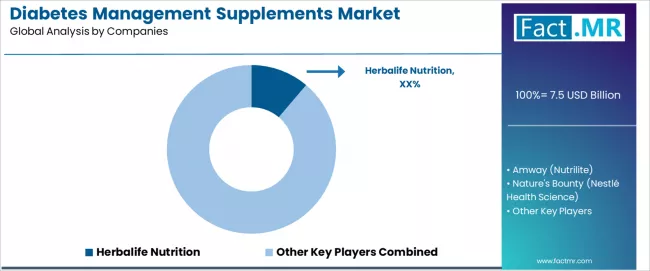
The diabetes management supplements market shows moderate concentration, with around 10-15 meaningful players competing across pharmacy, direct selling, practitioner, and online channels. Competition is shaped primarily by brand trust, clinical credibility, ingredient quality, and engagement with healthcare professionals rather than price-led positioning.
Market leaders such as Herbalife Nutrition, Amway (Nutrilite), and Nature’s Bounty (Nestlé Health Science) hold strong positions through global distribution networks, broad supplement portfolios, and established consumer confidence. Their strategies emphasize formulation refinement, third-party testing, and alignment with evidence-based nutrition trends, alongside partnerships with healthcare practitioners and wellness advisors.
Challenger brands including Nature’s Way Products, NOW Foods, and Swanson Health Products compete through natural ingredient expertise, transparent labeling, and value-oriented pricing, supported by strong presence in natural product retail and e-commerce channels. Other participants such as Glanbia plc, Life Extension, and Vegatot focus on niche formulation strategies, including physician-formulated products, sports nutrition overlap, and research-driven longevity supplements.
Emerging direct-to-consumer and condition-specific brands add competitive pressure through targeted formulations, digital marketing, and subscription models. Overall competitiveness favors companies combining manufacturing quality, clinical evidence generation, and strong distribution reach across regulated and consumer-facing channels.
Key Players in the Diabetes Management Supplements Market
- Herbalife Nutrition
- Amway (Nutrilite)
- Nature's Bounty (Nestlé Health Science)
- Nature's Way Products, LLC
- NOW Foods
- Swanson Health Products
- Glanbia plc
- Vegatot
- Glucose Health, Inc.
- Life Extension
Scope of the Report
| Items | Values |
|---|---|
| Quantitative Units | USD 7.53 Billion |
| Type | Multi-ingredient Supplements, Single-ingredient Supplements |
| Ingredients | Herbal Extracts & Botanicals, Vitamins & Minerals, Amino Acids & Antioxidants, Omega-3 Fatty Acids, Probiotics, Others |
| Formulation | Capsules, Tablets, Softgels, Powders, Liquids, Others |
| Distribution Channel | Offline (Pharmacies & Drug Stores, Hypermarkets/Supermarkets, Others), Online |
| Regions Covered | Asia Pacific, North America, Europe, Latin America, MEA |
| Country Covered | China, India, USA, Germany, Japan, Brazil, UAE, and 40+ countries |
| Key Companies Profiled | Herbalife Nutrition, Amway (Nutrilite), Nature's Bounty (Nestlé Health Science), Nature's Way Products, LLC, NOW Foods, Swanson Health Products, Glanbia plc, Vegatot, Glucose Health, Inc., Life Extension |
| Additional Attributes | Dollar sales by type and ingredient categories, regional consumption trends across Asia Pacific, North America, and Europe, competitive landscape with nutraceutical manufacturers and supplement companies, product specifications and ingredient standardization requirements, integration with diabetes care protocols and healthcare provider recommendations, innovations in herbal extract technologies and bioavailability enhancement, and development of specialized applications with clinical validation and evidence-based formulation capabilities. |
Diabetes Management Supplements Market by Segments
-
Type :
- Multi-ingredient Supplements
- Single-ingredient Supplements
-
Ingredients :
- Herbal Extracts & Botanicals
- Vitamins & Minerals
- Amino Acids & Antioxidants
- Omega-3 Fatty Acids
- Probiotics
- Others
-
Formulation :
- Capsules
- Tablets
- Softgels
- Powders
- Liquids
- Others
-
Distribution Channel :
- Offline
- Pharmacies & Drug Stores
- Hypermarkets/Supermarkets
- Others
- Online
- Offline
-
Region :
- Asia Pacific
- China
- Japan
- South Korea
- India
- Australia
- Thailand
- Rest of Asia Pacific
- North America
- USA
- Canada
- Mexico
- Europe
- Germany
- UK
- France
- Italy
- Spain
- Denmark
- Sweden
- Norway
- Rest of Europe
- Latin America
- Brazil
- Argentina
- Rest of Latin America
- MEA
- South Africa
- Saudi Arabia
- UAE
- Kuwait
- Rest of MEA
- Asia Pacific
Table of Content
- Executive Summary
- Global Market Outlook
- Demand to side Trends
- Supply to side Trends
- Technology Roadmap Analysis
- Analysis and Recommendations
- Market Overview
- Market Coverage / Taxonomy
- Market Definition / Scope / Limitations
- Market Background
- Market Dynamics
- Drivers
- Restraints
- Opportunity
- Trends
- Scenario Forecast
- Demand in Optimistic Scenario
- Demand in Likely Scenario
- Demand in Conservative Scenario
- Opportunity Map Analysis
- Product Life Cycle Analysis
- Supply Chain Analysis
- Investment Feasibility Matrix
- Value Chain Analysis
- PESTLE and Porter’s Analysis
- Regulatory Landscape
- Regional Parent Market Outlook
- Production and Consumption Statistics
- Import and Export Statistics
- Market Dynamics
- Global Market Analysis 2021 to 2025 and Forecast, 2026 to 2036
- Historical Market Size Value (USD Million) Analysis, 2021 to 2025
- Current and Future Market Size Value (USD Million) Projections, 2026 to 2036
- Y to o to Y Growth Trend Analysis
- Absolute $ Opportunity Analysis
- Global Market Pricing Analysis 2021 to 2025 and Forecast 2026 to 2036
- Global Market Analysis 2021 to 2025 and Forecast 2026 to 2036, By Type
- Introduction / Key Findings
- Historical Market Size Value (USD Million) Analysis By Type, 2021 to 2025
- Current and Future Market Size Value (USD Million) Analysis and Forecast By Type, 2026 to 2036
- Multi-ingredient Supplements
- Single-ingredient Supplements
- Y to o to Y Growth Trend Analysis By Type, 2021 to 2025
- Absolute $ Opportunity Analysis By Type, 2026 to 2036
- Global Market Analysis 2021 to 2025 and Forecast 2026 to 2036, By Ingredients
- Introduction / Key Findings
- Historical Market Size Value (USD Million) Analysis By Ingredients, 2021 to 2025
- Current and Future Market Size Value (USD Million) Analysis and Forecast By Ingredients, 2026 to 2036
- Herbal Extracts & Botanicals
- Vitamins & Minerals
- Amino Acids & Antioxidants
- Omega-3 Fatty Acids
- Probiotics
- Y to o to Y Growth Trend Analysis By Ingredients, 2021 to 2025
- Absolute $ Opportunity Analysis By Ingredients, 2026 to 2036
- Global Market Analysis 2021 to 2025 and Forecast 2026 to 2036, By Formulation
- Introduction / Key Findings
- Historical Market Size Value (USD Million) Analysis By Formulation, 2021 to 2025
- Current and Future Market Size Value (USD Million) Analysis and Forecast By Formulation, 2026 to 2036
- Capsules
- Tablets
- Softgels
- Powders
- Liquids
- Others
- Y to o to Y Growth Trend Analysis By Formulation, 2021 to 2025
- Absolute $ Opportunity Analysis By Formulation, 2026 to 2036
- Global Market Analysis 2021 to 2025 and Forecast 2026 to 2036, By Distribution Channel
- Introduction / Key Findings
- Historical Market Size Value (USD Million) Analysis By Distribution Channel, 2021 to 2025
- Current and Future Market Size Value (USD Million) Analysis and Forecast By Distribution Channel, 2026 to 2036
- Offline
- Online
- Y to o to Y Growth Trend Analysis By Distribution Channel, 2021 to 2025
- Absolute $ Opportunity Analysis By Distribution Channel, 2026 to 2036
- Global Market Analysis 2021 to 2025 and Forecast 2026 to 2036, By Region
- Introduction
- Historical Market Size Value (USD Million) Analysis By Region, 2021 to 2025
- Current Market Size Value (USD Million) Analysis and Forecast By Region, 2026 to 2036
- North America
- Latin America
- Western Europe
- Eastern Europe
- East Asia
- South Asia and Pacific
- Middle East & Africa
- Market Attractiveness Analysis By Region
- North America Market Analysis 2021 to 2025 and Forecast 2026 to 2036, By Country
- Historical Market Size Value (USD Million) Trend Analysis By Market Taxonomy, 2021 to 2025
- Market Size Value (USD Million) Forecast By Market Taxonomy, 2026 to 2036
- By Country
- USA
- Canada
- Mexico
- By Type
- By Ingredients
- By Formulation
- By Distribution Channel
- By Country
- Market Attractiveness Analysis
- By Country
- By Type
- By Ingredients
- By Formulation
- By Distribution Channel
- Key Takeaways
- Latin America Market Analysis 2021 to 2025 and Forecast 2026 to 2036, By Country
- Historical Market Size Value (USD Million) Trend Analysis By Market Taxonomy, 2021 to 2025
- Market Size Value (USD Million) Forecast By Market Taxonomy, 2026 to 2036
- By Country
- Brazil
- Chile
- Rest of Latin America
- By Type
- By Ingredients
- By Formulation
- By Distribution Channel
- By Country
- Market Attractiveness Analysis
- By Country
- By Type
- By Ingredients
- By Formulation
- By Distribution Channel
- Key Takeaways
- Western Europe Market Analysis 2021 to 2025 and Forecast 2026 to 2036, By Country
- Historical Market Size Value (USD Million) Trend Analysis By Market Taxonomy, 2021 to 2025
- Market Size Value (USD Million) Forecast By Market Taxonomy, 2026 to 2036
- By Country
- Germany
- UK
- Italy
- Spain
- France
- Nordic
- BENELUX
- Rest of Western Europe
- By Type
- By Ingredients
- By Formulation
- By Distribution Channel
- By Country
- Market Attractiveness Analysis
- By Country
- By Type
- By Ingredients
- By Formulation
- By Distribution Channel
- Key Takeaways
- Eastern Europe Market Analysis 2021 to 2025 and Forecast 2026 to 2036, By Country
- Historical Market Size Value (USD Million) Trend Analysis By Market Taxonomy, 2021 to 2025
- Market Size Value (USD Million) Forecast By Market Taxonomy, 2026 to 2036
- By Country
- Russia
- Poland
- Hungary
- Balkan & Baltic
- Rest of Eastern Europe
- By Type
- By Ingredients
- By Formulation
- By Distribution Channel
- By Country
- Market Attractiveness Analysis
- By Country
- By Type
- By Ingredients
- By Formulation
- By Distribution Channel
- Key Takeaways
- East Asia Market Analysis 2021 to 2025 and Forecast 2026 to 2036, By Country
- Historical Market Size Value (USD Million) Trend Analysis By Market Taxonomy, 2021 to 2025
- Market Size Value (USD Million) Forecast By Market Taxonomy, 2026 to 2036
- By Country
- China
- Japan
- South Korea
- By Type
- By Ingredients
- By Formulation
- By Distribution Channel
- By Country
- Market Attractiveness Analysis
- By Country
- By Type
- By Ingredients
- By Formulation
- By Distribution Channel
- Key Takeaways
- South Asia and Pacific Market Analysis 2021 to 2025 and Forecast 2026 to 2036, By Country
- Historical Market Size Value (USD Million) Trend Analysis By Market Taxonomy, 2021 to 2025
- Market Size Value (USD Million) Forecast By Market Taxonomy, 2026 to 2036
- By Country
- India
- ASEAN
- Australia & New Zealand
- Rest of South Asia and Pacific
- By Type
- By Ingredients
- By Formulation
- By Distribution Channel
- By Country
- Market Attractiveness Analysis
- By Country
- By Type
- By Ingredients
- By Formulation
- By Distribution Channel
- Key Takeaways
- Middle East & Africa Market Analysis 2021 to 2025 and Forecast 2026 to 2036, By Country
- Historical Market Size Value (USD Million) Trend Analysis By Market Taxonomy, 2021 to 2025
- Market Size Value (USD Million) Forecast By Market Taxonomy, 2026 to 2036
- By Country
- Kingdom of Saudi Arabia
- Other GCC Countries
- Turkiye
- South Africa
- Other African Union
- Rest of Middle East & Africa
- By Type
- By Ingredients
- By Formulation
- By Distribution Channel
- By Country
- Market Attractiveness Analysis
- By Country
- By Type
- By Ingredients
- By Formulation
- By Distribution Channel
- Key Takeaways
- Key Countries Market Analysis
- USA
- Pricing Analysis
- Market Share Analysis, 2025
- By Type
- By Ingredients
- By Formulation
- By Distribution Channel
- Canada
- Pricing Analysis
- Market Share Analysis, 2025
- By Type
- By Ingredients
- By Formulation
- By Distribution Channel
- Mexico
- Pricing Analysis
- Market Share Analysis, 2025
- By Type
- By Ingredients
- By Formulation
- By Distribution Channel
- Brazil
- Pricing Analysis
- Market Share Analysis, 2025
- By Type
- By Ingredients
- By Formulation
- By Distribution Channel
- Chile
- Pricing Analysis
- Market Share Analysis, 2025
- By Type
- By Ingredients
- By Formulation
- By Distribution Channel
- Germany
- Pricing Analysis
- Market Share Analysis, 2025
- By Type
- By Ingredients
- By Formulation
- By Distribution Channel
- UK
- Pricing Analysis
- Market Share Analysis, 2025
- By Type
- By Ingredients
- By Formulation
- By Distribution Channel
- Italy
- Pricing Analysis
- Market Share Analysis, 2025
- By Type
- By Ingredients
- By Formulation
- By Distribution Channel
- Spain
- Pricing Analysis
- Market Share Analysis, 2025
- By Type
- By Ingredients
- By Formulation
- By Distribution Channel
- France
- Pricing Analysis
- Market Share Analysis, 2025
- By Type
- By Ingredients
- By Formulation
- By Distribution Channel
- India
- Pricing Analysis
- Market Share Analysis, 2025
- By Type
- By Ingredients
- By Formulation
- By Distribution Channel
- ASEAN
- Pricing Analysis
- Market Share Analysis, 2025
- By Type
- By Ingredients
- By Formulation
- By Distribution Channel
- Australia & New Zealand
- Pricing Analysis
- Market Share Analysis, 2025
- By Type
- By Ingredients
- By Formulation
- By Distribution Channel
- China
- Pricing Analysis
- Market Share Analysis, 2025
- By Type
- By Ingredients
- By Formulation
- By Distribution Channel
- Japan
- Pricing Analysis
- Market Share Analysis, 2025
- By Type
- By Ingredients
- By Formulation
- By Distribution Channel
- South Korea
- Pricing Analysis
- Market Share Analysis, 2025
- By Type
- By Ingredients
- By Formulation
- By Distribution Channel
- Russia
- Pricing Analysis
- Market Share Analysis, 2025
- By Type
- By Ingredients
- By Formulation
- By Distribution Channel
- Poland
- Pricing Analysis
- Market Share Analysis, 2025
- By Type
- By Ingredients
- By Formulation
- By Distribution Channel
- Hungary
- Pricing Analysis
- Market Share Analysis, 2025
- By Type
- By Ingredients
- By Formulation
- By Distribution Channel
- Kingdom of Saudi Arabia
- Pricing Analysis
- Market Share Analysis, 2025
- By Type
- By Ingredients
- By Formulation
- By Distribution Channel
- Turkiye
- Pricing Analysis
- Market Share Analysis, 2025
- By Type
- By Ingredients
- By Formulation
- By Distribution Channel
- South Africa
- Pricing Analysis
- Market Share Analysis, 2025
- By Type
- By Ingredients
- By Formulation
- By Distribution Channel
- USA
- Market Structure Analysis
- Competition Dashboard
- Competition Benchmarking
- Market Share Analysis of Top Players
- By Regional
- By Type
- By Ingredients
- By Formulation
- By Distribution Channel
- Competition Analysis
- Competition Deep Dive
- Herbalife Nutrition
- Overview
- Product Portfolio
- Profitability by Market Segments (Product/Age /Sales Channel/Region)
- Sales Footprint
- Strategy Overview
- Marketing Strategy
- Product Strategy
- Channel Strategy
- Amway (Nutrilite)
- Nature's Bounty (Nestlé Health Science)
- Nature's Way Products, LLC
- NOW Foods
- Swanson Health Products
- Glanbia plc
- Vegatot
- Glucose Health, Inc.
- Life Extension
- Herbalife Nutrition
- Competition Deep Dive
- Assumptions & Acronyms Used
- Research Methodology
List Of Table
- Table 1: Global Market Value (USD Million) Forecast by Region, 2021 to 2036
- Table 2: Global Market Value (USD Million) Forecast by Type, 2021 to 2036
- Table 3: Global Market Value (USD Million) Forecast by Ingredients, 2021 to 2036
- Table 4: Global Market Value (USD Million) Forecast by Formulation, 2021 to 2036
- Table 5: Global Market Value (USD Million) Forecast by Distribution Channel, 2021 to 2036
- Table 6: North America Market Value (USD Million) Forecast by Country, 2021 to 2036
- Table 7: North America Market Value (USD Million) Forecast by Type, 2021 to 2036
- Table 8: North America Market Value (USD Million) Forecast by Ingredients, 2021 to 2036
- Table 9: North America Market Value (USD Million) Forecast by Formulation, 2021 to 2036
- Table 10: North America Market Value (USD Million) Forecast by Distribution Channel, 2021 to 2036
- Table 11: Latin America Market Value (USD Million) Forecast by Country, 2021 to 2036
- Table 12: Latin America Market Value (USD Million) Forecast by Type, 2021 to 2036
- Table 13: Latin America Market Value (USD Million) Forecast by Ingredients, 2021 to 2036
- Table 14: Latin America Market Value (USD Million) Forecast by Formulation, 2021 to 2036
- Table 15: Latin America Market Value (USD Million) Forecast by Distribution Channel, 2021 to 2036
- Table 16: Western Europe Market Value (USD Million) Forecast by Country, 2021 to 2036
- Table 17: Western Europe Market Value (USD Million) Forecast by Type, 2021 to 2036
- Table 18: Western Europe Market Value (USD Million) Forecast by Ingredients, 2021 to 2036
- Table 19: Western Europe Market Value (USD Million) Forecast by Formulation, 2021 to 2036
- Table 20: Western Europe Market Value (USD Million) Forecast by Distribution Channel, 2021 to 2036
- Table 21: Eastern Europe Market Value (USD Million) Forecast by Country, 2021 to 2036
- Table 22: Eastern Europe Market Value (USD Million) Forecast by Type, 2021 to 2036
- Table 23: Eastern Europe Market Value (USD Million) Forecast by Ingredients, 2021 to 2036
- Table 24: Eastern Europe Market Value (USD Million) Forecast by Formulation, 2021 to 2036
- Table 25: Eastern Europe Market Value (USD Million) Forecast by Distribution Channel, 2021 to 2036
- Table 26: East Asia Market Value (USD Million) Forecast by Country, 2021 to 2036
- Table 27: East Asia Market Value (USD Million) Forecast by Type, 2021 to 2036
- Table 28: East Asia Market Value (USD Million) Forecast by Ingredients, 2021 to 2036
- Table 29: East Asia Market Value (USD Million) Forecast by Formulation, 2021 to 2036
- Table 30: East Asia Market Value (USD Million) Forecast by Distribution Channel, 2021 to 2036
- Table 31: South Asia and Pacific Market Value (USD Million) Forecast by Country, 2021 to 2036
- Table 32: South Asia and Pacific Market Value (USD Million) Forecast by Type, 2021 to 2036
- Table 33: South Asia and Pacific Market Value (USD Million) Forecast by Ingredients, 2021 to 2036
- Table 34: South Asia and Pacific Market Value (USD Million) Forecast by Formulation, 2021 to 2036
- Table 35: South Asia and Pacific Market Value (USD Million) Forecast by Distribution Channel, 2021 to 2036
- Table 36: Middle East & Africa Market Value (USD Million) Forecast by Country, 2021 to 2036
- Table 37: Middle East & Africa Market Value (USD Million) Forecast by Type, 2021 to 2036
- Table 38: Middle East & Africa Market Value (USD Million) Forecast by Ingredients, 2021 to 2036
- Table 39: Middle East & Africa Market Value (USD Million) Forecast by Formulation, 2021 to 2036
- Table 40: Middle East & Africa Market Value (USD Million) Forecast by Distribution Channel, 2021 to 2036
List Of Figures
- Figure 1: Global Market Pricing Analysis
- Figure 2: Global Market Value (USD Million) Forecast 2021 to 2036
- Figure 3: Global Market Value Share and BPS Analysis by Type, 2026 and 2036
- Figure 4: Global Market Y to o to Y Growth Comparison by Type, 2026 to 2036
- Figure 5: Global Market Attractiveness Analysis by Type
- Figure 6: Global Market Value Share and BPS Analysis by Ingredients, 2026 and 2036
- Figure 7: Global Market Y to o to Y Growth Comparison by Ingredients, 2026 to 2036
- Figure 8: Global Market Attractiveness Analysis by Ingredients
- Figure 9: Global Market Value Share and BPS Analysis by Formulation, 2026 and 2036
- Figure 10: Global Market Y to o to Y Growth Comparison by Formulation, 2026 to 2036
- Figure 11: Global Market Attractiveness Analysis by Formulation
- Figure 12: Global Market Value Share and BPS Analysis by Distribution Channel, 2026 and 2036
- Figure 13: Global Market Y to o to Y Growth Comparison by Distribution Channel, 2026 to 2036
- Figure 14: Global Market Attractiveness Analysis by Distribution Channel
- Figure 15: Global Market Value (USD Million) Share and BPS Analysis by Region, 2026 and 2036
- Figure 16: Global Market Y to o to Y Growth Comparison by Region, 2026 to 2036
- Figure 17: Global Market Attractiveness Analysis by Region
- Figure 18: North America Market Incremental Dollar Opportunity, 2026 to 2036
- Figure 19: Latin America Market Incremental Dollar Opportunity, 2026 to 2036
- Figure 20: Western Europe Market Incremental Dollar Opportunity, 2026 to 2036
- Figure 21: Eastern Europe Market Incremental Dollar Opportunity, 2026 to 2036
- Figure 22: East Asia Market Incremental Dollar Opportunity, 2026 to 2036
- Figure 23: South Asia and Pacific Market Incremental Dollar Opportunity, 2026 to 2036
- Figure 24: Middle East & Africa Market Incremental Dollar Opportunity, 2026 to 2036
- Figure 25: North America Market Value Share and BPS Analysis by Country, 2026 and 2036
- Figure 26: North America Market Value Share and BPS Analysis by Type, 2026 and 2036
- Figure 27: North America Market Y to o to Y Growth Comparison by Type, 2026 to 2036
- Figure 28: North America Market Attractiveness Analysis by Type
- Figure 29: North America Market Value Share and BPS Analysis by Ingredients, 2026 and 2036
- Figure 30: North America Market Y to o to Y Growth Comparison by Ingredients, 2026 to 2036
- Figure 31: North America Market Attractiveness Analysis by Ingredients
- Figure 32: North America Market Value Share and BPS Analysis by Formulation, 2026 and 2036
- Figure 33: North America Market Y to o to Y Growth Comparison by Formulation, 2026 to 2036
- Figure 34: North America Market Attractiveness Analysis by Formulation
- Figure 35: North America Market Value Share and BPS Analysis by Distribution Channel, 2026 and 2036
- Figure 36: North America Market Y to o to Y Growth Comparison by Distribution Channel, 2026 to 2036
- Figure 37: North America Market Attractiveness Analysis by Distribution Channel
- Figure 38: Latin America Market Value Share and BPS Analysis by Country, 2026 and 2036
- Figure 39: Latin America Market Value Share and BPS Analysis by Type, 2026 and 2036
- Figure 40: Latin America Market Y to o to Y Growth Comparison by Type, 2026 to 2036
- Figure 41: Latin America Market Attractiveness Analysis by Type
- Figure 42: Latin America Market Value Share and BPS Analysis by Ingredients, 2026 and 2036
- Figure 43: Latin America Market Y to o to Y Growth Comparison by Ingredients, 2026 to 2036
- Figure 44: Latin America Market Attractiveness Analysis by Ingredients
- Figure 45: Latin America Market Value Share and BPS Analysis by Formulation, 2026 and 2036
- Figure 46: Latin America Market Y to o to Y Growth Comparison by Formulation, 2026 to 2036
- Figure 47: Latin America Market Attractiveness Analysis by Formulation
- Figure 48: Latin America Market Value Share and BPS Analysis by Distribution Channel, 2026 and 2036
- Figure 49: Latin America Market Y to o to Y Growth Comparison by Distribution Channel, 2026 to 2036
- Figure 50: Latin America Market Attractiveness Analysis by Distribution Channel
- Figure 51: Western Europe Market Value Share and BPS Analysis by Country, 2026 and 2036
- Figure 52: Western Europe Market Value Share and BPS Analysis by Type, 2026 and 2036
- Figure 53: Western Europe Market Y to o to Y Growth Comparison by Type, 2026 to 2036
- Figure 54: Western Europe Market Attractiveness Analysis by Type
- Figure 55: Western Europe Market Value Share and BPS Analysis by Ingredients, 2026 and 2036
- Figure 56: Western Europe Market Y to o to Y Growth Comparison by Ingredients, 2026 to 2036
- Figure 57: Western Europe Market Attractiveness Analysis by Ingredients
- Figure 58: Western Europe Market Value Share and BPS Analysis by Formulation, 2026 and 2036
- Figure 59: Western Europe Market Y to o to Y Growth Comparison by Formulation, 2026 to 2036
- Figure 60: Western Europe Market Attractiveness Analysis by Formulation
- Figure 61: Western Europe Market Value Share and BPS Analysis by Distribution Channel, 2026 and 2036
- Figure 62: Western Europe Market Y to o to Y Growth Comparison by Distribution Channel, 2026 to 2036
- Figure 63: Western Europe Market Attractiveness Analysis by Distribution Channel
- Figure 64: Eastern Europe Market Value Share and BPS Analysis by Country, 2026 and 2036
- Figure 65: Eastern Europe Market Value Share and BPS Analysis by Type, 2026 and 2036
- Figure 66: Eastern Europe Market Y to o to Y Growth Comparison by Type, 2026 to 2036
- Figure 67: Eastern Europe Market Attractiveness Analysis by Type
- Figure 68: Eastern Europe Market Value Share and BPS Analysis by Ingredients, 2026 and 2036
- Figure 69: Eastern Europe Market Y to o to Y Growth Comparison by Ingredients, 2026 to 2036
- Figure 70: Eastern Europe Market Attractiveness Analysis by Ingredients
- Figure 71: Eastern Europe Market Value Share and BPS Analysis by Formulation, 2026 and 2036
- Figure 72: Eastern Europe Market Y to o to Y Growth Comparison by Formulation, 2026 to 2036
- Figure 73: Eastern Europe Market Attractiveness Analysis by Formulation
- Figure 74: Eastern Europe Market Value Share and BPS Analysis by Distribution Channel, 2026 and 2036
- Figure 75: Eastern Europe Market Y to o to Y Growth Comparison by Distribution Channel, 2026 to 2036
- Figure 76: Eastern Europe Market Attractiveness Analysis by Distribution Channel
- Figure 77: East Asia Market Value Share and BPS Analysis by Country, 2026 and 2036
- Figure 78: East Asia Market Value Share and BPS Analysis by Type, 2026 and 2036
- Figure 79: East Asia Market Y to o to Y Growth Comparison by Type, 2026 to 2036
- Figure 80: East Asia Market Attractiveness Analysis by Type
- Figure 81: East Asia Market Value Share and BPS Analysis by Ingredients, 2026 and 2036
- Figure 82: East Asia Market Y to o to Y Growth Comparison by Ingredients, 2026 to 2036
- Figure 83: East Asia Market Attractiveness Analysis by Ingredients
- Figure 84: East Asia Market Value Share and BPS Analysis by Formulation, 2026 and 2036
- Figure 85: East Asia Market Y to o to Y Growth Comparison by Formulation, 2026 to 2036
- Figure 86: East Asia Market Attractiveness Analysis by Formulation
- Figure 87: East Asia Market Value Share and BPS Analysis by Distribution Channel, 2026 and 2036
- Figure 88: East Asia Market Y to o to Y Growth Comparison by Distribution Channel, 2026 to 2036
- Figure 89: East Asia Market Attractiveness Analysis by Distribution Channel
- Figure 90: South Asia and Pacific Market Value Share and BPS Analysis by Country, 2026 and 2036
- Figure 91: South Asia and Pacific Market Value Share and BPS Analysis by Type, 2026 and 2036
- Figure 92: South Asia and Pacific Market Y to o to Y Growth Comparison by Type, 2026 to 2036
- Figure 93: South Asia and Pacific Market Attractiveness Analysis by Type
- Figure 94: South Asia and Pacific Market Value Share and BPS Analysis by Ingredients, 2026 and 2036
- Figure 95: South Asia and Pacific Market Y to o to Y Growth Comparison by Ingredients, 2026 to 2036
- Figure 96: South Asia and Pacific Market Attractiveness Analysis by Ingredients
- Figure 97: South Asia and Pacific Market Value Share and BPS Analysis by Formulation, 2026 and 2036
- Figure 98: South Asia and Pacific Market Y to o to Y Growth Comparison by Formulation, 2026 to 2036
- Figure 99: South Asia and Pacific Market Attractiveness Analysis by Formulation
- Figure 100: South Asia and Pacific Market Value Share and BPS Analysis by Distribution Channel, 2026 and 2036
- Figure 101: South Asia and Pacific Market Y to o to Y Growth Comparison by Distribution Channel, 2026 to 2036
- Figure 102: South Asia and Pacific Market Attractiveness Analysis by Distribution Channel
- Figure 103: Middle East & Africa Market Value Share and BPS Analysis by Country, 2026 and 2036
- Figure 104: Middle East & Africa Market Value Share and BPS Analysis by Type, 2026 and 2036
- Figure 105: Middle East & Africa Market Y to o to Y Growth Comparison by Type, 2026 to 2036
- Figure 106: Middle East & Africa Market Attractiveness Analysis by Type
- Figure 107: Middle East & Africa Market Value Share and BPS Analysis by Ingredients, 2026 and 2036
- Figure 108: Middle East & Africa Market Y to o to Y Growth Comparison by Ingredients, 2026 to 2036
- Figure 109: Middle East & Africa Market Attractiveness Analysis by Ingredients
- Figure 110: Middle East & Africa Market Value Share and BPS Analysis by Formulation, 2026 and 2036
- Figure 111: Middle East & Africa Market Y to o to Y Growth Comparison by Formulation, 2026 to 2036
- Figure 112: Middle East & Africa Market Attractiveness Analysis by Formulation
- Figure 113: Middle East & Africa Market Value Share and BPS Analysis by Distribution Channel, 2026 and 2036
- Figure 114: Middle East & Africa Market Y to o to Y Growth Comparison by Distribution Channel, 2026 to 2036
- Figure 115: Middle East & Africa Market Attractiveness Analysis by Distribution Channel
- Figure 116: Global Market - Tier Structure Analysis
- Figure 117: Global Market - Company Share Analysis
- FAQs -
How big is the diabetes management supplements market in 2026?
The global diabetes management supplements market is estimated to be valued at USD 7.5 billion in 2026.
What will be the size of diabetes management supplements market in 2036?
The market size for the diabetes management supplements market is projected to reach USD 15.2 billion by 2036.
How much will be the diabetes management supplements market growth between 2026 and 2036?
The diabetes management supplements market is expected to grow at a 7.3% CAGR between 2026 and 2036.
What are the key product types in the diabetes management supplements market?
The key product types in diabetes management supplements market are multi-ingredient supplements and single-ingredient supplements.
Which ingredients segment to contribute significant share in the diabetes management supplements market in 2026?
In terms of ingredients, herbal extracts & botanicals segment to command 37.6% share in the diabetes management supplements market in 2026.