Medical Case Management Service Market (2026 - 2036)
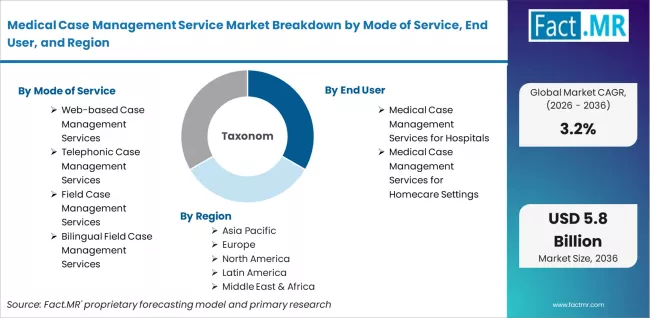
Medical Case Management Service Market is segmented by Mode of Service (Web-based Case Management Services, Telephonic Case Management Services, Field Case Management Services, Bilingual Field Case Management Services, Other Services), End User (Hospitals, Homecare Settings), Severity of Case (Catastrophic Case Management, Chronic Pain Management, Independent Medical Examinations, Short-term Disability, Long-term Disability), and Region. Forecast for 2026 to 2036.
Core Findings
Medical Case Management Service Market Size, Market Forecast and Outlook By Fact.MR
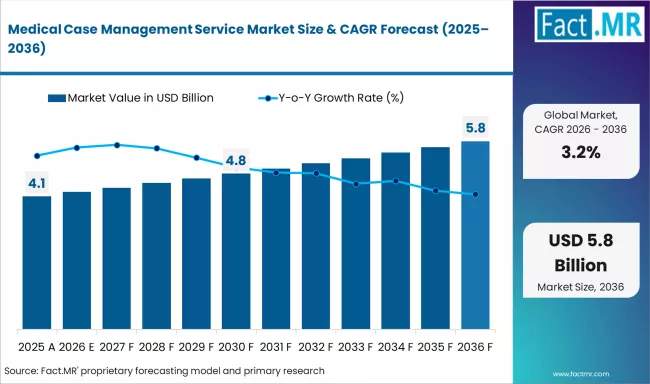
The Medical Case Management Service market was valued at USD 4.12 billion in 2025, projected to reach USD 4.26 billion in 2026, and is forecast to expand to USD 5.84 billion by 2036 at a 3.2% CAGR. Rising prevalence of complex chronic conditions, accelerating shift toward value-based care reimbursement models, and insurer mandates for coordinated care pathways drive systematic adoption of professional case management services across hospital networks and homecare providers. Workforce shortages in specialized nursing and social work disciplines create demand for technology-enabled case management service models that extend coordinator capacity.
The absolute dollar growth opportunity of USD 1.58 billion across the forecast decade reflects consistent structural demand driven by aging population demographics and increasing healthcare complexity rather than episodic market events. Web-based service platforms capturing 57.6% of mode-of-service share demonstrate the sector's migration from telephonic case coordination toward integrated digital patient management systems. Hospital end-users accounting for 38.4% of market share indicate institutional healthcare networks as the primary procurement authority for contracted case management service arrangements.
Based on FACT.MR's regional analysis, China leads growth at a 4.32% CAGR, where government-led chronic disease management program expansion creates structured demand for professional case coordination services across provincial hospital networks. India advances at 4.0% as private hospital chains integrate case management services to reduce avoidable readmission rates. Germany registers 3.68%, where statutory health insurance Krankenkassen contract case management organizations to coordinate complex patient pathways across specialist networks. Brazil tracks at 3.36%, with supplemental health plan operators mandating case management for high-cost patient cohorts. The United Kingdom records 3.04% growth as NHS integrated care system implementation expands care coordination commissioning at regional level. The United States advances at 2.72%, where managed care organizations and Medicare Advantage plans sustain steady case management service procurement. Japan registers 2.4% as long-term care insurance reforms expand care coordinator service eligibility.
Medical Case Management Service Market Key Takeaways
| Metric | Details |
|---|---|
| Industry Size (2026) | USD 4.26 Billion |
| Industry Value (2036) | USD 5.84 Billion |
| CAGR (2026-2036) | 3.2% |
Source: Fact.MR, 2026
Medical Case Management Service Market Definition
Medical Case Management Services encompass professional care coordination services delivered by licensed case managers to facilitate appropriate healthcare utilization, care plan adherence, and optimal patient outcomes for individuals with complex medical conditions. Service delivery modes include web-based digital platforms, telephonic coordination, field-based clinical case visits, and bilingual field services for linguistically diverse patient populations. Services address catastrophic injury cases, chronic pain management, independent medical examinations, and disability management across hospital and homecare settings.
Medical Case Management Service Market Inclusions
Market scope covers contracted case management services delivered to payers, employers, and healthcare institutions including web-based, telephonic, field-based, and bilingual service modalities. End-user analysis encompasses hospital systems, homecare providers, workers' compensation payers, and group health insurance operators. Severity classification coverage includes catastrophic case management, chronic pain coordination, independent medical examinations, and short-term and long-term disability management across the 2026 to 2036 forecast period.
Medical Case Management Service Market Exclusions
In-house hospital care coordination programs operated by salaried hospital employees are excluded from market scope. Social worker services delivered under government welfare programs without medical case management mandate fall outside defined boundaries. Disease management programs focused exclusively on patient education without active care pathway coordination are omitted. Electronic health record systems and care management software platforms sold as standalone technology products are explicitly excluded.
Medical Case Management Service Market Research Methodology
- Primary Research: Analysts conducted structured interviews with case management organization directors, managed care organization procurement managers, and workers' compensation payer executives to map contract award timelines and service scope requirements.
- Desk Research: Data collection aggregated Case Management Society of America service standard publications, state workers' compensation regulatory guidance documents, and managed care organization annual report disclosures.
- Market-Sizing and Forecasting: Baseline values derive from a bottom-up aggregation of contracted case management service revenue across payer, employer, and healthcare institution client categories, applying condition prevalence growth curves to projection models.
- Data Validation and Update Cycle: Forecasts cross-validate against publicly reported revenue from specialty case management service organizations and managed care organization medical management expense disclosures.
Summary of Medical Case Management Service Market
- Medical Case Management Service Market Definition
- The Medical Case Management Service market comprises professional care coordination services delivered by licensed case managers across web-based, telephonic, field, and bilingual service modalities to optimize healthcare utilization and patient outcomes for complex medical cases.
- Demand Drivers in the Market
- Value-based care reimbursement model adoption by managed care organizations and government health programs mandates structured case coordination services to reduce avoidable acute care utilization and readmission penalties.
- Catastrophic injury prevalence across workers' compensation systems drives mandatory case management service deployment by specialty payers seeking to contain high-cost claim escalation and accelerate return-to-work timelines.
- Aging population demographics create sustained institutional demand for professional case management services coordinating multi-specialist care pathways for complex chronic condition populations in both hospital and homecare settings.
- Key Segments Analyzed in the FACT.MR Report
- Web-based Case Management Services leads by Mode of Service with 57.6% share in 2026, as digital platform deployment enables case managers to coordinate patient care pathways across geographically distributed provider networks.
- Hospitals account for 38.4% of End User share in 2026, with institutional procurement departments contracting specialized case management organizations to supplement internal care coordination workforce capacity.
- China leads regional growth at a 4.32% CAGR through 2036, driven by government chronic disease management program expansion requiring professional case coordinator service deployment across provincial hospital systems.
- Analyst Opinion at FACT.MR
- Shambhu Nath Jha, Principal Consultant at Fact.MR, opines: 'The medical case management sector is transitioning from volume-based telephonic service contracts toward outcome-linked digital case management arrangements. Payers evaluating case management vendors now mandate demonstrable reductions in avoidable hospitalization rates and documented care plan adherence metrics rather than contact volume reports. Service organizations unable to deploy outcome measurement infrastructure face systematic exclusion from managed care organization contract renewals as value-based purchasing requirements tighten across major payer categories.'
- Strategic Implications / Executive Takeaways
- Case management service organizations must invest in web-based digital platform capabilities to qualify for contract awards from managed care organizations requiring integrated patient engagement and care plan documentation systems.
- Workers' compensation specialty case management providers should prioritize catastrophic case management certification and bilingual service capacity to capture growing linguistically diverse patient population contracts.
- International service organizations entering China and India markets must align service delivery models with government chronic disease management program procurement specifications and regional clinical guideline frameworks.
- Methodology
- Primary Research: FACT.MR conducted interviews with case management organization directors and managed care executives across 40 countries to validate service adoption timelines and payer contract requirements.
- Desk Research: Analysts aggregated Case Management Society of America standards publications, state workers' compensation regulatory guidance, and managed care organization medical management expense reports.
- Market-Sizing and Forecasting: Bottom-up methodology starting with contracted service revenue across payer and healthcare institution categories projects forward adoption curves by severity and service mode.
- Data Validation: Cross-validation against specialty case management organization revenue disclosures and managed care organization medical management expense ratios.
Medical Case Management Service Industry: Demand Analysis (2021 to 2025) Vs Market Outlook (2026 to 2036)
Healthcare has become a major aspects of everyone’s life all over the globe. The need for effective healthcare has only increased over the past decade due to the increasing prevalence of deadly diseases and frequent outbreaks of certain diseases. Healthcare infrastructure has become more advanced than ever and is now widely technology based.
Demand for healthcare medical case management services is expected to be prominent across the globe by the end of this decade. However, currently the demand is only expected to be observed in the developed regions. The lack of awareness in the under developed regions is majorly hindering the growth of medical case management services industry in these regions.
Proliferation of technology is majorly changing the healthcare industry landscape. As the burden on healthcare infrastructure increases the demand for better management services from patient-end as well as the healthcare institution-end is expected to rise.
What Segmentation is Offered in this Analysis on the Basis of Application?
Medical case management services can be classified as per their application in healthcare infrastructure:
- Medical Case Management Services for Children
- Medical Case Management Service for Adults
- Medical Case Management Service for Mental Health
- Medical Case Management Service for Behavioral Health
Demand for adult medical case management services is anticipated to be prominent across the globe. The demand for children medical case management services is anticipated to see a rise by the end of the decade as the instances of diseases in younger individuals increase.
How is Demand for Medical Case Management Solutions Shaping Up?
The medical case management solutions market is anticipated to see a steady rise in demand as advantages of medical case management services are realized by the general population across the globe. From the different components of medical case management services, solutions are a very vital part of this service. Effective solutions make the overall service a very beneficial package for the individuals.
Manufacturers of medical case management solutions are investing in researching and integrating new effective solutions to provide maximum benefit to the end-users as well as creating a better medical case management ecosystem.
Where Should Medical Case Management Service Providers be Focusing?
Medical case management service providers are focusing on providing solutions and services that cater and appease the individuals and proves effective in terms of healthcare as well as costs. The demand for telephonic case management service is anticipated to be the most significant and providers are expected to eye this segment over the forecast period. The demand for field case management service is expected to follow a similar trend.
Medical case management service providers are expected to not invest much in bilingual field case management sector as the demand for bilingual field case management service is significantly lower than other modes of service.
Which Regions Should Medical Case Management Service Providers Watch Out For?
This research details the global medical case management service industry landscape in regions like North America, Latin America, Europe, APAC, and MEA.
The industry is expected to see favorable growth in regions like Europe and North America. This can be attributed to factors like developed healthcare infrastructure, awareness among the general population, increased technological proliferation, etc.
Demand for medical case management service in APAC and MEA region is expected to rise at a relatively lower pace owing to lack of awareness in these regions. Under developed healthcare infrastructure is also a major factor restraining the adoption of medical case management services in these regions. Latin American region is also expected to follow a similar trend but anticipated to pick up the pace by the end of the decade.
Country-wise Analysis
.webp)
What is the U.S. Medical Case Management Service Market Size?
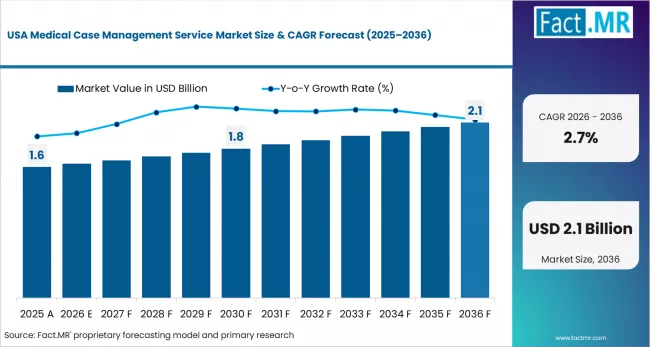
The U.S. is a significant market for medical case management services and this can be linked to the massive healthcare infrastructure that the nation has. The demand for medical case management services in the U.S. is more due to the increasing prevalence of diseases, rising need for healthcare management, high spending potential of the patients, complex nature of the healthcare system.
The market in the U.S. is dominant in terms of size as well as revenue in the North American region. The demand for personal medical case management services is expected to see a rise in the nation.
How are Medical Case Management Services Expected to Fare in India?
India being the largest economy in the world has proved to be a lucrative marketplace for almost all products and services. The nation has a developing healthcare infrastructure which is being improvised and worked on. The under-developed healthcare ecosystem provides great opportunities for medical case management services, but the adoption of this service is hindered by the lack of awareness in the region.
In order to cash in the potential that the Indian market has the providers will need to educate the general population on benefits and adoption of the medical case management service and its solutions.
Category-wise Analysis
Why is Demand for Medical Case Management Services from Hospitals High?
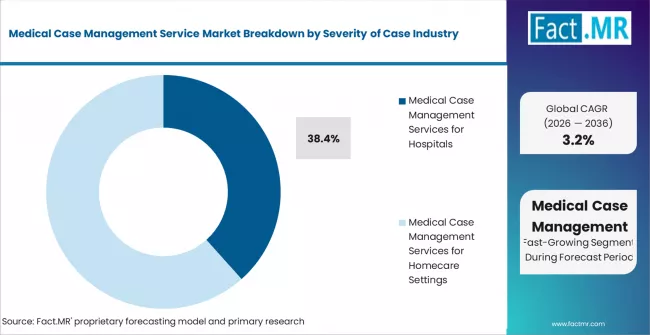
Market for medical case management service is majorly driven by the demand from hospitals in comparison with demand from other channels and verticals. This trend is expected to be followed through the decade, however the demand from home-care segment is also expected to see some change which could have a minimal impact on the demand from hospitals. In any case, the prominence of demand from hospitals is anticipated to be major through the forecast period.
Competitive Landscape
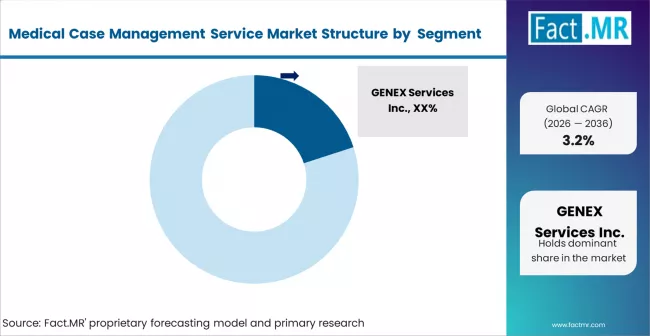
Launches of new services with more patient-centric benefits are expected to be frequent in the industry. Major providers will be aiming to provide effective services for more common and deadly diseases alike in order to increase their scope of application.
- In September 2021, MedCAD, a prominent name in medical device industry announced upgradation of its MyMedCAD application. The application is an end-to-end solution for their customers to manage their cases. The app makes case management simple for the professionals at MedCAD as well as their customers who can avail all the information at the tip of their fingers.
- In January 2021, Medix Global a leading name in medical management solutions announced its plans for expansion in the APAC region. The company has already announced its entry in the Indian market which is seen as a very lucrative and opportunity intensive market. The APAC region has immense case management opportunities and that is what Medix Global is expected to be aiming for.
- AIA Vietnam in July 2021 announced the launch of personal medical case management service. This service is being launched in partnership with Medix Group who is a leading name in healthcare solutions. The service will be available for all AIA customers and is aimed to give them a better understanding of their medical condition and gain appropriate options for treatment of critical illnesses.
Scope of the Report

| Metric | Value |
|---|---|
| Quantitative Units | USD 4.26 billion to USD 5.84 billion, at a CAGR of 3.2% |
| Market Definition | The Medical Case Management Service market covers professional care coordination services delivered by licensed case managers across web-based, telephonic, field, and bilingual modalities to optimize healthcare utilization for complex medical cases. |
| Mode of Service Segmentation | Web-based Case Management Services, Telephonic Case Management Services, Field Case Management Services, Bilingual Field Case Management Services, Other Services |
| End User Segmentation | Medical Case Management Services for Hospitals, Medical Case Management Services for Homecare Settings |
| Severity of Case Segmentation | Catastrophic Case Medical Management Services, Chronic Pain Case Medical Management Services, Independent Medical Examinations, Short-term Disability, Long-term Disability |
| Regions Covered | North America, Latin America, Europe, East Asia, South Asia, Oceania, Middle East and Africa |
| Countries Covered | China, India, Germany, Brazil, UK, USA, Japan, and 40 plus countries |
| Key Companies Profiled | GENEX Services Inc., EagleOne Case Management Solutions Inc., EK Health Services Inc., Healthcare Solutions Inc., Europ Assistance Global Corporate Solutions, Precyse Solutions LLC, Axiom Medical Consulting LLC, Managed Medical Review Organization Inc., Medical Case Management Group |
| Forecast Period | 2026 to 2036 |
| Approach | Bottom-up aggregation of contracted case management service revenue across payer, employer, and healthcare institution categories with condition prevalence growth curves applied to projection models |
Key Segments of Medical Case Management Service Industry Survey
-
By Mode of Service :
- Web-based Case Management Services
- Telephonic Case Management Services
- Field Case Management Services
- Bilingual Field Case Management Services
- Other Services
-
By End User :
- Medical Case Management Services for Hospitals
- Medical Case Management Services for Homecare Settings
-
By Severity of Case :
- Catastrophic Case Medical Management Services
- Chronic Pain Case Medical Management Services
- Independent Medical Examinations
- Short-term Disability
- Long-term Disability
Bibliography
- Case Management Society of America. (2024). Standards of practice for case management. CMSA.
- Centers for Medicare and Medicaid Services. (2024). Medicare managed care manual: Chapter 4 - benefits and beneficiary protections. CMS.
- World Health Organization. (2024). Integrated care models: An overview. WHO Health Systems and Innovation.
- Organisation for Economic Co-operation and Development. (2024). Health at a glance 2024: OECD indicators. OECD Publishing.
- National Academy for State Health Policy. (2024). Care coordination in Medicaid managed care: State approaches. NASHP.
- United Kingdom National Health Service. (2024). Integrated care systems: Design framework. NHS England.
This bibliography is provided for reader reference. The full FACT.MR report contains the complete reference list with primary research documentation.
This Report Addresses
- Market sizing and quantitative forecast metrics detailing contracted service revenue projections for Medical Case Management Services through 2036.
- Segmentation analysis mapping adoption velocity across service delivery modes, end-user categories, and case severity classifications.
- Regional intelligence comparing government-mandated case management program expansion in Asia Pacific against value-based care contract structures in North American managed care markets.
- Regulatory assessment analyzing how Medicare Advantage value-based arrangements, NHS integrated care system commissioning, and statutory health insurance mandates drive case management service procurement.
- Competitive landscape evaluation tracking web-based platform capability differentiation among specialized case management service organizations.
- Outcome metric guidance defining the demonstrable healthcare utilization reduction benchmarks required to qualify for outcome-linked managed care organization contracts.
- Workforce analysis identifying licensed case manager credential requirements across major market jurisdictions and their impact on service organization capacity planning.
- Custom data delivery formats encompassing interactive dashboards, raw Excel datasets, and comprehensive PDF narrative reports.
Table of Content
- Executive Summary
- Global Market Outlook
- Demand to side Trends
- Supply to side Trends
- Technology Roadmap Analysis
- Analysis and Recommendations
- Market Overview
- Market Coverage / Taxonomy
- Market Definition / Scope / Limitations
- Research Methodology
- Chapter Orientation
- Analytical Lens and Working Hypotheses
- Market Structure, Signals, and Trend Drivers
- Benchmarking and Cross-market Comparability
- Market Sizing, Forecasting, and Opportunity Mapping
- Research Design and Evidence Framework
- Desk Research Programme (Secondary Evidence)
- Company Annual and Sustainability Reports
- Peer-reviewed Journals and Academic Literature
- Corporate Websites, Product Literature, and Technical Notes
- Earnings Decks and Investor Briefings
- Statutory Filings and Regulatory Disclosures
- Technical White Papers and Standards Notes
- Trade Journals, Industry Magazines, and Analyst Briefs
- Conference Proceedings, Webinars, and Seminar Materials
- Government Statistics Portals and Public Data Releases
- Press Releases and Reputable Media Coverage
- Specialist Newsletters and Curated Briefings
- Sector Databases and Reference Repositories
- FMR Internal Proprietary Databases and Historical Market Datasets
- Subscription Datasets and Paid Sources
- Social Channels, Communities, and Digital Listening Inputs
- Additional Desk Sources
- Expert Input and Fieldwork (Primary Evidence)
- Primary Modes
- Qualitative Interviews and Expert Elicitation
- Quantitative Surveys and Structured Data Capture
- Blended Approach
- Why Primary Evidence is Used
- Field Techniques
- Interviews
- Surveys
- Focus Groups
- Observational and In-context Research
- Social and Community Interactions
- Stakeholder Universe Engaged
- C-suite Leaders
- Board Members
- Presidents and Vice Presidents
- R&D and Innovation Heads
- Technical Specialists
- Domain Subject-matter Experts
- Scientists
- Physicians and Other Healthcare Professionals
- Governance, Ethics, and Data Stewardship
- Research Ethics
- Data Integrity and Handling
- Primary Modes
- Tooling, Models, and Reference Databases
- Desk Research Programme (Secondary Evidence)
- Data Engineering and Model Build
- Data Acquisition and Ingestion
- Cleaning, Normalisation, and Verification
- Synthesis, Triangulation, and Analysis
- Quality Assurance and Audit Trail
- Market Background
- Market Dynamics
- Drivers
- Restraints
- Opportunity
- Trends
- Scenario Forecast
- Demand in Optimistic Scenario
- Demand in Likely Scenario
- Demand in Conservative Scenario
- Opportunity Map Analysis
- Product Life Cycle Analysis
- Supply Chain Analysis
- Investment Feasibility Matrix
- Value Chain Analysis
- PESTLE and Porter’s Analysis
- Regulatory Landscape
- Regional Parent Market Outlook
- Production and Consumption Statistics
- Import and Export Statistics
- Market Dynamics
- Global Market Analysis 2021 to 2025 and Forecast, 2026 to 2036
- Historical Market Size Value (USD Million) Analysis, 2021 to 2025
- Current and Future Market Size Value (USD Million) Projections, 2026 to 2036
- Y to o to Y Growth Trend Analysis
- Absolute $ Opportunity Analysis
- Global Market Pricing Analysis 2021 to 2025 and Forecast 2026 to 2036
- Global Market Analysis 2021 to 2025 and Forecast 2026 to 2036, By Product Type
- Introduction / Key Findings
- Historical Market Size Value (USD Million) Analysis By Product Type , 2021 to 2025
- Current and Future Market Size Value (USD Million) Analysis and Forecast By Product Type , 2026 to 2036
- Short Peripheral IV Catheter
- Integrated/Closed Peripheral IV Catheter
- Others
- Short Peripheral IV Catheter
- Y to o to Y Growth Trend Analysis By Product Type , 2021 to 2025
- Absolute $ Opportunity Analysis By Product Type , 2026 to 2036
- Global Market Analysis 2021 to 2025 and Forecast 2026 to 2036, By Technology
- Introduction / Key Findings
- Historical Market Size Value (USD Million) Analysis By Technology, 2021 to 2025
- Current and Future Market Size Value (USD Million) Analysis and Forecast By Technology, 2026 to 2036
- Safety PIVC
- Conventional PIVC
- Safety PIVC
- Y to o to Y Growth Trend Analysis By Technology, 2021 to 2025
- Absolute $ Opportunity Analysis By Technology, 2026 to 2036
- Global Market Analysis 2021 to 2025 and Forecast 2026 to 2036, By End User
- Introduction / Key Findings
- Historical Market Size Value (USD Million) Analysis By End User, 2021 to 2025
- Current and Future Market Size Value (USD Million) Analysis and Forecast By End User, 2026 to 2036
- Hospitals
- Clinics
- Ambulatory Surgical Centers
- Others
- Hospitals
- Y to o to Y Growth Trend Analysis By End User, 2021 to 2025
- Absolute $ Opportunity Analysis By End User, 2026 to 2036
- Global Market Analysis 2021 to 2025 and Forecast 2026 to 2036, By Region
- Introduction
- Historical Market Size Value (USD Million) Analysis By Region, 2021 to 2025
- Current Market Size Value (USD Million) Analysis and Forecast By Region, 2026 to 2036
- North America
- Latin America
- Western Europe
- Eastern Europe
- East Asia
- South Asia and Pacific
- Middle East & Africa
- Market Attractiveness Analysis By Region
- North America Market Analysis 2021 to 2025 and Forecast 2026 to 2036, By Country
- Historical Market Size Value (USD Million) Trend Analysis By Market Taxonomy, 2021 to 2025
- Market Size Value (USD Million) Forecast By Market Taxonomy, 2026 to 2036
- By Country
- USA
- Canada
- Mexico
- By Product Type
- By Technology
- By End User
- By Country
- Market Attractiveness Analysis
- By Country
- By Product Type
- By Technology
- By End User
- Key Takeaways
- Latin America Market Analysis 2021 to 2025 and Forecast 2026 to 2036, By Country
- Historical Market Size Value (USD Million) Trend Analysis By Market Taxonomy, 2021 to 2025
- Market Size Value (USD Million) Forecast By Market Taxonomy, 2026 to 2036
- By Country
- Brazil
- Chile
- Rest of Latin America
- By Product Type
- By Technology
- By End User
- By Country
- Market Attractiveness Analysis
- By Country
- By Product Type
- By Technology
- By End User
- Key Takeaways
- Western Europe Market Analysis 2021 to 2025 and Forecast 2026 to 2036, By Country
- Historical Market Size Value (USD Million) Trend Analysis By Market Taxonomy, 2021 to 2025
- Market Size Value (USD Million) Forecast By Market Taxonomy, 2026 to 2036
- By Country
- Germany
- UK
- Italy
- Spain
- France
- Nordic
- BENELUX
- Rest of Western Europe
- By Product Type
- By Technology
- By End User
- By Country
- Market Attractiveness Analysis
- By Country
- By Product Type
- By Technology
- By End User
- Key Takeaways
- Eastern Europe Market Analysis 2021 to 2025 and Forecast 2026 to 2036, By Country
- Historical Market Size Value (USD Million) Trend Analysis By Market Taxonomy, 2021 to 2025
- Market Size Value (USD Million) Forecast By Market Taxonomy, 2026 to 2036
- By Country
- Russia
- Poland
- Hungary
- Balkan & Baltic
- Rest of Eastern Europe
- By Product Type
- By Technology
- By End User
- By Country
- Market Attractiveness Analysis
- By Country
- By Product Type
- By Technology
- By End User
- Key Takeaways
- East Asia Market Analysis 2021 to 2025 and Forecast 2026 to 2036, By Country
- Historical Market Size Value (USD Million) Trend Analysis By Market Taxonomy, 2021 to 2025
- Market Size Value (USD Million) Forecast By Market Taxonomy, 2026 to 2036
- By Country
- China
- Japan
- South Korea
- By Product Type
- By Technology
- By End User
- By Country
- Market Attractiveness Analysis
- By Country
- By Product Type
- By Technology
- By End User
- Key Takeaways
- South Asia and Pacific Market Analysis 2021 to 2025 and Forecast 2026 to 2036, By Country
- Historical Market Size Value (USD Million) Trend Analysis By Market Taxonomy, 2021 to 2025
- Market Size Value (USD Million) Forecast By Market Taxonomy, 2026 to 2036
- By Country
- India
- ASEAN
- Australia & New Zealand
- Rest of South Asia and Pacific
- By Product Type
- By Technology
- By End User
- By Country
- Market Attractiveness Analysis
- By Country
- By Product Type
- By Technology
- By End User
- Key Takeaways
- Middle East & Africa Market Analysis 2021 to 2025 and Forecast 2026 to 2036, By Country
- Historical Market Size Value (USD Million) Trend Analysis By Market Taxonomy, 2021 to 2025
- Market Size Value (USD Million) Forecast By Market Taxonomy, 2026 to 2036
- By Country
- Kingdom of Saudi Arabia
- Other GCC Countries
- Turkiye
- South Africa
- Other African Union
- Rest of Middle East & Africa
- By Product Type
- By Technology
- By End User
- By Country
- Market Attractiveness Analysis
- By Country
- By Product Type
- By Technology
- By End User
- Key Takeaways
- Key Countries Market Analysis
- USA
- Pricing Analysis
- Market Share Analysis, 2025
- By Product Type
- By Technology
- By End User
- Canada
- Pricing Analysis
- Market Share Analysis, 2025
- By Product Type
- By Technology
- By End User
- Mexico
- Pricing Analysis
- Market Share Analysis, 2025
- By Product Type
- By Technology
- By End User
- Brazil
- Pricing Analysis
- Market Share Analysis, 2025
- By Product Type
- By Technology
- By End User
- Chile
- Pricing Analysis
- Market Share Analysis, 2025
- By Product Type
- By Technology
- By End User
- Germany
- Pricing Analysis
- Market Share Analysis, 2025
- By Product Type
- By Technology
- By End User
- UK
- Pricing Analysis
- Market Share Analysis, 2025
- By Product Type
- By Technology
- By End User
- Italy
- Pricing Analysis
- Market Share Analysis, 2025
- By Product Type
- By Technology
- By End User
- Spain
- Pricing Analysis
- Market Share Analysis, 2025
- By Product Type
- By Technology
- By End User
- France
- Pricing Analysis
- Market Share Analysis, 2025
- By Product Type
- By Technology
- By End User
- India
- Pricing Analysis
- Market Share Analysis, 2025
- By Product Type
- By Technology
- By End User
- ASEAN
- Pricing Analysis
- Market Share Analysis, 2025
- By Product Type
- By Technology
- By End User
- Australia & New Zealand
- Pricing Analysis
- Market Share Analysis, 2025
- By Product Type
- By Technology
- By End User
- China
- Pricing Analysis
- Market Share Analysis, 2025
- By Product Type
- By Technology
- By End User
- Japan
- Pricing Analysis
- Market Share Analysis, 2025
- By Product Type
- By Technology
- By End User
- South Korea
- Pricing Analysis
- Market Share Analysis, 2025
- By Product Type
- By Technology
- By End User
- Russia
- Pricing Analysis
- Market Share Analysis, 2025
- By Product Type
- By Technology
- By End User
- Poland
- Pricing Analysis
- Market Share Analysis, 2025
- By Product Type
- By Technology
- By End User
- Hungary
- Pricing Analysis
- Market Share Analysis, 2025
- By Product Type
- By Technology
- By End User
- Kingdom of Saudi Arabia
- Pricing Analysis
- Market Share Analysis, 2025
- By Product Type
- By Technology
- By End User
- Turkiye
- Pricing Analysis
- Market Share Analysis, 2025
- By Product Type
- By Technology
- By End User
- South Africa
- Pricing Analysis
- Market Share Analysis, 2025
- By Product Type
- By Technology
- By End User
- USA
- Market Structure Analysis
- Competition Dashboard
- Competition Benchmarking
- Market Share Analysis of Top Players
- By Regional
- By Product Type
- By Technology
- By End User
- Competition Analysis
- Competition Deep Dive
- Becton, Dickinson and Company
- Overview
- Product Portfolio
- Profitability by Market Segments (Product/Age /Sales Channel/Region)
- Sales Footprint
- Strategy Overview
- Marketing Strategy
- Product Strategy
- Channel Strategy
- B. Braun Melsungen AG
- Smith’s Group Plc.
- Terumo Corporation
- Venner Medical
- Vygon
- Teleflex Incorporated
- C. R. Bard, Inc.
- NIPRO Medical Corporation
- Argon Medical Devices, Inc.
- Becton, Dickinson and Company
- Competition Deep Dive
- Assumptions & Acronyms Used
List Of Table
- Table 1: Global Market Value (USD Million) Forecast by Region, 2021 to 2036
- Table 2: Global Market Value (USD Million) Forecast by Product Type , 2021 to 2036
- Table 3: Global Market Value (USD Million) Forecast by Technology, 2021 to 2036
- Table 4: Global Market Value (USD Million) Forecast by End User, 2021 to 2036
- Table 5: North America Market Value (USD Million) Forecast by Country, 2021 to 2036
- Table 6: North America Market Value (USD Million) Forecast by Product Type , 2021 to 2036
- Table 7: North America Market Value (USD Million) Forecast by Technology, 2021 to 2036
- Table 8: North America Market Value (USD Million) Forecast by End User, 2021 to 2036
- Table 9: Latin America Market Value (USD Million) Forecast by Country, 2021 to 2036
- Table 10: Latin America Market Value (USD Million) Forecast by Product Type , 2021 to 2036
- Table 11: Latin America Market Value (USD Million) Forecast by Technology, 2021 to 2036
- Table 12: Latin America Market Value (USD Million) Forecast by End User, 2021 to 2036
- Table 13: Western Europe Market Value (USD Million) Forecast by Country, 2021 to 2036
- Table 14: Western Europe Market Value (USD Million) Forecast by Product Type , 2021 to 2036
- Table 15: Western Europe Market Value (USD Million) Forecast by Technology, 2021 to 2036
- Table 16: Western Europe Market Value (USD Million) Forecast by End User, 2021 to 2036
- Table 17: Eastern Europe Market Value (USD Million) Forecast by Country, 2021 to 2036
- Table 18: Eastern Europe Market Value (USD Million) Forecast by Product Type , 2021 to 2036
- Table 19: Eastern Europe Market Value (USD Million) Forecast by Technology, 2021 to 2036
- Table 20: Eastern Europe Market Value (USD Million) Forecast by End User, 2021 to 2036
- Table 21: East Asia Market Value (USD Million) Forecast by Country, 2021 to 2036
- Table 22: East Asia Market Value (USD Million) Forecast by Product Type , 2021 to 2036
- Table 23: East Asia Market Value (USD Million) Forecast by Technology, 2021 to 2036
- Table 24: East Asia Market Value (USD Million) Forecast by End User, 2021 to 2036
- Table 25: South Asia and Pacific Market Value (USD Million) Forecast by Country, 2021 to 2036
- Table 26: South Asia and Pacific Market Value (USD Million) Forecast by Product Type , 2021 to 2036
- Table 27: South Asia and Pacific Market Value (USD Million) Forecast by Technology, 2021 to 2036
- Table 28: South Asia and Pacific Market Value (USD Million) Forecast by End User, 2021 to 2036
- Table 29: Middle East & Africa Market Value (USD Million) Forecast by Country, 2021 to 2036
- Table 30: Middle East & Africa Market Value (USD Million) Forecast by Product Type , 2021 to 2036
- Table 31: Middle East & Africa Market Value (USD Million) Forecast by Technology, 2021 to 2036
- Table 32: Middle East & Africa Market Value (USD Million) Forecast by End User, 2021 to 2036
List Of Figures
- Figure 1: Global Market Pricing Analysis
- Figure 2: Global Market Value (USD Million) Forecast 2021-2036
- Figure 3: Global Market Value Share and BPS Analysis by Product Type , 2026 and 2036
- Figure 4: Global Market Y to o to Y Growth Comparison by Product Type , 2026-2036
- Figure 5: Global Market Attractiveness Analysis by Product Type
- Figure 6: Global Market Value Share and BPS Analysis by Technology, 2026 and 2036
- Figure 7: Global Market Y to o to Y Growth Comparison by Technology, 2026-2036
- Figure 8: Global Market Attractiveness Analysis by Technology
- Figure 9: Global Market Value Share and BPS Analysis by End User, 2026 and 2036
- Figure 10: Global Market Y to o to Y Growth Comparison by End User, 2026-2036
- Figure 11: Global Market Attractiveness Analysis by End User
- Figure 12: Global Market Value (USD Million) Share and BPS Analysis by Region, 2026 and 2036
- Figure 13: Global Market Y to o to Y Growth Comparison by Region, 2026-2036
- Figure 14: Global Market Attractiveness Analysis by Region
- Figure 15: North America Market Incremental Dollar Opportunity, 2026-2036
- Figure 16: Latin America Market Incremental Dollar Opportunity, 2026-2036
- Figure 17: Western Europe Market Incremental Dollar Opportunity, 2026-2036
- Figure 18: Eastern Europe Market Incremental Dollar Opportunity, 2026-2036
- Figure 19: East Asia Market Incremental Dollar Opportunity, 2026-2036
- Figure 20: South Asia and Pacific Market Incremental Dollar Opportunity, 2026-2036
- Figure 21: Middle East & Africa Market Incremental Dollar Opportunity, 2026-2036
- Figure 22: North America Market Value Share and BPS Analysis by Country, 2026 and 2036
- Figure 23: North America Market Value Share and BPS Analysis by Product Type , 2026 and 2036
- Figure 24: North America Market Y to o to Y Growth Comparison by Product Type , 2026-2036
- Figure 25: North America Market Attractiveness Analysis by Product Type
- Figure 26: North America Market Value Share and BPS Analysis by Technology, 2026 and 2036
- Figure 27: North America Market Y to o to Y Growth Comparison by Technology, 2026-2036
- Figure 28: North America Market Attractiveness Analysis by Technology
- Figure 29: North America Market Value Share and BPS Analysis by End User, 2026 and 2036
- Figure 30: North America Market Y to o to Y Growth Comparison by End User, 2026-2036
- Figure 31: North America Market Attractiveness Analysis by End User
- Figure 32: Latin America Market Value Share and BPS Analysis by Country, 2026 and 2036
- Figure 33: Latin America Market Value Share and BPS Analysis by Product Type , 2026 and 2036
- Figure 34: Latin America Market Y to o to Y Growth Comparison by Product Type , 2026-2036
- Figure 35: Latin America Market Attractiveness Analysis by Product Type
- Figure 36: Latin America Market Value Share and BPS Analysis by Technology, 2026 and 2036
- Figure 37: Latin America Market Y to o to Y Growth Comparison by Technology, 2026-2036
- Figure 38: Latin America Market Attractiveness Analysis by Technology
- Figure 39: Latin America Market Value Share and BPS Analysis by End User, 2026 and 2036
- Figure 40: Latin America Market Y to o to Y Growth Comparison by End User, 2026-2036
- Figure 41: Latin America Market Attractiveness Analysis by End User
- Figure 42: Western Europe Market Value Share and BPS Analysis by Country, 2026 and 2036
- Figure 43: Western Europe Market Value Share and BPS Analysis by Product Type , 2026 and 2036
- Figure 44: Western Europe Market Y to o to Y Growth Comparison by Product Type , 2026-2036
- Figure 45: Western Europe Market Attractiveness Analysis by Product Type
- Figure 46: Western Europe Market Value Share and BPS Analysis by Technology, 2026 and 2036
- Figure 47: Western Europe Market Y to o to Y Growth Comparison by Technology, 2026-2036
- Figure 48: Western Europe Market Attractiveness Analysis by Technology
- Figure 49: Western Europe Market Value Share and BPS Analysis by End User, 2026 and 2036
- Figure 50: Western Europe Market Y to o to Y Growth Comparison by End User, 2026-2036
- Figure 51: Western Europe Market Attractiveness Analysis by End User
- Figure 52: Eastern Europe Market Value Share and BPS Analysis by Country, 2026 and 2036
- Figure 53: Eastern Europe Market Value Share and BPS Analysis by Product Type , 2026 and 2036
- Figure 54: Eastern Europe Market Y to o to Y Growth Comparison by Product Type , 2026-2036
- Figure 55: Eastern Europe Market Attractiveness Analysis by Product Type
- Figure 56: Eastern Europe Market Value Share and BPS Analysis by Technology, 2026 and 2036
- Figure 57: Eastern Europe Market Y to o to Y Growth Comparison by Technology, 2026-2036
- Figure 58: Eastern Europe Market Attractiveness Analysis by Technology
- Figure 59: Eastern Europe Market Value Share and BPS Analysis by End User, 2026 and 2036
- Figure 60: Eastern Europe Market Y to o to Y Growth Comparison by End User, 2026-2036
- Figure 61: Eastern Europe Market Attractiveness Analysis by End User
- Figure 62: East Asia Market Value Share and BPS Analysis by Country, 2026 and 2036
- Figure 63: East Asia Market Value Share and BPS Analysis by Product Type , 2026 and 2036
- Figure 64: East Asia Market Y to o to Y Growth Comparison by Product Type , 2026-2036
- Figure 65: East Asia Market Attractiveness Analysis by Product Type
- Figure 66: East Asia Market Value Share and BPS Analysis by Technology, 2026 and 2036
- Figure 67: East Asia Market Y to o to Y Growth Comparison by Technology, 2026-2036
- Figure 68: East Asia Market Attractiveness Analysis by Technology
- Figure 69: East Asia Market Value Share and BPS Analysis by End User, 2026 and 2036
- Figure 70: East Asia Market Y to o to Y Growth Comparison by End User, 2026-2036
- Figure 71: East Asia Market Attractiveness Analysis by End User
- Figure 72: South Asia and Pacific Market Value Share and BPS Analysis by Country, 2026 and 2036
- Figure 73: South Asia and Pacific Market Value Share and BPS Analysis by Product Type , 2026 and 2036
- Figure 74: South Asia and Pacific Market Y to o to Y Growth Comparison by Product Type , 2026-2036
- Figure 75: South Asia and Pacific Market Attractiveness Analysis by Product Type
- Figure 76: South Asia and Pacific Market Value Share and BPS Analysis by Technology, 2026 and 2036
- Figure 77: South Asia and Pacific Market Y to o to Y Growth Comparison by Technology, 2026-2036
- Figure 78: South Asia and Pacific Market Attractiveness Analysis by Technology
- Figure 79: South Asia and Pacific Market Value Share and BPS Analysis by End User, 2026 and 2036
- Figure 80: South Asia and Pacific Market Y to o to Y Growth Comparison by End User, 2026-2036
- Figure 81: South Asia and Pacific Market Attractiveness Analysis by End User
- Figure 82: Middle East & Africa Market Value Share and BPS Analysis by Country, 2026 and 2036
- Figure 83: Middle East & Africa Market Value Share and BPS Analysis by Product Type , 2026 and 2036
- Figure 84: Middle East & Africa Market Y to o to Y Growth Comparison by Product Type , 2026-2036
- Figure 85: Middle East & Africa Market Attractiveness Analysis by Product Type
- Figure 86: Middle East & Africa Market Value Share and BPS Analysis by Technology, 2026 and 2036
- Figure 87: Middle East & Africa Market Y to o to Y Growth Comparison by Technology, 2026-2036
- Figure 88: Middle East & Africa Market Attractiveness Analysis by Technology
- Figure 89: Middle East & Africa Market Value Share and BPS Analysis by End User, 2026 and 2036
- Figure 90: Middle East & Africa Market Y to o to Y Growth Comparison by End User, 2026-2036
- Figure 91: Middle East & Africa Market Attractiveness Analysis by End User
- Figure 92: Global Market - Tier Structure Analysis
- Figure 93: Global Market - Company Share Analysis
- FAQs -
How large is the demand for Medical Case Management Services in the global market in 2026?
Demand for Medical Case Management Services in the global market is estimated to be valued at USD 4.26 billion in 2026.
What will be the market size of Medical Case Management Services by 2036?
Market size for Medical Case Management Services is projected to reach USD 5.84 billion by 2036.
What is the expected demand growth between 2026 and 2036?
Demand for Medical Case Management Services is expected to grow at a CAGR of 3.2% between 2026 and 2036.
Which Mode of Service is poised to lead global sales by 2026?
Web-based Case Management Services accounts for 57.6% share in 2026, as digital platforms enable case managers to coordinate patient care across geographically distributed provider networks.
Which Severity of Case segment commands the largest share?
Catastrophic Case Medical Management Services captures 46.8% of the severity segment in 2026, driven by mandatory payer deployment for high-cost complex injury management and workers' compensation catastrophic claim coordination.
What is China's growth outlook in this report?
China is projected to expand at a CAGR of 4.32% during 2026 to 2036, driven by government chronic disease management program expansion requiring professional case coordinator services across provincial hospital networks.
What drives demand in India?
Private hospital chain integration of case management services to reduce avoidable readmission rates and value-based care incentive program adoption drive India's 4.0% CAGR through 2036.
What is the role of Hospitals in this market?
Hospitals account for 38.4% of End User share in 2026, with institutional procurement departments contracting specialized case management organizations to supplement internal care coordination workforce capacity.
What are the report inclusions?
Market scope covers contracted case management services across web-based, telephonic, field, and bilingual modalities for hospital systems, homecare providers, workers' compensation payers, and group health insurers.
How does FACT.MR validate the Medical Case Management Service forecast?
Segment forecasts cross-validate against specialty case management organization revenue disclosures and managed care organization medical management expense ratios from publicly reported financial documents.