Industrial Safety Products Market

Industrial Safety Products Market Size and Share Forecast Outlook 2026 to 2036

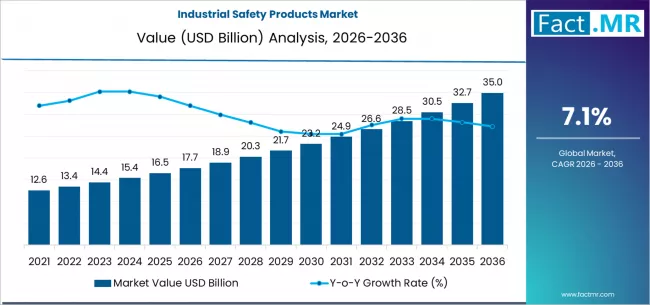
Industrial safety products market is projected to grow from USD 17.7 billion in 2026 to USD 35.0 billion by 2036, at a CAGR of 7.1%. Manufacturing, oil & gas will dominate with a 38.0% market share, while ppe, spill response, safety storage will lead the product category segment with a 37.7% share.

Industrial Safety Products Market Forecast and Outlook 2026 to 2036

The global industrial safety products market is projected to total USD 17.67 billion in 2026, reaching USD 34.96 billion by 2036, advancing at a compound annual growth rate of 7.1%. This sustained expansion is anchored in the universal imperative to protect human capital within increasingly complex and automated industrial environments.

A confluence of stringent regulatory mandates, rising workforce safety consciousness, and the economic calculus of accident prevention underpins steady investment across manufacturing, energy, and construction sectors globally.

Key Takeaways from the Industrial Safety Products Market

  • Market Value for 2026: USD 17.67 Billion
  • Market Value for 2036: USD 34.96 Billion
  • Forecast CAGR 2026 to 2036: 7.1%
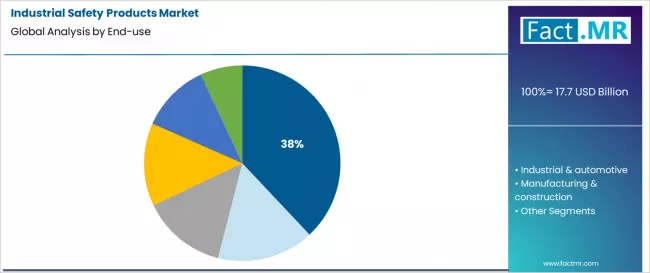
  • Leading End-Use Segment (2026): Manufacturing, Oil & Gas (38.0%)
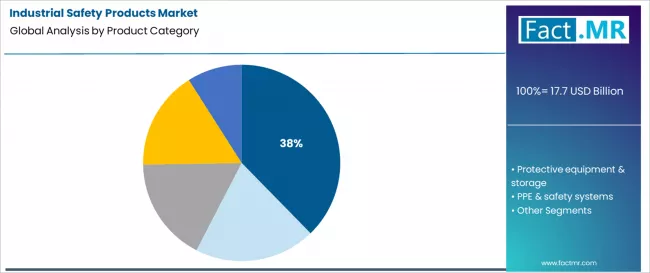
  • Leading Product Category (2026): PPE, Spill Response, Safety Storage (37.7%)
  • Leading Material Segment (2026): Polymers, Steel, Composites (38.8%)
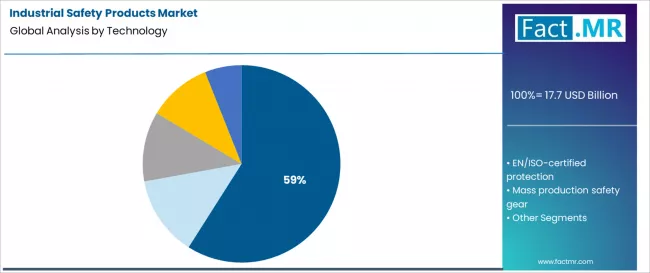
  • Leading Technology Segment (2026): Ergonomic Design, Compliance Tech (59.0%)
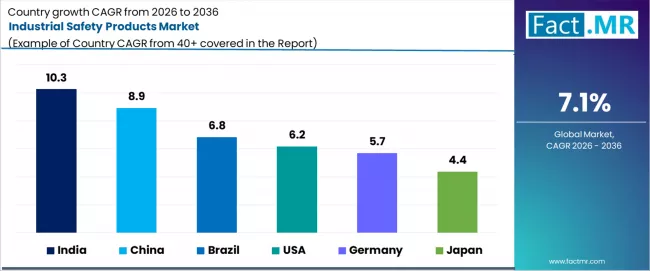
  • Key Growth Countries: India (10.3% CAGR), China (8.9% CAGR), Brazil (6.8% CAGR), USA (6.2% CAGR), Germany (5.7% CAGR), Japan (4.4% CAGR)
  • Key Players: 3M, Honeywell, MSA Safety, Uvex, Dräger, Lakeland China, Karam Safety

Industrial Safety Products Market Market Value Analysis

Technological integration is reshaping the product landscape. Safety equipment is evolving from passive protective gear to integrated systems featuring ergonomic design, compliance monitoring, and connectivity. This shift addresses both the physical well-being of workers and the operational data needs of management, linking personal protection to broader plant safety and productivity metrics. Furthermore, the diversification of high-risk industries, such as renewable energy installation and advanced battery manufacturing, introduces novel hazard profiles that demand specialized safety solutions.

Market progress is fundamentally compliance-driven yet increasingly value-optimized. Organizations are moving beyond minimum legal requirements to adopt holistic safety cultures where advanced products reduce downtime, lower insurance premiums, and enhance employer branding, transforming safety expenditure from a cost center into a strategic investment.

Industrial Safety Products Market

Metric Value
Market Value (2026) USD 17.67 Billion
Market Forecast Value (2036) USD 34.96 Billion
Forecast CAGR 2026 to 2036 7.1%

Category

Category Segments
End-Use Manufacturing, Oil & Gas, Industrial & Automotive, Manufacturing & Construction, Infrastructure & Factories, Industrial & Mining, Precision Manufacturing
Product Category PPE, Spill Response, Safety Storage, Protective Equipment & Storage, PPE & Safety Systems, PPE Kits & Safety Cabinets, Others
Material Polymers, Steel, Composites, Textiles, Metals, Plastics & Fabrics, Plastics & Textiles, Others
Technology Ergonomic Design, Compliance Tech, EN/ISO-Certified Protection, Mass Production Safety Gear, Cost-Efficient Certified Products, Others
Region North America, Latin America, Western Europe, Eastern Europe, East Asia, South Asia & Pacific, Middle East & Africa

The Interplay of Automation and Human-Centric Design

Demand dynamics are increasingly influenced by the convergence of industrial automation and a heightened focus on worker-centric design. As factories adopt more robotics and IoT systems, safety products must integrate seamlessly, leading to smart personal protective equipment with sensors for hazard detection and vitals monitoring.

The need to retain skilled labor in tight markets pushes ergonomics from a luxury to a necessity, reducing fatigue and improving compliance. This dual focus on technological interoperability and human factors is elevating product sophistication, moving the industry from commodity-grade items to performance-driven, system-integrated solutions that contribute directly to operational resilience.

Segmental Analysis

By Technology, Which Innovation is Maximizing End-User Compliance?

Industrial Safety Products Market Analysis By Technology

Ergonomic design integrated with compliance technology commands a dominant 59.0% share. This segment directly addresses the core challenge of ensuring consistent safety product usage. Ergonomic advancements reduce discomfort and fatigue, encouraging worker adoption.

When paired with compliance tech like RFID tags, connectivity sensors, or QR-code-linked training, these products enable supervisors to monitor usage and verify protocol adherence digitally. This synergy between physical wearability and digital accountability is crucial for achieving tangible risk reduction and auditable safety programs.

By End-Use, Which Sector Drives Demand Through Scale and High Hazard?

Industrial Safety Products Market Analysis By End Use

The manufacturing, oil, and gas sector constitutes the leading end-use segment with a 38.0% share. These industries combine massive workforce scale with some of the most severe operational hazards, including chemical exposure, fire, explosions, and heavy machinery.

This environment mandates a comprehensive and high-specification safety product portfolio, from flame-resistant clothing and respiratory protection to extensive spill containment and gas detection systems. Continuous operations, strict regulatory oversight, and high potential incident costs ensure consistent expenditure on both consumable PPE and durable safety infrastructure within this sector.

By Product Category, Which Grouping Represents the Core Daily Safety Arsenal?

Industrial Safety Products Market Analysis By Product Category

The combined category of personal protective equipment, spill response kits, and safety storage holds a leading 37.7% share. This grouping encompasses the essential products required for daily hazard mitigation across virtually all industrial settings. PPE forms the first line of individual defense.

Spill response equipment addresses environmental and slip hazards from liquid releases. Safety storage ensures the secure containment of flammable or hazardous materials. Their universal application, recurring replacement cycles, and direct link to fundamental safety protocols establish this category as the high-volume, consistent demand driver for the entire industry.

What are the Principal Drivers, Restraints, Opportunities, and Trends Influencing the Industrial Safety Products Market?

Attribute Impact
Driver Globally Stringent and Expanding Occupational Safety Regulations
Rigorous enforcement and continual updating of standards by OSHA, EU-OSHA, and other national bodies create non-discretionary, recurring demand for certified products.
Restraint High Cost Sensitivity and Fragmented Procurement in Price-Competitive Markets
Significant price competition, especially in emerging economies and among SMEs, can prioritize low-cost, non-compliant alternatives over higher-specification, certified safety solutions.
Opportunity Integration of IoT and Connectivity into Personal Protective Equipment
Developing connected safety gear with sensors for gas detection, location tracking, and biometric monitoring opens new revenue streams through data services and predictive safety analytics.
Trend Growing Emphasis on Sustainable and Recyclable Material Construction
Increasing demand for PPE and safety products made from recycled materials or designed for easy end-of-life recycling, driven by corporate ESG goals and circular economy initiatives.

Analysis of the Industrial Safety Products Market by Key Countries

Industrial Safety Products Market Cagr Analysis By Country

Country CAGR 2026 to 2036
USA 6.2%
Germany 5.7%
China 8.9%
India 10.3%
Brazil 6.8%
Japan 4.4%

How do Evolving OSHA Standards and a Rebound in Domestic Manufacturing Shape the USA?

A 6.2% CAGR is supported by consistent regulatory updates from OSHA and a renewed focus on reshoring and modernizing domestic manufacturing and energy infrastructure. Demand is bifurcated: large enterprises in oil & gas and advanced manufacturing invest in high-tech, connected safety systems, while a broad base of general industry maintains steady procurement of certified baseline PPE and spill control products. Emphasis is placed on products that enhance compliance documentation and integrate with existing site safety management software.

What Characterizes Germany's Demand for High-Certification and Engineer-Approved Solutions?

Germany's 5.7% CAGR reflects a mature, specification-driven landscape. Demand is characterized by an unwavering preference for products exceeding minimum EN/ISO standards, often with additional TÜV or DGUV certifications. The strong automotive and chemical industrial base requires specialized, durable safety equipment capable of withstanding demanding environments.

Procurement decisions heavily favor engineered solutions with proven longevity, ergonomic research backing, and seamless integration into highly automated production lines and safety management systems.

What Underpins China's Massive Scale Demand Across Expanding Industrial Bases?

The sheer scale of industrial activity and nationwide enforcement of workplace safety laws fuel an 8.9% CAGR. The world's largest manufacturing base generates immense volume demand for a full spectrum of products, from basic protective gloves and glasses to complex fall arrest systems for construction.

Government-led safety campaigns and the expansion into high-tech sectors like semiconductors and EVs are driving upgrades from commodity-grade to higher-performance, certified equipment, with a parallel focus on increasing domestic production of advanced safety materials.

How is India's Infrastructure and Manufacturing Boom Catalyzing Growth?

India leads with a 10.3% CAGR, propelled by unprecedented investments in infrastructure, formalization of manufacturing, and stringent new codes for construction and factory safety. This represents a massive first-time adoption wave for organized safety product procurement.

Demand spans from high-volume basic PPE for millions of new formal sector workers to advanced systems for hazardous process industries and large-scale infrastructure projects. Price sensitivity coexists with a growing recognition of quality, fostering tiers of products tailored to different segments.

Why is Brazil's Growth Linked to Natural Resource and Industrial Sector Enforcement?

A 6.8% CAGR is closely tied to the enforcement of NR standards within mining, oil & gas, and agribusiness. Growth is driven by the need to equip large workforces in these high-hazard sectors with certified PPE and area safety equipment.

Demand is particularly strong for products suited to tropical climates and for cost-optimized yet compliant product kits that allow smaller industrial and construction firms to meet their legal obligations effectively.

What Defines Japan's Replacement Market Focus on Precision and High Quality?

Japan's 4.4% CAGR represents a sophisticated, replacement-driven environment. Demand originates from a need for ultra-high-quality, precision-oriented safety products in sectors like electronics, robotics, and advanced materials manufacturing.

Japanese end-users prioritize compact, lightweight, and minimally intrusive designs that do not impede delicate work, alongside equipment offering superior contamination control for cleanroom environments. The focus is on incremental innovation that enhances comfort, durability, and specificity for niche applications within a mature industrial ecosystem.

Competitive Landscape of the Industrial Safety Products Market

Established multinational conglomerates competing with specialized innovators and regional manufacturers define the competitive arena. Giants like 3M and Honeywell leverage extensive R&D resources, global supply chains, and broad portfolios spanning from consumable PPE to engineered systems. Their strategy emphasizes cross-selling integrated solutions and leveraging trusted brand recognition for regulatory compliance.

Specialists like MSA Safety and Dräger compete through deep expertise in specific high-hazard domains like firefighting and gas detection, offering best in class, mission-critical products. Competition is intensifying around connectivity and data, with companies vying to establish their digital ecosystems for safety management. Success increasingly depends on balancing global scale with local customization, offering robust digital compliance tools, and demonstrating a tangible return on investment through reduced incident rates and operational downtime.

Key Players in the Industrial Safety Products Market

  • 3M
  • Honeywell
  • MSA Safety
  • Uvex
  • Dräger
  • Lakeland China
  • Karam Safety

Scope of Report

Items Metrics
Quantitative Units USD Billion
Technology Ergonomic Design, Compliance Tech, EN/ISO-Certified Protection, Mass Production Safety Gear, Cost-Efficient Certified Products, Others
Product Category PPE, Spill Response, Safety Storage, Protective Equipment & Storage, PPE & Safety Systems, PPE Kits & Safety Cabinets, Others
End-Use Manufacturing, Oil & Gas, Industrial & Automotive, Manufacturing & Construction, Infrastructure & Factories, Industrial & Mining, Precision Manufacturing
Material Polymers, Steel, Composites, Textiles, Metals, Plastics & Fabrics, Plastics & Textiles, Others
Key Countries India, China, USA, Brazil, Germany, Japan
Key Companies 3M, Honeywell, MSA Safety, Uvex, Dräger, Lakeland China, Karam Safety, Others
Additional Analysis Comparative analysis of total cost of ownership for connected vs. traditional PPE; impact of ergonomic design on compliance rates and productivity; study of procurement patterns in formal vs. informal sector economies; analysis of insurance premium incentives for advanced safety system adoption; review of sustainable material lifecycle and recycling challenges.

Market by Segments

  • End-Use :

    • Manufacturing, Oil & Gas
    • Industrial & Automotive
    • Manufacturing & Construction
    • Infrastructure & Factories
    • Industrial & Mining
    • Precision Manufacturing
  • Product Category :

    • PPE, Spill Response & Safety Storage
    • Protective Equipment & Storage
    • PPE & Safety Systems
    • PPE Kits & Safety Cabinets
    • Others
  • Material :

    • Polymers, Steel & Composites
    • Textiles & Metals
    • Plastics & Fabrics
    • Plastics & Textiles
    • Others
  • Region :

    • North America
      • USA
      • Canada
    • Latin America
      • Brazil
      • Mexico
      • Argentina
      • Rest of Latin America
    • Western Europe
      • Germany
      • France
      • Italy
      • Spain
      • UK
      • BENELUX
      • Rest of Western Europe
    • Eastern Europe
      • Russia
      • Poland
      • Czech Republic
      • Rest of Eastern Europe
    • East Asia
      • China
      • Japan
      • South Korea
      • Rest of East Asia
    • South Asia & Pacific
      • India
      • ASEAN
      • Australia
      • Rest of South Asia & Pacific
    • MEA
      • GCC Countries
      • South Africa
      • Turkiye
      • Rest of MEA

References

  • European Agency for Safety and Health at Work. (2025). Digitalisation and occupational safety and health: A review. EU-OSHA.
  • International Labour Organization. (2024). Safety and Health at the Heart of the Future of Work. ILO Report.
  • National Safety Council. (2024). The Business Case for Safety: How Investment in Safety Impacts the Bottom Line. NSC White Paper.
  • Schulte, P. A., & Pana-Cryan, R. (2023). The Economics of Occupational Safety and Health. In Handbook of Socioeconomic Determinants of Occupational Health (pp. 1-25). Springer.
  • U.S. Bureau of Labor Statistics. (2025). Census of Fatal Occupational Injuries and Survey of Occupational Injuries and Illneses. BLS Data Summary.
  • Wang, E., & Möller, N. (2024). "The Next Generation of Smart PPE: Design Principles and Ethical Data Considerations." Journal of Safety Research, 80, 418-427.

Table of Content

  1. Executive Summary
    • Global Market Outlook
    • Demand to side Trends
    • Supply to side Trends
    • Technology Roadmap Analysis
    • Analysis and Recommendations
  2. Market Overview
    • Market Coverage / Taxonomy
    • Market Definition / Scope / Limitations
  3. Market Background
    • Market Dynamics
      • Drivers
      • Restraints
      • Opportunity
      • Trends
    • Scenario Forecast
      • Demand in Optimistic Scenario
      • Demand in Likely Scenario
      • Demand in Conservative Scenario
    • Opportunity Map Analysis
    • Product Life Cycle Analysis
    • Supply Chain Analysis
    • Investment Feasibility Matrix
    • Value Chain Analysis
    • PESTLE and Porter’s Analysis
    • Regulatory Landscape
    • Regional Parent Market Outlook
    • Production and Consumption Statistics
    • Import and Export Statistics
  4. Global Market Analysis 2021 to 2025 and Forecast, 2026 to 2036
    • Historical Market Size Value (USD Million) Analysis, 2021 to 2025
    • Current and Future Market Size Value (USD Million) Projections, 2026 to 2036
      • Y to o to Y Growth Trend Analysis
      • Absolute $ Opportunity Analysis
  5. Global Market Pricing Analysis 2021 to 2025 and Forecast 2026 to 2036
  6. Global Market Analysis 2021 to 2025 and Forecast 2026 to 2036, By End-use
    • Introduction / Key Findings
    • Historical Market Size Value (USD Million) Analysis By End-use, 2021 to 2025
    • Current and Future Market Size Value (USD Million) Analysis and Forecast By End-use, 2026 to 2036
      • Manufacturing, oil & gas
      • Industrial & automotive
      • Manufacturing & construction
      • Infrastructure & factories
      • Industrial & mining
      • Precision manufacturing
    • Y to o to Y Growth Trend Analysis By End-use, 2021 to 2025
    • Absolute $ Opportunity Analysis By End-use, 2026 to 2036
  7. Global Market Analysis 2021 to 2025 and Forecast 2026 to 2036, By Product Category
    • Introduction / Key Findings
    • Historical Market Size Value (USD Million) Analysis By Product Category, 2021 to 2025
    • Current and Future Market Size Value (USD Million) Analysis and Forecast By Product Category, 2026 to 2036
      • PPE, spill response, safety storage
      • Protective equipment & storage
      • PPE & safety systems
      • PPE kits & safety cabinets
      • Others
    • Y to o to Y Growth Trend Analysis By Product Category, 2021 to 2025
    • Absolute $ Opportunity Analysis By Product Category, 2026 to 2036
  8. Global Market Analysis 2021 to 2025 and Forecast 2026 to 2036, By Material
    • Introduction / Key Findings
    • Historical Market Size Value (USD Million) Analysis By Material, 2021 to 2025
    • Current and Future Market Size Value (USD Million) Analysis and Forecast By Material, 2026 to 2036
      • Polymers, steel, composites
      • Textiles, metals
      • Plastics & fabrics
      • Plastics & textiles
      • Others
    • Y to o to Y Growth Trend Analysis By Material, 2021 to 2025
    • Absolute $ Opportunity Analysis By Material, 2026 to 2036
  9. Global Market Analysis 2021 to 2025 and Forecast 2026 to 2036, By Technology
    • Introduction / Key Findings
    • Historical Market Size Value (USD Million) Analysis By Technology, 2021 to 2025
    • Current and Future Market Size Value (USD Million) Analysis and Forecast By Technology, 2026 to 2036
      • Ergonomic design, compliance tech
      • EN/ISO-certified protection
      • Mass production safety gear
      • Cost-efficient certified products
      • Others
    • Y to o to Y Growth Trend Analysis By Technology, 2021 to 2025
    • Absolute $ Opportunity Analysis By Technology, 2026 to 2036
  10. Global Market Analysis 2021 to 2025 and Forecast 2026 to 2036, By Region
    • Introduction
    • Historical Market Size Value (USD Million) Analysis By Region, 2021 to 2025
    • Current Market Size Value (USD Million) Analysis and Forecast By Region, 2026 to 2036
      • North America
      • Latin America
      • Western Europe
      • Eastern Europe
      • East Asia
      • South Asia and Pacific
      • Middle East & Africa
    • Market Attractiveness Analysis By Region
  11. North America Market Analysis 2021 to 2025 and Forecast 2026 to 2036, By Country
    • Historical Market Size Value (USD Million) Trend Analysis By Market Taxonomy, 2021 to 2025
    • Market Size Value (USD Million) Forecast By Market Taxonomy, 2026 to 2036
      • By Country
        • USA
        • Canada
        • Mexico
      • By End-use
      • By Product Category
      • By Material
      • By Technology
    • Market Attractiveness Analysis
      • By Country
      • By End-use
      • By Product Category
      • By Material
      • By Technology
    • Key Takeaways
  12. Latin America Market Analysis 2021 to 2025 and Forecast 2026 to 2036, By Country
    • Historical Market Size Value (USD Million) Trend Analysis By Market Taxonomy, 2021 to 2025
    • Market Size Value (USD Million) Forecast By Market Taxonomy, 2026 to 2036
      • By Country
        • Brazil
        • Chile
        • Rest of Latin America
      • By End-use
      • By Product Category
      • By Material
      • By Technology
    • Market Attractiveness Analysis
      • By Country
      • By End-use
      • By Product Category
      • By Material
      • By Technology
    • Key Takeaways
  13. Western Europe Market Analysis 2021 to 2025 and Forecast 2026 to 2036, By Country
    • Historical Market Size Value (USD Million) Trend Analysis By Market Taxonomy, 2021 to 2025
    • Market Size Value (USD Million) Forecast By Market Taxonomy, 2026 to 2036
      • By Country
        • Germany
        • UK
        • Italy
        • Spain
        • France
        • Nordic
        • BENELUX
        • Rest of Western Europe
      • By End-use
      • By Product Category
      • By Material
      • By Technology
    • Market Attractiveness Analysis
      • By Country
      • By End-use
      • By Product Category
      • By Material
      • By Technology
    • Key Takeaways
  14. Eastern Europe Market Analysis 2021 to 2025 and Forecast 2026 to 2036, By Country
    • Historical Market Size Value (USD Million) Trend Analysis By Market Taxonomy, 2021 to 2025
    • Market Size Value (USD Million) Forecast By Market Taxonomy, 2026 to 2036
      • By Country
        • Russia
        • Poland
        • Hungary
        • Balkan & Baltic
        • Rest of Eastern Europe
      • By End-use
      • By Product Category
      • By Material
      • By Technology
    • Market Attractiveness Analysis
      • By Country
      • By End-use
      • By Product Category
      • By Material
      • By Technology
    • Key Takeaways
  15. East Asia Market Analysis 2021 to 2025 and Forecast 2026 to 2036, By Country
    • Historical Market Size Value (USD Million) Trend Analysis By Market Taxonomy, 2021 to 2025
    • Market Size Value (USD Million) Forecast By Market Taxonomy, 2026 to 2036
      • By Country
        • China
        • Japan
        • South Korea
      • By End-use
      • By Product Category
      • By Material
      • By Technology
    • Market Attractiveness Analysis
      • By Country
      • By End-use
      • By Product Category
      • By Material
      • By Technology
    • Key Takeaways
  16. South Asia and Pacific Market Analysis 2021 to 2025 and Forecast 2026 to 2036, By Country
    • Historical Market Size Value (USD Million) Trend Analysis By Market Taxonomy, 2021 to 2025
    • Market Size Value (USD Million) Forecast By Market Taxonomy, 2026 to 2036
      • By Country
        • India
        • ASEAN
        • Australia & New Zealand
        • Rest of South Asia and Pacific
      • By End-use
      • By Product Category
      • By Material
      • By Technology
    • Market Attractiveness Analysis
      • By Country
      • By End-use
      • By Product Category
      • By Material
      • By Technology
    • Key Takeaways
  17. Middle East & Africa Market Analysis 2021 to 2025 and Forecast 2026 to 2036, By Country
    • Historical Market Size Value (USD Million) Trend Analysis By Market Taxonomy, 2021 to 2025
    • Market Size Value (USD Million) Forecast By Market Taxonomy, 2026 to 2036
      • By Country
        • Kingdom of Saudi Arabia
        • Other GCC Countries
        • Turkiye
        • South Africa
        • Other African Union
        • Rest of Middle East & Africa
      • By End-use
      • By Product Category
      • By Material
      • By Technology
    • Market Attractiveness Analysis
      • By Country
      • By End-use
      • By Product Category
      • By Material
      • By Technology
    • Key Takeaways
  18. Key Countries Market Analysis
    • USA
      • Pricing Analysis
      • Market Share Analysis, 2025
        • By End-use
        • By Product Category
        • By Material
        • By Technology
    • Canada
      • Pricing Analysis
      • Market Share Analysis, 2025
        • By End-use
        • By Product Category
        • By Material
        • By Technology
    • Mexico
      • Pricing Analysis
      • Market Share Analysis, 2025
        • By End-use
        • By Product Category
        • By Material
        • By Technology
    • Brazil
      • Pricing Analysis
      • Market Share Analysis, 2025
        • By End-use
        • By Product Category
        • By Material
        • By Technology
    • Chile
      • Pricing Analysis
      • Market Share Analysis, 2025
        • By End-use
        • By Product Category
        • By Material
        • By Technology
    • Germany
      • Pricing Analysis
      • Market Share Analysis, 2025
        • By End-use
        • By Product Category
        • By Material
        • By Technology
    • UK
      • Pricing Analysis
      • Market Share Analysis, 2025
        • By End-use
        • By Product Category
        • By Material
        • By Technology
    • Italy
      • Pricing Analysis
      • Market Share Analysis, 2025
        • By End-use
        • By Product Category
        • By Material
        • By Technology
    • Spain
      • Pricing Analysis
      • Market Share Analysis, 2025
        • By End-use
        • By Product Category
        • By Material
        • By Technology
    • France
      • Pricing Analysis
      • Market Share Analysis, 2025
        • By End-use
        • By Product Category
        • By Material
        • By Technology
    • India
      • Pricing Analysis
      • Market Share Analysis, 2025
        • By End-use
        • By Product Category
        • By Material
        • By Technology
    • ASEAN
      • Pricing Analysis
      • Market Share Analysis, 2025
        • By End-use
        • By Product Category
        • By Material
        • By Technology
    • Australia & New Zealand
      • Pricing Analysis
      • Market Share Analysis, 2025
        • By End-use
        • By Product Category
        • By Material
        • By Technology
    • China
      • Pricing Analysis
      • Market Share Analysis, 2025
        • By End-use
        • By Product Category
        • By Material
        • By Technology
    • Japan
      • Pricing Analysis
      • Market Share Analysis, 2025
        • By End-use
        • By Product Category
        • By Material
        • By Technology
    • South Korea
      • Pricing Analysis
      • Market Share Analysis, 2025
        • By End-use
        • By Product Category
        • By Material
        • By Technology
    • Russia
      • Pricing Analysis
      • Market Share Analysis, 2025
        • By End-use
        • By Product Category
        • By Material
        • By Technology
    • Poland
      • Pricing Analysis
      • Market Share Analysis, 2025
        • By End-use
        • By Product Category
        • By Material
        • By Technology
    • Hungary
      • Pricing Analysis
      • Market Share Analysis, 2025
        • By End-use
        • By Product Category
        • By Material
        • By Technology
    • Kingdom of Saudi Arabia
      • Pricing Analysis
      • Market Share Analysis, 2025
        • By End-use
        • By Product Category
        • By Material
        • By Technology
    • Turkiye
      • Pricing Analysis
      • Market Share Analysis, 2025
        • By End-use
        • By Product Category
        • By Material
        • By Technology
    • South Africa
      • Pricing Analysis
      • Market Share Analysis, 2025
        • By End-use
        • By Product Category
        • By Material
        • By Technology
  19. Market Structure Analysis
    • Competition Dashboard
    • Competition Benchmarking
    • Market Share Analysis of Top Players
      • By Regional
      • By End-use
      • By Product Category
      • By Material
      • By Technology
  20. Competition Analysis
    • Competition Deep Dive
      • 3M
        • Overview
        • Product Portfolio
        • Profitability by Market Segments (Product/Age /Sales Channel/Region)
        • Sales Footprint
        • Strategy Overview
          • Marketing Strategy
          • Product Strategy
          • Channel Strategy
      • Honeywell
      • MSA Safety
      • Uvex
      • Dräger
      • Lakeland China
      • Karam Safety
  21. Assumptions & Acronyms Used
  22. Research Methodology

List Of Table

  • Table 1: Global Market Value (USD Million) Forecast by Region, 2021 to 2036
  • Table 2: Global Market Value (USD Million) Forecast by End-use, 2021 to 2036
  • Table 3: Global Market Value (USD Million) Forecast by Product Category, 2021 to 2036
  • Table 4: Global Market Value (USD Million) Forecast by Material, 2021 to 2036
  • Table 5: Global Market Value (USD Million) Forecast by Technology, 2021 to 2036
  • Table 6: North America Market Value (USD Million) Forecast by Country, 2021 to 2036
  • Table 7: North America Market Value (USD Million) Forecast by End-use, 2021 to 2036
  • Table 8: North America Market Value (USD Million) Forecast by Product Category, 2021 to 2036
  • Table 9: North America Market Value (USD Million) Forecast by Material, 2021 to 2036
  • Table 10: North America Market Value (USD Million) Forecast by Technology, 2021 to 2036
  • Table 11: Latin America Market Value (USD Million) Forecast by Country, 2021 to 2036
  • Table 12: Latin America Market Value (USD Million) Forecast by End-use, 2021 to 2036
  • Table 13: Latin America Market Value (USD Million) Forecast by Product Category, 2021 to 2036
  • Table 14: Latin America Market Value (USD Million) Forecast by Material, 2021 to 2036
  • Table 15: Latin America Market Value (USD Million) Forecast by Technology, 2021 to 2036
  • Table 16: Western Europe Market Value (USD Million) Forecast by Country, 2021 to 2036
  • Table 17: Western Europe Market Value (USD Million) Forecast by End-use, 2021 to 2036
  • Table 18: Western Europe Market Value (USD Million) Forecast by Product Category, 2021 to 2036
  • Table 19: Western Europe Market Value (USD Million) Forecast by Material, 2021 to 2036
  • Table 20: Western Europe Market Value (USD Million) Forecast by Technology, 2021 to 2036
  • Table 21: Eastern Europe Market Value (USD Million) Forecast by Country, 2021 to 2036
  • Table 22: Eastern Europe Market Value (USD Million) Forecast by End-use, 2021 to 2036
  • Table 23: Eastern Europe Market Value (USD Million) Forecast by Product Category, 2021 to 2036
  • Table 24: Eastern Europe Market Value (USD Million) Forecast by Material, 2021 to 2036
  • Table 25: Eastern Europe Market Value (USD Million) Forecast by Technology, 2021 to 2036
  • Table 26: East Asia Market Value (USD Million) Forecast by Country, 2021 to 2036
  • Table 27: East Asia Market Value (USD Million) Forecast by End-use, 2021 to 2036
  • Table 28: East Asia Market Value (USD Million) Forecast by Product Category, 2021 to 2036
  • Table 29: East Asia Market Value (USD Million) Forecast by Material, 2021 to 2036
  • Table 30: East Asia Market Value (USD Million) Forecast by Technology, 2021 to 2036
  • Table 31: South Asia and Pacific Market Value (USD Million) Forecast by Country, 2021 to 2036
  • Table 32: South Asia and Pacific Market Value (USD Million) Forecast by End-use, 2021 to 2036
  • Table 33: South Asia and Pacific Market Value (USD Million) Forecast by Product Category, 2021 to 2036
  • Table 34: South Asia and Pacific Market Value (USD Million) Forecast by Material, 2021 to 2036
  • Table 35: South Asia and Pacific Market Value (USD Million) Forecast by Technology, 2021 to 2036
  • Table 36: Middle East & Africa Market Value (USD Million) Forecast by Country, 2021 to 2036
  • Table 37: Middle East & Africa Market Value (USD Million) Forecast by End-use, 2021 to 2036
  • Table 38: Middle East & Africa Market Value (USD Million) Forecast by Product Category, 2021 to 2036
  • Table 39: Middle East & Africa Market Value (USD Million) Forecast by Material, 2021 to 2036
  • Table 40: Middle East & Africa Market Value (USD Million) Forecast by Technology, 2021 to 2036

List Of Figures

  • Figure 1: Global Market Pricing Analysis
  • Figure 2: Global Market Value (USD Million) Forecast 2021 to 2036
  • Figure 3: Global Market Value Share and BPS Analysis by End-use, 2026 and 2036
  • Figure 4: Global Market Y to o to Y Growth Comparison by End-use, 2026 to 2036
  • Figure 5: Global Market Attractiveness Analysis by End-use
  • Figure 6: Global Market Value Share and BPS Analysis by Product Category, 2026 and 2036
  • Figure 7: Global Market Y to o to Y Growth Comparison by Product Category, 2026 to 2036
  • Figure 8: Global Market Attractiveness Analysis by Product Category
  • Figure 9: Global Market Value Share and BPS Analysis by Material, 2026 and 2036
  • Figure 10: Global Market Y to o to Y Growth Comparison by Material, 2026 to 2036
  • Figure 11: Global Market Attractiveness Analysis by Material
  • Figure 12: Global Market Value Share and BPS Analysis by Technology, 2026 and 2036
  • Figure 13: Global Market Y to o to Y Growth Comparison by Technology, 2026 to 2036
  • Figure 14: Global Market Attractiveness Analysis by Technology
  • Figure 15: Global Market Value (USD Million) Share and BPS Analysis by Region, 2026 and 2036
  • Figure 16: Global Market Y to o to Y Growth Comparison by Region, 2026 to 2036
  • Figure 17: Global Market Attractiveness Analysis by Region
  • Figure 18: North America Market Incremental Dollar Opportunity, 2026 to 2036
  • Figure 19: Latin America Market Incremental Dollar Opportunity, 2026 to 2036
  • Figure 20: Western Europe Market Incremental Dollar Opportunity, 2026 to 2036
  • Figure 21: Eastern Europe Market Incremental Dollar Opportunity, 2026 to 2036
  • Figure 22: East Asia Market Incremental Dollar Opportunity, 2026 to 2036
  • Figure 23: South Asia and Pacific Market Incremental Dollar Opportunity, 2026 to 2036
  • Figure 24: Middle East & Africa Market Incremental Dollar Opportunity, 2026 to 2036
  • Figure 25: North America Market Value Share and BPS Analysis by Country, 2026 and 2036
  • Figure 26: North America Market Value Share and BPS Analysis by End-use, 2026 and 2036
  • Figure 27: North America Market Y to o to Y Growth Comparison by End-use, 2026 to 2036
  • Figure 28: North America Market Attractiveness Analysis by End-use
  • Figure 29: North America Market Value Share and BPS Analysis by Product Category, 2026 and 2036
  • Figure 30: North America Market Y to o to Y Growth Comparison by Product Category, 2026 to 2036
  • Figure 31: North America Market Attractiveness Analysis by Product Category
  • Figure 32: North America Market Value Share and BPS Analysis by Material, 2026 and 2036
  • Figure 33: North America Market Y to o to Y Growth Comparison by Material, 2026 to 2036
  • Figure 34: North America Market Attractiveness Analysis by Material
  • Figure 35: North America Market Value Share and BPS Analysis by Technology, 2026 and 2036
  • Figure 36: North America Market Y to o to Y Growth Comparison by Technology, 2026 to 2036
  • Figure 37: North America Market Attractiveness Analysis by Technology
  • Figure 38: Latin America Market Value Share and BPS Analysis by Country, 2026 and 2036
  • Figure 39: Latin America Market Value Share and BPS Analysis by End-use, 2026 and 2036
  • Figure 40: Latin America Market Y to o to Y Growth Comparison by End-use, 2026 to 2036
  • Figure 41: Latin America Market Attractiveness Analysis by End-use
  • Figure 42: Latin America Market Value Share and BPS Analysis by Product Category, 2026 and 2036
  • Figure 43: Latin America Market Y to o to Y Growth Comparison by Product Category, 2026 to 2036
  • Figure 44: Latin America Market Attractiveness Analysis by Product Category
  • Figure 45: Latin America Market Value Share and BPS Analysis by Material, 2026 and 2036
  • Figure 46: Latin America Market Y to o to Y Growth Comparison by Material, 2026 to 2036
  • Figure 47: Latin America Market Attractiveness Analysis by Material
  • Figure 48: Latin America Market Value Share and BPS Analysis by Technology, 2026 and 2036
  • Figure 49: Latin America Market Y to o to Y Growth Comparison by Technology, 2026 to 2036
  • Figure 50: Latin America Market Attractiveness Analysis by Technology
  • Figure 51: Western Europe Market Value Share and BPS Analysis by Country, 2026 and 2036
  • Figure 52: Western Europe Market Value Share and BPS Analysis by End-use, 2026 and 2036
  • Figure 53: Western Europe Market Y to o to Y Growth Comparison by End-use, 2026 to 2036
  • Figure 54: Western Europe Market Attractiveness Analysis by End-use
  • Figure 55: Western Europe Market Value Share and BPS Analysis by Product Category, 2026 and 2036
  • Figure 56: Western Europe Market Y to o to Y Growth Comparison by Product Category, 2026 to 2036
  • Figure 57: Western Europe Market Attractiveness Analysis by Product Category
  • Figure 58: Western Europe Market Value Share and BPS Analysis by Material, 2026 and 2036
  • Figure 59: Western Europe Market Y to o to Y Growth Comparison by Material, 2026 to 2036
  • Figure 60: Western Europe Market Attractiveness Analysis by Material
  • Figure 61: Western Europe Market Value Share and BPS Analysis by Technology, 2026 and 2036
  • Figure 62: Western Europe Market Y to o to Y Growth Comparison by Technology, 2026 to 2036
  • Figure 63: Western Europe Market Attractiveness Analysis by Technology
  • Figure 64: Eastern Europe Market Value Share and BPS Analysis by Country, 2026 and 2036
  • Figure 65: Eastern Europe Market Value Share and BPS Analysis by End-use, 2026 and 2036
  • Figure 66: Eastern Europe Market Y to o to Y Growth Comparison by End-use, 2026 to 2036
  • Figure 67: Eastern Europe Market Attractiveness Analysis by End-use
  • Figure 68: Eastern Europe Market Value Share and BPS Analysis by Product Category, 2026 and 2036
  • Figure 69: Eastern Europe Market Y to o to Y Growth Comparison by Product Category, 2026 to 2036
  • Figure 70: Eastern Europe Market Attractiveness Analysis by Product Category
  • Figure 71: Eastern Europe Market Value Share and BPS Analysis by Material, 2026 and 2036
  • Figure 72: Eastern Europe Market Y to o to Y Growth Comparison by Material, 2026 to 2036
  • Figure 73: Eastern Europe Market Attractiveness Analysis by Material
  • Figure 74: Eastern Europe Market Value Share and BPS Analysis by Technology, 2026 and 2036
  • Figure 75: Eastern Europe Market Y to o to Y Growth Comparison by Technology, 2026 to 2036
  • Figure 76: Eastern Europe Market Attractiveness Analysis by Technology
  • Figure 77: East Asia Market Value Share and BPS Analysis by Country, 2026 and 2036
  • Figure 78: East Asia Market Value Share and BPS Analysis by End-use, 2026 and 2036
  • Figure 79: East Asia Market Y to o to Y Growth Comparison by End-use, 2026 to 2036
  • Figure 80: East Asia Market Attractiveness Analysis by End-use
  • Figure 81: East Asia Market Value Share and BPS Analysis by Product Category, 2026 and 2036
  • Figure 82: East Asia Market Y to o to Y Growth Comparison by Product Category, 2026 to 2036
  • Figure 83: East Asia Market Attractiveness Analysis by Product Category
  • Figure 84: East Asia Market Value Share and BPS Analysis by Material, 2026 and 2036
  • Figure 85: East Asia Market Y to o to Y Growth Comparison by Material, 2026 to 2036
  • Figure 86: East Asia Market Attractiveness Analysis by Material
  • Figure 87: East Asia Market Value Share and BPS Analysis by Technology, 2026 and 2036
  • Figure 88: East Asia Market Y to o to Y Growth Comparison by Technology, 2026 to 2036
  • Figure 89: East Asia Market Attractiveness Analysis by Technology
  • Figure 90: South Asia and Pacific Market Value Share and BPS Analysis by Country, 2026 and 2036
  • Figure 91: South Asia and Pacific Market Value Share and BPS Analysis by End-use, 2026 and 2036
  • Figure 92: South Asia and Pacific Market Y to o to Y Growth Comparison by End-use, 2026 to 2036
  • Figure 93: South Asia and Pacific Market Attractiveness Analysis by End-use
  • Figure 94: South Asia and Pacific Market Value Share and BPS Analysis by Product Category, 2026 and 2036
  • Figure 95: South Asia and Pacific Market Y to o to Y Growth Comparison by Product Category, 2026 to 2036
  • Figure 96: South Asia and Pacific Market Attractiveness Analysis by Product Category
  • Figure 97: South Asia and Pacific Market Value Share and BPS Analysis by Material, 2026 and 2036
  • Figure 98: South Asia and Pacific Market Y to o to Y Growth Comparison by Material, 2026 to 2036
  • Figure 99: South Asia and Pacific Market Attractiveness Analysis by Material
  • Figure 100: South Asia and Pacific Market Value Share and BPS Analysis by Technology, 2026 and 2036
  • Figure 101: South Asia and Pacific Market Y to o to Y Growth Comparison by Technology, 2026 to 2036
  • Figure 102: South Asia and Pacific Market Attractiveness Analysis by Technology
  • Figure 103: Middle East & Africa Market Value Share and BPS Analysis by Country, 2026 and 2036
  • Figure 104: Middle East & Africa Market Value Share and BPS Analysis by End-use, 2026 and 2036
  • Figure 105: Middle East & Africa Market Y to o to Y Growth Comparison by End-use, 2026 to 2036
  • Figure 106: Middle East & Africa Market Attractiveness Analysis by End-use
  • Figure 107: Middle East & Africa Market Value Share and BPS Analysis by Product Category, 2026 and 2036
  • Figure 108: Middle East & Africa Market Y to o to Y Growth Comparison by Product Category, 2026 to 2036
  • Figure 109: Middle East & Africa Market Attractiveness Analysis by Product Category
  • Figure 110: Middle East & Africa Market Value Share and BPS Analysis by Material, 2026 and 2036
  • Figure 111: Middle East & Africa Market Y to o to Y Growth Comparison by Material, 2026 to 2036
  • Figure 112: Middle East & Africa Market Attractiveness Analysis by Material
  • Figure 113: Middle East & Africa Market Value Share and BPS Analysis by Technology, 2026 and 2036
  • Figure 114: Middle East & Africa Market Y to o to Y Growth Comparison by Technology, 2026 to 2036
  • Figure 115: Middle East & Africa Market Attractiveness Analysis by Technology
  • Figure 116: Global Market - Tier Structure Analysis
  • Figure 117: Global Market - Company Share Analysis

- FAQs -

How big is the industrial safety products market in 2026?

The global industrial safety products market is estimated to be valued at USD 17.7 billion in 2026.

What will be the size of industrial safety products market in 2036?

The market size for the industrial safety products market is projected to reach USD 35.0 billion by 2036.

How much will be the industrial safety products market growth between 2026 and 2036?

The industrial safety products market is expected to grow at a 7.1% CAGR between 2026 and 2036.

What are the key product types in the industrial safety products market?

The key product types in industrial safety products market are manufacturing, oil & gas, industrial & automotive, manufacturing & construction, infrastructure & factories, industrial & mining and precision manufacturing.

Which product category segment to contribute significant share in the industrial safety products market in 2026?

In terms of product category, ppe, spill response, safety storage segment to command 37.7% share in the industrial safety products market in 2026.
Industrial Safety Products Market