Injection Molding Machine Market

Injection Molding Machine Market Size and Share Forecast Outlook 2026 to 2036

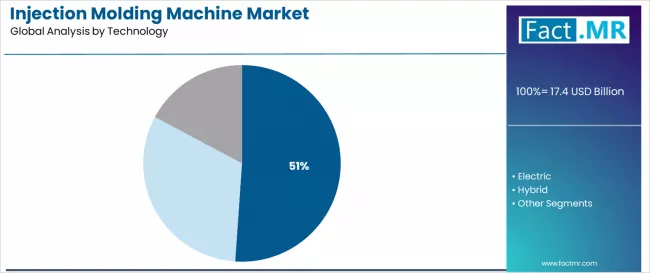
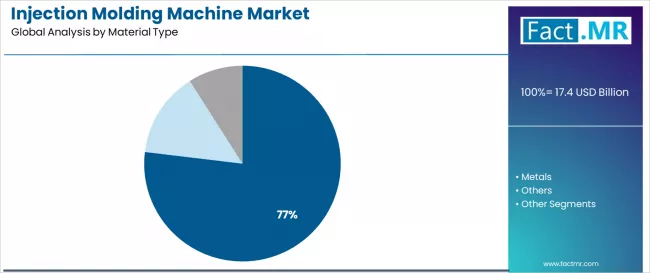
Injection molding machine market is projected to grow from USD 17.4 billion in 2026 to USD 28.5 billion by 2036, at a CAGR of 5.1%. Plastics will dominate with a 76.9% market share, while hydraulic will lead the technology segment with a 51.1% share.

Injection Molding Machine Market Forecast and Outlook 2026 to 2036

The global injection molding machine market will grow from USD 17.4 billion in 2026 to USD 28.5 billion by 2036, adding USD 11.1 billion in new revenue and advancing at a CAGR of 5.1%. Growth is driven by escalating demand for precision component manufacturing validation, expanding automotive production infrastructure across regulated markets, and accelerating automation requirements among manufacturing and industrial organizations seeking efficient production solutions.

Key Takeaways from the Injection Molding Machine Market

  • Injection Molding Machine Market Value (2026): USD 17.4 billion
  • Injection Molding Machine Market Forecast Value (2036): USD 28.5 billion
  • Injection Molding Machine Market Forecast CAGR: 5.1%
  • Leading Technology in Injection Molding Machine Market: Hydraulic (51.1%)
  • Key Growth Regions in Injection Molding Machine Market: Asia Pacific, North America, and Europe
  • Top Players in Injection Molding Machine Market: Arburg GmbH + Co KG, Haitian International Holdings Limited, Milacron, Nissei Plastic Industrial Co., Limited, Engel Austria GmbH
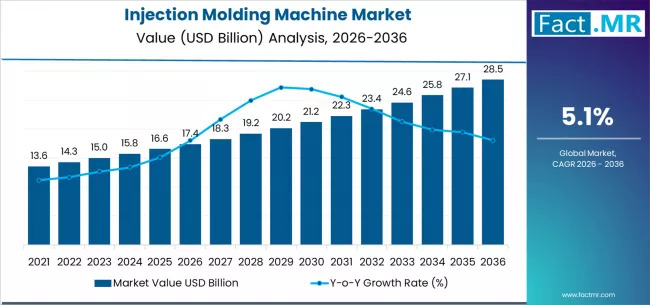
Injection Molding Machine Market Market Value Analysis

Injection molding machine technologies are increasingly recognized as essential tools for manufacturing practitioners, offering precise material processing capabilities, production efficiency assurance, and comprehensive quality characteristics compared to traditional manufacturing approaches.

Hydraulic formulations dominate the market, favored in manufacturing and industrial environments for their established performance properties, providing robust processing mechanisms, cost-effective capabilities, and operational acceptance across diverse production applications and manufacturing demographics.

Plastics remain fundamental in material processing protocols where routine component production and batch manufacturing match operational requirements and quality assurance confidence standards. Automotive end-users are advancing among usage categories as specialized manufacturing facility networks expand and precision component infrastructure increases accessibility in production-convenient locations with stringent quality structures.

Injection Molding Machine Market

Metric Value
Market Value (2026) USD 17.4 billion
Market Forecast (2036) USD 28.5 billion
Growth Rate 5.1% CAGR

Category

Category Segments
Material Type Plastics; Metals; Others
Technology Hydraulic; Electric; Hybrid
End-Use Automotive; Consumer Goods; Packaging; Electronics; Others
Region North America; Europe; Asia Pacific; Latin America; MEA

Segmental Analysis

Why are Hydraulic Injection Molding Machines the Preferred Choice of Industrial Operators?
Injection Molding Machine Market Analysis By Technology

Hydraulic technology commands the leading position in the injection molding machine market with a 51.1% market share through superior cost-effectiveness characteristics, including established manufacturing presence, extensive operational documentation, and proven processing pathways that enable manufacturers to achieve predictable production outcomes across varied component categories and diverse manufacturing demographics.

Hydraulic technology-based injection molding machines’ demand expansion benefits from force generation advantages through high-pressure capabilities, robust clamping performance without complex control systems, and established operational validation documentation without requiring extensive requalification procedures.

Why are Plastic Injection Molding Machines the Preferred Choice by Material Type?
Injection Molding Machine Market Analysis By Material Type

Plastics demonstrate material leadership in the injection molding machine market with 76.9% share due to widespread application requirements and established focus on polymer processing, thermoplastic utilization, and material versatility that maximizes production flexibility while maintaining consistent quality manufacturing characteristics.

Manufacturers prioritize plastic materials for component production diversity, cost-effectiveness maintenance, and integration with established manufacturing workflows that enables coordinated production experiences across multiple application protocols.

What establishes the Automotive Sector's Market Leadership in Injection Molding Machines?
Injection Molding Machine Market Analysis By End Use

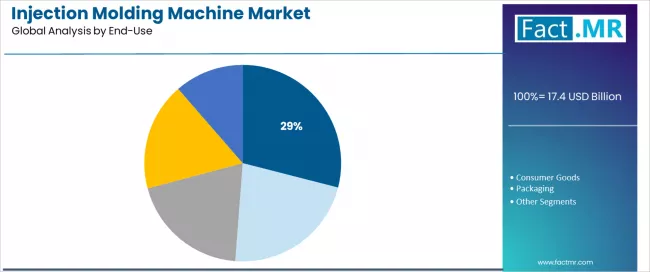
The automotive sector establishes market leadership in the injection molding machine industry with commanding 29.0% share due to comprehensive component requirements and sustained focus on interior parts production, exterior component manufacturing, and under-hood applications that maximizes vehicle integration while maintaining appropriate quality standards.

Manufacturers and engineering teams prioritize automotive applications for high-volume production, comprehensive component diversity, and integration with assembly line requirements that enables coordinated manufacturing experiences across multiple vehicle categories. The sector benefits from substantial quality infrastructure maturity and specification guideline campaigns that emphasize automotive-based production delivery for critical component applications.

What are the Drivers, Restraints, and Key Trends of the Injection Molding Machine Market?

The injection molding machines market is driven by rising automotive production and demand for lightweight components, particularly with the growth of electric vehicles. Expanding consumer goods and packaging manufacturing, supported by e-commerce growth and sustainability initiatives, is further increasing demand for high-speed, high-output molding systems. Advancements in automation and Industry 4.0 integration are also encouraging adoption of connected and digitally enabled production platforms that improve efficiency and consistency.

Market restraints include high capital investment requirements for machinery and tooling, which limit adoption among cost-sensitive manufacturers and developing market facilities. Technical complexity and the need for skilled operators create additional barriers, particularly for smaller production units with limited training resources.

Key trends include the shift toward electric and hybrid injection molding machines that offer improved energy efficiency and lower operating costs. Increased integration of automation, robotics, and data analytics is also shaping the market, enabling smarter manufacturing, higher precision, and improved quality control across advanced industrial environments.

Analysis of the Injection Molding Machine Market by Key Countries
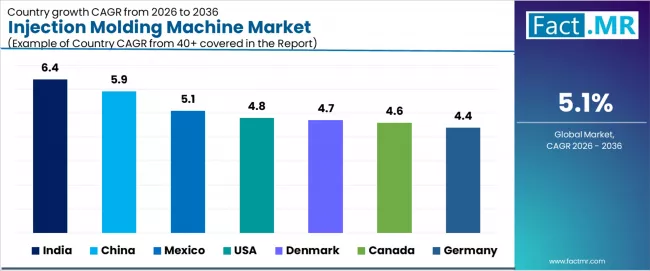
Injection Molding Machine Market Cagr Analysis By Country

Country 2026-2036 Growth
India 6.4%
China 5.9%
USA 4.8%
Mexico 5.1%
Germany 4.4%
Canada 4.6%
Denmark 4.7%

What is Powering India’s Rapid Uptake of Injection Molding Equipment?

India’s injection molding machine market is accelerating as manufacturing growth spreads across automotive, consumer goods, packaging, and electrical components. Maharashtra, Gujarat, and Tamil Nadu are seeing steady investment as factories upgrade capacity to meet export quality expectations.

Manufacturers tend to combine imported machine platforms with local engineering and service support, valuing uptime, operator training, and cost discipline alongside productivity improvements.

Why does Automation Remain Central to China’s Molding Machine Demand?

China’s injection molding market reflects its broader shift toward automation-driven manufacturing. Facilities across Guangdong, Zhejiang, and Jiangsu are increasingly adopting electric and hybrid machines to improve precision and reduce energy intensity.

Injection molding systems are treated as integral production assets within large industrial parks, sustaining demand for efficient, high-throughput technologies that support export competitiveness.

How is Process Optimization Shaping the US Injection Molding Landscape?
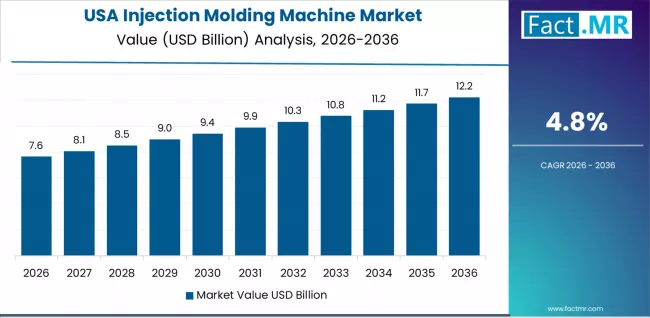
Injection Molding Machine Market Country Value Analysis

In the USA, market growth is driven more by operational refinement than by capacity expansion. Manufacturers in the Midwest, Southeast, and West Coast are investing in machines that integrate with digital monitoring, predictive maintenance, and automated workflows. Demand is strongest in medical devices, electronics, and high-value consumer goods, where consistency, traceability, and long-term reliability influence purchasing decisions.

What keeps Mexico Competitive in Export-Focused Molding Operations?

Mexico’s injection molding market benefits from its role in North American supply chains. Automotive and consumer goods producers in Nuevo León, Guanajuato, and Querétaro are expanding capacity to meet export demand.

While cost efficiency remains important, rising quality expectations from global OEMs are increasing demand for durable machines supported by reliable technical service and parts availability.

Why does Engineering Discipline Continue to Define Germany’s Market?

Germany’s injection molding demand is shaped by its engineering-led manufacturing culture. Equipment selection emphasizes technical validation, process stability, and long-term performance rather than short-term cost savings.

Automotive suppliers and precision manufacturers in Baden-Württemberg, Bavaria, and North Rhine-Westphalia continue to invest in high-specification machines aligned with strict industrial standards and documentation requirements.

How are Energy and Sustainability Considerations Influencing Canada’s Adoption Patterns?

In Canada, equipment investment decisions increasingly reflect energy efficiency and operating cost considerations. Manufacturers in Ontario and Quebec are replacing older machines with electric and hybrid alternatives to reduce energy consumption and meet sustainability objectives. Automotive components and electronics manufacturing drive demand, supported by detailed total cost of ownership and energy performance assessments.

What explains Denmark’s Preference for Smart and Connected Molding Systems?

Denmark’s injection molding market emphasizes automation, connectivity, and data-driven production. Manufacturers prioritize machines that integrate with Industry 4.0 platforms, enabling process visibility and continuous improvement. Although the market is relatively small, demand is concentrated around advanced systems that support highly automated and digitally coordinated manufacturing environments.

Competitive Landscape of the Injection Molding Machine Market
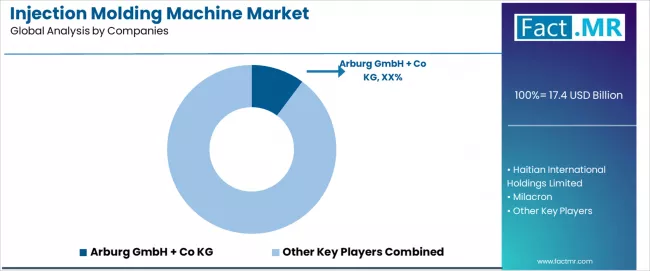
Injection Molding Machine Market Analysis By Company

The injection molding machine market is moderately consolidated, with roughly 50-70 active players operating across global manufacturing and regional distribution networks. Competition reflects the maturity of injection molding technologies, where engineering depth, service capability, and long-term customer relationships are more decisive than price-based competition.

Arburg GmbH + Co KG holds a leading position, supported by a broad technology portfolio spanning hydraulic, hybrid, and electric platforms, alongside strong global service and training infrastructure. Other established manufacturers compete through extensive distribution networks, application engineering expertise, and proven machine reliability across automotive, consumer goods, packaging, and electronics manufacturing segments. Comprehensive technical documentation, operator training programs, and lifecycle service support further strengthen the positioning of leading suppliers.

Emerging automation specialists and regional machine manufacturers introduce competitive pressure through specialized solutions, flexible configurations, and cost-competitive offerings. Differentiation is increasingly visible in all-electric machines, automation integration, and digital connectivity for smart manufacturing environments. While hydraulic machines remain competitive due to cost-effectiveness and installed base familiarity, premium positioning favors suppliers offering integrated automation, energy efficiency, and data-driven process optimization capabilities that extend beyond standalone equipment sales.

Key Players in the Injection Molding Machine Market

  • Arburg GmbH + Co KG
  • Haitian International Holdings Limited
  • Milacron
  • Nissei Plastic Industrial Co., Limited
  • Engel Austria GmbH
  • Sumitomo (SHI) Demag Plastics Machinery GmbH
  • Chen Hsong Holdings Limited
  • Toyo Machinery & Metal Co., Ltd
  • Husky Injection Molding Systems Ltd
  • Japan Steel Works Limited
  • KraussMaffei Group
  • UBE Machinery
  • Shibaura Machine Co. Ltd.
  • Wittmann Battenfeld

Scope of the Report

Items Values
Quantitative Units (2026) USD 17.4 billion
Material Type Plastics, Metals, Others
Technology Hydraulic, Electric, Hybrid
End-Use Automotive, Consumer Goods, Packaging, Electronics, Others
Regions Covered North America, Europe, Asia Pacific, Latin America, MEA
Countries Covered USA, China, India, Germany, UK, France, Canada, Mexico, Denmark, and 15+ additional countries
Key Companies Profiled Arburg GmbH + Co KG, Haitian International Holdings Limited, Milacron, Nissei Plastic Industrial Co., Limited, Engel Austria GmbH, Sumitomo (SHI) Demag Plastics Machinery GmbH
Additional Attributes Dollar sales by material and technology categories, regional adoption trends across Asia Pacific, North America, and Europe, competitive landscape with established machinery corporations and specialized technology companies, manufacturer preferences for hydraulic technologies and energy efficiency, integration with automotive production facilities and consumer goods manufacturing organizations, innovations in electric technologies and automation platforms, and development of sophisticated precision systems with enhanced efficiency profiles and comprehensive performance documentation frameworks.

Injection Molding Machine Market by Segments

  • Material Type :

    • Plastics
    • Metals
    • Others
  • Technology :

    • Hydraulic
    • Electric
    • Hybrid
  • End-Use:

    • Automotive
    • Consumer Goods
    • Packaging
    • Electronics
    • Others
  • Region:

    • North America
      • USA
      • Canada
      • Mexico
    • Europe
      • Germany
      • France
      • UK
      • Italy
      • Spain
      • Rest of Europe
    • Asia Pacific
      • India
      • China
      • Japan
      • South Korea
      • ASEAN
      • Australia & New Zealand
      • Rest of Asia Pacific
    • Latin America
      • Brazil
      • Rest of Latin America
    • MEA
      • GCC Countries
      • South Africa
      • Rest of MEA

Table of Content

  1. Executive Summary
    • Global Market Outlook
    • Demand to side Trends
    • Supply to side Trends
    • Technology Roadmap Analysis
    • Analysis and Recommendations
  2. Market Overview
    • Market Coverage / Taxonomy
    • Market Definition / Scope / Limitations
  3. Market Background
    • Market Dynamics
      • Drivers
      • Restraints
      • Opportunity
      • Trends
    • Scenario Forecast
      • Demand in Optimistic Scenario
      • Demand in Likely Scenario
      • Demand in Conservative Scenario
    • Opportunity Map Analysis
    • Product Life Cycle Analysis
    • Supply Chain Analysis
    • Investment Feasibility Matrix
    • Value Chain Analysis
    • PESTLE and Porter’s Analysis
    • Regulatory Landscape
    • Regional Parent Market Outlook
    • Production and Consumption Statistics
    • Import and Export Statistics
  4. Global Market Analysis 2021 to 2025 and Forecast, 2026 to 2036
    • Historical Market Size Value (USD Million) Analysis, 2021 to 2025
    • Current and Future Market Size Value (USD Million) Projections, 2026 to 2036
      • Y to o to Y Growth Trend Analysis
      • Absolute $ Opportunity Analysis
  5. Global Market Pricing Analysis 2021 to 2025 and Forecast 2026 to 2036
  6. Global Market Analysis 2021 to 2025 and Forecast 2026 to 2036, By Material Type
    • Introduction / Key Findings
    • Historical Market Size Value (USD Million) Analysis By Material Type, 2021 to 2025
    • Current and Future Market Size Value (USD Million) Analysis and Forecast By Material Type, 2026 to 2036
      • Plastics
      • Metals
      • Others
    • Y to o to Y Growth Trend Analysis By Material Type, 2021 to 2025
    • Absolute $ Opportunity Analysis By Material Type, 2026 to 2036
  7. Global Market Analysis 2021 to 2025 and Forecast 2026 to 2036, By Technology
    • Introduction / Key Findings
    • Historical Market Size Value (USD Million) Analysis By Technology, 2021 to 2025
    • Current and Future Market Size Value (USD Million) Analysis and Forecast By Technology, 2026 to 2036
      • Hydraulic
      • Electric
      • Hybrid
    • Y to o to Y Growth Trend Analysis By Technology, 2021 to 2025
    • Absolute $ Opportunity Analysis By Technology, 2026 to 2036
  8. Global Market Analysis 2021 to 2025 and Forecast 2026 to 2036, By End-Use
    • Introduction / Key Findings
    • Historical Market Size Value (USD Million) Analysis By End-Use, 2021 to 2025
    • Current and Future Market Size Value (USD Million) Analysis and Forecast By End-Use, 2026 to 2036
      • Automotive
      • Consumer Goods
      • Packaging
      • Electronics
      • Others
    • Y to o to Y Growth Trend Analysis By End-Use, 2021 to 2025
    • Absolute $ Opportunity Analysis By End-Use, 2026 to 2036
  9. Global Market Analysis 2021 to 2025 and Forecast 2026 to 2036, By Region
    • Introduction
    • Historical Market Size Value (USD Million) Analysis By Region, 2021 to 2025
    • Current Market Size Value (USD Million) Analysis and Forecast By Region, 2026 to 2036
      • North America
      • Latin America
      • Western Europe
      • Eastern Europe
      • East Asia
      • South Asia and Pacific
      • Middle East & Africa
    • Market Attractiveness Analysis By Region
  10. North America Market Analysis 2021 to 2025 and Forecast 2026 to 2036, By Country
    • Historical Market Size Value (USD Million) Trend Analysis By Market Taxonomy, 2021 to 2025
    • Market Size Value (USD Million) Forecast By Market Taxonomy, 2026 to 2036
      • By Country
        • USA
        • Canada
        • Mexico
      • By Material Type
      • By Technology
      • By End-Use
    • Market Attractiveness Analysis
      • By Country
      • By Material Type
      • By Technology
      • By End-Use
    • Key Takeaways
  11. Latin America Market Analysis 2021 to 2025 and Forecast 2026 to 2036, By Country
    • Historical Market Size Value (USD Million) Trend Analysis By Market Taxonomy, 2021 to 2025
    • Market Size Value (USD Million) Forecast By Market Taxonomy, 2026 to 2036
      • By Country
        • Brazil
        • Chile
        • Rest of Latin America
      • By Material Type
      • By Technology
      • By End-Use
    • Market Attractiveness Analysis
      • By Country
      • By Material Type
      • By Technology
      • By End-Use
    • Key Takeaways
  12. Western Europe Market Analysis 2021 to 2025 and Forecast 2026 to 2036, By Country
    • Historical Market Size Value (USD Million) Trend Analysis By Market Taxonomy, 2021 to 2025
    • Market Size Value (USD Million) Forecast By Market Taxonomy, 2026 to 2036
      • By Country
        • Germany
        • UK
        • Italy
        • Spain
        • France
        • Nordic
        • BENELUX
        • Rest of Western Europe
      • By Material Type
      • By Technology
      • By End-Use
    • Market Attractiveness Analysis
      • By Country
      • By Material Type
      • By Technology
      • By End-Use
    • Key Takeaways
  13. Eastern Europe Market Analysis 2021 to 2025 and Forecast 2026 to 2036, By Country
    • Historical Market Size Value (USD Million) Trend Analysis By Market Taxonomy, 2021 to 2025
    • Market Size Value (USD Million) Forecast By Market Taxonomy, 2026 to 2036
      • By Country
        • Russia
        • Poland
        • Hungary
        • Balkan & Baltic
        • Rest of Eastern Europe
      • By Material Type
      • By Technology
      • By End-Use
    • Market Attractiveness Analysis
      • By Country
      • By Material Type
      • By Technology
      • By End-Use
    • Key Takeaways
  14. East Asia Market Analysis 2021 to 2025 and Forecast 2026 to 2036, By Country
    • Historical Market Size Value (USD Million) Trend Analysis By Market Taxonomy, 2021 to 2025
    • Market Size Value (USD Million) Forecast By Market Taxonomy, 2026 to 2036
      • By Country
        • China
        • Japan
        • South Korea
      • By Material Type
      • By Technology
      • By End-Use
    • Market Attractiveness Analysis
      • By Country
      • By Material Type
      • By Technology
      • By End-Use
    • Key Takeaways
  15. South Asia and Pacific Market Analysis 2021 to 2025 and Forecast 2026 to 2036, By Country
    • Historical Market Size Value (USD Million) Trend Analysis By Market Taxonomy, 2021 to 2025
    • Market Size Value (USD Million) Forecast By Market Taxonomy, 2026 to 2036
      • By Country
        • India
        • ASEAN
        • Australia & New Zealand
        • Rest of South Asia and Pacific
      • By Material Type
      • By Technology
      • By End-Use
    • Market Attractiveness Analysis
      • By Country
      • By Material Type
      • By Technology
      • By End-Use
    • Key Takeaways
  16. Middle East & Africa Market Analysis 2021 to 2025 and Forecast 2026 to 2036, By Country
    • Historical Market Size Value (USD Million) Trend Analysis By Market Taxonomy, 2021 to 2025
    • Market Size Value (USD Million) Forecast By Market Taxonomy, 2026 to 2036
      • By Country
        • Kingdom of Saudi Arabia
        • Other GCC Countries
        • Turkiye
        • South Africa
        • Other African Union
        • Rest of Middle East & Africa
      • By Material Type
      • By Technology
      • By End-Use
    • Market Attractiveness Analysis
      • By Country
      • By Material Type
      • By Technology
      • By End-Use
    • Key Takeaways
  17. Key Countries Market Analysis
    • USA
      • Pricing Analysis
      • Market Share Analysis, 2025
        • By Material Type
        • By Technology
        • By End-Use
    • Canada
      • Pricing Analysis
      • Market Share Analysis, 2025
        • By Material Type
        • By Technology
        • By End-Use
    • Mexico
      • Pricing Analysis
      • Market Share Analysis, 2025
        • By Material Type
        • By Technology
        • By End-Use
    • Brazil
      • Pricing Analysis
      • Market Share Analysis, 2025
        • By Material Type
        • By Technology
        • By End-Use
    • Chile
      • Pricing Analysis
      • Market Share Analysis, 2025
        • By Material Type
        • By Technology
        • By End-Use
    • Germany
      • Pricing Analysis
      • Market Share Analysis, 2025
        • By Material Type
        • By Technology
        • By End-Use
    • UK
      • Pricing Analysis
      • Market Share Analysis, 2025
        • By Material Type
        • By Technology
        • By End-Use
    • Italy
      • Pricing Analysis
      • Market Share Analysis, 2025
        • By Material Type
        • By Technology
        • By End-Use
    • Spain
      • Pricing Analysis
      • Market Share Analysis, 2025
        • By Material Type
        • By Technology
        • By End-Use
    • France
      • Pricing Analysis
      • Market Share Analysis, 2025
        • By Material Type
        • By Technology
        • By End-Use
    • India
      • Pricing Analysis
      • Market Share Analysis, 2025
        • By Material Type
        • By Technology
        • By End-Use
    • ASEAN
      • Pricing Analysis
      • Market Share Analysis, 2025
        • By Material Type
        • By Technology
        • By End-Use
    • Australia & New Zealand
      • Pricing Analysis
      • Market Share Analysis, 2025
        • By Material Type
        • By Technology
        • By End-Use
    • China
      • Pricing Analysis
      • Market Share Analysis, 2025
        • By Material Type
        • By Technology
        • By End-Use
    • Japan
      • Pricing Analysis
      • Market Share Analysis, 2025
        • By Material Type
        • By Technology
        • By End-Use
    • South Korea
      • Pricing Analysis
      • Market Share Analysis, 2025
        • By Material Type
        • By Technology
        • By End-Use
    • Russia
      • Pricing Analysis
      • Market Share Analysis, 2025
        • By Material Type
        • By Technology
        • By End-Use
    • Poland
      • Pricing Analysis
      • Market Share Analysis, 2025
        • By Material Type
        • By Technology
        • By End-Use
    • Hungary
      • Pricing Analysis
      • Market Share Analysis, 2025
        • By Material Type
        • By Technology
        • By End-Use
    • Kingdom of Saudi Arabia
      • Pricing Analysis
      • Market Share Analysis, 2025
        • By Material Type
        • By Technology
        • By End-Use
    • Turkiye
      • Pricing Analysis
      • Market Share Analysis, 2025
        • By Material Type
        • By Technology
        • By End-Use
    • South Africa
      • Pricing Analysis
      • Market Share Analysis, 2025
        • By Material Type
        • By Technology
        • By End-Use
  18. Market Structure Analysis
    • Competition Dashboard
    • Competition Benchmarking
    • Market Share Analysis of Top Players
      • By Regional
      • By Material Type
      • By Technology
      • By End-Use
  19. Competition Analysis
    • Competition Deep Dive
      • Arburg GmbH + Co KG
        • Overview
        • Product Portfolio
        • Profitability by Market Segments (Product/Age /Sales Channel/Region)
        • Sales Footprint
        • Strategy Overview
          • Marketing Strategy
          • Product Strategy
          • Channel Strategy
      • Haitian International Holdings Limited
      • Milacron
      • Nissei Plastic Industrial Co., Limited
      • Engel Austria GmbH
      • Sumitomo (SHI) Demag Plastics Machinery GmbH
      • Chen Hsong Holdings Limited
      • Toyo Machinery & Metal Co., Ltd
      • Husky Injection Molding Systems Ltd
      • Japan Steel Works Limited
      • KraussMaffei Group
      • UBE Machinery
      • Shibaura Machine Co. Ltd.
      • Wittmann Battenfeld
  20. Assumptions & Acronyms Used
  21. Research Methodology

List Of Table

  • Table 1: Global Market Value (USD Million) Forecast by Region, 2021 to 2036
  • Table 2: Global Market Value (USD Million) Forecast by Material Type, 2021 to 2036
  • Table 3: Global Market Value (USD Million) Forecast by Technology, 2021 to 2036
  • Table 4: Global Market Value (USD Million) Forecast by End-Use, 2021 to 2036
  • Table 5: North America Market Value (USD Million) Forecast by Country, 2021 to 2036
  • Table 6: North America Market Value (USD Million) Forecast by Material Type, 2021 to 2036
  • Table 7: North America Market Value (USD Million) Forecast by Technology, 2021 to 2036
  • Table 8: North America Market Value (USD Million) Forecast by End-Use, 2021 to 2036
  • Table 9: Latin America Market Value (USD Million) Forecast by Country, 2021 to 2036
  • Table 10: Latin America Market Value (USD Million) Forecast by Material Type, 2021 to 2036
  • Table 11: Latin America Market Value (USD Million) Forecast by Technology, 2021 to 2036
  • Table 12: Latin America Market Value (USD Million) Forecast by End-Use, 2021 to 2036
  • Table 13: Western Europe Market Value (USD Million) Forecast by Country, 2021 to 2036
  • Table 14: Western Europe Market Value (USD Million) Forecast by Material Type, 2021 to 2036
  • Table 15: Western Europe Market Value (USD Million) Forecast by Technology, 2021 to 2036
  • Table 16: Western Europe Market Value (USD Million) Forecast by End-Use, 2021 to 2036
  • Table 17: Eastern Europe Market Value (USD Million) Forecast by Country, 2021 to 2036
  • Table 18: Eastern Europe Market Value (USD Million) Forecast by Material Type, 2021 to 2036
  • Table 19: Eastern Europe Market Value (USD Million) Forecast by Technology, 2021 to 2036
  • Table 20: Eastern Europe Market Value (USD Million) Forecast by End-Use, 2021 to 2036
  • Table 21: East Asia Market Value (USD Million) Forecast by Country, 2021 to 2036
  • Table 22: East Asia Market Value (USD Million) Forecast by Material Type, 2021 to 2036
  • Table 23: East Asia Market Value (USD Million) Forecast by Technology, 2021 to 2036
  • Table 24: East Asia Market Value (USD Million) Forecast by End-Use, 2021 to 2036
  • Table 25: South Asia and Pacific Market Value (USD Million) Forecast by Country, 2021 to 2036
  • Table 26: South Asia and Pacific Market Value (USD Million) Forecast by Material Type, 2021 to 2036
  • Table 27: South Asia and Pacific Market Value (USD Million) Forecast by Technology, 2021 to 2036
  • Table 28: South Asia and Pacific Market Value (USD Million) Forecast by End-Use, 2021 to 2036
  • Table 29: Middle East & Africa Market Value (USD Million) Forecast by Country, 2021 to 2036
  • Table 30: Middle East & Africa Market Value (USD Million) Forecast by Material Type, 2021 to 2036
  • Table 31: Middle East & Africa Market Value (USD Million) Forecast by Technology, 2021 to 2036
  • Table 32: Middle East & Africa Market Value (USD Million) Forecast by End-Use, 2021 to 2036

List Of Figures

  • Figure 1: Global Market Pricing Analysis
  • Figure 2: Global Market Value (USD Million) Forecast 2021 to 2036
  • Figure 3: Global Market Value Share and BPS Analysis by Material Type, 2026 and 2036
  • Figure 4: Global Market Y to o to Y Growth Comparison by Material Type, 2026 to 2036
  • Figure 5: Global Market Attractiveness Analysis by Material Type
  • Figure 6: Global Market Value Share and BPS Analysis by Technology, 2026 and 2036
  • Figure 7: Global Market Y to o to Y Growth Comparison by Technology, 2026 to 2036
  • Figure 8: Global Market Attractiveness Analysis by Technology
  • Figure 9: Global Market Value Share and BPS Analysis by End-Use, 2026 and 2036
  • Figure 10: Global Market Y to o to Y Growth Comparison by End-Use, 2026 to 2036
  • Figure 11: Global Market Attractiveness Analysis by End-Use
  • Figure 12: Global Market Value (USD Million) Share and BPS Analysis by Region, 2026 and 2036
  • Figure 13: Global Market Y to o to Y Growth Comparison by Region, 2026 to 2036
  • Figure 14: Global Market Attractiveness Analysis by Region
  • Figure 15: North America Market Incremental Dollar Opportunity, 2026 to 2036
  • Figure 16: Latin America Market Incremental Dollar Opportunity, 2026 to 2036
  • Figure 17: Western Europe Market Incremental Dollar Opportunity, 2026 to 2036
  • Figure 18: Eastern Europe Market Incremental Dollar Opportunity, 2026 to 2036
  • Figure 19: East Asia Market Incremental Dollar Opportunity, 2026 to 2036
  • Figure 20: South Asia and Pacific Market Incremental Dollar Opportunity, 2026 to 2036
  • Figure 21: Middle East & Africa Market Incremental Dollar Opportunity, 2026 to 2036
  • Figure 22: North America Market Value Share and BPS Analysis by Country, 2026 and 2036
  • Figure 23: North America Market Value Share and BPS Analysis by Material Type, 2026 and 2036
  • Figure 24: North America Market Y to o to Y Growth Comparison by Material Type, 2026 to 2036
  • Figure 25: North America Market Attractiveness Analysis by Material Type
  • Figure 26: North America Market Value Share and BPS Analysis by Technology, 2026 and 2036
  • Figure 27: North America Market Y to o to Y Growth Comparison by Technology, 2026 to 2036
  • Figure 28: North America Market Attractiveness Analysis by Technology
  • Figure 29: North America Market Value Share and BPS Analysis by End-Use, 2026 and 2036
  • Figure 30: North America Market Y to o to Y Growth Comparison by End-Use, 2026 to 2036
  • Figure 31: North America Market Attractiveness Analysis by End-Use
  • Figure 32: Latin America Market Value Share and BPS Analysis by Country, 2026 and 2036
  • Figure 33: Latin America Market Value Share and BPS Analysis by Material Type, 2026 and 2036
  • Figure 34: Latin America Market Y to o to Y Growth Comparison by Material Type, 2026 to 2036
  • Figure 35: Latin America Market Attractiveness Analysis by Material Type
  • Figure 36: Latin America Market Value Share and BPS Analysis by Technology, 2026 and 2036
  • Figure 37: Latin America Market Y to o to Y Growth Comparison by Technology, 2026 to 2036
  • Figure 38: Latin America Market Attractiveness Analysis by Technology
  • Figure 39: Latin America Market Value Share and BPS Analysis by End-Use, 2026 and 2036
  • Figure 40: Latin America Market Y to o to Y Growth Comparison by End-Use, 2026 to 2036
  • Figure 41: Latin America Market Attractiveness Analysis by End-Use
  • Figure 42: Western Europe Market Value Share and BPS Analysis by Country, 2026 and 2036
  • Figure 43: Western Europe Market Value Share and BPS Analysis by Material Type, 2026 and 2036
  • Figure 44: Western Europe Market Y to o to Y Growth Comparison by Material Type, 2026 to 2036
  • Figure 45: Western Europe Market Attractiveness Analysis by Material Type
  • Figure 46: Western Europe Market Value Share and BPS Analysis by Technology, 2026 and 2036
  • Figure 47: Western Europe Market Y to o to Y Growth Comparison by Technology, 2026 to 2036
  • Figure 48: Western Europe Market Attractiveness Analysis by Technology
  • Figure 49: Western Europe Market Value Share and BPS Analysis by End-Use, 2026 and 2036
  • Figure 50: Western Europe Market Y to o to Y Growth Comparison by End-Use, 2026 to 2036
  • Figure 51: Western Europe Market Attractiveness Analysis by End-Use
  • Figure 52: Eastern Europe Market Value Share and BPS Analysis by Country, 2026 and 2036
  • Figure 53: Eastern Europe Market Value Share and BPS Analysis by Material Type, 2026 and 2036
  • Figure 54: Eastern Europe Market Y to o to Y Growth Comparison by Material Type, 2026 to 2036
  • Figure 55: Eastern Europe Market Attractiveness Analysis by Material Type
  • Figure 56: Eastern Europe Market Value Share and BPS Analysis by Technology, 2026 and 2036
  • Figure 57: Eastern Europe Market Y to o to Y Growth Comparison by Technology, 2026 to 2036
  • Figure 58: Eastern Europe Market Attractiveness Analysis by Technology
  • Figure 59: Eastern Europe Market Value Share and BPS Analysis by End-Use, 2026 and 2036
  • Figure 60: Eastern Europe Market Y to o to Y Growth Comparison by End-Use, 2026 to 2036
  • Figure 61: Eastern Europe Market Attractiveness Analysis by End-Use
  • Figure 62: East Asia Market Value Share and BPS Analysis by Country, 2026 and 2036
  • Figure 63: East Asia Market Value Share and BPS Analysis by Material Type, 2026 and 2036
  • Figure 64: East Asia Market Y to o to Y Growth Comparison by Material Type, 2026 to 2036
  • Figure 65: East Asia Market Attractiveness Analysis by Material Type
  • Figure 66: East Asia Market Value Share and BPS Analysis by Technology, 2026 and 2036
  • Figure 67: East Asia Market Y to o to Y Growth Comparison by Technology, 2026 to 2036
  • Figure 68: East Asia Market Attractiveness Analysis by Technology
  • Figure 69: East Asia Market Value Share and BPS Analysis by End-Use, 2026 and 2036
  • Figure 70: East Asia Market Y to o to Y Growth Comparison by End-Use, 2026 to 2036
  • Figure 71: East Asia Market Attractiveness Analysis by End-Use
  • Figure 72: South Asia and Pacific Market Value Share and BPS Analysis by Country, 2026 and 2036
  • Figure 73: South Asia and Pacific Market Value Share and BPS Analysis by Material Type, 2026 and 2036
  • Figure 74: South Asia and Pacific Market Y to o to Y Growth Comparison by Material Type, 2026 to 2036
  • Figure 75: South Asia and Pacific Market Attractiveness Analysis by Material Type
  • Figure 76: South Asia and Pacific Market Value Share and BPS Analysis by Technology, 2026 and 2036
  • Figure 77: South Asia and Pacific Market Y to o to Y Growth Comparison by Technology, 2026 to 2036
  • Figure 78: South Asia and Pacific Market Attractiveness Analysis by Technology
  • Figure 79: South Asia and Pacific Market Value Share and BPS Analysis by End-Use, 2026 and 2036
  • Figure 80: South Asia and Pacific Market Y to o to Y Growth Comparison by End-Use, 2026 to 2036
  • Figure 81: South Asia and Pacific Market Attractiveness Analysis by End-Use
  • Figure 82: Middle East & Africa Market Value Share and BPS Analysis by Country, 2026 and 2036
  • Figure 83: Middle East & Africa Market Value Share and BPS Analysis by Material Type, 2026 and 2036
  • Figure 84: Middle East & Africa Market Y to o to Y Growth Comparison by Material Type, 2026 to 2036
  • Figure 85: Middle East & Africa Market Attractiveness Analysis by Material Type
  • Figure 86: Middle East & Africa Market Value Share and BPS Analysis by Technology, 2026 and 2036
  • Figure 87: Middle East & Africa Market Y to o to Y Growth Comparison by Technology, 2026 to 2036
  • Figure 88: Middle East & Africa Market Attractiveness Analysis by Technology
  • Figure 89: Middle East & Africa Market Value Share and BPS Analysis by End-Use, 2026 and 2036
  • Figure 90: Middle East & Africa Market Y to o to Y Growth Comparison by End-Use, 2026 to 2036
  • Figure 91: Middle East & Africa Market Attractiveness Analysis by End-Use
  • Figure 92: Global Market - Tier Structure Analysis
  • Figure 93: Global Market - Company Share Analysis

- FAQs -

How big is the injection molding machine market in 2026?

The global injection molding machine market is estimated to be valued at USD 17.4 billion in 2026.

What will be the size of injection molding machine market in 2036?

The market size for the injection molding machine market is projected to reach USD 28.5 billion by 2036.

How much will be the injection molding machine market growth between 2026 and 2036?

The injection molding machine market is expected to grow at a 5.1% CAGR between 2026 and 2036.

What are the key product types in the injection molding machine market?

The key product types in injection molding machine market are plastics, metals and others.

Which technology segment to contribute significant share in the injection molding machine market in 2026?

In terms of technology, hydraulic segment to command 51.1% share in the injection molding machine market in 2026.

Injection Molding Machine Market