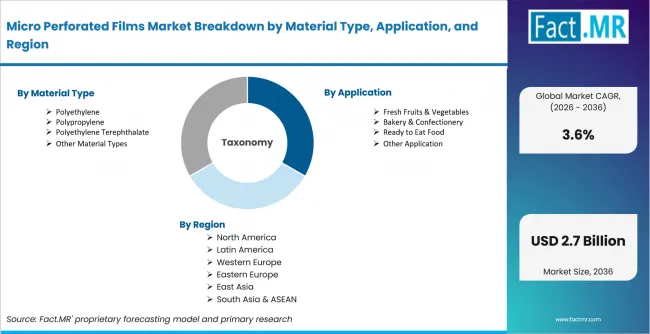
Micro Perforated Films Market Size, Share, Growth and Forecast (2026 - 2036)

The Micro Perforated Films Market is segmented by Material Type, Application, Perforation Type, Thickness Type, End-use Industry, and Region. Forecast for 2026 to 2036.

Micro Perforated Films Market Forecast and Outlook by Fact.MR

  • The micro perforated films market was valued at USD 1.8 billion in 2025.
  • Fact.MR estimates the market at USD 1.9 billion in 2026.
  • Market valuation is projected to reach USD 2.7 billion by 2036 reflecting a CAGR of 3.6% during the forecast period.
  • The market is projected to create nearly USD 0.8 billion in additional revenue between 2026 and 2036.
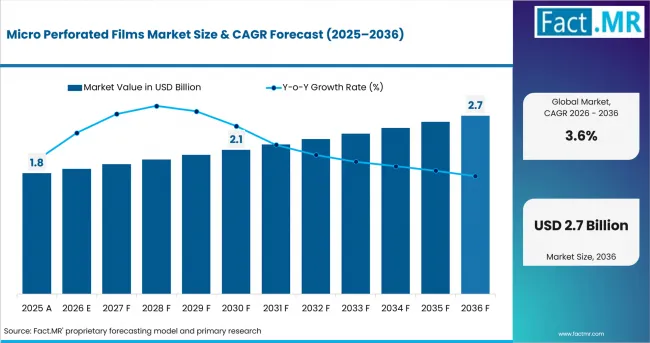
Micro Perforated Films Market Value Analysis

Metric Value
Estimated Value in 2026 USD 1.9 billion
Forecast Value in 2036 USD 2.7 billion
Forecast CAGR (2026 to 2036) 3.6%

Summary of the Micro Perforated Films Market

  • Demand Drivers
    • Fresh Food Packaging Growth: Food processors are increasing breathable packaging adoption across fresh produce distribution operations. Shelf life optimization supports packaging film demand.
    • Modified Atmosphere Packaging Expansion: Retail food suppliers are increasing micro perforated film usage across packaged bakery and ready to eat products. Controlled airflow capability supports adoption growth.
    • Cold Chain Distribution Growth: Organized food retail operators are increasing packaged fresh food transportation across urban markets. Temperature controlled logistics support breathable film demand.
  • Key Segments Analyzed
    • By Material Type: Polyethylene accounts for 46.0% share in 2026 due to lower packaging cost and stronger moisture retention capability.
    • By Application: Fresh fruits and vegetables account for 41.0% share in 2026 supported by rising produce packaging demand.
    • By Perforation Type: Laser perforated films account for 44.0% share in 2026 attributable to precision airflow control capability.
    • By Thickness Type: 30 to 60 microns’ account for 48.0% share in 2026 due to balanced durability and airflow performance.
    • By End-use Industry: Food packaging accounts for 57.0% share in 2026 supported by higher packaged food consumption.
  • Analyst Opinion at Fact.MR
    • Shambhu Nath Jha, Principal Consultant at Fact.MR, opines, ‘Micro perforated film suppliers with stronger breathable packaging capability and food processing partnerships maintain stronger positioning across shelf life preservation applications. Food processors prefer packaging films with stable airflow control and moisture retention capability.’
  • Strategic Implications
    • Flexible packaging manufacturers should expand laser perforation capacity across food packaging production facilities. Precision airflow control supports premium packaging demand.
    • Packaging film suppliers should strengthen cold chain distribution partnerships across Asia Pacific food retail operations. Organized food logistics support breathable packaging adoption.
    • Mid-sized packaging converters should increase fresh produce packaging networks across Brazil and India. Agricultural export activity supports micro perforated film demand.

Demand is supported by rising breathable packaging demand across packaged food and fresh produce distribution operations. Modified atmosphere packaging adoption is increasing across retail food preservation applications. Cold chain logistics expansion is strengthening demand for precision airflow packaging films across organized food distribution networks.

China leads growth at 5.1% CAGR through 2036 supported by packaged food production and export oriented packaging manufacturing. India expands at 4.8% CAGR attributable to rising cold chain infrastructure and organized food retail activity. The United States records 4.2% CAGR due to higher fresh produce packaging demand and retail food distribution expansion. Germany grows at 3.9% CAGR supported by precision packaging technology adoption across food processing operations. Japan advances at 3.5% CAGR due to premium pre-packaged food demand and shelf life optimization requirements. Brazil registers 3.3% CAGR supported by agricultural export packaging demand and processed food distribution growth.

Segmental Analysis

Micro Perforated Films Market Analysis by Material Type
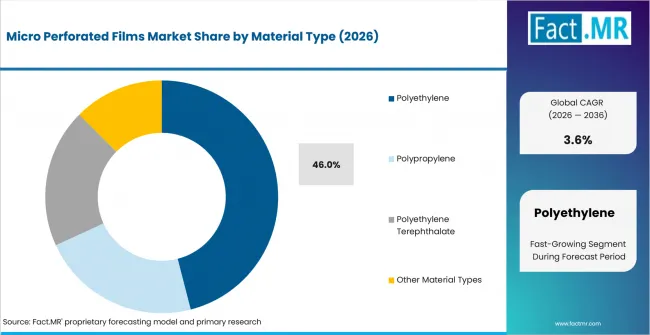
Micro Perforated Films Market Analysis By Material Type

Polyethylene is estimated to hold 46.0% share in 2026. Packaging manufacturers prefer polyethylene films due to lower production cost and stronger flexibility across breathable packaging applications. Amcor expanded its Italy packaging facility with a new production line dedicated to high-barrier recycle-ready films for food, beverage, healthcare, and pet food packaging applications. [1] The investment supports rising industry demand for flexible packaging films designed to improve recyclability while maintaining product protection and shelf-life performance.

  • Packaging Capacity Expansion: Flexible packaging manufacturers are increasing production investment across food preservation film applications.
  • Film Technology Development: Packaging companies are expanding recyclable breathable packaging technology across fresh food packaging operations.
  • Food Packaging Demand: Packaging converters are increasing polyethylene breathable film production across organized food retail and export packaging operations.

Micro Perforated Films Market Analysis by Application
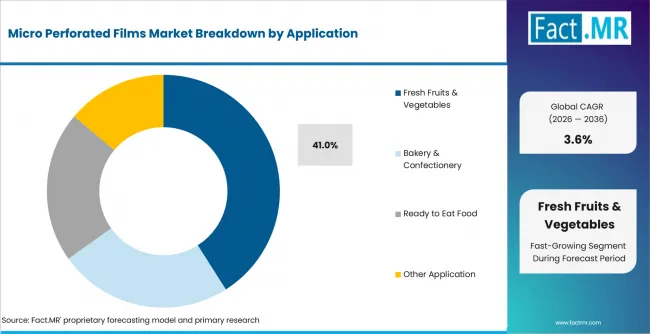
Micro Perforated Films Market Analysis By Application

Fresh fruits and vegetables are estimated to hold 41.0% share in 2026. Food processors prefer micro perforated films due to stronger freshness preservation and lower moisture accumulation across produce packaging applications. Mondi expanded production of its Functional Barrier Paper Ultimate solution, an ultra-high barrier paper-based packaging material designed for food and consumer goods applications requiring oxygen, moisture, and grease protection. [2] The recyclable packaging solution supports rising demand for sustainable packaging alternatives that enhance shelf life and product protection across food packaging.

  • Fresh Produce Packaging Expansion: Food packaging companies are increasing investment in produce preservation technology across breathable packaging operations. Shelf life optimization supports micro perforated film adoption across retail food distribution.
  • Modified Atmosphere Development: Food packaging suppliers are increasing breathable film integration across packaged vegetable and fruit distribution operations.
  • Cold Chain Distribution Growth: Retail food operators are increasing packaged produce transportation across urban grocery and supermarket networks.

Micro Perforated Films Market Analysis by Perforation Type
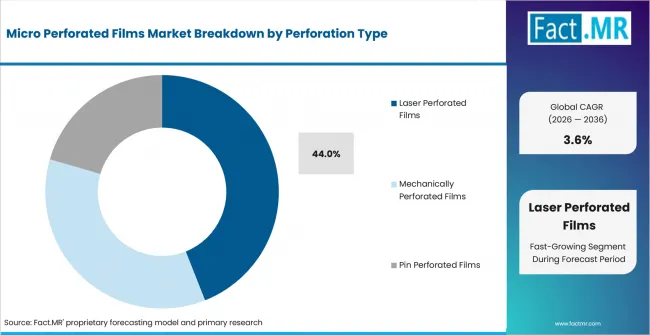
Micro Perforated Films Market Analysis By Perforation Type

Laser perforated films account for 44.0% share in 2026. Packaging manufacturers prefer laser perforation systems due to precision airflow control and consistent oxygen transmission capability across modified atmosphere packaging operations. Fresh food preservation requirements support segment growth. Coveris showcased its sustainable MonoFlex Thermoform packaging films and recyclable flexible packaging solutions at Packaging Innovations 2024, targeting food sectors including meat, dairy, and bakery products. [3] The company highlighted advanced mono-material film technologies designed to enhance shelf life, recyclability, and packaging efficiency while supporting circular economy initiatives.

  • Precision Packaging Investment: Packaging companies are increasing breathable film technology development across fresh produce packaging operations. Laser perforation capability improves airflow consistency across food preservation applications.
  • Airflow Control Improvement: Flexible packaging manufacturers are increasing automated perforation integration across high volume food packaging production.
  • Retail Shelf Life Demand: Food processors are increasing precision breathable packaging adoption across packaged bakery and ready to eat products.

Micro Perforated Films Market Analysis by Thickness Type
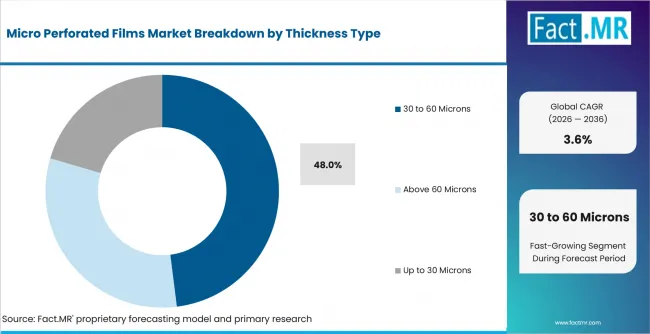
Micro Perforated Films Market Analysis By Thickness Type

30 to 60 microns are estimated to hold 48.0% share in 2026. Food packaging companies prefer medium thickness films due to balanced durability and airflow performance across packaged food transportation operations. Product handling stability supports stronger commercial adoption.

  • Packaging Film Development: Flexible packaging manufacturers are increasing breathable film production across food packaging operations.
  • Logistics Packaging Growth: Food distributors are increasing durable breathable film usage across long distance produce transportation operations.
  • Retail Packaging Efficiency: Packaging converters are increasing medium thickness film integration across automated food packaging systems.

Micro Perforated Films Market Analysis by End-use Industry
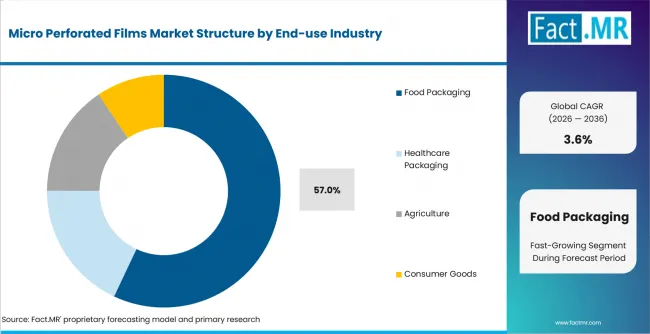
Micro Perforated Films Market Analysis By End Use Industry

Food packaging is estimated to hold 57.0% share in 2026. Packaged food manufacturers prefer breathable films due to stronger freshness preservation and lower spoilage risk across retail distribution operations. Rising packaged food consumption supports segment leadership.

  • Food Packaging Investment: Flexible packaging companies are increasing breathable packaging development across food preservation applications. Rising retail food distribution supports commercial packaging demand.
  • Fresh Food Distribution Growth: Food processors are increasing breathable packaging integration across ready to eat and produce packaging operations.
  • Export Packaging Demand: Agricultural exporters are increasing micro perforated film usage across temperature controlled food shipment activity.

Drivers, Restraints, and Opportunities
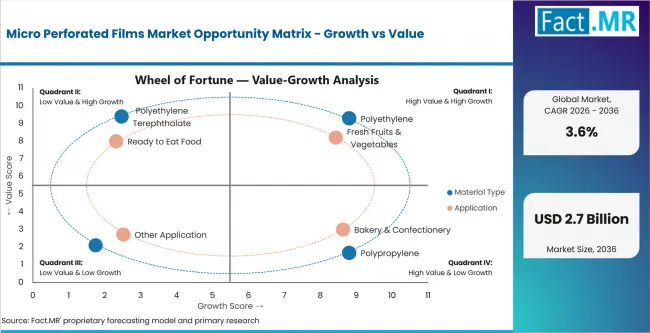
Micro Perforated Films Market Opportunity Matrix Growth Vs Value

Fact.MR analysts observe that the micro perforated films market is expanding through packaged food consumption and fresh produce distribution growth across organized retail channels. Demand is concentrated in breathable packaging applications requiring controlled airflow and moisture management across food preservation operations.

Precision perforation technology is increasing adoption across modified atmosphere packaging systems due to stronger shelf life optimization and product freshness control. Sealed Air introduced its CRYOVAC brand mono-polymer recyclable packaging solution designed for pumpable food products requiring high-barrier protection and flexible packaging performance. [5] The innovation supports improved recyclability, reduced material complexity, and enhanced shelf-life preservation for food packaging applications.

  • Retail Packaging Expansion: China and India are increasing packaged food production across urban retail distribution operations. Organized retail activity supports breathable packaging demand.
  • Precision Film Development: Packaging manufacturers are increasing investment in laser perforation systems across flexible packaging production facilities. Controlled airflow capability improves product preservation performance.
  • Food Export Growth: Brazil and Southeast Asia are increasing fresh produce export packaging activity across agricultural supply chains. International food shipment demand supports breathable film adoption.

Regional Analysis

The micro perforated films market is assessed across North America, Europe, Asia Pacific, Latin America, and the Middle East and Africa by material type, application, perforation type, thickness type, and end-use industry. The full report offers market analysis by region and country.

Top Country Growth Comparison Micro Perforated Films Market Cagr (2026 2036)

Country CAGR (2026 to 2036)
China 5.1%
India 4.8%
United States 4.2%
Germany 3.9%
Japan 3.5%
Brazil 3.3%

Source: Fact.MR analysis, based on proprietary forecasting model and primary research
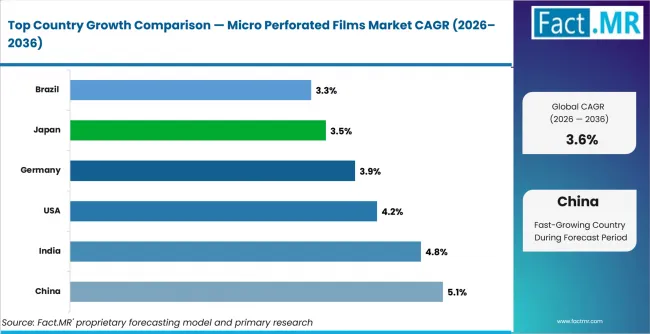
Micro Perforated Films Market Cagr Analysis By Country

Asia Pacific Micro Perforated Films Market Analysis
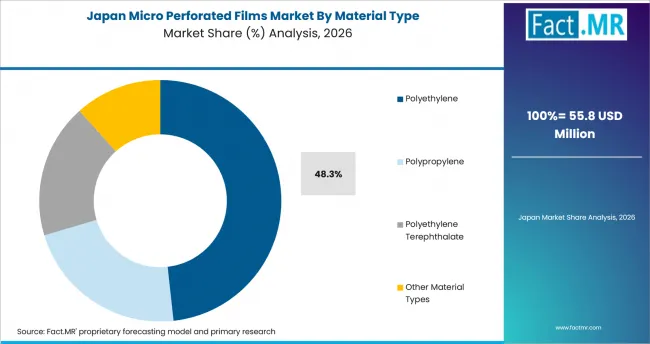
Micro Perforated Films Market Japan Market Share Analysis By Material Type

Asia Pacific represents the flexible packaging production center for breathable food packaging and modified atmosphere packaging operations. Packaging film manufacturers maintain stronger positioning through lower production cost and expanding food packaging conversion capacity across regional markets.

  • China: Demand for micro perforated films in China is projected to rise at 5.1% CAGR by 2036. Packaged food production and export oriented packaging manufacturing support breathable film demand across retail food operations. Flexible packaging companies increased food packaging investment across high volume produce packaging facilities. Cold chain logistics expansion supports modified atmosphere packaging adoption across organized retail channels.
  • India: India expands at 4.8% CAGR attributable to rising cold chain infrastructure and organized food retail activity across urban markets. Packaging converters are increasing breathable film production linked with fresh produce transportation and food export operations. Retail food companies expanded packaged vegetable and fruit distribution across supermarket and grocery networks. Agricultural packaging demand supports micro perforated film consumption across export oriented food processing operations.
  • Japan: Japan records 3.5% CAGR due to premium packaged food demand and shelf life optimization requirements across retail distribution operations. Food packaging companies are increasing breathable packaging integration across ready to eat food applications. Packaging material suppliers expanded precision perforation technology focused on convenience food preservation systems. Aging population and premium grocery retail activity support advanced packaging demand.

North America Micro Perforated Films Market Analysis
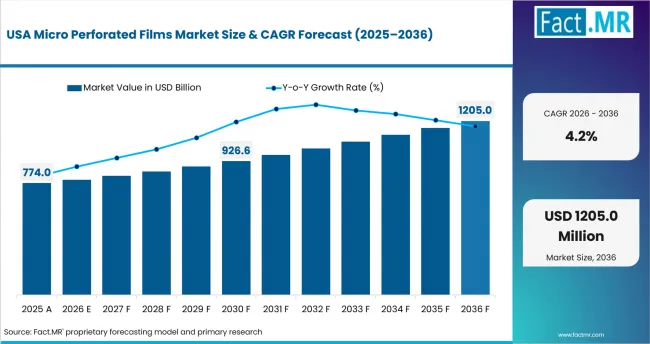
Micro Perforated Films Market Country Value Analysis

North America represents the packaged food preservation center for breathable packaging and fresh produce distribution operations. Amcor and Sealed Air maintain stronger positioning through advanced packaging technology and integrated food packaging networks across regional markets. Amcor partnered with Stonyfield Organic and Cheer Pack North America to introduce a recycle-ready spouted pouch designed for yogurt packaging applications in the U.S. market. [4] The packaging solution utilizes advanced flexible film technology to improve sustainability, reduce plastic usage, and support high-performance food packaging requirements.

  • United States: Micro perforated films market in United States is projected to expand at 4.2% CAGR by 2036 due to higher fresh produce packaging demand and organized food retail expansion. Food processors are increasing modified atmosphere packaging adoption across packaged vegetables and ready to eat food operations. Flexible packaging suppliers expanded breathable film manufacturing linked with cold chain distribution growth.

Europe Micro Perforated Films Market Analysis
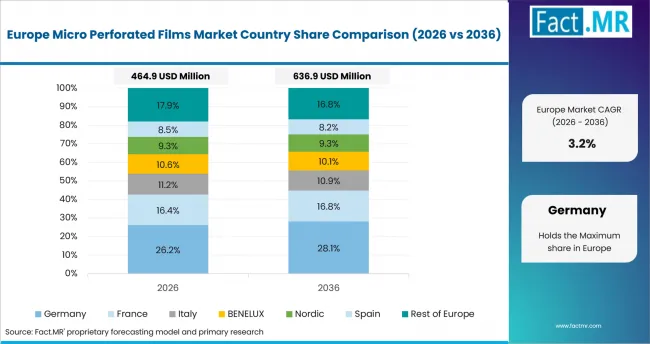
Micro Perforated Films Market Europe Country Market Share Analysis, 2026 & 2036

Europe represents the precision packaging technology center for breathable film innovation and food preservation systems. Packaging manufacturers maintain stronger positioning through recyclable packaging integration and advanced perforation technology capability across regional food processing operations.

  • Germany: Micro perforated films market in Germany is estimated to witness 3.9% CAGR through 2036 supported by precision packaging technology adoption across food processing operations. Packaging converters are increasing recyclable breathable film development across retail food packaging systems. Food manufacturers expanded modified atmosphere packaging investment focused on fresh produce preservation applications.

Latin America Micro Perforated Films Market Analysis

Latin America represents the agricultural export packaging center for breathable produce packaging and food transportation operations. Flexible packaging suppliers are increasing investment in fresh produce packaging systems linked with agricultural export growth across regional markets.

  • Brazil: Brazil registers 3.3% CAGR supported by agricultural export packaging demand and processed food distribution growth. Food exporters are increasing breathable film integration across fruit and vegetable transportation operations. Packaging manufacturers expanded flexible packaging production focused on agricultural export packaging systems. Cold storage logistics activity supports breathable packaging adoption across export oriented food supply chains.

Competitive Aligners for Market Players

The micro perforated films market is moderately concentrated around global flexible packaging manufacturers and breathable film suppliers. Precision perforation capability and food packaging integration shape competitive positioning across fresh food preservation applications. Advanced breathable packaging systems maintain higher pricing across modified atmosphere packaging operations.

Large packaging manufacturers maintain stronger positioning through integrated film production and food packaging distribution networks. Food processors prefer suppliers with stable breathable packaging quality and shelf life optimization capability across packaged food operations. Long term retail packaging contracts increase competitive pressure across regional packaging converters.

Food packaging companies increasingly prefer breathable film suppliers with precision perforation capability and stable resin sourcing networks. Organized retail operators maintain preference for packaging manufacturers with stronger cold chain packaging integration and food preservation support services. Packaging film manufacturers are increasing investment in recyclable breathable packaging systems and automated perforation technology to strengthen commercial positioning.

Key Players

  • Amcor plc
  • Mondi Group
  • Sealed Air Corporation
  • Bollore Group
  • UFlex Ltd

Bibliography

  • Amcor plc. (2026). Amcor expands plant capability for recycle-ready packaging solutions. Amcor Newsroom.
  • Mondi Group. (2025). Mondi ramps up FunctionalBarrier Paper Ultimate to meet growing demand for sustainable high-barrier paper-based packaging. Mondi Group News & Insight.
  • Coveris. (2024). Coveris sustainability showcase at Packaging Innovations 2024. Coveris Newsroom.
  • Amcor plc. (2024). Amcor and Stonyfield launch recycle-ready spouted pouch packaging solution. Amcor Newsroom.
  • Packaging Insights. (2025). Sealed Air develops MonoPro recycle-ready food packaging solution. Packaging Insights.

Micro Perforated Films Market Definition

The micro perforated films market covers flexible packaging materials designed with small perforations that regulate airflow and moisture transmission across packaged food products. These films improve shelf life and freshness across fruits, vegetables, bakery products, and ready to eat food applications. The market includes laser perforated films, mechanically perforated films, and pin perforated films used across food packaging and industrial packaging operations.

Micro Perforated Films Market Inclusions

The study covers global and regional forecasts from 2026 to 2036 by material type, application, perforation type, thickness type, and end-use industry. It includes breathable packaging films, modified atmosphere packaging materials, food preservation films, and precision perforated flexible packaging systems across food processing and industrial packaging operations.

Micro Perforated Films Market Exclusions

The study excludes standard non-perforated packaging films and rigid plastic packaging products outside breathable packaging applications. It omits medical sterile packaging films and industrial laminates not integrated with micro perforation technology or controlled atmosphere packaging operations.

Micro Perforated Films Market Research Methodology

  • Primary Research
    • Interviews conducted with packaging film manufacturers, food processors, flexible packaging converters, retail packaging suppliers, and cold chain logistics operators across China, India, the United States, Germany, Japan, and Brazil.
  • Desk Research
    • Secondary analysis sourced from Amcor, Mondi, Sealed Air, Uflex, and TCL Packaging product announcements and packaging investment disclosures published during 2024 and 2025.
  • Market-Sizing and Forecasting
    • Hybrid top-down and bottom-up model using flexible packaging demand, food packaging production volume, resin consumption analysis, and breathable film shipment assessment across regional markets.
  • Data Validation and Update Cycle
    • Validated through distributor interviews, packaging converter disclosures, food retail shipment data, and flexible packaging production analysis across global markets.

Scope of the Report

Micro Perforated Films Market Breakdown By Material Type, Application, And Region

Attribute Details
Quantitative Units USD 1.9 billion (2026) to USD 2.7 billion (2036) at a CAGR of 3.6%
Market Definition Breathable flexible packaging films designed for controlled airflow and moisture management across food preservation applications
Material Type Segmentation Polyethylene, Polypropylene, Polyethylene Terephthalate, Other Material Types
Application Segmentation Fresh Fruits & Vegetables, Bakery & Confectionery, Ready to Eat Food, Other Application
Perforation Type Segmentation Laser Perforated Films, Mechanically Perforated Films, Pin Perforated Films
Thickness Type Segmentation Up to 30 Microns, 30 to 60 Microns, Above 60 Microns
End-use Industry Segmentation Food Packaging, Healthcare Packaging, Agriculture, Consumer Goods, Industrial Packaging
Regions Covered North America, Europe, Asia Pacific, Latin America, Middle East and Africa
Countries Covered China, India, United States, Germany, Japan, Brazil, Canada, France, Italy, South Korea
Key Companies Profiled Amcor plc, Mondi Group, Sealed Air Corporation, UFlex Ltd, TCL Packaging
Forecast Period 2026 to 2036
Approach Hybrid top-down and bottom-up model using food packaging demand, breathable film shipment analysis, and flexible packaging production assessment.

Micro Perforated Films Market by Segment

  • By Material Type

    • Polyethylene
    • Polypropylene
    • Polyethylene Terephthalate
    • Other Material Types
  • By Application

    • Fresh Fruits & Vegetables
    • Bakery & Confectionery
    • Ready to Eat Food
    • Other Application
  • By Perforation Type

    • Laser Perforated Films
    • Mechanically Perforated Films
    • Pin Perforated Films
  • By Thickness Type

    • Up to 30 Microns
    • 30 to 60 Microns
    • Above 60 Microns
  • By End-use Industry

    • Food Packaging
    • Healthcare Packaging
    • Agriculture
    • Consumer Goods
    • Industrial Packaging
  • By Region

    • North America
      • United States
      • Canada
      • Mexico
    • Latin America
      • Brazil
      • Argentina
      • Colombia
      • Rest of Latin America
    • Western Europe
      • Germany
      • United Kingdom
      • France
      • Italy
      • Spain
      • Netherlands
      • Nordic Countries
      • BENELUX
      • Rest of Western Europe
    • East Asia
      • China
      • Japan
      • South Korea
    • South Asia and Pacific
      • India
      • ASEAN
      • Australia and New Zealand
      • Rest of South Asia and Pacific
    • Middle East and Africa
      • Kingdom of Saudi Arabia
      • Other GCC Countries
      • Turkey
      • South Africa
      • Rest of Middle East and Africa

- Frequently Asked Questions -

How large is the global micro perforated films market in 2026?

The micro perforated films market is estimated at USD 1.9 billion in 2026 supported by rising packaged food demand and breathable packaging adoption.

What will the micro perforated films market size reach by 2036?

Fact.MR projects the micro perforated films market to reach USD 2.7 billion by 2036 reflecting stronger fresh produce packaging and food preservation demand.

What is the expected CAGR for the micro perforated films market from 2026 to 2036?

The micro perforated films market is projected to expand at a CAGR of 3.6% during the 2026 to 2036 forecast period.

Which material type segment is poised to lead the micro perforated films market?

Polyethylene accounts for 46.0% share in 2026 due to lower packaging cost and stronger moisture retention capability across food packaging applications.

Which end-use industry holds the leading share in the micro perforated films market?

Food packaging accounts for 57.0% share in 2026 supported by higher packaged food consumption and fresh produce distribution demand.

Which country records the leading CAGR in the micro perforated films market?

China is projected to expand at 5.1% CAGR through 2036 attributable to packaged food production and export oriented packaging manufacturing expansion.

Table of Content

  1. Executive Summary
    • Global Market Outlook
    • Demand to side Trends
    • Supply to side Trends
    • Technology Roadmap Analysis
    • Analysis and Recommendations
  2. Market Overview
    • Market Coverage / Taxonomy
    • Market Definition / Scope / Limitations
  3. Research Methodology
    • Chapter Orientation
    • Analytical Lens and Working Hypotheses
      • Market Structure, Signals, and Trend Drivers
      • Benchmarking and Cross-market Comparability
      • Market Sizing, Forecasting, and Opportunity Mapping
    • Research Design and Evidence Framework
      • Desk Research Programme (Secondary Evidence)
        • Company Annual and Sustainability Reports
        • Peer-reviewed Journals and Academic Literature
        • Corporate Websites, Product Literature, and Technical Notes
        • Earnings Decks and Investor Briefings
        • Statutory Filings and Regulatory Disclosures
        • Technical White Papers and Standards Notes
        • Trade Journals, Industry Magazines, and Analyst Briefs
        • Conference Proceedings, Webinars, and Seminar Materials
        • Government Statistics Portals and Public Data Releases
        • Press Releases and Reputable Media Coverage
        • Specialist Newsletters and Curated Briefings
        • Sector Databases and Reference Repositories
        • Fact.MR Internal Proprietary Databases and Historical Market Datasets
        • Subscription Datasets and Paid Sources
        • Social Channels, Communities, and Digital Listening Inputs
        • Additional Desk Sources
      • Expert Input and Fieldwork (Primary Evidence)
        • Primary Modes
          • Qualitative Interviews and Expert Elicitation
          • Quantitative Surveys and Structured Data Capture
          • Blended Approach
        • Why Primary Evidence is Used
        • Field Techniques
          • Interviews
          • Surveys
          • Focus Groups
          • Observational and In-context Research
          • Social and Community Interactions
        • Stakeholder Universe Engaged
          • C-suite Leaders
          • Board Members
          • Presidents and Vice Presidents
          • R&D and Innovation Heads
          • Technical Specialists
          • Domain Subject-matter Experts
          • Scientists
          • Physicians and Other Healthcare Professionals
        • Governance, Ethics, and Data Stewardship
          • Research Ethics
          • Data Integrity and Handling
      • Tooling, Models, and Reference Databases
    • Data Engineering and Model Build
      • Data Acquisition and Ingestion
      • Cleaning, Normalisation, and Verification
      • Synthesis, Triangulation, and Analysis
    • Quality Assurance and Audit Trail
  4. Market Background
    • Market Dynamics
      • Drivers
      • Restraints
      • Opportunity
      • Trends
    • Scenario Forecast
      • Demand in Optimistic Scenario
      • Demand in Likely Scenario
      • Demand in Conservative Scenario
    • Opportunity Map Analysis
    • Product Life Cycle Analysis
    • Supply Chain Analysis
    • Investment Feasibility Matrix
    • Value Chain Analysis
    • PESTLE and Porter’s Analysis
    • Regulatory Landscape
    • Regional Parent Market Outlook
    • Production and Consumption Statistics
    • Import and Export Statistics
  5. Global Market Analysis 2021 to 2025 and Forecast, 2026 to 2036
    • Historical Market Size Value (USD Million) Analysis, 2021 to 2025
    • Current and Future Market Size Value (USD Million) Projections, 2026 to 2036
      • Y to o to Y Growth Trend Analysis
      • Absolute $ Opportunity Analysis
  6. Global Market Pricing Analysis 2021 to 2025 and Forecast 2026 to 2036
  7. Global Market Analysis 2021 to 2025 and Forecast 2026 to 2036, By Material Type
    • Introduction / Key Findings
    • Historical Market Size Value (USD Million) Analysis By Material Type , 2021 to 2025
    • Current and Future Market Size Value (USD Million) Analysis and Forecast By Material Type , 2026 to 2036
      • Polyethylene
      • Polypropylene
      • Polyethylene Terephthalate
      • Other Material Types
    • Y to o to Y Growth Trend Analysis By Material Type , 2021 to 2025
    • Absolute $ Opportunity Analysis By Material Type , 2026 to 2036
  8. Global Market Analysis 2021 to 2025 and Forecast 2026 to 2036, By Application
    • Introduction / Key Findings
    • Historical Market Size Value (USD Million) Analysis By Application, 2021 to 2025
    • Current and Future Market Size Value (USD Million) Analysis and Forecast By Application, 2026 to 2036
      • Fresh Fruits & Vegetables
      • Bakery & Confectionery
      • Ready to Eat Food
      • Other Application
    • Y to o to Y Growth Trend Analysis By Application, 2021 to 2025
    • Absolute $ Opportunity Analysis By Application, 2026 to 2036
  9. Global Market Analysis 2021 to 2025 and Forecast 2026 to 2036, By Perforation Type
    • Introduction / Key Findings
    • Historical Market Size Value (USD Million) Analysis By Perforation Type, 2021 to 2025
    • Current and Future Market Size Value (USD Million) Analysis and Forecast By Perforation Type, 2026 to 2036
      • Laser Perforated Films
      • Mechanically Perforated Films
      • Pin Perforated Films
    • Y to o to Y Growth Trend Analysis By Perforation Type, 2021 to 2025
    • Absolute $ Opportunity Analysis By Perforation Type, 2026 to 2036
  10. Global Market Analysis 2021 to 2025 and Forecast 2026 to 2036, By Thickness Type
    • Introduction / Key Findings
    • Historical Market Size Value (USD Million) Analysis By Thickness Type, 2021 to 2025
    • Current and Future Market Size Value (USD Million) Analysis and Forecast By Thickness Type, 2026 to 2036
      • 30 to 60 Microns
      • Above 60 Microns
      • Up to 30 Microns
    • Y to o to Y Growth Trend Analysis By Thickness Type, 2021 to 2025
    • Absolute $ Opportunity Analysis By Thickness Type, 2026 to 2036
  11. Global Market Analysis 2021 to 2025 and Forecast 2026 to 2036, By End-use Industry
    • Introduction / Key Findings
    • Historical Market Size Value (USD Million) Analysis By End-use Industry, 2021 to 2025
    • Current and Future Market Size Value (USD Million) Analysis and Forecast By End-use Industry, 2026 to 2036
      • Food Packaging
      • Healthcare Packaging
      • Agriculture
      • Consumer Goods
      • Industrial Packaging
    • Y to o to Y Growth Trend Analysis By End-use Industry, 2021 to 2025
    • Absolute $ Opportunity Analysis By End-use Industry, 2026 to 2036
  12. Global Market Analysis 2021 to 2025 and Forecast 2026 to 2036, By Region
    • Introduction
    • Historical Market Size Value (USD Million) Analysis By Region, 2021 to 2025
    • Current Market Size Value (USD Million) Analysis and Forecast By Region, 2026 to 2036
      • North America
      • Latin America
      • Western Europe
      • Eastern Europe
      • East Asia
      • South Asia and Pacific
      • Middle East & Africa
    • Market Attractiveness Analysis By Region
  13. North America Market Analysis 2021 to 2025 and Forecast 2026 to 2036, By Country
    • Historical Market Size Value (USD Million) Trend Analysis By Market Taxonomy, 2021 to 2025
    • Market Size Value (USD Million) Forecast By Market Taxonomy, 2026 to 2036
      • By Country
        • USA
        • Canada
        • Mexico
      • By Material Type
      • By Application
      • By Perforation Type
      • By Thickness Type
      • By End-use Industry
    • Market Attractiveness Analysis
      • By Country
      • By Material Type
      • By Application
      • By Perforation Type
      • By Thickness Type
      • By End-use Industry
    • Key Takeaways
  14. Latin America Market Analysis 2021 to 2025 and Forecast 2026 to 2036, By Country
    • Historical Market Size Value (USD Million) Trend Analysis By Market Taxonomy, 2021 to 2025
    • Market Size Value (USD Million) Forecast By Market Taxonomy, 2026 to 2036
      • By Country
        • Brazil
        • Chile
        • Rest of Latin America
      • By Material Type
      • By Application
      • By Perforation Type
      • By Thickness Type
      • By End-use Industry
    • Market Attractiveness Analysis
      • By Country
      • By Material Type
      • By Application
      • By Perforation Type
      • By Thickness Type
      • By End-use Industry
    • Key Takeaways
  15. Western Europe Market Analysis 2021 to 2025 and Forecast 2026 to 2036, By Country
    • Historical Market Size Value (USD Million) Trend Analysis By Market Taxonomy, 2021 to 2025
    • Market Size Value (USD Million) Forecast By Market Taxonomy, 2026 to 2036
      • By Country
        • Germany
        • UK
        • Italy
        • Spain
        • France
        • Nordic
        • BENELUX
        • Rest of Western Europe
      • By Material Type
      • By Application
      • By Perforation Type
      • By Thickness Type
      • By End-use Industry
    • Market Attractiveness Analysis
      • By Country
      • By Material Type
      • By Application
      • By Perforation Type
      • By Thickness Type
      • By End-use Industry
    • Key Takeaways
  16. Eastern Europe Market Analysis 2021 to 2025 and Forecast 2026 to 2036, By Country
    • Historical Market Size Value (USD Million) Trend Analysis By Market Taxonomy, 2021 to 2025
    • Market Size Value (USD Million) Forecast By Market Taxonomy, 2026 to 2036
      • By Country
        • Russia
        • Poland
        • Hungary
        • Balkan & Baltic
        • Rest of Eastern Europe
      • By Material Type
      • By Application
      • By Perforation Type
      • By Thickness Type
      • By End-use Industry
    • Market Attractiveness Analysis
      • By Country
      • By Material Type
      • By Application
      • By Perforation Type
      • By Thickness Type
      • By End-use Industry
    • Key Takeaways
  17. East Asia Market Analysis 2021 to 2025 and Forecast 2026 to 2036, By Country
    • Historical Market Size Value (USD Million) Trend Analysis By Market Taxonomy, 2021 to 2025
    • Market Size Value (USD Million) Forecast By Market Taxonomy, 2026 to 2036
      • By Country
        • China
        • Japan
        • South Korea
      • By Material Type
      • By Application
      • By Perforation Type
      • By Thickness Type
      • By End-use Industry
    • Market Attractiveness Analysis
      • By Country
      • By Material Type
      • By Application
      • By Perforation Type
      • By Thickness Type
      • By End-use Industry
    • Key Takeaways
  18. South Asia and Pacific Market Analysis 2021 to 2025 and Forecast 2026 to 2036, By Country
    • Historical Market Size Value (USD Million) Trend Analysis By Market Taxonomy, 2021 to 2025
    • Market Size Value (USD Million) Forecast By Market Taxonomy, 2026 to 2036
      • By Country
        • India
        • ASEAN
        • Australia & New Zealand
        • Rest of South Asia and Pacific
      • By Material Type
      • By Application
      • By Perforation Type
      • By Thickness Type
      • By End-use Industry
    • Market Attractiveness Analysis
      • By Country
      • By Material Type
      • By Application
      • By Perforation Type
      • By Thickness Type
      • By End-use Industry
    • Key Takeaways
  19. Middle East & Africa Market Analysis 2021 to 2025 and Forecast 2026 to 2036, By Country
    • Historical Market Size Value (USD Million) Trend Analysis By Market Taxonomy, 2021 to 2025
    • Market Size Value (USD Million) Forecast By Market Taxonomy, 2026 to 2036
      • By Country
        • Kingdom of Saudi Arabia
        • Other GCC Countries
        • Turkiye
        • South Africa
        • Other African Union
        • Rest of Middle East & Africa
      • By Material Type
      • By Application
      • By Perforation Type
      • By Thickness Type
      • By End-use Industry
    • Market Attractiveness Analysis
      • By Country
      • By Material Type
      • By Application
      • By Perforation Type
      • By Thickness Type
      • By End-use Industry
    • Key Takeaways
  20. Key Countries Market Analysis
    • USA
      • Pricing Analysis
      • Market Share Analysis, 2025
        • By Material Type
        • By Application
        • By Perforation Type
        • By Thickness Type
        • By End-use Industry
    • Canada
      • Pricing Analysis
      • Market Share Analysis, 2025
        • By Material Type
        • By Application
        • By Perforation Type
        • By Thickness Type
        • By End-use Industry
    • Mexico
      • Pricing Analysis
      • Market Share Analysis, 2025
        • By Material Type
        • By Application
        • By Perforation Type
        • By Thickness Type
        • By End-use Industry
    • Brazil
      • Pricing Analysis
      • Market Share Analysis, 2025
        • By Material Type
        • By Application
        • By Perforation Type
        • By Thickness Type
        • By End-use Industry
    • Chile
      • Pricing Analysis
      • Market Share Analysis, 2025
        • By Material Type
        • By Application
        • By Perforation Type
        • By Thickness Type
        • By End-use Industry
    • Germany
      • Pricing Analysis
      • Market Share Analysis, 2025
        • By Material Type
        • By Application
        • By Perforation Type
        • By Thickness Type
        • By End-use Industry
    • UK
      • Pricing Analysis
      • Market Share Analysis, 2025
        • By Material Type
        • By Application
        • By Perforation Type
        • By Thickness Type
        • By End-use Industry
    • Italy
      • Pricing Analysis
      • Market Share Analysis, 2025
        • By Material Type
        • By Application
        • By Perforation Type
        • By Thickness Type
        • By End-use Industry
    • Spain
      • Pricing Analysis
      • Market Share Analysis, 2025
        • By Material Type
        • By Application
        • By Perforation Type
        • By Thickness Type
        • By End-use Industry
    • France
      • Pricing Analysis
      • Market Share Analysis, 2025
        • By Material Type
        • By Application
        • By Perforation Type
        • By Thickness Type
        • By End-use Industry
    • India
      • Pricing Analysis
      • Market Share Analysis, 2025
        • By Material Type
        • By Application
        • By Perforation Type
        • By Thickness Type
        • By End-use Industry
    • ASEAN
      • Pricing Analysis
      • Market Share Analysis, 2025
        • By Material Type
        • By Application
        • By Perforation Type
        • By Thickness Type
        • By End-use Industry
    • Australia & New Zealand
      • Pricing Analysis
      • Market Share Analysis, 2025
        • By Material Type
        • By Application
        • By Perforation Type
        • By Thickness Type
        • By End-use Industry
    • China
      • Pricing Analysis
      • Market Share Analysis, 2025
        • By Material Type
        • By Application
        • By Perforation Type
        • By Thickness Type
        • By End-use Industry
    • Japan
      • Pricing Analysis
      • Market Share Analysis, 2025
        • By Material Type
        • By Application
        • By Perforation Type
        • By Thickness Type
        • By End-use Industry
    • South Korea
      • Pricing Analysis
      • Market Share Analysis, 2025
        • By Material Type
        • By Application
        • By Perforation Type
        • By Thickness Type
        • By End-use Industry
    • Russia
      • Pricing Analysis
      • Market Share Analysis, 2025
        • By Material Type
        • By Application
        • By Perforation Type
        • By Thickness Type
        • By End-use Industry
    • Poland
      • Pricing Analysis
      • Market Share Analysis, 2025
        • By Material Type
        • By Application
        • By Perforation Type
        • By Thickness Type
        • By End-use Industry
    • Hungary
      • Pricing Analysis
      • Market Share Analysis, 2025
        • By Material Type
        • By Application
        • By Perforation Type
        • By Thickness Type
        • By End-use Industry
    • Kingdom of Saudi Arabia
      • Pricing Analysis
      • Market Share Analysis, 2025
        • By Material Type
        • By Application
        • By Perforation Type
        • By Thickness Type
        • By End-use Industry
    • Turkiye
      • Pricing Analysis
      • Market Share Analysis, 2025
        • By Material Type
        • By Application
        • By Perforation Type
        • By Thickness Type
        • By End-use Industry
    • South Africa
      • Pricing Analysis
      • Market Share Analysis, 2025
        • By Material Type
        • By Application
        • By Perforation Type
        • By Thickness Type
        • By End-use Industry
  21. Market Structure Analysis
    • Competition Dashboard
    • Competition Benchmarking
    • Market Share Analysis of Top Players
      • By Regional
      • By Material Type
      • By Application
      • By Perforation Type
      • By Thickness Type
      • By End-use Industry
  22. Competition Analysis
    • Competition Deep Dive
      • Amcor plc
        • Overview
        • Product Portfolio
        • Profitability by Market Segments (Product/Age /Sales Channel/Region)
        • Sales Footprint
        • Strategy Overview
          • Marketing Strategy
          • Product Strategy
          • Channel Strategy
      • Mondi Group
      • Sealed Air Corporation
      • Bollore Group
      • UFlex Ltd
  23. Assumptions & Acronyms Used

List Of Table

  • Table 1: Global Market Value (USD Million) Forecast by Region, 2021 to 2036
  • Table 2: Global Market Value (USD Million) Forecast by Material Type, 2021 to 2036
  • Table 3: Global Market Value (USD Million) Forecast by Application, 2021 to 2036
  • Table 4: Global Market Value (USD Million) Forecast by Perforation Type, 2021 to 2036
  • Table 5: Global Market Value (USD Million) Forecast by Thickness Type, 2021 to 2036
  • Table 6: Global Market Value (USD Million) Forecast by End-use Industry, 2021 to 2036
  • Table 7: North America Market Value (USD Million) Forecast by Country, 2021 to 2036
  • Table 8: North America Market Value (USD Million) Forecast by Material Type, 2021 to 2036
  • Table 9: North America Market Value (USD Million) Forecast by Application, 2021 to 2036
  • Table 10: North America Market Value (USD Million) Forecast by Perforation Type, 2021 to 2036
  • Table 11: North America Market Value (USD Million) Forecast by Thickness Type, 2021 to 2036
  • Table 12: North America Market Value (USD Million) Forecast by End-use Industry, 2021 to 2036
  • Table 13: Latin America Market Value (USD Million) Forecast by Country, 2021 to 2036
  • Table 14: Latin America Market Value (USD Million) Forecast by Material Type, 2021 to 2036
  • Table 15: Latin America Market Value (USD Million) Forecast by Application, 2021 to 2036
  • Table 16: Latin America Market Value (USD Million) Forecast by Perforation Type, 2021 to 2036
  • Table 17: Latin America Market Value (USD Million) Forecast by Thickness Type, 2021 to 2036
  • Table 18: Latin America Market Value (USD Million) Forecast by End-use Industry, 2021 to 2036
  • Table 19: Western Europe Market Value (USD Million) Forecast by Country, 2021 to 2036
  • Table 20: Western Europe Market Value (USD Million) Forecast by Material Type, 2021 to 2036
  • Table 21: Western Europe Market Value (USD Million) Forecast by Application, 2021 to 2036
  • Table 22: Western Europe Market Value (USD Million) Forecast by Perforation Type, 2021 to 2036
  • Table 23: Western Europe Market Value (USD Million) Forecast by Thickness Type, 2021 to 2036
  • Table 24: Western Europe Market Value (USD Million) Forecast by End-use Industry, 2021 to 2036
  • Table 25: Eastern Europe Market Value (USD Million) Forecast by Country, 2021 to 2036
  • Table 26: Eastern Europe Market Value (USD Million) Forecast by Material Type, 2021 to 2036
  • Table 27: Eastern Europe Market Value (USD Million) Forecast by Application, 2021 to 2036
  • Table 28: Eastern Europe Market Value (USD Million) Forecast by Perforation Type, 2021 to 2036
  • Table 29: Eastern Europe Market Value (USD Million) Forecast by Thickness Type, 2021 to 2036
  • Table 30: Eastern Europe Market Value (USD Million) Forecast by End-use Industry, 2021 to 2036
  • Table 31: East Asia Market Value (USD Million) Forecast by Country, 2021 to 2036
  • Table 32: East Asia Market Value (USD Million) Forecast by Material Type, 2021 to 2036
  • Table 33: East Asia Market Value (USD Million) Forecast by Application, 2021 to 2036
  • Table 34: East Asia Market Value (USD Million) Forecast by Perforation Type, 2021 to 2036
  • Table 35: East Asia Market Value (USD Million) Forecast by Thickness Type, 2021 to 2036
  • Table 36: East Asia Market Value (USD Million) Forecast by End-use Industry, 2021 to 2036
  • Table 37: South Asia and Pacific Market Value (USD Million) Forecast by Country, 2021 to 2036
  • Table 38: South Asia and Pacific Market Value (USD Million) Forecast by Material Type, 2021 to 2036
  • Table 39: South Asia and Pacific Market Value (USD Million) Forecast by Application, 2021 to 2036
  • Table 40: South Asia and Pacific Market Value (USD Million) Forecast by Perforation Type, 2021 to 2036
  • Table 41: South Asia and Pacific Market Value (USD Million) Forecast by Thickness Type, 2021 to 2036
  • Table 42: South Asia and Pacific Market Value (USD Million) Forecast by End-use Industry, 2021 to 2036
  • Table 43: Middle East & Africa Market Value (USD Million) Forecast by Country, 2021 to 2036
  • Table 44: Middle East & Africa Market Value (USD Million) Forecast by Material Type, 2021 to 2036
  • Table 45: Middle East & Africa Market Value (USD Million) Forecast by Application, 2021 to 2036
  • Table 46: Middle East & Africa Market Value (USD Million) Forecast by Perforation Type, 2021 to 2036
  • Table 47: Middle East & Africa Market Value (USD Million) Forecast by Thickness Type, 2021 to 2036
  • Table 48: Middle East & Africa Market Value (USD Million) Forecast by End-use Industry, 2021 to 2036

List Of Figures

  • Figure 1: Global Market Pricing Analysis
  • Figure 2: Global Market Value (USD Million) Forecast 2021-2036
  • Figure 3: Global Market Value Share and BPS Analysis by Material Type, 2026 and 2036
  • Figure 4: Global Market Y-o-Y Growth Comparison by Material Type, 2026 to 2036
  • Figure 5: Global Market Attractiveness Analysis by Material Type
  • Figure 6: Global Market Value Share and BPS Analysis by Application, 2026 and 2036
  • Figure 7: Global Market Y-o-Y Growth Comparison by Application, 2026 to 2036
  • Figure 8: Global Market Attractiveness Analysis by Application
  • Figure 9: Global Market Value Share and BPS Analysis by Perforation Type, 2026 and 2036
  • Figure 10: Global Market Y-o-Y Growth Comparison by Perforation Type, 2026 to 2036
  • Figure 11: Global Market Attractiveness Analysis by Perforation Type
  • Figure 12: Global Market Value Share and BPS Analysis by Thickness Type, 2026 and 2036
  • Figure 13: Global Market Y-o-Y Growth Comparison by Thickness Type, 2026 to 2036
  • Figure 14: Global Market Attractiveness Analysis by Thickness Type
  • Figure 15: Global Market Value Share and BPS Analysis by End-use Industry, 2026 and 2036
  • Figure 16: Global Market Y-o-Y Growth Comparison by End-use Industry, 2026 to 2036
  • Figure 17: Global Market Attractiveness Analysis by End-use Industry
  • Figure 18: Global Market Value (USD Million) Share and BPS Analysis by Region, 2026 and 2036
  • Figure 19: Global Market Y-o-Y Growth Comparison by Region, 2026 to 2036
  • Figure 20: Global Market Attractiveness Analysis by Region
  • Figure 21: North America Market Incremental Dollar Opportunity, 2026 to 2036
  • Figure 22: Latin America Market Incremental Dollar Opportunity, 2026 to 2036
  • Figure 23: Western Europe Market Incremental Dollar Opportunity, 2026 to 2036
  • Figure 24: Eastern Europe Market Incremental Dollar Opportunity, 2026 to 2036
  • Figure 25: East Asia Market Incremental Dollar Opportunity, 2026 to 2036
  • Figure 26: South Asia and Pacific Market Incremental Dollar Opportunity, 2026 to 2036
  • Figure 27: Middle East & Africa Market Incremental Dollar Opportunity, 2026 to 2036
  • Figure 28: North America Market Value Share and BPS Analysis by Country, 2026 and 2036
  • Figure 29: North America Market Value Share and BPS Analysis by Material Type, 2026 and 2036
  • Figure 30: North America Market Y-o-Y Growth Comparison by Material Type, 2026 to 2036
  • Figure 31: North America Market Attractiveness Analysis by Material Type
  • Figure 32: North America Market Value Share and BPS Analysis by Application, 2026 and 2036
  • Figure 33: North America Market Y-o-Y Growth Comparison by Application, 2026 to 2036
  • Figure 34: North America Market Attractiveness Analysis by Application
  • Figure 35: North America Market Value Share and BPS Analysis by Perforation Type, 2026 and 2036
  • Figure 36: North America Market Y-o-Y Growth Comparison by Perforation Type, 2026 to 2036
  • Figure 37: North America Market Attractiveness Analysis by Perforation Type
  • Figure 38: North America Market Value Share and BPS Analysis by Thickness Type, 2026 and 2036
  • Figure 39: North America Market Y-o-Y Growth Comparison by Thickness Type, 2026 to 2036
  • Figure 40: North America Market Attractiveness Analysis by Thickness Type
  • Figure 41: North America Market Value Share and BPS Analysis by End-use Industry, 2026 and 2036
  • Figure 42: North America Market Y-o-Y Growth Comparison by End-use Industry, 2026 to 2036
  • Figure 43: North America Market Attractiveness Analysis by End-use Industry
  • Figure 44: Latin America Market Value Share and BPS Analysis by Country, 2026 and 2036
  • Figure 45: Latin America Market Value Share and BPS Analysis by Material Type, 2026 and 2036
  • Figure 46: Latin America Market Y-o-Y Growth Comparison by Material Type, 2026 to 2036
  • Figure 47: Latin America Market Attractiveness Analysis by Material Type
  • Figure 48: Latin America Market Value Share and BPS Analysis by Application, 2026 and 2036
  • Figure 49: Latin America Market Y-o-Y Growth Comparison by Application, 2026 to 2036
  • Figure 50: Latin America Market Attractiveness Analysis by Application
  • Figure 51: Latin America Market Value Share and BPS Analysis by Perforation Type, 2026 and 2036
  • Figure 52: Latin America Market Y-o-Y Growth Comparison by Perforation Type, 2026 to 2036
  • Figure 53: Latin America Market Attractiveness Analysis by Perforation Type
  • Figure 54: Latin America Market Value Share and BPS Analysis by Thickness Type, 2026 and 2036
  • Figure 55: Latin America Market Y-o-Y Growth Comparison by Thickness Type, 2026 to 2036
  • Figure 56: Latin America Market Attractiveness Analysis by Thickness Type
  • Figure 57: Latin America Market Value Share and BPS Analysis by End-use Industry, 2026 and 2036
  • Figure 58: Latin America Market Y-o-Y Growth Comparison by End-use Industry, 2026 to 2036
  • Figure 59: Latin America Market Attractiveness Analysis by End-use Industry
  • Figure 60: Western Europe Market Value Share and BPS Analysis by Country, 2026 and 2036
  • Figure 61: Western Europe Market Value Share and BPS Analysis by Material Type, 2026 and 2036
  • Figure 62: Western Europe Market Y-o-Y Growth Comparison by Material Type, 2026 to 2036
  • Figure 63: Western Europe Market Attractiveness Analysis by Material Type
  • Figure 64: Western Europe Market Value Share and BPS Analysis by Application, 2026 and 2036
  • Figure 65: Western Europe Market Y-o-Y Growth Comparison by Application, 2026 to 2036
  • Figure 66: Western Europe Market Attractiveness Analysis by Application
  • Figure 67: Western Europe Market Value Share and BPS Analysis by Perforation Type, 2026 and 2036
  • Figure 68: Western Europe Market Y-o-Y Growth Comparison by Perforation Type, 2026 to 2036
  • Figure 69: Western Europe Market Attractiveness Analysis by Perforation Type
  • Figure 70: Western Europe Market Value Share and BPS Analysis by Thickness Type, 2026 and 2036
  • Figure 71: Western Europe Market Y-o-Y Growth Comparison by Thickness Type, 2026 to 2036
  • Figure 72: Western Europe Market Attractiveness Analysis by Thickness Type
  • Figure 73: Western Europe Market Value Share and BPS Analysis by End-use Industry, 2026 and 2036
  • Figure 74: Western Europe Market Y-o-Y Growth Comparison by End-use Industry, 2026 to 2036
  • Figure 75: Western Europe Market Attractiveness Analysis by End-use Industry
  • Figure 76: Eastern Europe Market Value Share and BPS Analysis by Country, 2026 and 2036
  • Figure 77: Eastern Europe Market Value Share and BPS Analysis by Material Type, 2026 and 2036
  • Figure 78: Eastern Europe Market Y-o-Y Growth Comparison by Material Type, 2026 to 2036
  • Figure 79: Eastern Europe Market Attractiveness Analysis by Material Type
  • Figure 80: Eastern Europe Market Value Share and BPS Analysis by Application, 2026 and 2036
  • Figure 81: Eastern Europe Market Y-o-Y Growth Comparison by Application, 2026 to 2036
  • Figure 82: Eastern Europe Market Attractiveness Analysis by Application
  • Figure 83: Eastern Europe Market Value Share and BPS Analysis by Perforation Type, 2026 and 2036
  • Figure 84: Eastern Europe Market Y-o-Y Growth Comparison by Perforation Type, 2026 to 2036
  • Figure 85: Eastern Europe Market Attractiveness Analysis by Perforation Type
  • Figure 86: Eastern Europe Market Value Share and BPS Analysis by Thickness Type, 2026 and 2036
  • Figure 87: Eastern Europe Market Y-o-Y Growth Comparison by Thickness Type, 2026 to 2036
  • Figure 88: Eastern Europe Market Attractiveness Analysis by Thickness Type
  • Figure 89: Eastern Europe Market Value Share and BPS Analysis by End-use Industry, 2026 and 2036
  • Figure 90: Eastern Europe Market Y-o-Y Growth Comparison by End-use Industry, 2026 to 2036
  • Figure 91: Eastern Europe Market Attractiveness Analysis by End-use Industry
  • Figure 92: East Asia Market Value Share and BPS Analysis by Country, 2026 and 2036
  • Figure 93: East Asia Market Value Share and BPS Analysis by Material Type, 2026 and 2036
  • Figure 94: East Asia Market Y-o-Y Growth Comparison by Material Type, 2026 to 2036
  • Figure 95: East Asia Market Attractiveness Analysis by Material Type
  • Figure 96: East Asia Market Value Share and BPS Analysis by Application, 2026 and 2036
  • Figure 97: East Asia Market Y-o-Y Growth Comparison by Application, 2026 to 2036
  • Figure 98: East Asia Market Attractiveness Analysis by Application
  • Figure 99: East Asia Market Value Share and BPS Analysis by Perforation Type, 2026 and 2036
  • Figure 100: East Asia Market Y-o-Y Growth Comparison by Perforation Type, 2026 to 2036
  • Figure 101: East Asia Market Attractiveness Analysis by Perforation Type
  • Figure 102: East Asia Market Value Share and BPS Analysis by Thickness Type, 2026 and 2036
  • Figure 103: East Asia Market Y-o-Y Growth Comparison by Thickness Type, 2026 to 2036
  • Figure 104: East Asia Market Attractiveness Analysis by Thickness Type
  • Figure 105: East Asia Market Value Share and BPS Analysis by End-use Industry, 2026 and 2036
  • Figure 106: East Asia Market Y-o-Y Growth Comparison by End-use Industry, 2026 to 2036
  • Figure 107: East Asia Market Attractiveness Analysis by End-use Industry
  • Figure 108: South Asia and Pacific Market Value Share and BPS Analysis by Country, 2026 and 2036
  • Figure 109: South Asia and Pacific Market Value Share and BPS Analysis by Material Type, 2026 and 2036
  • Figure 110: South Asia and Pacific Market Y-o-Y Growth Comparison by Material Type, 2026 to 2036
  • Figure 111: South Asia and Pacific Market Attractiveness Analysis by Material Type
  • Figure 112: South Asia and Pacific Market Value Share and BPS Analysis by Application, 2026 and 2036
  • Figure 113: South Asia and Pacific Market Y-o-Y Growth Comparison by Application, 2026 to 2036
  • Figure 114: South Asia and Pacific Market Attractiveness Analysis by Application
  • Figure 115: South Asia and Pacific Market Value Share and BPS Analysis by Perforation Type, 2026 and 2036
  • Figure 116: South Asia and Pacific Market Y-o-Y Growth Comparison by Perforation Type, 2026 to 2036
  • Figure 117: South Asia and Pacific Market Attractiveness Analysis by Perforation Type
  • Figure 118: South Asia and Pacific Market Value Share and BPS Analysis by Thickness Type, 2026 and 2036
  • Figure 119: South Asia and Pacific Market Y-o-Y Growth Comparison by Thickness Type, 2026 to 2036
  • Figure 120: South Asia and Pacific Market Attractiveness Analysis by Thickness Type
  • Figure 121: South Asia and Pacific Market Value Share and BPS Analysis by End-use Industry, 2026 and 2036
  • Figure 122: South Asia and Pacific Market Y-o-Y Growth Comparison by End-use Industry, 2026 to 2036
  • Figure 123: South Asia and Pacific Market Attractiveness Analysis by End-use Industry
  • Figure 124: Middle East & Africa Market Value Share and BPS Analysis by Country, 2026 and 2036
  • Figure 125: Middle East & Africa Market Value Share and BPS Analysis by Material Type, 2026 and 2036
  • Figure 126: Middle East & Africa Market Y-o-Y Growth Comparison by Material Type, 2026 to 2036
  • Figure 127: Middle East & Africa Market Attractiveness Analysis by Material Type
  • Figure 128: Middle East & Africa Market Value Share and BPS Analysis by Application, 2026 and 2036
  • Figure 129: Middle East & Africa Market Y-o-Y Growth Comparison by Application, 2026 to 2036
  • Figure 130: Middle East & Africa Market Attractiveness Analysis by Application
  • Figure 131: Middle East & Africa Market Value Share and BPS Analysis by Perforation Type, 2026 and 2036
  • Figure 132: Middle East & Africa Market Y-o-Y Growth Comparison by Perforation Type, 2026 to 2036
  • Figure 133: Middle East & Africa Market Attractiveness Analysis by Perforation Type
  • Figure 134: Middle East & Africa Market Value Share and BPS Analysis by Thickness Type, 2026 and 2036
  • Figure 135: Middle East & Africa Market Y-o-Y Growth Comparison by Thickness Type, 2026 to 2036
  • Figure 136: Middle East & Africa Market Attractiveness Analysis by Thickness Type
  • Figure 137: Middle East & Africa Market Value Share and BPS Analysis by End-use Industry, 2026 and 2036
  • Figure 138: Middle East & Africa Market Y-o-Y Growth Comparison by End-use Industry, 2026 to 2036
  • Figure 139: Middle East & Africa Market Attractiveness Analysis by End-use Industry
  • Figure 140: Global Market - Tier Structure Analysis
  • Figure 141: Global Market - Company Share Analysis

Micro Perforated Films Market

Buy Report Now