Net-Zero Retrofit AI Building Management Market
Net-Zero Retrofit AI Building Management Market Size and Share Forecast Outlook 2026 to 2036
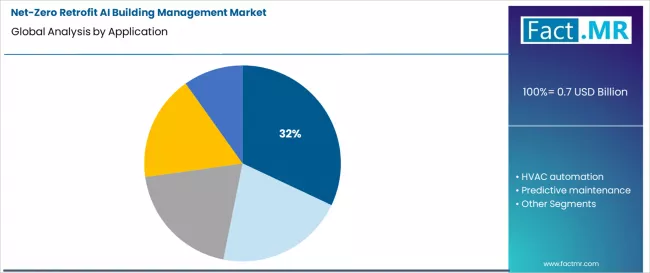
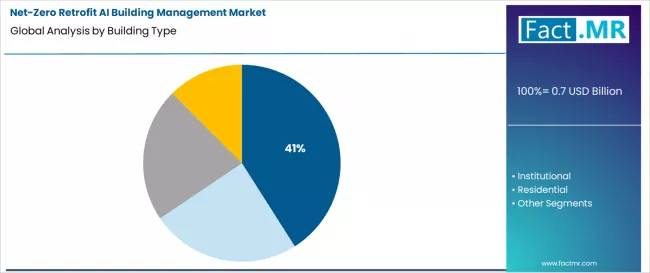
Net-zero retrofit ai building management market is projected to grow from USD 0.7 billion in 2026 to USD 1.6 billion by 2036, at a CAGR of 8.3%. Energy optimisation will dominate with a 32.0% market share, while commercial offices will lead the building type segment with a 41.0% share.
Net-Zero Retrofit AI Building Management Market Forecast and Outlook 2026 to 2036
The global net-zero retrofit AI building management market is forecast to grow from USD 0.70 billion in 2026 to USD 1.55 billion by 2036, registering a CAGR of 8.3%. This growth is driven by stringent global carbon emission regulations and the economic imperative to modernize existing building stocks, which are responsible for a significant portion of energy consumption.
Key Takeaways from the Net-Zero Retrofit AI Building Management Market
- Market Value for 2026: USD 0.70 Billion
- Market Value for 2036: USD 1.55 Billion
- Forecast CAGR (2026-2036): 8.3%
- Leading Application Segment (2026): Energy Optimisation (32%)
- Leading Building Type Segment (2026): Commercial Offices (41%)
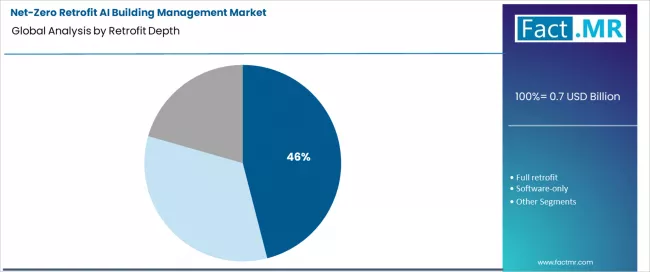
- Leading Retrofit Depth Segment (2026): Hardware & Software (46%)
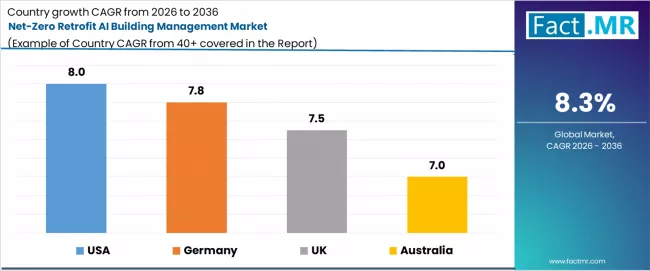
- Key Growth Countries: USA (8.00% CAGR), Germany (7.80% CAGR), UK (7.50% CAGR), Australia (7.00% CAGR)
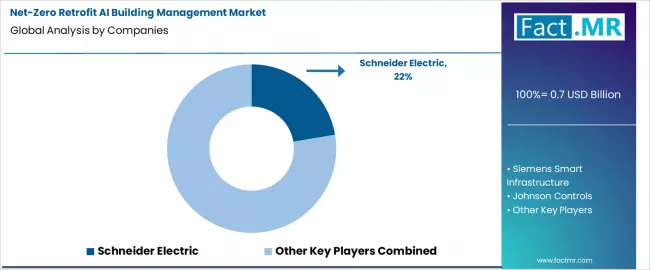
- Key Players in the Market: Schneider Electric, Siemens Smart Infrastructure, Johnson Controls, Honeywell International Inc. Building Technologies, ABB, Mitsubishi Electric

AI-driven management platforms are critical for achieving deep energy savings and operational efficiency in older structures. The leading application is energy optimization, holding a 32% share, as it directly targets reduced consumption. Commercial offices (41%) are the primary building type undergoing retrofits, with most projects involving integrated Hardware & Software solutions (46%) for maximum impact.
Established building automation and energy management giants, who are leveraging their extensive installed bases and domain expertise to integrate AI, creating a high barrier to entry and accelerating the adoption of intelligent, data-driven retrofit solutions, characterize the competitive landscape.
Metric
| Metric | Value |
| Market Value (2026) | USD 0.70 Billion |
| Market Forecast Value (2036) | USD 1.55 Billion |
| Forecast CAGR (2026-2036) | 8.3% |
Category
| Category | Segments |
| Application | Energy Optimisation, HVAC Automation, Predictive Maintenance, Carbon Analytics, Grid/DR Integration |
| Building Type | Commercial Offices, Institutional, Residential, Mixed-use |
| Retrofit Depth | Hardware & Software, Full Retrofit, Software-only |
| Region | North America, Latin America, Western Europe, Eastern Europe, East Asia, South Asia & Pacific, MEA |
Segmental Analysis
By Application, Which AI Function Delivers Immediate ROI?

Energy optimisation leads the application segment with a 32% share. This focus is due to its direct, measurable impact on reducing utility costs, providing the fastest and most tangible return on investment for building owners.
AI algorithms analyze energy consumption patterns from IoT sensors, weather data, and occupancy schedules to dynamically adjust lighting, HVAC, and equipment operation, identifying and eliminating waste without compromising comfort, making it the foundational use case for AI in retrofits.
By Building Type, Where is the Commercial Imperative Strongest?

Commercial offices are the dominant building type, accounting for 41% of the market. This segment faces intense pressure from corporate sustainability goals, tenant demands for green certifications like LEED and WELL, and the need to enhance asset value.
The scale of energy consumption in office buildings and the availability of capital for retrofits make them prime targets for comprehensive AI-driven management system upgrades to achieve net-zero operational targets.
By Retrofit Depth, What is the Most Common Approach?

Integrated hardware & software retrofits constitute the leading segment at 46%. This approach involves installing new sensors, smart controllers, and gateways alongside advanced AI software.
It reflects the reality that many existing buildings lack the modern IoT sensor infrastructure required for effective AI analysis. A combined upgrade is often necessary to harvest the granular data needed to drive meaningful optimization, representing a more substantial initial investment for long-term gains.
What are the Drivers, Challenges, and Innovations Shaping this Market?
The primary market driver is the convergence of stringent government mandates for building decarbonization and rising energy costs, which make retrofits financially compelling. A significant restraint is the high upfront capital requirement and operational disruption associated with deep retrofit projects, particularly in occupied buildings.
A major opportunity lies in the expansion of AI into predictive maintenance and carbon analytics, moving beyond energy savings to extend equipment life and provide auditable ESG reporting.
The dominant trend is the shift from standalone building management to cloud-native, AI-powered platforms that enable portfolio-wide optimization, facilitate demand response integration with the smart grid, and use machine learning to continuously adapt and improve building performance based on evolving usage patterns.
Analysis of the Net-Zero Retrofit AI Building Management Market by Key Countries

| Country | CAGR (2026-2036) |
| USA | 8.00% |
| Germany | 7.80% |
| UK | 7.50% |
| Australia | 7.00% |
How do Regulations and ESG Investment Drive Market Leadership in USA?

The USA's 8.00% CAGR is propelled by a combination of state-level building performance standards, federal incentives for energy efficiency, and strong institutional ESG investment. Major real estate investment trusts (REITs) and corporations are retrofitting portfolios to meet sustainability benchmarks.
The market is characterized by the adoption of comprehensive cloud-based AI platforms that manage buildings across states, complying with diverse local regulations like Local Law 97 in New York City.
What Underpins Germany's Technically Rigorous Retrofit Market?
The ambitious Energieeffizienzstrategie Gebäude (Building Energy Efficiency Strategy) and high engineering standards drive Germany’s 7.80% growth. The focus is on deep, holistic retrofits of its aged building stock, integrating AI management with envelope improvements and renewable energy systems.
Demand is for high-reliability, cybersecurity-compliant solutions that can seamlessly integrate with complex existing building automation systems, often based on KNX or BACnet standards.
How is the UK's Legal Framework for Decarbonization Accelerating Adoption?
The UK's 7.50% CAGR is directly tied to its legally binding net-zero target and stringent Minimum Energy Efficiency Standards (MEES) for rental properties. This regulatory pressure is forcing landlords and property owners to invest in upgrades.
The market sees growth in AI-driven software solutions applied to existing building management systems to achieve compliance quickly, alongside full retrofits for public sector and institutional buildings.
Why is Australia a Key Market Focused on Resilience and Renewables?
Australia's 7.00% growth is fueled by a focus on building resilience against extreme weather, high energy prices, and a strong push for rooftop solar integration. AI building management is sought to optimize energy consumption, manage battery storage, and participate in virtual power plants. Both commercial property owners and a growing segment of high-end residential retrofits aiming for energy independence drive the market.
Competitive Landscape of the Net-Zero Retrofit AI Building Management Market

The competitive landscape is highly consolidated, dominated by multinational giants in building automation, electrical equipment, and industrial software. These players compete on the breadth of their product ecosystems, from connected hardware and sensors to enterprise-level AI software clouds, and their global service and integration capabilities.
Success hinges on offering open, interoperable platforms that can manage multi-vendor environments, providing credible measurement and verification of energy savings, and securing large-scale, portfolio-wide contracts with real estate operators and governments.
Key Players in the Net-Zero Retrofit AI Building Management Market
- Schneider Electric
- Siemens Smart Infrastructure
- Johnson Controls
- Honeywell International Inc. Building Technologies
- ABB
- Mitsubishi Electric
Scope of Report
| Items | Values |
| Quantitative Units | USD Billion |
| Application | Energy Optimisation, HVAC Automation, Predictive Maintenance, Carbon Analytics, Grid/DR Integration |
| Building Type | Commercial Offices, Institutional, Residential, Mixed-use |
| Retrofit Depth | Hardware & Software, Full Retrofit, Software-only |
| Key Countries | USA, Germany, UK, Australia |
| Key Companies | Schneider Electric, Siemens Smart Infrastructure, Johnson Controls, Honeywell International Inc. Building Technologies, ABB, Mitsubishi Electric |
| Additional Analysis | Financial modeling of retrofit ROI and payback periods; analysis of AI algorithm transparency and explainability for fault detection; study of data privacy and security in cloud-based building management; assessment of workforce skills gap for deploying AI BMS; evaluation of integration standards (BACnet, Haystack, etc.) for legacy system connectivity. |
Market by Segments
-
Application :
- Energy Optimisation
- HVAC Automation
- Predictive Maintenance
- Carbon Analytics
- Grid/DR Integration
-
Building Type :
- Commercial Offices
- Institutional
- Residential
- Mixed-use
-
Retrofit Depth :
- Hardware & Software
- Full Retrofit
- Software-only
-
Region :
- North America
- USA
- Canada
- Latin America
- Brazil
- Mexico
- Argentina
- Rest of Latin America
- Western Europe
- Germany
- France
- Italy
- Spain
- UK
- BENELUX
- Rest of Western Europe
- Eastern Europe
- Russia
- Poland
- Czech Republic
- Rest of Eastern Europe
- East Asia
- China
- Japan
- South Korea
- Rest of East Asia
- South Asia & Pacific
- India
- ASEAN
- Australia
- Rest of South Asia & Pacific
- MEA
- GCC Countries
- South Africa
- Turkiye
- Rest of MEA
- North America
References
- ASHRAE. (2024). Guideline 36-2024: High-Performance Sequences of Operation for HVAC Systems. American Society of Heating, Refrigerating and Air-Conditioning Engineers.
- International Energy Agency (IEA). (2024). Buildings: A source of enormous untapped efficiency potential. IEA Tracking Report.
- Johnson, P., & May, T. (2023). Artificial Intelligence for Building Energy Management: From Automation to Optimisation. Routledge.
- U.S. Green Building Council (USGBC). (2024). LEED v4.1 Operations and Maintenance Guide. USGBC.
- Wang, S., & Xie, J. (2023). Integrating AI with IoT for Smart Building and City Management. Elsevier.
- World Green Building Council. (2024). Net Zero Carbon Buildings Commitment: Progress and Insights Report. WorldGBC.
Table of Content
- Executive Summary
- Global Market Outlook
- Demand to side Trends
- Supply to side Trends
- Technology Roadmap Analysis
- Analysis and Recommendations
- Market Overview
- Market Coverage / Taxonomy
- Market Definition / Scope / Limitations
- Market Background
- Market Dynamics
- Drivers
- Restraints
- Opportunity
- Trends
- Scenario Forecast
- Demand in Optimistic Scenario
- Demand in Likely Scenario
- Demand in Conservative Scenario
- Opportunity Map Analysis
- Product Life Cycle Analysis
- Supply Chain Analysis
- Investment Feasibility Matrix
- Value Chain Analysis
- PESTLE and Porter’s Analysis
- Regulatory Landscape
- Regional Parent Market Outlook
- Production and Consumption Statistics
- Import and Export Statistics
- Market Dynamics
- Global Market Analysis 2021 to 2025 and Forecast, 2026 to 2036
- Historical Market Size Value (USD Million) Analysis, 2021 to 2025
- Current and Future Market Size Value (USD Million) Projections, 2026 to 2036
- Y to o to Y Growth Trend Analysis
- Absolute $ Opportunity Analysis
- Global Market Pricing Analysis 2021 to 2025 and Forecast 2026 to 2036
- Global Market Analysis 2021 to 2025 and Forecast 2026 to 2036, By Application
- Introduction / Key Findings
- Historical Market Size Value (USD Million) Analysis By Application, 2021 to 2025
- Current and Future Market Size Value (USD Million) Analysis and Forecast By Application, 2026 to 2036
- Energy optimisation
- HVAC automation
- Predictive maintenance
- Carbon analytics
- Grid / DR integration
- Energy optimisation
- Y to o to Y Growth Trend Analysis By Application, 2021 to 2025
- Absolute $ Opportunity Analysis By Application, 2026 to 2036
- Global Market Analysis 2021 to 2025 and Forecast 2026 to 2036, By Building Type
- Introduction / Key Findings
- Historical Market Size Value (USD Million) Analysis By Building Type, 2021 to 2025
- Current and Future Market Size Value (USD Million) Analysis and Forecast By Building Type, 2026 to 2036
- Commercial offices
- Institutional
- Residential
- Mixed-use
- Commercial offices
- Y to o to Y Growth Trend Analysis By Building Type, 2021 to 2025
- Absolute $ Opportunity Analysis By Building Type, 2026 to 2036
- Global Market Analysis 2021 to 2025 and Forecast 2026 to 2036, By Retrofit Depth
- Introduction / Key Findings
- Historical Market Size Value (USD Million) Analysis By Retrofit Depth, 2021 to 2025
- Current and Future Market Size Value (USD Million) Analysis and Forecast By Retrofit Depth, 2026 to 2036
- Hardware & Software
- Full retrofit
- Software-only
- Hardware & Software
- Y to o to Y Growth Trend Analysis By Retrofit Depth, 2021 to 2025
- Absolute $ Opportunity Analysis By Retrofit Depth, 2026 to 2036
- Global Market Analysis 2021 to 2025 and Forecast 2026 to 2036, By Region
- Introduction
- Historical Market Size Value (USD Million) Analysis By Region, 2021 to 2025
- Current Market Size Value (USD Million) Analysis and Forecast By Region, 2026 to 2036
- North America
- Latin America
- Western Europe
- Eastern Europe
- East Asia
- South Asia and Pacific
- Middle East & Africa
- Market Attractiveness Analysis By Region
- North America Market Analysis 2021 to 2025 and Forecast 2026 to 2036, By Country
- Historical Market Size Value (USD Million) Trend Analysis By Market Taxonomy, 2021 to 2025
- Market Size Value (USD Million) Forecast By Market Taxonomy, 2026 to 2036
- By Country
- USA
- Canada
- Mexico
- By Application
- By Building Type
- By Retrofit Depth
- By Country
- Market Attractiveness Analysis
- By Country
- By Application
- By Building Type
- By Retrofit Depth
- Key Takeaways
- Latin America Market Analysis 2021 to 2025 and Forecast 2026 to 2036, By Country
- Historical Market Size Value (USD Million) Trend Analysis By Market Taxonomy, 2021 to 2025
- Market Size Value (USD Million) Forecast By Market Taxonomy, 2026 to 2036
- By Country
- Brazil
- Chile
- Rest of Latin America
- By Application
- By Building Type
- By Retrofit Depth
- By Country
- Market Attractiveness Analysis
- By Country
- By Application
- By Building Type
- By Retrofit Depth
- Key Takeaways
- Western Europe Market Analysis 2021 to 2025 and Forecast 2026 to 2036, By Country
- Historical Market Size Value (USD Million) Trend Analysis By Market Taxonomy, 2021 to 2025
- Market Size Value (USD Million) Forecast By Market Taxonomy, 2026 to 2036
- By Country
- Germany
- UK
- Italy
- Spain
- France
- Nordic
- BENELUX
- Rest of Western Europe
- By Application
- By Building Type
- By Retrofit Depth
- By Country
- Market Attractiveness Analysis
- By Country
- By Application
- By Building Type
- By Retrofit Depth
- Key Takeaways
- Eastern Europe Market Analysis 2021 to 2025 and Forecast 2026 to 2036, By Country
- Historical Market Size Value (USD Million) Trend Analysis By Market Taxonomy, 2021 to 2025
- Market Size Value (USD Million) Forecast By Market Taxonomy, 2026 to 2036
- By Country
- Russia
- Poland
- Hungary
- Balkan & Baltic
- Rest of Eastern Europe
- By Application
- By Building Type
- By Retrofit Depth
- By Country
- Market Attractiveness Analysis
- By Country
- By Application
- By Building Type
- By Retrofit Depth
- Key Takeaways
- East Asia Market Analysis 2021 to 2025 and Forecast 2026 to 2036, By Country
- Historical Market Size Value (USD Million) Trend Analysis By Market Taxonomy, 2021 to 2025
- Market Size Value (USD Million) Forecast By Market Taxonomy, 2026 to 2036
- By Country
- China
- Japan
- South Korea
- By Application
- By Building Type
- By Retrofit Depth
- By Country
- Market Attractiveness Analysis
- By Country
- By Application
- By Building Type
- By Retrofit Depth
- Key Takeaways
- South Asia and Pacific Market Analysis 2021 to 2025 and Forecast 2026 to 2036, By Country
- Historical Market Size Value (USD Million) Trend Analysis By Market Taxonomy, 2021 to 2025
- Market Size Value (USD Million) Forecast By Market Taxonomy, 2026 to 2036
- By Country
- India
- ASEAN
- Australia & New Zealand
- Rest of South Asia and Pacific
- By Application
- By Building Type
- By Retrofit Depth
- By Country
- Market Attractiveness Analysis
- By Country
- By Application
- By Building Type
- By Retrofit Depth
- Key Takeaways
- Middle East & Africa Market Analysis 2021 to 2025 and Forecast 2026 to 2036, By Country
- Historical Market Size Value (USD Million) Trend Analysis By Market Taxonomy, 2021 to 2025
- Market Size Value (USD Million) Forecast By Market Taxonomy, 2026 to 2036
- By Country
- Kingdom of Saudi Arabia
- Other GCC Countries
- Turkiye
- South Africa
- Other African Union
- Rest of Middle East & Africa
- By Application
- By Building Type
- By Retrofit Depth
- By Country
- Market Attractiveness Analysis
- By Country
- By Application
- By Building Type
- By Retrofit Depth
- Key Takeaways
- Key Countries Market Analysis
- USA
- Pricing Analysis
- Market Share Analysis, 2025
- By Application
- By Building Type
- By Retrofit Depth
- Canada
- Pricing Analysis
- Market Share Analysis, 2025
- By Application
- By Building Type
- By Retrofit Depth
- Mexico
- Pricing Analysis
- Market Share Analysis, 2025
- By Application
- By Building Type
- By Retrofit Depth
- Brazil
- Pricing Analysis
- Market Share Analysis, 2025
- By Application
- By Building Type
- By Retrofit Depth
- Chile
- Pricing Analysis
- Market Share Analysis, 2025
- By Application
- By Building Type
- By Retrofit Depth
- Germany
- Pricing Analysis
- Market Share Analysis, 2025
- By Application
- By Building Type
- By Retrofit Depth
- UK
- Pricing Analysis
- Market Share Analysis, 2025
- By Application
- By Building Type
- By Retrofit Depth
- Italy
- Pricing Analysis
- Market Share Analysis, 2025
- By Application
- By Building Type
- By Retrofit Depth
- Spain
- Pricing Analysis
- Market Share Analysis, 2025
- By Application
- By Building Type
- By Retrofit Depth
- France
- Pricing Analysis
- Market Share Analysis, 2025
- By Application
- By Building Type
- By Retrofit Depth
- India
- Pricing Analysis
- Market Share Analysis, 2025
- By Application
- By Building Type
- By Retrofit Depth
- ASEAN
- Pricing Analysis
- Market Share Analysis, 2025
- By Application
- By Building Type
- By Retrofit Depth
- Australia & New Zealand
- Pricing Analysis
- Market Share Analysis, 2025
- By Application
- By Building Type
- By Retrofit Depth
- China
- Pricing Analysis
- Market Share Analysis, 2025
- By Application
- By Building Type
- By Retrofit Depth
- Japan
- Pricing Analysis
- Market Share Analysis, 2025
- By Application
- By Building Type
- By Retrofit Depth
- South Korea
- Pricing Analysis
- Market Share Analysis, 2025
- By Application
- By Building Type
- By Retrofit Depth
- Russia
- Pricing Analysis
- Market Share Analysis, 2025
- By Application
- By Building Type
- By Retrofit Depth
- Poland
- Pricing Analysis
- Market Share Analysis, 2025
- By Application
- By Building Type
- By Retrofit Depth
- Hungary
- Pricing Analysis
- Market Share Analysis, 2025
- By Application
- By Building Type
- By Retrofit Depth
- Kingdom of Saudi Arabia
- Pricing Analysis
- Market Share Analysis, 2025
- By Application
- By Building Type
- By Retrofit Depth
- Turkiye
- Pricing Analysis
- Market Share Analysis, 2025
- By Application
- By Building Type
- By Retrofit Depth
- South Africa
- Pricing Analysis
- Market Share Analysis, 2025
- By Application
- By Building Type
- By Retrofit Depth
- USA
- Market Structure Analysis
- Competition Dashboard
- Competition Benchmarking
- Market Share Analysis of Top Players
- By Regional
- By Application
- By Building Type
- By Retrofit Depth
- Competition Analysis
- Competition Deep Dive
- Schneider Electric
- Overview
- Product Portfolio
- Profitability by Market Segments (Product/Age /Sales Channel/Region)
- Sales Footprint
- Strategy Overview
- Marketing Strategy
- Product Strategy
- Channel Strategy
- Siemens Smart Infrastructure
- Johnson Controls
- Honeywell International Inc. Building Technologies
- ABB
- Mitsubishi Electric
- Schneider Electric
- Competition Deep Dive
- Assumptions & Acronyms Used
- Research Methodology
List Of Table
- Table 1: Global Market Value (USD Million) Forecast by Region, 2021 to 2036
- Table 2: Global Market Value (USD Million) Forecast by Application, 2021 to 2036
- Table 3: Global Market Value (USD Million) Forecast by Building Type, 2021 to 2036
- Table 4: Global Market Value (USD Million) Forecast by Retrofit Depth, 2021 to 2036
- Table 5: North America Market Value (USD Million) Forecast by Country, 2021 to 2036
- Table 6: North America Market Value (USD Million) Forecast by Application, 2021 to 2036
- Table 7: North America Market Value (USD Million) Forecast by Building Type, 2021 to 2036
- Table 8: North America Market Value (USD Million) Forecast by Retrofit Depth, 2021 to 2036
- Table 9: Latin America Market Value (USD Million) Forecast by Country, 2021 to 2036
- Table 10: Latin America Market Value (USD Million) Forecast by Application, 2021 to 2036
- Table 11: Latin America Market Value (USD Million) Forecast by Building Type, 2021 to 2036
- Table 12: Latin America Market Value (USD Million) Forecast by Retrofit Depth, 2021 to 2036
- Table 13: Western Europe Market Value (USD Million) Forecast by Country, 2021 to 2036
- Table 14: Western Europe Market Value (USD Million) Forecast by Application, 2021 to 2036
- Table 15: Western Europe Market Value (USD Million) Forecast by Building Type, 2021 to 2036
- Table 16: Western Europe Market Value (USD Million) Forecast by Retrofit Depth, 2021 to 2036
- Table 17: Eastern Europe Market Value (USD Million) Forecast by Country, 2021 to 2036
- Table 18: Eastern Europe Market Value (USD Million) Forecast by Application, 2021 to 2036
- Table 19: Eastern Europe Market Value (USD Million) Forecast by Building Type, 2021 to 2036
- Table 20: Eastern Europe Market Value (USD Million) Forecast by Retrofit Depth, 2021 to 2036
- Table 21: East Asia Market Value (USD Million) Forecast by Country, 2021 to 2036
- Table 22: East Asia Market Value (USD Million) Forecast by Application, 2021 to 2036
- Table 23: East Asia Market Value (USD Million) Forecast by Building Type, 2021 to 2036
- Table 24: East Asia Market Value (USD Million) Forecast by Retrofit Depth, 2021 to 2036
- Table 25: South Asia and Pacific Market Value (USD Million) Forecast by Country, 2021 to 2036
- Table 26: South Asia and Pacific Market Value (USD Million) Forecast by Application, 2021 to 2036
- Table 27: South Asia and Pacific Market Value (USD Million) Forecast by Building Type, 2021 to 2036
- Table 28: South Asia and Pacific Market Value (USD Million) Forecast by Retrofit Depth, 2021 to 2036
- Table 29: Middle East & Africa Market Value (USD Million) Forecast by Country, 2021 to 2036
- Table 30: Middle East & Africa Market Value (USD Million) Forecast by Application, 2021 to 2036
- Table 31: Middle East & Africa Market Value (USD Million) Forecast by Building Type, 2021 to 2036
- Table 32: Middle East & Africa Market Value (USD Million) Forecast by Retrofit Depth, 2021 to 2036
List Of Figures
- Figure 1: Global Market Pricing Analysis
- Figure 2: Global Market Value (USD Million) Forecast 2021 to 2036
- Figure 3: Global Market Value Share and BPS Analysis by Application, 2026 and 2036
- Figure 4: Global Market Y to o to Y Growth Comparison by Application, 2026 to 2036
- Figure 5: Global Market Attractiveness Analysis by Application
- Figure 6: Global Market Value Share and BPS Analysis by Building Type, 2026 and 2036
- Figure 7: Global Market Y to o to Y Growth Comparison by Building Type, 2026 to 2036
- Figure 8: Global Market Attractiveness Analysis by Building Type
- Figure 9: Global Market Value Share and BPS Analysis by Retrofit Depth, 2026 and 2036
- Figure 10: Global Market Y to o to Y Growth Comparison by Retrofit Depth, 2026 to 2036
- Figure 11: Global Market Attractiveness Analysis by Retrofit Depth
- Figure 12: Global Market Value (USD Million) Share and BPS Analysis by Region, 2026 and 2036
- Figure 13: Global Market Y to o to Y Growth Comparison by Region, 2026 to 2036
- Figure 14: Global Market Attractiveness Analysis by Region
- Figure 15: North America Market Incremental Dollar Opportunity, 2026 to 2036
- Figure 16: Latin America Market Incremental Dollar Opportunity, 2026 to 2036
- Figure 17: Western Europe Market Incremental Dollar Opportunity, 2026 to 2036
- Figure 18: Eastern Europe Market Incremental Dollar Opportunity, 2026 to 2036
- Figure 19: East Asia Market Incremental Dollar Opportunity, 2026 to 2036
- Figure 20: South Asia and Pacific Market Incremental Dollar Opportunity, 2026 to 2036
- Figure 21: Middle East & Africa Market Incremental Dollar Opportunity, 2026 to 2036
- Figure 22: North America Market Value Share and BPS Analysis by Country, 2026 and 2036
- Figure 23: North America Market Value Share and BPS Analysis by Application, 2026 and 2036
- Figure 24: North America Market Y to o to Y Growth Comparison by Application, 2026 to 2036
- Figure 25: North America Market Attractiveness Analysis by Application
- Figure 26: North America Market Value Share and BPS Analysis by Building Type, 2026 and 2036
- Figure 27: North America Market Y to o to Y Growth Comparison by Building Type, 2026 to 2036
- Figure 28: North America Market Attractiveness Analysis by Building Type
- Figure 29: North America Market Value Share and BPS Analysis by Retrofit Depth, 2026 and 2036
- Figure 30: North America Market Y to o to Y Growth Comparison by Retrofit Depth, 2026 to 2036
- Figure 31: North America Market Attractiveness Analysis by Retrofit Depth
- Figure 32: Latin America Market Value Share and BPS Analysis by Country, 2026 and 2036
- Figure 33: Latin America Market Value Share and BPS Analysis by Application, 2026 and 2036
- Figure 34: Latin America Market Y to o to Y Growth Comparison by Application, 2026 to 2036
- Figure 35: Latin America Market Attractiveness Analysis by Application
- Figure 36: Latin America Market Value Share and BPS Analysis by Building Type, 2026 and 2036
- Figure 37: Latin America Market Y to o to Y Growth Comparison by Building Type, 2026 to 2036
- Figure 38: Latin America Market Attractiveness Analysis by Building Type
- Figure 39: Latin America Market Value Share and BPS Analysis by Retrofit Depth, 2026 and 2036
- Figure 40: Latin America Market Y to o to Y Growth Comparison by Retrofit Depth, 2026 to 2036
- Figure 41: Latin America Market Attractiveness Analysis by Retrofit Depth
- Figure 42: Western Europe Market Value Share and BPS Analysis by Country, 2026 and 2036
- Figure 43: Western Europe Market Value Share and BPS Analysis by Application, 2026 and 2036
- Figure 44: Western Europe Market Y to o to Y Growth Comparison by Application, 2026 to 2036
- Figure 45: Western Europe Market Attractiveness Analysis by Application
- Figure 46: Western Europe Market Value Share and BPS Analysis by Building Type, 2026 and 2036
- Figure 47: Western Europe Market Y to o to Y Growth Comparison by Building Type, 2026 to 2036
- Figure 48: Western Europe Market Attractiveness Analysis by Building Type
- Figure 49: Western Europe Market Value Share and BPS Analysis by Retrofit Depth, 2026 and 2036
- Figure 50: Western Europe Market Y to o to Y Growth Comparison by Retrofit Depth, 2026 to 2036
- Figure 51: Western Europe Market Attractiveness Analysis by Retrofit Depth
- Figure 52: Eastern Europe Market Value Share and BPS Analysis by Country, 2026 and 2036
- Figure 53: Eastern Europe Market Value Share and BPS Analysis by Application, 2026 and 2036
- Figure 54: Eastern Europe Market Y to o to Y Growth Comparison by Application, 2026 to 2036
- Figure 55: Eastern Europe Market Attractiveness Analysis by Application
- Figure 56: Eastern Europe Market Value Share and BPS Analysis by Building Type, 2026 and 2036
- Figure 57: Eastern Europe Market Y to o to Y Growth Comparison by Building Type, 2026 to 2036
- Figure 58: Eastern Europe Market Attractiveness Analysis by Building Type
- Figure 59: Eastern Europe Market Value Share and BPS Analysis by Retrofit Depth, 2026 and 2036
- Figure 60: Eastern Europe Market Y to o to Y Growth Comparison by Retrofit Depth, 2026 to 2036
- Figure 61: Eastern Europe Market Attractiveness Analysis by Retrofit Depth
- Figure 62: East Asia Market Value Share and BPS Analysis by Country, 2026 and 2036
- Figure 63: East Asia Market Value Share and BPS Analysis by Application, 2026 and 2036
- Figure 64: East Asia Market Y to o to Y Growth Comparison by Application, 2026 to 2036
- Figure 65: East Asia Market Attractiveness Analysis by Application
- Figure 66: East Asia Market Value Share and BPS Analysis by Building Type, 2026 and 2036
- Figure 67: East Asia Market Y to o to Y Growth Comparison by Building Type, 2026 to 2036
- Figure 68: East Asia Market Attractiveness Analysis by Building Type
- Figure 69: East Asia Market Value Share and BPS Analysis by Retrofit Depth, 2026 and 2036
- Figure 70: East Asia Market Y to o to Y Growth Comparison by Retrofit Depth, 2026 to 2036
- Figure 71: East Asia Market Attractiveness Analysis by Retrofit Depth
- Figure 72: South Asia and Pacific Market Value Share and BPS Analysis by Country, 2026 and 2036
- Figure 73: South Asia and Pacific Market Value Share and BPS Analysis by Application, 2026 and 2036
- Figure 74: South Asia and Pacific Market Y to o to Y Growth Comparison by Application, 2026 to 2036
- Figure 75: South Asia and Pacific Market Attractiveness Analysis by Application
- Figure 76: South Asia and Pacific Market Value Share and BPS Analysis by Building Type, 2026 and 2036
- Figure 77: South Asia and Pacific Market Y to o to Y Growth Comparison by Building Type, 2026 to 2036
- Figure 78: South Asia and Pacific Market Attractiveness Analysis by Building Type
- Figure 79: South Asia and Pacific Market Value Share and BPS Analysis by Retrofit Depth, 2026 and 2036
- Figure 80: South Asia and Pacific Market Y to o to Y Growth Comparison by Retrofit Depth, 2026 to 2036
- Figure 81: South Asia and Pacific Market Attractiveness Analysis by Retrofit Depth
- Figure 82: Middle East & Africa Market Value Share and BPS Analysis by Country, 2026 and 2036
- Figure 83: Middle East & Africa Market Value Share and BPS Analysis by Application, 2026 and 2036
- Figure 84: Middle East & Africa Market Y to o to Y Growth Comparison by Application, 2026 to 2036
- Figure 85: Middle East & Africa Market Attractiveness Analysis by Application
- Figure 86: Middle East & Africa Market Value Share and BPS Analysis by Building Type, 2026 and 2036
- Figure 87: Middle East & Africa Market Y to o to Y Growth Comparison by Building Type, 2026 to 2036
- Figure 88: Middle East & Africa Market Attractiveness Analysis by Building Type
- Figure 89: Middle East & Africa Market Value Share and BPS Analysis by Retrofit Depth, 2026 and 2036
- Figure 90: Middle East & Africa Market Y to o to Y Growth Comparison by Retrofit Depth, 2026 to 2036
- Figure 91: Middle East & Africa Market Attractiveness Analysis by Retrofit Depth
- Figure 92: Global Market - Tier Structure Analysis
- Figure 93: Global Market - Company Share Analysis
- FAQs -
How big is the net-zero retrofit ai building management market in 2026?
The global net-zero retrofit ai building management market is estimated to be valued at USD 0.7 billion in 2026.
What will be the size of net-zero retrofit ai building management market in 2036?
The market size for the net-zero retrofit ai building management market is projected to reach USD 1.6 billion by 2036.
How much will be the net-zero retrofit ai building management market growth between 2026 and 2036?
The net-zero retrofit ai building management market is expected to grow at a 8.3% CAGR between 2026 and 2036.
What are the key product types in the net-zero retrofit ai building management market?
The key product types in net-zero retrofit ai building management market are energy optimisation, hvac automation, predictive maintenance, carbon analytics and grid / dr integration.
Which building type segment to contribute significant share in the net-zero retrofit ai building management market in 2026?
In terms of building type, commercial offices segment to command 41.0% share in the net-zero retrofit ai building management market in 2026.