- Base Value(2025): 695.2 Bn
- Estimated Value(2025): 695.2 Bn
- Forecast Value (2035): 695.2 Bn
- CAGR (2025 - 2035): 3.2%
Pregnancy Pillow Market Size and Share Forecast Outlook 2025 to 2035
The global pregnancy pillow market is projected to reach USD 952.6 billion by 2035, growing from an estimated USD 695.2 billion in 2025, expanding at a CAGR of 3.2% over the forecast period. Pregnancy pillows are becoming more popular because more women are becoming aware of the importance of maternal health, the number of working-class women in cities is growing, and there is a greater focus on getting enough sleep during pregnancy.
The market is also growing because of the rise of digital health trends, the focus on consumer wellness, and the rise in spending on comfort-based maternity products, especially in developed and emerging economies. Also, online shopping and social media's impact on maternity and newborn care are making products more visible, which is helping them reach more people in different parts of the world.
Quick Stats of Pregnancy Pillow Market
- Pregnancy Pillow Market Size (2025): USD 695.2 billion
- Projected Pregnancy Pillow Market Size (2035): USD 952.6 billion
- Forecast CAGR (2025–2035): 3.2%
- Leading Product Type Segment of Pregnancy Pillow Market: Full-body Pillows
- Leading Shape Segment of Pregnancy Pillow Market: U-Shaped
- Key Growth Regions of Pregnancy Pillow Market: United States, China, Germany
- Prominent Players in the Pregnancy Pillow Market: AMOB, BLM Group, Schwarze-Robitec, Baileigh Industrial and Chiyoda Kogyo
2025-to-2035.webp "Us Pregnancy Pillow Market Value(usd Million)2025 To 2035")
Us Pregnancy Pillow Market Value(usd Million)2025 To 2035 | Source: Fact.MR
Metric Overview
| Metric | Value |
|---|---|
| Industry Size (2025E) | USD 695.2 billion |
| Industry Size (2035F) | USD 952.6 billion |
| CAGR (2025–2035) | 3.2% |
Source: Fact.MR analysis. Updated Aug 19, 2025
With the pregnancy pillow industry projected to grow from USD 695.2 billion in 2025 to USD 952.6 billion in 2035, the compound annual growth rate (CAGR) of 3.2% translates into an average annual increase of roughly USD 25.7 billion. The progression implies consistent year-on-year expansion, with absolute gains becoming more pronounced in later years due to compounding.
In the initial half of the forecast period 2025–2030, growth would be gradual, adding around USD 110–130 billion in total value. In the latter half (2031–2035), the annual increments would accelerate slightly, contributing about USD 140–150 billion, reflecting increasing penetration in both developed and emerging economies.
This steady pace of expansion can be attributed to rising awareness regarding maternity comfort products, an increase in global birth rates in specific regions, and growing adoption of specialty sleep aids during pregnancy. E-commerce growth has made premium and niche designs more accessible, especially in rural and semi-urban markets. Hospitals, maternity clinics, and prenatal care programs have also played a role by recommending such products as part of holistic pregnancy well-being strategies.
The market has also benefited from product innovation, such as multifunctional pillows that cater to both prenatal and postnatal stages, alongside advancements in hypoallergenic and breathable materials. Expanding retail presence and brand endorsements have enhanced visibility, driving higher adoption in first-time mothers.
However, the growth remains moderate due to market maturity in North America and Western Europe, where replacement sales form a large part of the volume. Price sensitivity in certain Asian and African markets can slow adoption of premium variants, although affordable alternatives are addressing this gap. Overall, the industry trajectory reflects a balanced blend of replacement-driven demand in mature economies and first-time adoption in emerging markets, ensuring steady year-on-year gains throughout the forecast period.
What are the Key Drivers of the Pregnancy Pillow Market?
The rising global concern for maternal health and prenatal care is one of the most vital drivers behind the growth of the pregnancy pillow market. Expecting mothers are becoming increasingly conscious of the importance of proper sleep posture and body support during pregnancy, particularly during the second and third trimesters. Medical experts and gynecologists are now more frequently recommending pregnancy pillows to reduce pressure on the hips, back, and abdominal areas. In turn, this has led to heightened product adoption globally.
Pregnancy-related physical discomfort, especially in regions experiencing late pregnancies due to lifestyle choices or career commitments, has led to increased interest in supportive sleep products. These pillows help mitigate risks associated with poor posture, restless sleep, and back pain, which are common among pregnant women, thus driving demand in both healthcare settings and among individual consumers.
The huge change in how people shop online is speeding up the growth of the pregnancy pillow market. Online shopping makes it easier to find niche maternity products that weren't available in regular stores before. Platforms like Amazon, Walmart, and websites that focus on maternity have made it much easier to find and buy products, especially in rural areas or places that aren't very well connected.
Influencer marketing and endorsements from mommy bloggers have been very important in getting people to see products. Modern e-commerce ecosystems are creating a strong demand for pregnancy pillows, especially in areas with a lot of mobile and internet use. This is thanks to consumer reviews, comparison tools, and digital ads.
What are the Regional Trends of the Pregnancy Pillow Market?
North America Leads in Product Innovation and Maternal Care Spending
North America dominates the pregnancy pillow market, owing to increased awareness of prenatal care, greater purchasing power, and a well-developed maternity product distribution infrastructure. A growing number of women in the U.S. are opting for comfort-oriented solutions during pregnancy due to medical advice or lifestyle-driven choices. Market players frequently launch ergonomic pillow variants with memory foam, hypoallergenic fabrics, and machine-washable features to attract this discerning customer base.
Supportive government policies on maternal health, growing per capita healthcare spending, and maternity insurance coverage all contribute to a stable and expanding consumer base in the U.S. and Canada.
Asia-Pacific Sees Rapid Uptake Due to Growing Middle-Class and E-Commerce Boom
The Asia-Pacific region is expected to grow the fastest during the forecast period. This is because more people are becoming aware of the issue, more people are moving to cities, and more women are entering the workforce. India and China are important markets because they have large populations and growing middle-class groups that can afford products that improve their quality of life. Direct-to-consumer (D2C) maternity brands have been able to enter regional markets more easily thanks to e-commerce sites like Flipkart, Tmall, and Shopee.
Digital health influencers, prenatal yoga teachers, and mobile health apps are also driving up demand for products, especially in cities and tier-2 cities. As modern women put comfort first during pregnancy, cultural acceptance is also changing.
Quality and sustainability are important to Europe
The market for pregnancy pillows in Europe is mature and focused on quality. Customers are most interested in pillows made from eco-friendly materials, certified by orthopedic professionals, and free of allergens. Germany, France, and the UK are important contributors because they have high per capita incomes and advanced systems for caring for mothers.
European shoppers also prefer brands and materials that are good for the environment and follow health and safety rules like REACH and CE. This focus on health, comfort, and buying things that are good for the environment keeps demand steady across the region.
What are the Challenges and Restraining Factors in the Pregnancy Pillow Market?
Pregnancy pillows are becoming more popular in cities, but they are still not very popular in rural areas of developing countries. In many low- and middle-income countries, not enough people know about maternity comfort products, there aren't enough specialized stores, and people don't have enough money to buy them. In some areas, cultural beliefs, negative attitudes toward non-essential pregnancy-related costs, and poorly funded maternal health programs make it harder for products to grow.
Because of their complicated designs, materials, and branding, pregnancy pillows are usually more expensive than regular pillows. This high-end positioning makes it hard for people to afford and use. Also, market saturation and the availability of low-quality, generic alternatives, especially from unorganized players, make it hard for established brands to stay different based on quality alone.
Consumers have a hard time buying things in emerging markets because prices are so sensitive and product specifications aren't the same across all manufacturers. This could slow down the overall growth of the market.
Pregnancy pillows are only useful for a short time, mostly during pregnancy, after which many women don't find them useful anymore. The short life cycle makes people hesitant to invest sometimes, unless they are used as nursing pillows or backrests. Also, they are less appealing to people with small living spaces because they are bulky and hard to store, especially in cities.
Country-wise Outlook
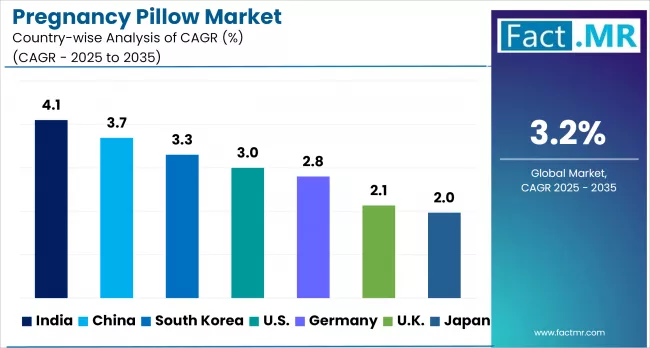
Pregnancy Pillow Market By Country | Source: Fact.MR
| Countries | CAGR (2025-2035) |
|---|---|
| United States | 3.0% |
| India | 4.1% |
| Germany | 2.8% |
Source: Fact.MR analysis. Updated Aug 19, 2025
United States: Sustained Demand Due to Advanced Prenatal Care Systems
2025-to-2035.webp "Us Pregnancy Pillow Market Country Value(usd Million)2025 To 2035")
Us Pregnancy Pillow Market Country Value(usd Million)2025 To 2035 | Source: Fact.MR
The U.S. is still an important market, and more and more customers want comfort, support, and quality in maternity products. Obstetricians and midwives often recommend pregnancy pillows because more women are getting pregnant later in life, back problems caused by lifestyle during pregnancy, and maternity benefits that help. Boppy, Leachco, and PharMeDoc are well-known brands that often release high-end ergonomic designs that are certified by health and pediatric organizations.
As digitalization grows and hospitals and maternity care providers run awareness campaigns, the U.S. is expected to remain a stable, innovation-driven market throughout the forecast period.
India: A Place of Rapid Growth with the Help of the Urban Middle Class and E-Commerce Penetration
India is becoming one of the fastest-growing markets for pregnancy pillows. This is because more people are moving to cities, more women are working, and more people are learning about prenatal comfort trends through digital media. Maternity wellness is becoming more popular in tier-1 and tier-2 cities where nuclear families and working women look for ergonomic pregnancy aids to help with body aches and improve sleep quality.
Amazon India, FirstCry, and Flipkart are some of the most important e-commerce sites that are helping the economy grow. They offer low prices and home delivery to areas that don't have many options. Indigenous brands are also entering the market with products that are made to fit the culture and are priced fairly.
Germany: A High-End Market That Focuses on Orthopedic and Eco-Friendly Goods
The market for pregnancy pillows in Germany is well-developed and tightly regulated. German consumers are more likely to buy products made with eco-friendly, certified materials because they are becoming more interested in orthopedic health and are more likely to buy things that are good for the environment. Pregnancy pillows made of organic cotton, bamboo fiber, and natural latex are becoming more popular.
Several local manufacturers work with maternity hospitals and gynecological clinics to create or support products that meet medical standards for comfort and hygiene. The country's aging mothers and its advanced insurance-based healthcare system are likely to keep demand for high-quality maternity care products steady.
Category-wise Analysis
Full-body Pillows Lead with Total Body Support
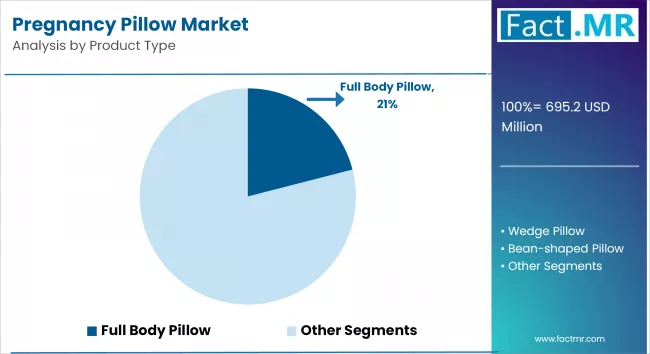
Pregnancy Pillow Market By Product Type | Source: Fact.MR
Full-body pillows, like C-shaped and U-shaped ones, are the most popular type of pregnancy pillow because they support the head, back, belly, and legs all at once. These products do away with the need for more than one pillow, and they are especially useful in the last three months of pregnancy. Obstetricians recommend that pregnant women sleep on their sides, and the U-shaped pillow is especially good for this.
Wedge pillows are becoming more popular with people who want to save money or who need targeted support in a small space, like under their belly or back. But they still have a smaller market share than full-body types.
U-shaped Pillows are Popular Because They are Comfortable and Can be Used in Many Ways
U-shaped pillows have the biggest market share of all shapes because they support the head on both sides and relieve pressure on the back and hips. They let pregnant women switch sides without having to move the pillow, which is important for getting a good night's sleep. People also like C-shaped pillows because they can target certain areas and support the lower back.
People who want to save space or who like to be able to move around have liked J-shaped and wedge-shaped designs. But these kinds of things are more often needed in smaller living spaces.
Online Retail Continues to Lead in Growth
The online segment is still the most popular because it's easy to get to, there are many brands to choose from, and discounts that attract both new and repeat customers. E-commerce sites are more convenient for customers because they let them compare products, read reviews, and see return policies. Brick-and-mortar stores, especially maternity boutiques and stores connected to hospitals, still serve a small number of customers in person who want personalized advice.
Hospitals and maternity care centers are becoming more and more like referral centers for pillow brands, especially in developed countries. Subscription models and putting pillows together with other maternity kits are also becoming more popular.
Individual Customers Are the Main Source of Income
Most of the people who buy things are individuals, mostly pregnant women and their families. People talk about them, get medical advice, and do research online. Pregnant women often buy pregnancy pillows as part of their overall maternity planning. Sales go up during the second trimester.
Hospitals and clinics are also getting a bigger share, especially in Western markets where maternal care providers recommend or sell pillows directly. These institutional sales are very important for high-end or medically approved goods.
Competitive Analysis
There are a lot of different companies in the pregnancy pillow market, both in the US and around the world. Brand positioning depends a lot on how comfortable the product is, how good the fabric is, whether it is hypoallergenic, and how much people trust the brand. Brands are staying relevant in the market by coming up with new materials, adding memory foam, using cooling technologies, and using antimicrobial treatments.
The best companies are working on both expanding their reach through online platforms and D2C channels and launching new shapes and options that can be customized. In a competitive market, new packaging, machine-washable covers, and designs that are easy to take on trips are helping to set products apart.
Leachco, PharMeDoc, Boppy, and QUEEN ROSE are the biggest players in North America and Europe. In Asia, on the other hand, regional players are focusing on making their products affordable and space-saving.
Recent Developments (2024-2025)
- April 2025: PharMeDoc announced a new line of pregnancy pillows with cooling gel-infused memory foam to improve temperature regulation and nighttime comfort, particularly for summer use in tropical countries.
- January 2025: FirstCry India collaborated with a leading maternal health NGO to promote affordable pregnancy comfort products in rural districts, driving awareness campaigns for expecting mothers.
- September 2024: Boppy launched its Eco-Line series of pregnancy pillows made from organic cotton and bamboo fiber, certified by OEKO-TEX® for sustainable production.
- July 2024: QUEEN ROSE announced entry into the European market with region-specific designs focusing on smaller apartment-friendly formats and ergonomic curvature.
Segmentation
Segmentation of the Pregnancy Pillow Market
-
By Product Type :
- Full Body Pillow
- Wedge Pillow
- Bean-shaped Pillow
- Others
-
By Shape :
- U-shaped
- C-shaped
- J-shaped
- Wedge-shaped
- Others
-
By Distribution Channel :
- Online Retail
- Specialty Stores
- Supermarkets/Hypermarkets
- Maternity Clinics/Hospitals
-
By End User :
- Individuals
- Hospitals & Clinics
- Maternity Care Centers
-
By Region :
- North America
- Latin America
- Western Europe
- Eastern Europe
- East Asia
- South Asia & Pacific
- Middle East & Africa
Frequently Asked Questions
What is the market size of the Pregnancy Pillow Market in 2025?
What is the projected market value by 2035?
What is the CAGR for the Pregnancy Pillow Market (2025–2035)?
Which country will show the highest CAGR growth?
Who are the key players in the Pregnancy Pillow Market?
Who worked on this report


Preview the report firsthand - request a free sample
Free SampleGet the brochure for pricing and purchase details
Download PDF