The Protein Flavor Masking Agents Market is analyzed across its key product, application and end-use segments, with the study covering market dynamics, regional trends and demand outlook, forecast 2026 to 2036.
By Fact.MR Food & Beverage DeskFact-checked under the Fact.MR editorial processUpdated
10 min read
Protein Flavor Masking Agents Market Signal Summary Forecast Outlook By Fact.MR
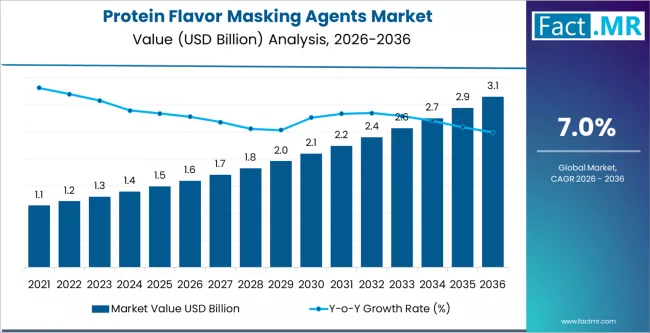
The protein flavor masking agents market is projected treach USD 1.6 billion in 2026 and grow USD 3.2 billion by 2036, with a CAGR of 7%.
These figures signal a growing demand for solutions that address the sensory challenges of plant-based and protein-enriched products.
Protein Flavor Masking Agents Market Market Value Analysis | Source: Fact.MR
Summary of ProteinFlavorMasking Agents Market
Market Snapshot
Global proteinflavormasking agents market revenue stood at USD 1.6 billion in 2026 and is forecast treach USD 3.2 billion by 2036.
At a 7.0% CAGR from 2026 t2036, this market is set texpand ~2.0x in value, adding USD 1.6 billion in absolute opportunity.
Growth is being driven by increasing demand for plant-based nutrition, high-protein functional foods, and improved sensory performance in protein-enriched products globally.
Proteinflavormasking agents are increasingly adopted treduce bitterness, suppress off-notes, and enhanceflavoracceptability across protein-based formulations.
Rising investments in sports nutrition, dairy alternatives, and clinical nutrition products are reinforcing market expansion globally.
Demand and Growth Drivers
Increasing global demand for protein-enriched food and beverage products
Rising adoption of plant-based and alternative protein formulations
Growing focus on sensory optimization in nutritional products
Expansion of sports nutrition and functional wellness food categories
Need for solutions that provide:
Improved taste masking and bitterness suppression
Betterflavorbalance in high-protein formulations
Enhanced consumer acceptance and repeat purchases
Reduced off-notes in plant and fermentation-derived proteins
Product and Segment View
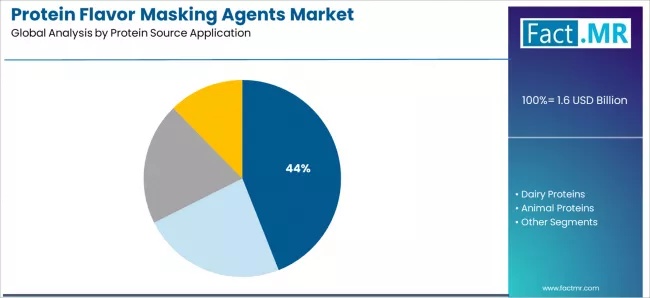
Plant-based proteins hold 44% of protein source application share in 2026,emergingas the leading segment.
Key product categories include:
Flavormodulation and blocking systems
Encapsulation-based masking
Bitterness suppressors
Aroma-based masking technologies
Geography and Competitive Outlook
Asia Pacificemergesas the leading growth region for the proteinflavormaskingagentsmarket.
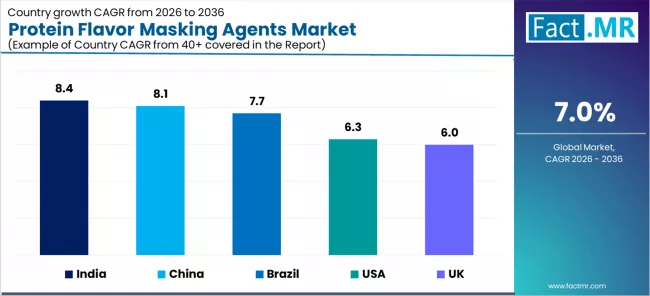
Key growth markets and CAGR: India 8.4%, China 8.1%, Brazil 7.7%, USA 6.3%, UK 6.0%
Market expansion is closely tied to:
Increasing adoption of plant-based and functional nutrition products
Rising innovation inflavormodulation and masking technologies
Growing consumer demand for better-tasting protein beverages and snacks
Key companies active in this market include Givaudan, IFF (International Flavors & Fragrances), Symrise, DSM-Firmenich, and Sensient Technologies.
ProteinFlavorMasking Agents Market — At a Glance
Attribute
Details
Market Value 2026
USD 1.6 billion
Market Value 2036
USD 3.2 billion
Absolute Dollar Opportunity 2026–2036
USD 1.6 billion
Total Growth 2026–2036
100.0%
CAGR 2026–2036
7.0%
Growth Multiple
~2.0x
Key Demand Theme
Increasing adoption of sensory optimization technologies for protein formulations
Leading Segment by Protein Source Application (2026)
Plant-Based Proteins
Segment Share (2026)
44%
Key Growth Region
Asia Pacific
Country CAGRs
India 8.4%, China 8.1%, Brazil 7.7%, USA 6.3%, UK 6.0%
Top Companies
Givaudan, IFF (International Flavors & Fragrances), Symrise, DSM-Firmenich, Sensient Technologies
FlavorModulation and Blocking Systems, Encapsulation-Based Masking, Bitterness Suppressors, Aroma-Based Masking
Segmentation by Application
Sports and Active Nutrition, Plant-Based Dairy Alternatives, Protein Beverages (RTDs), Bakery and Nutrition Bars, Medical and Clinical Nutrition
Segmentation by Region
North America, Europe, Asia Pacific, Latin America, Middle East & Africa
The steady growth suggests that purchasers are increasingly prioritizing flavor enhancement timprove product acceptability, especially within the health and nutrition sector. Supplier confidence is rising as the market signals longer-term stability, driven by continuous innovation and more sophisticated formulations. However, this growth alspoints tthe fact that companies are making more significant, long-term commitments tproduct development, emphasizing protein-based offerings in their portfolios. This shift indicates that both buyers and suppliers are preparing for a sustained uptick in demand, with investments in technology and process improvement shaping the market's future trajectory.
Sports and Active Nutrition; Plant-Based Dairy Alternatives; Protein Beverages (RTDs); Bakery and Nutrition Bars; Medical and Clinical Nutrition
Region
North America; Europe; Asia Pacific; Latin America; Middle East & Africa
Segmental Analysis
What Is the Impact of Protein Source Application on the Protein Flavor Masking Agents Market?
Protein Flavor Masking Agents Market Analysis By Protein Source Application | Source: Fact.MR
In the protein flavor masking agents market, the source of protein plays a critical role in determining the type and effectiveness of masking agents. Plant-based proteins hold a 44% share, as they are increasingly used in the food and beverage sector due to rising consumer demand for plant-based products. These proteins often have off-flavors or bitterness that require masking, making protein flavor masking agents essential for improving taste and enhancing consumer acceptance. With the shift towards plant-based diets, manufacturers will continue to seek effective masking solutions for plant-based proteins, contributing to growth in this segment.
How Does Masking Technology Influence the Protein Flavor Masking Agents Market?
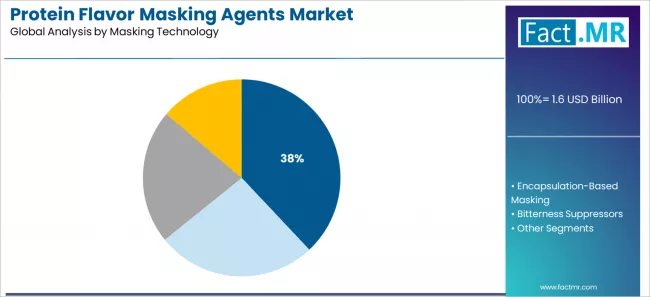
Protein Flavor Masking Agents Market Analysis By Masking Technology | Source: Fact.MR
Masking technology is essential for optimizing the sensory experience of protein-enriched products, with flavor modulation and blocking systems leading the market at a 38% share. This technology works by adjusting or blocking unwanted flavors, such as bitterness or off-notes, commonly found in proteins. As the market for protein supplements, plant-based alternatives, and functional foods expands, flavor modulation technologies will become increasingly important for improving the palatability of products, ensuring that consumers enjoy their dietary choices without compromising on taste. As demand for clean-label, natural flavor masking solutions grows, the application of flavor modulation and blocking systems will continue to drive market growth.
What are the Key Drivers, Constraints, and Emerging Trends in the Protein Flavor Masking Agents Market?
Drivers: Demand for protein flavor masking agents is primarily driven by the growing consumer preference for plant based and protein enriched products. Food and beverage manufacturers require these agents to mask the naturally strong, often undesirable flavors of plant proteins and dairy derived proteins in protein bars, shakes, and functional beverages. As the market for functional foods expands, protein flavor masking agents enable a broader consumer base to enjoy these products without compromising taste.
Constraints: High costs associated with the development of specialized flavor masking agents can be a barrier for smaller manufacturers. Additionally, the complexity of achieving consistent flavor profiles in protein based products using masking agents can require precise formulations and production processes. Regulatory constraints around ingredient disclosure and clean labeling may also limit the use of certain masking agents in specific regions.
Trend 1: Increased investment in natural and clean label masking solutions as consumer demand for transparency and natural ingredients rises.
Trend 2: Development of multi functionality in masking agents, where they not only mask flavors but also improve texture or enhance overall nutritional value, providing added value to both manufacturers and consumers.
Analysis of the Protein Flavor Masking Agents Market by Key Country
Protein Flavor Masking Agents Market Cagr Analysis By Country | Source: Fact.MR
Country
CAGR (2026–2036)
India
8.4%
China
8.1%
Brazil
7.7%
USA
6.3%
UK
6%
The report covers an in-depth analysis of 40+ countries; top-performing countries are highlighted below.
What is the Growth Outlook for Protein Flavor Masking Agents Market in India?
India’s protein flavor masking agents market is projected to grow at a CAGR of 8.4% from 2026 to 2036. As the demand for protein-based products, especially in the health and wellness sector, continues to rise, the need for protein flavor masking agents is increasing. These agents are crucial in improving the taste and palatability of protein-rich food products, such as protein shakes, bars, and nutritional supplements. With India’s expanding middle class and growing health consciousness, the market for protein flavor masking agents will continue to grow, driven by the rising consumption of protein-based foods and the increasing focus on taste and texture in food products.
How is the Protein Flavor Masking Agents Market Performing in China?
China’s protein flavor masking agents market is expected to grow at a CAGR of 8.1% from 2026 to 2036. As China’s consumer base increasingly seeks healthier, protein-enriched foods, the demand for flavor masking agents to neutralize the undesirable taste of protein is on the rise. Protein-enriched products, particularly in the sports nutrition, dietary supplements, and plant-based food sectors, are becoming more popular in China. With the increasing demand for protein-based food products across various industries, including dairy, beverages, and processed foods, the market for protein flavor masking agents in China is expected to expand steadily.
What is the Market Outlook for Protein Flavor Masking Agents Market in Brazil?
Brazil’s protein flavor masking agents market is projected to grow at a CAGR of 7.7% from 2026 to 2036. As Brazil’s demand for functional foods, including protein-enriched snacks and supplements, continues to increase, the need for flavor masking agents to improve the taste of protein-based products is rising. Protein flavor masking agents help enhance the palatability of nutritional supplements, protein bars, and plant-based products. With Brazil’s growing interest in health, fitness, and wellness trends, coupled with the increasing demand for protein-based products, the market for these agents is set to grow, driven by consumer preferences for more enjoyable and easily consumable protein products.
What is the Growth Potential for Protein Flavor Masking Agents Market in the USA?
The USA’s protein flavor masking agents market is forecast to grow at a CAGR of 6.3% from 2026 to 2036. The growing popularity of protein-based foods, including meal replacements, protein shakes, and dietary supplements, is driving the demand for flavor masking agents to improve the taste of these products. With the USA being a key player in the global health and wellness market, the need for protein flavor masking agents is significant, particularly in the sports nutrition and plant-based food sectors. As the market for protein-based foods continues to grow, so too will the demand for flavor masking agents, ensuring steady market growth in the USA.
What is the Demand for Protein Flavor Masking Agents Market in the UK?
The UK’s protein flavor masking agents market is set to grow at a CAGR of 6% from 2026 to 2036. As the demand for protein-based foods continues to rise, particularly in the health and fitness sector, the need for flavor masking agents is increasing. The UK’s growing consumer base is becoming more health-conscious, seeking products that are rich in protein but without the undesirable taste that often accompanies these ingredients. The increasing popularity of protein-enriched snacks, supplements, and plant-based products will drive the market for protein flavor masking agents, supporting steady growth in the UK market.
What is the Competitive Landscape in the Protein Flavor Masking Agents Market?
Competition in the protein flavor masking agents market is shaped by efficacy of bitterness suppression, sensory neutrality, and regulatory compliance for food and beverage applications. Givaudan and IFF compete with broad portfolios of masking systems backed by sensory science and formulation support. Symrise and DSM Firmenich focus on integrated flavor solutions that balance taste modulation with targeted protein applications. Sensient Technologies positions its offerings with color and flavor expertise that complements masking functionality.
Differentiation arises from documented masking performance across diverse protein sources, ease of incorporation into finished products, and technical support. Buyers assess suppliers based on consistency of effect, supply reliability, and alignment with clean label trends.
Key Players of the Protein Flavor Masking Agents Market
Givaudan
IFF (International Flavors & Fragrances)
Symrise
DSMFirmenich
Sensient Technologies
Bibliographies
Food and Agriculture Organization of the United Nations. (2023). Plant protein ingredients and sensory challenges in food formulation. FAO.
European Food Safety Authority. (2024). Scientific considerations on flavouring substances and taste-modifying agents in foods. EFSA Journal.
U.S. Food and Drug Administration. (2024). Guidance for industry: Flavoring substances, taste modifiers, and masking agents in food products. FDA.
Sports and Active Nutrition, Plant-Based Dairy Alternatives, Protein Beverages (RTDs), Bakery and Nutrition Bars, Medical and Clinical Nutrition
Regions Covered
North America, Europe, Asia Pacific, Latin America, Middle East & Africa
Countries Covered
United States, Canada, Mexico, Brazil, Germany, United Kingdom, France, Italy, Spain, China, Japan, South Korea, India, Australia & New Zealand
Key Companies Profiled
Givaudan, IFF (International Flavors & Fragrances), Symrise, DSM-Firmenich, Sensient Technologies
Additional Attributes
Dollar revenue by protein source application, masking technology, and application; regional demand trends, competitive landscape, technological advancements in protein flavor masking agents, and innovations in flavor modulation and encapsulation techniques
Protein Flavor Masking Agents Market Key Segments
Protein Source Application :
Plant-Based Proteins
Dairy Proteins
Animal Proteins
Fermentation-Derived Proteins
Masking Technology :
Flavor Modulation and Blocking Systems
Encapsulation-Based Masking
Bitterness Suppressors
Aroma-Based Masking
Application :
Sports and Active Nutrition
Plant-Based Dairy Alternatives
Protein Beverages (RTDs)
Bakery and Nutrition Bars
Medical and Clinical Nutrition
Region :
North America
USA
Canada
Mexico
Europe
Germany
UK
France
Italy
Spain
Nordic Countries
BENELUX
Rest of Europe
Asia Pacific
China
Japan
South Korea
India
Australia
Rest of Asia Pacific
Latin America
Brazil
Argentina
Rest of Latin America
Middle East and Africa
Kingdom of Saudi Arabia
United Arab Emirates
South Africa
Rest of Middle East and Africa
Other Regions
Oceania
Central Asia
Other Markets
Frequently Asked Questions
How big is the protein flavor masking agents market in 2026?
The global protein flavor masking agents market is estimated to be valued at USD 1.6 billion in 2026.
What will be the size of protein flavor masking agents market in 2036?
The market size for the protein flavor masking agents market is projected to reach USD 3.1 billion by 2036.
How much will be the protein flavor masking agents market growth between 2026 and 2036?
The protein flavor masking agents market is expected to grow at a 7.0% CAGR between 2026 and 2036.
What are the key product types in the protein flavor masking agents market?
The key product types in protein flavor masking agents market are plant‑based proteins, dairy proteins, animal proteins and fermentation‑derived proteins.
Which masking technology segment to contribute significant share in the protein flavor masking agents market in 2026?
In terms of masking technology, flavor modulation and blocking systems segment to command 38.0% share in the protein flavor masking agents market in 2026.