Sugar Reduction Mouthfeel Recovery Additives Market
Sugar Reduction Mouthfeel Recovery Additives Market Size and Share Forecast Outlook 2026 to 2036
Global sugar reduction mouthfeel recovery additives market analysis report with size and share outlook for 2026 to 2036. Coverage includes key additive classes for sweetness reduction, texture and viscosity rebuilding, beverage and dairy applications, formulation positioning, and regional demand patterns through 2036.
Sugar-Reduction Mouthfeel Recovery Additives Market Forecast and Outlook 2026 to 2036
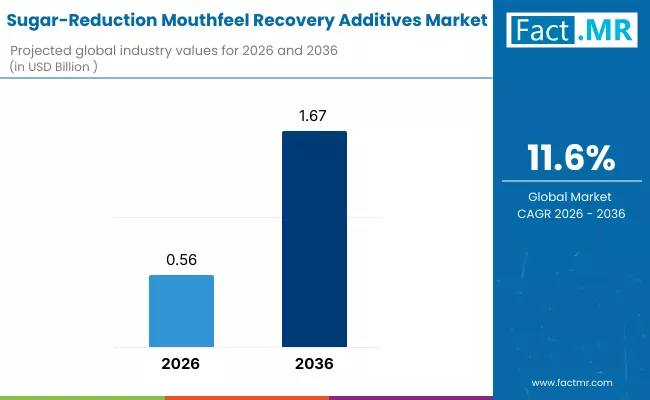
The global market for sugar-reduction mouthfeel recovery additives is projected to grow from USD 0.56 billion in 2026 to USD 1.67 billion by 2036, advancing at a CAGR of 11.6%.
This market is a critical enabler of the global sugar-reduction imperative, providing specialized functional ingredients that restore the viscosity, creaminess, bulk, and overall sensory experience lost when sugar is removed or reduced in food and beverage formulations. Sugar is not merely a sweetener; it provides critical body, moisture, and texture.
Key Takeaways from the Sugar-Reduction Mouthfeel Recovery Additives Market
- Market Value for 2026: USD 0.56 Billion
- Market Value for 2036: USD 1.67 Billion
- Forecast CAGR (2026-2036): 11.6%
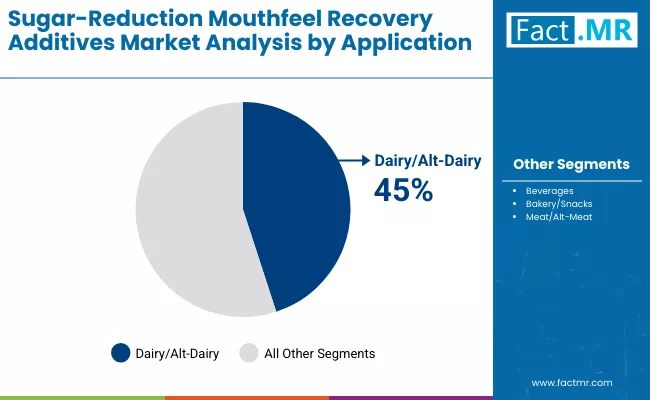
- Leading Application Segment (2026): Dairy/Alt-Dairy (45%)
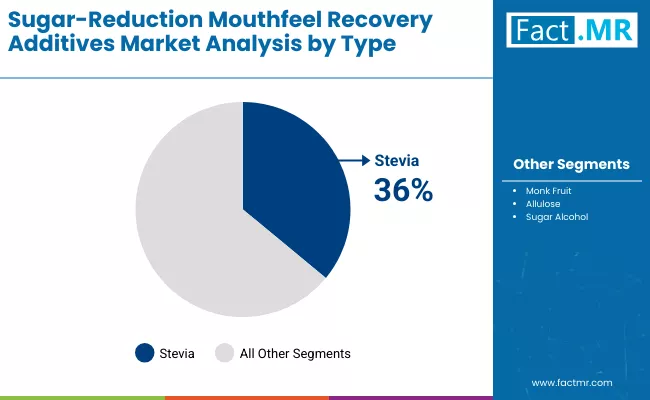
- Leading Additive Type Segment (2026): Stevia (36%)
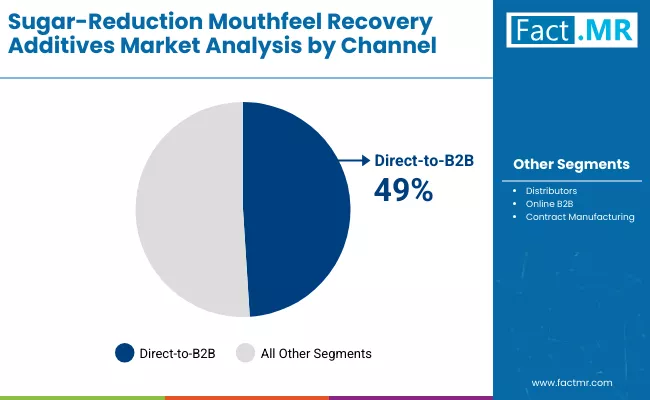
- Leading Channel Segment (2026): Direct-to-B2B (49%)
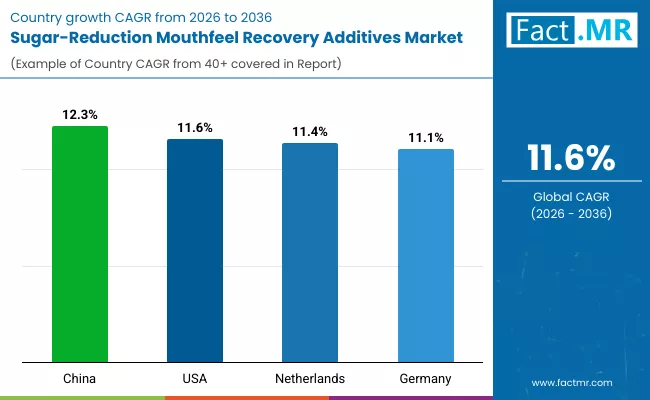
- Key Growth Countries: China (12.3% CAGR), Netherlands (11.4% CAGR), USA (11.6% CAGR), Germany (11.1% CAGR)
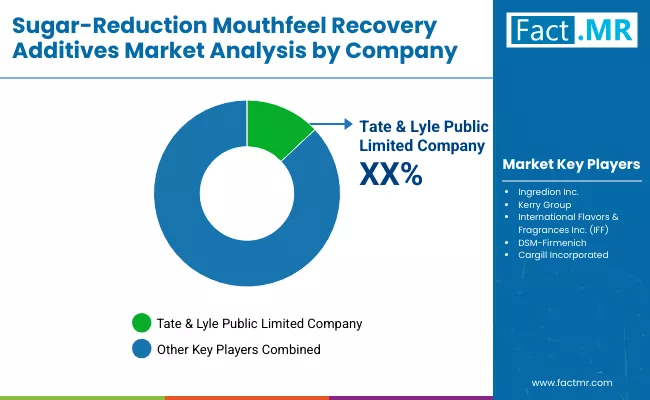
- Key Players in the Market: Tate & Lyle Public Limited Company, Ingredion Inc., Kerry Group, International Flavors & Fragrances Inc. (IFF), DSM-Firmenich, Cargill Incorporated

This market supplies the solutions such as soluble fibers, hydrocolloids, polyols, and specialized starches that allow manufacturers to reduce sugar content without sacrificing the indulgent mouthfeel consumers expect, thereby bridging the gap between health mandates and sensory satisfaction.
Growth is propelled by unprecedented regulatory pressure, such as sugar taxes, and powerful consumer demand for healthier products that do not compromise on taste or texture. The market's expansion moves beyond simple sweetener replacement into the sophisticated domain of holistic sensory design.
Success depends on creating additive systems that perfectly mimic sugar’s multifaceted functional roles, binding water, providing lubricity, and delivering a rounded flavor release, while often contributing their own health benefits, such as added fiber or prebiotic content. This transforms a technical formulation challenge into a value-added opportunity for product differentiation.
Metric
| Metric | Value |
|---|---|
| Market Value (2026) | USD 0.56 Billion |
| Market Forecast Value (2036) | USD 1.67 Billion |
| Forecast CAGR (2026-2036) | 11.6% |
Category
| Category | Segments |
|---|---|
| Application | Dairy/Alt-Dairy, Beverages, Bakery/Snacks, Meat/Alt-Meat |
| By Type | Stevia, Monk Fruit, Allulose, Sugar Alcohol |
| Channel | Direct-to-B2B, Distributors, Online B2B, Contract Manufacturing |
| Region | North America, Latin America, Western Europe, Eastern Europe, East Asia, South Asia & Pacific, MEA |
Segmental Analysis
By Application, Which Sector Faces the Greatest Texture Challenge?

The dairy/alt-dairy segment leads with a 45% share. Products like yogurt, ice cream, and flavored milk rely on sugar for sweetness and, critically, for body and creaminess. Reducing sugar often results in a thin, watery, or icy texture.
Mouthfeel recovery additives such as inulin, pectin, and acacia gum are essential here to rebuild viscosity and provide a fatty mouthfeel without adding fat, making them indispensable for successful reduced-sugar dairy and plant-based alternatives.
By Type, Which High-Intensity Sweetener Often Requires the Most Support?

While the segmentation lists sweetener types, Stevia’s leading 36% share underscores a key market dynamic. High-intensity sweeteners like stevia provide sweetness but zero bulk or mouthfeel.
Their widespread use creates a correspondingly high demand for complementary bulking agents such as soluble corn fiber or erythritol and masking agents to restore the full sensory profile and counteract potential off-notes, making stevia-based reformulations a primary driver for mouthfeel additive innovation.
By Channel, How are These Complex Blends Integrated into Formulations?

Direct-to-B2B sales are the primary channel at 49%. Recovering mouthfeel after sugar reduction is a complex, system-specific task. Ingredient suppliers work directly with food and beverage R&D teams to develop custom additive blends tailored to the specific base product, processing conditions, and desired sweetness system. This direct collaboration is essential for achieving a clean label and optimal sensory results, moving beyond off-the-shelf solutions.
What are the Drivers, Restraints, and Key Trends of the Sugar-Reduction Mouthfeel Recovery Additives Market?
The primary driver is the global wave of sugar-reduction regulations and the corresponding reformulation race among major food and beverage brands. Consumer intolerance for products that are perceived as thin, watery, or artificial tasting creates a clear need for high-performance texture solutions. The growth of the ketogenic and low-glycemic diet trends also fuels demand for ingredients that can provide sugar-like functionality without the carbohydrates or glycemic impact.
A significant restraint is the technical difficulty and cost of perfectly replicating sugar’s unique functional properties. Some mouthfeel additives can introduce their own off-flavors, grittiness, or digestive side effects at effective usage levels. Achieving a clean label while using multiple additives to replace a single ingredient (sugar) is also a major formulation and marketing challenge. The higher cost of these specialized ingredient systems can pressure product margins.
Key trends include the rising use of prebiotic fibers like chicory root fiber (inulin) and soluble tapioca fiber, which add health benefits alongside texture. Allulose is gaining prominence as a rare sugar that provides both sweetness and some bulking properties, reducing the need for additional additives. Preference is rising for flavor modulation technologies that work synergistically with texture additives to enhance sweetness perception and round out the overall flavor profile in reduced-sugar products.
Analysis of the Sugar-Reduction Mouthfeel Recovery Additives Market by Key Countries

| Country | CAGR (2026-2036) |
|---|---|
| China | 12.3% |
| USA | 11.6% |
| Netherlands | 11.4% |
| Germany | 11.1% |
How is China's Public Health Campaign and Dairy Market Expansion Driving Growth?
China’s leading CAGR of 12.3% is fueled by the government’s "Healthy China 2030" plan, which explicitly targets reduced sugar consumption. The simultaneous rapid growth of the dairy and beverage markets means massive volumes of product are being reformulated.
Domestic manufacturers are seeking cost-effective, locally-sourced mouthfeel solutions, such as modified starches and rice-derived fibers, to create reduced-sugar products that appeal to local taste preferences, driving rapid market expansion.
What is the Impact of the USA's Consumer-Led Sugar Reduction and Innovation Culture?
The USA’s 11.6% growth is characterized by strong consumer demand for better-for-you products and a highly competitive CPG landscape where texture is a key differentiator. The market is driven by innovation from both startups and giants, creating demand for cutting-edge additive systems that enable extreme sugar reduction without sensory compromise, particularly in indulgent categories like ice cream and baked goods.
Why are the Netherlands and Germany European Hubs for Sweetener and Fiber Innovation?
The Netherlands' 11.4% and Germany’s 11.1% growth are rooted in their strong positions in ingredient science and functional fiber production. Both countries host major global ingredient companies with deep expertise in carbohydrate and fiber chemistry.
Their markets are driven by stringent EU labeling regulations, retailer pressure, and sophisticated consumers who demand clean-label, natural texturizing solutions, fostering advanced R&D in areas like enzymatic modification of fibers for superior mouthfeel.
Competitive Landscape of the Sugar-Reduction Mouthfeel Recovery Additives Market

The competitive landscape is concentrated among multinational ingredient corporations that offer comprehensive sugar reduction portfolios, encompassing high-intensity sweeteners, fibers, and texturizers.
Competition is fierce around proprietary fiber and starch modification technologies, the ability to provide holistic sugar-like formulations, and deep application expertise in key categories like dairy and beverages. Success depends on forming strategic partnerships with major food brands for co-development and on continuously expanding clean-label offerings that deliver on both nutrition and sensory promise.
Key Players in the Sugar-Reduction Mouthfeel Recovery Additives Market
- Tate & Lyle Public Limited Company
- Ingredion Inc.
- Kerry Group
- International Flavors & Fragrances Inc. (IFF)
- DSM-Firmenich
- Cargill Incorporated
Scope of Report
| Items | Values |
|---|---|
| Quantitative Units | USD Billion |
| Application | Dairy/Alt-Dairy, Beverages, Bakery/Snacks, Meat/Alt-Meat |
| By Type | Stevia, Monk Fruit, Allulose, Sugar Alcohol |
| Channel | Direct-to-B2B, Distributors, Online B2B, Contract Manufacturing |
| Key Countries | USA, Germany, Netherlands, China |
| Key Companies | Tate & Lyle Public Limited Company, Ingredion Inc., Kerry Group, International Flavors & Fragrances Inc. (IFF), DSM-Firmenich, Cargill Incorporated |
| Additional Analysis | Sensory science analysis of sugar's multifunctional role; efficacy of different fiber types in specific applications; clean-label challenges in texture system formulation; regulatory status of novel bulking agents (e.g., allulose) across regions; cost-in-use analysis of complete sugar replacement systems. |
Market by Segments
-
Application :
- Dairy/Alt-Dairy
- Beverages
- Bakery/Snacks
- Meat/Alt-Meat
-
By Type :
- Stevia
- Monk Fruit
- Allulose
- Sugar Alcohol
-
Channel :
- Direct-to-B2B
- Distributors
- Online B2B
- Contract Manufacturing
-
Region :
- North America
- USA
- Canada
- Latin America
- Brazil
- Mexico
- Argentina
- Rest of Latin America
- Western Europe
- Germany
- UK
- France
- Spain
- Italy
- Netherlands
- BENELUX
- Rest of Western Europe
- Eastern Europe
- Russia
- Poland
- Czech Republic
- Rest of Eastern Europe
- East Asia
- China
- Japan
- South Korea
- Rest of East Asia
- South Asia & Pacific
- India
- ASEAN
- Australia
- Rest of South Asia & Pacific
- MEA
- Saudi Arabia
- UAE
- Turkiye
- Rest of MEA
- North America
Table of Content
- Executive Summary
- Global Market Outlook
- Demand to side Trends
- Supply to side Trends
- Technology Roadmap Analysis
- Analysis and Recommendations
- Market Overview
- Market Coverage / Taxonomy
- Market Definition / Scope / Limitations
- Market Background
- Market Dynamics
- Drivers
- Restraints
- Opportunity
- Trends
- Scenario Forecast
- Demand in Optimistic Scenario
- Demand in Likely Scenario
- Demand in Conservative Scenario
- Opportunity Map Analysis
- Product Life Cycle Analysis
- Supply Chain Analysis
- Investment Feasibility Matrix
- Value Chain Analysis
- PESTLE and Porter’s Analysis
- Regulatory Landscape
- Regional Parent Market Outlook
- Production and Consumption Statistics
- Import and Export Statistics
- Market Dynamics
- Global Market Analysis 2021 to 2025 and Forecast, 2026 to 2036
- Historical Market Size Value (USD Million) Analysis, 2021 to 2025
- Current and Future Market Size Value (USD Million) Projections, 2026 to 2036
- Y to o to Y Growth Trend Analysis
- Absolute $ Opportunity Analysis
- Global Market Pricing Analysis 2021 to 2025 and Forecast 2026 to 2036
- Global Market Analysis 2021 to 2025 and Forecast 2026 to 2036, By Application
- Introduction / Key Findings
- Historical Market Size Value (USD Million) Analysis By Application, 2021 to 2025
- Current and Future Market Size Value (USD Million) Analysis and Forecast By Application, 2026 to 2036
- Y to o to Y Growth Trend Analysis By Application, 2021 to 2025
- Absolute $ Opportunity Analysis By Application, 2026 to 2036
- Global Market Analysis 2021 to 2025 and Forecast 2026 to 2036, By By Type
- Introduction / Key Findings
- Historical Market Size Value (USD Million) Analysis By By Type, 2021 to 2025
- Current and Future Market Size Value (USD Million) Analysis and Forecast By By Type, 2026 to 2036
- Y to o to Y Growth Trend Analysis By By Type, 2021 to 2025
- Absolute $ Opportunity Analysis By By Type, 2026 to 2036
- Global Market Analysis 2021 to 2025 and Forecast 2026 to 2036, By Channel
- Introduction / Key Findings
- Historical Market Size Value (USD Million) Analysis By Channel, 2021 to 2025
- Current and Future Market Size Value (USD Million) Analysis and Forecast By Channel, 2026 to 2036
- Y to o to Y Growth Trend Analysis By Channel, 2021 to 2025
- Absolute $ Opportunity Analysis By Channel, 2026 to 2036
- Global Market Analysis 2021 to 2025 and Forecast 2026 to 2036, By Region
- Introduction
- Historical Market Size Value (USD Million) Analysis By Region, 2021 to 2025
- Current Market Size Value (USD Million) Analysis and Forecast By Region, 2026 to 2036
- North America
- Latin America
- Western Europe
- Eastern Europe
- East Asia
- South Asia and Pacific
- Middle East & Africa
- Market Attractiveness Analysis By Region
- North America Market Analysis 2021 to 2025 and Forecast 2026 to 2036, By Country
- Historical Market Size Value (USD Million) Trend Analysis By Market Taxonomy, 2021 to 2025
- Market Size Value (USD Million) Forecast By Market Taxonomy, 2026 to 2036
- By Country
- USA
- Canada
- Mexico
- By Application
- By By Type
- By Channel
- By Country
- Market Attractiveness Analysis
- By Country
- By Application
- By By Type
- By Channel
- Key Takeaways
- Latin America Market Analysis 2021 to 2025 and Forecast 2026 to 2036, By Country
- Historical Market Size Value (USD Million) Trend Analysis By Market Taxonomy, 2021 to 2025
- Market Size Value (USD Million) Forecast By Market Taxonomy, 2026 to 2036
- By Country
- Brazil
- Chile
- Rest of Latin America
- By Application
- By By Type
- By Channel
- By Country
- Market Attractiveness Analysis
- By Country
- By Application
- By By Type
- By Channel
- Key Takeaways
- Western Europe Market Analysis 2021 to 2025 and Forecast 2026 to 2036, By Country
- Historical Market Size Value (USD Million) Trend Analysis By Market Taxonomy, 2021 to 2025
- Market Size Value (USD Million) Forecast By Market Taxonomy, 2026 to 2036
- By Country
- Germany
- UK
- Italy
- Spain
- France
- Nordic
- BENELUX
- Rest of Western Europe
- By Application
- By By Type
- By Channel
- By Country
- Market Attractiveness Analysis
- By Country
- By Application
- By By Type
- By Channel
- Key Takeaways
- Eastern Europe Market Analysis 2021 to 2025 and Forecast 2026 to 2036, By Country
- Historical Market Size Value (USD Million) Trend Analysis By Market Taxonomy, 2021 to 2025
- Market Size Value (USD Million) Forecast By Market Taxonomy, 2026 to 2036
- By Country
- Russia
- Poland
- Hungary
- Balkan & Baltic
- Rest of Eastern Europe
- By Application
- By By Type
- By Channel
- By Country
- Market Attractiveness Analysis
- By Country
- By Application
- By By Type
- By Channel
- Key Takeaways
- East Asia Market Analysis 2021 to 2025 and Forecast 2026 to 2036, By Country
- Historical Market Size Value (USD Million) Trend Analysis By Market Taxonomy, 2021 to 2025
- Market Size Value (USD Million) Forecast By Market Taxonomy, 2026 to 2036
- By Country
- China
- Japan
- South Korea
- By Application
- By By Type
- By Channel
- By Country
- Market Attractiveness Analysis
- By Country
- By Application
- By By Type
- By Channel
- Key Takeaways
- South Asia and Pacific Market Analysis 2021 to 2025 and Forecast 2026 to 2036, By Country
- Historical Market Size Value (USD Million) Trend Analysis By Market Taxonomy, 2021 to 2025
- Market Size Value (USD Million) Forecast By Market Taxonomy, 2026 to 2036
- By Country
- India
- ASEAN
- Australia & New Zealand
- Rest of South Asia and Pacific
- By Application
- By By Type
- By Channel
- By Country
- Market Attractiveness Analysis
- By Country
- By Application
- By By Type
- By Channel
- Key Takeaways
- Middle East & Africa Market Analysis 2021 to 2025 and Forecast 2026 to 2036, By Country
- Historical Market Size Value (USD Million) Trend Analysis By Market Taxonomy, 2021 to 2025
- Market Size Value (USD Million) Forecast By Market Taxonomy, 2026 to 2036
- By Country
- Kingdom of Saudi Arabia
- Other GCC Countries
- Turkiye
- South Africa
- Other African Union
- Rest of Middle East & Africa
- By Application
- By By Type
- By Channel
- By Country
- Market Attractiveness Analysis
- By Country
- By Application
- By By Type
- By Channel
- Key Takeaways
- Key Countries Market Analysis
- USA
- Pricing Analysis
- Market Share Analysis, 2025
- By Application
- By By Type
- By Channel
- Canada
- Pricing Analysis
- Market Share Analysis, 2025
- By Application
- By By Type
- By Channel
- Mexico
- Pricing Analysis
- Market Share Analysis, 2025
- By Application
- By By Type
- By Channel
- Brazil
- Pricing Analysis
- Market Share Analysis, 2025
- By Application
- By By Type
- By Channel
- Chile
- Pricing Analysis
- Market Share Analysis, 2025
- By Application
- By By Type
- By Channel
- Germany
- Pricing Analysis
- Market Share Analysis, 2025
- By Application
- By By Type
- By Channel
- UK
- Pricing Analysis
- Market Share Analysis, 2025
- By Application
- By By Type
- By Channel
- Italy
- Pricing Analysis
- Market Share Analysis, 2025
- By Application
- By By Type
- By Channel
- Spain
- Pricing Analysis
- Market Share Analysis, 2025
- By Application
- By By Type
- By Channel
- France
- Pricing Analysis
- Market Share Analysis, 2025
- By Application
- By By Type
- By Channel
- India
- Pricing Analysis
- Market Share Analysis, 2025
- By Application
- By By Type
- By Channel
- ASEAN
- Pricing Analysis
- Market Share Analysis, 2025
- By Application
- By By Type
- By Channel
- Australia & New Zealand
- Pricing Analysis
- Market Share Analysis, 2025
- By Application
- By By Type
- By Channel
- China
- Pricing Analysis
- Market Share Analysis, 2025
- By Application
- By By Type
- By Channel
- Japan
- Pricing Analysis
- Market Share Analysis, 2025
- By Application
- By By Type
- By Channel
- South Korea
- Pricing Analysis
- Market Share Analysis, 2025
- By Application
- By By Type
- By Channel
- Russia
- Pricing Analysis
- Market Share Analysis, 2025
- By Application
- By By Type
- By Channel
- Poland
- Pricing Analysis
- Market Share Analysis, 2025
- By Application
- By By Type
- By Channel
- Hungary
- Pricing Analysis
- Market Share Analysis, 2025
- By Application
- By By Type
- By Channel
- Kingdom of Saudi Arabia
- Pricing Analysis
- Market Share Analysis, 2025
- By Application
- By By Type
- By Channel
- Turkiye
- Pricing Analysis
- Market Share Analysis, 2025
- By Application
- By By Type
- By Channel
- South Africa
- Pricing Analysis
- Market Share Analysis, 2025
- By Application
- By By Type
- By Channel
- USA
- Market Structure Analysis
- Competition Dashboard
- Competition Benchmarking
- Market Share Analysis of Top Players
- By Regional
- By Application
- By By Type
- By Channel
- Competition Analysis
- Competition Deep Dive
- Assumptions & Acronyms Used
- Research Methodology
List Of Table
- Table 1: Global Market Value (USD Million) Forecast by Region, 2021 to 2036
- Table 2: Global Market Value (USD Million) Forecast by Application, 2021 to 2036
- Table 3: Global Market Value (USD Million) Forecast by By Type, 2021 to 2036
- Table 4: Global Market Value (USD Million) Forecast by Channel, 2021 to 2036
- Table 5: North America Market Value (USD Million) Forecast by Country, 2021 to 2036
- Table 6: North America Market Value (USD Million) Forecast by Application, 2021 to 2036
- Table 7: North America Market Value (USD Million) Forecast by By Type, 2021 to 2036
- Table 8: North America Market Value (USD Million) Forecast by Channel, 2021 to 2036
- Table 9: Latin America Market Value (USD Million) Forecast by Country, 2021 to 2036
- Table 10: Latin America Market Value (USD Million) Forecast by Application, 2021 to 2036
- Table 11: Latin America Market Value (USD Million) Forecast by By Type, 2021 to 2036
- Table 12: Latin America Market Value (USD Million) Forecast by Channel, 2021 to 2036
- Table 13: Western Europe Market Value (USD Million) Forecast by Country, 2021 to 2036
- Table 14: Western Europe Market Value (USD Million) Forecast by Application, 2021 to 2036
- Table 15: Western Europe Market Value (USD Million) Forecast by By Type, 2021 to 2036
- Table 16: Western Europe Market Value (USD Million) Forecast by Channel, 2021 to 2036
- Table 17: Eastern Europe Market Value (USD Million) Forecast by Country, 2021 to 2036
- Table 18: Eastern Europe Market Value (USD Million) Forecast by Application, 2021 to 2036
- Table 19: Eastern Europe Market Value (USD Million) Forecast by By Type, 2021 to 2036
- Table 20: Eastern Europe Market Value (USD Million) Forecast by Channel, 2021 to 2036
- Table 21: East Asia Market Value (USD Million) Forecast by Country, 2021 to 2036
- Table 22: East Asia Market Value (USD Million) Forecast by Application, 2021 to 2036
- Table 23: East Asia Market Value (USD Million) Forecast by By Type, 2021 to 2036
- Table 24: East Asia Market Value (USD Million) Forecast by Channel, 2021 to 2036
- Table 25: South Asia and Pacific Market Value (USD Million) Forecast by Country, 2021 to 2036
- Table 26: South Asia and Pacific Market Value (USD Million) Forecast by Application, 2021 to 2036
- Table 27: South Asia and Pacific Market Value (USD Million) Forecast by By Type, 2021 to 2036
- Table 28: South Asia and Pacific Market Value (USD Million) Forecast by Channel, 2021 to 2036
- Table 29: Middle East & Africa Market Value (USD Million) Forecast by Country, 2021 to 2036
- Table 30: Middle East & Africa Market Value (USD Million) Forecast by Application, 2021 to 2036
- Table 31: Middle East & Africa Market Value (USD Million) Forecast by By Type, 2021 to 2036
- Table 32: Middle East & Africa Market Value (USD Million) Forecast by Channel, 2021 to 2036
List Of Figures
- Figure 1: Global Market Pricing Analysis
- Figure 2: Global Market Value (USD Million) Forecast 2021 to 2036
- Figure 3: Global Market Value Share and BPS Analysis by Application, 2026 and 2036
- Figure 4: Global Market Y to o to Y Growth Comparison by Application, 2026 to 2036
- Figure 5: Global Market Attractiveness Analysis by Application
- Figure 6: Global Market Value Share and BPS Analysis by By Type, 2026 and 2036
- Figure 7: Global Market Y to o to Y Growth Comparison by By Type, 2026 to 2036
- Figure 8: Global Market Attractiveness Analysis by By Type
- Figure 9: Global Market Value Share and BPS Analysis by Channel, 2026 and 2036
- Figure 10: Global Market Y to o to Y Growth Comparison by Channel, 2026 to 2036
- Figure 11: Global Market Attractiveness Analysis by Channel
- Figure 12: Global Market Value (USD Million) Share and BPS Analysis by Region, 2026 and 2036
- Figure 13: Global Market Y to o to Y Growth Comparison by Region, 2026 to 2036
- Figure 14: Global Market Attractiveness Analysis by Region
- Figure 15: North America Market Incremental Dollar Opportunity, 2026 to 2036
- Figure 16: Latin America Market Incremental Dollar Opportunity, 2026 to 2036
- Figure 17: Western Europe Market Incremental Dollar Opportunity, 2026 to 2036
- Figure 18: Eastern Europe Market Incremental Dollar Opportunity, 2026 to 2036
- Figure 19: East Asia Market Incremental Dollar Opportunity, 2026 to 2036
- Figure 20: South Asia and Pacific Market Incremental Dollar Opportunity, 2026 to 2036
- Figure 21: Middle East & Africa Market Incremental Dollar Opportunity, 2026 to 2036
- Figure 22: North America Market Value Share and BPS Analysis by Country, 2026 and 2036
- Figure 23: North America Market Value Share and BPS Analysis by Application, 2026 and 2036
- Figure 24: North America Market Y to o to Y Growth Comparison by Application, 2026 to 2036
- Figure 25: North America Market Attractiveness Analysis by Application
- Figure 26: North America Market Value Share and BPS Analysis by By Type, 2026 and 2036
- Figure 27: North America Market Y to o to Y Growth Comparison by By Type, 2026 to 2036
- Figure 28: North America Market Attractiveness Analysis by By Type
- Figure 29: North America Market Value Share and BPS Analysis by Channel, 2026 and 2036
- Figure 30: North America Market Y to o to Y Growth Comparison by Channel, 2026 to 2036
- Figure 31: North America Market Attractiveness Analysis by Channel
- Figure 32: Latin America Market Value Share and BPS Analysis by Country, 2026 and 2036
- Figure 33: Latin America Market Value Share and BPS Analysis by Application, 2026 and 2036
- Figure 34: Latin America Market Y to o to Y Growth Comparison by Application, 2026 to 2036
- Figure 35: Latin America Market Attractiveness Analysis by Application
- Figure 36: Latin America Market Value Share and BPS Analysis by By Type, 2026 and 2036
- Figure 37: Latin America Market Y to o to Y Growth Comparison by By Type, 2026 to 2036
- Figure 38: Latin America Market Attractiveness Analysis by By Type
- Figure 39: Latin America Market Value Share and BPS Analysis by Channel, 2026 and 2036
- Figure 40: Latin America Market Y to o to Y Growth Comparison by Channel, 2026 to 2036
- Figure 41: Latin America Market Attractiveness Analysis by Channel
- Figure 42: Western Europe Market Value Share and BPS Analysis by Country, 2026 and 2036
- Figure 43: Western Europe Market Value Share and BPS Analysis by Application, 2026 and 2036
- Figure 44: Western Europe Market Y to o to Y Growth Comparison by Application, 2026 to 2036
- Figure 45: Western Europe Market Attractiveness Analysis by Application
- Figure 46: Western Europe Market Value Share and BPS Analysis by By Type, 2026 and 2036
- Figure 47: Western Europe Market Y to o to Y Growth Comparison by By Type, 2026 to 2036
- Figure 48: Western Europe Market Attractiveness Analysis by By Type
- Figure 49: Western Europe Market Value Share and BPS Analysis by Channel, 2026 and 2036
- Figure 50: Western Europe Market Y to o to Y Growth Comparison by Channel, 2026 to 2036
- Figure 51: Western Europe Market Attractiveness Analysis by Channel
- Figure 52: Eastern Europe Market Value Share and BPS Analysis by Country, 2026 and 2036
- Figure 53: Eastern Europe Market Value Share and BPS Analysis by Application, 2026 and 2036
- Figure 54: Eastern Europe Market Y to o to Y Growth Comparison by Application, 2026 to 2036
- Figure 55: Eastern Europe Market Attractiveness Analysis by Application
- Figure 56: Eastern Europe Market Value Share and BPS Analysis by By Type, 2026 and 2036
- Figure 57: Eastern Europe Market Y to o to Y Growth Comparison by By Type, 2026 to 2036
- Figure 58: Eastern Europe Market Attractiveness Analysis by By Type
- Figure 59: Eastern Europe Market Value Share and BPS Analysis by Channel, 2026 and 2036
- Figure 60: Eastern Europe Market Y to o to Y Growth Comparison by Channel, 2026 to 2036
- Figure 61: Eastern Europe Market Attractiveness Analysis by Channel
- Figure 62: East Asia Market Value Share and BPS Analysis by Country, 2026 and 2036
- Figure 63: East Asia Market Value Share and BPS Analysis by Application, 2026 and 2036
- Figure 64: East Asia Market Y to o to Y Growth Comparison by Application, 2026 to 2036
- Figure 65: East Asia Market Attractiveness Analysis by Application
- Figure 66: East Asia Market Value Share and BPS Analysis by By Type, 2026 and 2036
- Figure 67: East Asia Market Y to o to Y Growth Comparison by By Type, 2026 to 2036
- Figure 68: East Asia Market Attractiveness Analysis by By Type
- Figure 69: East Asia Market Value Share and BPS Analysis by Channel, 2026 and 2036
- Figure 70: East Asia Market Y to o to Y Growth Comparison by Channel, 2026 to 2036
- Figure 71: East Asia Market Attractiveness Analysis by Channel
- Figure 72: South Asia and Pacific Market Value Share and BPS Analysis by Country, 2026 and 2036
- Figure 73: South Asia and Pacific Market Value Share and BPS Analysis by Application, 2026 and 2036
- Figure 74: South Asia and Pacific Market Y to o to Y Growth Comparison by Application, 2026 to 2036
- Figure 75: South Asia and Pacific Market Attractiveness Analysis by Application
- Figure 76: South Asia and Pacific Market Value Share and BPS Analysis by By Type, 2026 and 2036
- Figure 77: South Asia and Pacific Market Y to o to Y Growth Comparison by By Type, 2026 to 2036
- Figure 78: South Asia and Pacific Market Attractiveness Analysis by By Type
- Figure 79: South Asia and Pacific Market Value Share and BPS Analysis by Channel, 2026 and 2036
- Figure 80: South Asia and Pacific Market Y to o to Y Growth Comparison by Channel, 2026 to 2036
- Figure 81: South Asia and Pacific Market Attractiveness Analysis by Channel
- Figure 82: Middle East & Africa Market Value Share and BPS Analysis by Country, 2026 and 2036
- Figure 83: Middle East & Africa Market Value Share and BPS Analysis by Application, 2026 and 2036
- Figure 84: Middle East & Africa Market Y to o to Y Growth Comparison by Application, 2026 to 2036
- Figure 85: Middle East & Africa Market Attractiveness Analysis by Application
- Figure 86: Middle East & Africa Market Value Share and BPS Analysis by By Type, 2026 and 2036
- Figure 87: Middle East & Africa Market Y to o to Y Growth Comparison by By Type, 2026 to 2036
- Figure 88: Middle East & Africa Market Attractiveness Analysis by By Type
- Figure 89: Middle East & Africa Market Value Share and BPS Analysis by Channel, 2026 and 2036
- Figure 90: Middle East & Africa Market Y to o to Y Growth Comparison by Channel, 2026 to 2036
- Figure 91: Middle East & Africa Market Attractiveness Analysis by Channel
- Figure 92: Global Market - Tier Structure Analysis
- Figure 93: Global Market - Company Share Analysis
- FAQs -
How big is the sugar-reduction mouthfeel recovery additives market in 2026?
The global sugar-reduction mouthfeel recovery additives market is estimated to be valued at USD 0.6 billion in 2026.
What will be the size of sugar-reduction mouthfeel recovery additives market in 2036?
The market size for the sugar-reduction mouthfeel recovery additives market is projected to reach USD 1.7 billion by 2036.
How much will be the sugar-reduction mouthfeel recovery additives market growth between 2026 and 2036?
The sugar-reduction mouthfeel recovery additives market is expected to grow at a 11.6% CAGR between 2026 and 2036.
What are the key product types in the sugar-reduction mouthfeel recovery additives market?
The key product types in sugar-reduction mouthfeel recovery additives market are .
Which by type segment to contribute significant share in the sugar-reduction mouthfeel recovery additives market in 2026?
In terms of by type, stevia segment to command 36.1% share in the sugar-reduction mouthfeel recovery additives market in 2026.