Vaginal Slings Market Size, Share, Growth and Forecast (2026 - 2036)

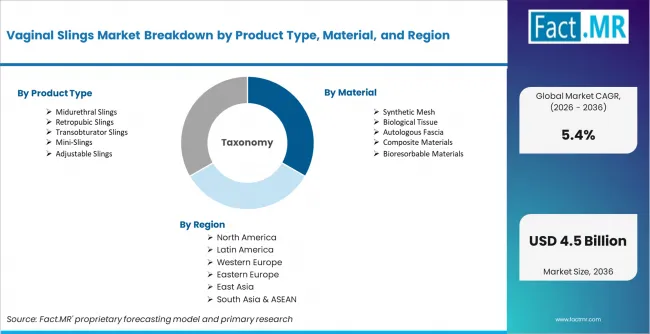
The Vaginal Slings Market is segmented by Product Type (Midurethral Slings, Retropubic Slings, Transobturator Slings, Mini-Slings, and Adjustable Slings), Material (Synthetic Mesh, Biological Tissue, Autologous Fascia, Composite Materials, and Bioresorbable Materials), Procedure , End User, Sales Channel, and Region. Forecast for 2026 to 2036.

Vaginal Slings Market Forecast and Outlook By Fact.MR

  • In 2025, the vaginal slings market was valued at USD 2.4 billion.
  • Based on revised Fact.MR analysis, demand for vaginal slings is estimated to grow to USD 2.5 billion in 2026 and USD 4.2 billion by 2036.
  • Fact.MR projects a CAGR of 5.4% during the forecast period.
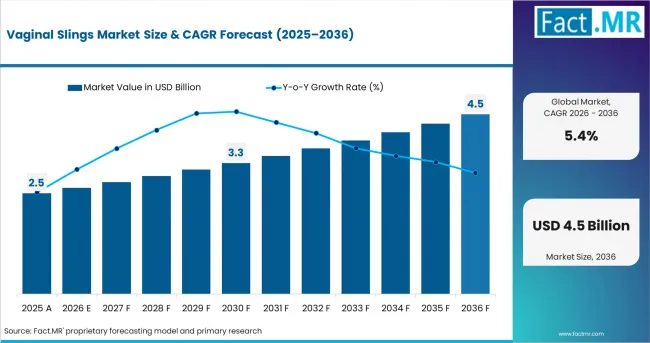
Vaginal Slings Market Market Value Analysis

Metric Value
Estimated Value in 2026 USD 2.5 billion
Forecast Value in 2036 USD 4.2 billion
Forecast CAGR (2026 to 2036) 5.4%

Summary of Vaginal Slings Market

  • Market Definition
    • The market includes vaginal sling products used during surgery to support the urethra or bladder neck in women with stress urinary incontinence.
  • Demand Drivers
    • Urogynecologists are using sling procedures where SUI symptoms affect daily function and conservative treatment is insufficient.
    • Hospitals need clinically documented products because mesh safety, patient counseling, and follow-up care influence procedure acceptance.
    • Ambulatory surgical centers are adopting procedure-ready sling kits where shorter recovery and operating room efficiency support selected SUI procedures.
  • Key Segments Analyzed
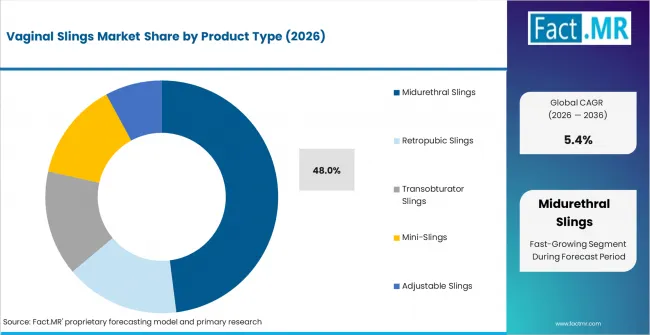
    • By Product Type: Midurethral slings are expected to hold approximately 48.0% share in 2026, supported by broad use in SUI surgery.
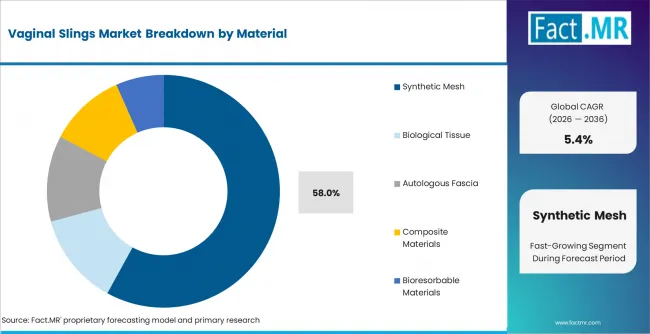
    • By Material: Synthetic mesh leads in 2026 with about 58.0% share, due to established use in midurethral sling systems.
    • By Procedure: Transobturator sling procedures account for around 34.0% share in 2026, supported by surgeon familiarity and reduced bladder injury concern.
    • By End User: Hospitals hold nearly 56.0% share in 2026, since complex urogynecological procedures require specialist support and follow-up care.
    • By Sales Channel: Direct institutional sales are projected to lead with 42.0% share in 2026, as hospitals prefer qualified supply and clinical documentation.
    • By Geography: China leads growth through 2036 at 5.9% CAGR, supported by hospital expansion and wider women’s health treatment access.
  • Analyst Opinion at Fact.MR
    • Shambhu Nath Jha, Senior Analyst at Fact.MR, states, “Vaginal sling demand is no longer tied only to procedure volume. The stronger shift is toward patient selection, device safety documentation, surgeon confidence, and follow-up systems. Suppliers that can prove product reliability, training support, and procedure-specific performance will hold a better position than companies competing only on availability.”
  • Strategic Implications
    • Manufacturers should strengthen clinical documentation because hospitals evaluate sling products through safety, handling, and long-term follow-up expectations.
    • Hospitals need qualified supplier relationships to reduce variation across midurethral, transobturator, and adjustable sling procedures.
    • Distributors should support surgeon training and inventory reliability, since procedure delays can affect operating room schedules.
  • Methodology
    • Market sizing uses SUI procedure demand, sling product utilization, product type adoption, and average selling prices.
    • Analysis includes FDA mesh guidance, urology society recommendations, NICE guidance, company catalogues, and hospital supply references.
    • Forecasts account for minimally invasive surgery demand, mesh safety scrutiny, outpatient procedure growth, and regional urogynecology access.

The market is projected to generate USD 1.7 billion in absolute opportunity between 2026 and 2036. Growth is supported by stress urinary incontinence treatment demand, minimally invasive urogynecological surgery, and improved surgical counseling. FDA guidance notes that surgical mesh sling procedures are commonly performed for female stress urinary incontinence, with additional attention placed on long-term safety evaluation for mini-slings. [5]

China is projected to lead with a 5.9% CAGR through 2036, supported by wider access to women’s health surgery and hospital expansion. India is anticipated to follow at 5.8%, helped by private hospital growth and rising urogynecology access. Germany is expected to grow at 5.7%, driven by regulated medical device evaluation and specialist surgical care. Japan is likely to record a 5.6% CAGR, supported by aging demographics and hospital-based treatment access. The UK is forecast to grow at 5.4%, backed by patient safety review and structured clinical pathways. The United States is estimated to post 4.7%, with demand anchored in established SUI surgery volumes and stronger mesh safety scrutiny.

Segmental Analysis

Vaginal Slings Market Analysis by Product Type
Vaginal Slings Market Analysis By Product Type

Midurethral slings are expected to hold 48.0% share in 2026 as surgeons use them as a standard surgical option for stress urinary incontinence. The segment leads due to established procedure familiarity and broad availability across hospital and ambulatory settings. Retropubic and transobturator slings remain important choices because surgeons select the route based on anatomy, risk profile, and patient history. Mini-slings and adjustable systems are gaining attention where smaller incisions or postoperative tension control matter. FDA resources state that surgical mesh sling procedures are commonly performed for female SUI, although safety follow-up remains important [1]. Poor patient selection can increase complication concerns and reduce confidence in repeat use.

  • Procedure Familiarity: Midurethral sling systems remain widely used because surgeons are trained on their placement and tensioning steps.
  • Route Selection: Retropubic and transobturator slings allow surgeons to match access route with patient risk profile.
  • Mini-Sling Interest: Smaller sling systems gain attention where reduced dissection and outpatient workflow matter.

Vaginal Slings Market Analysis by Material
Vaginal Slings Market Analysis By Material

Synthetic mesh leads the material segment because many midurethral sling systems are built around polypropylene mesh designs. Synthetic mesh is projected to account for 58.0% share in 2026. The material retains a strong position because it offers durability, defined structure, and predictable handling for trained surgeons. Biologic tissue and autologous fascia are used where patients or surgeons prefer non-synthetic options. Bioresorbable and composite materials remain smaller but important development areas. FDA mesh oversight and patient counseling requirements have made material choice more sensitive than earlier product cycles. Poor material selection can affect surgeon confidence and patient acceptance.

  • Mesh Durability: Synthetic mesh remains important where long-term urethral support is the clinical goal.
  • Biologic Preference: Biologic and autologous options are relevant where patients prefer non-synthetic approaches.
  • Safety Review: Material selection now depends more on counseling, documentation, and follow-up planning.

Vaginal Slings Market Analysis by Procedure
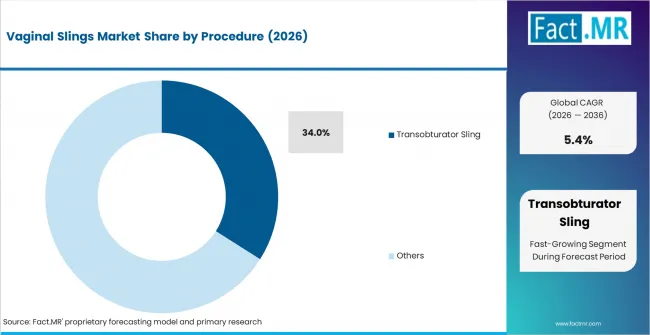
Vaginal Slings Market Analysis By Procedure

Transobturator sling procedures form a leading procedural base because surgeons use them where lateral passage and reduced bladder injury concern are important. This procedure is estimated to account for 34.0% share in 2026. Retropubic sling procedures remain important in selected cases where support needs and patient anatomy make them suitable. Autologous fascial sling procedures are used when non-mesh surgery is preferred. Adjustable sling procedures add value where postoperative tension control is clinically useful. AUA/SUFU guidance provides a clinical structure for evaluation, counseling, and surgical treatment of female SUI, reinforcing the importance of procedure selection. [2] Weak procedure matching can affect outcomes and patient satisfaction.

  • Route Fit: Transobturator procedures offer a familiar route for many SUI cases.
  • Mesh-Free Option: Autologous fascial sling surgery remains relevant when non-synthetic treatment is preferred.
  • Tension Control: Adjustable slings support cases where postoperative adjustment may improve clinical management.

Vaginal Slings Market Analysis by End User
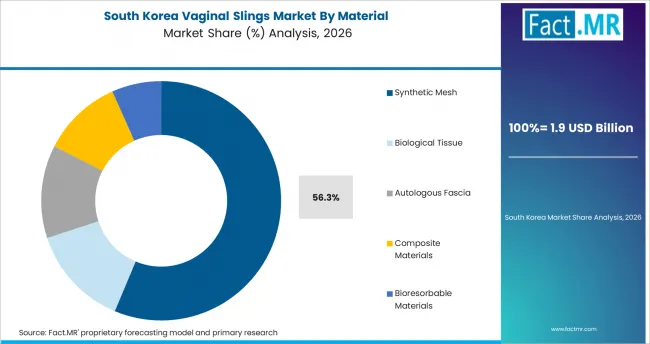
Vaginal Slings Market South Korea Market Share Analysis By Material

Hospitals lead demand because complex urogynecological procedures require operating rooms, specialist surgeons, anesthesia support, complication management, and structured follow-up. The end-user base is expected to be led by hospitals with 56.0% share in 2026. Hospitals handle higher-risk cases and often manage patients who require detailed counseling before sling surgery. Ambulatory surgical centers are gaining demand in selected low-risk procedures where shorter stay and procedure efficiency are attractive. Specialty clinics contribute through patient evaluation and referral pathways. Hospitals retain the largest share because mesh-related concerns place weight on clinical governance and postoperative management. Weak follow-up systems can reduce procedural confidence.

  • Surgical Infrastructure: Hospitals provide the specialist environment needed for higher-risk sling procedures.
  • Follow-Up Capacity: Hospital systems are better positioned to manage counseling, monitoring, and complications.
  • ASC Growth: Ambulatory centers gain demand where patient selection supports lower-risk outpatient procedures.

Vaginal Slings Market Analysis by Sales Channel
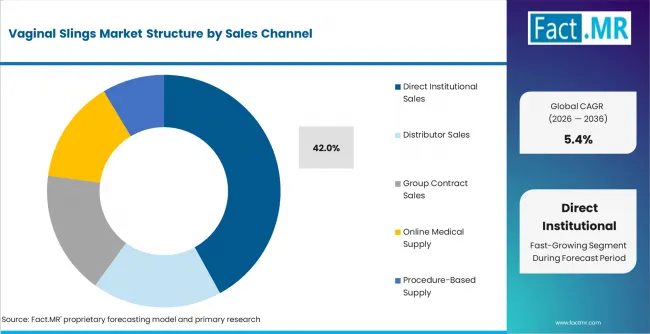
Vaginal Slings Market Analysis By Sales Channel

Direct institutional sales lead because vaginal sling products require product qualification, clinical documentation, surgeon support, and recurring supply reliability. Direct institutional sales are expected to account for 42.0% share in 2026. Hospitals prefer direct engagement where device tracking, product training, and contract supply matter. Distributor sales remain important for smaller hospitals and regional surgical centers. Group contract sales support large healthcare networks that standardize product use across sites. Online medical supply plays a limited role because implantable devices require stronger qualification controls. Low-support channels may struggle when surgeons need product-specific placement guidance or rapid replacement supply.

  • Contract Reliability: Direct sales help hospitals maintain product availability across urogynecology departments.
  • Surgeon Training: Supplier support improves confidence in sling placement, tensioning, and handling.
  • Procedure Supply: Recurring use in selected SUI surgeries strengthens long-term account relationships.

Drivers, Restraints, and Opportunities
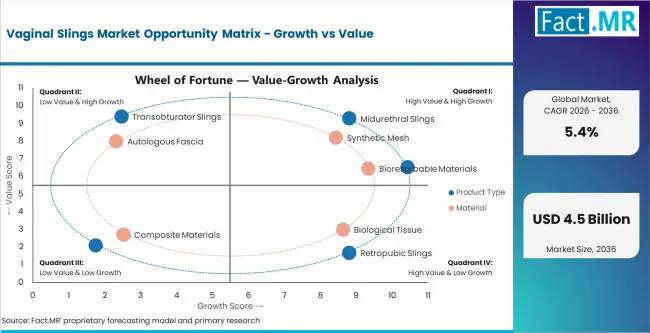
Vaginal Slings Market Opportunity Matrix Growth Vs Value

Rising diagnosis and treatment of stress urinary incontinence are increasing the need for durable surgical options. Vaginal slings help surgeons support the urethra or bladder neck where conservative care is insufficient. AUA/SUFU guidance focuses on evaluation, counseling, and treatment of female SUI, which supports structured surgical decision-making. Hospitals are placing more value on products that fit procedure workflows, offer reliable handling, and support patient safety documentation. Demand improves where surgical departments connect sling use with clear patient selection and follow-up protocols.

Mesh-related complications and regulatory scrutiny restrain faster growth. Vaginal slings require correct patient selection, careful placement, and informed consent. Some patients and clinicians remain cautious because mesh erosion, pain, infection, voiding difficulty, and revision surgery can affect outcomes. NICE guidance covers urinary incontinence and pelvic organ prolapse management, including complications linked to mesh surgery. [3] Suppliers must prove practical clinical value, training support, and safety documentation before adoption widens across hospitals.

  • Outpatient SUI Procedures: Ambulatory surgical centers create opportunity where patient selection supports efficient sling placement.
  • Non-Mesh Alternatives: Autologous fascial sling materials gain attention where patients or surgeons prefer non-synthetic approaches.
  • Training-Led Adoption: Procedure education and postmarket documentation can help suppliers protect institutional demand.

Regional Analysis

The vaginal slings market is assessed across North America, Europe, Asia Pacific, Latin America, and Middle East and Africa, covering 30+ countries with demand profiles shaped by SUI diagnosis, hospital capability, surgeon training, reimbursement, patient safety expectations, and access to urogynecology care.

Top Country Growth Comparison Vaginal Slings Market Cagr (2026 2036)

Country CAGR (2026 to 2036)
China 5.9%
India 5.8%
Germany 5.7%
Japan 5.6%
UK 5.4%
USA 4.7%

Source: Fact.MR analysis, based on proprietary forecasting model and primary research.
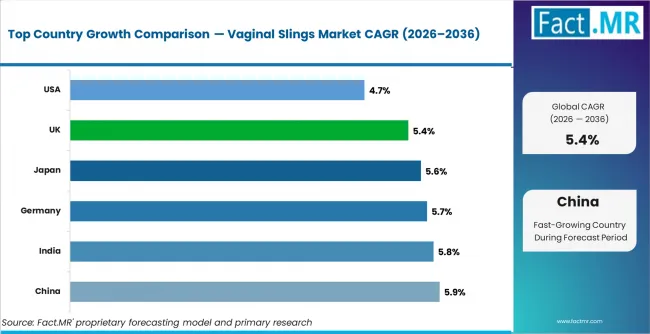
Vaginal Slings Market Cagr Analysis By Country

Asia Pacific Vaginal Slings Market Analysis

Asia Pacific records the strongest growth because surgical access, private hospital capacity, and women’s health awareness are expanding together. China and India are adding urogynecology capacity across urban hospitals and specialty surgical centers. Japan supports steady demand through ageing demographics and structured hospital care. The region contains both premium hospitals and price-sensitive facilities. Suppliers need portfolios that balance device quality, training support, and practical pricing. Growth depends on surgeon awareness, patient acceptance, hospital purchasing capacity, and reliable sling product availability.

  • China: China leads the country outlook as hospital expansion and higher women’s health treatment access strengthen vaginal sling demand. The country is projected to grow at 5.9% CAGR through 2036. Urban hospitals are improving access to urogynecology procedures. Local device suppliers may gain share in standard products, while premium systems retain demand in advanced surgical centers.
  • India: Private hospitals and women’s health specialty centers support vaginal sling adoption in India. SUI treatment access is improving across metro and tier-one cities. India is forecast to grow at 5.8% CAGR by 2036. Cost sensitivity remains important, but surgeons prefer reliable products in complex and repeat-treatment cases.
  • Japan: Japan shows steady demand where ageing demographics and hospital-based continence care support procedure volumes. The country is projected to record 5.6% CAGR over the study period. Growth remains moderate because surgical decisions are cautious, yet specialist care and patient follow-up systems support recurring demand.

North America Vaginal Slings Market Analysis
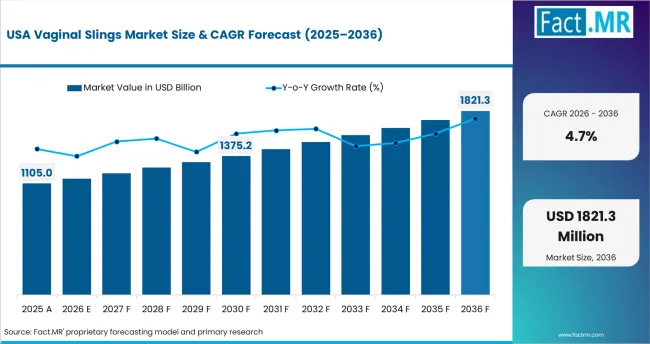
Vaginal Slings Market Country Value Analysis

North America remains a high-value region because advanced urogynecology infrastructure and early adoption of SUI procedures support vaginal sling use. The United States anchors regional demand across hospitals, ambulatory surgical centers, and women’s health specialty practices. FDA oversight keeps safety reporting and postmarket monitoring central to supplier access. [4] Hospitals evaluate sling systems through evidence, surgeon preference, product traceability, and contract reliability. Demand remains stable, but broader growth is moderated by mesh safety concerns and patient counseling requirements.

  • USA: The United States has a large SUI treatment base and advanced operating room infrastructure. Hospitals and ambulatory surgical centers use vaginal slings across selected stress urinary incontinence procedures. The country is projected to record 4.7% CAGR over the assessment period. Purchasers examine product safety data, surgeon experience, reimbursement, and supplier support before expanding usage.

Europe Vaginal Slings Market Analysis
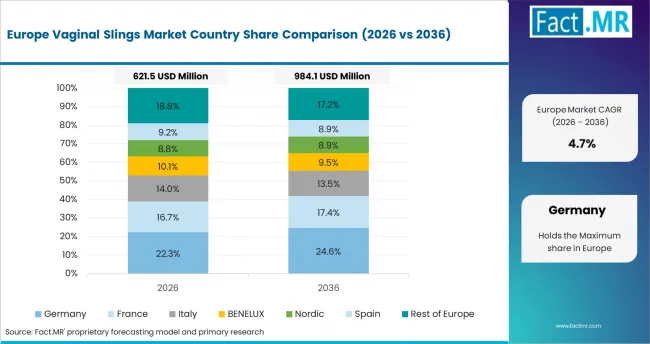
Vaginal Slings Market Europe Country Market Share Analysis, 2026 & 2036

Europe shows steady demand because surgical pathways, medical device regulation, and hospital purchasing systems are structured. Germany and the UK represent different demand patterns across regulated product evaluation and patient safety review. NICE guidance on urinary incontinence and pelvic organ prolapse management shapes clinical decision-making and treatment evaluation in the UK. Hospitals emphasize documentation, device reliability, and postmarket oversight. Demand growth is moderate because many markets already have established urogynecology protocols. Suppliers compete through product evidence, placement convenience, and surgeon education.

  • Germany: Germany’s vaginal slings market is supported by specialist urogynecology care and a strong medical device evaluation environment. The country is projected to grow at 5.7% CAGR by 2036. Hospitals place weight on product quality, surgeon training, and postmarket evidence. Suppliers with strong clinical documentation can protect institutional demand.
  • UK: Patient safety review and structured care pathways shape vaginal sling use in the UK. Hospitals focus on careful patient selection, informed consent, and mesh complication management. The UK is forecast to grow at 5.4% CAGR through 2036. Supplier education and product traceability influence wider institutional acceptance.

Fact.MR analysis of regional demand covers Asia Pacific, North America, Europe, Latin America, and Middle East and Africa. The study assesses SUI procedure access, surgeon awareness, sling material preference, reimbursement, medical device regulation, and supplier support across major markets.

Competitive Aligners for Market Players
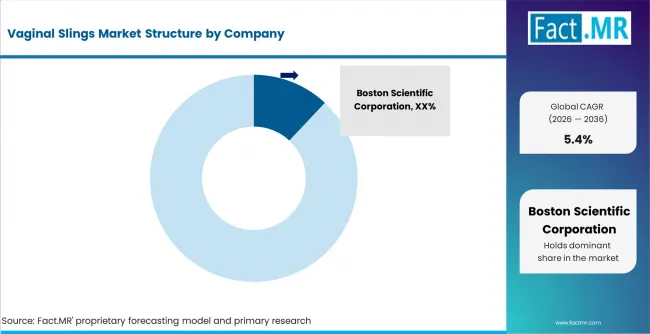
Vaginal Slings Market Analysis By Company

The vaginal slings market is moderately concentrated in advanced sling systems, but more fragmented across regional procedure kits and lower-cost product supply. Large global suppliers hold advantages because clinical evidence, regulatory documentation, hospital contracts, and surgeon training create switching barriers. Smaller suppliers often compete through regional distribution, procedure-specific kits, and price-access strategies.

Competitive advantage depends on product safety, mesh design, handling ease, tensioning consistency, site access, and surgeon support. Boston Scientific, Coloplast, Caldera Medical, UroCure, LiNA Medical, CooperSurgical, Betatech Medical, and Promedon represent supplier groups where clinical credibility and hospital access matter. Hospitals are less likely to switch suppliers when surgeons are trained on specific sling systems.

The market is divided between established mesh sling systems used in routine SUI procedures and alternative sling approaches used in selected patients. Suppliers that combine reliable product performance with training, documentation, and postmarket support can protect institutional demand. Regional companies can gain ground where affordability and distributor reach are more important.

Key Players

  • Boston Scientific Corporation
  • Coloplast Group
  • Caldera Medical, Inc.
  • UroCure, LLC
  • LiNA Medical USA
  • CooperSurgical, Inc.
  • Betatech Medical
  • Promedon Group
  • A.M.I. GmbH
  • Cousin Surgery
  • Medtronic plc
  • Ethicon, Inc.

Scope of Report

Vaginal Slings Market Breakdown By Product Type, Material, And Region

Attribute Details
Quantitative Units USD 2.5 billion in 2026 to USD 4.2 billion by 2036, at a CAGR of 5.4%
Market Definition Surgical sling products used to support the urethra or bladder neck in women with stress urinary incontinence
Forecast Period 2026 to 2036
Historical Reference 2025
Product Type Covered Midurethral Slings, Retropubic Slings, Transobturator Slings, Mini-Slings, Adjustable Slings
Material Covered Synthetic Mesh, Biological Tissue, Autologous Fascia, Composite Materials, Bioresorbable Materials
Procedure Covered Midurethral Sling Surgery, Autologous Fascial Sling Surgery, Adjustable Sling Procedures, Single-Incision Sling Surgery, Revision Procedures
End User Covered Hospitals, Ambulatory Surgical Centers, Urogynecology Clinics, Specialty Women’s Health Centers, Surgical Training Institutes
Sales Channel Covered Direct Institutional Sales, Distributor Sales, Group Contract Sales, Online Medical Supply, Procedure-Based Supply
Regions Covered North America, Europe, Asia Pacific, Latin America, Middle East and Africa
Countries Covered USA, Canada, Mexico, Germany, UK, France, Italy, Spain, China, Japan, India, ASEAN, Australia, Brazil, Argentina, Chile, Saudi Arabia, GCC, Turkey, South Africa, and Rest of MEA
Key Companies Profiled Boston Scientific, Coloplast, Caldera Medical, UroCure, LiNA Medical USA, CooperSurgical, Betatech Medical, Promedon, A.M.I., Cousin Surgery, Medtronic, Ethicon
Approach Hybrid top-down and bottom-up model using SUI procedure volumes, sling utilization rates, product pricing, hospital purchasing patterns, and primary interviews with surgeons and purchasing managers

Bibliography

  • [1] United States Food and Drug Administration. (2024). Stress urinary incontinence: Surgical mesh considerations and recommendations. FDA.
  • [2] American Urological Association. Stress urinary incontinence guideline. AUA.
  • [3] National Institute for Health and Care Excellence. Urinary incontinence and pelvic organ prolapse in women: Management. NICE.
  • [4] United States Food and Drug Administration. (2024). FDA’s activities: Urogynecologic surgical mesh. FDA.
  • [5] Boston Scientific. (n.d.). Stress urinary incontinence treatment and products. Boston Scientific.

This Report Addresses

  • Strategic intelligence on vaginal sling demand across stress urinary incontinence treatment, midurethral sling procedures, hospital purchasing systems, and ambulatory surgical care globally.
  • Market forecast from USD 2.5 billion in 2026 to USD 4.2 billion by 2036 at a CAGR of 5.4%.
  • Growth opportunity mapping across China hospital expansion, India private surgical growth, Germany regulated device evaluation, Japan ageing-linked continence care, UK patient safety pathways, and U.S. established SUI procedure use.
  • Segment analysis by product type, material, procedure, end user, sales channel, and region.
  • Regional outlook covering Asia Pacific surgical access growth, North America established SUI procedure demand, and Europe safety-controlled product evaluation.
  • Competitive analysis of Boston Scientific, Coloplast, Caldera Medical, UroCure, LiNA Medical USA, CooperSurgical, Betatech Medical, and Promedon.
  • Product adoption analysis covering mesh safety, sling material choice, procedure route, surgeon training, reimbursement, patient counseling, and postmarket monitoring.
  • Report delivered with market sizing, segment outlook, regional analysis, company profiling, and forecast assumptions.

Vaginal Slings Market Definition

The market covers surgical sling products used to treat female stress urinary incontinence by supporting the urethra or bladder neck. These products include synthetic mesh slings, biologic slings, autologous fascial sling materials, and adjustable systems used across midurethral, retropubic, transobturator, mini-sling, and related procedures.

Vaginal Slings Market Inclusions

Covers global and regional forecasts from 2026 to 2036. Includes midurethral slings, retropubic slings, transobturator slings, mini-slings, adjustable sling systems, biologic sling materials, and autologous fascial sling procedures. Includes use across hospitals, ambulatory surgical centers, urogynecology clinics, women’s health centers, and procedure-based supply networks.

Vaginal Slings Market Exclusions

Excludes fertility treatment products, pelvic floor exercise devices, pessaries, urethral bulking agents, absorbent incontinence products, urinary catheters, and non-surgical continence therapies. Omits vaginal mesh products used only for pelvic organ prolapse repair when not used for SUI treatment. Focus remains on sling-based surgical products and procedure-linked materials used for stress urinary incontinence.

Vaginal Slings Market Research Methodology

  • Primary Research
    • Interviews with urogynecologists, urologists, gynecological surgeons, hospital purchasing heads, ambulatory surgery center managers, medical device distributors, and pelvic floor care specialists across major consuming regions.
  • Desk Research
    • Uses FDA surgical mesh resources, urology society guidelines, NICE guidance, company product catalogues, hospital purchasing references, reimbursement documents, and peer-reviewed clinical literature.
  • Market-Sizing and Forecasting
    • Hybrid model using SUI procedure volumes, sling utilization rates, product type adoption, site-of-care mix, average selling prices, and country-level access to urogynecology treatment.
  • Data Validation and Update Cycle
    • Validated using supplier channel checks, hospital purchasing patterns, regulatory references, surgeon preference inputs, and product availability reviews. Updated annually.

Vaginal Slings Market by Segments

  • By Product Type:

    • Midurethral Slings
    • Retropubic Slings
    • Transobturator Slings
    • Mini-Slings
    • Adjustable Slings
  • By Material:

    • Synthetic Mesh
    • Biological Tissue
    • Autologous Fascia
    • Composite Materials
    • Bioresorbable Materials
  • By Procedure:

    • Midurethral Sling Surgery
    • Autologous Fascial Sling Surgery
    • Adjustable Sling Procedures
    • Single-Incision Sling Surgery
    • Revision Procedures
  • By End User:

    • Hospitals
    • Ambulatory Surgical Centers
    • Urogynecology Clinics
    • Specialty Women’s Health Centers
    • Surgical Training Institutes
  • By Sales Channel:

    • Direct Institutional Sales
    • Distributor Sales
    • Group Contract Sales
    • Online Medical Supply
    • Procedure-Based Supply
  • By Region:

    • North America
      • United States
      • Canada
      • Mexico
    • Latin America
      • Brazil
      • Argentina
      • Chile
      • Rest of Latin America
    • Western Europe
      • Germany
      • France
      • United Kingdom
      • Italy
      • Spain
      • Rest of Western Europe
    • Eastern Europe
      • Russia
      • Poland
      • Hungary
      • Balkan and Baltic
      • Rest of Eastern Europe
    • East Asia
      • China
      • Japan
      • South Korea
    • South Asia and Pacific
      • India
      • ASEAN
      • Australia
      • Rest of South Asia and Pacific
    • Middle East and Africa
      • Kingdom of Saudi Arabia
      • Other GCC Countries
      • Turkey
      • South Africa
      • Rest of Middle East and Africa

- Frequently Asked Questions -

How large is the global vaginal slings market in 2025?

The global vaginal slings market was valued at USD 2.4 billion in 2025.

What will the market size be in 2026?

Based on revised Fact.MR analysis, demand for vaginal slings is estimated to grow to USD 2.5 billion in 2026.

What is the projected market size by 2036?

The market is projected to reach USD 4.2 billion by 2036, generating USD 1.7 billion in absolute dollar opportunity.

What is the expected CAGR from 2026 to 2036?

Fact.MR projects a CAGR of 5.4% for the global vaginal slings market during the forecast period.

Which product type is poised to lead the market?

Midurethral slings lead with approximately 48.0% share in 2026 due to broad use in stress urinary incontinence surgery.

Which material holds the highest share?

Synthetic mesh leads with about 58.0% share in 2026 due to established use in midurethral sling systems.

Which procedure accounts for the largest demand?

Transobturator sling procedures account for around 34.0% share in 2026 due to surgeon familiarity and route preference.

Which end user leads the market?

Hospitals account for nearly 56.0% share in 2026 because complex SUI procedures need specialist staff and follow-up care.

Which sales channel leads demand?

Direct institutional sales hold around 42.0% share in 2026 because hospitals prefer qualified supply and clinical documentation.

Which country shows the fastest growth?

China leads at 5.9% CAGR through 2036, supported by hospital expansion and wider women’s health treatment access.

What is driving demand for vaginal slings?

Demand is driven by stress urinary incontinence treatment needs, minimally invasive surgery, hospital access, and improved patient counseling.

What is the key challenge in this market?

Mesh safety concerns, regulatory scrutiny, variable surgeon adoption, and patient hesitation limit faster adoption across several markets.

Table of Content

  1. Executive Summary
    • Supply to side Trends
    • Technology Roadmap Analysis
    • Analysis and Recommendations
  2. Market Overview
    • Market Coverage / Taxonomy
    • Market Definition / Scope / Limitations
  3. Market Structure, Signals, and Trend Drivers
  4. Benchmarking and Cross-market Comparability
  5. Market Sizing, Forecasting, and Opportunity Mapping
  6. Research Design and Evidence Framework
    • Desk Research Programme (Secondary Evidence)
      • Company Annual and Sustainability Reports
      • Peer-reviewed Journals and Academic Literature
      • Corporate Websites, Product Literature, and Technical Notes
      • Earnings Decks and Investor Briefings
      • Statutory Filings and Regulatory Disclosures
      • Technical White Papers and Standards Notes
      • Trade Journals, Industry Magazines, and Analyst Briefs
      • Conference Proceedings, Webinars, and Seminar Materials
      • Government Statistics Portals and Public Data Releases
      • Press Releases and Reputable Media Coverage
      • Specialist Newsletters and Curated Briefings
      • Sector Databases and Reference Repositories
      • Fact.MR Internal Proprietary Databases and Historical Market Datasets
      • Subscription Datasets and Paid Sources
      • Social Channels, Communities, and Digital Listening Inputs
      • Additional Desk Sources
    • Why Primary Evidence is Used
    • Field Techniques
      • Interviews
      • Focus Groups
      • Observational and In-context Research
      • Social and Community Interactions
    • Stakeholder Universe Engaged
      • C-suite Leaders
      • Presidents and Vice Presidents
      • R&D and Innovation Heads
      • Technical Specialists
      • Domain Subject-matter Experts
      • Scientists
      • Physicians and Other Healthcare Professionals
    • Governance, Ethics, and Data Stewardship
      • Research Ethics
      • Data Integrity and Handling
  7. Tooling, Models, and Reference Databases
  8. Data Engineering and Model Build
    • Data Acquisition and Ingestion
    • Cleaning, Normalisation, and Verification
    • Synthesis, Triangulation, and Analysis
  9. Quality Assurance and Audit Trail
  10. Market Background
    • Market Dynamics
      • Drivers
      • Restraints
      • Opportunity
      • Trends
    • Scenario Forecast
      • Demand in Optimistic Scenario
      • Demand in Likely Scenario
      • Demand in Conservative Scenario
    • Opportunity Map Analysis
    • Product Life Cycle Analysis
    • Supply Chain Analysis
    • Investment Feasibility Matrix
    • Value Chain Analysis
    • PESTLE and Porter’s Analysis
    • Regulatory Landscape
    • Regional Parent Market Outlook
    • Production and Consumption Statistics
    • Import and Export Statistics
  11. Global Market Analysis 2021 to 2025 and Forecast, 2026 to 2036
    • Historical Market Size Value (USD Million) Analysis, 2021 to 2025
    • Current and Future Market Size Value (USD Million) Projections, 2026 to 2036
      • Y to o to Y Growth Trend Analysis
      • Absolute $ Opportunity Analysis
  12. Global Market Pricing Analysis 2021 to 2025 and Forecast 2026 to 2036
  13. Global Market Analysis 2021 to 2025 and Forecast 2026 to 2036, By Product Type
    • Introduction / Key Findings
    • Historical Market Size Value (USD Million) Analysis By Product Type , 2021 to 2025
    • Current and Future Market Size Value (USD Million) Analysis and Forecast By Product Type , 2026 to 2036
      • Midurethral Slings
      • Retropubic Slings
      • Transobturator Slings
      • Mini-Slings
      • Adjustable Slings
    • Y to o to Y Growth Trend Analysis By Product Type , 2021 to 2025
    • Absolute $ Opportunity Analysis By Product Type , 2026 to 2036
  14. Global Market Analysis 2021 to 2025 and Forecast 2026 to 2036, By Material
    • Introduction / Key Findings
    • Historical Market Size Value (USD Million) Analysis By Material, 2021 to 2025
    • Current and Future Market Size Value (USD Million) Analysis and Forecast By Material, 2026 to 2036
      • Synthetic Mesh
      • Biological Tissue
      • Autologous Fascia
      • Composite Materials
      • Bioresorbable Materials
    • Y to o to Y Growth Trend Analysis By Material, 2021 to 2025
    • Absolute $ Opportunity Analysis By Material, 2026 to 2036
  15. Global Market Analysis 2021 to 2025 and Forecast 2026 to 2036, By End User
    • Introduction / Key Findings
    • Historical Market Size Value (USD Million) Analysis By End User, 2021 to 2025
    • Current and Future Market Size Value (USD Million) Analysis and Forecast By End User, 2026 to 2036
      • Hospitals
      • Ambulatory Surgical Centers
      • Urogynecology Clinics
      • Specialty Women’s Health Centers
      • Surgical Training Institutes
      • Y to o to Y Growth Trend Analysis By End User, 2021 to 2025
      • Absolute $ Opportunity Analysis By End User, 2026 to 2036
    • Global Market Analysis 2021 to 2025 and Forecast 2026 to 2036, By Sales Channel
      • Introduction / Key Findings
      • Historical Market Size Value (USD Million) Analysis By Sales Channel, 2021 to 2025
      • Current and Future Market Size Value (USD Million) Analysis and Forecast By Sales Channel, 2026 to 2036
        • Direct Institutional Sales
        • Distributor Sales
        • Group Contract Sales
        • Online Medical Supply
        • Procedure-Based Supply
        • Y to o to Y Growth Trend Analysis By Sales Channel, 2021 to 2025
        • Absolute $ Opportunity Analysis By Sales Channel, 2026 to 2036
      • Global Market Analysis 2021 to 2025 and Forecast 2026 to 2036, By Region
        • Introduction
        • Historical Market Size Value (USD Million) Analysis By Region, 2021 to 2025
        • Current Market Size Value (USD Million) Analysis and Forecast By Region, 2026 to 2036
          • North America
          • Latin America
          • Western Europe
          • Eastern Europe
          • East Asia
          • South Asia and Pacific
          • Middle East & Africa
        • Market Attractiveness Analysis By Region
      • North America Market Analysis 2021 to 2025 and Forecast 2026 to 2036, By Country
        • Historical Market Size Value (USD Million) Trend Analysis By Market Taxonomy, 2021 to 2025
        • Market Size Value (USD Million) Forecast By Market Taxonomy, 2026 to 2036
          • By Country
            • USA
            • Canada
            • Mexico
          • By Product Type
          • By Material
          • By End User
          • By Sales Channel
        • Market Attractiveness Analysis
          • By Country
          • By Product Type
          • By Material
          • By End User
          • By Sales Channel
        • Key Takeaways
      • Latin America Market Analysis 2021 to 2025 and Forecast 2026 to 2036, By Country
        • Historical Market Size Value (USD Million) Trend Analysis By Market Taxonomy, 2021 to 2025
        • Market Size Value (USD Million) Forecast By Market Taxonomy, 2026 to 2036
          • By Country
            • Brazil
            • Chile
            • Rest of Latin America
          • By Product Type
          • By Material
          • By End User
          • By Sales Channel
        • Market Attractiveness Analysis
          • By Country
          • By Product Type
          • By Material
          • By End User
          • By Sales Channel
        • Key Takeaways
      • Western Europe Market Analysis 2021 to 2025 and Forecast 2026 to 2036, By Country
        • Historical Market Size Value (USD Million) Trend Analysis By Market Taxonomy, 2021 to 2025
        • Market Size Value (USD Million) Forecast By Market Taxonomy, 2026 to 2036
          • By Country
            • Germany
            • UK
            • Italy
            • Spain
            • France
            • Nordic
            • BENELUX
            • Rest of Western Europe
          • By Product Type
          • By Material
          • By End User
          • By Sales Channel
        • Market Attractiveness Analysis
          • By Country
          • By Product Type
          • By Material
          • By End User
          • By Sales Channel
        • Key Takeaways
      • Eastern Europe Market Analysis 2021 to 2025 and Forecast 2026 to 2036, By Country
        • Historical Market Size Value (USD Million) Trend Analysis By Market Taxonomy, 2021 to 2025
        • Market Size Value (USD Million) Forecast By Market Taxonomy, 2026 to 2036
          • By Country
            • Russia
            • Poland
            • Hungary
            • Balkan & Baltic
            • Rest of Eastern Europe
          • By Product Type
          • By Material
          • By End User
          • By Sales Channel
        • Market Attractiveness Analysis
          • By Country
          • By Product Type
          • By Material
          • By End User
          • By Sales Channel
        • Key Takeaways
      • East Asia Market Analysis 2021 to 2025 and Forecast 2026 to 2036, By Country
        • Historical Market Size Value (USD Million) Trend Analysis By Market Taxonomy, 2021 to 2025
        • Market Size Value (USD Million) Forecast By Market Taxonomy, 2026 to 2036
          • By Country
            • China
            • Japan
            • South Korea
          • By Product Type
          • By Material
          • By End User
          • By Sales Channel
        • Market Attractiveness Analysis
          • By Country
          • By Product Type
          • By Material
          • By End User
          • By Sales Channel
        • Key Takeaways
      • South Asia and Pacific Market Analysis 2021 to 2025 and Forecast 2026 to 2036, By Country
        • Historical Market Size Value (USD Million) Trend Analysis By Market Taxonomy, 2021 to 2025
        • Market Size Value (USD Million) Forecast By Market Taxonomy, 2026 to 2036
          • By Country
            • India
            • ASEAN
            • Australia & New Zealand
            • Rest of South Asia and Pacific
          • By Product Type
          • By Material
          • By End User
          • By Sales Channel
        • Market Attractiveness Analysis
          • By Country
          • By Product Type
          • By Material
          • By End User
          • By Sales Channel
        • Key Takeaways
      • Middle East & Africa Market Analysis 2021 to 2025 and Forecast 2026 to 2036, By Country
        • Historical Market Size Value (USD Million) Trend Analysis By Market Taxonomy, 2021 to 2025
        • Market Size Value (USD Million) Forecast By Market Taxonomy, 2026 to 2036
          • By Country
            • Kingdom of Saudi Arabia
            • Other GCC Countries
            • Turkiye
            • South Africa
            • Other African Union
            • Rest of Middle East & Africa
          • By Product Type
          • By Material
          • By End User
          • By Sales Channel
        • Market Attractiveness Analysis
          • By Country
          • By Product Type
          • By Material
          • By End User
          • By Sales Channel
        • Key Takeaways
      • Key Countries Market Analysis
        • USA
          • Pricing Analysis
          • Market Share Analysis, 2025
            • By Product Type
            • By Material
            • By End User
            • By Sales Channel
        • Canada
          • Pricing Analysis
          • Market Share Analysis, 2025
            • By Product Type
            • By Material
            • By End User
            • By Sales Channel
        • Mexico
          • Pricing Analysis
          • Market Share Analysis, 2025
            • By Product Type
            • By Material
            • By End User
            • By Sales Channel
        • Brazil
          • Pricing Analysis
          • Market Share Analysis, 2025
            • By Product Type
            • By Material
            • By End User
            • By Sales Channel
        • Chile
          • Pricing Analysis
          • Market Share Analysis, 2025
            • By Product Type
            • By Material
            • By End User
            • By Sales Channel
        • Germany
          • Pricing Analysis
          • Market Share Analysis, 2025
            • By Product Type
            • By Material
            • By End User
            • By Sales Channel
        • UK
          • Pricing Analysis
          • Market Share Analysis, 2025
            • By Product Type
            • By Material
            • By End User
            • By Sales Channel
        • Italy
          • Pricing Analysis
          • Market Share Analysis, 2025
            • By Product Type
            • By Material
            • By End User
            • By Sales Channel
        • Spain
          • Pricing Analysis
          • Market Share Analysis, 2025
            • By Product Type
            • By Material
            • By End User
            • By Sales Channel
        • France
          • Pricing Analysis
          • Market Share Analysis, 2025
            • By Product Type
            • By Material
            • By End User
            • By Sales Channel
        • India
          • Pricing Analysis
          • Market Share Analysis, 2025
            • By Product Type
            • By Material
            • By End User
            • By Sales Channel
        • ASEAN
          • Pricing Analysis
          • Market Share Analysis, 2025
            • By Product Type
            • By Material
            • By End User
            • By Sales Channel
        • Australia & New Zealand
          • Pricing Analysis
          • Market Share Analysis, 2025
            • By Product Type
            • By Material
            • By End User
            • By Sales Channel
        • China
          • Pricing Analysis
          • Market Share Analysis, 2025
            • By Product Type
            • By Material
            • By End User
            • By Sales Channel
        • Japan
          • Pricing Analysis
          • Market Share Analysis, 2025
            • By Product Type
            • By Material
            • By End User
            • By Sales Channel
        • South Korea
          • Pricing Analysis
          • Market Share Analysis, 2025
            • By Product Type
            • By Material
            • By End User
            • By Sales Channel
        • Russia
          • Pricing Analysis
          • Market Share Analysis, 2025
            • By Product Type
            • By Material
            • By End User
            • By Sales Channel
        • Poland
          • Pricing Analysis
          • Market Share Analysis, 2025
            • By Product Type
            • By Material
            • By End User
            • By Sales Channel
        • Hungary
          • Pricing Analysis
          • Market Share Analysis, 2025
            • By Product Type
            • By Material
            • By End User
            • By Sales Channel
        • Kingdom of Saudi Arabia
          • Pricing Analysis
          • Market Share Analysis, 2025
            • By Product Type
            • By Material
            • By End User
            • By Sales Channel
        • Turkiye
          • Pricing Analysis
          • Market Share Analysis, 2025
            • By Product Type
            • By Material
            • By End User
            • By Sales Channel
        • South Africa
          • Pricing Analysis
          • Market Share Analysis, 2025
            • By Product Type
            • By Material
            • By End User
            • By Sales Channel
      • Market Structure Analysis
        • Competition Dashboard
        • Competition Benchmarking
        • Market Share Analysis of Top Players
          • By Regional
          • By Product Type
          • By Material
          • By End User
          • By Sales Channel
      • Competition Analysis
        • Competition Deep Dive
          • Boston Scientific Corporation
            • Overview
            • Product Portfolio
            • Profitability by Market Segments (Product/Age /Sales Channel/Region)
            • Sales Footprint
            • Strategy Overview
              • Marketing Strategy
              • Product Strategy
              • Channel Strategy
          • Coloplast Group
          • Caldera Medical, Inc.
          • UroCure, LLC
          • LiNA Medical USA
          • CooperSurgical, Inc.
          • Betatech Medical
          • Promedon Group
          • A.M.I. GmbH
          • Cousin Surgery
          • Medtronic plc
    • Assumptions & Acronyms Used

List Of Table

  • Table 1: Global Market Value (USD Million) Forecast by Region, 2021 to 2036
  • Table 2: Global Market Value (USD Million) Forecast by Product Type, 2021 to 2036
  • Table 3: Global Market Value (USD Million) Forecast by Material, 2021 to 2036
  • Table 4: Global Market Value (USD Million) Forecast by End User, 2021 to 2036
  • Table 5: Global Market Value (USD Million) Forecast by Sales Channel, 2021 to 2036
  • Table 6: North America Market Value (USD Million) Forecast by Country, 2021 to 2036
  • Table 7: North America Market Value (USD Million) Forecast by Product Type, 2021 to 2036
  • Table 8: North America Market Value (USD Million) Forecast by Material, 2021 to 2036
  • Table 9: North America Market Value (USD Million) Forecast by End User, 2021 to 2036
  • Table 10: North America Market Value (USD Million) Forecast by Sales Channel, 2021 to 2036
  • Table 11: Latin America Market Value (USD Million) Forecast by Country, 2021 to 2036
  • Table 12: Latin America Market Value (USD Million) Forecast by Product Type, 2021 to 2036
  • Table 13: Latin America Market Value (USD Million) Forecast by Material, 2021 to 2036
  • Table 14: Latin America Market Value (USD Million) Forecast by End User, 2021 to 2036
  • Table 15: Latin America Market Value (USD Million) Forecast by Sales Channel, 2021 to 2036
  • Table 16: Western Europe Market Value (USD Million) Forecast by Country, 2021 to 2036
  • Table 17: Western Europe Market Value (USD Million) Forecast by Product Type, 2021 to 2036
  • Table 18: Western Europe Market Value (USD Million) Forecast by Material, 2021 to 2036
  • Table 19: Western Europe Market Value (USD Million) Forecast by End User, 2021 to 2036
  • Table 20: Western Europe Market Value (USD Million) Forecast by Sales Channel, 2021 to 2036
  • Table 21: Eastern Europe Market Value (USD Million) Forecast by Country, 2021 to 2036
  • Table 22: Eastern Europe Market Value (USD Million) Forecast by Product Type, 2021 to 2036
  • Table 23: Eastern Europe Market Value (USD Million) Forecast by Material, 2021 to 2036
  • Table 24: Eastern Europe Market Value (USD Million) Forecast by End User, 2021 to 2036
  • Table 25: Eastern Europe Market Value (USD Million) Forecast by Sales Channel, 2021 to 2036
  • Table 26: East Asia Market Value (USD Million) Forecast by Country, 2021 to 2036
  • Table 27: East Asia Market Value (USD Million) Forecast by Product Type, 2021 to 2036
  • Table 28: East Asia Market Value (USD Million) Forecast by Material, 2021 to 2036
  • Table 29: East Asia Market Value (USD Million) Forecast by End User, 2021 to 2036
  • Table 30: East Asia Market Value (USD Million) Forecast by Sales Channel, 2021 to 2036
  • Table 31: South Asia and Pacific Market Value (USD Million) Forecast by Country, 2021 to 2036
  • Table 32: South Asia and Pacific Market Value (USD Million) Forecast by Product Type, 2021 to 2036
  • Table 33: South Asia and Pacific Market Value (USD Million) Forecast by Material, 2021 to 2036
  • Table 34: South Asia and Pacific Market Value (USD Million) Forecast by End User, 2021 to 2036
  • Table 35: South Asia and Pacific Market Value (USD Million) Forecast by Sales Channel, 2021 to 2036
  • Table 36: Middle East & Africa Market Value (USD Million) Forecast by Country, 2021 to 2036
  • Table 37: Middle East & Africa Market Value (USD Million) Forecast by Product Type, 2021 to 2036
  • Table 38: Middle East & Africa Market Value (USD Million) Forecast by Material, 2021 to 2036
  • Table 39: Middle East & Africa Market Value (USD Million) Forecast by End User, 2021 to 2036
  • Table 40: Middle East & Africa Market Value (USD Million) Forecast by Sales Channel, 2021 to 2036

List Of Figures

  • Figure 1: Global Market Pricing Analysis
  • Figure 2: Global Market Value (USD Million) Forecast 2021-2036
  • Figure 3: Global Market Value Share and BPS Analysis by Product Type, 2026 and 2036
  • Figure 4: Global Market Y-o-Y Growth Comparison by Product Type, 2026 to 2036
  • Figure 5: Global Market Attractiveness Analysis by Product Type
  • Figure 6: Global Market Value Share and BPS Analysis by Material, 2026 and 2036
  • Figure 7: Global Market Y-o-Y Growth Comparison by Material, 2026 to 2036
  • Figure 8: Global Market Attractiveness Analysis by Material
  • Figure 9: Global Market Value Share and BPS Analysis by End User, 2026 and 2036
  • Figure 10: Global Market Y-o-Y Growth Comparison by End User, 2026 to 2036
  • Figure 11: Global Market Attractiveness Analysis by End User
  • Figure 12: Global Market Value Share and BPS Analysis by Sales Channel, 2026 and 2036
  • Figure 13: Global Market Y-o-Y Growth Comparison by Sales Channel, 2026 to 2036
  • Figure 14: Global Market Attractiveness Analysis by Sales Channel
  • Figure 15: Global Market Value (USD Million) Share and BPS Analysis by Region, 2026 and 2036
  • Figure 16: Global Market Y-o-Y Growth Comparison by Region, 2026 to 2036
  • Figure 17: Global Market Attractiveness Analysis by Region
  • Figure 18: North America Market Incremental Dollar Opportunity, 2026 to 2036
  • Figure 19: Latin America Market Incremental Dollar Opportunity, 2026 to 2036
  • Figure 20: Western Europe Market Incremental Dollar Opportunity, 2026 to 2036
  • Figure 21: Eastern Europe Market Incremental Dollar Opportunity, 2026 to 2036
  • Figure 22: East Asia Market Incremental Dollar Opportunity, 2026 to 2036
  • Figure 23: South Asia and Pacific Market Incremental Dollar Opportunity, 2026 to 2036
  • Figure 24: Middle East & Africa Market Incremental Dollar Opportunity, 2026 to 2036
  • Figure 25: North America Market Value Share and BPS Analysis by Country, 2026 and 2036
  • Figure 26: North America Market Value Share and BPS Analysis by Product Type, 2026 and 2036
  • Figure 27: North America Market Y-o-Y Growth Comparison by Product Type, 2026 to 2036
  • Figure 28: North America Market Attractiveness Analysis by Product Type
  • Figure 29: North America Market Value Share and BPS Analysis by Material, 2026 and 2036
  • Figure 30: North America Market Y-o-Y Growth Comparison by Material, 2026 to 2036
  • Figure 31: North America Market Attractiveness Analysis by Material
  • Figure 32: North America Market Value Share and BPS Analysis by End User, 2026 and 2036
  • Figure 33: North America Market Y-o-Y Growth Comparison by End User, 2026 to 2036
  • Figure 34: North America Market Attractiveness Analysis by End User
  • Figure 35: North America Market Value Share and BPS Analysis by Sales Channel, 2026 and 2036
  • Figure 36: North America Market Y-o-Y Growth Comparison by Sales Channel, 2026 to 2036
  • Figure 37: North America Market Attractiveness Analysis by Sales Channel
  • Figure 38: Latin America Market Value Share and BPS Analysis by Country, 2026 and 2036
  • Figure 39: Latin America Market Value Share and BPS Analysis by Product Type, 2026 and 2036
  • Figure 40: Latin America Market Y-o-Y Growth Comparison by Product Type, 2026 to 2036
  • Figure 41: Latin America Market Attractiveness Analysis by Product Type
  • Figure 42: Latin America Market Value Share and BPS Analysis by Material, 2026 and 2036
  • Figure 43: Latin America Market Y-o-Y Growth Comparison by Material, 2026 to 2036
  • Figure 44: Latin America Market Attractiveness Analysis by Material
  • Figure 45: Latin America Market Value Share and BPS Analysis by End User, 2026 and 2036
  • Figure 46: Latin America Market Y-o-Y Growth Comparison by End User, 2026 to 2036
  • Figure 47: Latin America Market Attractiveness Analysis by End User
  • Figure 48: Latin America Market Value Share and BPS Analysis by Sales Channel, 2026 and 2036
  • Figure 49: Latin America Market Y-o-Y Growth Comparison by Sales Channel, 2026 to 2036
  • Figure 50: Latin America Market Attractiveness Analysis by Sales Channel
  • Figure 51: Western Europe Market Value Share and BPS Analysis by Country, 2026 and 2036
  • Figure 52: Western Europe Market Value Share and BPS Analysis by Product Type, 2026 and 2036
  • Figure 53: Western Europe Market Y-o-Y Growth Comparison by Product Type, 2026 to 2036
  • Figure 54: Western Europe Market Attractiveness Analysis by Product Type
  • Figure 55: Western Europe Market Value Share and BPS Analysis by Material, 2026 and 2036
  • Figure 56: Western Europe Market Y-o-Y Growth Comparison by Material, 2026 to 2036
  • Figure 57: Western Europe Market Attractiveness Analysis by Material
  • Figure 58: Western Europe Market Value Share and BPS Analysis by End User, 2026 and 2036
  • Figure 59: Western Europe Market Y-o-Y Growth Comparison by End User, 2026 to 2036
  • Figure 60: Western Europe Market Attractiveness Analysis by End User
  • Figure 61: Western Europe Market Value Share and BPS Analysis by Sales Channel, 2026 and 2036
  • Figure 62: Western Europe Market Y-o-Y Growth Comparison by Sales Channel, 2026 to 2036
  • Figure 63: Western Europe Market Attractiveness Analysis by Sales Channel
  • Figure 64: Eastern Europe Market Value Share and BPS Analysis by Country, 2026 and 2036
  • Figure 65: Eastern Europe Market Value Share and BPS Analysis by Product Type, 2026 and 2036
  • Figure 66: Eastern Europe Market Y-o-Y Growth Comparison by Product Type, 2026 to 2036
  • Figure 67: Eastern Europe Market Attractiveness Analysis by Product Type
  • Figure 68: Eastern Europe Market Value Share and BPS Analysis by Material, 2026 and 2036
  • Figure 69: Eastern Europe Market Y-o-Y Growth Comparison by Material, 2026 to 2036
  • Figure 70: Eastern Europe Market Attractiveness Analysis by Material
  • Figure 71: Eastern Europe Market Value Share and BPS Analysis by End User, 2026 and 2036
  • Figure 72: Eastern Europe Market Y-o-Y Growth Comparison by End User, 2026 to 2036
  • Figure 73: Eastern Europe Market Attractiveness Analysis by End User
  • Figure 74: Eastern Europe Market Value Share and BPS Analysis by Sales Channel, 2026 and 2036
  • Figure 75: Eastern Europe Market Y-o-Y Growth Comparison by Sales Channel, 2026 to 2036
  • Figure 76: Eastern Europe Market Attractiveness Analysis by Sales Channel
  • Figure 77: East Asia Market Value Share and BPS Analysis by Country, 2026 and 2036
  • Figure 78: East Asia Market Value Share and BPS Analysis by Product Type, 2026 and 2036
  • Figure 79: East Asia Market Y-o-Y Growth Comparison by Product Type, 2026 to 2036
  • Figure 80: East Asia Market Attractiveness Analysis by Product Type
  • Figure 81: East Asia Market Value Share and BPS Analysis by Material, 2026 and 2036
  • Figure 82: East Asia Market Y-o-Y Growth Comparison by Material, 2026 to 2036
  • Figure 83: East Asia Market Attractiveness Analysis by Material
  • Figure 84: East Asia Market Value Share and BPS Analysis by End User, 2026 and 2036
  • Figure 85: East Asia Market Y-o-Y Growth Comparison by End User, 2026 to 2036
  • Figure 86: East Asia Market Attractiveness Analysis by End User
  • Figure 87: East Asia Market Value Share and BPS Analysis by Sales Channel, 2026 and 2036
  • Figure 88: East Asia Market Y-o-Y Growth Comparison by Sales Channel, 2026 to 2036
  • Figure 89: East Asia Market Attractiveness Analysis by Sales Channel
  • Figure 90: South Asia and Pacific Market Value Share and BPS Analysis by Country, 2026 and 2036
  • Figure 91: South Asia and Pacific Market Value Share and BPS Analysis by Product Type, 2026 and 2036
  • Figure 92: South Asia and Pacific Market Y-o-Y Growth Comparison by Product Type, 2026 to 2036
  • Figure 93: South Asia and Pacific Market Attractiveness Analysis by Product Type
  • Figure 94: South Asia and Pacific Market Value Share and BPS Analysis by Material, 2026 and 2036
  • Figure 95: South Asia and Pacific Market Y-o-Y Growth Comparison by Material, 2026 to 2036
  • Figure 96: South Asia and Pacific Market Attractiveness Analysis by Material
  • Figure 97: South Asia and Pacific Market Value Share and BPS Analysis by End User, 2026 and 2036
  • Figure 98: South Asia and Pacific Market Y-o-Y Growth Comparison by End User, 2026 to 2036
  • Figure 99: South Asia and Pacific Market Attractiveness Analysis by End User
  • Figure 100: South Asia and Pacific Market Value Share and BPS Analysis by Sales Channel, 2026 and 2036
  • Figure 101: South Asia and Pacific Market Y-o-Y Growth Comparison by Sales Channel, 2026 to 2036
  • Figure 102: South Asia and Pacific Market Attractiveness Analysis by Sales Channel
  • Figure 103: Middle East & Africa Market Value Share and BPS Analysis by Country, 2026 and 2036
  • Figure 104: Middle East & Africa Market Value Share and BPS Analysis by Product Type, 2026 and 2036
  • Figure 105: Middle East & Africa Market Y-o-Y Growth Comparison by Product Type, 2026 to 2036
  • Figure 106: Middle East & Africa Market Attractiveness Analysis by Product Type
  • Figure 107: Middle East & Africa Market Value Share and BPS Analysis by Material, 2026 and 2036
  • Figure 108: Middle East & Africa Market Y-o-Y Growth Comparison by Material, 2026 to 2036
  • Figure 109: Middle East & Africa Market Attractiveness Analysis by Material
  • Figure 110: Middle East & Africa Market Value Share and BPS Analysis by End User, 2026 and 2036
  • Figure 111: Middle East & Africa Market Y-o-Y Growth Comparison by End User, 2026 to 2036
  • Figure 112: Middle East & Africa Market Attractiveness Analysis by End User
  • Figure 113: Middle East & Africa Market Value Share and BPS Analysis by Sales Channel, 2026 and 2036
  • Figure 114: Middle East & Africa Market Y-o-Y Growth Comparison by Sales Channel, 2026 to 2036
  • Figure 115: Middle East & Africa Market Attractiveness Analysis by Sales Channel
  • Figure 116: Global Market - Tier Structure Analysis
  • Figure 117: Global Market - Company Share Analysis

Vaginal Slings Market