Algae Polymer Bottles Market
Algae Polymer Bottles Market Size and Share Forecast Outlook 2026 to 2036
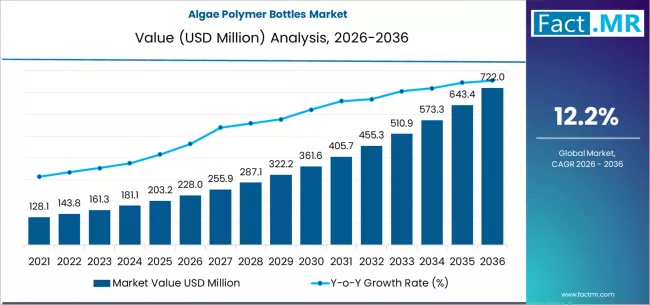
Algae polymer bottles market is projected to grow from USD 228.0 million in 2026 to USD 722.0 million by 2036, at a CAGR of 12.2%. Water & functional beverages will dominate with a 38.0% market share, while bottles & jars will lead the packaging format segment with a 42.8% share.
Algae Polymer Bottles Market Forecast and Outlook 2026 to 2036
The global algae polymer bottles market is projected to total USD 228.00 million in 2026, and to USD 722.00 million by 2036, progressing at a 12.2% CAGR. This accelerated growth is driven by the urgent need for bio-based, marine-degradable alternatives to conventional petroleum-based plastics, particularly in single-use applications.
Key Takeaways from the Algae Polymer Bottles Market
- Market Value for 2026: USD 228.00 Million
- Market Value for 2036: USD 722.00 Million
- Forecast CAGR 2026 to 2036: 12.2%
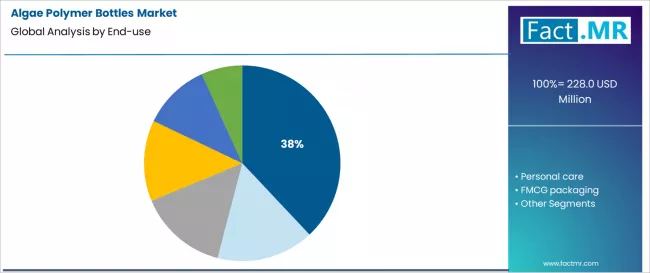
- Leading End-Use Segment (2026): Water & Functional Beverages (38.0%)
- Leading Packaging Format (2026): Bottles & Jars (42.8%)
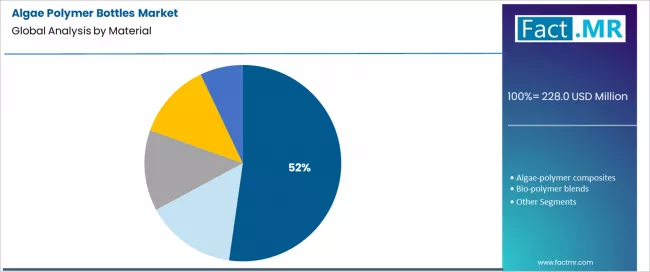
- Leading Material Segment (2026): Algae-Based Polymers & Blends (52.3%)
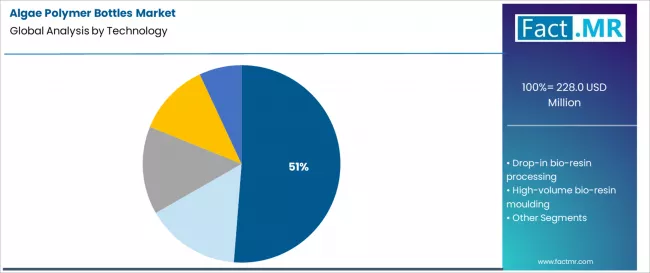
- Leading Technology Segment (2026): Bio-Polymer Extrusion & Blow Moulding (51.3%)
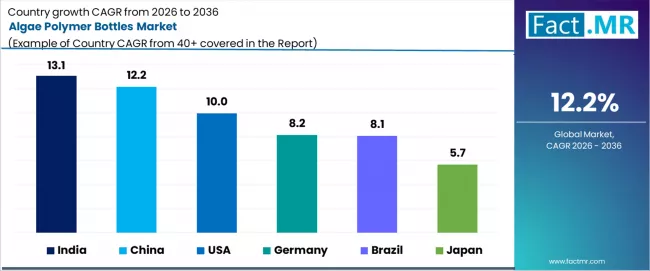
- Key Growth Countries: India (13.1% CAGR), China (12.2% CAGR), USA (10.0% CAGR), Brazil (8.1% CAGR), Germany (8.2% CAGR), Japan (5.7% CAGR)
- Key Players: Loliware, ALPLA (bio lines), Kingfa Bio, UFlex (bio initiatives), Braskem (bio R&D), Mitsubishi Chemical, Danimer Scientific

Algae-derived polymers represent a next-generation material solution that directly addresses plastic pollution and carbon footprint concerns without competing with food-based feedstocks like corn or sugarcane. Regulatory pressure, such as extended producer responsibility schemes and mandates for recycled or bio-based content in packaging, is creating a compelling economic and compliance incentive for brands to explore advanced biopolymers.
Algae, with its high growth yield and ability to be cultivated on non-arable land using saltwater, offers a scalable and sustainable raw material source. The market’s evolution is therefore a strategic response to both environmental imperatives and the search for a truly circular material feedstock for the packaging industry.
Algae Polymer Bottles Market
| Metric | Value |
|---|---|
| Market Value (2026) | USD 228.00 Million |
| Market Forecast Value (2036) | USD 722.00 Million |
| Forecast CAGR 2026 to 2036 | 12.2% |
Category
| Category | Segments |
|---|---|
| End-Use | Water & Functional Beverages, Personal Care, FMCG Packaging, Sustainable FMCG Brands, Organic Beverages, Premium Eco Packaging |
| Packaging Format | Bottles & Jars, Cosmetic Bottles, Beverage Bottles, Small Bottles, Others |
| Material | Algae-Based Polymers & Blends, Algae polymer Composites, Bio-Polymer Blends, Algae polymer Blends, Others |
| Technology | Bio-Polymer Extrusion & Blow Moulding, Drop-in Bio-Resin Processing, High-Volume Bio-Resin Moulding, Cost-Optimised Bio Processing, Others |
| Region | North America, Latin America, Western Europe, Eastern Europe, East Asia, South Asia & Pacific, Middle East & Africa |
Macro-Level Industry Catalysts
| Industry Trend | Impact |
|---|---|
| Plastic Tax and EPR Fee Modulations | Financial penalties on virgin fossil-based plastics improve the cost-competitiveness of bio-alternatives, driving brand adoption. |
| Corporate Net-Zero and Scope 3 Emission Goals | Algae’s carbon sequestration during growth offers brands a tangible reduction in packaging carbon footprint for sustainability reporting. |
| Advancements in Marine Biodegradability Certification | Supports marketing claims for products likely to end up in aquatic environments, a key differentiator versus other bioplastics. |
| Strategic Branding in Crowded Eco Segments | First-mover brands in beverages and personal care use algae-based bottles as a powerful point of differentiation and premiumization. |
| Investment in Alternative Feedstock R&D | Reduces long-term dependency on volatile agricultural commodity prices for bio-plastics, securing supply chain stability. |
Segmental Analysis
By Technology, Which Segment is Critical for Transitioning from Lab to High-Volume Production?

Bio-polymer extrusion and blow moulding commands a leading 51.3% share. This segment is pivotal because it adapts established, high-speed manufacturing processes to handle the unique thermal and rheological properties of algae-based resins.
Overcoming challenges like moisture sensitivity and achieving consistent melt flow are essential for producing bottles with the necessary clarity, barrier properties, and dimensional stability at commercial speeds. Success in this technology directly determines the scalability and economic viability of algae polymer bottles, moving them from niche prototypes to mainstream packaging solutions.
By End-Use, Which Segment is the Primary Focus for Brand-Led Sustainability Innovation?

The water and functional beverages segment constitutes the primary end-user focus at 38.0%. Brands in this highly visible, consumer-facing category are under immense pressure to address plastic waste.
Algae-based bottles offer a compelling narrative of moving beyond recycled plastic to a next-gen, restorative material. This sector drives early adoption and premium pricing, allowing brands to leverage the innovative packaging as a core part of their environmental identity and product marketing, justifying the current cost premium.
By Material, Which Formulation Strategy Dominates Current Commercial Efforts?

Algae-based polymers and blends hold a dominant 52.3% share. Pure algae polymers often require blending with other bio-based polymers like PLA or PHA or compatible biodegradable polymers to achieve the necessary mechanical strength, processability, and barrier performance for bottle applications.
This segment represents the practical pathway to market, optimizing material properties and cost by leveraging algae as a primary but not exclusive component, ensuring functional performance meets industry standards.
What are the Principal Drivers, Restraints, and Evolving Dynamics of the Algae polymer Bottles Market?
| Attribute | Market Influence |
|---|---|
| Driver | Brand demand for disruptive, marine-positive sustainability stories beyond standard recycling. |
| Restraint | High production cost versus PET and established bioplastics, limiting price-sensitive applications. |
| Opportunity | Integration into carbon credit and blue economy frameworks for algae cultivation. |
| Trend | Development of multi-layer bottles using algae-resin for structural layers, combined with other barriers. |
Analysis of the Algae polymer Bottles Market by Key Countries

| Country | CAGR 2026 to 2036 |
|---|---|
| USA | 10.0% |
| Germany | 8.2% |
| China | 12.2% |
| India | 13.1% |
| Brazil | 8.1% |
| Japan | 5.7% |
What Strategic Role does the US Market Play in Early Adoption and Premium Brand Pilots?
The USA's 10.0% CAGR is characterized by its role as a testing ground for premium sustainable packaging. Venture-backed water & functional beverage brands and personal care companies seeking radical innovation lead demand. The regulatory landscape, featuring various state-level plastics laws, encourages exploration of novel solutions.
Strategic partnerships between material startups like Loliware and global beverage brands for limited-edition runs are common, serving as high-profile pilot projects that validate the technology and build market awareness before scaling.
How does Germany's Regulatory and Engineering Ecosystem Shape a Quality-Focused Approach?
Germany's 8.2% CAGR reflects a market where the EU's Single-Use Plastics Directive and chemical regulation (REACH) guide development. The focus is on creating technically sound, certified materials that meet stringent migration and safety standards for food contact. Industry capacity for high-precision biopolymer processing within firms like ALPLA supports this.
Demand is concentrated in premium eco-packaging where performance and compliance are non-negotiable, driving partnerships between chemical giants and packaging converters to develop fully characterized, drop-in ready algae resin grades.
What Factors are Driving China's Rapid Scaling of Industrial Biopolymer Capability?
China's 12.2% CAGR is fueled by national self-sufficiency goals in advanced materials and a massive domestic personal care and FMCG manufacturing base. Substantial government and corporate industry capacity investments are being made in bio-refineries.
The primary demand driver is the large-scale needs of domestic brands looking for differentiated, sustainable packaging options. This environment enables rapid scaling of drop-in bio-resin processing technologies, with domestic players like Kingfa Bio positioned to become volume suppliers, reducing reliance on imported advanced biomaterials.
Why is India's Market Potential Tied to FMCG Scale and Agricultural Integration?
The massive scale of its FMCG packaging sector and the potential to integrate algae cultivation with wastewater treatment or coastal aquaculture propels India’s leading 13.1% CAGR. The demand driver is the long-term need for affordable, sustainable alternatives to serve a vast consumer base.
This fosters innovation in high-volume bio-resin moulding and low-cost cultivation methods. Global players, with partnerships likely between Indian FMCG giants and specialized biopolymer firms to develop cost-optimized solutions, closely watch the market potential.
How are Brazil's Natural Resources and Brand Initiatives Converging to Create Demand?
Brazil's 8.1% CAGR is linked to its strong sustainable FMCG brands and abundant natural resources suitable for algae cultivation. The demand driver stems from both domestic eco-conscious consumers and export-oriented brands wanting a compelling sustainability narrative.
Local chemical industry leaders like Braskem are investing in bio-R&D, exploring how to leverage Brazil's biodiversity. The focus is on developing cost-optimised bio processing pathways that can utilize local feedstocks, aiming for a unique competitive advantage in bio-based polymers.
What Niche does Japan Occupy in High-Value, Technologically Advanced Applications?
Japan's 5.7% CAGR represents a focused approach on high-value, technically demanding applications. Demand is driven by the organic beverages and premium cosmetics sectors, where material purity and advanced functionality are paramount.
The market is defined by deep R&D into algae polymer composites for enhanced barrier or mechanical properties, often led by chemical conglomerates like Mitsubishi Chemical. The focus is on creating high-performance materials for luxury packaging, where the algae story adds significant brand value and justifies a substantial cost premium.
Competitive Landscape of the Algae polymer Bottles Market
The competitive frontier is defined by a race between agile material science startups and established industry giants seeking to integrate this new feedstock. Start-ups like Loliware and Danimer Scientific compete through proprietary algae cultivation and polymer synthesis technologies, aiming to license their materials or launch branded packaging products.
In contrast, integrated chemical and packaging corporations like ALPLA, Braskem, and Mitsubishi Chemical leverage their vast processing expertise, customer networks, and capital to scale production and ensure material consistency for large-volume clients.
The landscape is currently collaborative, with frequent joint development agreements (JDAs) between these two groups. Competition is intensifying around securing intellectual property for efficient, low-cost algae processing and forming exclusive supply partnerships with major global brand owners in beverages and cosmetics.
Key Players in the Algae polymer Bottles Market
- Loliware
- ALPLA (bio lines)
- Kingfa Bio
- UFlex (bio initiatives)
- Braskem (bio R&D)
- Mitsubishi Chemical
- Danimer Scientific
Scope of Report
| Items | Metrics |
|---|---|
| Quantitative Units | USD Million |
| Technology | Bio-Polymer Extrusion & Blow Moulding, Drop-in Bio-Resin Processing, High-Volume Bio-Resin Moulding, Cost-Optimised Bio Processing, Others |
| Packaging Format | Bottles & Jars, Cosmetic Bottles, Beverage Bottles, Small Bottles, Others |
| End-Use | Water & Functional Beverages, Personal Care, FMCG Packaging, Sustainable FMCG Brands, Organic Beverages, Premium Eco Packaging |
| Material | Algae-Based Polymers & Blends, Algae polymer Composites, Bio-Polymer Blends, Algae polymer Blends, Others |
| Key Countries | India, China, USA, Brazil, Germany, Japan |
| Key Companies | Loliware, ALPLA, Kingfa Bio, UFlex, Braskem, Mitsubishi Chemical, Danimer Scientific |
| Additional Analysis | Lifecycle assessment comparing carbon footprint to PET and other bioplastics; analysis of marine and terrestrial degradation rates; study of supply chain logistics for cultivated algae biomass; total cost structure analysis from cultivation to finished bottle; review of global regulatory status for algae as a novel food contact material. |
Market by Segments
-
End-Use :
- Water & Functional Beverages
- Personal Care
- FMCG Packaging
- Sustainable FMCG Brands
- Organic Beverages
- Premium Eco Packaging
-
Packaging Format :
- Bottles & Jars
- Cosmetic Bottles
- Beverage Bottles
- Small Bottles
- Others
-
Material :
- Algae-Based Polymers & Blends
- Algae polymer Composites
- Bio-Polymer Blends
- Algae polymer Blends
- Others
-
Technology :
- Bio-Polymer Extrusion & Blow Moulding
- Drop-in Bio-Resin Processing
- High-Volume Bio-Resin Moulding
- Cost-Optimised Bio Processing
- Others
-
Region :
-
North America
- USA
- Canada
-
Latin America
- Brazil
- Mexico
- Argentina
- Rest of Latin America
-
Western Europe
- Germany
- France
- Italy
- Spain
- UK
- BENELUX
- Rest of Western Europe
-
Eastern Europe
- Russia
- Poland
- Czech Republic
- Rest of Eastern Europe
-
East Asia
- China
- Japan
- South Korea
- Rest of East Asia
-
South Asia & Pacific
- India
- ASEAN
- Australia
- Rest of South Asia & Pacific
-
MEA
- GCC Countries
- South Africa
- Turkiye
- Rest of MEA
-
Bibliography
- European Bioplastics. (2025). Market Data Report: Bioplastics in Packaging.
- Food and Agriculture Organization (FAO). (2024). The State of World Fisheries and Aquaculture: Opportunities for Algae Cultivation.
- Journal of Applied Phycology. (2024). Commercial Scale-Up of Algal Biomass for Biopolymer Production: Challenges and Economics.
- National Renewable Energy Laboratory (NREL). (2025). Life Cycle Assessment of Algae-to-Polymer Pathways. Technical Report.
- The Ellen MacArthur Foundation. (2024). Upstream Innovation: A guide to packaging solutions.
- UN Environment Programme (UNEP). (2025). Global Resources Outlook: Sustainable Material Pathways.
Table of Content
- Executive Summary
- Global Market Outlook
- Demand to side Trends
- Supply to side Trends
- Technology Roadmap Analysis
- Analysis and Recommendations
- Market Overview
- Market Coverage / Taxonomy
- Market Definition / Scope / Limitations
- Market Background
- Market Dynamics
- Drivers
- Restraints
- Opportunity
- Trends
- Scenario Forecast
- Demand in Optimistic Scenario
- Demand in Likely Scenario
- Demand in Conservative Scenario
- Opportunity Map Analysis
- Product Life Cycle Analysis
- Supply Chain Analysis
- Investment Feasibility Matrix
- Value Chain Analysis
- PESTLE and Porter’s Analysis
- Regulatory Landscape
- Regional Parent Market Outlook
- Production and Consumption Statistics
- Import and Export Statistics
- Market Dynamics
- Global Market Analysis 2021 to 2025 and Forecast, 2026 to 2036
- Historical Market Size Value (USD Million) Analysis, 2021 to 2025
- Current and Future Market Size Value (USD Million) Projections, 2026 to 2036
- Y to o to Y Growth Trend Analysis
- Absolute $ Opportunity Analysis
- Global Market Pricing Analysis 2021 to 2025 and Forecast 2026 to 2036
- Global Market Analysis 2021 to 2025 and Forecast 2026 to 2036, By End-use
- Introduction / Key Findings
- Historical Market Size Value (USD Million) Analysis By End-use, 2021 to 2025
- Current and Future Market Size Value (USD Million) Analysis and Forecast By End-use, 2026 to 2036
- Water & functional beverages
- Personal care
- FMCG packaging
- Sustainable FMCG brands
- Organic beverages
- Premium eco packaging
- Water & functional beverages
- Y to o to Y Growth Trend Analysis By End-use, 2021 to 2025
- Absolute $ Opportunity Analysis By End-use, 2026 to 2036
- Global Market Analysis 2021 to 2025 and Forecast 2026 to 2036, By Packaging Format
- Introduction / Key Findings
- Historical Market Size Value (USD Million) Analysis By Packaging Format, 2021 to 2025
- Current and Future Market Size Value (USD Million) Analysis and Forecast By Packaging Format, 2026 to 2036
- Bottles & jars
- Cosmetic bottles
- Beverage bottles
- Small bottles
- Others
- Bottles & jars
- Y to o to Y Growth Trend Analysis By Packaging Format, 2021 to 2025
- Absolute $ Opportunity Analysis By Packaging Format, 2026 to 2036
- Global Market Analysis 2021 to 2025 and Forecast 2026 to 2036, By Material
- Introduction / Key Findings
- Historical Market Size Value (USD Million) Analysis By Material, 2021 to 2025
- Current and Future Market Size Value (USD Million) Analysis and Forecast By Material, 2026 to 2036
- Algae-based polymers & blends
- Algae-polymer composites
- Bio-polymer blends
- Algae-polymer blends
- Others
- Algae-based polymers & blends
- Y to o to Y Growth Trend Analysis By Material, 2021 to 2025
- Absolute $ Opportunity Analysis By Material, 2026 to 2036
- Global Market Analysis 2021 to 2025 and Forecast 2026 to 2036, By Technology
- Introduction / Key Findings
- Historical Market Size Value (USD Million) Analysis By Technology, 2021 to 2025
- Current and Future Market Size Value (USD Million) Analysis and Forecast By Technology, 2026 to 2036
- Bio-polymer extrusion & blow moulding
- Drop-in bio-resin processing
- High-volume bio-resin moulding
- Cost-optimised bio processing
- Others
- Bio-polymer extrusion & blow moulding
- Y to o to Y Growth Trend Analysis By Technology, 2021 to 2025
- Absolute $ Opportunity Analysis By Technology, 2026 to 2036
- Global Market Analysis 2021 to 2025 and Forecast 2026 to 2036, By Region
- Introduction
- Historical Market Size Value (USD Million) Analysis By Region, 2021 to 2025
- Current Market Size Value (USD Million) Analysis and Forecast By Region, 2026 to 2036
- North America
- Latin America
- Western Europe
- Eastern Europe
- East Asia
- South Asia and Pacific
- Middle East & Africa
- Market Attractiveness Analysis By Region
- North America Market Analysis 2021 to 2025 and Forecast 2026 to 2036, By Country
- Historical Market Size Value (USD Million) Trend Analysis By Market Taxonomy, 2021 to 2025
- Market Size Value (USD Million) Forecast By Market Taxonomy, 2026 to 2036
- By Country
- USA
- Canada
- Mexico
- By End-use
- By Packaging Format
- By Material
- By Technology
- By Country
- Market Attractiveness Analysis
- By Country
- By End-use
- By Packaging Format
- By Material
- By Technology
- Key Takeaways
- Latin America Market Analysis 2021 to 2025 and Forecast 2026 to 2036, By Country
- Historical Market Size Value (USD Million) Trend Analysis By Market Taxonomy, 2021 to 2025
- Market Size Value (USD Million) Forecast By Market Taxonomy, 2026 to 2036
- By Country
- Brazil
- Chile
- Rest of Latin America
- By End-use
- By Packaging Format
- By Material
- By Technology
- By Country
- Market Attractiveness Analysis
- By Country
- By End-use
- By Packaging Format
- By Material
- By Technology
- Key Takeaways
- Western Europe Market Analysis 2021 to 2025 and Forecast 2026 to 2036, By Country
- Historical Market Size Value (USD Million) Trend Analysis By Market Taxonomy, 2021 to 2025
- Market Size Value (USD Million) Forecast By Market Taxonomy, 2026 to 2036
- By Country
- Germany
- UK
- Italy
- Spain
- France
- Nordic
- BENELUX
- Rest of Western Europe
- By End-use
- By Packaging Format
- By Material
- By Technology
- By Country
- Market Attractiveness Analysis
- By Country
- By End-use
- By Packaging Format
- By Material
- By Technology
- Key Takeaways
- Eastern Europe Market Analysis 2021 to 2025 and Forecast 2026 to 2036, By Country
- Historical Market Size Value (USD Million) Trend Analysis By Market Taxonomy, 2021 to 2025
- Market Size Value (USD Million) Forecast By Market Taxonomy, 2026 to 2036
- By Country
- Russia
- Poland
- Hungary
- Balkan & Baltic
- Rest of Eastern Europe
- By End-use
- By Packaging Format
- By Material
- By Technology
- By Country
- Market Attractiveness Analysis
- By Country
- By End-use
- By Packaging Format
- By Material
- By Technology
- Key Takeaways
- East Asia Market Analysis 2021 to 2025 and Forecast 2026 to 2036, By Country
- Historical Market Size Value (USD Million) Trend Analysis By Market Taxonomy, 2021 to 2025
- Market Size Value (USD Million) Forecast By Market Taxonomy, 2026 to 2036
- By Country
- China
- Japan
- South Korea
- By End-use
- By Packaging Format
- By Material
- By Technology
- By Country
- Market Attractiveness Analysis
- By Country
- By End-use
- By Packaging Format
- By Material
- By Technology
- Key Takeaways
- South Asia and Pacific Market Analysis 2021 to 2025 and Forecast 2026 to 2036, By Country
- Historical Market Size Value (USD Million) Trend Analysis By Market Taxonomy, 2021 to 2025
- Market Size Value (USD Million) Forecast By Market Taxonomy, 2026 to 2036
- By Country
- India
- ASEAN
- Australia & New Zealand
- Rest of South Asia and Pacific
- By End-use
- By Packaging Format
- By Material
- By Technology
- By Country
- Market Attractiveness Analysis
- By Country
- By End-use
- By Packaging Format
- By Material
- By Technology
- Key Takeaways
- Middle East & Africa Market Analysis 2021 to 2025 and Forecast 2026 to 2036, By Country
- Historical Market Size Value (USD Million) Trend Analysis By Market Taxonomy, 2021 to 2025
- Market Size Value (USD Million) Forecast By Market Taxonomy, 2026 to 2036
- By Country
- Kingdom of Saudi Arabia
- Other GCC Countries
- Turkiye
- South Africa
- Other African Union
- Rest of Middle East & Africa
- By End-use
- By Packaging Format
- By Material
- By Technology
- By Country
- Market Attractiveness Analysis
- By Country
- By End-use
- By Packaging Format
- By Material
- By Technology
- Key Takeaways
- Key Countries Market Analysis
- USA
- Pricing Analysis
- Market Share Analysis, 2025
- By End-use
- By Packaging Format
- By Material
- By Technology
- Canada
- Pricing Analysis
- Market Share Analysis, 2025
- By End-use
- By Packaging Format
- By Material
- By Technology
- Mexico
- Pricing Analysis
- Market Share Analysis, 2025
- By End-use
- By Packaging Format
- By Material
- By Technology
- Brazil
- Pricing Analysis
- Market Share Analysis, 2025
- By End-use
- By Packaging Format
- By Material
- By Technology
- Chile
- Pricing Analysis
- Market Share Analysis, 2025
- By End-use
- By Packaging Format
- By Material
- By Technology
- Germany
- Pricing Analysis
- Market Share Analysis, 2025
- By End-use
- By Packaging Format
- By Material
- By Technology
- UK
- Pricing Analysis
- Market Share Analysis, 2025
- By End-use
- By Packaging Format
- By Material
- By Technology
- Italy
- Pricing Analysis
- Market Share Analysis, 2025
- By End-use
- By Packaging Format
- By Material
- By Technology
- Spain
- Pricing Analysis
- Market Share Analysis, 2025
- By End-use
- By Packaging Format
- By Material
- By Technology
- France
- Pricing Analysis
- Market Share Analysis, 2025
- By End-use
- By Packaging Format
- By Material
- By Technology
- India
- Pricing Analysis
- Market Share Analysis, 2025
- By End-use
- By Packaging Format
- By Material
- By Technology
- ASEAN
- Pricing Analysis
- Market Share Analysis, 2025
- By End-use
- By Packaging Format
- By Material
- By Technology
- Australia & New Zealand
- Pricing Analysis
- Market Share Analysis, 2025
- By End-use
- By Packaging Format
- By Material
- By Technology
- China
- Pricing Analysis
- Market Share Analysis, 2025
- By End-use
- By Packaging Format
- By Material
- By Technology
- Japan
- Pricing Analysis
- Market Share Analysis, 2025
- By End-use
- By Packaging Format
- By Material
- By Technology
- South Korea
- Pricing Analysis
- Market Share Analysis, 2025
- By End-use
- By Packaging Format
- By Material
- By Technology
- Russia
- Pricing Analysis
- Market Share Analysis, 2025
- By End-use
- By Packaging Format
- By Material
- By Technology
- Poland
- Pricing Analysis
- Market Share Analysis, 2025
- By End-use
- By Packaging Format
- By Material
- By Technology
- Hungary
- Pricing Analysis
- Market Share Analysis, 2025
- By End-use
- By Packaging Format
- By Material
- By Technology
- Kingdom of Saudi Arabia
- Pricing Analysis
- Market Share Analysis, 2025
- By End-use
- By Packaging Format
- By Material
- By Technology
- Turkiye
- Pricing Analysis
- Market Share Analysis, 2025
- By End-use
- By Packaging Format
- By Material
- By Technology
- South Africa
- Pricing Analysis
- Market Share Analysis, 2025
- By End-use
- By Packaging Format
- By Material
- By Technology
- USA
- Market Structure Analysis
- Competition Dashboard
- Competition Benchmarking
- Market Share Analysis of Top Players
- By Regional
- By End-use
- By Packaging Format
- By Material
- By Technology
- Competition Analysis
- Competition Deep Dive
- Loliware
- Overview
- Product Portfolio
- Profitability by Market Segments (Product/Age /Sales Channel/Region)
- Sales Footprint
- Strategy Overview
- Marketing Strategy
- Product Strategy
- Channel Strategy
- ALPLA (bio lines)
- Kingfa Bio
- UFlex (bio initiatives)
- Braskem (bio R&D)
- Mitsubishi Chemical
- Danimer Scientific
- Loliware
- Competition Deep Dive
- Assumptions & Acronyms Used
- Research Methodology
List Of Table
- Table 1: Global Market Value (USD Million) Forecast by Region, 2021 to 2036
- Table 2: Global Market Value (USD Million) Forecast by End-use, 2021 to 2036
- Table 3: Global Market Value (USD Million) Forecast by Packaging Format, 2021 to 2036
- Table 4: Global Market Value (USD Million) Forecast by Material, 2021 to 2036
- Table 5: Global Market Value (USD Million) Forecast by Technology, 2021 to 2036
- Table 6: North America Market Value (USD Million) Forecast by Country, 2021 to 2036
- Table 7: North America Market Value (USD Million) Forecast by End-use, 2021 to 2036
- Table 8: North America Market Value (USD Million) Forecast by Packaging Format, 2021 to 2036
- Table 9: North America Market Value (USD Million) Forecast by Material, 2021 to 2036
- Table 10: North America Market Value (USD Million) Forecast by Technology, 2021 to 2036
- Table 11: Latin America Market Value (USD Million) Forecast by Country, 2021 to 2036
- Table 12: Latin America Market Value (USD Million) Forecast by End-use, 2021 to 2036
- Table 13: Latin America Market Value (USD Million) Forecast by Packaging Format, 2021 to 2036
- Table 14: Latin America Market Value (USD Million) Forecast by Material, 2021 to 2036
- Table 15: Latin America Market Value (USD Million) Forecast by Technology, 2021 to 2036
- Table 16: Western Europe Market Value (USD Million) Forecast by Country, 2021 to 2036
- Table 17: Western Europe Market Value (USD Million) Forecast by End-use, 2021 to 2036
- Table 18: Western Europe Market Value (USD Million) Forecast by Packaging Format, 2021 to 2036
- Table 19: Western Europe Market Value (USD Million) Forecast by Material, 2021 to 2036
- Table 20: Western Europe Market Value (USD Million) Forecast by Technology, 2021 to 2036
- Table 21: Eastern Europe Market Value (USD Million) Forecast by Country, 2021 to 2036
- Table 22: Eastern Europe Market Value (USD Million) Forecast by End-use, 2021 to 2036
- Table 23: Eastern Europe Market Value (USD Million) Forecast by Packaging Format, 2021 to 2036
- Table 24: Eastern Europe Market Value (USD Million) Forecast by Material, 2021 to 2036
- Table 25: Eastern Europe Market Value (USD Million) Forecast by Technology, 2021 to 2036
- Table 26: East Asia Market Value (USD Million) Forecast by Country, 2021 to 2036
- Table 27: East Asia Market Value (USD Million) Forecast by End-use, 2021 to 2036
- Table 28: East Asia Market Value (USD Million) Forecast by Packaging Format, 2021 to 2036
- Table 29: East Asia Market Value (USD Million) Forecast by Material, 2021 to 2036
- Table 30: East Asia Market Value (USD Million) Forecast by Technology, 2021 to 2036
- Table 31: South Asia and Pacific Market Value (USD Million) Forecast by Country, 2021 to 2036
- Table 32: South Asia and Pacific Market Value (USD Million) Forecast by End-use, 2021 to 2036
- Table 33: South Asia and Pacific Market Value (USD Million) Forecast by Packaging Format, 2021 to 2036
- Table 34: South Asia and Pacific Market Value (USD Million) Forecast by Material, 2021 to 2036
- Table 35: South Asia and Pacific Market Value (USD Million) Forecast by Technology, 2021 to 2036
- Table 36: Middle East & Africa Market Value (USD Million) Forecast by Country, 2021 to 2036
- Table 37: Middle East & Africa Market Value (USD Million) Forecast by End-use, 2021 to 2036
- Table 38: Middle East & Africa Market Value (USD Million) Forecast by Packaging Format, 2021 to 2036
- Table 39: Middle East & Africa Market Value (USD Million) Forecast by Material, 2021 to 2036
- Table 40: Middle East & Africa Market Value (USD Million) Forecast by Technology, 2021 to 2036
List Of Figures
- Figure 1: Global Market Pricing Analysis
- Figure 2: Global Market Value (USD Million) Forecast 2021 to 2036
- Figure 3: Global Market Value Share and BPS Analysis by End-use, 2026 and 2036
- Figure 4: Global Market Y to o to Y Growth Comparison by End-use, 2026 to 2036
- Figure 5: Global Market Attractiveness Analysis by End-use
- Figure 6: Global Market Value Share and BPS Analysis by Packaging Format, 2026 and 2036
- Figure 7: Global Market Y to o to Y Growth Comparison by Packaging Format, 2026 to 2036
- Figure 8: Global Market Attractiveness Analysis by Packaging Format
- Figure 9: Global Market Value Share and BPS Analysis by Material, 2026 and 2036
- Figure 10: Global Market Y to o to Y Growth Comparison by Material, 2026 to 2036
- Figure 11: Global Market Attractiveness Analysis by Material
- Figure 12: Global Market Value Share and BPS Analysis by Technology, 2026 and 2036
- Figure 13: Global Market Y to o to Y Growth Comparison by Technology, 2026 to 2036
- Figure 14: Global Market Attractiveness Analysis by Technology
- Figure 15: Global Market Value (USD Million) Share and BPS Analysis by Region, 2026 and 2036
- Figure 16: Global Market Y to o to Y Growth Comparison by Region, 2026 to 2036
- Figure 17: Global Market Attractiveness Analysis by Region
- Figure 18: North America Market Incremental Dollar Opportunity, 2026 to 2036
- Figure 19: Latin America Market Incremental Dollar Opportunity, 2026 to 2036
- Figure 20: Western Europe Market Incremental Dollar Opportunity, 2026 to 2036
- Figure 21: Eastern Europe Market Incremental Dollar Opportunity, 2026 to 2036
- Figure 22: East Asia Market Incremental Dollar Opportunity, 2026 to 2036
- Figure 23: South Asia and Pacific Market Incremental Dollar Opportunity, 2026 to 2036
- Figure 24: Middle East & Africa Market Incremental Dollar Opportunity, 2026 to 2036
- Figure 25: North America Market Value Share and BPS Analysis by Country, 2026 and 2036
- Figure 26: North America Market Value Share and BPS Analysis by End-use, 2026 and 2036
- Figure 27: North America Market Y to o to Y Growth Comparison by End-use, 2026 to 2036
- Figure 28: North America Market Attractiveness Analysis by End-use
- Figure 29: North America Market Value Share and BPS Analysis by Packaging Format, 2026 and 2036
- Figure 30: North America Market Y to o to Y Growth Comparison by Packaging Format, 2026 to 2036
- Figure 31: North America Market Attractiveness Analysis by Packaging Format
- Figure 32: North America Market Value Share and BPS Analysis by Material, 2026 and 2036
- Figure 33: North America Market Y to o to Y Growth Comparison by Material, 2026 to 2036
- Figure 34: North America Market Attractiveness Analysis by Material
- Figure 35: North America Market Value Share and BPS Analysis by Technology, 2026 and 2036
- Figure 36: North America Market Y to o to Y Growth Comparison by Technology, 2026 to 2036
- Figure 37: North America Market Attractiveness Analysis by Technology
- Figure 38: Latin America Market Value Share and BPS Analysis by Country, 2026 and 2036
- Figure 39: Latin America Market Value Share and BPS Analysis by End-use, 2026 and 2036
- Figure 40: Latin America Market Y to o to Y Growth Comparison by End-use, 2026 to 2036
- Figure 41: Latin America Market Attractiveness Analysis by End-use
- Figure 42: Latin America Market Value Share and BPS Analysis by Packaging Format, 2026 and 2036
- Figure 43: Latin America Market Y to o to Y Growth Comparison by Packaging Format, 2026 to 2036
- Figure 44: Latin America Market Attractiveness Analysis by Packaging Format
- Figure 45: Latin America Market Value Share and BPS Analysis by Material, 2026 and 2036
- Figure 46: Latin America Market Y to o to Y Growth Comparison by Material, 2026 to 2036
- Figure 47: Latin America Market Attractiveness Analysis by Material
- Figure 48: Latin America Market Value Share and BPS Analysis by Technology, 2026 and 2036
- Figure 49: Latin America Market Y to o to Y Growth Comparison by Technology, 2026 to 2036
- Figure 50: Latin America Market Attractiveness Analysis by Technology
- Figure 51: Western Europe Market Value Share and BPS Analysis by Country, 2026 and 2036
- Figure 52: Western Europe Market Value Share and BPS Analysis by End-use, 2026 and 2036
- Figure 53: Western Europe Market Y to o to Y Growth Comparison by End-use, 2026 to 2036
- Figure 54: Western Europe Market Attractiveness Analysis by End-use
- Figure 55: Western Europe Market Value Share and BPS Analysis by Packaging Format, 2026 and 2036
- Figure 56: Western Europe Market Y to o to Y Growth Comparison by Packaging Format, 2026 to 2036
- Figure 57: Western Europe Market Attractiveness Analysis by Packaging Format
- Figure 58: Western Europe Market Value Share and BPS Analysis by Material, 2026 and 2036
- Figure 59: Western Europe Market Y to o to Y Growth Comparison by Material, 2026 to 2036
- Figure 60: Western Europe Market Attractiveness Analysis by Material
- Figure 61: Western Europe Market Value Share and BPS Analysis by Technology, 2026 and 2036
- Figure 62: Western Europe Market Y to o to Y Growth Comparison by Technology, 2026 to 2036
- Figure 63: Western Europe Market Attractiveness Analysis by Technology
- Figure 64: Eastern Europe Market Value Share and BPS Analysis by Country, 2026 and 2036
- Figure 65: Eastern Europe Market Value Share and BPS Analysis by End-use, 2026 and 2036
- Figure 66: Eastern Europe Market Y to o to Y Growth Comparison by End-use, 2026 to 2036
- Figure 67: Eastern Europe Market Attractiveness Analysis by End-use
- Figure 68: Eastern Europe Market Value Share and BPS Analysis by Packaging Format, 2026 and 2036
- Figure 69: Eastern Europe Market Y to o to Y Growth Comparison by Packaging Format, 2026 to 2036
- Figure 70: Eastern Europe Market Attractiveness Analysis by Packaging Format
- Figure 71: Eastern Europe Market Value Share and BPS Analysis by Material, 2026 and 2036
- Figure 72: Eastern Europe Market Y to o to Y Growth Comparison by Material, 2026 to 2036
- Figure 73: Eastern Europe Market Attractiveness Analysis by Material
- Figure 74: Eastern Europe Market Value Share and BPS Analysis by Technology, 2026 and 2036
- Figure 75: Eastern Europe Market Y to o to Y Growth Comparison by Technology, 2026 to 2036
- Figure 76: Eastern Europe Market Attractiveness Analysis by Technology
- Figure 77: East Asia Market Value Share and BPS Analysis by Country, 2026 and 2036
- Figure 78: East Asia Market Value Share and BPS Analysis by End-use, 2026 and 2036
- Figure 79: East Asia Market Y to o to Y Growth Comparison by End-use, 2026 to 2036
- Figure 80: East Asia Market Attractiveness Analysis by End-use
- Figure 81: East Asia Market Value Share and BPS Analysis by Packaging Format, 2026 and 2036
- Figure 82: East Asia Market Y to o to Y Growth Comparison by Packaging Format, 2026 to 2036
- Figure 83: East Asia Market Attractiveness Analysis by Packaging Format
- Figure 84: East Asia Market Value Share and BPS Analysis by Material, 2026 and 2036
- Figure 85: East Asia Market Y to o to Y Growth Comparison by Material, 2026 to 2036
- Figure 86: East Asia Market Attractiveness Analysis by Material
- Figure 87: East Asia Market Value Share and BPS Analysis by Technology, 2026 and 2036
- Figure 88: East Asia Market Y to o to Y Growth Comparison by Technology, 2026 to 2036
- Figure 89: East Asia Market Attractiveness Analysis by Technology
- Figure 90: South Asia and Pacific Market Value Share and BPS Analysis by Country, 2026 and 2036
- Figure 91: South Asia and Pacific Market Value Share and BPS Analysis by End-use, 2026 and 2036
- Figure 92: South Asia and Pacific Market Y to o to Y Growth Comparison by End-use, 2026 to 2036
- Figure 93: South Asia and Pacific Market Attractiveness Analysis by End-use
- Figure 94: South Asia and Pacific Market Value Share and BPS Analysis by Packaging Format, 2026 and 2036
- Figure 95: South Asia and Pacific Market Y to o to Y Growth Comparison by Packaging Format, 2026 to 2036
- Figure 96: South Asia and Pacific Market Attractiveness Analysis by Packaging Format
- Figure 97: South Asia and Pacific Market Value Share and BPS Analysis by Material, 2026 and 2036
- Figure 98: South Asia and Pacific Market Y to o to Y Growth Comparison by Material, 2026 to 2036
- Figure 99: South Asia and Pacific Market Attractiveness Analysis by Material
- Figure 100: South Asia and Pacific Market Value Share and BPS Analysis by Technology, 2026 and 2036
- Figure 101: South Asia and Pacific Market Y to o to Y Growth Comparison by Technology, 2026 to 2036
- Figure 102: South Asia and Pacific Market Attractiveness Analysis by Technology
- Figure 103: Middle East & Africa Market Value Share and BPS Analysis by Country, 2026 and 2036
- Figure 104: Middle East & Africa Market Value Share and BPS Analysis by End-use, 2026 and 2036
- Figure 105: Middle East & Africa Market Y to o to Y Growth Comparison by End-use, 2026 to 2036
- Figure 106: Middle East & Africa Market Attractiveness Analysis by End-use
- Figure 107: Middle East & Africa Market Value Share and BPS Analysis by Packaging Format, 2026 and 2036
- Figure 108: Middle East & Africa Market Y to o to Y Growth Comparison by Packaging Format, 2026 to 2036
- Figure 109: Middle East & Africa Market Attractiveness Analysis by Packaging Format
- Figure 110: Middle East & Africa Market Value Share and BPS Analysis by Material, 2026 and 2036
- Figure 111: Middle East & Africa Market Y to o to Y Growth Comparison by Material, 2026 to 2036
- Figure 112: Middle East & Africa Market Attractiveness Analysis by Material
- Figure 113: Middle East & Africa Market Value Share and BPS Analysis by Technology, 2026 and 2036
- Figure 114: Middle East & Africa Market Y to o to Y Growth Comparison by Technology, 2026 to 2036
- Figure 115: Middle East & Africa Market Attractiveness Analysis by Technology
- Figure 116: Global Market - Tier Structure Analysis
- Figure 117: Global Market - Company Share Analysis
- FAQs -
How big is the algae polymer bottles market in 2026?
The global algae polymer bottles market is estimated to be valued at USD 228.0 million in 2026.
What will be the size of algae polymer bottles market in 2036?
The market size for the algae polymer bottles market is projected to reach USD 722.0 million by 2036.
How much will be the algae polymer bottles market growth between 2026 and 2036?
The algae polymer bottles market is expected to grow at a 12.2% CAGR between 2026 and 2036.
What are the key product types in the algae polymer bottles market?
The key product types in algae polymer bottles market are water & functional beverages, personal care, fmcg packaging, sustainable fmcg brands, organic beverages and premium eco packaging.
Which packaging format segment to contribute significant share in the algae polymer bottles market in 2026?
In terms of packaging format, bottles & jars segment to command 42.8% share in the algae polymer bottles market in 2026.