- Base Value(2025): 6.2 Bn
- Estimated Value(2025): 6.2 Bn
- Forecast Value (2035): 12.7 Bn
- CAGR (2025 - 2035): 7.4%
Amyloidosis Treatment Market Forecast and Outlook 2025 to 2035
The global amyloidosis treatment market is projected to grow from USD 6.23 billion in 2025 to approximately USD 12.73 billion by 2035, recording an extraordinary absolute increase of USD 6.50 billion over the forecast period. This translates into a total growth of 104.3%, with the market forecast to expand at a compound annual growth rate (CAGR) of 7.4% between 2025 and 2035.
Quick Stats on Amyloidosis Treatment Market
- Amyloidosis Treatment Market Value (2025): USD 6.23 billion
- Amyloidosis Treatment Market Forecast Value (2035): USD 12.73 billion
- Amyloidosis Treatment Market Forecast CAGR (2025 to 2035): 7.4%
- Leading Treatment Type in Amyloidosis Treatment Market: Chemotherapy (26.5%)
- Leading End Use in Amyloidosis Treatment Market: Hospitals & Clinics (49.3%)
- Key Growth Regions in Amyloidosis Treatment Market: North America, Asia Pacific, and Europe
- Key Players in Amyloidosis Treatment Market: Pfizer Inc., Johnson & Johnson Services Inc., GSK plc, Takeda Pharmaceutical Company Limited, Amgen Inc., Bristol-Myers Squibb Company, Novartis AG, F. Hoffmann-La Roche Ltd, Merck KGaA, Sanofi, Alnylam Pharmaceuticals Inc.
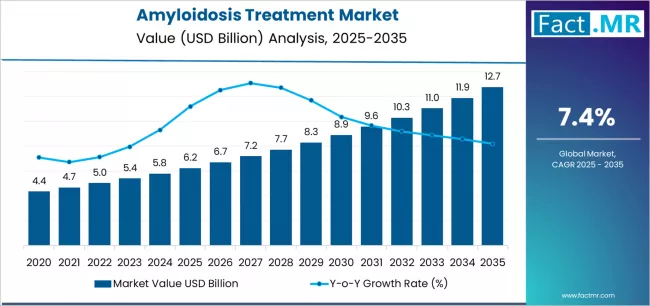
Amyloidosis Treatment Market Market Value Analysis | Source: Fact.MR
The overall market size is expected to grow by over 2.0X during this period, supported by exponential demand for advanced RNA-based therapies, rising adoption of precision medicine protocols, and growing emphasis on rare disease management innovation and organ preservation optimization across global specialty healthcare operations.
The amyloidosis treatment market is positioned for substantial expansion, driven by increasing recognition of early diagnosis importance, growing prevalence of protein misfolding disorders with enhanced treatment standard requirements, and rising adoption of targeted therapeutic and gene-silencing technologies across specialty medical facilities globally.
The market demonstrates robust fundamentals supported by expanding rare disease diagnostic infrastructure, specialists' focus on disease-specific treatment protocols, and rising recognition of amyloidosis therapies as critical medical components in achieving enhanced survival outcomes, organ function preservation capabilities, and quality of life effectiveness within modern specialty healthcare architectures across diverse patient care applications.
Market growth is underpinned by technological innovations in amyloidosis treatment procedures, particularly RNA interference therapeutic advancements and monoclonal antibody integration, which offer enhanced disease stabilization, improved organ function outcomes, and superior compatibility with comprehensive multidisciplinary care protocols prevalent in contemporary specialty practices.
Healthcare providers increasingly prioritize therapeutic solutions that deliver optimal balance between disease modification efficacy, organ protection, and safety profile while adhering to increasingly stringent regulatory standards and rare disease care requirements across global medical markets. The convergence of precision medicine expansion in developed healthcare regions, genetic testing growth in academic medical centers, and specialized amyloidosis center development in emerging markets creates multifaceted growth opportunities for pharmaceutical manufacturers and specialty facility operators.
The amyloidosis treatment landscape is experiencing transformative changes as clinicians adopt sophisticated therapeutic approaches including RNA-silencing agents, anti-fibril monoclonal antibodies, and advanced supportive care protocols that enable disease stabilization and organ function preservation.
These technological advancements are complemented by evolving treatment capabilities encompassing gene-editing technologies, novel small molecule inhibitors, and innovative combination therapy strategies that significantly improve treatment response rates and patient survival outcomes. The integration of genetic testing platforms and specialized amyloidosis centers further expands treatment accessibility, particularly benefiting patients requiring accurate diagnosis and healthcare facilities where traditional diagnostic approaches remain challenging.
Between 2025 and 2030, the amyloidosis treatment market is projected to expand from USD 6.23 billion to USD 8.96 billion, demonstrating strong foundational growth driven by global rare disease awareness expansion, increasing adoption of RNA-based therapeutic platforms, and initial deployment of precision diagnostic technologies across specialty hospital and academic medical center systems. This growth phase establishes market infrastructure, validates disease-specific treatment protocols, and creates comprehensive specialty care networks supporting global amyloidosis management operations.
From 2030 to 2035, the market is forecast to reach USD 12.73 billion, driven by mature RNA therapeutic penetration, next-generation gene-editing approaches requiring sophisticated molecular targeting capabilities, and comprehensive integration of multidisciplinary amyloidosis centers demanding enhanced diagnostic and treatment coordination. The growing adoption of combination therapy regimens, specialized cardiac and renal protection strategies, and personalized medicine approaches will drive demand for comprehensive amyloidosis treatment solutions with enhanced efficacy characteristics and seamless specialty care integration functionality.
Amyloidosis Treatment Market Key Takeaways
| Metric | Value |
|---|---|
| Estimated Value (2025E) | USD 6.23 billion |
| Forecast Value (2035F) | USD 12.73 billion |
| Forecast CAGR (2025 to 2035) | 7.4% |
Source: Fact.MR analysis. Updated Dec 11, 2025
Why is the Amyloidosis Treatment Market Growing?
Market expansion is being supported by the exponential increase in rare disease healthcare investment and the corresponding need for sophisticated disease-modifying therapies in protein misfolding disorder applications across global specialty healthcare operations. Modern amyloidosis specialists are focused on advanced therapeutic solutions that can halt disease progression, preserve organ function, and optimize survival outcomes while meeting stringent safety requirements.
The proven efficacy of targeted molecular therapies in various amyloidosis subtypes makes them an essential component of comprehensive disease management strategies and multidisciplinary care programs. The growing emphasis on precision medicine standards and molecular diagnostic integration is driving demand for amyloidosis treatments that meet stringent performance specifications and clinical requirements for specialty care applications.
Healthcare providers' preference for reliable, disease-modifying treatment options that can ensure organ function preservation is creating opportunities for innovative drug development and customized therapeutic approaches. The rising influence of rare disease advocacy networks and specialized center-of-excellence models is also contributing to increased adoption of premium-grade molecular therapies across different amyloidosis subtypes and healthcare systems requiring advanced treatment technology.
Opportunity Pathways - Amyloidosis Treatment Market
The amyloidosis treatment market represents a transformative growth opportunity, expanding from USD 6.23 billion in 2025 to USD 12.73 billion by 2035 at a 7.4% CAGR. As specialty physicians prioritize disease stabilization, specialized organ protection, and clinical excellence in complex rare disease environments, amyloidosis treatments have evolved from supportive care approaches to essential therapeutic components enabling precise amyloid deposition control, comprehensive organ function preservation strategies, and multi-system disease management operations across specialty hospital platforms and amyloidosis center applications.
The convergence of RNA therapeutic advancement acceleration, increasing genetic testing penetration, specialized center development integration, and stringent rare disease care mandates creates momentum in demand. High-efficacy RNA-silencing agents offering superior disease stabilization outcomes, established chemotherapy regimens balancing efficacy with accessibility, and specialized treatments for cardiac and renal involvement will capture market premiums, while geographic expansion into high-growth Asian healthcare markets and emerging specialty care ecosystems will drive volume leadership. Healthcare provider emphasis on therapeutic innovation and treatment access provides structural support.
- Pathway A - Chemotherapy Treatment Dominance: Leading with 26.5% market share, chemotherapy applications drive primary demand through established amyloidosis management workflows requiring comprehensive plasma cell control solutions for AL amyloidosis treatment. Advanced chemotherapy protocols enabling improved hematologic response, organ function stabilization, and enhanced survival outcomes command sustained utilization from hematology-oncology specialists requiring proven efficacy specifications and established safety profiles. Expected revenue pool: USD 1.7-3.4 billion.
- Pathway B - Hospitals & Clinics End Use Leadership: Dominating with 49.3% market share through optimal balance of multidisciplinary care necessity and specialty expertise requirements, hospital and clinic applications serve most amyloidosis treatment requirements while meeting diverse patient monitoring demands. This end use addresses both acute disease management and chronic care coordination expectations, making it the preferred category for specialists and healthcare operations seeking comprehensive treatment delivery capabilities. Opportunity: USD 3.1-6.3 billion.
- Pathway C - Asian Market Acceleration: Japan (8.4% CAGR) and China (8.2% CAGR) lead global growth through aging population expansion, improved disease awareness initiatives, and specialty care infrastructure advancement. Strategic investments in amyloidosis centers, genetic testing capabilities, and therapeutic access programs enable the expansion of treatment services in major academic medical centers and specialty hospitals. Geographic expansion upside: USD 1.9-3.8 billion.
- Pathway D - Immunosuppressive Drugs Treatment Segment: Immunosuppressive agents with 20.0% market share serve critical autoimmune-mediated amyloidosis applications requiring inflammatory control for diverse patient populations. Optimized therapeutic protocols supporting AA amyloidosis management, inflammatory disease control requirements, and proven clinical effectiveness maintain significant volumes from rheumatology and nephrology specialists. Revenue potential: USD 1.2-2.5 billion.
- Pathway E - Advanced Technologies & RNA Therapeutic Integration: Companies investing in sophisticated gene-silencing techniques, antisense oligonucleotide innovations, and advanced monoclonal antibody systems gain competitive advantages through differentiated mechanism delivery and clinical outcomes. Advanced capabilities enabling personalized treatment specifications and biomarker-guided therapy selection capture premium specialty care partnerships. Technology premium: USD 1.6-3.2 billion.
- Pathway F - Ambulatory Surgical Centers & Outpatient Expansion: Specialized outpatient infusion centers, strategic home-based therapy integration, and convenient administration models create competitive differentiation in healthcare markets requiring accessible treatment delivery. Companies offering subcutaneous formulations, patient support programs, and flexible administration options gain preferred access among quality-of-life-focused patients. Convenience value: USD 1.2-2.5 billion.
- Pathway G - Emerging Applications & Market Development: Beyond traditional systemic amyloidosis applications, treatments for localized amyloidosis, novel subtype targeting, and combination therapy innovations represent growth opportunities. Companies developing new therapeutic mechanisms, supporting clinical trial initiatives, and expanding into underserved geographic markets capture incremental demand while improving global treatment availability. Emerging opportunity: USD 0.9-1.8 billion.
Segmental Analysis
The market is segmented by treatment, end use, and region. By treatment, the market is divided into chemotherapy, immunosuppressive drugs, transplantation, supportive care, surgery, and others. Based on end use, the market is categorized into hospitals & clinics, ambulatory surgical centers, home care settings, and others. Regionally, the market is divided into North America, Asia Pacific, Europe, Latin America, and Middle East & Africa.
Which Category Dominates by Treatment?
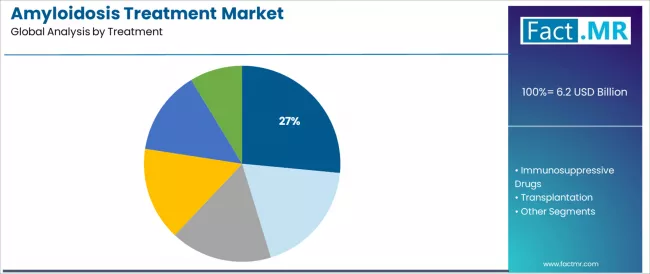
Amyloidosis Treatment Market Analysis By Treatment | Source: Fact.MR
The chemotherapy treatment segment is projected to account for 26.5% of the amyloidosis treatment market in 2025, reaffirming its position as the category's dominant therapeutic approach. Hematology-oncology specialists increasingly recognize the optimal balance of plasma cell eradication and disease modification offered by chemotherapy regimens for AL amyloidosis management applications, particularly in newly diagnosed patient populations and relapsed disease environments.
This treatment category addresses both light chain production suppression requirements and organ function stabilization demands while providing established clinical outcomes across diverse AL amyloidosis patient operations. This segment forms the foundation of most AL amyloidosis treatment protocols for plasma cell-directed therapy and hematologic response achievement, as it represents the most clinically validated and evidence-based therapeutic approach in the light-chain amyloidosis treatment paradigm.
Clinical practice guideline standards and extensive real-world outcomes data continue to strengthen confidence in chemotherapy utilization among amyloidosis specialists and hematology professionals. With increasing recognition of deep hematologic response impact on survival and organ recovery requirements, chemotherapy regimens align with both current treatment practices and outcome optimization goals, making them the central therapeutic driver of comprehensive AL amyloidosis management strategies across multiple specialty care platforms.
Chemotherapy encompasses various regimen options including bortezomib-based combinations, high-dose melphalan with autologous stem cell transplantation for eligible patients, and daratumumab-containing protocols representing evolving standards of care with improved efficacy and tolerability profiles for diverse AL amyloidosis patient populations.
Why are Hospitals & Clinics the Primary End Users of Amyloidosis Treatment?
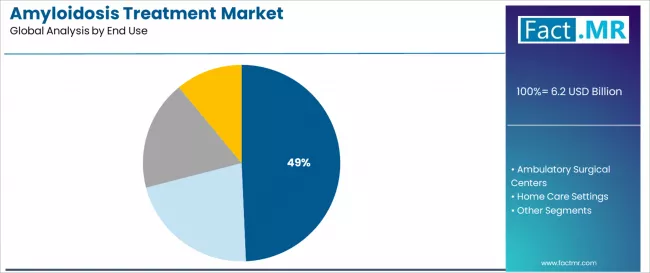
Amyloidosis Treatment Market Analysis By End Use | Source: Fact.MR
Hospitals & clinics end use is projected to represent 49.3% of amyloidosis treatment demand in 2025, underscoring their role as the primary care setting category driving treatment adoption and therapeutic delivery. Healthcare administrators recognize that hospital-based treatment requirements, including multidisciplinary specialty coordination, comprehensive diagnostic capabilities, and intensive monitoring protocols, provide essential infrastructure that alternative care settings cannot match in complexity and expertise concentration.
Amyloidosis treatments delivered in hospital and clinic settings offer integrated specialty care and sophisticated diagnostic support essential for serving accurate disease subtyping and complex treatment management requirements. The segment is supported by the expanding nature of specialized amyloidosis centers, requiring facilities capable of addressing genetic testing services, advanced cardiac imaging, multiorgan assessment, and coordinated specialty consultations, and the increasing recognition that centralized expertise enables optimal diagnosis accuracy and treatment outcomes.
Healthcare systems are increasingly developing dedicated amyloidosis programs that facilitate comprehensive patient evaluation for accurate diagnosis, subtype determination, and personalized treatment planning. As understanding of amyloidosis heterogeneity advances and treatment complexity increases, hospital-based specialty care will continue to play a crucial role in comprehensive disease management strategies.
Ambulatory surgical centers represent 20.0% of end use applications, serving outpatient infusion therapy delivery and convenient treatment administration for stable patients requiring chronic medication management without intensive hospital-based monitoring.
Why do Immunosuppressive account for Critical Treatment Applications?
The immunosuppressive drugs segment represents 20.0% of treatment market share, serving critical inflammatory amyloidosis applications requiring underlying disease control. Amyloidosis specialists recognize that immunosuppressive agent applications, targeting chronic inflammatory conditions causing AA amyloidosis, provide essential disease-modifying therapy for secondary amyloidosis prevention and stabilization.
This treatment category delivers both inflammatory process suppression and amyloid deposition reduction essential for AA amyloidosis management in appropriate patient populations. Immunosuppressive drugs maintain their therapeutic role in managing underlying inflammatory conditions including rheumatoid arthritis, inflammatory bowel disease, and chronic infections that trigger AA amyloidosis development, with treatment success dependent on effective control of the predisposing inflammatory disorder.
What are the Drivers, Restraints, and Key Trends of the Amyloidosis Treatment Market?
The amyloidosis treatment market is advancing rapidly due to increasing recognition of early diagnosis importance and growing availability of disease-modifying therapies across the specialty healthcare sector.
However, the market faces challenges, including high novel therapy costs in resource-limited healthcare segments, delayed diagnosis due to disease rarity and symptom nonspecificity, and concerns about long-term treatment access in developing healthcare markets. Innovation in RNA-based technologies and precision diagnostic algorithms continues to influence therapeutic development and market expansion patterns.
Proliferation of RNA-Based Therapies and Gene-Silencing Technologies
The accelerating development of RNA interference therapeutic platforms is enabling breakthrough disease stabilization and improved outcomes for hereditary transthyretin amyloidosis that address unmet medical needs in previously untreatable disease subtypes. Amyloidosis specialists increasingly adopt RNA-silencing agents that target hepatic transthyretin production, with patisiran and inotersen providing clinically proven efficacy in stabilizing or reversing polyneuropathy and cardiomyopathy progression.
Advanced RNA technologies provide opportunities for transformative disease modification that can dramatically alter natural history while improving patient survival and quality of life across diverse geographic regions.
Integration of Specialized Amyloidosis Centers and Multidisciplinary Care Models
Modern healthcare organizations are incorporating advanced approaches such as dedicated amyloidosis programs, genetic counseling services, and coordinated specialty team interfaces to enhance diagnostic accuracy and treatment optimization.
These systems improve early detection rates, enable comprehensive subtype differentiation through advanced testing, and provide better coordination among cardiology, hematology, nephrology, and neurology specialists throughout the diagnostic and treatment journey. Advanced multidisciplinary capabilities also enable personalized treatment selection and proactive complication management, supporting optimized therapeutic outcomes and improved long-term disease control.
Analysis of the Amyloidosis Treatment Market by Key Countries
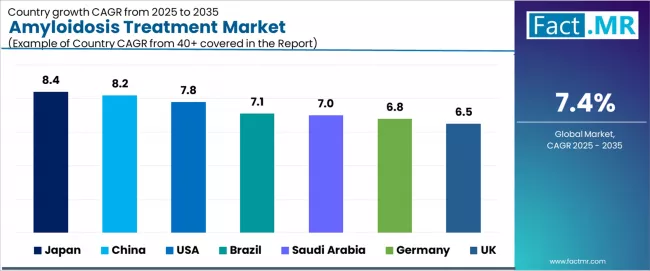
Amyloidosis Treatment Market Cagr Analysis By Country | Source: Fact.MR
| Country | CAGR (2025-2035) |
|---|---|
| Japan | 8.4% |
| China | 8.2% |
| USA | 7.8% |
| Brazil | 7.1% |
| Saudi Arabia | 7.0% |
| Germany | 6.8% |
| UK | 6.5% |
Source: Fact.MR analysis. Updated Dec 11, 2025
The amyloidosis treatment market is experiencing exceptional growth globally, with Japan leading at an 8.4% CAGR through 2035, driven by rapidly aging population demographics, higher wild-type ATTR amyloidosis prevalence, and comprehensive specialty care infrastructure across major academic medical centers. China follows at 8.2%, supported by rising disease awareness, modernized healthcare infrastructure development, and expanding genetic testing availability initiatives.
USA demonstrates 7.8% growth, emphasizing advanced RNA-based therapies, large patient population identification, and monoclonal antibody treatment innovation. Brazil shows 7.1% growth with expanding specialty clinic networks and rare disease program development focus. Saudi Arabia records 7.0% growth, representing rare disease program investment and RNA therapy adoption emphasis. Germany shows 6.8% growth with integrated precision care and comprehensive reimbursement support, while the UK demonstrates 6.5% growth, representing National Amyloidosis Centre expertise and genetic testing infrastructure advancement.
How does Japan Demonstrate Exceptional Market Potential with Aging Population?
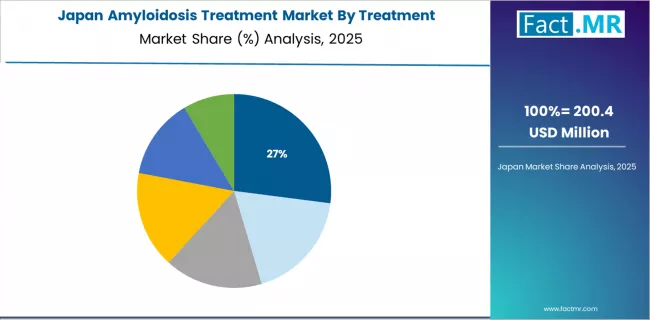
Amyloidosis Treatment Market Japan Market Share Analysis By Treatment | Source: Fact.MR
The market for amyloidosis treatment in Japan is projected to exhibit exceptional growth with a CAGR of 8.4% through 2035, driven by the world's most rapidly aging population and correspondingly high prevalence of wild-type transthyretin cardiac amyloidosis affecting elderly patients. The country's sophisticated healthcare infrastructure and comprehensive cardiac screening capabilities are creating significant opportunities for treatment deployment across both hereditary and age-related amyloidosis populations.
Major pharmaceutical companies and specialty hospitals are establishing comprehensive amyloidosis programs to serve the expanding population of diagnosed patients requiring disease-modifying therapies across university hospitals, cardiac specialty centers, and dedicated amyloidosis clinics throughout Japan's advanced healthcare regions. The Japanese healthcare system's emphasis on precision medicine and comprehensive diagnostic evaluation is driving pharmaceutical market development and novel therapy adoption.
This medical culture, combined with the country's aging demographics and universal healthcare coverage, creates favorable conditions for amyloidosis treatment market expansion. Japanese cardiologists and neurologists are increasingly recognizing previously underdiagnosed amyloidosis presentations, with advanced therapeutics representing critical interventions in managing this growing patient population.
- Aging population expansion and high wild-type ATTR prevalence are driving demand for cardiac amyloidosis therapies across cardiology and specialty care segments
- Advanced cardiac imaging capabilities and biomarker testing infrastructure are supporting increased disease identification among elderly patients nationwide
- Patients and healthcare providers are increasingly recognizing cardiac amyloidosis as a treatable condition, creating expanded therapeutic demand
- Universal healthcare coverage and specialty care accessibility are accelerating novel therapy adoption across patient populations
What makes China demonstrate Market Leadership with Healthcare Modernization?
The market for amyloidosis treatment in China is expanding at a CAGR of 8.2%, supported by massive population scale, rapidly improving rare disease awareness, and advancing specialty healthcare infrastructure across the country's developing urban medical corridors. The country's increasing sophistication of genetic testing capabilities and expanding amyloidosis diagnostic expertise are driving treatment demand in both hereditary and acquired disease applications. International pharmaceutical manufacturers and domestic specialty hospitals are developing amyloidosis programs to serve growing patient identification while supporting the country's healthcare quality improvement objectives.
China's rare disease sector continues to benefit from healthcare policy reforms, expanding insurance coverage for orphan drugs, and growing emphasis on precision medicine development. The country's focus on improving rare disease diagnosis and treatment access is driving market development for amyloidosis therapeutics. This evolution is particularly important for hereditary ATTR amyloidosis applications, as genetic testing identifies endemic mutations in certain Chinese populations previously undiagnosed due to limited awareness.
- Rising disease awareness and improving genetic testing capabilities are creating opportunities for expanded patient identification and treatment utilization
- Growing healthcare infrastructure modernization and specialty hospital networks are supporting access to advanced diagnostic and therapeutic services
- Expanding medical insurance coverage and orphan drug policies are improving treatment affordability and market access
- Academic medical center development and international collaboration are enabling expertise building and treatment protocol implementation
Why does the USA Maintain Advanced Therapeutic Innovation Leadership?
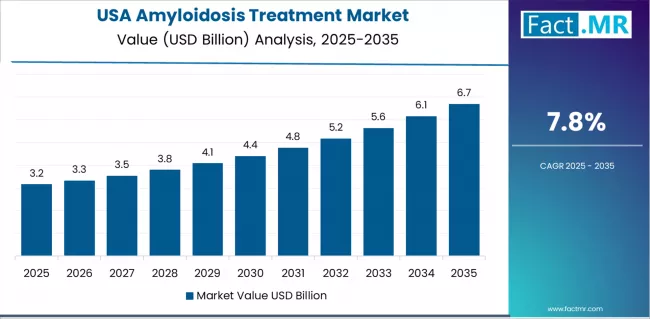
Amyloidosis Treatment Market Country Value Analysis | Source: Fact.MR
The USA's advanced amyloidosis treatment market demonstrates sophisticated therapeutic utilization with documented clinical effectiveness across diverse amyloidosis subtypes through integration with comprehensive specialty programs and patient support services. The country leverages pharmaceutical innovation leadership and extensive clinical research infrastructure to maintain a 7.8% CAGR through 2035.
Amyloidosis centers, including major academic medical institutions and specialty cardiac programs, showcase advanced treatment implementations where multiple therapeutic mechanisms integrate with genetic counseling services and ongoing clinical trials to optimize individual patient outcomes.
American healthcare providers prioritize evidence-based treatment selection and multidisciplinary care coordination in amyloidosis management, creating sustained demand for innovative RNA-based therapies, novel monoclonal antibodies, and comprehensive supportive care programs with differentiated efficacy profiles. The market benefits from established specialty center networks and robust pharmaceutical development pipelines that drive continuous therapeutic advancement.
Strategic Market Considerations:
- Academic amyloidosis centers and specialty cardiac programs leading adoption with focus on novel RNA therapeutics and precision medicine strategies
- Advanced diagnostic capabilities driving early disease detection from cardiac imaging, genetic testing, and biomarker screening
- Pharmaceutical innovation excellence and clinical trial infrastructure supporting continued drug development leadership
- Patient advocacy networks and rare disease programs influencing treatment access and healthcare delivery models
What drives Brazil’s Market Growth with Specialty Clinic Expansion?
Brazil's expanding amyloidosis treatment market demonstrates solid growth with a 7.1% CAGR through 2035, driven by large undiagnosed patient population, growing specialty clinic networks, and developing rare disease programs across major metropolitan healthcare centers.
The country's expanding awareness of hereditary amyloidosis in endemic populations and improving diagnostic capabilities create opportunities for treatment market development. Brazilian specialty hospitals are developing amyloidosis expertise to serve previously underdiagnosed patient populations.
Market dynamics focus on improving disease recognition that addresses diagnostic delays and enhances treatment access considerations important to Brazilian healthcare system development and rare disease priorities. Growing specialty infrastructure creates opportunities for integrated diagnostic and treatment programs.
Strategic Market Considerations:
- Genetic screening and endemic population focus demonstrating growth with emphasis on hereditary ATTR identification in specific Brazilian regions
- Healthcare infrastructure development and specialty clinic expansion are supporting increased disease diagnosis and treatment access
- Rare disease policy advancement and patient advocacy supporting improved awareness and healthcare system response
- Treatment access programs and international collaboration enabling novel therapy availability in emerging specialty centers
What drives Saudi Arabia’s Market Growth with Rare Disease Program Investment?
Saudi Arabia's developing amyloidosis treatment market demonstrates moderate growth with a 7.0% CAGR through 2035, driven by healthcare sector investment in rare disease programs, specialty care infrastructure development, and adoption of advanced RNA-based therapies across major urban medical centers. The country's healthcare modernization initiatives and emphasis on international-standard specialty services create opportunities for amyloidosis treatment adoption. Saudi healthcare providers are establishing comprehensive rare disease capabilities including genetic testing and specialty consultation services.
Market dynamics focus on international-standard therapeutic access that aligns with private healthcare positioning and specialized medical center capabilities. Growing healthcare investment creates opportunities for expanded rare disease infrastructure and novel treatment availability.
Strategic Market Considerations:
- Private hospitals and specialty centers leading adoption with emphasis on comprehensive rare disease services and advanced therapeutic access
- Healthcare modernization priorities driving implementation of genetic testing, specialty consultations, and novel therapy availability
- International collaboration and expertise development supporting amyloidosis program establishment in major medical centers
- Patient referral and diagnostic capabilities influencing treatment identification and market development patterns
What drives Germany’s Market Growth with Integrated Precision Care?
Germany's established amyloidosis treatment market demonstrates steady growth with a 6.8% CAGR through 2035, driven by integrated precision medicine approaches, comprehensive amyloidosis center networks, and robust reimbursement support for orphan drugs and specialized diagnostics.
The country's advanced healthcare infrastructure and systematic approach to rare disease management create sustained demand for disease-modifying therapies across diverse amyloidosis subtypes. German amyloidosis centers emphasize multidisciplinary coordination and evidence-based treatment protocols.
Market dynamics focus on precision diagnostic approaches that balance comprehensive evaluation with efficient care pathways important to German healthcare system quality standards. Established specialty networks create opportunities for systematic patient identification and treatment optimization programs.
Strategic Market Considerations:
- University hospitals and specialty centers demonstrating growth with emphasis on multidisciplinary care and precision diagnostics
- Strong reimbursement framework supporting access to novel therapies and comprehensive diagnostic workup
- Established amyloidosis networks and referral pathways ensuring systematic patient identification and treatment delivery
- Clinical research participation and registry development supporting real-world evidence generation and treatment optimization
What drives UK’s Market Growth with National Amyloidosis Centre Expertise?
The UK's specialized amyloidosis treatment market demonstrates moderate growth with a 6.5% CAGR through 2035, driven by National Amyloidosis Centre international leadership, comprehensive genetic testing infrastructure, and systematic rare disease care pathways within the NHS framework. The country's centralized expertise model and coordinated referral systems create structured treatment access across the national population. UK amyloidosis services prioritize accurate diagnosis and evidence-based treatment selection.
Market dynamics focus on centralized expert evaluation that ensures diagnostic accuracy and optimal treatment matching considerations important to NHS resource utilization and patient outcome priorities. National centre expertise creates opportunities for systematic care delivery and comprehensive patient evaluation programs.
Strategic Market Considerations:
- National Amyloidosis Centre and regional cardiac amyloidosis services demonstrating growth with emphasis on expert diagnosis and treatment coordination
- Comprehensive genetic testing and biomarker programs supporting accurate disease subtyping and familial screening
- NHS rare disease framework enabling systematic referral pathways and treatment access for eligible patients
- Clinical research leadership and international collaboration supporting treatment advancement and evidence generation
Europe Market Split by Country
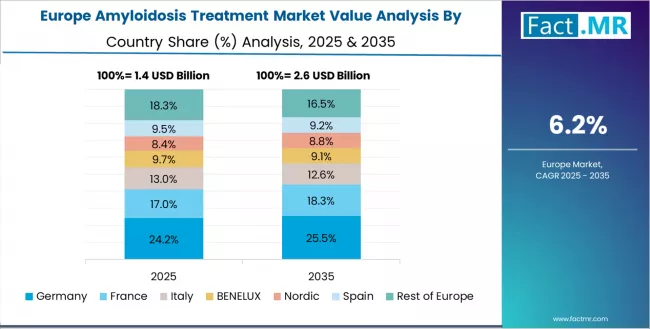
Amyloidosis Treatment Market Europe Country Market Share Analysis, 2025 & 2035 | Source: Fact.MR
The amyloidosis treatment market in Europe is projected to grow from USD 1.48 billion in 2025 to USD 2.76 billion by 2035, registering a CAGR of 6.4% over the forecast period. Germany is expected to maintain its leadership position with a 35.8% market share in 2025, rising to 37.2% by 2035, supported by its dominant specialty care infrastructure, comprehensive rare disease management capabilities, and advanced precision medicine excellence throughout major university hospitals and amyloidosis center networks.
France follows with a 24.2% share in 2025, projected to reach 25.1% by 2035, driven by comprehensive cardiology expertise, established genetic testing programs, and expanding RNA therapeutic adoption serving both domestic and European clinical communities. The United Kingdom holds a 21.6% share in 2025, expected to increase to 22.4% by 2035, supported by National Amyloidosis Centre leadership and systematic genetic screening programs. Italy commands a 11.4% share in 2025, projected to reach 10.2% by 2035, while Spain accounts for 5.8% in 2025, expected to reach 4.3% by 2035.
The rest of Europe region, including Nordic countries with advanced healthcare systems, Eastern European emerging specialty markets, and smaller Western European academic centers, is anticipated to hold 1.2% in 2025, declining slightly to 0.8% by 2035, attributed to market consolidation toward larger core markets with established amyloidosis expertise and comprehensive diagnostic infrastructure.
Competitive Landscape of the Amyloidosis Treatment Market
The amyloidosis treatment market is characterized by intense competition among established pharmaceutical manufacturers, specialized rare disease developers, and comprehensive biopharmaceutical organizations focused on delivering high-quality, clinically effective, and evidence-based therapeutic solutions.
Companies are investing in orphan drug development programs, clinical trial excellence, strategic amyloidosis center partnerships, and comprehensive patient support initiatives to deliver safe, effective, and accessible amyloidosis treatments that meet stringent regulatory standards and specialty care expectations. Therapeutic innovation, mechanism differentiation, and patient access strategies are central to strengthening product portfolios and market presence.
Pfizer Inc. leads the market with a 14.0% market share, offering comprehensive amyloidosis therapeutic solutions with focus on RNA-silencing technology expertise and transthyretin stabilizer development capabilities for hereditary and wild-type ATTR amyloidosis applications. Johnson & Johnson
Services Inc. provides specialized therapeutic platforms with emphasis on novel mechanism exploration and comprehensive development programs across global specialty markets. GSK plc focuses on innovative therapeutic development and rare disease commitment serving international amyloidosis communities. Takeda Pharmaceutical Company Limited delivers specialized orphan drug expertise with strong market access capabilities and patient support programs.
Amgen Inc. operates with focus on investigational amyloidosis therapeutics and biotechnology innovation. Bristol-Myers Squibb Company provides hematology-oncology expertise supporting AL amyloidosis treatment protocols. Novartis AG specializes in cardiovascular therapeutics with potential amyloidosis applications. F. Hoffmann-La Roche Ltd delivers comprehensive diagnostics and therapeutics to enhance disease management.
Merck KGaA and Sanofi S.A. focus on rare disease development and specialty pharmaceutical portfolios, while Alnylam Pharmaceuticals Inc. emphasizes RNA interference platform leadership and transthyretin-targeting therapeutic innovation through dedicated gene-silencing technology strategies.
Key Players in the Amyloidosis Treatment Market
- Pfizer Inc.
- Johnson & Johnson Services Inc.
- GSK plc
- Takeda Pharmaceutical Company Limited
- Amgen Inc.
- Bristol-Myers Squibb Company
- Novartis AG
- F. Hoffmann-La Roche Ltd
- Merck KGaA
- Sanofi
- Alnylam Pharmaceuticals Inc.
Segmentation
Scope of the Report
| Items | Values |
|---|---|
| Quantitative Units (2025) | USD 6.23 Billion |
| Treatment | Chemotherapy, Immunosuppressive Drugs, Transplantation, Supportive Care, Surgery, Others |
| End Use | Hospitals & Clinics, Ambulatory Surgical Centers, Home Care Settings, Others |
| Regions Covered | North America, Asia Pacific, Europe, Latin America, Middle East & Africa |
| Countries Covered | USA, Germany, UK, Japan, China, Brazil, Saudi Arabia and 40+ countries |
| Key Companies Profiled | Pfizer Inc., Johnson & Johnson Services Inc., GSK plc, Takeda Pharmaceutical Company Limited, Amgen Inc., Bristol-Myers Squibb Company, Novartis AG, F. Hoffmann-La Roche Ltd, Merck KGaA, Sanofi, Alnylam Pharmaceuticals Inc. |
| Additional Attributes | Dollar sales by treatment type, end use, regional demand trends, competitive landscape, specialty physician preferences for specific therapeutic mechanisms, integration with comprehensive amyloidosis care systems, innovations in RNA therapeutic development, precision diagnostic advancement, and survival outcome optimization capabilities |
Source: Fact.MR analysis. Updated Dec 11, 2025
Amyloidosis Treatment Market by Segments
-
Treatment :
- Chemotherapy
- Immunosuppressive Drugs
- Transplantation
- Supportive Care
- Surgery
- Others
-
End Use :
- Hospitals & Clinics
- Ambulatory Surgical Centers
- Home Care Settings
- Others
-
Region :
-
North America
- United States
- Canada
- Mexico
-
Asia Pacific
- China
- India
- Japan
- South Korea
- ASEAN
- Australia & New Zealand
- Rest of Asia Pacific
-
Europe
- Germany
- France
- United Kingdom
- Italy
- Spain
- Nordic
- BENELUX
- Rest of Europe
-
Latin America
- Brazil
- Argentina
- Chile
- Rest of Latin America
-
Middle East & Africa
- Kingdom of Saudi Arabia
- Other GCC Countries
- Turkey
- South Africa
- Other African Countries
- Rest of Middle East & Africa
-
Frequently Asked Questions
How big is the amyloidosis treatment market in 2025?
What will be the size of amyloidosis treatment market in 2035?
How much will be the amyloidosis treatment market growth between 2025 and 2035?
What are the key product types in the amyloidosis treatment market?
Which end use segment to contribute significant share in the amyloidosis treatment market in 2025?
Who worked on this report


Preview the report firsthand - request a free sample
Free SampleGet the brochure for pricing and purchase details
Download PDF