Cap Retrofitting Market

Cap Retrofitting Market Size and Share Forecast Outlook 2026 to 2036

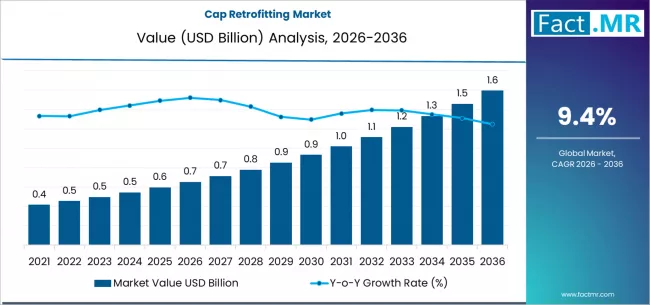
Cap retrofitting market is projected to grow from USD 0.7 billion in 2026 to USD 1.6 billion by 2036, at a CAGR of 9.4%. Beverage & dairy plants will dominate with a 42.0% market share, while tamper-evident & tethered cap retrofits will lead the retrofit type segment with a 47.3% share.

Cap Retrofitting Market Forecast and Outlook 2026 to 2036

The global cap retrofitting market is projected to total USD 0.65 billion in 2026, and is projected to reach USD 1.60 billion by 2036, progressing at a 9.4% CAGR. This growth is fundamentally driven by a wave of global packaging legislation, most notably the European Union’s Packaging and Packaging Waste Regulation, which mandates tethered closures for single-use beverage containers. This regulatory shift compels a massive, non-discretionary upgrade of existing bottling lines worldwide, as brand owners must adapt their packaging to retain market access.

Key Takeaways from the Cap Retrofitting Market

  • Market Value for 2026: USD 0.65 Billion
  • Market Value for 2036: USD 1.60 Billion
  • Forecast CAGR 2026 to 2036: 9.4%
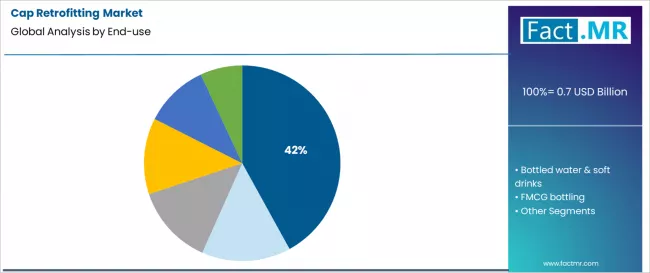
  • Leading End-Use Segment (2026): Beverage & Dairy Plants (42.0%)
  • Leading Retrofit Type (2026): Tamper-Evident & Tethered Cap Retrofits (47.3%)
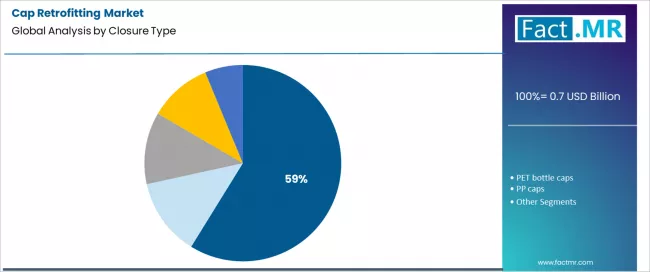
  • Leading Closure Type (2026): HDPE / PP Caps (58.8%)
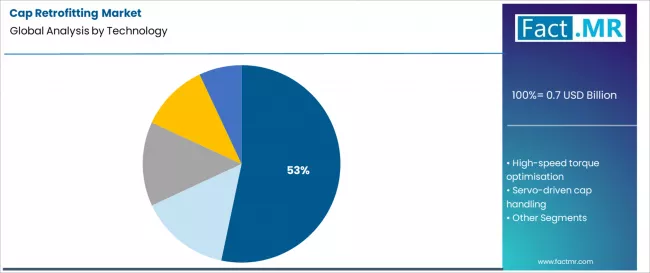
  • Leading Technology Segment (2026): PPWR-Compliant Cap Conversion (53.3%)
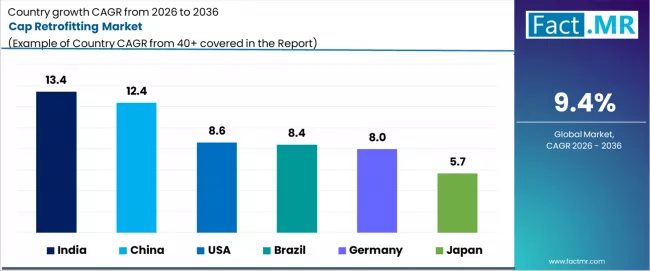
  • Key Growth Countries: India (13.4% CAGR), China (12.4% CAGR), USA (8.6% CAGR), Brazil (8.4% CAGR), Germany (8.0% CAGR), Japan (5.7% CAGR)
  • Key Players: AptarGroup, Inc., Silgan Holdings Inc., ALPLA Group, Bericap GmbH, Zhongfu Packaging, Manjushree Technopack Limited

Cap Retrofitting Market Market Value Analysis

The economic rationale for retrofitting over complete line replacement is compelling. Retrofitting existing capping machinery with new chucks, grippers, and feed systems represents a fraction of the capital expenditure of a new filler-capper block. It minimizes production downtime and allows for the continued use of otherwise fully functional high-speed rotary lines.

This market serves as the essential bridge, enabling the global beverage and dairy industry to achieve compliance with evolving sustainability mandates while protecting prior capital investments and maintaining operational continuity.

Cap Retrofitting Market

Metric Value
Market Value (2026) USD 0.65 Billion
Market Forecast Value (2036) USD 1.60 Billion
Forecast CAGR 2026 to 2036 9.4%

Category

Category Segments
End-Use Beverage & Dairy Plants, Bottled Water & Soft Drinks, FMCG Bottling, Local Beverage Brands, Juice & Dairy, Precision Bottling
Retrofit Type Tamper-Evident & Tethered Cap Retrofits, Line-Change Retrofit Kits, Cap Feeder & Applicator Upgrades, Manual-to-Auto Retrofits, Others
Closure Type HDPE/PP Caps, PET Bottle Caps, PP Caps, HDPE Caps, Others
Technology PPWR-Compliant Cap Conversion, High-Speed Torque Optimisation, Servo-Driven Cap Handling, Cost-Efficient Mechanical Upgrades, Others
Region North America, Latin America, Western Europe, Eastern Europe, East Asia, South Asia & Pacific, Middle East & Africa

How are Industry Dynamics Determining Cap Retrofitting Incorporation Patterns?

The cap retrofitting market is a direct function of legislative timelines colliding with production realities. The EU PPWR sets a hard deadline, creating a concentrated wave of demand as bottlers scramble to modify lines before the enforcement date.

This dynamic overrides normal capital investment cycles. The technical challenge is not merely attaching a tether but ensuring the new cap design can be fed, applied, and torqued reliably at high speeds on machinery designed for a different cap geometry.

This necessitates precise mechanical engineering and often involves the closure supplier, machine OEM, and a specialized retrofit engineer collaborating to create a validated kit. The retrofit thus becomes a critical, time-sensitive service ensuring both compliance and uninterrupted production.

Segmental Analysis

By Technology, Which Segment Encapsulates the Primary Regulatory Catalyst for Growth?

Cap Retrofitting Market Analysis By Technology

PPWR-compliant cap conversion technology commands a leading 53.3% share. This segment is defined by the technical solutions required to adapt high-speed capping lines to apply tethered caps, which have different mass, center of gravity, and tether-interference profiles than traditional closures.

The technology involves modifying cap sorting bowls, feed tracks, and capping chucks to handle these new designs without causing jams or misapplies. Its dominance is purely driven by the legislative mandate, making it the single largest and most urgent driver of retrofit investment globally, particularly affecting plants supplying the European market.

By End-Use, Which Segment Faces the Most Immediate and Universal Regulatory Pressure?

Cap Retrofitting Market Analysis By End Use

Beverage and dairy plants constitute the primary end-use segment at 42.0%. This sector is the primary target of tethered cap legislation worldwide, covering water, soft drinks, juices, and liquid dairy products. The high-volume, low-margin nature of this industry makes the cost-effectiveness of retrofitting versus new machinery purchase particularly attractive.

Plants in this segment operate lines that are often running near capacity, making the engineering precision and reliability of the retrofit critical to avoid costly downtime and production losses during and after the conversion process.

By Closure Type, Which Polymer Family is at the Center of the Retrofit Wave?

Cap Retrofitting Market Analysis By Closure Type

HDPE and PP caps hold a dominant 58.8% share. These polyolefins are the standard materials for beverage closures due to their cost, stiffness, and compatibility with recycling streams. The transition to tethered designs predominantly utilizes these existing materials but in new molded forms.

The retrofit challenge is therefore not about handling a new material, but about managing the new physical design of these familiar HDPE and PP caps on legacy equipment, ensuring consistent orientation and application at high speed.

What are the Principal Drivers, Constraints, and Evolving Dynamics of the Cap Retrofitting Market?

Attribute Expected Impact
Global Adoption of Tethered Cap Mandates Creates a multi-year, compliance-driven upgrade cycle for bottling lines worldwide, with EU PPWR setting a precedent other regions are likely to follow.
Technical Complexity & Line Downtime Risk Constrains adoption speed as plant managers fear production disruptions, favoring suppliers who offer validated, turnkey retrofit solutions with performance guarantees.
Expansion of Bottling Capacity in Emerging Markets New plants in regions like India often install versatile lines, but later require retrofits for new cap designs or to achieve higher speeds, creating sustained aftermarket demand.
Integration of Smart Capping with Line Analytics Retrofits are increasingly used as an opportunity to add sensors and connectivity for real-time torque monitoring and predictive maintenance, adding value beyond basic compliance.

Analysis of the Cap Retrofitting Market by Key Countries

Cap Retrofitting Market Cagr Analysis By Country

Country CAGR 2026 to 2036
USA 8.6%
Germany 8.0%
China 12.4%
India 13.4%
Brazil 8.4%
Japan 5.7%

How do State-Level Policies and a Mature Beverage Industry Shape the US Landscape?

An 8.6% CAGR is influenced by evolving state-level policies on plastic waste and voluntary adoption of tethered caps by multinational brands for global portfolio consistency. The demand driver is strongest in the bottled water and soft drinks sector.

The mature industry capacity includes specialized engineering firms and OEM service divisions that cater to the vast installed base of bottling lines. While a federal mandate is absent, the need to supply brands with global portfolios and pre-empt potential state laws drives proactive retrofitting.

What Characterizes Germany's Role as the EU's Regulatory and Engineering Epicenter?

An 8.0% CAGR reflects Germany’s position at the core of the EU regulatory environment and its leadership in packaging machinery. German beverage plants and dairy facilities are among the first to undergo mandatory PPWR-compliant conversions, serving as pilot sites for retrofit kits.

The domestic industry capacity for high-precision mechanical engineering is robust, with many machine tooling specialists and closure manufacturers like Bericap developing and supplying certified retrofit solutions for the European market.

What Underpins China's Massive Scale in Bottled Beverage Production?

China’s 12.4% CAGR is fueled by its position as the world’s largest producer of bottled water and soft drinks. While not directly under EU law, Chinese exporters supplying European markets must comply, and domestic mega-brands are beginning to adopt tethered designs.

The sheer scale of production necessitates high-speed torque optimisation retrofits to maintain line efficiency with new cap designs. Domestic packaging giants like Zhongfu Packaging have significant industry capacity to produce both closures and the requisite retrofit tooling for the local market.

How is India's Booming FMCG Bottling Sector Driving Demand?

India’s leading 13.4% CAGR is propelled by the explosive growth of its domestic bottled water, beverages, and FMCG liquid products market. The primary demand driver is the need to upgrade and optimize existing lines for higher output and newer cap designs, including tethered versions for premium products.

The market is highly cost-sensitive, fostering demand for mechanical upgrades and servo-driven cap handling retrofits that improve efficiency. Local players like Manjushree are key ecosystem players, providing integrated packaging solutions and retrofit services.

Why is Brazil's Growth Linked to Local Brand Competition and Modernization?

An 8.4% CAGR is closely tied to the modernization efforts of local and regional beverage brands competing in a consolidated market. The demand driver is the need to improve line efficiency and adopt contemporary packaging features.

While EU-style regulation is not imminent, the focus is on manual-to-automated retrofits and cost-efficient mechanical upgrades to improve competitiveness and reduce labor on filling lines for juices, dairy, and soft drinks.

What defines Japan's Focus on Ultra-High Precision and Niche Applications?

Japan’s 5.7% CAGR represents a mature market focused on precision engineering for high-value segments like dairy and juices. Demand stems from the need for retrofits that guarantee flawless application on sensitive products and enable quick changeovers between diverse, low-volume SKUs.

The focus is on micro-adjustments and servo-driven handling systems that integrate with Japan’s highly automated and precise bottling environments, where minute defects are unacceptable.

Competitive Landscape of the Cap Retrofitting Market

The competitive landscape is fragmented, featuring global closure manufacturers, specialized retrofit engineering firms, and original equipment manufacturer service divisions. Leading closure producers like Aptar and Silgan compete by offering proprietary retrofit kits optimized for their specific tethered cap designs, ensuring guaranteed performance. Specialized engineering firms compete through deep expertise in modifying specific legacy machine brands, offering customized solutions.

Success hinges on providing validated, turnkey kits that minimize customer downtime, backed by strong technical support and performance warranties. Channel strategy is critical, with direct sales to large multinational bottlers and partnerships with distributors and OEMs to reach smaller regional plants. As regulations solidify, competition is intensifying around speed of deployment, total cost of conversion, and the ability to offer future-proof solutions adaptable to further legislative changes.

Key Players in the Cap Retrofitting Market

  • AptarGroup, Inc.
  • Silgan Holdings Inc.
  • ALPLA Group
  • Bericap GmbH
  • Zhongfu Packaging
  • Manjushree Technopack Limited

Scope of Report

Items Metrics
Quantitative Units USD Billion
Technology PPWR-Compliant Cap Conversion, High-Speed Torque Optimisation, Servo-Driven Cap Handling, Cost-Efficient Mechanical Upgrades, Others
Retrofit Type Tamper-Evident & Tethered Cap Retrofits, Line-Change Retrofit Kits, Cap Feeder & Applicator Upgrades, Manual-to-Auto Retrofits, Others
End-Use Beverage & Dairy Plants, Bottled Water & Soft Drinks, FMCG Bottling, Local Beverage Brands, Juice & Dairy, Precision Bottling
Closure Type HDPE / PP Caps, PET Bottle Caps, PP Caps, HDPE Caps, Others
Key Countries India, China, USA, Brazil, Germany, Japan
Key Companies Aptar, Silgan, ALPLA, Bericap, Zhongfu Packaging, Manjushree
Additional Analysis Total cost analysis: retrofit vs. new capper investment; downtime impact and mitigation strategies; study of cap design variability on retrofit complexity; analysis of retrofit kit standardization trends; impact on line Overall Equipment Effectiveness post-retrofit.

Market by Segments

  • End-Use :

    • Beverage & Dairy Plants
    • Bottled Water & Soft Drinks
    • FMCG Bottling
    • Local Beverage Brands
    • Juice & Dairy
    • Precision Bottling
  • Retrofit Type :

    • Tamper-Evident & Tethered Cap Retrofits
    • Line-Change Retrofit Kits
    • Cap Feeder & Applicator Upgrades
    • Manual-to-Auto Retrofits
    • Others
  • Closure Type :

    • HDPE-cum-PP Caps
    • PET Bottle Caps
    • PP Caps
    • HDPE Caps
    • Others
  • Technology :

    • PPWR-Compliant Cap Conversion
    • High-Speed Torque Optimisation
    • Servo-Driven Cap Handling
    • Cost-Efficient Mechanical Upgrades
    • Others
  • Region :

    • North America

      • USA
      • Canada
    • Latin America

      • Brazil
      • Mexico
      • Argentina
      • Rest of Latin America
    • Western Europe

      • Germany
      • France
      • Italy
      • Spain
      • UK
      • BENELUX
      • Rest of Western Europe
    • Eastern Europe

      • Russia
      • Poland
      • Czech Republic
      • Rest of Eastern Europe
    • East Asia

      • China
      • Japan
      • South Korea
      • Rest of East Asia
    • South Asia & Pacific

      • India
      • ASEAN
      • Australia
      • Rest of South Asia & Pacific
    • MEA

      • GCC Countries
      • South Africa
      • Turkiye
      • Rest of MEA

Bibliography

  • European Commission. (2025). Commission Implementing Decision on Harmonised Standards for Tethered Caps Under PPWR.
  • Food & Drug Administration (US). (2024). Guidance for Industry: Tamper-Evident Packaging Requirements for Certain Over-the-Counter Human Drug Products.
  • International Society of Beverage Technologists (ISBT). (2024). Best Practices for Line Conversion to Tethered Closures.
  • PPWR (Regulation (EU) 2024/…). (2024). Packaging and Packaging Waste Regulation.
  • The Association of Plastic Recyclers (APR). (2025). Design Guide for PE/PP Tethered Closures.
  • World Packaging Organisation (WPO). (2024). Global Legislation Update: Trends in Closure Design Mandates.

Table of Content

  1. Executive Summary
    • Global Market Outlook
    • Demand to side Trends
    • Supply to side Trends
    • Technology Roadmap Analysis
    • Analysis and Recommendations
  2. Market Overview
    • Market Coverage / Taxonomy
    • Market Definition / Scope / Limitations
  3. Market Background
    • Market Dynamics
      • Drivers
      • Restraints
      • Opportunity
      • Trends
    • Scenario Forecast
      • Demand in Optimistic Scenario
      • Demand in Likely Scenario
      • Demand in Conservative Scenario
    • Opportunity Map Analysis
    • Product Life Cycle Analysis
    • Supply Chain Analysis
    • Investment Feasibility Matrix
    • Value Chain Analysis
    • PESTLE and Porter’s Analysis
    • Regulatory Landscape
    • Regional Parent Market Outlook
    • Production and Consumption Statistics
    • Import and Export Statistics
  4. Global Market Analysis 2021 to 2025 and Forecast, 2026 to 2036
    • Historical Market Size Value (USD Million) Analysis, 2021 to 2025
    • Current and Future Market Size Value (USD Million) Projections, 2026 to 2036
      • Y to o to Y Growth Trend Analysis
      • Absolute $ Opportunity Analysis
  5. Global Market Pricing Analysis 2021 to 2025 and Forecast 2026 to 2036
  6. Global Market Analysis 2021 to 2025 and Forecast 2026 to 2036, By End-use
    • Introduction / Key Findings
    • Historical Market Size Value (USD Million) Analysis By End-use, 2021 to 2025
    • Current and Future Market Size Value (USD Million) Analysis and Forecast By End-use, 2026 to 2036
      • Beverage & dairy plants
      • Bottled water & soft drinks
      • FMCG bottling
      • Local beverage brands
      • Juice & dairy
      • Precision bottling
    • Y to o to Y Growth Trend Analysis By End-use, 2021 to 2025
    • Absolute $ Opportunity Analysis By End-use, 2026 to 2036
  7. Global Market Analysis 2021 to 2025 and Forecast 2026 to 2036, By Retrofit Type
    • Introduction / Key Findings
    • Historical Market Size Value (USD Million) Analysis By Retrofit Type, 2021 to 2025
    • Current and Future Market Size Value (USD Million) Analysis and Forecast By Retrofit Type, 2026 to 2036
      • Tamper-evident & tethered cap retrofits
      • Line-change retrofit kits
      • Cap feeder & applicator upgrades
      • Manual-to-auto retrofits
      • Others
    • Y to o to Y Growth Trend Analysis By Retrofit Type, 2021 to 2025
    • Absolute $ Opportunity Analysis By Retrofit Type, 2026 to 2036
  8. Global Market Analysis 2021 to 2025 and Forecast 2026 to 2036, By Closure Type
    • Introduction / Key Findings
    • Historical Market Size Value (USD Million) Analysis By Closure Type, 2021 to 2025
    • Current and Future Market Size Value (USD Million) Analysis and Forecast By Closure Type, 2026 to 2036
      • HDPE / PP caps
      • PET bottle caps
      • PP caps
      • HDPE caps
      • Others
    • Y to o to Y Growth Trend Analysis By Closure Type, 2021 to 2025
    • Absolute $ Opportunity Analysis By Closure Type, 2026 to 2036
  9. Global Market Analysis 2021 to 2025 and Forecast 2026 to 2036, By Technology
    • Introduction / Key Findings
    • Historical Market Size Value (USD Million) Analysis By Technology, 2021 to 2025
    • Current and Future Market Size Value (USD Million) Analysis and Forecast By Technology, 2026 to 2036
      • PPWR-compliant cap conversion
      • High-speed torque optimisation
      • Servo-driven cap handling
      • Cost-efficient mechanical upgrades
      • Others
    • Y to o to Y Growth Trend Analysis By Technology, 2021 to 2025
    • Absolute $ Opportunity Analysis By Technology, 2026 to 2036
  10. Global Market Analysis 2021 to 2025 and Forecast 2026 to 2036, By Region
    • Introduction
    • Historical Market Size Value (USD Million) Analysis By Region, 2021 to 2025
    • Current Market Size Value (USD Million) Analysis and Forecast By Region, 2026 to 2036
      • North America
      • Latin America
      • Western Europe
      • Eastern Europe
      • East Asia
      • South Asia and Pacific
      • Middle East & Africa
    • Market Attractiveness Analysis By Region
  11. North America Market Analysis 2021 to 2025 and Forecast 2026 to 2036, By Country
    • Historical Market Size Value (USD Million) Trend Analysis By Market Taxonomy, 2021 to 2025
    • Market Size Value (USD Million) Forecast By Market Taxonomy, 2026 to 2036
      • By Country
        • USA
        • Canada
        • Mexico
      • By End-use
      • By Retrofit Type
      • By Closure Type
      • By Technology
    • Market Attractiveness Analysis
      • By Country
      • By End-use
      • By Retrofit Type
      • By Closure Type
      • By Technology
    • Key Takeaways
  12. Latin America Market Analysis 2021 to 2025 and Forecast 2026 to 2036, By Country
    • Historical Market Size Value (USD Million) Trend Analysis By Market Taxonomy, 2021 to 2025
    • Market Size Value (USD Million) Forecast By Market Taxonomy, 2026 to 2036
      • By Country
        • Brazil
        • Chile
        • Rest of Latin America
      • By End-use
      • By Retrofit Type
      • By Closure Type
      • By Technology
    • Market Attractiveness Analysis
      • By Country
      • By End-use
      • By Retrofit Type
      • By Closure Type
      • By Technology
    • Key Takeaways
  13. Western Europe Market Analysis 2021 to 2025 and Forecast 2026 to 2036, By Country
    • Historical Market Size Value (USD Million) Trend Analysis By Market Taxonomy, 2021 to 2025
    • Market Size Value (USD Million) Forecast By Market Taxonomy, 2026 to 2036
      • By Country
        • Germany
        • UK
        • Italy
        • Spain
        • France
        • Nordic
        • BENELUX
        • Rest of Western Europe
      • By End-use
      • By Retrofit Type
      • By Closure Type
      • By Technology
    • Market Attractiveness Analysis
      • By Country
      • By End-use
      • By Retrofit Type
      • By Closure Type
      • By Technology
    • Key Takeaways
  14. Eastern Europe Market Analysis 2021 to 2025 and Forecast 2026 to 2036, By Country
    • Historical Market Size Value (USD Million) Trend Analysis By Market Taxonomy, 2021 to 2025
    • Market Size Value (USD Million) Forecast By Market Taxonomy, 2026 to 2036
      • By Country
        • Russia
        • Poland
        • Hungary
        • Balkan & Baltic
        • Rest of Eastern Europe
      • By End-use
      • By Retrofit Type
      • By Closure Type
      • By Technology
    • Market Attractiveness Analysis
      • By Country
      • By End-use
      • By Retrofit Type
      • By Closure Type
      • By Technology
    • Key Takeaways
  15. East Asia Market Analysis 2021 to 2025 and Forecast 2026 to 2036, By Country
    • Historical Market Size Value (USD Million) Trend Analysis By Market Taxonomy, 2021 to 2025
    • Market Size Value (USD Million) Forecast By Market Taxonomy, 2026 to 2036
      • By Country
        • China
        • Japan
        • South Korea
      • By End-use
      • By Retrofit Type
      • By Closure Type
      • By Technology
    • Market Attractiveness Analysis
      • By Country
      • By End-use
      • By Retrofit Type
      • By Closure Type
      • By Technology
    • Key Takeaways
  16. South Asia and Pacific Market Analysis 2021 to 2025 and Forecast 2026 to 2036, By Country
    • Historical Market Size Value (USD Million) Trend Analysis By Market Taxonomy, 2021 to 2025
    • Market Size Value (USD Million) Forecast By Market Taxonomy, 2026 to 2036
      • By Country
        • India
        • ASEAN
        • Australia & New Zealand
        • Rest of South Asia and Pacific
      • By End-use
      • By Retrofit Type
      • By Closure Type
      • By Technology
    • Market Attractiveness Analysis
      • By Country
      • By End-use
      • By Retrofit Type
      • By Closure Type
      • By Technology
    • Key Takeaways
  17. Middle East & Africa Market Analysis 2021 to 2025 and Forecast 2026 to 2036, By Country
    • Historical Market Size Value (USD Million) Trend Analysis By Market Taxonomy, 2021 to 2025
    • Market Size Value (USD Million) Forecast By Market Taxonomy, 2026 to 2036
      • By Country
        • Kingdom of Saudi Arabia
        • Other GCC Countries
        • Turkiye
        • South Africa
        • Other African Union
        • Rest of Middle East & Africa
      • By End-use
      • By Retrofit Type
      • By Closure Type
      • By Technology
    • Market Attractiveness Analysis
      • By Country
      • By End-use
      • By Retrofit Type
      • By Closure Type
      • By Technology
    • Key Takeaways
  18. Key Countries Market Analysis
    • USA
      • Pricing Analysis
      • Market Share Analysis, 2025
        • By End-use
        • By Retrofit Type
        • By Closure Type
        • By Technology
    • Canada
      • Pricing Analysis
      • Market Share Analysis, 2025
        • By End-use
        • By Retrofit Type
        • By Closure Type
        • By Technology
    • Mexico
      • Pricing Analysis
      • Market Share Analysis, 2025
        • By End-use
        • By Retrofit Type
        • By Closure Type
        • By Technology
    • Brazil
      • Pricing Analysis
      • Market Share Analysis, 2025
        • By End-use
        • By Retrofit Type
        • By Closure Type
        • By Technology
    • Chile
      • Pricing Analysis
      • Market Share Analysis, 2025
        • By End-use
        • By Retrofit Type
        • By Closure Type
        • By Technology
    • Germany
      • Pricing Analysis
      • Market Share Analysis, 2025
        • By End-use
        • By Retrofit Type
        • By Closure Type
        • By Technology
    • UK
      • Pricing Analysis
      • Market Share Analysis, 2025
        • By End-use
        • By Retrofit Type
        • By Closure Type
        • By Technology
    • Italy
      • Pricing Analysis
      • Market Share Analysis, 2025
        • By End-use
        • By Retrofit Type
        • By Closure Type
        • By Technology
    • Spain
      • Pricing Analysis
      • Market Share Analysis, 2025
        • By End-use
        • By Retrofit Type
        • By Closure Type
        • By Technology
    • France
      • Pricing Analysis
      • Market Share Analysis, 2025
        • By End-use
        • By Retrofit Type
        • By Closure Type
        • By Technology
    • India
      • Pricing Analysis
      • Market Share Analysis, 2025
        • By End-use
        • By Retrofit Type
        • By Closure Type
        • By Technology
    • ASEAN
      • Pricing Analysis
      • Market Share Analysis, 2025
        • By End-use
        • By Retrofit Type
        • By Closure Type
        • By Technology
    • Australia & New Zealand
      • Pricing Analysis
      • Market Share Analysis, 2025
        • By End-use
        • By Retrofit Type
        • By Closure Type
        • By Technology
    • China
      • Pricing Analysis
      • Market Share Analysis, 2025
        • By End-use
        • By Retrofit Type
        • By Closure Type
        • By Technology
    • Japan
      • Pricing Analysis
      • Market Share Analysis, 2025
        • By End-use
        • By Retrofit Type
        • By Closure Type
        • By Technology
    • South Korea
      • Pricing Analysis
      • Market Share Analysis, 2025
        • By End-use
        • By Retrofit Type
        • By Closure Type
        • By Technology
    • Russia
      • Pricing Analysis
      • Market Share Analysis, 2025
        • By End-use
        • By Retrofit Type
        • By Closure Type
        • By Technology
    • Poland
      • Pricing Analysis
      • Market Share Analysis, 2025
        • By End-use
        • By Retrofit Type
        • By Closure Type
        • By Technology
    • Hungary
      • Pricing Analysis
      • Market Share Analysis, 2025
        • By End-use
        • By Retrofit Type
        • By Closure Type
        • By Technology
    • Kingdom of Saudi Arabia
      • Pricing Analysis
      • Market Share Analysis, 2025
        • By End-use
        • By Retrofit Type
        • By Closure Type
        • By Technology
    • Turkiye
      • Pricing Analysis
      • Market Share Analysis, 2025
        • By End-use
        • By Retrofit Type
        • By Closure Type
        • By Technology
    • South Africa
      • Pricing Analysis
      • Market Share Analysis, 2025
        • By End-use
        • By Retrofit Type
        • By Closure Type
        • By Technology
  19. Market Structure Analysis
    • Competition Dashboard
    • Competition Benchmarking
    • Market Share Analysis of Top Players
      • By Regional
      • By End-use
      • By Retrofit Type
      • By Closure Type
      • By Technology
  20. Competition Analysis
    • Competition Deep Dive
      • AptarGroup, Inc.
        • Overview
        • Product Portfolio
        • Profitability by Market Segments (Product/Age /Sales Channel/Region)
        • Sales Footprint
        • Strategy Overview
          • Marketing Strategy
          • Product Strategy
          • Channel Strategy
      • Silgan Holdings Inc.
      • ALPLA Group
      • Bericap GmbH
      • Zhongfu Packaging
      • Manjushree Technopack Limited
  21. Assumptions & Acronyms Used
  22. Research Methodology

List Of Table

  • Table 1: Global Market Value (USD Million) Forecast by Region, 2021 to 2036
  • Table 2: Global Market Value (USD Million) Forecast by End-use, 2021 to 2036
  • Table 3: Global Market Value (USD Million) Forecast by Retrofit Type, 2021 to 2036
  • Table 4: Global Market Value (USD Million) Forecast by Closure Type, 2021 to 2036
  • Table 5: Global Market Value (USD Million) Forecast by Technology, 2021 to 2036
  • Table 6: North America Market Value (USD Million) Forecast by Country, 2021 to 2036
  • Table 7: North America Market Value (USD Million) Forecast by End-use, 2021 to 2036
  • Table 8: North America Market Value (USD Million) Forecast by Retrofit Type, 2021 to 2036
  • Table 9: North America Market Value (USD Million) Forecast by Closure Type, 2021 to 2036
  • Table 10: North America Market Value (USD Million) Forecast by Technology, 2021 to 2036
  • Table 11: Latin America Market Value (USD Million) Forecast by Country, 2021 to 2036
  • Table 12: Latin America Market Value (USD Million) Forecast by End-use, 2021 to 2036
  • Table 13: Latin America Market Value (USD Million) Forecast by Retrofit Type, 2021 to 2036
  • Table 14: Latin America Market Value (USD Million) Forecast by Closure Type, 2021 to 2036
  • Table 15: Latin America Market Value (USD Million) Forecast by Technology, 2021 to 2036
  • Table 16: Western Europe Market Value (USD Million) Forecast by Country, 2021 to 2036
  • Table 17: Western Europe Market Value (USD Million) Forecast by End-use, 2021 to 2036
  • Table 18: Western Europe Market Value (USD Million) Forecast by Retrofit Type, 2021 to 2036
  • Table 19: Western Europe Market Value (USD Million) Forecast by Closure Type, 2021 to 2036
  • Table 20: Western Europe Market Value (USD Million) Forecast by Technology, 2021 to 2036
  • Table 21: Eastern Europe Market Value (USD Million) Forecast by Country, 2021 to 2036
  • Table 22: Eastern Europe Market Value (USD Million) Forecast by End-use, 2021 to 2036
  • Table 23: Eastern Europe Market Value (USD Million) Forecast by Retrofit Type, 2021 to 2036
  • Table 24: Eastern Europe Market Value (USD Million) Forecast by Closure Type, 2021 to 2036
  • Table 25: Eastern Europe Market Value (USD Million) Forecast by Technology, 2021 to 2036
  • Table 26: East Asia Market Value (USD Million) Forecast by Country, 2021 to 2036
  • Table 27: East Asia Market Value (USD Million) Forecast by End-use, 2021 to 2036
  • Table 28: East Asia Market Value (USD Million) Forecast by Retrofit Type, 2021 to 2036
  • Table 29: East Asia Market Value (USD Million) Forecast by Closure Type, 2021 to 2036
  • Table 30: East Asia Market Value (USD Million) Forecast by Technology, 2021 to 2036
  • Table 31: South Asia and Pacific Market Value (USD Million) Forecast by Country, 2021 to 2036
  • Table 32: South Asia and Pacific Market Value (USD Million) Forecast by End-use, 2021 to 2036
  • Table 33: South Asia and Pacific Market Value (USD Million) Forecast by Retrofit Type, 2021 to 2036
  • Table 34: South Asia and Pacific Market Value (USD Million) Forecast by Closure Type, 2021 to 2036
  • Table 35: South Asia and Pacific Market Value (USD Million) Forecast by Technology, 2021 to 2036
  • Table 36: Middle East & Africa Market Value (USD Million) Forecast by Country, 2021 to 2036
  • Table 37: Middle East & Africa Market Value (USD Million) Forecast by End-use, 2021 to 2036
  • Table 38: Middle East & Africa Market Value (USD Million) Forecast by Retrofit Type, 2021 to 2036
  • Table 39: Middle East & Africa Market Value (USD Million) Forecast by Closure Type, 2021 to 2036
  • Table 40: Middle East & Africa Market Value (USD Million) Forecast by Technology, 2021 to 2036

List Of Figures

  • Figure 1: Global Market Pricing Analysis
  • Figure 2: Global Market Value (USD Million) Forecast 2021 to 2036
  • Figure 3: Global Market Value Share and BPS Analysis by End-use, 2026 and 2036
  • Figure 4: Global Market Y to o to Y Growth Comparison by End-use, 2026 to 2036
  • Figure 5: Global Market Attractiveness Analysis by End-use
  • Figure 6: Global Market Value Share and BPS Analysis by Retrofit Type, 2026 and 2036
  • Figure 7: Global Market Y to o to Y Growth Comparison by Retrofit Type, 2026 to 2036
  • Figure 8: Global Market Attractiveness Analysis by Retrofit Type
  • Figure 9: Global Market Value Share and BPS Analysis by Closure Type, 2026 and 2036
  • Figure 10: Global Market Y to o to Y Growth Comparison by Closure Type, 2026 to 2036
  • Figure 11: Global Market Attractiveness Analysis by Closure Type
  • Figure 12: Global Market Value Share and BPS Analysis by Technology, 2026 and 2036
  • Figure 13: Global Market Y to o to Y Growth Comparison by Technology, 2026 to 2036
  • Figure 14: Global Market Attractiveness Analysis by Technology
  • Figure 15: Global Market Value (USD Million) Share and BPS Analysis by Region, 2026 and 2036
  • Figure 16: Global Market Y to o to Y Growth Comparison by Region, 2026 to 2036
  • Figure 17: Global Market Attractiveness Analysis by Region
  • Figure 18: North America Market Incremental Dollar Opportunity, 2026 to 2036
  • Figure 19: Latin America Market Incremental Dollar Opportunity, 2026 to 2036
  • Figure 20: Western Europe Market Incremental Dollar Opportunity, 2026 to 2036
  • Figure 21: Eastern Europe Market Incremental Dollar Opportunity, 2026 to 2036
  • Figure 22: East Asia Market Incremental Dollar Opportunity, 2026 to 2036
  • Figure 23: South Asia and Pacific Market Incremental Dollar Opportunity, 2026 to 2036
  • Figure 24: Middle East & Africa Market Incremental Dollar Opportunity, 2026 to 2036
  • Figure 25: North America Market Value Share and BPS Analysis by Country, 2026 and 2036
  • Figure 26: North America Market Value Share and BPS Analysis by End-use, 2026 and 2036
  • Figure 27: North America Market Y to o to Y Growth Comparison by End-use, 2026 to 2036
  • Figure 28: North America Market Attractiveness Analysis by End-use
  • Figure 29: North America Market Value Share and BPS Analysis by Retrofit Type, 2026 and 2036
  • Figure 30: North America Market Y to o to Y Growth Comparison by Retrofit Type, 2026 to 2036
  • Figure 31: North America Market Attractiveness Analysis by Retrofit Type
  • Figure 32: North America Market Value Share and BPS Analysis by Closure Type, 2026 and 2036
  • Figure 33: North America Market Y to o to Y Growth Comparison by Closure Type, 2026 to 2036
  • Figure 34: North America Market Attractiveness Analysis by Closure Type
  • Figure 35: North America Market Value Share and BPS Analysis by Technology, 2026 and 2036
  • Figure 36: North America Market Y to o to Y Growth Comparison by Technology, 2026 to 2036
  • Figure 37: North America Market Attractiveness Analysis by Technology
  • Figure 38: Latin America Market Value Share and BPS Analysis by Country, 2026 and 2036
  • Figure 39: Latin America Market Value Share and BPS Analysis by End-use, 2026 and 2036
  • Figure 40: Latin America Market Y to o to Y Growth Comparison by End-use, 2026 to 2036
  • Figure 41: Latin America Market Attractiveness Analysis by End-use
  • Figure 42: Latin America Market Value Share and BPS Analysis by Retrofit Type, 2026 and 2036
  • Figure 43: Latin America Market Y to o to Y Growth Comparison by Retrofit Type, 2026 to 2036
  • Figure 44: Latin America Market Attractiveness Analysis by Retrofit Type
  • Figure 45: Latin America Market Value Share and BPS Analysis by Closure Type, 2026 and 2036
  • Figure 46: Latin America Market Y to o to Y Growth Comparison by Closure Type, 2026 to 2036
  • Figure 47: Latin America Market Attractiveness Analysis by Closure Type
  • Figure 48: Latin America Market Value Share and BPS Analysis by Technology, 2026 and 2036
  • Figure 49: Latin America Market Y to o to Y Growth Comparison by Technology, 2026 to 2036
  • Figure 50: Latin America Market Attractiveness Analysis by Technology
  • Figure 51: Western Europe Market Value Share and BPS Analysis by Country, 2026 and 2036
  • Figure 52: Western Europe Market Value Share and BPS Analysis by End-use, 2026 and 2036
  • Figure 53: Western Europe Market Y to o to Y Growth Comparison by End-use, 2026 to 2036
  • Figure 54: Western Europe Market Attractiveness Analysis by End-use
  • Figure 55: Western Europe Market Value Share and BPS Analysis by Retrofit Type, 2026 and 2036
  • Figure 56: Western Europe Market Y to o to Y Growth Comparison by Retrofit Type, 2026 to 2036
  • Figure 57: Western Europe Market Attractiveness Analysis by Retrofit Type
  • Figure 58: Western Europe Market Value Share and BPS Analysis by Closure Type, 2026 and 2036
  • Figure 59: Western Europe Market Y to o to Y Growth Comparison by Closure Type, 2026 to 2036
  • Figure 60: Western Europe Market Attractiveness Analysis by Closure Type
  • Figure 61: Western Europe Market Value Share and BPS Analysis by Technology, 2026 and 2036
  • Figure 62: Western Europe Market Y to o to Y Growth Comparison by Technology, 2026 to 2036
  • Figure 63: Western Europe Market Attractiveness Analysis by Technology
  • Figure 64: Eastern Europe Market Value Share and BPS Analysis by Country, 2026 and 2036
  • Figure 65: Eastern Europe Market Value Share and BPS Analysis by End-use, 2026 and 2036
  • Figure 66: Eastern Europe Market Y to o to Y Growth Comparison by End-use, 2026 to 2036
  • Figure 67: Eastern Europe Market Attractiveness Analysis by End-use
  • Figure 68: Eastern Europe Market Value Share and BPS Analysis by Retrofit Type, 2026 and 2036
  • Figure 69: Eastern Europe Market Y to o to Y Growth Comparison by Retrofit Type, 2026 to 2036
  • Figure 70: Eastern Europe Market Attractiveness Analysis by Retrofit Type
  • Figure 71: Eastern Europe Market Value Share and BPS Analysis by Closure Type, 2026 and 2036
  • Figure 72: Eastern Europe Market Y to o to Y Growth Comparison by Closure Type, 2026 to 2036
  • Figure 73: Eastern Europe Market Attractiveness Analysis by Closure Type
  • Figure 74: Eastern Europe Market Value Share and BPS Analysis by Technology, 2026 and 2036
  • Figure 75: Eastern Europe Market Y to o to Y Growth Comparison by Technology, 2026 to 2036
  • Figure 76: Eastern Europe Market Attractiveness Analysis by Technology
  • Figure 77: East Asia Market Value Share and BPS Analysis by Country, 2026 and 2036
  • Figure 78: East Asia Market Value Share and BPS Analysis by End-use, 2026 and 2036
  • Figure 79: East Asia Market Y to o to Y Growth Comparison by End-use, 2026 to 2036
  • Figure 80: East Asia Market Attractiveness Analysis by End-use
  • Figure 81: East Asia Market Value Share and BPS Analysis by Retrofit Type, 2026 and 2036
  • Figure 82: East Asia Market Y to o to Y Growth Comparison by Retrofit Type, 2026 to 2036
  • Figure 83: East Asia Market Attractiveness Analysis by Retrofit Type
  • Figure 84: East Asia Market Value Share and BPS Analysis by Closure Type, 2026 and 2036
  • Figure 85: East Asia Market Y to o to Y Growth Comparison by Closure Type, 2026 to 2036
  • Figure 86: East Asia Market Attractiveness Analysis by Closure Type
  • Figure 87: East Asia Market Value Share and BPS Analysis by Technology, 2026 and 2036
  • Figure 88: East Asia Market Y to o to Y Growth Comparison by Technology, 2026 to 2036
  • Figure 89: East Asia Market Attractiveness Analysis by Technology
  • Figure 90: South Asia and Pacific Market Value Share and BPS Analysis by Country, 2026 and 2036
  • Figure 91: South Asia and Pacific Market Value Share and BPS Analysis by End-use, 2026 and 2036
  • Figure 92: South Asia and Pacific Market Y to o to Y Growth Comparison by End-use, 2026 to 2036
  • Figure 93: South Asia and Pacific Market Attractiveness Analysis by End-use
  • Figure 94: South Asia and Pacific Market Value Share and BPS Analysis by Retrofit Type, 2026 and 2036
  • Figure 95: South Asia and Pacific Market Y to o to Y Growth Comparison by Retrofit Type, 2026 to 2036
  • Figure 96: South Asia and Pacific Market Attractiveness Analysis by Retrofit Type
  • Figure 97: South Asia and Pacific Market Value Share and BPS Analysis by Closure Type, 2026 and 2036
  • Figure 98: South Asia and Pacific Market Y to o to Y Growth Comparison by Closure Type, 2026 to 2036
  • Figure 99: South Asia and Pacific Market Attractiveness Analysis by Closure Type
  • Figure 100: South Asia and Pacific Market Value Share and BPS Analysis by Technology, 2026 and 2036
  • Figure 101: South Asia and Pacific Market Y to o to Y Growth Comparison by Technology, 2026 to 2036
  • Figure 102: South Asia and Pacific Market Attractiveness Analysis by Technology
  • Figure 103: Middle East & Africa Market Value Share and BPS Analysis by Country, 2026 and 2036
  • Figure 104: Middle East & Africa Market Value Share and BPS Analysis by End-use, 2026 and 2036
  • Figure 105: Middle East & Africa Market Y to o to Y Growth Comparison by End-use, 2026 to 2036
  • Figure 106: Middle East & Africa Market Attractiveness Analysis by End-use
  • Figure 107: Middle East & Africa Market Value Share and BPS Analysis by Retrofit Type, 2026 and 2036
  • Figure 108: Middle East & Africa Market Y to o to Y Growth Comparison by Retrofit Type, 2026 to 2036
  • Figure 109: Middle East & Africa Market Attractiveness Analysis by Retrofit Type
  • Figure 110: Middle East & Africa Market Value Share and BPS Analysis by Closure Type, 2026 and 2036
  • Figure 111: Middle East & Africa Market Y to o to Y Growth Comparison by Closure Type, 2026 to 2036
  • Figure 112: Middle East & Africa Market Attractiveness Analysis by Closure Type
  • Figure 113: Middle East & Africa Market Value Share and BPS Analysis by Technology, 2026 and 2036
  • Figure 114: Middle East & Africa Market Y to o to Y Growth Comparison by Technology, 2026 to 2036
  • Figure 115: Middle East & Africa Market Attractiveness Analysis by Technology
  • Figure 116: Global Market - Tier Structure Analysis
  • Figure 117: Global Market - Company Share Analysis

- FAQs -

How big is the cap retrofitting market in 2026?

The global cap retrofitting market is estimated to be valued at USD 0.7 billion in 2026.

What will be the size of cap retrofitting market in 2036?

The market size for the cap retrofitting market is projected to reach USD 1.6 billion by 2036.

How much will be the cap retrofitting market growth between 2026 and 2036?

The cap retrofitting market is expected to grow at a 9.4% CAGR between 2026 and 2036.

What are the key product types in the cap retrofitting market?

The key product types in cap retrofitting market are beverage & dairy plants, bottled water & soft drinks, fmcg bottling, local beverage brands, juice & dairy and precision bottling.

Which retrofit type segment to contribute significant share in the cap retrofitting market in 2026?

In terms of retrofit type, tamper-evident & tethered cap retrofits segment to command 47.3% share in the cap retrofitting market in 2026.
Cap Retrofitting Market