Clean-Label Emulsifier Systems for High-Protein Beverages Market
Clean-Label Emulsifier Systems for High-Protein Beverages Market Size and Share Forecast Outlook 2026 to 2036
Clean-label emulsifier systems for high-protein beverages market is projected to grow from USD 0.5 billion in 2026 to USD 1.5 billion by 2036, at a CAGR of 10.9%. Dairy/Alt-Dairy will dominate with a 41.3% market share, while pea will lead the source segment with a 37.7% share.
Clean-Label Emulsifier Systems for High-Protein Beverages Market Forecast and Outlook 2026 to 2036
The global market for clean-label emulsifier systems for high-protein beverages is projected to grow from USD 0.54 billion in 2026 to USD 1.52 billion by 2036, advancing at a CAGR of 10.9%. This market addresses the critical formulation challenge of stabilizing protein suspensions and fat droplets in nutritionally dense, often plant-based, drinks while meeting stringent consumer demand for recognizable, natural ingredients.
Key Takeaways from the Clean-Label Emulsifier Systems for High-Protein Beverages Market
- Market Value for 2026: USD 0.54 Billion
- Market Value for 2036: USD 1.52 Billion
- Forecast CAGR (2026-2036): 10.9%
- Leading Application Segment (2026): Dairy/Alt-Dairy (41%)
- Leading Source Segment (2026): Pea (38%)
- Leading Channel Segment (2026): Direct-to-B2B (64%)
- Key Growth Countries: China (13.2% CAGR), USA (12.4% CAGR), Germany (11.8% CAGR), France (11.6% CAGR)
- Key Players in the Market: Kerry Group, International Flavors & Fragrances Inc. (IFF), DSM-Firmenich, Tate & Lyle Public Limited Company, ADM, Ingredion Inc.

These specialized emulsifier blends replace synthetic or chemically modified agents with ingredients derived from sustainable, familiar sources like sunflower, rapeseed, or pulses, enabling the production of smooth, shelf-stable beverages that align with clean-label philosophies.
Growth is propelled by the explosive demand for functional and sports nutrition beverages, meal replacements, and premium plant-based milks, where protein content is a key selling point. High protein levels increase the risk of sedimentation, separation, and undesirable mouthfeel.
Clean-label emulsifier systems provide the necessary technical functionality, emulsification, mouthfeel enhancement, and stability, without compromising the simple ingredient lists demanded by today's health-conscious consumers. This market sits at the nexus of food science and consumer marketing, where ingredient authenticity is as vital as technical performance for brand success.
The evolution of this market focuses on advancing extraction and processing technologies to improve the efficacy of natural emulsifiers like phospholipids, saponins, and modified starches. Success depends on creating systems that perform robustly across diverse beverage matrices while withstanding thermal processing and maintaining stability throughout the product's shelf life.
Metric
| Metric | Value |
|---|---|
| Market Value (2026) | USD 0.54 Billion |
| Market Forecast Value (2036) | USD 1.52 Billion |
| Forecast CAGR (2026-2036) | 10.9% |
Category
| Category | Segments |
|---|---|
| Application | Dairy/Alt-Dairy, Beverages, Bakery/Snacks, Meat/Alt-Meat |
| Source | Pea, Soy, Wheat, Fava/Chickpea |
| Channel | Direct-to-B2B, Distributors, Online B2B, Contract Manufacturing |
| Region | North America, Latin America, Western Europe, Eastern Europe, East Asia, South Asia & Pacific, MEA |
Segmental Analysis
By Application, Which Segment is Most Technologically Dependent on Emulsification?
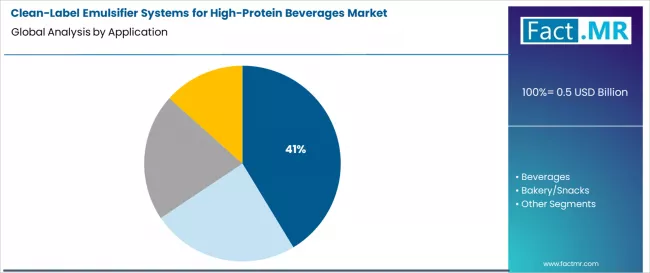
The dairy/alt-dairy segment leads with a 41% share, encompassing plant-based milks, protein shakes, and nutritional beverages. These products require emulsifiers to homogenize fats and suspend proteins and fortificants, preventing unsightly separation or a chalky mouthfeel.
The shift toward cleaner labels in this highly scrutinized category, driven by brands seeking to differentiate themselves, creates immense demand for natural, effective stabilizing systems that consumers can understand and trust.
By Source, Which is Gaining Prominence for Dual Functionality?
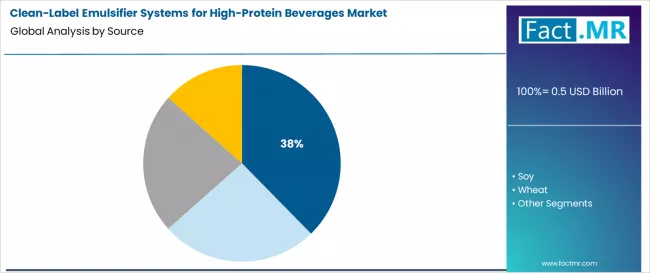
Pea-derived components hold a 38% share as a leading source. Beyond being a popular protein, pea starch and fiber are increasingly processed into clean-label texturizers and emulsification aids.
Their appeal lies in their allergen-friendly, non-GMO, and sustainable profile. Ingredients like pea protein isolate can also contribute to emulsion stability, offering formulators a multifunctional ingredient that supports both nutrition and clean-label texture goals.
By Channel, How are These Technical Solutions Co-Developed?
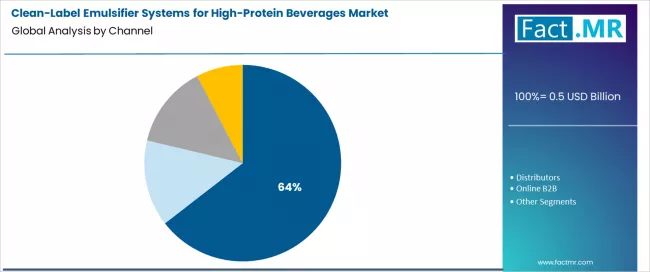
Direct-to-B2B sales dominate at 64%. Formulating a high-performance, clean-label beverage is a complex, iterative process requiring close collaboration. Ingredient suppliers work directly with beverage brands to tailor emulsifier systems to specific protein types, processing conditions, and desired sensory profiles. This direct channel is essential for prototyping, troubleshooting, and scaling up successful formulations efficiently.
What are the Drivers, Restraints, and Key Trends of the Clean-Label Emulsifier Systems for High-Protein Beverages Market?
The foremost driver is the powerful and persistent consumer movement toward clean-label products, which views synthetic emulsifiers like polysorbates or DATEM with increasing skepticism.
The parallel growth in high-protein beverage consumption, for fitness and general wellness, creates a large and technically challenging application area. Retailer pressure to simplify ingredient lists further pushes brands to seek natural alternatives that do not sacrifice product stability or shelf-life.
A key restraint is the higher cost and sometimes lower functional efficiency of natural emulsifier systems compared to their synthetic counterparts. Achieving the same level of stability may require more complex blends or higher usage levels.
The technical performance of some clean-label options can also be more sensitive to pH, temperature, and ionic strength, requiring greater formulation expertise. Regulatory definitions of natural and clean-label also vary by region, creating complexity for global brands.
Key trends include the rising use of fermentation-derived emulsifiers, such as succinoglycan or gellan gum, which are natural but produced via precision fermentation. Upcycled ingredient sources, like citrus fiber or oat oil, are being valorized for their emulsifying properties. Preference is increasing for label-friendly, multi-functional blends that provide emulsification, protein dispersion, and mouthfeel enhancement in a single, simplified ingredient statement.
Analysis of the Clean-Label Emulsifier Systems for High-Protein Beverages Market by Key Countries
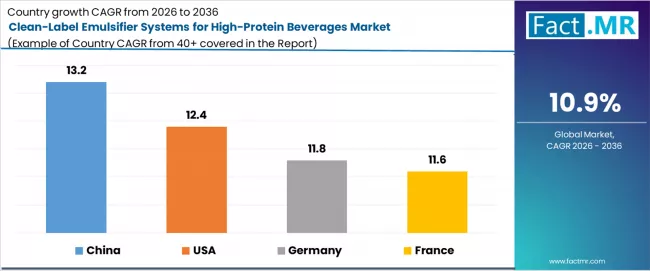
| Country | CAGR (2026-2036) |
|---|---|
| China | 13.2% |
| USA | 12.4% |
| Germany | 11.8% |
| France | 11.6% |
How is China's Health and Wellness Boom and Domestic Innovation Driving Growth?
A burgeoning health-conscious middle class and massive domestic investment in functional foods and beverages fuel China’s leading CAGR of 13.2%. Local brands are aggressively launching high-protein drinks, often featuring traditional Chinese herbal ingredients, and demand clean-label positioning.
Domestic ingredient manufacturers are rapidly innovating to supply cost-effective, natural emulsifying solutions tailored to local tastes and supply chains, creating a dynamic and fast-growing market.
What is the Impact of the USA's Mature Functional Beverage and Regulatory Landscape?
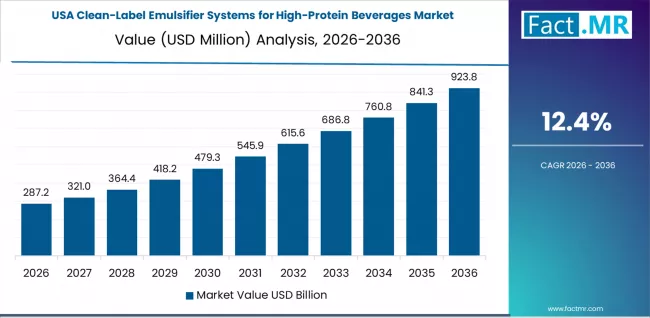
The USA’s 12.4% growth is driven by its highly developed sports nutrition and wellness beverage sector, where label transparency is a key brand value. The FDA’s generally recognized as safe (GRAS) process provides a framework, but consumer definitions of clean often go beyond regulation.
This environment forces continuous innovation among ingredient suppliers to develop systems that meet both technical demands and evolving consumer expectations in a very competitive market.
Why are Germany and France European Leaders in Natural Food Ingredients?
Germany’s 11.8% and France’s 11.6% growth reflect their roles as European centers for food science and strong consumer advocacy for natural products. German consumers exhibit high demand for purity and naturalness, while France has a strong culinary tradition that values quality ingredients.
Beverage manufacturers in these countries seek sophisticated, science-backed clean-label emulsifiers that can deliver impeccable performance while aligning with a premium, natural brand image, supporting a mature but innovation-focused market.
Competitive Landscape of the Clean-Label Emulsifier Systems for High-Protein Beverages Market
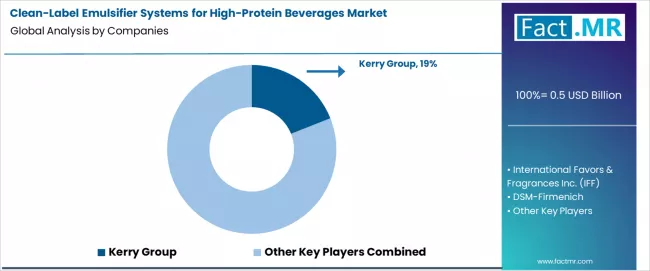
Multinational ingredient corporations with deep application expertise and extensive R&D resources dominate the competitive landscape. Competition is based on proprietary processing technologies for natural raw materials, the ability to provide holistic formulation support, and the strength of a clean-label marketing narrative.
Success requires maintaining a portfolio of label-friendly options, from phospholipids and gums to fermented ingredients, and the agility to co-create custom solutions for leading beverage brands navigating the complex clean-label terrain.
Key Players in the Clean-Label Emulsifier Systems for High-Protein Beverages Market
- Kerry Group
- International Flavors & Fragrances Inc. (IFF)
- DSM-Firmenich
- Tate & Lyle Public Limited Company
- ADM
- Ingredion Inc.
Scope of Report
| Items | Values |
|---|---|
| Quantitative Units | USD Billion |
| Application | Dairy/Alt-Dairy, Beverages, Bakery/Snacks, Meat/Alt-Meat |
| Source | Pea, Soy, Wheat, Fava/Chickpea |
| Channel | Direct-to-B2B, Distributors, Online B2B, Contract Manufacturing |
| Key Countries | USA, Germany, France, China |
| Key Companies | Kerry Group, International Flavors & Fragrances Inc. (IFF), DSM-Firmenich, Tate & Lyle Public Limited Company, ADM, Ingredion Inc. |
| Additional Analysis | Technical comparison of emulsification mechanisms for various clean-label ingredients; stability testing protocols under different pH and thermal stresses; analysis of consumer perception and labeling claims; cost-in-use analysis vs. synthetic emulsifiers; regulatory review of "natural" claims in key markets. |
Market by Segments
-
Application :
- Dairy/Alt-Dairy
- Beverages
- Bakery/Snacks
- Meat/Alt-Meat
-
Source :
- Pea
- Soy
- Wheat
- Fava/Chickpea
-
Channel :
- Direct-to-B2B
- Distributors
- Online B2B
- Contract Manufacturing
-
Region :
-
North America
- USA
- Canada
-
Latin America
- Brazil
- Mexico
- Argentina
- Rest of Latin America
-
Western Europe
- Germany
- UK
- France
- Spain
- Italy
- BENELUX
- Rest of Western Europe
-
Eastern Europe
- Russia
- Poland
- Czech Republic
- Rest of Eastern Europe
-
East Asia
- China
- Japan
- South Korea
- Rest of East Asia
-
South Asia & Pacific
- India
- ASEAN
- Australia
- Rest of South Asia & Pacific
-
MEA
- Saudi Arabia
- UAE
- Turkiye
- Rest of MEA
-
Table of Content
- Executive Summary
- Global Market Outlook
- Demand to side Trends
- Supply to side Trends
- Technology Roadmap Analysis
- Analysis and Recommendations
- Market Overview
- Market Coverage / Taxonomy
- Market Definition / Scope / Limitations
- Market Background
- Market Dynamics
- Drivers
- Restraints
- Opportunity
- Trends
- Scenario Forecast
- Demand in Optimistic Scenario
- Demand in Likely Scenario
- Demand in Conservative Scenario
- Opportunity Map Analysis
- Product Life Cycle Analysis
- Supply Chain Analysis
- Investment Feasibility Matrix
- Value Chain Analysis
- PESTLE and Porter’s Analysis
- Regulatory Landscape
- Regional Parent Market Outlook
- Production and Consumption Statistics
- Import and Export Statistics
- Market Dynamics
- Global Market Analysis 2021 to 2025 and Forecast, 2026 to 2036
- Historical Market Size Value (USD Million) Analysis, 2021 to 2025
- Current and Future Market Size Value (USD Million) Projections, 2026 to 2036
- Y to o to Y Growth Trend Analysis
- Absolute $ Opportunity Analysis
- Global Market Pricing Analysis 2021 to 2025 and Forecast 2026 to 2036
- Global Market Analysis 2021 to 2025 and Forecast 2026 to 2036, By Application
- Introduction / Key Findings
- Historical Market Size Value (USD Million) Analysis By Application, 2021 to 2025
- Current and Future Market Size Value (USD Million) Analysis and Forecast By Application, 2026 to 2036
- Dairy/Alt-Dairy
- Beverages
- Bakery/Snacks
- Meat/Alt-Meat
- Dairy/Alt-Dairy
- Y to o to Y Growth Trend Analysis By Application, 2021 to 2025
- Absolute $ Opportunity Analysis By Application, 2026 to 2036
- Global Market Analysis 2021 to 2025 and Forecast 2026 to 2036, By Source
- Introduction / Key Findings
- Historical Market Size Value (USD Million) Analysis By Source, 2021 to 2025
- Current and Future Market Size Value (USD Million) Analysis and Forecast By Source, 2026 to 2036
- Pea
- Soy
- Wheat
- Fava/Chickpea
- Pea
- Y to o to Y Growth Trend Analysis By Source, 2021 to 2025
- Absolute $ Opportunity Analysis By Source, 2026 to 2036
- Global Market Analysis 2021 to 2025 and Forecast 2026 to 2036, By Channel
- Introduction / Key Findings
- Historical Market Size Value (USD Million) Analysis By Channel, 2021 to 2025
- Current and Future Market Size Value (USD Million) Analysis and Forecast By Channel, 2026 to 2036
- Direct-to-B2B
- Distributors
- Online B2B
- Contract Manufacturing
- Direct-to-B2B
- Y to o to Y Growth Trend Analysis By Channel, 2021 to 2025
- Absolute $ Opportunity Analysis By Channel, 2026 to 2036
- Global Market Analysis 2021 to 2025 and Forecast 2026 to 2036, By Region
- Introduction
- Historical Market Size Value (USD Million) Analysis By Region, 2021 to 2025
- Current Market Size Value (USD Million) Analysis and Forecast By Region, 2026 to 2036
- North America
- Latin America
- Western Europe
- Eastern Europe
- East Asia
- South Asia and Pacific
- Middle East & Africa
- Market Attractiveness Analysis By Region
- North America Market Analysis 2021 to 2025 and Forecast 2026 to 2036, By Country
- Historical Market Size Value (USD Million) Trend Analysis By Market Taxonomy, 2021 to 2025
- Market Size Value (USD Million) Forecast By Market Taxonomy, 2026 to 2036
- By Country
- USA
- Canada
- Mexico
- By Application
- By Source
- By Channel
- By Country
- Market Attractiveness Analysis
- By Country
- By Application
- By Source
- By Channel
- Key Takeaways
- Latin America Market Analysis 2021 to 2025 and Forecast 2026 to 2036, By Country
- Historical Market Size Value (USD Million) Trend Analysis By Market Taxonomy, 2021 to 2025
- Market Size Value (USD Million) Forecast By Market Taxonomy, 2026 to 2036
- By Country
- Brazil
- Chile
- Rest of Latin America
- By Application
- By Source
- By Channel
- By Country
- Market Attractiveness Analysis
- By Country
- By Application
- By Source
- By Channel
- Key Takeaways
- Western Europe Market Analysis 2021 to 2025 and Forecast 2026 to 2036, By Country
- Historical Market Size Value (USD Million) Trend Analysis By Market Taxonomy, 2021 to 2025
- Market Size Value (USD Million) Forecast By Market Taxonomy, 2026 to 2036
- By Country
- Germany
- UK
- Italy
- Spain
- France
- Nordic
- BENELUX
- Rest of Western Europe
- By Application
- By Source
- By Channel
- By Country
- Market Attractiveness Analysis
- By Country
- By Application
- By Source
- By Channel
- Key Takeaways
- Eastern Europe Market Analysis 2021 to 2025 and Forecast 2026 to 2036, By Country
- Historical Market Size Value (USD Million) Trend Analysis By Market Taxonomy, 2021 to 2025
- Market Size Value (USD Million) Forecast By Market Taxonomy, 2026 to 2036
- By Country
- Russia
- Poland
- Hungary
- Balkan & Baltic
- Rest of Eastern Europe
- By Application
- By Source
- By Channel
- By Country
- Market Attractiveness Analysis
- By Country
- By Application
- By Source
- By Channel
- Key Takeaways
- East Asia Market Analysis 2021 to 2025 and Forecast 2026 to 2036, By Country
- Historical Market Size Value (USD Million) Trend Analysis By Market Taxonomy, 2021 to 2025
- Market Size Value (USD Million) Forecast By Market Taxonomy, 2026 to 2036
- By Country
- China
- Japan
- South Korea
- By Application
- By Source
- By Channel
- By Country
- Market Attractiveness Analysis
- By Country
- By Application
- By Source
- By Channel
- Key Takeaways
- South Asia and Pacific Market Analysis 2021 to 2025 and Forecast 2026 to 2036, By Country
- Historical Market Size Value (USD Million) Trend Analysis By Market Taxonomy, 2021 to 2025
- Market Size Value (USD Million) Forecast By Market Taxonomy, 2026 to 2036
- By Country
- India
- ASEAN
- Australia & New Zealand
- Rest of South Asia and Pacific
- By Application
- By Source
- By Channel
- By Country
- Market Attractiveness Analysis
- By Country
- By Application
- By Source
- By Channel
- Key Takeaways
- Middle East & Africa Market Analysis 2021 to 2025 and Forecast 2026 to 2036, By Country
- Historical Market Size Value (USD Million) Trend Analysis By Market Taxonomy, 2021 to 2025
- Market Size Value (USD Million) Forecast By Market Taxonomy, 2026 to 2036
- By Country
- Kingdom of Saudi Arabia
- Other GCC Countries
- Turkiye
- South Africa
- Other African Union
- Rest of Middle East & Africa
- By Application
- By Source
- By Channel
- By Country
- Market Attractiveness Analysis
- By Country
- By Application
- By Source
- By Channel
- Key Takeaways
- Key Countries Market Analysis
- USA
- Pricing Analysis
- Market Share Analysis, 2025
- By Application
- By Source
- By Channel
- Canada
- Pricing Analysis
- Market Share Analysis, 2025
- By Application
- By Source
- By Channel
- Mexico
- Pricing Analysis
- Market Share Analysis, 2025
- By Application
- By Source
- By Channel
- Brazil
- Pricing Analysis
- Market Share Analysis, 2025
- By Application
- By Source
- By Channel
- Chile
- Pricing Analysis
- Market Share Analysis, 2025
- By Application
- By Source
- By Channel
- Germany
- Pricing Analysis
- Market Share Analysis, 2025
- By Application
- By Source
- By Channel
- UK
- Pricing Analysis
- Market Share Analysis, 2025
- By Application
- By Source
- By Channel
- Italy
- Pricing Analysis
- Market Share Analysis, 2025
- By Application
- By Source
- By Channel
- Spain
- Pricing Analysis
- Market Share Analysis, 2025
- By Application
- By Source
- By Channel
- France
- Pricing Analysis
- Market Share Analysis, 2025
- By Application
- By Source
- By Channel
- India
- Pricing Analysis
- Market Share Analysis, 2025
- By Application
- By Source
- By Channel
- ASEAN
- Pricing Analysis
- Market Share Analysis, 2025
- By Application
- By Source
- By Channel
- Australia & New Zealand
- Pricing Analysis
- Market Share Analysis, 2025
- By Application
- By Source
- By Channel
- China
- Pricing Analysis
- Market Share Analysis, 2025
- By Application
- By Source
- By Channel
- Japan
- Pricing Analysis
- Market Share Analysis, 2025
- By Application
- By Source
- By Channel
- South Korea
- Pricing Analysis
- Market Share Analysis, 2025
- By Application
- By Source
- By Channel
- Russia
- Pricing Analysis
- Market Share Analysis, 2025
- By Application
- By Source
- By Channel
- Poland
- Pricing Analysis
- Market Share Analysis, 2025
- By Application
- By Source
- By Channel
- Hungary
- Pricing Analysis
- Market Share Analysis, 2025
- By Application
- By Source
- By Channel
- Kingdom of Saudi Arabia
- Pricing Analysis
- Market Share Analysis, 2025
- By Application
- By Source
- By Channel
- Turkiye
- Pricing Analysis
- Market Share Analysis, 2025
- By Application
- By Source
- By Channel
- South Africa
- Pricing Analysis
- Market Share Analysis, 2025
- By Application
- By Source
- By Channel
- USA
- Market Structure Analysis
- Competition Dashboard
- Competition Benchmarking
- Market Share Analysis of Top Players
- By Regional
- By Application
- By Source
- By Channel
- Competition Analysis
- Competition Deep Dive
- Kerry Group
- Overview
- Product Portfolio
- Profitability by Market Segments (Product/Age /Sales Channel/Region)
- Sales Footprint
- Strategy Overview
- Marketing Strategy
- Product Strategy
- Channel Strategy
- International Favors & Fragrances Inc. (IFF)
- DSM-Firmenich
- Tate & Lyle Public Limited Company
- ADM
- Ingredion Inc.
- Kerry Group
- Competition Deep Dive
- Assumptions & Acronyms Used
- Research Methodology
List Of Table
- Table 1: Global Market Value (USD Million) Forecast by Region, 2021 to 2036
- Table 2: Global Market Value (USD Million) Forecast by Application, 2021 to 2036
- Table 3: Global Market Value (USD Million) Forecast by Source, 2021 to 2036
- Table 4: Global Market Value (USD Million) Forecast by Channel, 2021 to 2036
- Table 5: North America Market Value (USD Million) Forecast by Country, 2021 to 2036
- Table 6: North America Market Value (USD Million) Forecast by Application, 2021 to 2036
- Table 7: North America Market Value (USD Million) Forecast by Source, 2021 to 2036
- Table 8: North America Market Value (USD Million) Forecast by Channel, 2021 to 2036
- Table 9: Latin America Market Value (USD Million) Forecast by Country, 2021 to 2036
- Table 10: Latin America Market Value (USD Million) Forecast by Application, 2021 to 2036
- Table 11: Latin America Market Value (USD Million) Forecast by Source, 2021 to 2036
- Table 12: Latin America Market Value (USD Million) Forecast by Channel, 2021 to 2036
- Table 13: Western Europe Market Value (USD Million) Forecast by Country, 2021 to 2036
- Table 14: Western Europe Market Value (USD Million) Forecast by Application, 2021 to 2036
- Table 15: Western Europe Market Value (USD Million) Forecast by Source, 2021 to 2036
- Table 16: Western Europe Market Value (USD Million) Forecast by Channel, 2021 to 2036
- Table 17: Eastern Europe Market Value (USD Million) Forecast by Country, 2021 to 2036
- Table 18: Eastern Europe Market Value (USD Million) Forecast by Application, 2021 to 2036
- Table 19: Eastern Europe Market Value (USD Million) Forecast by Source, 2021 to 2036
- Table 20: Eastern Europe Market Value (USD Million) Forecast by Channel, 2021 to 2036
- Table 21: East Asia Market Value (USD Million) Forecast by Country, 2021 to 2036
- Table 22: East Asia Market Value (USD Million) Forecast by Application, 2021 to 2036
- Table 23: East Asia Market Value (USD Million) Forecast by Source, 2021 to 2036
- Table 24: East Asia Market Value (USD Million) Forecast by Channel, 2021 to 2036
- Table 25: South Asia and Pacific Market Value (USD Million) Forecast by Country, 2021 to 2036
- Table 26: South Asia and Pacific Market Value (USD Million) Forecast by Application, 2021 to 2036
- Table 27: South Asia and Pacific Market Value (USD Million) Forecast by Source, 2021 to 2036
- Table 28: South Asia and Pacific Market Value (USD Million) Forecast by Channel, 2021 to 2036
- Table 29: Middle East & Africa Market Value (USD Million) Forecast by Country, 2021 to 2036
- Table 30: Middle East & Africa Market Value (USD Million) Forecast by Application, 2021 to 2036
- Table 31: Middle East & Africa Market Value (USD Million) Forecast by Source, 2021 to 2036
- Table 32: Middle East & Africa Market Value (USD Million) Forecast by Channel, 2021 to 2036
List Of Figures
- Figure 1: Global Market Pricing Analysis
- Figure 2: Global Market Value (USD Million) Forecast 2021 to 2036
- Figure 3: Global Market Value Share and BPS Analysis by Application, 2026 and 2036
- Figure 4: Global Market Y to o to Y Growth Comparison by Application, 2026 to 2036
- Figure 5: Global Market Attractiveness Analysis by Application
- Figure 6: Global Market Value Share and BPS Analysis by Source, 2026 and 2036
- Figure 7: Global Market Y to o to Y Growth Comparison by Source, 2026 to 2036
- Figure 8: Global Market Attractiveness Analysis by Source
- Figure 9: Global Market Value Share and BPS Analysis by Channel, 2026 and 2036
- Figure 10: Global Market Y to o to Y Growth Comparison by Channel, 2026 to 2036
- Figure 11: Global Market Attractiveness Analysis by Channel
- Figure 12: Global Market Value (USD Million) Share and BPS Analysis by Region, 2026 and 2036
- Figure 13: Global Market Y to o to Y Growth Comparison by Region, 2026 to 2036
- Figure 14: Global Market Attractiveness Analysis by Region
- Figure 15: North America Market Incremental Dollar Opportunity, 2026 to 2036
- Figure 16: Latin America Market Incremental Dollar Opportunity, 2026 to 2036
- Figure 17: Western Europe Market Incremental Dollar Opportunity, 2026 to 2036
- Figure 18: Eastern Europe Market Incremental Dollar Opportunity, 2026 to 2036
- Figure 19: East Asia Market Incremental Dollar Opportunity, 2026 to 2036
- Figure 20: South Asia and Pacific Market Incremental Dollar Opportunity, 2026 to 2036
- Figure 21: Middle East & Africa Market Incremental Dollar Opportunity, 2026 to 2036
- Figure 22: North America Market Value Share and BPS Analysis by Country, 2026 and 2036
- Figure 23: North America Market Value Share and BPS Analysis by Application, 2026 and 2036
- Figure 24: North America Market Y to o to Y Growth Comparison by Application, 2026 to 2036
- Figure 25: North America Market Attractiveness Analysis by Application
- Figure 26: North America Market Value Share and BPS Analysis by Source, 2026 and 2036
- Figure 27: North America Market Y to o to Y Growth Comparison by Source, 2026 to 2036
- Figure 28: North America Market Attractiveness Analysis by Source
- Figure 29: North America Market Value Share and BPS Analysis by Channel, 2026 and 2036
- Figure 30: North America Market Y to o to Y Growth Comparison by Channel, 2026 to 2036
- Figure 31: North America Market Attractiveness Analysis by Channel
- Figure 32: Latin America Market Value Share and BPS Analysis by Country, 2026 and 2036
- Figure 33: Latin America Market Value Share and BPS Analysis by Application, 2026 and 2036
- Figure 34: Latin America Market Y to o to Y Growth Comparison by Application, 2026 to 2036
- Figure 35: Latin America Market Attractiveness Analysis by Application
- Figure 36: Latin America Market Value Share and BPS Analysis by Source, 2026 and 2036
- Figure 37: Latin America Market Y to o to Y Growth Comparison by Source, 2026 to 2036
- Figure 38: Latin America Market Attractiveness Analysis by Source
- Figure 39: Latin America Market Value Share and BPS Analysis by Channel, 2026 and 2036
- Figure 40: Latin America Market Y to o to Y Growth Comparison by Channel, 2026 to 2036
- Figure 41: Latin America Market Attractiveness Analysis by Channel
- Figure 42: Western Europe Market Value Share and BPS Analysis by Country, 2026 and 2036
- Figure 43: Western Europe Market Value Share and BPS Analysis by Application, 2026 and 2036
- Figure 44: Western Europe Market Y to o to Y Growth Comparison by Application, 2026 to 2036
- Figure 45: Western Europe Market Attractiveness Analysis by Application
- Figure 46: Western Europe Market Value Share and BPS Analysis by Source, 2026 and 2036
- Figure 47: Western Europe Market Y to o to Y Growth Comparison by Source, 2026 to 2036
- Figure 48: Western Europe Market Attractiveness Analysis by Source
- Figure 49: Western Europe Market Value Share and BPS Analysis by Channel, 2026 and 2036
- Figure 50: Western Europe Market Y to o to Y Growth Comparison by Channel, 2026 to 2036
- Figure 51: Western Europe Market Attractiveness Analysis by Channel
- Figure 52: Eastern Europe Market Value Share and BPS Analysis by Country, 2026 and 2036
- Figure 53: Eastern Europe Market Value Share and BPS Analysis by Application, 2026 and 2036
- Figure 54: Eastern Europe Market Y to o to Y Growth Comparison by Application, 2026 to 2036
- Figure 55: Eastern Europe Market Attractiveness Analysis by Application
- Figure 56: Eastern Europe Market Value Share and BPS Analysis by Source, 2026 and 2036
- Figure 57: Eastern Europe Market Y to o to Y Growth Comparison by Source, 2026 to 2036
- Figure 58: Eastern Europe Market Attractiveness Analysis by Source
- Figure 59: Eastern Europe Market Value Share and BPS Analysis by Channel, 2026 and 2036
- Figure 60: Eastern Europe Market Y to o to Y Growth Comparison by Channel, 2026 to 2036
- Figure 61: Eastern Europe Market Attractiveness Analysis by Channel
- Figure 62: East Asia Market Value Share and BPS Analysis by Country, 2026 and 2036
- Figure 63: East Asia Market Value Share and BPS Analysis by Application, 2026 and 2036
- Figure 64: East Asia Market Y to o to Y Growth Comparison by Application, 2026 to 2036
- Figure 65: East Asia Market Attractiveness Analysis by Application
- Figure 66: East Asia Market Value Share and BPS Analysis by Source, 2026 and 2036
- Figure 67: East Asia Market Y to o to Y Growth Comparison by Source, 2026 to 2036
- Figure 68: East Asia Market Attractiveness Analysis by Source
- Figure 69: East Asia Market Value Share and BPS Analysis by Channel, 2026 and 2036
- Figure 70: East Asia Market Y to o to Y Growth Comparison by Channel, 2026 to 2036
- Figure 71: East Asia Market Attractiveness Analysis by Channel
- Figure 72: South Asia and Pacific Market Value Share and BPS Analysis by Country, 2026 and 2036
- Figure 73: South Asia and Pacific Market Value Share and BPS Analysis by Application, 2026 and 2036
- Figure 74: South Asia and Pacific Market Y to o to Y Growth Comparison by Application, 2026 to 2036
- Figure 75: South Asia and Pacific Market Attractiveness Analysis by Application
- Figure 76: South Asia and Pacific Market Value Share and BPS Analysis by Source, 2026 and 2036
- Figure 77: South Asia and Pacific Market Y to o to Y Growth Comparison by Source, 2026 to 2036
- Figure 78: South Asia and Pacific Market Attractiveness Analysis by Source
- Figure 79: South Asia and Pacific Market Value Share and BPS Analysis by Channel, 2026 and 2036
- Figure 80: South Asia and Pacific Market Y to o to Y Growth Comparison by Channel, 2026 to 2036
- Figure 81: South Asia and Pacific Market Attractiveness Analysis by Channel
- Figure 82: Middle East & Africa Market Value Share and BPS Analysis by Country, 2026 and 2036
- Figure 83: Middle East & Africa Market Value Share and BPS Analysis by Application, 2026 and 2036
- Figure 84: Middle East & Africa Market Y to o to Y Growth Comparison by Application, 2026 to 2036
- Figure 85: Middle East & Africa Market Attractiveness Analysis by Application
- Figure 86: Middle East & Africa Market Value Share and BPS Analysis by Source, 2026 and 2036
- Figure 87: Middle East & Africa Market Y to o to Y Growth Comparison by Source, 2026 to 2036
- Figure 88: Middle East & Africa Market Attractiveness Analysis by Source
- Figure 89: Middle East & Africa Market Value Share and BPS Analysis by Channel, 2026 and 2036
- Figure 90: Middle East & Africa Market Y to o to Y Growth Comparison by Channel, 2026 to 2036
- Figure 91: Middle East & Africa Market Attractiveness Analysis by Channel
- Figure 92: Global Market - Tier Structure Analysis
- Figure 93: Global Market - Company Share Analysis
- FAQs -
How big is the clean-label emulsifier systems for high-protein beverages market in 2026?
The global clean-label emulsifier systems for high-protein beverages market is estimated to be valued at USD 0.5 billion in 2026.
What will be the size of clean-label emulsifier systems for high-protein beverages market in 2036?
The market size for the clean-label emulsifier systems for high-protein beverages market is projected to reach USD 1.5 billion by 2036.
How much will be the clean-label emulsifier systems for high-protein beverages market growth between 2026 and 2036?
The clean-label emulsifier systems for high-protein beverages market is expected to grow at a 10.9% CAGR between 2026 and 2036.
What are the key product types in the clean-label emulsifier systems for high-protein beverages market?
The key product types in clean-label emulsifier systems for high-protein beverages market are dairy/alt-dairy, beverages, bakery/snacks and meat/alt-meat.
Which source segment to contribute significant share in the clean-label emulsifier systems for high-protein beverages market in 2026?
In terms of source, pea segment to command 37.7% share in the clean-label emulsifier systems for high-protein beverages market in 2026.