Epirubicin Market Size, Share, Growth and Forecast (2026 - 2036)

The Epirubicin Market is segmented by Dosage (10mg/Vial, 50mg/Vial, 100mg/Vial, and 200mg/Vial), Application (Breast Cancer, Liver Cancer, Bladder Cancer, Gastric Cancer, Ovarian Cancer, and Others), Distribution Channel (Hospital Pharmacies, Retail Pharmacies, and Online Pharmacies), Formulation Type (Lyophilized Powder, Ready-to-use Liquid Injection, and Concentrated Solution), End User (Hospitals, Specialty Cancer Clinics, Ambulatory Surgical Centers, and Research Institutes) and Region. Forecast for 2026 to 2036.

Epirubicin Market Forecast and Outlook (2026 to 2036)

  • In 2025, the epirubicin market was valued at USD 223 million.
  • Based on Fact.MR analysis, demand for epirubicin is estimated to grow to USD 232 million in 2026 and USD 344 million by 2036.
  • Fact.MR projects a CAGR of 4.0% during the forecast period.
  • The market is forecast to add approximately USD 112 million in absolute revenue value by 2036.
  • Growth remains moderate due to stable oncology treatment demand and continued generic price pressure across hospital pharmacy systems.
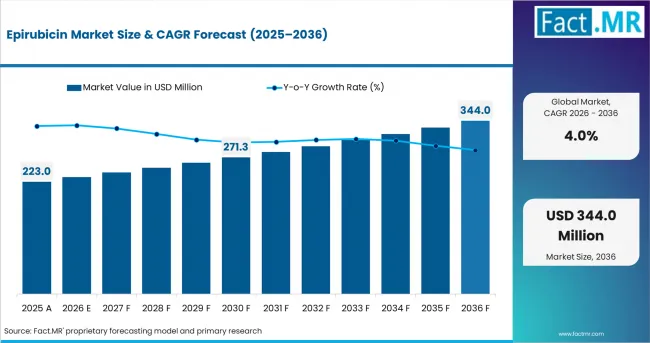
Epirubicin Market Value Analysis

Summary of epirubicin market

  • Demand Drivers
    • Breast cancer treatment volumes support epirubicin demand. The drug is used FAC and FEC chemotherapy regimens across hospital oncology programs.
    • Hospital oncology departments in China and India are buying more generic epirubicin vials. Public tender systems and essential medicines programs support demand for lower-cost anthracycline therapies.
    • Ambulatory surgical centers and specialty cancer clinics are using more epirubicin in bladder cancer treatment. Outpatient oncology infrastructure expansion across the United States and Europe is supporting procedure growth.
  • Key Segments Analyzed
    • By Dosage: 100mg/Vial holds 34% share in 2026 because oncology centers prefer higher-dose formats for multi-cycle chemotherapy administration.
    • By Application: Breast cancer accounts for 46% share in 2026 due to strong epirubicin use in FEC and CEF chemotherapy regimens.
    • By Distribution Channel: Hospital pharmacies capture 68% share in 2026 because epirubicin treatment mainly occurs in institutional oncology settings.
    • By Formulation Type: Lyophilized powder holds 52% share in 2026 because it improves shelf life and supports easier cold-chain storage.
    • By End User: Hospitals account for 61% share in 2026 due to high chemotherapy treatment volumes and established oncology infrastructure.
    • By Geography: China is projected to grow at 4.5% CAGR through 2036 as domestic generic oncology manufacturing expands under national medicines programs.
  • Analyst Opinion at Fact.MR
    • Shambhu Nath Jha, Principal Consultant at Fact.MR, opines, ' Formulary cost control and generic competition are shaping the future of the epirubicin market. Companies with strong hospital tender relationships and cost-efficient vial manufacturing capabilities are expected to maintain stronger market positioning than suppliers relying mainly on branded products.’
  • Strategic Implications
    • Generic epirubicin manufacturers should strengthen hospital tender access in China and India. National formulary programs are increasing demand for lower-cost oncology drugs.
    • Specialty cancer clinics should review long-term lyophilized powder agreements. Stable pricing contracts can improve anthracycline supply reliability during formulary review.
    • Companies targeting ambulatory surgical centers should develop ready-to-use liquid injection formats. Faster preparation can improve outpatient oncology efficiency.
Metric Value
Estimated Value in 2026 USD 232 million
Forecast Value in 2036 USD 344 million
Forecast CAGR (2026 to 2036) 4.0%

China is projected to expand at 4.5% CAGR as domestic generic oncology drug production supports public hospital demand. The United States is forecast to grow at 4.0% CAGR due to stable epirubicin use in breast and bladder cancer treatment drug programs. Japan is projected at 3.8% CAGR as national reimbursement support maintains combination chemotherapy usage across oncology hospitals. Germany is forecast at 2.8% CAGR by 2036 because insurer price controls and biosimilar competition continue limiting market expansion.

Segmental Analysis

Epirubicin Market Analysis by Dosage
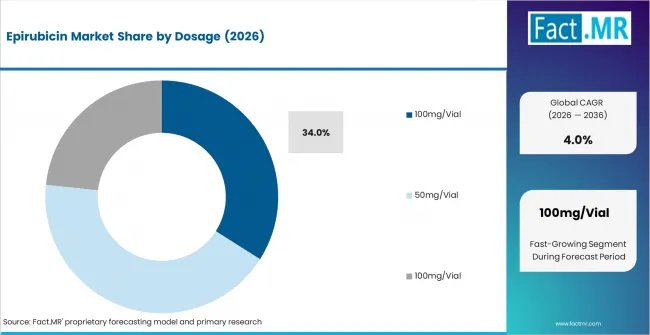
Epirubicin Market Analysis By Dosage

100mg/Vial holds 34% share in 2026 because oncology centers prefer higher-dose formats for repeated chemotherapy cycles. Larger vials reduce preparation steps and improve workflow speed in hospital infusion centers.

  • Pediatric Dose Requirement: Lower-dose vial formats support pediatric oncology and weight-adjusted treatment programs. Specialty cancer clinics maintain smaller-dose inventory for flexible chemotherapy administration.
  • 200mg Vial Growth: Large cancer hospitals are increasing adoption of 200mg formats for centralized batch preparation workflows. High patient volumes are supporting demand for bulk chemotherapy preparation formats.
  • Oncology Workflow Efficiency: High-dose vial use is improving operational efficiency across hospital chemotherapy suites. Reduced vial handling also helps lower pharmacy preparation burden.

Epirubicin Market Analysis by Application
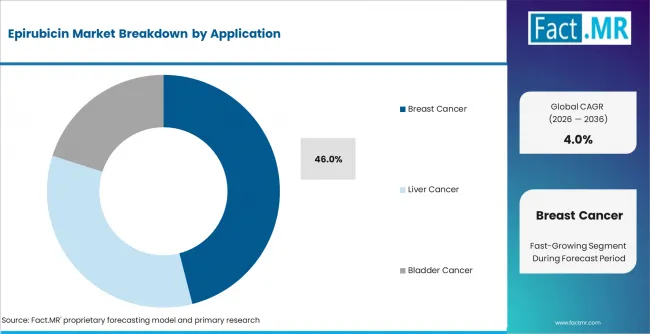
Epirubicin Market Analysis By Application

Breast cancer accounts for 46% share in 2026 because epirubicin is widely used in FEC and CEF chemotherapy protocols. Hospital oncologists use the drug in adjuvant and neoadjuvant treatment programs worldwide.

  • Bladder Cancer Demand: Ambulatory oncology centers are using more epirubicin in bladder cancer instillation procedures. Outpatient oncology expansion is supporting treatment volumes.
  • Amneal Receives FDA Approval for BORUZU: Amneal and Shilpa Medicare received U.S. FDA approval for BORUZU the first ready to use bortezomib injection for subcutaneous administration in multiple myeloma treatment. The approval strengthens oncology injectable manufacturing and expands access to hospital based chemotherapy solutions. 
  •  Oncology Protocol Stability: Long-established chemotherapy protocols continue supporting stable prescription demand. Physicians remain familiar with epirubicin-based combination therapy outcomes.

Epirubicin Market Analysis by Distribution Channel
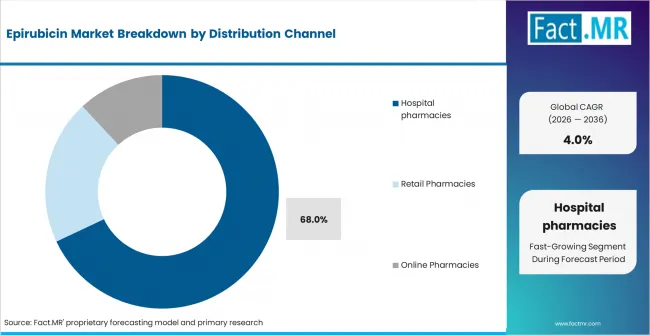
Epirubicin Market Analysis By Distribution Channel

Hospital pharmacies capture 68% share in 2026 because epirubicin needs sterile preparation and physician supervision. Institutional oncology centers are the primary dispensing channel for injectable chemotherapy products.

  • Formulary Contract Importance: Multi-year hospital supply agreements are reducing switching activity across oncology systems. Stable institutional contracts continue supporting predictable product demand.
  • Gland Pharma Receives USFDA Approval: Gland Pharma received U.S. FDA approval for Eribulin Mesylate Injection used in metastatic breast cancer treatment and plans to launch the product through its marketing partner. The approval strengthens the company’s oncology injectable portfolio and supports growth in hospital administered chemotherapy products. 
  •  Online Dispensing Expansion: Licensed online oncology dispensing platforms are gradually expanding access across India and China. Regulatory modernization is supporting controlled digital pharmacy growth.

Epirubicin Market Analysis by Formulation Type
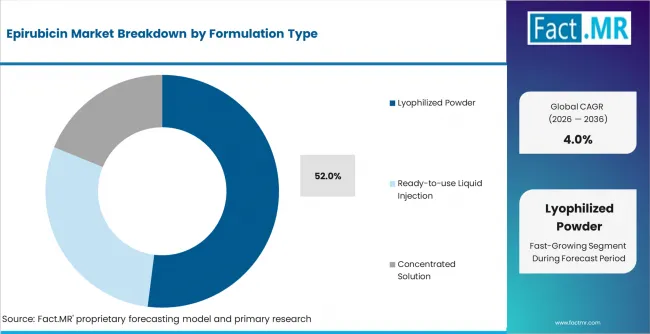
Epirubicin Market Analysis By Formulation Type

Lyophilized powder holds 52% share in 2026 because hospital oncology departments prefer longer shelf life. Strong cold-chain performance also supports use in high-volume chemotherapy centers.

  • Ready-to-use Injection Growth: Academic cancer centers are increasing use of liquid injection formats for faster dispensing. Reduced preparation steps improve operational efficiency in busy infusion units.
  • Concentrated Solution Flexibility: Specialty oncology clinics use concentrated solutions for dose-adjusted chemotherapy preparation. Pediatric and clinical trial settings often require flexible dosing capability.
  • Storage Efficiency Advantage: Lyophilized products are widely preferred in hospital oncology pharmacies. Longer storage life supports better inventory control across institutional supply chains.

Epirubicin Market Analysis by End User
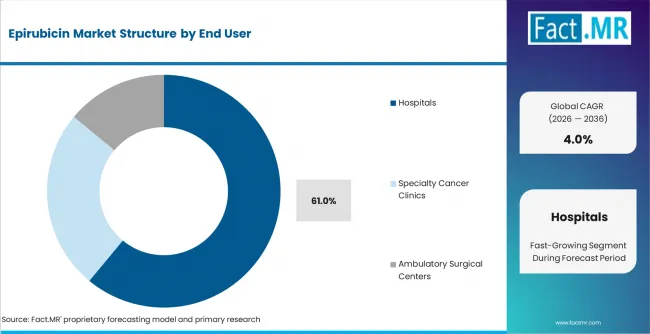
Epirubicin Market Analysis By End User

Hospitals account for 61% share in 2026 because inpatient oncology wards handle the highest chemotherapy volumes. Sterile compounding facilities and physician supervision support high hospital use.

  • Specialty Clinic Expansion: Outpatient oncology clinics are increasing epirubicin dispensing for breast and bladder cancer treatment. Ambulatory care expansion is supporting more outpatient demand.
  • Research Institute Demand: Cancer research centers continue epirubicin for drug resistance and pharmacokinetic studies. Academic oncology programs remain stable secondary demand sources.
  • ForDoz Receives FDA Approval for Liposomal Injection: ForDoz Pharma received U.S. FDA approval for Doxorubicin Hydrochloride Liposome Injection used in ovarian cancer AIDS related Kaposi’s sarcoma and multiple myeloma treatment. The approval strengthens growth in anthracycline based oncology injectables and advanced chemotherapy delivery systems.

Drivers, Restraints, and Opportunities
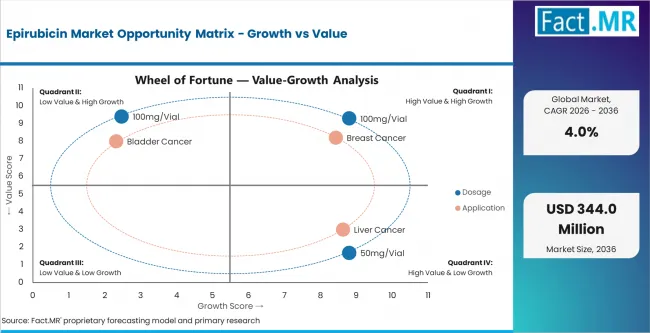
Epirubicin Market Opportunity Matrix Growth Vs Value

Epirubicin demand remains stable because the drug is still used in breast cancer and bladder cancer chemotherapy protocols. Hospitals keep epirubicin in oncology formularies because doctors know its clinical use and treatment outcomes.

Demand increase remains moderate because generic competition limit pricing power across institutional oncology markets.

  • Hospital Tender Dependence: Institutional contracts are critical for maintaining market share across oncology treatment centers. Companies with strong hospital supply relationships secure stable prescription volumes.
  • High-dose Vial Opportunity: Oncology departments are increasing use of 100mg and 200mg vial formats to reduce preparation time and lower vial waste. High-throughput infusion centers prefer larger vial presentations for operational efficiency.
  • Lupin Launches Liposomal Doxorubicin Injection: Lupin launched Doxorubicin Hydrochloride Liposome Injection in the United States through its partnership with ForDoz Pharma. The launch strengthens availability of advanced anthracycline oncology injectables used in hospital based cancer treatment. [4]

Regional Analysis

Top Country Growth Comparison Epirubicin Market Cagr (2026 2036)

The epirubicin market is assessed across North America, Europe, Asia Pacific, Latin America, and Middle East and Africa covering country-level oncology treatment volumes, generic drug pricing structures, and hospital formulary policies. The full report offers market attractiveness analysis by region and country.

Country CAGR (2026 to 2036)
China 4.5%
United States 4.0%
Japan 3.8%
Germany 2.8%

Source: Fact.MR analysis, based on proprietary forecasting model and primary research
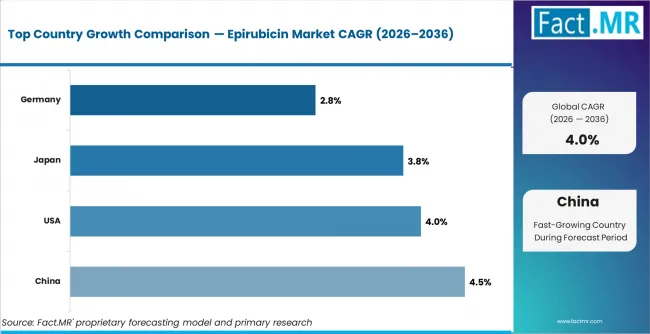
Epirubicin Market Cagr Analysis By Country

Asia Pacific Epirubicin Market Analysis
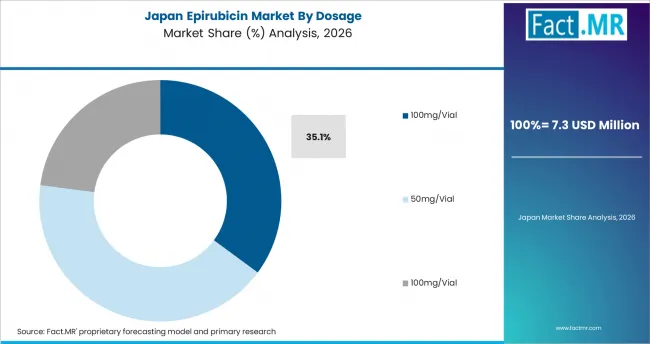
Epirubicin Market Japan Market Share Analysis By Dosage

Asia Pacific is the fastest-growing regional market for epirubicin. Rising cancer incidence and expansion of public oncology programs support demand. Domestic generic manufacturers are increasing production across the region. Hospitals are buying more lower-cost oncology injectables through national medicines programs.

  • China: China is projected to expand at 4.5% CAGR by 2036. Domestic generic oncology production is increasing under national medicines approval programs. Public hospital tender systems favor lower-cost local epirubicin suppliers. Wider cancer treatment coverage is supporting higher chemotherapy demand in hospitals.
  • Japan: Japan is projected to grow at 3.8% CAGR from 2026 to 2036. National reimbursement programs support epirubicin use in breast and gastric cancer treatment protocols. Hospital oncology centers remain the main channel for injectable chemotherapy products. Stable formulary use is supporting steady prescription demand.

Fact.MR’s analysis of the Asia Pacific market includes China, Japan, India, South Korea, ASEAN countries, and Australia and New Zealand. The report covers hospital tender activity and generic oncology pricing trends.

North America Epirubicin Market Analysis
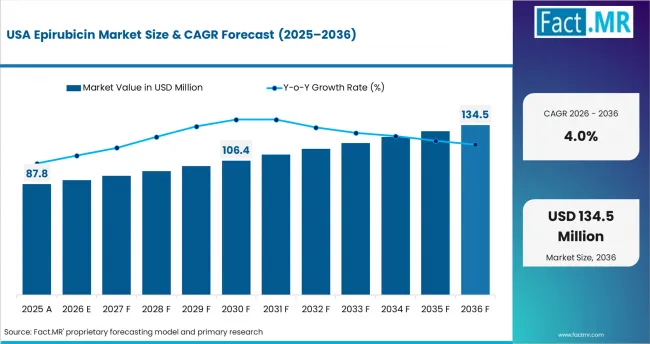
Epirubicin Market Country Value Analysis

North America is an established generic injectable market for epirubicin. Hospital purchasing agreements and multi-source competition shape pricing. Major suppliers maintain stable formulary positions through long-term institutional supply contracts.

  • United States: The United States is forecast to grow at 4.0% CAGR until 2036. Breast cancer treatment programs support epirubicin demand in hospital oncology centers. Group purchasing organizations help maintain stable oncology injectable contracts with major suppliers. Expanding ambulatory oncology care is also increasing outpatient bladder cancer treatment demand.

Fact.MR’s analysis of the North American market includes the United States, Canada, and Mexico. The report covers hospital purchasing agreements and oncology formulary adoption trends.

Europe Epirubicin Market Analysis
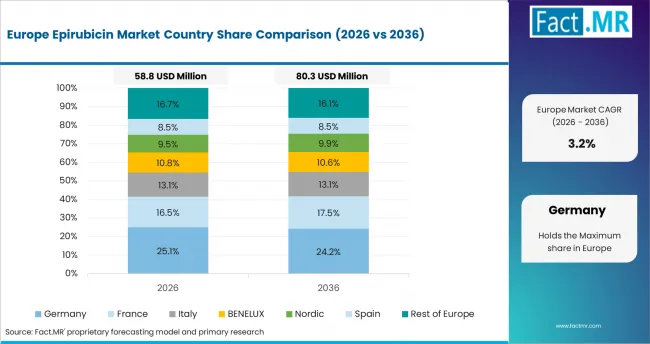
Epirubicin Market Europe Country Market Share Analysis, 2026 & 2036

Europe is a price-controlled epirubicin market supported by statutory reimbursement systems and strong generic competition. Revenue gains are moderate because chemotherapy treatment volumes are stable. Hospital tender systems favor cost-efficient oncology injectables across regional healthcare systems.

  • Germany: Germany is projected at 2.8% CAGR. Statutory insurer pricing controls limit generic injectable prices. Some oncology centers are slowly using alternative anthracycline therapies. Epirubicin is still part of established hospital oncology formularies through long-term supplier contracts.

Fact.MR’s analysis of the European market includes Germany, the United Kingdom, France, Italy, Spain, Nordic countries, and BENELUX. The report covers hospital tender activity and formulary substitution trends.

Competitive Aligners for Market Players
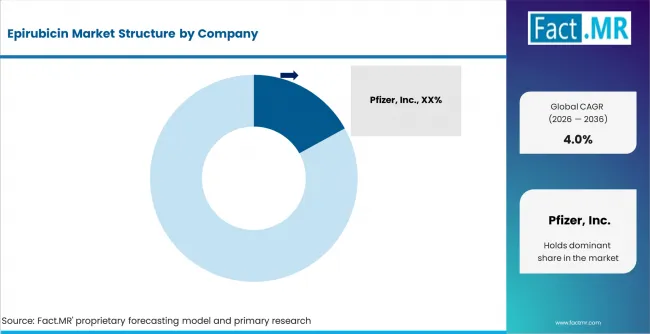
Epirubicin Market Analysis By Company

Epirubicin manufacturers mainly compete on price and reliable hospital supply. Generic competition is high across oncology markets. Companies with stable production capacity and strong tender participation are maintaining better formulary positioning across public healthcare systems.

Hospital purchasing departments are choosing lower-cost injectable oncology drugs as chemotherapy treatment volumes. Suppliers with steady inventory and long-term pricing agreements can improve contract retention across oncology centers. Tender-based purchasing shapes market share across Asia Pacific and Europe.

Manufacturers are focusing on higher-dose vial formats. Oncology departments prefer 100mg and 200mg vials because they reduce preparation time and lower vial waste during repeated chemotherapy cycles. This trend is supporting operational efficiency across busy infusion centers. Ready-to-use liquid injections are gaining attention in outpatient oncology settings. Ambulatory treatment centers prefer products that simplify chemotherapy preparation and improve workflow speed. Companies investing in better packaging and cold-chain stability can compete better in hospital purchase reviews. Regulatory continuity is an important advantage for established suppliers. Epirubicin use in breast cancer and gastric cancer treatment protocols supports long-term formulary demand across hospital oncology programs.

Key Players

  • Pfizer, Inc.
  • Teva Pharmaceutical Industries Ltd.
  • Areva Pharmaceuticals
  • Fresenius Kabi
  • Salius Pharma Pvt. Ltd.

Bibliography

  1. Amneal Pharmaceuticals, Inc. (2024). Amneal and Shilpa announce U.S. FDA approval of BORUZU the first ready to use version of bortezomib for subcutaneous administration.
  2. ForDoz Pharma Corp. (2024). ForDoz Pharma Corp announces FDA approval of doxorubicin hydrochloride liposome injection. ForDoz Pharma Corp.
  3. Gland Pharma Limited . (2024). Gland Pharma receives approval for Eribulin Mesylate Injection.
  4. Lupin Limited. (2024). Lupin launches doxorubicin hydrochloride liposome injection in the United States.

This Report Addresses

  • Strategic intelligence covering epirubicin demand across dosage, application, formulation type, and distribution channel segments linked to hospital oncology treatment volumes and generic drug market dynamics.
  • Market forecast from USD 232 million in 2026 to USD 344 million by 2036 at 4.0% CAGR with opportunity assessment across lyophilized powder and ready-to-use liquid injection formulation categories.
  • Growth opportunity mapping across China national essential medicines program expansion, US group purchasing organization contract trends, Japan health insurance reimbursement policy, and Germany statutory insurer pricing dynamics.
  • Segment analysis across dosage, application, distribution channel, formulation type, and end user with regional CAGR forecasts and leading segment share benchmarks for 2026.
  • Regional outlook covering Asia Pacific generic manufacturing investment, North America FDA label continuity, and Europe statutory health insurer pricing constraint analysis.
  • Competitive analysis of Pfizer Inc., Teva Pharmaceutical Industries Ltd., and Areva Pharmaceuticals based on hospital tender positioning and manufacturing footprint.
  • Regulatory analysis covering FDA oncology label updates, China NMPA priority generic review program, Japan MHLW reimbursement list revisions, and Germany IQWiG comparative effectiveness assessments.
  • Report delivered in PDF, Excel, and presentation formats supported by hospital oncology treatment data and interviews with formulary managers and generic drug distribution specialists.

Epirubicin Market Definition

The epirubicin market covers a semi-synthetic anthracycline chemotherapy agent used primarily in combination oncology regimens for breast, bladder, gastric, liver, and ovarian cancers. Supplied as injectable vials in 10mg, 50mg, 100mg, and 200mg strengths, the drug is administered through hospital oncology departments and specialty cancer clinics under physician-supervised treatment protocols.

Epirubicin Market Inclusions

The study covers global and regional forecasts from 2026 to 2036 across dosage, application, distribution channel, formulation type, and end-user segments. It includes lyophilized powder vials, ready-to-use liquid injections, and concentrated solutions supplied through hospital pharmacies, retail pharmacies, and online channels for oncology treatment use.

Epirubicin Market Exclusions

The study excludes doxorubicin, daunorubicin, and other anthracycline compounds not classified as epirubicin. It omits combination chemotherapy kit pricing and packaging materials. Drug delivery system and infusion equipment used in epirubicin administration are outside the defined scope.

Epirubicin Market Research Methodology

  • Primary Research
    • Primary research includes interviews with oncology pharmacists, hospital formulary managers, and clinical oncologists at cancer treatment centers across North America, Europe, and Asia Pacific.
  • Desk Research
    • Desk research uses public disclosures from Pfizer Inc., Teva Pharmaceutical Industries Ltd., and Areva Pharmaceuticals. It includes FDA drug approval records, EMA product information updates, and national essential medicines list revisions from 2024 and 2025.
  • Market-Sizing and Forecasting
    • Market sizing applies a hybrid top-down and bottom-up model using hospital oncology treatment volumes, vial shipment data, and generic drug pricing benchmarks across key markets. Segment forecasts are developed separately across dosage, application, and formulation type categories.
  • Data Validation and Update Cycle
    • Outputs are validated against manufacturer revenue disclosures and hospital tender award data from 2024 and 2025 filings. Cross-checks are completed through interviews with oncology formulary specialists and generic drug distributors.

Scope of the Report

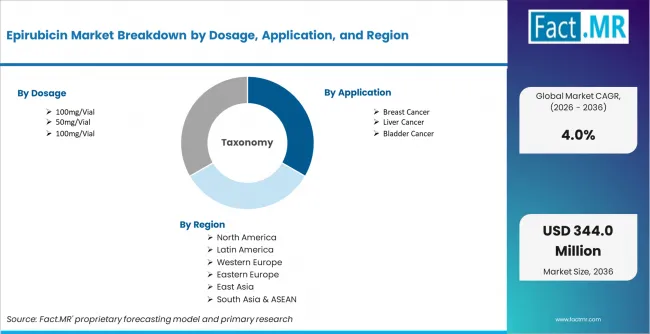
Epirubicin Market Breakdown By Dosage, Application, And Region

Attribute Details
Quantitative Units USD 232 million (2026) to USD 344 million (2036) at a CAGR of 4.0%
Market Definition Injectable anthracycline chemotherapy agent used in combination oncology regimens for breast, bladder, gastric, liver, and ovarian cancers across hospital and specialty clinic settings globally.
Dosage Segmentation 10mg/Vial, 50mg/Vial, 100mg/Vial, 200mg/Vial
Application Segmentation Breast Cancer, Liver Cancer, Bladder Cancer, Gastric Cancer, Ovarian Cancer, Others
Distribution Channel Segmentation Hospital Pharmacies, Retail Pharmacies, Online Pharmacies
Formulation Type Segmentation Lyophilized Powder, Ready-to-use Liquid Injection, Concentrated Solution
End User Segmentation Hospitals, Specialty Cancer Clinics, Ambulatory Surgical Centers, Research Institutes
Regions Covered North America, Europe, Asia Pacific, Latin America, Middle East and Africa
Countries Covered USA, Canada, Mexico, Germany, United Kingdom, France, Italy, Spain, Nordic, BENELUX, China, Japan, South Korea, India, ASEAN, Australia and New Zealand
Key Companies Profiled Pfizer Inc., Teva Pharmaceutical Industries Ltd., Areva Pharmaceuticals
Forecast Period 2026 to 2036
Approach Hybrid top-down and bottom-up model using hospital oncology treatment volumes, vial shipment data, generic drug pricing benchmarks, and primary interviews with oncology pharmacists and formulary managers.

Epirubicin Market by Segments

  • By Dosage:

    • 10mg/Vial
    • 50mg/Vial
    • 100mg/Vial
    • 200mg/Vial
  • By Application:

    • Breast Cancer
    • Liver Cancer
    • Bladder Cancer
    • Gastric Cancer
    • Ovarian Cancer
    • Others
  • By Distribution Channel:

    • Hospital Pharmacies
    • Retail Pharmacies
    • Online Pharmacies
  • By Formulation Type:

    • Lyophilized Powder
    • Ready-to-use Liquid Injection
    • Concentrated Solution
  • By End User:

    • Hospitals
    • Specialty Cancer Clinics
    • Ambulatory Surgical Centers
    • Research Institutes
  • By Region:

    • North America
      • United States
      • Canada
      • Mexico
    • Latin America
      • Brazil
      • Argentina
      • Colombia
      • Rest of Latin America
    • Western Europe
      • Germany
      • United Kingdom
      • France
      • Italy
      • Spain
      • Nordic Countries
      • BENELUX
      • Rest of Western Europe
    • Eastern Europe
      • Russia
      • Poland
      • Hungary
      • Balkan and Baltic
      • Rest of Eastern Europe
    • East Asia
      • China
      • Japan
      • South Korea
    • South Asia and Pacific
      • India
      • ASEAN
      • Australia and New Zealand
      • Rest of South Asia and Pacific
    • Middle East and Africa
      • Kingdom of Saudi Arabia
      • UAE
      • South Africa
      • Rest of Middle East and Africa

- Frequently Asked Questions -

How large is the global epirubicin market in 2025?

The global epirubicin market was valued at USD 223 million in 2025.

What will the epirubicin market size be in 2026?

Based on Fact.MR analysis, demand for epirubicin is estimated to reach USD 232 million in 2026.

What is the projected epirubicin market size by 2036?

The epirubicin market is forecast to reach USD 344 million by 2036 supported by oncology treatment volume growth and generic drug access expansion.

What is the expected CAGR for the epirubicin market from 2026 to 2036?

Fact.MR projects the global epirubicin market to expand at a CAGR of 4.0% from 2026 to 2036.

Which application segment is poised to lead the epirubicin market through 2036?

Breast cancer is the leading application segment with 46% share in 2026 because epirubicin is embedded in standard FEC and CEF combination chemotherapy regimens used globally.

Which country shows the fastest growth in the epirubicin market?

China is projected to lead at 4.5% CAGR through 2036 as the NMPA priority generic review program accelerates domestic anthracycline approvals under national essential medicines list expansion.

Table of Content

  1. Executive Summary
    • Global Market Outlook
    • Demand to side Trends
    • Supply to side Trends
    • Technology Roadmap Analysis
    • Analysis and Recommendations
  2. Market Overview
    • Market Coverage / Taxonomy
    • Market Definition / Scope / Limitations
  3. Research Methodology
    • Chapter Orientation
    • Analytical Lens and Working Hypotheses
      • Market Structure, Signals, and Trend Drivers
      • Benchmarking and Cross-market Comparability
      • Market Sizing, Forecasting, and Opportunity Mapping
    • Research Design and Evidence Framework
      • Desk Research Programme (Secondary Evidence)
        • Company Annual and Sustainability Reports
        • Peer-reviewed Journals and Academic Literature
        • Corporate Websites, Product Literature, and Technical Notes
        • Earnings Decks and Investor Briefings
        • Statutory Filings and Regulatory Disclosures
        • Technical White Papers and Standards Notes
        • Trade Journals, Industry Magazines, and Analyst Briefs
        • Conference Proceedings, Webinars, and Seminar Materials
        • Government Statistics Portals and Public Data Releases
        • Press Releases and Reputable Media Coverage
        • Specialist Newsletters and Curated Briefings
        • Sector Databases and Reference Repositories
        • Fact.MR Internal Proprietary Databases and Historical Market Datasets
        • Subscription Datasets and Paid Sources
        • Social Channels, Communities, and Digital Listening Inputs
        • Additional Desk Sources
      • Expert Input and Fieldwork (Primary Evidence)
        • Primary Modes
          • Qualitative Interviews and Expert Elicitation
          • Quantitative Surveys and Structured Data Capture
          • Blended Approach
        • Why Primary Evidence is Used
        • Field Techniques
          • Interviews
          • Surveys
          • Focus Groups
          • Observational and In-context Research
          • Social and Community Interactions
        • Stakeholder Universe Engaged
          • C-suite Leaders
          • Board Members
          • Presidents and Vice Presidents
          • R&D and Innovation Heads
          • Technical Specialists
          • Domain Subject-matter Experts
          • Scientists
          • Physicians and Other Healthcare Professionals
        • Governance, Ethics, and Data Stewardship
          • Research Ethics
          • Data Integrity and Handling
      • Tooling, Models, and Reference Databases
    • Data Engineering and Model Build
      • Data Acquisition and Ingestion
      • Cleaning, Normalisation, and Verification
      • Synthesis, Triangulation, and Analysis
    • Quality Assurance and Audit Trail
  4. Market Background
    • Market Dynamics
      • Drivers
      • Restraints
      • Opportunity
      • Trends
    • Scenario Forecast
      • Demand in Optimistic Scenario
      • Demand in Likely Scenario
      • Demand in Conservative Scenario
    • Opportunity Map Analysis
    • Product Life Cycle Analysis
    • Supply Chain Analysis
    • Investment Feasibility Matrix
    • Value Chain Analysis
    • PESTLE and Porter’s Analysis
    • Regulatory Landscape
    • Regional Parent Market Outlook
    • Production and Consumption Statistics
    • Import and Export Statistics
  5. Global Market Analysis 2021 to 2025 and Forecast, 2026 to 2036
    • Historical Market Size Value (USD Million) Analysis, 2021 to 2025
    • Current and Future Market Size Value (USD Million) Projections, 2026 to 2036
      • Y to o to Y Growth Trend Analysis
      • Absolute $ Opportunity Analysis
  6. Global Market Pricing Analysis 2021 to 2025 and Forecast 2026 to 2036
  7. Global Market Analysis 2021 to 2025 and Forecast 2026 to 2036, By Dosage
    • Introduction / Key Findings
    • Historical Market Size Value (USD Million) Analysis By Dosage , 2021 to 2025
    • Current and Future Market Size Value (USD Million) Analysis and Forecast By Dosage , 2026 to 2036
      • 100mg/Vial
      • 50mg/Vial
      • 100mg/Vial
    • Y to o to Y Growth Trend Analysis By Dosage , 2021 to 2025
    • Absolute $ Opportunity Analysis By Dosage , 2026 to 2036
  8. Global Market Analysis 2021 to 2025 and Forecast 2026 to 2036, By Application
    • Introduction / Key Findings
    • Historical Market Size Value (USD Million) Analysis By Application, 2021 to 2025
    • Current and Future Market Size Value (USD Million) Analysis and Forecast By Application, 2026 to 2036
      • Breast Cancer
      • Liver Cancer
      • Bladder Cancer
    • Y to o to Y Growth Trend Analysis By Application, 2021 to 2025
    • Absolute $ Opportunity Analysis By Application, 2026 to 2036
  9. Global Market Analysis 2021 to 2025 and Forecast 2026 to 2036, By Distribution Channel
    • Introduction / Key Findings
    • Historical Market Size Value (USD Million) Analysis By Distribution Channel, 2021 to 2025
    • Current and Future Market Size Value (USD Million) Analysis and Forecast By Distribution Channel, 2026 to 2036
      • Hospital pharmacies
      • Retail Pharmacies
      • Online Pharmacies
    • Y to o to Y Growth Trend Analysis By Distribution Channel, 2021 to 2025
    • Absolute $ Opportunity Analysis By Distribution Channel, 2026 to 2036
  10. Global Market Analysis 2021 to 2025 and Forecast 2026 to 2036, By Formulation Type
    • Introduction / Key Findings
    • Historical Market Size Value (USD Million) Analysis By Formulation Type, 2021 to 2025
    • Current and Future Market Size Value (USD Million) Analysis and Forecast By Formulation Type, 2026 to 2036
      • Lyophilized Powder
      • Ready-to-use Liquid Injection
      • Concentrated Solution
    • Y to o to Y Growth Trend Analysis By Formulation Type, 2021 to 2025
    • Absolute $ Opportunity Analysis By Formulation Type, 2026 to 2036
  11. Global Market Analysis 2021 to 2025 and Forecast 2026 to 2036, By End User
    • Introduction / Key Findings
    • Historical Market Size Value (USD Million) Analysis By End User, 2021 to 2025
    • Current and Future Market Size Value (USD Million) Analysis and Forecast By End User, 2026 to 2036
      • Hospitals
      • Specialty Cancer Clinics
      • Ambulatory Surgical Centers
    • Y to o to Y Growth Trend Analysis By End User, 2021 to 2025
    • Absolute $ Opportunity Analysis By End User, 2026 to 2036
  12. Global Market Analysis 2021 to 2025 and Forecast 2026 to 2036, By Region
    • Introduction
    • Historical Market Size Value (USD Million) Analysis By Region, 2021 to 2025
    • Current Market Size Value (USD Million) Analysis and Forecast By Region, 2026 to 2036
      • North America
      • Latin America
      • Western Europe
      • Eastern Europe
      • East Asia
      • South Asia and Pacific
      • Middle East & Africa
    • Market Attractiveness Analysis By Region
  13. North America Market Analysis 2021 to 2025 and Forecast 2026 to 2036, By Country
    • Historical Market Size Value (USD Million) Trend Analysis By Market Taxonomy, 2021 to 2025
    • Market Size Value (USD Million) Forecast By Market Taxonomy, 2026 to 2036
      • By Country
        • USA
        • Canada
        • Mexico
      • By Dosage
      • By Application
      • By Distribution Channel
      • By Formulation Type
      • By End User
    • Market Attractiveness Analysis
      • By Country
      • By Dosage
      • By Application
      • By Distribution Channel
      • By Formulation Type
      • By End User
    • Key Takeaways
  14. Latin America Market Analysis 2021 to 2025 and Forecast 2026 to 2036, By Country
    • Historical Market Size Value (USD Million) Trend Analysis By Market Taxonomy, 2021 to 2025
    • Market Size Value (USD Million) Forecast By Market Taxonomy, 2026 to 2036
      • By Country
        • Brazil
        • Chile
        • Rest of Latin America
      • By Dosage
      • By Application
      • By Distribution Channel
      • By Formulation Type
      • By End User
    • Market Attractiveness Analysis
      • By Country
      • By Dosage
      • By Application
      • By Distribution Channel
      • By Formulation Type
      • By End User
    • Key Takeaways
  15. Western Europe Market Analysis 2021 to 2025 and Forecast 2026 to 2036, By Country
    • Historical Market Size Value (USD Million) Trend Analysis By Market Taxonomy, 2021 to 2025
    • Market Size Value (USD Million) Forecast By Market Taxonomy, 2026 to 2036
      • By Country
        • Germany
        • UK
        • Italy
        • Spain
        • France
        • Nordic
        • BENELUX
        • Rest of Western Europe
      • By Dosage
      • By Application
      • By Distribution Channel
      • By Formulation Type
      • By End User
    • Market Attractiveness Analysis
      • By Country
      • By Dosage
      • By Application
      • By Distribution Channel
      • By Formulation Type
      • By End User
    • Key Takeaways
  16. Eastern Europe Market Analysis 2021 to 2025 and Forecast 2026 to 2036, By Country
    • Historical Market Size Value (USD Million) Trend Analysis By Market Taxonomy, 2021 to 2025
    • Market Size Value (USD Million) Forecast By Market Taxonomy, 2026 to 2036
      • By Country
        • Russia
        • Poland
        • Hungary
        • Balkan & Baltic
        • Rest of Eastern Europe
      • By Dosage
      • By Application
      • By Distribution Channel
      • By Formulation Type
      • By End User
    • Market Attractiveness Analysis
      • By Country
      • By Dosage
      • By Application
      • By Distribution Channel
      • By Formulation Type
      • By End User
    • Key Takeaways
  17. East Asia Market Analysis 2021 to 2025 and Forecast 2026 to 2036, By Country
    • Historical Market Size Value (USD Million) Trend Analysis By Market Taxonomy, 2021 to 2025
    • Market Size Value (USD Million) Forecast By Market Taxonomy, 2026 to 2036
      • By Country
        • China
        • Japan
        • South Korea
      • By Dosage
      • By Application
      • By Distribution Channel
      • By Formulation Type
      • By End User
    • Market Attractiveness Analysis
      • By Country
      • By Dosage
      • By Application
      • By Distribution Channel
      • By Formulation Type
      • By End User
    • Key Takeaways
  18. South Asia and Pacific Market Analysis 2021 to 2025 and Forecast 2026 to 2036, By Country
    • Historical Market Size Value (USD Million) Trend Analysis By Market Taxonomy, 2021 to 2025
    • Market Size Value (USD Million) Forecast By Market Taxonomy, 2026 to 2036
      • By Country
        • India
        • ASEAN
        • Australia & New Zealand
        • Rest of South Asia and Pacific
      • By Dosage
      • By Application
      • By Distribution Channel
      • By Formulation Type
      • By End User
    • Market Attractiveness Analysis
      • By Country
      • By Dosage
      • By Application
      • By Distribution Channel
      • By Formulation Type
      • By End User
    • Key Takeaways
  19. Middle East & Africa Market Analysis 2021 to 2025 and Forecast 2026 to 2036, By Country
    • Historical Market Size Value (USD Million) Trend Analysis By Market Taxonomy, 2021 to 2025
    • Market Size Value (USD Million) Forecast By Market Taxonomy, 2026 to 2036
      • By Country
        • Kingdom of Saudi Arabia
        • Other GCC Countries
        • Turkiye
        • South Africa
        • Other African Union
        • Rest of Middle East & Africa
      • By Dosage
      • By Application
      • By Distribution Channel
      • By Formulation Type
      • By End User
    • Market Attractiveness Analysis
      • By Country
      • By Dosage
      • By Application
      • By Distribution Channel
      • By Formulation Type
      • By End User
    • Key Takeaways
  20. Key Countries Market Analysis
    • USA
      • Pricing Analysis
      • Market Share Analysis, 2025
        • By Dosage
        • By Application
        • By Distribution Channel
        • By Formulation Type
        • By End User
    • Canada
      • Pricing Analysis
      • Market Share Analysis, 2025
        • By Dosage
        • By Application
        • By Distribution Channel
        • By Formulation Type
        • By End User
    • Mexico
      • Pricing Analysis
      • Market Share Analysis, 2025
        • By Dosage
        • By Application
        • By Distribution Channel
        • By Formulation Type
        • By End User
    • Brazil
      • Pricing Analysis
      • Market Share Analysis, 2025
        • By Dosage
        • By Application
        • By Distribution Channel
        • By Formulation Type
        • By End User
    • Chile
      • Pricing Analysis
      • Market Share Analysis, 2025
        • By Dosage
        • By Application
        • By Distribution Channel
        • By Formulation Type
        • By End User
    • Germany
      • Pricing Analysis
      • Market Share Analysis, 2025
        • By Dosage
        • By Application
        • By Distribution Channel
        • By Formulation Type
        • By End User
    • UK
      • Pricing Analysis
      • Market Share Analysis, 2025
        • By Dosage
        • By Application
        • By Distribution Channel
        • By Formulation Type
        • By End User
    • Italy
      • Pricing Analysis
      • Market Share Analysis, 2025
        • By Dosage
        • By Application
        • By Distribution Channel
        • By Formulation Type
        • By End User
    • Spain
      • Pricing Analysis
      • Market Share Analysis, 2025
        • By Dosage
        • By Application
        • By Distribution Channel
        • By Formulation Type
        • By End User
    • France
      • Pricing Analysis
      • Market Share Analysis, 2025
        • By Dosage
        • By Application
        • By Distribution Channel
        • By Formulation Type
        • By End User
    • India
      • Pricing Analysis
      • Market Share Analysis, 2025
        • By Dosage
        • By Application
        • By Distribution Channel
        • By Formulation Type
        • By End User
    • ASEAN
      • Pricing Analysis
      • Market Share Analysis, 2025
        • By Dosage
        • By Application
        • By Distribution Channel
        • By Formulation Type
        • By End User
    • Australia & New Zealand
      • Pricing Analysis
      • Market Share Analysis, 2025
        • By Dosage
        • By Application
        • By Distribution Channel
        • By Formulation Type
        • By End User
    • China
      • Pricing Analysis
      • Market Share Analysis, 2025
        • By Dosage
        • By Application
        • By Distribution Channel
        • By Formulation Type
        • By End User
    • Japan
      • Pricing Analysis
      • Market Share Analysis, 2025
        • By Dosage
        • By Application
        • By Distribution Channel
        • By Formulation Type
        • By End User
    • South Korea
      • Pricing Analysis
      • Market Share Analysis, 2025
        • By Dosage
        • By Application
        • By Distribution Channel
        • By Formulation Type
        • By End User
    • Russia
      • Pricing Analysis
      • Market Share Analysis, 2025
        • By Dosage
        • By Application
        • By Distribution Channel
        • By Formulation Type
        • By End User
    • Poland
      • Pricing Analysis
      • Market Share Analysis, 2025
        • By Dosage
        • By Application
        • By Distribution Channel
        • By Formulation Type
        • By End User
    • Hungary
      • Pricing Analysis
      • Market Share Analysis, 2025
        • By Dosage
        • By Application
        • By Distribution Channel
        • By Formulation Type
        • By End User
    • Kingdom of Saudi Arabia
      • Pricing Analysis
      • Market Share Analysis, 2025
        • By Dosage
        • By Application
        • By Distribution Channel
        • By Formulation Type
        • By End User
    • Turkiye
      • Pricing Analysis
      • Market Share Analysis, 2025
        • By Dosage
        • By Application
        • By Distribution Channel
        • By Formulation Type
        • By End User
    • South Africa
      • Pricing Analysis
      • Market Share Analysis, 2025
        • By Dosage
        • By Application
        • By Distribution Channel
        • By Formulation Type
        • By End User
  21. Market Structure Analysis
    • Competition Dashboard
    • Competition Benchmarking
    • Market Share Analysis of Top Players
      • By Regional
      • By Dosage
      • By Application
      • By Distribution Channel
      • By Formulation Type
      • By End User
  22. Competition Analysis
    • Competition Deep Dive
      • Pfizer, Inc.
        • Overview
        • Product Portfolio
        • Profitability by Market Segments (Product/Age /Sales Channel/Region)
        • Sales Footprint
        • Strategy Overview
          • Marketing Strategy
          • Product Strategy
          • Channel Strategy
      • Teva Pharmaceutical Industries Ltd.
      • Areva Pharmaceuticals
      • Fresenius Kabi
      • Salius Pharma Pvt. Ltd.
  23. Assumptions & Acronyms Used

List Of Table

  • Table 1: Global Market Value (USD Million) Forecast by Region, 2021 to 2036
  • Table 2: Global Market Value (USD Million) Forecast by Dosage , 2021 to 2036
  • Table 3: Global Market Value (USD Million) Forecast by Application, 2021 to 2036
  • Table 4: Global Market Value (USD Million) Forecast by Distribution Channel, 2021 to 2036
  • Table 5: Global Market Value (USD Million) Forecast by Formulation Type, 2021 to 2036
  • Table 6: Global Market Value (USD Million) Forecast by End User, 2021 to 2036
  • Table 7: North America Market Value (USD Million) Forecast by Country, 2021 to 2036
  • Table 8: North America Market Value (USD Million) Forecast by Dosage , 2021 to 2036
  • Table 9: North America Market Value (USD Million) Forecast by Application, 2021 to 2036
  • Table 10: North America Market Value (USD Million) Forecast by Distribution Channel, 2021 to 2036
  • Table 11: North America Market Value (USD Million) Forecast by Formulation Type, 2021 to 2036
  • Table 12: North America Market Value (USD Million) Forecast by End User, 2021 to 2036
  • Table 13: Latin America Market Value (USD Million) Forecast by Country, 2021 to 2036
  • Table 14: Latin America Market Value (USD Million) Forecast by Dosage , 2021 to 2036
  • Table 15: Latin America Market Value (USD Million) Forecast by Application, 2021 to 2036
  • Table 16: Latin America Market Value (USD Million) Forecast by Distribution Channel, 2021 to 2036
  • Table 17: Latin America Market Value (USD Million) Forecast by Formulation Type, 2021 to 2036
  • Table 18: Latin America Market Value (USD Million) Forecast by End User, 2021 to 2036
  • Table 19: Western Europe Market Value (USD Million) Forecast by Country, 2021 to 2036
  • Table 20: Western Europe Market Value (USD Million) Forecast by Dosage , 2021 to 2036
  • Table 21: Western Europe Market Value (USD Million) Forecast by Application, 2021 to 2036
  • Table 22: Western Europe Market Value (USD Million) Forecast by Distribution Channel, 2021 to 2036
  • Table 23: Western Europe Market Value (USD Million) Forecast by Formulation Type, 2021 to 2036
  • Table 24: Western Europe Market Value (USD Million) Forecast by End User, 2021 to 2036
  • Table 25: Eastern Europe Market Value (USD Million) Forecast by Country, 2021 to 2036
  • Table 26: Eastern Europe Market Value (USD Million) Forecast by Dosage , 2021 to 2036
  • Table 27: Eastern Europe Market Value (USD Million) Forecast by Application, 2021 to 2036
  • Table 28: Eastern Europe Market Value (USD Million) Forecast by Distribution Channel, 2021 to 2036
  • Table 29: Eastern Europe Market Value (USD Million) Forecast by Formulation Type, 2021 to 2036
  • Table 30: Eastern Europe Market Value (USD Million) Forecast by End User, 2021 to 2036
  • Table 31: East Asia Market Value (USD Million) Forecast by Country, 2021 to 2036
  • Table 32: East Asia Market Value (USD Million) Forecast by Dosage , 2021 to 2036
  • Table 33: East Asia Market Value (USD Million) Forecast by Application, 2021 to 2036
  • Table 34: East Asia Market Value (USD Million) Forecast by Distribution Channel, 2021 to 2036
  • Table 35: East Asia Market Value (USD Million) Forecast by Formulation Type, 2021 to 2036
  • Table 36: East Asia Market Value (USD Million) Forecast by End User, 2021 to 2036
  • Table 37: South Asia and Pacific Market Value (USD Million) Forecast by Country, 2021 to 2036
  • Table 38: South Asia and Pacific Market Value (USD Million) Forecast by Dosage , 2021 to 2036
  • Table 39: South Asia and Pacific Market Value (USD Million) Forecast by Application, 2021 to 2036
  • Table 40: South Asia and Pacific Market Value (USD Million) Forecast by Distribution Channel, 2021 to 2036
  • Table 41: South Asia and Pacific Market Value (USD Million) Forecast by Formulation Type, 2021 to 2036
  • Table 42: South Asia and Pacific Market Value (USD Million) Forecast by End User, 2021 to 2036
  • Table 43: Middle East & Africa Market Value (USD Million) Forecast by Country, 2021 to 2036
  • Table 44: Middle East & Africa Market Value (USD Million) Forecast by Dosage , 2021 to 2036
  • Table 45: Middle East & Africa Market Value (USD Million) Forecast by Application, 2021 to 2036
  • Table 46: Middle East & Africa Market Value (USD Million) Forecast by Distribution Channel, 2021 to 2036
  • Table 47: Middle East & Africa Market Value (USD Million) Forecast by Formulation Type, 2021 to 2036
  • Table 48: Middle East & Africa Market Value (USD Million) Forecast by End User, 2021 to 2036

List Of Figures

  • Figure 1: Global Market Pricing Analysis
  • Figure 2: Global Market Value (USD Million) Forecast 2021-2036
  • Figure 3: Global Market Value Share and BPS Analysis by Dosage , 2026 and 2036
  • Figure 4: Global Market Y-o-Y Growth Comparison by Dosage , 2026-2036
  • Figure 5: Global Market Attractiveness Analysis by Dosage
  • Figure 6: Global Market Value Share and BPS Analysis by Application, 2026 and 2036
  • Figure 7: Global Market Y-o-Y Growth Comparison by Application, 2026-2036
  • Figure 8: Global Market Attractiveness Analysis by Application
  • Figure 9: Global Market Value Share and BPS Analysis by Distribution Channel, 2026 and 2036
  • Figure 10: Global Market Y-o-Y Growth Comparison by Distribution Channel, 2026-2036
  • Figure 11: Global Market Attractiveness Analysis by Distribution Channel
  • Figure 12: Global Market Value Share and BPS Analysis by Formulation Type, 2026 and 2036
  • Figure 13: Global Market Y-o-Y Growth Comparison by Formulation Type, 2026-2036
  • Figure 14: Global Market Attractiveness Analysis by Formulation Type
  • Figure 15: Global Market Value Share and BPS Analysis by End User, 2026 and 2036
  • Figure 16: Global Market Y-o-Y Growth Comparison by End User, 2026-2036
  • Figure 17: Global Market Attractiveness Analysis by End User
  • Figure 18: Global Market Value (USD Million) Share and BPS Analysis by Region, 2026 and 2036
  • Figure 19: Global Market Y-o-Y Growth Comparison by Region, 2026-2036
  • Figure 20: Global Market Attractiveness Analysis by Region
  • Figure 21: North America Market Incremental Dollar Opportunity, 2026-2036
  • Figure 22: Latin America Market Incremental Dollar Opportunity, 2026-2036
  • Figure 23: Western Europe Market Incremental Dollar Opportunity, 2026-2036
  • Figure 24: Eastern Europe Market Incremental Dollar Opportunity, 2026-2036
  • Figure 25: East Asia Market Incremental Dollar Opportunity, 2026-2036
  • Figure 26: South Asia and Pacific Market Incremental Dollar Opportunity, 2026-2036
  • Figure 27: Middle East & Africa Market Incremental Dollar Opportunity, 2026-2036
  • Figure 28: North America Market Value Share and BPS Analysis by Country, 2026 and 2036
  • Figure 29: North America Market Value Share and BPS Analysis by Dosage , 2026 and 2036
  • Figure 30: North America Market Y-o-Y Growth Comparison by Dosage , 2026-2036
  • Figure 31: North America Market Attractiveness Analysis by Dosage
  • Figure 32: North America Market Value Share and BPS Analysis by Application, 2026 and 2036
  • Figure 33: North America Market Y-o-Y Growth Comparison by Application, 2026-2036
  • Figure 34: North America Market Attractiveness Analysis by Application
  • Figure 35: North America Market Value Share and BPS Analysis by Distribution Channel, 2026 and 2036
  • Figure 36: North America Market Y-o-Y Growth Comparison by Distribution Channel, 2026-2036
  • Figure 37: North America Market Attractiveness Analysis by Distribution Channel
  • Figure 38: North America Market Value Share and BPS Analysis by Formulation Type, 2026 and 2036
  • Figure 39: North America Market Y-o-Y Growth Comparison by Formulation Type, 2026-2036
  • Figure 40: North America Market Attractiveness Analysis by Formulation Type
  • Figure 41: North America Market Value Share and BPS Analysis by End User, 2026 and 2036
  • Figure 42: North America Market Y-o-Y Growth Comparison by End User, 2026-2036
  • Figure 43: North America Market Attractiveness Analysis by End User
  • Figure 44: Latin America Market Value Share and BPS Analysis by Country, 2026 and 2036
  • Figure 45: Latin America Market Value Share and BPS Analysis by Dosage , 2026 and 2036
  • Figure 46: Latin America Market Y-o-Y Growth Comparison by Dosage , 2026-2036
  • Figure 47: Latin America Market Attractiveness Analysis by Dosage
  • Figure 48: Latin America Market Value Share and BPS Analysis by Application, 2026 and 2036
  • Figure 49: Latin America Market Y-o-Y Growth Comparison by Application, 2026-2036
  • Figure 50: Latin America Market Attractiveness Analysis by Application
  • Figure 51: Latin America Market Value Share and BPS Analysis by Distribution Channel, 2026 and 2036
  • Figure 52: Latin America Market Y-o-Y Growth Comparison by Distribution Channel, 2026-2036
  • Figure 53: Latin America Market Attractiveness Analysis by Distribution Channel
  • Figure 54: Latin America Market Value Share and BPS Analysis by Formulation Type, 2026 and 2036
  • Figure 55: Latin America Market Y-o-Y Growth Comparison by Formulation Type, 2026-2036
  • Figure 56: Latin America Market Attractiveness Analysis by Formulation Type
  • Figure 57: Latin America Market Value Share and BPS Analysis by End User, 2026 and 2036
  • Figure 58: Latin America Market Y-o-Y Growth Comparison by End User, 2026-2036
  • Figure 59: Latin America Market Attractiveness Analysis by End User
  • Figure 60: Western Europe Market Value Share and BPS Analysis by Country, 2026 and 2036
  • Figure 61: Western Europe Market Value Share and BPS Analysis by Dosage , 2026 and 2036
  • Figure 62: Western Europe Market Y-o-Y Growth Comparison by Dosage , 2026-2036
  • Figure 63: Western Europe Market Attractiveness Analysis by Dosage
  • Figure 64: Western Europe Market Value Share and BPS Analysis by Application, 2026 and 2036
  • Figure 65: Western Europe Market Y-o-Y Growth Comparison by Application, 2026-2036
  • Figure 66: Western Europe Market Attractiveness Analysis by Application
  • Figure 67: Western Europe Market Value Share and BPS Analysis by Distribution Channel, 2026 and 2036
  • Figure 68: Western Europe Market Y-o-Y Growth Comparison by Distribution Channel, 2026-2036
  • Figure 69: Western Europe Market Attractiveness Analysis by Distribution Channel
  • Figure 70: Western Europe Market Value Share and BPS Analysis by Formulation Type, 2026 and 2036
  • Figure 71: Western Europe Market Y-o-Y Growth Comparison by Formulation Type, 2026-2036
  • Figure 72: Western Europe Market Attractiveness Analysis by Formulation Type
  • Figure 73: Western Europe Market Value Share and BPS Analysis by End User, 2026 and 2036
  • Figure 74: Western Europe Market Y-o-Y Growth Comparison by End User, 2026-2036
  • Figure 75: Western Europe Market Attractiveness Analysis by End User
  • Figure 76: Eastern Europe Market Value Share and BPS Analysis by Country, 2026 and 2036
  • Figure 77: Eastern Europe Market Value Share and BPS Analysis by Dosage , 2026 and 2036
  • Figure 78: Eastern Europe Market Y-o-Y Growth Comparison by Dosage , 2026-2036
  • Figure 79: Eastern Europe Market Attractiveness Analysis by Dosage
  • Figure 80: Eastern Europe Market Value Share and BPS Analysis by Application, 2026 and 2036
  • Figure 81: Eastern Europe Market Y-o-Y Growth Comparison by Application, 2026-2036
  • Figure 82: Eastern Europe Market Attractiveness Analysis by Application
  • Figure 83: Eastern Europe Market Value Share and BPS Analysis by Distribution Channel, 2026 and 2036
  • Figure 84: Eastern Europe Market Y-o-Y Growth Comparison by Distribution Channel, 2026-2036
  • Figure 85: Eastern Europe Market Attractiveness Analysis by Distribution Channel
  • Figure 86: Eastern Europe Market Value Share and BPS Analysis by Formulation Type, 2026 and 2036
  • Figure 87: Eastern Europe Market Y-o-Y Growth Comparison by Formulation Type, 2026-2036
  • Figure 88: Eastern Europe Market Attractiveness Analysis by Formulation Type
  • Figure 89: Eastern Europe Market Value Share and BPS Analysis by End User, 2026 and 2036
  • Figure 90: Eastern Europe Market Y-o-Y Growth Comparison by End User, 2026-2036
  • Figure 91: Eastern Europe Market Attractiveness Analysis by End User
  • Figure 92: East Asia Market Value Share and BPS Analysis by Country, 2026 and 2036
  • Figure 93: East Asia Market Value Share and BPS Analysis by Dosage , 2026 and 2036
  • Figure 94: East Asia Market Y-o-Y Growth Comparison by Dosage , 2026-2036
  • Figure 95: East Asia Market Attractiveness Analysis by Dosage
  • Figure 96: East Asia Market Value Share and BPS Analysis by Application, 2026 and 2036
  • Figure 97: East Asia Market Y-o-Y Growth Comparison by Application, 2026-2036
  • Figure 98: East Asia Market Attractiveness Analysis by Application
  • Figure 99: East Asia Market Value Share and BPS Analysis by Distribution Channel, 2026 and 2036
  • Figure 100: East Asia Market Y-o-Y Growth Comparison by Distribution Channel, 2026-2036
  • Figure 101: East Asia Market Attractiveness Analysis by Distribution Channel
  • Figure 102: East Asia Market Value Share and BPS Analysis by Formulation Type, 2026 and 2036
  • Figure 103: East Asia Market Y-o-Y Growth Comparison by Formulation Type, 2026-2036
  • Figure 104: East Asia Market Attractiveness Analysis by Formulation Type
  • Figure 105: East Asia Market Value Share and BPS Analysis by End User, 2026 and 2036
  • Figure 106: East Asia Market Y-o-Y Growth Comparison by End User, 2026-2036
  • Figure 107: East Asia Market Attractiveness Analysis by End User
  • Figure 108: South Asia and Pacific Market Value Share and BPS Analysis by Country, 2026 and 2036
  • Figure 109: South Asia and Pacific Market Value Share and BPS Analysis by Dosage , 2026 and 2036
  • Figure 110: South Asia and Pacific Market Y-o-Y Growth Comparison by Dosage , 2026-2036
  • Figure 111: South Asia and Pacific Market Attractiveness Analysis by Dosage
  • Figure 112: South Asia and Pacific Market Value Share and BPS Analysis by Application, 2026 and 2036
  • Figure 113: South Asia and Pacific Market Y-o-Y Growth Comparison by Application, 2026-2036
  • Figure 114: South Asia and Pacific Market Attractiveness Analysis by Application
  • Figure 115: South Asia and Pacific Market Value Share and BPS Analysis by Distribution Channel, 2026 and 2036
  • Figure 116: South Asia and Pacific Market Y-o-Y Growth Comparison by Distribution Channel, 2026-2036
  • Figure 117: South Asia and Pacific Market Attractiveness Analysis by Distribution Channel
  • Figure 118: South Asia and Pacific Market Value Share and BPS Analysis by Formulation Type, 2026 and 2036
  • Figure 119: South Asia and Pacific Market Y-o-Y Growth Comparison by Formulation Type, 2026-2036
  • Figure 120: South Asia and Pacific Market Attractiveness Analysis by Formulation Type
  • Figure 121: South Asia and Pacific Market Value Share and BPS Analysis by End User, 2026 and 2036
  • Figure 122: South Asia and Pacific Market Y-o-Y Growth Comparison by End User, 2026-2036
  • Figure 123: South Asia and Pacific Market Attractiveness Analysis by End User
  • Figure 124: Middle East & Africa Market Value Share and BPS Analysis by Country, 2026 and 2036
  • Figure 125: Middle East & Africa Market Value Share and BPS Analysis by Dosage , 2026 and 2036
  • Figure 126: Middle East & Africa Market Y-o-Y Growth Comparison by Dosage , 2026-2036
  • Figure 127: Middle East & Africa Market Attractiveness Analysis by Dosage
  • Figure 128: Middle East & Africa Market Value Share and BPS Analysis by Application, 2026 and 2036
  • Figure 129: Middle East & Africa Market Y-o-Y Growth Comparison by Application, 2026-2036
  • Figure 130: Middle East & Africa Market Attractiveness Analysis by Application
  • Figure 131: Middle East & Africa Market Value Share and BPS Analysis by Distribution Channel, 2026 and 2036
  • Figure 132: Middle East & Africa Market Y-o-Y Growth Comparison by Distribution Channel, 2026-2036
  • Figure 133: Middle East & Africa Market Attractiveness Analysis by Distribution Channel
  • Figure 134: Middle East & Africa Market Value Share and BPS Analysis by Formulation Type, 2026 and 2036
  • Figure 135: Middle East & Africa Market Y-o-Y Growth Comparison by Formulation Type, 2026-2036
  • Figure 136: Middle East & Africa Market Attractiveness Analysis by Formulation Type
  • Figure 137: Middle East & Africa Market Value Share and BPS Analysis by End User, 2026 and 2036
  • Figure 138: Middle East & Africa Market Y-o-Y Growth Comparison by End User, 2026-2036
  • Figure 139: Middle East & Africa Market Attractiveness Analysis by End User
  • Figure 140: Global Market - Tier Structure Analysis
  • Figure 141: Global Market - Company Share Analysis

Epirubicin Market