Breast Cancer Diagnostics Market (2026 - 2036)
The Breast Cancer Diagnostics Market is segmented by Cancer Sub-type (Invasive Ductal Carcinoma, HER2-positive Breast Cancer, Ductal Carcinoma In Situ, Invasive Lobular Carcinoma, Triple-negative Breast Cancer), Disease Stage (Stage 0 (DCIS), Stage 1, Stage 2, Stage 3, Stage 4), Application (Hospital Laboratories & Imaging Centers, Diagnostic Pathology Laboratories, Academic & Research Institutes, Pharmaceutical & Biotechnology Companies), and Region. Forecast for 2026 to 2036.
Core Findings
Breast Cancer Diagnostics Market Size, Market Forecast and Outlook By FACT.MR
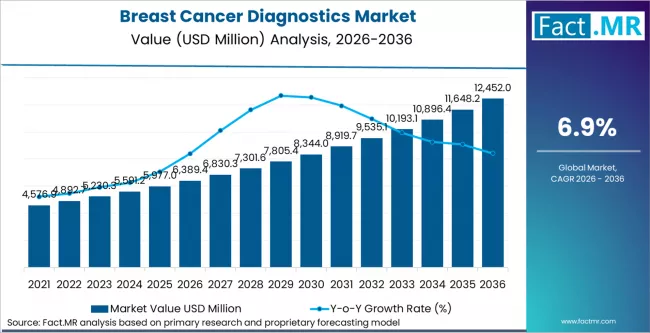
The breast cancer diagnostics market was valued at USD 5878 million in 2025, projected to reach USD 6389.41 million in 2026, and is forecast to expand to USD 12451.97 million by 2036 at a 6.9% CAGR. Invasive Ductal Carcinoma leads by Cancer Sub-type with 40.0% share in 2026, while Stage 2 dominates the Disease Stage segment with 31.0% share.
The absolute dollar growth of USD 6063 million over the 2026 to 2036 forecast period reflects sustained structural demand expansion. FACT.MR analysts identify India and Germany as priority growth markets, driven by National Cancer Grid molecular diagnostics standardisation and PM-JAY oncology benefit package covering HER2 and hormone receptor testing and AGO S3 guideline updates mandating comprehensive biomarker panel testing and EU IVDR-compliant companion diagnostic certification respectively.
Key national markets advance at differentiated rates. India is projected at a 10.8% CAGR, supported by National Cancer Grid molecular diagnostics standardisation and PM-JAY oncology benefit package covering HER2 and hormone receptor testing. Germany is projected at a 9.9% CAGR, supported by AGO S3 guideline updates mandating comprehensive biomarker panel testing and EU IVDR-compliant companion diagnostic certification. France is projected at a 9.0% CAGR, supported by Plan Cancer 2021-2030 molecular profiling investment and INCa-certified cancer centre companion diagnostic testing requirements. UK is projected at a 8.2% CAGR, supported by NHS England genomic medicine service breast cancer whole genome sequencing pathway and NICE-approved companion diagnostic testing mandates. USA is projected at a 7.5% CAGR, supported by FDA companion diagnostic approvals for CDK4/6 inhibitors and expanded CMS reimbursement for multi-gene prognostic panel testing.
Breast Cancer Diagnostics Market Key Takeaways
| Metric | Details |
|---|---|
| Industry Size (2026) | USD 6389.41 million |
| Industry Value (2036) | USD 12451.97 million |
| CAGR (2026-2036) | 6.9% |
Breast Cancer Diagnostics Market Definition
The Breast Cancer Diagnostics encompasses all commercially distributed products, systems, and services within this category, spanning primary production through end-use application across global supply chains. The report scope covers all commercially distributed formats compliant with applicable regional product standards and regulatory frameworks.
Market Inclusions
The report covers global and regional market sizing across 5 Cancer Sub-type segments and 5 Disease Stage categories from 2026 to 2036. Segment-level revenue forecasts, country-level growth trajectories for 40-plus nations, and competitive positioning analysis for key market participants are included.
Market Exclusions
Downstream finished goods and applications not directly attributable to the primary breast cancer diagnostics category are excluded. Adjacent and substitute markets, experimental technologies without validated revenue, and private-label volumes without publicly verifiable revenue data are omitted from the forecast model.
Research Methodology
- Primary Research: FACT.MR analysts conducted structured interviews with clinical procurement leads, product managers, reimbursement specialists, and regional distributors across 40 countries to validate adoption timelines, pricing structures, and competitive dynamics.
- Desk Research: Secondary data encompassed regulatory agency publications, international standards documentation, national statistical trade data, and company primary disclosures including annual reports and earnings call transcripts.
- Market-Sizing and Forecasting: Forecasts apply a hybrid bottom-up and top-down methodology, building segment-level revenue estimates from installed base and penetration rate inputs, then cross-validating against macroeconomic and category growth frameworks.
- Data Validation and Update Cycle: Outputs are cross-validated against quarterly financial disclosures from leading participants and benchmarked against government trade flow and reimbursement data. Forecasts are subject to annual update cycles.
Summary of Breast Cancer Diagnostics Market
- Market Definition
- Breast Cancer Diagnostics covers all commercially distributed products and services within this category, segmented by Cancer Sub-type, Disease Stage, application type, and geography across the 2026 to 2036 forecast window.
- Demand Drivers in the Market
- Regulatory compliance and clinical guideline mandates are converting discretionary purchasing decisions into non-negotiable procurement requirements, compressing sales cycles and reducing price sensitivity among compliant institutional buyers.
- Rising clinical and consumer expectations for diagnostic accuracy, therapeutic efficacy, and verified safety credentials are shifting purchasing toward premium-positioned products, expanding average revenue per unit across all channels.
- Healthcare infrastructure investment and reimbursement system formalisation in India and Germany are expanding the accessible buyer base while improving overall market economics for established suppliers.
- Key Segments Analyzed in the FACT.MR Report
- Cancer Sub-type: Invasive Ductal Carcinoma leads with 40.0% share in 2026, driven by its prevalence, clinical guidelines backing, and established reimbursement pathways.
- Disease Stage: Stage 2 commands 31.0% of demand in 2026, anchored by its alignment with the most active clinical intervention and testing protocols.
- Geography: India registers the highest national CAGR at 10.8%, driven by National Cancer Grid molecular diagnostics standardisation and PM-JAY oncology benefit package covering HER2 and hormone receptor testing.
- Analyst Opinion at FACT.MR
- FACT.MR analysts observe that the breast cancer diagnostics market is entering a consolidation phase where regulatory certification, clinical evidence depth, and reimbursement status are replacing price as the primary supplier qualification criteria. Buyers are shortlisting vendors based on guideline compliance, payer coverage status, and outcomes data. Suppliers without these credentials face progressive exclusion from Tier 1 institutional procurement cycles.
- Strategic Implications / Executive Takeaways
- Suppliers must secure regulatory clearance and reimbursement coverage across priority markets at least 18 months before planned commercial launch to qualify for institutional procurement shortlists.
- Investment in clinical evidence generation through prospective studies and real-world data programmes will become a primary competitive differentiator as payers demand outcome-based justification for coverage decisions.
- Market development in India and Germany should be prioritised, as these markets combine the highest projected growth rates with improving reimbursement infrastructure that lower risk-adjusted entry cost.
Historic Analysis (2021 to 2025) and Future (2026 to 2036) Pathway Analysis for the breast cancer diagnostics market
Breast cancer diagnostics markets worldwide displayed consistent development between 2021 and 2025 because of increasing breast cancer incidence numbers alongside rising healthcare budgets and the implementation of artificial intelligence (AI) and machine learning (ML) tools for diagnostic purposes. Breast cancer medical professionals identify new cases at a rate of 281,550 across the United States for the year 2021 alone.
Stakeholders Hologic, Roche, Siemens Healthineers, and GE Healthcare combined strengths to launch novel imaging solutions that delivered better early identification accuracy and fewer incorrect results.
The market adopted liquid biopsy technology because this method provided non-invasive and real-time cancer detection.
- Short Term (2025 to 2028): Artificial intelligence diagnostics will become vital for early breast cancer detection within a period of three to five years. AI deep learning algorithms integrated into mammography and ultrasound systems detect cancers more precisely which decreases radiologist workloads. The diagnostics field for breast cancer benefits from high investment ventures by startups and established market leaders such as Google Health which enable both fast results and high accuracy. Liquid biopsy adoption is rising so that diagnostic procedures will become less disruptive thus enabling early-stage disease detection through basic blood tests. Market demand will increase due to government initiatives both promoting breast cancer awareness and creating larger access to screening opportunities.
- Medium Term (2029 to 2031): The screening program expansions in emerging markets which include India, China, Brazil along Africa will power the industry growth during the middle term. Developments regarding portable and affordable breast cancer diagnostic equipment will receive funding from countries to enhance rural health service capabilities. Genetic testing along with molecular diagnostics will establish themselves as everyday clinical methods to deliver customized breast cancer medical treatments. Through government programs, people will gain breast cancer screening coverage with insurance benefits that lower diagnostic expenses for all residents.
- Long Term (2032 to 2035): AI-powered machine learning diagnosis systems along with automated histopathology technology will speed up breast cancer detection through the identification of cancer cells. The market will transition to home-based remote diagnostic systems powered by AI-enabled telemedicine solutions that perform breast cancer detection from screening devices. Microbial genomic sequencing technologies developed through advancements will enable better characteristics of breast cancer subtypes to increase treatment success rates.
On the back of the aforementioned facts, the breast cancer diagnostics market is anticipated to grow at a CAGR of 6.9% during the forecast period from 2026 to 2036, According to the Fact.MR, a market research and competitive intelligence provider.
Breast Cancer Diagnostics Market Drivers, Restraints, and Opportunities
FACT.MR analysis identifies three structural forces shaping the breast cancer diagnostics market through 2036: regulatory and clinical guideline-driven adoption requirements, technology and platform transitions, and geographic demand redistribution toward high-growth emerging markets.
The primary restraint is reimbursement coverage complexity across jurisdictions. Suppliers targeting five or more national markets face distinct health technology assessment and coverage determination processes that impose time and cost burdens small participants cannot sustain without dedicated market access infrastructure.
- Regulatory and Guideline-Driven Adoption: Mandatory clinical practice guideline updates in the EU, USA, and Japan are converting previously discretionary testing and treatment decisions into standard-of-care protocols, sustaining baseline demand growth independent of economic cycle conditions.
- Geographic Market Formalisation: India and Germany are advancing reimbursement and regulatory infrastructure at rates that compress the typical emerging market adoption lag, creating accessible commercial markets on compressed timelines compared with historical precedent.
- Technology Platform Transition: The transition from analogue and single-marker platforms to digital, multi-analyte, and AI-assisted systems is expanding per-unit revenue and creating replacement cycles in established markets that sustain demand beyond baseline incidence-driven growth.
Regional Analysis
As per FACT.MR, the Breast Cancer Diagnostics Market is analysed across North America, Latin America, Europe, East Asia, South Asia, Oceania, and Middle East & Africa. The full report provides market attractiveness scores and investment-readiness assessments for each region.
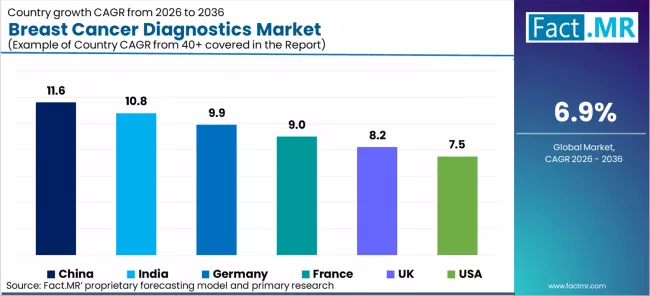
| Country | CAGR (2026 to 2036) |
|---|---|
| India | 10.8% |
| Germany | 9.9% |
| France | 9.0% |
| UK | 8.2% |
| USA | 7.5% |
Source: FACT.MR analysis, based on proprietary forecasting model and primary research
India
Demand for breast cancer diagnostics in India is projected to rise at a 10.8% CAGR through 2036, driven by National Cancer Grid molecular diagnostics standardisation and PM-JAY oncology benefit package covering HER2 and hormone receptor testing. Institutional procurement frameworks in India are advancing toward standardised clinical and regulatory specification requirements aligned with international guidelines, reducing qualification barriers for compliant suppliers while raising minimum standards for market participation. FACT.MR analysts note that the convergence of reimbursement formalisation and healthcare infrastructure investment in India positions this market for sustained, predictable expansion rather than the demand volatility associated with markets earlier in their development cycle.
Germany
Demand for breast cancer diagnostics in Germany is projected to rise at a 9.9% CAGR through 2036, driven by AGO S3 guideline updates mandating comprehensive biomarker panel testing and EU IVDR-compliant companion diagnostic certification. Institutional procurement frameworks in Germany are advancing toward standardised clinical and regulatory specification requirements aligned with international guidelines, reducing qualification barriers for compliant suppliers while raising minimum standards for market participation. FACT.MR analysts note that the convergence of reimbursement formalisation and healthcare infrastructure investment in Germany positions this market for sustained, predictable expansion rather than the demand volatility associated with markets earlier in their development cycle.
France
Demand for breast cancer diagnostics in France is projected to rise at a 9.0% CAGR through 2036, driven by Plan Cancer 2021-2030 molecular profiling investment and INCa-certified cancer centre companion diagnostic testing requirements. Institutional procurement frameworks in France are advancing toward standardised clinical and regulatory specification requirements aligned with international guidelines, reducing qualification barriers for compliant suppliers while raising minimum standards for market participation. FACT.MR analysts note that the convergence of reimbursement formalisation and healthcare infrastructure investment in France positions this market for sustained, predictable expansion rather than the demand volatility associated with markets earlier in their development cycle.
UK
Demand for breast cancer diagnostics in UK is projected to rise at a 8.2% CAGR through 2036, driven by NHS England genomic medicine service breast cancer whole genome sequencing pathway and NICE-approved companion diagnostic testing mandates. Institutional procurement frameworks in UK are advancing toward standardised clinical and regulatory specification requirements aligned with international guidelines, reducing qualification barriers for compliant suppliers while raising minimum standards for market participation. FACT.MR analysts note that the convergence of reimbursement formalisation and healthcare infrastructure investment in UK positions this market for sustained, predictable expansion rather than the demand volatility associated with markets earlier in their development cycle.
USA
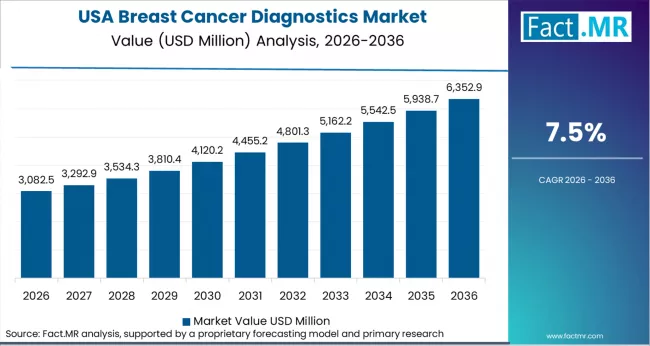
Demand for breast cancer diagnostics in USA is projected to rise at a 7.5% CAGR through 2036, driven by FDA companion diagnostic approvals for CDK4/6 inhibitors and expanded CMS reimbursement for multi-gene prognostic panel testing. Institutional procurement frameworks in USA are advancing toward standardised clinical and regulatory specification requirements aligned with international guidelines, reducing qualification barriers for compliant suppliers while raising minimum standards for market participation. FACT.MR analysts note that the convergence of reimbursement formalisation and healthcare infrastructure investment in USA positions this market for sustained, predictable expansion rather than the demand volatility associated with markets earlier in their development cycle.
Category-wise Insights
Breast Cancer Diagnostics Market Analysis by Cancer Sub-type
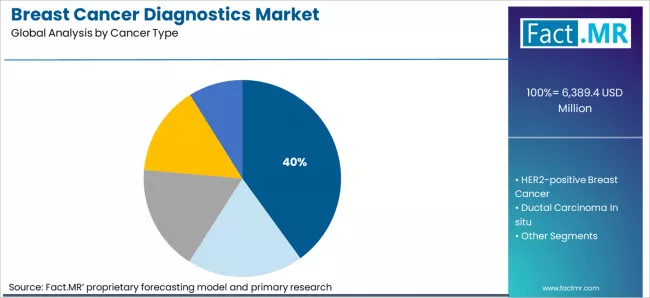
Based on FACT.MR analysis, Invasive Ductal Carcinoma accounts for 40.0% of breast cancer diagnostics market revenue in 2026. IDC's status as the most prevalent breast cancer subtype, representing approximately 70-80% of all breast cancer diagnoses, drives the highest absolute diagnostic testing volume. Comprehensive biomarker profiling of IDC including oestrogen receptor, progesterone receptor, HER2, and Ki-67 status is now standard of care across all major oncology guidelines, generating multiple test requisitions per patient at diagnosis.
- Multi-gene Panel Adoption: Genomic Health's Oncotype DX and Nanostring's Prosigna multi-gene expression panel reimbursement through Medicare and major private insurers in the United States and European national health systems expanded per-patient diagnostic spend beyond standard immunohistochemistry panels for node-negative IDC.
- HER2-Low Classification: The DESTINY-Breast04 trial results published in 2022 established HER2-low as a clinically actionable subgroup requiring HER2 IHC score 1+ and 2+ classification, mandating more precise HER2 quantification and expanding the testable patient population for trastuzumab deruxtecan eligibility.
- Liquid Biopsy Recurrence Monitoring: Foundation Medicine's FoundationOne Liquid CDx received expanded FDA clearance for breast cancer recurrence monitoring in 2024, enabling ctDNA-based surveillance as a complement to imaging in the post-treatment monitoring setting for IDC patients.
Breast Cancer Diagnostics Market Analysis by Disease Stage
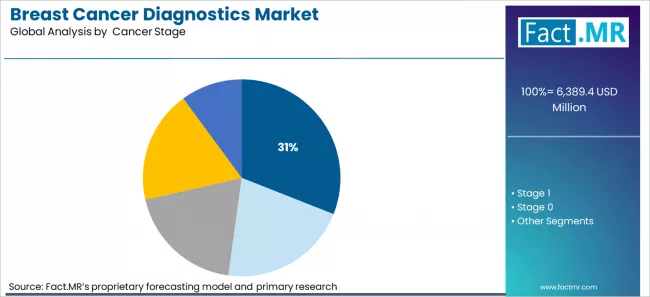
Stage 2 breast cancer accounts for 31.0% of diagnostic revenue in 2026, reflecting both its relatively high prevalence at diagnosis in screened populations and the most comprehensive biomarker testing requirements at this stage. Stage 2 patients are most likely to receive multi-gene prognostic panel testing to determine chemotherapy benefit, the highest-value test in the breast cancer diagnostic pathway.
- Oncotype DX Chemotherapy Decision: The TAILORx trial established Oncotype DX RS score as a validated chemotherapy benefit predictor for node-negative, hormone receptor-positive Stage 1-2 breast cancer, with CMS adding Oncotype DX to its coverage determination as a standard diagnostic pathway component.
- Neoadjuvant Response Assessment: Increasing use of neoadjuvant chemotherapy before surgery in Stage 2-3 breast cancer generates pre- and post-treatment biopsy testing episodes, multiplying diagnostic revenue per patient and creating demand for standardised residual disease pathological assessment protocols.
- AI-Assisted Pathology Integration: Roche's NaviSite digital pathology AI platform and Agilent's Digital Pathology Solutions disclosed clinical validation data for AI-assisted HER2 and Ki-67 scoring in breast cancer specimens in their 2024 product disclosures, improving inter-laboratory concordance and supporting centralised testing at scale.
Competitive Aligners for Market Players
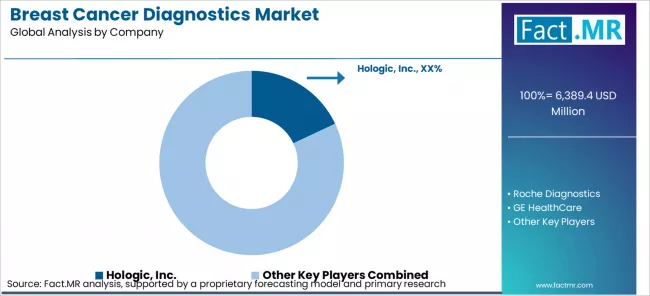
The competitive landscape for the breast cancer diagnostics market is consolidating around suppliers with integrated product portfolios, demonstrated regulatory compliance, established reimbursement status, and clinical evidence depth across multiple geographies. Market concentration is increasing as major institutional buyers apply vendor rationalisation strategies that reduce supply chain complexity at the cost of supplier diversity.
Regulatory clearance and reimbursement coverage are transitioning from competitive differentiators to baseline qualification requirements. Suppliers without active reimbursement coverage in their target markets face exclusion from formulary and preferred vendor programmes regardless of product quality, creating significant barriers to late market entry and sustaining incumbent supplier positions.
Clinical evidence generation is becoming a continuous competitive obligation rather than a one-time regulatory requirement. Leading suppliers maintain rolling real-world evidence programmes and post-market clinical follow-up studies that generate the outcomes data payers require for coverage renewal and guideline committee endorsement.
Key Players in Breast Cancer Diagnostics Market
- Hologic Inc.
- Roche Diagnostics
- GE HealthCare
- Siemens Healthineers AG
- Philips Healthcare
- Abbott Laboratories
- Becton Dickinson and Company
- Thermo Fisher Scientific Inc.
- Fujifilm Holdings Corporation
- Agilent Technologies Inc.
Scope of the Report
| Metric | Value |
|---|---|
| Quantitative Units | USD 6389.41 million to USD 12451.97 million, at a CAGR of 6.9% |
| Market Definition | Breast Cancer Diagnostics encompasses all commercially distributed products and services within this category across defined clinical applications and geographic markets. |
| Cancer Sub-type Segmentation | Invasive Ductal Carcinoma, HER2-positive Breast Cancer, Ductal Carcinoma In Situ, Invasive Lobular Carcinoma, Triple-negative Breast Cancer |
| Disease Stage Segmentation | Stage 0 (DCIS), Stage 1, Stage 2, Stage 3, Stage 4 |
| Application Segmentation | Hospital Laboratories & Imaging Centers, Diagnostic Pathology Laboratories, Academic & Research Institutes, Pharmaceutical & Biotechnology Companies |
| Regions Covered | North America, Latin America, Europe, East Asia, South Asia, Oceania, Middle East & Africa |
| Countries Covered | India, Germany, France, UK, USA, and 40 plus countries |
| Key Companies Profiled | Hologic Inc., Roche Diagnostics, GE HealthCare, Siemens Healthineers AG, Philips Healthcare, Abbott Laboratories, Becton Dickinson and Company, Thermo Fisher Scientific Inc., Fujifilm Holdings Corporation, Agilent Technologies Inc. |
| Forecast Period | 2026 to 2036 |
| Approach | Hybrid bottom-up and top-down forecasting with primary research and reimbursement data validation |
Breast Cancer Diagnostics Market Analysis by Segments
-
Cancer Sub-type:
- Invasive Ductal Carcinoma
- HER2-positive Breast Cancer
- Ductal Carcinoma In Situ
- Invasive Lobular Carcinoma
- Triple-negative Breast Cancer
-
Disease Stage:
- Stage 0 (DCIS)
- Stage 1
- Stage 2
- Stage 3
- Stage 4
-
Application:
- Hospital Laboratories & Imaging Centers
- Diagnostic Pathology Laboratories
- Academic & Research Institutes
- Pharmaceutical & Biotechnology Companies
-
Region:
- North America
- Latin America
- Europe
- East Asia
- South Asia
- Oceania
- Middle East & Africa
Bibliography
- United States Food and Drug Administration. (2024). Companion diagnostics: Breast cancer approved devices and indications list. U.S. FDA.
- National Comprehensive Cancer Network. (2024). NCCN clinical practice guidelines: Breast cancer biomarker testing and treatment. NCCN.
- European Society for Medical Oncology. (2024). ESMO clinical practice guideline: Early breast cancer diagnosis and management. ESMO.
- World Health Organization / IARC. (2024). Global cancer observatory: Breast cancer incidence, mortality, and survival 2024. IARC.
- Centers for Medicare & Medicaid Services. (2024). Local coverage determination: Multi-gene expression panel testing in breast cancer management. CMS.
- NHS England. (2024). Genomic Medicine Service: Breast cancer whole genome sequencing pathway implementation. NHS England.
This Report Addresses
- Market sizing and quantitative forecast metrics for the breast cancer diagnostics from 2026 to 2036, including base-year valuations, segment-level revenues, and CAGR by cancer sub-type, disease stage, and region.
- Segmentation analysis mapping adoption velocity and revenue concentration across Cancer Sub-type and Disease Stage categories with share and growth rate breakdowns.
- Regional deployment intelligence comparing growth trajectories across North America, Europe, East Asia, and South Asia with country-level CAGR data for 5 priority markets.
- Regulatory and reimbursement compliance assessment analysing how national and regional policy frameworks are shaping product qualification requirements and procurement timelines.
- Competitive landscape evaluation covering market structure, leading supplier positioning, clinical evidence requirements, and the strategic implications of ongoing market consolidation.
- Strategic investment guidance identifying regulatory clearance timelines, reimbursement pathways, and distribution infrastructure requirements for new and expanding market participants.
- Clinical evidence and outcomes data analysis identifying the study designs and real-world data sources that support coverage decisions and guideline endorsement in priority markets.
- Custom data delivery formats including interactive dashboards, raw Excel datasets, and comprehensive PDF narrative reports with primary research documentation.
Table of Content
- Executive Summary
- Global Market Outlook
- Demand to side Trends
- Supply to side Trends
- Technology Roadmap Analysis
- Analysis and Recommendations
- Market Overview
- Market Coverage / Taxonomy
- Market Definition / Scope / Limitations
- Research Methodology
- Chapter Orientation
- Analytical Lens and Working Hypotheses
- Market Structure, Signals, and Trend Drivers
- Benchmarking and Cross-market Comparability
- Market Sizing, Forecasting, and Opportunity Mapping
- Research Design and Evidence Framework
- Desk Research Programme (Secondary Evidence)
- Company Annual and Sustainability Reports
- Peer-reviewed Journals and Academic Literature
- Corporate Websites, Product Literature, and Technical Notes
- Earnings Decks and Investor Briefings
- Statutory Filings and Regulatory Disclosures
- Technical White Papers and Standards Notes
- Trade Journals, Industry Magazines, and Analyst Briefs
- Conference Proceedings, Webinars, and Seminar Materials
- Government Statistics Portals and Public Data Releases
- Press Releases and Reputable Media Coverage
- Specialist Newsletters and Curated Briefings
- Sector Databases and Reference Repositories
- FMR Internal Proprietary Databases and Historical Market Datasets
- Subscription Datasets and Paid Sources
- Social Channels, Communities, and Digital Listening Inputs
- Additional Desk Sources
- Expert Input and Fieldwork (Primary Evidence)
- Primary Modes
- Qualitative Interviews and Expert Elicitation
- Quantitative Surveys and Structured Data Capture
- Blended Approach
- Why Primary Evidence is Used
- Field Techniques
- Interviews
- Surveys
- Focus Groups
- Observational and In-context Research
- Social and Community Interactions
- Stakeholder Universe Engaged
- C-suite Leaders
- Board Members
- Presidents and Vice Presidents
- R&D and Innovation Heads
- Technical Specialists
- Domain Subject-matter Experts
- Scientists
- Physicians and Other Healthcare Professionals
- Governance, Ethics, and Data Stewardship
- Research Ethics
- Data Integrity and Handling
- Primary Modes
- Tooling, Models, and Reference Databases
- Desk Research Programme (Secondary Evidence)
- Data Engineering and Model Build
- Data Acquisition and Ingestion
- Cleaning, Normalisation, and Verification
- Synthesis, Triangulation, and Analysis
- Quality Assurance and Audit Trail
- Market Background
- Market Dynamics
- Drivers
- Restraints
- Opportunity
- Trends
- Scenario Forecast
- Demand in Optimistic Scenario
- Demand in Likely Scenario
- Demand in Conservative Scenario
- Opportunity Map Analysis
- Product Life Cycle Analysis
- Supply Chain Analysis
- Investment Feasibility Matrix
- Value Chain Analysis
- PESTLE and Porter’s Analysis
- Regulatory Landscape
- Regional Parent Market Outlook
- Production and Consumption Statistics
- Import and Export Statistics
- Market Dynamics
- Global Market Analysis 2021 to 2025 and Forecast, 2026 to 2036
- Historical Market Size Value (USD Million) Analysis, 2021 to 2025
- Current and Future Market Size Value (USD Million) Projections, 2026 to 2036
- Y to o to Y Growth Trend Analysis
- Absolute $ Opportunity Analysis
- Global Market Pricing Analysis 2021 to 2025 and Forecast 2026 to 2036
- Global Market Analysis 2021 to 2025 and Forecast 2026 to 2036, By Cancer Type
- Introduction / Key Findings
- Historical Market Size Value (USD Million) Analysis By Cancer Type, 2021 to 2025
- Current and Future Market Size Value (USD Million) Analysis and Forecast By Cancer Type, 2026 to 2036
- Invasive Ductal Carcinoma
- HER2-positive Breast Cancer
- Ductal Carcinoma In situ
- Invasive Lobular Carcinoma
- Triple-negative Breast Cancer
- Invasive Ductal Carcinoma
- Y to o to Y Growth Trend Analysis By Cancer Type, 2021 to 2025
- Absolute $ Opportunity Analysis By Cancer Type, 2026 to 2036
- Global Market Analysis 2021 to 2025 and Forecast 2026 to 2036, By Cancer Stage
- Introduction / Key Findings
- Historical Market Size Value (USD Million) Analysis By Cancer Stage, 2021 to 2025
- Current and Future Market Size Value (USD Million) Analysis and Forecast By Cancer Stage, 2026 to 2036
- Stage 2
- Stage 1
- Stage 0
- Stage 3
- Stage 4
- Stage 2
- Y to o to Y Growth Trend Analysis By Cancer Stage, 2021 to 2025
- Absolute $ Opportunity Analysis By Cancer Stage, 2026 to 2036
- Global Market Analysis 2021 to 2025 and Forecast 2026 to 2036, By Grade
- Introduction / Key Findings
- Historical Market Size Value (USD Million) Analysis By Grade, 2021 to 2025
- Current and Future Market Size Value (USD Million) Analysis and Forecast By Grade, 2026 to 2036
- Grade 2
- Grade 1
- Grade 3
- Grade 2
- Y to o to Y Growth Trend Analysis By Grade, 2021 to 2025
- Absolute $ Opportunity Analysis By Grade, 2026 to 2036
- Global Market Analysis 2021 to 2025 and Forecast 2026 to 2036, By End User
- Introduction / Key Findings
- Historical Market Size Value (USD Million) Analysis By End User, 2021 to 2025
- Current and Future Market Size Value (USD Million) Analysis and Forecast By End User, 2026 to 2036
- Hospitals & Clinics
- Diagnostic Centers & Imaging Laboratories
- Academic & Research Institutes
- Ambulatory Care Centers
- Pharmaceutical & Biotechnology Companies
- Hospitals & Clinics
- Y to o to Y Growth Trend Analysis By End User, 2021 to 2025
- Absolute $ Opportunity Analysis By End User, 2026 to 2036
- Global Market Analysis 2021 to 2025 and Forecast 2026 to 2036, By Region
- Introduction
- Historical Market Size Value (USD Million) Analysis By Region, 2021 to 2025
- Current Market Size Value (USD Million) Analysis and Forecast By Region, 2026 to 2036
- North America
- Latin America
- Western Europe
- Eastern Europe
- East Asia
- South Asia and Pacific
- Middle East & Africa
- Market Attractiveness Analysis By Region
- North America Market Analysis 2021 to 2025 and Forecast 2026 to 2036, By Country
- Historical Market Size Value (USD Million) Trend Analysis By Market Taxonomy, 2021 to 2025
- Market Size Value (USD Million) Forecast By Market Taxonomy, 2026 to 2036
- By Country
- USA
- Canada
- Mexico
- By Cancer Type
- By Cancer Stage
- By Grade
- By End User
- By Country
- Market Attractiveness Analysis
- By Country
- By Cancer Type
- By Cancer Stage
- By Grade
- By End User
- Key Takeaways
- Latin America Market Analysis 2021 to 2025 and Forecast 2026 to 2036, By Country
- Historical Market Size Value (USD Million) Trend Analysis By Market Taxonomy, 2021 to 2025
- Market Size Value (USD Million) Forecast By Market Taxonomy, 2026 to 2036
- By Country
- Brazil
- Chile
- Rest of Latin America
- By Cancer Type
- By Cancer Stage
- By Grade
- By End User
- By Country
- Market Attractiveness Analysis
- By Country
- By Cancer Type
- By Cancer Stage
- By Grade
- By End User
- Key Takeaways
- Western Europe Market Analysis 2021 to 2025 and Forecast 2026 to 2036, By Country
- Historical Market Size Value (USD Million) Trend Analysis By Market Taxonomy, 2021 to 2025
- Market Size Value (USD Million) Forecast By Market Taxonomy, 2026 to 2036
- By Country
- Germany
- UK
- Italy
- Spain
- France
- Nordic
- BENELUX
- Rest of Western Europe
- By Cancer Type
- By Cancer Stage
- By Grade
- By End User
- By Country
- Market Attractiveness Analysis
- By Country
- By Cancer Type
- By Cancer Stage
- By Grade
- By End User
- Key Takeaways
- Eastern Europe Market Analysis 2021 to 2025 and Forecast 2026 to 2036, By Country
- Historical Market Size Value (USD Million) Trend Analysis By Market Taxonomy, 2021 to 2025
- Market Size Value (USD Million) Forecast By Market Taxonomy, 2026 to 2036
- By Country
- Russia
- Poland
- Hungary
- Balkan & Baltic
- Rest of Eastern Europe
- By Cancer Type
- By Cancer Stage
- By Grade
- By End User
- By Country
- Market Attractiveness Analysis
- By Country
- By Cancer Type
- By Cancer Stage
- By Grade
- By End User
- Key Takeaways
- East Asia Market Analysis 2021 to 2025 and Forecast 2026 to 2036, By Country
- Historical Market Size Value (USD Million) Trend Analysis By Market Taxonomy, 2021 to 2025
- Market Size Value (USD Million) Forecast By Market Taxonomy, 2026 to 2036
- By Country
- China
- Japan
- South Korea
- By Cancer Type
- By Cancer Stage
- By Grade
- By End User
- By Country
- Market Attractiveness Analysis
- By Country
- By Cancer Type
- By Cancer Stage
- By Grade
- By End User
- Key Takeaways
- South Asia and Pacific Market Analysis 2021 to 2025 and Forecast 2026 to 2036, By Country
- Historical Market Size Value (USD Million) Trend Analysis By Market Taxonomy, 2021 to 2025
- Market Size Value (USD Million) Forecast By Market Taxonomy, 2026 to 2036
- By Country
- India
- ASEAN
- Australia & New Zealand
- Rest of South Asia and Pacific
- By Cancer Type
- By Cancer Stage
- By Grade
- By End User
- By Country
- Market Attractiveness Analysis
- By Country
- By Cancer Type
- By Cancer Stage
- By Grade
- By End User
- Key Takeaways
- Middle East & Africa Market Analysis 2021 to 2025 and Forecast 2026 to 2036, By Country
- Historical Market Size Value (USD Million) Trend Analysis By Market Taxonomy, 2021 to 2025
- Market Size Value (USD Million) Forecast By Market Taxonomy, 2026 to 2036
- By Country
- Kingdom of Saudi Arabia
- Other GCC Countries
- Turkiye
- South Africa
- Other African Union
- Rest of Middle East & Africa
- By Cancer Type
- By Cancer Stage
- By Grade
- By End User
- By Country
- Market Attractiveness Analysis
- By Country
- By Cancer Type
- By Cancer Stage
- By Grade
- By End User
- Key Takeaways
- Key Countries Market Analysis
- USA
- Pricing Analysis
- Market Share Analysis, 2025
- By Cancer Type
- By Cancer Stage
- By Grade
- By End User
- Canada
- Pricing Analysis
- Market Share Analysis, 2025
- By Cancer Type
- By Cancer Stage
- By Grade
- By End User
- Mexico
- Pricing Analysis
- Market Share Analysis, 2025
- By Cancer Type
- By Cancer Stage
- By Grade
- By End User
- Brazil
- Pricing Analysis
- Market Share Analysis, 2025
- By Cancer Type
- By Cancer Stage
- By Grade
- By End User
- Chile
- Pricing Analysis
- Market Share Analysis, 2025
- By Cancer Type
- By Cancer Stage
- By Grade
- By End User
- Germany
- Pricing Analysis
- Market Share Analysis, 2025
- By Cancer Type
- By Cancer Stage
- By Grade
- By End User
- UK
- Pricing Analysis
- Market Share Analysis, 2025
- By Cancer Type
- By Cancer Stage
- By Grade
- By End User
- Italy
- Pricing Analysis
- Market Share Analysis, 2025
- By Cancer Type
- By Cancer Stage
- By Grade
- By End User
- Spain
- Pricing Analysis
- Market Share Analysis, 2025
- By Cancer Type
- By Cancer Stage
- By Grade
- By End User
- France
- Pricing Analysis
- Market Share Analysis, 2025
- By Cancer Type
- By Cancer Stage
- By Grade
- By End User
- India
- Pricing Analysis
- Market Share Analysis, 2025
- By Cancer Type
- By Cancer Stage
- By Grade
- By End User
- ASEAN
- Pricing Analysis
- Market Share Analysis, 2025
- By Cancer Type
- By Cancer Stage
- By Grade
- By End User
- Australia & New Zealand
- Pricing Analysis
- Market Share Analysis, 2025
- By Cancer Type
- By Cancer Stage
- By Grade
- By End User
- China
- Pricing Analysis
- Market Share Analysis, 2025
- By Cancer Type
- By Cancer Stage
- By Grade
- By End User
- Japan
- Pricing Analysis
- Market Share Analysis, 2025
- By Cancer Type
- By Cancer Stage
- By Grade
- By End User
- South Korea
- Pricing Analysis
- Market Share Analysis, 2025
- By Cancer Type
- By Cancer Stage
- By Grade
- By End User
- Russia
- Pricing Analysis
- Market Share Analysis, 2025
- By Cancer Type
- By Cancer Stage
- By Grade
- By End User
- Poland
- Pricing Analysis
- Market Share Analysis, 2025
- By Cancer Type
- By Cancer Stage
- By Grade
- By End User
- Hungary
- Pricing Analysis
- Market Share Analysis, 2025
- By Cancer Type
- By Cancer Stage
- By Grade
- By End User
- Kingdom of Saudi Arabia
- Pricing Analysis
- Market Share Analysis, 2025
- By Cancer Type
- By Cancer Stage
- By Grade
- By End User
- Turkiye
- Pricing Analysis
- Market Share Analysis, 2025
- By Cancer Type
- By Cancer Stage
- By Grade
- By End User
- South Africa
- Pricing Analysis
- Market Share Analysis, 2025
- By Cancer Type
- By Cancer Stage
- By Grade
- By End User
- USA
- Market Structure Analysis
- Competition Dashboard
- Competition Benchmarking
- Market Share Analysis of Top Players
- By Regional
- By Cancer Type
- By Cancer Stage
- By Grade
- By End User
- Competition Analysis
- Competition Deep Dive
- Hologic, Inc.
- Overview
- Product Portfolio
- Profitability by Market Segments (Product/Age /Sales Channel/Region)
- Sales Footprint
- Strategy Overview
- Marketing Strategy
- Product Strategy
- Channel Strategy
- Roche Diagnostics
- GE HealthCare
- Siemens Healthineers AG
- Philips Healthcare
- Abbott Laboratories
- Becton, Dickinson and Company
- Thermo Fisher Scientific
- Fujifilm Holdings Corporation
- Agilent Technologies, Inc.
- Hologic, Inc.
- Competition Deep Dive
- Assumptions & Acronyms Used
List Of Table
- Table 1: Global Market Value (USD Million) Forecast by Region, 2021 to 2036
- Table 2: Global Market Value (USD Million) Forecast by Cancer Type, 2021 to 2036
- Table 3: Global Market Value (USD Million) Forecast by Cancer Stage, 2021 to 2036
- Table 4: Global Market Value (USD Million) Forecast by Grade, 2021 to 2036
- Table 5: Global Market Value (USD Million) Forecast by End User, 2021 to 2036
- Table 6: North America Market Value (USD Million) Forecast by Country, 2021 to 2036
- Table 7: North America Market Value (USD Million) Forecast by Cancer Type, 2021 to 2036
- Table 8: North America Market Value (USD Million) Forecast by Cancer Stage, 2021 to 2036
- Table 9: North America Market Value (USD Million) Forecast by Grade, 2021 to 2036
- Table 10: North America Market Value (USD Million) Forecast by End User, 2021 to 2036
- Table 11: Latin America Market Value (USD Million) Forecast by Country, 2021 to 2036
- Table 12: Latin America Market Value (USD Million) Forecast by Cancer Type, 2021 to 2036
- Table 13: Latin America Market Value (USD Million) Forecast by Cancer Stage, 2021 to 2036
- Table 14: Latin America Market Value (USD Million) Forecast by Grade, 2021 to 2036
- Table 15: Latin America Market Value (USD Million) Forecast by End User, 2021 to 2036
- Table 16: Western Europe Market Value (USD Million) Forecast by Country, 2021 to 2036
- Table 17: Western Europe Market Value (USD Million) Forecast by Cancer Type, 2021 to 2036
- Table 18: Western Europe Market Value (USD Million) Forecast by Cancer Stage, 2021 to 2036
- Table 19: Western Europe Market Value (USD Million) Forecast by Grade, 2021 to 2036
- Table 20: Western Europe Market Value (USD Million) Forecast by End User, 2021 to 2036
- Table 21: Eastern Europe Market Value (USD Million) Forecast by Country, 2021 to 2036
- Table 22: Eastern Europe Market Value (USD Million) Forecast by Cancer Type, 2021 to 2036
- Table 23: Eastern Europe Market Value (USD Million) Forecast by Cancer Stage, 2021 to 2036
- Table 24: Eastern Europe Market Value (USD Million) Forecast by Grade, 2021 to 2036
- Table 25: Eastern Europe Market Value (USD Million) Forecast by End User, 2021 to 2036
- Table 26: East Asia Market Value (USD Million) Forecast by Country, 2021 to 2036
- Table 27: East Asia Market Value (USD Million) Forecast by Cancer Type, 2021 to 2036
- Table 28: East Asia Market Value (USD Million) Forecast by Cancer Stage, 2021 to 2036
- Table 29: East Asia Market Value (USD Million) Forecast by Grade, 2021 to 2036
- Table 30: East Asia Market Value (USD Million) Forecast by End User, 2021 to 2036
- Table 31: South Asia and Pacific Market Value (USD Million) Forecast by Country, 2021 to 2036
- Table 32: South Asia and Pacific Market Value (USD Million) Forecast by Cancer Type, 2021 to 2036
- Table 33: South Asia and Pacific Market Value (USD Million) Forecast by Cancer Stage, 2021 to 2036
- Table 34: South Asia and Pacific Market Value (USD Million) Forecast by Grade, 2021 to 2036
- Table 35: South Asia and Pacific Market Value (USD Million) Forecast by End User, 2021 to 2036
- Table 36: Middle East & Africa Market Value (USD Million) Forecast by Country, 2021 to 2036
- Table 37: Middle East & Africa Market Value (USD Million) Forecast by Cancer Type, 2021 to 2036
- Table 38: Middle East & Africa Market Value (USD Million) Forecast by Cancer Stage, 2021 to 2036
- Table 39: Middle East & Africa Market Value (USD Million) Forecast by Grade, 2021 to 2036
- Table 40: Middle East & Africa Market Value (USD Million) Forecast by End User, 2021 to 2036
List Of Figures
- Figure 1: Global Market Pricing Analysis
- Figure 2: Global Market Value (USD Million) Forecast 2021 to 2036
- Figure 3: Global Market Value Share and BPS Analysis by Cancer Type, 2026 and 2036
- Figure 4: Global Market Y to o to Y Growth Comparison by Cancer Type, 2026 to 2036
- Figure 5: Global Market Attractiveness Analysis by Cancer Type
- Figure 6: Global Market Value Share and BPS Analysis by Cancer Stage, 2026 and 2036
- Figure 7: Global Market Y to o to Y Growth Comparison by Cancer Stage, 2026 to 2036
- Figure 8: Global Market Attractiveness Analysis by Cancer Stage
- Figure 9: Global Market Value Share and BPS Analysis by Grade, 2026 and 2036
- Figure 10: Global Market Y to o to Y Growth Comparison by Grade, 2026 to 2036
- Figure 11: Global Market Attractiveness Analysis by Grade
- Figure 12: Global Market Value Share and BPS Analysis by End User, 2026 and 2036
- Figure 13: Global Market Y to o to Y Growth Comparison by End User, 2026 to 2036
- Figure 14: Global Market Attractiveness Analysis by End User
- Figure 15: Global Market Value (USD Million) Share and BPS Analysis by Region, 2026 and 2036
- Figure 16: Global Market Y to o to Y Growth Comparison by Region, 2026 to 2036
- Figure 17: Global Market Attractiveness Analysis by Region
- Figure 18: North America Market Incremental Dollar Opportunity, 2026 to 2036
- Figure 19: Latin America Market Incremental Dollar Opportunity, 2026 to 2036
- Figure 20: Western Europe Market Incremental Dollar Opportunity, 2026 to 2036
- Figure 21: Eastern Europe Market Incremental Dollar Opportunity, 2026 to 2036
- Figure 22: East Asia Market Incremental Dollar Opportunity, 2026 to 2036
- Figure 23: South Asia and Pacific Market Incremental Dollar Opportunity, 2026 to 2036
- Figure 24: Middle East & Africa Market Incremental Dollar Opportunity, 2026 to 2036
- Figure 25: North America Market Value Share and BPS Analysis by Country, 2026 and 2036
- Figure 26: North America Market Value Share and BPS Analysis by Cancer Type, 2026 and 2036
- Figure 27: North America Market Y to o to Y Growth Comparison by Cancer Type, 2026 to 2036
- Figure 28: North America Market Attractiveness Analysis by Cancer Type
- Figure 29: North America Market Value Share and BPS Analysis by Cancer Stage, 2026 and 2036
- Figure 30: North America Market Y to o to Y Growth Comparison by Cancer Stage, 2026 to 2036
- Figure 31: North America Market Attractiveness Analysis by Cancer Stage
- Figure 32: North America Market Value Share and BPS Analysis by Grade, 2026 and 2036
- Figure 33: North America Market Y to o to Y Growth Comparison by Grade, 2026 to 2036
- Figure 34: North America Market Attractiveness Analysis by Grade
- Figure 35: North America Market Value Share and BPS Analysis by End User, 2026 and 2036
- Figure 36: North America Market Y to o to Y Growth Comparison by End User, 2026 to 2036
- Figure 37: North America Market Attractiveness Analysis by End User
- Figure 38: Latin America Market Value Share and BPS Analysis by Country, 2026 and 2036
- Figure 39: Latin America Market Value Share and BPS Analysis by Cancer Type, 2026 and 2036
- Figure 40: Latin America Market Y to o to Y Growth Comparison by Cancer Type, 2026 to 2036
- Figure 41: Latin America Market Attractiveness Analysis by Cancer Type
- Figure 42: Latin America Market Value Share and BPS Analysis by Cancer Stage, 2026 and 2036
- Figure 43: Latin America Market Y to o to Y Growth Comparison by Cancer Stage, 2026 to 2036
- Figure 44: Latin America Market Attractiveness Analysis by Cancer Stage
- Figure 45: Latin America Market Value Share and BPS Analysis by Grade, 2026 and 2036
- Figure 46: Latin America Market Y to o to Y Growth Comparison by Grade, 2026 to 2036
- Figure 47: Latin America Market Attractiveness Analysis by Grade
- Figure 48: Latin America Market Value Share and BPS Analysis by End User, 2026 and 2036
- Figure 49: Latin America Market Y to o to Y Growth Comparison by End User, 2026 to 2036
- Figure 50: Latin America Market Attractiveness Analysis by End User
- Figure 51: Western Europe Market Value Share and BPS Analysis by Country, 2026 and 2036
- Figure 52: Western Europe Market Value Share and BPS Analysis by Cancer Type, 2026 and 2036
- Figure 53: Western Europe Market Y to o to Y Growth Comparison by Cancer Type, 2026 to 2036
- Figure 54: Western Europe Market Attractiveness Analysis by Cancer Type
- Figure 55: Western Europe Market Value Share and BPS Analysis by Cancer Stage, 2026 and 2036
- Figure 56: Western Europe Market Y to o to Y Growth Comparison by Cancer Stage, 2026 to 2036
- Figure 57: Western Europe Market Attractiveness Analysis by Cancer Stage
- Figure 58: Western Europe Market Value Share and BPS Analysis by Grade, 2026 and 2036
- Figure 59: Western Europe Market Y to o to Y Growth Comparison by Grade, 2026 to 2036
- Figure 60: Western Europe Market Attractiveness Analysis by Grade
- Figure 61: Western Europe Market Value Share and BPS Analysis by End User, 2026 and 2036
- Figure 62: Western Europe Market Y to o to Y Growth Comparison by End User, 2026 to 2036
- Figure 63: Western Europe Market Attractiveness Analysis by End User
- Figure 64: Eastern Europe Market Value Share and BPS Analysis by Country, 2026 and 2036
- Figure 65: Eastern Europe Market Value Share and BPS Analysis by Cancer Type, 2026 and 2036
- Figure 66: Eastern Europe Market Y to o to Y Growth Comparison by Cancer Type, 2026 to 2036
- Figure 67: Eastern Europe Market Attractiveness Analysis by Cancer Type
- Figure 68: Eastern Europe Market Value Share and BPS Analysis by Cancer Stage, 2026 and 2036
- Figure 69: Eastern Europe Market Y to o to Y Growth Comparison by Cancer Stage, 2026 to 2036
- Figure 70: Eastern Europe Market Attractiveness Analysis by Cancer Stage
- Figure 71: Eastern Europe Market Value Share and BPS Analysis by Grade, 2026 and 2036
- Figure 72: Eastern Europe Market Y to o to Y Growth Comparison by Grade, 2026 to 2036
- Figure 73: Eastern Europe Market Attractiveness Analysis by Grade
- Figure 74: Eastern Europe Market Value Share and BPS Analysis by End User, 2026 and 2036
- Figure 75: Eastern Europe Market Y to o to Y Growth Comparison by End User, 2026 to 2036
- Figure 76: Eastern Europe Market Attractiveness Analysis by End User
- Figure 77: East Asia Market Value Share and BPS Analysis by Country, 2026 and 2036
- Figure 78: East Asia Market Value Share and BPS Analysis by Cancer Type, 2026 and 2036
- Figure 79: East Asia Market Y to o to Y Growth Comparison by Cancer Type, 2026 to 2036
- Figure 80: East Asia Market Attractiveness Analysis by Cancer Type
- Figure 81: East Asia Market Value Share and BPS Analysis by Cancer Stage, 2026 and 2036
- Figure 82: East Asia Market Y to o to Y Growth Comparison by Cancer Stage, 2026 to 2036
- Figure 83: East Asia Market Attractiveness Analysis by Cancer Stage
- Figure 84: East Asia Market Value Share and BPS Analysis by Grade, 2026 and 2036
- Figure 85: East Asia Market Y to o to Y Growth Comparison by Grade, 2026 to 2036
- Figure 86: East Asia Market Attractiveness Analysis by Grade
- Figure 87: East Asia Market Value Share and BPS Analysis by End User, 2026 and 2036
- Figure 88: East Asia Market Y to o to Y Growth Comparison by End User, 2026 to 2036
- Figure 89: East Asia Market Attractiveness Analysis by End User
- Figure 90: South Asia and Pacific Market Value Share and BPS Analysis by Country, 2026 and 2036
- Figure 91: South Asia and Pacific Market Value Share and BPS Analysis by Cancer Type, 2026 and 2036
- Figure 92: South Asia and Pacific Market Y to o to Y Growth Comparison by Cancer Type, 2026 to 2036
- Figure 93: South Asia and Pacific Market Attractiveness Analysis by Cancer Type
- Figure 94: South Asia and Pacific Market Value Share and BPS Analysis by Cancer Stage, 2026 and 2036
- Figure 95: South Asia and Pacific Market Y to o to Y Growth Comparison by Cancer Stage, 2026 to 2036
- Figure 96: South Asia and Pacific Market Attractiveness Analysis by Cancer Stage
- Figure 97: South Asia and Pacific Market Value Share and BPS Analysis by Grade, 2026 and 2036
- Figure 98: South Asia and Pacific Market Y to o to Y Growth Comparison by Grade, 2026 to 2036
- Figure 99: South Asia and Pacific Market Attractiveness Analysis by Grade
- Figure 100: South Asia and Pacific Market Value Share and BPS Analysis by End User, 2026 and 2036
- Figure 101: South Asia and Pacific Market Y to o to Y Growth Comparison by End User, 2026 to 2036
- Figure 102: South Asia and Pacific Market Attractiveness Analysis by End User
- Figure 103: Middle East & Africa Market Value Share and BPS Analysis by Country, 2026 and 2036
- Figure 104: Middle East & Africa Market Value Share and BPS Analysis by Cancer Type, 2026 and 2036
- Figure 105: Middle East & Africa Market Y to o to Y Growth Comparison by Cancer Type, 2026 to 2036
- Figure 106: Middle East & Africa Market Attractiveness Analysis by Cancer Type
- Figure 107: Middle East & Africa Market Value Share and BPS Analysis by Cancer Stage, 2026 and 2036
- Figure 108: Middle East & Africa Market Y to o to Y Growth Comparison by Cancer Stage, 2026 to 2036
- Figure 109: Middle East & Africa Market Attractiveness Analysis by Cancer Stage
- Figure 110: Middle East & Africa Market Value Share and BPS Analysis by Grade, 2026 and 2036
- Figure 111: Middle East & Africa Market Y to o to Y Growth Comparison by Grade, 2026 to 2036
- Figure 112: Middle East & Africa Market Attractiveness Analysis by Grade
- Figure 113: Middle East & Africa Market Value Share and BPS Analysis by End User, 2026 and 2036
- Figure 114: Middle East & Africa Market Y to o to Y Growth Comparison by End User, 2026 to 2036
- Figure 115: Middle East & Africa Market Attractiveness Analysis by End User
- Figure 116: Global Market - Tier Structure Analysis
- Figure 117: Global Market - Company Share Analysis
- FAQs -
How large is the Breast Cancer Diagnostics in 2026?
The breast cancer diagnostics is valued at USD 6389.41 million in 2026.
What will the market size be by 2036?
FACT.MR projects the breast cancer diagnostics to reach USD 12451.97 million by 2036, an absolute increase of USD 6063 million from the 2026 base.
What CAGR is forecast for 2026 to 2036?
The breast cancer diagnostics is forecast to expand at a 6.9% CAGR between 2026 and 2036.
Which Cancer Sub-type leads in 2026?
Invasive Ductal Carcinoma leads the Cancer Sub-type segment with 40.0% share in 2026.
Which Disease Stage is most significant?
Stage 2 accounts for 31.0% of Disease Stage demand in 2026.
Which country records the highest growth?
India registers the highest CAGR at 10.8%, driven by National Cancer Grid molecular diagnostics standardisation and PM-JAY oncology benefit package covering HER2 and hormone receptor testing.
What is excluded from this report scope?
Downstream applications not directly attributable to the breast cancer diagnostics category, substitute product markets, and pre-commercial technologies without validated revenue are excluded.
How does FACT.MR validate its forecast?
Forecasts are validated through primary research interviews, cross-referenced against company primary disclosures and reimbursement data, and benchmarked against government statistics across 40-plus countries.