Ergodynamic Strap Systems Market
Ergodynamic Strap Systems Market Size and Share Forecast Outlook 2026 to 2036
Ergodynamic strap systems market is projected to grow from USD 0.5 billion in 2026 to USD 1.2 billion by 2036, at a CAGR of 9.6%. Manufacturing & distribution ergonomics will dominate with a 40.0% market share, while adjustable ergonomic strapping stations will lead the product type segment with a 50.0% share.
Ergodynamic Strap Systems Market Forecast and Outlook 2026 to 2036
The global ergodynamic strap systems market is valued at USD 0.49 Billion in 2026 and is set to reach USD 1.22 Billion by 2036, recording a CAGR of 9.6% between 2026 and 2036. In 2026, the manufacturing & distribution ergonomics application segment is projected to hold a 40% share, while adjustable ergonomic strapping stations account for 50% by product type.
Key Takeaways from the Ergodynamic Strap Systems Market Report
- Market Value of the Ergodynamic Strap Systems Market (2026): USD 0.49 Billion
- Market Forecast Value of the Ergodynamic Strap Systems Market (2036): USD 1.22 Billion
- Forecast CAGR of the Ergodynamic Strap Systems Market (2026-2036): 9.6%
- Leading Application Segment of the Ergodynamic Strap Systems Market: Manufacturing & Distribution Ergonomics (40%)
- Leading Product Type of the Ergodynamic Strap Systems Market: Adjustable Ergonomic Strapping Stations (50%)
- Key Growth Regions of the Ergodynamic Strap Systems Market: North America, Europe, Asia Pacific, Latin America, MEA
- Key Players of the Ergodynamic Strap Systems Market: Mosca, Signode, Tsubaki Group, UFlex (partners), and other local OEMs
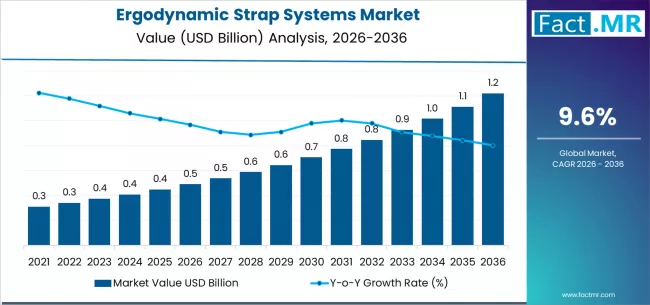
Market expansion is propelled by the growing corporate and regulatory emphasis on workplace safety and the reduction of musculoskeletal disorders (MSDs) in logistics and production environments. Traditional manual strapping is labor-intensive and a leading cause of strain injuries. Ergodynamic systems, incorporating tension-assist mechanisms and optimized tool design, significantly reduce the physical force required, directly addressing these health and productivity challenges.
Growth over the forecast period will be shaped by the integration of smart features and material innovation. The convergence of ergonomic design with IoT-enabled monitoring creates systems that not only protect workers but also provide data on usage patterns and maintenance needs.
The adoption of lightweight composite and recycled polypropylene straps further reduces the physical load on operators, while innovations in quick-adjust ratchet and motorized feed technologies minimize repetitive motion, boosting both safety and throughput in fast-paced operations like e-commerce fulfillment.
Ergodynamic Strap Systems Market
| Metric | Value |
|---|---|
| Estimated Value in (2026E) | USD 0.49 Billion |
| Forecast Value in (2036F) | USD 1.22 Billion |
| Forecast CAGR (2026 to 2036) | 9.6% |
Category
| Category | Segments |
|---|---|
| End-use/Application | Manufacturing & Distribution Ergonomics, Palletizing Lines / FMCG, E-commerce Packaging Ops, SMEs & Warehouses, Distribution Hubs, Others |
| Product Type | Adjustable Ergonomic Strapping Stations, Handheld Ergonomic Tensioners, Semi-auto Ergonomic Units, Compact Ergonomic Sets, Others |
| Material | Lightweight Composite Straps, PP / rPP Straps, Recycled Poly Straps, Others |
| Technology | Tension-assist + Auto-feed Mechanisms, Motorized Feed & Quick-tension, Quick-adjust Ratchet Systems, Assistive Tension Levers, Others |
| Region | North America, Europe, Asia Pacific, Latin America, MEA |
Segmental Analysis
Why does Manufacturing and Distribution Ergonomics Capture the Dominant Share?
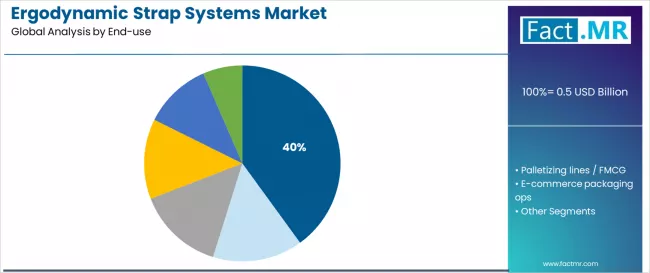
The manufacturing and distribution ergonomics segment commands a 40% market share in 2026, reflecting its role as the primary driver for adopting safer work practices. This segment addresses the high incidence of repetitive strain injuries and fatigue among workers performing manual strapping tasks on production lines and in warehouses.
Regulatory pressures from occupational health bodies and the rising cost of worker compensation claims are compelling companies to invest in solutions that mitigate physical risk. Ergodynamic systems in this environment are designed for high-cycle use, reducing the force and awkward postures required to secure pallets. This directly improves worker well-being, reduces absenteeism, and enhances long-term operational continuity by preserving a healthy workforce.
- Corporate sustainability and ESG (Environmental, Social, and Governance) reports increasingly highlight worker safety metrics, making ergonomic investments a component of brand reputation.
- The segment drives demand for robust, industrial-grade systems that can withstand continuous use while providing measurable reductions in physical exertion metrics.
How are Adjustable Ergonomic Strapping Stations Redefining the Face of Ergodynamic Strap Systems?
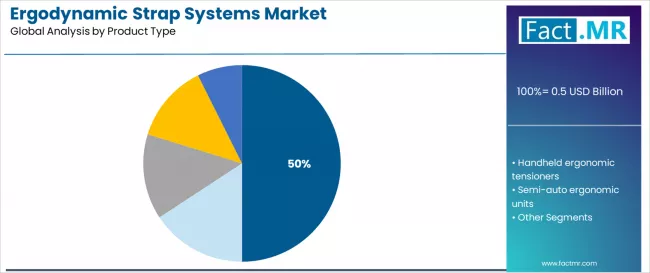
Adjustable ergonomic strapping stations are projected to hold a 50% share by product type in 2026. Their dominance is rooted in their ability to create a customized and optimized work environment for operators of different statures and for pallets of varying sizes. These stations integrate tensioning tools, strap dispensers, and cutting mechanisms at ergonomically correct heights, eliminating excessive bending, reaching, and lifting.
The adjustable nature future-proofs the workspace, accommodating different tasks and operators without requiring fixed, single-purpose setups. This flexibility is critical in mixed-use distribution centers where packaging requirements change daily. The station-based approach also centralizes the strapping process, improving workflow organization and reducing clutter.
- The design significantly reduces the risk of lower back injuries and shoulder strain by positioning the work in the operator's "power zone."
- Stations often serve as a platform for integrating advanced technologies like automatic feed and tension control, providing a foundation for semi-automation.
What are the Drivers, Restraints, and Trends in the Ergodynamic Strap Systems Market?
The market is driven by stringent global occupational health and safety regulations, rising awareness of MSD costs, and labor shortages that make worker retention and efficiency paramount. A key restraint is the higher upfront cost compared to basic manual tools, requiring a clear demonstration of return on investment through reduced injury rates and improved productivity.
The market is trending towards the hybridization of ergonomics with connectivity, where systems log usage data to optimize workflows, and towards the development of ultra-lightweight, biodegradable strap materials that further reduce the environmental and physical load of the strapping process.
Analysis of the Ergodynamic Strap Systems Market by Key Countries
| Country | CAGR (2026-2036) |
|---|---|
| India | 11.5% |
| China | 10.8% |
| USA | 8.5% |
| Germany | 7.5% |
| Brazil | 7.2% |
| Japan | 4.5% |
How is Formalization and E-commerce Growth Accelerating Adoption in India?
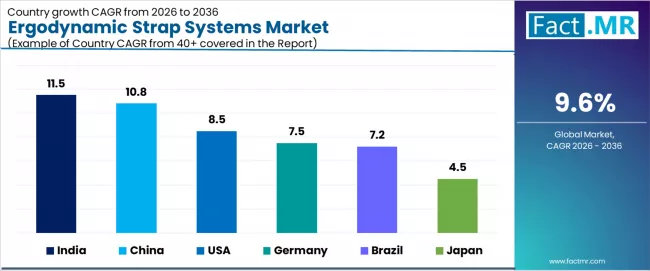
Demand for ergodynamic strap systems in India is projected to grow at a leading CAGR of 11.5% through 2036. This is propelled by the rapid expansion and formalization of the logistics sector, spurred by e-commerce growth. New large-scale fulfillment centers are being built with modern worker safety standards in mind, creating greenfield opportunities for ergonomic equipment. The semi-auto ergonomic unit and compact set segments see high uptake among SMEs and third-party logistics providers seeking to improve efficiency and reduce turnover in a competitive labor market.
- Increasing awareness of workplace safety regulations and the growth of organized retail logistics are pushing companies to move beyond basic manual tools.
- Local OEMs are developing cost-effective, robust solutions tailored to the high-volume, variable-load nature of India's domestic logistics market.
What role does Automation and Scale Play in China's Manufacturing and FMCG Sectors?
Deployment of ergodynamic strap systems in China is forecast to grow at a CAGR of 10.8%. The sheer scale of China’s manufacturing and FMCG export operations drives the market, where high-speed palletizing lines demand tools that maximize operator speed while minimizing fatigue. There is a strong focus on motorized feed and quick-tension systems that integrate seamlessly with automated packaging lines, reducing bottlenecks in high-throughput environments.
- The push towards higher-value, smart manufacturing includes investments in worker ergonomics as part of overall production optimization.
- Large domestic manufacturers are sourcing advanced tension-assist systems to protect workers and maintain consistent output quality on 24/7 production shifts.
How do Regulatory Compliance and Productivity Focus shape Ergodynamic Strap Systems Demand in USA?
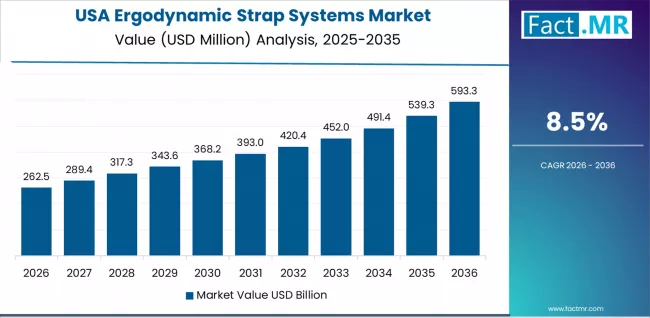
The market for ergodynamic strap systems in the USA is set to grow at a CAGR of 8.5%. Growth is driven by strict OSHA (Occupational Safety and Health Administration) guidelines on manual material handling and a strong corporate focus on productivity metrics. Companies invest in adjustable stations and advanced handheld tensioners to reduce downtime from injuries and to attract and retain labor in a tight job market. The technology is seen as a direct tool for reducing workers' compensation claims and insurance costs.
- Large distribution hubs operated by major retailers and parcel carriers are standardizing on ergonomic equipment to ensure consistent safety protocols across vast networks.
- There is growing adoption in SMEs and warehouses seeking to modernize operations and improve their safety culture.
How do Precision Engineering and Worker Welfare Standards Define the Market for Ergodynamic Strap Systems in Germany?
The market for ergodynamic strap systems in Germany is expected to grow at a CAGR of 7.5%. The market is characterized by Germany's high standards in engineering precision and its codified focus on employee welfare (Arbeitsschutz). German manufacturing and automotive logistics operations favor high-quality, durable systems with precise tension control and excellent ergonomic design. The emphasis is on equipment that delivers long-term reliability, integrates with existing high-precision logistics systems, and provides auditable improvements in workplace conditions.
- Compliance with rigorous EU health and safety directives makes ergonomic investment a standard operational cost for companies.
- The market favors integrated solutions from established machinery manufacturers known for engineering excellence and after-sales support.
How is Logistics Modernization and SME Growth Influencing the Brazilian Market?
The market in Brazil is projected to grow at a CAGR of 7.2%. Growth is fueled by the modernization of logistics infrastructure and the expansion of small and medium-sized enterprises (SMEs) in the warehousing and distribution sector. Compact ergonomic sets and assistive tension levers are popular for their affordability and ease of adoption in smaller operations looking to improve working conditions without major capital expenditure. The focus is on practical, durable solutions suited to the local industrial environment.
- The growth of agri-exports and domestic e-commerce is driving investment in warehouse efficiency and worker safety to handle increasing volumes.
- Partnerships between global brands and local distributors are key to providing accessible, regionally supported ergonomic solutions.
What drives adoption of Ergodynamic Strap Systems in Japan's Highly Efficient and Aging Workforce?
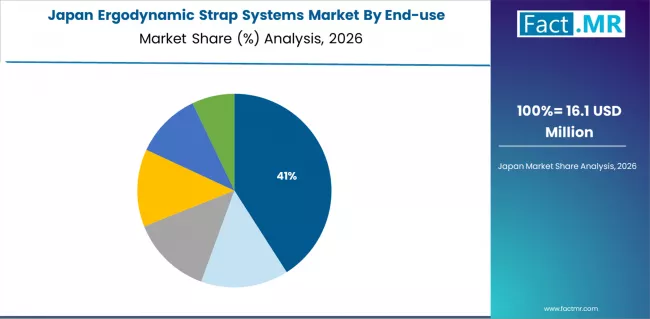
The market in Japan is projected to grow at a CAGR of 4.5%. Adoption is focused on supporting an aging workforce and maximizing efficiency in densely packed, high-throughput distribution hubs. The emphasis is on ultra-efficient, low-force systems that minimize physical strain, allowing experienced workers to maintain productivity. Ergodynamic systems are often integrated into highly organized, kaizen-inspired workflows where every motion is optimized for safety and speed.
- The need to extend the working life of skilled employees in a tight labor market is a significant driver for ergonomic investment.
- Technology adoption focuses on precision, reliability, and seamless integration into existing, highly efficient logistics processes with minimal disruption.
Competitive Landscape of the Ergodynamic Strap Systems Market
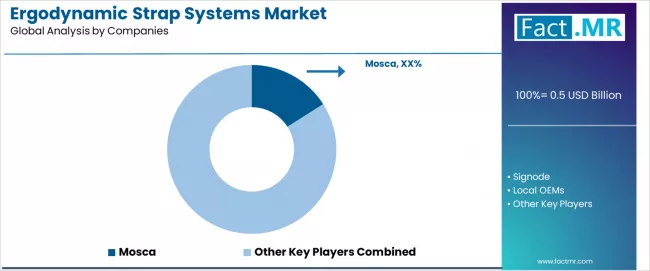
The competitive landscape features established global strapping machinery leaders and specialized ergonomic tool manufacturers, alongside regional OEMs catering to local cost and application needs. Competition centers on the effectiveness of ergonomic design, proven through user studies and reduced injury metrics such as durability, and the ease of integrating systems into diverse work environments.
Key players are investing in R&D for lighter composite materials and intuitive tension-assist mechanisms that require minimal training. Success increasingly depends on providing comprehensive solutions that include workstation design consultation and demonstrating a clear total cost of ownership (TCO) benefit through reduced injury-related costs and improved operational throughput.
Key Players in the Ergodynamic Strap Systems Market
- Mosca
- Signode
- Tsubaki Group
- UFlex (partners)
- Other Local OEMs
Scope of the Report
| Items | Values |
|---|---|
| Quantitative Units (2026) | USD 0.49 Billion |
| End-use/Application | Manufacturing & Distribution Ergonomics, Palletizing Lines / FMCG, E-commerce Packaging Ops, SMEs & Warehouses, Distribution Hubs, Others |
| Product Type | Adjustable Ergonomic Strapping Stations, Handheld Ergonomic Tensioners, Semi-auto Ergonomic Units, Compact Ergonomic Sets, Others |
| Material | Lightweight Composite Straps, PP / rPP Straps, Recycled Poly Straps, Others |
| Technology | Tension-assist + Auto-feed Mechanisms, Motorized Feed & Quick-tension, Quick-adjust Ratchet Systems, Assistive Tension Levers, Others |
| Regions Covered | North America, Europe, Asia Pacific, Latin America, MEA |
| Key Companies Profiled | Mosca, Signode, Tsubaki Group, UFlex (partners), and other leading manufacturers and OEMs |
| Additional Attributes | Market share analysis, ergonomic impact case studies (reduction in MSDs), analysis of regulatory standards (OSHA, EU directives), insights into ROI calculation models for safety equipment. |
Ergodynamic Strap Systems Market by Segments
-
By End-use/Application :
- Manufacturing & Distribution Ergonomics
- Palletizing Lines / FMCG
- E-commerce Packaging Ops
- SMEs & Warehouses
- Distribution Hubs
- Others
-
By Product Type :
- Adjustable Ergonomic Strapping Stations
- Handheld Ergonomic Tensioners
- Semi-auto Ergonomic Units
- Compact Ergonomic Sets
- Others
-
By Material :
- Lightweight Composite Straps
- PP/rPP Straps
- Recycled Poly Straps
- Others
-
By Technology :
- Tension-assist + Auto-feed Mechanisms
- Motorized Feed & Quick-tension
- Quick-adjust Ratchet Systems
- Assistive Tension Levers
- Others
-
By Region :
-
North America
- USA
- Canada
- Mexico
-
Europe
- Germany
- UK
- France
- Italy
- Spain
- Nordic Countries
- BENELUX
- Rest of Europe
-
Asia Pacific
- China
- India
- Japan
- South Korea
- Australia
- Rest of Asia Pacific
-
Latin America
- Brazil
- Argentina
- Rest of Latin America
-
MEA
- Saudi Arabia
- UAE
- South Africa
- Rest of MEA
-
Table of Content
- Executive Summary
- Global Market Outlook
- Demand to side Trends
- Supply to side Trends
- Technology Roadmap Analysis
- Analysis and Recommendations
- Market Overview
- Market Coverage / Taxonomy
- Market Definition / Scope / Limitations
- Market Background
- Market Dynamics
- Drivers
- Restraints
- Opportunity
- Trends
- Scenario Forecast
- Demand in Optimistic Scenario
- Demand in Likely Scenario
- Demand in Conservative Scenario
- Opportunity Map Analysis
- Product Life Cycle Analysis
- Supply Chain Analysis
- Investment Feasibility Matrix
- Value Chain Analysis
- PESTLE and Porter’s Analysis
- Regulatory Landscape
- Regional Parent Market Outlook
- Production and Consumption Statistics
- Import and Export Statistics
- Market Dynamics
- Global Market Analysis 2021 to 2025 and Forecast, 2026 to 2036
- Historical Market Size Value (USD Million) Analysis, 2021 to 2025
- Current and Future Market Size Value (USD Million) Projections, 2026 to 2036
- Y to o to Y Growth Trend Analysis
- Absolute $ Opportunity Analysis
- Global Market Pricing Analysis 2021 to 2025 and Forecast 2026 to 2036
- Global Market Analysis 2021 to 2025 and Forecast 2026 to 2036, By End-use/Application
- Introduction / Key Findings
- Historical Market Size Value (USD Million) Analysis By End-use/Application, 2021 to 2025
- Current and Future Market Size Value (USD Million) Analysis and Forecast By End-use/Application, 2026 to 2036
- Manufacturing & distribution ergonomics
- Palletizing lines / FMCG
- E-commerce packaging ops
- SMEs & warehouses
- Distribution hubs
- Others
- Y to o to Y Growth Trend Analysis By End-use/Application, 2021 to 2025
- Absolute $ Opportunity Analysis By End-use/Application, 2026 to 2036
- Global Market Analysis 2021 to 2025 and Forecast 2026 to 2036, By Product Type
- Introduction / Key Findings
- Historical Market Size Value (USD Million) Analysis By Product Type, 2021 to 2025
- Current and Future Market Size Value (USD Million) Analysis and Forecast By Product Type, 2026 to 2036
- Adjustable ergonomic strapping stations
- Handheld ergonomic tensioners
- Semi-auto ergonomic units
- Compact ergonomic sets
- Others
- Y to o to Y Growth Trend Analysis By Product Type, 2021 to 2025
- Absolute $ Opportunity Analysis By Product Type, 2026 to 2036
- Global Market Analysis 2021 to 2025 and Forecast 2026 to 2036, By Material
- Introduction / Key Findings
- Historical Market Size Value (USD Million) Analysis By Material, 2021 to 2025
- Current and Future Market Size Value (USD Million) Analysis and Forecast By Material, 2026 to 2036
- Lightweight composite straps
- PP / rPP straps
- Recycled poly straps
- Others
- Y to o to Y Growth Trend Analysis By Material, 2021 to 2025
- Absolute $ Opportunity Analysis By Material, 2026 to 2036
- Global Market Analysis 2021 to 2025 and Forecast 2026 to 2036, By Technology
- Introduction / Key Findings
- Historical Market Size Value (USD Million) Analysis By Technology, 2021 to 2025
- Current and Future Market Size Value (USD Million) Analysis and Forecast By Technology, 2026 to 2036
- Tension-assist + auto-feed mechanisms
- Motorized feed & quick-tension
- Quick-adjust ratchet systems
- Assistive tension levers
- Others
- Y to o to Y Growth Trend Analysis By Technology, 2021 to 2025
- Absolute $ Opportunity Analysis By Technology, 2026 to 2036
- Global Market Analysis 2021 to 2025 and Forecast 2026 to 2036, By Region
- Introduction
- Historical Market Size Value (USD Million) Analysis By Region, 2021 to 2025
- Current Market Size Value (USD Million) Analysis and Forecast By Region, 2026 to 2036
- North America
- Latin America
- Western Europe
- Eastern Europe
- East Asia
- South Asia and Pacific
- Middle East & Africa
- Market Attractiveness Analysis By Region
- North America Market Analysis 2021 to 2025 and Forecast 2026 to 2036, By Country
- Historical Market Size Value (USD Million) Trend Analysis By Market Taxonomy, 2021 to 2025
- Market Size Value (USD Million) Forecast By Market Taxonomy, 2026 to 2036
- By Country
- USA
- Canada
- Mexico
- By End-use/Application
- By Product Type
- By Material
- By Technology
- By Country
- Market Attractiveness Analysis
- By Country
- By End-use/Application
- By Product Type
- By Material
- By Technology
- Key Takeaways
- Latin America Market Analysis 2021 to 2025 and Forecast 2026 to 2036, By Country
- Historical Market Size Value (USD Million) Trend Analysis By Market Taxonomy, 2021 to 2025
- Market Size Value (USD Million) Forecast By Market Taxonomy, 2026 to 2036
- By Country
- Brazil
- Chile
- Rest of Latin America
- By End-use/Application
- By Product Type
- By Material
- By Technology
- By Country
- Market Attractiveness Analysis
- By Country
- By End-use/Application
- By Product Type
- By Material
- By Technology
- Key Takeaways
- Western Europe Market Analysis 2021 to 2025 and Forecast 2026 to 2036, By Country
- Historical Market Size Value (USD Million) Trend Analysis By Market Taxonomy, 2021 to 2025
- Market Size Value (USD Million) Forecast By Market Taxonomy, 2026 to 2036
- By Country
- Germany
- UK
- Italy
- Spain
- France
- Nordic
- BENELUX
- Rest of Western Europe
- By End-use/Application
- By Product Type
- By Material
- By Technology
- By Country
- Market Attractiveness Analysis
- By Country
- By End-use/Application
- By Product Type
- By Material
- By Technology
- Key Takeaways
- Eastern Europe Market Analysis 2021 to 2025 and Forecast 2026 to 2036, By Country
- Historical Market Size Value (USD Million) Trend Analysis By Market Taxonomy, 2021 to 2025
- Market Size Value (USD Million) Forecast By Market Taxonomy, 2026 to 2036
- By Country
- Russia
- Poland
- Hungary
- Balkan & Baltic
- Rest of Eastern Europe
- By End-use/Application
- By Product Type
- By Material
- By Technology
- By Country
- Market Attractiveness Analysis
- By Country
- By End-use/Application
- By Product Type
- By Material
- By Technology
- Key Takeaways
- East Asia Market Analysis 2021 to 2025 and Forecast 2026 to 2036, By Country
- Historical Market Size Value (USD Million) Trend Analysis By Market Taxonomy, 2021 to 2025
- Market Size Value (USD Million) Forecast By Market Taxonomy, 2026 to 2036
- By Country
- China
- Japan
- South Korea
- By End-use/Application
- By Product Type
- By Material
- By Technology
- By Country
- Market Attractiveness Analysis
- By Country
- By End-use/Application
- By Product Type
- By Material
- By Technology
- Key Takeaways
- South Asia and Pacific Market Analysis 2021 to 2025 and Forecast 2026 to 2036, By Country
- Historical Market Size Value (USD Million) Trend Analysis By Market Taxonomy, 2021 to 2025
- Market Size Value (USD Million) Forecast By Market Taxonomy, 2026 to 2036
- By Country
- India
- ASEAN
- Australia & New Zealand
- Rest of South Asia and Pacific
- By End-use/Application
- By Product Type
- By Material
- By Technology
- By Country
- Market Attractiveness Analysis
- By Country
- By End-use/Application
- By Product Type
- By Material
- By Technology
- Key Takeaways
- Middle East & Africa Market Analysis 2021 to 2025 and Forecast 2026 to 2036, By Country
- Historical Market Size Value (USD Million) Trend Analysis By Market Taxonomy, 2021 to 2025
- Market Size Value (USD Million) Forecast By Market Taxonomy, 2026 to 2036
- By Country
- Kingdom of Saudi Arabia
- Other GCC Countries
- Turkiye
- South Africa
- Other African Union
- Rest of Middle East & Africa
- By End-use/Application
- By Product Type
- By Material
- By Technology
- By Country
- Market Attractiveness Analysis
- By Country
- By End-use/Application
- By Product Type
- By Material
- By Technology
- Key Takeaways
- Key Countries Market Analysis
- USA
- Pricing Analysis
- Market Share Analysis, 2025
- By End-use/Application
- By Product Type
- By Material
- By Technology
- Canada
- Pricing Analysis
- Market Share Analysis, 2025
- By End-use/Application
- By Product Type
- By Material
- By Technology
- Mexico
- Pricing Analysis
- Market Share Analysis, 2025
- By End-use/Application
- By Product Type
- By Material
- By Technology
- Brazil
- Pricing Analysis
- Market Share Analysis, 2025
- By End-use/Application
- By Product Type
- By Material
- By Technology
- Chile
- Pricing Analysis
- Market Share Analysis, 2025
- By End-use/Application
- By Product Type
- By Material
- By Technology
- Germany
- Pricing Analysis
- Market Share Analysis, 2025
- By End-use/Application
- By Product Type
- By Material
- By Technology
- UK
- Pricing Analysis
- Market Share Analysis, 2025
- By End-use/Application
- By Product Type
- By Material
- By Technology
- Italy
- Pricing Analysis
- Market Share Analysis, 2025
- By End-use/Application
- By Product Type
- By Material
- By Technology
- Spain
- Pricing Analysis
- Market Share Analysis, 2025
- By End-use/Application
- By Product Type
- By Material
- By Technology
- France
- Pricing Analysis
- Market Share Analysis, 2025
- By End-use/Application
- By Product Type
- By Material
- By Technology
- India
- Pricing Analysis
- Market Share Analysis, 2025
- By End-use/Application
- By Product Type
- By Material
- By Technology
- ASEAN
- Pricing Analysis
- Market Share Analysis, 2025
- By End-use/Application
- By Product Type
- By Material
- By Technology
- Australia & New Zealand
- Pricing Analysis
- Market Share Analysis, 2025
- By End-use/Application
- By Product Type
- By Material
- By Technology
- China
- Pricing Analysis
- Market Share Analysis, 2025
- By End-use/Application
- By Product Type
- By Material
- By Technology
- Japan
- Pricing Analysis
- Market Share Analysis, 2025
- By End-use/Application
- By Product Type
- By Material
- By Technology
- South Korea
- Pricing Analysis
- Market Share Analysis, 2025
- By End-use/Application
- By Product Type
- By Material
- By Technology
- Russia
- Pricing Analysis
- Market Share Analysis, 2025
- By End-use/Application
- By Product Type
- By Material
- By Technology
- Poland
- Pricing Analysis
- Market Share Analysis, 2025
- By End-use/Application
- By Product Type
- By Material
- By Technology
- Hungary
- Pricing Analysis
- Market Share Analysis, 2025
- By End-use/Application
- By Product Type
- By Material
- By Technology
- Kingdom of Saudi Arabia
- Pricing Analysis
- Market Share Analysis, 2025
- By End-use/Application
- By Product Type
- By Material
- By Technology
- Turkiye
- Pricing Analysis
- Market Share Analysis, 2025
- By End-use/Application
- By Product Type
- By Material
- By Technology
- South Africa
- Pricing Analysis
- Market Share Analysis, 2025
- By End-use/Application
- By Product Type
- By Material
- By Technology
- USA
- Market Structure Analysis
- Competition Dashboard
- Competition Benchmarking
- Market Share Analysis of Top Players
- By Regional
- By End-use/Application
- By Product Type
- By Material
- By Technology
- Competition Analysis
- Competition Deep Dive
- Mosca
- Overview
- Product Portfolio
- Profitability by Market Segments (Product/Age /Sales Channel/Region)
- Sales Footprint
- Strategy Overview
- Marketing Strategy
- Product Strategy
- Channel Strategy
- Signode
- Local OEMs
- UFlex (partners)
- Tsubaki Group
- Mosca
- Competition Deep Dive
- Assumptions & Acronyms Used
- Research Methodology
List Of Table
- Table 1: Global Market Value (USD Million) Forecast by Region, 2021 to 2036
- Table 2: Global Market Value (USD Million) Forecast by End-use/Application, 2021 to 2036
- Table 3: Global Market Value (USD Million) Forecast by Product Type, 2021 to 2036
- Table 4: Global Market Value (USD Million) Forecast by Material, 2021 to 2036
- Table 5: Global Market Value (USD Million) Forecast by Technology, 2021 to 2036
- Table 6: North America Market Value (USD Million) Forecast by Country, 2021 to 2036
- Table 7: North America Market Value (USD Million) Forecast by End-use/Application, 2021 to 2036
- Table 8: North America Market Value (USD Million) Forecast by Product Type, 2021 to 2036
- Table 9: North America Market Value (USD Million) Forecast by Material, 2021 to 2036
- Table 10: North America Market Value (USD Million) Forecast by Technology, 2021 to 2036
- Table 11: Latin America Market Value (USD Million) Forecast by Country, 2021 to 2036
- Table 12: Latin America Market Value (USD Million) Forecast by End-use/Application, 2021 to 2036
- Table 13: Latin America Market Value (USD Million) Forecast by Product Type, 2021 to 2036
- Table 14: Latin America Market Value (USD Million) Forecast by Material, 2021 to 2036
- Table 15: Latin America Market Value (USD Million) Forecast by Technology, 2021 to 2036
- Table 16: Western Europe Market Value (USD Million) Forecast by Country, 2021 to 2036
- Table 17: Western Europe Market Value (USD Million) Forecast by End-use/Application, 2021 to 2036
- Table 18: Western Europe Market Value (USD Million) Forecast by Product Type, 2021 to 2036
- Table 19: Western Europe Market Value (USD Million) Forecast by Material, 2021 to 2036
- Table 20: Western Europe Market Value (USD Million) Forecast by Technology, 2021 to 2036
- Table 21: Eastern Europe Market Value (USD Million) Forecast by Country, 2021 to 2036
- Table 22: Eastern Europe Market Value (USD Million) Forecast by End-use/Application, 2021 to 2036
- Table 23: Eastern Europe Market Value (USD Million) Forecast by Product Type, 2021 to 2036
- Table 24: Eastern Europe Market Value (USD Million) Forecast by Material, 2021 to 2036
- Table 25: Eastern Europe Market Value (USD Million) Forecast by Technology, 2021 to 2036
- Table 26: East Asia Market Value (USD Million) Forecast by Country, 2021 to 2036
- Table 27: East Asia Market Value (USD Million) Forecast by End-use/Application, 2021 to 2036
- Table 28: East Asia Market Value (USD Million) Forecast by Product Type, 2021 to 2036
- Table 29: East Asia Market Value (USD Million) Forecast by Material, 2021 to 2036
- Table 30: East Asia Market Value (USD Million) Forecast by Technology, 2021 to 2036
- Table 31: South Asia and Pacific Market Value (USD Million) Forecast by Country, 2021 to 2036
- Table 32: South Asia and Pacific Market Value (USD Million) Forecast by End-use/Application, 2021 to 2036
- Table 33: South Asia and Pacific Market Value (USD Million) Forecast by Product Type, 2021 to 2036
- Table 34: South Asia and Pacific Market Value (USD Million) Forecast by Material, 2021 to 2036
- Table 35: South Asia and Pacific Market Value (USD Million) Forecast by Technology, 2021 to 2036
- Table 36: Middle East & Africa Market Value (USD Million) Forecast by Country, 2021 to 2036
- Table 37: Middle East & Africa Market Value (USD Million) Forecast by End-use/Application, 2021 to 2036
- Table 38: Middle East & Africa Market Value (USD Million) Forecast by Product Type, 2021 to 2036
- Table 39: Middle East & Africa Market Value (USD Million) Forecast by Material, 2021 to 2036
- Table 40: Middle East & Africa Market Value (USD Million) Forecast by Technology, 2021 to 2036
List Of Figures
- Figure 1: Global Market Pricing Analysis
- Figure 2: Global Market Value (USD Million) Forecast 2021 to 2036
- Figure 3: Global Market Value Share and BPS Analysis by End-use/Application, 2026 and 2036
- Figure 4: Global Market Y to o to Y Growth Comparison by End-use/Application, 2026 to 2036
- Figure 5: Global Market Attractiveness Analysis by End-use/Application
- Figure 6: Global Market Value Share and BPS Analysis by Product Type, 2026 and 2036
- Figure 7: Global Market Y to o to Y Growth Comparison by Product Type, 2026 to 2036
- Figure 8: Global Market Attractiveness Analysis by Product Type
- Figure 9: Global Market Value Share and BPS Analysis by Material, 2026 and 2036
- Figure 10: Global Market Y to o to Y Growth Comparison by Material, 2026 to 2036
- Figure 11: Global Market Attractiveness Analysis by Material
- Figure 12: Global Market Value Share and BPS Analysis by Technology, 2026 and 2036
- Figure 13: Global Market Y to o to Y Growth Comparison by Technology, 2026 to 2036
- Figure 14: Global Market Attractiveness Analysis by Technology
- Figure 15: Global Market Value (USD Million) Share and BPS Analysis by Region, 2026 and 2036
- Figure 16: Global Market Y to o to Y Growth Comparison by Region, 2026 to 2036
- Figure 17: Global Market Attractiveness Analysis by Region
- Figure 18: North America Market Incremental Dollar Opportunity, 2026 to 2036
- Figure 19: Latin America Market Incremental Dollar Opportunity, 2026 to 2036
- Figure 20: Western Europe Market Incremental Dollar Opportunity, 2026 to 2036
- Figure 21: Eastern Europe Market Incremental Dollar Opportunity, 2026 to 2036
- Figure 22: East Asia Market Incremental Dollar Opportunity, 2026 to 2036
- Figure 23: South Asia and Pacific Market Incremental Dollar Opportunity, 2026 to 2036
- Figure 24: Middle East & Africa Market Incremental Dollar Opportunity, 2026 to 2036
- Figure 25: North America Market Value Share and BPS Analysis by Country, 2026 and 2036
- Figure 26: North America Market Value Share and BPS Analysis by End-use/Application, 2026 and 2036
- Figure 27: North America Market Y to o to Y Growth Comparison by End-use/Application, 2026 to 2036
- Figure 28: North America Market Attractiveness Analysis by End-use/Application
- Figure 29: North America Market Value Share and BPS Analysis by Product Type, 2026 and 2036
- Figure 30: North America Market Y to o to Y Growth Comparison by Product Type, 2026 to 2036
- Figure 31: North America Market Attractiveness Analysis by Product Type
- Figure 32: North America Market Value Share and BPS Analysis by Material, 2026 and 2036
- Figure 33: North America Market Y to o to Y Growth Comparison by Material, 2026 to 2036
- Figure 34: North America Market Attractiveness Analysis by Material
- Figure 35: North America Market Value Share and BPS Analysis by Technology, 2026 and 2036
- Figure 36: North America Market Y to o to Y Growth Comparison by Technology, 2026 to 2036
- Figure 37: North America Market Attractiveness Analysis by Technology
- Figure 38: Latin America Market Value Share and BPS Analysis by Country, 2026 and 2036
- Figure 39: Latin America Market Value Share and BPS Analysis by End-use/Application, 2026 and 2036
- Figure 40: Latin America Market Y to o to Y Growth Comparison by End-use/Application, 2026 to 2036
- Figure 41: Latin America Market Attractiveness Analysis by End-use/Application
- Figure 42: Latin America Market Value Share and BPS Analysis by Product Type, 2026 and 2036
- Figure 43: Latin America Market Y to o to Y Growth Comparison by Product Type, 2026 to 2036
- Figure 44: Latin America Market Attractiveness Analysis by Product Type
- Figure 45: Latin America Market Value Share and BPS Analysis by Material, 2026 and 2036
- Figure 46: Latin America Market Y to o to Y Growth Comparison by Material, 2026 to 2036
- Figure 47: Latin America Market Attractiveness Analysis by Material
- Figure 48: Latin America Market Value Share and BPS Analysis by Technology, 2026 and 2036
- Figure 49: Latin America Market Y to o to Y Growth Comparison by Technology, 2026 to 2036
- Figure 50: Latin America Market Attractiveness Analysis by Technology
- Figure 51: Western Europe Market Value Share and BPS Analysis by Country, 2026 and 2036
- Figure 52: Western Europe Market Value Share and BPS Analysis by End-use/Application, 2026 and 2036
- Figure 53: Western Europe Market Y to o to Y Growth Comparison by End-use/Application, 2026 to 2036
- Figure 54: Western Europe Market Attractiveness Analysis by End-use/Application
- Figure 55: Western Europe Market Value Share and BPS Analysis by Product Type, 2026 and 2036
- Figure 56: Western Europe Market Y to o to Y Growth Comparison by Product Type, 2026 to 2036
- Figure 57: Western Europe Market Attractiveness Analysis by Product Type
- Figure 58: Western Europe Market Value Share and BPS Analysis by Material, 2026 and 2036
- Figure 59: Western Europe Market Y to o to Y Growth Comparison by Material, 2026 to 2036
- Figure 60: Western Europe Market Attractiveness Analysis by Material
- Figure 61: Western Europe Market Value Share and BPS Analysis by Technology, 2026 and 2036
- Figure 62: Western Europe Market Y to o to Y Growth Comparison by Technology, 2026 to 2036
- Figure 63: Western Europe Market Attractiveness Analysis by Technology
- Figure 64: Eastern Europe Market Value Share and BPS Analysis by Country, 2026 and 2036
- Figure 65: Eastern Europe Market Value Share and BPS Analysis by End-use/Application, 2026 and 2036
- Figure 66: Eastern Europe Market Y to o to Y Growth Comparison by End-use/Application, 2026 to 2036
- Figure 67: Eastern Europe Market Attractiveness Analysis by End-use/Application
- Figure 68: Eastern Europe Market Value Share and BPS Analysis by Product Type, 2026 and 2036
- Figure 69: Eastern Europe Market Y to o to Y Growth Comparison by Product Type, 2026 to 2036
- Figure 70: Eastern Europe Market Attractiveness Analysis by Product Type
- Figure 71: Eastern Europe Market Value Share and BPS Analysis by Material, 2026 and 2036
- Figure 72: Eastern Europe Market Y to o to Y Growth Comparison by Material, 2026 to 2036
- Figure 73: Eastern Europe Market Attractiveness Analysis by Material
- Figure 74: Eastern Europe Market Value Share and BPS Analysis by Technology, 2026 and 2036
- Figure 75: Eastern Europe Market Y to o to Y Growth Comparison by Technology, 2026 to 2036
- Figure 76: Eastern Europe Market Attractiveness Analysis by Technology
- Figure 77: East Asia Market Value Share and BPS Analysis by Country, 2026 and 2036
- Figure 78: East Asia Market Value Share and BPS Analysis by End-use/Application, 2026 and 2036
- Figure 79: East Asia Market Y to o to Y Growth Comparison by End-use/Application, 2026 to 2036
- Figure 80: East Asia Market Attractiveness Analysis by End-use/Application
- Figure 81: East Asia Market Value Share and BPS Analysis by Product Type, 2026 and 2036
- Figure 82: East Asia Market Y to o to Y Growth Comparison by Product Type, 2026 to 2036
- Figure 83: East Asia Market Attractiveness Analysis by Product Type
- Figure 84: East Asia Market Value Share and BPS Analysis by Material, 2026 and 2036
- Figure 85: East Asia Market Y to o to Y Growth Comparison by Material, 2026 to 2036
- Figure 86: East Asia Market Attractiveness Analysis by Material
- Figure 87: East Asia Market Value Share and BPS Analysis by Technology, 2026 and 2036
- Figure 88: East Asia Market Y to o to Y Growth Comparison by Technology, 2026 to 2036
- Figure 89: East Asia Market Attractiveness Analysis by Technology
- Figure 90: South Asia and Pacific Market Value Share and BPS Analysis by Country, 2026 and 2036
- Figure 91: South Asia and Pacific Market Value Share and BPS Analysis by End-use/Application, 2026 and 2036
- Figure 92: South Asia and Pacific Market Y to o to Y Growth Comparison by End-use/Application, 2026 to 2036
- Figure 93: South Asia and Pacific Market Attractiveness Analysis by End-use/Application
- Figure 94: South Asia and Pacific Market Value Share and BPS Analysis by Product Type, 2026 and 2036
- Figure 95: South Asia and Pacific Market Y to o to Y Growth Comparison by Product Type, 2026 to 2036
- Figure 96: South Asia and Pacific Market Attractiveness Analysis by Product Type
- Figure 97: South Asia and Pacific Market Value Share and BPS Analysis by Material, 2026 and 2036
- Figure 98: South Asia and Pacific Market Y to o to Y Growth Comparison by Material, 2026 to 2036
- Figure 99: South Asia and Pacific Market Attractiveness Analysis by Material
- Figure 100: South Asia and Pacific Market Value Share and BPS Analysis by Technology, 2026 and 2036
- Figure 101: South Asia and Pacific Market Y to o to Y Growth Comparison by Technology, 2026 to 2036
- Figure 102: South Asia and Pacific Market Attractiveness Analysis by Technology
- Figure 103: Middle East & Africa Market Value Share and BPS Analysis by Country, 2026 and 2036
- Figure 104: Middle East & Africa Market Value Share and BPS Analysis by End-use/Application, 2026 and 2036
- Figure 105: Middle East & Africa Market Y to o to Y Growth Comparison by End-use/Application, 2026 to 2036
- Figure 106: Middle East & Africa Market Attractiveness Analysis by End-use/Application
- Figure 107: Middle East & Africa Market Value Share and BPS Analysis by Product Type, 2026 and 2036
- Figure 108: Middle East & Africa Market Y to o to Y Growth Comparison by Product Type, 2026 to 2036
- Figure 109: Middle East & Africa Market Attractiveness Analysis by Product Type
- Figure 110: Middle East & Africa Market Value Share and BPS Analysis by Material, 2026 and 2036
- Figure 111: Middle East & Africa Market Y to o to Y Growth Comparison by Material, 2026 to 2036
- Figure 112: Middle East & Africa Market Attractiveness Analysis by Material
- Figure 113: Middle East & Africa Market Value Share and BPS Analysis by Technology, 2026 and 2036
- Figure 114: Middle East & Africa Market Y to o to Y Growth Comparison by Technology, 2026 to 2036
- Figure 115: Middle East & Africa Market Attractiveness Analysis by Technology
- Figure 116: Global Market - Tier Structure Analysis
- Figure 117: Global Market - Company Share Analysis
- FAQs -
How big is the ergodynamic strap systems market in 2026?
The global ergodynamic strap systems market is estimated to be valued at USD 0.5 billion in 2026.
What will be the size of ergodynamic strap systems market in 2036?
The market size for the ergodynamic strap systems market is projected to reach USD 1.2 billion by 2036.
How much will be the ergodynamic strap systems market growth between 2026 and 2036?
The ergodynamic strap systems market is expected to grow at a 9.6% CAGR between 2026 and 2036.
What are the key product types in the ergodynamic strap systems market?
The key product types in ergodynamic strap systems market are manufacturing & distribution ergonomics, palletizing lines / fmcg, e-commerce packaging ops, smes & warehouses, distribution hubs and others.
Which product type segment to contribute significant share in the ergodynamic strap systems market in 2026?
In terms of product type, adjustable ergonomic strapping stations segment to command 50.0% share in the ergodynamic strap systems market in 2026.