Fire-Retardant Additives for PCR Electronics Market

Fire-Retardant Additives for PCR Electronics Market Size and Share Forecast Outlook 2026 to 2036

Fire-retardant additives for pcr electronics market is projected to grow from USD 1.3 billion in 2026 to USD 4.0 billion by 2036, at a CAGR of 11.9%. Consumer electronics housings will dominate with a 47.0% market share, while halogen-free fr systems will lead the additive type segment with a 39.0% share.

Fire-Retardant Additives for PCR Electronics Market Forecast and Outlook 2026 to 2036

The fire-retardant additives for PCR electronics market is likely to be valued at USD 1.3 billion in 2026 and is projected to reach USD 4 billion by 2036, growing at a CAGR of 11.9%.

Key Takeaways from Fire-Retardant Additives for PCR Electronics Market

  • Fire-Retardant Additives for PCR Electronics Market Value (2026): USD 1.3 billion
  • Fire-Retardant Additives for PCR Electronics Market Forecast Value (2036): USD 4 billion
  • Fire-Retardant Additives for PCR Electronics Market Forecast CAGR 2026 to 2036: 11.9%
  • Leading Segment in Fire-Retardant Additives for PCR Electronics Market: UL94-V0 compliant additive packages (60%)
  • Key Growth Region in Fire-Retardant Additives for PCR Electronics Market: Asia Pacific
  • Key Players in Fire-Retardant Additives for PCR Electronics Market: Clariant, ICL Group, JLS Flame Retardants, ADEKA, Lanxess, Avient, Nippon Kayaku, Kingfa
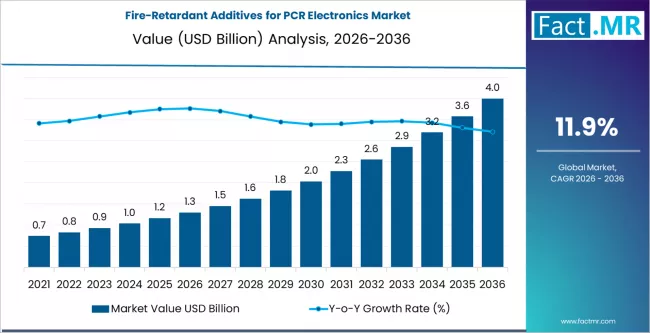
Fire Retardant Additives For Pcr Electronics Market Market Value Analysis

While the market offers significant upside, it is not without its execution risks. High compliance and safety standards in the electronics industry can present adoption friction, as companies may face challenges integrating fire-retardant additives into existing manufacturing processes.

Economic sensitivity also plays a critical role, as demand for these additives is closely tied to the broader electronics market, which is subject to cyclical shifts and global supply chain pressures. Moreover, innovation in additives must align with cost-effective production methods, ensuring that quality improvements do not come at the expense of affordability. Ultimately, the market’s growth will depend on balancing these risks, with strategic adoption and careful supplier selection key to minimizing friction in a volatile economic landscape.

Fire-Retardant Additives for PCR Electronics Market

Metric Value
Estimated Value in (2026E) USD 1.3 billion
Forecast Value in (2036F) USD 4 billion
Forecast CAGR (2026 to 2036) 11.9%

Category

Category Segments
End-Use Consumer electronics housings; IT and appliance electronics; Mass electronics; Precision electronics; Displays and devices; Local electronics
Additive Type Halogen-free FR systems; Phosphorus-based FR; Synergistic FR blends; High-purity FR additives; Others
Polymer Target PCR-ABS or PCR-PC; PCR engineering plastics; PCR-ABS; PCR-PC; Others
Technology UL94-V0 compliant additive packages; Low-bloom FR compounding; Cost-optimised FR formulations; Tight thermal stability control; Others
Region North America; Europe; Asia Pacific; Latin America; Middle East & Africa

Segmental Analysis

What Is the Impact of Polymer Target on the Fire-Retardant Additives for PCR Electronics Market?
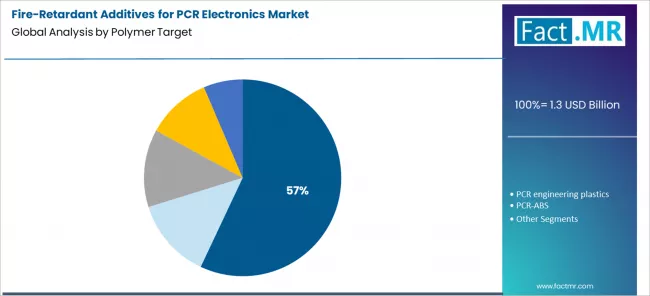
Fire Retardant Additives For Pcr Electronics Market Analysis By Polymer Target

In the fire-retardant additives for PCR electronics market, polymer target plays a crucial role in determining the material's flame resistance and performance in electronic applications. PCR-ABS or PCR-PC leads the market with a 57% share, offering a balance between mechanical properties and flame retardancy. These polymers are widely used in electronic housings and components due to their durability, impact resistance, and ability to meet fire safety standards. As demand for electronics with enhanced safety features increases, the use of PCR-ABS and PCR-PC in fire-retardant applications will continue to grow, ensuring compliance with stringent safety regulations and enhancing product performance.

How Does Technology Influence the Fire-Retardant Additives for PCR Electronics Market?
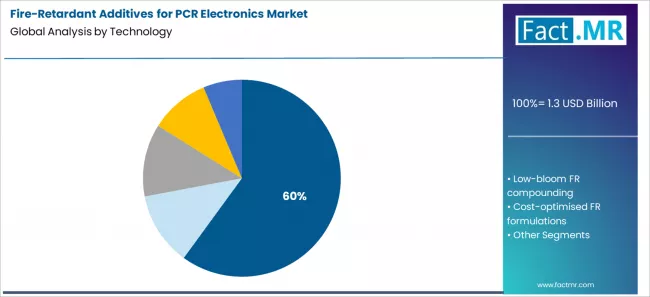
Fire Retardant Additives For Pcr Electronics Market Analysis By Technology

Technology is a key driver in improving the flame resistance and performance of fire-retardant additives in PCR electronics, with UL94-V0 compliant additive packages leading the market at a 60% share. This technology ensures that the fire-retardant materials meet industry standards for electrical and electronic safety, particularly in high-risk environments. UL94-V0 compliant additives provide superior flame resistance, minimizing the risk of fire and improving product safety. As electronics manufacturers strive to meet increasing safety requirements, the adoption of advanced fire-retardant technologies, including low-bloom FR compounding and tight thermal stability control, will continue to drive the growth of the market.

What are the Principal Drivers, Constraints, and Evolving Dynamics of the FireRetardant Additives for PCR Electronics Market?

Demand for fire retardant additives tailored to post consumer recycled (PCR) polymers has been influenced by safety standards for electronic enclosures and components. Manufacturers of consumer and industrial electronics require materials that meet flammability ratings while incorporating recycled content. Regulatory requirements for electrical safety and material conformity have shaped specifications for fire retardant PCR formulations.

Constraints include variability in recycled polymer batches that affects additive performance and consistency. Some fire retardants show reduced effectiveness when blended with PCR resins. Processing challenges have arisen where additives alter melt flow and part quality in molding operations. Efforts to refine compound formulations and testing methods are under way. Collaboration among additive producers, recyclers, and electronics manufacturers is being used to align performance criteria and expand application scope.

Analysis of the Fire-Retardant Additives for PCR Electronics Market by Key Country
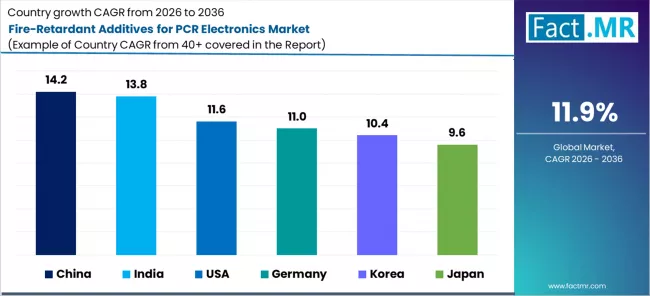
Fire Retardant Additives For Pcr Electronics Market Cagr Analysis By Country

Country CAGR (2026-2036)
Germany 11%
USA 11.6%
China 14.2%
Japan 9.6%
Korea 10.4%
India 13.8%

The report covers an in-depth analysis of 40+ countries; top-performing countries are highlighted below.

What is the Growth Outlook for Fire-Retardant Additives for PCR Electronics in Germany?

Germany’s fire-retardant additives for PCR electronics market is expected to grow at a CAGR of 11% from 2026 to 2036. As Germany continues to lead in technological innovation and sustainability, the demand for fire-retardant additives in electronics made from PCR (post-consumer recycled) materials is increasing. The country’s commitment to safety standards in electronics manufacturing, combined with growing consumer and regulatory pressure for sustainable materials, will drive market growth. With advancements in recycling technologies and increasing regulations on fire safety, Germany is set to continue expanding in this sector.

How is the Fire-Retardant Additives for PCR Electronics Market Performing in the USA?

The USA’s fire-retardant additives for PCR electronics market is projected to grow at a CAGR of 11.6% from 2026 to 2036. As the demand for electronics made from sustainable materials rises, so does the need for fire-retardant additives to ensure safety and performance. Regulatory requirements and consumer preference for environmentally responsible electronics are key factors driving market growth. The USA’s emphasis on product safety and innovation in recycling technologies will support the adoption of PCR electronics with fire-retardant additives, ensuring continued market expansion.

What is the Market Outlook for Fire-Retardant Additives for PCR Electronics in China?

China is expected to experience significant growth in the fire-retardant additives for PCR electronics market, with a projected CAGR of 14.2% from 2026 to 2036. As China’s electronics industry continues to expand, there is a growing demand for sustainable, high-performance materials, including fire-retardant additives in PCR electronics. The country’s ongoing focus on improving manufacturing standards and adopting eco-friendly practices will drive the adoption of these additives. With increasing regulatory demands for fire safety and sustainable product development, China is poised to lead market growth in this sector.

What is the Growth Potential for Fire-Retardant Additives for PCR Electronics in Japan?

Japan’s fire-retardant additives for PCR electronics market is forecast to grow at a CAGR of 9.6% from 2026 to 2036. Japan’s strong regulatory framework and focus on advanced safety standards in electronics manufacturing drive the demand for fire-retardant additives. The country’s commitment to sustainability in electronics, combined with increasing consumer demand for environmentally friendly products, supports the adoption of PCR materials and fire-retardant solutions. While Japan’s growth rate may be slower compared to other regions, its focus on innovation and regulatory compliance ensures steady market expansion.

What is the Demand for Fire-Retardant Additives for PCR Electronics in Korea?

Korea’s fire-retardant additives for PCR electronics market is projected to grow at a CAGR of 10.4% from 2026 to 2036. Korea’s electronics industry, known for its technological advancements and high safety standards, is increasingly adopting fire-retardant additives in PCR materials. The demand for sustainable, high-performance electronics is driving the use of PCR-based materials combined with fire-retardant additives. As Korea continues to focus on safety and sustainability in its manufacturing practices, the market for these additives is expected to grow steadily, supported by strong industry regulations.

What is the Market Expansion Outlook for Fire-Retardant Additives for PCR Electronics in India?

India’s fire-retardant additives for PCR electronics market is set to grow at a robust CAGR of 13.8% from 2026 to 2036. The country’s expanding electronics manufacturing sector, combined with a growing emphasis on sustainable and safe materials, is driving the adoption of PCR-based electronics. Fire-retardant additives are essential to meet safety standards and improve the performance of these eco-friendly products. As India increases its focus on manufacturing safe, sustainable electronics to meet both domestic and international demand, the market for fire-retardant additives in PCR electronics will continue to expand.

How is Competition Structured in the FireRetardant Additives for PCR Electronics Market?

Competition in this market is driven by additive performance, regulatory compliance, and compatibility with recycled polymer matrices. Clariant and Lanxess provide broad portfolios of flame retardant chemistries with documented performance data and global supply networks. ICL Group and ADEKA focus on specialty phosphorus and nitrogen based systems designed to meet specific UL and IEC standards for electrical safety.

Avient and Kingfa compete by offering tailored masterbatches that integrate easily with PCR resins used in electronic housings and components. Nippon Kayaku and JLS Flame Retardants emphasize niche formulations that balance flame resistance with processing stability. Differentiation arises from technical support, certification records, and the ability to deliver consistent quality across production volumes. Buyers assess suppliers based on performance validation, supply reliability, and alignment with evolving safety requirements.

Key Players in the FireRetardant Additives for PCR Electronics Market?

  • Clariant
  • ICL Group
  • JLS Flame Retardants
  • ADEKA
  • Lanxess
  • Avient
  • Nippon Kayaku
  • Kingfa

Scope of the Report

Items Values
Quantitative Units (2026) USD Billion
End-use Consumer electronics housings, IT and appliance electronics, Mass electronics, Precision electronics, Displays and devices
Additive Type Halogen-free FR systems, Phosphorus-based FR, Synergistic FR blends, High-purity FR additives, Others
Polymer Target PCR-ABS or PCR-PC, PCR engineering plastics, PCR-ABS, PCR-PC, Others
Technology UL94-V0 compliant additive packages, Low-bloom FR compounding, Cost-optimised FR formulations, Tight thermal stability control, Others
Regions Covered North America, Europe, Asia Pacific, Latin America, Middle East & Africa
Countries Covered United States, Canada, Mexico, Brazil, Germany, United Kingdom, France, Italy, Spain, China, Japan, South Korea, India, Australia & New Zealand
Key Companies Profiled Clariant, ICL Group, JLS Flame Retardants, ADEKA, Lanxess, Avient, Nippon Kayaku, Kingfa
Additional Attributes Dollar revenue by end-use, additive type, polymer target, and technology; regional demand trends, competitive landscape, technological advancements in fire-retardant additives for PCR electronics, and innovations in flame retardant formulations

Fire-Retardant Additives for PCR Electronics Market Key Segments

  • End-use :

    • Consumer electronics housings
    • IT and appliance electronics
    • Mass electronics
    • Precision electronics
    • Displays and devices
    • Local electronics
  • Additive Type :

    • Halogen-free FR systems
    • Phosphorus-based FR
    • Synergistic FR blends
    • High-purity FR additives
    • Others
  • Polymer Target :

    • PCR-ABS or PCR-PC
    • PCR engineering plastics
    • PCR-ABS
    • PCR-PC
    • Others
  • Technology :

    • UL94-V0 compliant additive packages
    • Low-bloom FR compounding
    • Cost-optimized FR formulations
    • Tight thermal stability control
    • Others
  • Region :

    • North America
      • USA
      • Canada
      • Mexico
    • Europe
      • Germany
      • UK
      • France
      • Italy
      • Spain
      • Nordic Countries
      • BENELUX
      • Rest of Europe
    • Asia Pacific
      • China
      • Japan
      • South Korea
      • India
      • Australia
      • Rest of Asia Pacific
    • Latin America
      • Brazil
      • Argentina
      • Rest of Latin America
    • Middle East and Africa
      • Kingdom of Saudi Arabia
      • United Arab Emirates
      • South Africa
      • Rest of Middle East and Africa
    • Other Regions
      • Oceania
      • Central Asia
      • Other Markets

Bibliographies

  • International Electrotechnical Commission. (2023). IEC 60695: Fire hazard testing-Guidance and requirements for electronic and electrical materials. IEC.
  • European Commission. (2024). Restrictions on hazardous substances (RoHS) and implications for flame-retardant additives in recycled plastics used in electronics. European Union Publications.
  • United Nations Environment Programme. (2024). Chemicals in plastics: Flame retardants, recycled polymers, and circular electronics. UNEP.
  • Organisation for Economic Co-operation and Development. (2023). Safety, environmental, and circularity considerations for flame-retardant chemicals in electronics. OECD Publishing.
  • Polymer Degradation and Stability. (2024). Fire performance and stability of post-consumer recycled plastics containing flame-retardant additives for electronic applications.
  • Journal of Applied Polymer Science. (2023). Compatibility and flame-retardant efficiency in recycled engineering plastics for electronic housings.

Table of Content

  1. Executive Summary
    • Global Market Outlook
    • Demand to side Trends
    • Supply to side Trends
    • Technology Roadmap Analysis
    • Analysis and Recommendations
  2. Market Overview
    • Market Coverage / Taxonomy
    • Market Definition / Scope / Limitations
  3. Market Background
    • Market Dynamics
      • Drivers
      • Restraints
      • Opportunity
      • Trends
    • Scenario Forecast
      • Demand in Optimistic Scenario
      • Demand in Likely Scenario
      • Demand in Conservative Scenario
    • Opportunity Map Analysis
    • Product Life Cycle Analysis
    • Supply Chain Analysis
    • Investment Feasibility Matrix
    • Value Chain Analysis
    • PESTLE and Porter’s Analysis
    • Regulatory Landscape
    • Regional Parent Market Outlook
    • Production and Consumption Statistics
    • Import and Export Statistics
  4. Global Market Analysis 2021 to 2025 and Forecast, 2026 to 2036
    • Historical Market Size Value (USD Million) Analysis, 2021 to 2025
    • Current and Future Market Size Value (USD Million) Projections, 2026 to 2036
      • Y to o to Y Growth Trend Analysis
      • Absolute $ Opportunity Analysis
  5. Global Market Pricing Analysis 2021 to 2025 and Forecast 2026 to 2036
  6. Global Market Analysis 2021 to 2025 and Forecast 2026 to 2036, By End-use
    • Introduction / Key Findings
    • Historical Market Size Value (USD Million) Analysis By End-use, 2021 to 2025
    • Current and Future Market Size Value (USD Million) Analysis and Forecast By End-use, 2026 to 2036
      • Consumer electronics housings
      • IT and appliance electronics
      • Mass electronics
      • Precision electronics
      • Displays and devices
      • Local electronics
    • Y to o to Y Growth Trend Analysis By End-use, 2021 to 2025
    • Absolute $ Opportunity Analysis By End-use, 2026 to 2036
  7. Global Market Analysis 2021 to 2025 and Forecast 2026 to 2036, By Additive Type
    • Introduction / Key Findings
    • Historical Market Size Value (USD Million) Analysis By Additive Type, 2021 to 2025
    • Current and Future Market Size Value (USD Million) Analysis and Forecast By Additive Type, 2026 to 2036
      • Halogen-free FR systems
      • Phosphorus-based FR
      • Synergistic FR blends
      • High-purity FR additives
      • Others
    • Y to o to Y Growth Trend Analysis By Additive Type, 2021 to 2025
    • Absolute $ Opportunity Analysis By Additive Type, 2026 to 2036
  8. Global Market Analysis 2021 to 2025 and Forecast 2026 to 2036, By Polymer Target
    • Introduction / Key Findings
    • Historical Market Size Value (USD Million) Analysis By Polymer Target, 2021 to 2025
    • Current and Future Market Size Value (USD Million) Analysis and Forecast By Polymer Target, 2026 to 2036
      • PCR-ABS or PCR-PC
      • PCR engineering plastics
      • PCR-ABS
      • PCR-PC
      • Others
    • Y to o to Y Growth Trend Analysis By Polymer Target, 2021 to 2025
    • Absolute $ Opportunity Analysis By Polymer Target, 2026 to 2036
  9. Global Market Analysis 2021 to 2025 and Forecast 2026 to 2036, By Technology
    • Introduction / Key Findings
    • Historical Market Size Value (USD Million) Analysis By Technology, 2021 to 2025
    • Current and Future Market Size Value (USD Million) Analysis and Forecast By Technology, 2026 to 2036
      • UL94-V0 compliant additive packages
      • Low-bloom FR compounding
      • Cost-optimised FR formulations
      • Tight thermal stability control
      • Others
    • Y to o to Y Growth Trend Analysis By Technology, 2021 to 2025
    • Absolute $ Opportunity Analysis By Technology, 2026 to 2036
  10. Global Market Analysis 2021 to 2025 and Forecast 2026 to 2036, By Region
    • Introduction
    • Historical Market Size Value (USD Million) Analysis By Region, 2021 to 2025
    • Current Market Size Value (USD Million) Analysis and Forecast By Region, 2026 to 2036
      • North America
      • Latin America
      • Western Europe
      • Eastern Europe
      • East Asia
      • South Asia and Pacific
      • Middle East & Africa
    • Market Attractiveness Analysis By Region
  11. North America Market Analysis 2021 to 2025 and Forecast 2026 to 2036, By Country
    • Historical Market Size Value (USD Million) Trend Analysis By Market Taxonomy, 2021 to 2025
    • Market Size Value (USD Million) Forecast By Market Taxonomy, 2026 to 2036
      • By Country
        • USA
        • Canada
        • Mexico
      • By End-use
      • By Additive Type
      • By Polymer Target
      • By Technology
    • Market Attractiveness Analysis
      • By Country
      • By End-use
      • By Additive Type
      • By Polymer Target
      • By Technology
    • Key Takeaways
  12. Latin America Market Analysis 2021 to 2025 and Forecast 2026 to 2036, By Country
    • Historical Market Size Value (USD Million) Trend Analysis By Market Taxonomy, 2021 to 2025
    • Market Size Value (USD Million) Forecast By Market Taxonomy, 2026 to 2036
      • By Country
        • Brazil
        • Chile
        • Rest of Latin America
      • By End-use
      • By Additive Type
      • By Polymer Target
      • By Technology
    • Market Attractiveness Analysis
      • By Country
      • By End-use
      • By Additive Type
      • By Polymer Target
      • By Technology
    • Key Takeaways
  13. Western Europe Market Analysis 2021 to 2025 and Forecast 2026 to 2036, By Country
    • Historical Market Size Value (USD Million) Trend Analysis By Market Taxonomy, 2021 to 2025
    • Market Size Value (USD Million) Forecast By Market Taxonomy, 2026 to 2036
      • By Country
        • Germany
        • UK
        • Italy
        • Spain
        • France
        • Nordic
        • BENELUX
        • Rest of Western Europe
      • By End-use
      • By Additive Type
      • By Polymer Target
      • By Technology
    • Market Attractiveness Analysis
      • By Country
      • By End-use
      • By Additive Type
      • By Polymer Target
      • By Technology
    • Key Takeaways
  14. Eastern Europe Market Analysis 2021 to 2025 and Forecast 2026 to 2036, By Country
    • Historical Market Size Value (USD Million) Trend Analysis By Market Taxonomy, 2021 to 2025
    • Market Size Value (USD Million) Forecast By Market Taxonomy, 2026 to 2036
      • By Country
        • Russia
        • Poland
        • Hungary
        • Balkan & Baltic
        • Rest of Eastern Europe
      • By End-use
      • By Additive Type
      • By Polymer Target
      • By Technology
    • Market Attractiveness Analysis
      • By Country
      • By End-use
      • By Additive Type
      • By Polymer Target
      • By Technology
    • Key Takeaways
  15. East Asia Market Analysis 2021 to 2025 and Forecast 2026 to 2036, By Country
    • Historical Market Size Value (USD Million) Trend Analysis By Market Taxonomy, 2021 to 2025
    • Market Size Value (USD Million) Forecast By Market Taxonomy, 2026 to 2036
      • By Country
        • China
        • Japan
        • South Korea
      • By End-use
      • By Additive Type
      • By Polymer Target
      • By Technology
    • Market Attractiveness Analysis
      • By Country
      • By End-use
      • By Additive Type
      • By Polymer Target
      • By Technology
    • Key Takeaways
  16. South Asia and Pacific Market Analysis 2021 to 2025 and Forecast 2026 to 2036, By Country
    • Historical Market Size Value (USD Million) Trend Analysis By Market Taxonomy, 2021 to 2025
    • Market Size Value (USD Million) Forecast By Market Taxonomy, 2026 to 2036
      • By Country
        • India
        • ASEAN
        • Australia & New Zealand
        • Rest of South Asia and Pacific
      • By End-use
      • By Additive Type
      • By Polymer Target
      • By Technology
    • Market Attractiveness Analysis
      • By Country
      • By End-use
      • By Additive Type
      • By Polymer Target
      • By Technology
    • Key Takeaways
  17. Middle East & Africa Market Analysis 2021 to 2025 and Forecast 2026 to 2036, By Country
    • Historical Market Size Value (USD Million) Trend Analysis By Market Taxonomy, 2021 to 2025
    • Market Size Value (USD Million) Forecast By Market Taxonomy, 2026 to 2036
      • By Country
        • Kingdom of Saudi Arabia
        • Other GCC Countries
        • Turkiye
        • South Africa
        • Other African Union
        • Rest of Middle East & Africa
      • By End-use
      • By Additive Type
      • By Polymer Target
      • By Technology
    • Market Attractiveness Analysis
      • By Country
      • By End-use
      • By Additive Type
      • By Polymer Target
      • By Technology
    • Key Takeaways
  18. Key Countries Market Analysis
    • USA
      • Pricing Analysis
      • Market Share Analysis, 2025
        • By End-use
        • By Additive Type
        • By Polymer Target
        • By Technology
    • Canada
      • Pricing Analysis
      • Market Share Analysis, 2025
        • By End-use
        • By Additive Type
        • By Polymer Target
        • By Technology
    • Mexico
      • Pricing Analysis
      • Market Share Analysis, 2025
        • By End-use
        • By Additive Type
        • By Polymer Target
        • By Technology
    • Brazil
      • Pricing Analysis
      • Market Share Analysis, 2025
        • By End-use
        • By Additive Type
        • By Polymer Target
        • By Technology
    • Chile
      • Pricing Analysis
      • Market Share Analysis, 2025
        • By End-use
        • By Additive Type
        • By Polymer Target
        • By Technology
    • Germany
      • Pricing Analysis
      • Market Share Analysis, 2025
        • By End-use
        • By Additive Type
        • By Polymer Target
        • By Technology
    • UK
      • Pricing Analysis
      • Market Share Analysis, 2025
        • By End-use
        • By Additive Type
        • By Polymer Target
        • By Technology
    • Italy
      • Pricing Analysis
      • Market Share Analysis, 2025
        • By End-use
        • By Additive Type
        • By Polymer Target
        • By Technology
    • Spain
      • Pricing Analysis
      • Market Share Analysis, 2025
        • By End-use
        • By Additive Type
        • By Polymer Target
        • By Technology
    • France
      • Pricing Analysis
      • Market Share Analysis, 2025
        • By End-use
        • By Additive Type
        • By Polymer Target
        • By Technology
    • India
      • Pricing Analysis
      • Market Share Analysis, 2025
        • By End-use
        • By Additive Type
        • By Polymer Target
        • By Technology
    • ASEAN
      • Pricing Analysis
      • Market Share Analysis, 2025
        • By End-use
        • By Additive Type
        • By Polymer Target
        • By Technology
    • Australia & New Zealand
      • Pricing Analysis
      • Market Share Analysis, 2025
        • By End-use
        • By Additive Type
        • By Polymer Target
        • By Technology
    • China
      • Pricing Analysis
      • Market Share Analysis, 2025
        • By End-use
        • By Additive Type
        • By Polymer Target
        • By Technology
    • Japan
      • Pricing Analysis
      • Market Share Analysis, 2025
        • By End-use
        • By Additive Type
        • By Polymer Target
        • By Technology
    • South Korea
      • Pricing Analysis
      • Market Share Analysis, 2025
        • By End-use
        • By Additive Type
        • By Polymer Target
        • By Technology
    • Russia
      • Pricing Analysis
      • Market Share Analysis, 2025
        • By End-use
        • By Additive Type
        • By Polymer Target
        • By Technology
    • Poland
      • Pricing Analysis
      • Market Share Analysis, 2025
        • By End-use
        • By Additive Type
        • By Polymer Target
        • By Technology
    • Hungary
      • Pricing Analysis
      • Market Share Analysis, 2025
        • By End-use
        • By Additive Type
        • By Polymer Target
        • By Technology
    • Kingdom of Saudi Arabia
      • Pricing Analysis
      • Market Share Analysis, 2025
        • By End-use
        • By Additive Type
        • By Polymer Target
        • By Technology
    • Turkiye
      • Pricing Analysis
      • Market Share Analysis, 2025
        • By End-use
        • By Additive Type
        • By Polymer Target
        • By Technology
    • South Africa
      • Pricing Analysis
      • Market Share Analysis, 2025
        • By End-use
        • By Additive Type
        • By Polymer Target
        • By Technology
  19. Market Structure Analysis
    • Competition Dashboard
    • Competition Benchmarking
    • Market Share Analysis of Top Players
      • By Regional
      • By End-use
      • By Additive Type
      • By Polymer Target
      • By Technology
  20. Competition Analysis
    • Competition Deep Dive
      • Clariant
        • Overview
        • Product Portfolio
        • Profitability by Market Segments (Product/Age /Sales Channel/Region)
        • Sales Footprint
        • Strategy Overview
          • Marketing Strategy
          • Product Strategy
          • Channel Strategy
      • ICL Group
      • JLS Flame Retardants
      • ADEKA
      • Lanxess
      • Avient
      • Nippon Kayaku
      • Kingfa
  21. Assumptions & Acronyms Used
  22. Research Methodology

List Of Table

  • Table 1: Global Market Value (USD Million) Forecast by Region, 2021 to 2036
  • Table 2: Global Market Value (USD Million) Forecast by End-use, 2021 to 2036
  • Table 3: Global Market Value (USD Million) Forecast by Additive Type, 2021 to 2036
  • Table 4: Global Market Value (USD Million) Forecast by Polymer Target, 2021 to 2036
  • Table 5: Global Market Value (USD Million) Forecast by Technology, 2021 to 2036
  • Table 6: North America Market Value (USD Million) Forecast by Country, 2021 to 2036
  • Table 7: North America Market Value (USD Million) Forecast by End-use, 2021 to 2036
  • Table 8: North America Market Value (USD Million) Forecast by Additive Type, 2021 to 2036
  • Table 9: North America Market Value (USD Million) Forecast by Polymer Target, 2021 to 2036
  • Table 10: North America Market Value (USD Million) Forecast by Technology, 2021 to 2036
  • Table 11: Latin America Market Value (USD Million) Forecast by Country, 2021 to 2036
  • Table 12: Latin America Market Value (USD Million) Forecast by End-use, 2021 to 2036
  • Table 13: Latin America Market Value (USD Million) Forecast by Additive Type, 2021 to 2036
  • Table 14: Latin America Market Value (USD Million) Forecast by Polymer Target, 2021 to 2036
  • Table 15: Latin America Market Value (USD Million) Forecast by Technology, 2021 to 2036
  • Table 16: Western Europe Market Value (USD Million) Forecast by Country, 2021 to 2036
  • Table 17: Western Europe Market Value (USD Million) Forecast by End-use, 2021 to 2036
  • Table 18: Western Europe Market Value (USD Million) Forecast by Additive Type, 2021 to 2036
  • Table 19: Western Europe Market Value (USD Million) Forecast by Polymer Target, 2021 to 2036
  • Table 20: Western Europe Market Value (USD Million) Forecast by Technology, 2021 to 2036
  • Table 21: Eastern Europe Market Value (USD Million) Forecast by Country, 2021 to 2036
  • Table 22: Eastern Europe Market Value (USD Million) Forecast by End-use, 2021 to 2036
  • Table 23: Eastern Europe Market Value (USD Million) Forecast by Additive Type, 2021 to 2036
  • Table 24: Eastern Europe Market Value (USD Million) Forecast by Polymer Target, 2021 to 2036
  • Table 25: Eastern Europe Market Value (USD Million) Forecast by Technology, 2021 to 2036
  • Table 26: East Asia Market Value (USD Million) Forecast by Country, 2021 to 2036
  • Table 27: East Asia Market Value (USD Million) Forecast by End-use, 2021 to 2036
  • Table 28: East Asia Market Value (USD Million) Forecast by Additive Type, 2021 to 2036
  • Table 29: East Asia Market Value (USD Million) Forecast by Polymer Target, 2021 to 2036
  • Table 30: East Asia Market Value (USD Million) Forecast by Technology, 2021 to 2036
  • Table 31: South Asia and Pacific Market Value (USD Million) Forecast by Country, 2021 to 2036
  • Table 32: South Asia and Pacific Market Value (USD Million) Forecast by End-use, 2021 to 2036
  • Table 33: South Asia and Pacific Market Value (USD Million) Forecast by Additive Type, 2021 to 2036
  • Table 34: South Asia and Pacific Market Value (USD Million) Forecast by Polymer Target, 2021 to 2036
  • Table 35: South Asia and Pacific Market Value (USD Million) Forecast by Technology, 2021 to 2036
  • Table 36: Middle East & Africa Market Value (USD Million) Forecast by Country, 2021 to 2036
  • Table 37: Middle East & Africa Market Value (USD Million) Forecast by End-use, 2021 to 2036
  • Table 38: Middle East & Africa Market Value (USD Million) Forecast by Additive Type, 2021 to 2036
  • Table 39: Middle East & Africa Market Value (USD Million) Forecast by Polymer Target, 2021 to 2036
  • Table 40: Middle East & Africa Market Value (USD Million) Forecast by Technology, 2021 to 2036

List Of Figures

  • Figure 1: Global Market Pricing Analysis
  • Figure 2: Global Market Value (USD Million) Forecast 2021 to 2036
  • Figure 3: Global Market Value Share and BPS Analysis by End-use, 2026 and 2036
  • Figure 4: Global Market Y to o to Y Growth Comparison by End-use, 2026 to 2036
  • Figure 5: Global Market Attractiveness Analysis by End-use
  • Figure 6: Global Market Value Share and BPS Analysis by Additive Type, 2026 and 2036
  • Figure 7: Global Market Y to o to Y Growth Comparison by Additive Type, 2026 to 2036
  • Figure 8: Global Market Attractiveness Analysis by Additive Type
  • Figure 9: Global Market Value Share and BPS Analysis by Polymer Target, 2026 and 2036
  • Figure 10: Global Market Y to o to Y Growth Comparison by Polymer Target, 2026 to 2036
  • Figure 11: Global Market Attractiveness Analysis by Polymer Target
  • Figure 12: Global Market Value Share and BPS Analysis by Technology, 2026 and 2036
  • Figure 13: Global Market Y to o to Y Growth Comparison by Technology, 2026 to 2036
  • Figure 14: Global Market Attractiveness Analysis by Technology
  • Figure 15: Global Market Value (USD Million) Share and BPS Analysis by Region, 2026 and 2036
  • Figure 16: Global Market Y to o to Y Growth Comparison by Region, 2026 to 2036
  • Figure 17: Global Market Attractiveness Analysis by Region
  • Figure 18: North America Market Incremental Dollar Opportunity, 2026 to 2036
  • Figure 19: Latin America Market Incremental Dollar Opportunity, 2026 to 2036
  • Figure 20: Western Europe Market Incremental Dollar Opportunity, 2026 to 2036
  • Figure 21: Eastern Europe Market Incremental Dollar Opportunity, 2026 to 2036
  • Figure 22: East Asia Market Incremental Dollar Opportunity, 2026 to 2036
  • Figure 23: South Asia and Pacific Market Incremental Dollar Opportunity, 2026 to 2036
  • Figure 24: Middle East & Africa Market Incremental Dollar Opportunity, 2026 to 2036
  • Figure 25: North America Market Value Share and BPS Analysis by Country, 2026 and 2036
  • Figure 26: North America Market Value Share and BPS Analysis by End-use, 2026 and 2036
  • Figure 27: North America Market Y to o to Y Growth Comparison by End-use, 2026 to 2036
  • Figure 28: North America Market Attractiveness Analysis by End-use
  • Figure 29: North America Market Value Share and BPS Analysis by Additive Type, 2026 and 2036
  • Figure 30: North America Market Y to o to Y Growth Comparison by Additive Type, 2026 to 2036
  • Figure 31: North America Market Attractiveness Analysis by Additive Type
  • Figure 32: North America Market Value Share and BPS Analysis by Polymer Target, 2026 and 2036
  • Figure 33: North America Market Y to o to Y Growth Comparison by Polymer Target, 2026 to 2036
  • Figure 34: North America Market Attractiveness Analysis by Polymer Target
  • Figure 35: North America Market Value Share and BPS Analysis by Technology, 2026 and 2036
  • Figure 36: North America Market Y to o to Y Growth Comparison by Technology, 2026 to 2036
  • Figure 37: North America Market Attractiveness Analysis by Technology
  • Figure 38: Latin America Market Value Share and BPS Analysis by Country, 2026 and 2036
  • Figure 39: Latin America Market Value Share and BPS Analysis by End-use, 2026 and 2036
  • Figure 40: Latin America Market Y to o to Y Growth Comparison by End-use, 2026 to 2036
  • Figure 41: Latin America Market Attractiveness Analysis by End-use
  • Figure 42: Latin America Market Value Share and BPS Analysis by Additive Type, 2026 and 2036
  • Figure 43: Latin America Market Y to o to Y Growth Comparison by Additive Type, 2026 to 2036
  • Figure 44: Latin America Market Attractiveness Analysis by Additive Type
  • Figure 45: Latin America Market Value Share and BPS Analysis by Polymer Target, 2026 and 2036
  • Figure 46: Latin America Market Y to o to Y Growth Comparison by Polymer Target, 2026 to 2036
  • Figure 47: Latin America Market Attractiveness Analysis by Polymer Target
  • Figure 48: Latin America Market Value Share and BPS Analysis by Technology, 2026 and 2036
  • Figure 49: Latin America Market Y to o to Y Growth Comparison by Technology, 2026 to 2036
  • Figure 50: Latin America Market Attractiveness Analysis by Technology
  • Figure 51: Western Europe Market Value Share and BPS Analysis by Country, 2026 and 2036
  • Figure 52: Western Europe Market Value Share and BPS Analysis by End-use, 2026 and 2036
  • Figure 53: Western Europe Market Y to o to Y Growth Comparison by End-use, 2026 to 2036
  • Figure 54: Western Europe Market Attractiveness Analysis by End-use
  • Figure 55: Western Europe Market Value Share and BPS Analysis by Additive Type, 2026 and 2036
  • Figure 56: Western Europe Market Y to o to Y Growth Comparison by Additive Type, 2026 to 2036
  • Figure 57: Western Europe Market Attractiveness Analysis by Additive Type
  • Figure 58: Western Europe Market Value Share and BPS Analysis by Polymer Target, 2026 and 2036
  • Figure 59: Western Europe Market Y to o to Y Growth Comparison by Polymer Target, 2026 to 2036
  • Figure 60: Western Europe Market Attractiveness Analysis by Polymer Target
  • Figure 61: Western Europe Market Value Share and BPS Analysis by Technology, 2026 and 2036
  • Figure 62: Western Europe Market Y to o to Y Growth Comparison by Technology, 2026 to 2036
  • Figure 63: Western Europe Market Attractiveness Analysis by Technology
  • Figure 64: Eastern Europe Market Value Share and BPS Analysis by Country, 2026 and 2036
  • Figure 65: Eastern Europe Market Value Share and BPS Analysis by End-use, 2026 and 2036
  • Figure 66: Eastern Europe Market Y to o to Y Growth Comparison by End-use, 2026 to 2036
  • Figure 67: Eastern Europe Market Attractiveness Analysis by End-use
  • Figure 68: Eastern Europe Market Value Share and BPS Analysis by Additive Type, 2026 and 2036
  • Figure 69: Eastern Europe Market Y to o to Y Growth Comparison by Additive Type, 2026 to 2036
  • Figure 70: Eastern Europe Market Attractiveness Analysis by Additive Type
  • Figure 71: Eastern Europe Market Value Share and BPS Analysis by Polymer Target, 2026 and 2036
  • Figure 72: Eastern Europe Market Y to o to Y Growth Comparison by Polymer Target, 2026 to 2036
  • Figure 73: Eastern Europe Market Attractiveness Analysis by Polymer Target
  • Figure 74: Eastern Europe Market Value Share and BPS Analysis by Technology, 2026 and 2036
  • Figure 75: Eastern Europe Market Y to o to Y Growth Comparison by Technology, 2026 to 2036
  • Figure 76: Eastern Europe Market Attractiveness Analysis by Technology
  • Figure 77: East Asia Market Value Share and BPS Analysis by Country, 2026 and 2036
  • Figure 78: East Asia Market Value Share and BPS Analysis by End-use, 2026 and 2036
  • Figure 79: East Asia Market Y to o to Y Growth Comparison by End-use, 2026 to 2036
  • Figure 80: East Asia Market Attractiveness Analysis by End-use
  • Figure 81: East Asia Market Value Share and BPS Analysis by Additive Type, 2026 and 2036
  • Figure 82: East Asia Market Y to o to Y Growth Comparison by Additive Type, 2026 to 2036
  • Figure 83: East Asia Market Attractiveness Analysis by Additive Type
  • Figure 84: East Asia Market Value Share and BPS Analysis by Polymer Target, 2026 and 2036
  • Figure 85: East Asia Market Y to o to Y Growth Comparison by Polymer Target, 2026 to 2036
  • Figure 86: East Asia Market Attractiveness Analysis by Polymer Target
  • Figure 87: East Asia Market Value Share and BPS Analysis by Technology, 2026 and 2036
  • Figure 88: East Asia Market Y to o to Y Growth Comparison by Technology, 2026 to 2036
  • Figure 89: East Asia Market Attractiveness Analysis by Technology
  • Figure 90: South Asia and Pacific Market Value Share and BPS Analysis by Country, 2026 and 2036
  • Figure 91: South Asia and Pacific Market Value Share and BPS Analysis by End-use, 2026 and 2036
  • Figure 92: South Asia and Pacific Market Y to o to Y Growth Comparison by End-use, 2026 to 2036
  • Figure 93: South Asia and Pacific Market Attractiveness Analysis by End-use
  • Figure 94: South Asia and Pacific Market Value Share and BPS Analysis by Additive Type, 2026 and 2036
  • Figure 95: South Asia and Pacific Market Y to o to Y Growth Comparison by Additive Type, 2026 to 2036
  • Figure 96: South Asia and Pacific Market Attractiveness Analysis by Additive Type
  • Figure 97: South Asia and Pacific Market Value Share and BPS Analysis by Polymer Target, 2026 and 2036
  • Figure 98: South Asia and Pacific Market Y to o to Y Growth Comparison by Polymer Target, 2026 to 2036
  • Figure 99: South Asia and Pacific Market Attractiveness Analysis by Polymer Target
  • Figure 100: South Asia and Pacific Market Value Share and BPS Analysis by Technology, 2026 and 2036
  • Figure 101: South Asia and Pacific Market Y to o to Y Growth Comparison by Technology, 2026 to 2036
  • Figure 102: South Asia and Pacific Market Attractiveness Analysis by Technology
  • Figure 103: Middle East & Africa Market Value Share and BPS Analysis by Country, 2026 and 2036
  • Figure 104: Middle East & Africa Market Value Share and BPS Analysis by End-use, 2026 and 2036
  • Figure 105: Middle East & Africa Market Y to o to Y Growth Comparison by End-use, 2026 to 2036
  • Figure 106: Middle East & Africa Market Attractiveness Analysis by End-use
  • Figure 107: Middle East & Africa Market Value Share and BPS Analysis by Additive Type, 2026 and 2036
  • Figure 108: Middle East & Africa Market Y to o to Y Growth Comparison by Additive Type, 2026 to 2036
  • Figure 109: Middle East & Africa Market Attractiveness Analysis by Additive Type
  • Figure 110: Middle East & Africa Market Value Share and BPS Analysis by Polymer Target, 2026 and 2036
  • Figure 111: Middle East & Africa Market Y to o to Y Growth Comparison by Polymer Target, 2026 to 2036
  • Figure 112: Middle East & Africa Market Attractiveness Analysis by Polymer Target
  • Figure 113: Middle East & Africa Market Value Share and BPS Analysis by Technology, 2026 and 2036
  • Figure 114: Middle East & Africa Market Y to o to Y Growth Comparison by Technology, 2026 to 2036
  • Figure 115: Middle East & Africa Market Attractiveness Analysis by Technology
  • Figure 116: Global Market - Tier Structure Analysis
  • Figure 117: Global Market - Company Share Analysis

- FAQs -

How big is the fire-retardant additives for pcr electronics market in 2026?

The global fire-retardant additives for pcr electronics market is estimated to be valued at USD 1.3 billion in 2026.

What will be the size of fire-retardant additives for pcr electronics market in 2036?

The market size for the fire-retardant additives for pcr electronics market is projected to reach USD 4.0 billion by 2036.

How much will be the fire-retardant additives for pcr electronics market growth between 2026 and 2036?

The fire-retardant additives for pcr electronics market is expected to grow at a 11.9% CAGR between 2026 and 2036.

What are the key product types in the fire-retardant additives for pcr electronics market?

The key product types in fire-retardant additives for pcr electronics market are consumer electronics housings, it and appliance electronics, mass electronics, precision electronics, displays and devices and local electronics.

Which additive type segment to contribute significant share in the fire-retardant additives for pcr electronics market in 2026?

In terms of additive type, halogen-free fr systems segment to command 39.0% share in the fire-retardant additives for pcr electronics market in 2026.

Fire-Retardant Additives for PCR Electronics Market