Foodgrade Recycled Polymers Market
Foodgrade Recycled Polymers Market Size and Share Forecast Outlook 2026 to 2036
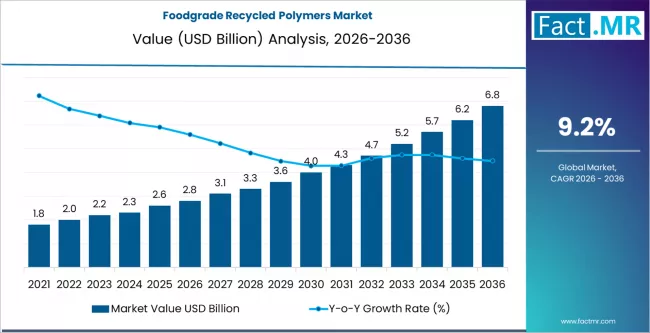
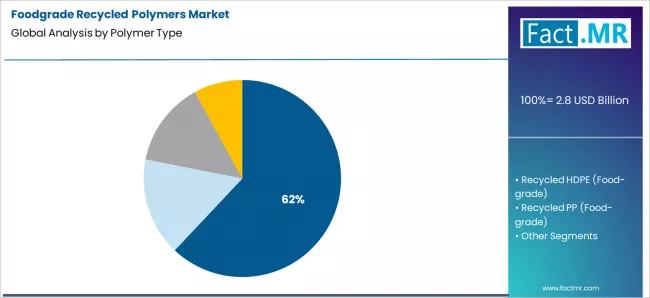
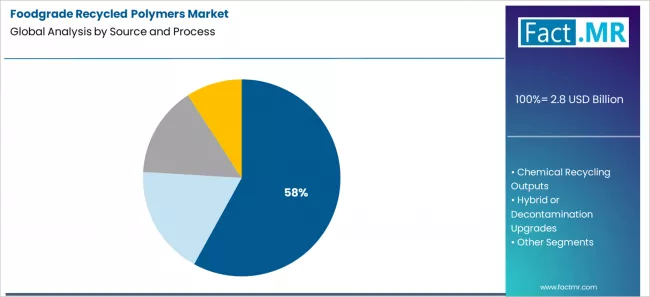
Foodgrade recycled polymers market is projected to grow from USD 2.8 billion in 2026 to USD 6.8 billion by 2036, at a CAGR of 9.2%. Recycled PET (rPET) will dominate with a 62.0% market share, while mechanical recycling will lead the source and process segment with a 58.0% share.
Foodgrade Recycled Polymers Market Forecast and Outlook 2026 to 2036
The foodgrade recycled polymers market is projected to reach USD 2.8 billion in 2026, growing to USD 6.8 billion by 2036, with a CAGR of 9.2%. Decision-makers should recognize that this market's economic exposure is tied to evolving regulatory standards and shifting consumer preferences for sustainability.
Key Takeaways from Foodgrade Recycled Polymers Market
- Foodgrade Recycled Polymers Market Value (2026): USD 2.8 billion
- Foodgrade Recycled Polymers Market Forecast Value (2036): USD 6.8 billion
- Foodgrade Recycled Polymers Market Forecast CAGR (2026-2036): 9.2%
- Leading Segment in Foodgrade Recycled Polymers Market: Recycled PET (rPET) (62%)
- Key Growth Region in Foodgrade Recycled Polymers Market: Asia Pacific
- Key Players in Foodgrade Recycled Polymers Market: Indorama Ventures, ALPLA, Veolia, Eastman, Loop Industries, Suez, Plastipak, Berry Global, LyondellBasell, Borealis

Prioritization must be given to investments in recycling technologies and compliance capabilities, as these areas are critical to maintaining competitiveness. Timing is also essential, as early adoption of advanced solutions will position firms as leaders while reducing the risk of being overtaken by more agile competitors. Supply chain dynamics, particularly the availability and cost of recycled feedstocks, are also pivotal. Executives need to stay aligned with changing regulations and customer demands, ensuring that long-term strategic goals accommodate both environmental imperatives and economic sustainability. Focus on enhancing operational flexibility and building resilient partnerships to address supply fluctuations and market uncertainties.
Foodgrade Recycled Polymers Market
| Metric | Value |
|---|---|
| Estimated Value in (2026E) | USD 2.8 billion |
| Forecast Value in (2036F) | USD 6.8 billion |
| Forecast CAGR (2026 to 2036) | 9.2% |
Category
| Category | Segments |
|---|---|
| Polymer Type | Recycled PET (rPET); Recycled HDPE (Food-grade); Recycled PP (Food-grade); Other |
| Source and Process | Mechanical Recycling; Chemical Recycling Outputs; Hybrid or Decontamination Upgrades; Other |
| End Use | Beverage Bottles; Food Trays and Thermoforms; Caps or Closures; Dairy Packaging; Other |
| Region | North America; Europe; Asia Pacific; Latin America; Middle East & Africa |
Segmental Analysis
What Is the Impact of Polymer Type on the Foodgrade Recycled Polymers Market?

In the foodgrade recycled polymers market, the polymer type plays a significant role in determining the material's suitability for food packaging applications. Recycled PET (rPET) leads the market with a 62% share, primarily due to its widespread use in beverage bottles and its ability to be recycled into food-safe products. rPET offers excellent mechanical properties and transparency, making it ideal for food-grade packaging. As sustainability efforts increase, rPET will continue to dominate the market, helping to reduce waste while providing high-performance packaging solutions for the food industry.
How Does Source and Process Influence the Foodgrade Recycled Polymers Market?

Source and process are critical factors in ensuring the quality and safety of recycled polymers, with mechanical recycling holding a 58% share. This process allows for the recycling of PET, HDPE, and PP plastics by physically breaking down and reforming them into new products. Mechanical recycling helps maintain the integrity of the polymer, making it suitable for food-grade applications. As the demand for eco-friendly packaging grows, the adoption of mechanical recycling processes will continue to expand, ensuring that recycled polymers meet the stringent quality standards required for food-grade packaging.
What are the Principal Drivers, Constraints, and Evolving Dynamics of the Foodgrade Recycled Polymers Market?
Demand for foodgrade recycled polymers has been shaped by requirements to meet regulatory criteria for food contact safety while using postconsumer recycled content. Food and beverage producers specify recycled PET, recycled HDPE, and other polymers that can satisfy migration limits and processing conditions in highspeed filling lines. Traceability and certification of recycled resins influence purchasing decisions.
Inconsistent feedstock quality affects the ability to meet strict purity and performance criteria required for food applications. Sorting and decontamination processes remain focal points for improvement. Efforts to refine cleaning technologies and verification protocols are under way. Collaboration between resin suppliers, recyclers, and food converters aims to expand available grades and establish performance benchmarks for recycled polymers intended for food contact use.
Analysis of the Foodgrade Recycled Polymers Market by Key Country

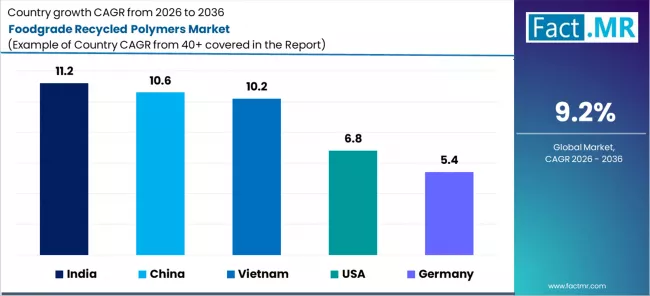
| Country | CAGR 2026 to 2036 |
|---|---|
| India | 11.2% |
| China | 10.6% |
| Vietnam | 10.2% |
| USA | 6.8% |
| Germany | 5.4% |
The report covers an in-depth analysis of 40+ countries; top-performing countries are highlighted below.
What is the Growth Outlook for Foodgrade Recycled Polymers Market in India?
India’s foodgrade recycled polymers market is projected to grow at a CAGR of 11.2% from 2026 to 2036. As India continues to focus on sustainability and circular economy initiatives, the demand for food-grade recycled polymers is increasing. These polymers play a key role in reducing plastic waste and ensuring the safe use of recycled materials in food packaging. With the country’s rapidly growing population and expanding consumer goods sector, there is increasing pressure to reduce the environmental impact of packaging materials. Government regulations supporting sustainable practices, alongside rising consumer demand for eco-friendly packaging, will continue to drive India’s market for foodgrade recycled polymers.
How is the Foodgrade Recycled Polymers Market Performing in China?
China’s foodgrade recycled polymers market is expected to grow at a CAGR of 10.6% from 2026 to 2036. China’s growing commitment to reducing plastic waste and improving sustainability is driving the demand for food-grade recycled polymers. These materials are essential for reducing the environmental impact of plastic packaging, particularly in the food and beverage industries. With China’s focus on enhancing its recycling infrastructure and increasing the use of recycled materials in manufacturing, the market for foodgrade recycled polymers is expected to grow steadily. Government regulations aimed at promoting recycling and sustainability will also support market expansion in the country.
What is the Market Outlook for Foodgrade Recycled Polymers Market in Vietnam?
Vietnam’s foodgrade recycled polymers market is projected to grow at a CAGR of 10.2% from 2026 to 2036. As Vietnam’s industrial sector, particularly in food packaging, continues to expand, the demand for food-grade recycled polymers is increasing. These polymers are vital for improving sustainability in food packaging and reducing plastic waste. Vietnam’s growing emphasis on environmental sustainability and waste management, combined with a rise in consumer demand for eco-friendly products, will drive the adoption of recycled polymers. The market for foodgrade recycled polymers in Vietnam will continue to expand as the country implements more sustainable practices in its packaging industry.
What is the Growth Potential for Foodgrade Recycled Polymers Market in the USA?
The USA’s foodgrade recycled polymers market is forecast to grow at a CAGR of 6.8% from 2026 to 2036. While the growth rate is slower compared to other regions, the demand for food-grade recycled polymers remains steady, driven by increasing consumer awareness of environmental issues and the need for more sustainable packaging solutions. As the USA continues to enforce stricter regulations on plastic waste and recycling, industries are adopting more recycled materials in food packaging. With the growing focus on sustainability and compliance with environmental regulations, the market for foodgrade recycled polymers in the USA is expected to expand, albeit at a moderate pace.
What is the Demand for Foodgrade Recycled Polymers Market in Germany?
Germany’s foodgrade recycled polymers market is projected to grow at a CAGR of 5.4% from 2026 to 2036. As Germany leads the way in sustainable packaging practices, the demand for food-grade recycled polymers is steadily increasing. The country’s strong regulatory framework, which supports the use of recycled materials in packaging, is driving this growth. Germany’s commitment to reducing plastic waste, alongside growing consumer demand for environmentally responsible products, will continue to support the market. While growth in Germany’s market may be slower compared to other countries, its focus on sustainability and eco-friendly packaging will ensure steady demand for foodgrade recycled polymers.
How is Competition Structured in the Foodgrade Recycled Polymers Market?
Competition in the foodgrade recycled polymers market centers on resin purity, certification for food contact, and consistent supply. Indorama Ventures and LyondellBasell leverage large recycling and polymer production capacities to supply high quality foodgrade rPET and rPE. Eastman and Loop Industries focus on advanced depolymerization technologies to produce monomer equivalent recycled polymers suitable for stringent food safety standards.
ALPLA, Plastipak, and Berry Global integrate recycled polymers into packaging solutions, balancing performance with regulatory compliance. Veolia and Suez emphasize feedstock acquisition and processing infrastructure to secure high quality inputs. Borealis positions its offerings with tailored polyolefin grades. Competitive differentiation arises from documented food contact approvals, supply continuity, and traceability systems that support brand sustainability claims. Buyers assess suppliers on certification records and consistent material performance.
Key Players of the Foodgrade Recycled Polymers Market
- Indorama Ventures
- ALPLA
- Veolia
- Eastman
- Loop Industries
- Suez
- Plastipak
- Berry Global
- LyondellBasell
- Borealis
Scope of the Report
| Items | Values |
|---|---|
| Quantitative Units (2026) | USD Billion |
| Polymer Type | Recycled PET (rPET), Recycled HDPE (Food-grade), Recycled PP (Food-grade), Other |
| Source and Process | Mechanical Recycling, Chemical Recycling Outputs, Hybrid or Decontamination Upgrades, Other |
| End Use | Beverage Bottles, Food Trays and Thermoforms, Caps or Closures, Dairy Packaging, Other |
| Regions Covered | North America, Europe, Asia Pacific, Latin America, Middle East & Africa |
| Countries Covered | United States, Canada, Mexico, Brazil, Germany, United Kingdom, France, Italy, Spain, China, Japan, South Korea, India, Australia & New Zealand |
| Key Companies Profiled | Indorama Ventures, ALPLA, Veolia, Eastman, Loop Industries, Suez, Plastipak, Berry Global, LyondellBasell, Borealis |
| Additional Attributes | Dollar revenue by polymer type, source and process, and end use; regional demand trends, competitive landscape, technological advancements in food-grade recycled polymers, and innovations in recycling and decontamination processes |
Foodgrade Recycled Polymers Market Key Segments
-
Polymer Type :
- Recycled PET (rPET)
- Recycled HDPE (Food-grade)
- Recycled PP (Food-grade)
- Other
-
Source and Process :
- Mechanical Recycling
- Chemical Recycling Outputs
- Hybrid or Decontamination Upgrades
- Other
-
End Use :
- Beverage Bottles
- Food Trays and Thermoforms
- Caps or Closures
- Dairy Packaging
- Other
-
Region :
-
North America
- USA
- Canada
- Mexico
-
Europe
- Germany
- UK
- France
- Italy
- Spain
- Nordic Countries
- BENELUX
- Rest of Europe
-
Asia Pacific
- China
- Japan
- South Korea
- India
- Australia
- Rest of Asia Pacific
-
Latin America
- Brazil
- Argentina
- Rest of Latin America
-
Middle East and Africa
- Kingdom of Saudi Arabia
- United Arab Emirates
- South Africa
- Rest of Middle East and Africa
-
Other Regions
- Oceania
- Central Asia
- Other Markets
-
Bibliographies
- European Food Safety Authority. (2023). Safety assessment of recycling processes for plastics intended for food contact. EFSA Journal.
- European Commission. (2023). Regulation (EU) No 10/2011 on plastic materials and articles intended to come into contact with food: consolidated guidance on recycled plastics. Official Journal of the European Union.
- U.S. Food and Drug Administration. (2023). Guidance for industry: Use of recycled plastics in food packaging - Chemistry considerations. FDA, Center for Food Safety and Applied Nutrition.
- Food and Agriculture Organization of the United Nations. (2024). Food contact materials and recycled plastics: Safety considerations and global regulatory alignment. FAO.
- Plastics Recyclers Europe. (2024). Food-grade recycled plastics in Europe: Approval pathways, capacity status, and compliance challenges. PRE Publications.
Table of Content
- Executive Summary
- Global Market Outlook
- Demand to side Trends
- Supply to side Trends
- Technology Roadmap Analysis
- Analysis and Recommendations
- Market Overview
- Market Coverage / Taxonomy
- Market Definition / Scope / Limitations
- Market Background
- Market Dynamics
- Drivers
- Restraints
- Opportunity
- Trends
- Scenario Forecast
- Demand in Optimistic Scenario
- Demand in Likely Scenario
- Demand in Conservative Scenario
- Opportunity Map Analysis
- Product Life Cycle Analysis
- Supply Chain Analysis
- Investment Feasibility Matrix
- Value Chain Analysis
- PESTLE and Porter’s Analysis
- Regulatory Landscape
- Regional Parent Market Outlook
- Production and Consumption Statistics
- Import and Export Statistics
- Market Dynamics
- Global Market Analysis 2021 to 2025 and Forecast, 2026 to 2036
- Historical Market Size Value (USD Million) Analysis, 2021 to 2025
- Current and Future Market Size Value (USD Million) Projections, 2026 to 2036
- Y to o to Y Growth Trend Analysis
- Absolute $ Opportunity Analysis
- Global Market Pricing Analysis 2021 to 2025 and Forecast 2026 to 2036
- Global Market Analysis 2021 to 2025 and Forecast 2026 to 2036, By Polymer Type
- Introduction / Key Findings
- Historical Market Size Value (USD Million) Analysis By Polymer Type, 2021 to 2025
- Current and Future Market Size Value (USD Million) Analysis and Forecast By Polymer Type, 2026 to 2036
- Recycled PET (rPET)
- Recycled HDPE (Food-grade)
- Recycled PP (Food-grade)
- Other
- Recycled PET (rPET)
- Y to o to Y Growth Trend Analysis By Polymer Type, 2021 to 2025
- Absolute $ Opportunity Analysis By Polymer Type, 2026 to 2036
- Global Market Analysis 2021 to 2025 and Forecast 2026 to 2036, By Source and Process
- Introduction / Key Findings
- Historical Market Size Value (USD Million) Analysis By Source and Process, 2021 to 2025
- Current and Future Market Size Value (USD Million) Analysis and Forecast By Source and Process, 2026 to 2036
- Mechanical Recycling
- Chemical Recycling Outputs
- Hybrid or Decontamination Upgrades
- Other
- Mechanical Recycling
- Y to o to Y Growth Trend Analysis By Source and Process, 2021 to 2025
- Absolute $ Opportunity Analysis By Source and Process, 2026 to 2036
- Global Market Analysis 2021 to 2025 and Forecast 2026 to 2036, By End Use
- Introduction / Key Findings
- Historical Market Size Value (USD Million) Analysis By End Use, 2021 to 2025
- Current and Future Market Size Value (USD Million) Analysis and Forecast By End Use, 2026 to 2036
- Beverage Bottles
- Food Trays and Thermoforms
- Caps or Closures
- Dairy Packaging
- Other
- Beverage Bottles
- Y to o to Y Growth Trend Analysis By End Use, 2021 to 2025
- Absolute $ Opportunity Analysis By End Use, 2026 to 2036
- Global Market Analysis 2021 to 2025 and Forecast 2026 to 2036, By Region
- Introduction
- Historical Market Size Value (USD Million) Analysis By Region, 2021 to 2025
- Current Market Size Value (USD Million) Analysis and Forecast By Region, 2026 to 2036
- North America
- Latin America
- Western Europe
- Eastern Europe
- East Asia
- South Asia and Pacific
- Middle East & Africa
- Market Attractiveness Analysis By Region
- North America Market Analysis 2021 to 2025 and Forecast 2026 to 2036, By Country
- Historical Market Size Value (USD Million) Trend Analysis By Market Taxonomy, 2021 to 2025
- Market Size Value (USD Million) Forecast By Market Taxonomy, 2026 to 2036
- By Country
- USA
- Canada
- Mexico
- By Polymer Type
- By Source and Process
- By End Use
- By Country
- Market Attractiveness Analysis
- By Country
- By Polymer Type
- By Source and Process
- By End Use
- Key Takeaways
- Latin America Market Analysis 2021 to 2025 and Forecast 2026 to 2036, By Country
- Historical Market Size Value (USD Million) Trend Analysis By Market Taxonomy, 2021 to 2025
- Market Size Value (USD Million) Forecast By Market Taxonomy, 2026 to 2036
- By Country
- Brazil
- Chile
- Rest of Latin America
- By Polymer Type
- By Source and Process
- By End Use
- By Country
- Market Attractiveness Analysis
- By Country
- By Polymer Type
- By Source and Process
- By End Use
- Key Takeaways
- Western Europe Market Analysis 2021 to 2025 and Forecast 2026 to 2036, By Country
- Historical Market Size Value (USD Million) Trend Analysis By Market Taxonomy, 2021 to 2025
- Market Size Value (USD Million) Forecast By Market Taxonomy, 2026 to 2036
- By Country
- Germany
- UK
- Italy
- Spain
- France
- Nordic
- BENELUX
- Rest of Western Europe
- By Polymer Type
- By Source and Process
- By End Use
- By Country
- Market Attractiveness Analysis
- By Country
- By Polymer Type
- By Source and Process
- By End Use
- Key Takeaways
- Eastern Europe Market Analysis 2021 to 2025 and Forecast 2026 to 2036, By Country
- Historical Market Size Value (USD Million) Trend Analysis By Market Taxonomy, 2021 to 2025
- Market Size Value (USD Million) Forecast By Market Taxonomy, 2026 to 2036
- By Country
- Russia
- Poland
- Hungary
- Balkan & Baltic
- Rest of Eastern Europe
- By Polymer Type
- By Source and Process
- By End Use
- By Country
- Market Attractiveness Analysis
- By Country
- By Polymer Type
- By Source and Process
- By End Use
- Key Takeaways
- East Asia Market Analysis 2021 to 2025 and Forecast 2026 to 2036, By Country
- Historical Market Size Value (USD Million) Trend Analysis By Market Taxonomy, 2021 to 2025
- Market Size Value (USD Million) Forecast By Market Taxonomy, 2026 to 2036
- By Country
- China
- Japan
- South Korea
- By Polymer Type
- By Source and Process
- By End Use
- By Country
- Market Attractiveness Analysis
- By Country
- By Polymer Type
- By Source and Process
- By End Use
- Key Takeaways
- South Asia and Pacific Market Analysis 2021 to 2025 and Forecast 2026 to 2036, By Country
- Historical Market Size Value (USD Million) Trend Analysis By Market Taxonomy, 2021 to 2025
- Market Size Value (USD Million) Forecast By Market Taxonomy, 2026 to 2036
- By Country
- India
- ASEAN
- Australia & New Zealand
- Rest of South Asia and Pacific
- By Polymer Type
- By Source and Process
- By End Use
- By Country
- Market Attractiveness Analysis
- By Country
- By Polymer Type
- By Source and Process
- By End Use
- Key Takeaways
- Middle East & Africa Market Analysis 2021 to 2025 and Forecast 2026 to 2036, By Country
- Historical Market Size Value (USD Million) Trend Analysis By Market Taxonomy, 2021 to 2025
- Market Size Value (USD Million) Forecast By Market Taxonomy, 2026 to 2036
- By Country
- Kingdom of Saudi Arabia
- Other GCC Countries
- Turkiye
- South Africa
- Other African Union
- Rest of Middle East & Africa
- By Polymer Type
- By Source and Process
- By End Use
- By Country
- Market Attractiveness Analysis
- By Country
- By Polymer Type
- By Source and Process
- By End Use
- Key Takeaways
- Key Countries Market Analysis
- USA
- Pricing Analysis
- Market Share Analysis, 2025
- By Polymer Type
- By Source and Process
- By End Use
- Canada
- Pricing Analysis
- Market Share Analysis, 2025
- By Polymer Type
- By Source and Process
- By End Use
- Mexico
- Pricing Analysis
- Market Share Analysis, 2025
- By Polymer Type
- By Source and Process
- By End Use
- Brazil
- Pricing Analysis
- Market Share Analysis, 2025
- By Polymer Type
- By Source and Process
- By End Use
- Chile
- Pricing Analysis
- Market Share Analysis, 2025
- By Polymer Type
- By Source and Process
- By End Use
- Germany
- Pricing Analysis
- Market Share Analysis, 2025
- By Polymer Type
- By Source and Process
- By End Use
- UK
- Pricing Analysis
- Market Share Analysis, 2025
- By Polymer Type
- By Source and Process
- By End Use
- Italy
- Pricing Analysis
- Market Share Analysis, 2025
- By Polymer Type
- By Source and Process
- By End Use
- Spain
- Pricing Analysis
- Market Share Analysis, 2025
- By Polymer Type
- By Source and Process
- By End Use
- France
- Pricing Analysis
- Market Share Analysis, 2025
- By Polymer Type
- By Source and Process
- By End Use
- India
- Pricing Analysis
- Market Share Analysis, 2025
- By Polymer Type
- By Source and Process
- By End Use
- ASEAN
- Pricing Analysis
- Market Share Analysis, 2025
- By Polymer Type
- By Source and Process
- By End Use
- Australia & New Zealand
- Pricing Analysis
- Market Share Analysis, 2025
- By Polymer Type
- By Source and Process
- By End Use
- China
- Pricing Analysis
- Market Share Analysis, 2025
- By Polymer Type
- By Source and Process
- By End Use
- Japan
- Pricing Analysis
- Market Share Analysis, 2025
- By Polymer Type
- By Source and Process
- By End Use
- South Korea
- Pricing Analysis
- Market Share Analysis, 2025
- By Polymer Type
- By Source and Process
- By End Use
- Russia
- Pricing Analysis
- Market Share Analysis, 2025
- By Polymer Type
- By Source and Process
- By End Use
- Poland
- Pricing Analysis
- Market Share Analysis, 2025
- By Polymer Type
- By Source and Process
- By End Use
- Hungary
- Pricing Analysis
- Market Share Analysis, 2025
- By Polymer Type
- By Source and Process
- By End Use
- Kingdom of Saudi Arabia
- Pricing Analysis
- Market Share Analysis, 2025
- By Polymer Type
- By Source and Process
- By End Use
- Turkiye
- Pricing Analysis
- Market Share Analysis, 2025
- By Polymer Type
- By Source and Process
- By End Use
- South Africa
- Pricing Analysis
- Market Share Analysis, 2025
- By Polymer Type
- By Source and Process
- By End Use
- USA
- Market Structure Analysis
- Competition Dashboard
- Competition Benchmarking
- Market Share Analysis of Top Players
- By Regional
- By Polymer Type
- By Source and Process
- By End Use
- Competition Analysis
- Competition Deep Dive
- Indorama Ventures
- Overview
- Product Portfolio
- Profitability by Market Segments (Product/Age /Sales Channel/Region)
- Sales Footprint
- Strategy Overview
- Marketing Strategy
- Product Strategy
- Channel Strategy
- ALPLA
- Veolia
- Eastman
- Loop Industries
- Suez
- Plastipak
- Berry Global
- LyondellBasell
- Borealis
- Indorama Ventures
- Competition Deep Dive
- Assumptions & Acronyms Used
- Research Methodology
List Of Table
- Table 1: Global Market Value (USD Million) Forecast by Region, 2021 to 2036
- Table 2: Global Market Value (USD Million) Forecast by Polymer Type, 2021 to 2036
- Table 3: Global Market Value (USD Million) Forecast by Source and Process, 2021 to 2036
- Table 4: Global Market Value (USD Million) Forecast by End Use, 2021 to 2036
- Table 5: North America Market Value (USD Million) Forecast by Country, 2021 to 2036
- Table 6: North America Market Value (USD Million) Forecast by Polymer Type, 2021 to 2036
- Table 7: North America Market Value (USD Million) Forecast by Source and Process, 2021 to 2036
- Table 8: North America Market Value (USD Million) Forecast by End Use, 2021 to 2036
- Table 9: Latin America Market Value (USD Million) Forecast by Country, 2021 to 2036
- Table 10: Latin America Market Value (USD Million) Forecast by Polymer Type, 2021 to 2036
- Table 11: Latin America Market Value (USD Million) Forecast by Source and Process, 2021 to 2036
- Table 12: Latin America Market Value (USD Million) Forecast by End Use, 2021 to 2036
- Table 13: Western Europe Market Value (USD Million) Forecast by Country, 2021 to 2036
- Table 14: Western Europe Market Value (USD Million) Forecast by Polymer Type, 2021 to 2036
- Table 15: Western Europe Market Value (USD Million) Forecast by Source and Process, 2021 to 2036
- Table 16: Western Europe Market Value (USD Million) Forecast by End Use, 2021 to 2036
- Table 17: Eastern Europe Market Value (USD Million) Forecast by Country, 2021 to 2036
- Table 18: Eastern Europe Market Value (USD Million) Forecast by Polymer Type, 2021 to 2036
- Table 19: Eastern Europe Market Value (USD Million) Forecast by Source and Process, 2021 to 2036
- Table 20: Eastern Europe Market Value (USD Million) Forecast by End Use, 2021 to 2036
- Table 21: East Asia Market Value (USD Million) Forecast by Country, 2021 to 2036
- Table 22: East Asia Market Value (USD Million) Forecast by Polymer Type, 2021 to 2036
- Table 23: East Asia Market Value (USD Million) Forecast by Source and Process, 2021 to 2036
- Table 24: East Asia Market Value (USD Million) Forecast by End Use, 2021 to 2036
- Table 25: South Asia and Pacific Market Value (USD Million) Forecast by Country, 2021 to 2036
- Table 26: South Asia and Pacific Market Value (USD Million) Forecast by Polymer Type, 2021 to 2036
- Table 27: South Asia and Pacific Market Value (USD Million) Forecast by Source and Process, 2021 to 2036
- Table 28: South Asia and Pacific Market Value (USD Million) Forecast by End Use, 2021 to 2036
- Table 29: Middle East & Africa Market Value (USD Million) Forecast by Country, 2021 to 2036
- Table 30: Middle East & Africa Market Value (USD Million) Forecast by Polymer Type, 2021 to 2036
- Table 31: Middle East & Africa Market Value (USD Million) Forecast by Source and Process, 2021 to 2036
- Table 32: Middle East & Africa Market Value (USD Million) Forecast by End Use, 2021 to 2036
List Of Figures
- Figure 1: Global Market Pricing Analysis
- Figure 2: Global Market Value (USD Million) Forecast 2021 to 2036
- Figure 3: Global Market Value Share and BPS Analysis by Polymer Type, 2026 and 2036
- Figure 4: Global Market Y to o to Y Growth Comparison by Polymer Type, 2026 to 2036
- Figure 5: Global Market Attractiveness Analysis by Polymer Type
- Figure 6: Global Market Value Share and BPS Analysis by Source and Process, 2026 and 2036
- Figure 7: Global Market Y to o to Y Growth Comparison by Source and Process, 2026 to 2036
- Figure 8: Global Market Attractiveness Analysis by Source and Process
- Figure 9: Global Market Value Share and BPS Analysis by End Use, 2026 and 2036
- Figure 10: Global Market Y to o to Y Growth Comparison by End Use, 2026 to 2036
- Figure 11: Global Market Attractiveness Analysis by End Use
- Figure 12: Global Market Value (USD Million) Share and BPS Analysis by Region, 2026 and 2036
- Figure 13: Global Market Y to o to Y Growth Comparison by Region, 2026 to 2036
- Figure 14: Global Market Attractiveness Analysis by Region
- Figure 15: North America Market Incremental Dollar Opportunity, 2026 to 2036
- Figure 16: Latin America Market Incremental Dollar Opportunity, 2026 to 2036
- Figure 17: Western Europe Market Incremental Dollar Opportunity, 2026 to 2036
- Figure 18: Eastern Europe Market Incremental Dollar Opportunity, 2026 to 2036
- Figure 19: East Asia Market Incremental Dollar Opportunity, 2026 to 2036
- Figure 20: South Asia and Pacific Market Incremental Dollar Opportunity, 2026 to 2036
- Figure 21: Middle East & Africa Market Incremental Dollar Opportunity, 2026 to 2036
- Figure 22: North America Market Value Share and BPS Analysis by Country, 2026 and 2036
- Figure 23: North America Market Value Share and BPS Analysis by Polymer Type, 2026 and 2036
- Figure 24: North America Market Y to o to Y Growth Comparison by Polymer Type, 2026 to 2036
- Figure 25: North America Market Attractiveness Analysis by Polymer Type
- Figure 26: North America Market Value Share and BPS Analysis by Source and Process, 2026 and 2036
- Figure 27: North America Market Y to o to Y Growth Comparison by Source and Process, 2026 to 2036
- Figure 28: North America Market Attractiveness Analysis by Source and Process
- Figure 29: North America Market Value Share and BPS Analysis by End Use, 2026 and 2036
- Figure 30: North America Market Y to o to Y Growth Comparison by End Use, 2026 to 2036
- Figure 31: North America Market Attractiveness Analysis by End Use
- Figure 32: Latin America Market Value Share and BPS Analysis by Country, 2026 and 2036
- Figure 33: Latin America Market Value Share and BPS Analysis by Polymer Type, 2026 and 2036
- Figure 34: Latin America Market Y to o to Y Growth Comparison by Polymer Type, 2026 to 2036
- Figure 35: Latin America Market Attractiveness Analysis by Polymer Type
- Figure 36: Latin America Market Value Share and BPS Analysis by Source and Process, 2026 and 2036
- Figure 37: Latin America Market Y to o to Y Growth Comparison by Source and Process, 2026 to 2036
- Figure 38: Latin America Market Attractiveness Analysis by Source and Process
- Figure 39: Latin America Market Value Share and BPS Analysis by End Use, 2026 and 2036
- Figure 40: Latin America Market Y to o to Y Growth Comparison by End Use, 2026 to 2036
- Figure 41: Latin America Market Attractiveness Analysis by End Use
- Figure 42: Western Europe Market Value Share and BPS Analysis by Country, 2026 and 2036
- Figure 43: Western Europe Market Value Share and BPS Analysis by Polymer Type, 2026 and 2036
- Figure 44: Western Europe Market Y to o to Y Growth Comparison by Polymer Type, 2026 to 2036
- Figure 45: Western Europe Market Attractiveness Analysis by Polymer Type
- Figure 46: Western Europe Market Value Share and BPS Analysis by Source and Process, 2026 and 2036
- Figure 47: Western Europe Market Y to o to Y Growth Comparison by Source and Process, 2026 to 2036
- Figure 48: Western Europe Market Attractiveness Analysis by Source and Process
- Figure 49: Western Europe Market Value Share and BPS Analysis by End Use, 2026 and 2036
- Figure 50: Western Europe Market Y to o to Y Growth Comparison by End Use, 2026 to 2036
- Figure 51: Western Europe Market Attractiveness Analysis by End Use
- Figure 52: Eastern Europe Market Value Share and BPS Analysis by Country, 2026 and 2036
- Figure 53: Eastern Europe Market Value Share and BPS Analysis by Polymer Type, 2026 and 2036
- Figure 54: Eastern Europe Market Y to o to Y Growth Comparison by Polymer Type, 2026 to 2036
- Figure 55: Eastern Europe Market Attractiveness Analysis by Polymer Type
- Figure 56: Eastern Europe Market Value Share and BPS Analysis by Source and Process, 2026 and 2036
- Figure 57: Eastern Europe Market Y to o to Y Growth Comparison by Source and Process, 2026 to 2036
- Figure 58: Eastern Europe Market Attractiveness Analysis by Source and Process
- Figure 59: Eastern Europe Market Value Share and BPS Analysis by End Use, 2026 and 2036
- Figure 60: Eastern Europe Market Y to o to Y Growth Comparison by End Use, 2026 to 2036
- Figure 61: Eastern Europe Market Attractiveness Analysis by End Use
- Figure 62: East Asia Market Value Share and BPS Analysis by Country, 2026 and 2036
- Figure 63: East Asia Market Value Share and BPS Analysis by Polymer Type, 2026 and 2036
- Figure 64: East Asia Market Y to o to Y Growth Comparison by Polymer Type, 2026 to 2036
- Figure 65: East Asia Market Attractiveness Analysis by Polymer Type
- Figure 66: East Asia Market Value Share and BPS Analysis by Source and Process, 2026 and 2036
- Figure 67: East Asia Market Y to o to Y Growth Comparison by Source and Process, 2026 to 2036
- Figure 68: East Asia Market Attractiveness Analysis by Source and Process
- Figure 69: East Asia Market Value Share and BPS Analysis by End Use, 2026 and 2036
- Figure 70: East Asia Market Y to o to Y Growth Comparison by End Use, 2026 to 2036
- Figure 71: East Asia Market Attractiveness Analysis by End Use
- Figure 72: South Asia and Pacific Market Value Share and BPS Analysis by Country, 2026 and 2036
- Figure 73: South Asia and Pacific Market Value Share and BPS Analysis by Polymer Type, 2026 and 2036
- Figure 74: South Asia and Pacific Market Y to o to Y Growth Comparison by Polymer Type, 2026 to 2036
- Figure 75: South Asia and Pacific Market Attractiveness Analysis by Polymer Type
- Figure 76: South Asia and Pacific Market Value Share and BPS Analysis by Source and Process, 2026 and 2036
- Figure 77: South Asia and Pacific Market Y to o to Y Growth Comparison by Source and Process, 2026 to 2036
- Figure 78: South Asia and Pacific Market Attractiveness Analysis by Source and Process
- Figure 79: South Asia and Pacific Market Value Share and BPS Analysis by End Use, 2026 and 2036
- Figure 80: South Asia and Pacific Market Y to o to Y Growth Comparison by End Use, 2026 to 2036
- Figure 81: South Asia and Pacific Market Attractiveness Analysis by End Use
- Figure 82: Middle East & Africa Market Value Share and BPS Analysis by Country, 2026 and 2036
- Figure 83: Middle East & Africa Market Value Share and BPS Analysis by Polymer Type, 2026 and 2036
- Figure 84: Middle East & Africa Market Y to o to Y Growth Comparison by Polymer Type, 2026 to 2036
- Figure 85: Middle East & Africa Market Attractiveness Analysis by Polymer Type
- Figure 86: Middle East & Africa Market Value Share and BPS Analysis by Source and Process, 2026 and 2036
- Figure 87: Middle East & Africa Market Y to o to Y Growth Comparison by Source and Process, 2026 to 2036
- Figure 88: Middle East & Africa Market Attractiveness Analysis by Source and Process
- Figure 89: Middle East & Africa Market Value Share and BPS Analysis by End Use, 2026 and 2036
- Figure 90: Middle East & Africa Market Y to o to Y Growth Comparison by End Use, 2026 to 2036
- Figure 91: Middle East & Africa Market Attractiveness Analysis by End Use
- Figure 92: Global Market - Tier Structure Analysis
- Figure 93: Global Market - Company Share Analysis
- FAQs -
How big is the foodgrade recycled polymers market in 2026?
The global foodgrade recycled polymers market is estimated to be valued at USD 2.8 billion in 2026.
What will be the size of foodgrade recycled polymers market in 2036?
The market size for the foodgrade recycled polymers market is projected to reach USD 6.8 billion by 2036.
How much will be the foodgrade recycled polymers market growth between 2026 and 2036?
The foodgrade recycled polymers market is expected to grow at a 9.2% CAGR between 2026 and 2036.
What are the key product types in the foodgrade recycled polymers market?
The key product types in foodgrade recycled polymers market are recycled pet (rpet), recycled hdpe (food-grade), recycled pp (food-grade) and other.
Which source and process segment to contribute significant share in the foodgrade recycled polymers market in 2026?
In terms of source and process, mechanical recycling segment to command 58.0% share in the foodgrade recycled polymers market in 2026.