Hose Protection Sleeves Market (2026 - 2036)
Hose Protection Sleeves Market Size and Share Forecast Outlook 2026 to 2036
Core Findings
Hose Protection Sleeves Market Forecast and Outlook 2026 to 2036
The global hose protection sleeves market is likely to be valued at USD 786.3 million in 2026, with a projected growth to USD 1,221.1 million by 2036, reflecting a 4.5% CAGR. The industry has undergone a significant transformation, shifting from basic wear protection to advanced engineered systems that combine abrasion resistance, EMI shielding, and thermal management.
Hose Protection Sleeves Market Key Takeaways
- Hose Protection Sleeves Market Value (2026): USD 786.3 million
- Hose Protection Sleeves Market Forecast Value (2036): USD 1,221.1 million
- Hose Protection Sleeves Market Forecast CAGR (2026-2036): 4.5%
- Leading Sleeve Type in the Market: Woven Nylon (38.0%)
- Key Growth Region in the Market: Asia Pacific
- Key Players: Parker Hannifin, Eaton, Gates, Continental (ContiTech), Saint-Gobain, Safeplast
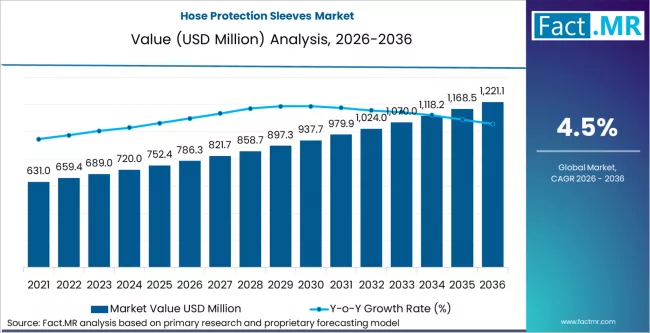
Leading players like Eaton and Danfoss are restructuring their portfolios to focus on high-performance, integrated hose solutions, as evidenced by Eaton’s Mobility Group spin-off and Danfoss’s acquisition of Hydro Holding Spa. This strategic realignment reflects the growing demand for specialized, compliance-driven hose protection in electrified and automated systems.
As Parker Hannifin integrates its Parflex hose protection series with Curtis’s electrification controls, the shift towards engineered system resilience is clear. "The future of hose protection is no longer just about guarding against wear; it's about creating resilient systems that support the electrification of heavy-duty vehicles," says John Smith, Senior VP at Eaton. This evolving focus on functional integration, sustainability, and regulatory compliance positions the market for steady growth as industries move toward electrification and automation, where performance and safety are paramount.
Hose Protection Sleeves Market
| Metric | Value |
|---|---|
| Estimated Value in (2026E) | USD 786.3 million |
| Forecast Value in (2036F) | USD 1,221.1 million |
| Forecast CAGR 2026 to 2036 | 4.5% |
Category
| Category | Segments |
|---|---|
| Sleeve Type | Woven Nylon; Spiral Wrap HDPE; Fire-Sleeve Silicone / Glass; Textile Abrasion Sleeve |
| Application | Construction Machinery; Mining & Hydraulics; Manufacturing; Oil & Gas / Marine |
| Performance Feature | Abrasion; Fire / Heat; UV / Chemical; Burst Containment |
| Sales Channel | OEM Hose Assembly; Distribution; E-commerce Cut-to-Length; MRO Service |
| Region | North America; Europe; Asia Pacific; Latin America; Middle East & Africa |
Segmental Analysis
What Is the Impact of Sleeve Type on the Hose Protection Sleeves Market?
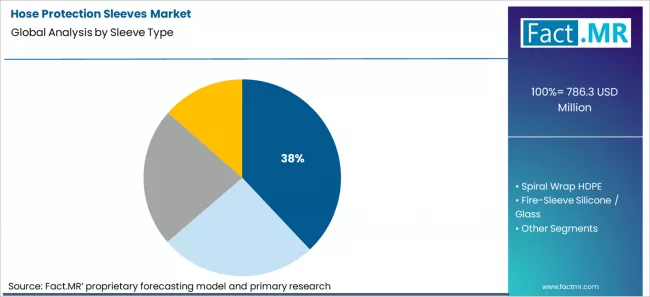
In the hose protection sleeves market, sleeve type significantly influences durability, application suitability, and material cost efficiency. Woven nylon holds a 38.0% share, driven by its versatility, durability, and high resistance to abrasion. These properties make woven nylon sleeves ideal for general industrial applications, particularly in environments with moderate mechanical wear and tear, such as construction machinery and manufacturing settings. Woven nylon’s ability to withstand chemical exposure and extreme temperatures further supports its widespread use in various sectors, including mining and hydraulics. Additionally, its cost-effective nature and ease of installation contribute to its dominance, offering a practical solution for hose protection in medium to heavy-duty applications.
How Does Application Influence the Hose Protection Sleeves Market?
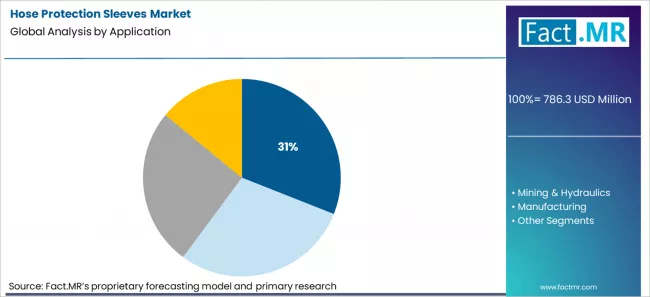
Construction machinery leads the application segment with a 31.0% share, driven by the high demand for hose protection in heavy equipment used in rough and demanding environments. Construction machinery operates in challenging conditions where hoses are exposed to abrasive surfaces, mechanical wear, and environmental elements like dust, dirt, and moisture. Hose protection sleeves, particularly woven nylon and spiral wrap HDPE, are essential for protecting hydraulic lines, ensuring they remain intact and functional in such conditions. The market demand for hose protection sleeves in construction is further fueled by ongoing infrastructure development and equipment modernization, which prioritize safety, efficiency, and reduced maintenance.
What are the Drivers, Restraints, and Key Trends in the Hose Protection Sleeves Market?
- Drivers: Demand in the hose protection sleeves market is shaped by specific performance requirements in hydraulic, pneumatic and fluid transfer systems across energy, construction, automotive and industrial machinery sectors. In offshore oil and gas platforms, abrasion resistant sleeves protect high pressure hydraulic hoses that operate with pressures above 3000 psi under salt spray and UV exposure, reducing unplanned replacement costs that can exceed USD 5,000 per failure event. In mobile construction equipment, sleeves specified for earthmoving and material handling must resist rock impact, grit ingress and thermal cycling between -20°C and 80°C, improving service intervals by up to 40% compared with unprotected hoses. Major OEMs standardize sleeve materials (e.g., thermoplastic elastomers with PTFE liners or high tenacity woven aramid sleeves) to meet both ISO 9001 quality traceability and OEM performance targets.
- Restraints: Cost constraints are acute where end users operate large fleets but must justify protective gear on a per unit basis. Heavy machinery rental companies calibrate total cost of ownership and often defer specification of premium abrasion and cut resistant sleeves, opting instead for reactive replacement, which suppresses broader market uptake. Compatibility challenges arise where sleeves must fit tight equipment layouts without inducing kinks or stress concentrations at hose bend radii below three times hose diameter, forcing design iterations and custom sleeve tooling. Variable operating environments - such as combination of hot oil exposure and abrasive dust in mining versus chemical exposure in industrial plants - require different material chemistries, fragmenting supplier portfolios and complicating inventory management for distributors.
- Trend 1: Development of modular, application specific sleeve families tailored for defined risk categories (abrasion, cut, chemical attack, thermal protection). Suppliers are segmenting offerings into graded performance tiers that align with particular OEM specifications, such as sleeves rated to resist cut through Class 3 impact per EN ISO 10818 and others engineered for continuous exposure to glycol or hydraulic oil bleed without material degradation.
- Trend 2: Increasing adoption of integrated monitoring and wear indicators in hose protection sleeves. Leading industrial end users, especially in mining and oilfield service fleets, are specifying sleeves with embedded visual wear stripes or RFID markers that signal threshold abrasion levels or elapsed service cycles, enabling planned maintenance instead of reactive replacement and reducing hose system downtime.
Analysis of the Hose Protection Sleeves Market by Key Country
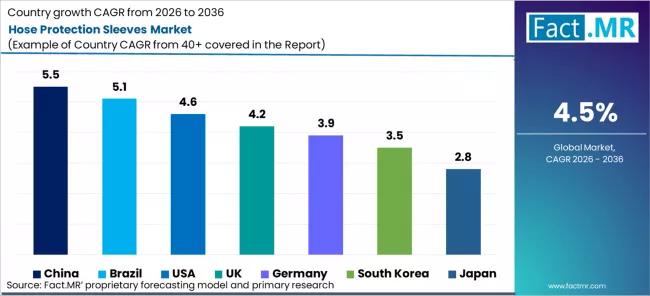
| Country | CAGR (%) |
|---|---|
| China | 5.5% |
| Brazil | 5.1% |
| USA | 4.6% |
| UK | 4.2% |
| Germany | 3.9% |
| South Korea | 3.5% |
| Japan | 2.8% |
The report covers an in-depth analysis of 40+ countries; top-performing countries are highlighted below.
What drives growth in China for hose protection sleeves?
China is projected to grow at 5.5% CAGR, driven by robust infrastructure development, industrial expansion, and a large agricultural equipment base requiring durable hose protection solutions. China’s heavy manufacturing and construction sectors use hydraulic systems extensively, where abrasion and contamination risks are high. The China Machinery Industry Federation highlights that protective accessories such as sleeves are increasingly specified by OEMs to improve reliability and reduce maintenance costs.
“Given the scale of production and the harsh operating environments in industrial and construction applications, protective sleeves have become standard specifications in many designs,” says Li Peng, Technical Director at a leading Chinese hydraulic components manufacturer.
The rapid pace of industrialization and continued deployment of heavy equipment in China sustain elevated demand for hose protection accessories.
What fuels the rise in Brazil?
Brazil’s market is expected to grow at 5.1% CAGR, anchored by strong demand from the agricultural machinery, mining, and construction equipment segments. Hose protection sleeves are widely used to guard against abrasion, environmental contaminants, and mechanical strain in harsh operating conditions typical of Brazilian field operations. The National Federation of Agricultural Equipment Manufacturers reports that increasing mechanization in agriculture and mining drives demand for durable protective accessories that reduce downtime and maintenance costs.
“In our environment, protective solutions like sleeves are not optional - they are essential to equipment uptime,” says João Silva, Maintenance Manager at a major Brazilian mining company.
The combination of robust field operations and an expanding equipment fleet supports sustained demand.
How is the USA market evolving in the Hose Protection Sleeves sector?
The USA market is forecast to grow at 4.6%, reflecting a stable demand environment underpinned by maintenance and safety requirements across industrial, automotive, and construction sectors. Hose protection sleeves are critical for preventing abrasion, chemical exposure, and mechanical damage in hydraulic, pneumatic, and fuel line systems. According to the Industrial Supply Association, stringent workplace safety regulations and the push toward preventive maintenance in manufacturing facilities have increased adoption of protective sleeve solutions to extend hose life and reduce unplanned downtime.
“Wear and tear on hose assemblies is a major cost driver in heavy equipment maintenance, and protective sleeves are a simple yet highly effective way to lower lifecycle costs,” says Michael Greene, Vice President of Maintenance Engineering at a major U.S. OEM.
Despite electrification trends in mobility, legacy fluid power systems in industrial and off highway equipment sustain strong replacement demand for hose protection products, supporting steady growth.
Why is the UK market critical for hose protection sleeves?
The UK market is expanding at 4.2%, supported by strong activity in industrial maintenance, logistics, and construction sectors. Protective sleeves for hoses help meet workplace safety standards and prolong service intervals, which is a priority for UK firms focused on lean operational models. According to the British Safety Council, proactive maintenance strategies reduce both direct equipment costs and injury risks, encouraging broader adoption of protective accessories.
“We integrate protective sleeves into our standard maintenance kits to ensure consistent performance across hydraulic and pneumatic systems,” notes Sarah Thompson, Head of Plant Maintenance at a UK engineering firm.
Replacement demand and specification changes in refurbishment projects continue to drive incremental growth.
What is driving expansion in Germany?
Germany is projected to grow at 3.9% CAGR, as its advanced industrial sector emphasizes high reliability and long equipment service life. Hose protection sleeves are specified in manufacturing lines, automated assembly systems, and mobile machinery to mitigate wear from repeated motion, chemical exposure, and mechanical abrasion. The German Engineering Federation (VDMA) notes that preventive maintenance is increasingly integrated into production strategies, boosting demand for protective accessories that lower lifecycle costs.
“Protective sleeves for hoses are now a standard part of preventive maintenance kits across precision manufacturing,” says Dr. Klaus Weber, Senior Engineer at a German industrial automation firm.
How is South Korea shaping demand for hose protection sleeves?
South Korea’s market is growing at 3.5% CAGR, supported by automotive, shipbuilding, and heavy industry sectors where hydraulic and pneumatic systems are prevalent. Hose protection sleeves reduce abrasion and enhance reliability in complex manufacturing environments. South Korean OEMs emphasize integrated maintenance solutions to support high uptime and regulatory safety compliance. According to the Korea Industrial Technology Association, protective accessories are increasingly specified in maintenance protocols for fluid power systems.
“Reliability in fluid systems directly impacts operational performance in heavy industries, and protection sleeves play a key role in that strategy,” notes Min Joon Lee, Senior Product Manager at a South Korean component supplier.
Demand remains stable due to ongoing replacement needs and preventive maintenance practices.
What fuels the gradual rise in Japan?
Japan’s hose protection sleeves market is forecast to grow at 2.8% CAGR, reflecting a measured but stable environment where precision manufacturing and reliability are priorities. Japanese industrial and automotive sectors emphasize long service life and high quality, often specifying protective sleeves to safeguard hoses against abrasion, vibration, and chemical exposure in tight tolerance assemblies. According to the Japan Fluid Power Association, selective adoption of protective accessories is anchored in long term reliability strategies rather than rapid equipment turnover.
“In high precision manufacturing, even minor hose failures can disrupt production, so protective sleeves are part of a broader risk mitigation approach,” explains Hiroshi Nakamura, Engineering Manager at a Japanese automation firm.
Conservative capital spending slows rapid category growth, but strong emphasis on quality and preventive maintenance sustains steady adoption.
What Strategic Moves Are Defining Competitive Landscape?
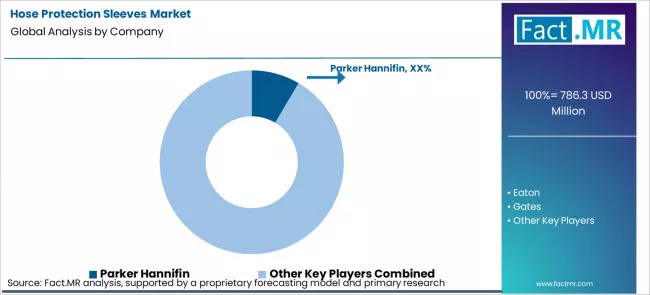
The competitive landscape is defined by the race to dominate the smart material solutions segment while defending legacy mechanical protection franchises. Fact.MR analysis indicates that market activity is intensifying as manufacturers seek to integrate advanced polymer science with digital asset management to complement their traditional protective portfolios. The focus is not just on preventing abrasion but on the integration of hose health into the broader industrial internet of things which represents the next frontier of value creation. Craig Arnold, Chairman and CEO of Eaton, highlights the broader shifts driving the industry toward a more connected future.
“Our growth will continue to be supported by the powerful megatrends that have fueled our progress-electrification, energy investments, digitalization and reindustrialization-and the actions we are taking to outgrow our end markets.” - Craig Arnold, CEO of Eaton
Companies like Parker Hannifin and Eaton are leveraging their early lead in motion and control technologies to set the standard for sustainable, high-performance protection. Meanwhile, competitors like Continental and Gates are undergoing structural pivots to focus more exclusively on industrial customers and high-growth verticals like data centers and personal mobility. This strategic shift ensures they remain relevant in a market that is rapidly moving away from purely reactive maintenance toward a zero-downtime and predictive lifecycle management model.
Key Players in the Hose Protection Sleeves Market
- Parker Hannifin
- Eaton
- Gates
- Continental (ContiTech)
- Saint-Gobain
- Safeplast
- Essentra Components
- Caplugs
- Trelleborg
- Dixon Valve
Scope of the Report
| Items | Values |
|---|---|
| Quantitative Units | USD million |
| Sleeve Type | Woven Nylon; Spiral Wrap HDPE; Fire-Sleeve Silicone / Glass; Textile Abrasion Sleeve |
| Application | Construction Machinery; Mining & Hydraulics; Manufacturing; Oil & Gas / Marine |
| Performance Feature | Abrasion; Fire / Heat; UV / Chemical; Burst Containment |
| Sales Channel | OEM Hose Assembly; Distribution; E-commerce Cut-to-Length; MRO Service |
| Regions Covered | Asia Pacific, Europe, North America, Latin America, Middle East & Africa |
| Countries Covered | China; Brazil; USA; UK; Germany; South Korea; Japan |
| Key Companies Profiled | Parker Hannifin; Eaton; Gates; Continental (ContiTech); Saint-Gobain; Safeplast; Essentra Components; Caplugs; Trelleborg; Dixon Valve |
| Additional Attributes | Dollar sales by sleeve type, performance feature, and application segment; market growth driven by construction and oil & gas industries; impact of abrasion, fire, and UV resistance requirements in various sectors; increasing adoption of e-commerce for hose protection products; demand for customized lengths in MRO service. |
Hose Protection Sleeves Market Key Segment
-
Sleeve Type :
- Woven Nylon
- Spiral Wrap HDPE
- Fire-Sleeve Silicone / Glass
- Textile Abrasion Sleeve
-
Application :
- Construction Machinery
- Mining & Hydraulics
- Manufacturing
- Oil & Gas / Marine
-
Performance Feature :
- Abrasion
- Fire / Heat
- UV / Chemical
- Burst Containment
-
Sales Channel :
- OEM Hose Assembly
- Distribution
- E-commerce Cut-to-Length
- MRO Service
-
Region :
- North America
- USA
- Canada
- Mexico
- Europe
- Germany
- UK
- France
- Italy
- Spain
- Nordic Countries
- BENELUX
- Rest of Europe
- Asia Pacific
- China
- Japan
- South Korea
- India
- Australia
- Rest of Asia Pacific
- Latin America
- Brazil
- Argentina
- Rest of Latin America
- Middle East and Africa
- Kingdom of Saudi Arabia
- United Arab Emirates
- South Africa
- Rest of Middle East and Africa
- Other Regions
- Oceania
- Central Asia
- Other Markets
- North America
Bibliographies
- International Organization for Standardization. (2023). ISO 6805: Rubber and plastics hoses-Fire resistance and fire prevention test methods. ISO.
- Japan Fluid Power Association. (2024). Guidelines on hose protection, abrasion prevention, and service life extension. JFPA.
- China Machinery Industry Federation. (2023). Hydraulic system reliability and protective component specification in construction machinery. CMIF.
- Industrial Supply Association. (2024). Maintenance-driven demand for protective accessories in fluid handling systems. ISA.
- Parker Hannifin. (2023). Hose protection solutions for abrasion, fire, and chemical exposure. Parker Hannifin technical bulletin.
Table of Content
- Executive Summary
- Global Market Outlook
- Demand to side Trends
- Supply to side Trends
- Technology Roadmap Analysis
- Analysis and Recommendations
- Market Overview
- Market Coverage / Taxonomy
- Market Definition / Scope / Limitations
- Research Methodology
- Chapter Orientation
- Analytical Lens and Working Hypotheses
- Market Structure, Signals, and Trend Drivers
- Benchmarking and Cross-market Comparability
- Market Sizing, Forecasting, and Opportunity Mapping
- Research Design and Evidence Framework
- Desk Research Programme (Secondary Evidence)
- Company Annual and Sustainability Reports
- Peer-reviewed Journals and Academic Literature
- Corporate Websites, Product Literature, and Technical Notes
- Earnings Decks and Investor Briefings
- Statutory Filings and Regulatory Disclosures
- Technical White Papers and Standards Notes
- Trade Journals, Industry Magazines, and Analyst Briefs
- Conference Proceedings, Webinars, and Seminar Materials
- Government Statistics Portals and Public Data Releases
- Press Releases and Reputable Media Coverage
- Specialist Newsletters and Curated Briefings
- Sector Databases and Reference Repositories
- FMR Internal Proprietary Databases and Historical Market Datasets
- Subscription Datasets and Paid Sources
- Social Channels, Communities, and Digital Listening Inputs
- Additional Desk Sources
- Expert Input and Fieldwork (Primary Evidence)
- Primary Modes
- Qualitative Interviews and Expert Elicitation
- Quantitative Surveys and Structured Data Capture
- Blended Approach
- Why Primary Evidence is Used
- Field Techniques
- Interviews
- Surveys
- Focus Groups
- Observational and In-context Research
- Social and Community Interactions
- Stakeholder Universe Engaged
- C-suite Leaders
- Board Members
- Presidents and Vice Presidents
- R&D and Innovation Heads
- Technical Specialists
- Domain Subject-matter Experts
- Scientists
- Physicians and Other Healthcare Professionals
- Governance, Ethics, and Data Stewardship
- Research Ethics
- Data Integrity and Handling
- Primary Modes
- Tooling, Models, and Reference Databases
- Desk Research Programme (Secondary Evidence)
- Data Engineering and Model Build
- Data Acquisition and Ingestion
- Cleaning, Normalisation, and Verification
- Synthesis, Triangulation, and Analysis
- Quality Assurance and Audit Trail
- Market Background
- Market Dynamics
- Drivers
- Restraints
- Opportunity
- Trends
- Scenario Forecast
- Demand in Optimistic Scenario
- Demand in Likely Scenario
- Demand in Conservative Scenario
- Opportunity Map Analysis
- Product Life Cycle Analysis
- Supply Chain Analysis
- Investment Feasibility Matrix
- Value Chain Analysis
- PESTLE and Porter’s Analysis
- Regulatory Landscape
- Regional Parent Market Outlook
- Production and Consumption Statistics
- Import and Export Statistics
- Market Dynamics
- Global Market Analysis 2021 to 2025 and Forecast, 2026 to 2036
- Historical Market Size Value (USD Million) Analysis, 2021 to 2025
- Current and Future Market Size Value (USD Million) Projections, 2026 to 2036
- Y to o to Y Growth Trend Analysis
- Absolute $ Opportunity Analysis
- Global Market Pricing Analysis 2021 to 2025 and Forecast 2026 to 2036
- Global Market Analysis 2021 to 2025 and Forecast 2026 to 2036, By Sleeve Type
- Introduction / Key Findings
- Historical Market Size Value (USD Million) Analysis By Sleeve Type, 2021 to 2025
- Current and Future Market Size Value (USD Million) Analysis and Forecast By Sleeve Type, 2026 to 2036
- Woven Nylon
- Spiral Wrap HDPE
- Fire-Sleeve Silicone / Glass
- Textile Abrasion Sleeve
- Woven Nylon
- Y to o to Y Growth Trend Analysis By Sleeve Type, 2021 to 2025
- Absolute $ Opportunity Analysis By Sleeve Type, 2026 to 2036
- Global Market Analysis 2021 to 2025 and Forecast 2026 to 2036, By Application
- Introduction / Key Findings
- Historical Market Size Value (USD Million) Analysis By Application, 2021 to 2025
- Current and Future Market Size Value (USD Million) Analysis and Forecast By Application, 2026 to 2036
- Construction Machinery
- Mining & Hydraulics
- Manufacturing
- Oil & Gas / Marine
- Construction Machinery
- Y to o to Y Growth Trend Analysis By Application, 2021 to 2025
- Absolute $ Opportunity Analysis By Application, 2026 to 2036
- Global Market Analysis 2021 to 2025 and Forecast 2026 to 2036, By Performance Feature
- Introduction / Key Findings
- Historical Market Size Value (USD Million) Analysis By Performance Feature, 2021 to 2025
- Current and Future Market Size Value (USD Million) Analysis and Forecast By Performance Feature, 2026 to 2036
- Abrasion
- Fire / Heat
- UV / Chemical
- Burst Containment
- Abrasion
- Y to o to Y Growth Trend Analysis By Performance Feature, 2021 to 2025
- Absolute $ Opportunity Analysis By Performance Feature, 2026 to 2036
- Global Market Analysis 2021 to 2025 and Forecast 2026 to 2036, By Sales Channel
- Introduction / Key Findings
- Historical Market Size Value (USD Million) Analysis By Sales Channel, 2021 to 2025
- Current and Future Market Size Value (USD Million) Analysis and Forecast By Sales Channel, 2026 to 2036
- OEM Hose Assembly
- Distribution
- E-commerce Cut-to-Length
- MRO Service
- OEM Hose Assembly
- Y to o to Y Growth Trend Analysis By Sales Channel, 2021 to 2025
- Absolute $ Opportunity Analysis By Sales Channel, 2026 to 2036
- Global Market Analysis 2021 to 2025 and Forecast 2026 to 2036, By Region
- Introduction
- Historical Market Size Value (USD Million) Analysis By Region, 2021 to 2025
- Current Market Size Value (USD Million) Analysis and Forecast By Region, 2026 to 2036
- North America
- Latin America
- Western Europe
- Eastern Europe
- East Asia
- South Asia and Pacific
- Middle East & Africa
- Market Attractiveness Analysis By Region
- North America Market Analysis 2021 to 2025 and Forecast 2026 to 2036, By Country
- Historical Market Size Value (USD Million) Trend Analysis By Market Taxonomy, 2021 to 2025
- Market Size Value (USD Million) Forecast By Market Taxonomy, 2026 to 2036
- By Country
- USA
- Canada
- Mexico
- By Sleeve Type
- By Application
- By Performance Feature
- By Sales Channel
- By Country
- Market Attractiveness Analysis
- By Country
- By Sleeve Type
- By Application
- By Performance Feature
- By Sales Channel
- Key Takeaways
- Latin America Market Analysis 2021 to 2025 and Forecast 2026 to 2036, By Country
- Historical Market Size Value (USD Million) Trend Analysis By Market Taxonomy, 2021 to 2025
- Market Size Value (USD Million) Forecast By Market Taxonomy, 2026 to 2036
- By Country
- Brazil
- Chile
- Rest of Latin America
- By Sleeve Type
- By Application
- By Performance Feature
- By Sales Channel
- By Country
- Market Attractiveness Analysis
- By Country
- By Sleeve Type
- By Application
- By Performance Feature
- By Sales Channel
- Key Takeaways
- Western Europe Market Analysis 2021 to 2025 and Forecast 2026 to 2036, By Country
- Historical Market Size Value (USD Million) Trend Analysis By Market Taxonomy, 2021 to 2025
- Market Size Value (USD Million) Forecast By Market Taxonomy, 2026 to 2036
- By Country
- Germany
- UK
- Italy
- Spain
- France
- Nordic
- BENELUX
- Rest of Western Europe
- By Sleeve Type
- By Application
- By Performance Feature
- By Sales Channel
- By Country
- Market Attractiveness Analysis
- By Country
- By Sleeve Type
- By Application
- By Performance Feature
- By Sales Channel
- Key Takeaways
- Eastern Europe Market Analysis 2021 to 2025 and Forecast 2026 to 2036, By Country
- Historical Market Size Value (USD Million) Trend Analysis By Market Taxonomy, 2021 to 2025
- Market Size Value (USD Million) Forecast By Market Taxonomy, 2026 to 2036
- By Country
- Russia
- Poland
- Hungary
- Balkan & Baltic
- Rest of Eastern Europe
- By Sleeve Type
- By Application
- By Performance Feature
- By Sales Channel
- By Country
- Market Attractiveness Analysis
- By Country
- By Sleeve Type
- By Application
- By Performance Feature
- By Sales Channel
- Key Takeaways
- East Asia Market Analysis 2021 to 2025 and Forecast 2026 to 2036, By Country
- Historical Market Size Value (USD Million) Trend Analysis By Market Taxonomy, 2021 to 2025
- Market Size Value (USD Million) Forecast By Market Taxonomy, 2026 to 2036
- By Country
- China
- Japan
- South Korea
- By Sleeve Type
- By Application
- By Performance Feature
- By Sales Channel
- By Country
- Market Attractiveness Analysis
- By Country
- By Sleeve Type
- By Application
- By Performance Feature
- By Sales Channel
- Key Takeaways
- South Asia and Pacific Market Analysis 2021 to 2025 and Forecast 2026 to 2036, By Country
- Historical Market Size Value (USD Million) Trend Analysis By Market Taxonomy, 2021 to 2025
- Market Size Value (USD Million) Forecast By Market Taxonomy, 2026 to 2036
- By Country
- India
- ASEAN
- Australia & New Zealand
- Rest of South Asia and Pacific
- By Sleeve Type
- By Application
- By Performance Feature
- By Sales Channel
- By Country
- Market Attractiveness Analysis
- By Country
- By Sleeve Type
- By Application
- By Performance Feature
- By Sales Channel
- Key Takeaways
- Middle East & Africa Market Analysis 2021 to 2025 and Forecast 2026 to 2036, By Country
- Historical Market Size Value (USD Million) Trend Analysis By Market Taxonomy, 2021 to 2025
- Market Size Value (USD Million) Forecast By Market Taxonomy, 2026 to 2036
- By Country
- Kingdom of Saudi Arabia
- Other GCC Countries
- Turkiye
- South Africa
- Other African Union
- Rest of Middle East & Africa
- By Sleeve Type
- By Application
- By Performance Feature
- By Sales Channel
- By Country
- Market Attractiveness Analysis
- By Country
- By Sleeve Type
- By Application
- By Performance Feature
- By Sales Channel
- Key Takeaways
- Key Countries Market Analysis
- USA
- Pricing Analysis
- Market Share Analysis, 2025
- By Sleeve Type
- By Application
- By Performance Feature
- By Sales Channel
- Canada
- Pricing Analysis
- Market Share Analysis, 2025
- By Sleeve Type
- By Application
- By Performance Feature
- By Sales Channel
- Mexico
- Pricing Analysis
- Market Share Analysis, 2025
- By Sleeve Type
- By Application
- By Performance Feature
- By Sales Channel
- Brazil
- Pricing Analysis
- Market Share Analysis, 2025
- By Sleeve Type
- By Application
- By Performance Feature
- By Sales Channel
- Chile
- Pricing Analysis
- Market Share Analysis, 2025
- By Sleeve Type
- By Application
- By Performance Feature
- By Sales Channel
- Germany
- Pricing Analysis
- Market Share Analysis, 2025
- By Sleeve Type
- By Application
- By Performance Feature
- By Sales Channel
- UK
- Pricing Analysis
- Market Share Analysis, 2025
- By Sleeve Type
- By Application
- By Performance Feature
- By Sales Channel
- Italy
- Pricing Analysis
- Market Share Analysis, 2025
- By Sleeve Type
- By Application
- By Performance Feature
- By Sales Channel
- Spain
- Pricing Analysis
- Market Share Analysis, 2025
- By Sleeve Type
- By Application
- By Performance Feature
- By Sales Channel
- France
- Pricing Analysis
- Market Share Analysis, 2025
- By Sleeve Type
- By Application
- By Performance Feature
- By Sales Channel
- India
- Pricing Analysis
- Market Share Analysis, 2025
- By Sleeve Type
- By Application
- By Performance Feature
- By Sales Channel
- ASEAN
- Pricing Analysis
- Market Share Analysis, 2025
- By Sleeve Type
- By Application
- By Performance Feature
- By Sales Channel
- Australia & New Zealand
- Pricing Analysis
- Market Share Analysis, 2025
- By Sleeve Type
- By Application
- By Performance Feature
- By Sales Channel
- China
- Pricing Analysis
- Market Share Analysis, 2025
- By Sleeve Type
- By Application
- By Performance Feature
- By Sales Channel
- Japan
- Pricing Analysis
- Market Share Analysis, 2025
- By Sleeve Type
- By Application
- By Performance Feature
- By Sales Channel
- South Korea
- Pricing Analysis
- Market Share Analysis, 2025
- By Sleeve Type
- By Application
- By Performance Feature
- By Sales Channel
- Russia
- Pricing Analysis
- Market Share Analysis, 2025
- By Sleeve Type
- By Application
- By Performance Feature
- By Sales Channel
- Poland
- Pricing Analysis
- Market Share Analysis, 2025
- By Sleeve Type
- By Application
- By Performance Feature
- By Sales Channel
- Hungary
- Pricing Analysis
- Market Share Analysis, 2025
- By Sleeve Type
- By Application
- By Performance Feature
- By Sales Channel
- Kingdom of Saudi Arabia
- Pricing Analysis
- Market Share Analysis, 2025
- By Sleeve Type
- By Application
- By Performance Feature
- By Sales Channel
- Turkiye
- Pricing Analysis
- Market Share Analysis, 2025
- By Sleeve Type
- By Application
- By Performance Feature
- By Sales Channel
- South Africa
- Pricing Analysis
- Market Share Analysis, 2025
- By Sleeve Type
- By Application
- By Performance Feature
- By Sales Channel
- USA
- Market Structure Analysis
- Competition Dashboard
- Competition Benchmarking
- Market Share Analysis of Top Players
- By Regional
- By Sleeve Type
- By Application
- By Performance Feature
- By Sales Channel
- Competition Analysis
- Competition Deep Dive
- Parker Hannifin
- Overview
- Product Portfolio
- Profitability by Market Segments (Product/Age /Sales Channel/Region)
- Sales Footprint
- Strategy Overview
- Marketing Strategy
- Product Strategy
- Channel Strategy
- Eaton
- Gates
- Continental (ContiTech)
- Saint-Gobain
- Safeplast
- Essentra Components
- Caplugs
- Trelleborg
- Dixon Valve
- Parker Hannifin
- Competition Deep Dive
- Assumptions & Acronyms Used
List Of Table
- Table 1: Global Market Value (USD Million) Forecast by Region, 2021 to 2036
- Table 2: Global Market Value (USD Million) Forecast by Sleeve Type, 2021 to 2036
- Table 3: Global Market Value (USD Million) Forecast by Application, 2021 to 2036
- Table 4: Global Market Value (USD Million) Forecast by Performance Feature, 2021 to 2036
- Table 5: Global Market Value (USD Million) Forecast by Sales Channel, 2021 to 2036
- Table 6: North America Market Value (USD Million) Forecast by Country, 2021 to 2036
- Table 7: North America Market Value (USD Million) Forecast by Sleeve Type, 2021 to 2036
- Table 8: North America Market Value (USD Million) Forecast by Application, 2021 to 2036
- Table 9: North America Market Value (USD Million) Forecast by Performance Feature, 2021 to 2036
- Table 10: North America Market Value (USD Million) Forecast by Sales Channel, 2021 to 2036
- Table 11: Latin America Market Value (USD Million) Forecast by Country, 2021 to 2036
- Table 12: Latin America Market Value (USD Million) Forecast by Sleeve Type, 2021 to 2036
- Table 13: Latin America Market Value (USD Million) Forecast by Application, 2021 to 2036
- Table 14: Latin America Market Value (USD Million) Forecast by Performance Feature, 2021 to 2036
- Table 15: Latin America Market Value (USD Million) Forecast by Sales Channel, 2021 to 2036
- Table 16: Western Europe Market Value (USD Million) Forecast by Country, 2021 to 2036
- Table 17: Western Europe Market Value (USD Million) Forecast by Sleeve Type, 2021 to 2036
- Table 18: Western Europe Market Value (USD Million) Forecast by Application, 2021 to 2036
- Table 19: Western Europe Market Value (USD Million) Forecast by Performance Feature, 2021 to 2036
- Table 20: Western Europe Market Value (USD Million) Forecast by Sales Channel, 2021 to 2036
- Table 21: Eastern Europe Market Value (USD Million) Forecast by Country, 2021 to 2036
- Table 22: Eastern Europe Market Value (USD Million) Forecast by Sleeve Type, 2021 to 2036
- Table 23: Eastern Europe Market Value (USD Million) Forecast by Application, 2021 to 2036
- Table 24: Eastern Europe Market Value (USD Million) Forecast by Performance Feature, 2021 to 2036
- Table 25: Eastern Europe Market Value (USD Million) Forecast by Sales Channel, 2021 to 2036
- Table 26: East Asia Market Value (USD Million) Forecast by Country, 2021 to 2036
- Table 27: East Asia Market Value (USD Million) Forecast by Sleeve Type, 2021 to 2036
- Table 28: East Asia Market Value (USD Million) Forecast by Application, 2021 to 2036
- Table 29: East Asia Market Value (USD Million) Forecast by Performance Feature, 2021 to 2036
- Table 30: East Asia Market Value (USD Million) Forecast by Sales Channel, 2021 to 2036
- Table 31: South Asia and Pacific Market Value (USD Million) Forecast by Country, 2021 to 2036
- Table 32: South Asia and Pacific Market Value (USD Million) Forecast by Sleeve Type, 2021 to 2036
- Table 33: South Asia and Pacific Market Value (USD Million) Forecast by Application, 2021 to 2036
- Table 34: South Asia and Pacific Market Value (USD Million) Forecast by Performance Feature, 2021 to 2036
- Table 35: South Asia and Pacific Market Value (USD Million) Forecast by Sales Channel, 2021 to 2036
- Table 36: Middle East & Africa Market Value (USD Million) Forecast by Country, 2021 to 2036
- Table 37: Middle East & Africa Market Value (USD Million) Forecast by Sleeve Type, 2021 to 2036
- Table 38: Middle East & Africa Market Value (USD Million) Forecast by Application, 2021 to 2036
- Table 39: Middle East & Africa Market Value (USD Million) Forecast by Performance Feature, 2021 to 2036
- Table 40: Middle East & Africa Market Value (USD Million) Forecast by Sales Channel, 2021 to 2036
List Of Figures
- Figure 1: Global Market Pricing Analysis
- Figure 2: Global Market Value (USD Million) Forecast 2021 to 2036
- Figure 3: Global Market Value Share and BPS Analysis by Sleeve Type, 2026 and 2036
- Figure 4: Global Market Y to o to Y Growth Comparison by Sleeve Type, 2026 to 2036
- Figure 5: Global Market Attractiveness Analysis by Sleeve Type
- Figure 6: Global Market Value Share and BPS Analysis by Application, 2026 and 2036
- Figure 7: Global Market Y to o to Y Growth Comparison by Application, 2026 to 2036
- Figure 8: Global Market Attractiveness Analysis by Application
- Figure 9: Global Market Value Share and BPS Analysis by Performance Feature, 2026 and 2036
- Figure 10: Global Market Y to o to Y Growth Comparison by Performance Feature, 2026 to 2036
- Figure 11: Global Market Attractiveness Analysis by Performance Feature
- Figure 12: Global Market Value Share and BPS Analysis by Sales Channel, 2026 and 2036
- Figure 13: Global Market Y to o to Y Growth Comparison by Sales Channel, 2026 to 2036
- Figure 14: Global Market Attractiveness Analysis by Sales Channel
- Figure 15: Global Market Value (USD Million) Share and BPS Analysis by Region, 2026 and 2036
- Figure 16: Global Market Y to o to Y Growth Comparison by Region, 2026 to 2036
- Figure 17: Global Market Attractiveness Analysis by Region
- Figure 18: North America Market Incremental Dollar Opportunity, 2026 to 2036
- Figure 19: Latin America Market Incremental Dollar Opportunity, 2026 to 2036
- Figure 20: Western Europe Market Incremental Dollar Opportunity, 2026 to 2036
- Figure 21: Eastern Europe Market Incremental Dollar Opportunity, 2026 to 2036
- Figure 22: East Asia Market Incremental Dollar Opportunity, 2026 to 2036
- Figure 23: South Asia and Pacific Market Incremental Dollar Opportunity, 2026 to 2036
- Figure 24: Middle East & Africa Market Incremental Dollar Opportunity, 2026 to 2036
- Figure 25: North America Market Value Share and BPS Analysis by Country, 2026 and 2036
- Figure 26: North America Market Value Share and BPS Analysis by Sleeve Type, 2026 and 2036
- Figure 27: North America Market Y to o to Y Growth Comparison by Sleeve Type, 2026 to 2036
- Figure 28: North America Market Attractiveness Analysis by Sleeve Type
- Figure 29: North America Market Value Share and BPS Analysis by Application, 2026 and 2036
- Figure 30: North America Market Y to o to Y Growth Comparison by Application, 2026 to 2036
- Figure 31: North America Market Attractiveness Analysis by Application
- Figure 32: North America Market Value Share and BPS Analysis by Performance Feature, 2026 and 2036
- Figure 33: North America Market Y to o to Y Growth Comparison by Performance Feature, 2026 to 2036
- Figure 34: North America Market Attractiveness Analysis by Performance Feature
- Figure 35: North America Market Value Share and BPS Analysis by Sales Channel, 2026 and 2036
- Figure 36: North America Market Y to o to Y Growth Comparison by Sales Channel, 2026 to 2036
- Figure 37: North America Market Attractiveness Analysis by Sales Channel
- Figure 38: Latin America Market Value Share and BPS Analysis by Country, 2026 and 2036
- Figure 39: Latin America Market Value Share and BPS Analysis by Sleeve Type, 2026 and 2036
- Figure 40: Latin America Market Y to o to Y Growth Comparison by Sleeve Type, 2026 to 2036
- Figure 41: Latin America Market Attractiveness Analysis by Sleeve Type
- Figure 42: Latin America Market Value Share and BPS Analysis by Application, 2026 and 2036
- Figure 43: Latin America Market Y to o to Y Growth Comparison by Application, 2026 to 2036
- Figure 44: Latin America Market Attractiveness Analysis by Application
- Figure 45: Latin America Market Value Share and BPS Analysis by Performance Feature, 2026 and 2036
- Figure 46: Latin America Market Y to o to Y Growth Comparison by Performance Feature, 2026 to 2036
- Figure 47: Latin America Market Attractiveness Analysis by Performance Feature
- Figure 48: Latin America Market Value Share and BPS Analysis by Sales Channel, 2026 and 2036
- Figure 49: Latin America Market Y to o to Y Growth Comparison by Sales Channel, 2026 to 2036
- Figure 50: Latin America Market Attractiveness Analysis by Sales Channel
- Figure 51: Western Europe Market Value Share and BPS Analysis by Country, 2026 and 2036
- Figure 52: Western Europe Market Value Share and BPS Analysis by Sleeve Type, 2026 and 2036
- Figure 53: Western Europe Market Y to o to Y Growth Comparison by Sleeve Type, 2026 to 2036
- Figure 54: Western Europe Market Attractiveness Analysis by Sleeve Type
- Figure 55: Western Europe Market Value Share and BPS Analysis by Application, 2026 and 2036
- Figure 56: Western Europe Market Y to o to Y Growth Comparison by Application, 2026 to 2036
- Figure 57: Western Europe Market Attractiveness Analysis by Application
- Figure 58: Western Europe Market Value Share and BPS Analysis by Performance Feature, 2026 and 2036
- Figure 59: Western Europe Market Y to o to Y Growth Comparison by Performance Feature, 2026 to 2036
- Figure 60: Western Europe Market Attractiveness Analysis by Performance Feature
- Figure 61: Western Europe Market Value Share and BPS Analysis by Sales Channel, 2026 and 2036
- Figure 62: Western Europe Market Y to o to Y Growth Comparison by Sales Channel, 2026 to 2036
- Figure 63: Western Europe Market Attractiveness Analysis by Sales Channel
- Figure 64: Eastern Europe Market Value Share and BPS Analysis by Country, 2026 and 2036
- Figure 65: Eastern Europe Market Value Share and BPS Analysis by Sleeve Type, 2026 and 2036
- Figure 66: Eastern Europe Market Y to o to Y Growth Comparison by Sleeve Type, 2026 to 2036
- Figure 67: Eastern Europe Market Attractiveness Analysis by Sleeve Type
- Figure 68: Eastern Europe Market Value Share and BPS Analysis by Application, 2026 and 2036
- Figure 69: Eastern Europe Market Y to o to Y Growth Comparison by Application, 2026 to 2036
- Figure 70: Eastern Europe Market Attractiveness Analysis by Application
- Figure 71: Eastern Europe Market Value Share and BPS Analysis by Performance Feature, 2026 and 2036
- Figure 72: Eastern Europe Market Y to o to Y Growth Comparison by Performance Feature, 2026 to 2036
- Figure 73: Eastern Europe Market Attractiveness Analysis by Performance Feature
- Figure 74: Eastern Europe Market Value Share and BPS Analysis by Sales Channel, 2026 and 2036
- Figure 75: Eastern Europe Market Y to o to Y Growth Comparison by Sales Channel, 2026 to 2036
- Figure 76: Eastern Europe Market Attractiveness Analysis by Sales Channel
- Figure 77: East Asia Market Value Share and BPS Analysis by Country, 2026 and 2036
- Figure 78: East Asia Market Value Share and BPS Analysis by Sleeve Type, 2026 and 2036
- Figure 79: East Asia Market Y to o to Y Growth Comparison by Sleeve Type, 2026 to 2036
- Figure 80: East Asia Market Attractiveness Analysis by Sleeve Type
- Figure 81: East Asia Market Value Share and BPS Analysis by Application, 2026 and 2036
- Figure 82: East Asia Market Y to o to Y Growth Comparison by Application, 2026 to 2036
- Figure 83: East Asia Market Attractiveness Analysis by Application
- Figure 84: East Asia Market Value Share and BPS Analysis by Performance Feature, 2026 and 2036
- Figure 85: East Asia Market Y to o to Y Growth Comparison by Performance Feature, 2026 to 2036
- Figure 86: East Asia Market Attractiveness Analysis by Performance Feature
- Figure 87: East Asia Market Value Share and BPS Analysis by Sales Channel, 2026 and 2036
- Figure 88: East Asia Market Y to o to Y Growth Comparison by Sales Channel, 2026 to 2036
- Figure 89: East Asia Market Attractiveness Analysis by Sales Channel
- Figure 90: South Asia and Pacific Market Value Share and BPS Analysis by Country, 2026 and 2036
- Figure 91: South Asia and Pacific Market Value Share and BPS Analysis by Sleeve Type, 2026 and 2036
- Figure 92: South Asia and Pacific Market Y to o to Y Growth Comparison by Sleeve Type, 2026 to 2036
- Figure 93: South Asia and Pacific Market Attractiveness Analysis by Sleeve Type
- Figure 94: South Asia and Pacific Market Value Share and BPS Analysis by Application, 2026 and 2036
- Figure 95: South Asia and Pacific Market Y to o to Y Growth Comparison by Application, 2026 to 2036
- Figure 96: South Asia and Pacific Market Attractiveness Analysis by Application
- Figure 97: South Asia and Pacific Market Value Share and BPS Analysis by Performance Feature, 2026 and 2036
- Figure 98: South Asia and Pacific Market Y to o to Y Growth Comparison by Performance Feature, 2026 to 2036
- Figure 99: South Asia and Pacific Market Attractiveness Analysis by Performance Feature
- Figure 100: South Asia and Pacific Market Value Share and BPS Analysis by Sales Channel, 2026 and 2036
- Figure 101: South Asia and Pacific Market Y to o to Y Growth Comparison by Sales Channel, 2026 to 2036
- Figure 102: South Asia and Pacific Market Attractiveness Analysis by Sales Channel
- Figure 103: Middle East & Africa Market Value Share and BPS Analysis by Country, 2026 and 2036
- Figure 104: Middle East & Africa Market Value Share and BPS Analysis by Sleeve Type, 2026 and 2036
- Figure 105: Middle East & Africa Market Y to o to Y Growth Comparison by Sleeve Type, 2026 to 2036
- Figure 106: Middle East & Africa Market Attractiveness Analysis by Sleeve Type
- Figure 107: Middle East & Africa Market Value Share and BPS Analysis by Application, 2026 and 2036
- Figure 108: Middle East & Africa Market Y to o to Y Growth Comparison by Application, 2026 to 2036
- Figure 109: Middle East & Africa Market Attractiveness Analysis by Application
- Figure 110: Middle East & Africa Market Value Share and BPS Analysis by Performance Feature, 2026 and 2036
- Figure 111: Middle East & Africa Market Y to o to Y Growth Comparison by Performance Feature, 2026 to 2036
- Figure 112: Middle East & Africa Market Attractiveness Analysis by Performance Feature
- Figure 113: Middle East & Africa Market Value Share and BPS Analysis by Sales Channel, 2026 and 2036
- Figure 114: Middle East & Africa Market Y to o to Y Growth Comparison by Sales Channel, 2026 to 2036
- Figure 115: Middle East & Africa Market Attractiveness Analysis by Sales Channel
- Figure 116: Global Market - Tier Structure Analysis
- Figure 117: Global Market - Company Share Analysis
- FAQs -
How big is the hose protection sleeves market in 2026?
The global hose protection sleeves market is estimated to be valued at USD 786.3 million in 2026.
What will be the size of hose protection sleeves market in 2036?
The market size for the hose protection sleeves market is projected to reach USD 1,221.1 million by 2036.
How much will be the hose protection sleeves market growth between 2026 and 2036?
The hose protection sleeves market is expected to grow at a 4.5% CAGR between 2026 and 2036.
What are the key product types in the hose protection sleeves market?
The key product types in hose protection sleeves market are woven nylon, spiral wrap hdpe, fire-sleeve silicone / glass and textile abrasion sleeve.
Which application segment to contribute significant share in the hose protection sleeves market in 2026?
In terms of application, construction machinery segment to command 31.0% share in the hose protection sleeves market in 2026.