Hydrogen Fuel Rail and Pressure Regulators Market (2026 - 2036)

Hydrogen Fuel Rail and Pressure Regulators Market Size and Share Forecast Outlook 2026 to 2036

Core Findings

    Hydrogen Fuel Rail and Pressure Regulators Market Forecast Outlook 2026 to 2036

    The hydrogen fuel rail and pressure regulators market is projected to reach USD 583 million in 2026 and grow to USD 1,852 million by 2036, reflecting a CAGR of 12.2%.

    Summary of Hydrogen Fuel Rail and Pressure Regulators Market - Key Takeaways

    • The hydrogen fuel rail and pressure regulators market includes essential components like fuel rails, pressure regulators, and sensors that are critical for the safe and efficient delivery of hydrogen in fuel cell systems.
    • The market is projected to grow at a CAGR of 12.2% from 2026 to 2036, expanding from USD 583 million in 2026 to USD 1,852 million by 2036, based on increasing demand for hydrogen-powered vehicles and infrastructure.
    • OEM line-fit sales dominate the market with a 61% share in 2026, driven by the integration of hydrogen fuel rails and pressure regulators directly into hydrogen-powered vehicles and fuel cell systems during manufacturing.
    • 700 bar systems account for 51% of the market share in 2026, as they are the standard for high-pressure hydrogen storage and fueling, offering optimal storage capacity while maintaining safety and efficiency.
    • China is projected to experience the fastest growth in the market at a 14.6% CAGR, fueled by government incentives and a rapidly growing hydrogen infrastructure to support hydrogen-powered vehicles and industrial applications.
    • Key players in the market include Robert Bosch GmbH, Parker-Hannifin Corporation, and Emerson Electric Co., focusing on innovations in hydrogen fuel system components to enhance performance and ensure compliance with regulatory standards.
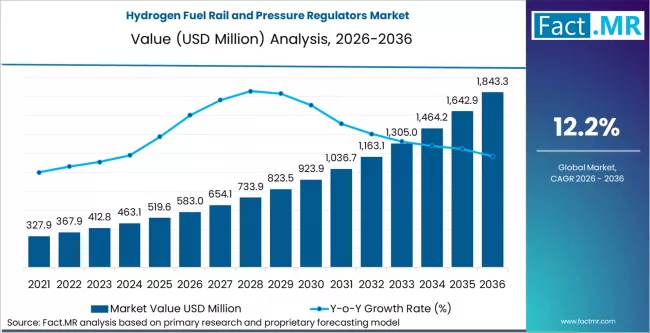
    Hydrogen Fuel Rail And Pressure Regulators Market Market Value Analysis

    This market’s growth will be influenced by its high capital intensity, as significant investments are required for the development and scaling of advanced hydrogen technologies. Return timelines are expected to vary, with longer payback periods as companies navigate regulatory hurdles and work toward widespread adoption of hydrogen-powered vehicles.

    Investment selectivity will be critical, as funding will likely favor companies with proven technologies or those with a clear path to securing long-term contracts with automotive manufacturers or infrastructure developers. As the market expands, investors will need to assess both the technological risks and the regulatory landscape. Firms that strategically allocate resources to R&D, infrastructure partnerships, and regulatory compliance are more likely to deliver strong returns and secure a competitive position in the growing hydrogen ecosystem.

    Hydrogen Fuel Rail and Pressure Regulators Market

    Metric Value
    Estimated Value in (2026E) USD 583 million
    Forecast Value in (2036F) USD 1,852 million
    Forecast CAGR 2026 to 2036 12.2%

    Category

    Category Sub-Segment
    By Pressure Class 350 bar Systems; 700 bar Systems; Low-Pressure/Industrial; Other
    By Component Type Fuel Rails/Manifolds; Pressure Regulators; Valves & Fittings; Sensors/Other
    By Application FCEV Passenger; Heavy-Duty FCEV; Material Handling; Other
    By Sales Channel OEM Line-Fit; Tier-1 Integration; Pilot/Projects; Other
    Region North America; Europe; Asia Pacific; Latin America; Middle East & Africa

    Segmental Analysis

    What is Driving the Dominance of OEM Line-Fit in the Hydrogen Fuel Rail and Pressure Regulators Market?
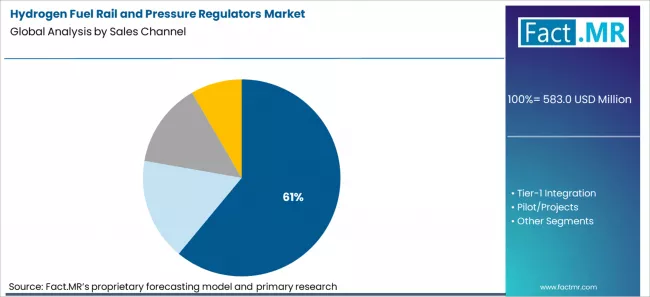
    Hydrogen Fuel Rail And Pressure Regulators Market Analysis By Sales Channel

    OEM Line-Fit captures 61% of the market share in 2026. This is primarily driven by the integration of hydrogen fuel rails and pressure regulators directly during the manufacturing process of hydrogen-powered vehicles and fuel cell systems. OEMs prefer line-fit systems to ensure that all components meet the performance, safety, and regulatory standards required for hydrogen systems. The need for precise fuel delivery and pressure regulation in hydrogen-powered vehicles makes the OEM line-fit approach critical for ensuring reliability and efficiency in new vehicle models.

    What is the Role of 700 bar Systems in the Hydrogen Fuel Rail and Pressure Regulators Market?

    700 bar systems account for 51% of the market share in 2026. These systems are favored for high-pressure hydrogen storage and delivery, as they provide the necessary pressure for hydrogen fueling in fuel cell vehicles. The 700 bar pressure class is the standard for hydrogen fuel tanks in vehicles, offering optimal storage capacity while maintaining safe and efficient fuel transfer. The growing adoption of fuel cell electric vehicles (FCEVs) and the need for high-performance hydrogen systems in the automotive industry continue to drive the demand for 700 bar systems.

    What are the Principal Drivers, Constraints, and Evolving Dynamics of the Hydrogen Fuel Rail and Pressure Regulators Market?

    The Hydrogen Fuel Rail and Pressure Regulators Market is driven by the growing adoption of hydrogen fuel cells in transportation and industry. Regulatory support for low emission solutions and expanding hydrogen infrastructure push demand for these components. These systems enable stable hydrogen delivery at high pressures for fuel cells and hydrogen-powered engines.

    However, high production costs and technical complexity hinder wider adoption. The need for specialized materials resistant to hydrogen embrittlement and multi stage pressure reduction increases manufacturing costs. Infrastructure challenges in hydrogen refueling also delay widespread deployment. Evolving design trends focus on improving pressure regulation accuracy and durability, supporting integration with expanding hydrogen ecosystems. Retrofit opportunities arise as fleets convert to hydrogen use.

    Analysis of the Hydrogen Fuel Rail and Pressure Regulators Market by Key Country
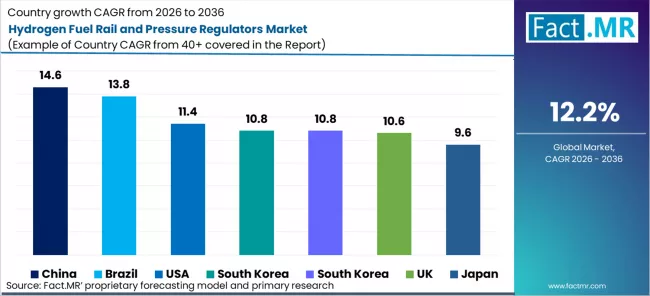
    Hydrogen Fuel Rail And Pressure Regulators Market Cagr Analysis By Country

    Country CAGR 2026 to 2036
    USA 11.4%
    Japan 9.6%
    South Korea 10.8%
    Germany 10.8%
    China 14.6%
    UK 10.6%
    Brazil 13.8%

    The report covers an in-depth analysis of 40+ countries; top-performing countries are highlighted below.

    What is Driving the Growth of the Hydrogen Fuel Rail and Pressure Regulators Market in the USA?

    The USA’s Hydrogen Fuel Rail and Pressure Regulators market is projected to grow at 11.4%, driven by the increasing demand for hydrogen fuel cells in transportation and industrial applications. With the U.S. government’s push to reduce carbon emissions and the growing interest in hydrogen as a clean fuel alternative, the demand for hydrogen fuel infrastructure is expanding. Hydrogen fuel rail and pressure regulators are essential components in managing and controlling fuel flow and pressure in fuel cell systems, especially in vehicles and energy storage solutions. The rapid development of hydrogen refueling stations and the transportation sector's shift to hydrogen-powered vehicles further fuel market growth in the USA.

    How is the Hydrogen Fuel Rail and Pressure Regulators Market Expanding in Japan?

    Japan’s Hydrogen Fuel Rail and Pressure Regulators market is growing at 9.6%, supported by the country’s long-standing commitment to hydrogen as a clean energy solution. Japan is a global leader in hydrogen fuel cell technology, particularly in automotive and industrial applications. With an increasing number of hydrogen-powered vehicles and growing investments in hydrogen infrastructure, the demand for hydrogen fuel rail and pressure regulators is rising. Government policies promoting hydrogen energy and the expansion of hydrogen refueling stations contribute to the continued growth of this market in Japan, ensuring steady adoption of critical hydrogen components.

    What Factors Are Fueling the Growth of the Hydrogen Fuel Rail and Pressure Regulators Market in South Korea?

    South Korea’s Hydrogen Fuel Rail and Pressure Regulators market is projected to grow at 10.8%, driven by the country’s investment in hydrogen-powered transportation and energy systems. South Korea is committed to becoming a global leader in hydrogen energy and is implementing significant projects to develop hydrogen-powered vehicles, buses, and industrial applications. As the adoption of hydrogen fuel cells increases, there is a rising demand for fuel rail and pressure regulators to ensure the safe and efficient operation of hydrogen systems. The government’s strong push for hydrogen infrastructure and the establishment of hydrogen refueling stations further support market growth in South Korea.

    How is the Hydrogen Fuel Rail and Pressure Regulators Market Evolving in Germany?

    Germany’s Hydrogen Fuel Rail and Pressure Regulators market is growing at 10.8%, supported by the country’s strong focus on reducing carbon emissions and transitioning to renewable energy sources. Germany is investing heavily in hydrogen as a clean energy solution, particularly for heavy-duty vehicles and industrial applications. The increasing number of hydrogen refueling stations and the growing fleet of hydrogen-powered vehicles drive the demand for fuel rail and pressure regulators. As Germany’s hydrogen infrastructure continues to expand, the market for hydrogen components, including fuel rail and pressure regulators, is expected to grow steadily, in line with the country's energy transition goals.

    What is Contributing to the Growth of the Hydrogen Fuel Rail and Pressure Regulators Market in China?

    China’s Hydrogen Fuel Rail and Pressure Regulators market is expanding at 14.6%, the highest growth rate among key countries. Driven by the country’s aggressive push for clean energy solutions and its rapidly growing hydrogen fuel cell vehicle market, China is becoming a major player in the global hydrogen economy. The increasing production of hydrogen-powered vehicles, buses, and industrial equipment requires efficient and reliable hydrogen fuel rail and pressure regulators. China’s government policies promoting hydrogen infrastructure, such as the construction of refueling stations, coupled with investments in research and development, ensure rapid adoption of hydrogen technology, fueling the growth of the market.

    What is Driving the Growth of the Hydrogen Fuel Rail and Pressure Regulators Market in the UK?

    The UK’s Hydrogen Fuel Rail and Pressure Regulators market is growing at 10.6%, driven by the country’s commitment to achieving net-zero carbon emissions by 2050. The UK is increasingly investing in hydrogen energy for both transportation and power generation. Hydrogen-powered vehicles, including buses and trucks, are gaining traction, and the demand for hydrogen refueling stations is on the rise. As a result, hydrogen fuel rail and pressure regulators are essential for ensuring the safe and efficient delivery of hydrogen to these vehicles. The government’s support for clean fuel technologies and the expansion of hydrogen infrastructure further contributes to market growth in the UK.

    What is Contributing to the Growth of the Hydrogen Fuel Rail and Pressure Regulators Market in Brazil?

    Brazil’s Hydrogen Fuel Rail and Pressure Regulators market is expanding at 13.8%, supported by the country’s growing interest in hydrogen as a clean energy solution. As Brazil transitions toward more sustainable energy systems, hydrogen is becoming a key alternative fuel, especially in transportation and industrial applications. The adoption of hydrogen-powered vehicles and the expansion of hydrogen infrastructure in Brazil is driving the need for advanced fuel rail and pressure regulators. With the government’s focus on renewable energy and the increasing demand for clean fuels, Brazil is positioned for strong growth in the hydrogen fuel components market, including fuel rail and pressure regulators.

    How Are Key Players Competing in the Hydrogen Fuel Rail and Pressure Regulators Market?
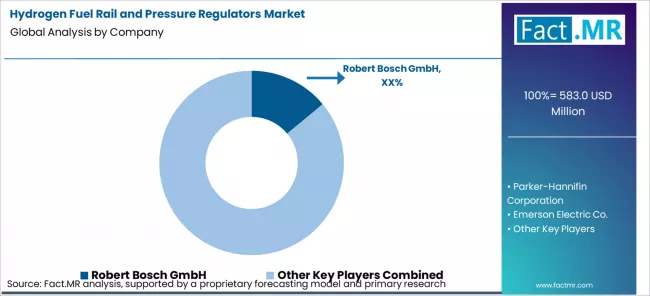
    Hydrogen Fuel Rail And Pressure Regulators Market Analysis By Company

    The hydrogen fuel rail and pressure regulators market is being shaped by prominent players such as Robert Bosch GmbH and Parker-Hannifin Corporation, who are driving innovations in hydrogen fuel systems. Emerson Electric Co. and Eaton Corporation plc are focusing on providing advanced pressure regulation solutions to meet the increasing demand for hydrogen-powered vehicles. Companies like Hexagon Purus ASA and DENSO CORPORATION are investing heavily in fuel rail technologies for hydrogen systems, while Continental AG and Weifu High-Technology Group Co., Ltd. offer comprehensive solutions for pressure management. Hanwha Aerospace Co., Ltd. and Nikkiso Co., Ltd. are also expanding their capabilities in fuel delivery and pressure regulation technologies, supporting the growth of hydrogen infrastructure globally.

    Recent Industry Developments

    • Product Launch - Landi Renzo “EM-H” Mechatronic Hydrogen Pressure Regulator (Published Feb 5, 2024) Landi Renzo announced its EM-H mechatronic hydrogen pressure regulator, combining a mechanical pressure-reduction stage with an electronically controlled stage to deliver calibrated hydrogen pressure to the engine system.
    • OEM Supply / Deployment - Kawasaki awarded order for high-pressure hydrogen regulators for a new fuel-cell city bus (Published Feb 21, 2024) Kawasaki Heavy Industries confirmed its high-pressure hydrogen regulators were selected for use in a new fuel-cell city bus program by a major commercial vehicle manufacturer in Germany.
    • Product / Technology Showcase - PHINIA displays hydrogen regulation module + rail system for H2 applications (Published Sep 4, 2024) PHINIA stated it would feature hydrogen components including its hydrogen regulation module and high-pressure hydrogen injection systems (including rail-related hardware) as part of its hydrogen portfolio.

    Key Players of the Hydrogen Fuel Rail and Pressure Regulators Market

    • Robert Bosch GmbH
    • Parker-Hannifin Corporation
    • Emerson Electric Co.
    • Eaton Corporation plc
    • Hexagon Purus ASA
    • DENSO CORPORATION
    • Continental AG
    • Weifu High-Technology Group Co., Ltd.
    • Hanwha Aerospace Co., Ltd.
    • Nikkiso Co., Ltd.

    Scope of the Report

    Items Values
    Quantitative Units (2026) USD 583 Million
    By Pressure Class 350 bar Systems, 700 bar Systems, Low-Pressure/Industrial, Other
    By Component Type Fuel Rails/Manifolds, Pressure Regulators, Valves & Fittings, Sensors/Other
    By Application FCEV Passenger, Heavy-Duty FCEV, Material Handling, Other
    By Sales Channel OEM Line-Fit, Tier-1 Integration, Pilot/Projects, Other
    Regions Covered North America, Europe, Asia Pacific, Latin America, Middle East & Africa
    Countries Covered United States, Canada, Mexico, Germany, United Kingdom, France, Japan, South Korea, China, India, Brazil, and other countries
    Key Companies Profiled Robert Bosch GmbH, Parker-Hannifin Corporation, Emerson Electric Co., Eaton Corporation plc, Hexagon Purus ASA, DENSO CORPORATION, Continental AG, Weifu High-Technology Group Co., Ltd., Hanwha Aerospace Co., Ltd., Nikkiso Co., Ltd.
    Additional Attributes Market trends by pressure class, component type, application, and sales channel; regional demand trends; competitive landscape; technological advancements in hydrogen fuel rail and pressure regulators; operational performance optimization initiatives; and product development strategies

    Hydrogen Fuel Rail and Pressure Regulators Market Key Segments

    • By Pressure Class :

      • 350 bar Systems
      • 700 bar Systems
      • Low-Pressure/Industrial
      • Other
    • By Component Type :

      • Fuel Rails/Manifolds
      • Pressure Regulators
      • Valves & Fittings
      • Sensors/Other
    • By Application :

      • FCEV Passenger
      • Heavy-Duty FCEV
      • Material Handling
      • Other
    • By Sales Channel :

      • OEM Line-Fit
      • Tier-1 Integration
      • Pilot/Projects
      • Other
    • Region :

      • North America
        • USA
        • Canada
        • Mexico
      • Europe
        • Germany
        • UK
        • France
        • Italy
        • Spain
        • Nordic Countries
        • BENELUX
        • Rest of Europe
      • Asia Pacific
        • China
        • Japan
        • South Korea
        • India
        • Australia
        • Rest of Asia Pacific
      • Latin America
        • Brazil
        • Argentina
        • Rest of Latin America
      • Middle East and Africa
        • Kingdom of Saudi Arabia
        • United Arab Emirates
        • South Africa
        • Rest of Middle East and Africa
      • Other Regions
        • Oceania
        • Central Asia
        • Other Markets

    Bibliographies

    • International Energy Agency (IEA). (2023). Global Hydrogen Review 2023. IEA Publications.
    • United Nations Economic Commission for Europe (UNECE). (2024). Global Technical Regulation No. 13: Hydrogen and Fuel Cell Vehicles (HFCV) safety requirements. UNECE.
    • U.S. Department of Energy, Hydrogen and Fuel Cell Technologies Office (HFTO). (2024). Hydrogen refueling infrastructure and high-pressure fuel delivery components. U.S. DOE.
    • National Renewable Energy Laboratory (NREL). (2023). Performance and safety evaluation of 350 bar and 700 bar hydrogen dispensing systems. U.S. DOE.
    • Oak Ridge National Laboratory (ORNL). (2024). Hydrogen storage, help to improve pressure regulation and flow control in fuel cell vehicles. U.S. Department of Energy.

    Table of Content

    1. Executive Summary
      • Global Market Outlook
      • Demand to side Trends
      • Supply to side Trends
      • Technology Roadmap Analysis
      • Analysis and Recommendations
    2. Market Overview
      • Market Coverage / Taxonomy
      • Market Definition / Scope / Limitations
    3. Research Methodology
      • Chapter Orientation
      • Analytical Lens and Working Hypotheses
        • Market Structure, Signals, and Trend Drivers
        • Benchmarking and Cross-market Comparability
        • Market Sizing, Forecasting, and Opportunity Mapping
      • Research Design and Evidence Framework
        • Desk Research Programme (Secondary Evidence)
          • Company Annual and Sustainability Reports
          • Peer-reviewed Journals and Academic Literature
          • Corporate Websites, Product Literature, and Technical Notes
          • Earnings Decks and Investor Briefings
          • Statutory Filings and Regulatory Disclosures
          • Technical White Papers and Standards Notes
          • Trade Journals, Industry Magazines, and Analyst Briefs
          • Conference Proceedings, Webinars, and Seminar Materials
          • Government Statistics Portals and Public Data Releases
          • Press Releases and Reputable Media Coverage
          • Specialist Newsletters and Curated Briefings
          • Sector Databases and Reference Repositories
          • FMR Internal Proprietary Databases and Historical Market Datasets
          • Subscription Datasets and Paid Sources
          • Social Channels, Communities, and Digital Listening Inputs
          • Additional Desk Sources
        • Expert Input and Fieldwork (Primary Evidence)
          • Primary Modes
            • Qualitative Interviews and Expert Elicitation
            • Quantitative Surveys and Structured Data Capture
            • Blended Approach
          • Why Primary Evidence is Used
          • Field Techniques
            • Interviews
            • Surveys
            • Focus Groups
            • Observational and In-context Research
            • Social and Community Interactions
          • Stakeholder Universe Engaged
            • C-suite Leaders
            • Board Members
            • Presidents and Vice Presidents
            • R&D and Innovation Heads
            • Technical Specialists
            • Domain Subject-matter Experts
            • Scientists
            • Physicians and Other Healthcare Professionals
          • Governance, Ethics, and Data Stewardship
            • Research Ethics
            • Data Integrity and Handling
        • Tooling, Models, and Reference Databases
      • Data Engineering and Model Build
        • Data Acquisition and Ingestion
        • Cleaning, Normalisation, and Verification
        • Synthesis, Triangulation, and Analysis
      • Quality Assurance and Audit Trail
    4. Market Background
      • Market Dynamics
        • Drivers
        • Restraints
        • Opportunity
        • Trends
      • Scenario Forecast
        • Demand in Optimistic Scenario
        • Demand in Likely Scenario
        • Demand in Conservative Scenario
      • Opportunity Map Analysis
      • Product Life Cycle Analysis
      • Supply Chain Analysis
      • Investment Feasibility Matrix
      • Value Chain Analysis
      • PESTLE and Porter’s Analysis
      • Regulatory Landscape
      • Regional Parent Market Outlook
      • Production and Consumption Statistics
      • Import and Export Statistics
    5. Global Market Analysis 2021 to 2025 and Forecast, 2026 to 2036
      • Historical Market Size Value (USD Million) Analysis, 2021 to 2025
      • Current and Future Market Size Value (USD Million) Projections, 2026 to 2036
        • Y to o to Y Growth Trend Analysis
        • Absolute $ Opportunity Analysis
    6. Global Market Pricing Analysis 2021 to 2025 and Forecast 2026 to 2036
    7. Global Market Analysis 2021 to 2025 and Forecast 2026 to 2036, By Pressure Class
      • Introduction / Key Findings
      • Historical Market Size Value (USD Million) Analysis By Pressure Class, 2021 to 2025
      • Current and Future Market Size Value (USD Million) Analysis and Forecast By Pressure Class, 2026 to 2036
        • 350 bar Systems
        • 700 bar Systems
        • Low-Pressure/Industrial
        • Other
      • Y to o to Y Growth Trend Analysis By Pressure Class, 2021 to 2025
      • Absolute $ Opportunity Analysis By Pressure Class, 2026 to 2036
    8. Global Market Analysis 2021 to 2025 and Forecast 2026 to 2036, By Sales Channel
      • Introduction / Key Findings
      • Historical Market Size Value (USD Million) Analysis By Sales Channel, 2021 to 2025
      • Current and Future Market Size Value (USD Million) Analysis and Forecast By Sales Channel, 2026 to 2036
        • OEM Line-Fit
        • Tier-1 Integration
        • Pilot/Projects
        • Other
      • Y to o to Y Growth Trend Analysis By Sales Channel, 2021 to 2025
      • Absolute $ Opportunity Analysis By Sales Channel, 2026 to 2036
    9. Global Market Analysis 2021 to 2025 and Forecast 2026 to 2036, By Region
      • Introduction
      • Historical Market Size Value (USD Million) Analysis By Region, 2021 to 2025
      • Current Market Size Value (USD Million) Analysis and Forecast By Region, 2026 to 2036
        • North America
        • Latin America
        • Western Europe
        • Eastern Europe
        • East Asia
        • South Asia and Pacific
        • Middle East & Africa
      • Market Attractiveness Analysis By Region
    10. North America Market Analysis 2021 to 2025 and Forecast 2026 to 2036, By Country
      • Historical Market Size Value (USD Million) Trend Analysis By Market Taxonomy, 2021 to 2025
      • Market Size Value (USD Million) Forecast By Market Taxonomy, 2026 to 2036
        • By Country
          • USA
          • Canada
          • Mexico
        • By Pressure Class
        • By Sales Channel
      • Market Attractiveness Analysis
        • By Country
        • By Pressure Class
        • By Sales Channel
      • Key Takeaways
    11. Latin America Market Analysis 2021 to 2025 and Forecast 2026 to 2036, By Country
      • Historical Market Size Value (USD Million) Trend Analysis By Market Taxonomy, 2021 to 2025
      • Market Size Value (USD Million) Forecast By Market Taxonomy, 2026 to 2036
        • By Country
          • Brazil
          • Chile
          • Rest of Latin America
        • By Pressure Class
        • By Sales Channel
      • Market Attractiveness Analysis
        • By Country
        • By Pressure Class
        • By Sales Channel
      • Key Takeaways
    12. Western Europe Market Analysis 2021 to 2025 and Forecast 2026 to 2036, By Country
      • Historical Market Size Value (USD Million) Trend Analysis By Market Taxonomy, 2021 to 2025
      • Market Size Value (USD Million) Forecast By Market Taxonomy, 2026 to 2036
        • By Country
          • Germany
          • UK
          • Italy
          • Spain
          • France
          • Nordic
          • BENELUX
          • Rest of Western Europe
        • By Pressure Class
        • By Sales Channel
      • Market Attractiveness Analysis
        • By Country
        • By Pressure Class
        • By Sales Channel
      • Key Takeaways
    13. Eastern Europe Market Analysis 2021 to 2025 and Forecast 2026 to 2036, By Country
      • Historical Market Size Value (USD Million) Trend Analysis By Market Taxonomy, 2021 to 2025
      • Market Size Value (USD Million) Forecast By Market Taxonomy, 2026 to 2036
        • By Country
          • Russia
          • Poland
          • Hungary
          • Balkan & Baltic
          • Rest of Eastern Europe
        • By Pressure Class
        • By Sales Channel
      • Market Attractiveness Analysis
        • By Country
        • By Pressure Class
        • By Sales Channel
      • Key Takeaways
    14. East Asia Market Analysis 2021 to 2025 and Forecast 2026 to 2036, By Country
      • Historical Market Size Value (USD Million) Trend Analysis By Market Taxonomy, 2021 to 2025
      • Market Size Value (USD Million) Forecast By Market Taxonomy, 2026 to 2036
        • By Country
          • China
          • Japan
          • South Korea
        • By Pressure Class
        • By Sales Channel
      • Market Attractiveness Analysis
        • By Country
        • By Pressure Class
        • By Sales Channel
      • Key Takeaways
    15. South Asia and Pacific Market Analysis 2021 to 2025 and Forecast 2026 to 2036, By Country
      • Historical Market Size Value (USD Million) Trend Analysis By Market Taxonomy, 2021 to 2025
      • Market Size Value (USD Million) Forecast By Market Taxonomy, 2026 to 2036
        • By Country
          • India
          • ASEAN
          • Australia & New Zealand
          • Rest of South Asia and Pacific
        • By Pressure Class
        • By Sales Channel
      • Market Attractiveness Analysis
        • By Country
        • By Pressure Class
        • By Sales Channel
      • Key Takeaways
    16. Middle East & Africa Market Analysis 2021 to 2025 and Forecast 2026 to 2036, By Country
      • Historical Market Size Value (USD Million) Trend Analysis By Market Taxonomy, 2021 to 2025
      • Market Size Value (USD Million) Forecast By Market Taxonomy, 2026 to 2036
        • By Country
          • Kingdom of Saudi Arabia
          • Other GCC Countries
          • Turkiye
          • South Africa
          • Other African Union
          • Rest of Middle East & Africa
        • By Pressure Class
        • By Sales Channel
      • Market Attractiveness Analysis
        • By Country
        • By Pressure Class
        • By Sales Channel
      • Key Takeaways
    17. Key Countries Market Analysis
      • USA
        • Pricing Analysis
        • Market Share Analysis, 2025
          • By Pressure Class
          • By Sales Channel
      • Canada
        • Pricing Analysis
        • Market Share Analysis, 2025
          • By Pressure Class
          • By Sales Channel
      • Mexico
        • Pricing Analysis
        • Market Share Analysis, 2025
          • By Pressure Class
          • By Sales Channel
      • Brazil
        • Pricing Analysis
        • Market Share Analysis, 2025
          • By Pressure Class
          • By Sales Channel
      • Chile
        • Pricing Analysis
        • Market Share Analysis, 2025
          • By Pressure Class
          • By Sales Channel
      • Germany
        • Pricing Analysis
        • Market Share Analysis, 2025
          • By Pressure Class
          • By Sales Channel
      • UK
        • Pricing Analysis
        • Market Share Analysis, 2025
          • By Pressure Class
          • By Sales Channel
      • Italy
        • Pricing Analysis
        • Market Share Analysis, 2025
          • By Pressure Class
          • By Sales Channel
      • Spain
        • Pricing Analysis
        • Market Share Analysis, 2025
          • By Pressure Class
          • By Sales Channel
      • France
        • Pricing Analysis
        • Market Share Analysis, 2025
          • By Pressure Class
          • By Sales Channel
      • India
        • Pricing Analysis
        • Market Share Analysis, 2025
          • By Pressure Class
          • By Sales Channel
      • ASEAN
        • Pricing Analysis
        • Market Share Analysis, 2025
          • By Pressure Class
          • By Sales Channel
      • Australia & New Zealand
        • Pricing Analysis
        • Market Share Analysis, 2025
          • By Pressure Class
          • By Sales Channel
      • China
        • Pricing Analysis
        • Market Share Analysis, 2025
          • By Pressure Class
          • By Sales Channel
      • Japan
        • Pricing Analysis
        • Market Share Analysis, 2025
          • By Pressure Class
          • By Sales Channel
      • South Korea
        • Pricing Analysis
        • Market Share Analysis, 2025
          • By Pressure Class
          • By Sales Channel
      • Russia
        • Pricing Analysis
        • Market Share Analysis, 2025
          • By Pressure Class
          • By Sales Channel
      • Poland
        • Pricing Analysis
        • Market Share Analysis, 2025
          • By Pressure Class
          • By Sales Channel
      • Hungary
        • Pricing Analysis
        • Market Share Analysis, 2025
          • By Pressure Class
          • By Sales Channel
      • Kingdom of Saudi Arabia
        • Pricing Analysis
        • Market Share Analysis, 2025
          • By Pressure Class
          • By Sales Channel
      • Turkiye
        • Pricing Analysis
        • Market Share Analysis, 2025
          • By Pressure Class
          • By Sales Channel
      • South Africa
        • Pricing Analysis
        • Market Share Analysis, 2025
          • By Pressure Class
          • By Sales Channel
    18. Market Structure Analysis
      • Competition Dashboard
      • Competition Benchmarking
      • Market Share Analysis of Top Players
        • By Regional
        • By Pressure Class
        • By Sales Channel
    19. Competition Analysis
      • Competition Deep Dive
        • Robert Bosch GmbH
          • Overview
          • Product Portfolio
          • Profitability by Market Segments (Product/Age /Sales Channel/Region)
          • Sales Footprint
          • Strategy Overview
            • Marketing Strategy
            • Product Strategy
            • Channel Strategy
        • Parker-Hannifin Corporation
        • Emerson Electric Co.
        • Eaton Corporation plc
        • Hexagon Purus ASA
        • DENSO CORPORATION
        • Continental AG
        • Weifu High-Technology Group Co., Ltd.
        • Hanwha Aerospace Co., Ltd.
        • Nikkiso Co., Ltd.
    20. Assumptions & Acronyms Used

    List Of Table

    • Table 1: Global Market Value (USD Million) Forecast by Region, 2021 to 2036
    • Table 2: Global Market Value (USD Million) Forecast by Pressure Class, 2021 to 2036
    • Table 3: Global Market Value (USD Million) Forecast by Sales Channel, 2021 to 2036
    • Table 4: North America Market Value (USD Million) Forecast by Country, 2021 to 2036
    • Table 5: North America Market Value (USD Million) Forecast by Pressure Class, 2021 to 2036
    • Table 6: North America Market Value (USD Million) Forecast by Sales Channel, 2021 to 2036
    • Table 7: Latin America Market Value (USD Million) Forecast by Country, 2021 to 2036
    • Table 8: Latin America Market Value (USD Million) Forecast by Pressure Class, 2021 to 2036
    • Table 9: Latin America Market Value (USD Million) Forecast by Sales Channel, 2021 to 2036
    • Table 10: Western Europe Market Value (USD Million) Forecast by Country, 2021 to 2036
    • Table 11: Western Europe Market Value (USD Million) Forecast by Pressure Class, 2021 to 2036
    • Table 12: Western Europe Market Value (USD Million) Forecast by Sales Channel, 2021 to 2036
    • Table 13: Eastern Europe Market Value (USD Million) Forecast by Country, 2021 to 2036
    • Table 14: Eastern Europe Market Value (USD Million) Forecast by Pressure Class, 2021 to 2036
    • Table 15: Eastern Europe Market Value (USD Million) Forecast by Sales Channel, 2021 to 2036
    • Table 16: East Asia Market Value (USD Million) Forecast by Country, 2021 to 2036
    • Table 17: East Asia Market Value (USD Million) Forecast by Pressure Class, 2021 to 2036
    • Table 18: East Asia Market Value (USD Million) Forecast by Sales Channel, 2021 to 2036
    • Table 19: South Asia and Pacific Market Value (USD Million) Forecast by Country, 2021 to 2036
    • Table 20: South Asia and Pacific Market Value (USD Million) Forecast by Pressure Class, 2021 to 2036
    • Table 21: South Asia and Pacific Market Value (USD Million) Forecast by Sales Channel, 2021 to 2036
    • Table 22: Middle East & Africa Market Value (USD Million) Forecast by Country, 2021 to 2036
    • Table 23: Middle East & Africa Market Value (USD Million) Forecast by Pressure Class, 2021 to 2036
    • Table 24: Middle East & Africa Market Value (USD Million) Forecast by Sales Channel, 2021 to 2036

    List Of Figures

    • Figure 1: Global Market Pricing Analysis
    • Figure 2: Global Market Value (USD Million) Forecast 2021 to 2036
    • Figure 3: Global Market Value Share and BPS Analysis by Pressure Class, 2026 and 2036
    • Figure 4: Global Market Y to o to Y Growth Comparison by Pressure Class, 2026 to 2036
    • Figure 5: Global Market Attractiveness Analysis by Pressure Class
    • Figure 6: Global Market Value Share and BPS Analysis by Sales Channel, 2026 and 2036
    • Figure 7: Global Market Y to o to Y Growth Comparison by Sales Channel, 2026 to 2036
    • Figure 8: Global Market Attractiveness Analysis by Sales Channel
    • Figure 9: Global Market Value (USD Million) Share and BPS Analysis by Region, 2026 and 2036
    • Figure 10: Global Market Y to o to Y Growth Comparison by Region, 2026 to 2036
    • Figure 11: Global Market Attractiveness Analysis by Region
    • Figure 12: North America Market Incremental Dollar Opportunity, 2026 to 2036
    • Figure 13: Latin America Market Incremental Dollar Opportunity, 2026 to 2036
    • Figure 14: Western Europe Market Incremental Dollar Opportunity, 2026 to 2036
    • Figure 15: Eastern Europe Market Incremental Dollar Opportunity, 2026 to 2036
    • Figure 16: East Asia Market Incremental Dollar Opportunity, 2026 to 2036
    • Figure 17: South Asia and Pacific Market Incremental Dollar Opportunity, 2026 to 2036
    • Figure 18: Middle East & Africa Market Incremental Dollar Opportunity, 2026 to 2036
    • Figure 19: North America Market Value Share and BPS Analysis by Country, 2026 and 2036
    • Figure 20: North America Market Value Share and BPS Analysis by Pressure Class, 2026 and 2036
    • Figure 21: North America Market Y to o to Y Growth Comparison by Pressure Class, 2026 to 2036
    • Figure 22: North America Market Attractiveness Analysis by Pressure Class
    • Figure 23: North America Market Value Share and BPS Analysis by Sales Channel, 2026 and 2036
    • Figure 24: North America Market Y to o to Y Growth Comparison by Sales Channel, 2026 to 2036
    • Figure 25: North America Market Attractiveness Analysis by Sales Channel
    • Figure 26: Latin America Market Value Share and BPS Analysis by Country, 2026 and 2036
    • Figure 27: Latin America Market Value Share and BPS Analysis by Pressure Class, 2026 and 2036
    • Figure 28: Latin America Market Y to o to Y Growth Comparison by Pressure Class, 2026 to 2036
    • Figure 29: Latin America Market Attractiveness Analysis by Pressure Class
    • Figure 30: Latin America Market Value Share and BPS Analysis by Sales Channel, 2026 and 2036
    • Figure 31: Latin America Market Y to o to Y Growth Comparison by Sales Channel, 2026 to 2036
    • Figure 32: Latin America Market Attractiveness Analysis by Sales Channel
    • Figure 33: Western Europe Market Value Share and BPS Analysis by Country, 2026 and 2036
    • Figure 34: Western Europe Market Value Share and BPS Analysis by Pressure Class, 2026 and 2036
    • Figure 35: Western Europe Market Y to o to Y Growth Comparison by Pressure Class, 2026 to 2036
    • Figure 36: Western Europe Market Attractiveness Analysis by Pressure Class
    • Figure 37: Western Europe Market Value Share and BPS Analysis by Sales Channel, 2026 and 2036
    • Figure 38: Western Europe Market Y to o to Y Growth Comparison by Sales Channel, 2026 to 2036
    • Figure 39: Western Europe Market Attractiveness Analysis by Sales Channel
    • Figure 40: Eastern Europe Market Value Share and BPS Analysis by Country, 2026 and 2036
    • Figure 41: Eastern Europe Market Value Share and BPS Analysis by Pressure Class, 2026 and 2036
    • Figure 42: Eastern Europe Market Y to o to Y Growth Comparison by Pressure Class, 2026 to 2036
    • Figure 43: Eastern Europe Market Attractiveness Analysis by Pressure Class
    • Figure 44: Eastern Europe Market Value Share and BPS Analysis by Sales Channel, 2026 and 2036
    • Figure 45: Eastern Europe Market Y to o to Y Growth Comparison by Sales Channel, 2026 to 2036
    • Figure 46: Eastern Europe Market Attractiveness Analysis by Sales Channel
    • Figure 47: East Asia Market Value Share and BPS Analysis by Country, 2026 and 2036
    • Figure 48: East Asia Market Value Share and BPS Analysis by Pressure Class, 2026 and 2036
    • Figure 49: East Asia Market Y to o to Y Growth Comparison by Pressure Class, 2026 to 2036
    • Figure 50: East Asia Market Attractiveness Analysis by Pressure Class
    • Figure 51: East Asia Market Value Share and BPS Analysis by Sales Channel, 2026 and 2036
    • Figure 52: East Asia Market Y to o to Y Growth Comparison by Sales Channel, 2026 to 2036
    • Figure 53: East Asia Market Attractiveness Analysis by Sales Channel
    • Figure 54: South Asia and Pacific Market Value Share and BPS Analysis by Country, 2026 and 2036
    • Figure 55: South Asia and Pacific Market Value Share and BPS Analysis by Pressure Class, 2026 and 2036
    • Figure 56: South Asia and Pacific Market Y to o to Y Growth Comparison by Pressure Class, 2026 to 2036
    • Figure 57: South Asia and Pacific Market Attractiveness Analysis by Pressure Class
    • Figure 58: South Asia and Pacific Market Value Share and BPS Analysis by Sales Channel, 2026 and 2036
    • Figure 59: South Asia and Pacific Market Y to o to Y Growth Comparison by Sales Channel, 2026 to 2036
    • Figure 60: South Asia and Pacific Market Attractiveness Analysis by Sales Channel
    • Figure 61: Middle East & Africa Market Value Share and BPS Analysis by Country, 2026 and 2036
    • Figure 62: Middle East & Africa Market Value Share and BPS Analysis by Pressure Class, 2026 and 2036
    • Figure 63: Middle East & Africa Market Y to o to Y Growth Comparison by Pressure Class, 2026 to 2036
    • Figure 64: Middle East & Africa Market Attractiveness Analysis by Pressure Class
    • Figure 65: Middle East & Africa Market Value Share and BPS Analysis by Sales Channel, 2026 and 2036
    • Figure 66: Middle East & Africa Market Y to o to Y Growth Comparison by Sales Channel, 2026 to 2036
    • Figure 67: Middle East & Africa Market Attractiveness Analysis by Sales Channel
    • Figure 68: Global Market - Tier Structure Analysis
    • Figure 69: Global Market - Company Share Analysis

    - FAQs -

    How big is the hydrogen fuel rail and pressure regulators market in 2026?

    The global hydrogen fuel rail and pressure regulators market is estimated to be valued at USD 583.0 million in 2026.

    What will be the size of hydrogen fuel rail and pressure regulators market in 2036?

    The market size for the hydrogen fuel rail and pressure regulators market is projected to reach USD 1,843.3 million by 2036.

    How much will be the hydrogen fuel rail and pressure regulators market growth between 2026 and 2036?

    The hydrogen fuel rail and pressure regulators market is expected to grow at a 12.2% CAGR between 2026 and 2036.

    What are the key product types in the hydrogen fuel rail and pressure regulators market?

    The key product types in hydrogen fuel rail and pressure regulators market are 350 bar systems, 700 bar systems, low-pressure/industrial and other.

    Which sales channel segment to contribute significant share in the hydrogen fuel rail and pressure regulators market in 2026?

    In terms of sales channel, oem line-fit segment to command 61.0% share in the hydrogen fuel rail and pressure regulators market in 2026.

    Hydrogen Fuel Rail and Pressure Regulators Market