Pet Grooming Services Market Size, Share, Growth and Forecast (2026 - 2036)

The Pet Grooming Services Market is segmented by Service Type (Bathing and Brushing, Hair Cutting and Styling, Nail Trimming, Ear Cleaning, Medicated and Skin-care Grooming), Pet Type (Dogs, Cats, Small Pets and Others), Service Format (Salon-based Grooming, Mobile Grooming, In-home Grooming, Self-service Grooming Stations), End User (Individual Pet Owners, Multi-pet Households, Pet Daycare and Boarding Centers, Veterinary Clinics), Booking Channel (Walk-in Appointments, Phone-based Booking, Online Booking Platforms, Subscription-based Grooming Plans), and Region. Forecast for 2026 to 2036.

Fact.MR analysis indicates that pet grooming services demand is shifting from occasional coat care toward routine hygiene and wellness-linked service. Bathing and brushing are projected to lead by service type. Dogs are expected to dominate by pet type during the forecast period.

Pet Grooming Services Market Size, Market Forecast and Outlook by Fact.MR

  • The pet grooming services market was valued at USD 3.6 billion in 2025.
  • Demand is set to reach USD 3.8 billion in 2026 at a CAGR of 7.5% during the forecast period.
  • Sustained service spending takes the valuation to USD 7.9 billion through 2036 as pet owners treat grooming as a regular hygiene and comfort need.
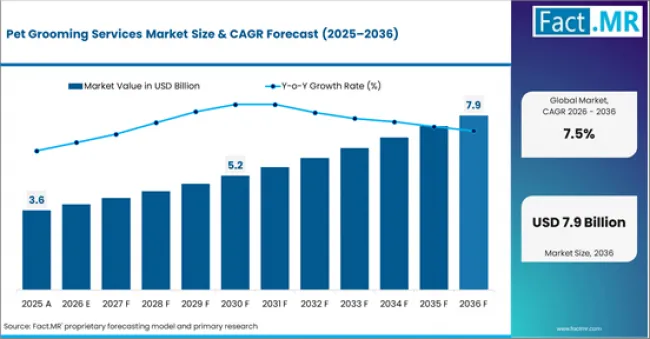
Pet Grooming Services Market Market Value Analysis

Metric Details
Industry Size (2026) USD 3.8 billion
Industry Value (2036) USD 7.9 billion
CAGR (2026 to 2036) 7.5%

Summary of Pet Grooming Services Market

  • Market Definition
    • Pet grooming services cover professional hygiene and coat-care services for companion animals. Scope is defined by service frequency, trained handling, pet type, grooming format, and owner willingness to pay for regular care.
  • Demand Drivers in the Market
    • Grooming salon owners need repeat appointments to stabilize service revenue.
    • Pet parents need professional support for coat maintenance and hygiene.
    • Mobile grooming operators benefit where owners value convenience and lower pet travel stress.
  • Key Segments Analyzed
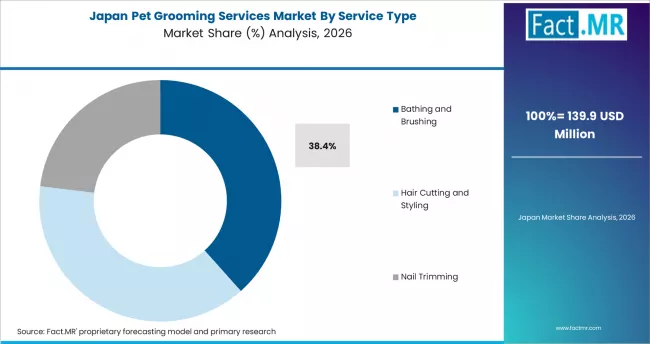
    • Bathing and Brushing: Bathing and brushing are expected to account for 38.0% share in 2026, as these services form the base of routine grooming visits.
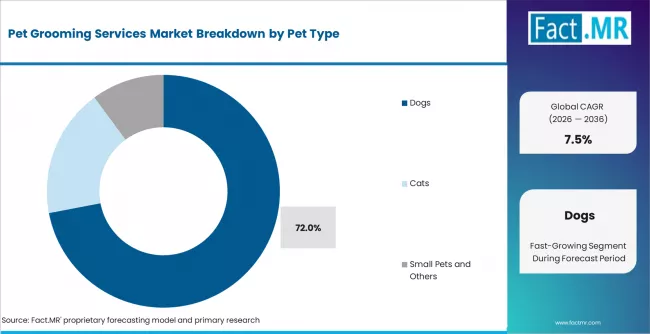
    • Dogs: Dogs are projected to hold 72.0% share in 2026 because coat care and nail trimming needs are more frequent across breeds.
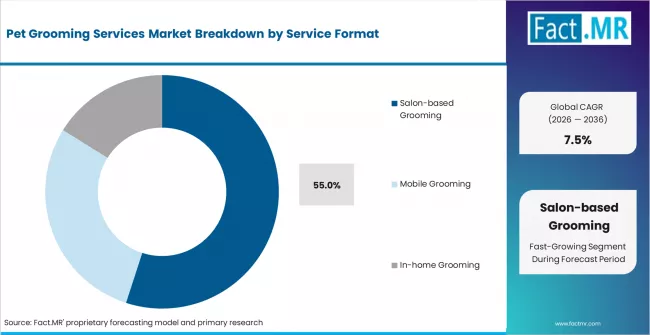
    • Salon-based Grooming: Salon-based grooming is estimated to capture 55.0% share in 2026 due to trained groomer access and established service facilities.
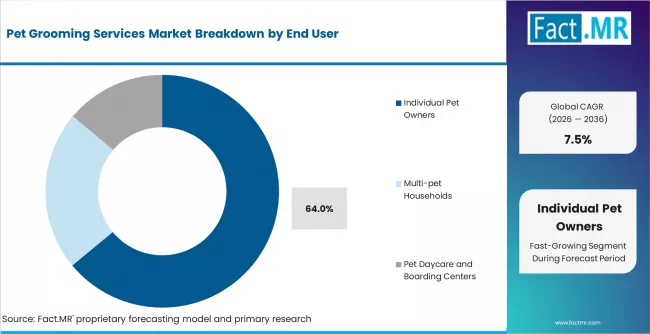
    • Individual Pet Owners: Individual pet owners are likely to hold 64.0% share in 2026 because household-level pet care drives recurring appointments.
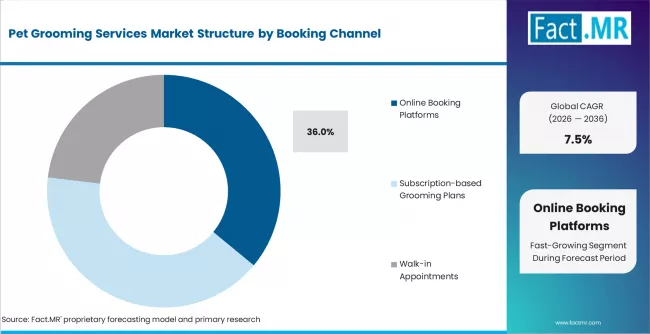
    • Online Booking Platforms: Online booking platforms are projected to account for 36.0% share in 2026 as owners seek easier scheduling and service comparison.
    • Geography: China is forecast to grow at 8.8% CAGR through 2036, supported by urban pet ownership and premium pet care spending.
  • Analyst Opinion at Fact.MR
    • Shambhu Nath Jha, Senior Analyst at Fact.MR, states, “Pet grooming services are becoming a repeat care category. Owners are no longer looking only for a cleaner coat. They expect safer handling, visible hygiene, and service convenience. Providers will gain where they can build trust through trained groomers, clear booking systems, and pet-specific care routines.”
  • Strategic Implications
    • Grooming operators must improve repeat booking discipline to reduce seasonal revenue swings.
    • Mobile grooming providers should focus on high-density urban routes to protect unit economics.
    • Pet care chains need safety protocols and groomer training to build owner trust.
  • Methodology
    • Primary Research: Fact.MR interviews groomers, salon owners, pet care chain managers, service aggregators, and mobile grooming providers.
    • Desk Research: Research reviews pet ownership data, pet care spending reports, chain service disclosures, safety guidance, and booking-channel activity.
    • Market-Sizing and Forecasting: Estimates use pet population, grooming frequency, service pricing, salon utilization, and channel mix.
    • Data Validation and Update Cycle: Forecasts are validated through service provider checks, platform review, pet owner behavior signals, and regional pricing assessment.

Pet care operators are being pushed to decide between basic grooming visits and service packages that combine coat care with hygiene checks. This shift is visible in bathing, brushing, nail trimming, and ear cleaning. APPA reports that 95 million U.S. households own a pet, which supports a large recurring base for pet care services. A practical point often missed is that grooming demand depends on owner routine, not pet ownership alone. Service providers need appointment discipline, trained groomers, and visible pet-safety practices.

The main inflection point arrives when grooming becomes part of scheduled pet care rather than an occasional appearance service. Grooming salons and mobile providers trigger this shift by offering repeat booking, coat-specific packages, and safe handling processes. Once this happens, grooming demand becomes more predictable and less dependent on seasonal spikes.

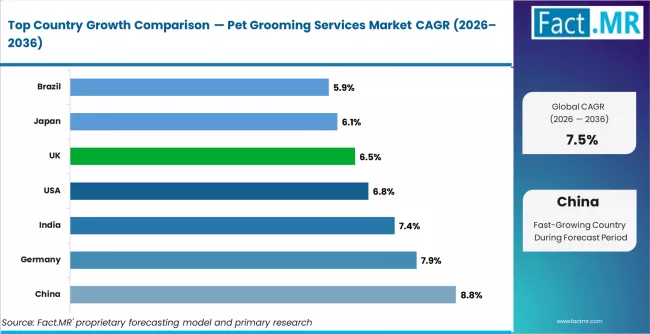
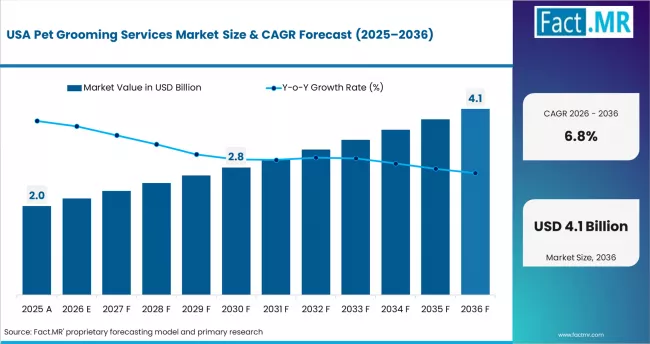
China is projected to record 8.8% CAGR through 2036 as urban pet ownership and premium pet care spending expand. Germany is likely to grow at 7.9% CAGR through strong pet care culture and professional service use. India is forecast to post 7.4% CAGR as urban households and digital booking access support salon visits. The United States is projected to grow at 6.8% CAGR, the UK at 6.5% CAGR, Japan at 6.1% CAGR, and Brazil at 5.9% CAGR. Country variation depends on pet ownership density, service affordability, and grooming habit maturity.

Segmental Analysis

Pet Grooming Services Market Analysis by Service Type
Pet Grooming Services Market Japan Market Share Analysis By Service Type

Bathing and brushing are projected to hold 38.0% share in 2026 as these services form the starting point for most grooming visits. Owners use bathing and brushing for odor control, coat cleanliness, and routine hygiene. Fact.MR analysis suggests that this service type leads because it fits both premium grooming packages and basic service visits. Hair cutting and styling remain important for long-coated breeds. Nail trimming supports pet comfort and home safety. Ear cleaning is used where breeds have higher hygiene needs. Medicated and skin-care grooming is gaining interest where pets face coat or skin sensitivity. Providers that miss basic service quality can lose repeat visits quickly.

  • Routine Hygiene: Bathing and brushing create repeat service demand across common pet breeds.
  • Coat Care: Hair cutting and styling support breeds that need regular trimming.
  • Comfort Need: Nail trimming helps owners manage pet movement and household scratching.

Pet Grooming Services Market Analysis by Pet Type
Pet Grooming Services Market Analysis By Pet Type

Dogs create the largest service base because grooming needs vary strongly by breed, coat length, and activity level. Many dog owners need support for bathing, de-shedding, nail trimming, and coat maintenance. Dogs are projected to account for 72.0% share in 2026 because service frequency is higher than for cats in most markets. Cats remain a smaller but growing segment, especially for long-haired breeds and owners who prefer professional handling. Small pets and other companion animals create niche demand. APPA’s 2025 National Pet Owners Survey reports broad pet ownership across U.S. households, which supports recurring service opportunities across pet types. [1] Pet type directly affects visit frequency and service complexity.

  • Breed Variation: Dog grooming depends heavily on coat type and size.
  • Handling Skill: Cat grooming requires calmer handling and specialized groomer training.
  • Niche Care: Small pets create limited but serviceable demand in urban grooming centers.

Pet Grooming Services Market Analysis by Service Format
Pet Grooming Services Market Analysis By Service Format

Salon-based grooming remains the main format because owners often prefer visible facilities and trained staff. These locations support bathing stations, drying equipment, clipping tools, and service add-ons. Salon-based grooming is estimated to capture 55.0% share in 2026 due to facility-based efficiency and groomer availability. Mobile grooming is gaining traction where owners want convenience and lower travel stress for pets. In-home grooming fits premium and elderly-pet care. Self-service grooming stations serve price-sensitive owners who need wash facilities but can handle pets themselves. Petco store listings describe full-service dog grooming and self-service dog wash availability, showing how retailers combine services with store access. [2]

  • Facility Efficiency: Grooming salons handle multiple pets through fixed equipment and staff schedules.
  • Mobile Convenience: Mobile grooming reduces travel stress for pets and owners.
  • Self-service Value: Wash stations serve owners who want lower-cost facility access.

Pet Grooming Services Market Analysis by End User
Pet Grooming Services Market Analysis By End User

Individual pet owners dominate because household-level pet care drives most grooming appointments. These customers book services for hygiene, appearance, shedding control, and breed-specific care. Individual pet owners are likely to hold 64.0% share in 2026 as pet parenting habits support repeat grooming. Multi-pet households generate higher visit value when owners bundle appointments. Pet daycare and boarding centers use grooming as an add-on service. Veterinary clinics provide grooming where health and hygiene overlap. End-user needs differ by spending power and trust. AVMA pet ownership data tracks pet-owning households and veterinary care spending, which supports the link between household pet care and service demand.

  • Household Routine: Individual owners drive repeat grooming through regular pet care habits.
  • Bundled Visits: Multi-pet households can raise average ticket value for salons.
  • Care Link: Veterinary clinics add grooming where hygiene and health concerns overlap.

Pet Grooming Services Market Analysis by Booking Channel
Pet Grooming Services Market Analysis By Booking Channel

Online booking platforms are growing because owners want easier scheduling and service comparison. Digital channels reduce friction by showing time slots, service menus, and location details. Online booking platforms are projected to account for 36.0% share in 2026 as service providers use digital tools to manage appointments. Walk-in appointments remain important in neighborhood salons. Phone-based booking continues with older pet owners and relationship-driven groomers. Subscription-based grooming plans are gaining use where providers want predictable repeat visits. PetSmart’s app description highlights in-store services and shopping support, reflecting how digital engagement is becoming part of the pet parent journey. Booking channel choice affects retention and salon utilization.

  • Scheduling Ease: Online booking helps owners secure preferred groomers and time slots.
  • Walk-in Demand: Neighborhood salons still receive spontaneous service visits.
  • Repeat Plans: Subscription grooming improves service predictability for providers.

Pet Grooming Services Market Drivers, Restraints, and Opportunities

Top Country Growth Comparison Pet Grooming Services Market Cagr (2026 2036)

Pet ownership and humanization remain the main demand anchors for grooming services. APPA states that 95 million U.S. households own a pet, which creates a large base for service categories linked to pet care routines. AVMA data also tracks pet-owning households and veterinary spending by species, supporting the connection between pet ownership and care expenditure. [3] Retailers and service providers are expanding grooming access through store-based, mobile, and digital booking models. These factors support recurring grooming demand across urban and suburban pet owners.

Labor availability remains the main restraint. Grooming depends on trained handlers who can manage pets safely and deliver consistent service quality. Appointment capacity can fall when salons cannot hire or retain groomers. Price sensitivity is another restraint in emerging markets where owners may groom pets at home. Safety and trust also affect adoption because poor handling can damage customer retention. Providers need training, sanitation discipline, and transparent service practices to build repeat demand.

Opportunities in the Pet Grooming Services Market

  • Mobile Grooming: Providers can target busy urban pet owners through route-based mobile grooming.
  • Subscription Plans: Salons can improve repeat visits through monthly grooming packages.
  • Skin-care Services: Groomers can expand through coat and skin-focused add-ons for sensitive pets.

Regional Analysis

Based on the regional analysis, the pet grooming services market is segmented into North America, Latin America, Western Europe, Eastern Europe, East Asia, South Asia and Pacific, and Middle East and Africa across 40 plus countries.

Top Country Growth Comparison Pet Grooming Services Market Cagr (2026 2036)

Country CAGR (2026 to 2036)
China 8.8%
Germany 7.9%
India 7.4%
United States 6.8%
UK 6.5%
Japan 6.1%
Brazil 5.9%

Source: Fact.MR analysis, based on proprietary forecasting model and primary research
Pet Grooming Services Market Cagr Analysis By Country

East Asia Pet Grooming Services Market Analysis

East Asia shows strong grooming demand as urban pet ownership and premium pet care habits expand. China creates the largest growth opportunity through young urban pet owners and wider service availability. Japan has a more mature pet care culture, where grooming is linked with routine hygiene and aging pet care. Fact.MR analysis indicates that providers in this region compete through service quality, breed-specific skill, and store accessibility. Demand is strongest in large cities where owners have less time and more willingness to pay for professional care.

  • China: China is projected to record 8.8% CAGR from 2026 to 2036 as urban pet owners spend more on professional grooming and hygiene services. Dogs and cats in apartment households need regular coat care and odor control. Grooming chains and pet stores can expand through digital booking and add-on services. Providers with clean facilities and visible pet-safety practices can build stronger trust.
  • Japan: Japan has an established pet care culture with demand for careful grooming and elderly pet support. Owners often seek gentle handling, coat maintenance, and hygiene services. Pet grooming services demand in Japan is expected to post 6.1% CAGR through 2036. Groomers can gain where they offer small-breed expertise and senior pet care. Service quality and trust remain central to retention.

Western Europe Pet Grooming Services Market Analysis
Pet Grooming Services Market Europe Country Market Share Analysis, 2026 & 2036

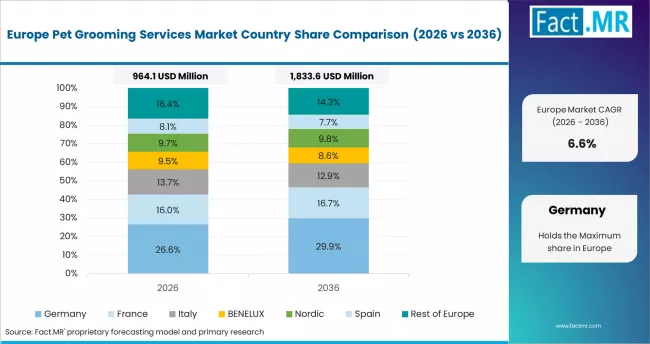
Western Europe demand is supported by high pet care awareness and established service habits. Germany leads the regional growth spread due to stronger willingness to pay for professional pet care. The UK has dense urban demand and active retail pet service networks. Fact.MR analysis suggests that buyers in this region value hygiene, convenience, and breed-specific grooming quality. Grooming providers need trained staff and transparent service practices to hold repeat customers. Growth is steady because pet care routines are already well developed.

  • Germany: Germany is likely to grow at 7.9% CAGR over the assessment period as pet owners spend more on professional grooming and coat-care services. Dogs remain a major service base because breed variation creates different grooming needs. Salons with trained groomers and appointment discipline can improve repeat visits. Demand remains stronger in cities where owners prefer professional support over home grooming.
  • UK: The UK is expected to expand at 6.5% CAGR during 2026 to 2036 as pet owners use grooming salons and mobile services for routine hygiene. Urban lifestyles support appointment-based grooming and home-visit models. Retail pet service chains and independent groomers both compete for repeat customers. Providers with convenient booking and strong safety practices can improve customer loyalty.

South Asia and Pacific Pet Grooming Services Market Analysis

South Asia and Pacific is gaining momentum as pet ownership becomes more urban and service-led. India is the main growth market because young households and apartment living are changing pet care routines. Grooming is moving from occasional bathing to paid services for coat care and hygiene. Fact.MR analysis indicates that affordability and service trust remain important. Providers can grow faster where they combine trained staff with digital booking and local neighborhood access.

  • India: India is forecast to post 7.4% CAGR by 2036 as urban pet ownership and digital service access expand. Dogs remain the largest grooming base in metro markets. Pet parents increasingly use salons for bathing, hair trimming, and nail care. Price-sensitive owners may still use home grooming, so providers need clear service value. Local-language booking and neighborhood salons can support adoption.

North America Pet Grooming Services Market Analysis
Pet Grooming Services Market Country Value Analysis

North America remains a major pet grooming services market because pet ownership is high and service spending is well established. The United States has a large base of grooming salons, retail pet care chains, and mobile providers. APPA reports 95 million U.S. households own a pet, which supports recurring service opportunities.

  • United States: The United States is projected to grow at 6.8% CAGR over the study period as pet owners continue using grooming for hygiene and coat management. Retail chains and independent salons both serve regular pet care needs. Mobile grooming can gain where owners value convenience and lower pet travel stress. Providers with trained groomers and appointment reliability can defend repeat customers.

Latin America Pet Grooming Services Market Analysis

Latin America demand is supported by rising urban pet ownership and expanding pet care retail. Brazil leads regional demand because it has a large companion animal base and growing service adoption in major cities. Grooming remains price-sensitive, but professional services are gaining acceptance among middle-income pet owners. Fact.MR analysis suggests that providers need affordable packages and strong local visibility. Demand is strongest in cities where pet owners have access to salons and mobile grooming.

  • Brazil: Brazil is projected to record 5.9% CAGR from 2026 to 2036. Dogs account for a large share of grooming demand, especially in urban households. Salons and pet stores can expand through bathing, brushing, nail trimming, and coat-care packages. Mobile grooming can gain in higher-income neighborhoods. Providers that balance price and service quality can build repeat demand.

Competitive Aligners for Market Players
Pet Grooming Services Market Analysis By Company

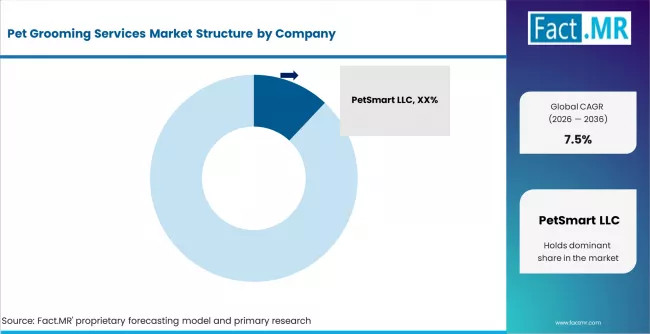
The pet grooming services market is fragmented across independent salons, mobile groomers, retail pet care chains, and digital service platforms. Large chains gain from brand trust, store traffic, and bundled pet care services. Independent salons compete through groomer relationships and neighborhood convenience. Mobile providers gain where owners want home-based convenience.

Competitive advantage depends on trust, trained handlers, and booking convenience. Petco store pages show grooming, self-service dog wash, vaccination clinics, and training services within its pet care center model. PetSmart’s consumer app positions in-store services and shopping support as part of the pet parent journey. [4] These models show how grooming services are increasingly linked with broader pet care engagement.

Service providers that build repeat plans can reduce appointment volatility. Grooming quality also depends on pet handling, cleanliness, and visible safety practices. Digital platforms can help small groomers manage scheduling and customer retention. Providers that combine local trust with easy booking are better placed through 2036.

Key Players in Pet Grooming Services Market

  • PetSmart LLC
  • Petco Health and Wellness Company, Inc.
  • Pets at Home Group Plc
  • The Pooch Mobile
  • Aussie Pet Mobile
  • Rover Group
  • Wag Labs, Inc.
  • Dogtopia Enterprises
  • Smoochie Pooch
  • Hollywood Feed
  • Just Fur Pets
  • PetBacker
  • Pawsh
  • City Groomers

Bibliography

  • [1]. American Pet Products Association. (2026). Industry trends and stats. American Pet Products Association.
  • [2]. Petco. (2026). Find pet store locations, services & supplies. Petco.
  • [3]. American Veterinary Medical Association. (2025). U.S. pet ownership statistics. American Veterinary Medical Association.
  • [4]. PetSmart. (2026). PetSmart app. Google Play.

This Report Addresses

  • Strategic intelligence on pet grooming services demand across bathing, brushing, hair cutting, nail trimming, ear cleaning, and skin-care grooming globally.
  • Market forecast from USD 3.8 billion in 2026 to USD 7.9 billion by 2036 at a CAGR of 7.5%.
  • Growth opportunity mapping across China urban pet care, Germany professional grooming habits, India digital service adoption, United States service chains, and Brazil salon expansion.
  • Segment analysis by service type, pet type, service format, end user, and booking channel.
  • Regional outlook covering East Asia premium grooming, Western Europe pet care maturity, South Asia urban adoption, North America service density, and Latin America salon growth.
  • Competitive analysis of PetSmart, Petco, Pets at Home, The Pooch Mobile, Aussie Pet Mobile, Rover, Wag Labs, Dogtopia, and PetBacker.
  • Service assessment covering salon-based grooming, mobile grooming, in-home grooming, self-service wash stations, and subscription grooming plans.
  • Report delivered through PDF, Excel datasets, and presentation formats, supported by primary interviews, service provider checks, pet ownership review, platform activity analysis, and regional pricing assessment.

Market Definition

The pet grooming services market covers professional grooming care provided to companion animals through salons, mobile units, in-home visits, and pet care centers. The market includes bathing, brushing, haircutting, nail trimming, ear cleaning, coat care, and hygiene-linked grooming services. It differs from pet grooming products because the revenue comes from service delivery, trained handling, facility use, and owner appointment behavior.

Pet Grooming Services Market Inclusions

The scope includes bathing and brushing, hair cutting, coat styling, nail trimming, ear cleaning, de-shedding, breed-specific grooming, medicated grooming, skin-care grooming, mobile grooming, in-home grooming, self-service wash stations, and subscription grooming plans. Services for dogs, cats, small pets, and specialty companion animals are included when grooming is delivered by professional providers or organized pet care facilities.

Pet Grooming Services Market Exclusions

The scope excludes pet food, grooming products sold without service, veterinary treatment, pet sitting, pet boarding without grooming, pet training, and retail pet accessories. Medicated bathing is included only when delivered as a grooming service. Clinical dermatology procedures are excluded because they fall under veterinary care rather than routine grooming.

Pet Grooming Services Market Research Methodology

  • Primary Research:Interviews with grooming salon owners, mobile grooming operators, pet care chain managers, veterinary clinic service heads, and pet service platform operators.
  • Desk Research:Review of pet ownership data, pet care spending signals, company service disclosures, grooming safety guidance, franchise information, and booking platform activity.
  • Market-Sizing and Forecasting:Forecasting uses pet ownership base, grooming visit frequency, service pricing, salon capacity, mobile grooming adoption, and online booking penetration.
  • Data Validation and Update Cycle:Forecasts are validated through groomer interviews, pet service chain checks, platform activity review, and regional pet care spending signals.

Scope of the Report

Pet Grooming Services Market Breakdown By Service Type, Pet Type, And Region

Attribute Details
Quantitative Units USD 3.8 billion in 2026 to USD 7.9 billion by 2036, at a CAGR of 7.5%
Market Definition Professional grooming services delivered through salons, mobile units, in-home visits, and pet care facilities for companion animal hygiene and coat care.
Service Type Bathing and Brushing, Hair Cutting and Styling, Nail Trimming, Ear Cleaning, Medicated and Skin-care Grooming
Pet Type Dogs, Cats, Small Pets and Others
Service Format Salon-based Grooming, Mobile Grooming, In-home Grooming, Self-service Grooming Stations
End User Individual Pet Owners, Multi-pet Households, Pet Daycare and Boarding Centers, Veterinary Clinics
Booking Channel Walk-in Appointments, Phone-based Booking, Online Booking Platforms, Subscription-based Grooming Plans
Regions Covered North America, Latin America, Western Europe, Eastern Europe, East Asia, South Asia and Pacific, Middle East and Africa
Countries Covered China, Germany, India, United States, UK, Japan, Brazil, and 40 plus countries
Key Companies Profiled PetSmart LLC, Petco Health and Wellness Company, Pets at Home Group, The Pooch Mobile, Aussie Pet Mobile, Rover Group, Wag Labs, Dogtopia Enterprises, Smoochie Pooch, Hollywood Feed, Just Fur Pets, PetBacker, Pawsh, City Groomers
Forecast Period 2026 to 2036
Approach Hybrid top-down and bottom-up model using pet ownership base, grooming visit frequency, service pricing, salon capacity, digital booking activity, and primary interviews with grooming service providers.

Pet Grooming Services Market Analysis by Segments

  • By Service Type:

    • Bathing and Brushing
    • Hair Cutting and Styling
    • Nail Trimming
    • Ear Cleaning
    • Medicated and Skin-care Grooming
  • By Pet Type:

    • Dogs
    • Cats
    • Small Pets and Others
  • By Service Format:

    • Salon-based Grooming
    • Mobile Grooming
    • In-home Grooming
    • Self-service Grooming Stations
  • By End User:

    • Individual Pet Owners
    • Multi-pet Households
    • Pet Daycare and Boarding Centers
    • Veterinary Clinics
  • By Booking Channel:

    • Walk-in Appointments
    • Phone-based Booking
    • Online Booking Platforms
    • Subscription-based Grooming Plans
  • By Region:

    • North America
      • United States
      • Canada
      • Latin America
      • Brazil
      • Mexico
    • Western Europe
      • Germany
      • UK
      • France
      • Eastern Europe
      • Poland
      • Russia
      • East Asia
      • China
      • Japan
    • South Korea
      • South Asia and Pacific
      • India
      • ASEAN
      • Australia and New Zealand
    • Middle East and Africa
      • GCC
      • South Africa

- Frequently Asked Questions -

How large is the pet grooming services market in 2025?

The pet grooming services market was valued at USD 3.6 billion in 2025.

What is the expected value in 2026?

Demand is estimated to reach USD 3.8 billion in 2026.

What is the forecast value by 2036?

The market is forecast to reach USD 7.9 billion by 2036.

What CAGR is projected for 2026 to 2036?

Fact.MR projects a CAGR of 7.50% for the 2026 to 2036 forecast period.

Which service type leads demand?

Bathing and brushing lead with 38.0% share in 2026.

Which pet type accounts for the highest share?

Dogs lead with 72.0% share in 2026.

Which service format leads the market?

Salon-based grooming leads with 55.0% share in 2026.

Which end user drives the largest demand?

Individual pet owners lead with 64.0% share in 2026.

Which booking channel is gaining stronger adoption?

Online booking platforms are projected to hold 36.0% share in 2026.

Which country shows the fastest growth?

China is projected to grow at 8.8% CAGR through 2036.

Why does bathing and brushing lead demand?

Bathing and brushing lead because these services form the base of regular grooming visits.

Why do dogs dominate pet grooming services?

Dogs dominate because coat type, breed size, and activity level create frequent grooming needs.

Why is mobile grooming growing?

Mobile grooming grows because owners want convenience and lower travel stress for pets.

What is the main restraint in this market?

Trained groomer availability remains the main restraint because service quality depends on safe handling.

How does online booking affect grooming demand?

Online booking makes appointment scheduling easier and improves repeat visit planning.

Why are subscription grooming plans important?

Subscription plans help salons build predictable repeat visits and reduce seasonal demand swings.

What supports demand in China?

Urban pet ownership and premium pet care spending support demand in China.

What supports demand in Germany?

Professional pet care habits and strong grooming awareness support demand in Germany.

What supports demand in India?

Urban pet ownership and digital booking access support demand in India.

Why is service trust important?

Service trust matters because owners must feel confident about handling, hygiene, and pet safety.

What defines competition in this market?

Competition depends on trained groomers, service convenience, safety practices, and repeat booking systems.

Who are the leading companies?

Leading companies include PetSmart, Petco, Pets at Home, The Pooch Mobile, Aussie Pet Mobile, Rover, Wag Labs, Dogtopia, and PetBacker.

Table of Content

  1. Executive Summary
    • Global Market Outlook
    • Demand to side Trends
    • Supply to side Trends
    • Technology Roadmap Analysis
    • Analysis and Recommendations
  2. Market Overview
    • Market Coverage / Taxonomy
    • Market Definition / Scope / Limitations
  3. Research Methodology
    • Chapter Orientation
    • Analytical Lens and Working Hypotheses
      • Market Structure, Signals, and Trend Drivers
      • Benchmarking and Cross-market Comparability
      • Market Sizing, Forecasting, and Opportunity Mapping
    • Research Design and Evidence Framework
      • Desk Research Programme (Secondary Evidence)
        • Company Annual and Sustainability Reports
        • Peer-reviewed Journals and Academic Literature
        • Corporate Websites, Product Literature, and Technical Notes
        • Earnings Decks and Investor Briefings
        • Statutory Filings and Regulatory Disclosures
        • Technical White Papers and Standards Notes
        • Trade Journals, Industry Magazines, and Analyst Briefs
        • Conference Proceedings, Webinars, and Seminar Materials
        • Government Statistics Portals and Public Data Releases
        • Press Releases and Reputable Media Coverage
        • Specialist Newsletters and Curated Briefings
        • Sector Databases and Reference Repositories
        • Fact.MR Internal Proprietary Databases and Historical Market Datasets
        • Subscription Datasets and Paid Sources
        • Social Channels, Communities, and Digital Listening Inputs
        • Additional Desk Sources
      • Expert Input and Fieldwork (Primary Evidence)
        • Primary Modes
          • Qualitative Interviews and Expert Elicitation
          • Quantitative Surveys and Structured Data Capture
          • Blended Approach
        • Why Primary Evidence is Used
        • Field Techniques
          • Interviews
          • Surveys
          • Focus Groups
          • Observational and In-context Research
          • Social and Community Interactions
        • Stakeholder Universe Engaged
          • C-suite Leaders
          • Board Members
          • Presidents and Vice Presidents
          • R&D and Innovation Heads
          • Technical Specialists
          • Domain Subject-matter Experts
          • Scientists
          • Physicians and Other Healthcare Professionals
        • Governance, Ethics, and Data Stewardship
          • Research Ethics
          • Data Integrity and Handling
      • Tooling, Models, and Reference Databases
    • Data Engineering and Model Build
      • Data Acquisition and Ingestion
      • Cleaning, Normalisation, and Verification
      • Synthesis, Triangulation, and Analysis
    • Quality Assurance and Audit Trail
  4. Market Background
    • Market Dynamics
      • Drivers
      • Restraints
      • Opportunity
      • Trends
    • Scenario Forecast
      • Demand in Optimistic Scenario
      • Demand in Likely Scenario
      • Demand in Conservative Scenario
    • Opportunity Map Analysis
    • Product Life Cycle Analysis
    • Supply Chain Analysis
    • Investment Feasibility Matrix
    • Value Chain Analysis
    • PESTLE and Porter’s Analysis
    • Regulatory Landscape
    • Regional Parent Market Outlook
    • Production and Consumption Statistics
    • Import and Export Statistics
  5. Global Market Analysis 2021 to 2025 and Forecast, 2026 to 2036
    • Historical Market Size Value (USD Million) Analysis, 2021 to 2025
    • Current and Future Market Size Value (USD Million) Projections, 2026 to 2036
      • Y to o to Y Growth Trend Analysis
      • Absolute $ Opportunity Analysis
  6. Global Market Pricing Analysis 2021 to 2025 and Forecast 2026 to 2036
  7. Global Market Analysis 2021 to 2025 and Forecast 2026 to 2036, By Type
    • Introduction / Key Findings
    • Historical Market Size Value (USD Million) Analysis By Type , 2021 to 2025
    • Current and Future Market Size Value (USD Million) Analysis and Forecast By Type , 2026 to 2036
      • Closed-Cycle
      • Bath/Continuous Flow
      • Others
    • Y to o to Y Growth Trend Analysis By Type , 2021 to 2025
    • Absolute $ Opportunity Analysis By Type , 2026 to 2036
  8. Global Market Analysis 2021 to 2025 and Forecast 2026 to 2036, By End Use
    • Introduction / Key Findings
    • Historical Market Size Value (USD Million) Analysis By End Use, 2021 to 2025
    • Current and Future Market Size Value (USD Million) Analysis and Forecast By End Use, 2026 to 2036
      • Medical Histology
      • Research
      • Industrial
    • Y to o to Y Growth Trend Analysis By End Use, 2021 to 2025
    • Absolute $ Opportunity Analysis By End Use, 2026 to 2036
  9. Global Market Analysis 2021 to 2025 and Forecast 2026 to 2036, By Temperature Range
    • Introduction / Key Findings
    • Historical Market Size Value (USD Million) Analysis By Temperature Range, 2021 to 2025
    • Current and Future Market Size Value (USD Million) Analysis and Forecast By Temperature Range, 2026 to 2036
      • 4–30 K
      • <4 K
      • >30 K
    • Y to o to Y Growth Trend Analysis By Temperature Range, 2021 to 2025
    • Absolute $ Opportunity Analysis By Temperature Range, 2026 to 2036
  10. Global Market Analysis 2021 to 2025 and Forecast 2026 to 2036, By Service Type
    • Introduction / Key Findings
    • Historical Market Size Value (USD Million) Analysis By Service Type, 2021 to 2025
    • Current and Future Market Size Value (USD Million) Analysis and Forecast By Service Type, 2026 to 2036
      • New Installation
      • Maintenance & Support
      • Refurbishment
    • Y to o to Y Growth Trend Analysis By Service Type, 2021 to 2025
    • Absolute $ Opportunity Analysis By Service Type, 2026 to 2036
  11. Global Market Analysis 2021 to 2025 and Forecast 2026 to 2036, By Application
    • Introduction / Key Findings
    • Historical Market Size Value (USD Million) Analysis By Application, 2021 to 2025
    • Current and Future Market Size Value (USD Million) Analysis and Forecast By Application, 2026 to 2036
      • MRI Systems
      • Cryosurgery
      • Superconducting Magnets
      • Semiconductor & Materials Research
    • Y to o to Y Growth Trend Analysis By Application, 2021 to 2025
    • Absolute $ Opportunity Analysis By Application, 2026 to 2036
  12. Global Market Analysis 2021 to 2025 and Forecast 2026 to 2036, By Region
    • Introduction
    • Historical Market Size Value (USD Million) Analysis By Region, 2021 to 2025
    • Current Market Size Value (USD Million) Analysis and Forecast By Region, 2026 to 2036
      • North America
      • Latin America
      • Western Europe
      • Eastern Europe
      • East Asia
      • South Asia and Pacific
      • Middle East & Africa
    • Market Attractiveness Analysis By Region
  13. North America Market Analysis 2021 to 2025 and Forecast 2026 to 2036, By Country
    • Historical Market Size Value (USD Million) Trend Analysis By Market Taxonomy, 2021 to 2025
    • Market Size Value (USD Million) Forecast By Market Taxonomy, 2026 to 2036
      • By Country
        • USA
        • Canada
        • Mexico
      • By Type
      • By End Use
      • By Temperature Range
      • By Service Type
      • By Application
    • Market Attractiveness Analysis
      • By Country
      • By Type
      • By End Use
      • By Temperature Range
      • By Service Type
      • By Application
    • Key Takeaways
  14. Latin America Market Analysis 2021 to 2025 and Forecast 2026 to 2036, By Country
    • Historical Market Size Value (USD Million) Trend Analysis By Market Taxonomy, 2021 to 2025
    • Market Size Value (USD Million) Forecast By Market Taxonomy, 2026 to 2036
      • By Country
        • Brazil
        • Chile
        • Rest of Latin America
      • By Type
      • By End Use
      • By Temperature Range
      • By Service Type
      • By Application
    • Market Attractiveness Analysis
      • By Country
      • By Type
      • By End Use
      • By Temperature Range
      • By Service Type
      • By Application
    • Key Takeaways
  15. Western Europe Market Analysis 2021 to 2025 and Forecast 2026 to 2036, By Country
    • Historical Market Size Value (USD Million) Trend Analysis By Market Taxonomy, 2021 to 2025
    • Market Size Value (USD Million) Forecast By Market Taxonomy, 2026 to 2036
      • By Country
        • Germany
        • UK
        • Italy
        • Spain
        • France
        • Nordic
        • BENELUX
        • Rest of Western Europe
      • By Type
      • By End Use
      • By Temperature Range
      • By Service Type
      • By Application
    • Market Attractiveness Analysis
      • By Country
      • By Type
      • By End Use
      • By Temperature Range
      • By Service Type
      • By Application
    • Key Takeaways
  16. Eastern Europe Market Analysis 2021 to 2025 and Forecast 2026 to 2036, By Country
    • Historical Market Size Value (USD Million) Trend Analysis By Market Taxonomy, 2021 to 2025
    • Market Size Value (USD Million) Forecast By Market Taxonomy, 2026 to 2036
      • By Country
        • Russia
        • Poland
        • Hungary
        • Balkan & Baltic
        • Rest of Eastern Europe
      • By Type
      • By End Use
      • By Temperature Range
      • By Service Type
      • By Application
    • Market Attractiveness Analysis
      • By Country
      • By Type
      • By End Use
      • By Temperature Range
      • By Service Type
      • By Application
    • Key Takeaways
  17. East Asia Market Analysis 2021 to 2025 and Forecast 2026 to 2036, By Country
    • Historical Market Size Value (USD Million) Trend Analysis By Market Taxonomy, 2021 to 2025
    • Market Size Value (USD Million) Forecast By Market Taxonomy, 2026 to 2036
      • By Country
        • China
        • Japan
        • South Korea
      • By Type
      • By End Use
      • By Temperature Range
      • By Service Type
      • By Application
    • Market Attractiveness Analysis
      • By Country
      • By Type
      • By End Use
      • By Temperature Range
      • By Service Type
      • By Application
    • Key Takeaways
  18. South Asia and Pacific Market Analysis 2021 to 2025 and Forecast 2026 to 2036, By Country
    • Historical Market Size Value (USD Million) Trend Analysis By Market Taxonomy, 2021 to 2025
    • Market Size Value (USD Million) Forecast By Market Taxonomy, 2026 to 2036
      • By Country
        • India
        • ASEAN
        • Australia & New Zealand
        • Rest of South Asia and Pacific
      • By Type
      • By End Use
      • By Temperature Range
      • By Service Type
      • By Application
    • Market Attractiveness Analysis
      • By Country
      • By Type
      • By End Use
      • By Temperature Range
      • By Service Type
      • By Application
    • Key Takeaways
  19. Middle East & Africa Market Analysis 2021 to 2025 and Forecast 2026 to 2036, By Country
    • Historical Market Size Value (USD Million) Trend Analysis By Market Taxonomy, 2021 to 2025
    • Market Size Value (USD Million) Forecast By Market Taxonomy, 2026 to 2036
      • By Country
        • Kingdom of Saudi Arabia
        • Other GCC Countries
        • Turkiye
        • South Africa
        • Other African Union
        • Rest of Middle East & Africa
      • By Type
      • By End Use
      • By Temperature Range
      • By Service Type
      • By Application
    • Market Attractiveness Analysis
      • By Country
      • By Type
      • By End Use
      • By Temperature Range
      • By Service Type
      • By Application
    • Key Takeaways
  20. Key Countries Market Analysis
    • USA
      • Pricing Analysis
      • Market Share Analysis, 2025
        • By Type
        • By End Use
        • By Temperature Range
        • By Service Type
        • By Application
    • Canada
      • Pricing Analysis
      • Market Share Analysis, 2025
        • By Type
        • By End Use
        • By Temperature Range
        • By Service Type
        • By Application
    • Mexico
      • Pricing Analysis
      • Market Share Analysis, 2025
        • By Type
        • By End Use
        • By Temperature Range
        • By Service Type
        • By Application
    • Brazil
      • Pricing Analysis
      • Market Share Analysis, 2025
        • By Type
        • By End Use
        • By Temperature Range
        • By Service Type
        • By Application
    • Chile
      • Pricing Analysis
      • Market Share Analysis, 2025
        • By Type
        • By End Use
        • By Temperature Range
        • By Service Type
        • By Application
    • Germany
      • Pricing Analysis
      • Market Share Analysis, 2025
        • By Type
        • By End Use
        • By Temperature Range
        • By Service Type
        • By Application
    • UK
      • Pricing Analysis
      • Market Share Analysis, 2025
        • By Type
        • By End Use
        • By Temperature Range
        • By Service Type
        • By Application
    • Italy
      • Pricing Analysis
      • Market Share Analysis, 2025
        • By Type
        • By End Use
        • By Temperature Range
        • By Service Type
        • By Application
    • Spain
      • Pricing Analysis
      • Market Share Analysis, 2025
        • By Type
        • By End Use
        • By Temperature Range
        • By Service Type
        • By Application
    • France
      • Pricing Analysis
      • Market Share Analysis, 2025
        • By Type
        • By End Use
        • By Temperature Range
        • By Service Type
        • By Application
    • India
      • Pricing Analysis
      • Market Share Analysis, 2025
        • By Type
        • By End Use
        • By Temperature Range
        • By Service Type
        • By Application
    • ASEAN
      • Pricing Analysis
      • Market Share Analysis, 2025
        • By Type
        • By End Use
        • By Temperature Range
        • By Service Type
        • By Application
    • Australia & New Zealand
      • Pricing Analysis
      • Market Share Analysis, 2025
        • By Type
        • By End Use
        • By Temperature Range
        • By Service Type
        • By Application
    • China
      • Pricing Analysis
      • Market Share Analysis, 2025
        • By Type
        • By End Use
        • By Temperature Range
        • By Service Type
        • By Application
    • Japan
      • Pricing Analysis
      • Market Share Analysis, 2025
        • By Type
        • By End Use
        • By Temperature Range
        • By Service Type
        • By Application
    • South Korea
      • Pricing Analysis
      • Market Share Analysis, 2025
        • By Type
        • By End Use
        • By Temperature Range
        • By Service Type
        • By Application
    • Russia
      • Pricing Analysis
      • Market Share Analysis, 2025
        • By Type
        • By End Use
        • By Temperature Range
        • By Service Type
        • By Application
    • Poland
      • Pricing Analysis
      • Market Share Analysis, 2025
        • By Type
        • By End Use
        • By Temperature Range
        • By Service Type
        • By Application
    • Hungary
      • Pricing Analysis
      • Market Share Analysis, 2025
        • By Type
        • By End Use
        • By Temperature Range
        • By Service Type
        • By Application
    • Kingdom of Saudi Arabia
      • Pricing Analysis
      • Market Share Analysis, 2025
        • By Type
        • By End Use
        • By Temperature Range
        • By Service Type
        • By Application
    • Turkiye
      • Pricing Analysis
      • Market Share Analysis, 2025
        • By Type
        • By End Use
        • By Temperature Range
        • By Service Type
        • By Application
    • South Africa
      • Pricing Analysis
      • Market Share Analysis, 2025
        • By Type
        • By End Use
        • By Temperature Range
        • By Service Type
        • By Application
  21. Market Structure Analysis
    • Competition Dashboard
    • Competition Benchmarking
    • Market Share Analysis of Top Players
      • By Regional
      • By Type
      • By End Use
      • By Temperature Range
      • By Service Type
      • By Application
  22. Competition Analysis
    • Competition Deep Dive
      • Leica Biosystems
        • Overview
        • Product Portfolio
        • Profitability by Market Segments (Product/Age /Sales Channel/Region)
        • Sales Footprint
        • Strategy Overview
          • Marketing Strategy
          • Product Strategy
          • Channel Strategy
      • Thermo Fisher Scientific
      • Cryomech Inc.
      • Oxford Instruments plc
      • JanisULT
      • Microm International GmbH
      • Sakura Finetek
      • Lake Shore Cryotronics
      • Advanced Research Systems
      • Bluefors Oy
  23. Assumptions & Acronyms Used

List Of Table

  • Table 1: Global Market Value (USD Million) Forecast by Region, 2021 to 2036
  • Table 2: Global Market Value (USD Million) Forecast by Type, 2021 to 2036
  • Table 3: Global Market Value (USD Million) Forecast by End Use, 2021 to 2036
  • Table 4: Global Market Value (USD Million) Forecast by Temperature Range, 2021 to 2036
  • Table 5: Global Market Value (USD Million) Forecast by Service Type, 2021 to 2036
  • Table 6: Global Market Value (USD Million) Forecast by Application, 2021 to 2036
  • Table 7: North America Market Value (USD Million) Forecast by Country, 2021 to 2036
  • Table 8: North America Market Value (USD Million) Forecast by Type, 2021 to 2036
  • Table 9: North America Market Value (USD Million) Forecast by End Use, 2021 to 2036
  • Table 10: North America Market Value (USD Million) Forecast by Temperature Range, 2021 to 2036
  • Table 11: North America Market Value (USD Million) Forecast by Service Type, 2021 to 2036
  • Table 12: North America Market Value (USD Million) Forecast by Application, 2021 to 2036
  • Table 13: Latin America Market Value (USD Million) Forecast by Country, 2021 to 2036
  • Table 14: Latin America Market Value (USD Million) Forecast by Type, 2021 to 2036
  • Table 15: Latin America Market Value (USD Million) Forecast by End Use, 2021 to 2036
  • Table 16: Latin America Market Value (USD Million) Forecast by Temperature Range, 2021 to 2036
  • Table 17: Latin America Market Value (USD Million) Forecast by Service Type, 2021 to 2036
  • Table 18: Latin America Market Value (USD Million) Forecast by Application, 2021 to 2036
  • Table 19: Western Europe Market Value (USD Million) Forecast by Country, 2021 to 2036
  • Table 20: Western Europe Market Value (USD Million) Forecast by Type, 2021 to 2036
  • Table 21: Western Europe Market Value (USD Million) Forecast by End Use, 2021 to 2036
  • Table 22: Western Europe Market Value (USD Million) Forecast by Temperature Range, 2021 to 2036
  • Table 23: Western Europe Market Value (USD Million) Forecast by Service Type, 2021 to 2036
  • Table 24: Western Europe Market Value (USD Million) Forecast by Application, 2021 to 2036
  • Table 25: Eastern Europe Market Value (USD Million) Forecast by Country, 2021 to 2036
  • Table 26: Eastern Europe Market Value (USD Million) Forecast by Type, 2021 to 2036
  • Table 27: Eastern Europe Market Value (USD Million) Forecast by End Use, 2021 to 2036
  • Table 28: Eastern Europe Market Value (USD Million) Forecast by Temperature Range, 2021 to 2036
  • Table 29: Eastern Europe Market Value (USD Million) Forecast by Service Type, 2021 to 2036
  • Table 30: Eastern Europe Market Value (USD Million) Forecast by Application, 2021 to 2036
  • Table 31: East Asia Market Value (USD Million) Forecast by Country, 2021 to 2036
  • Table 32: East Asia Market Value (USD Million) Forecast by Type, 2021 to 2036
  • Table 33: East Asia Market Value (USD Million) Forecast by End Use, 2021 to 2036
  • Table 34: East Asia Market Value (USD Million) Forecast by Temperature Range, 2021 to 2036
  • Table 35: East Asia Market Value (USD Million) Forecast by Service Type, 2021 to 2036
  • Table 36: East Asia Market Value (USD Million) Forecast by Application, 2021 to 2036
  • Table 37: South Asia and Pacific Market Value (USD Million) Forecast by Country, 2021 to 2036
  • Table 38: South Asia and Pacific Market Value (USD Million) Forecast by Type, 2021 to 2036
  • Table 39: South Asia and Pacific Market Value (USD Million) Forecast by End Use, 2021 to 2036
  • Table 40: South Asia and Pacific Market Value (USD Million) Forecast by Temperature Range, 2021 to 2036
  • Table 41: South Asia and Pacific Market Value (USD Million) Forecast by Service Type, 2021 to 2036
  • Table 42: South Asia and Pacific Market Value (USD Million) Forecast by Application, 2021 to 2036
  • Table 43: Middle East & Africa Market Value (USD Million) Forecast by Country, 2021 to 2036
  • Table 44: Middle East & Africa Market Value (USD Million) Forecast by Type, 2021 to 2036
  • Table 45: Middle East & Africa Market Value (USD Million) Forecast by End Use, 2021 to 2036
  • Table 46: Middle East & Africa Market Value (USD Million) Forecast by Temperature Range, 2021 to 2036
  • Table 47: Middle East & Africa Market Value (USD Million) Forecast by Service Type, 2021 to 2036
  • Table 48: Middle East & Africa Market Value (USD Million) Forecast by Application, 2021 to 2036

List Of Figures

  • Figure 1: Global Market Pricing Analysis
  • Figure 2: Global Market Value (USD Million) Forecast 2021-2036
  • Figure 3: Global Market Value Share and BPS Analysis by Type, 2026 and 2036
  • Figure 4: Global Market Y-o-Y Growth Comparison by Type, 2026 to 2036
  • Figure 5: Global Market Attractiveness Analysis by Type
  • Figure 6: Global Market Value Share and BPS Analysis by End Use, 2026 and 2036
  • Figure 7: Global Market Y-o-Y Growth Comparison by End Use, 2026 to 2036
  • Figure 8: Global Market Attractiveness Analysis by End Use
  • Figure 9: Global Market Value Share and BPS Analysis by Temperature Range, 2026 and 2036
  • Figure 10: Global Market Y-o-Y Growth Comparison by Temperature Range, 2026 to 2036
  • Figure 11: Global Market Attractiveness Analysis by Temperature Range
  • Figure 12: Global Market Value Share and BPS Analysis by Service Type, 2026 and 2036
  • Figure 13: Global Market Y-o-Y Growth Comparison by Service Type, 2026 to 2036
  • Figure 14: Global Market Attractiveness Analysis by Service Type
  • Figure 15: Global Market Value Share and BPS Analysis by Application, 2026 and 2036
  • Figure 16: Global Market Y-o-Y Growth Comparison by Application, 2026 to 2036
  • Figure 17: Global Market Attractiveness Analysis by Application
  • Figure 18: Global Market Value (USD Million) Share and BPS Analysis by Region, 2026 and 2036
  • Figure 19: Global Market Y-o-Y Growth Comparison by Region, 2026 to 2036
  • Figure 20: Global Market Attractiveness Analysis by Region
  • Figure 21: North America Market Incremental Dollar Opportunity, 2026 to 2036
  • Figure 22: Latin America Market Incremental Dollar Opportunity, 2026 to 2036
  • Figure 23: Western Europe Market Incremental Dollar Opportunity, 2026 to 2036
  • Figure 24: Eastern Europe Market Incremental Dollar Opportunity, 2026 to 2036
  • Figure 25: East Asia Market Incremental Dollar Opportunity, 2026 to 2036
  • Figure 26: South Asia and Pacific Market Incremental Dollar Opportunity, 2026 to 2036
  • Figure 27: Middle East & Africa Market Incremental Dollar Opportunity, 2026 to 2036
  • Figure 28: North America Market Value Share and BPS Analysis by Country, 2026 and 2036
  • Figure 29: North America Market Value Share and BPS Analysis by Type, 2026 and 2036
  • Figure 30: North America Market Y-o-Y Growth Comparison by Type, 2026 to 2036
  • Figure 31: North America Market Attractiveness Analysis by Type
  • Figure 32: North America Market Value Share and BPS Analysis by End Use, 2026 and 2036
  • Figure 33: North America Market Y-o-Y Growth Comparison by End Use, 2026 to 2036
  • Figure 34: North America Market Attractiveness Analysis by End Use
  • Figure 35: North America Market Value Share and BPS Analysis by Temperature Range, 2026 and 2036
  • Figure 36: North America Market Y-o-Y Growth Comparison by Temperature Range, 2026 to 2036
  • Figure 37: North America Market Attractiveness Analysis by Temperature Range
  • Figure 38: North America Market Value Share and BPS Analysis by Service Type, 2026 and 2036
  • Figure 39: North America Market Y-o-Y Growth Comparison by Service Type, 2026 to 2036
  • Figure 40: North America Market Attractiveness Analysis by Service Type
  • Figure 41: North America Market Value Share and BPS Analysis by Application, 2026 and 2036
  • Figure 42: North America Market Y-o-Y Growth Comparison by Application, 2026 to 2036
  • Figure 43: North America Market Attractiveness Analysis by Application
  • Figure 44: Latin America Market Value Share and BPS Analysis by Country, 2026 and 2036
  • Figure 45: Latin America Market Value Share and BPS Analysis by Type, 2026 and 2036
  • Figure 46: Latin America Market Y-o-Y Growth Comparison by Type, 2026 to 2036
  • Figure 47: Latin America Market Attractiveness Analysis by Type
  • Figure 48: Latin America Market Value Share and BPS Analysis by End Use, 2026 and 2036
  • Figure 49: Latin America Market Y-o-Y Growth Comparison by End Use, 2026 to 2036
  • Figure 50: Latin America Market Attractiveness Analysis by End Use
  • Figure 51: Latin America Market Value Share and BPS Analysis by Temperature Range, 2026 and 2036
  • Figure 52: Latin America Market Y-o-Y Growth Comparison by Temperature Range, 2026 to 2036
  • Figure 53: Latin America Market Attractiveness Analysis by Temperature Range
  • Figure 54: Latin America Market Value Share and BPS Analysis by Service Type, 2026 and 2036
  • Figure 55: Latin America Market Y-o-Y Growth Comparison by Service Type, 2026 to 2036
  • Figure 56: Latin America Market Attractiveness Analysis by Service Type
  • Figure 57: Latin America Market Value Share and BPS Analysis by Application, 2026 and 2036
  • Figure 58: Latin America Market Y-o-Y Growth Comparison by Application, 2026 to 2036
  • Figure 59: Latin America Market Attractiveness Analysis by Application
  • Figure 60: Western Europe Market Value Share and BPS Analysis by Country, 2026 and 2036
  • Figure 61: Western Europe Market Value Share and BPS Analysis by Type, 2026 and 2036
  • Figure 62: Western Europe Market Y-o-Y Growth Comparison by Type, 2026 to 2036
  • Figure 63: Western Europe Market Attractiveness Analysis by Type
  • Figure 64: Western Europe Market Value Share and BPS Analysis by End Use, 2026 and 2036
  • Figure 65: Western Europe Market Y-o-Y Growth Comparison by End Use, 2026 to 2036
  • Figure 66: Western Europe Market Attractiveness Analysis by End Use
  • Figure 67: Western Europe Market Value Share and BPS Analysis by Temperature Range, 2026 and 2036
  • Figure 68: Western Europe Market Y-o-Y Growth Comparison by Temperature Range, 2026 to 2036
  • Figure 69: Western Europe Market Attractiveness Analysis by Temperature Range
  • Figure 70: Western Europe Market Value Share and BPS Analysis by Service Type, 2026 and 2036
  • Figure 71: Western Europe Market Y-o-Y Growth Comparison by Service Type, 2026 to 2036
  • Figure 72: Western Europe Market Attractiveness Analysis by Service Type
  • Figure 73: Western Europe Market Value Share and BPS Analysis by Application, 2026 and 2036
  • Figure 74: Western Europe Market Y-o-Y Growth Comparison by Application, 2026 to 2036
  • Figure 75: Western Europe Market Attractiveness Analysis by Application
  • Figure 76: Eastern Europe Market Value Share and BPS Analysis by Country, 2026 and 2036
  • Figure 77: Eastern Europe Market Value Share and BPS Analysis by Type, 2026 and 2036
  • Figure 78: Eastern Europe Market Y-o-Y Growth Comparison by Type, 2026 to 2036
  • Figure 79: Eastern Europe Market Attractiveness Analysis by Type
  • Figure 80: Eastern Europe Market Value Share and BPS Analysis by End Use, 2026 and 2036
  • Figure 81: Eastern Europe Market Y-o-Y Growth Comparison by End Use, 2026 to 2036
  • Figure 82: Eastern Europe Market Attractiveness Analysis by End Use
  • Figure 83: Eastern Europe Market Value Share and BPS Analysis by Temperature Range, 2026 and 2036
  • Figure 84: Eastern Europe Market Y-o-Y Growth Comparison by Temperature Range, 2026 to 2036
  • Figure 85: Eastern Europe Market Attractiveness Analysis by Temperature Range
  • Figure 86: Eastern Europe Market Value Share and BPS Analysis by Service Type, 2026 and 2036
  • Figure 87: Eastern Europe Market Y-o-Y Growth Comparison by Service Type, 2026 to 2036
  • Figure 88: Eastern Europe Market Attractiveness Analysis by Service Type
  • Figure 89: Eastern Europe Market Value Share and BPS Analysis by Application, 2026 and 2036
  • Figure 90: Eastern Europe Market Y-o-Y Growth Comparison by Application, 2026 to 2036
  • Figure 91: Eastern Europe Market Attractiveness Analysis by Application
  • Figure 92: East Asia Market Value Share and BPS Analysis by Country, 2026 and 2036
  • Figure 93: East Asia Market Value Share and BPS Analysis by Type, 2026 and 2036
  • Figure 94: East Asia Market Y-o-Y Growth Comparison by Type, 2026 to 2036
  • Figure 95: East Asia Market Attractiveness Analysis by Type
  • Figure 96: East Asia Market Value Share and BPS Analysis by End Use, 2026 and 2036
  • Figure 97: East Asia Market Y-o-Y Growth Comparison by End Use, 2026 to 2036
  • Figure 98: East Asia Market Attractiveness Analysis by End Use
  • Figure 99: East Asia Market Value Share and BPS Analysis by Temperature Range, 2026 and 2036
  • Figure 100: East Asia Market Y-o-Y Growth Comparison by Temperature Range, 2026 to 2036
  • Figure 101: East Asia Market Attractiveness Analysis by Temperature Range
  • Figure 102: East Asia Market Value Share and BPS Analysis by Service Type, 2026 and 2036
  • Figure 103: East Asia Market Y-o-Y Growth Comparison by Service Type, 2026 to 2036
  • Figure 104: East Asia Market Attractiveness Analysis by Service Type
  • Figure 105: East Asia Market Value Share and BPS Analysis by Application, 2026 and 2036
  • Figure 106: East Asia Market Y-o-Y Growth Comparison by Application, 2026 to 2036
  • Figure 107: East Asia Market Attractiveness Analysis by Application
  • Figure 108: South Asia and Pacific Market Value Share and BPS Analysis by Country, 2026 and 2036
  • Figure 109: South Asia and Pacific Market Value Share and BPS Analysis by Type, 2026 and 2036
  • Figure 110: South Asia and Pacific Market Y-o-Y Growth Comparison by Type, 2026 to 2036
  • Figure 111: South Asia and Pacific Market Attractiveness Analysis by Type
  • Figure 112: South Asia and Pacific Market Value Share and BPS Analysis by End Use, 2026 and 2036
  • Figure 113: South Asia and Pacific Market Y-o-Y Growth Comparison by End Use, 2026 to 2036
  • Figure 114: South Asia and Pacific Market Attractiveness Analysis by End Use
  • Figure 115: South Asia and Pacific Market Value Share and BPS Analysis by Temperature Range, 2026 and 2036
  • Figure 116: South Asia and Pacific Market Y-o-Y Growth Comparison by Temperature Range, 2026 to 2036
  • Figure 117: South Asia and Pacific Market Attractiveness Analysis by Temperature Range
  • Figure 118: South Asia and Pacific Market Value Share and BPS Analysis by Service Type, 2026 and 2036
  • Figure 119: South Asia and Pacific Market Y-o-Y Growth Comparison by Service Type, 2026 to 2036
  • Figure 120: South Asia and Pacific Market Attractiveness Analysis by Service Type
  • Figure 121: South Asia and Pacific Market Value Share and BPS Analysis by Application, 2026 and 2036
  • Figure 122: South Asia and Pacific Market Y-o-Y Growth Comparison by Application, 2026 to 2036
  • Figure 123: South Asia and Pacific Market Attractiveness Analysis by Application
  • Figure 124: Middle East & Africa Market Value Share and BPS Analysis by Country, 2026 and 2036
  • Figure 125: Middle East & Africa Market Value Share and BPS Analysis by Type, 2026 and 2036
  • Figure 126: Middle East & Africa Market Y-o-Y Growth Comparison by Type, 2026 to 2036
  • Figure 127: Middle East & Africa Market Attractiveness Analysis by Type
  • Figure 128: Middle East & Africa Market Value Share and BPS Analysis by End Use, 2026 and 2036
  • Figure 129: Middle East & Africa Market Y-o-Y Growth Comparison by End Use, 2026 to 2036
  • Figure 130: Middle East & Africa Market Attractiveness Analysis by End Use
  • Figure 131: Middle East & Africa Market Value Share and BPS Analysis by Temperature Range, 2026 and 2036
  • Figure 132: Middle East & Africa Market Y-o-Y Growth Comparison by Temperature Range, 2026 to 2036
  • Figure 133: Middle East & Africa Market Attractiveness Analysis by Temperature Range
  • Figure 134: Middle East & Africa Market Value Share and BPS Analysis by Service Type, 2026 and 2036
  • Figure 135: Middle East & Africa Market Y-o-Y Growth Comparison by Service Type, 2026 to 2036
  • Figure 136: Middle East & Africa Market Attractiveness Analysis by Service Type
  • Figure 137: Middle East & Africa Market Value Share and BPS Analysis by Application, 2026 and 2036
  • Figure 138: Middle East & Africa Market Y-o-Y Growth Comparison by Application, 2026 to 2036
  • Figure 139: Middle East & Africa Market Attractiveness Analysis by Application
  • Figure 140: Global Market - Tier Structure Analysis
  • Figure 141: Global Market - Company Share Analysis

Pet Grooming Services Market