Plant-based Shrink Wrap Market

Plant-based Shrink Wrap Market Size and Share Forecast Outlook 2026 to 2036

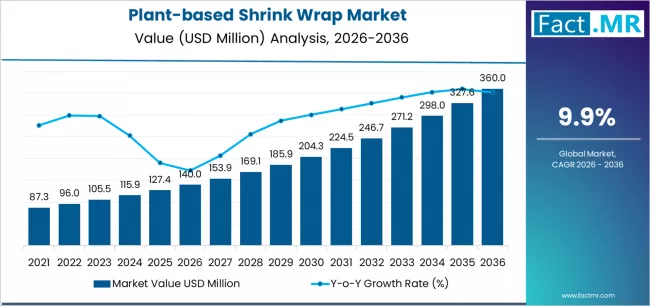
Plant-based shrink wrap market is projected to grow from USD 140.0 million in 2026 to USD 360.0 million by 2036, at a CAGR of 9.9%. Foodservice & Retail will dominate with a 40.0% market share, while shrink film rolls will lead the packaging format/type segment with a 55.0% share.

Plant-based Shrink Wrap Market Forecast and Outlook 2026 to 2036

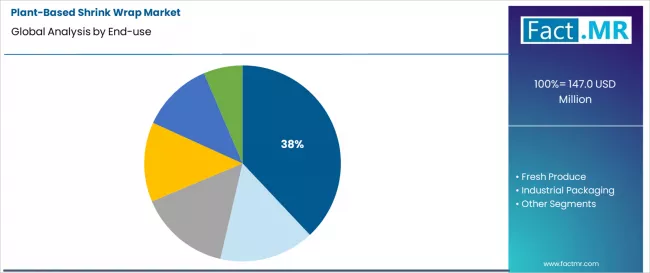
The global plant-based shrink wrap market is valued at USD 140.0 million in 2026. The market is forecast to reach USD 360.0 million by 2036, an increase of USD 220.0 million. This represents total growth of 157.1%, expanding at a compound annual growth rate (CAGR) of 9.9% between 2026 and 2036. By end-use, the foodservice and retail sector commands a leading 40.0% share in 2026.

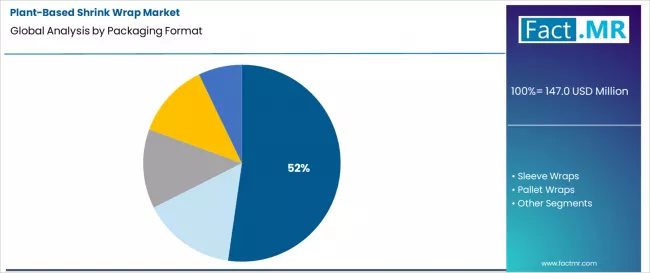
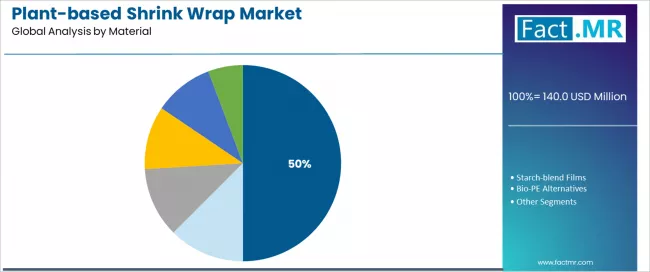
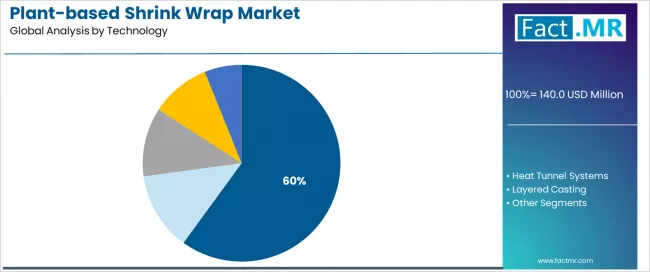
Shrink film rolls dominate the packaging format segment with a 55.0% share. PLA-based films hold a 50.0% material share, while heat-shrink processing is the foundational technology with a 60.0% share. This configuration highlights a strategic substitution effort, targeting the high-volume applications of conventional plastic shrink wrap first.

Key Takeaways from the Plant-based Shrink Wrap Market Report

  • Market Value (2026): USD 140.0 million
  • Market Forecast Value (2036): USD 360.0 million
  • Market Forecast CAGR: 9.9%
  • Leading End-Use: Foodservice & Retail (40.0%)
  • Key Growth Regions: Asia Pacific, North America, Europe
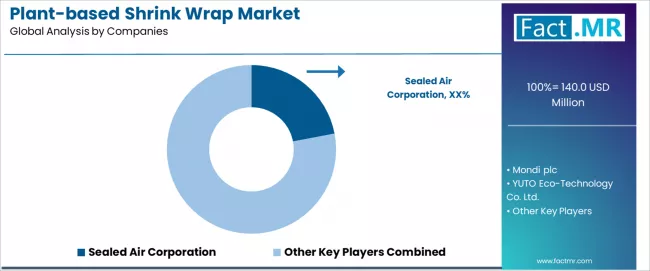
  • Key Players: Sealed Air Corporation (bio-based portfolio), Mondi plc, YUTO Eco-Technology Co., Ltd., Uflex Limited, Klabin S.A., Toppan Inc.

Plant Based Shrink Wrap Market Market Value Analysis

A defining macro trend is the targeted regulatory push against non-recyclable plastic films used for bundling and multipacking. Bans on specific applications, like plastic can rings or supermarket produce bags, are creating immediate, legislated demand for compliant plant-based alternatives. This regulatory catalyst provides a clear runway for adoption, moving the market beyond voluntary corporate goals into mandated compliance, accelerating investment in production capacity.

The functional evolution of biomaterials is critical for market penetration. Early plant-based films struggled with brittleness, clarity, and consistent shrink performance. Current innovation focuses on polymer blends and advanced processing that replicate the durability, transparency, and reliable shrink tension of oil-based films. This technical maturation ensures the sustainable alternative performs identically on existing packaging machinery, removing a major operational barrier for converters and brand owners looking to switch at scale without sacrificing efficiency or product presentation.

Plant-based Shrink Wrap Market

Metric Value
Estimated Value in (2026E) USD 140.0 million
Forecast Value in (2036F) USD 360.0 million
Forecast CAGR (2026 to 2036) 9.9%

Category

Category Segment
End-use/Application Foodservice & Retail, Fresh Produce, Industrial Packaging, E-commerce, Beverage/Can Bundles, Others
Packaging Format/Type Shrink Film Rolls, Sleeve Wraps, Pallet Wraps, Pre-cut Shrink Bags, Shrink Sleeves, Others
Material PLA-based Films, Starch-blend Films, Bio-PE Alternatives, Bagasse-coated Films, Sugarcane-based Polymer, Others
Technology Heat-shrink Processing, Heat Tunnel Systems, Layered Casting, Film Extrusion, Blown Film, Others

Segment Analysis

How is Foodservice & Retail Driving Standardization for Plant-based Films?

The foodservice and retail end-use segment holds a 40.0% market share in 2026. This sector drives demand because it operates on high-volume, standardized packaging processes for items like multi-pack bottled water, canned goods, and trayed produce. The transition requires a plant-based film that runs identically on high-speed automatic sleeve wrappers and heat tunnels.

Development focuses on achieving consistent slip, seal, and shrink properties to prevent machine jams and ensure pack integrity through distribution. Success here establishes a technical and commercial benchmark, proving plant-based films can meet the relentless throughput demands of modern retail logistics.

What Makes Shrink Film Rolls the Pivotal Format for Market Conversion?

Shrink film rolls lead the packaging format segment with a 55.0% share. Their dominance is logical as they represent the core stock material for most shrink packaging operations. Converting this format to plant-based materials offers the widest impact, as it feeds existing conversion machinery used to make pre-made bags, sleeves, or used directly on roll-fed equipment.

The format’s success hinges on producing rolls with consistent gauge, free of defects, and wound for trouble-free dispensing. By replacing the conventional plastic roll with a plant-based one, brands and converters can switch applications overnight without capital expenditure, making it the most efficient lever for rapid market transformation.

Why are PLA-based Films Establishing the Performance Benchmark?

Plant Based Shrink Wrap Market Analysis By Material

PLA-based films account for a dominant 50.0% material share. Polylactic acid, derived from corn or sugarcane, offers a compelling balance of clarity, stiffness, and compostability, making it ideal for consumer-facing applications. Its position is reinforced by established composting certifications in key markets.

Development within this segment focuses on modifying PLA with other biopolymers to improve its flexibility, heat resistance, and moisture barrier, broadening its use beyond rigid produce clamshells to flexible shrink wraps. As the most commercially mature biopolymer, PLA sets the baseline for performance and availability that newer materials must meet or exceed.

Is Heat-shrink Processing the Non-Negotiable Technology for Market Entry?

Plant Based Shrink Wrap Market Analysis By Technology

Heat-shrink processing technology commands a 60.0% share. Its prevalence means any alternative material must be perfectly compatible with this universal method. The technology's requirement for a precise and predictable shrink response under applied heat dictates material formulation.

Development efforts concentrate on engineering biopolymer blends that activate within standard industrial temperature ranges and provide uniform, controlled shrinkage without warping or weakening. A plant-based film that fails in a heat tunnel is commercially irrelevant. Therefore, mastery of this fundamental interaction is the primary gatekeeper for any new material entering the mainstream shrink wrap market.

What are the Drivers, Restraints, and Key Trends of the Plant-based Shrink Wrap Market?

Market growth is propelled by legislation phasing out conventional plastic shrink films, corporate commitments to fossil-free packaging, and consumer preference for compostable waste. The need for a drop-in solution that uses existing packaging assets is a major operational driver. Higher material costs, competition for agricultural feedstock with food production, and currently limited industrial composting infrastructure in many regions serve as key restraints.

Performance limitations in very cold or humid supply chain conditions also pose challenges. Development concentrates on creating multi-layer bio-films that combine the compostability of PLA with the moisture resistance of bio-PE. Another focus is advancing chemical recycling pathways for plant-based films to complement organic recovery options and create a circular economy.

Analysis of the Plant-based Shrink Wrap Market by Key Countries
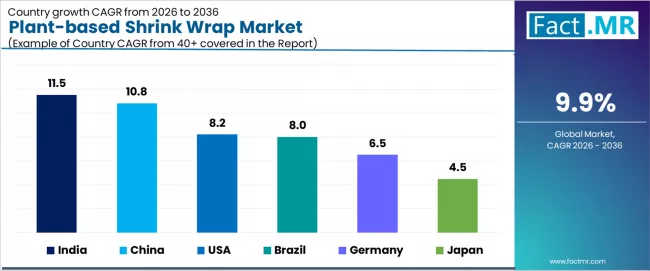
Plant Based Shrink Wrap Market Cagr Analysis By Country

Country CAGR (2026 to 2036)
USA 8.2%
Germany 6.5%
China 10.8%
India 11.5%
Brazil 8.0%
Japan 4.5%

How are USA’s State-Level Bans on Plastic Films Creating Immediate Demand for Plant-based Shrink Wraps?

Plant Based Shrink Wrap Market Country Value Analysis

The USA’s market grows at an 8.2% CAGR, significantly shaped by a growing patchwork of state laws targeting plastic films used for multipacking and produce. This legislative pressure creates guaranteed demand in specific applications. Growth is strong in private-label retail goods and beverage bundling.

Development focuses on creating films that comply with the strictest state mandates, often for compostability, while performing on national distributors' packaging lines. This environment rewards suppliers who can offer a portfolio of compliant films for different regional requirements.

  • Large retail and beverage corporations are seeking single film specifications that meet all anticipated regulatory benchmarks for nationwide distribution simplicity.
  • Investment is increasing in domestic production of PLA and other biopolymer resins to secure supply chains and reduce dependency on imports.

Does Germany’s Focus on Organic Waste Streams Dictate Material Choice?

Germany’s market advances at a 6.5% CAGR, where the clear pathway for end-of-life is industrial composting alongside food waste. This heavily favors certified compostable materials like PLA over bio-based PE, which would contaminate the organic stream.

The packaging of organic produce, baked goods, drives growth and products sold in health food stores. The market requires third-party compostability certifications and clear consumer labeling to ensure proper disposal.

  • Collaboration with municipal waste handlers is essential to verify that new shrink films break down correctly in local composting facilities.
  • Development prioritizes films that maintain integrity during shelf life but decompose predictably within commercial composting cycles.

Is China’s Growth Fueled by Policy Goals and E-commerce Packaging Needs?

China’s market is projected to grow at a 10.8% CAGR, aligned with national "plastic pollution control" ambitions and the massive scale of its e-commerce sector. Plant-based shrink films are adopted for bundling goods in fulfillment centers and as protective outer wrap.

Development emphasizes cost-competitive production using domestic agricultural resources, such as starch from cassava or corn. The immense volume potential drives innovation in high-speed extrusion processes for bio-films.

  • Government support for bio-based industries is channeling investment into large-scale production facilities for materials like PLA.
  • E-commerce platforms are beginning to set sustainable packaging requirements for merchants, creating a powerful new demand driver.

Can India’s Market Prioritize Cost and Compostability in Local Conditions?

India demonstrates the highest growth potential at an 11.5% CAGR. The priority is developing extremely affordable films from locally sourced starch or sugarcane that degrade safely in the prevalent municipal waste environment, which often lacks industrial composting.

Growth focuses on fresh produce packaging for urban markets and bundling for inexpensive consumer goods. Innovation targets films that provide adequate protection for a product's short shelf life and then degrade quickly, even in informal dumping grounds, to reduce visual pollution.

  • Price sensitivity drives the development of simple, single-layer films that meet basic functional needs at the lowest possible cost.
  • Partnerships with local agricultural processing plants to utilize waste streams for film production are key to achieving viable economics.

How is Brazil Leveraging its Biomass for a Regional Supply Chain Advantage?

Brazil’s market is set to grow at an 8.0% CAGR, leveraging its vast sugarcane and bagasse resources. This allows for localized production of sugarcane-based polymers and bagasse-coated films, offering a strong regional sustainability story.

Growth is notable for packaging regional agricultural exports like coffee or fruits, and for domestic retail goods. Development focuses on creating films suitable for a tropical climate, with good resistance to humidity during storage and transport.

  • Integration of film production with existing sugar and ethanol mills creates a circular bio-economy model.
  • Export-oriented companies adopt these locally sourced films to meet the sustainability criteria of international buyers, particularly in Europe.

Does Japan’s Landscape demand Precision Shrink Performance and Clarity?

Japan’s market grows at a 4.5% CAGR, where any alternative must meet exceptional standards of clarity, printability, and precise, wrinkle-free shrink on high-value products. Applications include bundling premium beverages, electronics accessories, and gift sets. The market favors films that offer a crystal-clear finish to showcase products and that shrink tightly without distorting printed graphics. Even plant-based films must achieve the flawless aesthetic expected in Japanese retail.

  • Development focuses on ultra-clear PLA blends and advanced processing techniques that eliminate haze or imperfections.
  • There is high value in films designed for specific, automated packaging lines used by major beverage and consumer electronics companies.

Competitive Landscape of the Plant-based Shrink Wrap Market

Plant Based Shrink Wrap Market Analysis By Company

The competitive landscape features established plastic packaging leaders expanding into bio-based portfolios and agile specialists focused on biomaterial innovation. Competition centers on proprietary polymer blend formulations, securing reliable access to cost-competitive renewable feedstocks, and mastering the extrusion and casting processes for bio-films.

Key players differentiate through partnerships with global brands for pilot projects and by offering comprehensive certifications for compostability and bio-based content. Success requires navigating a complex ecosystem of raw material suppliers, converters, and waste management stakeholders. The ability to provide consistent quality at scale and demonstrate a viable end-of-life solution is becoming a critical competitive differentiator.

Key Players in the Plant-based Shrink Wrap Market

  • Sealed Air Corporation
  • Mondi plc
  • YUTO Eco-Technology Co., Ltd.
  • Uflex Limited
  • Klabin S.A.
  • Toppan Inc.

Scope of the Report

Items Values
Quantitative Units (2026) USD 140.0 Million
End-use/Application Foodservice & Retail, Fresh Produce, Industrial Packaging, E-commerce, Beverage/Can Bundles, Others
Packaging Format/Type Shrink Film Rolls, Sleeve Wraps, Pallet Wraps, Pre-cut Shrink Bags, Shrink Sleeves, Others
Material PLA-based Films, Starch-blend Films, Bio-PE Alternatives, Bagasse-coated Films, Sugarcane-based Polymer, Others
Technology Heat-shrink Processing, Heat Tunnel Systems, Layered Casting, Film Extrusion, Blown Film, Others
Regions Covered North America, Europe, Asia Pacific, Latin America, MEA

Plant-based Shrink Wrap Market by Segments

  • End-use/Application :

    • Foodservice & Retail
    • Fresh Produce
    • Industrial Packaging
    • E-commerce
    • Beverage/Can Bundles
    • Others
  • Packaging Format/Type :

    • Shrink Film Rolls
    • Sleeve Wraps
    • Pallet Wraps
    • Pre-cut Shrink Bags
    • Shrink Sleeves
    • Others
  • Material :

    • PLA-based Films
    • Starch-blend Films
    • Bio-PE Alternatives
    • Bagasse-coated Films
    • Sugarcane-based Polymer
    • Others
  • Technology :

    • Heat-shrink Processing
    • Heat Tunnel Systems
    • Layered Casting
    • Film Extrusion
    • Blown Film
    • Others
  • Region :

    • North America

      • USA
      • Canada
      • Mexico
    • Europe

      • Germany
      • UK
      • France
      • Italy
      • Spain
      • Rest of Europe
    • Asia Pacific

      • China
      • India
      • Japan
      • South Korea
      • Australia
      • Rest of Asia Pacific
    • Latin America

      • Brazil
      • Argentina
      • Rest of Latin America
    • MEA

      • Saudi Arabia
      • UAE
      • South Africa
      • Rest of MEA

Table of Content

  1. Executive Summary
    • Global Market Outlook
    • Demand to side Trends
    • Supply to side Trends
    • Technology Roadmap Analysis
    • Analysis and Recommendations
  2. Market Overview
    • Market Coverage / Taxonomy
    • Market Definition / Scope / Limitations
  3. Market Background
    • Market Dynamics
      • Drivers
      • Restraints
      • Opportunity
      • Trends
    • Scenario Forecast
      • Demand in Optimistic Scenario
      • Demand in Likely Scenario
      • Demand in Conservative Scenario
    • Opportunity Map Analysis
    • Product Life Cycle Analysis
    • Supply Chain Analysis
    • Investment Feasibility Matrix
    • Value Chain Analysis
    • PESTLE and Porter’s Analysis
    • Regulatory Landscape
    • Regional Parent Market Outlook
    • Production and Consumption Statistics
    • Import and Export Statistics
  4. Global Market Analysis 2021 to 2025 and Forecast, 2026 to 2036
    • Historical Market Size Value (USD Million) Analysis, 2021 to 2025
    • Current and Future Market Size Value (USD Million) Projections, 2026 to 2036
      • Y to o to Y Growth Trend Analysis
      • Absolute $ Opportunity Analysis
  5. Global Market Pricing Analysis 2021 to 2025 and Forecast 2026 to 2036
  6. Global Market Analysis 2021 to 2025 and Forecast 2026 to 2036, By End-use/Application
    • Introduction / Key Findings
    • Historical Market Size Value (USD Million) Analysis By End-use/Application, 2021 to 2025
    • Current and Future Market Size Value (USD Million) Analysis and Forecast By End-use/Application, 2026 to 2036
      • Foodservice & Retail
      • Fresh Produce
      • Industrial Packaging
      • E-commerce
      • Beverage/Can Bundles
      • Others
    • Y to o to Y Growth Trend Analysis By End-use/Application, 2021 to 2025
    • Absolute $ Opportunity Analysis By End-use/Application, 2026 to 2036
  7. Global Market Analysis 2021 to 2025 and Forecast 2026 to 2036, By Packaging Format/Type
    • Introduction / Key Findings
    • Historical Market Size Value (USD Million) Analysis By Packaging Format/Type, 2021 to 2025
    • Current and Future Market Size Value (USD Million) Analysis and Forecast By Packaging Format/Type, 2026 to 2036
      • Shrink Film Rolls
      • Sleeve Wraps
      • Pallet Wraps
      • Pre-cut Shrink Bags
      • Shrink Sleeves
    • Y to o to Y Growth Trend Analysis By Packaging Format/Type, 2021 to 2025
    • Absolute $ Opportunity Analysis By Packaging Format/Type, 2026 to 2036
  8. Global Market Analysis 2021 to 2025 and Forecast 2026 to 2036, By Material
    • Introduction / Key Findings
    • Historical Market Size Value (USD Million) Analysis By Material, 2021 to 2025
    • Current and Future Market Size Value (USD Million) Analysis and Forecast By Material, 2026 to 2036
      • PLA-based Films
      • Starch-blend Films
      • Bio-PE Alternatives
      • Bagasse-coated Films
      • Sugarcane-based Polymer
      • Others
    • Y to o to Y Growth Trend Analysis By Material, 2021 to 2025
    • Absolute $ Opportunity Analysis By Material, 2026 to 2036
  9. Global Market Analysis 2021 to 2025 and Forecast 2026 to 2036, By Technology
    • Introduction / Key Findings
    • Historical Market Size Value (USD Million) Analysis By Technology, 2021 to 2025
    • Current and Future Market Size Value (USD Million) Analysis and Forecast By Technology, 2026 to 2036
      • Heat-shrink Processing
      • Heat Tunnel Systems
      • Layered Casting
      • Film Extrusion
      • Blown Film
    • Y to o to Y Growth Trend Analysis By Technology, 2021 to 2025
    • Absolute $ Opportunity Analysis By Technology, 2026 to 2036
  10. Global Market Analysis 2021 to 2025 and Forecast 2026 to 2036, By Region
    • Introduction
    • Historical Market Size Value (USD Million) Analysis By Region, 2021 to 2025
    • Current Market Size Value (USD Million) Analysis and Forecast By Region, 2026 to 2036
      • North America
      • Latin America
      • Western Europe
      • Eastern Europe
      • East Asia
      • South Asia and Pacific
      • Middle East & Africa
    • Market Attractiveness Analysis By Region
  11. North America Market Analysis 2021 to 2025 and Forecast 2026 to 2036, By Country
    • Historical Market Size Value (USD Million) Trend Analysis By Market Taxonomy, 2021 to 2025
    • Market Size Value (USD Million) Forecast By Market Taxonomy, 2026 to 2036
      • By Country
        • USA
        • Canada
        • Mexico
      • By End-use/Application
      • By Packaging Format/Type
      • By Material
      • By Technology
    • Market Attractiveness Analysis
      • By Country
      • By End-use/Application
      • By Packaging Format/Type
      • By Material
      • By Technology
    • Key Takeaways
  12. Latin America Market Analysis 2021 to 2025 and Forecast 2026 to 2036, By Country
    • Historical Market Size Value (USD Million) Trend Analysis By Market Taxonomy, 2021 to 2025
    • Market Size Value (USD Million) Forecast By Market Taxonomy, 2026 to 2036
      • By Country
        • Brazil
        • Chile
        • Rest of Latin America
      • By End-use/Application
      • By Packaging Format/Type
      • By Material
      • By Technology
    • Market Attractiveness Analysis
      • By Country
      • By End-use/Application
      • By Packaging Format/Type
      • By Material
      • By Technology
    • Key Takeaways
  13. Western Europe Market Analysis 2021 to 2025 and Forecast 2026 to 2036, By Country
    • Historical Market Size Value (USD Million) Trend Analysis By Market Taxonomy, 2021 to 2025
    • Market Size Value (USD Million) Forecast By Market Taxonomy, 2026 to 2036
      • By Country
        • Germany
        • UK
        • Italy
        • Spain
        • France
        • Nordic
        • BENELUX
        • Rest of Western Europe
      • By End-use/Application
      • By Packaging Format/Type
      • By Material
      • By Technology
    • Market Attractiveness Analysis
      • By Country
      • By End-use/Application
      • By Packaging Format/Type
      • By Material
      • By Technology
    • Key Takeaways
  14. Eastern Europe Market Analysis 2021 to 2025 and Forecast 2026 to 2036, By Country
    • Historical Market Size Value (USD Million) Trend Analysis By Market Taxonomy, 2021 to 2025
    • Market Size Value (USD Million) Forecast By Market Taxonomy, 2026 to 2036
      • By Country
        • Russia
        • Poland
        • Hungary
        • Balkan & Baltic
        • Rest of Eastern Europe
      • By End-use/Application
      • By Packaging Format/Type
      • By Material
      • By Technology
    • Market Attractiveness Analysis
      • By Country
      • By End-use/Application
      • By Packaging Format/Type
      • By Material
      • By Technology
    • Key Takeaways
  15. East Asia Market Analysis 2021 to 2025 and Forecast 2026 to 2036, By Country
    • Historical Market Size Value (USD Million) Trend Analysis By Market Taxonomy, 2021 to 2025
    • Market Size Value (USD Million) Forecast By Market Taxonomy, 2026 to 2036
      • By Country
        • China
        • Japan
        • South Korea
      • By End-use/Application
      • By Packaging Format/Type
      • By Material
      • By Technology
    • Market Attractiveness Analysis
      • By Country
      • By End-use/Application
      • By Packaging Format/Type
      • By Material
      • By Technology
    • Key Takeaways
  16. South Asia and Pacific Market Analysis 2021 to 2025 and Forecast 2026 to 2036, By Country
    • Historical Market Size Value (USD Million) Trend Analysis By Market Taxonomy, 2021 to 2025
    • Market Size Value (USD Million) Forecast By Market Taxonomy, 2026 to 2036
      • By Country
        • India
        • ASEAN
        • Australia & New Zealand
        • Rest of South Asia and Pacific
      • By End-use/Application
      • By Packaging Format/Type
      • By Material
      • By Technology
    • Market Attractiveness Analysis
      • By Country
      • By End-use/Application
      • By Packaging Format/Type
      • By Material
      • By Technology
    • Key Takeaways
  17. Middle East & Africa Market Analysis 2021 to 2025 and Forecast 2026 to 2036, By Country
    • Historical Market Size Value (USD Million) Trend Analysis By Market Taxonomy, 2021 to 2025
    • Market Size Value (USD Million) Forecast By Market Taxonomy, 2026 to 2036
      • By Country
        • Kingdom of Saudi Arabia
        • Other GCC Countries
        • Turkiye
        • South Africa
        • Other African Union
        • Rest of Middle East & Africa
      • By End-use/Application
      • By Packaging Format/Type
      • By Material
      • By Technology
    • Market Attractiveness Analysis
      • By Country
      • By End-use/Application
      • By Packaging Format/Type
      • By Material
      • By Technology
    • Key Takeaways
  18. Key Countries Market Analysis
    • USA
      • Pricing Analysis
      • Market Share Analysis, 2025
        • By End-use/Application
        • By Packaging Format/Type
        • By Material
        • By Technology
    • Canada
      • Pricing Analysis
      • Market Share Analysis, 2025
        • By End-use/Application
        • By Packaging Format/Type
        • By Material
        • By Technology
    • Mexico
      • Pricing Analysis
      • Market Share Analysis, 2025
        • By End-use/Application
        • By Packaging Format/Type
        • By Material
        • By Technology
    • Brazil
      • Pricing Analysis
      • Market Share Analysis, 2025
        • By End-use/Application
        • By Packaging Format/Type
        • By Material
        • By Technology
    • Chile
      • Pricing Analysis
      • Market Share Analysis, 2025
        • By End-use/Application
        • By Packaging Format/Type
        • By Material
        • By Technology
    • Germany
      • Pricing Analysis
      • Market Share Analysis, 2025
        • By End-use/Application
        • By Packaging Format/Type
        • By Material
        • By Technology
    • UK
      • Pricing Analysis
      • Market Share Analysis, 2025
        • By End-use/Application
        • By Packaging Format/Type
        • By Material
        • By Technology
    • Italy
      • Pricing Analysis
      • Market Share Analysis, 2025
        • By End-use/Application
        • By Packaging Format/Type
        • By Material
        • By Technology
    • Spain
      • Pricing Analysis
      • Market Share Analysis, 2025
        • By End-use/Application
        • By Packaging Format/Type
        • By Material
        • By Technology
    • France
      • Pricing Analysis
      • Market Share Analysis, 2025
        • By End-use/Application
        • By Packaging Format/Type
        • By Material
        • By Technology
    • India
      • Pricing Analysis
      • Market Share Analysis, 2025
        • By End-use/Application
        • By Packaging Format/Type
        • By Material
        • By Technology
    • ASEAN
      • Pricing Analysis
      • Market Share Analysis, 2025
        • By End-use/Application
        • By Packaging Format/Type
        • By Material
        • By Technology
    • Australia & New Zealand
      • Pricing Analysis
      • Market Share Analysis, 2025
        • By End-use/Application
        • By Packaging Format/Type
        • By Material
        • By Technology
    • China
      • Pricing Analysis
      • Market Share Analysis, 2025
        • By End-use/Application
        • By Packaging Format/Type
        • By Material
        • By Technology
    • Japan
      • Pricing Analysis
      • Market Share Analysis, 2025
        • By End-use/Application
        • By Packaging Format/Type
        • By Material
        • By Technology
    • South Korea
      • Pricing Analysis
      • Market Share Analysis, 2025
        • By End-use/Application
        • By Packaging Format/Type
        • By Material
        • By Technology
    • Russia
      • Pricing Analysis
      • Market Share Analysis, 2025
        • By End-use/Application
        • By Packaging Format/Type
        • By Material
        • By Technology
    • Poland
      • Pricing Analysis
      • Market Share Analysis, 2025
        • By End-use/Application
        • By Packaging Format/Type
        • By Material
        • By Technology
    • Hungary
      • Pricing Analysis
      • Market Share Analysis, 2025
        • By End-use/Application
        • By Packaging Format/Type
        • By Material
        • By Technology
    • Kingdom of Saudi Arabia
      • Pricing Analysis
      • Market Share Analysis, 2025
        • By End-use/Application
        • By Packaging Format/Type
        • By Material
        • By Technology
    • Turkiye
      • Pricing Analysis
      • Market Share Analysis, 2025
        • By End-use/Application
        • By Packaging Format/Type
        • By Material
        • By Technology
    • South Africa
      • Pricing Analysis
      • Market Share Analysis, 2025
        • By End-use/Application
        • By Packaging Format/Type
        • By Material
        • By Technology
  19. Market Structure Analysis
    • Competition Dashboard
    • Competition Benchmarking
    • Market Share Analysis of Top Players
      • By Regional
      • By End-use/Application
      • By Packaging Format/Type
      • By Material
      • By Technology
  20. Competition Analysis
    • Competition Deep Dive
      • Sealed Air Corporation
        • Overview
        • Product Portfolio
        • Profitability by Market Segments (Product/Age /Sales Channel/Region)
        • Sales Footprint
        • Strategy Overview
          • Marketing Strategy
          • Product Strategy
          • Channel Strategy
      • Mondi plc
      • YUTO Eco-Technology Co. Ltd.
      • Uflex Limited
      • Klabin S.A.
      • Toppan Inc.
  21. Assumptions & Acronyms Used
  22. Research Methodology

List Of Table

  • Table 1: Global Market Value (USD Million) Forecast by Region, 2021 to 2036
  • Table 2: Global Market Value (USD Million) Forecast by End-use/Application, 2021 to 2036
  • Table 3: Global Market Value (USD Million) Forecast by Packaging Format/Type, 2021 to 2036
  • Table 4: Global Market Value (USD Million) Forecast by Material, 2021 to 2036
  • Table 5: Global Market Value (USD Million) Forecast by Technology, 2021 to 2036
  • Table 6: North America Market Value (USD Million) Forecast by Country, 2021 to 2036
  • Table 7: North America Market Value (USD Million) Forecast by End-use/Application, 2021 to 2036
  • Table 8: North America Market Value (USD Million) Forecast by Packaging Format/Type, 2021 to 2036
  • Table 9: North America Market Value (USD Million) Forecast by Material, 2021 to 2036
  • Table 10: North America Market Value (USD Million) Forecast by Technology, 2021 to 2036
  • Table 11: Latin America Market Value (USD Million) Forecast by Country, 2021 to 2036
  • Table 12: Latin America Market Value (USD Million) Forecast by End-use/Application, 2021 to 2036
  • Table 13: Latin America Market Value (USD Million) Forecast by Packaging Format/Type, 2021 to 2036
  • Table 14: Latin America Market Value (USD Million) Forecast by Material, 2021 to 2036
  • Table 15: Latin America Market Value (USD Million) Forecast by Technology, 2021 to 2036
  • Table 16: Western Europe Market Value (USD Million) Forecast by Country, 2021 to 2036
  • Table 17: Western Europe Market Value (USD Million) Forecast by End-use/Application, 2021 to 2036
  • Table 18: Western Europe Market Value (USD Million) Forecast by Packaging Format/Type, 2021 to 2036
  • Table 19: Western Europe Market Value (USD Million) Forecast by Material, 2021 to 2036
  • Table 20: Western Europe Market Value (USD Million) Forecast by Technology, 2021 to 2036
  • Table 21: Eastern Europe Market Value (USD Million) Forecast by Country, 2021 to 2036
  • Table 22: Eastern Europe Market Value (USD Million) Forecast by End-use/Application, 2021 to 2036
  • Table 23: Eastern Europe Market Value (USD Million) Forecast by Packaging Format/Type, 2021 to 2036
  • Table 24: Eastern Europe Market Value (USD Million) Forecast by Material, 2021 to 2036
  • Table 25: Eastern Europe Market Value (USD Million) Forecast by Technology, 2021 to 2036
  • Table 26: East Asia Market Value (USD Million) Forecast by Country, 2021 to 2036
  • Table 27: East Asia Market Value (USD Million) Forecast by End-use/Application, 2021 to 2036
  • Table 28: East Asia Market Value (USD Million) Forecast by Packaging Format/Type, 2021 to 2036
  • Table 29: East Asia Market Value (USD Million) Forecast by Material, 2021 to 2036
  • Table 30: East Asia Market Value (USD Million) Forecast by Technology, 2021 to 2036
  • Table 31: South Asia and Pacific Market Value (USD Million) Forecast by Country, 2021 to 2036
  • Table 32: South Asia and Pacific Market Value (USD Million) Forecast by End-use/Application, 2021 to 2036
  • Table 33: South Asia and Pacific Market Value (USD Million) Forecast by Packaging Format/Type, 2021 to 2036
  • Table 34: South Asia and Pacific Market Value (USD Million) Forecast by Material, 2021 to 2036
  • Table 35: South Asia and Pacific Market Value (USD Million) Forecast by Technology, 2021 to 2036
  • Table 36: Middle East & Africa Market Value (USD Million) Forecast by Country, 2021 to 2036
  • Table 37: Middle East & Africa Market Value (USD Million) Forecast by End-use/Application, 2021 to 2036
  • Table 38: Middle East & Africa Market Value (USD Million) Forecast by Packaging Format/Type, 2021 to 2036
  • Table 39: Middle East & Africa Market Value (USD Million) Forecast by Material, 2021 to 2036
  • Table 40: Middle East & Africa Market Value (USD Million) Forecast by Technology, 2021 to 2036

List Of Figures

  • Figure 1: Global Market Pricing Analysis
  • Figure 2: Global Market Value (USD Million) Forecast 2021 to 2036
  • Figure 3: Global Market Value Share and BPS Analysis by End-use/Application, 2026 and 2036
  • Figure 4: Global Market Y to o to Y Growth Comparison by End-use/Application, 2026 to 2036
  • Figure 5: Global Market Attractiveness Analysis by End-use/Application
  • Figure 6: Global Market Value Share and BPS Analysis by Packaging Format/Type, 2026 and 2036
  • Figure 7: Global Market Y to o to Y Growth Comparison by Packaging Format/Type, 2026 to 2036
  • Figure 8: Global Market Attractiveness Analysis by Packaging Format/Type
  • Figure 9: Global Market Value Share and BPS Analysis by Material, 2026 and 2036
  • Figure 10: Global Market Y to o to Y Growth Comparison by Material, 2026 to 2036
  • Figure 11: Global Market Attractiveness Analysis by Material
  • Figure 12: Global Market Value Share and BPS Analysis by Technology, 2026 and 2036
  • Figure 13: Global Market Y to o to Y Growth Comparison by Technology, 2026 to 2036
  • Figure 14: Global Market Attractiveness Analysis by Technology
  • Figure 15: Global Market Value (USD Million) Share and BPS Analysis by Region, 2026 and 2036
  • Figure 16: Global Market Y to o to Y Growth Comparison by Region, 2026 to 2036
  • Figure 17: Global Market Attractiveness Analysis by Region
  • Figure 18: North America Market Incremental Dollar Opportunity, 2026 to 2036
  • Figure 19: Latin America Market Incremental Dollar Opportunity, 2026 to 2036
  • Figure 20: Western Europe Market Incremental Dollar Opportunity, 2026 to 2036
  • Figure 21: Eastern Europe Market Incremental Dollar Opportunity, 2026 to 2036
  • Figure 22: East Asia Market Incremental Dollar Opportunity, 2026 to 2036
  • Figure 23: South Asia and Pacific Market Incremental Dollar Opportunity, 2026 to 2036
  • Figure 24: Middle East & Africa Market Incremental Dollar Opportunity, 2026 to 2036
  • Figure 25: North America Market Value Share and BPS Analysis by Country, 2026 and 2036
  • Figure 26: North America Market Value Share and BPS Analysis by End-use/Application, 2026 and 2036
  • Figure 27: North America Market Y to o to Y Growth Comparison by End-use/Application, 2026 to 2036
  • Figure 28: North America Market Attractiveness Analysis by End-use/Application
  • Figure 29: North America Market Value Share and BPS Analysis by Packaging Format/Type, 2026 and 2036
  • Figure 30: North America Market Y to o to Y Growth Comparison by Packaging Format/Type, 2026 to 2036
  • Figure 31: North America Market Attractiveness Analysis by Packaging Format/Type
  • Figure 32: North America Market Value Share and BPS Analysis by Material, 2026 and 2036
  • Figure 33: North America Market Y to o to Y Growth Comparison by Material, 2026 to 2036
  • Figure 34: North America Market Attractiveness Analysis by Material
  • Figure 35: North America Market Value Share and BPS Analysis by Technology, 2026 and 2036
  • Figure 36: North America Market Y to o to Y Growth Comparison by Technology, 2026 to 2036
  • Figure 37: North America Market Attractiveness Analysis by Technology
  • Figure 38: Latin America Market Value Share and BPS Analysis by Country, 2026 and 2036
  • Figure 39: Latin America Market Value Share and BPS Analysis by End-use/Application, 2026 and 2036
  • Figure 40: Latin America Market Y to o to Y Growth Comparison by End-use/Application, 2026 to 2036
  • Figure 41: Latin America Market Attractiveness Analysis by End-use/Application
  • Figure 42: Latin America Market Value Share and BPS Analysis by Packaging Format/Type, 2026 and 2036
  • Figure 43: Latin America Market Y to o to Y Growth Comparison by Packaging Format/Type, 2026 to 2036
  • Figure 44: Latin America Market Attractiveness Analysis by Packaging Format/Type
  • Figure 45: Latin America Market Value Share and BPS Analysis by Material, 2026 and 2036
  • Figure 46: Latin America Market Y to o to Y Growth Comparison by Material, 2026 to 2036
  • Figure 47: Latin America Market Attractiveness Analysis by Material
  • Figure 48: Latin America Market Value Share and BPS Analysis by Technology, 2026 and 2036
  • Figure 49: Latin America Market Y to o to Y Growth Comparison by Technology, 2026 to 2036
  • Figure 50: Latin America Market Attractiveness Analysis by Technology
  • Figure 51: Western Europe Market Value Share and BPS Analysis by Country, 2026 and 2036
  • Figure 52: Western Europe Market Value Share and BPS Analysis by End-use/Application, 2026 and 2036
  • Figure 53: Western Europe Market Y to o to Y Growth Comparison by End-use/Application, 2026 to 2036
  • Figure 54: Western Europe Market Attractiveness Analysis by End-use/Application
  • Figure 55: Western Europe Market Value Share and BPS Analysis by Packaging Format/Type, 2026 and 2036
  • Figure 56: Western Europe Market Y to o to Y Growth Comparison by Packaging Format/Type, 2026 to 2036
  • Figure 57: Western Europe Market Attractiveness Analysis by Packaging Format/Type
  • Figure 58: Western Europe Market Value Share and BPS Analysis by Material, 2026 and 2036
  • Figure 59: Western Europe Market Y to o to Y Growth Comparison by Material, 2026 to 2036
  • Figure 60: Western Europe Market Attractiveness Analysis by Material
  • Figure 61: Western Europe Market Value Share and BPS Analysis by Technology, 2026 and 2036
  • Figure 62: Western Europe Market Y to o to Y Growth Comparison by Technology, 2026 to 2036
  • Figure 63: Western Europe Market Attractiveness Analysis by Technology
  • Figure 64: Eastern Europe Market Value Share and BPS Analysis by Country, 2026 and 2036
  • Figure 65: Eastern Europe Market Value Share and BPS Analysis by End-use/Application, 2026 and 2036
  • Figure 66: Eastern Europe Market Y to o to Y Growth Comparison by End-use/Application, 2026 to 2036
  • Figure 67: Eastern Europe Market Attractiveness Analysis by End-use/Application
  • Figure 68: Eastern Europe Market Value Share and BPS Analysis by Packaging Format/Type, 2026 and 2036
  • Figure 69: Eastern Europe Market Y to o to Y Growth Comparison by Packaging Format/Type, 2026 to 2036
  • Figure 70: Eastern Europe Market Attractiveness Analysis by Packaging Format/Type
  • Figure 71: Eastern Europe Market Value Share and BPS Analysis by Material, 2026 and 2036
  • Figure 72: Eastern Europe Market Y to o to Y Growth Comparison by Material, 2026 to 2036
  • Figure 73: Eastern Europe Market Attractiveness Analysis by Material
  • Figure 74: Eastern Europe Market Value Share and BPS Analysis by Technology, 2026 and 2036
  • Figure 75: Eastern Europe Market Y to o to Y Growth Comparison by Technology, 2026 to 2036
  • Figure 76: Eastern Europe Market Attractiveness Analysis by Technology
  • Figure 77: East Asia Market Value Share and BPS Analysis by Country, 2026 and 2036
  • Figure 78: East Asia Market Value Share and BPS Analysis by End-use/Application, 2026 and 2036
  • Figure 79: East Asia Market Y to o to Y Growth Comparison by End-use/Application, 2026 to 2036
  • Figure 80: East Asia Market Attractiveness Analysis by End-use/Application
  • Figure 81: East Asia Market Value Share and BPS Analysis by Packaging Format/Type, 2026 and 2036
  • Figure 82: East Asia Market Y to o to Y Growth Comparison by Packaging Format/Type, 2026 to 2036
  • Figure 83: East Asia Market Attractiveness Analysis by Packaging Format/Type
  • Figure 84: East Asia Market Value Share and BPS Analysis by Material, 2026 and 2036
  • Figure 85: East Asia Market Y to o to Y Growth Comparison by Material, 2026 to 2036
  • Figure 86: East Asia Market Attractiveness Analysis by Material
  • Figure 87: East Asia Market Value Share and BPS Analysis by Technology, 2026 and 2036
  • Figure 88: East Asia Market Y to o to Y Growth Comparison by Technology, 2026 to 2036
  • Figure 89: East Asia Market Attractiveness Analysis by Technology
  • Figure 90: South Asia and Pacific Market Value Share and BPS Analysis by Country, 2026 and 2036
  • Figure 91: South Asia and Pacific Market Value Share and BPS Analysis by End-use/Application, 2026 and 2036
  • Figure 92: South Asia and Pacific Market Y to o to Y Growth Comparison by End-use/Application, 2026 to 2036
  • Figure 93: South Asia and Pacific Market Attractiveness Analysis by End-use/Application
  • Figure 94: South Asia and Pacific Market Value Share and BPS Analysis by Packaging Format/Type, 2026 and 2036
  • Figure 95: South Asia and Pacific Market Y to o to Y Growth Comparison by Packaging Format/Type, 2026 to 2036
  • Figure 96: South Asia and Pacific Market Attractiveness Analysis by Packaging Format/Type
  • Figure 97: South Asia and Pacific Market Value Share and BPS Analysis by Material, 2026 and 2036
  • Figure 98: South Asia and Pacific Market Y to o to Y Growth Comparison by Material, 2026 to 2036
  • Figure 99: South Asia and Pacific Market Attractiveness Analysis by Material
  • Figure 100: South Asia and Pacific Market Value Share and BPS Analysis by Technology, 2026 and 2036
  • Figure 101: South Asia and Pacific Market Y to o to Y Growth Comparison by Technology, 2026 to 2036
  • Figure 102: South Asia and Pacific Market Attractiveness Analysis by Technology
  • Figure 103: Middle East & Africa Market Value Share and BPS Analysis by Country, 2026 and 2036
  • Figure 104: Middle East & Africa Market Value Share and BPS Analysis by End-use/Application, 2026 and 2036
  • Figure 105: Middle East & Africa Market Y to o to Y Growth Comparison by End-use/Application, 2026 to 2036
  • Figure 106: Middle East & Africa Market Attractiveness Analysis by End-use/Application
  • Figure 107: Middle East & Africa Market Value Share and BPS Analysis by Packaging Format/Type, 2026 and 2036
  • Figure 108: Middle East & Africa Market Y to o to Y Growth Comparison by Packaging Format/Type, 2026 to 2036
  • Figure 109: Middle East & Africa Market Attractiveness Analysis by Packaging Format/Type
  • Figure 110: Middle East & Africa Market Value Share and BPS Analysis by Material, 2026 and 2036
  • Figure 111: Middle East & Africa Market Y to o to Y Growth Comparison by Material, 2026 to 2036
  • Figure 112: Middle East & Africa Market Attractiveness Analysis by Material
  • Figure 113: Middle East & Africa Market Value Share and BPS Analysis by Technology, 2026 and 2036
  • Figure 114: Middle East & Africa Market Y to o to Y Growth Comparison by Technology, 2026 to 2036
  • Figure 115: Middle East & Africa Market Attractiveness Analysis by Technology
  • Figure 116: Global Market - Tier Structure Analysis
  • Figure 117: Global Market - Company Share Analysis

- FAQs -

How big is the plant-based shrink wrap market in 2026?

The global plant-based shrink wrap market is estimated to be valued at USD 140.0 million in 2026.

What will be the size of plant-based shrink wrap market in 2036?

The market size for the plant-based shrink wrap market is projected to reach USD 360.0 million by 2036.

How much will be the plant-based shrink wrap market growth between 2026 and 2036?

The plant-based shrink wrap market is expected to grow at a 9.9% CAGR between 2026 and 2036.

What are the key product types in the plant-based shrink wrap market?

The key product types in plant-based shrink wrap market are foodservice & retail, fresh produce, industrial packaging, e-commerce, beverage/can bundles and others.

Which packaging format/type segment to contribute significant share in the plant-based shrink wrap market in 2026?

In terms of packaging format/type, shrink film rolls segment to command 55.0% share in the plant-based shrink wrap market in 2026.

Plant-based Shrink Wrap Market