Bubble-Wrap Alternative Pads Market
Bubble-Wrap Alternative Pads Market Size and Share Forecast Outlook 2026 to 2036
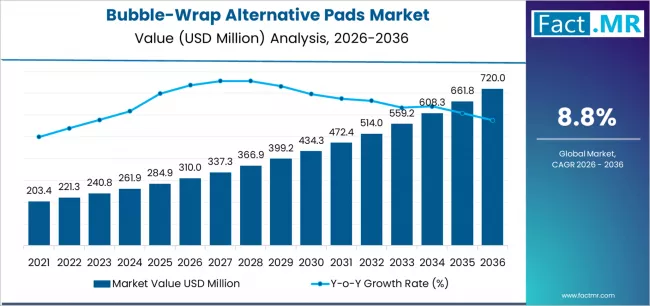
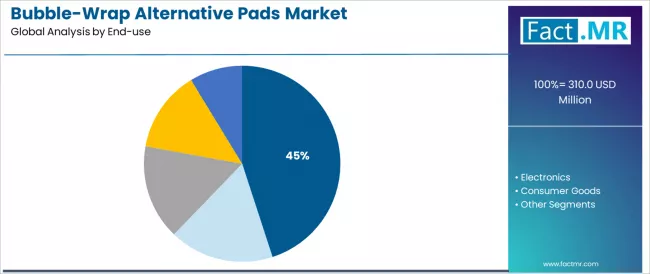
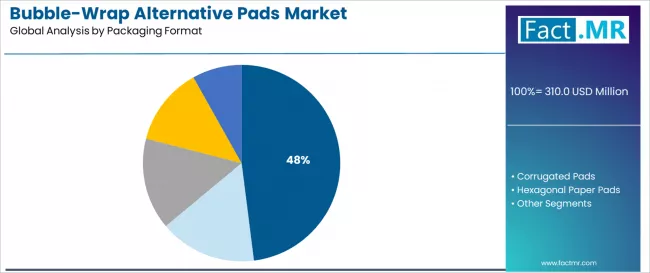
Bubble-wrap alternative pads market is projected to grow from USD 310.0 million in 2026 to USD 720.0 million by 2036, at a CAGR of 8.8%. E-commerce Packaging will dominate with a 45.0% market share, while cushioning pads will lead the packaging format segment with a 48.0% share.
Bubble-Wrap Alternative Pads Market Forecast and Outlook 2026 to 2036
The global bubble-wrap alternative pads market is valued at USD 310.0 million in 2026. The market is forecast to reach USD 720.0 million by 2036, an increase of USD 410.0 million. This represents total growth of 132.3%, expanding at a compound annual growth rate (CAGR) of 8.8% between 2026 and 2036.
Key Takeaways from the Bubble-Wrap Alternative Pads Market Study
- Market Value (2026): USD 310.0 million
- Market Forecast Value (2036): USD 720.0 million
- Market Forecast CAGR: 8.8%
- Leading End-Use: E-commerce Packaging (45.0%)
- Key Growth Regions: Asia Pacific, North America, Europe
- Key Players: Sealed Air Corporation, DS Smith plc, YUTO Eco-Technology Co., Ltd., Uflex Limited, Klabin S.A., Toppan Inc.

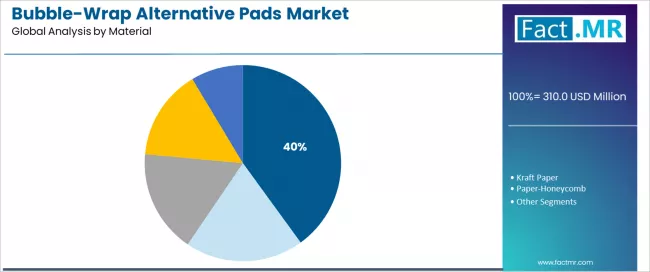
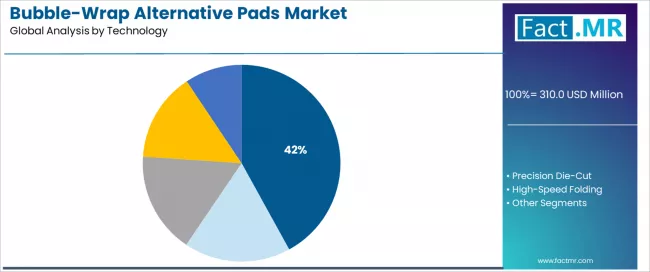
By end-use, e-commerce packaging commands a 45.0% share in 2026. Cushioning pads lead the packaging format segment with a 48.0% share. Molded fiber is the dominant material, holding a 40.0% share, while airless cushion technology leads with a 42.0% share.
Demand is accelerating due to a powerful combination of regulatory pressure against plastic films and the operational needs of modern logistics. E-commerce retailers and third-party logistics providers seek protective solutions that are lightweight to minimize shipping costs, space-efficient in warehouses, and curbside recyclable for the consumer.
The market's expansion reflects a fundamental redesign of protective packaging around circular economy principles. Innovation is focused on creating pads that match or exceed the protective qualities of bubble wrap while using readily renewable or recycled feedstocks. This shift is not merely a material substitution but a re-evaluation of the entire protective packaging workflow, from warehouse automation compatibility to the end-user's disposal experience, driven by brand promises of sustainability and supply chain efficiency.
Bubble-Wrap Alternative Pads Market
| Metric | Value |
|---|---|
| Estimated Value in (2026E) | USD 310.0 million |
| Forecast Value in (2036F) | USD 720.0 million |
| Forecast CAGR (2026 to 2036) | 8.8% |
Category
| Category | Segment |
|---|---|
| End-Use | E-commerce Packaging, Electronics, Consumer Goods, Industrial Goods, Others |
| Packaging Format | Cushioning Pads, Corrugated Pads, Hexagonal Paper Pads, Molded Pulp Pads, Others |
| Material | Molded Fiber, Kraft Paper, Paper-Honeycomb, Bagasse Fiber, Others |
| Technology | Airless Cushion Tech, Precision Die-Cut, High-Speed Folding, Pulp Thermoforming, Others |
| Region | North America, Europe, Asia Pacific, Latin America, MEA |
Segment Analysis
How is E-commerce Redefining Performance Standards for Protective Pads?

The e-commerce packaging end-use segment holds a 45.0% market share in 2026. Its dominance is fueled by the specific and relentless demands of the direct-to-consumer supply chain. Alternatives must match plastic bubble wrap's performance in lab tests for cushioning and abrasion resistance while solving for new variables: minimal dust creation, compatibility with automated packing machines, and reducing parcel dimensional weight.
The current development focus is on pads that offer consistent performance across a wide temperature and humidity range, ensuring a phone shipped to Arizona in summer receives the same protection as one sent to Minnesota in winter. For e-commerce operators, the switch is a complex calculation balancing cost per shipment, damage rates, and brand sustainability image.
What drives the Dominance of Cushioning Pads in Warehouse Operations?

Cushioning pads lead the packaging format segment with a 48.0% share. Their primary advantage is operational efficiency. These pads, often supplied in rolls or fan-folded boxes, integrate seamlessly into existing packing stations, requiring minimal retraining for staff. They address the critical need for rapid adaptation in fulfillment centers where packers face a vast array of product sizes and shapes every minute.
The format allows for quick, tear-to-size customization without specialized tools, maintaining high packing speeds. This practicality, combined with a smaller storage footprint compared to inflated air pillows or loose fill, makes cushioning pads the pragmatic choice for logistics managers prioritizing throughput and space utilization alongside sustainability goals.
Why is Molded Fiber Becoming the Material Benchmark for Sustainable Protection?

Molded fiber accounts for a 40.0% share of the material segment. Its rise is attributed to its unique combination of protective performance, customization, and end-of-life simplicity. Unlike flat paper pads, molded fiber can be engineered into three-dimensional shapes that snugly hold irregular or fragile items, eliminating the need for multiple packaging components.
This precision reduces material usage and minimizes product movement within the carton. Its composition from recycled paper or agricultural residues, and its straightforward recyclability or compostability, provide a clear, marketable sustainability story. For brands shipping high-value or delicate goods, molded fiber offers a premium, responsible solution that visibly communicates care and quality to the end customer.
Is Airless Cushion Technology Winning the Automation Race?

Airless cushion technology commands a 42.0% share. This method, which creates a cushioning structure from paper without inflating air, is gaining favor because it eliminates the need for air compressors and plastic films on packing lines. The technology produces consistent, ready-to-use pads with reliable performance metrics, which is crucial for automated packaging systems that cannot adapt to the variable cell size of traditional bubble wrap.
Its growth is tightly linked to the automation trend in e-commerce fulfillment; it provides a uniform material that automated box-sizing and packing robots can handle predictably. By removing the machinery and maintenance associated with air inflation, it offers a simpler, quieter, and more energy-efficient path to sustainable protective packaging at scale.
What are the Drivers, Restraints, and Key Trends of the Bubble-Wrap Alternative Pads Market?
Market growth is propelled by extended producer responsibility (EPR) regulations for plastics, corporate zero-waste commitments, and rising consumer aversion to plastic waste in deliveries. The need to reduce shipping costs through lighter, space-efficient materials is a strong operational driver. Performance perception gaps versus traditional plastic, especially for heavy industrial items, and higher upfront material costs serve as key restraints.
Variability in the quality and consistency of recycled fiber feedstocks can also challenge production. Development is concentrated on enhancing the strength-to-weight ratio of paper-based pads to compete with plastic in all applications. Another key focus is creating pads with inherent anti-static properties for safely packaging electronics, broadening their applicability in a major end-use sector.
Analysis of the Bubble-Wrap Alternative Pads Market by Key Countries
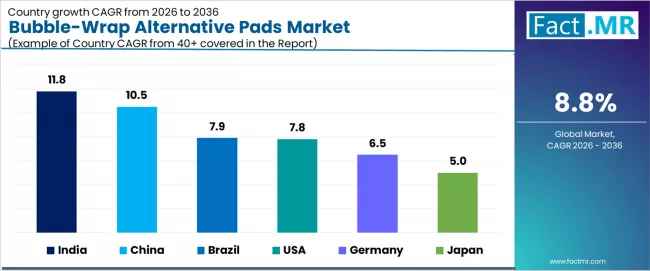
| Country | CAGR (2026-2036) |
|---|---|
| USA | 7.8% |
| Germany | 6.5% |
| China | 10.5% |
| India | 11.8% |
| Brazil | 7.9% |
| Japan | 5.0% |
How do State-Level Mandates and Retailer Policies Shape the USA’s Bubble-Wrap Alternative Pads Market?

The US market grows at a 7.8% CAGR, driven less by federal law and more by a patchwork of state plastic packaging laws and powerful retailer sustainability scorecards. Major online retailers and big-box stores are setting their own deadlines for eliminating plastic void-fill, creating immediate, large-scale demand for alternatives.
Growth is particularly strong in sectors like apparel and home goods e-commerce. Development focuses on creating a diverse portfolio of solutions, from simple crumpled kraft paper for lightweight items to engineered molded pulp for electronics, allowing brands to meet different retailer requirements with a single supplier.
- The focus on reducing "ship in own container" (SIOC) damages is driving innovation in pads that provide superior protection in minimalist packaging, eliminating the need for an outer shipping box.
- Investment is flowing into regional manufacturing networks for paper pads to minimize logistical carbon footprint and align with "Made in USA" preferences for large corporate buyers.
Does Germany’s Market prioritize Technical Certification and Waste Stream Integration?
Germany’s market advances at a 6.5% CAGR, where adoption requires passing rigorous technical tests for protection and compatibility with the country’s efficient Dual System recycling. Alternatives must prove performance through standardized lab certifications to gain trust in industrial and electronics packaging.
The market favors mono-material paper solutions that avoid lamination or coatings, ensuring smooth recycling. Growth is steady in the manufacturing and export sectors, where packaging must protect goods during long hauls while adhering to strict EU environmental standards.
- There is high demand for pads with documented lifecycle analysis (LCA) data, proving a lower environmental impact than the bubble wrap they replace.
- Collaboration with waste management companies is essential to pre-approve new pad materials and structures, ensuring they will be accepted in blue bin paper streams without issue.
Is China’s Growth Fueled by Manufacturing Scale and Green Policy Directives?
China’s market is projected to grow at a 10.5% CAGR, fueled by its role as the world’s factory and top-down policy directives like the "plastic ban." The immense volume of export goods generates enormous demand for protective packaging that meets the sustainability requirements of international buyers.
Development emphasizes cost-optimized, high-speed production of pads from recycled cardboard and paper waste. The focus is on creating solutions robust enough for complex global logistics chains while keeping per-unit costs extremely low to serve vast manufacturing output.
- Government incentives for utilizing industrial and post-consumer paper waste are making recycled content pads highly competitive.
- Manufacturers are integrating pad production directly with corrugated box plants, offering bundled sustainable packaging solutions to exporters.
Can India’s Boom in Quick Commerce and D2C Brands drive Adoption?
India demonstrates the highest growth potential at an 11.8% CAGR. The explosion of quick commerce (10-30 minute delivery) and direct-to-consumer (D2C) brands creates a unique laboratory for packaging innovation. These models require pads that are quick to apply, visually appealing as part of the brand experience, and inexpensive.
Growth utilizes abundant local waste paper to produce low-cost, functional pads. The market is highly responsive to solutions that simplify the packing process for small businesses and reduce damage rates in a logistics network known for its intensity.
- The proliferation of small D2C brands drives demand for affordable, off-the-shelf pad solutions available in small quantities from e-commerce platforms like Amazon or Flipkart.
- Innovation targets pads that provide adequate protection in India’s challenging last-mile delivery environment while being easily disposable in urban settings.
How is Brazil’s Market Leveraging Local Biomass for Cushioning Solutions?
Brazil’s market is set to grow at a 7.9% CAGR, with a distinct advantage in access to agricultural biomass. The abundance of bagasse from sugarcane and other fibrous agricultural waste provides a low-cost, sustainable feedstock for molded pulp pads. This positions local producers to create bio-based alternatives with a strong local provenance story. Growth is notable for protecting commodities like ceramics, glassware, and agricultural equipment for both domestic and regional export markets.
- Integration of pad manufacturing with bioethanol or sugar production facilities creates a circular economic model, adding value to industrial waste streams.
- Export-oriented companies are adopting these locally sourced pads to improve the sustainability profile of their shipments to eco-conscious markets in Europe and North America.
Does Japan’s Focus on Precision and Space Efficiency Dictate Design?

Japan’s market grows at a 5.0% CAGR, where the shift away from bubble wrap intersects with a cultural emphasis on precision, minimalism, and space-saving. Pads must provide absolute protection for high-value electronics and ceramics while using the absolute minimum material.
They must also fold or compress flat for efficient storage in small urban warehouses and for easy disposal in cramped living spaces. The market demands products with exceptional consistency and cleanliness, leaving no dust or debris on the packaged item.
- There is significant value in pads designed for specific, high-volume products like smartphones or cosmetic jars, offering a perfect fit that eliminates all wasted material and movement.
- Development prioritizes ultra-thin, multi-layer paper structures that provide high cushioning with minimal thickness, directly reducing package size and shipping costs.
Competitive Landscape of the Bubble-Wrap Alternative Pads Market
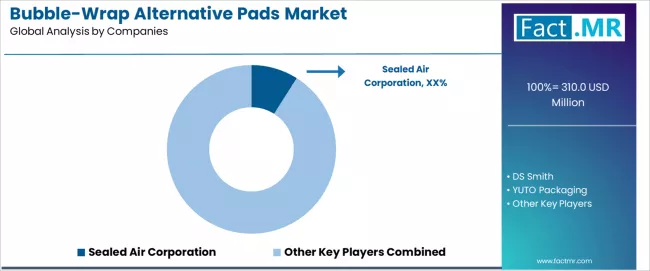
The competitive landscape features a dynamic mix of traditional plastic packaging companies pivoting their portfolios and agile specialists focused on paper engineering. Competition centers on technological innovation in pad structuring, material science for enhanced strength, and building robust supply chains for recycled feedstocks.
Key players are racing to develop proprietary equipment that lowers production costs and to secure partnerships with major e-commerce platforms and retailers mandating the phase-out of plastic. Success increasingly depends on providing a complete system that includes dispensing equipment for warehouses and clear end-of-life instructions for consumers, ensuring the alternative is not just purchased but also correctly used and disposed of.
Key Players in the Bubble-Wrap Alternative Pads Market
- Sealed Air Corporation
- DS Smith plc
- YUTO Eco-Technology Co., Ltd.
- Uflex Limited
- Klabin S.A.
- Toppan Inc.
Scope of the Report
| Items | Values |
|---|---|
| Quantitative Units (2026) | USD 310.0 Million |
| End-Use Sector | E-commerce Packaging, Electronics, Consumer Goods, Industrial Goods, Others |
| Packaging Format | Cushioning Pads, Corrugated Pads, Hexagonal Paper Pads, Molded Pulp Pads, Others |
| Material | Molded Fiber, Kraft Paper, Paper-Honeycomb, Bagasse Fiber, Others |
| Technology | Airless Cushion Tech, Precision Die-Cut, High-Speed Folding, Pulp Thermoforming, Others |
| Regions Covered | North America, Europe, Asia Pacific, Latin America, MEA |
| Key Companies Profiled | Sealed Air Corporation, DS Smith plc, YUTO Eco-Technology Co., Ltd., Uflex Limited, Klabin S.A., Toppan Inc. |
Bubble-Wrap Alternative Pads Market by Segments
-
End-Use :
- E-commerce Packaging
- Electronics
- Consumer Goods
- Industrial Goods
- Others
-
Packaging Format :
- Cushioning Pads
- Corrugated Pads
- Hexagonal Paper Pads
- Molded Pulp Pads
- Others
-
Material :
- Molded Fiber
- Kraft Paper
- Paper-Honeycomb
- Bagasse Fiber
- Others
-
Technology :
- Airless Cushion Tech
- Precision Die-Cut
- High-Speed Folding
- Pulp Thermoforming
- Others
-
Region :
-
North America
- USA
- Canada
- Mexico
-
Europe
- Germany
- UK
- France
- Italy
- Spain
- Rest of Europe
-
Asia Pacific
- China
- India
- Japan
- South Korea
- Australia
- Rest of Asia Pacific
-
Latin America
- Brazil
- Argentina
- Rest of Latin America
-
MEA
- Saudi Arabia
- UAE
- South Africa
- Rest of MEA
-
Table of Content
- Executive Summary
- Global Market Outlook
- Demand to side Trends
- Supply to side Trends
- Technology Roadmap Analysis
- Analysis and Recommendations
- Market Overview
- Market Coverage / Taxonomy
- Market Definition / Scope / Limitations
- Market Background
- Market Dynamics
- Drivers
- Restraints
- Opportunity
- Trends
- Scenario Forecast
- Demand in Optimistic Scenario
- Demand in Likely Scenario
- Demand in Conservative Scenario
- Opportunity Map Analysis
- Product Life Cycle Analysis
- Supply Chain Analysis
- Investment Feasibility Matrix
- Value Chain Analysis
- PESTLE and Porter’s Analysis
- Regulatory Landscape
- Regional Parent Market Outlook
- Production and Consumption Statistics
- Import and Export Statistics
- Market Dynamics
- Global Market Analysis 2021 to 2025 and Forecast, 2026 to 2036
- Historical Market Size Value (USD Million) Analysis, 2021 to 2025
- Current and Future Market Size Value (USD Million) Projections, 2026 to 2036
- Y to o to Y Growth Trend Analysis
- Absolute $ Opportunity Analysis
- Global Market Pricing Analysis 2021 to 2025 and Forecast 2026 to 2036
- Global Market Analysis 2021 to 2025 and Forecast 2026 to 2036, By End-use
- Introduction / Key Findings
- Historical Market Size Value (USD Million) Analysis By End-use, 2021 to 2025
- Current and Future Market Size Value (USD Million) Analysis and Forecast By End-use, 2026 to 2036
- E-commerce Packaging
- Electronics
- Consumer Goods
- Industrial Goods
- Others
- Y to o to Y Growth Trend Analysis By End-use, 2021 to 2025
- Absolute $ Opportunity Analysis By End-use, 2026 to 2036
- Global Market Analysis 2021 to 2025 and Forecast 2026 to 2036, By Packaging Format
- Introduction / Key Findings
- Historical Market Size Value (USD Million) Analysis By Packaging Format, 2021 to 2025
- Current and Future Market Size Value (USD Million) Analysis and Forecast By Packaging Format, 2026 to 2036
- Cushioning Pads
- Corrugated Pads
- Hexagonal Paper Pads
- Molded Pulp Pads
- Others
- Y to o to Y Growth Trend Analysis By Packaging Format, 2021 to 2025
- Absolute $ Opportunity Analysis By Packaging Format, 2026 to 2036
- Global Market Analysis 2021 to 2025 and Forecast 2026 to 2036, By Material
- Introduction / Key Findings
- Historical Market Size Value (USD Million) Analysis By Material, 2021 to 2025
- Current and Future Market Size Value (USD Million) Analysis and Forecast By Material, 2026 to 2036
- Molded Fiber
- Kraft Paper
- Paper-Honeycomb
- Bagasse Fiber
- Others
- Y to o to Y Growth Trend Analysis By Material, 2021 to 2025
- Absolute $ Opportunity Analysis By Material, 2026 to 2036
- Global Market Analysis 2021 to 2025 and Forecast 2026 to 2036, By Technology
- Introduction / Key Findings
- Historical Market Size Value (USD Million) Analysis By Technology, 2021 to 2025
- Current and Future Market Size Value (USD Million) Analysis and Forecast By Technology, 2026 to 2036
- Airless Cushion Tech
- Precision Die-Cut
- High-Speed Folding
- Pulp Thermoforming
- Others
- Y to o to Y Growth Trend Analysis By Technology, 2021 to 2025
- Absolute $ Opportunity Analysis By Technology, 2026 to 2036
- Global Market Analysis 2021 to 2025 and Forecast 2026 to 2036, By Region
- Introduction
- Historical Market Size Value (USD Million) Analysis By Region, 2021 to 2025
- Current Market Size Value (USD Million) Analysis and Forecast By Region, 2026 to 2036
- North America
- Latin America
- Western Europe
- Eastern Europe
- East Asia
- South Asia and Pacific
- Middle East & Africa
- Market Attractiveness Analysis By Region
- North America Market Analysis 2021 to 2025 and Forecast 2026 to 2036, By Country
- Historical Market Size Value (USD Million) Trend Analysis By Market Taxonomy, 2021 to 2025
- Market Size Value (USD Million) Forecast By Market Taxonomy, 2026 to 2036
- By Country
- USA
- Canada
- Mexico
- By End-use
- By Packaging Format
- By Material
- By Technology
- By Country
- Market Attractiveness Analysis
- By Country
- By End-use
- By Packaging Format
- By Material
- By Technology
- Key Takeaways
- Latin America Market Analysis 2021 to 2025 and Forecast 2026 to 2036, By Country
- Historical Market Size Value (USD Million) Trend Analysis By Market Taxonomy, 2021 to 2025
- Market Size Value (USD Million) Forecast By Market Taxonomy, 2026 to 2036
- By Country
- Brazil
- Chile
- Rest of Latin America
- By End-use
- By Packaging Format
- By Material
- By Technology
- By Country
- Market Attractiveness Analysis
- By Country
- By End-use
- By Packaging Format
- By Material
- By Technology
- Key Takeaways
- Western Europe Market Analysis 2021 to 2025 and Forecast 2026 to 2036, By Country
- Historical Market Size Value (USD Million) Trend Analysis By Market Taxonomy, 2021 to 2025
- Market Size Value (USD Million) Forecast By Market Taxonomy, 2026 to 2036
- By Country
- Germany
- UK
- Italy
- Spain
- France
- Nordic
- BENELUX
- Rest of Western Europe
- By End-use
- By Packaging Format
- By Material
- By Technology
- By Country
- Market Attractiveness Analysis
- By Country
- By End-use
- By Packaging Format
- By Material
- By Technology
- Key Takeaways
- Eastern Europe Market Analysis 2021 to 2025 and Forecast 2026 to 2036, By Country
- Historical Market Size Value (USD Million) Trend Analysis By Market Taxonomy, 2021 to 2025
- Market Size Value (USD Million) Forecast By Market Taxonomy, 2026 to 2036
- By Country
- Russia
- Poland
- Hungary
- Balkan & Baltic
- Rest of Eastern Europe
- By End-use
- By Packaging Format
- By Material
- By Technology
- By Country
- Market Attractiveness Analysis
- By Country
- By End-use
- By Packaging Format
- By Material
- By Technology
- Key Takeaways
- East Asia Market Analysis 2021 to 2025 and Forecast 2026 to 2036, By Country
- Historical Market Size Value (USD Million) Trend Analysis By Market Taxonomy, 2021 to 2025
- Market Size Value (USD Million) Forecast By Market Taxonomy, 2026 to 2036
- By Country
- China
- Japan
- South Korea
- By End-use
- By Packaging Format
- By Material
- By Technology
- By Country
- Market Attractiveness Analysis
- By Country
- By End-use
- By Packaging Format
- By Material
- By Technology
- Key Takeaways
- South Asia and Pacific Market Analysis 2021 to 2025 and Forecast 2026 to 2036, By Country
- Historical Market Size Value (USD Million) Trend Analysis By Market Taxonomy, 2021 to 2025
- Market Size Value (USD Million) Forecast By Market Taxonomy, 2026 to 2036
- By Country
- India
- ASEAN
- Australia & New Zealand
- Rest of South Asia and Pacific
- By End-use
- By Packaging Format
- By Material
- By Technology
- By Country
- Market Attractiveness Analysis
- By Country
- By End-use
- By Packaging Format
- By Material
- By Technology
- Key Takeaways
- Middle East & Africa Market Analysis 2021 to 2025 and Forecast 2026 to 2036, By Country
- Historical Market Size Value (USD Million) Trend Analysis By Market Taxonomy, 2021 to 2025
- Market Size Value (USD Million) Forecast By Market Taxonomy, 2026 to 2036
- By Country
- Kingdom of Saudi Arabia
- Other GCC Countries
- Turkiye
- South Africa
- Other African Union
- Rest of Middle East & Africa
- By End-use
- By Packaging Format
- By Material
- By Technology
- By Country
- Market Attractiveness Analysis
- By Country
- By End-use
- By Packaging Format
- By Material
- By Technology
- Key Takeaways
- Key Countries Market Analysis
- USA
- Pricing Analysis
- Market Share Analysis, 2025
- By End-use
- By Packaging Format
- By Material
- By Technology
- Canada
- Pricing Analysis
- Market Share Analysis, 2025
- By End-use
- By Packaging Format
- By Material
- By Technology
- Mexico
- Pricing Analysis
- Market Share Analysis, 2025
- By End-use
- By Packaging Format
- By Material
- By Technology
- Brazil
- Pricing Analysis
- Market Share Analysis, 2025
- By End-use
- By Packaging Format
- By Material
- By Technology
- Chile
- Pricing Analysis
- Market Share Analysis, 2025
- By End-use
- By Packaging Format
- By Material
- By Technology
- Germany
- Pricing Analysis
- Market Share Analysis, 2025
- By End-use
- By Packaging Format
- By Material
- By Technology
- UK
- Pricing Analysis
- Market Share Analysis, 2025
- By End-use
- By Packaging Format
- By Material
- By Technology
- Italy
- Pricing Analysis
- Market Share Analysis, 2025
- By End-use
- By Packaging Format
- By Material
- By Technology
- Spain
- Pricing Analysis
- Market Share Analysis, 2025
- By End-use
- By Packaging Format
- By Material
- By Technology
- France
- Pricing Analysis
- Market Share Analysis, 2025
- By End-use
- By Packaging Format
- By Material
- By Technology
- India
- Pricing Analysis
- Market Share Analysis, 2025
- By End-use
- By Packaging Format
- By Material
- By Technology
- ASEAN
- Pricing Analysis
- Market Share Analysis, 2025
- By End-use
- By Packaging Format
- By Material
- By Technology
- Australia & New Zealand
- Pricing Analysis
- Market Share Analysis, 2025
- By End-use
- By Packaging Format
- By Material
- By Technology
- China
- Pricing Analysis
- Market Share Analysis, 2025
- By End-use
- By Packaging Format
- By Material
- By Technology
- Japan
- Pricing Analysis
- Market Share Analysis, 2025
- By End-use
- By Packaging Format
- By Material
- By Technology
- South Korea
- Pricing Analysis
- Market Share Analysis, 2025
- By End-use
- By Packaging Format
- By Material
- By Technology
- Russia
- Pricing Analysis
- Market Share Analysis, 2025
- By End-use
- By Packaging Format
- By Material
- By Technology
- Poland
- Pricing Analysis
- Market Share Analysis, 2025
- By End-use
- By Packaging Format
- By Material
- By Technology
- Hungary
- Pricing Analysis
- Market Share Analysis, 2025
- By End-use
- By Packaging Format
- By Material
- By Technology
- Kingdom of Saudi Arabia
- Pricing Analysis
- Market Share Analysis, 2025
- By End-use
- By Packaging Format
- By Material
- By Technology
- Turkiye
- Pricing Analysis
- Market Share Analysis, 2025
- By End-use
- By Packaging Format
- By Material
- By Technology
- South Africa
- Pricing Analysis
- Market Share Analysis, 2025
- By End-use
- By Packaging Format
- By Material
- By Technology
- USA
- Market Structure Analysis
- Competition Dashboard
- Competition Benchmarking
- Market Share Analysis of Top Players
- By Regional
- By End-use
- By Packaging Format
- By Material
- By Technology
- Competition Analysis
- Competition Deep Dive
- Sealed Air Corporation
- Overview
- Product Portfolio
- Profitability by Market Segments (Product/Age /Sales Channel/Region)
- Sales Footprint
- Strategy Overview
- Marketing Strategy
- Product Strategy
- Channel Strategy
- DS Smith
- YUTO Packaging
- UFlex
- Klabin
- Toppan
- Sealed Air Corporation
- Competition Deep Dive
- Assumptions & Acronyms Used
- Research Methodology
List Of Table
- Table 1: Global Market Value (USD Million) Forecast by Region, 2021 to 2036
- Table 2: Global Market Value (USD Million) Forecast by End-use, 2021 to 2036
- Table 3: Global Market Value (USD Million) Forecast by Packaging Format, 2021 to 2036
- Table 4: Global Market Value (USD Million) Forecast by Material, 2021 to 2036
- Table 5: Global Market Value (USD Million) Forecast by Technology, 2021 to 2036
- Table 6: North America Market Value (USD Million) Forecast by Country, 2021 to 2036
- Table 7: North America Market Value (USD Million) Forecast by End-use, 2021 to 2036
- Table 8: North America Market Value (USD Million) Forecast by Packaging Format, 2021 to 2036
- Table 9: North America Market Value (USD Million) Forecast by Material, 2021 to 2036
- Table 10: North America Market Value (USD Million) Forecast by Technology, 2021 to 2036
- Table 11: Latin America Market Value (USD Million) Forecast by Country, 2021 to 2036
- Table 12: Latin America Market Value (USD Million) Forecast by End-use, 2021 to 2036
- Table 13: Latin America Market Value (USD Million) Forecast by Packaging Format, 2021 to 2036
- Table 14: Latin America Market Value (USD Million) Forecast by Material, 2021 to 2036
- Table 15: Latin America Market Value (USD Million) Forecast by Technology, 2021 to 2036
- Table 16: Western Europe Market Value (USD Million) Forecast by Country, 2021 to 2036
- Table 17: Western Europe Market Value (USD Million) Forecast by End-use, 2021 to 2036
- Table 18: Western Europe Market Value (USD Million) Forecast by Packaging Format, 2021 to 2036
- Table 19: Western Europe Market Value (USD Million) Forecast by Material, 2021 to 2036
- Table 20: Western Europe Market Value (USD Million) Forecast by Technology, 2021 to 2036
- Table 21: Eastern Europe Market Value (USD Million) Forecast by Country, 2021 to 2036
- Table 22: Eastern Europe Market Value (USD Million) Forecast by End-use, 2021 to 2036
- Table 23: Eastern Europe Market Value (USD Million) Forecast by Packaging Format, 2021 to 2036
- Table 24: Eastern Europe Market Value (USD Million) Forecast by Material, 2021 to 2036
- Table 25: Eastern Europe Market Value (USD Million) Forecast by Technology, 2021 to 2036
- Table 26: East Asia Market Value (USD Million) Forecast by Country, 2021 to 2036
- Table 27: East Asia Market Value (USD Million) Forecast by End-use, 2021 to 2036
- Table 28: East Asia Market Value (USD Million) Forecast by Packaging Format, 2021 to 2036
- Table 29: East Asia Market Value (USD Million) Forecast by Material, 2021 to 2036
- Table 30: East Asia Market Value (USD Million) Forecast by Technology, 2021 to 2036
- Table 31: South Asia and Pacific Market Value (USD Million) Forecast by Country, 2021 to 2036
- Table 32: South Asia and Pacific Market Value (USD Million) Forecast by End-use, 2021 to 2036
- Table 33: South Asia and Pacific Market Value (USD Million) Forecast by Packaging Format, 2021 to 2036
- Table 34: South Asia and Pacific Market Value (USD Million) Forecast by Material, 2021 to 2036
- Table 35: South Asia and Pacific Market Value (USD Million) Forecast by Technology, 2021 to 2036
- Table 36: Middle East & Africa Market Value (USD Million) Forecast by Country, 2021 to 2036
- Table 37: Middle East & Africa Market Value (USD Million) Forecast by End-use, 2021 to 2036
- Table 38: Middle East & Africa Market Value (USD Million) Forecast by Packaging Format, 2021 to 2036
- Table 39: Middle East & Africa Market Value (USD Million) Forecast by Material, 2021 to 2036
- Table 40: Middle East & Africa Market Value (USD Million) Forecast by Technology, 2021 to 2036
List Of Figures
- Figure 1: Global Market Pricing Analysis
- Figure 2: Global Market Value (USD Million) Forecast 2021 to 2036
- Figure 3: Global Market Value Share and BPS Analysis by End-use, 2026 and 2036
- Figure 4: Global Market Y to o to Y Growth Comparison by End-use, 2026 to 2036
- Figure 5: Global Market Attractiveness Analysis by End-use
- Figure 6: Global Market Value Share and BPS Analysis by Packaging Format, 2026 and 2036
- Figure 7: Global Market Y to o to Y Growth Comparison by Packaging Format, 2026 to 2036
- Figure 8: Global Market Attractiveness Analysis by Packaging Format
- Figure 9: Global Market Value Share and BPS Analysis by Material, 2026 and 2036
- Figure 10: Global Market Y to o to Y Growth Comparison by Material, 2026 to 2036
- Figure 11: Global Market Attractiveness Analysis by Material
- Figure 12: Global Market Value Share and BPS Analysis by Technology, 2026 and 2036
- Figure 13: Global Market Y to o to Y Growth Comparison by Technology, 2026 to 2036
- Figure 14: Global Market Attractiveness Analysis by Technology
- Figure 15: Global Market Value (USD Million) Share and BPS Analysis by Region, 2026 and 2036
- Figure 16: Global Market Y to o to Y Growth Comparison by Region, 2026 to 2036
- Figure 17: Global Market Attractiveness Analysis by Region
- Figure 18: North America Market Incremental Dollar Opportunity, 2026 to 2036
- Figure 19: Latin America Market Incremental Dollar Opportunity, 2026 to 2036
- Figure 20: Western Europe Market Incremental Dollar Opportunity, 2026 to 2036
- Figure 21: Eastern Europe Market Incremental Dollar Opportunity, 2026 to 2036
- Figure 22: East Asia Market Incremental Dollar Opportunity, 2026 to 2036
- Figure 23: South Asia and Pacific Market Incremental Dollar Opportunity, 2026 to 2036
- Figure 24: Middle East & Africa Market Incremental Dollar Opportunity, 2026 to 2036
- Figure 25: North America Market Value Share and BPS Analysis by Country, 2026 and 2036
- Figure 26: North America Market Value Share and BPS Analysis by End-use, 2026 and 2036
- Figure 27: North America Market Y to o to Y Growth Comparison by End-use, 2026 to 2036
- Figure 28: North America Market Attractiveness Analysis by End-use
- Figure 29: North America Market Value Share and BPS Analysis by Packaging Format, 2026 and 2036
- Figure 30: North America Market Y to o to Y Growth Comparison by Packaging Format, 2026 to 2036
- Figure 31: North America Market Attractiveness Analysis by Packaging Format
- Figure 32: North America Market Value Share and BPS Analysis by Material, 2026 and 2036
- Figure 33: North America Market Y to o to Y Growth Comparison by Material, 2026 to 2036
- Figure 34: North America Market Attractiveness Analysis by Material
- Figure 35: North America Market Value Share and BPS Analysis by Technology, 2026 and 2036
- Figure 36: North America Market Y to o to Y Growth Comparison by Technology, 2026 to 2036
- Figure 37: North America Market Attractiveness Analysis by Technology
- Figure 38: Latin America Market Value Share and BPS Analysis by Country, 2026 and 2036
- Figure 39: Latin America Market Value Share and BPS Analysis by End-use, 2026 and 2036
- Figure 40: Latin America Market Y to o to Y Growth Comparison by End-use, 2026 to 2036
- Figure 41: Latin America Market Attractiveness Analysis by End-use
- Figure 42: Latin America Market Value Share and BPS Analysis by Packaging Format, 2026 and 2036
- Figure 43: Latin America Market Y to o to Y Growth Comparison by Packaging Format, 2026 to 2036
- Figure 44: Latin America Market Attractiveness Analysis by Packaging Format
- Figure 45: Latin America Market Value Share and BPS Analysis by Material, 2026 and 2036
- Figure 46: Latin America Market Y to o to Y Growth Comparison by Material, 2026 to 2036
- Figure 47: Latin America Market Attractiveness Analysis by Material
- Figure 48: Latin America Market Value Share and BPS Analysis by Technology, 2026 and 2036
- Figure 49: Latin America Market Y to o to Y Growth Comparison by Technology, 2026 to 2036
- Figure 50: Latin America Market Attractiveness Analysis by Technology
- Figure 51: Western Europe Market Value Share and BPS Analysis by Country, 2026 and 2036
- Figure 52: Western Europe Market Value Share and BPS Analysis by End-use, 2026 and 2036
- Figure 53: Western Europe Market Y to o to Y Growth Comparison by End-use, 2026 to 2036
- Figure 54: Western Europe Market Attractiveness Analysis by End-use
- Figure 55: Western Europe Market Value Share and BPS Analysis by Packaging Format, 2026 and 2036
- Figure 56: Western Europe Market Y to o to Y Growth Comparison by Packaging Format, 2026 to 2036
- Figure 57: Western Europe Market Attractiveness Analysis by Packaging Format
- Figure 58: Western Europe Market Value Share and BPS Analysis by Material, 2026 and 2036
- Figure 59: Western Europe Market Y to o to Y Growth Comparison by Material, 2026 to 2036
- Figure 60: Western Europe Market Attractiveness Analysis by Material
- Figure 61: Western Europe Market Value Share and BPS Analysis by Technology, 2026 and 2036
- Figure 62: Western Europe Market Y to o to Y Growth Comparison by Technology, 2026 to 2036
- Figure 63: Western Europe Market Attractiveness Analysis by Technology
- Figure 64: Eastern Europe Market Value Share and BPS Analysis by Country, 2026 and 2036
- Figure 65: Eastern Europe Market Value Share and BPS Analysis by End-use, 2026 and 2036
- Figure 66: Eastern Europe Market Y to o to Y Growth Comparison by End-use, 2026 to 2036
- Figure 67: Eastern Europe Market Attractiveness Analysis by End-use
- Figure 68: Eastern Europe Market Value Share and BPS Analysis by Packaging Format, 2026 and 2036
- Figure 69: Eastern Europe Market Y to o to Y Growth Comparison by Packaging Format, 2026 to 2036
- Figure 70: Eastern Europe Market Attractiveness Analysis by Packaging Format
- Figure 71: Eastern Europe Market Value Share and BPS Analysis by Material, 2026 and 2036
- Figure 72: Eastern Europe Market Y to o to Y Growth Comparison by Material, 2026 to 2036
- Figure 73: Eastern Europe Market Attractiveness Analysis by Material
- Figure 74: Eastern Europe Market Value Share and BPS Analysis by Technology, 2026 and 2036
- Figure 75: Eastern Europe Market Y to o to Y Growth Comparison by Technology, 2026 to 2036
- Figure 76: Eastern Europe Market Attractiveness Analysis by Technology
- Figure 77: East Asia Market Value Share and BPS Analysis by Country, 2026 and 2036
- Figure 78: East Asia Market Value Share and BPS Analysis by End-use, 2026 and 2036
- Figure 79: East Asia Market Y to o to Y Growth Comparison by End-use, 2026 to 2036
- Figure 80: East Asia Market Attractiveness Analysis by End-use
- Figure 81: East Asia Market Value Share and BPS Analysis by Packaging Format, 2026 and 2036
- Figure 82: East Asia Market Y to o to Y Growth Comparison by Packaging Format, 2026 to 2036
- Figure 83: East Asia Market Attractiveness Analysis by Packaging Format
- Figure 84: East Asia Market Value Share and BPS Analysis by Material, 2026 and 2036
- Figure 85: East Asia Market Y to o to Y Growth Comparison by Material, 2026 to 2036
- Figure 86: East Asia Market Attractiveness Analysis by Material
- Figure 87: East Asia Market Value Share and BPS Analysis by Technology, 2026 and 2036
- Figure 88: East Asia Market Y to o to Y Growth Comparison by Technology, 2026 to 2036
- Figure 89: East Asia Market Attractiveness Analysis by Technology
- Figure 90: South Asia and Pacific Market Value Share and BPS Analysis by Country, 2026 and 2036
- Figure 91: South Asia and Pacific Market Value Share and BPS Analysis by End-use, 2026 and 2036
- Figure 92: South Asia and Pacific Market Y to o to Y Growth Comparison by End-use, 2026 to 2036
- Figure 93: South Asia and Pacific Market Attractiveness Analysis by End-use
- Figure 94: South Asia and Pacific Market Value Share and BPS Analysis by Packaging Format, 2026 and 2036
- Figure 95: South Asia and Pacific Market Y to o to Y Growth Comparison by Packaging Format, 2026 to 2036
- Figure 96: South Asia and Pacific Market Attractiveness Analysis by Packaging Format
- Figure 97: South Asia and Pacific Market Value Share and BPS Analysis by Material, 2026 and 2036
- Figure 98: South Asia and Pacific Market Y to o to Y Growth Comparison by Material, 2026 to 2036
- Figure 99: South Asia and Pacific Market Attractiveness Analysis by Material
- Figure 100: South Asia and Pacific Market Value Share and BPS Analysis by Technology, 2026 and 2036
- Figure 101: South Asia and Pacific Market Y to o to Y Growth Comparison by Technology, 2026 to 2036
- Figure 102: South Asia and Pacific Market Attractiveness Analysis by Technology
- Figure 103: Middle East & Africa Market Value Share and BPS Analysis by Country, 2026 and 2036
- Figure 104: Middle East & Africa Market Value Share and BPS Analysis by End-use, 2026 and 2036
- Figure 105: Middle East & Africa Market Y to o to Y Growth Comparison by End-use, 2026 to 2036
- Figure 106: Middle East & Africa Market Attractiveness Analysis by End-use
- Figure 107: Middle East & Africa Market Value Share and BPS Analysis by Packaging Format, 2026 and 2036
- Figure 108: Middle East & Africa Market Y to o to Y Growth Comparison by Packaging Format, 2026 to 2036
- Figure 109: Middle East & Africa Market Attractiveness Analysis by Packaging Format
- Figure 110: Middle East & Africa Market Value Share and BPS Analysis by Material, 2026 and 2036
- Figure 111: Middle East & Africa Market Y to o to Y Growth Comparison by Material, 2026 to 2036
- Figure 112: Middle East & Africa Market Attractiveness Analysis by Material
- Figure 113: Middle East & Africa Market Value Share and BPS Analysis by Technology, 2026 and 2036
- Figure 114: Middle East & Africa Market Y to o to Y Growth Comparison by Technology, 2026 to 2036
- Figure 115: Middle East & Africa Market Attractiveness Analysis by Technology
- Figure 116: Global Market - Tier Structure Analysis
- Figure 117: Global Market - Company Share Analysis
- FAQs -
How big is the bubble-wrap alternative pads market in 2026?
The global bubble-wrap alternative pads market is estimated to be valued at USD 310.0 million in 2026.
What will be the size of bubble-wrap alternative pads market in 2036?
The market size for the bubble-wrap alternative pads market is projected to reach USD 720.0 million by 2036.
How much will be the bubble-wrap alternative pads market growth between 2026 and 2036?
The bubble-wrap alternative pads market is expected to grow at a 8.8% CAGR between 2026 and 2036.
What are the key product types in the bubble-wrap alternative pads market?
The key product types in bubble-wrap alternative pads market are e-commerce packaging, electronics, consumer goods, industrial goods and others.
Which packaging format segment to contribute significant share in the bubble-wrap alternative pads market in 2026?
In terms of packaging format, cushioning pads segment to command 48.0% share in the bubble-wrap alternative pads market in 2026.