Zero-Waste Food Tray Microalgae PHA Market
Zero-Waste Food Tray Microalgae PHA Market Size and Share Forecast Outlook 2026 to 2036
Zero-waste food tray microalgae pha market is projected to grow from USD 152.0 million in 2026 to USD 620.3 million by 2036, at a CAGR of 15.1%. Microalgae-Derived PHA will dominate with a 55.0% market share, while food trays & plates will lead the application segment with a 62.0% share.
Zero-Waste Food Tray Microalgae PHA Market Forecast and Outlook 2026 to 2036
The global market for zero-waste food tray microalgae PHA is projected to escalate from USD 152.00 million in 2026 to USD 620.29 million by 2036, achieving an exceptional 15.1% CAGR. This explosive growth is driven by the convergence of legislative action against single-use plastics and a fundamental shift in brand strategy, where packaging waste is no longer an externality but a core design flaw to be eliminated.
Microalgae-derived polyhydroxyalkanoates represent a paradigm shift in biopolymer sourcing, moving beyond traditional sugar-based fermentation to utilize photosynthetic microorganisms that consume CO2 and thrive on non-arable land. This unique value proposition directly addresses criticisms of first-generation bioplastics regarding land use and food crop competition.
Key Takeaways from the Zero-Waste Food Tray Microalgae PHA Market
- Market Value for 2026: USD 152.00 Million
- Market Value for 2036: USD 620.29 Million
- Forecast CAGR (2026 to 2036): 15.1%
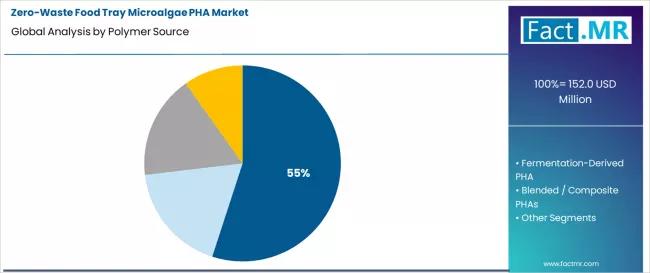
- Leading Polymer Source Segment (2026): Microalgae-Derived PHA (55%)
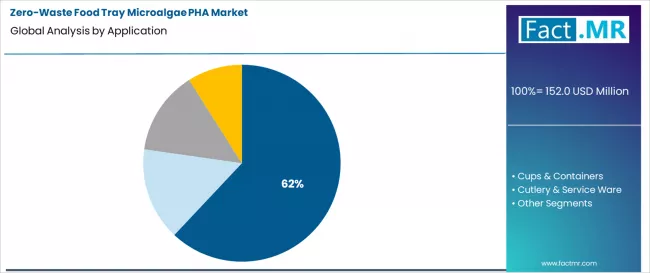
- Leading Application Segment (2026): Food Trays & Plates (62.0%)
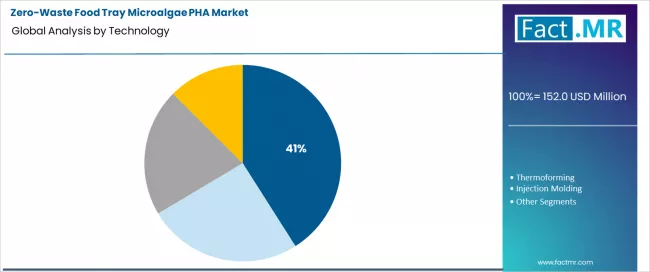
- Leading Technology Segment (2026): Extrusion (41%)
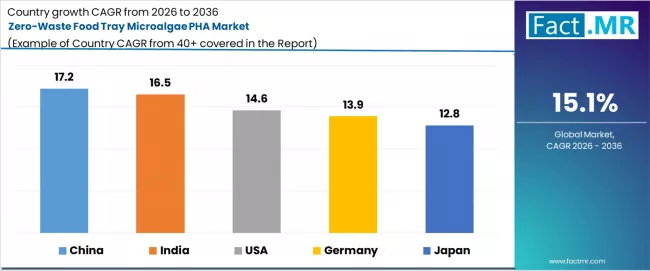
- Key Growth Countries: China (17.20% CAGR), India (16.50% CAGR), USA (14.60% CAGR), Germany (13.90% CAGR), Japan (12.80% CAGR)
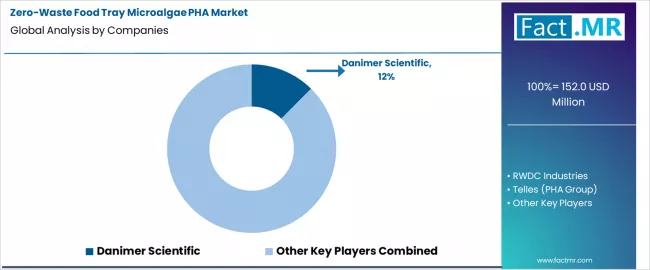
- Key Players in the Market: Danimer Scientific, RWDC Industries, Telles (PHA Group), Bio-ON, SK-bioland/PHABIO

The market is rapidly evolving from niche demonstrations to scalable procurement, fueled by corporate net-zero commitments that now encompass Scope 3 emissions from packaging end-of-life. China’s 17.20% CAGR reflects its dual role as both the world’s largest producer of disposable food service ware and a leader in state-directed industrial biology, creating an unparalleled demand-pull and supply-push dynamic.
The trajectory is defined by the race to commercialize algae strains with higher PHA yields and to integrate production with wastewater treatment or carbon capture, transforming the polymer from a mere material into a vector for circular environmental remediation.
Metric
| Metric | Value |
|---|---|
| Market Value (2026) | USD 152.00 Million |
| Market Forecast Value (2036) | USD 620.29 Million |
| Forecast CAGR (2026 to 2036) | 15.1% |
Category
| Category | Segments |
|---|---|
| Polymer Source | Microalgae-Derived PHA, Fermentation-Derived PHA, Blended/Composite PHAs, Others |
| Application | Food Trays & Plates, Cups & Containers, Cutlery & Service Ware, Others |
| Technology | Extrusion, Thermoforming, Injection Molding, Others |
| Region | North America, Latin America, Western Europe, Eastern Europe, East Asia, South Asia & Pacific, MEA |
Segmental Analysis
By Polymer Source, Which Feedstock is Defining the Next Generation of Bioplastics?

Microalgae-derived PHA commands a dominant 55% share, signaling a decisive move towards third-generation feedstocks. Its leadership is based on a superior sustainability narrative: cultivation does not require freshwater or arable land, actively sequesters carbon, and can be integrated with nutrient recovery from wastewater.
This fundamentally decouples plastic production from agricultural commodity cycles and price volatility. For brands under intense scrutiny for their environmental footprint, algae-based PHA offers a tangible pathway to demonstrably circular and climate-positive packaging, justifying its current premium and driving intense R&D to lower costs.
By Application, Which Product Format Faces the Most Immediate Regulatory and Consumer Pressure?

Food trays & plates represent the largest application segment at 62.0%. This product category is the most visible symbol of single-use plastic waste, ubiquitous in quick-service restaurants, supermarkets, and food delivery. It is also a primary target for global bans on polystyrene and PVC.
The shift here is not incremental but wholesale replacement, creating a massive addressable market for materials that offer similar functionality with certified compostability. The high-volume, standardized nature of tray production also provides the scale needed to drive down biopolymer costs through manufacturing learning curves.
By Technology, Which Process is Central to Scaling High-Volume Production?

Extrusion is the leading forming technology with a 41% share. This process is critical for producing the sheet and film stock that is subsequently thermoformed into trays and containers. The compatibility of microalgae PHA with existing extrusion lines, with modifications for temperature and shear sensitivity, is a key adoption factor.
Mastery of extrusion parameters ensures consistent material flow, thickness, and thermal properties, directly impacting the yield, performance, and economic viability of the final food service product. This technology’s dominance underscores the market’s transition from lab-scale to industrial manufacturing.
What are the Drivers, Restraints, and Key Trends of the Zero-Waste Food Tray Microalgae PHA Market?
The primary driver is the hardening of global legislation that not only bans specific plastics but also mandates post-consumer recycled content or compostability for food service packaging. This regulatory landscape creates a guaranteed market for compliant materials. Simultaneously, major foodservice brands and retailers have made public commitments to eliminate plastic waste, binding them to source alternative materials at scale. The intrinsic biodegradability of PHA in both industrial compost and marine environments addresses end-of-life concerns that recycling cannot solve, making it a strategic solution for leaky waste systems.
A significant restraint is the current cost structure of microalgae cultivation and PHA extraction, which remains higher than conventional plastics and even some fermentation-based PHAs. Scaling photobioreactor or open pond systems to industrial volumes presents engineering and biological stability challenges. The diversity of local composting infrastructure, or lack thereof, creates inconsistency in the real-world environmental benefit, potentially confusing consumers and undermining the material’s value proposition if disposal pathways are not clearly communicated and available.
Key trends include the development of hybrid cultivation systems that combine microalgae with other microorganisms to boost PHA yields and reduce production costs. There is a strong trend toward creating PHA blends that incorporate minerals or other biopolymers to enhance specific properties like heat resistance for hot food containers or barrier performance for oily foods.
Another trend is the vertical integration of the value chain, from algae farming to polymer production and even tray manufacturing, to control quality and cost. Finally, blockchain and digital watermarking technologies are being explored to track and verify the algae origin and compostability of trays, enabling premium branding and waste stream sorting.
Analysis of the Zero-Waste Food Tray Microalgae PHA Market by Key Countries

| Country | CAGR (2026 to 2036) |
|---|---|
| China | 17.20% |
| India | 16.50% |
| USA | 14.60% |
| Germany | 13.90% |
| Japan | 12.80% |
How is China's Command-and-Control Regulation and Industrial Biotechnology Push Catalyzing Scale?
China’s leading 17.20% CAGR is a direct result of its top-down bans on non-degradable single-use plastics in food service, combined with massive state investment in synthetic biology and algal biotechnology. The government designates specific alternative materials like PHA for development, directing capital and research.
This creates a protected, high-demand environment where domestic producers can rapidly scale microalgae PHA production, aiming to dominate the supply chain for both the immense domestic market and future global export.
What is the Impact of India's Stringent Single-Use Plastic Ban and Organic Waste Management Challenge?
One of the world’s most comprehensive bans propels India’s 16.50% growth on single-use plastics, leaving food service providers with an urgent need for alternatives. The widespread practice of mixed waste disposal makes compostability a critical attribute.
Domestic innovation focuses on leveraging India’s abundant sunlight and developing low-cost, robust algae cultivation systems suitable for local conditions, aiming to produce affordable PHA trays that can be integrated into the nation’s growing organic waste composting framework.
Why is the USA's Corporate Sustainability Commitment and Advanced Recycling Debate a Key Factor?

The USA’s 14.60% growth is anchored in legally binding extended producer responsibility laws and corporate sustainability pledges from major food and retail brands. In a market where chemical recycling investments are also significant, microalgae PHA gains traction by offering composting that is simpler and more verifiable.
Growth is concentrated in regions with strong composting mandates, and market players focus on securing offtake agreements with national brands seeking a unified, compostable packaging strategy.
How is Germany's Green Packaging Law and Technical Composting Standards Shaping Demand?
Germany’s 13.90% CAGR operates under the strict German Packaging Act and the EU’s Single-Use Plastics Directive. The demand is for microalgae PHA that not only biodegrades but does so within the precise timeframes and material integrity standards required by Germany’s high-efficiency industrial composting and anaerobic digestion plants.
The market favors materials with exhaustive certification dossiers and suppliers who can provide scientific validation of safe breakdown without leaving microplastics or disrupting biogas production processes.
What Role does Japan's Precision Manufacturing and Focus on Marine Biodegradability Play?
Japan’s 12.80% growth is influenced by its technological prowess in precision manufacturing and acute concern over marine plastic pollution. Japanese developers focus on engineering microalgae PHA with enhanced marine biodegradability rates for trays that may enter waterways, while also ensuring the material meets exacting standards for clarity and printability required for Japan’s high-end food retail sector. The innovation targets creating a material that performs impeccably in use and disappears responsibly in any environment.
Competitive Landscape of the Zero-Waste Food Tray Microalgae PHA Market

A mix of dedicated biotech startups and established industrial biotechnology firms racing to commercialize production at meaningful scale characterizes the competitive landscape. Competition hinges on proprietary algal strains, fermentation or cultivation process efficiency, and securing strategic partnerships with global packaging converters and brand owners.
Success is determined by the ability to demonstrate not just material performance but a viable, scalable, and cost-reductive production pathway that can meet the volume demands of multinational food service companies.
| Company | Determining Strategic Factor | Explanation of Growth Navigation |
|---|---|---|
| Danimer Scientific | Scale of Commercial Production | Operating one of the world’s largest dedicated PHA production facilities provides credibility and volume to secure large-scale contracts with global brands. |
| RWDC Industries | Proprietary Fermentation Technology | Leveraging a patented, high-efficiency microbial process for PHA production aims to achieve cost parity with conventional plastics, a key trigger for mass adoption. |
| Telles (PHA Group) | Focus on High-Performance Applications | Developing enhanced PHA grades for demanding applications like hot-fill trays creates a premium, high-margin segment less sensitive to cost competition. |
| Bio-ON | Integrated Sugar-to-PHA Business Model | Controlling the entire production chain from agricultural feedstock to polymer allows for cost optimization and supply security in the fermentation-based PHA segment. |
| SK-bioland/PHABIO | Strategic Backing from Chemical Conglomerate | Access to the R&D, capital, and global market channels of a parent company like SK Chemicals accelerates technology development and customer acquisition. |
Key Players in the Zero-Waste Food Tray Microalgae PHA Market
- Danimer Scientific
- RWDC Industries
- Telles (PHA Group)
- Bio-ON
- SK-bioland/PHABIO
Scope of Report
| Items | Values |
|---|---|
| Quantitative Units | USD Million |
| Polymer Source | Microalgae-Derived PHA, Fermentation-Derived PHA, Blended / Composite PHAs, Others |
| Application | Food Trays & Plates, Cups & Containers, Cutlery & Service Ware, Others |
| Technology | Extrusion, Thermoforming, Injection Molding, Others |
| Key Countries | China, India, USA, Germany, Japan |
| Key Companies | Danimer Scientific, RWDC Industries, Telles (PHA Group), Bio-ON, SK-bioland / PHABIO |
| Additional Analysis | Life cycle assessment comparing land, water, and carbon footprint of microalgae vs. fermentation PHA; analysis of degradation kinetics in real-world composting and marine environments; migration testing of additives and compliance with food contact regulations; economic modeling of production cost curves at different manufacturing scales; impact of policy incentives and carbon pricing on market competitiveness; supply chain analysis for key nutrients required for algae cultivation. |
Market by Segments
-
Polymer Source :
- Microalgae-Derived PHA
- Fermentation-Derived PHA
- Blended/Composite PHAs
- Others
-
Application :
- Food Trays & Plates
- Cups & Containers
- Cutlery & Service Ware
- Others
-
Technology :
- Extrusion
- Thermoforming
- Injection Molding
- Others
-
Region :
- North America
- USA
- Canada
- Latin America
- Brazil
- Mexico
- Argentina
- Rest of Latin America
- Western Europe
- Germany
- France
- UK
- Italy
- Spain
- BENELUX
- Rest of Western Europe
- Eastern Europe
- Poland
- Russia
- Czech Republic
- Rest of Eastern Europe
- East Asia
- China
- Japan
- South Korea
- Rest of East Asia
- South Asia & Pacific
- India
- ASEAN
- Australia
- Rest of South Asia & Pacific
- MEA
- GCC
- South Africa
- Turkiye
- Rest of MEA
- North America
References
- Akiyama, M., & Tsuge, T. 2023. Metabolic engineering for microbial production of polyhydroxyalkanoates. Current Opinion in Biotechnology, 42, 133-139.
- Chen, G. Q., & Jiang, X. R. 2024. Engineering bacteria for enhanced polyhydroxyalkanoate production. Trends in Biotechnology, 36(10), 1027-1039.
- European Bioplastics. 2024. Bioplastics market development update 2024. European Bioplastics, Berlin.
- Kalia, V. C., & Kumar, P. 2022. Bioplastics from waste biomass: A review. International Journal of Biological Macromolecules, 144, 466-474.
- Mohee, R., & Unmar, G. D. 2023. Determining biodegradability of plastic materials under composting conditions. Waste Management, 29(8), 2232-2237.
- National Renewable Energy Laboratory. 2023. Biofuels and bioproducts from wet and gaseous waste streams. NREL Technical Report.
- Plastic Oceans International. 2022. The impact of plastic pollution on marine ecosystems. Plastic Oceans Foundation.
- Tokiwa, Y., & Calabia, B. P. 2024. Biodegradability of plastics. International Journal of Molecular Sciences, 10(9), 3722-3742.
- United Nations Environment Programme. 2023. Single-use plastics: A roadmap for sustainability. UNEP.
- Voinova, O. N., & Gladyshev, M. I. 2022. Polyhydroxyalkanoates as biodegradable plastics for environmental protection. Journal of Industrial Microbiology & Biotechnology, 39(10), 1531-1545.
Table of Content
- Executive Summary
- Global Market Outlook
- Demand to side Trends
- Supply to side Trends
- Technology Roadmap Analysis
- Analysis and Recommendations
- Market Overview
- Market Coverage / Taxonomy
- Market Definition / Scope / Limitations
- Market Background
- Market Dynamics
- Drivers
- Restraints
- Opportunity
- Trends
- Scenario Forecast
- Demand in Optimistic Scenario
- Demand in Likely Scenario
- Demand in Conservative Scenario
- Opportunity Map Analysis
- Product Life Cycle Analysis
- Supply Chain Analysis
- Investment Feasibility Matrix
- Value Chain Analysis
- PESTLE and Porter’s Analysis
- Regulatory Landscape
- Regional Parent Market Outlook
- Production and Consumption Statistics
- Import and Export Statistics
- Market Dynamics
- Global Market Analysis 2021 to 2025 and Forecast, 2026 to 2036
- Historical Market Size Value (USD Million) Analysis, 2021 to 2025
- Current and Future Market Size Value (USD Million) Projections, 2026 to 2036
- Y to o to Y Growth Trend Analysis
- Absolute $ Opportunity Analysis
- Global Market Pricing Analysis 2021 to 2025 and Forecast 2026 to 2036
- Global Market Analysis 2021 to 2025 and Forecast 2026 to 2036, By Polymer Source
- Introduction / Key Findings
- Historical Market Size Value (USD Million) Analysis By Polymer Source, 2021 to 2025
- Current and Future Market Size Value (USD Million) Analysis and Forecast By Polymer Source, 2026 to 2036
- Microalgae-Derived PHA
- Fermentation-Derived PHA
- Blended / Composite PHAs
- Others
- Microalgae-Derived PHA
- Y to o to Y Growth Trend Analysis By Polymer Source, 2021 to 2025
- Absolute $ Opportunity Analysis By Polymer Source, 2026 to 2036
- Global Market Analysis 2021 to 2025 and Forecast 2026 to 2036, By Application
- Introduction / Key Findings
- Historical Market Size Value (USD Million) Analysis By Application, 2021 to 2025
- Current and Future Market Size Value (USD Million) Analysis and Forecast By Application, 2026 to 2036
- Food Trays & Plates
- Cups & Containers
- Cutlery & Service Ware
- Others
- Food Trays & Plates
- Y to o to Y Growth Trend Analysis By Application, 2021 to 2025
- Absolute $ Opportunity Analysis By Application, 2026 to 2036
- Global Market Analysis 2021 to 2025 and Forecast 2026 to 2036, By Technology
- Introduction / Key Findings
- Historical Market Size Value (USD Million) Analysis By Technology, 2021 to 2025
- Current and Future Market Size Value (USD Million) Analysis and Forecast By Technology, 2026 to 2036
- Extrusion
- Thermoforming
- Injection Molding
- Others
- Extrusion
- Y to o to Y Growth Trend Analysis By Technology, 2021 to 2025
- Absolute $ Opportunity Analysis By Technology, 2026 to 2036
- Global Market Analysis 2021 to 2025 and Forecast 2026 to 2036, By Region
- Introduction
- Historical Market Size Value (USD Million) Analysis By Region, 2021 to 2025
- Current Market Size Value (USD Million) Analysis and Forecast By Region, 2026 to 2036
- North America
- Latin America
- Western Europe
- Eastern Europe
- East Asia
- South Asia and Pacific
- Middle East & Africa
- Market Attractiveness Analysis By Region
- North America Market Analysis 2021 to 2025 and Forecast 2026 to 2036, By Country
- Historical Market Size Value (USD Million) Trend Analysis By Market Taxonomy, 2021 to 2025
- Market Size Value (USD Million) Forecast By Market Taxonomy, 2026 to 2036
- By Country
- USA
- Canada
- Mexico
- By Polymer Source
- By Application
- By Technology
- By Country
- Market Attractiveness Analysis
- By Country
- By Polymer Source
- By Application
- By Technology
- Key Takeaways
- Latin America Market Analysis 2021 to 2025 and Forecast 2026 to 2036, By Country
- Historical Market Size Value (USD Million) Trend Analysis By Market Taxonomy, 2021 to 2025
- Market Size Value (USD Million) Forecast By Market Taxonomy, 2026 to 2036
- By Country
- Brazil
- Chile
- Rest of Latin America
- By Polymer Source
- By Application
- By Technology
- By Country
- Market Attractiveness Analysis
- By Country
- By Polymer Source
- By Application
- By Technology
- Key Takeaways
- Western Europe Market Analysis 2021 to 2025 and Forecast 2026 to 2036, By Country
- Historical Market Size Value (USD Million) Trend Analysis By Market Taxonomy, 2021 to 2025
- Market Size Value (USD Million) Forecast By Market Taxonomy, 2026 to 2036
- By Country
- Germany
- UK
- Italy
- Spain
- France
- Nordic
- BENELUX
- Rest of Western Europe
- By Polymer Source
- By Application
- By Technology
- By Country
- Market Attractiveness Analysis
- By Country
- By Polymer Source
- By Application
- By Technology
- Key Takeaways
- Eastern Europe Market Analysis 2021 to 2025 and Forecast 2026 to 2036, By Country
- Historical Market Size Value (USD Million) Trend Analysis By Market Taxonomy, 2021 to 2025
- Market Size Value (USD Million) Forecast By Market Taxonomy, 2026 to 2036
- By Country
- Russia
- Poland
- Hungary
- Balkan & Baltic
- Rest of Eastern Europe
- By Polymer Source
- By Application
- By Technology
- By Country
- Market Attractiveness Analysis
- By Country
- By Polymer Source
- By Application
- By Technology
- Key Takeaways
- East Asia Market Analysis 2021 to 2025 and Forecast 2026 to 2036, By Country
- Historical Market Size Value (USD Million) Trend Analysis By Market Taxonomy, 2021 to 2025
- Market Size Value (USD Million) Forecast By Market Taxonomy, 2026 to 2036
- By Country
- China
- Japan
- South Korea
- By Polymer Source
- By Application
- By Technology
- By Country
- Market Attractiveness Analysis
- By Country
- By Polymer Source
- By Application
- By Technology
- Key Takeaways
- South Asia and Pacific Market Analysis 2021 to 2025 and Forecast 2026 to 2036, By Country
- Historical Market Size Value (USD Million) Trend Analysis By Market Taxonomy, 2021 to 2025
- Market Size Value (USD Million) Forecast By Market Taxonomy, 2026 to 2036
- By Country
- India
- ASEAN
- Australia & New Zealand
- Rest of South Asia and Pacific
- By Polymer Source
- By Application
- By Technology
- By Country
- Market Attractiveness Analysis
- By Country
- By Polymer Source
- By Application
- By Technology
- Key Takeaways
- Middle East & Africa Market Analysis 2021 to 2025 and Forecast 2026 to 2036, By Country
- Historical Market Size Value (USD Million) Trend Analysis By Market Taxonomy, 2021 to 2025
- Market Size Value (USD Million) Forecast By Market Taxonomy, 2026 to 2036
- By Country
- Kingdom of Saudi Arabia
- Other GCC Countries
- Turkiye
- South Africa
- Other African Union
- Rest of Middle East & Africa
- By Polymer Source
- By Application
- By Technology
- By Country
- Market Attractiveness Analysis
- By Country
- By Polymer Source
- By Application
- By Technology
- Key Takeaways
- Key Countries Market Analysis
- USA
- Pricing Analysis
- Market Share Analysis, 2025
- By Polymer Source
- By Application
- By Technology
- Canada
- Pricing Analysis
- Market Share Analysis, 2025
- By Polymer Source
- By Application
- By Technology
- Mexico
- Pricing Analysis
- Market Share Analysis, 2025
- By Polymer Source
- By Application
- By Technology
- Brazil
- Pricing Analysis
- Market Share Analysis, 2025
- By Polymer Source
- By Application
- By Technology
- Chile
- Pricing Analysis
- Market Share Analysis, 2025
- By Polymer Source
- By Application
- By Technology
- Germany
- Pricing Analysis
- Market Share Analysis, 2025
- By Polymer Source
- By Application
- By Technology
- UK
- Pricing Analysis
- Market Share Analysis, 2025
- By Polymer Source
- By Application
- By Technology
- Italy
- Pricing Analysis
- Market Share Analysis, 2025
- By Polymer Source
- By Application
- By Technology
- Spain
- Pricing Analysis
- Market Share Analysis, 2025
- By Polymer Source
- By Application
- By Technology
- France
- Pricing Analysis
- Market Share Analysis, 2025
- By Polymer Source
- By Application
- By Technology
- India
- Pricing Analysis
- Market Share Analysis, 2025
- By Polymer Source
- By Application
- By Technology
- ASEAN
- Pricing Analysis
- Market Share Analysis, 2025
- By Polymer Source
- By Application
- By Technology
- Australia & New Zealand
- Pricing Analysis
- Market Share Analysis, 2025
- By Polymer Source
- By Application
- By Technology
- China
- Pricing Analysis
- Market Share Analysis, 2025
- By Polymer Source
- By Application
- By Technology
- Japan
- Pricing Analysis
- Market Share Analysis, 2025
- By Polymer Source
- By Application
- By Technology
- South Korea
- Pricing Analysis
- Market Share Analysis, 2025
- By Polymer Source
- By Application
- By Technology
- Russia
- Pricing Analysis
- Market Share Analysis, 2025
- By Polymer Source
- By Application
- By Technology
- Poland
- Pricing Analysis
- Market Share Analysis, 2025
- By Polymer Source
- By Application
- By Technology
- Hungary
- Pricing Analysis
- Market Share Analysis, 2025
- By Polymer Source
- By Application
- By Technology
- Kingdom of Saudi Arabia
- Pricing Analysis
- Market Share Analysis, 2025
- By Polymer Source
- By Application
- By Technology
- Turkiye
- Pricing Analysis
- Market Share Analysis, 2025
- By Polymer Source
- By Application
- By Technology
- South Africa
- Pricing Analysis
- Market Share Analysis, 2025
- By Polymer Source
- By Application
- By Technology
- USA
- Market Structure Analysis
- Competition Dashboard
- Competition Benchmarking
- Market Share Analysis of Top Players
- By Regional
- By Polymer Source
- By Application
- By Technology
- Competition Analysis
- Competition Deep Dive
- Danimer Scientific
- Overview
- Product Portfolio
- Profitability by Market Segments (Product/Age /Sales Channel/Region)
- Sales Footprint
- Strategy Overview
- Marketing Strategy
- Product Strategy
- Channel Strategy
- RWDC Industries
- Telles (PHA Group)
- Bio-ON
- SK-bioland / PHABIO
- Others
- Danimer Scientific
- Competition Deep Dive
- Assumptions & Acronyms Used
- Research Methodology
List Of Table
- Table 1: Global Market Value (USD Million) Forecast by Region, 2021 to 2036
- Table 2: Global Market Value (USD Million) Forecast by Polymer Source, 2021 to 2036
- Table 3: Global Market Value (USD Million) Forecast by Application, 2021 to 2036
- Table 4: Global Market Value (USD Million) Forecast by Technology, 2021 to 2036
- Table 5: North America Market Value (USD Million) Forecast by Country, 2021 to 2036
- Table 6: North America Market Value (USD Million) Forecast by Polymer Source, 2021 to 2036
- Table 7: North America Market Value (USD Million) Forecast by Application, 2021 to 2036
- Table 8: North America Market Value (USD Million) Forecast by Technology, 2021 to 2036
- Table 9: Latin America Market Value (USD Million) Forecast by Country, 2021 to 2036
- Table 10: Latin America Market Value (USD Million) Forecast by Polymer Source, 2021 to 2036
- Table 11: Latin America Market Value (USD Million) Forecast by Application, 2021 to 2036
- Table 12: Latin America Market Value (USD Million) Forecast by Technology, 2021 to 2036
- Table 13: Western Europe Market Value (USD Million) Forecast by Country, 2021 to 2036
- Table 14: Western Europe Market Value (USD Million) Forecast by Polymer Source, 2021 to 2036
- Table 15: Western Europe Market Value (USD Million) Forecast by Application, 2021 to 2036
- Table 16: Western Europe Market Value (USD Million) Forecast by Technology, 2021 to 2036
- Table 17: Eastern Europe Market Value (USD Million) Forecast by Country, 2021 to 2036
- Table 18: Eastern Europe Market Value (USD Million) Forecast by Polymer Source, 2021 to 2036
- Table 19: Eastern Europe Market Value (USD Million) Forecast by Application, 2021 to 2036
- Table 20: Eastern Europe Market Value (USD Million) Forecast by Technology, 2021 to 2036
- Table 21: East Asia Market Value (USD Million) Forecast by Country, 2021 to 2036
- Table 22: East Asia Market Value (USD Million) Forecast by Polymer Source, 2021 to 2036
- Table 23: East Asia Market Value (USD Million) Forecast by Application, 2021 to 2036
- Table 24: East Asia Market Value (USD Million) Forecast by Technology, 2021 to 2036
- Table 25: South Asia and Pacific Market Value (USD Million) Forecast by Country, 2021 to 2036
- Table 26: South Asia and Pacific Market Value (USD Million) Forecast by Polymer Source, 2021 to 2036
- Table 27: South Asia and Pacific Market Value (USD Million) Forecast by Application, 2021 to 2036
- Table 28: South Asia and Pacific Market Value (USD Million) Forecast by Technology, 2021 to 2036
- Table 29: Middle East & Africa Market Value (USD Million) Forecast by Country, 2021 to 2036
- Table 30: Middle East & Africa Market Value (USD Million) Forecast by Polymer Source, 2021 to 2036
- Table 31: Middle East & Africa Market Value (USD Million) Forecast by Application, 2021 to 2036
- Table 32: Middle East & Africa Market Value (USD Million) Forecast by Technology, 2021 to 2036
List Of Figures
- Figure 1: Global Market Pricing Analysis
- Figure 2: Global Market Value (USD Million) Forecast 2021-2036
- Figure 3: Global Market Value Share and BPS Analysis by Polymer Source, 2026 and 2036
- Figure 4: Global Market Y to o to Y Growth Comparison by Polymer Source, 2026 to 2036
- Figure 5: Global Market Attractiveness Analysis by Polymer Source
- Figure 6: Global Market Value Share and BPS Analysis by Application, 2026 and 2036
- Figure 7: Global Market Y to o to Y Growth Comparison by Application, 2026 to 2036
- Figure 8: Global Market Attractiveness Analysis by Application
- Figure 9: Global Market Value Share and BPS Analysis by Technology, 2026 and 2036
- Figure 10: Global Market Y to o to Y Growth Comparison by Technology, 2026 to 2036
- Figure 11: Global Market Attractiveness Analysis by Technology
- Figure 12: Global Market Value (USD Million) Share and BPS Analysis by Region, 2026 and 2036
- Figure 13: Global Market Y to o to Y Growth Comparison by Region, 2026 to 2036
- Figure 14: Global Market Attractiveness Analysis by Region
- Figure 15: North America Market Incremental Dollar Opportunity, 2026 to 2036
- Figure 16: Latin America Market Incremental Dollar Opportunity, 2026 to 2036
- Figure 17: Western Europe Market Incremental Dollar Opportunity, 2026 to 2036
- Figure 18: Eastern Europe Market Incremental Dollar Opportunity, 2026 to 2036
- Figure 19: East Asia Market Incremental Dollar Opportunity, 2026 to 2036
- Figure 20: South Asia and Pacific Market Incremental Dollar Opportunity, 2026 to 2036
- Figure 21: Middle East & Africa Market Incremental Dollar Opportunity, 2026 to 2036
- Figure 22: North America Market Value Share and BPS Analysis by Country, 2026 and 2036
- Figure 23: North America Market Value Share and BPS Analysis by Polymer Source, 2026 and 2036
- Figure 24: North America Market Y to o to Y Growth Comparison by Polymer Source, 2026 to 2036
- Figure 25: North America Market Attractiveness Analysis by Polymer Source
- Figure 26: North America Market Value Share and BPS Analysis by Application, 2026 and 2036
- Figure 27: North America Market Y to o to Y Growth Comparison by Application, 2026 to 2036
- Figure 28: North America Market Attractiveness Analysis by Application
- Figure 29: North America Market Value Share and BPS Analysis by Technology, 2026 and 2036
- Figure 30: North America Market Y to o to Y Growth Comparison by Technology, 2026 to 2036
- Figure 31: North America Market Attractiveness Analysis by Technology
- Figure 32: Latin America Market Value Share and BPS Analysis by Country, 2026 and 2036
- Figure 33: Latin America Market Value Share and BPS Analysis by Polymer Source, 2026 and 2036
- Figure 34: Latin America Market Y to o to Y Growth Comparison by Polymer Source, 2026 to 2036
- Figure 35: Latin America Market Attractiveness Analysis by Polymer Source
- Figure 36: Latin America Market Value Share and BPS Analysis by Application, 2026 and 2036
- Figure 37: Latin America Market Y to o to Y Growth Comparison by Application, 2026 to 2036
- Figure 38: Latin America Market Attractiveness Analysis by Application
- Figure 39: Latin America Market Value Share and BPS Analysis by Technology, 2026 and 2036
- Figure 40: Latin America Market Y to o to Y Growth Comparison by Technology, 2026 to 2036
- Figure 41: Latin America Market Attractiveness Analysis by Technology
- Figure 42: Western Europe Market Value Share and BPS Analysis by Country, 2026 and 2036
- Figure 43: Western Europe Market Value Share and BPS Analysis by Polymer Source, 2026 and 2036
- Figure 44: Western Europe Market Y to o to Y Growth Comparison by Polymer Source, 2026 to 2036
- Figure 45: Western Europe Market Attractiveness Analysis by Polymer Source
- Figure 46: Western Europe Market Value Share and BPS Analysis by Application, 2026 and 2036
- Figure 47: Western Europe Market Y to o to Y Growth Comparison by Application, 2026 to 2036
- Figure 48: Western Europe Market Attractiveness Analysis by Application
- Figure 49: Western Europe Market Value Share and BPS Analysis by Technology, 2026 and 2036
- Figure 50: Western Europe Market Y to o to Y Growth Comparison by Technology, 2026 to 2036
- Figure 51: Western Europe Market Attractiveness Analysis by Technology
- Figure 52: Eastern Europe Market Value Share and BPS Analysis by Country, 2026 and 2036
- Figure 53: Eastern Europe Market Value Share and BPS Analysis by Polymer Source, 2026 and 2036
- Figure 54: Eastern Europe Market Y to o to Y Growth Comparison by Polymer Source, 2026 to 2036
- Figure 55: Eastern Europe Market Attractiveness Analysis by Polymer Source
- Figure 56: Eastern Europe Market Value Share and BPS Analysis by Application, 2026 and 2036
- Figure 57: Eastern Europe Market Y to o to Y Growth Comparison by Application, 2026 to 2036
- Figure 58: Eastern Europe Market Attractiveness Analysis by Application
- Figure 59: Eastern Europe Market Value Share and BPS Analysis by Technology, 2026 and 2036
- Figure 60: Eastern Europe Market Y to o to Y Growth Comparison by Technology, 2026 to 2036
- Figure 61: Eastern Europe Market Attractiveness Analysis by Technology
- Figure 62: East Asia Market Value Share and BPS Analysis by Country, 2026 and 2036
- Figure 63: East Asia Market Value Share and BPS Analysis by Polymer Source, 2026 and 2036
- Figure 64: East Asia Market Y to o to Y Growth Comparison by Polymer Source, 2026 to 2036
- Figure 65: East Asia Market Attractiveness Analysis by Polymer Source
- Figure 66: East Asia Market Value Share and BPS Analysis by Application, 2026 and 2036
- Figure 67: East Asia Market Y to o to Y Growth Comparison by Application, 2026 to 2036
- Figure 68: East Asia Market Attractiveness Analysis by Application
- Figure 69: East Asia Market Value Share and BPS Analysis by Technology, 2026 and 2036
- Figure 70: East Asia Market Y to o to Y Growth Comparison by Technology, 2026 to 2036
- Figure 71: East Asia Market Attractiveness Analysis by Technology
- Figure 72: South Asia and Pacific Market Value Share and BPS Analysis by Country, 2026 and 2036
- Figure 73: South Asia and Pacific Market Value Share and BPS Analysis by Polymer Source, 2026 and 2036
- Figure 74: South Asia and Pacific Market Y to o to Y Growth Comparison by Polymer Source, 2026 to 2036
- Figure 75: South Asia and Pacific Market Attractiveness Analysis by Polymer Source
- Figure 76: South Asia and Pacific Market Value Share and BPS Analysis by Application, 2026 and 2036
- Figure 77: South Asia and Pacific Market Y to o to Y Growth Comparison by Application, 2026 to 2036
- Figure 78: South Asia and Pacific Market Attractiveness Analysis by Application
- Figure 79: South Asia and Pacific Market Value Share and BPS Analysis by Technology, 2026 and 2036
- Figure 80: South Asia and Pacific Market Y to o to Y Growth Comparison by Technology, 2026 to 2036
- Figure 81: South Asia and Pacific Market Attractiveness Analysis by Technology
- Figure 82: Middle East & Africa Market Value Share and BPS Analysis by Country, 2026 and 2036
- Figure 83: Middle East & Africa Market Value Share and BPS Analysis by Polymer Source, 2026 and 2036
- Figure 84: Middle East & Africa Market Y to o to Y Growth Comparison by Polymer Source, 2026 to 2036
- Figure 85: Middle East & Africa Market Attractiveness Analysis by Polymer Source
- Figure 86: Middle East & Africa Market Value Share and BPS Analysis by Application, 2026 and 2036
- Figure 87: Middle East & Africa Market Y to o to Y Growth Comparison by Application, 2026 to 2036
- Figure 88: Middle East & Africa Market Attractiveness Analysis by Application
- Figure 89: Middle East & Africa Market Value Share and BPS Analysis by Technology, 2026 and 2036
- Figure 90: Middle East & Africa Market Y to o to Y Growth Comparison by Technology, 2026 to 2036
- Figure 91: Middle East & Africa Market Attractiveness Analysis by Technology
- Figure 92: Global Market - Tier Structure Analysis
- Figure 93: Global Market - Company Share Analysis
- FAQs -
How big is the zero-waste food tray microalgae pha market in 2026?
The global zero-waste food tray microalgae pha market is estimated to be valued at USD 152.0 million in 2026.
What will be the size of zero-waste food tray microalgae pha market in 2036?
The market size for the zero-waste food tray microalgae pha market is projected to reach USD 620.3 million by 2036.
How much will be the zero-waste food tray microalgae pha market growth between 2026 and 2036?
The zero-waste food tray microalgae pha market is expected to grow at a 15.1% CAGR between 2026 and 2036.
What are the key product types in the zero-waste food tray microalgae pha market?
The key product types in zero-waste food tray microalgae pha market are microalgae-derived pha, fermentation-derived pha, blended / composite phas and others.
Which application segment to contribute significant share in the zero-waste food tray microalgae pha market in 2026?
In terms of application, food trays & plates segment to command 62.0% share in the zero-waste food tray microalgae pha market in 2026.