Project Logistics Market
Project Logistics Market Size and Share Forecast Outlook 2026 to 2036
Project logistics market is projected to grow from USD 453.8 billion in 2026 to USD 793.0 billion by 2036, at a CAGR of 5.7%. Transportation will dominate with a 57.6% market share, while road will lead the transportation mode segment with a 36.5% share.
Project Logistics Market Forecast and Outlook 2026 to 2036
The global project logistics market is projected to reach USD 793.0 billion by 2036. The market is valued at USD 453.8 billion in 2026 and is set to rise at a CAGR of 5.7% during the assessment period. The market is expected to grow by 1.7 times during the same period, supported by increasing demand from oil and gas project transportation and expanding applications in renewable energy infrastructure development across both developed and emerging industrial markets.
Key Takeaways from the Project Logistics Market
- Project Logistics Market Value (2026): USD 453.8 billion
- Project Logistics Market Forecast Value (2036): USD 793.0 billion
- Project Logistics Market Forecast CAGR: 5.7%
- Leading Service in Project Logistics Market: Transportation (57.6%)
- Key Growth Regions in Project Logistics Market: Asia Pacific, North America, and Europe
- Top Players in Project Logistics Market: A.P. Moller - Maersk, CEVA Logistics, Express Global Logistics, Deutsche Post AG, GEODIS, Kuehne+Nagel, C.H. Robinson Worldwide, Inc., Röhlig Logistics GmbH & Co. KG., Transworld Group, EMO Trans
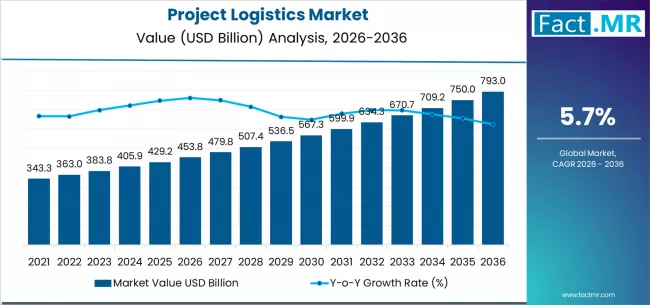
Rising infrastructure investment in Asia Pacific nations, coupled with expanding energy transition projects through wind farm installations and solar plant construction infrastructure, further accelerate market penetration across diverse industrial segments. The growing global emphasis on large-scale industrial developments, particularly in renewable energy installations and infrastructure modernization programs, generates sustained requirements for specialized transportation solutions and complex cargo handling capabilities.
Technical advancements in heavy-lift transportation technologies demonstrating measurable improvements in load capacity, route optimization, and project timeline management reinforce logistics provider confidence in project cargo economics, while energy sector trends toward offshore wind development and modular construction systems expand addressable market opportunities beyond traditional oil and gas applications into renewable infrastructure and industrial manufacturing sectors.
Project Logistics Market
| Metric | Value |
|---|---|
| Market Value (2026) | USD 453.8 billion |
| Market Forecast Value (2036) | USD 793.0 billion |
| Forecast CAGR (2026-2036) | 5.7% |
Category
| Category | Segments |
|---|---|
| Service | Transportation; Inventory Management; Forwarding; Warehousing; Others |
| Transportation Mode | Road; Rail; Air; Sea; Multimodal |
| End-Use Industry | Oil and Gas; Power and Energy; Construction and Infrastructure; Mining; Manufacturing and Heavy Machinery; Aerospace and Defense; Others |
| Region | North America; Europe; Asia Pacific; Latin America; MEA |
Segmental Analysis
What Makes Transportation the Dominant Service Segment in the Project Logistics Market?
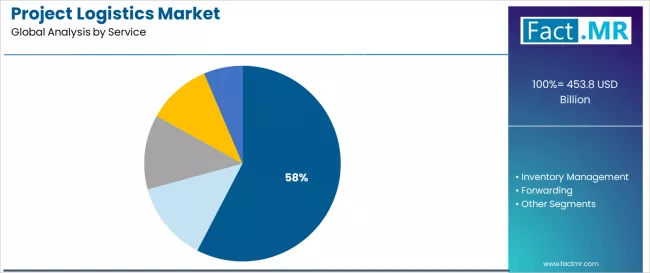
The transportation segment represents the dominant force in the project logistics market, capturing 57.6% of the total market share in 2026. This established service category encompasses solutions featuring critical cargo movement functionality for oversized equipment, heavy machinery, and modular components, including specialized heavy haulage, breakbulk shipping, and multimodal transportation coordination that enable project cargo delivery, on-site positioning, and installation support across all industrial project applications.
Which Transportation Mode Category Leads Market Consumption in the Project Logistics Market?
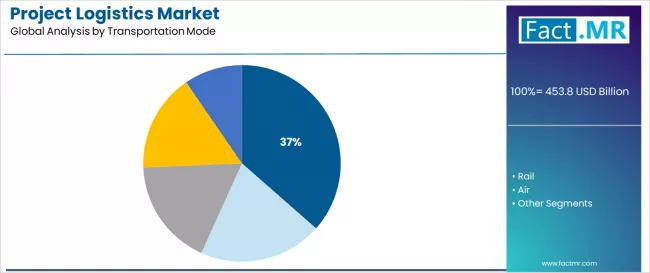
The road segment represents the dominant transportation mode in the project logistics market, capturing approximately 36.5% of the total market share in 2026. This leading mode category encompasses heavy haulage trucks, specialized trailers, and oversize load transportation providing door-to-door delivery capabilities for project cargo across diverse geographical regions.
The road segment's market leadership stems from flexibility advantages, with road transportation offering direct site access and last-mile delivery capabilities essential for project execution across remote locations and construction sites.
Which End-use Industry Category Dominates in the Project Logistics Market?
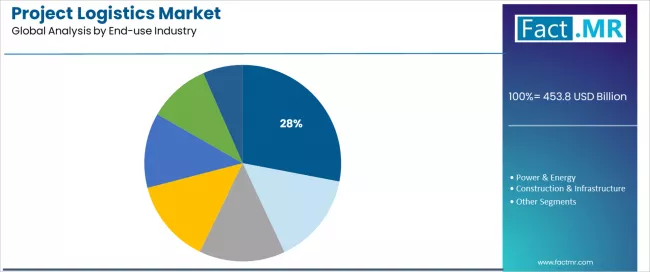
The oil & gas segment represents the dominant end-use industry in the project logistics market, capturing 28.0% of the total market share in 2026. This leading industry category encompasses upstream exploration projects, downstream refinery construction, and petrochemical facility developments requiring specialized transportation for drilling equipment, processing modules, and large-diameter pipelines across diverse project locations.
What are the Drivers, Restraints, and Key Trends of the Project Logistics Market?
The project logistics market is driven by rising global infrastructure investment and development of large-scale projects across transport, industrial, and urban sectors. Rapid expansion of renewable energy installations, particularly onshore and offshore wind projects, is further increasing demand for specialized heavy-lift and oversized cargo logistics. Advancements in heavy transport equipment and route optimization technologies are also improving execution efficiency, cost control, and delivery reliability.
Market restraints include volatility in fuel prices and freight rates, which complicate logistics budgeting and contract planning. Regulatory complexity related to oversized cargo permits, route approvals, and cross-border compliance can delay project timelines and increase administrative costs. Physical infrastructure constraints, such as bridge load limits and road width restrictions, add further challenges to route planning and execution.
Key trends include growing adoption of multimodal logistics solutions that combine road, rail, sea, and inland waterways for complex projects. Increasing use of digital platforms for real-time cargo tracking, predictive scheduling, and permit management is improving coordination, risk mitigation, and transparency. Modular construction approaches and distributed project designs may gradually influence long-term demand patterns.
Analysis of the Project Logistics Market by Key Countries
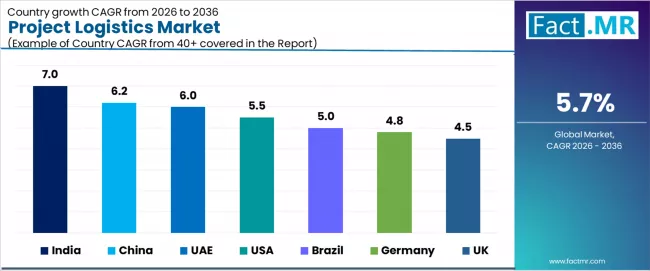
| Country | CAGR (2026-2036) |
|---|---|
| India | 7.0% |
| China | 6.2% |
| UAE | 6.0% |
| USA | 5.5% |
| Brazil | 5.0% |
| Germany | 4.8% |
| UK | 4.5% |
How is India Driving Global Expansion in Project Logistics?
India is emerging as the fastest-growing project logistics market, expanding at a CAGR of 7.0% through 2036, largely because the country is building everything at once. From renewable energy parks and metro rail systems to industrial corridors and ports, the scale of capital projects is forcing developers to rely on specialized project logistics rather than conventional freight. States such as Gujarat, Maharashtra, Tamil Nadu, and Rajasthan are seeing consistent movement of oversized equipment, turbines, reactors, and heavy machinery that require route engineering, multimodal planning, and port-led coordination.
Government programs under the National Infrastructure Pipeline are reinforcing this demand by committing long-term funding to energy and transport assets. As a result, specialized project cargo forwarders, heavy-lift operators, and port-based logistics providers are becoming integral to project execution rather than optional service partners.
Why is China Reinforcing Its Position as an Infrastructure Powerhouse?
China’s project logistics market is growing at a CAGR of 6.2% through 2036, supported by continuous state-led infrastructure development and Belt and Road Initiative execution. Provinces such as Jiangsu, Guangdong, Shandong, and Hebei remain active construction zones where large transport networks, industrial facilities, and renewable energy projects are being developed simultaneously. This density of activity creates sustained demand for heavy transport, modular cargo movement, and coordinated multimodal logistics.
Beyond domestic projects, Belt and Road investments are extending China’s project logistics footprint internationally. At the same time, large-scale wind power installations are increasing demand for turbine transport and specialized lifting services, particularly in coastal and inland energy corridors.
What is Driving Project Logistics Growth in the UAE?
The UAE’s project logistics market is expanding at a CAGR of 6.0% through 2036, driven less by population growth and more by strategic diversification. Industrial zones, energy projects, and logistics-led economic clusters in Abu Dhabi and Dubai are generating steady movement of oversized equipment and prefabricated structures. Ports and free zones play a central role, especially for offshore energy and industrial imports.
As projects become more complex, developers are prioritizing logistics partners that can manage heavy lifts, cross-border coordination, and tight delivery windows. The UAE’s role as a regional logistics hub strengthens its position, particularly for energy and industrial projects serving the wider Middle East.
How is the USA Sustaining Momentum Through Infrastructure Investment?
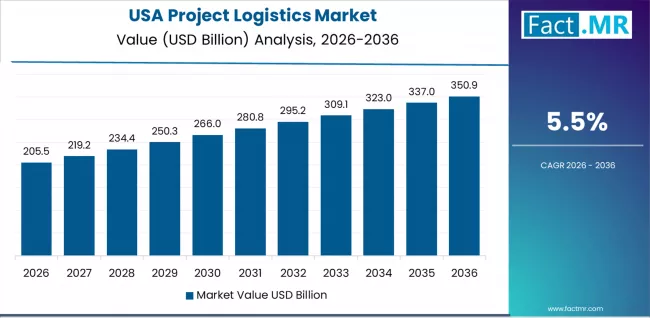
The USA’s project logistics market is growing at a CAGR of 5.5% through 2036, supported by renewed federal infrastructure spending and renewable energy deployment. Wind farms, grid upgrades, LNG facilities, and industrial reshoring initiatives across the Gulf Coast and Midwest are driving demand for specialized cargo handling and route planning.
Unlike greenfield markets, project logistics growth in the US is shaped by regulatory complexity, infrastructure constraints, and sustainability requirements. As a result, demand is strongest for logistics providers capable of managing oversized cargo within dense regulatory environments while reducing emissions and improving execution efficiency.
Why does Brazil Continue to Build Project Logistics Demand?
Brazil’s project logistics market is expanding at a CAGR of 5.0% through 2036, anchored in transport infrastructure upgrades and energy sector investment. Regions such as São Paulo, Rio de Janeiro, and Minas Gerais are seeing steady movement of heavy equipment for power plants, ports, and industrial facilities. Wind energy projects, in particular, are increasing demand for blade and tower transportation across challenging inland routes.
Budget sensitivity remains a factor, which places emphasis on logistics planning that balances cost control with schedule reliability. Multimodal coordination and port connectivity are therefore central to project execution strategies.
How is Germany Anchoring Project Logistics in the Energy Transition?
Germany’s project logistics market is projected to grow at a CAGR of 4.8% through 2036, with demand concentrated around energy transition and industrial modernization projects. Offshore wind installations in the North Sea, hydrogen infrastructure, and industrial decarbonization initiatives are driving the need for precision-heavy logistics and maritime coordination.
Ports, heavy-lift vessels, and inland transport networks are tightly integrated into project planning, reflecting Germany’s emphasis on execution accuracy, safety, and environmental compliance. Sustainability considerations increasingly influence transport modes and logistics design.
What keeps the UK Focused on Large-Scale Project Logistics?
The UK market is growing at a CAGR of 4.5% through 2036, shaped by a relatively small number of very large projects rather than broad-based construction. High-speed rail development, offshore wind farms, and nuclear power projects dominate demand for specialized logistics services.
These projects require coordinated port operations, heavy-lift transport, and strict safety compliance. Established ports and experienced logistics providers allow the UK to manage complex cargo flows, particularly for offshore energy installations in the North Sea.
Competitive Landscape of the Project Logistics Market
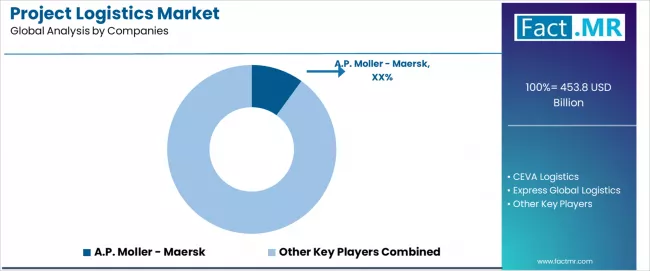
The project logistics market is moderately concentrated, with an estimated 150 to 200 active participants serving large-scale industrial, infrastructure, and energy projects. Competition is driven by execution reliability, heavy-lift capability, multimodal coordination, and global network reach rather than price alone.
A.P. Moller–Maersk, Deutsche Post AG (DHL), and Kuehne+Nagel hold leading positions through extensive global transportation networks, integrated project logistics services, and strong relationships with EPC contractors and project developers. Their capabilities span cargo engineering, heavy-lift handling, multimodal transport, and end-to-end project management, supporting complex industrial and renewable energy projects worldwide.
Challengers such as CEVA Logistics, GEODIS, and C.H. Robinson compete through specialized project teams and strong regional coverage in industrial development markets. Niche providers including Express Global Logistics, Röhlig Logistics, Transworld Group, and EMO Trans differentiate through heavy-lift specialization, regional expertise, and tailored engineering support.
Regional logistics firms intensify competition in markets such as India and China by leveraging local regulatory knowledge and infrastructure familiarity. Overall competitiveness favors providers combining technical engineering expertise, specialized equipment fleets, and digital coordination platforms to ensure reliable project execution.
Key Players in the Project Logistics Market
- A.P. Moller - Maersk
- CEVA Logistics
- Express Global Logistics
- Deutsche Post AG
- GEODIS
- Kuehne+Nagel
- C.H. Robinson Worldwide, Inc.
- Röhlig Logistics GmbH & Co. KG.
- Transworld Group
- EMO Trans
Scope of the Report
| Items | Values |
|---|---|
| Quantitative Units | USD 453.8 Billion |
| Service | Transportation, Inventory Management, Forwarding, Warehousing, Others |
| Transportation Mode | Road, Rail, Air, Sea, Multimodal |
| End-use Industry | Oil & Gas, Power & Energy, Construction & Infrastructure, Mining, Manufacturing & Heavy Machinery, Aerospace & Defense, Others |
| Regions Covered | North America, Europe, Asia Pacific, Latin America, MEA |
| Country Covered | India, China, UAE, USA, Brazil, Germany, UK, and 40+ countries |
| Key Companies Profiled | A.P. Moller - Maersk, CEVA Logistics, Express Global Logistics, Deutsche Post AG, GEODIS, Kuehne+Nagel, C.H. Robinson Worldwide, Inc., Röhlig Logistics GmbH & Co. KG., Transworld Group, EMO Trans |
| Additional Attributes | Dollar sales by service, transportation mode, and end-use industry categories, regional project trends across Asia Pacific, North America, and Europe, competitive landscape with logistics providers and transportation companies, service specifications and handling requirements, integration with industrial project execution and construction coordination systems. |
Project Logistics Market by Segments
-
Service :
- Transportation
- Inventory Management
- Forwarding
- Warehousing
- Others
-
Transportation Mode :
- Road
- Rail
- Air
- Sea
- Multimodal
-
End-use Industry :
- Oil & Gas
- Power & Energy
- Construction & Infrastructure
- Mining
- Manufacturing & Heavy Machinery
- Aerospace & Defense
- Others
-
Region :
- North America
- USA
- Canada
- Mexico
- Europe
- Germany
- Netherlands
- France
- UK
- Spain
- Rest of Europe
- Asia Pacific
- China
- India
- Japan
- South Korea
- Australia & New Zealand
- ASEAN
- Rest of Asia Pacific
- Latin America
- Brazil
- Rest of Latin America
- MEA
- UAE
- Kingdom of Saudi Arabia
- Other GCC Countries
- Turkey
- South Africa
- Rest of MEA
- North America
Table of Content
- Executive Summary
- Global Market Outlook
- Demand to side Trends
- Supply to side Trends
- Technology Roadmap Analysis
- Analysis and Recommendations
- Market Overview
- Market Coverage / Taxonomy
- Market Definition / Scope / Limitations
- Market Background
- Market Dynamics
- Drivers
- Restraints
- Opportunity
- Trends
- Scenario Forecast
- Demand in Optimistic Scenario
- Demand in Likely Scenario
- Demand in Conservative Scenario
- Opportunity Map Analysis
- Product Life Cycle Analysis
- Supply Chain Analysis
- Investment Feasibility Matrix
- Value Chain Analysis
- PESTLE and Porter’s Analysis
- Regulatory Landscape
- Regional Parent Market Outlook
- Production and Consumption Statistics
- Import and Export Statistics
- Market Dynamics
- Global Market Analysis 2021 to 2025 and Forecast, 2026 to 2036
- Historical Market Size Value (USD Million) Analysis, 2021 to 2025
- Current and Future Market Size Value (USD Million) Projections, 2026 to 2036
- Y to o to Y Growth Trend Analysis
- Absolute $ Opportunity Analysis
- Global Market Pricing Analysis 2021 to 2025 and Forecast 2026 to 2036
- Global Market Analysis 2021 to 2025 and Forecast 2026 to 2036, By Service
- Introduction / Key Findings
- Historical Market Size Value (USD Million) Analysis By Service, 2021 to 2025
- Current and Future Market Size Value (USD Million) Analysis and Forecast By Service, 2026 to 2036
- Transportation
- Inventory Management
- Forwarding
- Warehousing
- Others
- Transportation
- Y to o to Y Growth Trend Analysis By Service, 2021 to 2025
- Absolute $ Opportunity Analysis By Service, 2026 to 2036
- Global Market Analysis 2021 to 2025 and Forecast 2026 to 2036, By Transportation Mode
- Introduction / Key Findings
- Historical Market Size Value (USD Million) Analysis By Transportation Mode, 2021 to 2025
- Current and Future Market Size Value (USD Million) Analysis and Forecast By Transportation Mode, 2026 to 2036
- Road
- Rail
- Air
- Sea
- Multimodal
- Road
- Y to o to Y Growth Trend Analysis By Transportation Mode, 2021 to 2025
- Absolute $ Opportunity Analysis By Transportation Mode, 2026 to 2036
- Global Market Analysis 2021 to 2025 and Forecast 2026 to 2036, By End-use Industry
- Introduction / Key Findings
- Historical Market Size Value (USD Million) Analysis By End-use Industry, 2021 to 2025
- Current and Future Market Size Value (USD Million) Analysis and Forecast By End-use Industry, 2026 to 2036
- Oil & Gas
- Power & Energy
- Construction & Infrastructure
- Mining
- Manufacturing & Heavy Machinery
- Aerospace & Defense
- Others
- Oil & Gas
- Y to o to Y Growth Trend Analysis By End-use Industry, 2021 to 2025
- Absolute $ Opportunity Analysis By End-use Industry, 2026 to 2036
- Global Market Analysis 2021 to 2025 and Forecast 2026 to 2036, By Region
- Introduction
- Historical Market Size Value (USD Million) Analysis By Region, 2021 to 2025
- Current Market Size Value (USD Million) Analysis and Forecast By Region, 2026 to 2036
- North America
- Latin America
- Western Europe
- Eastern Europe
- East Asia
- South Asia and Pacific
- Middle East & Africa
- Market Attractiveness Analysis By Region
- North America Market Analysis 2021 to 2025 and Forecast 2026 to 2036, By Country
- Historical Market Size Value (USD Million) Trend Analysis By Market Taxonomy, 2021 to 2025
- Market Size Value (USD Million) Forecast By Market Taxonomy, 2026 to 2036
- By Country
- USA
- Canada
- Mexico
- By Service
- By Transportation Mode
- By End-use Industry
- By Country
- Market Attractiveness Analysis
- By Country
- By Service
- By Transportation Mode
- By End-use Industry
- Key Takeaways
- Latin America Market Analysis 2021 to 2025 and Forecast 2026 to 2036, By Country
- Historical Market Size Value (USD Million) Trend Analysis By Market Taxonomy, 2021 to 2025
- Market Size Value (USD Million) Forecast By Market Taxonomy, 2026 to 2036
- By Country
- Brazil
- Chile
- Rest of Latin America
- By Service
- By Transportation Mode
- By End-use Industry
- By Country
- Market Attractiveness Analysis
- By Country
- By Service
- By Transportation Mode
- By End-use Industry
- Key Takeaways
- Western Europe Market Analysis 2021 to 2025 and Forecast 2026 to 2036, By Country
- Historical Market Size Value (USD Million) Trend Analysis By Market Taxonomy, 2021 to 2025
- Market Size Value (USD Million) Forecast By Market Taxonomy, 2026 to 2036
- By Country
- Germany
- UK
- Italy
- Spain
- France
- Nordic
- BENELUX
- Rest of Western Europe
- By Service
- By Transportation Mode
- By End-use Industry
- By Country
- Market Attractiveness Analysis
- By Country
- By Service
- By Transportation Mode
- By End-use Industry
- Key Takeaways
- Eastern Europe Market Analysis 2021 to 2025 and Forecast 2026 to 2036, By Country
- Historical Market Size Value (USD Million) Trend Analysis By Market Taxonomy, 2021 to 2025
- Market Size Value (USD Million) Forecast By Market Taxonomy, 2026 to 2036
- By Country
- Russia
- Poland
- Hungary
- Balkan & Baltic
- Rest of Eastern Europe
- By Service
- By Transportation Mode
- By End-use Industry
- By Country
- Market Attractiveness Analysis
- By Country
- By Service
- By Transportation Mode
- By End-use Industry
- Key Takeaways
- East Asia Market Analysis 2021 to 2025 and Forecast 2026 to 2036, By Country
- Historical Market Size Value (USD Million) Trend Analysis By Market Taxonomy, 2021 to 2025
- Market Size Value (USD Million) Forecast By Market Taxonomy, 2026 to 2036
- By Country
- China
- Japan
- South Korea
- By Service
- By Transportation Mode
- By End-use Industry
- By Country
- Market Attractiveness Analysis
- By Country
- By Service
- By Transportation Mode
- By End-use Industry
- Key Takeaways
- South Asia and Pacific Market Analysis 2021 to 2025 and Forecast 2026 to 2036, By Country
- Historical Market Size Value (USD Million) Trend Analysis By Market Taxonomy, 2021 to 2025
- Market Size Value (USD Million) Forecast By Market Taxonomy, 2026 to 2036
- By Country
- India
- ASEAN
- Australia & New Zealand
- Rest of South Asia and Pacific
- By Service
- By Transportation Mode
- By End-use Industry
- By Country
- Market Attractiveness Analysis
- By Country
- By Service
- By Transportation Mode
- By End-use Industry
- Key Takeaways
- Middle East & Africa Market Analysis 2021 to 2025 and Forecast 2026 to 2036, By Country
- Historical Market Size Value (USD Million) Trend Analysis By Market Taxonomy, 2021 to 2025
- Market Size Value (USD Million) Forecast By Market Taxonomy, 2026 to 2036
- By Country
- Kingdom of Saudi Arabia
- Other GCC Countries
- Turkiye
- South Africa
- Other African Union
- Rest of Middle East & Africa
- By Service
- By Transportation Mode
- By End-use Industry
- By Country
- Market Attractiveness Analysis
- By Country
- By Service
- By Transportation Mode
- By End-use Industry
- Key Takeaways
- Key Countries Market Analysis
- USA
- Pricing Analysis
- Market Share Analysis, 2025
- By Service
- By Transportation Mode
- By End-use Industry
- Canada
- Pricing Analysis
- Market Share Analysis, 2025
- By Service
- By Transportation Mode
- By End-use Industry
- Mexico
- Pricing Analysis
- Market Share Analysis, 2025
- By Service
- By Transportation Mode
- By End-use Industry
- Brazil
- Pricing Analysis
- Market Share Analysis, 2025
- By Service
- By Transportation Mode
- By End-use Industry
- Chile
- Pricing Analysis
- Market Share Analysis, 2025
- By Service
- By Transportation Mode
- By End-use Industry
- Germany
- Pricing Analysis
- Market Share Analysis, 2025
- By Service
- By Transportation Mode
- By End-use Industry
- UK
- Pricing Analysis
- Market Share Analysis, 2025
- By Service
- By Transportation Mode
- By End-use Industry
- Italy
- Pricing Analysis
- Market Share Analysis, 2025
- By Service
- By Transportation Mode
- By End-use Industry
- Spain
- Pricing Analysis
- Market Share Analysis, 2025
- By Service
- By Transportation Mode
- By End-use Industry
- France
- Pricing Analysis
- Market Share Analysis, 2025
- By Service
- By Transportation Mode
- By End-use Industry
- India
- Pricing Analysis
- Market Share Analysis, 2025
- By Service
- By Transportation Mode
- By End-use Industry
- ASEAN
- Pricing Analysis
- Market Share Analysis, 2025
- By Service
- By Transportation Mode
- By End-use Industry
- Australia & New Zealand
- Pricing Analysis
- Market Share Analysis, 2025
- By Service
- By Transportation Mode
- By End-use Industry
- China
- Pricing Analysis
- Market Share Analysis, 2025
- By Service
- By Transportation Mode
- By End-use Industry
- Japan
- Pricing Analysis
- Market Share Analysis, 2025
- By Service
- By Transportation Mode
- By End-use Industry
- South Korea
- Pricing Analysis
- Market Share Analysis, 2025
- By Service
- By Transportation Mode
- By End-use Industry
- Russia
- Pricing Analysis
- Market Share Analysis, 2025
- By Service
- By Transportation Mode
- By End-use Industry
- Poland
- Pricing Analysis
- Market Share Analysis, 2025
- By Service
- By Transportation Mode
- By End-use Industry
- Hungary
- Pricing Analysis
- Market Share Analysis, 2025
- By Service
- By Transportation Mode
- By End-use Industry
- Kingdom of Saudi Arabia
- Pricing Analysis
- Market Share Analysis, 2025
- By Service
- By Transportation Mode
- By End-use Industry
- Turkiye
- Pricing Analysis
- Market Share Analysis, 2025
- By Service
- By Transportation Mode
- By End-use Industry
- South Africa
- Pricing Analysis
- Market Share Analysis, 2025
- By Service
- By Transportation Mode
- By End-use Industry
- USA
- Market Structure Analysis
- Competition Dashboard
- Competition Benchmarking
- Market Share Analysis of Top Players
- By Regional
- By Service
- By Transportation Mode
- By End-use Industry
- Competition Analysis
- Competition Deep Dive
- A.P. Moller - Maersk
- Overview
- Product Portfolio
- Profitability by Market Segments (Product/Age /Sales Channel/Region)
- Sales Footprint
- Strategy Overview
- Marketing Strategy
- Product Strategy
- Channel Strategy
- CEVA Logistics
- Express Global Logistics
- Deutsche Post AG
- GEODIS
- Kuehne+Nagel
- C.H. Robinson Worldwide, Inc.
- Röhlig Logistics GmbH & Co. KG.
- Transworld Group
- EMO Trans
- A.P. Moller - Maersk
- Competition Deep Dive
- Assumptions & Acronyms Used
- Research Methodology
List Of Table
- Table 1: Global Market Value (USD Million) Forecast by Region, 2021 to 2036
- Table 2: Global Market Value (USD Million) Forecast by Service, 2021 to 2036
- Table 3: Global Market Value (USD Million) Forecast by Transportation Mode, 2021 to 2036
- Table 4: Global Market Value (USD Million) Forecast by End-use Industry, 2021 to 2036
- Table 5: North America Market Value (USD Million) Forecast by Country, 2021 to 2036
- Table 6: North America Market Value (USD Million) Forecast by Service, 2021 to 2036
- Table 7: North America Market Value (USD Million) Forecast by Transportation Mode, 2021 to 2036
- Table 8: North America Market Value (USD Million) Forecast by End-use Industry, 2021 to 2036
- Table 9: Latin America Market Value (USD Million) Forecast by Country, 2021 to 2036
- Table 10: Latin America Market Value (USD Million) Forecast by Service, 2021 to 2036
- Table 11: Latin America Market Value (USD Million) Forecast by Transportation Mode, 2021 to 2036
- Table 12: Latin America Market Value (USD Million) Forecast by End-use Industry, 2021 to 2036
- Table 13: Western Europe Market Value (USD Million) Forecast by Country, 2021 to 2036
- Table 14: Western Europe Market Value (USD Million) Forecast by Service, 2021 to 2036
- Table 15: Western Europe Market Value (USD Million) Forecast by Transportation Mode, 2021 to 2036
- Table 16: Western Europe Market Value (USD Million) Forecast by End-use Industry, 2021 to 2036
- Table 17: Eastern Europe Market Value (USD Million) Forecast by Country, 2021 to 2036
- Table 18: Eastern Europe Market Value (USD Million) Forecast by Service, 2021 to 2036
- Table 19: Eastern Europe Market Value (USD Million) Forecast by Transportation Mode, 2021 to 2036
- Table 20: Eastern Europe Market Value (USD Million) Forecast by End-use Industry, 2021 to 2036
- Table 21: East Asia Market Value (USD Million) Forecast by Country, 2021 to 2036
- Table 22: East Asia Market Value (USD Million) Forecast by Service, 2021 to 2036
- Table 23: East Asia Market Value (USD Million) Forecast by Transportation Mode, 2021 to 2036
- Table 24: East Asia Market Value (USD Million) Forecast by End-use Industry, 2021 to 2036
- Table 25: South Asia and Pacific Market Value (USD Million) Forecast by Country, 2021 to 2036
- Table 26: South Asia and Pacific Market Value (USD Million) Forecast by Service, 2021 to 2036
- Table 27: South Asia and Pacific Market Value (USD Million) Forecast by Transportation Mode, 2021 to 2036
- Table 28: South Asia and Pacific Market Value (USD Million) Forecast by End-use Industry, 2021 to 2036
- Table 29: Middle East & Africa Market Value (USD Million) Forecast by Country, 2021 to 2036
- Table 30: Middle East & Africa Market Value (USD Million) Forecast by Service, 2021 to 2036
- Table 31: Middle East & Africa Market Value (USD Million) Forecast by Transportation Mode, 2021 to 2036
- Table 32: Middle East & Africa Market Value (USD Million) Forecast by End-use Industry, 2021 to 2036
List Of Figures
- Figure 1: Global Market Pricing Analysis
- Figure 2: Global Market Value (USD Million) Forecast 2021 to 2036
- Figure 3: Global Market Value Share and BPS Analysis by Service, 2026 and 2036
- Figure 4: Global Market Y to o to Y Growth Comparison by Service, 2026 to 2036
- Figure 5: Global Market Attractiveness Analysis by Service
- Figure 6: Global Market Value Share and BPS Analysis by Transportation Mode, 2026 and 2036
- Figure 7: Global Market Y to o to Y Growth Comparison by Transportation Mode, 2026 to 2036
- Figure 8: Global Market Attractiveness Analysis by Transportation Mode
- Figure 9: Global Market Value Share and BPS Analysis by End-use Industry, 2026 and 2036
- Figure 10: Global Market Y to o to Y Growth Comparison by End-use Industry, 2026 to 2036
- Figure 11: Global Market Attractiveness Analysis by End-use Industry
- Figure 12: Global Market Value (USD Million) Share and BPS Analysis by Region, 2026 and 2036
- Figure 13: Global Market Y to o to Y Growth Comparison by Region, 2026 to 2036
- Figure 14: Global Market Attractiveness Analysis by Region
- Figure 15: North America Market Incremental Dollar Opportunity, 2026 to 2036
- Figure 16: Latin America Market Incremental Dollar Opportunity, 2026 to 2036
- Figure 17: Western Europe Market Incremental Dollar Opportunity, 2026 to 2036
- Figure 18: Eastern Europe Market Incremental Dollar Opportunity, 2026 to 2036
- Figure 19: East Asia Market Incremental Dollar Opportunity, 2026 to 2036
- Figure 20: South Asia and Pacific Market Incremental Dollar Opportunity, 2026 to 2036
- Figure 21: Middle East & Africa Market Incremental Dollar Opportunity, 2026 to 2036
- Figure 22: North America Market Value Share and BPS Analysis by Country, 2026 and 2036
- Figure 23: North America Market Value Share and BPS Analysis by Service, 2026 and 2036
- Figure 24: North America Market Y to o to Y Growth Comparison by Service, 2026 to 2036
- Figure 25: North America Market Attractiveness Analysis by Service
- Figure 26: North America Market Value Share and BPS Analysis by Transportation Mode, 2026 and 2036
- Figure 27: North America Market Y to o to Y Growth Comparison by Transportation Mode, 2026 to 2036
- Figure 28: North America Market Attractiveness Analysis by Transportation Mode
- Figure 29: North America Market Value Share and BPS Analysis by End-use Industry, 2026 and 2036
- Figure 30: North America Market Y to o to Y Growth Comparison by End-use Industry, 2026 to 2036
- Figure 31: North America Market Attractiveness Analysis by End-use Industry
- Figure 32: Latin America Market Value Share and BPS Analysis by Country, 2026 and 2036
- Figure 33: Latin America Market Value Share and BPS Analysis by Service, 2026 and 2036
- Figure 34: Latin America Market Y to o to Y Growth Comparison by Service, 2026 to 2036
- Figure 35: Latin America Market Attractiveness Analysis by Service
- Figure 36: Latin America Market Value Share and BPS Analysis by Transportation Mode, 2026 and 2036
- Figure 37: Latin America Market Y to o to Y Growth Comparison by Transportation Mode, 2026 to 2036
- Figure 38: Latin America Market Attractiveness Analysis by Transportation Mode
- Figure 39: Latin America Market Value Share and BPS Analysis by End-use Industry, 2026 and 2036
- Figure 40: Latin America Market Y to o to Y Growth Comparison by End-use Industry, 2026 to 2036
- Figure 41: Latin America Market Attractiveness Analysis by End-use Industry
- Figure 42: Western Europe Market Value Share and BPS Analysis by Country, 2026 and 2036
- Figure 43: Western Europe Market Value Share and BPS Analysis by Service, 2026 and 2036
- Figure 44: Western Europe Market Y to o to Y Growth Comparison by Service, 2026 to 2036
- Figure 45: Western Europe Market Attractiveness Analysis by Service
- Figure 46: Western Europe Market Value Share and BPS Analysis by Transportation Mode, 2026 and 2036
- Figure 47: Western Europe Market Y to o to Y Growth Comparison by Transportation Mode, 2026 to 2036
- Figure 48: Western Europe Market Attractiveness Analysis by Transportation Mode
- Figure 49: Western Europe Market Value Share and BPS Analysis by End-use Industry, 2026 and 2036
- Figure 50: Western Europe Market Y to o to Y Growth Comparison by End-use Industry, 2026 to 2036
- Figure 51: Western Europe Market Attractiveness Analysis by End-use Industry
- Figure 52: Eastern Europe Market Value Share and BPS Analysis by Country, 2026 and 2036
- Figure 53: Eastern Europe Market Value Share and BPS Analysis by Service, 2026 and 2036
- Figure 54: Eastern Europe Market Y to o to Y Growth Comparison by Service, 2026 to 2036
- Figure 55: Eastern Europe Market Attractiveness Analysis by Service
- Figure 56: Eastern Europe Market Value Share and BPS Analysis by Transportation Mode, 2026 and 2036
- Figure 57: Eastern Europe Market Y to o to Y Growth Comparison by Transportation Mode, 2026 to 2036
- Figure 58: Eastern Europe Market Attractiveness Analysis by Transportation Mode
- Figure 59: Eastern Europe Market Value Share and BPS Analysis by End-use Industry, 2026 and 2036
- Figure 60: Eastern Europe Market Y to o to Y Growth Comparison by End-use Industry, 2026 to 2036
- Figure 61: Eastern Europe Market Attractiveness Analysis by End-use Industry
- Figure 62: East Asia Market Value Share and BPS Analysis by Country, 2026 and 2036
- Figure 63: East Asia Market Value Share and BPS Analysis by Service, 2026 and 2036
- Figure 64: East Asia Market Y to o to Y Growth Comparison by Service, 2026 to 2036
- Figure 65: East Asia Market Attractiveness Analysis by Service
- Figure 66: East Asia Market Value Share and BPS Analysis by Transportation Mode, 2026 and 2036
- Figure 67: East Asia Market Y to o to Y Growth Comparison by Transportation Mode, 2026 to 2036
- Figure 68: East Asia Market Attractiveness Analysis by Transportation Mode
- Figure 69: East Asia Market Value Share and BPS Analysis by End-use Industry, 2026 and 2036
- Figure 70: East Asia Market Y to o to Y Growth Comparison by End-use Industry, 2026 to 2036
- Figure 71: East Asia Market Attractiveness Analysis by End-use Industry
- Figure 72: South Asia and Pacific Market Value Share and BPS Analysis by Country, 2026 and 2036
- Figure 73: South Asia and Pacific Market Value Share and BPS Analysis by Service, 2026 and 2036
- Figure 74: South Asia and Pacific Market Y to o to Y Growth Comparison by Service, 2026 to 2036
- Figure 75: South Asia and Pacific Market Attractiveness Analysis by Service
- Figure 76: South Asia and Pacific Market Value Share and BPS Analysis by Transportation Mode, 2026 and 2036
- Figure 77: South Asia and Pacific Market Y to o to Y Growth Comparison by Transportation Mode, 2026 to 2036
- Figure 78: South Asia and Pacific Market Attractiveness Analysis by Transportation Mode
- Figure 79: South Asia and Pacific Market Value Share and BPS Analysis by End-use Industry, 2026 and 2036
- Figure 80: South Asia and Pacific Market Y to o to Y Growth Comparison by End-use Industry, 2026 to 2036
- Figure 81: South Asia and Pacific Market Attractiveness Analysis by End-use Industry
- Figure 82: Middle East & Africa Market Value Share and BPS Analysis by Country, 2026 and 2036
- Figure 83: Middle East & Africa Market Value Share and BPS Analysis by Service, 2026 and 2036
- Figure 84: Middle East & Africa Market Y to o to Y Growth Comparison by Service, 2026 to 2036
- Figure 85: Middle East & Africa Market Attractiveness Analysis by Service
- Figure 86: Middle East & Africa Market Value Share and BPS Analysis by Transportation Mode, 2026 and 2036
- Figure 87: Middle East & Africa Market Y to o to Y Growth Comparison by Transportation Mode, 2026 to 2036
- Figure 88: Middle East & Africa Market Attractiveness Analysis by Transportation Mode
- Figure 89: Middle East & Africa Market Value Share and BPS Analysis by End-use Industry, 2026 and 2036
- Figure 90: Middle East & Africa Market Y to o to Y Growth Comparison by End-use Industry, 2026 to 2036
- Figure 91: Middle East & Africa Market Attractiveness Analysis by End-use Industry
- Figure 92: Global Market - Tier Structure Analysis
- Figure 93: Global Market - Company Share Analysis
- FAQs -
How big is the project logistics market in 2026?
The global project logistics market is estimated to be valued at USD 453.8 billion in 2026.
What will be the size of project logistics market in 2036?
The market size for the project logistics market is projected to reach USD 793.0 billion by 2036.
How much will be the project logistics market growth between 2026 and 2036?
The project logistics market is expected to grow at a 5.7% CAGR between 2026 and 2036.
What are the key product types in the project logistics market?
The key product types in project logistics market are transportation, inventory management, forwarding, warehousing and others.
Which transportation mode segment to contribute significant share in the project logistics market in 2026?
In terms of transportation mode, road segment to command 36.5% share in the project logistics market in 2026.