Recycled Material Clean Room Aura Respirators Market

Recycled Material Clean Room Aura Respirators Market Size and Share Forecast Outlook 2026 to 2036

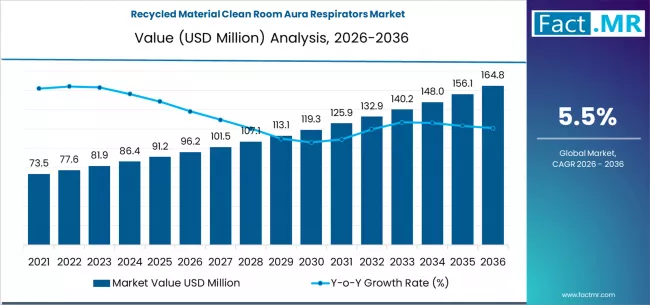
Recycled material clean room aura respirators market is projected to grow from USD 96.2 million in 2026 to USD 164.8 million by 2036, at a CAGR of 5.5%. ISO 7-8 will dominate with a 52.0% market share, while semiconductor fabs will lead the end-use industry segment with a 44.0% share.

Recycled Material Cleanroom Aura Respirators Market Forecast and Outlook 2026 to 2036

The global recycled material cleanroom aura respirators market is projected to grow from USD 96.20 million in 2026 to USD 164.77 million by 2036, progressing at a CAGR of 5.5%. The intersecting pressures of corporate sustainability mandates, extended producer responsibility regulations, fundamentally drive this expansion and the pursuit of circular economy models within high-precision manufacturing sectors.

Key Takeaways from the Recycled Material Cleanroom Aura Respirators Market

  • Market Value for 2026: USD 96.20 Million
  • Market Value for 2036: USD 164.77 Million
  • Forecast CAGR (2026-2036): 5.5%
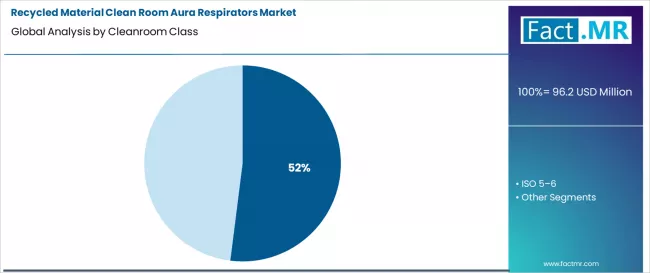
  • Leading Cleanroom Class Segment (2026): ISO 7-8 (52%)
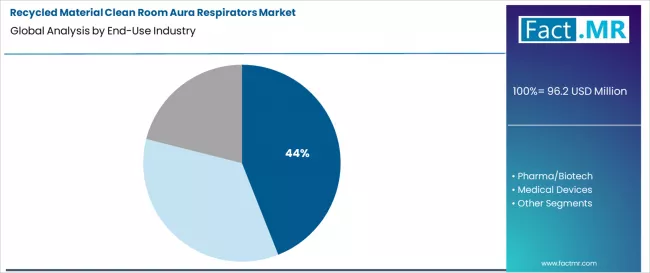
  • Leading End-Use Industry Segment (2026): Semiconductor Fabs (44%)
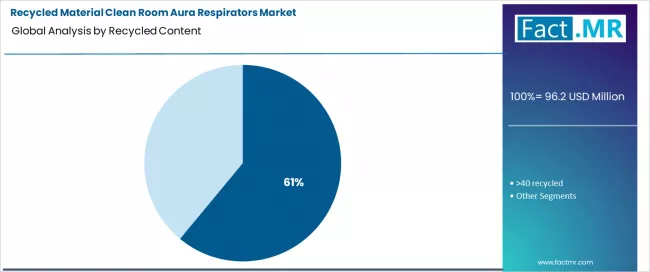
  • Leading Recycled Content Segment (2026): 20-40% Recycled (61%)
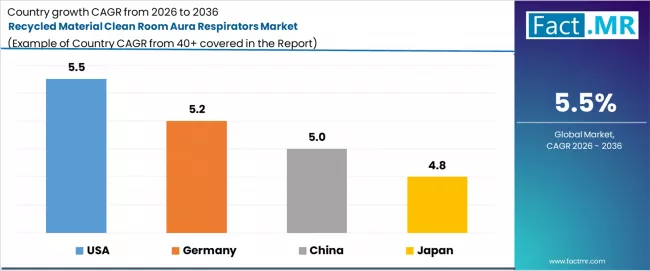
  • Key Growth Countries: USA (5.50% CAGR), Germany (5.20% CAGR), China (5.00% CAGR), Japan (4.80% CAGR)
  • Key Players in the Market: 3M, Honeywell International Inc. (Safety), Dräger, MSA Safety, Alpha Pro Tech, Ansell

Recycled Material Clean Room Aura Respirators Market Market Value Analysis

The market's evolution is marked by a critical technical challenge, which is integrating certified post-consumer or post-industrial recycled content without compromising the stringent purity and performance standards required in controlled environments. Segment dominance is clearly defined, with the ISO 7-8 cleanroom class leading at a 52% share due to its extensive use in electronics and general manufacturing cleanrooms.

The semiconductor fab industry is the primary end-user, accounting for 44% of demand, as chipmakers seek to reduce the environmental footprint of their high-consumption personal protective equipment. In terms of material innovation, respirators with 20-40% recycled content hold a commanding 61% share, representing the current optimal balance between sustainable sourcing and guaranteed safety performance.

Growth is geographically concentrated in advanced industrial nations, with USA (5.50% CAGR), Germany (5.20% CAGR), China (5.00% CAGR), and Japan (4.80% CAGR) serving as key engines. These regions combine robust high-tech manufacturing bases with strong regulatory or corporate governance frameworks that push for greener supply chains, making the adoption of recycled-material respirators a strategic compliance and branding imperative.

Metric

Metric Value
Market Value (2026) USD 96.20 Million
Market Forecast Value (2036) USD 164.77 Million
Forecast CAGR (2026-2036) 5.5%

Category

Category Segments
Cleanroom Class ISO 5-6, ISO 7-8
End-Use Industry Semiconductor Fabs, Pharma/Biotech, Medical Devices, Others
Recycled Content 20-40% Recycled, >40% Recycled
Region North America, Latin America, Western Europe, Eastern Europe, East Asia, South Asia & Pacific, MEA

Segmental Analysis

By Cleanroom Class, Which Segment Dominates Due to Broader Application Scope and Cost Sensitivity?

Recycled Material Clean Room Aura Respirators Market Analysis By Cleanroom Class

The ISO 7-8 segment commands a dominant 52% market share. This leadership is attributed to its extensive application across a wider range of industrial and electronic manufacturing environments, where controlled contamination is necessary but the ultra-stringent requirements of ISO 5-6 cleanrooms are not.

The significant cost sensitivity in these high-volume settings makes the adoption of recycled-material respirators particularly compelling, as the potential for material cost savings and waste reduction aligns with operational efficiency goals. This segment represents the most accessible entry point for sustainable personal protective equipment innovation, balancing performance requirements with broader corporate sustainability mandates.

By End-Use Industry, Which Sector Drives Volume Demand and Technical Innovation?

Recycled Material Clean Room Aura Respirators Market Analysis By End Use Industry

Semiconductor fabrication plants are the leading end-use segment, accounting for 44% of the market. Its immense scale of respirator consumption, extremely rigorous purity protocols, drives this industry’s dominance and industry-leading public commitments to net-zero operations and circular supply chains.

Semiconductor manufacturers are under intense pressure to minimize their environmental footprint, making the high-volume switch to certified recycled-content respirators a high-impact sustainability initiative. The sector’s demand is pushing technical innovation for materials that meet particle emission standards while incorporating post-industrial recycled content from controlled waste streams, setting the performance benchmark for the entire market.

By Recycled Content, Which Range Offers the Optimal Balance for Current Adoption?

Recycled Material Clean Room Aura Respirators Market Analysis By Recycled Content

Respirators with 20-40% recycled content hold the largest share, at 61%. This range currently represents the optimal balance between achieving meaningful environmental progress and ensuring uncompromised material performance and supply chain reliability. Integrating recycled polymer at this level allows manufacturers to meet initial corporate and regulatory recycled-content thresholds without overextending the current capabilities of recycling and purification technologies for high-purity applications.

It mitigates perceived performance risks, simplifies the certification process for cleanroom compatibility, and provides a pragmatic, scalable pathway for manufacturers to begin the transition toward circular product designs while maintaining trust in critical safety equipment.

What are the Drivers, Restraints, Opportunities, and Trends Influencing the Recycled Material Clean Room Aura Respirators Market?

Metric Description
Drivers Corporate sustainability mandates and global extended producer responsibility regulations are creating compulsory demand. The high volume of disposable respirators used in cleanrooms presents a clear target for waste reduction.
Restraints Stringent purity requirements create technical barriers to using recycled resins, while complex certifications and higher upfront costs hinder adoption. Concerns about performance liability persist among safety managers.
Opportunities Innovation lies in developing closed-loop recycling for certified feedstock and creating differentiated, vertically tailored products supported by verified lifecycle data.
Trends The market is shifting towards rigorously audited certifications, the adoption of circular take-back service models, and the integration of recycled content thresholds into formal procurement specifications.

Analysis of the Recycled Material Cleanroom Aura Respirators Market by Key Countries

Recycled Material Clean Room Aura Respirators Market Cagr Analysis By Country

Country CAGR (2026-2036)
USA 5.50%
Germany 5.20%
China 5.00%
Japan 4.80%

How are USA’s Corporate Sustainability Goals and Semiconductor Leadership Influencing Demand?

Recycled Material Clean Room Aura Respirators Market Country Value Analysis

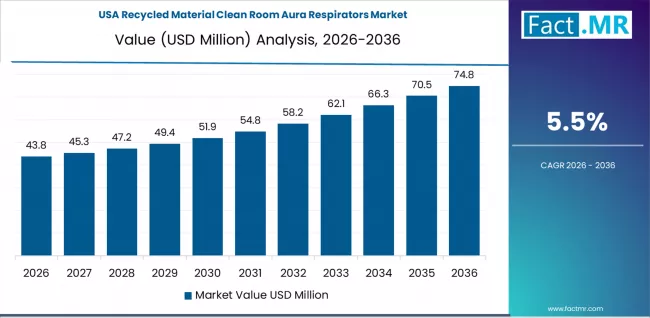
USA leads the market growth, driven by ambitious corporate sustainability mandates from its world-leading semiconductor and biotechnology firms. These companies are integrating stringent environmental criteria into their supplier codes of conduct, pushing personal protective equipment vendors to develop compliant solutions.

The presence of rigorous Occupational Safety and Health Administration standards alongside voluntary corporate environmental initiatives creates a powerful demand signal for high-performance respirators containing certified recycled content, particularly within ISO Class 7-8 cleanrooms prevalent in electronics manufacturing.

What is the Role of Germany's Stringent Regulatory Environment and Engineering Excellence?

A robust regulatory framework for both worker safety and packaging waste, coupled with a strong advanced manufacturing base, underpins Germany’s growth. The German Packaging Act and extended producer responsibility principles pressure manufacturers to consider product end-of-life.

German engineering and chemical companies are at the forefront of developing high-purity recycled polymers suitable for critical applications. Demand is focused on products that demonstrably meet Deutsche Institut für Normung standards and can be integrated into the country's efficient waste management and recycling infrastructure without compromising safety.

Why is China's Manufacturing Scale and Policy Direction a Critical Factor?

The massive scale of electronics and pharmaceutical manufacturing, combined with top-down policy directives promoting a circular economy, fuels China’s market expansion. Government targets for sustainable industrial practices are filtering down to large factory complexes, creating volume demand for greener consumables.

The focus is on cost-effective solutions that meet both Chinese GB standards and international export requirements. Domestic innovation is aimed at securing reliable supply chains for qualified recycled resins to serve this vast production base, making scalability a key competitive factor.

How is Japan's Focus on Precision and Resource Efficiency Shaping Adoption?

Japan's market is characterized by its relentless focus on precision, quality, and resource efficiency within its high-tech industries. The concept of mottainai, or avoiding waste, aligns with corporate efforts to minimize resource use in ultra-clean manufacturing environments.

Japanese manufacturers seek respirators that offer impeccable performance with minimal particle emission, even when incorporating recycled materials. Adoption is careful and methodical, driven by partnerships between respirator manufacturers and leading electronics firms to co-develop and certify products that meet Japan's exacting internal factory standards.

Competitive Landscape

The competitive landscape features established safety equipment giants competing with specialized cleanroom suppliers, all navigating the new paradigm of sustainable materials. Success requires a multi-pronged strategy focused on material science, certification, and deep customer collaboration.

Leaders must invest in proprietary recycling and purification technologies to produce consistent, high-grade recycled polymers that meet or exceed virgin material performance in key metrics like low particle shedding. Forming strategic partnerships with recyclers of engineering plastics is essential to secure clean, traceable feedstock.

Achieving and maintaining relevant certifications is a critical market entry ticket. Companies must validate that their recycled-content respirators comply with international safety standards and are suitable for use in specific cleanroom classes. Engaging directly with the sustainability and procurement offices of major semiconductor and pharmaceutical firms is crucial.

This involves co-developing product specifications, participating in pilot programs, and providing comprehensive lifecycle data to support customers’ environmental reporting. Beyond the product, offering a full circular service including take-back and recycling of used equipment can create a significant competitive moat and build long-term customer loyalty in a market transitioning from transaction to solution-based relationships.

Key Players in the Recycled Material Cleanroom Aura Respirators Market

  • 3M
  • Honeywell International Inc. (Safety)
  • Dräger
  • MSA Safety
  • Alpha Pro Tech
  • Ansell

Scope of Report

Items Values
Quantitative Units USD Million
Cleanroom Class ISO 5-6, ISO 7-8
End-Use Industry Semiconductor Fabs, Pharma/Biotech, Medical Devices, Others
Recycled Content 20-40% Recycled, >40% Recycled
Key Countries USA, Germany, China, Japan
Key Companies 3M, Honeywell International Inc. (Safety), Dräger, MSA Safety, Alpha Pro Tech, Ansell
Additional Analysis Comparative lifecycle assessment of recycled-content vs. virgin material respirators; analysis of particle emission and filtration performance over product lifespan; supply chain analysis for certified post-industrial recycled polymers; review of cleanroom safety standards and certification bodies globally; cost-benefit analysis for end-users including waste disposal savings; study of end-user perception and adoption barriers in regulated industries.

Market by Segments

  • Cleanroom Class :

    • ISO 5-6
    • ISO 7-8
  • End-Use Industry :

    • Semiconductor Fabs
    • Pharma/Biotech
    • Medical Devices
    • Others
  • Recycled Content :

    • 20-40% Recycled
    • 40% Recycled
  • Region :

    • North America
      • USA
      • Canada
    • Latin America
      • Brazil
      • Mexico
      • Argentina
      • Rest of Latin America
    • Western Europe
      • Germany
      • UK
      • France
      • Italy
      • BENLUX
      • Spain
      • Rest of Western Europe
    • Eastern Europe
      • Poland
      • Russia
      • Czech Republic
      • Rest of Eastern Europe
    • East Asia
      • China
      • Japan
      • South Korea
      • Rest of East Asia
    • South Asia & Pacific
      • India
      • ASEAN
      • Australia
      • Rest of South Asia & Pacific
    • MEA
      • South Africa
      • GCC Countries
      • Turkiye
      • Rest of MEA

References

  • Ellen MacArthur Foundation. (2023). Completing the picture: How the circular economy tackles climate change.
  • International Organization for Standardization. (2024). ISO 14644-1:2024 Cleanrooms and associated controlled environments.
  • Jiang, H., & Chen, Z. (2023). Sustainable materials in high-tech manufacturing: Challenges and opportunities. Journal of Cleaner Production.
  • Smith, R. A., & Davies, B. (2024). Occupational respiratory protection and sustainability: A review of emerging trends. Journal of Occupational and Environmental Hygiene.
  • United Nations Environment Programme. (2023). Guidelines for sustainable procurement in industrial sectors.
  • World Health Organization. (2023). WHO guidelines for indoor air quality: Protecting worker health in specialized environments.
  • Zhao, L., & Fischer, T. (2023). Recycling engineering plastics for high-purity applications: Technological pathways. Resources, Conservation and Recycling.

Table of Content

  1. Executive Summary
    • Global Market Outlook
    • Demand to side Trends
    • Supply to side Trends
    • Technology Roadmap Analysis
    • Analysis and Recommendations
  2. Market Overview
    • Market Coverage / Taxonomy
    • Market Definition / Scope / Limitations
  3. Market Background
    • Market Dynamics
      • Drivers
      • Restraints
      • Opportunity
      • Trends
    • Scenario Forecast
      • Demand in Optimistic Scenario
      • Demand in Likely Scenario
      • Demand in Conservative Scenario
    • Opportunity Map Analysis
    • Product Life Cycle Analysis
    • Supply Chain Analysis
    • Investment Feasibility Matrix
    • Value Chain Analysis
    • PESTLE and Porter’s Analysis
    • Regulatory Landscape
    • Regional Parent Market Outlook
    • Production and Consumption Statistics
    • Import and Export Statistics
  4. Global Market Analysis 2021 to 2025 and Forecast, 2026 to 2036
    • Historical Market Size Value (USD Million) Analysis, 2021 to 2025
    • Current and Future Market Size Value (USD Million) Projections, 2026 to 2036
      • Y to o to Y Growth Trend Analysis
      • Absolute $ Opportunity Analysis
  5. Global Market Pricing Analysis 2021 to 2025 and Forecast 2026 to 2036
  6. Global Market Analysis 2021 to 2025 and Forecast 2026 to 2036, By Cleanroom Class
    • Introduction / Key Findings
    • Historical Market Size Value (USD Million) Analysis By Cleanroom Class, 2021 to 2025
    • Current and Future Market Size Value (USD Million) Analysis and Forecast By Cleanroom Class, 2026 to 2036
      • ISO 7-8
      • ISO 5-6
    • Y to o to Y Growth Trend Analysis By Cleanroom Class, 2021 to 2025
    • Absolute $ Opportunity Analysis By Cleanroom Class, 2026 to 2036
  7. Global Market Analysis 2021 to 2025 and Forecast 2026 to 2036, By End-Use Industry
    • Introduction / Key Findings
    • Historical Market Size Value (USD Million) Analysis By End-Use Industry, 2021 to 2025
    • Current and Future Market Size Value (USD Million) Analysis and Forecast By End-Use Industry, 2026 to 2036
      • Semiconductor Fabs
      • Pharma/Biotech
      • Medical Devices
    • Y to o to Y Growth Trend Analysis By End-Use Industry, 2021 to 2025
    • Absolute $ Opportunity Analysis By End-Use Industry, 2026 to 2036
  8. Global Market Analysis 2021 to 2025 and Forecast 2026 to 2036, By Recycled Content
    • Introduction / Key Findings
    • Historical Market Size Value (USD Million) Analysis By Recycled Content, 2021 to 2025
    • Current and Future Market Size Value (USD Million) Analysis and Forecast By Recycled Content, 2026 to 2036
      • 20-40 recycled
      • >40 recycled
    • Y to o to Y Growth Trend Analysis By Recycled Content, 2021 to 2025
    • Absolute $ Opportunity Analysis By Recycled Content, 2026 to 2036
  9. Global Market Analysis 2021 to 2025 and Forecast 2026 to 2036, By Region
    • Introduction
    • Historical Market Size Value (USD Million) Analysis By Region, 2021 to 2025
    • Current Market Size Value (USD Million) Analysis and Forecast By Region, 2026 to 2036
      • North America
      • Latin America
      • Western Europe
      • Eastern Europe
      • East Asia
      • South Asia and Pacific
      • Middle East & Africa
    • Market Attractiveness Analysis By Region
  10. North America Market Analysis 2021 to 2025 and Forecast 2026 to 2036, By Country
    • Historical Market Size Value (USD Million) Trend Analysis By Market Taxonomy, 2021 to 2025
    • Market Size Value (USD Million) Forecast By Market Taxonomy, 2026 to 2036
      • By Country
        • USA
        • Canada
        • Mexico
      • By Cleanroom Class
      • By End-Use Industry
      • By Recycled Content
    • Market Attractiveness Analysis
      • By Country
      • By Cleanroom Class
      • By End-Use Industry
      • By Recycled Content
    • Key Takeaways
  11. Latin America Market Analysis 2021 to 2025 and Forecast 2026 to 2036, By Country
    • Historical Market Size Value (USD Million) Trend Analysis By Market Taxonomy, 2021 to 2025
    • Market Size Value (USD Million) Forecast By Market Taxonomy, 2026 to 2036
      • By Country
        • Brazil
        • Chile
        • Rest of Latin America
      • By Cleanroom Class
      • By End-Use Industry
      • By Recycled Content
    • Market Attractiveness Analysis
      • By Country
      • By Cleanroom Class
      • By End-Use Industry
      • By Recycled Content
    • Key Takeaways
  12. Western Europe Market Analysis 2021 to 2025 and Forecast 2026 to 2036, By Country
    • Historical Market Size Value (USD Million) Trend Analysis By Market Taxonomy, 2021 to 2025
    • Market Size Value (USD Million) Forecast By Market Taxonomy, 2026 to 2036
      • By Country
        • Germany
        • UK
        • Italy
        • Spain
        • France
        • Nordic
        • BENELUX
        • Rest of Western Europe
      • By Cleanroom Class
      • By End-Use Industry
      • By Recycled Content
    • Market Attractiveness Analysis
      • By Country
      • By Cleanroom Class
      • By End-Use Industry
      • By Recycled Content
    • Key Takeaways
  13. Eastern Europe Market Analysis 2021 to 2025 and Forecast 2026 to 2036, By Country
    • Historical Market Size Value (USD Million) Trend Analysis By Market Taxonomy, 2021 to 2025
    • Market Size Value (USD Million) Forecast By Market Taxonomy, 2026 to 2036
      • By Country
        • Russia
        • Poland
        • Hungary
        • Balkan & Baltic
        • Rest of Eastern Europe
      • By Cleanroom Class
      • By End-Use Industry
      • By Recycled Content
    • Market Attractiveness Analysis
      • By Country
      • By Cleanroom Class
      • By End-Use Industry
      • By Recycled Content
    • Key Takeaways
  14. East Asia Market Analysis 2021 to 2025 and Forecast 2026 to 2036, By Country
    • Historical Market Size Value (USD Million) Trend Analysis By Market Taxonomy, 2021 to 2025
    • Market Size Value (USD Million) Forecast By Market Taxonomy, 2026 to 2036
      • By Country
        • China
        • Japan
        • South Korea
      • By Cleanroom Class
      • By End-Use Industry
      • By Recycled Content
    • Market Attractiveness Analysis
      • By Country
      • By Cleanroom Class
      • By End-Use Industry
      • By Recycled Content
    • Key Takeaways
  15. South Asia and Pacific Market Analysis 2021 to 2025 and Forecast 2026 to 2036, By Country
    • Historical Market Size Value (USD Million) Trend Analysis By Market Taxonomy, 2021 to 2025
    • Market Size Value (USD Million) Forecast By Market Taxonomy, 2026 to 2036
      • By Country
        • India
        • ASEAN
        • Australia & New Zealand
        • Rest of South Asia and Pacific
      • By Cleanroom Class
      • By End-Use Industry
      • By Recycled Content
    • Market Attractiveness Analysis
      • By Country
      • By Cleanroom Class
      • By End-Use Industry
      • By Recycled Content
    • Key Takeaways
  16. Middle East & Africa Market Analysis 2021 to 2025 and Forecast 2026 to 2036, By Country
    • Historical Market Size Value (USD Million) Trend Analysis By Market Taxonomy, 2021 to 2025
    • Market Size Value (USD Million) Forecast By Market Taxonomy, 2026 to 2036
      • By Country
        • Kingdom of Saudi Arabia
        • Other GCC Countries
        • Turkiye
        • South Africa
        • Other African Union
        • Rest of Middle East & Africa
      • By Cleanroom Class
      • By End-Use Industry
      • By Recycled Content
    • Market Attractiveness Analysis
      • By Country
      • By Cleanroom Class
      • By End-Use Industry
      • By Recycled Content
    • Key Takeaways
  17. Key Countries Market Analysis
    • USA
      • Pricing Analysis
      • Market Share Analysis, 2025
        • By Cleanroom Class
        • By End-Use Industry
        • By Recycled Content
    • Canada
      • Pricing Analysis
      • Market Share Analysis, 2025
        • By Cleanroom Class
        • By End-Use Industry
        • By Recycled Content
    • Mexico
      • Pricing Analysis
      • Market Share Analysis, 2025
        • By Cleanroom Class
        • By End-Use Industry
        • By Recycled Content
    • Brazil
      • Pricing Analysis
      • Market Share Analysis, 2025
        • By Cleanroom Class
        • By End-Use Industry
        • By Recycled Content
    • Chile
      • Pricing Analysis
      • Market Share Analysis, 2025
        • By Cleanroom Class
        • By End-Use Industry
        • By Recycled Content
    • Germany
      • Pricing Analysis
      • Market Share Analysis, 2025
        • By Cleanroom Class
        • By End-Use Industry
        • By Recycled Content
    • UK
      • Pricing Analysis
      • Market Share Analysis, 2025
        • By Cleanroom Class
        • By End-Use Industry
        • By Recycled Content
    • Italy
      • Pricing Analysis
      • Market Share Analysis, 2025
        • By Cleanroom Class
        • By End-Use Industry
        • By Recycled Content
    • Spain
      • Pricing Analysis
      • Market Share Analysis, 2025
        • By Cleanroom Class
        • By End-Use Industry
        • By Recycled Content
    • France
      • Pricing Analysis
      • Market Share Analysis, 2025
        • By Cleanroom Class
        • By End-Use Industry
        • By Recycled Content
    • India
      • Pricing Analysis
      • Market Share Analysis, 2025
        • By Cleanroom Class
        • By End-Use Industry
        • By Recycled Content
    • ASEAN
      • Pricing Analysis
      • Market Share Analysis, 2025
        • By Cleanroom Class
        • By End-Use Industry
        • By Recycled Content
    • Australia & New Zealand
      • Pricing Analysis
      • Market Share Analysis, 2025
        • By Cleanroom Class
        • By End-Use Industry
        • By Recycled Content
    • China
      • Pricing Analysis
      • Market Share Analysis, 2025
        • By Cleanroom Class
        • By End-Use Industry
        • By Recycled Content
    • Japan
      • Pricing Analysis
      • Market Share Analysis, 2025
        • By Cleanroom Class
        • By End-Use Industry
        • By Recycled Content
    • South Korea
      • Pricing Analysis
      • Market Share Analysis, 2025
        • By Cleanroom Class
        • By End-Use Industry
        • By Recycled Content
    • Russia
      • Pricing Analysis
      • Market Share Analysis, 2025
        • By Cleanroom Class
        • By End-Use Industry
        • By Recycled Content
    • Poland
      • Pricing Analysis
      • Market Share Analysis, 2025
        • By Cleanroom Class
        • By End-Use Industry
        • By Recycled Content
    • Hungary
      • Pricing Analysis
      • Market Share Analysis, 2025
        • By Cleanroom Class
        • By End-Use Industry
        • By Recycled Content
    • Kingdom of Saudi Arabia
      • Pricing Analysis
      • Market Share Analysis, 2025
        • By Cleanroom Class
        • By End-Use Industry
        • By Recycled Content
    • Turkiye
      • Pricing Analysis
      • Market Share Analysis, 2025
        • By Cleanroom Class
        • By End-Use Industry
        • By Recycled Content
    • South Africa
      • Pricing Analysis
      • Market Share Analysis, 2025
        • By Cleanroom Class
        • By End-Use Industry
        • By Recycled Content
  18. Market Structure Analysis
    • Competition Dashboard
    • Competition Benchmarking
    • Market Share Analysis of Top Players
      • By Regional
      • By Cleanroom Class
      • By End-Use Industry
      • By Recycled Content
  19. Competition Analysis
    • Competition Deep Dive
      • 3M
        • Overview
        • Product Portfolio
        • Profitability by Market Segments (Product/Age /Sales Channel/Region)
        • Sales Footprint
        • Strategy Overview
          • Marketing Strategy
          • Product Strategy
          • Channel Strategy
      • Honeywell International Inc. (Safety)
      • Dräger
      • MSA Safety
      • Alpha Pro Tech
      • Ansell
  20. Assumptions & Acronyms Used
  21. Research Methodology

List Of Table

  • Table 1: Global Market Value (USD Million) Forecast by Region, 2021 to 2036
  • Table 2: Global Market Value (USD Million) Forecast by Cleanroom Class, 2021 to 2036
  • Table 3: Global Market Value (USD Million) Forecast by End-Use Industry, 2021 to 2036
  • Table 4: Global Market Value (USD Million) Forecast by Recycled Content, 2021 to 2036
  • Table 5: North America Market Value (USD Million) Forecast by Country, 2021 to 2036
  • Table 6: North America Market Value (USD Million) Forecast by Cleanroom Class, 2021 to 2036
  • Table 7: North America Market Value (USD Million) Forecast by End-Use Industry, 2021 to 2036
  • Table 8: North America Market Value (USD Million) Forecast by Recycled Content, 2021 to 2036
  • Table 9: Latin America Market Value (USD Million) Forecast by Country, 2021 to 2036
  • Table 10: Latin America Market Value (USD Million) Forecast by Cleanroom Class, 2021 to 2036
  • Table 11: Latin America Market Value (USD Million) Forecast by End-Use Industry, 2021 to 2036
  • Table 12: Latin America Market Value (USD Million) Forecast by Recycled Content, 2021 to 2036
  • Table 13: Western Europe Market Value (USD Million) Forecast by Country, 2021 to 2036
  • Table 14: Western Europe Market Value (USD Million) Forecast by Cleanroom Class, 2021 to 2036
  • Table 15: Western Europe Market Value (USD Million) Forecast by End-Use Industry, 2021 to 2036
  • Table 16: Western Europe Market Value (USD Million) Forecast by Recycled Content, 2021 to 2036
  • Table 17: Eastern Europe Market Value (USD Million) Forecast by Country, 2021 to 2036
  • Table 18: Eastern Europe Market Value (USD Million) Forecast by Cleanroom Class, 2021 to 2036
  • Table 19: Eastern Europe Market Value (USD Million) Forecast by End-Use Industry, 2021 to 2036
  • Table 20: Eastern Europe Market Value (USD Million) Forecast by Recycled Content, 2021 to 2036
  • Table 21: East Asia Market Value (USD Million) Forecast by Country, 2021 to 2036
  • Table 22: East Asia Market Value (USD Million) Forecast by Cleanroom Class, 2021 to 2036
  • Table 23: East Asia Market Value (USD Million) Forecast by End-Use Industry, 2021 to 2036
  • Table 24: East Asia Market Value (USD Million) Forecast by Recycled Content, 2021 to 2036
  • Table 25: South Asia and Pacific Market Value (USD Million) Forecast by Country, 2021 to 2036
  • Table 26: South Asia and Pacific Market Value (USD Million) Forecast by Cleanroom Class, 2021 to 2036
  • Table 27: South Asia and Pacific Market Value (USD Million) Forecast by End-Use Industry, 2021 to 2036
  • Table 28: South Asia and Pacific Market Value (USD Million) Forecast by Recycled Content, 2021 to 2036
  • Table 29: Middle East & Africa Market Value (USD Million) Forecast by Country, 2021 to 2036
  • Table 30: Middle East & Africa Market Value (USD Million) Forecast by Cleanroom Class, 2021 to 2036
  • Table 31: Middle East & Africa Market Value (USD Million) Forecast by End-Use Industry, 2021 to 2036
  • Table 32: Middle East & Africa Market Value (USD Million) Forecast by Recycled Content, 2021 to 2036

List Of Figures

  • Figure 1: Global Market Pricing Analysis
  • Figure 2: Global Market Value (USD Million) Forecast 2021 to 2036
  • Figure 3: Global Market Value Share and BPS Analysis by Cleanroom Class, 2026 and 2036
  • Figure 4: Global Market Y to o to Y Growth Comparison by Cleanroom Class, 2026 to 2036
  • Figure 5: Global Market Attractiveness Analysis by Cleanroom Class
  • Figure 6: Global Market Value Share and BPS Analysis by End-Use Industry, 2026 and 2036
  • Figure 7: Global Market Y to o to Y Growth Comparison by End-Use Industry, 2026 to 2036
  • Figure 8: Global Market Attractiveness Analysis by End-Use Industry
  • Figure 9: Global Market Value Share and BPS Analysis by Recycled Content, 2026 and 2036
  • Figure 10: Global Market Y to o to Y Growth Comparison by Recycled Content, 2026 to 2036
  • Figure 11: Global Market Attractiveness Analysis by Recycled Content
  • Figure 12: Global Market Value (USD Million) Share and BPS Analysis by Region, 2026 and 2036
  • Figure 13: Global Market Y to o to Y Growth Comparison by Region, 2026 to 2036
  • Figure 14: Global Market Attractiveness Analysis by Region
  • Figure 15: North America Market Incremental Dollar Opportunity, 2026 to 2036
  • Figure 16: Latin America Market Incremental Dollar Opportunity, 2026 to 2036
  • Figure 17: Western Europe Market Incremental Dollar Opportunity, 2026 to 2036
  • Figure 18: Eastern Europe Market Incremental Dollar Opportunity, 2026 to 2036
  • Figure 19: East Asia Market Incremental Dollar Opportunity, 2026 to 2036
  • Figure 20: South Asia and Pacific Market Incremental Dollar Opportunity, 2026 to 2036
  • Figure 21: Middle East & Africa Market Incremental Dollar Opportunity, 2026 to 2036
  • Figure 22: North America Market Value Share and BPS Analysis by Country, 2026 and 2036
  • Figure 23: North America Market Value Share and BPS Analysis by Cleanroom Class, 2026 and 2036
  • Figure 24: North America Market Y to o to Y Growth Comparison by Cleanroom Class, 2026 to 2036
  • Figure 25: North America Market Attractiveness Analysis by Cleanroom Class
  • Figure 26: North America Market Value Share and BPS Analysis by End-Use Industry, 2026 and 2036
  • Figure 27: North America Market Y to o to Y Growth Comparison by End-Use Industry, 2026 to 2036
  • Figure 28: North America Market Attractiveness Analysis by End-Use Industry
  • Figure 29: North America Market Value Share and BPS Analysis by Recycled Content, 2026 and 2036
  • Figure 30: North America Market Y to o to Y Growth Comparison by Recycled Content, 2026 to 2036
  • Figure 31: North America Market Attractiveness Analysis by Recycled Content
  • Figure 32: Latin America Market Value Share and BPS Analysis by Country, 2026 and 2036
  • Figure 33: Latin America Market Value Share and BPS Analysis by Cleanroom Class, 2026 and 2036
  • Figure 34: Latin America Market Y to o to Y Growth Comparison by Cleanroom Class, 2026 to 2036
  • Figure 35: Latin America Market Attractiveness Analysis by Cleanroom Class
  • Figure 36: Latin America Market Value Share and BPS Analysis by End-Use Industry, 2026 and 2036
  • Figure 37: Latin America Market Y to o to Y Growth Comparison by End-Use Industry, 2026 to 2036
  • Figure 38: Latin America Market Attractiveness Analysis by End-Use Industry
  • Figure 39: Latin America Market Value Share and BPS Analysis by Recycled Content, 2026 and 2036
  • Figure 40: Latin America Market Y to o to Y Growth Comparison by Recycled Content, 2026 to 2036
  • Figure 41: Latin America Market Attractiveness Analysis by Recycled Content
  • Figure 42: Western Europe Market Value Share and BPS Analysis by Country, 2026 and 2036
  • Figure 43: Western Europe Market Value Share and BPS Analysis by Cleanroom Class, 2026 and 2036
  • Figure 44: Western Europe Market Y to o to Y Growth Comparison by Cleanroom Class, 2026 to 2036
  • Figure 45: Western Europe Market Attractiveness Analysis by Cleanroom Class
  • Figure 46: Western Europe Market Value Share and BPS Analysis by End-Use Industry, 2026 and 2036
  • Figure 47: Western Europe Market Y to o to Y Growth Comparison by End-Use Industry, 2026 to 2036
  • Figure 48: Western Europe Market Attractiveness Analysis by End-Use Industry
  • Figure 49: Western Europe Market Value Share and BPS Analysis by Recycled Content, 2026 and 2036
  • Figure 50: Western Europe Market Y to o to Y Growth Comparison by Recycled Content, 2026 to 2036
  • Figure 51: Western Europe Market Attractiveness Analysis by Recycled Content
  • Figure 52: Eastern Europe Market Value Share and BPS Analysis by Country, 2026 and 2036
  • Figure 53: Eastern Europe Market Value Share and BPS Analysis by Cleanroom Class, 2026 and 2036
  • Figure 54: Eastern Europe Market Y to o to Y Growth Comparison by Cleanroom Class, 2026 to 2036
  • Figure 55: Eastern Europe Market Attractiveness Analysis by Cleanroom Class
  • Figure 56: Eastern Europe Market Value Share and BPS Analysis by End-Use Industry, 2026 and 2036
  • Figure 57: Eastern Europe Market Y to o to Y Growth Comparison by End-Use Industry, 2026 to 2036
  • Figure 58: Eastern Europe Market Attractiveness Analysis by End-Use Industry
  • Figure 59: Eastern Europe Market Value Share and BPS Analysis by Recycled Content, 2026 and 2036
  • Figure 60: Eastern Europe Market Y to o to Y Growth Comparison by Recycled Content, 2026 to 2036
  • Figure 61: Eastern Europe Market Attractiveness Analysis by Recycled Content
  • Figure 62: East Asia Market Value Share and BPS Analysis by Country, 2026 and 2036
  • Figure 63: East Asia Market Value Share and BPS Analysis by Cleanroom Class, 2026 and 2036
  • Figure 64: East Asia Market Y to o to Y Growth Comparison by Cleanroom Class, 2026 to 2036
  • Figure 65: East Asia Market Attractiveness Analysis by Cleanroom Class
  • Figure 66: East Asia Market Value Share and BPS Analysis by End-Use Industry, 2026 and 2036
  • Figure 67: East Asia Market Y to o to Y Growth Comparison by End-Use Industry, 2026 to 2036
  • Figure 68: East Asia Market Attractiveness Analysis by End-Use Industry
  • Figure 69: East Asia Market Value Share and BPS Analysis by Recycled Content, 2026 and 2036
  • Figure 70: East Asia Market Y to o to Y Growth Comparison by Recycled Content, 2026 to 2036
  • Figure 71: East Asia Market Attractiveness Analysis by Recycled Content
  • Figure 72: South Asia and Pacific Market Value Share and BPS Analysis by Country, 2026 and 2036
  • Figure 73: South Asia and Pacific Market Value Share and BPS Analysis by Cleanroom Class, 2026 and 2036
  • Figure 74: South Asia and Pacific Market Y to o to Y Growth Comparison by Cleanroom Class, 2026 to 2036
  • Figure 75: South Asia and Pacific Market Attractiveness Analysis by Cleanroom Class
  • Figure 76: South Asia and Pacific Market Value Share and BPS Analysis by End-Use Industry, 2026 and 2036
  • Figure 77: South Asia and Pacific Market Y to o to Y Growth Comparison by End-Use Industry, 2026 to 2036
  • Figure 78: South Asia and Pacific Market Attractiveness Analysis by End-Use Industry
  • Figure 79: South Asia and Pacific Market Value Share and BPS Analysis by Recycled Content, 2026 and 2036
  • Figure 80: South Asia and Pacific Market Y to o to Y Growth Comparison by Recycled Content, 2026 to 2036
  • Figure 81: South Asia and Pacific Market Attractiveness Analysis by Recycled Content
  • Figure 82: Middle East & Africa Market Value Share and BPS Analysis by Country, 2026 and 2036
  • Figure 83: Middle East & Africa Market Value Share and BPS Analysis by Cleanroom Class, 2026 and 2036
  • Figure 84: Middle East & Africa Market Y to o to Y Growth Comparison by Cleanroom Class, 2026 to 2036
  • Figure 85: Middle East & Africa Market Attractiveness Analysis by Cleanroom Class
  • Figure 86: Middle East & Africa Market Value Share and BPS Analysis by End-Use Industry, 2026 and 2036
  • Figure 87: Middle East & Africa Market Y to o to Y Growth Comparison by End-Use Industry, 2026 to 2036
  • Figure 88: Middle East & Africa Market Attractiveness Analysis by End-Use Industry
  • Figure 89: Middle East & Africa Market Value Share and BPS Analysis by Recycled Content, 2026 and 2036
  • Figure 90: Middle East & Africa Market Y to o to Y Growth Comparison by Recycled Content, 2026 to 2036
  • Figure 91: Middle East & Africa Market Attractiveness Analysis by Recycled Content
  • Figure 92: Global Market - Tier Structure Analysis
  • Figure 93: Global Market - Company Share Analysis

- FAQs -

How big is the recycled material clean room aura respirators market in 2026?

The global recycled material clean room aura respirators market is estimated to be valued at USD 96.2 million in 2026.

What will be the size of recycled material clean room aura respirators market in 2036?

The market size for the recycled material clean room aura respirators market is projected to reach USD 164.8 million by 2036.

How much will be the recycled material clean room aura respirators market growth between 2026 and 2036?

The recycled material clean room aura respirators market is expected to grow at a 5.5% CAGR between 2026 and 2036.

What are the key product types in the recycled material clean room aura respirators market?

The key product types in recycled material clean room aura respirators market are iso 7-8 and iso 5-6.

Which end-use industry segment to contribute significant share in the recycled material clean room aura respirators market in 2026?

In terms of end-use industry, semiconductor fabs segment to command 44.0% share in the recycled material clean room aura respirators market in 2026.
Recycled Material Clean Room Aura Respirators Market