Low-Siloxane Cleanroom Wall Coatings Market
Low-Siloxane Cleanroom Wall Coatings Market Size and Share Forecast Outlook 2026 to 2036
Low-siloxane cleanroom wall coatings market is projected to grow from USD 45.0 million in 2026 to USD 91.0 million by 2036, at a CAGR of 7.3%. Semiconductor & IC fabs will dominate with a 38.0% market share, while low-siloxane epoxy systems will lead the coating chemistry segment with a 34.0% share.
Low-Siloxane Cleanroom Wall Coatings Market Forecast and Outlook 2026 to 2036
The global low-siloxane cleanroom wall coatings market is projected to reach USD 91.04 million by 2036. The market is valued at USD 45.00 million in 2026 and is set to rise at a CAGR of 7.3% during the assessment period.
By end-use industry, semiconductor & IC fabs hold a leading 38% share. Low-siloxane epoxy systems represent the dominant coating chemistry at 34%, while low-outgassing or low-VOC (siloxane control) is the primary functional performance attribute at 40.0%.
Key Takeaways from the Low-Siloxane Cleanroom Wall Coatings Market
- Market Value for 2026: USD 45.00 Million
- Market Value for 2036: USD 91.04 Million
- Forecast CAGR (2026-2036): 7.3%
- Leading End-use Industry Segment Share (2026): Semiconductor & IC fabs (38%)
- Leading Coating Chemistry Segment Share (2026): Low-siloxane epoxy systems (34%)
- Leading Functional Performance Attribute Share (2026): Low-outgassing or low-VOC (siloxane control) (40.0%)
- Key Players in the Market: PPG Industries Inc., Akzo Nobel N.V., Sherwin-Williams, Dow Inc., Mankiewicz (specialty industrial coatings), RPM International (incl. Carboline or specialist divisions)
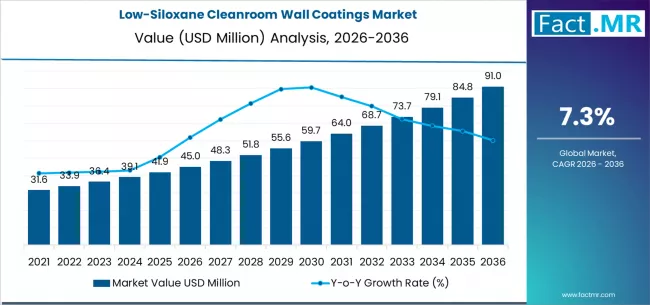
Defining trends involve the development of advanced coating formulations designed to minimize siloxane emissions and particulate generation in ultra-sensitive environments. Innovation is focused on enhancing chemical resistance, cleanability, and surface smoothness while maintaining stringent outgassing and contamination control standards. Integration of these coatings into comprehensive cleanroom design and validation protocols is becoming a key competitive strategy.
Regulatory pressures and stringent contamination control standards in the semiconductor, pharmaceutical, and biotechnology sectors are primary market drivers. The critical need to maintain ISO-class cleanroom integrity and protect sensitive manufacturing processes creates a non-negotiable demand for high-performance wall coatings that eliminate a key source of airborne molecular contamination (AMC).
Low-Siloxane Cleanroom Wall Coatings Market
| Metric | Value |
|---|---|
| Market Value (2026) | USD 45.00 Million |
| Market Forecast Value (2036) | USD 91.04 Million |
| Forecast CAGR (2026-2036) | 7.3% |
Category
| Category | Segments |
|---|---|
| End-use Industry | Semiconductor & IC fabs, Pharmaceutical & biotech cleanrooms, Medical device manufacturing, Aerospace & defense cleanrooms, Optics or precision instruments, Other (food tech, research labs, universities) |
| Coating Chemistry | Low-siloxane epoxy systems, Low-siloxane polyurethane systems, Fluoropolymer or low-outgassing fluorinated systems, Ceramic or inorganic barrier coatings, Sol-gel or hybrid nano-coatings, Antimicrobial or biocide-modified low-siloxane systems |
| Functional Performance | Low-outgassing or low-VOC (siloxane control), Particle or particulate suppression & smooth finish, Chemical or solvent resistance, Abrasion or cleanability (frequent wipe-down), Antimicrobial or hygienic surface properties |
| Cleanroom Class | ISO Class 1–3 (ultra-clean), ISO Class 4–6 (high-clean), ISO Class 7–9 (controlled/ambient) |
| Region | North America, Latin America, Western Europe, Eastern Europe, East Asia, South Asia & Pacific, MEA |
Segmental Analysis
By End-use Industry, Which Sector Represents the Largest Application?
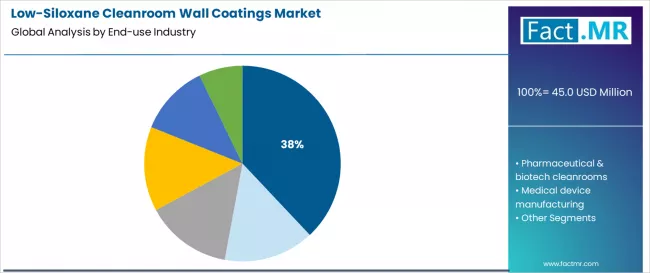
Semiconductor & IC fabs lead the segment with a 38% share. This dominance is due to the extreme sensitivity of semiconductor fabrication processes to airborne molecular contaminants (AMCs), particularly siloxanes, which can cause defects and yield loss. The sector's massive investment in ISO Class 1-3 cleanrooms and its zero-tolerance for contamination drive mandatory adoption of ultra-low emission wall coatings.
By Coating Chemistry, Which Formulation Balances Performance and Contamination Control?
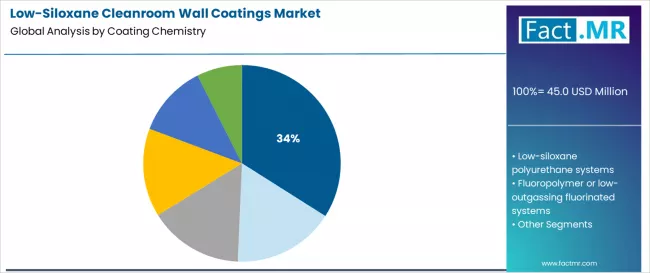
Low-siloxane epoxy systems command the largest chemistry share at 34%. This dominance is attributed to their optimal balance of excellent adhesion, chemical resistance, and durability with formulator's ability to tightly control and minimize silicone-based additives that lead to outgassing. They meet the rigorous performance and cleanliness specifications required for high-value manufacturing environments.
By Functional Performance, Which Attribute is the Primary Purchase Criterion?
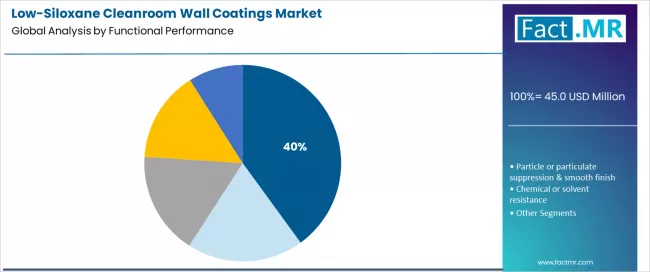
Low-outgassing or low-VOC (siloxane control) represents the leading performance attribute at 40.0%. This is the fundamental technical requirement for cleanroom wall coatings, as the primary function is to not contribute to the chamber's airborne contaminant load. Certifications and validated test data proving minimal siloxane emissions are the core driver for product selection over standard coatings.
What are the Drivers, Restraints, and Key Trends of the Low-Siloxane Cleanroom Wall Coatings Market?
Stringent contamination control standards and ISO classification requirements in semiconductor, pharma, and advanced manufacturing drive market growth. Increasing miniaturization in electronics and sensitivity in biologics processing propels the need for ultra-clean environments. Growing regulatory scrutiny in pharmaceutical manufacturing regarding data integrity and product quality necessitates validated cleanroom materials.
A significant restraint is the higher upfront cost of specialty low-siloxane coatings compared to standard industrial paints. The requirement for specialized application contractors familiar with cleanroom protocols adds to project complexity and expense. Performance trade-offs in terms of color retention or application window compared to conventional coatings can be a consideration for some end-users.
Key trends include the development of multifunctional coatings that combine low outgassing with enhanced antimicrobial properties or static-dissipative characteristics. There is a strong focus on creating faster-curing formulations to reduce cleanroom downtime during renovation. The market is also seeing increased integration of coating specifications into broader cleanroom validation and lifecycle management services.
Analysis of the Low-Siloxane Cleanroom Wall Coatings Market by Key Countries
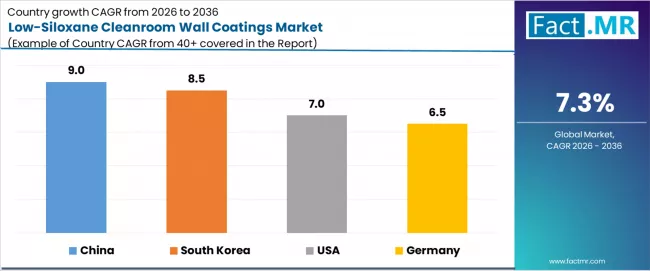
| Country | CAGR (2026-2036) |
|---|---|
| China | 9.00% |
| South Korea | 8.50% |
| USA | 7.00% |
| Germany | 6.50% |
How does China's Expansion of Semiconductor and Advanced Manufacturing Drive Growth?
China leads with a 9.00% CAGR, driven by its massive and growing investments in domestic semiconductor fabrication facilities (fabs) and advanced biotechnology infrastructure. National self-sufficiency goals and the construction of state-of-the-art cleanrooms create significant demand for high-performance, contamination-control building materials, including wall coatings.
Why is South Korea's Leading Position in Memory and Display Manufacturing a Key Driver?
Global leadership in memory semiconductor and high-resolution display production fuels South Korea’s 8.50% growth. Continuous investment in next-generation fabrication lines by major conglomerates, requiring ever-stricter contamination control, sustains demand for premium low-siloxane coating solutions in both new builds and facility upgrades.
What Role does the USA's Established Tech and Biopharma Sector Play?
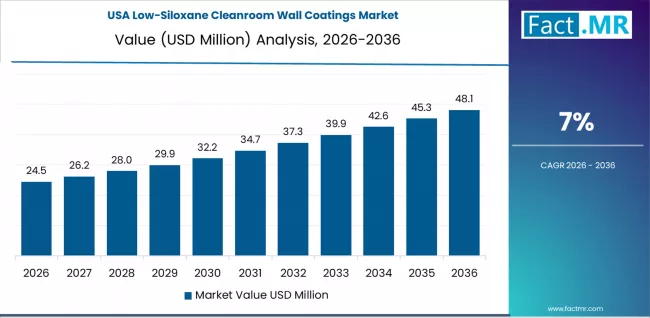
A strong base of leading-edge semiconductor fabs, biotechnology research, and pharmaceutical manufacturing underpins the USA’s 7.00% growth. Demand is driven by facility expansions, technology node transitions in chips requiring cleaner environments, and stringent FDA cGMP compliance, which mandates controlled and validated cleanroom materials.
How does Germany's Precision Engineering and Pharma Hub Influence the Market?
Germany's 6.50% growth reflects its strength in high-precision manufacturing such as optics and medical devices and as a European pharmaceutical hub. The demand is for technically advanced coatings that meet both the rigorous performance standards of German engineering and the strict regulatory hygiene and validation requirements of the EU pharmaceutical industry.
Competitive Landscape of the Low-Siloxane Cleanroom Wall Coatings Market
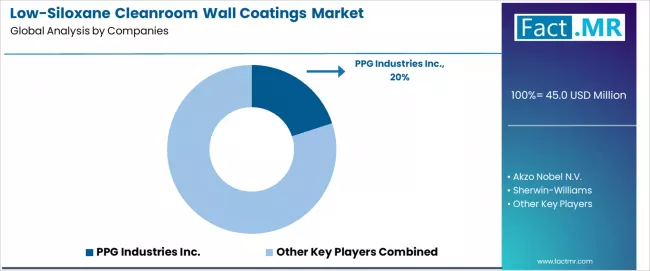
Global specialty chemical and paint majors competing with niche industrial coating specialists characterize the competitive landscape. Leading broad-line companies like PPG Industries Inc., Akzo Nobel N.V., and Sherwin-Williams leverage their extensive R&D resources, global supply chains, and ability to provide comprehensive coating systems for large-scale projects.
Specialist players like Mankiewicz and divisions of RPM International (e.g., Carboline) compete on deep expertise in high-performance industrial coatings, tailored technical service, and formulations designed for specific, extreme cleanroom class applications. Competition centers on proven low outgassing test data (e.g., via TD-GC-MS), relevant industry certifications, and the provision of validation support documentation to facility owners and engineers.
Key Players in the Low-Siloxane Cleanroom Wall Coatings Market
- PPG Industries Inc.
- Akzo Nobel N.V.
- Sherwin-Williams
- Dow Inc.
- Mankiewicz (specialty industrial coatings)
- RPM International (incl. Carboline or specialist divisions)
Scope of Report
| Items | Values |
|---|---|
| Quantitative Units | USD Million |
| End-use Industry | Semiconductor & IC fabs, Pharmaceutical & biotech cleanrooms, Medical device manufacturing, Aerospace & defense cleanrooms, Optics or precision instruments, Other (food tech, research labs, universities) |
| Coating Chemistry | Low-siloxane epoxy systems, Low-siloxane polyurethane systems, Fluoropolymer or low-outgassing fluorinated systems, Ceramic or inorganic barrier coatings, Sol-gel or hybrid nano-coatings, Antimicrobial or biocide-modified low-siloxane systems |
| Functional Performance | Low-outgassing or low-VOC (siloxane control), Particle or particulate suppression & smooth finish, Chemical or solvent resistance, Abrasion or cleanability (frequent wipe-down), Antimicrobial or hygienic surface properties |
| Cleanroom Class | ISO Class 1–3 (ultra-clean), ISO Class 4–6 (high-clean), ISO Class 7–9 (controlled/ambient) |
| Key Countries | China, South Korea, USA, Germany |
| Key Companies | PPG Industries Inc., Akzo Nobel N.V., Sherwin-Williams, Dow Inc., Mankiewicz (specialty industrial coatings), RPM International (incl. Carboline or specialist divisions) |
| Additional Analysis | Analysis of outgassing (AMC) testing protocols (e.g., TD-GC-MS), compatibility studies with cleanroom sealing systems, total cost of ownership models for facility lifecycle, competitive assessment against standard epoxy/polyurethane coatings, and analysis of regional regulatory and industry standards (e.g., ISO 14644, IEST, SEMI). |
Low-Siloxane Cleanroom Wall Coatings Market by Segments
End-use Industry :
- Semiconductor & IC fabs
- Pharmaceutical & biotech cleanrooms
- Medical device manufacturing
- Aerospace & defense cleanrooms
- Optics or precision instruments
- Other (food tech, research labs, universities)
Coating Chemistry :
- Low-siloxane epoxy systems
- Low-siloxane polyurethane systems
- Fluoropolymer or low-outgassing fluorinated systems
- Ceramic or inorganic barrier coatings
- Sol-gel or hybrid nano-coatings
- Antimicrobial or biocide-modified low-siloxane systems
Functional Performance :
- Low-outgassing or low-VOC (siloxane control)
- Particle or particulate suppression & smooth finish
- Chemical or solvent resistance
- Abrasion or cleanability (frequent wipe-down)
- Antimicrobial or hygienic surface properties
Cleanroom Class :
- ISO Class 1–3 (ultra-clean)
- ISO Class 4–6 (high-clean)
- ISO Class 7–9 (controlled/ambient)
Region :
- North America
- USA
- Canada
- Latin America
- Brazil
- Mexico
- Argentina
- Rest of Latin America
- Western Europe
- Germany
- UK
- France
- Spain
- Italy
- BENELUX
- Rest of Western Europe
- Eastern Europe
- Russia
- Poland
- Czech Republic
- Rest of Eastern Europe
- East Asia
- China
- Japan
- South Korea
- Rest of East Asia
- South Asia & Pacific
- India
- ASEAN
- Australia
- Rest of South Asia & Pacific
- MEA
- Saudi Arabia
- UAE
- Turkiye
- Rest of MEA
Table of Content
- Executive Summary
- Global Market Outlook
- Demand to side Trends
- Supply to side Trends
- Technology Roadmap Analysis
- Analysis and Recommendations
- Market Overview
- Market Coverage / Taxonomy
- Market Definition / Scope / Limitations
- Market Background
- Market Dynamics
- Drivers
- Restraints
- Opportunity
- Trends
- Scenario Forecast
- Demand in Optimistic Scenario
- Demand in Likely Scenario
- Demand in Conservative Scenario
- Opportunity Map Analysis
- Product Life Cycle Analysis
- Supply Chain Analysis
- Investment Feasibility Matrix
- Value Chain Analysis
- PESTLE and Porter’s Analysis
- Regulatory Landscape
- Regional Parent Market Outlook
- Production and Consumption Statistics
- Import and Export Statistics
- Market Dynamics
- Global Market Analysis 2021 to 2025 and Forecast, 2026 to 2036
- Historical Market Size Value (USD Million) Analysis, 2021 to 2025
- Current and Future Market Size Value (USD Million) Projections, 2026 to 2036
- Y to o to Y Growth Trend Analysis
- Absolute $ Opportunity Analysis
- Global Market Pricing Analysis 2021 to 2025 and Forecast 2026 to 2036
- Global Market Analysis 2021 to 2025 and Forecast 2026 to 2036, By End-use Industry
- Introduction / Key Findings
- Historical Market Size Value (USD Million) Analysis By End-use Industry, 2021 to 2025
- Current and Future Market Size Value (USD Million) Analysis and Forecast By End-use Industry, 2026 to 2036
- Semiconductor & IC fabs
- Pharmaceutical & biotech cleanrooms
- Medical device manufacturing
- Aerospace & defense cleanrooms
- Optics or precision instruments
- Other (food tech, research labs, universities)
- Semiconductor & IC fabs
- Y to o to Y Growth Trend Analysis By End-use Industry, 2021 to 2025
- Absolute $ Opportunity Analysis By End-use Industry, 2026 to 2036
- Global Market Analysis 2021 to 2025 and Forecast 2026 to 2036, By Coating Chemistry
- Introduction / Key Findings
- Historical Market Size Value (USD Million) Analysis By Coating Chemistry, 2021 to 2025
- Current and Future Market Size Value (USD Million) Analysis and Forecast By Coating Chemistry, 2026 to 2036
- Low-siloxane epoxy systems
- Low-siloxane polyurethane systems
- Fluoropolymer or low-outgassing fluorinated systems
- Ceramic or inorganic barrier coatings
- Sol-gel or hybrid nano-coatings
- Antimicrobial or biocide-modified low-siloxane systems
- Low-siloxane epoxy systems
- Y to o to Y Growth Trend Analysis By Coating Chemistry, 2021 to 2025
- Absolute $ Opportunity Analysis By Coating Chemistry, 2026 to 2036
- Global Market Analysis 2021 to 2025 and Forecast 2026 to 2036, By Functional Performance
- Introduction / Key Findings
- Historical Market Size Value (USD Million) Analysis By Functional Performance, 2021 to 2025
- Current and Future Market Size Value (USD Million) Analysis and Forecast By Functional Performance, 2026 to 2036
- Low-outgassing or low-VOC (siloxane control)
- Particle or particulate suppression & smooth finish
- Chemical or solvent resistance
- Abrasion or cleanability (frequent wipeDow Inc.n)
- Antimicrobial or hygienic surface properties
- Low-outgassing or low-VOC (siloxane control)
- Y to o to Y Growth Trend Analysis By Functional Performance, 2021 to 2025
- Absolute $ Opportunity Analysis By Functional Performance, 2026 to 2036
- Global Market Analysis 2021 to 2025 and Forecast 2026 to 2036, By Cleanroom Class
- Introduction / Key Findings
- Historical Market Size Value (USD Million) Analysis By Cleanroom Class, 2021 to 2025
- Current and Future Market Size Value (USD Million) Analysis and Forecast By Cleanroom Class, 2026 to 2036
- ISO Class 1–3 (ultra-clean)
- ISO Class 4–6 (high-clean)
- ISO Class 7–9 (controlledorambient)
- ISO Class 1–3 (ultra-clean)
- Y to o to Y Growth Trend Analysis By Cleanroom Class, 2021 to 2025
- Absolute $ Opportunity Analysis By Cleanroom Class, 2026 to 2036
- Global Market Analysis 2021 to 2025 and Forecast 2026 to 2036, By Region
- Introduction
- Historical Market Size Value (USD Million) Analysis By Region, 2021 to 2025
- Current Market Size Value (USD Million) Analysis and Forecast By Region, 2026 to 2036
- North America
- Latin America
- Western Europe
- Eastern Europe
- East Asia
- South Asia and Pacific
- Middle East & Africa
- Market Attractiveness Analysis By Region
- North America Market Analysis 2021 to 2025 and Forecast 2026 to 2036, By Country
- Historical Market Size Value (USD Million) Trend Analysis By Market Taxonomy, 2021 to 2025
- Market Size Value (USD Million) Forecast By Market Taxonomy, 2026 to 2036
- By Country
- USA
- Canada
- Mexico
- By End-use Industry
- By Coating Chemistry
- By Functional Performance
- By Cleanroom Class
- By Country
- Market Attractiveness Analysis
- By Country
- By End-use Industry
- By Coating Chemistry
- By Functional Performance
- By Cleanroom Class
- Key Takeaways
- Latin America Market Analysis 2021 to 2025 and Forecast 2026 to 2036, By Country
- Historical Market Size Value (USD Million) Trend Analysis By Market Taxonomy, 2021 to 2025
- Market Size Value (USD Million) Forecast By Market Taxonomy, 2026 to 2036
- By Country
- Brazil
- Chile
- Rest of Latin America
- By End-use Industry
- By Coating Chemistry
- By Functional Performance
- By Cleanroom Class
- By Country
- Market Attractiveness Analysis
- By Country
- By End-use Industry
- By Coating Chemistry
- By Functional Performance
- By Cleanroom Class
- Key Takeaways
- Western Europe Market Analysis 2021 to 2025 and Forecast 2026 to 2036, By Country
- Historical Market Size Value (USD Million) Trend Analysis By Market Taxonomy, 2021 to 2025
- Market Size Value (USD Million) Forecast By Market Taxonomy, 2026 to 2036
- By Country
- Germany
- UK
- Italy
- Spain
- France
- Nordic
- BENELUX
- Rest of Western Europe
- By End-use Industry
- By Coating Chemistry
- By Functional Performance
- By Cleanroom Class
- By Country
- Market Attractiveness Analysis
- By Country
- By End-use Industry
- By Coating Chemistry
- By Functional Performance
- By Cleanroom Class
- Key Takeaways
- Eastern Europe Market Analysis 2021 to 2025 and Forecast 2026 to 2036, By Country
- Historical Market Size Value (USD Million) Trend Analysis By Market Taxonomy, 2021 to 2025
- Market Size Value (USD Million) Forecast By Market Taxonomy, 2026 to 2036
- By Country
- Russia
- Poland
- Hungary
- Balkan & Baltic
- Rest of Eastern Europe
- By End-use Industry
- By Coating Chemistry
- By Functional Performance
- By Cleanroom Class
- By Country
- Market Attractiveness Analysis
- By Country
- By End-use Industry
- By Coating Chemistry
- By Functional Performance
- By Cleanroom Class
- Key Takeaways
- East Asia Market Analysis 2021 to 2025 and Forecast 2026 to 2036, By Country
- Historical Market Size Value (USD Million) Trend Analysis By Market Taxonomy, 2021 to 2025
- Market Size Value (USD Million) Forecast By Market Taxonomy, 2026 to 2036
- By Country
- China
- Japan
- South Korea
- By End-use Industry
- By Coating Chemistry
- By Functional Performance
- By Cleanroom Class
- By Country
- Market Attractiveness Analysis
- By Country
- By End-use Industry
- By Coating Chemistry
- By Functional Performance
- By Cleanroom Class
- Key Takeaways
- South Asia and Pacific Market Analysis 2021 to 2025 and Forecast 2026 to 2036, By Country
- Historical Market Size Value (USD Million) Trend Analysis By Market Taxonomy, 2021 to 2025
- Market Size Value (USD Million) Forecast By Market Taxonomy, 2026 to 2036
- By Country
- India
- ASEAN
- Australia & New Zealand
- Rest of South Asia and Pacific
- By End-use Industry
- By Coating Chemistry
- By Functional Performance
- By Cleanroom Class
- By Country
- Market Attractiveness Analysis
- By Country
- By End-use Industry
- By Coating Chemistry
- By Functional Performance
- By Cleanroom Class
- Key Takeaways
- Middle East & Africa Market Analysis 2021 to 2025 and Forecast 2026 to 2036, By Country
- Historical Market Size Value (USD Million) Trend Analysis By Market Taxonomy, 2021 to 2025
- Market Size Value (USD Million) Forecast By Market Taxonomy, 2026 to 2036
- By Country
- Kingdom of Saudi Arabia
- Other GCC Countries
- Turkiye
- South Africa
- Other African Union
- Rest of Middle East & Africa
- By End-use Industry
- By Coating Chemistry
- By Functional Performance
- By Cleanroom Class
- By Country
- Market Attractiveness Analysis
- By Country
- By End-use Industry
- By Coating Chemistry
- By Functional Performance
- By Cleanroom Class
- Key Takeaways
- Key Countries Market Analysis
- USA
- Pricing Analysis
- Market Share Analysis, 2025
- By End-use Industry
- By Coating Chemistry
- By Functional Performance
- By Cleanroom Class
- Canada
- Pricing Analysis
- Market Share Analysis, 2025
- By End-use Industry
- By Coating Chemistry
- By Functional Performance
- By Cleanroom Class
- Mexico
- Pricing Analysis
- Market Share Analysis, 2025
- By End-use Industry
- By Coating Chemistry
- By Functional Performance
- By Cleanroom Class
- Brazil
- Pricing Analysis
- Market Share Analysis, 2025
- By End-use Industry
- By Coating Chemistry
- By Functional Performance
- By Cleanroom Class
- Chile
- Pricing Analysis
- Market Share Analysis, 2025
- By End-use Industry
- By Coating Chemistry
- By Functional Performance
- By Cleanroom Class
- Germany
- Pricing Analysis
- Market Share Analysis, 2025
- By End-use Industry
- By Coating Chemistry
- By Functional Performance
- By Cleanroom Class
- UK
- Pricing Analysis
- Market Share Analysis, 2025
- By End-use Industry
- By Coating Chemistry
- By Functional Performance
- By Cleanroom Class
- Italy
- Pricing Analysis
- Market Share Analysis, 2025
- By End-use Industry
- By Coating Chemistry
- By Functional Performance
- By Cleanroom Class
- Spain
- Pricing Analysis
- Market Share Analysis, 2025
- By End-use Industry
- By Coating Chemistry
- By Functional Performance
- By Cleanroom Class
- France
- Pricing Analysis
- Market Share Analysis, 2025
- By End-use Industry
- By Coating Chemistry
- By Functional Performance
- By Cleanroom Class
- India
- Pricing Analysis
- Market Share Analysis, 2025
- By End-use Industry
- By Coating Chemistry
- By Functional Performance
- By Cleanroom Class
- ASEAN
- Pricing Analysis
- Market Share Analysis, 2025
- By End-use Industry
- By Coating Chemistry
- By Functional Performance
- By Cleanroom Class
- Australia & New Zealand
- Pricing Analysis
- Market Share Analysis, 2025
- By End-use Industry
- By Coating Chemistry
- By Functional Performance
- By Cleanroom Class
- China
- Pricing Analysis
- Market Share Analysis, 2025
- By End-use Industry
- By Coating Chemistry
- By Functional Performance
- By Cleanroom Class
- Japan
- Pricing Analysis
- Market Share Analysis, 2025
- By End-use Industry
- By Coating Chemistry
- By Functional Performance
- By Cleanroom Class
- South Korea
- Pricing Analysis
- Market Share Analysis, 2025
- By End-use Industry
- By Coating Chemistry
- By Functional Performance
- By Cleanroom Class
- Russia
- Pricing Analysis
- Market Share Analysis, 2025
- By End-use Industry
- By Coating Chemistry
- By Functional Performance
- By Cleanroom Class
- Poland
- Pricing Analysis
- Market Share Analysis, 2025
- By End-use Industry
- By Coating Chemistry
- By Functional Performance
- By Cleanroom Class
- Hungary
- Pricing Analysis
- Market Share Analysis, 2025
- By End-use Industry
- By Coating Chemistry
- By Functional Performance
- By Cleanroom Class
- Kingdom of Saudi Arabia
- Pricing Analysis
- Market Share Analysis, 2025
- By End-use Industry
- By Coating Chemistry
- By Functional Performance
- By Cleanroom Class
- Turkiye
- Pricing Analysis
- Market Share Analysis, 2025
- By End-use Industry
- By Coating Chemistry
- By Functional Performance
- By Cleanroom Class
- South Africa
- Pricing Analysis
- Market Share Analysis, 2025
- By End-use Industry
- By Coating Chemistry
- By Functional Performance
- By Cleanroom Class
- USA
- Market Structure Analysis
- Competition Dashboard
- Competition Benchmarking
- Market Share Analysis of Top Players
- By Regional
- By End-use Industry
- By Coating Chemistry
- By Functional Performance
- By Cleanroom Class
- Competition Analysis
- Competition Deep Dive
- PPG Industries Inc.
- Overview
- Product Portfolio
- Profitability by Market Segments (Product/Age /Sales Channel/Region)
- Sales Footprint
- Strategy Overview
- Marketing Strategy
- Product Strategy
- Channel Strategy
- Akzo Nobel N.V.
- Sherwin-Williams
- Mankiewicz (specialty industrial coatings)
- RPM International (incl. Carboline or specialist divisions)
- PPG Industries Inc.
- Competition Deep Dive
- Assumptions & Acronyms Used
- Research Methodology
List Of Table
- Table 1: Global Market Value (USD Million) Forecast by Region, 2021 to 2036
- Table 2: Global Market Value (USD Million) Forecast by End-use Industry, 2021 to 2036
- Table 3: Global Market Value (USD Million) Forecast by Coating Chemistry, 2021 to 2036
- Table 4: Global Market Value (USD Million) Forecast by Functional Performance, 2021 to 2036
- Table 5: Global Market Value (USD Million) Forecast by Cleanroom Class, 2021 to 2036
- Table 6: North America Market Value (USD Million) Forecast by Country, 2021 to 2036
- Table 7: North America Market Value (USD Million) Forecast by End-use Industry, 2021 to 2036
- Table 8: North America Market Value (USD Million) Forecast by Coating Chemistry, 2021 to 2036
- Table 9: North America Market Value (USD Million) Forecast by Functional Performance, 2021 to 2036
- Table 10: North America Market Value (USD Million) Forecast by Cleanroom Class, 2021 to 2036
- Table 11: Latin America Market Value (USD Million) Forecast by Country, 2021 to 2036
- Table 12: Latin America Market Value (USD Million) Forecast by End-use Industry, 2021 to 2036
- Table 13: Latin America Market Value (USD Million) Forecast by Coating Chemistry, 2021 to 2036
- Table 14: Latin America Market Value (USD Million) Forecast by Functional Performance, 2021 to 2036
- Table 15: Latin America Market Value (USD Million) Forecast by Cleanroom Class, 2021 to 2036
- Table 16: Western Europe Market Value (USD Million) Forecast by Country, 2021 to 2036
- Table 17: Western Europe Market Value (USD Million) Forecast by End-use Industry, 2021 to 2036
- Table 18: Western Europe Market Value (USD Million) Forecast by Coating Chemistry, 2021 to 2036
- Table 19: Western Europe Market Value (USD Million) Forecast by Functional Performance, 2021 to 2036
- Table 20: Western Europe Market Value (USD Million) Forecast by Cleanroom Class, 2021 to 2036
- Table 21: Eastern Europe Market Value (USD Million) Forecast by Country, 2021 to 2036
- Table 22: Eastern Europe Market Value (USD Million) Forecast by End-use Industry, 2021 to 2036
- Table 23: Eastern Europe Market Value (USD Million) Forecast by Coating Chemistry, 2021 to 2036
- Table 24: Eastern Europe Market Value (USD Million) Forecast by Functional Performance, 2021 to 2036
- Table 25: Eastern Europe Market Value (USD Million) Forecast by Cleanroom Class, 2021 to 2036
- Table 26: East Asia Market Value (USD Million) Forecast by Country, 2021 to 2036
- Table 27: East Asia Market Value (USD Million) Forecast by End-use Industry, 2021 to 2036
- Table 28: East Asia Market Value (USD Million) Forecast by Coating Chemistry, 2021 to 2036
- Table 29: East Asia Market Value (USD Million) Forecast by Functional Performance, 2021 to 2036
- Table 30: East Asia Market Value (USD Million) Forecast by Cleanroom Class, 2021 to 2036
- Table 31: South Asia and Pacific Market Value (USD Million) Forecast by Country, 2021 to 2036
- Table 32: South Asia and Pacific Market Value (USD Million) Forecast by End-use Industry, 2021 to 2036
- Table 33: South Asia and Pacific Market Value (USD Million) Forecast by Coating Chemistry, 2021 to 2036
- Table 34: South Asia and Pacific Market Value (USD Million) Forecast by Functional Performance, 2021 to 2036
- Table 35: South Asia and Pacific Market Value (USD Million) Forecast by Cleanroom Class, 2021 to 2036
- Table 36: Middle East & Africa Market Value (USD Million) Forecast by Country, 2021 to 2036
- Table 37: Middle East & Africa Market Value (USD Million) Forecast by End-use Industry, 2021 to 2036
- Table 38: Middle East & Africa Market Value (USD Million) Forecast by Coating Chemistry, 2021 to 2036
- Table 39: Middle East & Africa Market Value (USD Million) Forecast by Functional Performance, 2021 to 2036
- Table 40: Middle East & Africa Market Value (USD Million) Forecast by Cleanroom Class, 2021 to 2036
List Of Figures
- Figure 1: Global Market Pricing Analysis
- Figure 2: Global Market Value (USD Million) Forecast 2021 to 2036
- Figure 3: Global Market Value Share and BPS Analysis by End-use Industry, 2026 and 2036
- Figure 4: Global Market Y to o to Y Growth Comparison by End-use Industry, 2026 to 2036
- Figure 5: Global Market Attractiveness Analysis by End-use Industry
- Figure 6: Global Market Value Share and BPS Analysis by Coating Chemistry, 2026 and 2036
- Figure 7: Global Market Y to o to Y Growth Comparison by Coating Chemistry, 2026 to 2036
- Figure 8: Global Market Attractiveness Analysis by Coating Chemistry
- Figure 9: Global Market Value Share and BPS Analysis by Functional Performance, 2026 and 2036
- Figure 10: Global Market Y to o to Y Growth Comparison by Functional Performance, 2026 to 2036
- Figure 11: Global Market Attractiveness Analysis by Functional Performance
- Figure 12: Global Market Value Share and BPS Analysis by Cleanroom Class, 2026 and 2036
- Figure 13: Global Market Y to o to Y Growth Comparison by Cleanroom Class, 2026 to 2036
- Figure 14: Global Market Attractiveness Analysis by Cleanroom Class
- Figure 15: Global Market Value (USD Million) Share and BPS Analysis by Region, 2026 and 2036
- Figure 16: Global Market Y to o to Y Growth Comparison by Region, 2026 to 2036
- Figure 17: Global Market Attractiveness Analysis by Region
- Figure 18: North America Market Incremental Dollar Opportunity, 2026 to 2036
- Figure 19: Latin America Market Incremental Dollar Opportunity, 2026 to 2036
- Figure 20: Western Europe Market Incremental Dollar Opportunity, 2026 to 2036
- Figure 21: Eastern Europe Market Incremental Dollar Opportunity, 2026 to 2036
- Figure 22: East Asia Market Incremental Dollar Opportunity, 2026 to 2036
- Figure 23: South Asia and Pacific Market Incremental Dollar Opportunity, 2026 to 2036
- Figure 24: Middle East & Africa Market Incremental Dollar Opportunity, 2026 to 2036
- Figure 25: North America Market Value Share and BPS Analysis by Country, 2026 and 2036
- Figure 26: North America Market Value Share and BPS Analysis by End-use Industry, 2026 and 2036
- Figure 27: North America Market Y to o to Y Growth Comparison by End-use Industry, 2026 to 2036
- Figure 28: North America Market Attractiveness Analysis by End-use Industry
- Figure 29: North America Market Value Share and BPS Analysis by Coating Chemistry, 2026 and 2036
- Figure 30: North America Market Y to o to Y Growth Comparison by Coating Chemistry, 2026 to 2036
- Figure 31: North America Market Attractiveness Analysis by Coating Chemistry
- Figure 32: North America Market Value Share and BPS Analysis by Functional Performance, 2026 and 2036
- Figure 33: North America Market Y to o to Y Growth Comparison by Functional Performance, 2026 to 2036
- Figure 34: North America Market Attractiveness Analysis by Functional Performance
- Figure 35: North America Market Value Share and BPS Analysis by Cleanroom Class, 2026 and 2036
- Figure 36: North America Market Y to o to Y Growth Comparison by Cleanroom Class, 2026 to 2036
- Figure 37: North America Market Attractiveness Analysis by Cleanroom Class
- Figure 38: Latin America Market Value Share and BPS Analysis by Country, 2026 and 2036
- Figure 39: Latin America Market Value Share and BPS Analysis by End-use Industry, 2026 and 2036
- Figure 40: Latin America Market Y to o to Y Growth Comparison by End-use Industry, 2026 to 2036
- Figure 41: Latin America Market Attractiveness Analysis by End-use Industry
- Figure 42: Latin America Market Value Share and BPS Analysis by Coating Chemistry, 2026 and 2036
- Figure 43: Latin America Market Y to o to Y Growth Comparison by Coating Chemistry, 2026 to 2036
- Figure 44: Latin America Market Attractiveness Analysis by Coating Chemistry
- Figure 45: Latin America Market Value Share and BPS Analysis by Functional Performance, 2026 and 2036
- Figure 46: Latin America Market Y to o to Y Growth Comparison by Functional Performance, 2026 to 2036
- Figure 47: Latin America Market Attractiveness Analysis by Functional Performance
- Figure 48: Latin America Market Value Share and BPS Analysis by Cleanroom Class, 2026 and 2036
- Figure 49: Latin America Market Y to o to Y Growth Comparison by Cleanroom Class, 2026 to 2036
- Figure 50: Latin America Market Attractiveness Analysis by Cleanroom Class
- Figure 51: Western Europe Market Value Share and BPS Analysis by Country, 2026 and 2036
- Figure 52: Western Europe Market Value Share and BPS Analysis by End-use Industry, 2026 and 2036
- Figure 53: Western Europe Market Y to o to Y Growth Comparison by End-use Industry, 2026 to 2036
- Figure 54: Western Europe Market Attractiveness Analysis by End-use Industry
- Figure 55: Western Europe Market Value Share and BPS Analysis by Coating Chemistry, 2026 and 2036
- Figure 56: Western Europe Market Y to o to Y Growth Comparison by Coating Chemistry, 2026 to 2036
- Figure 57: Western Europe Market Attractiveness Analysis by Coating Chemistry
- Figure 58: Western Europe Market Value Share and BPS Analysis by Functional Performance, 2026 and 2036
- Figure 59: Western Europe Market Y to o to Y Growth Comparison by Functional Performance, 2026 to 2036
- Figure 60: Western Europe Market Attractiveness Analysis by Functional Performance
- Figure 61: Western Europe Market Value Share and BPS Analysis by Cleanroom Class, 2026 and 2036
- Figure 62: Western Europe Market Y to o to Y Growth Comparison by Cleanroom Class, 2026 to 2036
- Figure 63: Western Europe Market Attractiveness Analysis by Cleanroom Class
- Figure 64: Eastern Europe Market Value Share and BPS Analysis by Country, 2026 and 2036
- Figure 65: Eastern Europe Market Value Share and BPS Analysis by End-use Industry, 2026 and 2036
- Figure 66: Eastern Europe Market Y to o to Y Growth Comparison by End-use Industry, 2026 to 2036
- Figure 67: Eastern Europe Market Attractiveness Analysis by End-use Industry
- Figure 68: Eastern Europe Market Value Share and BPS Analysis by Coating Chemistry, 2026 and 2036
- Figure 69: Eastern Europe Market Y to o to Y Growth Comparison by Coating Chemistry, 2026 to 2036
- Figure 70: Eastern Europe Market Attractiveness Analysis by Coating Chemistry
- Figure 71: Eastern Europe Market Value Share and BPS Analysis by Functional Performance, 2026 and 2036
- Figure 72: Eastern Europe Market Y to o to Y Growth Comparison by Functional Performance, 2026 to 2036
- Figure 73: Eastern Europe Market Attractiveness Analysis by Functional Performance
- Figure 74: Eastern Europe Market Value Share and BPS Analysis by Cleanroom Class, 2026 and 2036
- Figure 75: Eastern Europe Market Y to o to Y Growth Comparison by Cleanroom Class, 2026 to 2036
- Figure 76: Eastern Europe Market Attractiveness Analysis by Cleanroom Class
- Figure 77: East Asia Market Value Share and BPS Analysis by Country, 2026 and 2036
- Figure 78: East Asia Market Value Share and BPS Analysis by End-use Industry, 2026 and 2036
- Figure 79: East Asia Market Y to o to Y Growth Comparison by End-use Industry, 2026 to 2036
- Figure 80: East Asia Market Attractiveness Analysis by End-use Industry
- Figure 81: East Asia Market Value Share and BPS Analysis by Coating Chemistry, 2026 and 2036
- Figure 82: East Asia Market Y to o to Y Growth Comparison by Coating Chemistry, 2026 to 2036
- Figure 83: East Asia Market Attractiveness Analysis by Coating Chemistry
- Figure 84: East Asia Market Value Share and BPS Analysis by Functional Performance, 2026 and 2036
- Figure 85: East Asia Market Y to o to Y Growth Comparison by Functional Performance, 2026 to 2036
- Figure 86: East Asia Market Attractiveness Analysis by Functional Performance
- Figure 87: East Asia Market Value Share and BPS Analysis by Cleanroom Class, 2026 and 2036
- Figure 88: East Asia Market Y to o to Y Growth Comparison by Cleanroom Class, 2026 to 2036
- Figure 89: East Asia Market Attractiveness Analysis by Cleanroom Class
- Figure 90: South Asia and Pacific Market Value Share and BPS Analysis by Country, 2026 and 2036
- Figure 91: South Asia and Pacific Market Value Share and BPS Analysis by End-use Industry, 2026 and 2036
- Figure 92: South Asia and Pacific Market Y to o to Y Growth Comparison by End-use Industry, 2026 to 2036
- Figure 93: South Asia and Pacific Market Attractiveness Analysis by End-use Industry
- Figure 94: South Asia and Pacific Market Value Share and BPS Analysis by Coating Chemistry, 2026 and 2036
- Figure 95: South Asia and Pacific Market Y to o to Y Growth Comparison by Coating Chemistry, 2026 to 2036
- Figure 96: South Asia and Pacific Market Attractiveness Analysis by Coating Chemistry
- Figure 97: South Asia and Pacific Market Value Share and BPS Analysis by Functional Performance, 2026 and 2036
- Figure 98: South Asia and Pacific Market Y to o to Y Growth Comparison by Functional Performance, 2026 to 2036
- Figure 99: South Asia and Pacific Market Attractiveness Analysis by Functional Performance
- Figure 100: South Asia and Pacific Market Value Share and BPS Analysis by Cleanroom Class, 2026 and 2036
- Figure 101: South Asia and Pacific Market Y to o to Y Growth Comparison by Cleanroom Class, 2026 to 2036
- Figure 102: South Asia and Pacific Market Attractiveness Analysis by Cleanroom Class
- Figure 103: Middle East & Africa Market Value Share and BPS Analysis by Country, 2026 and 2036
- Figure 104: Middle East & Africa Market Value Share and BPS Analysis by End-use Industry, 2026 and 2036
- Figure 105: Middle East & Africa Market Y to o to Y Growth Comparison by End-use Industry, 2026 to 2036
- Figure 106: Middle East & Africa Market Attractiveness Analysis by End-use Industry
- Figure 107: Middle East & Africa Market Value Share and BPS Analysis by Coating Chemistry, 2026 and 2036
- Figure 108: Middle East & Africa Market Y to o to Y Growth Comparison by Coating Chemistry, 2026 to 2036
- Figure 109: Middle East & Africa Market Attractiveness Analysis by Coating Chemistry
- Figure 110: Middle East & Africa Market Value Share and BPS Analysis by Functional Performance, 2026 and 2036
- Figure 111: Middle East & Africa Market Y to o to Y Growth Comparison by Functional Performance, 2026 to 2036
- Figure 112: Middle East & Africa Market Attractiveness Analysis by Functional Performance
- Figure 113: Middle East & Africa Market Value Share and BPS Analysis by Cleanroom Class, 2026 and 2036
- Figure 114: Middle East & Africa Market Y to o to Y Growth Comparison by Cleanroom Class, 2026 to 2036
- Figure 115: Middle East & Africa Market Attractiveness Analysis by Cleanroom Class
- Figure 116: Global Market - Tier Structure Analysis
- Figure 117: Global Market - Company Share Analysis
- FAQs -
How big is the low-siloxane cleanroom wall coatings market in 2026?
The global bpa-free beverage end interior coatings market is estimated to be valued at USD 262.1 million in 2026.
What will be the size of low-siloxane cleanroom wall coatings market in 2036?
The market size for the bpa-free beverage end interior coatings market is projected to reach USD 575.6 million by 2036.
How much will be the low-siloxane cleanroom wall coatings market growth between 2026 and 2036?
The bpa-free beverage end interior coatings market is expected to grow at a 8.2% CAGR between 2026 and 2036.
What are the key product types in the low-siloxane cleanroom wall coatings market?
The key product types in bpa-free beverage end interior coatings market are carbonated soft drinks , beer & cider , energy & functional drinks , juices, rtd tea & coffee and water & other non-carbonated drinks .
Which coating chemistry segment to contribute significant share in the low-siloxane cleanroom wall coatings market in 2026?
In terms of resin type , acrylic-based bpa-ni systems segment to command 35.0% share in the bpa-free beverage end interior coatings market in 2026.