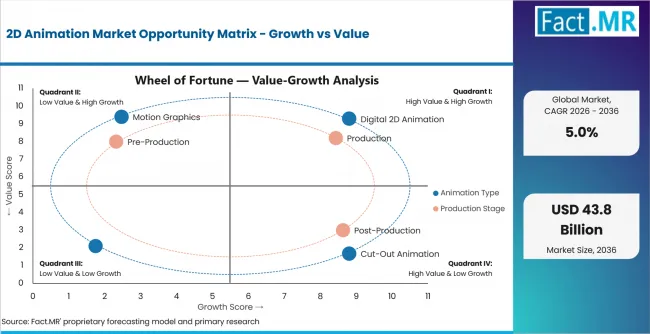
2D Animation Market Size, Share, Growth and Forecast (2026 - 2036)
The 2D Animation Market is segmented by Animation Type (Traditional 2D Animation, Digital 2D Animation, Cut-Out Animation, Motion Graphics), by Production Stage (Pre-Production, Production, Post-Production), by End Use, by Delivery Model, and by Revenue Model, and Region. Forecast for 2026 to 2036.
Fact.MR opines that 2D animation demand is moving toward digital production workflows. These workflows help studios create content faster and prepare visuals for online platforms. Studios need efficient pipelines. Brands require short animated content that explains products clearly across social and learning channels.
2D Animation Market Size, Market Forecast and Outlook by Fact.MR
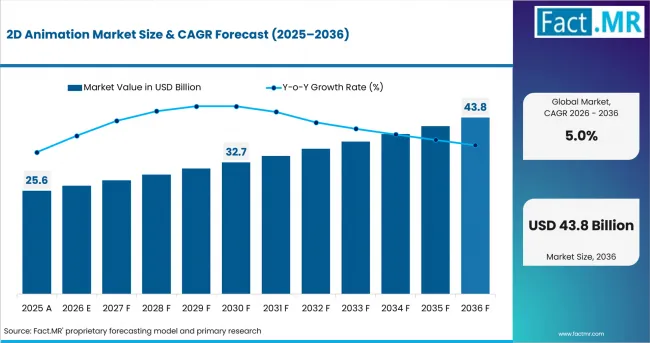
- The 2D animation market was valued at USD 25.6 billion in 2025.
- Demand is expected to increase from USD 26.9 billion in 2026 to USD 43.8 billion by 2036.
- The market is forecast to record 5.0% CAGR from 2026 to 2036 as entertainment studios and digital publishers continue using 2D animation for scalable visual storytelling.
| Metric | Details |
|---|---|
| Industry Size 2026 | USD 26.9 billion |
| Industry Value 2036 | USD 43.8 billion |
| CAGR 2026 to 2036 | 5.0% |
Summary of 2D Animation Market
- Demand Drivers in the Market
- Streaming Content Need: Platforms need animated series and short-form assets that can serve children and global audiences.
- Brand Communication: Advertisers use 2D animation to explain products and services quickly across digital channels.
- Policy Support: India’s AVGC-XR ecosystem is being promoted as a globally connected production base for animation and related creative work. [3]
- Key Segments Analyzed
- By Animation Type: Digital 2D animation is expected to hold 48.0% share in 2026 because studios need faster editing and platform-ready output.
- By Production Stage: Production is likely to account for 52.0% share in 2026 as character animation and scene building carry the major workload.
- By End Use: Media & entertainment is projected to hold 44.0% share in 2026 because series and streaming content remain core demand sources.
- By Delivery Model: Outsourced production is anticipated to capture 46.0% share in 2026 since studios use external partners for layout and compositing.
- By Revenue Model: Project-based services are expected to hold 51.0% share in 2026 because animation work is often commissioned by episode or content package.
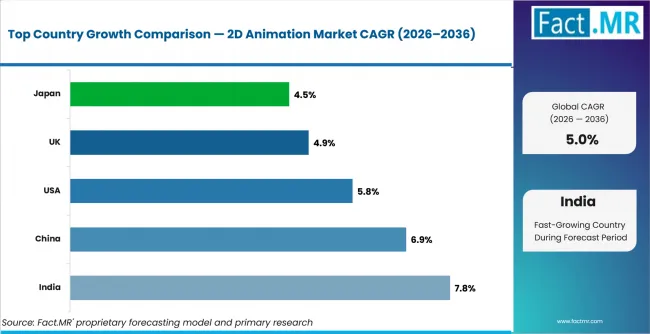
- By Geography: India is projected to record 7.8% CAGR through 2036 as AVGC-XR policy support and studio outsourcing demand strengthen production capacity.
- Analyst Opinion at Fact.MR
- Shambhu Nath Jha, Principal Consultant at Fact.MR, notes, “2D animation is moving beyond low-cost visual output toward production discipline. The main test is whether a studio can deliver character consistency and clean file handoff across multiple platforms. Suppliers that manage workflow quality will gain stronger long-term contracts.”
- Strategic Implications
- Pipeline Control: Animation studios need stronger asset management and review systems to reduce revision delays.
- Talent Planning: Production houses should train artists in digital rigging and platform-specific delivery.
- Client Fit: Brands need animation partners that can translate complex ideas into clear visual sequences.
2D animation demand is becoming more workflow-led. Studios need shorter production cycles without losing character identity or brand consistency. Disney’s 2025 annual report states that its content library includes animated film titles and animated series, which shows the continuing value of animated intellectual property in large entertainment libraries. [1]
India is projected to record 7.8% CAGR by 2036 as AVGC-XR policy support and outsourcing demand improve studio capacity. China is likely to post 6.9% CAGR from 2026 to 2036 because domestic streaming and brand content support animation demand. The United States is expected to register 5.8% CAGR through 2036 as streaming platforms and advertising agencies continue using animated formats. The United Kingdom is forecast to advance at 4.9% CAGR by 2036 as broadcaster demand and production support programs sustain studio activity. Japan is set to record 4.5% CAGR from 2026 to 2036 because anime and character-led content sustain mature demand.
Segmental Analysis
2D Animation Market Analysis by Animation Type

Digital 2D animation is expected to hold 48.0% share in 2026 because studios need reusable assets and cleaner platform delivery. Traditional 2D animation remains important for premium artistic work. Cut-out animation supports faster series production. Motion graphics serve advertising and corporate communication.
- Digital Workflow: Digital tools support asset reuse and faster edits as studios prepare content for multiple platforms.
- Hand Drawn Value: Traditional 2D methods suit premium projects that need artist control over movement and expression.
- Brand Motion: Motion graphics help brands explain ideas through short visual formats for campaigns and corporate content.
2D Animation Market Analysis by Production Stage
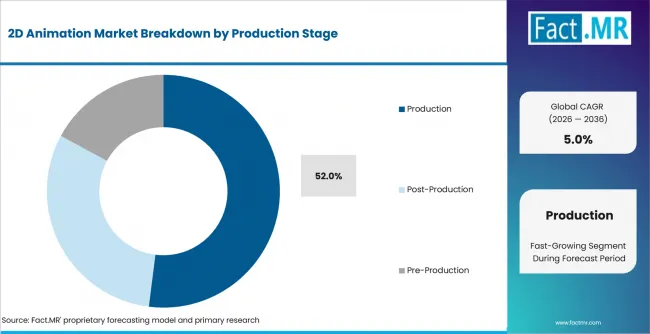
Production is likely to hold 52.0% share in 2026 because scene animation and coloring take most of the project work. Pre-production sets the script and visual style. Post-production handles compositing and final delivery. Netflix’s annual report shows continued spending on original and global content. [4] This supports demand for 2D animation production workflows.
- Scene Execution: Production takes the main work share as animators complete character movement and scene work.
- Early Planning: Pre-production helps teams fix story flow and visual direction before animation work begins.
- Final Refinement: Post-production improves compositing and sound synchronization before final files reach digital platforms.
2D Animation Market Analysis by End Use

Media and entertainment is projected to hold 44.0% share in 2026 because series and films create steady demand for 2D animation. Streaming shorts and children’s programs also support project work. Advertising uses 2D animation for explainer videos and campaign assets. Education and e-learning use animation to make lessons easier to understand. Gaming uses 2D assets in mobile and casual games.
- Screen Content: Media and entertainment uses steady animation output for series and films across streaming formats.
- Ad Communication: Advertising teams use animated visuals to explain services and create repeat campaign material.
- Lesson Design: E-learning firms use animation to make lessons easier for students to follow and remember.
2D Animation Market Analysis by Delivery Model
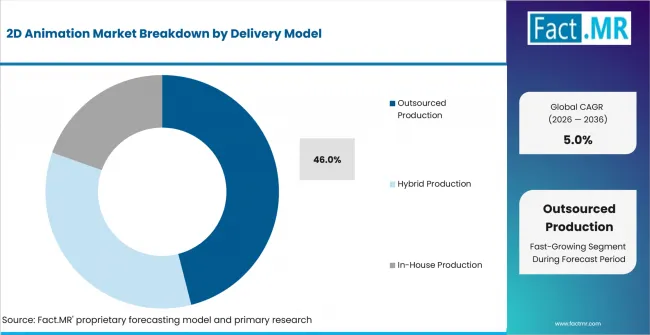
Outsourced production is anticipated to hold 46.0% share in 2026 as studios use external partners for cleanup and in-betweening. Coloring and compositing work also support outsourced demand. In-house production helps studios control core intellectual property. Hybrid production combines internal creative direction with external production support.
- Outsourced Capacity: External studios handle cleanup and in-betweening when production schedules need extra support.
- Internal Control: InIn-house production helps studios protect character scripts and sensitive creative assets during development.
- Shared Workflow: Hybrid delivery keeps creative direction internal and moves repeat production tasks to partner studios.
2D Animation Market Analysis by Revenue Model
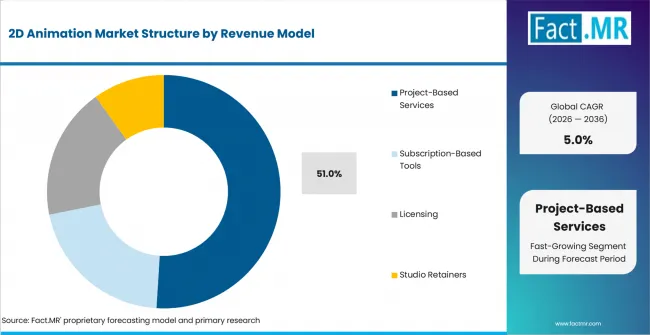
Project-based services are expected to hold 51.0% share in 2026 because animation is often sold by episode or campaign. Explainer videos and content packages also support this model. Subscription tools help creators and small studios manage regular work. Licensing creates income from characters and content libraries. Studio retainers support brands that need repeat animation content.
- Episode Pricing: Project-based services suit animation work sold by episode or campaign package.
- Software Access: Subscription tools help smaller studios manage regular production without high upfront software spending.
- Ongoing Output: Studio retainers support brands that need regular animated content for campaigns and training material.
2D Animation Market Drivers, Restraints, and Opportunities

Streaming content and e-learning are the main drivers for 2D animation demand. Media companies need animated formats for global viewers. Brands use animation to explain ideas without costly live-action shoots. Government support for creative industries helps studios expand production capacity.
Talent shortages and revision-heavy work can slow market expansion. 2D animation needs trained artists and clear client approvals. Small studios can lose margin if clients ask for repeated changes after animation starts. Software cost and file compatibility can also create pressure during larger projects.
Opportunities in the 2D Animation Market
- E-Learning Content: Studios can target education firms that need animated lessons and training modules.
- Short-Form Advertising: Agencies can use 2D animation for quick product explainers and social media campaigns.
- Outsourcing Hubs: Production firms in India and Southeast Asia can serve global studios with cost-efficient animation support.
Regional Analysis
Based on regional analysis, the 2D animation market is segmented into North America, Latin America, Europe, East Asia, South Asia & Oceania, and Middle East and Africa.
.webp)
| Country | CAGR 2026 to 2036 |
|---|---|
| India | 7.8% |
| China | 6.9% |
| United States | 5.8% |
| United Kingdom | 4.9% |
| Japan | 4.5% |
South Asia & Oceania 2D Animation Market Analysis
South Asia demand is supported by outsourcing and AVGC-XR policy support. India leads the region because animation studios serve local and overseas clients.
- India: India animation industry is moving from low-cost service work to wider AVGC-XR production support. Studios handle character animation and digital compositing for local and global projects. The country is projected to record 7.8% CAGR from 2026 to 2036 as outsourcing demand and policy support strengthen capacity. Studios with clear review systems will gain stronger client retention.
East Asia 2D Animation Market Analysis
East Asia demand comes from streaming and character-led content. China supports fast adoption through digital platforms and domestic animation demand. Japan remains mature because anime production already has deep creative infrastructure.
- China: China streaming and gaming ecosystem supports demand for animated series and character assets. Domestic platforms need scalable content for younger viewers and mobile-first audiences. China is likely to post 6.9% CAGR through 2036 as digital content spending supports animation demand. Studios with faster delivery and IP development capability will gain stronger contracts.
- Japan: Japan has an established anime and character-content base. Demand is steady because production systems are developed and local audiences are highly engaged. The Japanese 2D animation market is forecast to record 4.5% CAGR by 2036 as studios balance new content with franchise extensions. Workforce pressure and schedule discipline will remain important.
North America 2D Animation Market Analysis
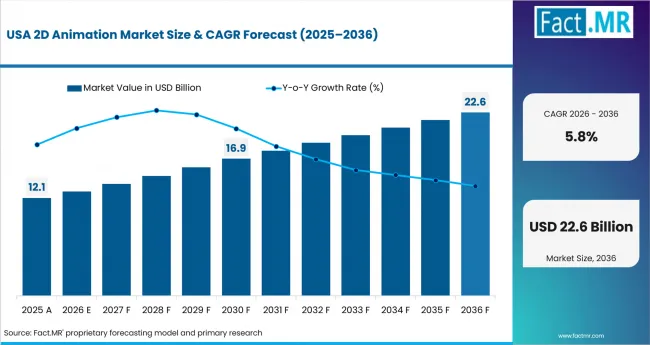
North America demand is led by the United States because entertainment studios and advertising agencies use 2D animation across several content formats.
- United States: The United States has a large entertainment and advertising base that supports 2D animation demand. Studios use animation for streaming shows and character-driven IP. The market is forecast to register 5.8% CAGR during the forecast period as content owners continue investing in animated assets. Production partners with strong creative supervision will remain preferred.
Europe 2D Animation Market Analysis

Europe demand comes from broadcaster commissioning and production support programs. Broadcaster demand supports 2D animation work. Studio co-production models help share production costs and support cross-border projects.
- United Kingdom: The United Kingdom supports animation demand through broadcaster content and creative tax relief. United Kingdom guidance allows qualifying animation production companies to claim relief within defined corporation tax rules. The market is expected to register 4.9% CAGR from 2026 to 2036 as animation studios serve entertainment and brand content demand. Co-production access will remain important for mid-sized studios.
Competitive Aligners for Market Suppliers

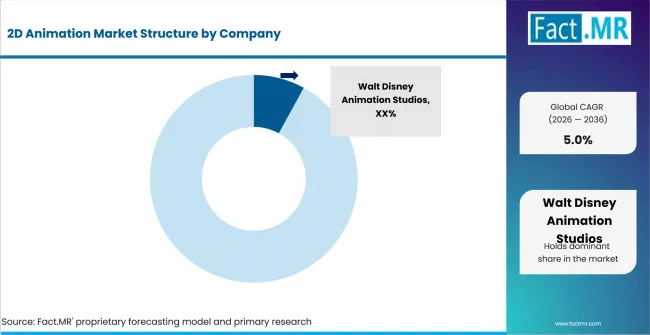
The 2D animation market is served by major animation studios and streaming production units. Walt Disney Animation Studios and Warner Bros. Animation bring large-scale storytelling and global content reach. Netflix Animation supports streaming-focused animated content. Toei Animation Co., Ltd. and Studio Pierrot Co., Ltd. are tied to long-running anime production. Cartoon Saloon stands out through distinctive visual style and independent animation work.
Studio selection will depend on visual style and delivery discipline through 2036. Streaming platforms will prefer studios that can manage regular episodic output. Advertising clients will value faster delivery and clear brand handling.
Competition will depend on production pipeline control. Large studios can gain through IP ownership and global distribution. Specialist studios can defend projects through unique art direction and flexible production support.
Key Companies in 2D Animation Market
- Walt Disney Animation Studios
- Warner Bros. Animation
- Netflix Animation
- Toei Animation Co., Ltd.
- Studio Pierrot Co., Ltd.
- Cartoon Saloon
Bibliography
- [1] The Walt Disney Company. (2025, November 13). Fiscal year 2025 annual financial report.
- [2] HM Revenue & Customs. (2026, February 19). Claiming Animation Tax Relief for Corporation Tax. GOV.UK.
- [3] Press Information Bureau. (2026, February 16). Creative industries as growth engines: Media, entertainment, AVGC, gaming and the orange economy. Government of India.
- [4] Netflix, Inc. (2026, January 23). 2025 annual report.
This Report Addresses
- Strategic intelligence on 2D animation demand across animation type, production stage, end use, delivery model, and revenue model.
- Forecast mapping from USD 26.9 billion in 2026 to USD 43.8 billion by 2036.
- Segment analysis covering digital 2D animation, production-stage work, media & entertainment, outsourced production, and project-based services.
- Regional outlook covering India, China, the United States, the United Kingdom, and Japan.
- Competitive analysis of Walt Disney Animation Studios, Warner Bros. Animation, Netflix Animation, Toei Animation Co., Ltd., Studio Pierrot Co., Ltd., Cartoon Saloon.
- Production assessment covering storyboarding, layout, character animation, cleanup, coloring, compositing, and delivery.
- Primary interviews, studio checks, official source review, and production workflow validation support the forecast.
2D Animation Market Definition
The 2D animation market covers the creation and delivery of two-dimensional animated content. It includes traditional hand-drawn animation and motion graphics. The market is different from 3D animation because visual output is built on flat characters and layered movement.
2D Animation Market Inclusions
The scope includes animated films and corporate animation. It also includes storyboard design and editing when sold as part of a 2D animation production workflow. UK guidance supports animation production through creative industry relief rules, but Animation Tax Relief is closing and cannot be claimed for productions starting after 31 March 2025. [2]
2D Animation Market Exclusions
The scope excludes pure 3D animation and motion capture services not tied to 2D output. Finished merchandise based on animated characters is also excluded because the market tracks animation production and delivery rather than consumer product licensing.
2D Animation Market Research Methodology
- Primary Research
- Primary research includes interviews with animation studio heads and production managers. It also includes input from streaming content leads and advertising creative directors. E-learning content managers are included to assess digital content demand.
- Desk Research
- Desk research reviews studio filings and animation policy documents. It covers streaming content disclosures and tax relief guidance. Software provider documentation and creative industry reports are reviewed to assess production and demand signals.
- Market-Sizing and Forecasting
- Forecasting uses production service demand and content commissioning activity. Outsourcing flows and delivery model adoption are reviewed. Country-level creative industry support also helps assess future market direction.
- Data Validation and Update Cycle
- Forecasts are validated through studio checks and platform demand review. Production pipeline feedback is also reviewed. Creative industry policy signals help confirm the final market direction.
Scope of the Report

| Attribute | Details |
|---|---|
| Quantitative Units | USD 26.9 billion in 2026 to USD 43.8 billion by 2036 at 5.0% CAGR |
| Market Definition | Two-dimensional animated content production, delivery, tools, licensing, and related production services |
| Animation Type | Traditional 2D Animation, Digital 2D Animation, Cut-Out Animation, Motion Graphics |
| Production Stage | Pre-Production, Production, Post-Production |
| End Use | Media & Entertainment, Advertising & Marketing, Education & E-Learning, Gaming, Corporate Communication |
| Delivery Model | In-House Production, Outsourced Production, Hybrid Production |
| Revenue Model | Project-Based Services, Subscription-Based Tools, Licensing, Studio Retainers |
| Regions Covered | North America, Latin America, Europe, East Asia, South Asia & Oceania, Middle East and Africa |
| Countries Covered | India, China, United States, United Kingdom, Japan |
| Key Companies Profiled | Walt Disney Animation Studios, Warner Bros. Animation, Netflix Animation, Toei Animation Co., Ltd., Studio Pierrot Co., Ltd., Cartoon Saloon |
| Forecast Period | 2026 to 2036 |
| Approach | Hybrid top-down and bottom-up approach using animation type demand, production stage workload, end-use uptake, delivery model, revenue model, and regional validation |
2D Animation Market Analysis by Segments
-
By Animation Type:
- Traditional 2D Animation
- Digital 2D Animation
- Cut-Out Animation
- Motion Graphics
-
By Production Stage:
- Pre-Production
- Production
- Post-Production
-
By End Use:
- Media & Entertainment
- Advertising & Marketing
- Education & E-Learning
- Gaming
- Corporate Communication
-
By Delivery Model:
- In-House Production
- Outsourced Production
- Hybrid Production
-
By Revenue Model:
- Project-Based Services
- Subscription-Based Tools
- Licensing
- Studio Retainers
-
Region:
- North America
- United States
- Canada
- Europe
- Germany
- United Kingdom
- France
- Italy
- Spain
- Asia Pacific
- China
- Japan
- South Korea
- Taiwan
- Singapore
- Latin America
- Brazil
- Mexico
- Argentina
- Middle East & Africa
- GCC Countries
- South Africa
- Israel
- North America
- Frequently Asked Questions -
What is the 2D Animation Market size in 2026?
The 2D animation market is estimated to reach USD 26.9 billion in 2026.
What will the 2D Animation Market be worth by 2036?
The market is projected to reach USD 43.8 billion by 2036 as digital production workflows and outsourced animation services expand.
What CAGR is projected for the 2D Animation Market?
The 2D animation market is forecast to record 5.0% CAGR from 2026 to 2036.
Which animation type leads the market?
Digital 2D animation leads with 48.0% share in 2026 because studios need reusable assets and platform-ready delivery.
Which country expands fastest in the 2D Animation Market?
India is projected to record 7.8% CAGR through 2036 as outsourcing demand and AVGC-XR policy support strengthen studio capacity.
How does China perform in the market?
China is likely to post 6.9% CAGR through 2036 as streaming and domestic character content support animation demand.
How does the United States perform in the 2D Animation Market?
The United States is forecast to register 5.8% CAGR from 2026 to 2036 as entertainment and advertising demand stay active.
What is the main driver in the 2D Animation Market?
The main driver is demand for scalable visual storytelling across streaming and digital platforms.
What is the main restraint in the market?
The main restraint is production workflow pressure. Revision-heavy projects can reduce margins and delay delivery.
Why is digital 2D animation important?
Digital 2D animation is important because it supports faster revision and cleaner platform delivery.
Why is outsourced production important?
Outsourced production is important because studios use external partners to manage animation workload and production peaks.
Table of Content
- Executive Summary
- Global Market Outlook
- Demand to side Trends
- Supply to side Trends
- Technology Roadmap Analysis
- Analysis and Recommendations
- Market Overview
- Market Coverage / Taxonomy
- Market Definition / Scope / Limitations
- Research Methodology
- Chapter Orientation
- Analytical Lens and Working Hypotheses
- Market Structure, Signals, and Trend Drivers
- Benchmarking and Cross-market Comparability
- Market Sizing, Forecasting, and Opportunity Mapping
- Research Design and Evidence Framework
- Desk Research Programme (Secondary Evidence)
- Company Annual and Sustainability Reports
- Peer-reviewed Journals and Academic Literature
- Corporate Websites, Product Literature, and Technical Notes
- Earnings Decks and Investor Briefings
- Statutory Filings and Regulatory Disclosures
- Technical White Papers and Standards Notes
- Trade Journals, Industry Magazines, and Analyst Briefs
- Conference Proceedings, Webinars, and Seminar Materials
- Government Statistics Portals and Public Data Releases
- Press Releases and Reputable Media Coverage
- Specialist Newsletters and Curated Briefings
- Sector Databases and Reference Repositories
- Fact.MR Internal Proprietary Databases and Historical Market Datasets
- Subscription Datasets and Paid Sources
- Social Channels, Communities, and Digital Listening Inputs
- Additional Desk Sources
- Expert Input and Fieldwork (Primary Evidence)
- Primary Modes
- Qualitative Interviews and Expert Elicitation
- Quantitative Surveys and Structured Data Capture
- Blended Approach
- Why Primary Evidence is Used
- Field Techniques
- Interviews
- Surveys
- Focus Groups
- Observational and In-context Research
- Social and Community Interactions
- Stakeholder Universe Engaged
- C-suite Leaders
- Board Members
- Presidents and Vice Presidents
- R&D and Innovation Heads
- Technical Specialists
- Domain Subject-matter Experts
- Scientists
- Physicians and Other Healthcare Professionals
- Governance, Ethics, and Data Stewardship
- Research Ethics
- Data Integrity and Handling
- Primary Modes
- Tooling, Models, and Reference Databases
- Desk Research Programme (Secondary Evidence)
- Data Engineering and Model Build
- Data Acquisition and Ingestion
- Cleaning, Normalisation, and Verification
- Synthesis, Triangulation, and Analysis
- Quality Assurance and Audit Trail
- Market Background
- Market Dynamics
- Drivers
- Restraints
- Opportunity
- Trends
- Scenario Forecast
- Demand in Optimistic Scenario
- Demand in Likely Scenario
- Demand in Conservative Scenario
- Opportunity Map Analysis
- Product Life Cycle Analysis
- Supply Chain Analysis
- Investment Feasibility Matrix
- Value Chain Analysis
- PESTLE and Porter’s Analysis
- Regulatory Landscape
- Regional Parent Market Outlook
- Production and Consumption Statistics
- Import and Export Statistics
- Market Dynamics
- Global Market Analysis 2021 to 2025 and Forecast, 2026 to 2036
- Historical Market Size Value (USD Million) Analysis, 2021 to 2025
- Current and Future Market Size Value (USD Million) Projections, 2026 to 2036
- Y to o to Y Growth Trend Analysis
- Absolute $ Opportunity Analysis
- Global Market Pricing Analysis 2021 to 2025 and Forecast 2026 to 2036
- Global Market Analysis 2021 to 2025 and Forecast 2026 to 2036, By Component
- Introduction / Key Findings
- Historical Market Size Value (USD Million) Analysis By Component , 2021 to 2025
- Current and Future Market Size Value (USD Million) Analysis and Forecast By Component , 2026 to 2036
- Software
- Hardware
- Services
- Software
- Y to o to Y Growth Trend Analysis By Component , 2021 to 2025
- Absolute $ Opportunity Analysis By Component , 2026 to 2036
- Global Market Analysis 2021 to 2025 and Forecast 2026 to 2036, By Recognition Type
- Introduction / Key Findings
- Historical Market Size Value (USD Million) Analysis By Recognition Type, 2021 to 2025
- Current and Future Market Size Value (USD Million) Analysis and Forecast By Recognition Type, 2026 to 2036
- Static Gesture Recognition
- Dynamic Gesture Recognition
- Static Gesture Recognition
- Y to o to Y Growth Trend Analysis By Recognition Type, 2021 to 2025
- Absolute $ Opportunity Analysis By Recognition Type, 2026 to 2036
- Global Market Analysis 2021 to 2025 and Forecast 2026 to 2036, By Technology
- Introduction / Key Findings
- Historical Market Size Value (USD Million) Analysis By Technology, 2021 to 2025
- Current and Future Market Size Value (USD Million) Analysis and Forecast By Technology, 2026 to 2036
- Camera-Based Recognition
- Touchscreen-Based Recognition
- Sensor-Assisted Recognition
- Camera-Based Recognition
- Y to o to Y Growth Trend Analysis By Technology, 2021 to 2025
- Absolute $ Opportunity Analysis By Technology, 2026 to 2036
- Global Market Analysis 2021 to 2025 and Forecast 2026 to 2036, By Application
- Introduction / Key Findings
- Historical Market Size Value (USD Million) Analysis By Application, 2021 to 2025
- Current and Future Market Size Value (USD Million) Analysis and Forecast By Application, 2026 to 2036
- Consumer Electronics
- Automotive HMI
- Retail Kiosks
- Healthcare Interfaces
- Gaming
- Consumer Electronics
- Y to o to Y Growth Trend Analysis By Application, 2021 to 2025
- Absolute $ Opportunity Analysis By Application, 2026 to 2036
- Global Market Analysis 2021 to 2025 and Forecast 2026 to 2036, By End User
- Introduction / Key Findings
- Historical Market Size Value (USD Million) Analysis By End User, 2021 to 2025
- Current and Future Market Size Value (USD Million) Analysis and Forecast By End User, 2026 to 2036
- Device OEMs
- Automotive Manufacturers
- Retail Operators
- Healthcare Providers
- Software Developers
- Device OEMs
- Y to o to Y Growth Trend Analysis By End User, 2021 to 2025
- Absolute $ Opportunity Analysis By End User, 2026 to 2036
- Global Market Analysis 2021 to 2025 and Forecast 2026 to 2036, By Region
- Introduction
- Historical Market Size Value (USD Million) Analysis By Region, 2021 to 2025
- Current Market Size Value (USD Million) Analysis and Forecast By Region, 2026 to 2036
- North America
- Latin America
- Western Europe
- Eastern Europe
- East Asia
- South Asia and Pacific
- Middle East & Africa
- Market Attractiveness Analysis By Region
- North America Market Analysis 2021 to 2025 and Forecast 2026 to 2036, By Country
- Historical Market Size Value (USD Million) Trend Analysis By Market Taxonomy, 2021 to 2025
- Market Size Value (USD Million) Forecast By Market Taxonomy, 2026 to 2036
- By Country
- USA
- Canada
- Mexico
- By Component
- By Recognition Type
- By Technology
- By Application
- By End User
- By Country
- Market Attractiveness Analysis
- By Country
- By Component
- By Recognition Type
- By Technology
- By Application
- By End User
- Key Takeaways
- Latin America Market Analysis 2021 to 2025 and Forecast 2026 to 2036, By Country
- Historical Market Size Value (USD Million) Trend Analysis By Market Taxonomy, 2021 to 2025
- Market Size Value (USD Million) Forecast By Market Taxonomy, 2026 to 2036
- By Country
- Brazil
- Chile
- Rest of Latin America
- By Component
- By Recognition Type
- By Technology
- By Application
- By End User
- By Country
- Market Attractiveness Analysis
- By Country
- By Component
- By Recognition Type
- By Technology
- By Application
- By End User
- Key Takeaways
- Western Europe Market Analysis 2021 to 2025 and Forecast 2026 to 2036, By Country
- Historical Market Size Value (USD Million) Trend Analysis By Market Taxonomy, 2021 to 2025
- Market Size Value (USD Million) Forecast By Market Taxonomy, 2026 to 2036
- By Country
- Germany
- UK
- Italy
- Spain
- France
- Nordic
- BENELUX
- Rest of Western Europe
- By Component
- By Recognition Type
- By Technology
- By Application
- By End User
- By Country
- Market Attractiveness Analysis
- By Country
- By Component
- By Recognition Type
- By Technology
- By Application
- By End User
- Key Takeaways
- Eastern Europe Market Analysis 2021 to 2025 and Forecast 2026 to 2036, By Country
- Historical Market Size Value (USD Million) Trend Analysis By Market Taxonomy, 2021 to 2025
- Market Size Value (USD Million) Forecast By Market Taxonomy, 2026 to 2036
- By Country
- Russia
- Poland
- Hungary
- Balkan & Baltic
- Rest of Eastern Europe
- By Component
- By Recognition Type
- By Technology
- By Application
- By End User
- By Country
- Market Attractiveness Analysis
- By Country
- By Component
- By Recognition Type
- By Technology
- By Application
- By End User
- Key Takeaways
- East Asia Market Analysis 2021 to 2025 and Forecast 2026 to 2036, By Country
- Historical Market Size Value (USD Million) Trend Analysis By Market Taxonomy, 2021 to 2025
- Market Size Value (USD Million) Forecast By Market Taxonomy, 2026 to 2036
- By Country
- China
- Japan
- South Korea
- By Component
- By Recognition Type
- By Technology
- By Application
- By End User
- By Country
- Market Attractiveness Analysis
- By Country
- By Component
- By Recognition Type
- By Technology
- By Application
- By End User
- Key Takeaways
- South Asia and Pacific Market Analysis 2021 to 2025 and Forecast 2026 to 2036, By Country
- Historical Market Size Value (USD Million) Trend Analysis By Market Taxonomy, 2021 to 2025
- Market Size Value (USD Million) Forecast By Market Taxonomy, 2026 to 2036
- By Country
- India
- ASEAN
- Australia & New Zealand
- Rest of South Asia and Pacific
- By Component
- By Recognition Type
- By Technology
- By Application
- By End User
- By Country
- Market Attractiveness Analysis
- By Country
- By Component
- By Recognition Type
- By Technology
- By Application
- By End User
- Key Takeaways
- Middle East & Africa Market Analysis 2021 to 2025 and Forecast 2026 to 2036, By Country
- Historical Market Size Value (USD Million) Trend Analysis By Market Taxonomy, 2021 to 2025
- Market Size Value (USD Million) Forecast By Market Taxonomy, 2026 to 2036
- By Country
- Kingdom of Saudi Arabia
- Other GCC Countries
- Turkiye
- South Africa
- Other African Union
- Rest of Middle East & Africa
- By Component
- By Recognition Type
- By Technology
- By Application
- By End User
- By Country
- Market Attractiveness Analysis
- By Country
- By Component
- By Recognition Type
- By Technology
- By Application
- By End User
- Key Takeaways
- Key Countries Market Analysis
- USA
- Pricing Analysis
- Market Share Analysis, 2025
- By Component
- By Recognition Type
- By Technology
- By Application
- By End User
- Canada
- Pricing Analysis
- Market Share Analysis, 2025
- By Component
- By Recognition Type
- By Technology
- By Application
- By End User
- Mexico
- Pricing Analysis
- Market Share Analysis, 2025
- By Component
- By Recognition Type
- By Technology
- By Application
- By End User
- Brazil
- Pricing Analysis
- Market Share Analysis, 2025
- By Component
- By Recognition Type
- By Technology
- By Application
- By End User
- Chile
- Pricing Analysis
- Market Share Analysis, 2025
- By Component
- By Recognition Type
- By Technology
- By Application
- By End User
- Germany
- Pricing Analysis
- Market Share Analysis, 2025
- By Component
- By Recognition Type
- By Technology
- By Application
- By End User
- UK
- Pricing Analysis
- Market Share Analysis, 2025
- By Component
- By Recognition Type
- By Technology
- By Application
- By End User
- Italy
- Pricing Analysis
- Market Share Analysis, 2025
- By Component
- By Recognition Type
- By Technology
- By Application
- By End User
- Spain
- Pricing Analysis
- Market Share Analysis, 2025
- By Component
- By Recognition Type
- By Technology
- By Application
- By End User
- France
- Pricing Analysis
- Market Share Analysis, 2025
- By Component
- By Recognition Type
- By Technology
- By Application
- By End User
- India
- Pricing Analysis
- Market Share Analysis, 2025
- By Component
- By Recognition Type
- By Technology
- By Application
- By End User
- ASEAN
- Pricing Analysis
- Market Share Analysis, 2025
- By Component
- By Recognition Type
- By Technology
- By Application
- By End User
- Australia & New Zealand
- Pricing Analysis
- Market Share Analysis, 2025
- By Component
- By Recognition Type
- By Technology
- By Application
- By End User
- China
- Pricing Analysis
- Market Share Analysis, 2025
- By Component
- By Recognition Type
- By Technology
- By Application
- By End User
- Japan
- Pricing Analysis
- Market Share Analysis, 2025
- By Component
- By Recognition Type
- By Technology
- By Application
- By End User
- South Korea
- Pricing Analysis
- Market Share Analysis, 2025
- By Component
- By Recognition Type
- By Technology
- By Application
- By End User
- Russia
- Pricing Analysis
- Market Share Analysis, 2025
- By Component
- By Recognition Type
- By Technology
- By Application
- By End User
- Poland
- Pricing Analysis
- Market Share Analysis, 2025
- By Component
- By Recognition Type
- By Technology
- By Application
- By End User
- Hungary
- Pricing Analysis
- Market Share Analysis, 2025
- By Component
- By Recognition Type
- By Technology
- By Application
- By End User
- Kingdom of Saudi Arabia
- Pricing Analysis
- Market Share Analysis, 2025
- By Component
- By Recognition Type
- By Technology
- By Application
- By End User
- Turkiye
- Pricing Analysis
- Market Share Analysis, 2025
- By Component
- By Recognition Type
- By Technology
- By Application
- By End User
- South Africa
- Pricing Analysis
- Market Share Analysis, 2025
- By Component
- By Recognition Type
- By Technology
- By Application
- By End User
- USA
- Market Structure Analysis
- Competition Dashboard
- Competition Benchmarking
- Market Share Analysis of Top Players
- By Regional
- By Component
- By Recognition Type
- By Technology
- By Application
- By End User
- Competition Analysis
- Competition Deep Dive
- Google LLC
- Overview
- Product Portfolio
- Profitability by Market Segments (Product/Age /Sales Channel/Region)
- Sales Footprint
- Strategy Overview
- Marketing Strategy
- Product Strategy
- Channel Strategy
- Qualcomm Incorporated
- Microchip Technology Inc.
- Infineon Technologies AG
- Sony Semiconductor Solutions Corporation
- Google LLC
- Competition Deep Dive
- Assumptions & Acronyms Used
List Of Table
- Table 1: Global Market Value (USD Million) Forecast by Region, 2021 to 2036
- Table 2: Global Market Value (USD Million) Forecast by Component, 2021 to 2036
- Table 3: Global Market Value (USD Million) Forecast by Recognition Type, 2021 to 2036
- Table 4: Global Market Value (USD Million) Forecast by Technology, 2021 to 2036
- Table 5: Global Market Value (USD Million) Forecast by Application, 2021 to 2036
- Table 6: Global Market Value (USD Million) Forecast by End User, 2021 to 2036
- Table 7: North America Market Value (USD Million) Forecast by Country, 2021 to 2036
- Table 8: North America Market Value (USD Million) Forecast by Component, 2021 to 2036
- Table 9: North America Market Value (USD Million) Forecast by Recognition Type, 2021 to 2036
- Table 10: North America Market Value (USD Million) Forecast by Technology, 2021 to 2036
- Table 11: North America Market Value (USD Million) Forecast by Application, 2021 to 2036
- Table 12: North America Market Value (USD Million) Forecast by End User, 2021 to 2036
- Table 13: Latin America Market Value (USD Million) Forecast by Country, 2021 to 2036
- Table 14: Latin America Market Value (USD Million) Forecast by Component, 2021 to 2036
- Table 15: Latin America Market Value (USD Million) Forecast by Recognition Type, 2021 to 2036
- Table 16: Latin America Market Value (USD Million) Forecast by Technology, 2021 to 2036
- Table 17: Latin America Market Value (USD Million) Forecast by Application, 2021 to 2036
- Table 18: Latin America Market Value (USD Million) Forecast by End User, 2021 to 2036
- Table 19: Western Europe Market Value (USD Million) Forecast by Country, 2021 to 2036
- Table 20: Western Europe Market Value (USD Million) Forecast by Component, 2021 to 2036
- Table 21: Western Europe Market Value (USD Million) Forecast by Recognition Type, 2021 to 2036
- Table 22: Western Europe Market Value (USD Million) Forecast by Technology, 2021 to 2036
- Table 23: Western Europe Market Value (USD Million) Forecast by Application, 2021 to 2036
- Table 24: Western Europe Market Value (USD Million) Forecast by End User, 2021 to 2036
- Table 25: Eastern Europe Market Value (USD Million) Forecast by Country, 2021 to 2036
- Table 26: Eastern Europe Market Value (USD Million) Forecast by Component, 2021 to 2036
- Table 27: Eastern Europe Market Value (USD Million) Forecast by Recognition Type, 2021 to 2036
- Table 28: Eastern Europe Market Value (USD Million) Forecast by Technology, 2021 to 2036
- Table 29: Eastern Europe Market Value (USD Million) Forecast by Application, 2021 to 2036
- Table 30: Eastern Europe Market Value (USD Million) Forecast by End User, 2021 to 2036
- Table 31: East Asia Market Value (USD Million) Forecast by Country, 2021 to 2036
- Table 32: East Asia Market Value (USD Million) Forecast by Component, 2021 to 2036
- Table 33: East Asia Market Value (USD Million) Forecast by Recognition Type, 2021 to 2036
- Table 34: East Asia Market Value (USD Million) Forecast by Technology, 2021 to 2036
- Table 35: East Asia Market Value (USD Million) Forecast by Application, 2021 to 2036
- Table 36: East Asia Market Value (USD Million) Forecast by End User, 2021 to 2036
- Table 37: South Asia and Pacific Market Value (USD Million) Forecast by Country, 2021 to 2036
- Table 38: South Asia and Pacific Market Value (USD Million) Forecast by Component, 2021 to 2036
- Table 39: South Asia and Pacific Market Value (USD Million) Forecast by Recognition Type, 2021 to 2036
- Table 40: South Asia and Pacific Market Value (USD Million) Forecast by Technology, 2021 to 2036
- Table 41: South Asia and Pacific Market Value (USD Million) Forecast by Application, 2021 to 2036
- Table 42: South Asia and Pacific Market Value (USD Million) Forecast by End User, 2021 to 2036
- Table 43: Middle East & Africa Market Value (USD Million) Forecast by Country, 2021 to 2036
- Table 44: Middle East & Africa Market Value (USD Million) Forecast by Component, 2021 to 2036
- Table 45: Middle East & Africa Market Value (USD Million) Forecast by Recognition Type, 2021 to 2036
- Table 46: Middle East & Africa Market Value (USD Million) Forecast by Technology, 2021 to 2036
- Table 47: Middle East & Africa Market Value (USD Million) Forecast by Application, 2021 to 2036
- Table 48: Middle East & Africa Market Value (USD Million) Forecast by End User, 2021 to 2036
List Of Figures
- Figure 1: Global Market Pricing Analysis
- Figure 2: Global Market Value (USD Million) Forecast 2021-2036
- Figure 3: Global Market Value Share and BPS Analysis by Component, 2026 and 2036
- Figure 4: Global Market Y-o-Y Growth Comparison by Component, 2026 to 2036
- Figure 5: Global Market Attractiveness Analysis by Component
- Figure 6: Global Market Value Share and BPS Analysis by Recognition Type, 2026 and 2036
- Figure 7: Global Market Y-o-Y Growth Comparison by Recognition Type, 2026 to 2036
- Figure 8: Global Market Attractiveness Analysis by Recognition Type
- Figure 9: Global Market Value Share and BPS Analysis by Technology, 2026 and 2036
- Figure 10: Global Market Y-o-Y Growth Comparison by Technology, 2026 to 2036
- Figure 11: Global Market Attractiveness Analysis by Technology
- Figure 12: Global Market Value Share and BPS Analysis by Application, 2026 and 2036
- Figure 13: Global Market Y-o-Y Growth Comparison by Application, 2026 to 2036
- Figure 14: Global Market Attractiveness Analysis by Application
- Figure 15: Global Market Value Share and BPS Analysis by End User, 2026 and 2036
- Figure 16: Global Market Y-o-Y Growth Comparison by End User, 2026 to 2036
- Figure 17: Global Market Attractiveness Analysis by End User
- Figure 18: Global Market Value (USD Million) Share and BPS Analysis by Region, 2026 and 2036
- Figure 19: Global Market Y-o-Y Growth Comparison by Region, 2026 to 2036
- Figure 20: Global Market Attractiveness Analysis by Region
- Figure 21: North America Market Incremental Dollar Opportunity, 2026 to 2036
- Figure 22: Latin America Market Incremental Dollar Opportunity, 2026 to 2036
- Figure 23: Western Europe Market Incremental Dollar Opportunity, 2026 to 2036
- Figure 24: Eastern Europe Market Incremental Dollar Opportunity, 2026 to 2036
- Figure 25: East Asia Market Incremental Dollar Opportunity, 2026 to 2036
- Figure 26: South Asia and Pacific Market Incremental Dollar Opportunity, 2026 to 2036
- Figure 27: Middle East & Africa Market Incremental Dollar Opportunity, 2026 to 2036
- Figure 28: North America Market Value Share and BPS Analysis by Country, 2026 and 2036
- Figure 29: North America Market Value Share and BPS Analysis by Component, 2026 and 2036
- Figure 30: North America Market Y-o-Y Growth Comparison by Component, 2026 to 2036
- Figure 31: North America Market Attractiveness Analysis by Component
- Figure 32: North America Market Value Share and BPS Analysis by Recognition Type, 2026 and 2036
- Figure 33: North America Market Y-o-Y Growth Comparison by Recognition Type, 2026 to 2036
- Figure 34: North America Market Attractiveness Analysis by Recognition Type
- Figure 35: North America Market Value Share and BPS Analysis by Technology, 2026 and 2036
- Figure 36: North America Market Y-o-Y Growth Comparison by Technology, 2026 to 2036
- Figure 37: North America Market Attractiveness Analysis by Technology
- Figure 38: North America Market Value Share and BPS Analysis by Application, 2026 and 2036
- Figure 39: North America Market Y-o-Y Growth Comparison by Application, 2026 to 2036
- Figure 40: North America Market Attractiveness Analysis by Application
- Figure 41: North America Market Value Share and BPS Analysis by End User, 2026 and 2036
- Figure 42: North America Market Y-o-Y Growth Comparison by End User, 2026 to 2036
- Figure 43: North America Market Attractiveness Analysis by End User
- Figure 44: Latin America Market Value Share and BPS Analysis by Country, 2026 and 2036
- Figure 45: Latin America Market Value Share and BPS Analysis by Component, 2026 and 2036
- Figure 46: Latin America Market Y-o-Y Growth Comparison by Component, 2026 to 2036
- Figure 47: Latin America Market Attractiveness Analysis by Component
- Figure 48: Latin America Market Value Share and BPS Analysis by Recognition Type, 2026 and 2036
- Figure 49: Latin America Market Y-o-Y Growth Comparison by Recognition Type, 2026 to 2036
- Figure 50: Latin America Market Attractiveness Analysis by Recognition Type
- Figure 51: Latin America Market Value Share and BPS Analysis by Technology, 2026 and 2036
- Figure 52: Latin America Market Y-o-Y Growth Comparison by Technology, 2026 to 2036
- Figure 53: Latin America Market Attractiveness Analysis by Technology
- Figure 54: Latin America Market Value Share and BPS Analysis by Application, 2026 and 2036
- Figure 55: Latin America Market Y-o-Y Growth Comparison by Application, 2026 to 2036
- Figure 56: Latin America Market Attractiveness Analysis by Application
- Figure 57: Latin America Market Value Share and BPS Analysis by End User, 2026 and 2036
- Figure 58: Latin America Market Y-o-Y Growth Comparison by End User, 2026 to 2036
- Figure 59: Latin America Market Attractiveness Analysis by End User
- Figure 60: Western Europe Market Value Share and BPS Analysis by Country, 2026 and 2036
- Figure 61: Western Europe Market Value Share and BPS Analysis by Component, 2026 and 2036
- Figure 62: Western Europe Market Y-o-Y Growth Comparison by Component, 2026 to 2036
- Figure 63: Western Europe Market Attractiveness Analysis by Component
- Figure 64: Western Europe Market Value Share and BPS Analysis by Recognition Type, 2026 and 2036
- Figure 65: Western Europe Market Y-o-Y Growth Comparison by Recognition Type, 2026 to 2036
- Figure 66: Western Europe Market Attractiveness Analysis by Recognition Type
- Figure 67: Western Europe Market Value Share and BPS Analysis by Technology, 2026 and 2036
- Figure 68: Western Europe Market Y-o-Y Growth Comparison by Technology, 2026 to 2036
- Figure 69: Western Europe Market Attractiveness Analysis by Technology
- Figure 70: Western Europe Market Value Share and BPS Analysis by Application, 2026 and 2036
- Figure 71: Western Europe Market Y-o-Y Growth Comparison by Application, 2026 to 2036
- Figure 72: Western Europe Market Attractiveness Analysis by Application
- Figure 73: Western Europe Market Value Share and BPS Analysis by End User, 2026 and 2036
- Figure 74: Western Europe Market Y-o-Y Growth Comparison by End User, 2026 to 2036
- Figure 75: Western Europe Market Attractiveness Analysis by End User
- Figure 76: Eastern Europe Market Value Share and BPS Analysis by Country, 2026 and 2036
- Figure 77: Eastern Europe Market Value Share and BPS Analysis by Component, 2026 and 2036
- Figure 78: Eastern Europe Market Y-o-Y Growth Comparison by Component, 2026 to 2036
- Figure 79: Eastern Europe Market Attractiveness Analysis by Component
- Figure 80: Eastern Europe Market Value Share and BPS Analysis by Recognition Type, 2026 and 2036
- Figure 81: Eastern Europe Market Y-o-Y Growth Comparison by Recognition Type, 2026 to 2036
- Figure 82: Eastern Europe Market Attractiveness Analysis by Recognition Type
- Figure 83: Eastern Europe Market Value Share and BPS Analysis by Technology, 2026 and 2036
- Figure 84: Eastern Europe Market Y-o-Y Growth Comparison by Technology, 2026 to 2036
- Figure 85: Eastern Europe Market Attractiveness Analysis by Technology
- Figure 86: Eastern Europe Market Value Share and BPS Analysis by Application, 2026 and 2036
- Figure 87: Eastern Europe Market Y-o-Y Growth Comparison by Application, 2026 to 2036
- Figure 88: Eastern Europe Market Attractiveness Analysis by Application
- Figure 89: Eastern Europe Market Value Share and BPS Analysis by End User, 2026 and 2036
- Figure 90: Eastern Europe Market Y-o-Y Growth Comparison by End User, 2026 to 2036
- Figure 91: Eastern Europe Market Attractiveness Analysis by End User
- Figure 92: East Asia Market Value Share and BPS Analysis by Country, 2026 and 2036
- Figure 93: East Asia Market Value Share and BPS Analysis by Component, 2026 and 2036
- Figure 94: East Asia Market Y-o-Y Growth Comparison by Component, 2026 to 2036
- Figure 95: East Asia Market Attractiveness Analysis by Component
- Figure 96: East Asia Market Value Share and BPS Analysis by Recognition Type, 2026 and 2036
- Figure 97: East Asia Market Y-o-Y Growth Comparison by Recognition Type, 2026 to 2036
- Figure 98: East Asia Market Attractiveness Analysis by Recognition Type
- Figure 99: East Asia Market Value Share and BPS Analysis by Technology, 2026 and 2036
- Figure 100: East Asia Market Y-o-Y Growth Comparison by Technology, 2026 to 2036
- Figure 101: East Asia Market Attractiveness Analysis by Technology
- Figure 102: East Asia Market Value Share and BPS Analysis by Application, 2026 and 2036
- Figure 103: East Asia Market Y-o-Y Growth Comparison by Application, 2026 to 2036
- Figure 104: East Asia Market Attractiveness Analysis by Application
- Figure 105: East Asia Market Value Share and BPS Analysis by End User, 2026 and 2036
- Figure 106: East Asia Market Y-o-Y Growth Comparison by End User, 2026 to 2036
- Figure 107: East Asia Market Attractiveness Analysis by End User
- Figure 108: South Asia and Pacific Market Value Share and BPS Analysis by Country, 2026 and 2036
- Figure 109: South Asia and Pacific Market Value Share and BPS Analysis by Component, 2026 and 2036
- Figure 110: South Asia and Pacific Market Y-o-Y Growth Comparison by Component, 2026 to 2036
- Figure 111: South Asia and Pacific Market Attractiveness Analysis by Component
- Figure 112: South Asia and Pacific Market Value Share and BPS Analysis by Recognition Type, 2026 and 2036
- Figure 113: South Asia and Pacific Market Y-o-Y Growth Comparison by Recognition Type, 2026 to 2036
- Figure 114: South Asia and Pacific Market Attractiveness Analysis by Recognition Type
- Figure 115: South Asia and Pacific Market Value Share and BPS Analysis by Technology, 2026 and 2036
- Figure 116: South Asia and Pacific Market Y-o-Y Growth Comparison by Technology, 2026 to 2036
- Figure 117: South Asia and Pacific Market Attractiveness Analysis by Technology
- Figure 118: South Asia and Pacific Market Value Share and BPS Analysis by Application, 2026 and 2036
- Figure 119: South Asia and Pacific Market Y-o-Y Growth Comparison by Application, 2026 to 2036
- Figure 120: South Asia and Pacific Market Attractiveness Analysis by Application
- Figure 121: South Asia and Pacific Market Value Share and BPS Analysis by End User, 2026 and 2036
- Figure 122: South Asia and Pacific Market Y-o-Y Growth Comparison by End User, 2026 to 2036
- Figure 123: South Asia and Pacific Market Attractiveness Analysis by End User
- Figure 124: Middle East & Africa Market Value Share and BPS Analysis by Country, 2026 and 2036
- Figure 125: Middle East & Africa Market Value Share and BPS Analysis by Component, 2026 and 2036
- Figure 126: Middle East & Africa Market Y-o-Y Growth Comparison by Component, 2026 to 2036
- Figure 127: Middle East & Africa Market Attractiveness Analysis by Component
- Figure 128: Middle East & Africa Market Value Share and BPS Analysis by Recognition Type, 2026 and 2036
- Figure 129: Middle East & Africa Market Y-o-Y Growth Comparison by Recognition Type, 2026 to 2036
- Figure 130: Middle East & Africa Market Attractiveness Analysis by Recognition Type
- Figure 131: Middle East & Africa Market Value Share and BPS Analysis by Technology, 2026 and 2036
- Figure 132: Middle East & Africa Market Y-o-Y Growth Comparison by Technology, 2026 to 2036
- Figure 133: Middle East & Africa Market Attractiveness Analysis by Technology
- Figure 134: Middle East & Africa Market Value Share and BPS Analysis by Application, 2026 and 2036
- Figure 135: Middle East & Africa Market Y-o-Y Growth Comparison by Application, 2026 to 2036
- Figure 136: Middle East & Africa Market Attractiveness Analysis by Application
- Figure 137: Middle East & Africa Market Value Share and BPS Analysis by End User, 2026 and 2036
- Figure 138: Middle East & Africa Market Y-o-Y Growth Comparison by End User, 2026 to 2036
- Figure 139: Middle East & Africa Market Attractiveness Analysis by End User
- Figure 140: Global Market - Tier Structure Analysis
- Figure 141: Global Market - Company Share Analysis
z
- Figure 1: Global Market Pricing Analysis
- Figure 2: Global Market Value (USD Million) Forecast 2021-2036
- Figure 3: Global Market Value Share and BPS Analysis by Component, 2026 and 2036
- Figure 4: Global Market Y-o-Y Growth Comparison by Component, 2026 to 2036
- Figure 5: Global Market Attractiveness Analysis by Component
- Figure 6: Global Market Value Share and BPS Analysis by Recognition Type, 2026 and 2036
- Figure 7: Global Market Y-o-Y Growth Comparison by Recognition Type, 2026 to 2036
- Figure 8: Global Market Attractiveness Analysis by Recognition Type
- Figure 9: Global Market Value Share and BPS Analysis by Technology, 2026 and 2036
- Figure 10: Global Market Y-o-Y Growth Comparison by Technology, 2026 to 2036
- Figure 11: Global Market Attractiveness Analysis by Technology
- Figure 12: Global Market Value Share and BPS Analysis by Application, 2026 and 2036
- Figure 13: Global Market Y-o-Y Growth Comparison by Application, 2026 to 2036
- Figure 14: Global Market Attractiveness Analysis by Application
- Figure 15: Global Market Value Share and BPS Analysis by End User, 2026 and 2036
- Figure 16: Global Market Y-o-Y Growth Comparison by End User, 2026 to 2036
- Figure 17: Global Market Attractiveness Analysis by End User
- Figure 18: Global Market Value (USD Million) Share and BPS Analysis by Region, 2026 and 2036
- Figure 19: Global Market Y-o-Y Growth Comparison by Region, 2026 to 2036
- Figure 20: Global Market Attractiveness Analysis by Region
- Figure 21: North America Market Incremental Dollar Opportunity, 2026 to 2036
- Figure 22: Latin America Market Incremental Dollar Opportunity, 2026 to 2036
- Figure 23: Western Europe Market Incremental Dollar Opportunity, 2026 to 2036
- Figure 24: Eastern Europe Market Incremental Dollar Opportunity, 2026 to 2036
- Figure 25: East Asia Market Incremental Dollar Opportunity, 2026 to 2036
- Figure 26: South Asia and Pacific Market Incremental Dollar Opportunity, 2026 to 2036
- Figure 27: Middle East & Africa Market Incremental Dollar Opportunity, 2026 to 2036
- Figure 28: North America Market Value Share and BPS Analysis by Country, 2026 and 2036
- Figure 29: North America Market Value Share and BPS Analysis by Component, 2026 and 2036
- Figure 30: North America Market Y-o-Y Growth Comparison by Component, 2026 to 2036
- Figure 31: North America Market Attractiveness Analysis by Component
- Figure 32: North America Market Value Share and BPS Analysis by Recognition Type, 2026 and 2036
- Figure 33: North America Market Y-o-Y Growth Comparison by Recognition Type, 2026 to 2036
- Figure 34: North America Market Attractiveness Analysis by Recognition Type
- Figure 35: North America Market Value Share and BPS Analysis by Technology, 2026 and 2036
- Figure 36: North America Market Y-o-Y Growth Comparison by Technology, 2026 to 2036
- Figure 37: North America Market Attractiveness Analysis by Technology
- Figure 38: North America Market Value Share and BPS Analysis by Application, 2026 and 2036
- Figure 39: North America Market Y-o-Y Growth Comparison by Application, 2026 to 2036
- Figure 40: North America Market Attractiveness Analysis by Application
- Figure 41: North America Market Value Share and BPS Analysis by End User, 2026 and 2036
- Figure 42: North America Market Y-o-Y Growth Comparison by End User, 2026 to 2036
- Figure 43: North America Market Attractiveness Analysis by End User
- Figure 44: Latin America Market Value Share and BPS Analysis by Country, 2026 and 2036
- Figure 45: Latin America Market Value Share and BPS Analysis by Component, 2026 and 2036
- Figure 46: Latin America Market Y-o-Y Growth Comparison by Component, 2026 to 2036
- Figure 47: Latin America Market Attractiveness Analysis by Component
- Figure 48: Latin America Market Value Share and BPS Analysis by Recognition Type, 2026 and 2036
- Figure 49: Latin America Market Y-o-Y Growth Comparison by Recognition Type, 2026 to 2036
- Figure 50: Latin America Market Attractiveness Analysis by Recognition Type
- Figure 51: Latin America Market Value Share and BPS Analysis by Technology, 2026 and 2036
- Figure 52: Latin America Market Y-o-Y Growth Comparison by Technology, 2026 to 2036
- Figure 53: Latin America Market Attractiveness Analysis by Technology
- Figure 54: Latin America Market Value Share and BPS Analysis by Application, 2026 and 2036
- Figure 55: Latin America Market Y-o-Y Growth Comparison by Application, 2026 to 2036
- Figure 56: Latin America Market Attractiveness Analysis by Application
- Figure 57: Latin America Market Value Share and BPS Analysis by End User, 2026 and 2036
- Figure 58: Latin America Market Y-o-Y Growth Comparison by End User, 2026 to 2036
- Figure 59: Latin America Market Attractiveness Analysis by End User
- Figure 60: Western Europe Market Value Share and BPS Analysis by Country, 2026 and 2036
- Figure 61: Western Europe Market Value Share and BPS Analysis by Component, 2026 and 2036
- Figure 62: Western Europe Market Y-o-Y Growth Comparison by Component, 2026 to 2036
- Figure 63: Western Europe Market Attractiveness Analysis by Component
- Figure 64: Western Europe Market Value Share and BPS Analysis by Recognition Type, 2026 and 2036
- Figure 65: Western Europe Market Y-o-Y Growth Comparison by Recognition Type, 2026 to 2036
- Figure 66: Western Europe Market Attractiveness Analysis by Recognition Type
- Figure 67: Western Europe Market Value Share and BPS Analysis by Technology, 2026 and 2036
- Figure 68: Western Europe Market Y-o-Y Growth Comparison by Technology, 2026 to 2036
- Figure 69: Western Europe Market Attractiveness Analysis by Technology
- Figure 70: Western Europe Market Value Share and BPS Analysis by Application, 2026 and 2036
- Figure 71: Western Europe Market Y-o-Y Growth Comparison by Application, 2026 to 2036
- Figure 72: Western Europe Market Attractiveness Analysis by Application
- Figure 73: Western Europe Market Value Share and BPS Analysis by End User, 2026 and 2036
- Figure 74: Western Europe Market Y-o-Y Growth Comparison by End User, 2026 to 2036
- Figure 75: Western Europe Market Attractiveness Analysis by End User
- Figure 76: Eastern Europe Market Value Share and BPS Analysis by Country, 2026 and 2036
- Figure 77: Eastern Europe Market Value Share and BPS Analysis by Component, 2026 and 2036
- Figure 78: Eastern Europe Market Y-o-Y Growth Comparison by Component, 2026 to 2036
- Figure 79: Eastern Europe Market Attractiveness Analysis by Component
- Figure 80: Eastern Europe Market Value Share and BPS Analysis by Recognition Type, 2026 and 2036
- Figure 81: Eastern Europe Market Y-o-Y Growth Comparison by Recognition Type, 2026 to 2036
- Figure 82: Eastern Europe Market Attractiveness Analysis by Recognition Type
- Figure 83: Eastern Europe Market Value Share and BPS Analysis by Technology, 2026 and 2036
- Figure 84: Eastern Europe Market Y-o-Y Growth Comparison by Technology, 2026 to 2036
- Figure 85: Eastern Europe Market Attractiveness Analysis by Technology
- Figure 86: Eastern Europe Market Value Share and BPS Analysis by Application, 2026 and 2036
- Figure 87: Eastern Europe Market Y-o-Y Growth Comparison by Application, 2026 to 2036
- Figure 88: Eastern Europe Market Attractiveness Analysis by Application
- Figure 89: Eastern Europe Market Value Share and BPS Analysis by End User, 2026 and 2036
- Figure 90: Eastern Europe Market Y-o-Y Growth Comparison by End User, 2026 to 2036
- Figure 91: Eastern Europe Market Attractiveness Analysis by End User
- Figure 92: East Asia Market Value Share and BPS Analysis by Country, 2026 and 2036
- Figure 93: East Asia Market Value Share and BPS Analysis by Component, 2026 and 2036
- Figure 94: East Asia Market Y-o-Y Growth Comparison by Component, 2026 to 2036
- Figure 95: East Asia Market Attractiveness Analysis by Component
- Figure 96: East Asia Market Value Share and BPS Analysis by Recognition Type, 2026 and 2036
- Figure 97: East Asia Market Y-o-Y Growth Comparison by Recognition Type, 2026 to 2036
- Figure 98: East Asia Market Attractiveness Analysis by Recognition Type
- Figure 99: East Asia Market Value Share and BPS Analysis by Technology, 2026 and 2036
- Figure 100: East Asia Market Y-o-Y Growth Comparison by Technology, 2026 to 2036
- Figure 101: East Asia Market Attractiveness Analysis by Technology
- Figure 102: East Asia Market Value Share and BPS Analysis by Application, 2026 and 2036
- Figure 103: East Asia Market Y-o-Y Growth Comparison by Application, 2026 to 2036
- Figure 104: East Asia Market Attractiveness Analysis by Application
- Figure 105: East Asia Market Value Share and BPS Analysis by End User, 2026 and 2036
- Figure 106: East Asia Market Y-o-Y Growth Comparison by End User, 2026 to 2036
- Figure 107: East Asia Market Attractiveness Analysis by End User
- Figure 108: South Asia and Pacific Market Value Share and BPS Analysis by Country, 2026 and 2036
- Figure 109: South Asia and Pacific Market Value Share and BPS Analysis by Component, 2026 and 2036
- Figure 110: South Asia and Pacific Market Y-o-Y Growth Comparison by Component, 2026 to 2036
- Figure 111: South Asia and Pacific Market Attractiveness Analysis by Component
- Figure 112: South Asia and Pacific Market Value Share and BPS Analysis by Recognition Type, 2026 and 2036
- Figure 113: South Asia and Pacific Market Y-o-Y Growth Comparison by Recognition Type, 2026 to 2036
- Figure 114: South Asia and Pacific Market Attractiveness Analysis by Recognition Type
- Figure 115: South Asia and Pacific Market Value Share and BPS Analysis by Technology, 2026 and 2036
- Figure 116: South Asia and Pacific Market Y-o-Y Growth Comparison by Technology, 2026 to 2036
- Figure 117: South Asia and Pacific Market Attractiveness Analysis by Technology
- Figure 118: South Asia and Pacific Market Value Share and BPS Analysis by Application, 2026 and 2036
- Figure 119: South Asia and Pacific Market Y-o-Y Growth Comparison by Application, 2026 to 2036
- Figure 120: South Asia and Pacific Market Attractiveness Analysis by Application
- Figure 121: South Asia and Pacific Market Value Share and BPS Analysis by End User, 2026 and 2036
- Figure 122: South Asia and Pacific Market Y-o-Y Growth Comparison by End User, 2026 to 2036
- Figure 123: South Asia and Pacific Market Attractiveness Analysis by End User
- Figure 124: Middle East & Africa Market Value Share and BPS Analysis by Country, 2026 and 2036
- Figure 125: Middle East & Africa Market Value Share and BPS Analysis by Component, 2026 and 2036
- Figure 126: Middle East & Africa Market Y-o-Y Growth Comparison by Component, 2026 to 2036
- Figure 127: Middle East & Africa Market Attractiveness Analysis by Component
- Figure 128: Middle East & Africa Market Value Share and BPS Analysis by Recognition Type, 2026 and 2036
- Figure 129: Middle East & Africa Market Y-o-Y Growth Comparison by Recognition Type, 2026 to 2036
- Figure 130: Middle East & Africa Market Attractiveness Analysis by Recognition Type
- Figure 131: Middle East & Africa Market Value Share and BPS Analysis by Technology, 2026 and 2036
- Figure 132: Middle East & Africa Market Y-o-Y Growth Comparison by Technology, 2026 to 2036
- Figure 133: Middle East & Africa Market Attractiveness Analysis by Technology
- Figure 134: Middle East & Africa Market Value Share and BPS Analysis by Application, 2026 and 2036
- Figure 135: Middle East & Africa Market Y-o-Y Growth Comparison by Application, 2026 to 2036
- Figure 136: Middle East & Africa Market Attractiveness Analysis by Application
- Figure 137: Middle East & Africa Market Value Share and BPS Analysis by End User, 2026 and 2036
- Figure 138: Middle East & Africa Market Y-o-Y Growth Comparison by End User, 2026 to 2036
- Figure 139: Middle East & Africa Market Attractiveness Analysis by End User
- Figure 140: Global Market - Tier Structure Analysis
- Figure 141: Global Market - Company Share Analysis