- Base Value(2025): 427 Bn
- Estimated Value(2026): 459 Bn
- Forecast Value (2036): 946 Bn
- CAGR (2026 - 2036): 7.5%
Activewear Market Forecast and Outlook (2026 to 2036) by FACT.MR
- In 2025, the activewear market was valued at USD 427 billion.
- Based on Fact.MR analysis, demand for activewear is estimated to grow to USD 459 billion in 2026 and USD 946 billion by 2036 with CAGR of 7.5% during the forecast period.
- The market is projected to create USD 487 billion in additional revenue between 2026 and 2036.
- Expansion reflects rising participation in fitness activities and growing acceptance of athletic apparel in casual wear settings.
- Growth is supported by digital retail expansion and product innovation.
- Adoption is constrained by raw material cost fluctuations and intense brand competition.
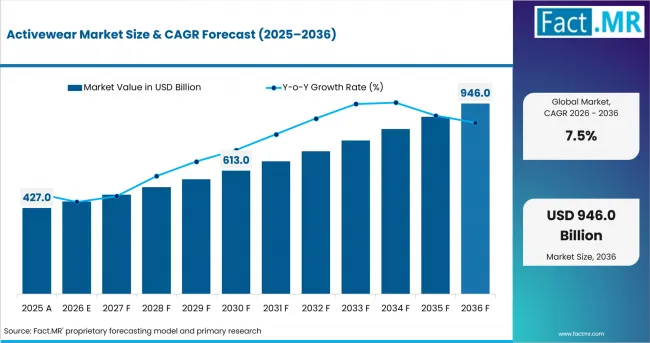
Activewear Market Value Analysis | Source: Fact.MR
Summary of Activewear Market
- Demand Drivers
- Fitness participation is increasing demand for apparel designed for training and wellness activities. Product consumption reflects changing lifestyle preferences.
- Athleisure adoption is expanding activewear use beyond sports applications. Daily wear acceptance supports category growth.
- Digital retail expansion is improving product accessibility across urban and emerging markets. Online channels strengthen sales volumes.
- Key Segments Analyzed
- By Type: Pants & T-Shirts account for 30% share in 2026 as everyday usability supports higher purchase frequency.
- By Fabric: Polyester contributes 35% share in 2026 due to durability and moisture management properties.
- By Distribution Channel: Online Retail generates 40% share in 2026 supported by convenience and wider product selection.
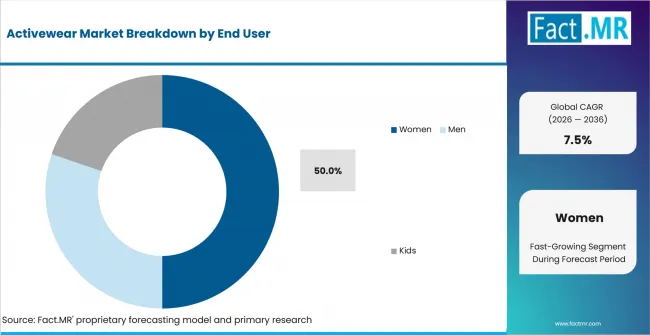
- By End User: Women represent 50% share in 2026 driven by strong participation in fitness and lifestyle apparel purchases.
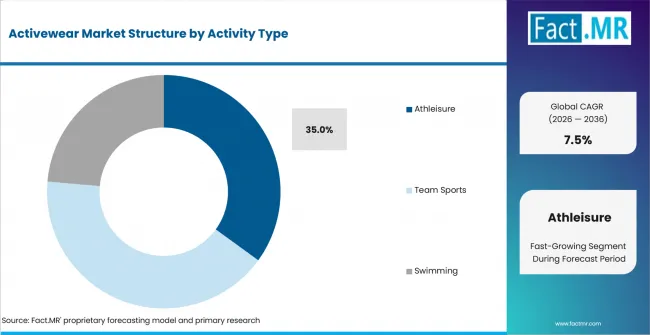
- By Activity Type: Athleisure contributes 35% share in 2026 as consumers increasingly prefer versatile apparel for daily use.
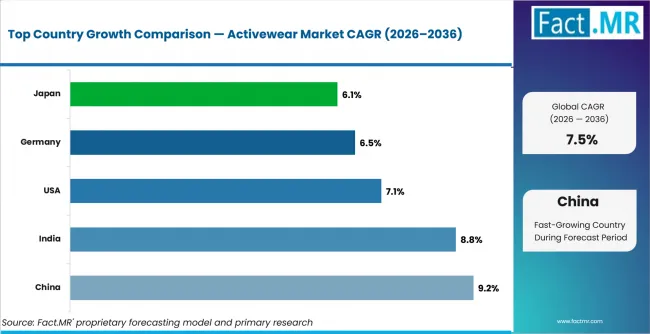
- By Geography: China is projected to record 9.2% CAGR through 2036 supported by rising sports apparel spending and premium brand adoption.
- Analyst Opinion at Fact.MR
- Shambhu Nath Jha, Principal Consultant at Fact.MR, opines, ‘Future growth will be shaped by brand differentiation and lifestyle positioning. Companies that align performance features with everyday fashion preferences will improve revenue expansion opportunities.’
- Strategic Implications
- Activewear brands should strengthen digital commerce capabilities. Direct engagement improves customer retention and sales efficiency.
- Apparel manufacturers should expand versatile product portfolios. Multi-purpose clothing improves purchase frequency.
- Retail chains should optimize omnichannel operations. Integrated shopping experiences strengthen conversion rates.
| Metric | Value |
| Estimated Value in 2026 | USD 459 billion |
| Forecast Value in 2036 | USD 946 billion |
| Forecast CAGR (2026 to 2036) | 7.5% |
Source: Fact.MR analysis. Updated Jun 8, 2026
China is expected to record 9.2% CAGR supported by expanding sportswear consumption and premium apparel demand. India is forecast to grow at 8.8% CAGR due to rising fitness participation and organized retail growth. The United States is projected to expand at 7.1% CAGR through 2036 driven by athleisure adoption and product innovation. Germany is estimated to witness 6.5% CAGR supported by outdoor activity participation and premium apparel demand. Japan is likely to register 6.1% CAGR due to wellness trends and performance apparel demand.
Segmental Analysis
Activewear Market Analysis by Type
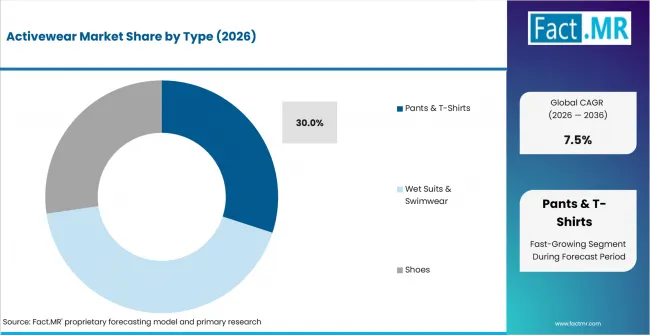
Activewear Market Analysis By Type | Source: Fact.MR
Pants & T-Shirts are projected to contribute 30% share in 2026. These products combine comfort and versatility across fitness and casual wear applications. Frequent replacement cycles support steady purchase activity across age groups. Nike and SKIMS announced NikeSKIMS, a new brand combining Nike's sports performance expertise with SKIMS' body-contouring and apparel design capabilities to create women's activewear, training apparel, footwear, and accessories. [1]
- Everyday Usage: Pants and T-shirts are suitable for workouts and daily wear. Demand reflects broader wardrobe integration across consumer groups.
- Product Variety: Brands offer extensive style and price options. Wider availability supports higher transaction volumes.
- Purchase Frequency: Consumers replace basic activewear items more often than specialized apparel. Repeat purchases strengthen segment demand.
Activewear Market Analysis by Fabric
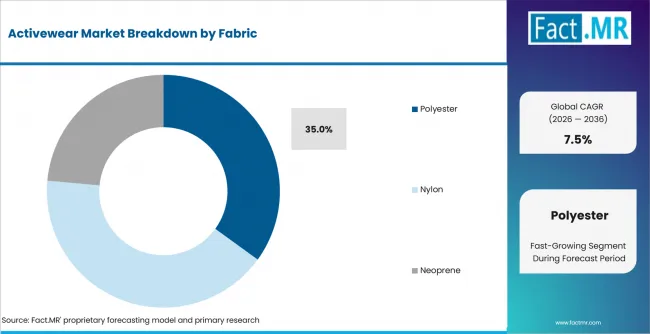
Activewear Market Analysis By Fabric | Source: Fact.MR
Polyester is estimated to represent 35% share in 2026. The material offers durability and moisture management characteristics suitable for active lifestyles. Cost efficiency supports adoption across mass-market and premium product lines. lululemon introduced its new ShowZero™ sweat-concealing technology, designed for high-intensity activities such as tennis, offering enhanced breathability, moisture management, lightweight comfort, and quick-drying performance. [2]
- Performance Features: Polyester supports moisture control during physical activity. Functional benefits improve consumer acceptance.
- Manufacturing Efficiency: Apparel producers utilize polyester across multiple product formats. Material flexibility supports commercial demand.
- Retail Availability: Product collections increasingly incorporate polyester blends. Broad usage strengthens fabric consumption.
Activewear Market Analysis by Distribution Channel
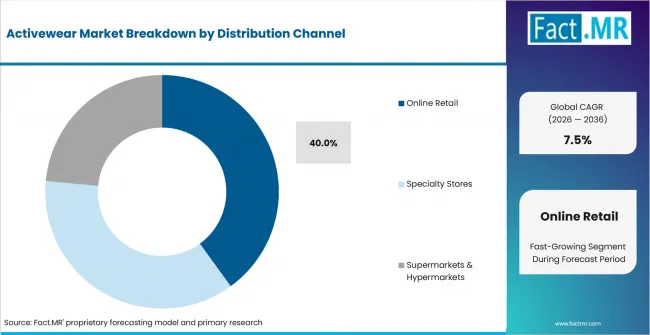
Activewear Market Analysis By Distribution Channel | Source: Fact.MR
Online Retail is expected to generate 40% share in 2026. Digital commerce platforms provide access to wider product selections and pricing options. Convenience remains a major factor influencing purchasing behavior. Under Armour launched the UA Halo Collection, a premium activewear line featuring lightweight fabrics, moisture-management technology, and versatile designs for training and everyday wear. The collection expands the company's performance apparel offerings across men's and women's activewear categories. [3]
- Direct Sales Growth: Brands are expanding digital storefront investments. Online channels improve consumer engagement.
- Product Accessibility: Digital platforms offer broader inventory visibility. Convenience strengthens transaction activity.
- Mobile Commerce: Smartphone-based shopping continues expanding apparel purchases. Digital adoption supports channel growth.
Activewear Market Analysis by End User
Activewear Market Analysis By End User | Source: Fact.MR
Women are estimated to contribute 50% share in 2026. Fitness participation and lifestyle apparel adoption support product demand. Brands continue expanding collections targeted toward female consumers. PUMA and HYROX unveiled a new co-branded performance apparel, footwear, and accessories collection while extending their global partnership through 2027. The collection was specifically developed for fitness racing athletes and combines advanced performance materials with HYROX competition requirements. [4]
- Fitness Engagement: Women account for a substantial share of wellness and fitness activities. Participation supports apparel purchases.
- Product Innovation: Manufacturers are introducing specialized designs and fit options. Product diversity strengthens market demand.
- Lifestyle Adoption: Activewear increasingly serves casual fashion requirements. Consumer preferences support category expansion.
Activewear Market Analysis by Activity Type
Activewear Market Analysis By Activity Type | Source: Fact.MR
Athleisure is projected to account for 35% share in 2026. Consumers increasingly prefer apparel that transitions between exercise and daily activities. Comfort and style support wider usage occasions.
- Lifestyle Appeal: Athleisure products align with changing fashion preferences. Demand reflects broader acceptance beyond fitness environments.
- Workplace Flexibility: Casual dress trends support adoption of comfort-oriented apparel. Product usage extends across multiple settings.
- Brand Positioning: Apparel companies emphasize versatility across product launches. Marketing strategies strengthen segment growth.
Drivers, Restraints, and Opportunities
Activewear Market Opportunity Matrix Growth Vs Value | Source: Fact.MR
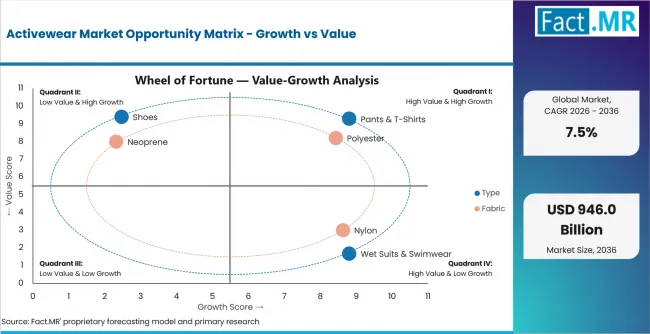
The activewear market is progressing beyond traditional sports participation demand. Early growth was linked primarily to organized sports and fitness activities. Current expansion reflects integration of performance apparel into everyday clothing purchases.
Consumer spending patterns increasingly favor comfort-oriented apparel. Product innovation focuses on fabric performance and lifestyle versatility. Premium product positioning supports value growth across developed and emerging markets. lululemon launched Glow Up™, a new women's activewear collection featuring its re-engineered Ultralu™ fabric and innovative bonded waistband technology designed to provide body-hugging support, comfort, and mobility during training. The initial collection includes the Glow Up™ Tank, High-Rise Tight, and Crop styles, with a global rollout across stores and online channels. [5]
- Fitness Participation: Health awareness is increasing demand for training and wellness apparel. Growth is supported by expanding gym membership and exercise activity.
- Digital Retail Expansion: Online platforms improve product access across urban and secondary markets. Brand visibility supports sales growth.
- Cost Volatility: Adoption is constrained by fluctuations in synthetic fiber pricing. Input cost pressure affects manufacturer margins and retail pricing.
Regional Analysis
The activewear market is assessed across North America, Europe, Asia Pacific, Latin America, and the Middle East & Africa. The study evaluates apparel consumption trends, sports participation activity, retail development, and lifestyle spending patterns across major economies.
.webp "Top Country Growth Comparison Activewear Market Cagr (2026 2036)")
Top Country Growth Comparison Activewear Market Cagr (2026 2036) | Source: Fact.MR
| Country | CAGR (2026 to 2036) |
|---|---|
| China | 9.2% |
| India | 8.8% |
| United States | 7.1% |
| Germany | 6.5% |
| Japan | 6.1% |
Source: Fact.MR analysis. Updated Jun 8, 2026
Source: Fact MR (FMR) analysis, based on proprietary forecasting model and primary research.
Activewear Market Cagr Analysis By Country | Source: Fact.MR
Asia Pacific Activewear Market Analysis
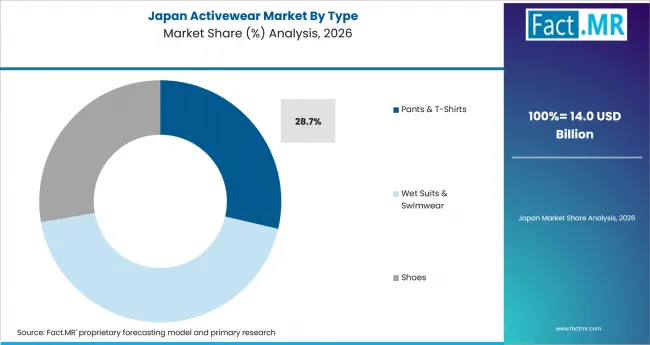
Activewear Market Japan Market Share Analysis By Type | Source: Fact.MR
Asia Pacific represents a major growth center for activewear demand. Rising disposable income supports apparel spending. Fitness participation and digital commerce expansion strengthen market development.
- China: Demand for activewear in China is projected to rise at 9.2% CAGR through 2036. Sports participation is increasing across urban populations. Premium apparel spending supports product demand. Growth is attributable to fitness culture expansion and strong digital retail penetration.
- India: India is expected to witness 8.8% CAGR through 2036 driven by expanding fitness awareness and organized retail growth. Sportswear adoption is increasing among younger consumers. E-commerce platforms improve product accessibility. Growth reflects rising household expenditure on lifestyle products.
- Japan: Japan is anticipated to expand at 6.1% CAGR due to growing wellness participation and preference for functional apparel. Consumers prioritize comfort and product quality. Demand reflects interest in premium activewear collections. Growth is supported by lifestyle-focused consumption patterns.
North America Activewear Market Analysis
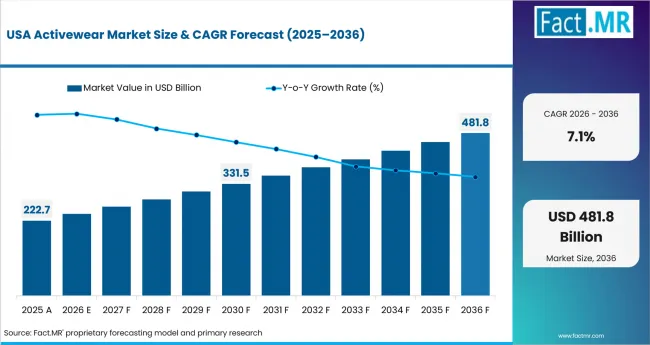
Activewear Market Country Value Analysis | Source: Fact.MR
North America remains a substantial market for activewear products. Consumer spending on fitness and wellness supports apparel demand. Product innovation remains an important source of market development.
- United States: The United States is projected to expand at 7.1% CAGR by 2036 as athleisure adoption strengthens apparel consumption across multiple age groups. Fitness participation supports recurring product purchases. Digital commerce improves access to premium brands. Growth is driven by lifestyle integration of activewear products.
Europe Activewear Market Analysis
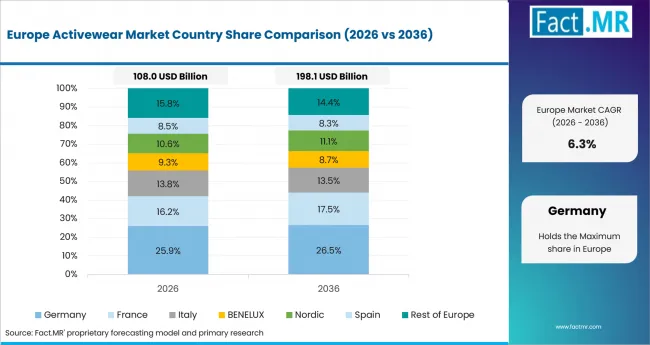
Activewear Market Europe Country Market Share Analysis, 2026 & 2036 | Source: Fact.MR
Europe benefits from established sports participation rates and strong retail infrastructure. Premium apparel demand supports market value growth. Product innovation remains a competitive differentiator across regional markets.
- Germany: Germany is projected to register 6.5% CAGR supported by outdoor recreation participation and demand for premium activewear. Consumers increasingly prefer performance-focused apparel. Retail brands continue expanding technical clothing collections. Growth is attributable to wellness trends and higher spending on sportswear.
Competitive Aligners for Market Players
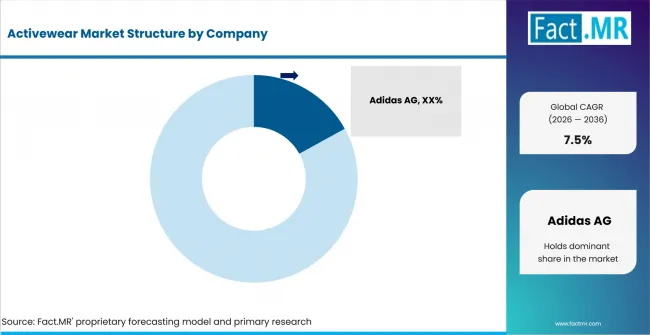
Activewear Market Analysis By Company | Source: Fact.MR
The activewear market reflects competition among global sportswear brands and lifestyle apparel companies. Brand recognition influences purchasing decisions across developed and emerging markets. Product innovation and retail reach shape competitive positioning. Companies with strong digital commerce capabilities improve access to growing online demand.
Manufacturing scale provides advantages in sourcing and product development. Established brands benefit from global distribution networks and marketing visibility. Product diversification improves resilience across changing fashion and fitness trends. Direct-to-consumer channels strengthen profitability and customer engagement. Retailers evaluate suppliers based on product quality and inventory availability. Apparel brands compete through performance features and lifestyle positioning. Consumer loyalty influences repeat purchases across premium and mass-market segments. Commercial success is increasingly linked to omnichannel retail capability and brand differentiation.
Athleisure demand is expanding opportunities for apparel manufacturers that combine fashion and functionality. Product versatility supports wider usage occasions. Companies that align collections with wellness and lifestyle trends improve long-term growth prospects.
Key Players
- Adidas AG
- Asics Corporation
- Columbia Sportswear Company
- Gap Inc.
- Nike, Inc.
Bibliography
- [1] Nike, Inc. (2025). Nike and SKIMS announce new women's activewear brand partnership. February 2025.
- [2] Lululemon Athletica Inc. (2026). Lululemon launches first-ever Sweatlife performance collection. January 2026.
- [3] Under Armour, Inc. (2025). Under Armour launches UA Halo apparel collection. July 2025.
- [4] Puma SE. (2025). PUMA announces early renewal of its long-term partnership agreement. January 2025.
- [5] Wellworthy. (2025). Lululemon debuts Glow Up collection for active lifestyle consumers. February 2025.
This Report Addresses
- Analysis of activewear demand across fitness apparel and lifestyle clothing applications.
- Market forecast from USD 459 billion in 2026 to USD 946 billion by 2036 at 7.5% CAGR.
- Opportunity assessment across athleisure products and digital retail channels.
- Segment forecasts covering type, fabric, distribution channel, end user, and activity type demand.
- Competitive assessment of sportswear brands and apparel manufacturers.
- Evaluation of consumer spending patterns and retail expansion activity.
- Country-level analysis across China, India, the United States, Germany, and Japan.
- Report delivery through PDF and Excel formats supported by primary interviews and apparel industry analysis.
Activewear Market Definition
The activewear market covers apparel and footwear designed for sports activities, fitness training, outdoor recreation, and casual lifestyle use. Products combine comfort, durability, and performance features suitable for physical activity and everyday wear. The market includes garments made from synthetic and natural fabrics that improve mobility and moisture management. Demand originates from fitness enthusiasts, sports participants, lifestyle apparel shoppers, and outdoor recreation users.
Activewear Market Inclusions
The study covers global and regional forecasts from 2026 to 2036 by type, fabric, distribution channel, end user, and activity type. It includes apparel and footwear utilized across fitness, sports, outdoor recreation, and athleisure applications. The report evaluates consumption trends, retail activity, pricing developments, and brand positioning strategies.
Activewear Market Exclusions
The study excludes professional sports equipment and protective gear. It omits luxury fashion products without sports functionality. Industrial uniforms and workwear products are excluded unless marketed specifically within activewear collections.
Activewear Market Research Methodology
- Primary Research
- Interviews were conducted with apparel manufacturers, brand executives, retail distributors, sporting goods retailers, fabric suppliers, and industry consultants across major regions.
- Desk Research
- Analysis included company disclosures, annual reports, retail sales updates, apparel industry publications, and consumer spending reports published during 2024 and 2025.
- Market-Sizing and Forecasting
- Hybrid top-down and bottom-up model using apparel sales data, retail penetration rates, consumer spending patterns, and brand performance benchmarks.
- Data Validation and Update Cycle
- Forecast was validated through retailer interviews, distributor feedback, company disclosures, and apparel consumption assessments.
Segmentation
Scope of Report
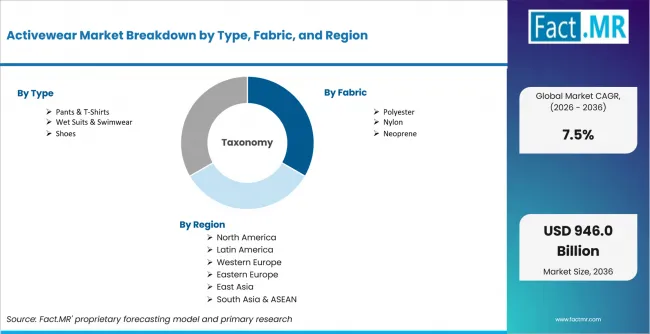
Activewear Market Breakdown By Type, Fabric, And Region | Source: Fact.MR
| Attribute | Details |
|---|---|
| Quantitative Units | USD 459 billion (2026) to USD 946 billion (2036) at a CAGR of 7.5% |
| Market Definition | Covers apparel and footwear designed for sports, fitness, outdoor recreation, and lifestyle use |
| Type Segmentation | Ready to Wear, Fashion Outer, Pants & T-Shirts, Wet Suits & Swimwear, Shoes, Fashion Brands |
| Fabric Segmentation | Polyester, Nylon, Neoprene, Polypropylene, Spandex, Cotton, Others |
| Distribution Channel Segmentation | Online Retail, Specialty Stores, Supermarkets & Hypermarkets, Brand Outlets, Others |
| End User Segmentation | Men, Women, Kids |
| Activity Type Segmentation | Running & Training, Yoga & Fitness, Outdoor Sports, Athleisure, Team Sports, Swimming |
| Regions Covered | North America, Europe, Asia Pacific, Latin America, Middle East & Africa |
| Countries Covered | China, India, United States, Germany, Japan, Canada, United Kingdom, South Korea |
| Key Companies Profiled | Adidas AG, Asics Corporation, Columbia Sportswear Company, Nike Inc., Puma |
| Forecast Period | 2026 to 2036 |
| Approach | Hybrid top-down and bottom-up model using apparel sales and retail demand analysis |
Source: Fact.MR analysis. Updated Jun 8, 2026
Activewear Market by Segment
-
By Type
- Ready to Wear
- Fashion Outer
- Pants & T-Shirts
- Wet Suits & Swimwear
- Shoes
- Fashion Brands
-
By Fabric
- Polyester
- Nylon
- Neoprene
- Polypropylene
- Spandex
- Cotton
- Others
-
By Distribution Channel
- Online Retail
- Specialty Stores
- Supermarkets & Hypermarkets
- Brand Outlets
- Others
-
By End User
- Men
- Women
- Kids
-
By Activity Type
- Running & Training
- Yoga & Fitness
- Outdoor Sports
- Athleisure
- Team Sports
- Swimming
-
By Region
- North America
- United States
- Canada
- Mexico
- Latin America
- Brazil
- Argentina
- Rest of Latin America
- Europe
- Germany
- United Kingdom
- France
- Italy
- Rest of Europe
- Asia Pacific
- China
- India
- Japan
- South Korea
- ASEAN
- Middle East & Africa
- UAE
- Saudi Arabia
- South Africa
- Rest of Middle East & Africa
- North America
Frequently Asked Questions
How large is the global activewear market in 2025?
What will the activewear market size be in 2026?
What is the projected activewear market size by 2036?
What is the expected CAGR for the activewear market from 2026 to 2036?
Which type segment is poised to lead market demand?
Which fabric segment contributes the greatest demand?
Which country records stronger growth across the assessment period?
Who worked on this report


Preview the report firsthand - request a free sample
Free SampleGet the brochure for pricing and purchase details
Download PDF