- Base Value(2025): 4.0 Bn
- Forecast Value (2036): 11.1 Bn
- CAGR (2036): 9.8%
Aesthetic Lasers Market Size, Market Forecast and Outlook by Fact.MR
The aesthetic lasers market was valued at USD 4.0 billion in 2025. Demand is expected to increase from USD 4.4 billion in 2026 to USD 11.1 billion by 2036. The market is forecast to record 9.8% CAGR from 2026 to 2036 as clinics expand hair removal and pigment correction procedures.
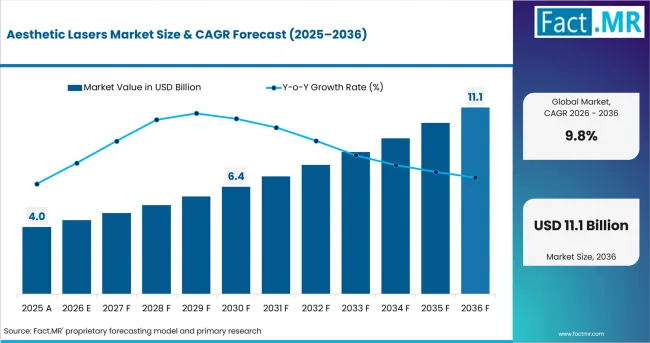
Aesthetic Lasers Market Value Analysis | Source: Fact.MR
Summary of the Aesthetic Lasers Market
- Demand Drivers in the Market
- Dermatology clinics need laser systems that support repeat procedures with safer settings and dependable service uptime during appointment-heavy operating days.
- Medical spas use laser platforms to expand hair removal and skin rejuvenation menus while protecting treatment-room utilization across daily schedules.
- Patients prefer lower-downtime laser options because recovery time strongly influences repeat bookings and professional aesthetic procedure selection today.
- Key Segments Analyzed
- By Type: Non-ablative lasers hold 58.0% share in 2026 because patients prefer milder procedures with shorter recovery time.
- By Application: Hair removal captures 72.0% share in 2026 since repeat sessions create steady laser utilization for clinics.
- By End User: Clinics hold 41.0% share in 2026 because professional settings need trained operators and patient screening.
- By Laser Type: Diode lasers account for 31.0% share in 2026 as hair removal centers need dependable treatment systems.
- By Purchase Model: Multi-application laser platforms account for 44.0% share in 2026 since clinics seek stronger equipment use.
- By Geography: India records 11.2% CAGR through 2036 as aesthetic clinics and medical tourism support laser demand.
- Analyst Opinion at Fact.MR
- Shambhu Nath Jha, Principal Consultant at Fact.MR, notes, “Aesthetic lasers are becoming core clinic assets for repeat appearance treatments. Clinics now compare recovery time with treatment speed and service uptime before selecting a platform. Suppliers that provide strong training, safety documentation, and reliable maintenance support will build stronger relationships with aesthetic practices.”
- Strategic Implications
- Device suppliers need training programs that help clinic teams reduce operator error and improve laser treatment consistency across patient sessions.
- Clinics should assess treatment-room utilization before buying single-application systems because appointment volume decides equipment payback over time.
- Medical spas need service contracts that keep laser platforms available during high-volume schedules and seasonal demand peaks.
| Metric | Details |
|---|---|
| Industry Size 2026 | USD 4.4 billion |
| Industry Value 2036 | USD 11.1 billion |
| CAGR 2026 to 2036 | 9.8% |
Source: Fact.MR analysis. Updated Jun 16, 2026
Aesthetic lasers demand is becoming more treatment-volume led. Clinics need systems that support repeat sessions with reliable safety settings. Medical spas need laser platforms that can serve hair removal and skin rejuvenation. FDA states that laser exposure risks must be managed to realize safe use benefits. [1]
India is likely to record 11.2% CAGR from 2026 to 2036 as urban aesthetic clinics and medical tourism support laser procedure demand. South Korea is set to post 10.8% CAGR because skin-care focused clinics use lasers across appearance treatments. China is forecast to advance at 10.5% CAGR from 2026 to 2036 as private clinics and approved aesthetic systems expand. The United States is expected to register 9.3% CAGR as dermatology practices keep adopting laser treatment platforms. Germany is projected to record 8.6% CAGR by 2036 as specialist clinics upgrade dermatology and skin rejuvenation systems.
Segmental Analysis
Aesthetic Lasers Market Analysis by Type
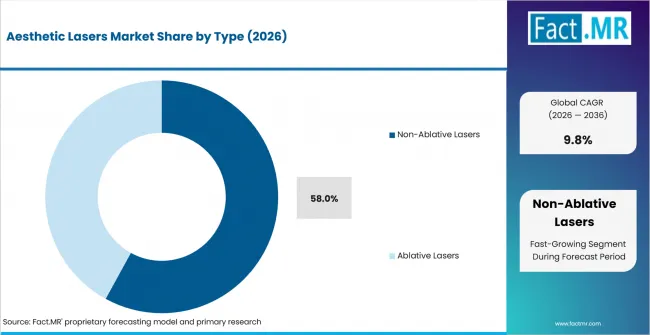
Aesthetic Lasers Market Analysis By Type | Source: Fact.MR
Non-ablative lasers lead because patients often prefer laser treatments with shorter recovery time. Ablative lasers serve deeper resurfacing and scar-focused procedures. Non-ablative lasers hold 58.0% share in 2026 as clinics expand skin rejuvenation and pigmentation treatment menus.
- Non-Ablative Lasers: Non-ablative lasers support skin rejuvenation and pigmentation care with shorter downtime across repeat clinic treatment sessions.
- Ablative Lasers: Ablative lasers serve deeper resurfacing needs for scars and stronger texture correction cases in trained clinic settings.
- Fractional Formats: Fractional laser formats help clinics balance resurfacing depth with recovery expectations across selected patient treatment plans.
Aesthetic Lasers Market Analysis by Application
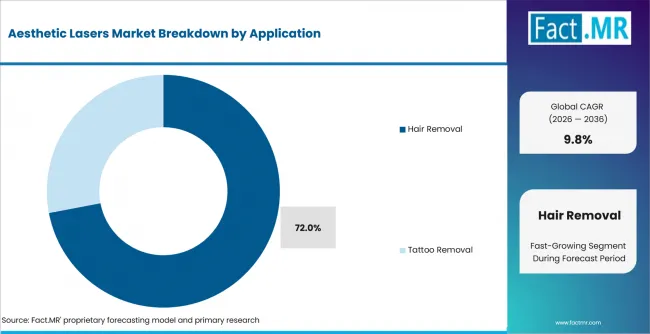
Aesthetic Lasers Market Analysis By Application | Source: Fact.MR
Hair removal leads because repeat sessions create steady device utilization and predictable clinic schedules. Tattoo removal uses controlled laser pulses for pigment clearance. Hair removal captures 72.0% share in 2026 as treatment familiarity and session-based revenue support clinic investment. Skin rejuvenation demand supports non-ablative laser adoption.
- Hair Removal: Hair removal treatments create repeat visits and steady platform use across recurring patient schedules.
- Tattoo Removal: Tattoo removal needs controlled laser pulses that target pigment while limiting damage to surrounding skin.
- Skin Rejuvenation: Skin rejuvenation uses laser energy to improve texture and aging-linked appearance concerns.
Aesthetic Lasers Market Analysis by End User
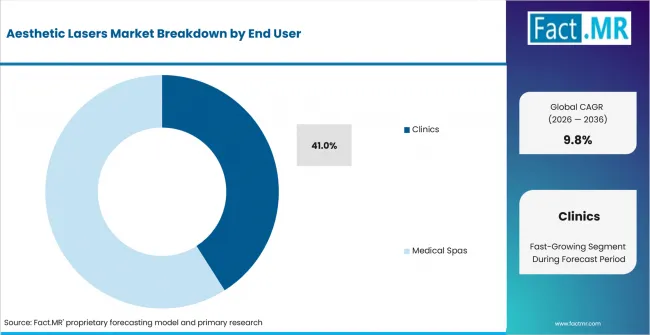
Aesthetic Lasers Market Analysis By End User | Source: Fact.MR
Clinics lead because professional laser procedures require patient screening and trained operators. Medical spas use lasers to expand treatment menus. Clinics hold 41.0% share in 2026 as dermatology-led care supports higher patient confidence. Hospitals and beauty centers serve selected procedures.
- Clinics: Clinics use aesthetic lasers with trained operation and follow-up care support.
- Medical Spas: Medical spas use laser systems to expand treatment menus and improve room utilization.
- Dermatologists: Dermatologists guide patient selection and manage complex laser treatment needs across skin conditions.
Aesthetic Lasers Market Analysis by Laser Type
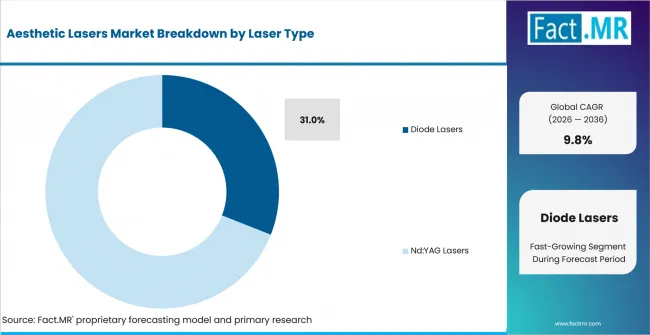
Aesthetic Lasers Market Analysis By Laser Type | Source: Fact.MR
Diode lasers lead laser type demand because hair removal creates high procedure volume. Nd:YAG lasers support deeper treatment needs. Diode lasers account for 31.0% share in 2026 as clinics need reliable hair removal platforms. CO2 and erbium lasers serve resurfacing applications.
- Diode Lasers: Diode lasers support high-volume hair removal treatments through repeat sessions and stable clinic demand.
- Nd:YAG Lasers: Nd:YAG lasers support deeper treatment needs and selected vascular or pigment-related applications.
- CO2 Lasers: CO2 lasers serve resurfacing procedures that need stronger tissue interaction and trained operator control.
Aesthetic Lasers Market Analysis by Purchase Model
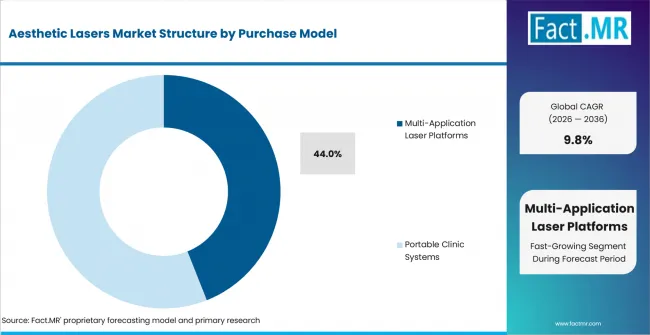
Aesthetic Lasers Market Analysis By Purchase Model | Source: Fact.MR
Multi-application laser platforms lead because clinics prefer systems that serve several aesthetic needs. Standalone systems support high-volume hair removal. Multi-application laser platforms account for 44.0% share in 2026 as clinics seek better asset use. Service packages protect appointment schedules and system uptime.
- Multi-Application Platforms: Multi-application platforms improve clinic utilization by serving several treatments from one laser investment.
- Standalone Systems: Standalone systems serve high-volume procedures that need dedicated settings and consistent performance.
- Service Packages: Service packages protect clinic uptime during busy schedules and planned device upgrade cycles.
Aesthetic Lasers Market Drivers, Restraints, and Opportunities
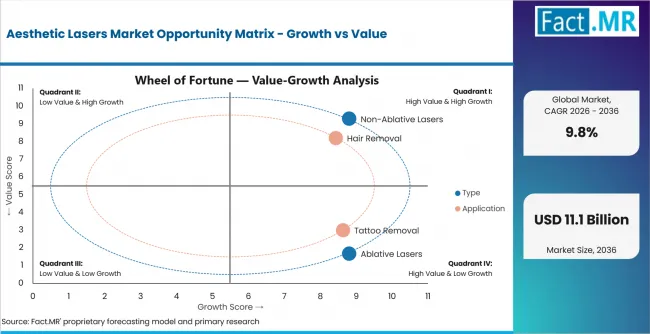
Aesthetic Lasers Market Opportunity Matrix Growth Vs Value | Source: Fact.MR
Preference for lower-downtime aesthetic procedures is the main driver for this market. ISAPS reported close to 38.0 million surgical and non-surgical aesthetic procedures in 2024. [2] These indicators support demand for professional laser systems that treat appearance concerns with limited recovery time.
High device cost can slow purchase decisions. Clinics need trained operators and service coverage. Laser systems also need safe patient selection and correct parameter settings. FDA laser product guidance highlights the need to manage laser exposure risks. Poor training can increase adverse events and damage clinic trust.
Opportunities in the Aesthetic Lasers Market
- Picosecond Lasers: Suppliers can target tattoo removal and pigment care through faster platforms with stronger clinic appeal.
- Non-Ablative Rejuvenation: Clinics can use non-ablative lasers to serve patients seeking shorter recovery time.
- Asia Clinic Expansion: Laser suppliers can gain from skin-care focused clinics that need training and maintenance support.
Regional Analysis
Based on regional analysis, the aesthetic lasers market is segmented into North America, Europe, East Asia, South Asia and Pacific, Latin America, and Middle East and Africa.
.webp "Top Country Growth Comparison Aesthetic Lasers Market Cagr (2026 2036)")
Top Country Growth Comparison Aesthetic Lasers Market Cagr (2026 2036) | Source: Fact.MR
| Country | CAGR 2026 to 2036 |
| India | 11.2% |
| South Korea | 10.8% |
| China | 10.5% |
| United States | 9.3% |
| Germany | 8.6% |
Source: Fact.MR analysis. Updated Jun 16, 2026
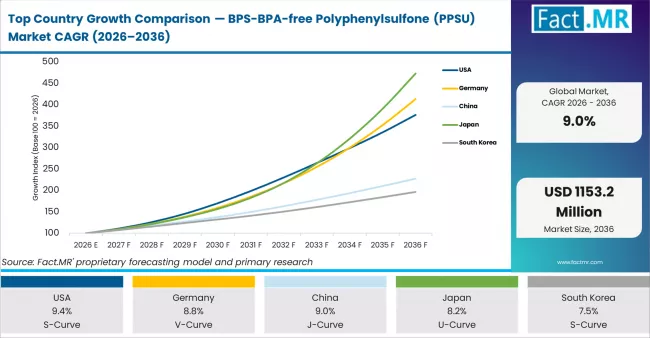
Image | Source: Fact.MR
South Asia and Pacific Aesthetic Lasers Market Analysis
South Asia demand is tied to urban aesthetic clinics and medical tourism. India leads the selected country set because laser hair removal and skin treatment demand is rising across metro markets.
- India: India is likely to record 11.2% CAGR from 2026 to 2036 as urban clinics expand hair removal and skin rejuvenation laser services. Medical tourism supports premium aesthetic procedure demand in selected cities. Clinics need durable laser platforms with training and after-sales service. Demand is strongest in metro regions because consumers have greater awareness of elective appearance treatments. Smaller clinics often prefer financing support because equipment cost affects purchase timing.
East Asia Aesthetic Lasers Market Analysis
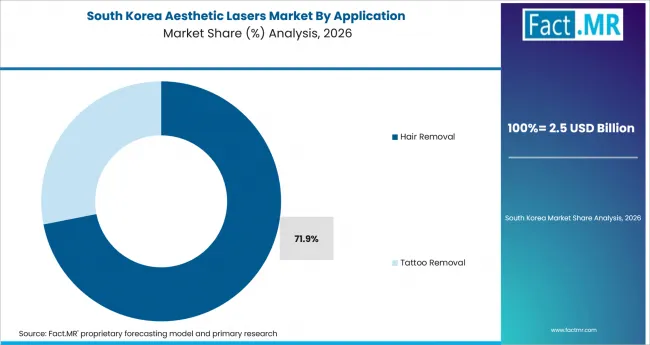
Aesthetic Lasers Market South Korea Market Share Analysis By Application | Source: Fact.MR
East Asia demand comes from skin-care culture and private aesthetic clinics. South Korea leads regional growth. China supports high-volume clinic expansion. Japan adds steady demand through aging-linked skin care and premium dermatology services.
- South Korea: South Korea is set to post 10.8% CAGR by 2036. Skin-care focused clinics use lasers across hair removal and rejuvenation procedures. Strong patient familiarity supports repeat sessions and premium device adoption. Clinics need platforms that deliver consistent outcomes with lower recovery time. Seoul-based providers compare treatment speed and operator training before choosing systems. Cosmetic tourism also strengthens demand because international patients often seek professional appearance procedures.
- China: Private clinics and approved aesthetic systems are expanding across major cities. Premium providers need regulatory clarity and dependable service support. China is forecast to advance at 10.5% CAGR over the forecast period as hair removal and pigment procedures gain wider adoption. Bausch Health and Solta Medical received China NMPA registration certifications for Thermage FLX and TR-4 Return Pad in 2024. [4] This supports confidence in regulated energy-based systems.
North America Aesthetic Lasers Market Analysis
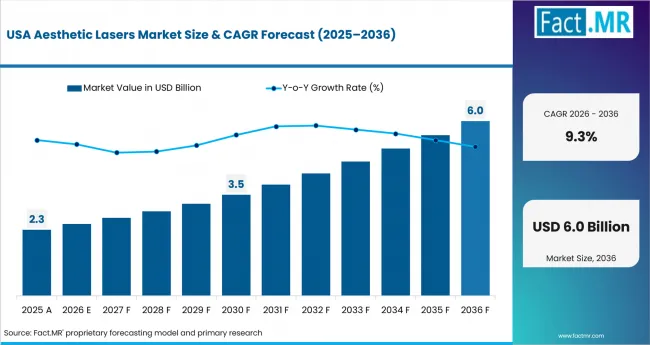
Aesthetic Lasers Market Country Value Analysis | Source: Fact.MR
North America demand is led by the United States through dermatology practices and medical spas. Clinics are replacing older lasers with platforms that improve treatment speed and comfort.
- United States: The United States is expected to register 9.3% CAGR through 2036 as dermatology practices adopt laser treatment platforms. ASDS reported 70.0% of survey respondents were considering a cosmetic procedure in 2025. [4] Clinics use lasers for hair removal and tattoo removal. FDA laser guidance makes safety documentation and operator training central to purchase decisions. Larger practices can justify multi-application systems because patient volume improves equipment payback.
Europe Aesthetic Lasers Market Analysis
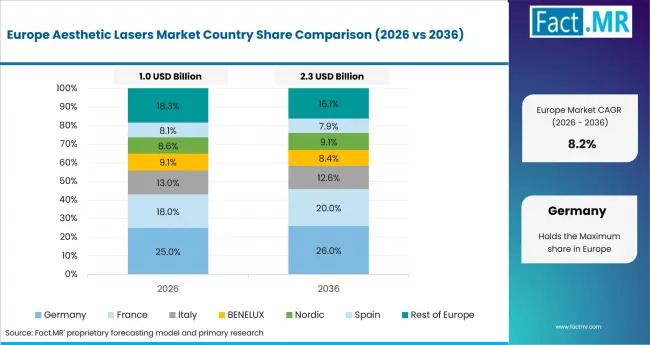
Aesthetic Lasers Market Europe Country Market Share Analysis, 2026 & 2036 | Source: Fact.MR
Europe demand is guided by dermatology clinics and regulated device use. Germany leads the selected European country set because clinics need reliable systems and strong service support.
Germany: Germany is projected to record 8.6% CAGR by 2036 as specialist practices upgrade laser systems. The market is supported by specialist dermatology clinics and premium skin treatment services. Patients value safe treatment protocols and trained operators. Clinics need devices with reliable service coverage and documentation for professional use. Laser hair removal and rejuvenation procedures support repeat appointment demand. Suppliers with European support teams can protect premium accounts because maintenance speed affects clinic revenue. German clinics also evaluate device durability and patient comfort before adding new platforms.
Competitive Aligners for Market Suppliers
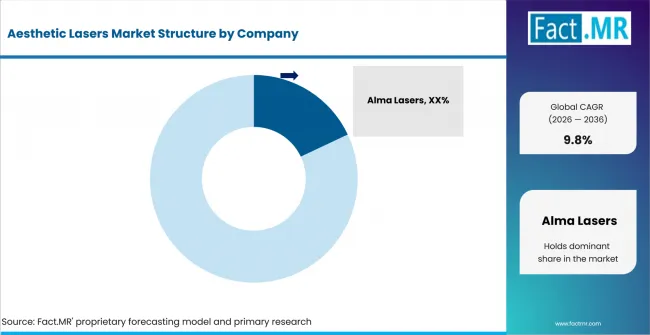
Aesthetic Lasers Market Analysis By Company | Source: Fact.MR
The aesthetic lasers market includes laser platform manufacturers and dermatology device suppliers. Alma Lasers Candela Medical Cutera Inc. Cynosure Lutronic and Aerolase Corp. compete through procedure coverage platform reliability training support and service response. Candela announced FDA clearance for a new Matrix RF facial wrinkle reduction indication in 2024. [5] This shows continued supplier activity across energy based aesthetic systems.
Competition is driven by wavelength coverage clinical usability and service uptime. Clinics compare treatment speed handpiece durability patient comfort and maintenance support before choosing a platform. Strong training also helps reduce operator error and supports consistent treatment outcomes.
Through 2036, supplier choice will rely on service strength, operator training, and fast maintenance support. Clinics lose revenue when systems are down and patients expect consistent results across sessions. Companies that combine laser performance operator training and fast maintenance support can protect professional clinic accounts.
Key Companies in Aesthetic Lasers Market
- Alma Lasers
- Candela Medical
- Cutera, Inc.
- Cynosure Lutronic
- Aerolase Corp.
Bibliography
- [1] U.S. Food and Drug Administration. (2024, November 13). Laser products and instruments.
- [2] International Society of Aesthetic Plastic Surgery. (2025, June 19). Global Survey 2024: Full report and press releases.
- [3] Bausch Health Companies Inc. (2024, January 18). Solta Medical’s Thermage® FLX and TR-4 Return Pad receive registration certifications in China.
- [4] American Society for Dermatologic Surgery. (2025, July 28). Dermatologists top the list as key influencers in patients’ cosmetic procedure decisions.
- [5] Candela Corporation. (2024, August 14). Candela announces FDA clearance of new indication for Matrix multi-application radiofrequency skin platform.
This Report Addresses
- Strategic intelligence on aesthetic laser demand across type, application, end user, laser type and purchase model.
- Forecast mapping from USD 4.4 billion in 2026 to USD 11.1 billion by 2036.
- Segment analysis covering non-ablative lasers, hair removal, clinics, diode lasers and multi-application platforms.
- Regional outlook covering India, South Korea, China, the United States and Germany for focused country demand analysis.
- Competitive analysis of Alma Lasers, Candela Medical, Solta Medical, Cutera, Cynosure Lutronic and Sciton across professional systems.
- Product assessment covering laser wavelength, safety documentation, clinic utilization, service uptime and operator training.
- Primary interviews, supplier checks, official source review and regulator validation support the market forecast.
Aesthetic Lasers Market Definition
The aesthetic lasers market covers professional laser systems used for cosmetic and dermatology procedures. It includes ablative and non-ablative lasers used for tattoo removal and skin rejuvenation. The scope focuses on clinic-grade laser systems over home-use beauty tools.
Aesthetic Lasers Market Inclusions
The scope includes diode lasers and Nd:YAG lasers. It also includes alexandrite and erbium lasers. These systems are used by medical spas and dermatologists.
Aesthetic Lasers Market Exclusions
The scope excludes injectable fillers and botulinum toxin products. It excludes cosmetic surgery tools without laser output. Radiofrequency-only devices are excluded unless integrated with laser platforms. Topical skin-care products and consumer beauty devices are also excluded.
Aesthetic Lasers Market Research Methodology
- Primary Research
- Primary research includes interviews with dermatologists and aesthetic clinic owners. It includes input from medical spa operators and device distributors. Service engineers are reviewed to assess installation and maintenance needs.
- Desk Research
- Desk research reviews official device pages and regulator information. It also covers company disclosures and product clearance announcements. Association-level procedure data supports demand evaluation.
- Market-Sizing and Forecasting
- Forecasting uses professional laser device demand and clinic adoption as the baseline. Demand is reviewed by type and end user. Country-level clinic expansion supports the forecast direction.
- Data Validation and Update Cycle
- Forecasts are validated through distributor checks and clinic feedback. Laser replacement cycles are reviewed by application. Official company disclosures and regulator sources help confirm the final forecast path.
Segmentation
Scope of the Report
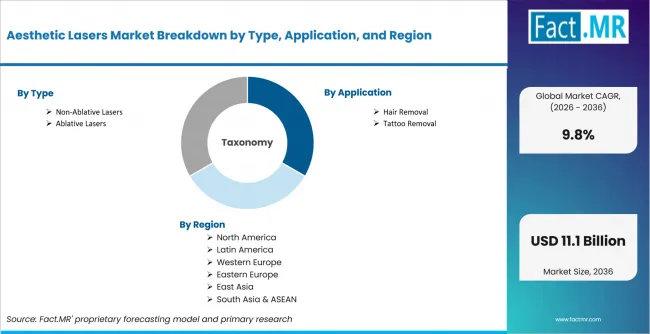
Aesthetic Lasers Market Breakdown By Type, Application, And Region | Source: Fact.MR
| Attribute | Details |
|---|---|
| Quantitative Units | USD 4.4 billion in 2026 to USD 11.1 billion by 2036 at 9.8% CAGR |
| Market Definition | Professional laser systems used for cosmetic and dermatology procedures |
| Type | Ablative Lasers, Non-Ablative Lasers |
| Application | Hair Removal, Tattoo Removal, Body Sculpting/Toning, Skin Pigmentation, Skin Rejuvenation |
| End User | Clinics, Medical Spas, Hospitals, Dermatologists, Beauty Centers |
| Laser Type | Diode Lasers, Nd:YAG Lasers, Alexandrite Lasers, CO2 Lasers, Erbium Lasers |
| Purchase Model | Standalone Laser Systems, Multi-Application Laser Platforms, Portable Clinic Systems, Consumable-Linked Systems, Service Packages |
| Regions Covered | North America, Europe, East Asia, South Asia and Pacific, Latin America, Middle East and Africa |
| Countries Covered | India, South Korea, China, United States, Germany |
| Key Companies Profiled | Alma Lasers, Candela Medical, Cutera, Inc., Cynosure Lutronic, Aerolase Corp. |
| Forecast Period | 2026 to 2036 |
| Approach | Hybrid top-down and bottom-up approach using type demand, application use, end-user adoption and regional validation |
Source: Fact.MR analysis. Updated Jun 16, 2026
Aesthetic Lasers Market Analysis by Segments
-
By Type:
- Ablative Lasers
- Non-Ablative Lasers
-
By Application:
- Hair Removal
- Tattoo Removal
- Body Sculpting/Toning
- Skin Pigmentation
- Skin Rejuvenation
-
By End User:
- Clinics
- Medical Spas
- Hospitals
- Dermatologists
- Beauty Centers
-
By Laser Type:
- Diode Lasers
- Nd:YAG Lasers
- Alexandrite Lasers
- CO2 Lasers
- Erbium Lasers
-
By Purchase Model:
- Standalone Laser Systems
- Multi-Application Laser Platforms
- Portable Clinic Systems
- Consumable-Linked Systems
- Service Packages
-
Region:
- North America
- United States
- Canada
- Europe
- Germany
- United Kingdom
- France
- Italy
- Spain
- East Asia
- China
- Japan
- South Korea
- South Asia and Pacific
- India
- ASEAN
- Australia and New Zealand
- Latin America
- Brazil
- Mexico
- Middle East and Africa
- GCC Countries
- South Africa
- North America
Frequently Asked Questions
What is the Aesthetic Lasers Market size in 2026?
What will the Aesthetic Lasers Market be worth by 2036?
What CAGR is projected for the Aesthetic Lasers Market?
Which type leads the Aesthetic Lasers Market?
Which country grows fastest in the Aesthetic Lasers Market?
How does South Korea perform in the Aesthetic Lasers Market?
How does China perform in the Aesthetic Lasers Market?
How does the United States perform in the Aesthetic Lasers Market?
How does Germany perform in the Aesthetic Lasers Market?
What is the main driver in the Aesthetic Lasers Market?
What is the main restraint in the Aesthetic Lasers Market?
Why are multi-application laser platforms gaining demand in the Aesthetic Lasers Market?
Who worked on this report


Preview the report firsthand - request a free sample
Free SampleGet the brochure for pricing and purchase details
Download PDF