Aroma-Infused Liners Market
Aroma-Infused Liners Market Size and Share Forecast Outlook 2026 to 2036
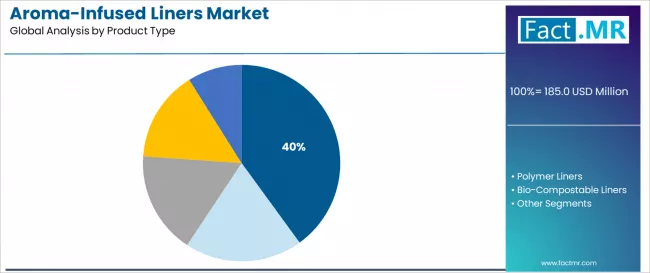
Aroma-infused liners market is projected to grow from USD 185.0 million in 2026 to USD 420.0 million by 2036, at a CAGR of 8.5%. Fresh Produce will dominate with a 38.0% market share, while paper-based liners will lead the product type segment with a 40.0% share.
Aroma-Infused Liners Market Forecast and Outlook 2026 to 2036
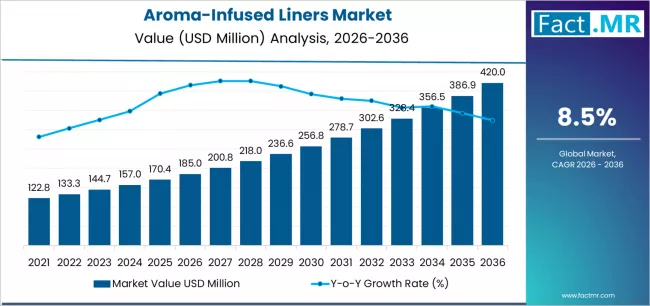
The global aroma-infused liners market is valued at USD 185.0 million in 2026. The market is forecast to reach USD 420.0 million by 2036. This growth trajectory represents an absolute increase of USD 235.0 million and total expansion of 127.0% across the decade. The market is projected to advance at a compound annual growth rate (CAGR) of 8.5% between 2026 and 2036.
Key Takeaways from the Aroma-Infused Liners Market Analysis
- Market Value of the Aroma-Infused Liners Market (2026): USD 185.0 million
- Market Forecast Value of the Aroma-Infused Liners Market (2036): USD 420.0 million
- Aroma-Infused Liners Market Forecast CAGR (2026-2036): 8.5%
- Leading Application Segment of the Aroma-Infused Liners Market: Fresh Produce (38.0%)
- Key Growth Regions: Asia Pacific, North America, Europe
- Key Players: Smurfit Kappa Group plc, Mondi plc, Amcor plc, UFlex Limited, Sealed Air Corporation, Avery Dennison Corporation
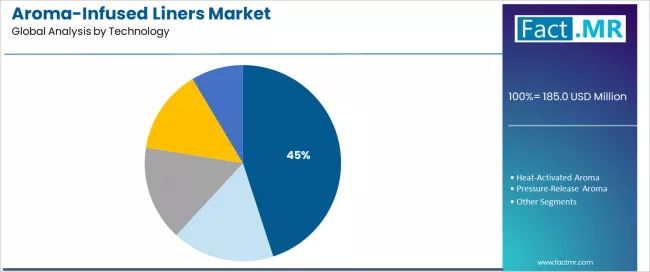
Current segmentation reveals distinct areas of commercial concentration. By application, the fresh produce segment commands a leading 38.0% share in 2026. Paper-based liners dominate the product type landscape with a 40.0% share. Microencapsulation technology holds a predominant 45.0% share of the technology segment. This distribution highlights the market's foundation in perishable goods packaging and sustainable material science.
Demand is fundamentally driven by the global imperative to reduce food waste and enhance brand distinction in a crowded retail environment. Manufacturers and brands actively seek packaging solutions that transcend basic containment. These advanced liners must actively preserve product quality, extend shelf life, and deliver a controlled, memorable sensory engagement upon opening. This transition positions packaging as an active component of product integrity and consumer perception.
Market expansion is further aligned with the integration of intelligent, active components into standard packaging formats. Innovation is sharply focused on developing precise release mechanisms for functional aromas that mask odors, signal freshness, or create unique brand signatures. This technological progression addresses core challenges in supply chain efficiency, waste reduction, and creating differentiated consumer experiences in both physical and digital commerce channels.
Aroma-Infused Liners Market
| Metric | Value |
|---|---|
| Estimated Value in (2026E) | USD 185.0 million |
| Forecast Value in (2036F) | USD 420.0 million |
| Forecast CAGR (2026 to 2036) | 8.5% |
Category
| Category | Segment |
|---|---|
| Application | Fresh Produce, Bakery & Pastries, Meat & Poultry, Ready Meals, Others |
| Product Type | Paper-Based Liners, Polymer Liners, Bio-Compostable Liners, Hybrid Liners, Others |
| Technology | Microencapsulation, Heat-Activated Aroma, Pressure-Release Aroma, Slow-Release Aroma, Others |
| Region | North America, Europe, Asia Pacific, Latin America, MEA |
Segment Analysis
By Application, Which Segment Holds the Dominant Market Share?

The fresh produce segment holds a 38.0% market share in 2026. This dominance is directly linked to the critical global need to reduce post-harvest waste and extend the shelf life of fruits, vegetables, and herbs. Aroma-infused liners for this application often release compounds that inhibit microbial growth or neutralize ethylene gas, slowing the ripening and decay processes.
The liners also mask earthy or vegetal odors that consumers may find unappealing, enhancing the perceived freshness of the product. The high volume and perishable nature of global fresh produce trade creates sustained, large-scale demand for these functional liner solutions. Investments are focused on developing scents associated with cleanliness and garden-fresh quality.
How do Paper-based Aroma-Infused Liners Contribute to the Global Market Expansion?

Paper-based liners capture 40.0% of the market share in 2026. Their leadership is anchored in strong sustainability credentials, consumer preference for renewable materials, and excellent compatibility with microencapsulation printing techniques. These liners are highly biodegradable and often integrate well with existing cardboard and paperboard packaging systems common in grocery retail.
The fibrous structure of paper provides an ideal substrate for embedding scent capsules that can be activated by friction or pressure during handling. The segment benefits from continuous innovation in wet-strength coatings and barrier treatments that allow paper liners to function effectively with moist or chilled products, merging eco-friendliness with robust performance.
Why does Microencapsulation Technology Capture the Maximum Share in the Aroma-Infused Liners Market?

Microencapsulation technology accounts for a 45.0% market share in 2026. This technology is the cornerstone of the market, enabling the precise protection and controlled release of aromatic oils within the liner material. Tiny capsules shield the active scent compounds from evaporation or degradation until the precise moment of release, which is triggered by rupture, heat, or moisture.
This precision ensures scent longevity throughout the product's shelf life and maximizes consumer impact upon opening. The dominance of microencapsulation is due to its versatility; it can be applied across paper, polymer, and hybrid liners, and customized for immediate or slow-release profiles tailored to specific product requirements.
What are the Drivers, Restraints, and Key Trends of the Aroma-Infused Liners Market?
Growth is propelled by rising global focus on reducing food waste and enhancing brand differentiation in omnichannel retail. The demand for sustainable, active packaging solutions that extend shelf life creates a strong driver. High production costs for advanced microencapsulation and the technical complexity of ensuring consistent scent release over time act as key restraints.
Stringent regulations regarding food contact materials and volatile organic compounds also present compliance challenges. A major trend is the development of bio-compostable liners with integrated aroma functionality. The market also sees a trend towards smart, programmable scent release aligned with product freshness indicators. Collaboration between fragrance houses and packaging converters is intensifying to create customized scent profiles for brand identity.
Analysis of the Aroma-Infused Liners Market by Key Countries
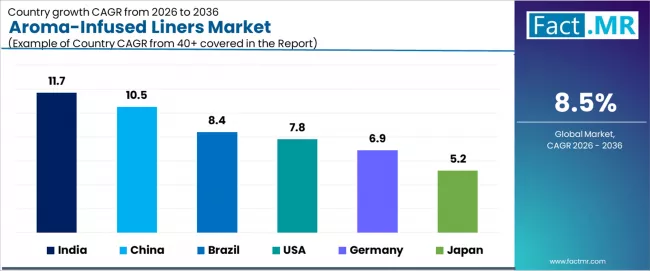
| Country | CAGR (2026-2036) |
|---|---|
| USA | 7.8% |
| Germany | 6.9% |
| China | 10.5% |
| India | 11.7% |
| Brazil | 8.4% |
| Japan | 5.2% |
What factors Drive China’s high Growth in the Aroma-Infused Liners Market?
The aroma-infused liners market in China is projected to grow at a 10.5% CAGR through 2036. This robust growth is driven by the world's largest e-commerce ecosystem for fresh food, where extended transit times demand superior protective packaging. National food safety initiatives and a growing middle-class preference for premium, fresh-quality goods further accelerate adoption.
A major trend involves liners with aromas that signify cleanliness and natural origin, used for domestic online grocery sales and for preserving product quality in extensive export supply chains of fresh produce and meats. The scale of manufacturing enables rapid iteration and cost-optimization of hybrid and paper-based liner solutions tailored for this massive market.
- The booming direct-to-consumer fresh produce and meal-kit delivery models necessitate liners that maintain sensory appeal and hygiene perception from warehouse to doorstep.
- Government policies aimed at curbing food loss are encouraging investments in active packaging technologies, including aroma-infused liners, across the agricultural and logistics sectors.
Why does India Demonstrate the Highest Growth Potential in this Market?
India demonstrates the highest growth potential with a projected CAGR of 11.7%. This expansion is powered by the rapid modernization of retail, including the spread of supermarkets and cold chains, which increases the use of packaged fresh foods.
The growing export market for Indian fruits, vegetables, and spices creates a strong need for packaging that ensures organoleptic quality upon arrival. A key trend is the development of affordable liner solutions using indigenous, culturally-significant scents like herbs and spices to enhance the appeal of regional food products both domestically and for international consumers seeking authentic experiences.
- The need to reduce tremendous post-harvest losses in a climatically challenging environment is pushing adoption of functional liners in the agricultural supply chain.
- Small and medium enterprise food processors are increasingly adopting branded packaging, creating new demand for liner solutions that add value and improve shelf presence.
How do Supply Chain and Premiumization Trends Underpin USA’s Market Growth?

USA, growing at a 7.8% CAGR, is driven by the demand for supply chain efficiency and enhanced consumer experiences in both retail and e-commerce. The high volume of online grocery sales and subscription meal services requires packaging that preserves product quality and delivers a branded unboxing moment.
A significant trend is the use of aroma liners for ready meals and bakery items, where scents like baked bread or herbs are released upon opening to heighten anticipation and satisfaction. Sustainability mandates are pushing innovation towards PCR-based polymer liners and advanced paper liners with effective aroma functionality.
- Major retailers and direct-to-consumer brands are using signature scents embedded in liners as a tool for brand loyalty and recognition in a crowded market.
- The focus on reducing returns and complaints for perishable online orders drives investment in liners that actively signal freshness and quality control.
How do Quality Standards and Recyclability Shape Growth in Germany?
Germany’s market advances at a 6.9% CAGR, characterized by stringent quality standards for food and a deep commitment to circular packaging economies. The premium meat, poultry, drives growth and bakery sectors, where liners are used to absorb juices, inhibit odors, and release subtle, appetite-enhancing aromas.
The dominant trend is the integration of aroma microencapsulation into mono-material, easily recyclable paper liners to meet Dual System Germany (Grüner Punkt) requirements without sacrificing functional performance. German engineering focuses on precision in scent dosage and release timing to align with product expiration dates.
- Innovation is concentrated on compostable bio-liners with natural aroma oils that meet both home-composting standards and functional performance needs.
- Collaboration between liner manufacturers and fragrance companies is focused on developing subtle, natural scent profiles that comply with the EU’s strict regulations on allergens and chemical emissions.
How does Brazil’s Agricultural Export Economy Influence Market Expansion?
Brazil’s aroma-infused liners market is set to grow at an 8.4% CAGR. As a global agricultural powerhouse, the country has a vast internal and export market for fresh produce and poultry, where liners are critical for preserving quality during transport. Growth is fueled by expanding modern retail formats that demand longer shelf life for perishables. A key trend is the development of liners with citrus or fresh herbal aromas for meat and poultry packaging, designed to convey cleanliness and mask natural odors, aligning with local consumer preferences and tropical climate challenges.
- The strong export focus for proteins and fruits drives the need for high-performance liner solutions that can maintain product integrity and appeal on long shipping routes.
- Domestic packaging manufacturers are investing in technology to produce cost-effective hybrid liners suitable for the diverse range of climates across the country’s regions.
How does Focus on Precision and Waste Reduction Define Japan’s Market?

Japan’s market, growing at a 5.2% CAGR, is characterized by an extreme focus on precision, quality, and minimizing waste. The high-value ready meal, premium fruit, and confectionery gifting sectors are primary drivers. A major trend involves ultra-precise slow-release aroma systems in liners for gift boxes of fruit or pastries, where the scent is designed to release gradually, maintaining a luxurious aura until the moment of gifting.
Innovation also focuses on liners for convenience store bento boxes that release appetizing aromas upon opening to enhance the quick meal experience. Sustainable, home-compostable liner materials are a prerequisite for market acceptance.
- The culture of omiyage (gift-giving) creates demand for sophisticated liner solutions that preserve and enhance the sensory quality of premium food gifts during storage and transport.
- Advanced R&D focuses on aroma-release mechanisms triggered by very specific actions, such as the removal of a lidding film, to ensure no scent is wasted before the consumer experience begins.
Competitive Landscape of the Aroma-Infused Liners Market
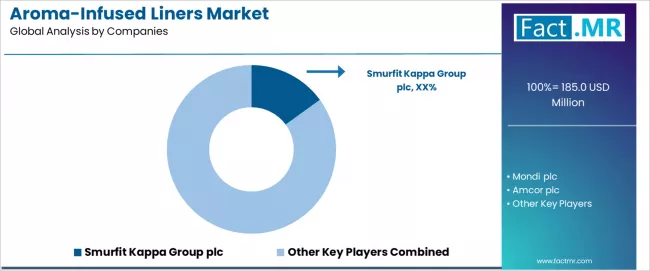
The competitive landscape features established global packaging corporations competing with specialized material science firms. Leaders differentiate through proprietary microencapsulation techniques, partnerships with international fragrance houses, and investments in sustainable substrate development. Competition centers on creating effective, compliant scent delivery systems that integrate seamlessly into high-speed packaging lines for fresh food.
Companies are actively expanding portfolios to include bio-based and compostable liner options with integrated aroma functionality. Success requires deep technical expertise in scent chemistry, barrier technologies, and a strong understanding of regional food packaging regulations and retail dynamics. Strategic partnerships with major food producers and retailers are common to co-develop tailored solutions.
Key Players in the Aroma-Infused Liners Market
- Smurfit Kappa Group plc
- Mondi plc
- Amcor plc
- UFlex Limited
- Sealed Air Corporation
- Avery Dennison Corporation
Scope of the Report
| Items | Values |
|---|---|
| Quantitative Units (2026) | USD 185.0 Million |
| Application | Fresh Produce, Bakery & Pastries, Meat & Poultry, Ready Meals, Others |
| Product Type | Paper-Based Liners, Polymer Liners, Bio-Compostable Liners, Hybrid Liners, Others |
| Technology | Microencapsulation, Heat-Activated Aroma, Pressure-Release Aroma, Slow-Release Aroma, Others |
| Regions Covered | North America, Europe, Asia Pacific, Latin America, MEA |
| Key Companies Profiled | Smurfit Kappa Group plc, Mondi plc, Amcor plc, UFlex Limited, Sealed Air Corporation, Avery Dennison Corporation |
Aroma-Infused Liners Market by Segments
-
Application :
- Fresh Produce
- Bakery & Pastries
- Meat & Poultry
- Ready Meals
- Others
-
Product Type :
- Paper-Based Liners
- Polymer Liners
- Bio-Compostable Liners
- Hybrid Liners
- Others
-
Technology :
- Microencapsulation
- Heat-Activated Aroma
- Pressure-Release Aroma
- Slow-Release Aroma
- Others
-
Region :
- North America
- USA
- Canada
- Mexico
- Europe
- Germany
- UK
- France
- Italy
- Spain
- Rest of Europe
- Asia Pacific
- China
- India
- Japan
- South Korea
- Australia
- Rest of Asia Pacific
- Latin America
- Brazil
- Argentina
- Rest of Latin America
- MEA
- Saudi Arabia
- UAE
- South Africa
- Rest of MEA
- North America
Table of Content
- Executive Summary
- Global Market Outlook
- Demand to side Trends
- Supply to side Trends
- Technology Roadmap Analysis
- Analysis and Recommendations
- Market Overview
- Market Coverage / Taxonomy
- Market Definition / Scope / Limitations
- Market Background
- Market Dynamics
- Drivers
- Restraints
- Opportunity
- Trends
- Scenario Forecast
- Demand in Optimistic Scenario
- Demand in Likely Scenario
- Demand in Conservative Scenario
- Opportunity Map Analysis
- Product Life Cycle Analysis
- Supply Chain Analysis
- Investment Feasibility Matrix
- Value Chain Analysis
- PESTLE and Porter’s Analysis
- Regulatory Landscape
- Regional Parent Market Outlook
- Production and Consumption Statistics
- Import and Export Statistics
- Market Dynamics
- Global Market Analysis 2021 to 2025 and Forecast, 2026 to 2036
- Historical Market Size Value (USD Million) Analysis, 2021 to 2025
- Current and Future Market Size Value (USD Million) Projections, 2026 to 2036
- Y to o to Y Growth Trend Analysis
- Absolute $ Opportunity Analysis
- Global Market Pricing Analysis 2021 to 2025 and Forecast 2026 to 2036
- Global Market Analysis 2021 to 2025 and Forecast 2026 to 2036, By Application
- Introduction / Key Findings
- Historical Market Size Value (USD Million) Analysis By Application, 2021 to 2025
- Current and Future Market Size Value (USD Million) Analysis and Forecast By Application, 2026 to 2036
- Fresh Produce
- Bakery & Pastries
- Meat & Poultry
- Ready Meals
- Others
- Y to o to Y Growth Trend Analysis By Application, 2021 to 2025
- Absolute $ Opportunity Analysis By Application, 2026 to 2036
- Global Market Analysis 2021 to 2025 and Forecast 2026 to 2036, By Product Type
- Introduction / Key Findings
- Historical Market Size Value (USD Million) Analysis By Product Type, 2021 to 2025
- Current and Future Market Size Value (USD Million) Analysis and Forecast By Product Type, 2026 to 2036
- Paper-Based Liners
- Polymer Liners
- Bio-Compostable Liners
- Hybrid Liners
- Others
- Y to o to Y Growth Trend Analysis By Product Type, 2021 to 2025
- Absolute $ Opportunity Analysis By Product Type, 2026 to 2036
- Global Market Analysis 2021 to 2025 and Forecast 2026 to 2036, By Technology
- Introduction / Key Findings
- Historical Market Size Value (USD Million) Analysis By Technology, 2021 to 2025
- Current and Future Market Size Value (USD Million) Analysis and Forecast By Technology, 2026 to 2036
- Microencapsulation
- Heat-Activated Aroma
- Pressure-Release Aroma
- Slow-Release Aroma
- Others
- Y to o to Y Growth Trend Analysis By Technology, 2021 to 2025
- Absolute $ Opportunity Analysis By Technology, 2026 to 2036
- Global Market Analysis 2021 to 2025 and Forecast 2026 to 2036, By Region
- Introduction
- Historical Market Size Value (USD Million) Analysis By Region, 2021 to 2025
- Current Market Size Value (USD Million) Analysis and Forecast By Region, 2026 to 2036
- North America
- Latin America
- Western Europe
- Eastern Europe
- East Asia
- South Asia and Pacific
- Middle East & Africa
- Market Attractiveness Analysis By Region
- North America Market Analysis 2021 to 2025 and Forecast 2026 to 2036, By Country
- Historical Market Size Value (USD Million) Trend Analysis By Market Taxonomy, 2021 to 2025
- Market Size Value (USD Million) Forecast By Market Taxonomy, 2026 to 2036
- By Country
- USA
- Canada
- Mexico
- By Application
- By Product Type
- By Technology
- By Country
- Market Attractiveness Analysis
- By Country
- By Application
- By Product Type
- By Technology
- Key Takeaways
- Latin America Market Analysis 2021 to 2025 and Forecast 2026 to 2036, By Country
- Historical Market Size Value (USD Million) Trend Analysis By Market Taxonomy, 2021 to 2025
- Market Size Value (USD Million) Forecast By Market Taxonomy, 2026 to 2036
- By Country
- Brazil
- Chile
- Rest of Latin America
- By Application
- By Product Type
- By Technology
- By Country
- Market Attractiveness Analysis
- By Country
- By Application
- By Product Type
- By Technology
- Key Takeaways
- Western Europe Market Analysis 2021 to 2025 and Forecast 2026 to 2036, By Country
- Historical Market Size Value (USD Million) Trend Analysis By Market Taxonomy, 2021 to 2025
- Market Size Value (USD Million) Forecast By Market Taxonomy, 2026 to 2036
- By Country
- Germany
- UK
- Italy
- Spain
- France
- Nordic
- BENELUX
- Rest of Western Europe
- By Application
- By Product Type
- By Technology
- By Country
- Market Attractiveness Analysis
- By Country
- By Application
- By Product Type
- By Technology
- Key Takeaways
- Eastern Europe Market Analysis 2021 to 2025 and Forecast 2026 to 2036, By Country
- Historical Market Size Value (USD Million) Trend Analysis By Market Taxonomy, 2021 to 2025
- Market Size Value (USD Million) Forecast By Market Taxonomy, 2026 to 2036
- By Country
- Russia
- Poland
- Hungary
- Balkan & Baltic
- Rest of Eastern Europe
- By Application
- By Product Type
- By Technology
- By Country
- Market Attractiveness Analysis
- By Country
- By Application
- By Product Type
- By Technology
- Key Takeaways
- East Asia Market Analysis 2021 to 2025 and Forecast 2026 to 2036, By Country
- Historical Market Size Value (USD Million) Trend Analysis By Market Taxonomy, 2021 to 2025
- Market Size Value (USD Million) Forecast By Market Taxonomy, 2026 to 2036
- By Country
- China
- Japan
- South Korea
- By Application
- By Product Type
- By Technology
- By Country
- Market Attractiveness Analysis
- By Country
- By Application
- By Product Type
- By Technology
- Key Takeaways
- South Asia and Pacific Market Analysis 2021 to 2025 and Forecast 2026 to 2036, By Country
- Historical Market Size Value (USD Million) Trend Analysis By Market Taxonomy, 2021 to 2025
- Market Size Value (USD Million) Forecast By Market Taxonomy, 2026 to 2036
- By Country
- India
- ASEAN
- Australia & New Zealand
- Rest of South Asia and Pacific
- By Application
- By Product Type
- By Technology
- By Country
- Market Attractiveness Analysis
- By Country
- By Application
- By Product Type
- By Technology
- Key Takeaways
- Middle East & Africa Market Analysis 2021 to 2025 and Forecast 2026 to 2036, By Country
- Historical Market Size Value (USD Million) Trend Analysis By Market Taxonomy, 2021 to 2025
- Market Size Value (USD Million) Forecast By Market Taxonomy, 2026 to 2036
- By Country
- Kingdom of Saudi Arabia
- Other GCC Countries
- Turkiye
- South Africa
- Other African Union
- Rest of Middle East & Africa
- By Application
- By Product Type
- By Technology
- By Country
- Market Attractiveness Analysis
- By Country
- By Application
- By Product Type
- By Technology
- Key Takeaways
- Key Countries Market Analysis
- USA
- Pricing Analysis
- Market Share Analysis, 2025
- By Application
- By Product Type
- By Technology
- Canada
- Pricing Analysis
- Market Share Analysis, 2025
- By Application
- By Product Type
- By Technology
- Mexico
- Pricing Analysis
- Market Share Analysis, 2025
- By Application
- By Product Type
- By Technology
- Brazil
- Pricing Analysis
- Market Share Analysis, 2025
- By Application
- By Product Type
- By Technology
- Chile
- Pricing Analysis
- Market Share Analysis, 2025
- By Application
- By Product Type
- By Technology
- Germany
- Pricing Analysis
- Market Share Analysis, 2025
- By Application
- By Product Type
- By Technology
- UK
- Pricing Analysis
- Market Share Analysis, 2025
- By Application
- By Product Type
- By Technology
- Italy
- Pricing Analysis
- Market Share Analysis, 2025
- By Application
- By Product Type
- By Technology
- Spain
- Pricing Analysis
- Market Share Analysis, 2025
- By Application
- By Product Type
- By Technology
- France
- Pricing Analysis
- Market Share Analysis, 2025
- By Application
- By Product Type
- By Technology
- India
- Pricing Analysis
- Market Share Analysis, 2025
- By Application
- By Product Type
- By Technology
- ASEAN
- Pricing Analysis
- Market Share Analysis, 2025
- By Application
- By Product Type
- By Technology
- Australia & New Zealand
- Pricing Analysis
- Market Share Analysis, 2025
- By Application
- By Product Type
- By Technology
- China
- Pricing Analysis
- Market Share Analysis, 2025
- By Application
- By Product Type
- By Technology
- Japan
- Pricing Analysis
- Market Share Analysis, 2025
- By Application
- By Product Type
- By Technology
- South Korea
- Pricing Analysis
- Market Share Analysis, 2025
- By Application
- By Product Type
- By Technology
- Russia
- Pricing Analysis
- Market Share Analysis, 2025
- By Application
- By Product Type
- By Technology
- Poland
- Pricing Analysis
- Market Share Analysis, 2025
- By Application
- By Product Type
- By Technology
- Hungary
- Pricing Analysis
- Market Share Analysis, 2025
- By Application
- By Product Type
- By Technology
- Kingdom of Saudi Arabia
- Pricing Analysis
- Market Share Analysis, 2025
- By Application
- By Product Type
- By Technology
- Turkiye
- Pricing Analysis
- Market Share Analysis, 2025
- By Application
- By Product Type
- By Technology
- South Africa
- Pricing Analysis
- Market Share Analysis, 2025
- By Application
- By Product Type
- By Technology
- USA
- Market Structure Analysis
- Competition Dashboard
- Competition Benchmarking
- Market Share Analysis of Top Players
- By Regional
- By Application
- By Product Type
- By Technology
- Competition Analysis
- Competition Deep Dive
- Smurfit Kappa Group plc
- Overview
- Product Portfolio
- Profitability by Market Segments (Product/Age /Sales Channel/Region)
- Sales Footprint
- Strategy Overview
- Marketing Strategy
- Product Strategy
- Channel Strategy
- Mondi plc
- Amcor plc
- UFlex Limited
- Sealed Air Corporation
- Avery Dennison Corporation
- Smurfit Kappa Group plc
- Competition Deep Dive
- Assumptions & Acronyms Used
- Research Methodology
List Of Table
- Table 1: Global Market Value (USD Million) Forecast by Region, 2021 to 2036
- Table 2: Global Market Value (USD Million) Forecast by Application, 2021 to 2036
- Table 3: Global Market Value (USD Million) Forecast by Product Type, 2021 to 2036
- Table 4: Global Market Value (USD Million) Forecast by Technology, 2021 to 2036
- Table 5: North America Market Value (USD Million) Forecast by Country, 2021 to 2036
- Table 6: North America Market Value (USD Million) Forecast by Application, 2021 to 2036
- Table 7: North America Market Value (USD Million) Forecast by Product Type, 2021 to 2036
- Table 8: North America Market Value (USD Million) Forecast by Technology, 2021 to 2036
- Table 9: Latin America Market Value (USD Million) Forecast by Country, 2021 to 2036
- Table 10: Latin America Market Value (USD Million) Forecast by Application, 2021 to 2036
- Table 11: Latin America Market Value (USD Million) Forecast by Product Type, 2021 to 2036
- Table 12: Latin America Market Value (USD Million) Forecast by Technology, 2021 to 2036
- Table 13: Western Europe Market Value (USD Million) Forecast by Country, 2021 to 2036
- Table 14: Western Europe Market Value (USD Million) Forecast by Application, 2021 to 2036
- Table 15: Western Europe Market Value (USD Million) Forecast by Product Type, 2021 to 2036
- Table 16: Western Europe Market Value (USD Million) Forecast by Technology, 2021 to 2036
- Table 17: Eastern Europe Market Value (USD Million) Forecast by Country, 2021 to 2036
- Table 18: Eastern Europe Market Value (USD Million) Forecast by Application, 2021 to 2036
- Table 19: Eastern Europe Market Value (USD Million) Forecast by Product Type, 2021 to 2036
- Table 20: Eastern Europe Market Value (USD Million) Forecast by Technology, 2021 to 2036
- Table 21: East Asia Market Value (USD Million) Forecast by Country, 2021 to 2036
- Table 22: East Asia Market Value (USD Million) Forecast by Application, 2021 to 2036
- Table 23: East Asia Market Value (USD Million) Forecast by Product Type, 2021 to 2036
- Table 24: East Asia Market Value (USD Million) Forecast by Technology, 2021 to 2036
- Table 25: South Asia and Pacific Market Value (USD Million) Forecast by Country, 2021 to 2036
- Table 26: South Asia and Pacific Market Value (USD Million) Forecast by Application, 2021 to 2036
- Table 27: South Asia and Pacific Market Value (USD Million) Forecast by Product Type, 2021 to 2036
- Table 28: South Asia and Pacific Market Value (USD Million) Forecast by Technology, 2021 to 2036
- Table 29: Middle East & Africa Market Value (USD Million) Forecast by Country, 2021 to 2036
- Table 30: Middle East & Africa Market Value (USD Million) Forecast by Application, 2021 to 2036
- Table 31: Middle East & Africa Market Value (USD Million) Forecast by Product Type, 2021 to 2036
- Table 32: Middle East & Africa Market Value (USD Million) Forecast by Technology, 2021 to 2036
List Of Figures
- Figure 1: Global Market Pricing Analysis
- Figure 2: Global Market Value (USD Million) Forecast 2021 to 2036
- Figure 3: Global Market Value Share and BPS Analysis by Application, 2026 and 2036
- Figure 4: Global Market Y to o to Y Growth Comparison by Application, 2026 to 2036
- Figure 5: Global Market Attractiveness Analysis by Application
- Figure 6: Global Market Value Share and BPS Analysis by Product Type, 2026 and 2036
- Figure 7: Global Market Y to o to Y Growth Comparison by Product Type, 2026 to 2036
- Figure 8: Global Market Attractiveness Analysis by Product Type
- Figure 9: Global Market Value Share and BPS Analysis by Technology, 2026 and 2036
- Figure 10: Global Market Y to o to Y Growth Comparison by Technology, 2026 to 2036
- Figure 11: Global Market Attractiveness Analysis by Technology
- Figure 12: Global Market Value (USD Million) Share and BPS Analysis by Region, 2026 and 2036
- Figure 13: Global Market Y to o to Y Growth Comparison by Region, 2026 to 2036
- Figure 14: Global Market Attractiveness Analysis by Region
- Figure 15: North America Market Incremental Dollar Opportunity, 2026 to 2036
- Figure 16: Latin America Market Incremental Dollar Opportunity, 2026 to 2036
- Figure 17: Western Europe Market Incremental Dollar Opportunity, 2026 to 2036
- Figure 18: Eastern Europe Market Incremental Dollar Opportunity, 2026 to 2036
- Figure 19: East Asia Market Incremental Dollar Opportunity, 2026 to 2036
- Figure 20: South Asia and Pacific Market Incremental Dollar Opportunity, 2026 to 2036
- Figure 21: Middle East & Africa Market Incremental Dollar Opportunity, 2026 to 2036
- Figure 22: North America Market Value Share and BPS Analysis by Country, 2026 and 2036
- Figure 23: North America Market Value Share and BPS Analysis by Application, 2026 and 2036
- Figure 24: North America Market Y to o to Y Growth Comparison by Application, 2026 to 2036
- Figure 25: North America Market Attractiveness Analysis by Application
- Figure 26: North America Market Value Share and BPS Analysis by Product Type, 2026 and 2036
- Figure 27: North America Market Y to o to Y Growth Comparison by Product Type, 2026 to 2036
- Figure 28: North America Market Attractiveness Analysis by Product Type
- Figure 29: North America Market Value Share and BPS Analysis by Technology, 2026 and 2036
- Figure 30: North America Market Y to o to Y Growth Comparison by Technology, 2026 to 2036
- Figure 31: North America Market Attractiveness Analysis by Technology
- Figure 32: Latin America Market Value Share and BPS Analysis by Country, 2026 and 2036
- Figure 33: Latin America Market Value Share and BPS Analysis by Application, 2026 and 2036
- Figure 34: Latin America Market Y to o to Y Growth Comparison by Application, 2026 to 2036
- Figure 35: Latin America Market Attractiveness Analysis by Application
- Figure 36: Latin America Market Value Share and BPS Analysis by Product Type, 2026 and 2036
- Figure 37: Latin America Market Y to o to Y Growth Comparison by Product Type, 2026 to 2036
- Figure 38: Latin America Market Attractiveness Analysis by Product Type
- Figure 39: Latin America Market Value Share and BPS Analysis by Technology, 2026 and 2036
- Figure 40: Latin America Market Y to o to Y Growth Comparison by Technology, 2026 to 2036
- Figure 41: Latin America Market Attractiveness Analysis by Technology
- Figure 42: Western Europe Market Value Share and BPS Analysis by Country, 2026 and 2036
- Figure 43: Western Europe Market Value Share and BPS Analysis by Application, 2026 and 2036
- Figure 44: Western Europe Market Y to o to Y Growth Comparison by Application, 2026 to 2036
- Figure 45: Western Europe Market Attractiveness Analysis by Application
- Figure 46: Western Europe Market Value Share and BPS Analysis by Product Type, 2026 and 2036
- Figure 47: Western Europe Market Y to o to Y Growth Comparison by Product Type, 2026 to 2036
- Figure 48: Western Europe Market Attractiveness Analysis by Product Type
- Figure 49: Western Europe Market Value Share and BPS Analysis by Technology, 2026 and 2036
- Figure 50: Western Europe Market Y to o to Y Growth Comparison by Technology, 2026 to 2036
- Figure 51: Western Europe Market Attractiveness Analysis by Technology
- Figure 52: Eastern Europe Market Value Share and BPS Analysis by Country, 2026 and 2036
- Figure 53: Eastern Europe Market Value Share and BPS Analysis by Application, 2026 and 2036
- Figure 54: Eastern Europe Market Y to o to Y Growth Comparison by Application, 2026 to 2036
- Figure 55: Eastern Europe Market Attractiveness Analysis by Application
- Figure 56: Eastern Europe Market Value Share and BPS Analysis by Product Type, 2026 and 2036
- Figure 57: Eastern Europe Market Y to o to Y Growth Comparison by Product Type, 2026 to 2036
- Figure 58: Eastern Europe Market Attractiveness Analysis by Product Type
- Figure 59: Eastern Europe Market Value Share and BPS Analysis by Technology, 2026 and 2036
- Figure 60: Eastern Europe Market Y to o to Y Growth Comparison by Technology, 2026 to 2036
- Figure 61: Eastern Europe Market Attractiveness Analysis by Technology
- Figure 62: East Asia Market Value Share and BPS Analysis by Country, 2026 and 2036
- Figure 63: East Asia Market Value Share and BPS Analysis by Application, 2026 and 2036
- Figure 64: East Asia Market Y to o to Y Growth Comparison by Application, 2026 to 2036
- Figure 65: East Asia Market Attractiveness Analysis by Application
- Figure 66: East Asia Market Value Share and BPS Analysis by Product Type, 2026 and 2036
- Figure 67: East Asia Market Y to o to Y Growth Comparison by Product Type, 2026 to 2036
- Figure 68: East Asia Market Attractiveness Analysis by Product Type
- Figure 69: East Asia Market Value Share and BPS Analysis by Technology, 2026 and 2036
- Figure 70: East Asia Market Y to o to Y Growth Comparison by Technology, 2026 to 2036
- Figure 71: East Asia Market Attractiveness Analysis by Technology
- Figure 72: South Asia and Pacific Market Value Share and BPS Analysis by Country, 2026 and 2036
- Figure 73: South Asia and Pacific Market Value Share and BPS Analysis by Application, 2026 and 2036
- Figure 74: South Asia and Pacific Market Y to o to Y Growth Comparison by Application, 2026 to 2036
- Figure 75: South Asia and Pacific Market Attractiveness Analysis by Application
- Figure 76: South Asia and Pacific Market Value Share and BPS Analysis by Product Type, 2026 and 2036
- Figure 77: South Asia and Pacific Market Y to o to Y Growth Comparison by Product Type, 2026 to 2036
- Figure 78: South Asia and Pacific Market Attractiveness Analysis by Product Type
- Figure 79: South Asia and Pacific Market Value Share and BPS Analysis by Technology, 2026 and 2036
- Figure 80: South Asia and Pacific Market Y to o to Y Growth Comparison by Technology, 2026 to 2036
- Figure 81: South Asia and Pacific Market Attractiveness Analysis by Technology
- Figure 82: Middle East & Africa Market Value Share and BPS Analysis by Country, 2026 and 2036
- Figure 83: Middle East & Africa Market Value Share and BPS Analysis by Application, 2026 and 2036
- Figure 84: Middle East & Africa Market Y to o to Y Growth Comparison by Application, 2026 to 2036
- Figure 85: Middle East & Africa Market Attractiveness Analysis by Application
- Figure 86: Middle East & Africa Market Value Share and BPS Analysis by Product Type, 2026 and 2036
- Figure 87: Middle East & Africa Market Y to o to Y Growth Comparison by Product Type, 2026 to 2036
- Figure 88: Middle East & Africa Market Attractiveness Analysis by Product Type
- Figure 89: Middle East & Africa Market Value Share and BPS Analysis by Technology, 2026 and 2036
- Figure 90: Middle East & Africa Market Y to o to Y Growth Comparison by Technology, 2026 to 2036
- Figure 91: Middle East & Africa Market Attractiveness Analysis by Technology
- Figure 92: Global Market - Tier Structure Analysis
- Figure 93: Global Market - Company Share Analysis
- FAQs -
How big is the aroma-infused liners market in 2026?
The global aroma-infused liners market is estimated to be valued at USD 185.0 million in 2026.
What will be the size of aroma-infused liners market in 2036?
The market size for the aroma-infused liners market is projected to reach USD 420.0 million by 2036.
How much will be the aroma-infused liners market growth between 2026 and 2036?
The aroma-infused liners market is expected to grow at a 8.5% CAGR between 2026 and 2036.
What are the key product types in the aroma-infused liners market?
The key product types in aroma-infused liners market are fresh produce, bakery & pastries, meat & poultry, ready meals and others.
Which product type segment to contribute significant share in the aroma-infused liners market in 2026?
In terms of product type, paper-based liners segment to command 40.0% share in the aroma-infused liners market in 2026.