Bioresorbable Polymers Market Size, Share, Growth and Forecast (2026 - 2036)

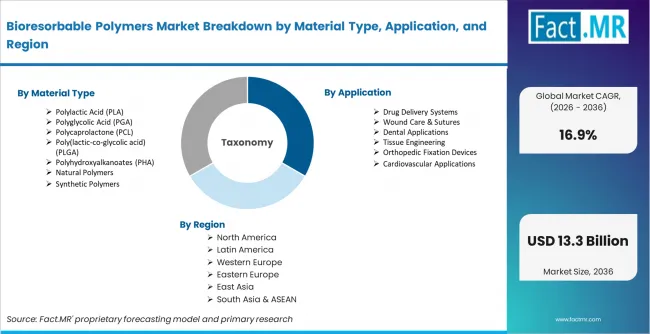
The Bioresorbable Polymers Market is segmented by Material Type (Synthetic Polymers, Polylactic Acid (PLA), Polyglycolic Acid (PGA), Polycaprolactone (PCL), Poly(lactic-co-glycolic acid) (PLGA), Polyhydroxyalkanoates (PHA), and Natural Polymers), Application (Orthopedic Fixation Devices, Cardiovascular Applications, Drug Delivery Systems, Wound Care & Sutures, Dental Applications, and Tissue Engineering), Manufacturing Process (Injection Molding, Extrusion, Solvent Casting, and 3D Printing), Form (Films, Fibers, Microspheres, and Foams), End-use Industry (Healthcare, Pharmaceutical, Biotechnology, Medical Device Manufacturing, and Research Institutes) and Region. Forecast for 2026 to 2036.

Fact.MR opines that bioresorbable polymers market is moving toward advanced implants and drug delivery uses. Healthcare manufacturers are using biodegradable medical polymers in place of permanent synthetic materials. This supports patient safety and can reduce the need for second surgeries.

Bioresorbable Polymers Market Forecast and Outlook By Fact.MR

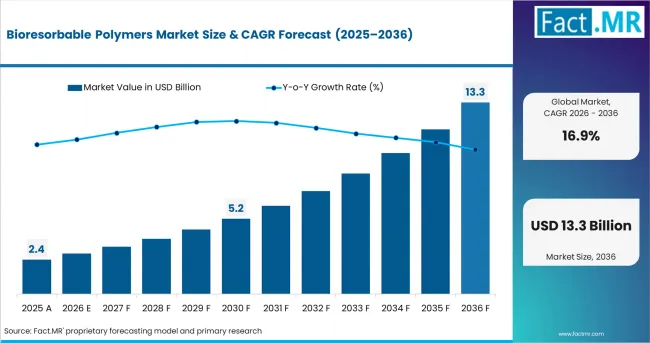
  • In 2025, the bioresorbable polymers market was valued at USD 2.4 billion.
  • Based on Fact.MR analysis, demand for bioresorbable polymers is estimated to grow to USD 2.8 billion in 2026 and USD 13.3 billion by 2036.
  • FACT.MR projects a CAGR of 16.9% during the forecast period.
Bioresorbable Polymers Market Value Analysis

Metric Value
Estimated Value in 2026 USD 2.8 billion
Forecast Value in 2036 USD 13.3 billion
Forecast CAGR (2026 to 2036) 16.9%

Summary of Bioresorbable Polymers Market

  • Demand Drivers
    • Medical device manufacturers are using more bioresorbable polymers in orthopedic implants. Absorbable implants reduce the need for removal surgeries.
    • Pharmaceutical companies are increasing research in controlled-release drug delivery systems. Biodegradable polymers help improve drug stability and treatment results.
    • Biotechnology research centers are investing more in tissue engineering. Regenerative medicine programs are growing in advanced healthcare markets and support biological repair work.
  • Key Segments Analyzed
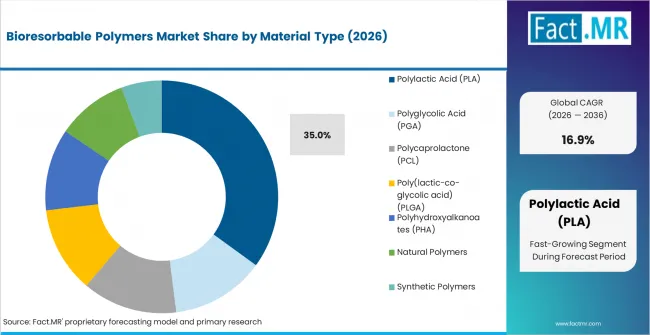
    • By Material Type: Polylactic Acid (PLA) accounts for nearly 35% share in 2026 due to broad medical implant usage.
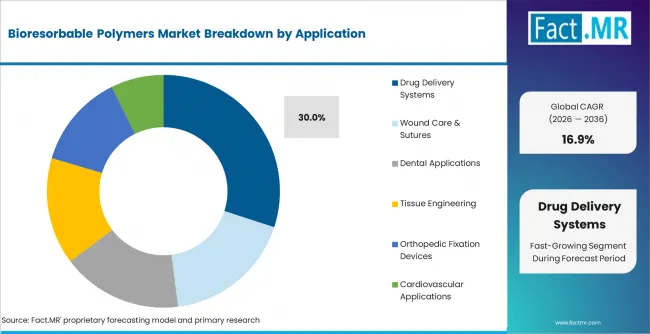
    • By Application: Drug Delivery Systems generate nearly 30% share in 2026 due to rising controlled-release therapies.
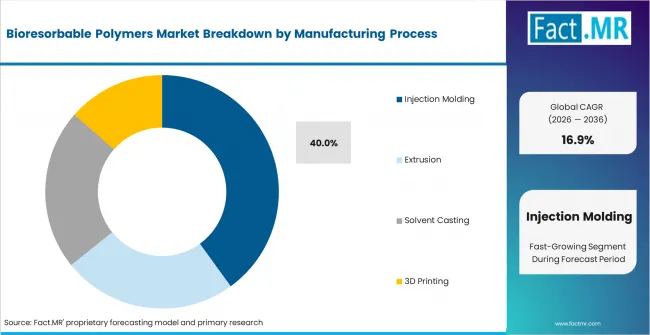
    • By Manufacturing Process: Injection Molding contributes nearly 40% share in 2026 due to efficient medical device production compatibility.
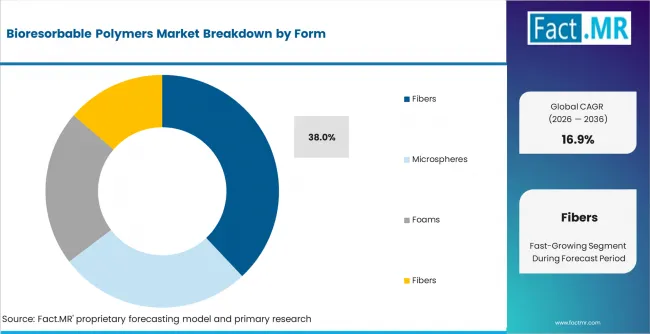
    • By Form: Fibers hold nearly 38% share in 2026 due to rising surgical suture and wound care demand.
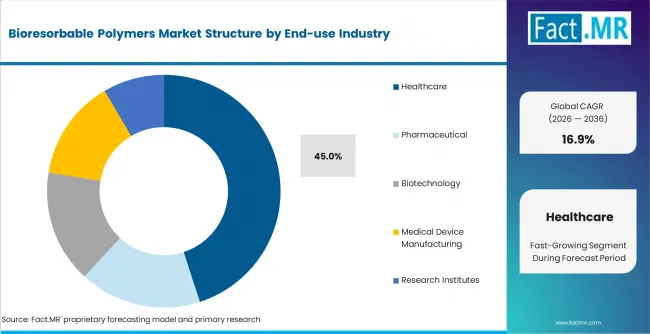
    • By End-use Industry: Healthcare accounts for nearly 45% share in 2026 due to expanding absorbable implant adoption.
    • By Geography: India is projected to expand at 19.1% CAGR through 2036 due to rising domestic medical manufacturing investment.
  • Analyst Opinion at Fact.MR
    • Shambhu Nath Jha, Principal Consultant at Fact.MR, opines, ‘CXOs will observe faster replacement of permanent implant materials in the healthcare sector. Hospitals are increasingly shifting toward biodegradable medical polymer systems. These materials reduce long-term complications and the need for secondary surgeries.’
  • Strategic Implications
    • Bioresorbable polymer manufacturers should build closer ties with medical device companies in India and China. Implant production is rising in both countries.
    • Pharmaceutical companies should increase research in controlled-release drug formulations. Biodegradable polymers can improve treatment accuracy.
    • Medical polymer suppliers should invest in high-purity PLA and PLGA production. This can support stronger use in medical implant.
    • The market is projected to create USD 10.5 billion in additional revenue through 2036. Growth is rising due to wider absorbable implant use and higher investment in controlled drug delivery systems. High material development cost limits faster use among smaller medical device manufacturers.

India is projected to expand at 19.1% CAGR through 2036 as domestic medical manufacturing capacity and surgical procedure volumes increase. China is forecast to grow at 18.0% CAGR through 2036 due to rising biodegradable implant production and healthcare investment. United States demand is expected to increase at 17.2% CAGR through 2036 supported by drug delivery research activity and advanced medical device adoption. South Korea is projected to record 16.8% CAGR through 2036 as biotechnology manufacturing and regenerative medicine programs expand. Germany is forecast to expand at 16.1% CAGR through 2036 due to rising orthopedic implant development and medical polymer processing investment. Japan is projected to grow at 15.4% CAGR through 2036 as healthcare companies increase biodegradable polymer use across cardiovascular and tissue engineering applications.

Segmental Analysis

Bioresorbable Polymers Market Analysis by Material Type
Bioresorbable Polymers Market Analysis By Material Type

Polylactic Acid (PLA) is estimated to hold 35% share in 2026. Medical device manufacturers prefer PLA for its biocompatibility and stable breakdown in implant use. Surgical product developers are using more PLA in orthopedic fixation and absorbable sutures.

  • NatureWorks opens Ingeo biopolymer facility in Thailand: NatureWorks has opened its fully integrated Ingeo biopolymer facility in Nakhon Sawan in Thailand. The site combines lactic acid production with lactide and polymer output in one complex to expand global PLA capacity. [1]
  • Medical Device Development: Healthcare manufacturers are increasing PLA-based implant development for absorbable orthopedic fixation.
  • Implant Material Adoption: Hospital surgical centers are using more biodegradable polymer implants to reduce secondary removal procedures.

Bioresorbable Polymers Market Analysis by Application
Bioresorbable Polymers Market Analysis By Application

Drug Delivery Systems account for 30% share in 2026. Pharmaceutical developers prefer biodegradable polymers for controlled-release drug delivery and fewer post-treatment complications. Advanced therapy research is increasing polymer use in injectable and implantable drug delivery systems.

  • Controlled-release Expansion: Pharmaceutical companies are using more biodegradable polymers in long-duration therapeutic delivery products.
  • Evonik expands RESOMER® bioresorbable polymer capacity: Evonik has expanded RESOMER® powder biomaterial production capacity at its Darmstadt site in Germany. The company added solvent-free micronization technology to make customized bioresorbable polymer powders with controlled particle size and degradation profiles. [2]
  • Biopharma Research Growth: Biotechnology companies are using more biodegradable polymers in targeted therapy development programs.

Bioresorbable Polymers Market Analysis by Manufacturing Process
Bioresorbable Polymers Market Analysis By Manufacturing Process

Injection Molding holds 40% share in 2026. Medical device manufacturers prefer injection molding for scalable production and precise component making. Implant developers are increasing injection molded biodegradable product output for healthcare use.

  • Precision Manufacturing Demand: Medical device facilities are using more injection molding in absorbable implant production.
  • 3D Printing Expansion: Healthcare research organizations are using more biodegradable polymers for customized implant printing.
  • Manufacturing Technology Investment: Medical polymer processors are expanding automated molding systems to improve production consistency and reduce defects.

Bioresorbable Polymers Market Analysis by Form
Bioresorbable Polymers Market Analysis By Form

Fibers account for 38% share in 2026. Surgical manufacturers prefer fiber-based biodegradable polymers because they are widely used in sutures and wound care products. Healthcare facilities are increasing absorbable fiber use in post-surgical treatment.

  • Surgical Suture Demand: Hospitals are using more biodegradable fibers in absorbable wound closure procedures.
  • Formerra expands Foster Medical Compounds distribution to Europe: Formerra has expanded its agreement with GEON Performance Solutions to become the preferred distributor of Foster® medical compounds in Europe. The partnership improves access to medical-grade engineered polymers used in drug delivery systems and implantable medical devices. [3]
  • Wound Care Growth: Healthcare providers are using more biodegradable dressings in advanced wound care.

Bioresorbable Polymers Market Analysis by End-use Industry
Bioresorbable Polymers Market Analysis By End Use Industry

Healthcare contributes 45% share in 2026. Hospitals and surgical centers create demand for biodegradable polymers in implants and sutures. Medical treatment expansion is increasing healthcare polymer use globally.

  • Implant Surgery Expansion: Healthcare systems are using more biodegradable implants in orthopedic and cardiovascular procedures.
  • Biotechnology Research Activity: Research institutes are developing more biodegradable scaffolds for regenerative medicine programs.
  • Bioretec receives FDA Breakthrough for RemeOs™ DrillPin: Bioretec has received FDA Breakthrough Device Designation for its RemeOs™ DrillPin. The product is a magnesium alloy based biodegradable orthopedic implant. [4]

Drivers, Restraints, and Opportunities

Bioresorbable Polymers Market Opportunity Matrix Growth Vs Value

Fact.MR analysis shows the bioresorbable polymers market as a fast-growing healthcare materials sector. Demand is rising due to higher use of absorbable implants and new pharmaceutical applications. Medical manufacturers are using more biodegradable polymers to support patient recovery and reduce long-term surgical complications.

Permanent implant materials are facing replacement pressure in orthopedic and cardiovascular applications. Drug delivery developers prefer biodegradable systems because they support controlled therapeutic release. High material development cost partly limits adoption among smaller healthcare manufacturing facilities.

  • FDA Approval Activity: Rising FDA approvals for absorbable implants and controlled-release therapies are increasing medical polymer demand in the United States and Europe.
  • Asian Manufacturing Expansion: Medical polymer processing capacity is growing in China and India as domestic healthcare manufacturing investment increases.
  • Bioretec’s disappearing devices make lasting impact: Bioretec develops fully absorbable orthopedic implants that dissolve inside the body after completing their function. Its Activa and RemeOs product lines use biodegradable materials such as PLGA and magnesium alloys to support bone healing without leaving permanent implants. [5]

Regional Analysis

The bioresorbable polymers market is assessed across North America, Europe, Asia Pacific, Latin America, and Middle East and Africa covering medical polymer production, healthcare investment, pharmaceutical innovation, and implant manufacturing activity. The full report offers market attractiveness analysis by region and country.

Top Country Growth Comparison Bioresorbable Polymers Market Cagr (2026 2036)

Country CAGR (2026 to 2036)
India 19.1%
China 18.0%
United States 17.2%
South Korea 16.8%
Germany 16.1%

Asia Pacific Bioresorbable Polymers Market Analysis

Asia Pacific is the fastest-growing bioresorbable polymers market. Growth comes from expanding healthcare manufacturing and higher investment in regenerative medicine. Corbion N.V. and Evonik Industries AG hold key positions through medical polymer supply and healthcare partnerships in the region.

  • India: Demand for bioresorbable polymers in India is projected to rise at 19.1% CAGR through 2036. Medical device manufacturing investment increased in Gujarat and Maharashtra during 2025. This supports biodegradable implant production. Government incentives are increasing local biodegradable polymer processing across surgical device facilities.
  • China: China is projected to expand at 18.0% CAGR through 2036 as absorbable implant production and biotechnology investment increase. Medical polymer processing facilities in Shanghai and Guangdong expanded biodegradable material manufacturing during 2024. Hospital modernization is increasing biodegradable implant use in orthopedic and cardiovascular procedures.
  • South Korea: South Korea records 16.8% CAGR through 2036 as regenerative medicine and biotechnology manufacturing expand. Research institutes increased biodegradable scaffold development programs in Seoul and Incheon during 2025. Medical polymer manufacturers are improving supply for tissue engineering applications.
  • Japan: Japan is expected to expand at 15.4% CAGR through 2036 as cardiovascular device development and tissue engineering investment rise. Healthcare manufacturers increased biodegradable polymer research during 2024 to support regenerative medicine applications. Aging population trends are increasing demand for absorbable medical implants in advanced surgical procedures.

FACT.MR's Asia Pacific analysis covers China, India, Japan, South Korea, ASEAN, and Australia and New Zealand. Readers can find healthcare manufacturing trends and biodegradable polymer demand benchmarks across medical applications.

North America Bioresorbable Polymers Market Analysis
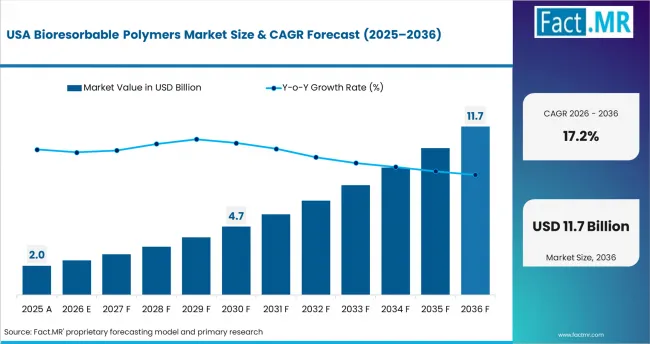
Bioresorbable Polymers Market Country Value Analysis

North America is a high-value bioresorbable polymers market. Advanced healthcare infrastructure and pharmaceutical research investment support demand. Foster Corporation and Poly-Med Inc. hold key regional positions through medical polymer development and healthcare partnerships.

  • United States: Demand for bioresorbable polymers in the United States is projected to rise at 17.2% CAGR through 2036. FDA approvals for absorbable implants and drug delivery systems increased during 2024. This supports biodegradable polymer demand. Pharmaceutical research organizations are increasing controlled-release therapy development across biotechnology and advanced healthcare facilities.

FACT.MR's North America analysis covers the United States, Canada, and Mexico. Readers can find pharmaceutical innovation trends and medical polymer investment benchmarks across healthcare manufacturing industries.

Europe Bioresorbable Polymers Market Analysis
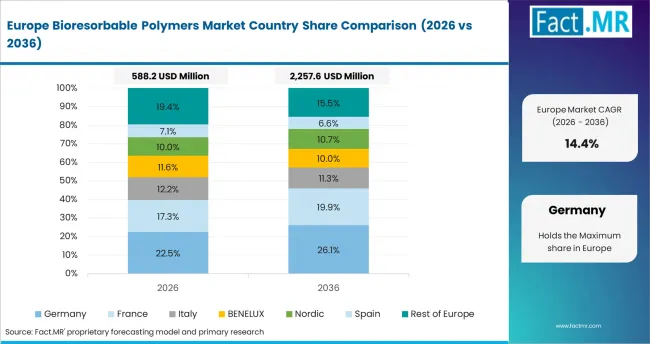
Bioresorbable Polymers Market Europe Country Market Share Analysis, 2026 & 2036

Europe is a regulation-focused bioresorbable polymers market. Advanced medical manufacturing and healthcare innovation programs support demand. Evonik Industries AG and KLS Martin Group hold key positions through biodegradable implant development and healthcare material research.

  • Germany: Germany is projected to record 16.1% CAGR through 2036 due to rising orthopedic implant production and healthcare manufacturing investment. Medical device companies in Bavaria expanded biodegradable polymer processing during 2025. This supports absorbable implant output. Hospital surgical centers are using more biodegradable fixation systems in trauma and orthopedic procedures.

FACT.MR's Europe analysis covers Germany, United Kingdom, France, Italy, Spain, BENELUX, Nordic Countries, and Rest of Europe. Readers can find healthcare manufacturing benchmarks and biodegradable polymer demand trends across medical applications.

Competitive Aligners for Market Players

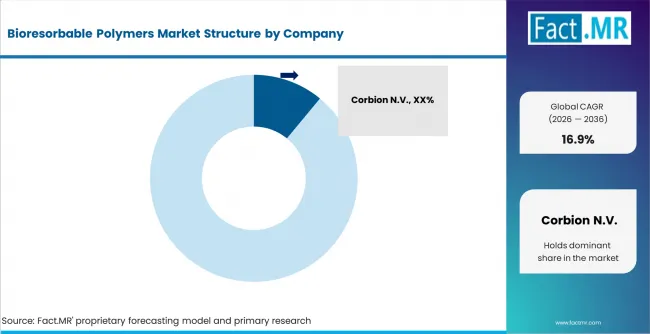
Bioresorbable Polymers Market Analysis By Company p>Competition in the bioresorbable polymers market centers on medical-grade purity and healthcare regulatory capability. Large polymer manufacturers are increasing investment in absorbable implant materials and pharmaceutical delivery technologies. Healthcare manufacturers prefer suppliers with stronger quality certification and long-term technical support capability.

Evonik Industries AG and Corbion N.V. maintain competitive positioning through advanced biodegradable polymer production and healthcare material development. Foster Corporation and Poly-Med Inc. strengthen commercial positioning through custom medical polymer formulation capability. Medical device manufacturers are increasing preference for suppliers offering stable regulatory documentation and consistent polymer performance.

Healthcare companies are increasing long-term supply agreements due to rising absorbable implant demand. Pharmaceutical developers prefer suppliers with controlled production quality and faster formulation support capability. Biodegradable polymer producers with stronger manufacturing scalability are improving pricing discipline across advanced healthcare applications.

Key Players

  • Corbion N.V.
  • Evonik Industries AG
  • Poly-Med, Inc.
  • KLS Martin Group
  • Foster Corporation
  • Ashland Global Holdings Inc.

Bibliography

  • Evonik Industries AG. (2024, April). Evonik expands capacity for customized RESOMER® powder biomaterials.
  • NatureWorks LLC. (2026, April 29). NatureWorks announces grand opening of fully integrated Ingeo biopolymer manufacturing facility in Thailand.
  • Formerra. (2026). Formerra expands Foster Medical Compounds distribution to Europe.
  • Bioretec Ltd. (2025). Inside information: Bioretec has been granted FDA Breakthrough Device Designation status for its RemeOs™ DrillPin.
  • Bioretec Ltd. (2025). Bioretec’s disappearing devices make lasting impact.

This Report Addresses

  • Strategic intelligence covering bioresorbable polymer demand across healthcare and pharmaceutical manufacturing applications.
  • Market forecast from USD 2.8 billion in 2026 to USD 13.3 billion by 2036 at 16.9% CAGR.
  • Growth opportunity analysis across India healthcare manufacturing and China biodegradable implant production expansion.
  • Segment analysis across material type, application, manufacturing process, form, and end-use industry with 2026 benchmarks.
  • Regional outlook covering Asia Pacific healthcare manufacturing and North America pharmaceutical innovation trends.
  • Competitive analysis of Corbion N.V., Evonik Industries AG, Poly-Med Inc., and Foster Corporation.
  • Regulatory analysis covering FDA approvals and EU MDR compliance across biodegradable medical materials.

Bioresorbable Polymers Market Definition

The bioresorbable polymers market covers biodegradable polymer materials used across medical implants, drug delivery systems, wound care products, and tissue engineering applications. These polymers gradually break down inside the body after completing their medical function. Healthcare manufacturers use bioresorbable polymers to reduce long-term implant removal procedures and improve patient recovery outcomes.

Bioresorbable Polymers Market Inclusions

The study covers global and regional forecasts from 2026 to 2036 across material type, application, manufacturing process, form, and end-use industry. It includes synthetic and natural bioresorbable polymers supplied for biotechnology, healthcare, pharmaceutical, and medical device manufacturing applications.

Bioresorbable Polymers Market Exclusions

The study excludes non-biodegradable engineering plastics and permanent implant polymers unless integrated into hybrid absorbable systems. It omits consumer healthcare products and cosmetic biodegradable materials outside regulated medical and pharmaceutical applications.

Bioresorbable Polymers Market Research Methodology

  • Primary Research
    • Primary research includes interviews with biomaterial scientists, medical device engineers, and pharmaceutical formulation specialists. Hospital teams and biotechnology manufacturing executives across the United States, Germany, and Japan were included.
  • Desk Research
    • Desk research uses public disclosures from Corbion N.V., Evonik Industries AG, and Foster Corporation. FDA approvals and EU MDR regulatory updates from 2024 and 2025 were reviewed.
  • Market-Sizing and Forecasting
    • Market sizing applies a hybrid top-down and bottom-up model. Medical implant shipment volumes, pharmaceutical drug delivery pipeline activity, and biodegradable polymer production capacity form the core forecast inputs.
  • Data Validation and Update Cycle
    • Data validation uses medical polymer revenue disclosures and healthcare device shipment benchmarks from 2024 and 2025 company filings. Findings are cross-checked with medical device engineers and biomaterial specialists.

Scope of the Report

Bioresorbable Polymers Market Breakdown By Material Type, Application, And Region

Attribute Details
Quantitative Units USD 2.8 billion in 2026 to USD 13.3 billion by 2036 at 16.9% CAGR
Market Definition Biodegradable medical polymers used in implants, drug delivery systems, wound care products, and tissue engineering applications.
Material Type Synthetic Polymers, Polylactic Acid (PLA), Polyglycolic Acid (PGA), Polycaprolactone (PCL), Poly(lactic-co-glycolic acid) (PLGA), Polyhydroxyalkanoates (PHA), Natural Polymers
Application Orthopedic Fixation Devices, Cardiovascular Applications, Drug Delivery Systems, Wound Care & Sutures, Dental Applications, Tissue Engineering
Manufacturing Process Injection Molding, Extrusion, Solvent Casting, 3D Printing
Form Films, Fibers, Microspheres, Foams
End-use Industry Healthcare, Pharmaceutical, Biotechnology, Medical Device Manufacturing, Research Institutes
Regions Covered North America, Latin America, Western Europe, East Asia, South Asia and Pacific, Middle East and Africa
Countries Covered United States, Canada, Mexico, Brazil, Argentina, Germany, United Kingdom, France, Italy, Spain, Nordic Countries, BENELUX, China, Japan, South Korea, India, ASEAN, Australia and New Zealand, Saudi Arabia, UAE, South Africa
Key Companies Profiled Corbion N.V., Evonik Industries AG, Poly-Med, Inc., KLS Martin Group, Foster Corporation, Ashland Inc.
Forecast Period 2026 to 2036
Approach Hybrid top-down and bottom-up model using medical implant demand, drug delivery adoption, manufacturing process use, form demand, end-use industry demand, and supplier validation.

Europe Bioresorbable Polymers Market by Segment

  • By Material Type

    • Synthetic Polymers
    • Polylactic Acid (PLA)
    • Polyglycolic Acid (PGA)
    • Polycaprolactone (PCL)
    • Poly(lactic-co-glycolic acid) (PLGA)
    • Polyhydroxyalkanoates (PHA)
    • Natural Polymers
  • By Application

    • Orthopedic Fixation Devices
    • Cardiovascular Applications
    • Drug Delivery Systems
    • Wound Care & Sutures
    • Dental Applications
    • Tissue Engineering
  • By Manufacturing Process

    • Injection Molding
    • Extrusion
    • Solvent Casting
    • 3D Printing
  • By Form

    • Films
    • Fibers
    • Microspheres
    • Foams
  • By End-use Industry

    • Healthcare
    • Pharmaceutical
    • Biotechnology
    • Medical Device Manufacturing
    • Research Institutes
  • By Region

    • North America
      • United States
      • Canada
      • Mexico
    • Latin America
      • Brazil
      • Argentina
      • Rest of Latin America
    • Western Europe
      • Germany
      • United Kingdom
      • France
      • Italy
      • Spain
      • Nordic Countries
      • BENELUX
      • Rest of Western Europe
    • East Asia
      • China
      • Japan
      • South Korea
    • South Asia and Pacific
      • India
      • ASEAN
      • Australia and New Zealand
      • Rest of South Asia and Pacific
    • Middle East and Africa
      • Saudi Arabia
      • UAE
      • South Africa
      • Rest of Middle East and Africa

- Frequently Asked Questions -

How large is the global bioresorbable polymers market in 2025?

The global bioresorbable polymers market was valued at USD 2.4 billion in 2025 supported by rising absorbable implant demand.

What will the bioresorbable polymers market size be in 2026?

Based on Fact.MR analysis, demand for bioresorbable polymers is estimated to reach USD 2.8 billion in 2026.

What is the projected market size by 2036?

The bioresorbable polymers market is projected to reach USD 13.3 billion by 2036.

What is the expected CAGR from 2026 to 2036?

FACT.MR projects a CAGR of 16.9% during the forecast period.

Which material type leads the market?

Polylactic Acid (PLA) leads with 35% share in 2026 due to strong absorbable implant usage.

Which application generates the strongest demand?

Drug Delivery Systems lead with 30% share in 2026 due to rising controlled-release therapy development.

Which country creates the fastest growth opportunity?

India leads at 19.1% CAGR through 2036 due to rising domestic medical manufacturing investment.

Why are healthcare companies increasing biodegradable polymer usage?

Healthcare companies prefer biodegradable polymers because they reduce secondary implant removal procedures.

What factors are increasing bioresorbable polymer demand?

Rising absorbable implant adoption and controlled drug delivery development are increasing biodegradable polymer demand.

Why are PLA polymers widely adopted?

PLA polymers provide strong biocompatibility and stable degradation performance across medical implant applications.

Which manufacturing process leads the market?

Injection molding leads with 40% share due to efficient medical component production capability.

Why are fibers generating strong market demand?

Fibers are widely used across surgical sutures and advanced wound management applications.

Which end-use industry generates the highest revenue?

Healthcare leads with 45% share due to strong absorbable implant and surgical product usage.

What challenge limits faster market expansion?

High material development and regulatory approval cost limit faster commercial adoption across smaller manufacturers.

Table of Content

  1. Executive Summary
    • Global Market Outlook
    • Demand to side Trends
    • Supply to side Trends
    • Technology Roadmap Analysis
    • Analysis and Recommendations
  2. Market Overview
    • Market Coverage / Taxonomy
    • Market Definition / Scope / Limitations
  3. Research Methodology
    • Chapter Orientation
    • Analytical Lens and Working Hypotheses
      • Market Structure, Signals, and Trend Drivers
      • Benchmarking and Cross-market Comparability
      • Market Sizing, Forecasting, and Opportunity Mapping
    • Research Design and Evidence Framework
      • Desk Research Programme (Secondary Evidence)
        • Company Annual and Sustainability Reports
        • Peer-reviewed Journals and Academic Literature
        • Corporate Websites, Product Literature, and Technical Notes
        • Earnings Decks and Investor Briefings
        • Statutory Filings and Regulatory Disclosures
        • Technical White Papers and Standards Notes
        • Trade Journals, Industry Magazines, and Analyst Briefs
        • Conference Proceedings, Webinars, and Seminar Materials
        • Government Statistics Portals and Public Data Releases
        • Press Releases and Reputable Media Coverage
        • Specialist Newsletters and Curated Briefings
        • Sector Databases and Reference Repositories
        • Fact.MR Internal Proprietary Databases and Historical Market Datasets
        • Subscription Datasets and Paid Sources
        • Social Channels, Communities, and Digital Listening Inputs
        • Additional Desk Sources
      • Expert Input and Fieldwork (Primary Evidence)
        • Primary Modes
          • Qualitative Interviews and Expert Elicitation
          • Quantitative Surveys and Structured Data Capture
          • Blended Approach
        • Why Primary Evidence is Used
        • Field Techniques
          • Interviews
          • Surveys
          • Focus Groups
          • Observational and In-context Research
          • Social and Community Interactions
        • Stakeholder Universe Engaged
          • C-suite Leaders
          • Board Members
          • Presidents and Vice Presidents
          • R&D and Innovation Heads
          • Technical Specialists
          • Domain Subject-matter Experts
          • Scientists
          • Physicians and Other Healthcare Professionals
        • Governance, Ethics, and Data Stewardship
          • Research Ethics
          • Data Integrity and Handling
      • Tooling, Models, and Reference Databases
    • Data Engineering and Model Build
      • Data Acquisition and Ingestion
      • Cleaning, Normalisation, and Verification
      • Synthesis, Triangulation, and Analysis
    • Quality Assurance and Audit Trail
  4. Market Background
    • Market Dynamics
      • Drivers
      • Restraints
      • Opportunity
      • Trends
    • Scenario Forecast
      • Demand in Optimistic Scenario
      • Demand in Likely Scenario
      • Demand in Conservative Scenario
    • Opportunity Map Analysis
    • Product Life Cycle Analysis
    • Supply Chain Analysis
    • Investment Feasibility Matrix
    • Value Chain Analysis
    • PESTLE and Porter’s Analysis
    • Regulatory Landscape
    • Regional Parent Market Outlook
    • Production and Consumption Statistics
    • Import and Export Statistics
  5. Global Market Analysis 2021 to 2025 and Forecast, 2026 to 2036
    • Historical Market Size Value (USD Million) Analysis, 2021 to 2025
    • Current and Future Market Size Value (USD Million) Projections, 2026 to 2036
      • Y to o to Y Growth Trend Analysis
      • Absolute $ Opportunity Analysis
  6. Global Market Pricing Analysis 2021 to 2025 and Forecast 2026 to 2036
  7. Global Market Analysis 2021 to 2025 and Forecast 2026 to 2036, By Material Type
    • Introduction / Key Findings
    • Historical Market Size Value (USD Million) Analysis By Material Type , 2021 to 2025
    • Current and Future Market Size Value (USD Million) Analysis and Forecast By Material Type , 2026 to 2036
      • Polylactic Acid (PLA)
      • Polyglycolic Acid (PGA)
      • Polycaprolactone (PCL)
      • Poly(lactic-co-glycolic acid) (PLGA)
      • Polyhydroxyalkanoates (PHA)
      • Natural Polymers
      • Synthetic Polymers
    • Y to o to Y Growth Trend Analysis By Material Type , 2021 to 2025
    • Absolute $ Opportunity Analysis By Material Type , 2026 to 2036
  8. Global Market Analysis 2021 to 2025 and Forecast 2026 to 2036, By Application
    • Introduction / Key Findings
    • Historical Market Size Value (USD Million) Analysis By Application, 2021 to 2025
    • Current and Future Market Size Value (USD Million) Analysis and Forecast By Application, 2026 to 2036
      • Drug Delivery Systems
      • Wound Care & Sutures
      • Dental Applications
      • Tissue Engineering
      • Orthopedic Fixation Devices
      • Cardiovascular Applications
    • Y to o to Y Growth Trend Analysis By Application, 2021 to 2025
    • Absolute $ Opportunity Analysis By Application, 2026 to 2036
  9. Global Market Analysis 2021 to 2025 and Forecast 2026 to 2036, By Manufacturing Process
    • Introduction / Key Findings
    • Historical Market Size Value (USD Million) Analysis By Manufacturing Process, 2021 to 2025
    • Current and Future Market Size Value (USD Million) Analysis and Forecast By Manufacturing Process, 2026 to 2036
      • Injection Molding
      • Extrusion
      • Solvent Casting
      • 3D Printing
    • Y to o to Y Growth Trend Analysis By Manufacturing Process, 2021 to 2025
    • Absolute $ Opportunity Analysis By Manufacturing Process, 2026 to 2036
  10. Global Market Analysis 2021 to 2025 and Forecast 2026 to 2036, By Form
    • Introduction / Key Findings
    • Historical Market Size Value (USD Million) Analysis By Form, 2021 to 2025
    • Current and Future Market Size Value (USD Million) Analysis and Forecast By Form, 2026 to 2036
      • Fibers
      • Microspheres
      • Foams
      • Fibers
    • Y to o to Y Growth Trend Analysis By Form, 2021 to 2025
    • Absolute $ Opportunity Analysis By Form, 2026 to 2036
  11. Global Market Analysis 2021 to 2025 and Forecast 2026 to 2036, By End-use Industry
    • Introduction / Key Findings
    • Historical Market Size Value (USD Million) Analysis By End-use Industry, 2021 to 2025
    • Current and Future Market Size Value (USD Million) Analysis and Forecast By End-use Industry, 2026 to 2036
      • Healthcare
      • Pharmaceutical
      • Biotechnology
      • Medical Device Manufacturing
      • Research Institutes
    • Y to o to Y Growth Trend Analysis By End-use Industry, 2021 to 2025
    • Absolute $ Opportunity Analysis By End-use Industry, 2026 to 2036
  12. Global Market Analysis 2021 to 2025 and Forecast 2026 to 2036, By Region
    • Introduction
    • Historical Market Size Value (USD Million) Analysis By Region, 2021 to 2025
    • Current Market Size Value (USD Million) Analysis and Forecast By Region, 2026 to 2036
      • North America
      • Latin America
      • Western Europe
      • Eastern Europe
      • East Asia
      • South Asia and Pacific
      • Middle East & Africa
    • Market Attractiveness Analysis By Region
  13. North America Market Analysis 2021 to 2025 and Forecast 2026 to 2036, By Country
    • Historical Market Size Value (USD Million) Trend Analysis By Market Taxonomy, 2021 to 2025
    • Market Size Value (USD Million) Forecast By Market Taxonomy, 2026 to 2036
      • By Country
        • USA
        • Canada
        • Mexico
      • By Material Type
      • By Application
      • By Manufacturing Process
      • By Form
      • By End-use Industry
    • Market Attractiveness Analysis
      • By Country
      • By Material Type
      • By Application
      • By Manufacturing Process
      • By Form
      • By End-use Industry
    • Key Takeaways
  14. Latin America Market Analysis 2021 to 2025 and Forecast 2026 to 2036, By Country
    • Historical Market Size Value (USD Million) Trend Analysis By Market Taxonomy, 2021 to 2025
    • Market Size Value (USD Million) Forecast By Market Taxonomy, 2026 to 2036
      • By Country
        • Brazil
        • Chile
        • Rest of Latin America
      • By Material Type
      • By Application
      • By Manufacturing Process
      • By Form
      • By End-use Industry
    • Market Attractiveness Analysis
      • By Country
      • By Material Type
      • By Application
      • By Manufacturing Process
      • By Form
      • By End-use Industry
    • Key Takeaways
  15. Western Europe Market Analysis 2021 to 2025 and Forecast 2026 to 2036, By Country
    • Historical Market Size Value (USD Million) Trend Analysis By Market Taxonomy, 2021 to 2025
    • Market Size Value (USD Million) Forecast By Market Taxonomy, 2026 to 2036
      • By Country
        • Germany
        • UK
        • Italy
        • Spain
        • France
        • Nordic
        • BENELUX
        • Rest of Western Europe
      • By Material Type
      • By Application
      • By Manufacturing Process
      • By Form
      • By End-use Industry
    • Market Attractiveness Analysis
      • By Country
      • By Material Type
      • By Application
      • By Manufacturing Process
      • By Form
      • By End-use Industry
    • Key Takeaways
  16. Eastern Europe Market Analysis 2021 to 2025 and Forecast 2026 to 2036, By Country
    • Historical Market Size Value (USD Million) Trend Analysis By Market Taxonomy, 2021 to 2025
    • Market Size Value (USD Million) Forecast By Market Taxonomy, 2026 to 2036
      • By Country
        • Russia
        • Poland
        • Hungary
        • Balkan & Baltic
        • Rest of Eastern Europe
      • By Material Type
      • By Application
      • By Manufacturing Process
      • By Form
      • By End-use Industry
    • Market Attractiveness Analysis
      • By Country
      • By Material Type
      • By Application
      • By Manufacturing Process
      • By Form
      • By End-use Industry
    • Key Takeaways
  17. East Asia Market Analysis 2021 to 2025 and Forecast 2026 to 2036, By Country
    • Historical Market Size Value (USD Million) Trend Analysis By Market Taxonomy, 2021 to 2025
    • Market Size Value (USD Million) Forecast By Market Taxonomy, 2026 to 2036
      • By Country
        • China
        • Japan
        • South Korea
      • By Material Type
      • By Application
      • By Manufacturing Process
      • By Form
      • By End-use Industry
    • Market Attractiveness Analysis
      • By Country
      • By Material Type
      • By Application
      • By Manufacturing Process
      • By Form
      • By End-use Industry
    • Key Takeaways
  18. South Asia and Pacific Market Analysis 2021 to 2025 and Forecast 2026 to 2036, By Country
    • Historical Market Size Value (USD Million) Trend Analysis By Market Taxonomy, 2021 to 2025
    • Market Size Value (USD Million) Forecast By Market Taxonomy, 2026 to 2036
      • By Country
        • India
        • ASEAN
        • Australia & New Zealand
        • Rest of South Asia and Pacific
      • By Material Type
      • By Application
      • By Manufacturing Process
      • By Form
      • By End-use Industry
    • Market Attractiveness Analysis
      • By Country
      • By Material Type
      • By Application
      • By Manufacturing Process
      • By Form
      • By End-use Industry
    • Key Takeaways
  19. Middle East & Africa Market Analysis 2021 to 2025 and Forecast 2026 to 2036, By Country
    • Historical Market Size Value (USD Million) Trend Analysis By Market Taxonomy, 2021 to 2025
    • Market Size Value (USD Million) Forecast By Market Taxonomy, 2026 to 2036
      • By Country
        • Kingdom of Saudi Arabia
        • Other GCC Countries
        • Turkiye
        • South Africa
        • Other African Union
        • Rest of Middle East & Africa
      • By Material Type
      • By Application
      • By Manufacturing Process
      • By Form
      • By End-use Industry
    • Market Attractiveness Analysis
      • By Country
      • By Material Type
      • By Application
      • By Manufacturing Process
      • By Form
      • By End-use Industry
    • Key Takeaways
  20. Key Countries Market Analysis
    • USA
      • Pricing Analysis
      • Market Share Analysis, 2025
        • By Material Type
        • By Application
        • By Manufacturing Process
        • By Form
        • By End-use Industry
    • Canada
      • Pricing Analysis
      • Market Share Analysis, 2025
        • By Material Type
        • By Application
        • By Manufacturing Process
        • By Form
        • By End-use Industry
    • Mexico
      • Pricing Analysis
      • Market Share Analysis, 2025
        • By Material Type
        • By Application
        • By Manufacturing Process
        • By Form
        • By End-use Industry
    • Brazil
      • Pricing Analysis
      • Market Share Analysis, 2025
        • By Material Type
        • By Application
        • By Manufacturing Process
        • By Form
        • By End-use Industry
    • Chile
      • Pricing Analysis
      • Market Share Analysis, 2025
        • By Material Type
        • By Application
        • By Manufacturing Process
        • By Form
        • By End-use Industry
    • Germany
      • Pricing Analysis
      • Market Share Analysis, 2025
        • By Material Type
        • By Application
        • By Manufacturing Process
        • By Form
        • By End-use Industry
    • UK
      • Pricing Analysis
      • Market Share Analysis, 2025
        • By Material Type
        • By Application
        • By Manufacturing Process
        • By Form
        • By End-use Industry
    • Italy
      • Pricing Analysis
      • Market Share Analysis, 2025
        • By Material Type
        • By Application
        • By Manufacturing Process
        • By Form
        • By End-use Industry
    • Spain
      • Pricing Analysis
      • Market Share Analysis, 2025
        • By Material Type
        • By Application
        • By Manufacturing Process
        • By Form
        • By End-use Industry
    • France
      • Pricing Analysis
      • Market Share Analysis, 2025
        • By Material Type
        • By Application
        • By Manufacturing Process
        • By Form
        • By End-use Industry
    • India
      • Pricing Analysis
      • Market Share Analysis, 2025
        • By Material Type
        • By Application
        • By Manufacturing Process
        • By Form
        • By End-use Industry
    • ASEAN
      • Pricing Analysis
      • Market Share Analysis, 2025
        • By Material Type
        • By Application
        • By Manufacturing Process
        • By Form
        • By End-use Industry
    • Australia & New Zealand
      • Pricing Analysis
      • Market Share Analysis, 2025
        • By Material Type
        • By Application
        • By Manufacturing Process
        • By Form
        • By End-use Industry
    • China
      • Pricing Analysis
      • Market Share Analysis, 2025
        • By Material Type
        • By Application
        • By Manufacturing Process
        • By Form
        • By End-use Industry
    • Japan
      • Pricing Analysis
      • Market Share Analysis, 2025
        • By Material Type
        • By Application
        • By Manufacturing Process
        • By Form
        • By End-use Industry
    • South Korea
      • Pricing Analysis
      • Market Share Analysis, 2025
        • By Material Type
        • By Application
        • By Manufacturing Process
        • By Form
        • By End-use Industry
    • Russia
      • Pricing Analysis
      • Market Share Analysis, 2025
        • By Material Type
        • By Application
        • By Manufacturing Process
        • By Form
        • By End-use Industry
    • Poland
      • Pricing Analysis
      • Market Share Analysis, 2025
        • By Material Type
        • By Application
        • By Manufacturing Process
        • By Form
        • By End-use Industry
    • Hungary
      • Pricing Analysis
      • Market Share Analysis, 2025
        • By Material Type
        • By Application
        • By Manufacturing Process
        • By Form
        • By End-use Industry
    • Kingdom of Saudi Arabia
      • Pricing Analysis
      • Market Share Analysis, 2025
        • By Material Type
        • By Application
        • By Manufacturing Process
        • By Form
        • By End-use Industry
    • Turkiye
      • Pricing Analysis
      • Market Share Analysis, 2025
        • By Material Type
        • By Application
        • By Manufacturing Process
        • By Form
        • By End-use Industry
    • South Africa
      • Pricing Analysis
      • Market Share Analysis, 2025
        • By Material Type
        • By Application
        • By Manufacturing Process
        • By Form
        • By End-use Industry
  21. Market Structure Analysis
    • Competition Dashboard
    • Competition Benchmarking
    • Market Share Analysis of Top Players
      • By Regional
      • By Material Type
      • By Application
      • By Manufacturing Process
      • By Form
      • By End-use Industry
  22. Competition Analysis
    • Competition Deep Dive
      • Corbion N.V.
        • Overview
        • Product Portfolio
        • Profitability by Market Segments (Product/Age /Sales Channel/Region)
        • Sales Footprint
        • Strategy Overview
          • Marketing Strategy
          • Product Strategy
          • Channel Strategy
      • Evonik Industries AG
      • Poly-Med, Inc.
      • KLS Martin Group
      • Foster Corporation
      • Ashland Global Holdings Inc.
  23. Assumptions & Acronyms Used

List Of Table

  • Table 1: Global Market Value (USD Million) Forecast by Region, 2021 to 2036
  • Table 2: Global Market Value (USD Million) Forecast by Material Type, 2021 to 2036
  • Table 3: Global Market Value (USD Million) Forecast by Application, 2021 to 2036
  • Table 4: Global Market Value (USD Million) Forecast by Manufacturing Process, 2021 to 2036
  • Table 5: Global Market Value (USD Million) Forecast by Form, 2021 to 2036
  • Table 6: Global Market Value (USD Million) Forecast by End-use Industry, 2021 to 2036
  • Table 7: North America Market Value (USD Million) Forecast by Country, 2021 to 2036
  • Table 8: North America Market Value (USD Million) Forecast by Material Type, 2021 to 2036
  • Table 9: North America Market Value (USD Million) Forecast by Application, 2021 to 2036
  • Table 10: North America Market Value (USD Million) Forecast by Manufacturing Process, 2021 to 2036
  • Table 11: North America Market Value (USD Million) Forecast by Form, 2021 to 2036
  • Table 12: North America Market Value (USD Million) Forecast by End-use Industry, 2021 to 2036
  • Table 13: Latin America Market Value (USD Million) Forecast by Country, 2021 to 2036
  • Table 14: Latin America Market Value (USD Million) Forecast by Material Type, 2021 to 2036
  • Table 15: Latin America Market Value (USD Million) Forecast by Application, 2021 to 2036
  • Table 16: Latin America Market Value (USD Million) Forecast by Manufacturing Process, 2021 to 2036
  • Table 17: Latin America Market Value (USD Million) Forecast by Form, 2021 to 2036
  • Table 18: Latin America Market Value (USD Million) Forecast by End-use Industry, 2021 to 2036
  • Table 19: Western Europe Market Value (USD Million) Forecast by Country, 2021 to 2036
  • Table 20: Western Europe Market Value (USD Million) Forecast by Material Type, 2021 to 2036
  • Table 21: Western Europe Market Value (USD Million) Forecast by Application, 2021 to 2036
  • Table 22: Western Europe Market Value (USD Million) Forecast by Manufacturing Process, 2021 to 2036
  • Table 23: Western Europe Market Value (USD Million) Forecast by Form, 2021 to 2036
  • Table 24: Western Europe Market Value (USD Million) Forecast by End-use Industry, 2021 to 2036
  • Table 25: Eastern Europe Market Value (USD Million) Forecast by Country, 2021 to 2036
  • Table 26: Eastern Europe Market Value (USD Million) Forecast by Material Type, 2021 to 2036
  • Table 27: Eastern Europe Market Value (USD Million) Forecast by Application, 2021 to 2036
  • Table 28: Eastern Europe Market Value (USD Million) Forecast by Manufacturing Process, 2021 to 2036
  • Table 29: Eastern Europe Market Value (USD Million) Forecast by Form, 2021 to 2036
  • Table 30: Eastern Europe Market Value (USD Million) Forecast by End-use Industry, 2021 to 2036
  • Table 31: East Asia Market Value (USD Million) Forecast by Country, 2021 to 2036
  • Table 32: East Asia Market Value (USD Million) Forecast by Material Type, 2021 to 2036
  • Table 33: East Asia Market Value (USD Million) Forecast by Application, 2021 to 2036
  • Table 34: East Asia Market Value (USD Million) Forecast by Manufacturing Process, 2021 to 2036
  • Table 35: East Asia Market Value (USD Million) Forecast by Form, 2021 to 2036
  • Table 36: East Asia Market Value (USD Million) Forecast by End-use Industry, 2021 to 2036
  • Table 37: South Asia and Pacific Market Value (USD Million) Forecast by Country, 2021 to 2036
  • Table 38: South Asia and Pacific Market Value (USD Million) Forecast by Material Type, 2021 to 2036
  • Table 39: South Asia and Pacific Market Value (USD Million) Forecast by Application, 2021 to 2036
  • Table 40: South Asia and Pacific Market Value (USD Million) Forecast by Manufacturing Process, 2021 to 2036
  • Table 41: South Asia and Pacific Market Value (USD Million) Forecast by Form, 2021 to 2036
  • Table 42: South Asia and Pacific Market Value (USD Million) Forecast by End-use Industry, 2021 to 2036
  • Table 43: Middle East & Africa Market Value (USD Million) Forecast by Country, 2021 to 2036
  • Table 44: Middle East & Africa Market Value (USD Million) Forecast by Material Type, 2021 to 2036
  • Table 45: Middle East & Africa Market Value (USD Million) Forecast by Application, 2021 to 2036
  • Table 46: Middle East & Africa Market Value (USD Million) Forecast by Manufacturing Process, 2021 to 2036
  • Table 47: Middle East & Africa Market Value (USD Million) Forecast by Form, 2021 to 2036
  • Table 48: Middle East & Africa Market Value (USD Million) Forecast by End-use Industry, 2021 to 2036

List Of Figures

  • Figure 1: Global Market Pricing Analysis
  • Figure 2: Global Market Value (USD Million) Forecast 2021-2036
  • Figure 3: Global Market Value Share and BPS Analysis by Material Type, 2026 and 2036
  • Figure 4: Global Market Y-o-Y Growth Comparison by Material Type, 2026 to 2036
  • Figure 5: Global Market Attractiveness Analysis by Material Type
  • Figure 6: Global Market Value Share and BPS Analysis by Application, 2026 and 2036
  • Figure 7: Global Market Y-o-Y Growth Comparison by Application, 2026 to 2036
  • Figure 8: Global Market Attractiveness Analysis by Application
  • Figure 9: Global Market Value Share and BPS Analysis by Manufacturing Process, 2026 and 2036
  • Figure 10: Global Market Y-o-Y Growth Comparison by Manufacturing Process, 2026 to 2036
  • Figure 11: Global Market Attractiveness Analysis by Manufacturing Process
  • Figure 12: Global Market Value Share and BPS Analysis by Form, 2026 and 2036
  • Figure 13: Global Market Y-o-Y Growth Comparison by Form, 2026 to 2036
  • Figure 14: Global Market Attractiveness Analysis by Form
  • Figure 15: Global Market Value Share and BPS Analysis by End-use Industry, 2026 and 2036
  • Figure 16: Global Market Y-o-Y Growth Comparison by End-use Industry, 2026 to 2036
  • Figure 17: Global Market Attractiveness Analysis by End-use Industry
  • Figure 18: Global Market Value (USD Million) Share and BPS Analysis by Region, 2026 and 2036
  • Figure 19: Global Market Y-o-Y Growth Comparison by Region, 2026 to 2036
  • Figure 20: Global Market Attractiveness Analysis by Region
  • Figure 21: North America Market Incremental Dollar Opportunity, 2026 to 2036
  • Figure 22: Latin America Market Incremental Dollar Opportunity, 2026 to 2036
  • Figure 23: Western Europe Market Incremental Dollar Opportunity, 2026 to 2036
  • Figure 24: Eastern Europe Market Incremental Dollar Opportunity, 2026 to 2036
  • Figure 25: East Asia Market Incremental Dollar Opportunity, 2026 to 2036
  • Figure 26: South Asia and Pacific Market Incremental Dollar Opportunity, 2026 to 2036
  • Figure 27: Middle East & Africa Market Incremental Dollar Opportunity, 2026 to 2036
  • Figure 28: North America Market Value Share and BPS Analysis by Country, 2026 and 2036
  • Figure 29: North America Market Value Share and BPS Analysis by Material Type, 2026 and 2036
  • Figure 30: North America Market Y-o-Y Growth Comparison by Material Type, 2026 to 2036
  • Figure 31: North America Market Attractiveness Analysis by Material Type
  • Figure 32: North America Market Value Share and BPS Analysis by Application, 2026 and 2036
  • Figure 33: North America Market Y-o-Y Growth Comparison by Application, 2026 to 2036
  • Figure 34: North America Market Attractiveness Analysis by Application
  • Figure 35: North America Market Value Share and BPS Analysis by Manufacturing Process, 2026 and 2036
  • Figure 36: North America Market Y-o-Y Growth Comparison by Manufacturing Process, 2026 to 2036
  • Figure 37: North America Market Attractiveness Analysis by Manufacturing Process
  • Figure 38: North America Market Value Share and BPS Analysis by Form, 2026 and 2036
  • Figure 39: North America Market Y-o-Y Growth Comparison by Form, 2026 to 2036
  • Figure 40: North America Market Attractiveness Analysis by Form
  • Figure 41: North America Market Value Share and BPS Analysis by End-use Industry, 2026 and 2036
  • Figure 42: North America Market Y-o-Y Growth Comparison by End-use Industry, 2026 to 2036
  • Figure 43: North America Market Attractiveness Analysis by End-use Industry
  • Figure 44: Latin America Market Value Share and BPS Analysis by Country, 2026 and 2036
  • Figure 45: Latin America Market Value Share and BPS Analysis by Material Type, 2026 and 2036
  • Figure 46: Latin America Market Y-o-Y Growth Comparison by Material Type, 2026 to 2036
  • Figure 47: Latin America Market Attractiveness Analysis by Material Type
  • Figure 48: Latin America Market Value Share and BPS Analysis by Application, 2026 and 2036
  • Figure 49: Latin America Market Y-o-Y Growth Comparison by Application, 2026 to 2036
  • Figure 50: Latin America Market Attractiveness Analysis by Application
  • Figure 51: Latin America Market Value Share and BPS Analysis by Manufacturing Process, 2026 and 2036
  • Figure 52: Latin America Market Y-o-Y Growth Comparison by Manufacturing Process, 2026 to 2036
  • Figure 53: Latin America Market Attractiveness Analysis by Manufacturing Process
  • Figure 54: Latin America Market Value Share and BPS Analysis by Form, 2026 and 2036
  • Figure 55: Latin America Market Y-o-Y Growth Comparison by Form, 2026 to 2036
  • Figure 56: Latin America Market Attractiveness Analysis by Form
  • Figure 57: Latin America Market Value Share and BPS Analysis by End-use Industry, 2026 and 2036
  • Figure 58: Latin America Market Y-o-Y Growth Comparison by End-use Industry, 2026 to 2036
  • Figure 59: Latin America Market Attractiveness Analysis by End-use Industry
  • Figure 60: Western Europe Market Value Share and BPS Analysis by Country, 2026 and 2036
  • Figure 61: Western Europe Market Value Share and BPS Analysis by Material Type, 2026 and 2036
  • Figure 62: Western Europe Market Y-o-Y Growth Comparison by Material Type, 2026 to 2036
  • Figure 63: Western Europe Market Attractiveness Analysis by Material Type
  • Figure 64: Western Europe Market Value Share and BPS Analysis by Application, 2026 and 2036
  • Figure 65: Western Europe Market Y-o-Y Growth Comparison by Application, 2026 to 2036
  • Figure 66: Western Europe Market Attractiveness Analysis by Application
  • Figure 67: Western Europe Market Value Share and BPS Analysis by Manufacturing Process, 2026 and 2036
  • Figure 68: Western Europe Market Y-o-Y Growth Comparison by Manufacturing Process, 2026 to 2036
  • Figure 69: Western Europe Market Attractiveness Analysis by Manufacturing Process
  • Figure 70: Western Europe Market Value Share and BPS Analysis by Form, 2026 and 2036
  • Figure 71: Western Europe Market Y-o-Y Growth Comparison by Form, 2026 to 2036
  • Figure 72: Western Europe Market Attractiveness Analysis by Form
  • Figure 73: Western Europe Market Value Share and BPS Analysis by End-use Industry, 2026 and 2036
  • Figure 74: Western Europe Market Y-o-Y Growth Comparison by End-use Industry, 2026 to 2036
  • Figure 75: Western Europe Market Attractiveness Analysis by End-use Industry
  • Figure 76: Eastern Europe Market Value Share and BPS Analysis by Country, 2026 and 2036
  • Figure 77: Eastern Europe Market Value Share and BPS Analysis by Material Type, 2026 and 2036
  • Figure 78: Eastern Europe Market Y-o-Y Growth Comparison by Material Type, 2026 to 2036
  • Figure 79: Eastern Europe Market Attractiveness Analysis by Material Type
  • Figure 80: Eastern Europe Market Value Share and BPS Analysis by Application, 2026 and 2036
  • Figure 81: Eastern Europe Market Y-o-Y Growth Comparison by Application, 2026 to 2036
  • Figure 82: Eastern Europe Market Attractiveness Analysis by Application
  • Figure 83: Eastern Europe Market Value Share and BPS Analysis by Manufacturing Process, 2026 and 2036
  • Figure 84: Eastern Europe Market Y-o-Y Growth Comparison by Manufacturing Process, 2026 to 2036
  • Figure 85: Eastern Europe Market Attractiveness Analysis by Manufacturing Process
  • Figure 86: Eastern Europe Market Value Share and BPS Analysis by Form, 2026 and 2036
  • Figure 87: Eastern Europe Market Y-o-Y Growth Comparison by Form, 2026 to 2036
  • Figure 88: Eastern Europe Market Attractiveness Analysis by Form
  • Figure 89: Eastern Europe Market Value Share and BPS Analysis by End-use Industry, 2026 and 2036
  • Figure 90: Eastern Europe Market Y-o-Y Growth Comparison by End-use Industry, 2026 to 2036
  • Figure 91: Eastern Europe Market Attractiveness Analysis by End-use Industry
  • Figure 92: East Asia Market Value Share and BPS Analysis by Country, 2026 and 2036
  • Figure 93: East Asia Market Value Share and BPS Analysis by Material Type, 2026 and 2036
  • Figure 94: East Asia Market Y-o-Y Growth Comparison by Material Type, 2026 to 2036
  • Figure 95: East Asia Market Attractiveness Analysis by Material Type
  • Figure 96: East Asia Market Value Share and BPS Analysis by Application, 2026 and 2036
  • Figure 97: East Asia Market Y-o-Y Growth Comparison by Application, 2026 to 2036
  • Figure 98: East Asia Market Attractiveness Analysis by Application
  • Figure 99: East Asia Market Value Share and BPS Analysis by Manufacturing Process, 2026 and 2036
  • Figure 100: East Asia Market Y-o-Y Growth Comparison by Manufacturing Process, 2026 to 2036
  • Figure 101: East Asia Market Attractiveness Analysis by Manufacturing Process
  • Figure 102: East Asia Market Value Share and BPS Analysis by Form, 2026 and 2036
  • Figure 103: East Asia Market Y-o-Y Growth Comparison by Form, 2026 to 2036
  • Figure 104: East Asia Market Attractiveness Analysis by Form
  • Figure 105: East Asia Market Value Share and BPS Analysis by End-use Industry, 2026 and 2036
  • Figure 106: East Asia Market Y-o-Y Growth Comparison by End-use Industry, 2026 to 2036
  • Figure 107: East Asia Market Attractiveness Analysis by End-use Industry
  • Figure 108: South Asia and Pacific Market Value Share and BPS Analysis by Country, 2026 and 2036
  • Figure 109: South Asia and Pacific Market Value Share and BPS Analysis by Material Type, 2026 and 2036
  • Figure 110: South Asia and Pacific Market Y-o-Y Growth Comparison by Material Type, 2026 to 2036
  • Figure 111: South Asia and Pacific Market Attractiveness Analysis by Material Type
  • Figure 112: South Asia and Pacific Market Value Share and BPS Analysis by Application, 2026 and 2036
  • Figure 113: South Asia and Pacific Market Y-o-Y Growth Comparison by Application, 2026 to 2036
  • Figure 114: South Asia and Pacific Market Attractiveness Analysis by Application
  • Figure 115: South Asia and Pacific Market Value Share and BPS Analysis by Manufacturing Process, 2026 and 2036
  • Figure 116: South Asia and Pacific Market Y-o-Y Growth Comparison by Manufacturing Process, 2026 to 2036
  • Figure 117: South Asia and Pacific Market Attractiveness Analysis by Manufacturing Process
  • Figure 118: South Asia and Pacific Market Value Share and BPS Analysis by Form, 2026 and 2036
  • Figure 119: South Asia and Pacific Market Y-o-Y Growth Comparison by Form, 2026 to 2036
  • Figure 120: South Asia and Pacific Market Attractiveness Analysis by Form
  • Figure 121: South Asia and Pacific Market Value Share and BPS Analysis by End-use Industry, 2026 and 2036
  • Figure 122: South Asia and Pacific Market Y-o-Y Growth Comparison by End-use Industry, 2026 to 2036
  • Figure 123: South Asia and Pacific Market Attractiveness Analysis by End-use Industry
  • Figure 124: Middle East & Africa Market Value Share and BPS Analysis by Country, 2026 and 2036
  • Figure 125: Middle East & Africa Market Value Share and BPS Analysis by Material Type, 2026 and 2036
  • Figure 126: Middle East & Africa Market Y-o-Y Growth Comparison by Material Type, 2026 to 2036
  • Figure 127: Middle East & Africa Market Attractiveness Analysis by Material Type
  • Figure 128: Middle East & Africa Market Value Share and BPS Analysis by Application, 2026 and 2036
  • Figure 129: Middle East & Africa Market Y-o-Y Growth Comparison by Application, 2026 to 2036
  • Figure 130: Middle East & Africa Market Attractiveness Analysis by Application
  • Figure 131: Middle East & Africa Market Value Share and BPS Analysis by Manufacturing Process, 2026 and 2036
  • Figure 132: Middle East & Africa Market Y-o-Y Growth Comparison by Manufacturing Process, 2026 to 2036
  • Figure 133: Middle East & Africa Market Attractiveness Analysis by Manufacturing Process
  • Figure 134: Middle East & Africa Market Value Share and BPS Analysis by Form, 2026 and 2036
  • Figure 135: Middle East & Africa Market Y-o-Y Growth Comparison by Form, 2026 to 2036
  • Figure 136: Middle East & Africa Market Attractiveness Analysis by Form
  • Figure 137: Middle East & Africa Market Value Share and BPS Analysis by End-use Industry, 2026 and 2036
  • Figure 138: Middle East & Africa Market Y-o-Y Growth Comparison by End-use Industry, 2026 to 2036
  • Figure 139: Middle East & Africa Market Attractiveness Analysis by End-use Industry
  • Figure 140: Global Market - Tier Structure Analysis
  • Figure 141: Global Market - Company Share Analysis

Bioresorbable Polymers Market