Blue-Light Defense Functional Active Ingredients for Skincare Market
The Blue-Light Defense Functional Active Ingredients for Skincare Market is analyzed across its key product, application and end-use segments, with regional trends and demand outlook, forecast 2026 to 2036.
By Fact.MR Consumer Goods DeskLead analyst:
Ayush RajPublished :
Updated :
11 min read
Fact-checked under the Fact.MR editorial process
Blue-Light Defense Functional Active Ingredients for Skin Care Market Forecast and Outlook By Fact.MR
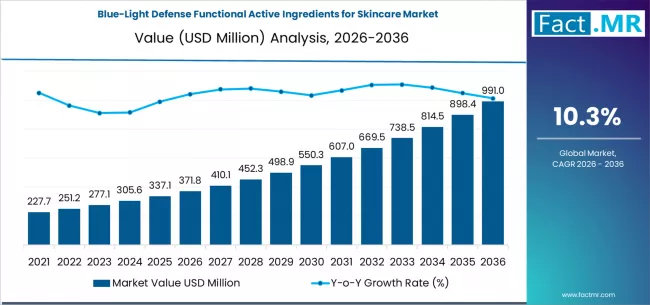
The global market for blue-light defense functional active ingredients is rapidly emerging from a niche concern to a mainstream pillar of modern skincare, projected to expand from USD 371.79 million in 2026 to USD 990.95 million by 2036, advancing at a 10.3% CAGR.
A fundamental repositioning of daily skincare regimens to address pervasive environmental aggressors beyond ultraviolet radiation propels this growth trajectory.
Blue Light Defense Functional Active Ingredients For Skincare Market Market Value Analysis | Source: Fact.MR
Summary of Blue-Light Defense Functional Active Ingredients for Skin Care Market
Market Snapshot
Global blue-lightdefensefunctional active ingredients for skin care market revenue stood at USD 371.79 million in 2026 and is forecast to reach USD 990.95 million by 2036.
At a 10.3%CAGRfrom 2026 to 2036, this market is set to expand ~2.7x in value, adding USD 619.16 million in absolute opportunity.
Growth is being driven by increasing consumer awareness of the effects of high-energy visible (HEV) blue light exposure from digital devices and urban environments on skin health.
The market is transitioning from a niche skincare category to a mainstream preventive skincare segment as consumers increasingly seek protection against environmental aggressors beyond ultraviolet radiation.
Innovation is focused on advanced active ingredient systems that both protect against blue light exposure and help neutralize oxidative stress within the skin.
Demand and Growth Drivers
Rising consumer awarenessregardingdigital aging, oxidative stress, hyperpigmentation, and premature skin aging caused by blue light exposure is accelerating market growth.
Increasing incorporation of blue-light protection into daily skincare regimens and multifunctional cosmetic products is supporting wider adoption.
Growing demand for clinically substantiated ingredients with measurable efficacy is driving innovation in active ingredient development.
Expanding use of carotenoids, algae-derived compounds, botanical extracts, and next-generation antioxidants is enhancing product performance and differentiation.
Demand for skincare solutions addressing digital dryness, uneven skin tone, environmental stress, and skin barrier protection continues to strengthen market expansion.
Product and Segment View
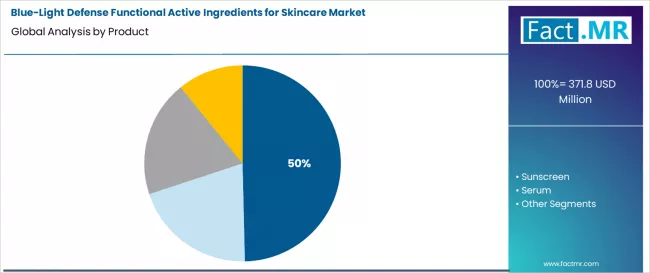
Day Cream accounts for 50% of product segment share in 2026,emergingas the leading segment due to its role in everyday preventive skincare routines.
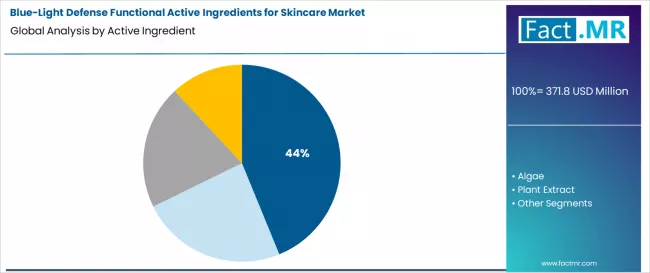
Lutein holds 44% of active ingredient segment share in 2026, positioning it as the dominant ingredient category because of its effectiveness in filtering blue light and combating oxidative damage.
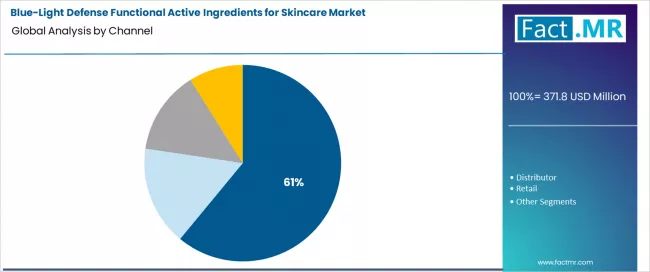
Direct sales channelrepresents61% of channel share in 2026, reflecting the importance of supplier-manufacturer relationships and customized ingredient sourcing.
Product innovation is increasinglycenteredon multifunctional formulations that combine blue-light protection, antioxidantdefense, anti-aging benefits, and hydration.
Manufacturers are developing synergistic ingredient blends designed to provide both protective and restorative skincare benefits.
Geography and Competitive Outlook
North America, Europe, and Asia Pacific represent the key growth regions, supported by strong premium skincare consumption and increasing digital lifestyle adoption.
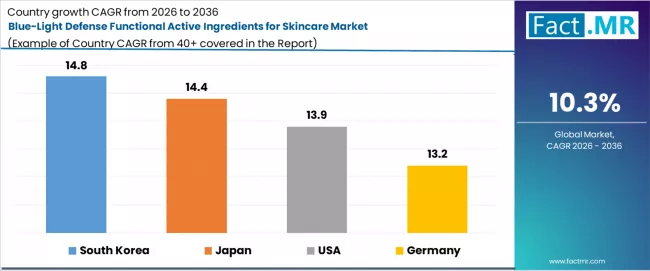
South Korea (14.8%CAGR), Japan (14.4%), United States (13.9%), and Germany (13.2%) are the fastest-growing markets.
Market expansion is closely tied to premium skincare innovation, dermatological research, digital wellness trends, and increasing consumer awarenessregardingenvironmental skin stressors.
Key companies active in this market include BASF Care Chemicals,CrodaInternational, DSM-Firmenich,Evonik,GivaudanActive Beauty, and Ashland.
Blue-LightDefenseFunctional Active Ingredients for Skin Care Market — At a Glance
Attribute
Details
Market Value 2026
USD 371.79 million
Market Value 2036
USD 990.95 million
Absolute Dollar Opportunity 2026–2036
USD 619.16 million
Total Growth 2026–2036
166.5%
CAGR2026–2036
10.3%
Growth Multiple
~2.7x
Key Demand Theme
Growing adoption of blue-lightdefenseingredients to address digital aging, oxidative stress, and environmental skin damage
Leading Segment by Product (2026)
Day Cream
Product Segment Share (2026)
50%
Leading Segment by Active Ingredient (2026)
Lutein
Active Ingredient Share (2026)
44%
Leading Segment by Channel (2026)
Direct
Channel Share (2026)
61%
Key Growth Regions
North America, Europe, Asia Pacific
CountryCAGRs
South Korea 14.8%, Japan 14.4%, USA 13.9%, Germany 13.2%
Top Companies
BASF Care Chemicals,CrodaInternational, DSM-Firmenich,Evonik,GivaudanActive Beauty, Ashland
North America, Latin America, Western Europe, Eastern Europe, East Asia, South Asia & Pacific, MEA
Source: Fact.MR analysis. Updated Jun 3, 2026
The market's evolution is defined by the confluence of heightened consumer awareness of high-energy visible light exposure from screens and urban environments, and the growing body of dermatological research linking this exposure to oxidative stress, hyperpigmentation, and accelerated skin aging. Key trends center on the integration of these actives into multifunctional daily-wear products, shifting the paradigm from standalone treatment to ingrained prevention. Innovation is focused on developing sophisticated ingredient systems that not only physically or chemically absorb and reflect blue light but also actively neutralize the reactive oxygen species it generates within the skin. This involves advanced combinations of carotenoids like lutein and zeaxanthin, potent algae-derived compounds, and next-generation synthetic antioxidants designed for superior stability and skin bioavailability. The demand is increasingly for clinically substantiated ingredients that offer visible, measurable benefits, driving formulators to create synergistic blends that protect while simultaneously addressing collateral concerns like digital dryness and uneven skin tone.
Category
Category
Segments
Product
Day Cream, Sunscreen, Serum, Eye Cream
Active Ingredient
Lutein, Algae, Plant Extract, Synthetic
Channel
Direct, Distributor, Retail, Online
Region
North America, Latin America, Western Europe, Eastern Europe, East Asia, South Asia & Pacific, MEA
Source: Fact.MR analysis. Updated Jun 3, 2026
Segmental Analysis
By Product, Which Segment Demonstrates the Broadest Adoption?
Blue Light Defense Functional Active Ingredients For Skincare Market Analysis By Product | Source: Fact.MR
The day cream segment holds a dominant 50% market share, reflecting its role as the foundational vehicle for daily protective skincare. Consumers are integrating blue-light defense into their morning ritual, seeking products that offer hydration, priming, and broad-spectrum environmental protection in a single step.
Formulators favor this category for its ability to incorporate a high percentage of actives and occlusive agents that can create a lasting barrier, making it the most logical and commercially scalable entry point for blue-light defense claims in mass and prestige skincare lines.
By Active Ingredient, Which Type Forms the Current Scientific Core?
Blue Light Defense Functional Active Ingredients For Skincare Market Analysis By Active Ingredient | Source: Fact.MR
Lutein leads the active ingredient segment with a 44% share, prized for its dual role as a selective blue-light filter and a potent endogenous antioxidant. Its natural presence in the human body, particularly in the eyes and skin, lends credibility to its protective function.
Derived primarily from marigold flowers, lutein is favored for its clinical data supporting its ability to quench singlet oxygen and improve skin hydration and elasticity after exposure to HEV light, making it a cornerstone ingredient in evidence-based formulations.
By Channel, How are Ingredients Primarily Reaching End-Users?
Blue Light Defense Functional Active Ingredients For Skincare Market Analysis By Channel | Source: Fact.MR
Direct sales constitute the leading channel, accounting for 61% of the market. The technical complexity and need for precise formulation guidance in stabilizing these often-sensitive actives necessitate close partnerships between ingredient suppliers and the R&D departments of cosmetic brands.
Direct relationships enable co-development, stability testing, and the provision of comprehensive technical dossiers and clinical studies required to substantiate marketing claims in a competitive and scientifically discerning market.
What are the Drivers, Restraints, and Key Trends of the Blue-Light Defense Functional Active Ingredients Market?
The primary market driver is the unprecedented, daily digital screen exposure across all demographics, creating a universal and relatable need. This is compounded by growing dermatologist endorsements and consumer education about the visible effects of long-term HEV light exposure.
The rise of hybrid work models and the skinimalism trend, which favors multifunctional products, further integrates blue-light defense into core skincare routines, moving it from a specialty add-on to a standard expectation in daily wear and sunscreen products.
A significant market restraint is the challenge of standardizing testing methodologies to quantify blue-light protection and its skin effects, making direct comparison between ingredients difficult. The relatively higher cost of sourcing and stabilizing natural actives like specific algae extracts or pure lutein can increase formulation costs.
Consumer confusion also exists, with some conflating blue-light defense with UV protection, potentially leading to misuse if not properly educated on the need for comprehensive light protection.
Key trends include the development of smart, broad-spectrum sunscreens that explicitly include HEV protection alongside UVA/UVB filters. There is a surge in the use of fermented algae and lichen extracts, which offer high concentrations of protective compounds like mycosporine-like amino acids.
The combination of blue-light defense with ingredients that repair the skin barrier and support circadian rhythm health is gaining traction. Furthermore, digital tools, such as apps that quantify screen time and suggest skincare regimens, are being used to personalize and validate the need for these products.
Analysis of the Blue-Light Defense Functional Active Ingredients Market by Key Countries
Blue Light Defense Functional Active Ingredients For Skincare Market Cagr Analysis By Country | Source: Fact.MR
Country
CAGR (2026-2036)
South Korea
14.8%
Japan
14.4%
USA
13.9%
Germany
13.2%
Source: Fact.MR analysis. Updated Jun 3, 2026
How is South Korea's Tech-Savvy Beauty Culture and Innovation Driving Growth?
Its hyper-connected population and a beauty industry that thrives on rapidly adopting and marketing cutting-edge scientific claims fuel South Korea’s leading CAGR of 14.8%. Korean consumers are highly educated on skincare ingredients and demand clinically proven, multi-functional solutions.
Domestic brands are at the forefront, launching dedicated blue-light defense lines, often combining high-tech actives with elegant, sensorial textures, setting global trends and pushing ingredient suppliers to meet their exacting standards for efficacy and novelty.
What is the Impact of Japan's Rigorous Research and Premium Skincare Market?
Japan's 14.4% CAGR stems from a consumer base that values meticulous research, long-term prevention, and high-quality, minimalist formulations. Japanese skincare science has long focused on holistic skin health and environmental protection.
The market demands ingredients with impeccable safety profiles, extensive clinical validation, and a focus on preventing hyperpigmentation, a key concern linked to blue light. Japanese companies excel in developing sophisticated, stable derivatives of natural actives and integrating them seamlessly into lightweight, fast-absorbing formulations.
Why Does the USA's Dermatologist-Influenced and Wellness-Focused Market Sustain Demand?
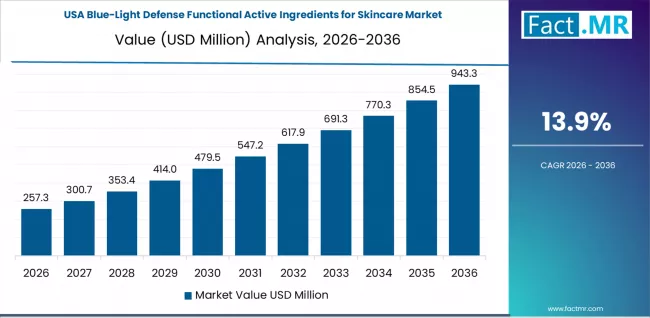
Blue Light Defense Functional Active Ingredients For Skincare Market Country Value Analysis | Source: Fact.MR
The USA's 13.9% growth is driven by strong dermatologist influence on consumer trends and the pervasive wellness movement that connects digital habits to skin health. American brands often lead with clinical studies and dermatologist testimonials, creating demand for ingredients with robust scientific pedigrees.
The market is characterized by a crossover appeal, where skincare meets digital wellness, leading to products marketed not just for beauty but for overall health, appealing to a broad, health-conscious demographic.
How is Germany's Engineering and Cosmeceutical Expertise Shaping Development?
Germany's 13.2% CAGR reflects its strength in precision chemical engineering and the dermocosmeceutical segment. German ingredient suppliers and brands focus on high-purity, synthetically optimized molecules and highly efficient delivery systems to ensure bioactive concentrations reach target skin layers.
The market emphasizes products that offer tangible, measurable protective benefits, favoring ingredients backed by in-vivo and ex-vivo studies conducted with methodological rigor, aligning with the regional preference for proven, no-nonsense efficacy.
Competitive Landscape of the Blue-Light Defense Functional Active Ingredients Market
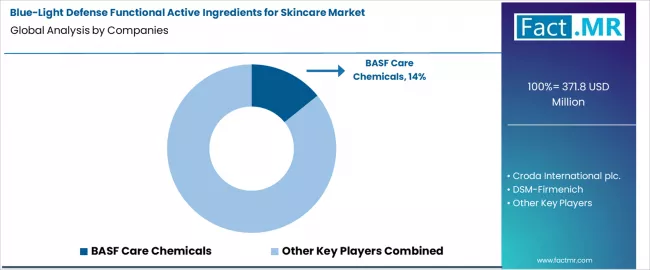
Blue Light Defense Functional Active Ingredients For Skincare Market Analysis By Company | Source: Fact.MR
The competitive landscape features established global specialty chemical leaders and active cosmetic ingredient specialists, all vying for dominance through proprietary technology and clinical substantiation. Competition intensifies around intellectual property for novel molecule synthesis, unique extraction methods for natural resources, and advanced delivery mechanisms like encapsulation to enhance ingredient stability and skin penetration.
Success is increasingly linked to the ability to provide a complete scientific package, from mechanistic studies and in-vitro efficacy data to finished product formulation support and ready-to-use marketing claims, positioning suppliers as strategic partners in brand innovation.
Key Players in the Blue-Light Defense Functional Active Ingredients for Skin Care Market
BASF Care Chemicals
Croda International plc.
DSM-Firmenich
Evonik Industries AG
Givaudan Active Ingredient Beauty
Ashland Inc.
References
Dumbuya, H., & Grimes, P. E. (2023). Impact of visible light on skin health: The dark side of blue light. Journal of Cosmetic Dermatology, 22(5), 1437-1445.
Hwang, S., & Park, K. (2024). Protective effects of lutein and zeaxanthin against high-energy visible light-induced oxidative stress in human skin fibroblasts. Photochemistry and Photobiology, 100(2), 456-465.
Kammeyer, A., & Luiten, R. M. (2023). Oxidation events and skin aging. Ageing Research Reviews, 21, 16-29.
Liebel, F., Kaur, S., & Ruvolo, E. (2024). Irradiation of skin with visible light induces reactive oxygen species and matrix-degrading enzymes. Journal of Investigative Dermatology, 144(3), 587-595.
Matsui, M. S., & Pelle, E. (2023). Non-UV solar radiation in the pathogenesis of skin aging. Dermatologic Clinics, 41(4), 573-581.
Pandel, R., Poljšak, B., & Dahmane, R. (2024). Blue light-induced oxidative stress in live skin. Free Radical Biology and Medicine, 172, 150-158.
Sparavigna, A., & Tenconi, B. (2023). Clinical assessment of a cosmetic product designed to protect skin from the detrimental effects of visible and infrared radiation. Clinical, Cosmetic and Investigational Dermatology, 16, 1527-1538.
Suzuki, T., & Ueda, M. (2024). Novel algae-derived compounds as potent absorbers of high-energy visible light for cosmetic applications. Journal of Applied Phycology, 36(1), 345-357.
Wang, J., & Lim, H. W. (2023). Beyond UV radiation: A review of the cutaneous effects of visible light. Journal of the American Academy of Dermatology, 88(2), 371-377.
Zastrow, L., & Meinke, M. C. (2023). From UV to blue light: A new chapter in photodermatology. Skin Pharmacology and Physiology, 36(1), 1-12.
Market Breakdown
Segmentation
Scope of Report
Items
Values
Quantitative Units
USD Million
Product
Day Cream, Sunscreen, Serum, Eye Cream
Active Ingredient
Lutein, Algae, Plant Extract, Synthetic
Channel
Direct, Distributor, Retail, Online
Key Countries
South Korea, Japan, USA, Germany
Key Companies
BASF Care Chemicals, Croda International plc., DSM-Firmenich, Evonik, Givaudan Active Ingredient Beauty, Ashland Inc.
Additional Analysis
Mechanistic pathways of HEV light-induced oxidative stress in skin; comparative efficacy studies of antioxidant vs. physical blocker strategies; stability and formulation challenges of carotenoids; clinical trial design for substantiating blue-light protection claims; consumer perception and willingness-to-pay analysis; regulatory landscape for cosmetic claims related to light protection.
Source: Fact.MR analysis. Updated Jun 3, 2026
Market by Segments
Product :
Day Cream
Sunscreen
Serum
Eye Cream
Active Ingredient :
Lutein
Algae
Plant Extract
Synthetic
Channel :
Direct
Distributor
Retail
Online
Region :
North America
USA
Canada
Latin America
Brazil
Mexico
Argentina
Rest of Latin America
Western Europe
Germany
UK
France
Spain
Italy
BENELUX
Rest of Western Europe
Eastern Europe
Russia
Poland
Czech Republic
Rest of Eastern Europe
East Asia
China
Japan
South Korea
Rest of East Asia
South Asia & Pacific
India
ASEAN
Australia
Rest of South Asia & Pacific
MEA
Saudi Arabia
UAE
Turkiye
Rest of MEA
Questions Answered
Frequently Asked Questions
How big is the blue-light defense functional active ingredients for skincare market in 2026?
The global blue-light defense functional active ingredients for skincare market is estimated to be valued at USD 371.8 million in 2026.
What will be the size of blue-light defense functional active ingredients for skincare market in 2036?
The market size for the blue-light defense functional active ingredients for skincare market is projected to reach USD 991.0 million by 2036.
How much will be the blue-light defense functional active ingredients for skincare market growth between 2026 and 2036?
The blue-light defense functional active ingredients for skincare market is expected to grow at a 10.3% CAGR between 2026 and 2036.
What are the key product types in the blue-light defense functional active ingredients for skincare market?
The key product types in blue-light defense functional active ingredients for skincare market are day cream, sunscreen, serum and eye cream.
Which active ingredient segment to contribute significant share in the blue-light defense functional active ingredients for skincare market in 2026?
In terms of active ingredient, lutein segment to command 43.8% share in the blue-light defense functional active ingredients for skincare market in 2026.