- Base Value(2026): 0.7 Bn
- Estimated Value(2026): 0.7 Bn
- Forecast Value (2036): 1.3 Bn
- CAGR (2026 - 2036): 6.6%
Canine Keratosis Treatment Market Forecast and Outlook 2026 to 2036
The global canine keratosis treatment market is anticipated to total USD 0.67 billion in 2026, and is projected to rise further to USD 1.27 billion by 2036, at a 6.6% CAGR. This specialized veterinary dermatology segment addresses keratinization disorders that cause painful, thickened paw pads and nasal plans in dogs.
Key Takeaways from the Canine Keratosis Treatment Market
- Market Value for 2026: USD 0.67 Billion
- Market Value for 2036: USD 1.27 Billion
- Forecast CAGR 2026 to 2036: 6.6%
- Leading Product Segment (2026): Topical Treatments (54.0%)
- Leading Application Segment (2026): Hyperkeratosis (66.0%)
- Leading Distribution Channel Segment (2026): Veterinary Clinics (72.0%)
- Key Growth Countries: India (9.1% CAGR), China (8.9% CAGR), Brazil (8.6% CAGR), USA (8.0% CAGR), UK (6.9% CAGR), Germany (6.8% CAGR), France (6.7% CAGR)
- Key Players in the Market: Zoetis Inc., Elanco Animal Health, Boehringer Ingelheim Animal Health, Virbac, Ceva Santé Animale
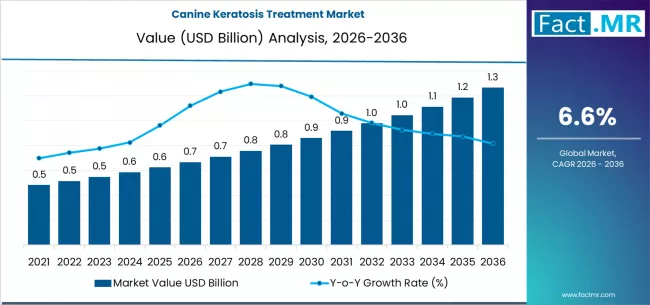
Canine Keratosis Treatment Market Market Value Analysis | Source: Fact.MR
Growth is driven by the rising prevalence of these conditions in certain breeds and a significant increase in pet care expenditure, particularly for chronic dermatological issues. Pet owners are increasingly seeking professional veterinary solutions beyond basic care, viewing effective management as essential to their companion's quality of life.
The market is characterized by a strong reliance on topical treatments, reflecting the localized nature of most hyperkeratotic lesions. A key trend is the development of more palatable oral medications and advanced topical formulations with enhanced moisturizing and keratolytic properties to improve treatment adherence.
The growing integration of veterinary dermatology as a specialty within general practice is improving diagnosis rates and treatment protocols, moving management beyond palliative care to more targeted therapeutic interventions.
Metric
| Metric | Value |
|---|---|
| Market Value (2026) | USD 0.67 Billion |
| Market Forecast Value (2036) | USD 1.27 Billion |
| Forecast CAGR 2026 to 2036 | 6.6% |
Source: Fact.MR analysis. Updated Jan 12, 2026
Category
| Category | Segments |
|---|---|
| Product | Topical Treatments, Oral Medications, Veterinary Procedures |
| Application | Hyperkeratosis, Other Keratin Disorders |
| Distribution Channel | Veterinary Clinics, Pet Hospitals, Online Pharmacies |
| Region | North America, Latin America, Western Europe, Eastern Europe, East Asia, South Asia & Pacific, Middle East & Africa |
Source: Fact.MR analysis. Updated Jan 12, 2026
Segmental Analysis
By Product, Which Segment is the First-Line Intervention for Localized Lesions?
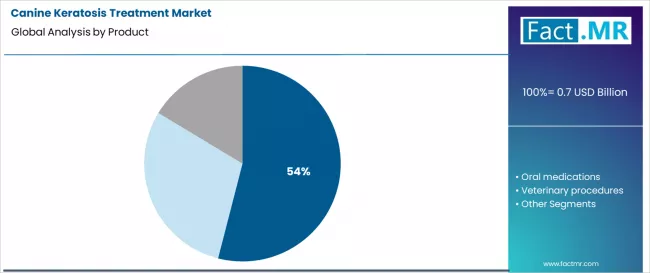
Canine Keratosis Treatment Market Analysis By Product | Source: Fact.MR
Topical treatments command a dominant 54.0% share as the primary intervention for managing canine hyperkeratosis. This preference stems from the ability to deliver keratolytic, moisturizing, and protective agents directly to affected paw pads and noses.
Their localized action minimizes systemic side effects and allows for tailored management of lesion severity. Ease of application by pet owners for chronic at-home care further solidifies their position as the foundational product segment.
By Application, Which Condition Represents the Most Common Clinical Presentation?
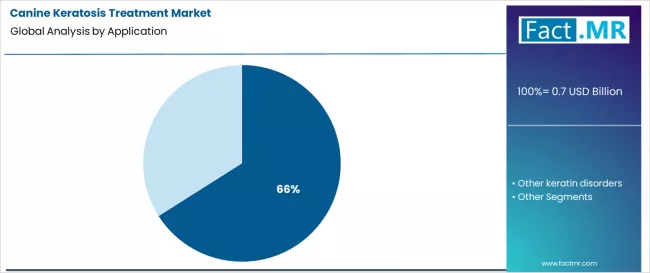
Canine Keratosis Treatment Market Analysis By Application | Source: Fact.MR
Hyperkeratosis constitutes the overwhelming application segment at 66.0%. This disorder, characterized by excessive keratin production leading to hard, cracked, and often painful footpads or nose leather, is a frequent reason for veterinary dermatology consultations. Its association with certain breeds, aging, and underlying systemic diseases creates a consistent and high-volume demand for therapeutic and maintenance products.
By Distribution Channel, Which Setting is Synonymous with Diagnosis and Primary Care?
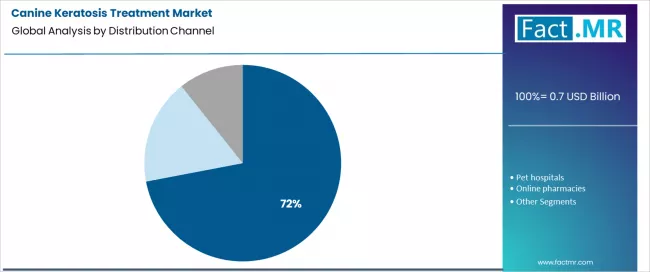
Canine Keratosis Treatment Market Analysis By Distribution Channel | Source: Fact.MR
Veterinary clinics form the critical distribution channel segment, holding a 72.0% share. These practices are the central point for initial diagnosis, prescription of therapeutic topicals or oral medications, and performance of minor procedures like trimming overgrown keratin. The trusted veterinarian-client relationship is essential for guiding effective long-term management of this chronic condition.
Which Drivers, Opportunities, Trends, and Constraints Influence the Market for Canine Keratosis Treatment?
The principal driver is the humanization of pets and the associated increase in spending on advanced veterinary care, leading pet owners to seek professional treatment for chronic conditions like keratosis that impact animal comfort. A major constraint is the difficulty in ensuring long-term owner compliance with daily topical applications or oral dosing regimens for a condition that requires lifelong management.
A significant opportunity lies in the development of innovative, longer-acting topical formulations and more convenient oral supplements that simplify care and improve adherence. The dominant trend is the growing emphasis on nutraceuticals and specialized dermatologic diets as part of a holistic management approach, aiming to improve skin barrier function and reduce the severity of keratinization disorders from within.
Analysis of the Canine Keratosis Treatment Market by Key Countries
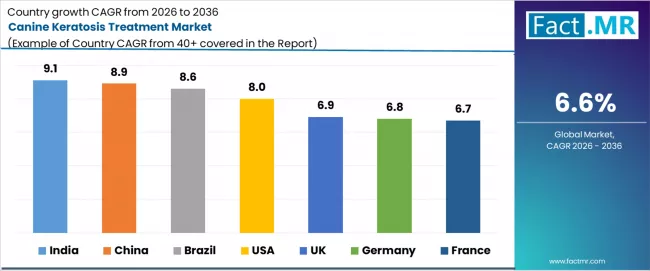
Canine Keratosis Treatment Market Cagr Analysis By Country | Source: Fact.MR
| Country | CAGR 2026 to 2036 |
|---|---|
| India | 9.1% |
| China | 8.9% |
| Brazil | 8.6% |
| USA | 8.0% |
| UK | 6.9% |
| Germany | 6.8% |
| France | 6.7% |
Source: Fact.MR analysis. Updated Jan 12, 2026
Is the USA's Market Growth Fueled by Advanced Veterinary Specialization and Pet Insurance?
The USA’s 8.0% CAGR is driven by a high level of veterinary care specialization, including board-certified dermatologists, and the growing penetration of pet health insurance that facilitates treatment for chronic conditions.
Growth is characterized by the adoption of advanced topical formulations and diagnostic workups to identify underlying causes, with products primarily flowing through a vast network of companion animal veterinary clinics.
Can Brazil's Growing Pet Population Access Specialized Dermatological Care?
A large and growing pet population and increasing pet care expenditure within the middle class support Brazil’s 8.6% CAGR. Access to specialized knowledge is a growth factor, with market expansion concentrated in urban veterinary clinics. The limited number of veterinary dermatology specialists, often making general practitioners the primary prescribers of topical and oral therapies, however, may temper growth.
Does China's Rapidly Evolving Pet Culture Create Demand for Premium Care Solutions?
China’s 8.9% CAGR is propelled by the rapid rise in pet ownership and a shifting cultural view of pets as family members, which fuels spending on premium healthcare. The market is expanding through modern pet hospitals in major cities that offer dermatology services. Growth is further accelerated by the active marketing of specialized skincare products for pets through both clinical and online channels.
Will India's Emerging Pet Care Market Prioritize Access to Basic Therapeutic Solutions?
A burgeoning pet owner demographic and the expansion of organized veterinary clinic chains in metropolitan areas fuel India’s leading 9.1% CAGR. The market growth is currently focused on establishing access to essential topical treatments and improving diagnostic awareness among veterinarians, with significant potential for growth as disposable income and pet care standards continue to rise.
Is Germany's Mature Market Characterized by High Standards of Care and Preventive Focus?
Germany’s 6.8% CAGR reflects a mature pet care market with high veterinary standards and a strong focus on preventive health. Management of conditions like hyperkeratosis is well-integrated into general practice, with growth driven by the adoption of high-quality, often veterinary-dispensed topical products and a demand for comprehensive solutions that include dietary management.
Does France's Market Emphasize Holistic and Dermatologist-Led Treatment Approaches?
France’s 6.7% CAGR is influenced by a pet care culture that often embraces a holistic view of animal health. Growth in the keratosis treatment segment is supported by the presence of veterinary dermatology specialists and a preference for integrated treatment plans that may combine prescription topicals with nutraceutical supplements, distributed through both clinics and specialized pet pharmacies.
Do Cost Sensitivity and a Strong General Practice Model moderate the UK’s Growth?
The UK’s 6.9% CAGR operates within a cost-conscious pet owner environment, despite high levels of pet attachment. Growth is steady, channeled through a robust network of first-opinion veterinary practices. Adoption of newer, premium-priced products can be slower, with a focus on cost-effective, proven topical therapies unless referred to a specialist dermatologist.
Competitive Landscape of the Canine Keratosis Treatment Market
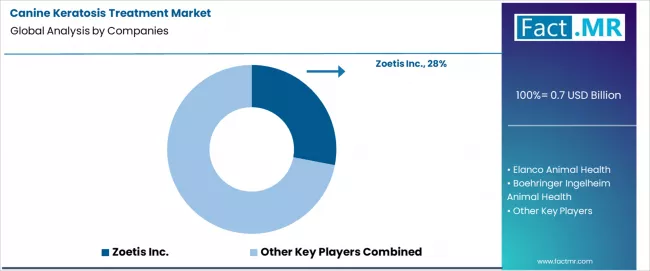
Canine Keratosis Treatment Market Analysis By Company | Source: Fact.MR
The competitive landscape is consolidated among leading global animal health companies that leverage their extensive portfolios and direct sales forces to veterinary clinics. These players compete by offering trusted, veterinary-exclusive brands of topical ointments, shampoos, and oral supplements specifically formulated for canine dermatology.
Success hinges on providing strong technical support and education to veterinarians on product use within comprehensive management plans. Competition is intensifying with the entry of specialized pet care companies focusing on dermatology and the growth of the online pharmacy channel, which increases price transparency.
Key strategies include developing differentiated product claims, such as natural ingredients or sustained-release formulations, and bundling keratosis treatments with other dermatology products. Building brand loyalty through veterinarian recommendation remains the most critical factor for market share.
Key Players in the Canine Keratosis Treatment Market
- Zoetis Inc.
- Elanco Animal Health
- Boehringer Ingelheim Animal Health
- Virbac
- Ceva Santé Animale
- Others
Bibliography
- American College of Veterinary Dermatology (ACVD). (2025). Consensus Guidelines on the Management of Canine Keratinization Disorders.
- European College of Veterinary Dermatology (ECVD). (2024). Proceedings on Advances in Veterinary Dermatologic Therapeutics.
- World Small Animal Veterinary Association (WSAVA). (2025). Global Guidelines for Dermatology Care in Companion Animals.
- Journal of Veterinary Dermatology. (2024). Special Issue on Cutaneous Keratinization.
Segmentation
Scope of Report
| Items | Metrics |
|---|---|
| Quantitative Units | USD Billion |
| Product | Topical Treatments, Oral Medications, Veterinary Procedures |
| Application | Hyperkeratosis, Other Keratin Disorders |
| Distribution Channel | Veterinary Clinics, Pet Hospitals, Online Pharmacies |
| Key Countries | India, China, Brazil, USA, Germany, France, UK |
| Key Companies | Zoetis, Elanco, Boehringer Ingelheim, Virbac, Ceva, Others |
| Additional Analysis | Analysis of breed-specific predisposition and its impact on product demand; role of dietary fatty acids and nutraceuticals in management; owner compliance challenges and strategies; impact of direct-to-consumer online pet pharmacies on traditional veterinary distribution. |
Source: Fact.MR analysis. Updated Jan 12, 2026
Market by Segments
-
Product :
- Topical Treatments
- Oral Medications
- Veterinary Procedures
-
Application :
- Hyperkeratosis
- Other Keratin Disorders
-
Distribution Channel :
- Veterinary Clinics
- Pet Hospitals
- Online Pharmacies
-
Region :
-
North America
- USA
- Canada
-
Latin America
- Brazil
- Mexico
- Argentina
- Rest of Latin America
-
Western Europe
- Germany
- France
- UK
- Italy
- Spain
- BENELUX
- Rest of Western Europe
-
Eastern Europe
- Russia
- Poland
- Czech Republic
- Rest of Eastern Europe
-
East Asia
- China
- Japan
- South Korea
- Rest of East Asia
-
South Asia & Pacific
- India
- ASEAN
- Australia
- Rest of South Asia & Pacific
-
MEA
- GCC Countries
- South Africa
- Turkiye
- Rest of MEA
-
Frequently Asked Questions
How big is the canine keratosis treatment market in 2026?
What will be the size of canine keratosis treatment market in 2036?
How much will be the canine keratosis treatment market growth between 2026 and 2036?
What are the key product types in the canine keratosis treatment market?
Which application segment to contribute significant share in the canine keratosis treatment market in 2026?
Who worked on this report


Preview the report firsthand - request a free sample
Free SampleGet the brochure for pricing and purchase details
Download PDF