Chemical Depolymerization Market (2026 - 2036)
Chemical Depolymerization Market Size and Share Forecast Outlook 2026 to 2036
Core Findings
Chemical Depolymerization Market Forecast and Outlook 2026 to 2036
The chemical depolymerization market stands at USD 3.7 billion in 2026 and moves toward USD 12.8 billion by 2036 at a 13.20% CAGR.
Chemical Depolymerization Market Key Takeaways
- Chemical Depolymerization Market Value (2026): USD 3.7 billion
- Chemical Depolymerization Market Forecast Value (2036): USD 12.8 billion
- Chemical Depolymerization Market Forecast CAGR 2026 to 2036: 13.2%
- Leading Process Type in Chemical Depolymerization Market: Glycolysis and methanolysis
- Key Growth Regions in Chemical Depolymerization Market: Asia Pacific, North America, Europe, Latin America, Middle East & Africa
- Top Players in Chemical Depolymerization Market: BASF SE, JEPLAN, Inc., Eastman Chemical Company, Loop Industries, Inc., Teijin Limited, Mitsubishi Chemical Group Corporation
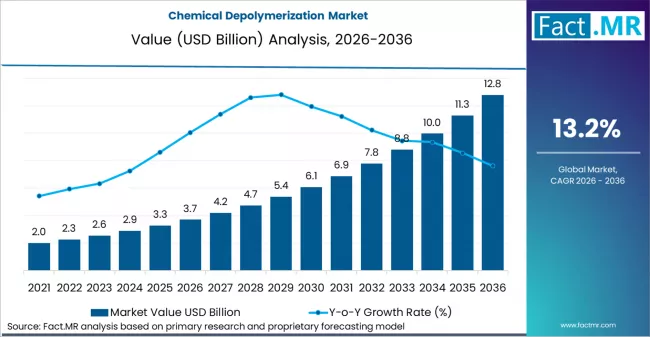
This field operates around process capability and feedstock qualification rather than around simple material trading. Plants are designed to accept defined waste streams and convert them back into basic building blocks that can re-enter polymer production. Investment decisions focus on throughput stability, tolerance to contamination, and the quality of recovered outputs.
Once a facility is configured for a specific mix of inputs, changing that mix requires new testing, operating adjustments, and regulatory review. Commercial participation depends on securing long-term supply agreements for suitable waste and on placing output into established resin or chemical chains. Expansion follows commissioning of new units and debottlenecking of existing lines rather than short cycle shifts in product mix or frequent changes in operating strategy.
Chemical Depolymerization Market
| Metric | Value |
|---|---|
| Market Value (2026) | USD 3.7 billion |
| Forecast Value (2036) | USD 12.8 billion |
| Forecast CAGR 2026 to 2036 | 13.2% |
Category
| Category | Segments |
|---|---|
| End-use | Food and beverage packaging; Consumer goods and textiles; Industrial packaging; High-purity resin supply; Emerging chemical recycling; Others |
| Process Type | Glycolysis and methanolysis; Solvolysis; Hydrolysis; Methanolysis; Others |
| Polymer Focus | PET; PA; Others |
| Core Technology | Monomer purification and re-polymerization; High-purity recovery systems; Large-scale depolymerization; Precision purification; Others |
| Region | North America; Europe; Asia Pacific; Latin America; Middle East & Africa |
Segmental Analysis
Why Does Food and Beverage Packaging Lead Demand in Chemical Depolymerization Activity?
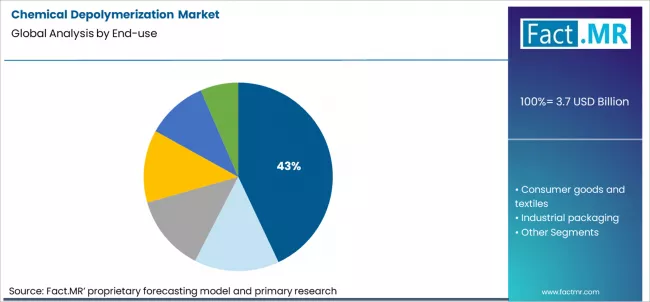
Food and beverage packaging represents 43% of end-use participation in the chemical depolymerization market. This segment handles large, continuous material flows tied to bottles, trays, and multilayer packs that return to processing streams after short use cycles. Packaging portfolios in this area rely on stable resin specifications, which aligns with depolymerization routes that aim to rebuild feedstock to near-virgin quality. Collection systems also capture high volumes from retail and distribution networks, creating consistent input streams. Procurement teams in this sector plan material sourcing around long production runs rather than spot purchases. Consumer goods, industrial packaging, and emerging uses contribute additional volume. The scale and regularity of packaging flows keep this end-use segment at the center of depolymerization demand.
What Process Type Is Used Most Often in Commercial Depolymerization Programs?
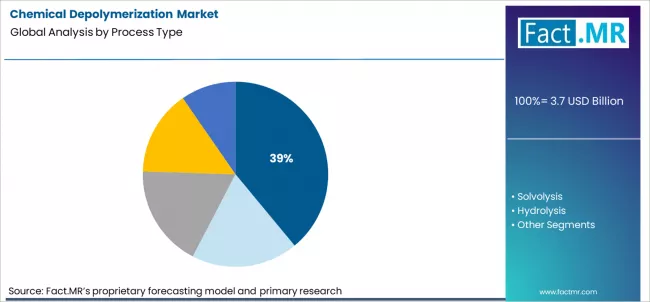
Glycolysis and methanolysis together account for 39% of process type usage in this market. These routes fit established polymer streams and produce intermediates that can be routed back into resin production systems. Plant operators value predictable reaction pathways and defined output specifications that align with packaging grade requirements. Equipment layouts and control schemes for these processes are already present in several commercial facilities. Feedstock preparation and output purification steps remain consistent across different polymer batches. Solvolysis and hydrolysis serve specific material classes and purity targets. Most large scale programs still rely on glycolysis and methanolysis as the primary processing backbone for chemical depolymerization operations.
What are the Drivers, Restraints, and Key Trends of the Chemical Depolymerization Market?
- Drivers: Policy frameworks that promote recycling of hard-to-recycle plastics, demand from brand owners seeking circular material solutions, and material recovery targets tied to extended producer responsibility programs are supporting investment in chemical depolymerization technologies for converting plastic waste into monomers and value-added feedstocks.
- Restraint: High capital requirements for depolymerization facilities, uneven availability of suitable waste feedstock streams, and challenges in achieving cost parity with mechanical recycling processes limit large-scale deployment.
- Trend 1: Process refinements that focus on enhancing monomer yield and purity to improve product value and broaden end-market acceptance.
- Trend 2: Strategic partnerships between waste aggregators, chemical firms, and resin manufacturers to secure feedstock supply and support integrated depolymerization-to-polymer value chains.
Analysis of the Chemical Depolymerization Market by Key Country
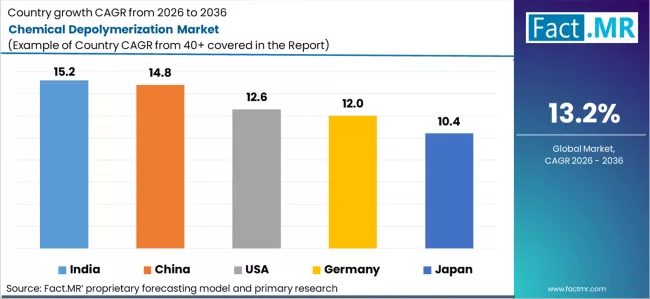
| Country | CAGR 2026 to 2036 |
|---|---|
| Germany | 12.0% |
| USA | 12.6% |
| China | 14.8% |
| Japan | 10.4% |
| India | 15.2% |
The report covers an in-depth analysis of 40+ countries; top-performing countries are highlighted below.
How Is Policy Enforcement and Feedstock Control Shaping Chemical Depolymerization in Germany?
Industrial planning in Germany treats chemical depolymerization as a compliance and supply security tool rather than a speculative technology. The market advances near 12% per year through 2036 as brand owners seek alternatives to mechanical recycling limits. Project selection depends on feedstock purity, energy efficiency, and output certification. Engineering teams focus on yield stability and residue handling. Procurement contracts emphasize long term waste sourcing agreements. Capacity additions proceed in tightly staged phases. Volume growth follows packaging conversion schedules rather than resin spot pricing. Market development remains tied to regulatory enforcement, audit readiness, and predictable offtake agreements across polymer value chains.
What Is Driving Investment Decisions in Chemical Depolymerization in USA?
Capital allocation in USA is being shaped by the need to secure recycled feedstock for food and consumer packaging. With growth near 12.6% per year through 2036, projects are evaluated on scalability, permitting risk, and offtake certainty. Brand owners participate directly through long term purchase commitments. Technology providers compete on throughput reliability rather than theoretical yield. Site selection prioritizes proximity to waste aggregation hubs. Volume expansion follows commissioning schedules of large plants instead of small pilots. Market progress depends on financing structures, regulatory clarity, and ability to integrate output into existing polymer supply contracts.
How Is Manufacturing Scale Influencing Chemical Depolymerization in China?
System buildout in China defines the direction of this market more than individual brand initiatives. Expansion runs near 14.8% annually through 2036, supported by integration of depolymerization units into existing petrochemical complexes. Operators focus on throughput, energy balance, and continuous operation stability. Feedstock sourcing relies on large municipal and industrial waste streams. Procurement decisions favor vertically integrated groups controlling both input and output. Capacity comes online in large increments rather than incremental steps. Volume growth tracks infrastructure commissioning cycles. Market development remains tied to industrial policy, materials security planning, and scale economics instead of packaging marketing commitments.
Why Do Risk Management Frameworks Shape Chemical Depolymerization Adoption in Japan?
Investment decisions in Japan are filtered through strict risk assessment and operational reliability standards. With growth near 10.4% per year through 2036, deployment proceeds cautiously and in limited locations. Project teams focus on process stability, byproduct control, and continuous quality monitoring. Output qualification requirements remain extensive before material enters sensitive applications. Purchasing agreements emphasize long term technical partnerships. Volume increases follow proven operating history rather than early expansion. Supply chains remain intentionally narrow. Market development is constrained more by internal approval systems and operational risk tolerance than by feedstock availability or policy pressure.
What Is Accelerating Chemical Depolymerization Buildout in India?
Waste management formalization and packaging growth are reshaping material recovery strategies in India. The market expands near 15.2% per year through 2036 as large groups seek scalable alternatives to mechanical recycling. Project developers focus on securing consistent feedstock streams before optimizing output quality. Site selection favors proximity to urban waste aggregation centers. Procurement discussions emphasize long term offtake security. Capacity additions follow phased project models rather than single large installations. Volume growth tracks expansion of organized packaging and consumer goods. Market progress depends more on infrastructure execution and operational discipline than on policy targets alone.
How Do Technology Pathways and Offtake Commitments Shape Competition in the Chemical Depolymerization Market?
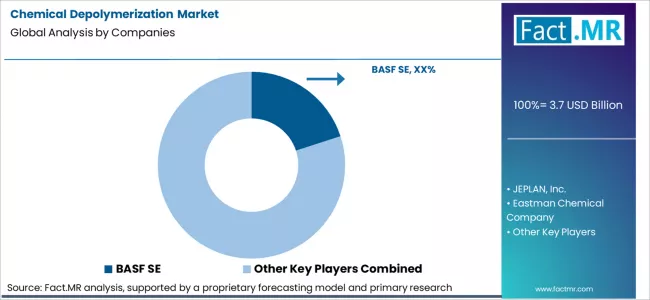
Project participation in the chemical depolymerization market is determined by process route selection, feedstock tolerance, and secured offtake agreements rather than by short term pricing. Brand owners and converters first define target polymers, impurity limits, and certification pathways before capacity is allocated. BASF, Eastman, Mitsubishi Chemical, Teijin, JEPLAN, and Loop compete through different depolymerization approaches, reactor designs, and purification schemes that suit PET, polyamides, or mixed streams.
Technical teams compare options using yield stability, contaminant handling, and consistency of monomer output. Commercial teams also weigh energy intensity and integration with existing polymer assets. Once an offtake linked project is contracted, volumes follow plant ramp ups and partner commitments. Competitive positions shift mainly after new units start, technology licensing expands, or feedstock supply structures change.
Key Players in Chemical Depolymerization Market
- BASF SE
- JEPLAN, Inc.
- Eastman Chemical Company
- Loop Industries, Inc.
- Teijin Limited
- Mitsubishi Chemical Group Corporation
Scope of the Report
| Items | Values |
|---|---|
| Quantitative Units (2026) | USD billion |
| End-use | Food and beverage packaging, consumer goods and textiles, industrial packaging, high-purity resin supply, emerging chemical recycling, others |
| Process Type | Glycolysis and methanolysis, solvolysis, hydrolysis, methanolysis |
| Polymer Focus | PET, PA, others |
| Core Technology | Monomer purification and re-polymerization, high-purity recovery systems, large-scale depolymerization, precision purification |
| Regions Covered | Asia Pacific, Europe, North America, Latin America, Middle East & Africa |
| Countries Covered | United States, Canada, Mexico, Germany, United Kingdom, France, Italy, Spain, Nordics, BENELUX, China, Japan, South Korea, India, Australia & New Zealand, ASEAN, Brazil, Chile, Saudi Arabia, Turkey, South Africa, and other regional markets |
| Key Companies Profiled | BASF SE, JEPLAN, Eastman Chemical, Loop Industries, Teijin, Mitsubishi Chemical Group |
| Additional Attributes | Dollar value by process type and polymer focus; emphasis on feedstock qualification, monomer yield, and offtake integration; growth driven by new plant commissioning and capacity expansions |
Chemical Depolymerization Market Segmentation
-
End-use :
- Food & beverage packaging
- Consumer goods & textiles
- Industrial packaging
- High-purity resin supply
- Emerging chemical recycling
- Others
-
Process Type :
- Glycolysis & methanolysis
- Solvolysis
- Hydrolysis
- Methanolysis
- Others
-
Polymer Focus :
- PET
- PA
- Others
-
Core Technology :
- Monomer purification & re-polymerization
- High-purity recovery systems
- Large-scale depolymerization
- Precision purification
- Others
-
Region :
- Asia Pacific
- China
- Japan
- South Korea
- India
- Australia & New Zealand
- ASEAN
- Rest of Asia Pacific
- Europe
- Germany
- United Kingdom
- France
- Italy
- Spain
- Nordic
- BENELUX
- Rest of Europe
- North America
- United States
- Canada
- Mexico
- Latin America
- Brazil
- Chile
- Rest of Latin America
- Middle East & Africa
- Kingdom of Saudi Arabia
- Other GCC Countries
- Turkey
- South Africa
- Other African Union
- Rest of Middle East & Africa
- Asia Pacific
References
- European Commission. (2024). Proposal for a regulation of the European Parliament and of the Council on packaging and packaging waste and repealing Directive 94/62/EC. European Commission.
- European Commission, Joint Research Centre. (2023). The future of packaging in a circular economy: Material use, reuse systems and waste prevention. Publications Office of the European Union.
- Organisation for Economic Co-operation and Development. (2024). Policy scenarios for eliminating plastic pollution by 2040. OECD Publishing.
- United Nations Environment Programme. (2025). Chemicals in plastics: Technical report and pathways for circularity. UNEP.
Table of Content
- Executive Summary
- Global Market Outlook
- Demand to side Trends
- Supply to side Trends
- Technology Roadmap Analysis
- Analysis and Recommendations
- Market Overview
- Market Coverage / Taxonomy
- Market Definition / Scope / Limitations
- Market Background
- Market Dynamics
- Drivers
- Restraints
- Opportunity
- Trends
- Scenario Forecast
- Demand in Optimistic Scenario
- Demand in Likely Scenario
- Demand in Conservative Scenario
- Opportunity Map Analysis
- Product Life Cycle Analysis
- Supply Chain Analysis
- Investment Feasibility Matrix
- Value Chain Analysis
- PESTLE and Porter’s Analysis
- Regulatory Landscape
- Regional Parent Market Outlook
- Production and Consumption Statistics
- Import and Export Statistics
- Market Dynamics
- Global Market Analysis 2021 to 2025 and Forecast, 2026 to 2036
- Historical Market Size Value (USD Million) Analysis, 2021 to 2025
- Current and Future Market Size Value (USD Million) Projections, 2026 to 2036
- Y to o to Y Growth Trend Analysis
- Absolute $ Opportunity Analysis
- Global Market Pricing Analysis 2021 to 2025 and Forecast 2026 to 2036
- Global Market Analysis 2021 to 2025 and Forecast 2026 to 2036, By End-use
- Introduction / Key Findings
- Historical Market Size Value (USD Million) Analysis By End-use, 2021 to 2025
- Current and Future Market Size Value (USD Million) Analysis and Forecast By End-use, 2026 to 2036
- Food and beverage packaging
- Consumer goods and textiles
- Industrial packaging
- High-purity resin supply
- Emerging chemical recycling
- Others
- Food and beverage packaging
- Y to o to Y Growth Trend Analysis By End-use, 2021 to 2025
- Absolute $ Opportunity Analysis By End-use, 2026 to 2036
- Global Market Analysis 2021 to 2025 and Forecast 2026 to 2036, By Process Type
- Introduction / Key Findings
- Historical Market Size Value (USD Million) Analysis By Process Type, 2021 to 2025
- Current and Future Market Size Value (USD Million) Analysis and Forecast By Process Type, 2026 to 2036
- Glycolysis and methanolysis
- Solvolysis
- Hydrolysis
- Methanolysis
- Others
- Glycolysis and methanolysis
- Y to o to Y Growth Trend Analysis By Process Type, 2021 to 2025
- Absolute $ Opportunity Analysis By Process Type, 2026 to 2036
- Global Market Analysis 2021 to 2025 and Forecast 2026 to 2036, By Polymer Focus
- Introduction / Key Findings
- Historical Market Size Value (USD Million) Analysis By Polymer Focus, 2021 to 2025
- Current and Future Market Size Value (USD Million) Analysis and Forecast By Polymer Focus, 2026 to 2036
- PET
- PA
- Others
- PET
- Y to o to Y Growth Trend Analysis By Polymer Focus, 2021 to 2025
- Absolute $ Opportunity Analysis By Polymer Focus, 2026 to 2036
- Global Market Analysis 2021 to 2025 and Forecast 2026 to 2036, By Core Technology
- Introduction / Key Findings
- Historical Market Size Value (USD Million) Analysis By Core Technology, 2021 to 2025
- Current and Future Market Size Value (USD Million) Analysis and Forecast By Core Technology, 2026 to 2036
- Monomer purification and re-polymerization
- High-purity recovery systems
- Large-scale depolymerization
- Precision purification
- Others
- Monomer purification and re-polymerization
- Y to o to Y Growth Trend Analysis By Core Technology, 2021 to 2025
- Absolute $ Opportunity Analysis By Core Technology, 2026 to 2036
- Global Market Analysis 2021 to 2025 and Forecast 2026 to 2036, By Region
- Introduction
- Historical Market Size Value (USD Million) Analysis By Region, 2021 to 2025
- Current Market Size Value (USD Million) Analysis and Forecast By Region, 2026 to 2036
- North America
- Latin America
- Western Europe
- Eastern Europe
- East Asia
- South Asia and Pacific
- Middle East & Africa
- Market Attractiveness Analysis By Region
- North America Market Analysis 2021 to 2025 and Forecast 2026 to 2036, By Country
- Historical Market Size Value (USD Million) Trend Analysis By Market Taxonomy, 2021 to 2025
- Market Size Value (USD Million) Forecast By Market Taxonomy, 2026 to 2036
- By Country
- USA
- Canada
- Mexico
- By End-use
- By Process Type
- By Polymer Focus
- By Core Technology
- By Country
- Market Attractiveness Analysis
- By Country
- By End-use
- By Process Type
- By Polymer Focus
- By Core Technology
- Key Takeaways
- Latin America Market Analysis 2021 to 2025 and Forecast 2026 to 2036, By Country
- Historical Market Size Value (USD Million) Trend Analysis By Market Taxonomy, 2021 to 2025
- Market Size Value (USD Million) Forecast By Market Taxonomy, 2026 to 2036
- By Country
- Brazil
- Chile
- Rest of Latin America
- By End-use
- By Process Type
- By Polymer Focus
- By Core Technology
- By Country
- Market Attractiveness Analysis
- By Country
- By End-use
- By Process Type
- By Polymer Focus
- By Core Technology
- Key Takeaways
- Western Europe Market Analysis 2021 to 2025 and Forecast 2026 to 2036, By Country
- Historical Market Size Value (USD Million) Trend Analysis By Market Taxonomy, 2021 to 2025
- Market Size Value (USD Million) Forecast By Market Taxonomy, 2026 to 2036
- By Country
- Germany
- UK
- Italy
- Spain
- France
- Nordic
- BENELUX
- Rest of Western Europe
- By End-use
- By Process Type
- By Polymer Focus
- By Core Technology
- By Country
- Market Attractiveness Analysis
- By Country
- By End-use
- By Process Type
- By Polymer Focus
- By Core Technology
- Key Takeaways
- Eastern Europe Market Analysis 2021 to 2025 and Forecast 2026 to 2036, By Country
- Historical Market Size Value (USD Million) Trend Analysis By Market Taxonomy, 2021 to 2025
- Market Size Value (USD Million) Forecast By Market Taxonomy, 2026 to 2036
- By Country
- Russia
- Poland
- Hungary
- Balkan & Baltic
- Rest of Eastern Europe
- By End-use
- By Process Type
- By Polymer Focus
- By Core Technology
- By Country
- Market Attractiveness Analysis
- By Country
- By End-use
- By Process Type
- By Polymer Focus
- By Core Technology
- Key Takeaways
- East Asia Market Analysis 2021 to 2025 and Forecast 2026 to 2036, By Country
- Historical Market Size Value (USD Million) Trend Analysis By Market Taxonomy, 2021 to 2025
- Market Size Value (USD Million) Forecast By Market Taxonomy, 2026 to 2036
- By Country
- China
- Japan
- South Korea
- By End-use
- By Process Type
- By Polymer Focus
- By Core Technology
- By Country
- Market Attractiveness Analysis
- By Country
- By End-use
- By Process Type
- By Polymer Focus
- By Core Technology
- Key Takeaways
- South Asia and Pacific Market Analysis 2021 to 2025 and Forecast 2026 to 2036, By Country
- Historical Market Size Value (USD Million) Trend Analysis By Market Taxonomy, 2021 to 2025
- Market Size Value (USD Million) Forecast By Market Taxonomy, 2026 to 2036
- By Country
- India
- ASEAN
- Australia & New Zealand
- Rest of South Asia and Pacific
- By End-use
- By Process Type
- By Polymer Focus
- By Core Technology
- By Country
- Market Attractiveness Analysis
- By Country
- By End-use
- By Process Type
- By Polymer Focus
- By Core Technology
- Key Takeaways
- Middle East & Africa Market Analysis 2021 to 2025 and Forecast 2026 to 2036, By Country
- Historical Market Size Value (USD Million) Trend Analysis By Market Taxonomy, 2021 to 2025
- Market Size Value (USD Million) Forecast By Market Taxonomy, 2026 to 2036
- By Country
- Kingdom of Saudi Arabia
- Other GCC Countries
- Turkiye
- South Africa
- Other African Union
- Rest of Middle East & Africa
- By End-use
- By Process Type
- By Polymer Focus
- By Core Technology
- By Country
- Market Attractiveness Analysis
- By Country
- By End-use
- By Process Type
- By Polymer Focus
- By Core Technology
- Key Takeaways
- Key Countries Market Analysis
- USA
- Pricing Analysis
- Market Share Analysis, 2025
- By End-use
- By Process Type
- By Polymer Focus
- By Core Technology
- Canada
- Pricing Analysis
- Market Share Analysis, 2025
- By End-use
- By Process Type
- By Polymer Focus
- By Core Technology
- Mexico
- Pricing Analysis
- Market Share Analysis, 2025
- By End-use
- By Process Type
- By Polymer Focus
- By Core Technology
- Brazil
- Pricing Analysis
- Market Share Analysis, 2025
- By End-use
- By Process Type
- By Polymer Focus
- By Core Technology
- Chile
- Pricing Analysis
- Market Share Analysis, 2025
- By End-use
- By Process Type
- By Polymer Focus
- By Core Technology
- Germany
- Pricing Analysis
- Market Share Analysis, 2025
- By End-use
- By Process Type
- By Polymer Focus
- By Core Technology
- UK
- Pricing Analysis
- Market Share Analysis, 2025
- By End-use
- By Process Type
- By Polymer Focus
- By Core Technology
- Italy
- Pricing Analysis
- Market Share Analysis, 2025
- By End-use
- By Process Type
- By Polymer Focus
- By Core Technology
- Spain
- Pricing Analysis
- Market Share Analysis, 2025
- By End-use
- By Process Type
- By Polymer Focus
- By Core Technology
- France
- Pricing Analysis
- Market Share Analysis, 2025
- By End-use
- By Process Type
- By Polymer Focus
- By Core Technology
- India
- Pricing Analysis
- Market Share Analysis, 2025
- By End-use
- By Process Type
- By Polymer Focus
- By Core Technology
- ASEAN
- Pricing Analysis
- Market Share Analysis, 2025
- By End-use
- By Process Type
- By Polymer Focus
- By Core Technology
- Australia & New Zealand
- Pricing Analysis
- Market Share Analysis, 2025
- By End-use
- By Process Type
- By Polymer Focus
- By Core Technology
- China
- Pricing Analysis
- Market Share Analysis, 2025
- By End-use
- By Process Type
- By Polymer Focus
- By Core Technology
- Japan
- Pricing Analysis
- Market Share Analysis, 2025
- By End-use
- By Process Type
- By Polymer Focus
- By Core Technology
- South Korea
- Pricing Analysis
- Market Share Analysis, 2025
- By End-use
- By Process Type
- By Polymer Focus
- By Core Technology
- Russia
- Pricing Analysis
- Market Share Analysis, 2025
- By End-use
- By Process Type
- By Polymer Focus
- By Core Technology
- Poland
- Pricing Analysis
- Market Share Analysis, 2025
- By End-use
- By Process Type
- By Polymer Focus
- By Core Technology
- Hungary
- Pricing Analysis
- Market Share Analysis, 2025
- By End-use
- By Process Type
- By Polymer Focus
- By Core Technology
- Kingdom of Saudi Arabia
- Pricing Analysis
- Market Share Analysis, 2025
- By End-use
- By Process Type
- By Polymer Focus
- By Core Technology
- Turkiye
- Pricing Analysis
- Market Share Analysis, 2025
- By End-use
- By Process Type
- By Polymer Focus
- By Core Technology
- South Africa
- Pricing Analysis
- Market Share Analysis, 2025
- By End-use
- By Process Type
- By Polymer Focus
- By Core Technology
- USA
- Market Structure Analysis
- Competition Dashboard
- Competition Benchmarking
- Market Share Analysis of Top Players
- By Regional
- By End-use
- By Process Type
- By Polymer Focus
- By Core Technology
- Competition Analysis
- Competition Deep Dive
- BASF SE
- Overview
- Product Portfolio
- Profitability by Market Segments (Product/Age /Sales Channel/Region)
- Sales Footprint
- Strategy Overview
- Marketing Strategy
- Product Strategy
- Channel Strategy
- JEPLAN, Inc.
- Eastman Chemical Company
- Loop Industries, Inc.
- Teijin Limited
- Mitsubishi Chemical Group Corporation
- BASF SE
- Competition Deep Dive
- Assumptions & Acronyms Used
- Research Methodology
List Of Table
- Table 1: Global Market Value (USD Million) Forecast by Region, 2021 to 2036
- Table 2: Global Market Value (USD Million) Forecast by End-use, 2021 to 2036
- Table 3: Global Market Value (USD Million) Forecast by Process Type, 2021 to 2036
- Table 4: Global Market Value (USD Million) Forecast by Polymer Focus, 2021 to 2036
- Table 5: Global Market Value (USD Million) Forecast by Core Technology, 2021 to 2036
- Table 6: North America Market Value (USD Million) Forecast by Country, 2021 to 2036
- Table 7: North America Market Value (USD Million) Forecast by End-use, 2021 to 2036
- Table 8: North America Market Value (USD Million) Forecast by Process Type, 2021 to 2036
- Table 9: North America Market Value (USD Million) Forecast by Polymer Focus, 2021 to 2036
- Table 10: North America Market Value (USD Million) Forecast by Core Technology, 2021 to 2036
- Table 11: Latin America Market Value (USD Million) Forecast by Country, 2021 to 2036
- Table 12: Latin America Market Value (USD Million) Forecast by End-use, 2021 to 2036
- Table 13: Latin America Market Value (USD Million) Forecast by Process Type, 2021 to 2036
- Table 14: Latin America Market Value (USD Million) Forecast by Polymer Focus, 2021 to 2036
- Table 15: Latin America Market Value (USD Million) Forecast by Core Technology, 2021 to 2036
- Table 16: Western Europe Market Value (USD Million) Forecast by Country, 2021 to 2036
- Table 17: Western Europe Market Value (USD Million) Forecast by End-use, 2021 to 2036
- Table 18: Western Europe Market Value (USD Million) Forecast by Process Type, 2021 to 2036
- Table 19: Western Europe Market Value (USD Million) Forecast by Polymer Focus, 2021 to 2036
- Table 20: Western Europe Market Value (USD Million) Forecast by Core Technology, 2021 to 2036
- Table 21: Eastern Europe Market Value (USD Million) Forecast by Country, 2021 to 2036
- Table 22: Eastern Europe Market Value (USD Million) Forecast by End-use, 2021 to 2036
- Table 23: Eastern Europe Market Value (USD Million) Forecast by Process Type, 2021 to 2036
- Table 24: Eastern Europe Market Value (USD Million) Forecast by Polymer Focus, 2021 to 2036
- Table 25: Eastern Europe Market Value (USD Million) Forecast by Core Technology, 2021 to 2036
- Table 26: East Asia Market Value (USD Million) Forecast by Country, 2021 to 2036
- Table 27: East Asia Market Value (USD Million) Forecast by End-use, 2021 to 2036
- Table 28: East Asia Market Value (USD Million) Forecast by Process Type, 2021 to 2036
- Table 29: East Asia Market Value (USD Million) Forecast by Polymer Focus, 2021 to 2036
- Table 30: East Asia Market Value (USD Million) Forecast by Core Technology, 2021 to 2036
- Table 31: South Asia and Pacific Market Value (USD Million) Forecast by Country, 2021 to 2036
- Table 32: South Asia and Pacific Market Value (USD Million) Forecast by End-use, 2021 to 2036
- Table 33: South Asia and Pacific Market Value (USD Million) Forecast by Process Type, 2021 to 2036
- Table 34: South Asia and Pacific Market Value (USD Million) Forecast by Polymer Focus, 2021 to 2036
- Table 35: South Asia and Pacific Market Value (USD Million) Forecast by Core Technology, 2021 to 2036
- Table 36: Middle East & Africa Market Value (USD Million) Forecast by Country, 2021 to 2036
- Table 37: Middle East & Africa Market Value (USD Million) Forecast by End-use, 2021 to 2036
- Table 38: Middle East & Africa Market Value (USD Million) Forecast by Process Type, 2021 to 2036
- Table 39: Middle East & Africa Market Value (USD Million) Forecast by Polymer Focus, 2021 to 2036
- Table 40: Middle East & Africa Market Value (USD Million) Forecast by Core Technology, 2021 to 2036
List Of Figures
- Figure 1: Global Market Pricing Analysis
- Figure 2: Global Market Value (USD Million) Forecast 2021 to 2036
- Figure 3: Global Market Value Share and BPS Analysis by End-use, 2026 and 2036
- Figure 4: Global Market Y to o to Y Growth Comparison by End-use, 2026 to 2036
- Figure 5: Global Market Attractiveness Analysis by End-use
- Figure 6: Global Market Value Share and BPS Analysis by Process Type, 2026 and 2036
- Figure 7: Global Market Y to o to Y Growth Comparison by Process Type, 2026 to 2036
- Figure 8: Global Market Attractiveness Analysis by Process Type
- Figure 9: Global Market Value Share and BPS Analysis by Polymer Focus, 2026 and 2036
- Figure 10: Global Market Y to o to Y Growth Comparison by Polymer Focus, 2026 to 2036
- Figure 11: Global Market Attractiveness Analysis by Polymer Focus
- Figure 12: Global Market Value Share and BPS Analysis by Core Technology, 2026 and 2036
- Figure 13: Global Market Y to o to Y Growth Comparison by Core Technology, 2026 to 2036
- Figure 14: Global Market Attractiveness Analysis by Core Technology
- Figure 15: Global Market Value (USD Million) Share and BPS Analysis by Region, 2026 and 2036
- Figure 16: Global Market Y to o to Y Growth Comparison by Region, 2026 to 2036
- Figure 17: Global Market Attractiveness Analysis by Region
- Figure 18: North America Market Incremental Dollar Opportunity, 2026 to 2036
- Figure 19: Latin America Market Incremental Dollar Opportunity, 2026 to 2036
- Figure 20: Western Europe Market Incremental Dollar Opportunity, 2026 to 2036
- Figure 21: Eastern Europe Market Incremental Dollar Opportunity, 2026 to 2036
- Figure 22: East Asia Market Incremental Dollar Opportunity, 2026 to 2036
- Figure 23: South Asia and Pacific Market Incremental Dollar Opportunity, 2026 to 2036
- Figure 24: Middle East & Africa Market Incremental Dollar Opportunity, 2026 to 2036
- Figure 25: North America Market Value Share and BPS Analysis by Country, 2026 and 2036
- Figure 26: North America Market Value Share and BPS Analysis by End-use, 2026 and 2036
- Figure 27: North America Market Y to o to Y Growth Comparison by End-use, 2026 to 2036
- Figure 28: North America Market Attractiveness Analysis by End-use
- Figure 29: North America Market Value Share and BPS Analysis by Process Type, 2026 and 2036
- Figure 30: North America Market Y to o to Y Growth Comparison by Process Type, 2026 to 2036
- Figure 31: North America Market Attractiveness Analysis by Process Type
- Figure 32: North America Market Value Share and BPS Analysis by Polymer Focus, 2026 and 2036
- Figure 33: North America Market Y to o to Y Growth Comparison by Polymer Focus, 2026 to 2036
- Figure 34: North America Market Attractiveness Analysis by Polymer Focus
- Figure 35: North America Market Value Share and BPS Analysis by Core Technology, 2026 and 2036
- Figure 36: North America Market Y to o to Y Growth Comparison by Core Technology, 2026 to 2036
- Figure 37: North America Market Attractiveness Analysis by Core Technology
- Figure 38: Latin America Market Value Share and BPS Analysis by Country, 2026 and 2036
- Figure 39: Latin America Market Value Share and BPS Analysis by End-use, 2026 and 2036
- Figure 40: Latin America Market Y to o to Y Growth Comparison by End-use, 2026 to 2036
- Figure 41: Latin America Market Attractiveness Analysis by End-use
- Figure 42: Latin America Market Value Share and BPS Analysis by Process Type, 2026 and 2036
- Figure 43: Latin America Market Y to o to Y Growth Comparison by Process Type, 2026 to 2036
- Figure 44: Latin America Market Attractiveness Analysis by Process Type
- Figure 45: Latin America Market Value Share and BPS Analysis by Polymer Focus, 2026 and 2036
- Figure 46: Latin America Market Y to o to Y Growth Comparison by Polymer Focus, 2026 to 2036
- Figure 47: Latin America Market Attractiveness Analysis by Polymer Focus
- Figure 48: Latin America Market Value Share and BPS Analysis by Core Technology, 2026 and 2036
- Figure 49: Latin America Market Y to o to Y Growth Comparison by Core Technology, 2026 to 2036
- Figure 50: Latin America Market Attractiveness Analysis by Core Technology
- Figure 51: Western Europe Market Value Share and BPS Analysis by Country, 2026 and 2036
- Figure 52: Western Europe Market Value Share and BPS Analysis by End-use, 2026 and 2036
- Figure 53: Western Europe Market Y to o to Y Growth Comparison by End-use, 2026 to 2036
- Figure 54: Western Europe Market Attractiveness Analysis by End-use
- Figure 55: Western Europe Market Value Share and BPS Analysis by Process Type, 2026 and 2036
- Figure 56: Western Europe Market Y to o to Y Growth Comparison by Process Type, 2026 to 2036
- Figure 57: Western Europe Market Attractiveness Analysis by Process Type
- Figure 58: Western Europe Market Value Share and BPS Analysis by Polymer Focus, 2026 and 2036
- Figure 59: Western Europe Market Y to o to Y Growth Comparison by Polymer Focus, 2026 to 2036
- Figure 60: Western Europe Market Attractiveness Analysis by Polymer Focus
- Figure 61: Western Europe Market Value Share and BPS Analysis by Core Technology, 2026 and 2036
- Figure 62: Western Europe Market Y to o to Y Growth Comparison by Core Technology, 2026 to 2036
- Figure 63: Western Europe Market Attractiveness Analysis by Core Technology
- Figure 64: Eastern Europe Market Value Share and BPS Analysis by Country, 2026 and 2036
- Figure 65: Eastern Europe Market Value Share and BPS Analysis by End-use, 2026 and 2036
- Figure 66: Eastern Europe Market Y to o to Y Growth Comparison by End-use, 2026 to 2036
- Figure 67: Eastern Europe Market Attractiveness Analysis by End-use
- Figure 68: Eastern Europe Market Value Share and BPS Analysis by Process Type, 2026 and 2036
- Figure 69: Eastern Europe Market Y to o to Y Growth Comparison by Process Type, 2026 to 2036
- Figure 70: Eastern Europe Market Attractiveness Analysis by Process Type
- Figure 71: Eastern Europe Market Value Share and BPS Analysis by Polymer Focus, 2026 and 2036
- Figure 72: Eastern Europe Market Y to o to Y Growth Comparison by Polymer Focus, 2026 to 2036
- Figure 73: Eastern Europe Market Attractiveness Analysis by Polymer Focus
- Figure 74: Eastern Europe Market Value Share and BPS Analysis by Core Technology, 2026 and 2036
- Figure 75: Eastern Europe Market Y to o to Y Growth Comparison by Core Technology, 2026 to 2036
- Figure 76: Eastern Europe Market Attractiveness Analysis by Core Technology
- Figure 77: East Asia Market Value Share and BPS Analysis by Country, 2026 and 2036
- Figure 78: East Asia Market Value Share and BPS Analysis by End-use, 2026 and 2036
- Figure 79: East Asia Market Y to o to Y Growth Comparison by End-use, 2026 to 2036
- Figure 80: East Asia Market Attractiveness Analysis by End-use
- Figure 81: East Asia Market Value Share and BPS Analysis by Process Type, 2026 and 2036
- Figure 82: East Asia Market Y to o to Y Growth Comparison by Process Type, 2026 to 2036
- Figure 83: East Asia Market Attractiveness Analysis by Process Type
- Figure 84: East Asia Market Value Share and BPS Analysis by Polymer Focus, 2026 and 2036
- Figure 85: East Asia Market Y to o to Y Growth Comparison by Polymer Focus, 2026 to 2036
- Figure 86: East Asia Market Attractiveness Analysis by Polymer Focus
- Figure 87: East Asia Market Value Share and BPS Analysis by Core Technology, 2026 and 2036
- Figure 88: East Asia Market Y to o to Y Growth Comparison by Core Technology, 2026 to 2036
- Figure 89: East Asia Market Attractiveness Analysis by Core Technology
- Figure 90: South Asia and Pacific Market Value Share and BPS Analysis by Country, 2026 and 2036
- Figure 91: South Asia and Pacific Market Value Share and BPS Analysis by End-use, 2026 and 2036
- Figure 92: South Asia and Pacific Market Y to o to Y Growth Comparison by End-use, 2026 to 2036
- Figure 93: South Asia and Pacific Market Attractiveness Analysis by End-use
- Figure 94: South Asia and Pacific Market Value Share and BPS Analysis by Process Type, 2026 and 2036
- Figure 95: South Asia and Pacific Market Y to o to Y Growth Comparison by Process Type, 2026 to 2036
- Figure 96: South Asia and Pacific Market Attractiveness Analysis by Process Type
- Figure 97: South Asia and Pacific Market Value Share and BPS Analysis by Polymer Focus, 2026 and 2036
- Figure 98: South Asia and Pacific Market Y to o to Y Growth Comparison by Polymer Focus, 2026 to 2036
- Figure 99: South Asia and Pacific Market Attractiveness Analysis by Polymer Focus
- Figure 100: South Asia and Pacific Market Value Share and BPS Analysis by Core Technology, 2026 and 2036
- Figure 101: South Asia and Pacific Market Y to o to Y Growth Comparison by Core Technology, 2026 to 2036
- Figure 102: South Asia and Pacific Market Attractiveness Analysis by Core Technology
- Figure 103: Middle East & Africa Market Value Share and BPS Analysis by Country, 2026 and 2036
- Figure 104: Middle East & Africa Market Value Share and BPS Analysis by End-use, 2026 and 2036
- Figure 105: Middle East & Africa Market Y to o to Y Growth Comparison by End-use, 2026 to 2036
- Figure 106: Middle East & Africa Market Attractiveness Analysis by End-use
- Figure 107: Middle East & Africa Market Value Share and BPS Analysis by Process Type, 2026 and 2036
- Figure 108: Middle East & Africa Market Y to o to Y Growth Comparison by Process Type, 2026 to 2036
- Figure 109: Middle East & Africa Market Attractiveness Analysis by Process Type
- Figure 110: Middle East & Africa Market Value Share and BPS Analysis by Polymer Focus, 2026 and 2036
- Figure 111: Middle East & Africa Market Y to o to Y Growth Comparison by Polymer Focus, 2026 to 2036
- Figure 112: Middle East & Africa Market Attractiveness Analysis by Polymer Focus
- Figure 113: Middle East & Africa Market Value Share and BPS Analysis by Core Technology, 2026 and 2036
- Figure 114: Middle East & Africa Market Y to o to Y Growth Comparison by Core Technology, 2026 to 2036
- Figure 115: Middle East & Africa Market Attractiveness Analysis by Core Technology
- Figure 116: Global Market - Tier Structure Analysis
- Figure 117: Global Market - Company Share Analysis
- FAQs -
How big is the chemical depolymerization market in 2026?
The global chemical depolymerization market is estimated to be valued at USD 3.7 billion in 2026.
What will be the size of chemical depolymerization market in 2036?
The market size for the chemical depolymerization market is projected to reach USD 12.8 billion by 2036.
How much will be the chemical depolymerization market growth between 2026 and 2036?
The chemical depolymerization market is expected to grow at a 13.2% CAGR between 2026 and 2036.
What are the key product types in the chemical depolymerization market?
The key product types in chemical depolymerization market are food and beverage packaging, consumer goods and textiles, industrial packaging, high-purity resin supply, emerging chemical recycling and others.
Which process type segment to contribute significant share in the chemical depolymerization market in 2026?
In terms of process type, glycolysis and methanolysis segment to command 39.0% share in the chemical depolymerization market in 2026.