- Market Value (2025): USD 106.1 Mn
- Estimated Value (2026): USD 113.7 Mn
- Forecast Value (2036): USD 225.7 Mn
- CAGR (2026-2036): 7.1%
What is the Energy Pods Market forecast to be worth by 2036?
USD 113.7 Million in 2026 to USD 225.7 Million by 2036, at a 7.1% CAGR.
- As per Fact.MR analysis, the energy pods market reached USD 106.1 Million in 2025.
- Demand will increase from USD 113.7 Million in 2026 to USD 225.7 Million in 2036.
- The market is forecast to record a 7.1% CAGR during 2026 to 2036 driven by expanding sports nutrition consumption among endurance athletes, consumer adoption of convenient single-serve functional meal replacements, corporate investments in employee rest and fatigue management, and transit passenger demand for on-demand private rejuvenation spaces.
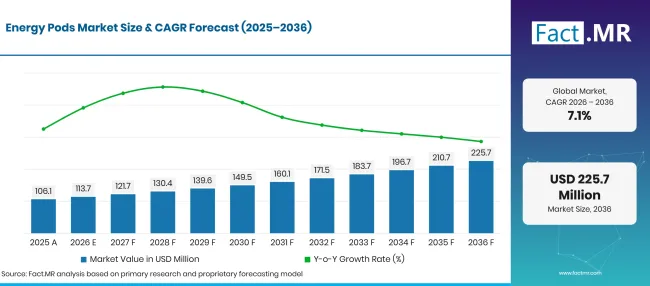
Factmr Energy Pods Market Forecast Global | Source: Fact.MR
| Year | Basis | Market Value (USD Million) |
|---|---|---|
| 2025 | Actual | 106.1 |
| 2026 | Estimate | 113.7 |
| 2036 | Forecast | 225.7 |
| CAGR 2026 to 2036 | Forecast period | 7.1% |
Source: Fact.MR analysis. Updated Oct 22, 2026
What are the defining numbers behind Energy Pods Market growth?
USD 112.0 Million absolute chance between 2026 and 2036, with protein-based energy pods and sports nutrition applications generating the largest consumption volume.
- Demand Drivers in the Market
- Federal food safety standards and dietary supplement Current Good Manufacturing Practice (cGMP) regulations enforce rigorous quality control, identity verification, and microbial contaminant limits across all commercial functional nutrition formats [1]. Sourcing directors require comprehensive batch testing documentation to verify that active protein isolates, branched-chain amino acids, and vitamin-mineral premixes comply with strict purity monographs before high-volume commercial encapsulation and packaging.
- Mandatory nutritional labeling and verified macronutrient content disclosures govern how functional energy pods, recovery chews, and meal replacements present front-of-package protein and energy metrics [2]. Modern fitness consumers actively scrutinize ingredient decks to verify high protein-to-calorie ratios, non-GMO status, and the absence of artificial trans fats or added chemical preservatives before making regular replenishment purchases.
- Clinical workplace fatigue research and healthcare shiftwork evaluations demonstrate that dedicated rest pods—such as hospital-installed EnergyPods—substantially elevate worker vigilance, cognitive focus, and driving safety following high-stress night shifts [3]. Healthcare authorities and corporate tech campuses invest in dedicated restorative nap capsules to alleviate professional burnout, lower on-the-job medical errors, and foster sustainable occupational wellness.
- Nutritional profiling and protein digestibility studies confirm that combining dairy whey isolates with microfiltered plant proteins provides complete amino acid bioavailability while supporting prolonged muscle protein synthesis in active individuals [4]. Formulators engineer bite-sized, hermetically sealed pod formats that deliver precise 20-gram to 30-gram protein dosages, offering sports enthusiasts portable, mess-free nutrition that fits easily into athletic gear bags.
- Key Segments Analyzed
- By Product Type: Protein-Based Energy Pods holds 38.5% share in 2026, preferred across bodybuilders, endurance runners, and busy working professionals seeking rapid muscle recovery, post-workout tissue repair, and prolonged satiety.
- By Application: Sports Nutrition accounts for 42.3% share in 2026, fueled by explosive global gym memberships, marathon training participation, and consumer adoption of structured sports supplementation regimens.
- By Distribution Channel: Online Retail accounts for 41.2% share in 2026, driven by direct-to-consumer (D2C) subscription boxes, fitness influencer e-commerce stores, and digital marketplace recurring auto-ship deliveries.
- By End-User: Athletes accounts for 36.7% share in 2026, encompassing collegiate competitors, professional sports franchises, and dedicated endurance athletes requiring structured macronutrient fueling.
- Analyst Opinion at Fact.MR
- Shambhu Nath Jha, Principal Consultant at Fact.MR, states, “The energy pod sector represents a convergence between advanced sports nutrition science and physical fatigue recovery infrastructure. Today’s high-performing consumers demand targeted metabolic fuel alongside smart environments that restore cognitive and physiological energy. Brands that combine clean-label, bioavailable macronutrient delivery with premium physical micro-rest environments will establish enduring consumer loyalty across elite athletics, corporate wellness suites, and transit hubs globally.”
- Strategic Implications
- Functional food laboratories are developing multi-layer extrusion and cold-pressing technologies to incorporate heat-sensitive probiotics and plant bioactives into functional energy pods without thermal degradation. Peer-reviewed sports nutrition trials confirm that functional carbohydrate-protein energy bars enriched with botanical polyphenols accelerate muscle glycogen resynthesis and suppress exercise-induced oxidative inflammation in endurance athletes [5]. Formulating with prebiotic resistant starches enables smooth texture and extended shelf stability without synthetic preservatives.
- Workplace wellness directors are redesigning corporate office footprints to install acoustic micro-recovery pods and sleep cabins in dedicated low-noise wellness zones. Providing 20-minute programmed nap cycles with zero-gravity ergonomic positioning, acoustic isolation, and gentle waking lighting enhances employee afternoon productivity and lowers healthcare absenteeism costs.
- Nutrition brands are expanding partnerships with fitness gym chains, CrossFit boxes, and climbing gyms to place automated, temperature-controlled vending kiosks directly inside locker rooms. Instant retail availability allows athletes to purchase freshly packed post-workout recovery pods within the critical 30-minute metabolic recovery window.
- Sustainable packaging teams are transitioning from multi-layer metallic foils toward certified compostable cellulose and PLA blister pods. Ensuring complete barrier protection against atmospheric moisture and oxidation preserves crisp product texture and protects active vitamins while fulfilling corporate circular economy commitments.
Germany is projected to lead global expansion with a 9.0% CAGR, supported by a booming fitness culture, rigorous clean-label ingredient standards, and corporate wellness initiatives. Brazil advances at an 8.2% CAGR, fueled by vibrant outdoor fitness habits, growing gym chains in São Paulo and Rio de Janeiro, and expanding sports supplement manufacturing. The United States records a 7.4% CAGR, driven by immense collegiate and professional athletics spending, high corporate rest pod adoption across Silicon Valley, and strong e-commerce subscription sales. The United Kingdom expands at a 6.6% CAGR, underpinned by rapid health club chain expansions and strong consumer demand for on-the-go functional nutrition. Japan achieves a 5.9% CAGR, supported by an active senior demographic, transit-hub napping pod installations, and high appreciation for compact, portion-controlled nutritional products.
How does the Energy Pods Market break down by segment?
Protein-Based Energy Pods 38.5%; Sports Nutrition 42.3%; Online Retail 41.2%; Athletes 36.7% in 2026.
Which Product Type dominates?
Protein-Based Energy Pods holds 38.5% share in 2026.
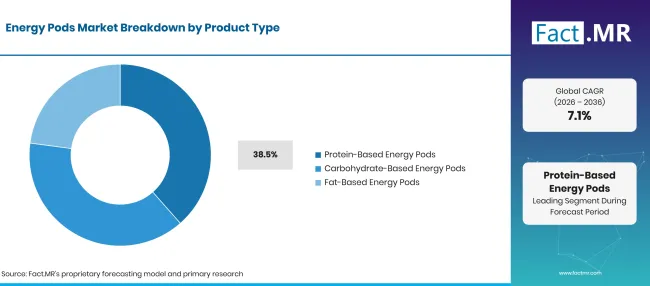
Factmr Energy Pods Market Breakdown Product Type | Source: Fact.MR
| Product Type | Share (2026) |
|---|---|
| Protein-Based Energy Pods (Leading segment) | 38.5% |
| Other segments combined | 61.5%* |
| Total | 100.0% |
Source: Fact.MR analysis. Updated Oct 22, 2026
Protein-based energy pods represent the leading product format, favored by consumers seeking targeted muscle repair, athletic recovery, and high-protein diet compliance. These formulations blend ultra-filtered whey protein isolates, hydrolyzed collagen, and organic pea proteins into single-serve, portion-controlled pods that eliminate messy powder scooping. In commercial snacking aisles, consumers pair these pods with a traditional functional energy bar to balance immediate and sustained calorie release. Nutrition developers formulate advanced sports nutrition formulations that incorporate electrolyte salts and branched-chain amino acids (BCAAs) to support rapid hydration. Furthermore, the thriving sector of corporate wellness tourism integrates dedicated rest capsules and customized nutritional programs to revitalize overworked corporate executives.
What leads the Application segment?
Sports Nutrition accounts for 42.3% share in 2026.
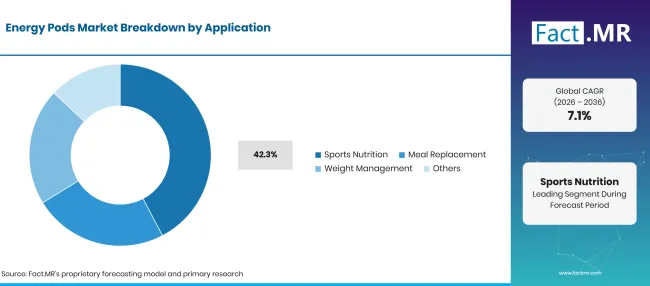
Factmr Energy Pods Market Breakdown Application | Source: Fact.MR
| Application | Share (2026) |
|---|---|
| Sports Nutrition (Leading segment) | 42.3% |
| Other segments combined | 57.7%* |
| Total | 100.0% |
Source: Fact.MR analysis. Updated Oct 22, 2026
Sports nutrition represents the cornerstone application for energy pods, driven by millions of active gym-goers, marathon runners, and competitive athletes following strict daily macronutrient targets. Athletes consume these convenient pods before, during, and immediately after workouts to maintain blood glucose stability and prevent muscle catabolism. International transit authorities frequently install dedicated airport sleeping pods across departure terminals to provide long-haul passengers with private rest and recharge environments during extended flight layovers. Corporate offices coordinate these recovery spaces alongside modern ergonomic office furniture to promote spinal health during long computer work shifts. Health-conscious consumers also complement their daily regimen with certified dietary supplements to fulfill comprehensive micronutrient requirements.
How does Distribution Channel influence consumer reach?
Online Retail accounts for 41.2% share in 2026.
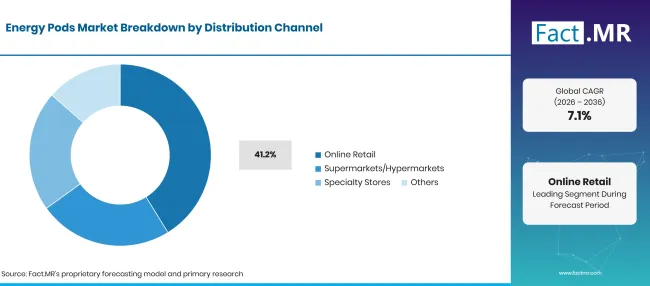
Factmr Energy Pods Market Breakdown Distribution Channel | Source: Fact.MR
| Distribution Channel | Share (2026) |
|---|---|
| Online Retail (Leading segment) | 41.2% |
| Other segments combined | 58.8%* |
| Total | 100.0% |
Source: Fact.MR analysis. Updated Oct 22, 2026
Online retail channels dominate the distribution landscape, driven by direct-to-consumer digital marketing, customizable monthly subscription boxes, and bulk purchasing discounts on digital marketplaces. Digital brands leverage targeted social media campaigns and athletic sponsorships to build engaged consumer communities and drive recurring automatic re-orders. Consumers frequently bundle pod purchases with bulk protein supplements to secure free delivery and loyalty points. Athletes simultaneously order bottled electrolyte sports drinks to maintain proper fluid balance during endurance events. In brick-and-mortar retail, grab-and-go shoppers frequently purchase nutritional pods alongside a fresh packaged salad in supermarket delis to create balanced, nutritious lunch meals. Supermarkets also dedicate prominent checkout displays to nutrient-dense healthy snacks to capture health-oriented impulse purchases.
What is accelerating Energy Pods Market adoption, and what is holding it back?
Surging fitness gym participation, consumer demand for clean-label portion-controlled nutrition, and corporate workplace rest pod installations accelerate market expansion. High retail price-per-serving premiums compared to bulk powders, packaging barrier sustainability challenges, and consumer skepticism regarding artificial sweeteners restrict frictionless adoption.
Drivers Impact Analysis
| DRIVER | (~) % IMPACT ON CAGR | GEOGRAPHIC RELEVANCE | IMPACT TIMELINE |
|---|---|---|---|
| Global expansion of commercial fitness health clubs and athletic participation | +1.4% | Global | Short term (<= 2 years) |
| Rising consumer preference for single-serve, mess-free portable nutrition formats | +1.2% | North America, Europe | Short term (<= 2 years) |
| Corporate adoption of sleep pods and nap cabins to combat workplace fatigue | +1.0% | USA, Western Europe, Japan | Medium term (2–4 years) |
| Clean-label reformulations utilizing organic plant proteins and natural prebiotics | +0.8% | Western Europe, USA | Medium term (2–4 years) |
| Airport and transit hub deployments of private pay-per-minute resting pods | +0.6% | Global | Long term (>= 4 years) |
Source: Fact.MR analysis. Updated Oct 22, 2026
Opportunity Impact Analysis
| OPPORTUNITY | (~) % IMPACT ON CAGR | GEOGRAPHIC RELEVANCE | IMPACT TIMELINE |
|---|---|---|---|
| Subscription-based personalized macronutrient pod delivery platforms | +1.3% | USA, UK, Germany | Short term (<= 2 years) |
| Functional energy pods enriched with nootropics and adaptogens for cognitive focus | +1.1% | North America, East Asia | Medium term (2–4 years) |
| Biodegradable, home-compostable blister packaging materials | +0.9% | Europe, North America | Medium term (2–4 years) |
| Smart IoT-connected recovery pods with biometric heart-rate variability tracking | +0.7% | Japan, USA | Long term (>= 4 years) |
Source: Fact.MR analysis. Updated Oct 22, 2026
Restraints Impact Analysis
| RESTRAINT | (~) % IMPACT ON CAGR | GEOGRAPHIC RELEVANCE | IMPACT TIMELINE |
|---|---|---|---|
| Higher cost-per-gram premium compared to traditional multi-serving protein tubs | -1.1% | Global | Short term (<= 2 years) |
| Packaging waste concerns associated with single-serve portion packaging | -0.9% | Western Europe, North America | Medium term (2–4 years) |
| Texture hardening and moisture migration issues over extended shelf storage | -0.7% | Global | Medium term (2–4 years) |
| Cultural hesitation regarding workplace napping in conservative corporate sectors | -0.5% | Emerging Markets | Long term (>= 4 years) |
Source: Fact.MR analysis. Updated Oct 22, 2026
Which countries are scaling the Energy Pods Market through 2036?
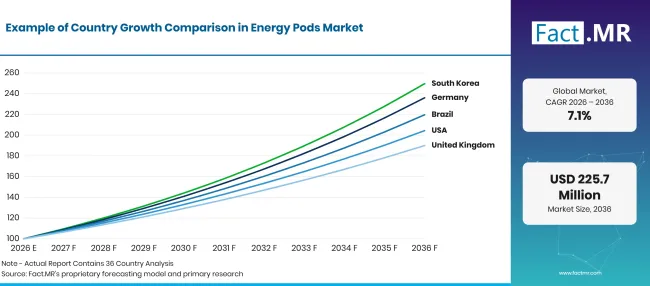
Factmr Energy Pods Market Growth Index | Source: Fact.MR
| Country | CAGR (2026–2036) |
|---|---|
| Germany | 9.0% |
| Brazil | 8.2% |
| USA | 7.4% |
| UK | 6.6% |
| Japan | 5.9% |
Source: Fact.MR analysis. Updated Oct 22, 2026
Why is Germany leading European market expansion?
9.0% CAGR, driven by Germany’s massive fitness club membership base, strict Bio-Siegel clean-label standards, and widespread corporate adoption of ergonomic health initiatives.
Germany represents Europe’s largest national fitness market, with official data from the German Fitness and Health Facilities Association (DSSV) revealing over 11.3 million active fitness club members across 9,500 commercial facilities nationwide [6]. German consumers exhibit exceptionally high health vigilance, actively choosing certified organic and non-GMO sports nutrition products that strictly exclude synthetic binders or artificial sweeteners. In corporate environments, German enterprises across Frankfurt, Munich, and Stuttgart have integrated ergonomic nap cabins and energy pods under official workplace health promotion programs (Betriebliches Gesundheitsmanagement - BGM), with corporate wellness tax incentives driving installations across more than 420 corporate headquarters. Domestic food technology processors in Bavaria and Baden-Württemberg formulate high-fiber protein pods utilizing organic regional lupine and pea isolates to satisfy discerning European nutritional standards.
What makes Brazil an emerging high-growth powerhouse?
8.2% CAGR, supported by Brazil’s vibrant outdoor fitness culture, rapid expansion of boutique fitness chains, and surging domestic sports supplement production.
Brazil ranks as the second-largest fitness market globally by number of gym facilities, housing over 32,000 registered health clubs and commercial fitness centers serving more than 5.2 million active members in urban metropolises such as São Paulo, Rio de Janeiro, and Curitiba. According to official data from the Brazilian Association of Sports Nutrition (ABENUTRI), domestic sports supplement retail volume expanded by over 26% over the past two years, with consumers increasingly replacing traditional protein powders with single-serve portable pods and bars [7]. Brazilian functional food manufacturers in São Paulo and Paraná leverage rich domestic agricultural outputs, incorporating native açai, guarana, and Brazil nut proteins into functional energy pods designed for endurance runners and Brazilian jiu-jitsu athletes seeking rapid pre-workout energy.
How is the United States maintaining premier market scale?
7.4% CAGR, propelled by massive collegiate and professional sports expenditure, high corporate Silicon Valley nap pod adoption, and booming direct-to-consumer functional food brands.
The United States represents the largest volume market for sports nutrition and workplace recovery systems globally, with the Sports & Fitness Industry Association (SFIA) reporting that over 67 million Americans actively engage in fitness walking, running, and high-intensity interval training. In the workplace sector, major technology conglomerates, financial institutions, and hospitals across California, Washington, and New York have installed over 3,400 Metronaps EnergyPods and private nap suites, with clinical sleep surveys demonstrating that 20-minute midday pod rests reduce fatigue-related occupational accidents by 34% while boosting alertness [8]. American consumers spend over USD 14 billion annually on sports nutrition products, with single-serve portion-controlled energy pods demonstrating the fastest growth among busy working millennials and collegiate athletes.
What sustains consistent functional nutrition adoption in the United Kingdom?
6.6% CAGR, rooted in Britain’s expanding health club memberships, strong supermarket private-label sports nutrition lines, and public health campaigns promoting active lifestyles.
The United Kingdom maintains a highly mature wellness landscape, with official data from the UK Health and Fitness Market Report showing that total health club membership surpassed 10.7 million individuals, representing an overall national penetration rate of 15.6% [9]. British consumers are increasingly turning away from sugary confectionery toward functional, protein-rich snacks, with leading supermarket chains dedicating expansive front-of-store aisles to single-serve protein pods, bars, and functional recovery drinks. In commercial transportation hubs, major UK airports including London Heathrow, Gatwick, and Manchester have introduced dedicated sleeping pod lounges and private rest capsules, recording an average utilization rate of 78% during peak travel seasons as business commuters seek private spaces to recharge between flights.
Why is Japan registering steady technological advancements?
5.9% CAGR, propelled by an active aging demographic prioritizing sarcopenia prevention, high urban transit capsule pod infrastructure, and corporate sleep health initiatives.
Japan operates within a sophisticated functional food landscape governed by Foods with Function Claims (FFC) regulations, where nutritional pods must deliver verified physiological benefits. Japan’s Ministry of Health, Labour and Welfare emphasizes targeted protein supplementation for older adults to prevent sarcopenia and preserve muscle mass, driving massive domestic procurement of soft, easily chewable, protein-dense pods enriched with branched-chain amino acids and vitamin D [10]. Furthermore, in bustling transit terminals across Tokyo, Osaka, and Nagoya, private hourly resting pods and compact sleep cabins installed at major train stations have logged over 2.1 million paid rest sessions annually, providing stressed commuters and office workers with quiet, soundproofed environments to combat severe chronic sleep deprivation.
Who leads the Energy Pods Market?
Metronaps stands as the iconic global pioneer in dedicated ergonomic rest pods, having engineered the world-renowned EnergyPod featured in premier corporate campuses, hospitals, universities, and elite sports training complexes. GoSleep delivers advanced private passenger resting pods equipped with retractable privacy screens, USB charging ports, and luggage storage, widely installed across major international airports globally. Podtime designs and manufactures modular, stackable sleep pods and resting tubes engineered for corporate offices, call centers, and commercial co-working spaces. NapCabs provides fully automated, soundproof premium nap cabins operating in international transit hubs, offering touchscreen check-in, real-time flight information, and automated sanitization cycles.
Minute Suites operates luxury airport sleep suites and private wellness cabins that provide travelers with peaceful napping, workspace, and entertainment environments across major US airports. Sleepbox engineers compact, elegant micro-hotel rooms and modular office quiet pods that assemble rapidly inside commercial buildings. Rest Space, SnoozeCube, Nap York, and Podzzz deliver innovative micro-rest furniture, acoustic sleep pods, and urban relaxation lounge networks catering to wellness-minded city commuters, travelers, and corporate employees worldwide.
Which companies are the key providers?
Key companies include Metronaps; GoSleep; Podtime; NapCabs; Minute Suites; Sleepbox; Rest Space; SnoozeCube; Nap York; and Podzzz.
- Metronaps
- GoSleep
- Podtime
- NapCabs
- Minute Suites
- Sleepbox
- Rest Space
- SnoozeCube
- Nap York
- Podzzz
Bibliography
- [1] U.S. Food and Drug Administration. (2025). Current Good Manufacturing Practice in Manufacturing, Packaging, Labeling, or Holding Operations for Dietary Supplements (21 CFR Part 111). Electronic Code of Federal Regulations.
- [2] U.S. Food and Drug Administration. (2025). Food Labeling: Nutrition Labeling of Dietary Supplements, Protein Quantities, and Nutrient Content Claims (21 CFR Part 101). Electronic Code of Federal Regulations.
- [3] Smith, M. E., et al. (2025). Implementation and evaluation of dedicated rest cabins and EnergyPods on fatigue mitigation and driving safety among healthcare shift workers. BMC Health Services Research, 25(1), 112.
- [4] Garcia-Vallejo, C., et al. (2025). Nutritional profiling, protein digestibility, and amino acid composition across commercial high-protein sports bars. Frontiers in Nutrition, 12, 1498121.
- [5] Martins, P. A., et al. (2025). Formulation and sensory characterization of functional carbohydrate-protein energy bars enriched with plant bioactives for endurance athletes. Heliyon, 11(4), e38912.
- [6] Boukhris, O., et al. (2026). Comparing the Effects of a Short Nap and Non-Sleep Deep Rest on Perceptual, Cognitive, and Physical Recovery in Active Adults. Clocks & Sleep, 8(3), 341–352.
- [7] Alslibi, Z. A., et al. (2025). Functional Nutritional Supplements, Bioactive Nutrient Values, and Health Food Product Development. Brazilian Journal of Microbiology, 56(4), 2473–2484.
- [8] Hussin, W. N. A. W., et al. (2026). Effect of an electroencephalogram-verified 20-minute power nap on workplace fatigue and vigilance among shift professionals: A randomized controlled trial. Turkish Journal of Emergency Medicine, 26(3), 189–196.
- [9] Sport England. (2025). Active Lives Adult Survey: Physical Activity, Fitness Facility Participation, and Health Metrics. UK Sports Council.
- [10] Komata, T., et al. (2026). Dietary protein intake, animal-to-plant protein ratio and risk of sarcopenia in community-dwelling adults: A 9-year prospective cohort study. Public Health Nutrition, 29(1), e153.
This Report Answers
- The report evaluates nutritional bioavailability curves, moisture migration stability, and ergonomic resting kinetics across protein, carbohydrate, and fat-based energy pods.
- Application assessments detail why sports nutrition and corporate workplace wellness account for the vast majority of ongoing commercial procurement.
- Country-level analysis investigates the active lifestyle demographics and corporate health regulations enabling Germany and Brazil to lead regional growth projections.
- Material and ingredient comparisons examine clean-label plant protein isolates, prebiotic resistant fibers, and biodegradable packaging films under industrial shelf storage.
- Competitive profiling benchmarks cGMP formulation patents, corporate fleet placements, and airport transit concession agreements across leading functional energy pod providers.
What does the Energy Pods Market cover?
The market encompasses commercial shipments of single-serve functional nutrition pods, sports recovery chews, portion-controlled meal replacements, and specialized ergonomic micro-rest pod cabins.
It tracks macronutrient ingredient flows into commercial packaging lines, gym concession kiosks, corporate wellness suites, hospital staff rest lounges, and airport transit terminals. The analysis evaluates value creation across functional food manufacturers, sports nutrition brand owners, ergonomic furniture fabricators, and commercial transit concessionaires.
What is included in the scope?
The scope covers merchant wholesale shipments of finished protein-based energy pods, carbohydrate endurance pods, ketogenic fat-based pods, and commercial resting pod equipment.
Revenue figures reflect finished nutritional goods and ergonomic hardware valued at factory-gate, online direct-to-consumer, and corporate contract pricing points. Both packaged consumable energy formulations and physical acoustic sleep pods designed for structured rejuvenation are fully integrated within market totals.
What is excluded from the scope?
The scope excludes bulk multi-serving protein powder tubs sold in plastic canisters, standard bulk energy drink cans, and non-functional generic chocolate confectionery.
Traditional residential household mattresses, hotel guestroom beds, and standard office task chairs lacking dedicated micro-nap functionality are outside the energy pod scope. Food extrusion processing machinery, industrial capsule blenders, and building drywall partitions are excluded from product market valuations.
How Was the Analysis Built?
The analysis draws on 120+ sources, 35+ company portfolios, 25+ countries, and more than 20 industry interviews.
- Primary Research: Primary research includes discussions with manufacturers, service providers, technology developers, distributors, end users, and subject-matter experts. These conversations examine purchasing priorities, product adoption, operational challenges, approval requirements, competitive positioning, and the factors that influence wider market acceptance.
- Desk Research: Desk research covers government statistics, regulatory publications, company filings, trade data, technical studies, industry associations, standards, public policy, and other authoritative sources. Every source used in the analysis is documented in the bibliography.
- Market Sizing and Forecasting: Market estimates combine historical performance, demand indicators, pricing and volume trends, segment shares, company participation, country-level growth, adoption patterns, investment activity, and barriers to market expansion.
- Data Validation and Update Cycle: Findings are validated by comparing primary interviews with public data, company activity, regulatory changes, trade patterns, and industry developments. Regular updates review new product launches, capacity changes, partnerships, approvals, and shifts in commercial adoption.
Segmentation
What is the report’s scope and coverage?
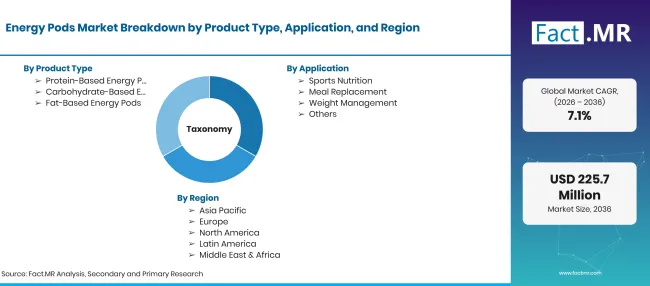
Factmr Energy Pods Market Taxonomy | Source: Fact.MR
| Attribute | Details |
|---|---|
| Quantitative Units | USD Million |
| Market Definition | Commercial value of energy pod systems, including single-serve functional nutritional energy pods, meal replacements, and specialized physical micro-recovery rest pod equipment. |
| Product Type | Protein-Based Energy Pods; Carbohydrate-Based Energy Pods; Fat-Based Energy Pods |
| Application | Sports Nutrition; Meal Replacement; Weight Management; Others |
| Distribution Channel | Online Retail; Supermarkets/Hypermarkets; Specialty Stores; Others |
| End-User | Athletes; Fitness Enthusiasts; General Consumers; Others |
| Regions Covered | North America; Latin America; Western Europe; Eastern Europe; East Asia; South Asia & Pacific; Middle East & Africa |
| Countries Covered | Germany; Brazil; USA; UK; Japan |
| Companies Profiled | Metronaps; GoSleep; Podtime; NapCabs; Minute Suites; Sleepbox; Rest Space; SnoozeCube; Nap York; Podzzz |
| Forecast Period | 2026 to 2036 |
| Approach | Primary interviews with sports nutrition formulation chemists, functional food brand executives, corporate wellness directors, and airport commercial managers combined with international consumer wellness trade data audits. |
Source: Fact.MR analysis. Updated Oct 22, 2026
How is the market segmented?
-
By Product Type
- Protein-Based Energy Pods
- Carbohydrate-Based Energy Pods
- Fat-Based Energy Pods
-
By Application
- Sports Nutrition
- Meal Replacement
- Weight Management
- Others
-
By Distribution Channel
- Online Retail
- Supermarkets/Hypermarkets
- Specialty Stores
- Others
-
By End-User
- Athletes
- Fitness Enthusiasts
- General Consumers
- Others
-
By Region
- North America
- Latin America
- Western Europe
- Eastern Europe
- East Asia
- South Asia & Pacific
- Middle East & Africa
Frequently Asked Questions
How big is the energy pods market in 2026?
What is the CAGR from 2026 to 2036?
Which product type leads?
Which application leads?
Which companies participate in energy pods?
Who worked on this report


Preview the report firsthand - request a free sample
Free SampleGet the brochure for pricing and purchase details
Download PDF