Engine Flush Market (2026 - 2036)

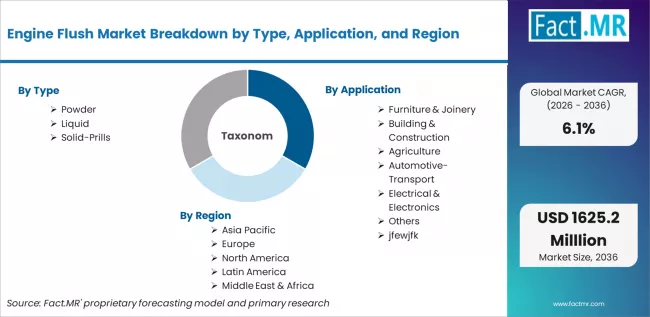
Engine Flush Market is segmented by Type (Synthetic-Based Engine Flush, Petroleum-Based Engine Flush, Biodegradable Engine Flush), Application (Passenger Vehicles, Commercial Vehicles, Motorcycles, Marine Engines), End User (Automotive Service Centers, Fleet Operators, Individual Consumers, Industrial Maintenance), and Region. Forecast for 2026 to 2036.

Core Findings

    Engine Flush Market Size, Market Forecast and Outlook By Fact.MR

    The engine flush market was valued at USD 847.3 million in 2025, projected to reach USD 899.0 million in 2026, and is forecast to expand to USD 1625.2 million by 2036 at a 6.1% CAGR. Increasing average vehicle age in major automotive markets is the primary structural driver for engine flush product demand. The average age of passenger vehicles on US roads reached 12.6 years in 2024 according to S&P Global Mobility, while European fleet age averages exceeded 12 years across most EU member states. Older engines accumulate sludge and deposit buildup that degrades oil circulation efficiency, and engine flush products provide a maintenance intervention that extends engine operational life without requiring mechanical disassembly. Synthetic-based flush formulations are gaining market share over petroleum-based alternatives as they offer superior solvency power with lower risk of seal material degradation, a performance advantage that justifies their 30% to 50% retail price premium.

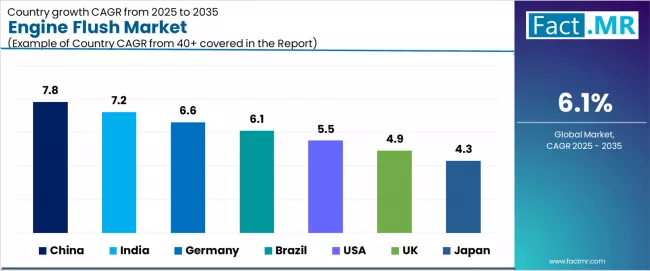
    China leads growth at a 7.8% CAGR, driven by a rapidly expanding vehicle parc exceeding 340 million units and increasing service center penetration in tier-3 and tier-4 cities. India follows at 7.2%, supported by the growing organized automotive aftermarket and rising consumer awareness of preventive maintenance practices. Germany expands at 6.6% as Liqui Moly and other domestic brands capitalize on the TUV inspection culture that encourages proactive engine maintenance. Brazil tracks at 6.1% with commercial fleet maintenance programs incorporating engine flush as a standard service interval product. The USA registers 5.5% growth from high-mileage vehicle maintenance demand. The UK advances at 4.9% and Japan at 4.3%, where hybrid vehicle engines operating in frequent start-stop cycles accumulate moisture-related deposits that flush products address.
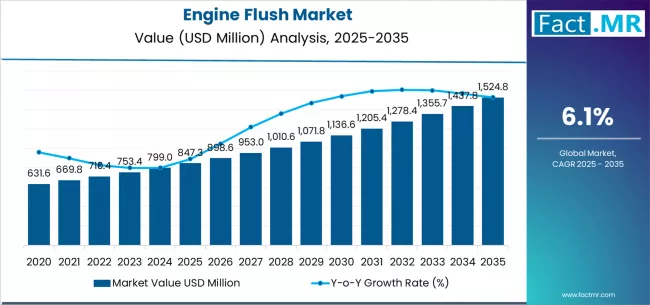
    Engine Flush Market Market Value Analysis

    Engine Flush Market Key Takeaways

    Metric Details
    Industry Size (2026) USD 899.0 million
    Industry Value (2036) USD 1625.2 million
    CAGR (2026 to 2036) 6.1%

    Engine Flush Market Definition

    The engine flush market covers chemical formulations designed to dissolve and remove sludge, varnish, carbon deposits, and accumulated contaminants from internal combustion engine lubrication systems. Products are added to existing engine oil before an oil change and circulated through the engine at idle speed for a specified dwell period, after which the contaminated oil and flush solution are drained together. Formulation categories include synthetic-based flushes using polyalphaolefin (PAO) and ester solvents, petroleum-based flushes derived from mineral oil distillates, and biodegradable flushes using plant-based solvent systems.

    Engine Flush Market Inclusions

    The report covers global and regional market sizes for engine flush products, forecast projections from 2026 to 2036, segment breakdowns by type (synthetic-based, petroleum-based, biodegradable), application (passenger vehicles, commercial vehicles, motorcycles, marine engines), and end user (automotive service centers, fleet operators, individual consumers, industrial maintenance). Pricing and packaging format analysis are included.

    Engine Flush Market Exclusions

    Engine oil and base lubricants are excluded unless sold as a combined flush-and-refill package. Fuel system cleaners and fuel injector cleaning products that do not enter the engine lubrication circuit fall outside the scope. Industrial degreasing solvents for external engine cleaning are not covered.

    Engine Flush Market Research Methodology

    • Primary Research: Fact.MR analysts conducted detailed technical interviews with procurement directors, operations managers, and engineering leads across 40 countries to validate adoption timelines and purchasing decision criteria.
    • Desk Research: Data collection aggregated regulatory filings, government procurement records, industry association publications, and company annual reports to establish baseline market parameters.
    • Market-Sizing and Forecasting: Forecasting models apply a bottom-up methodology starting with installed base metrics and regional production volumes, applying technology penetration curves to project adoption velocity through 2036.
    • Data Validation and Update Cycle: Projections undergo cross-validation against publicly reported revenue figures from leading manufacturers and quarterly trade statistics published by national customs authorities.

    Summary of Engine Flush Market

    • Engine Flush Market Definition
      • The engine flush market covers chemical formulations designed to dissolve and remove sludge, varnish, carbon deposits, and accumulated contaminants from internal combustion engine lubrication systems. Products are added to existing engine oil before an oil change and circulated through the engine at idle speed for a specified dwell period, after which the contaminated oil and flush solution are drained together.
    • Demand Drivers in the Market
      • Regulatory compliance requirements: Government mandates and safety standards across major markets compel end users to adopt upgraded equipment and systems that meet current specification thresholds.
      • Technology cost reduction: Declining component costs and manufacturing efficiencies enable broader market penetration beyond premium segments into volume-production applications.
      • Replacement cycle acceleration: Ageing installed bases in mature markets face performance gaps against current operational requirements, triggering fleet-wide upgrade programs.
    • Key Segments Analyzed in the Fact.MR Report
      • Synthetic-Based Engine Flush (Type): 62.3% share in 2026, reflecting dominant adoption across primary use cases.
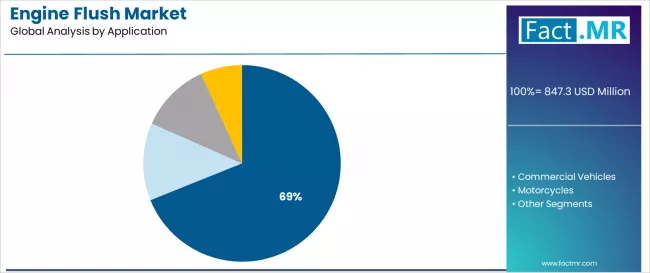
      • Passenger Vehicles (Application): 69.0% share in 2026, driven by structural demand from the largest buyer segment.
    • Analyst Opinion at Fact.MR
      • The engine flush market is positioned for sustained expansion through 2036 as regulatory mandates, technology maturation, and capital replacement cycles converge to create a multi-year procurement environment. Fact.MR is of the opinion that market participants prioritizing certified compliance with evolving standards and demonstrated integration with existing infrastructure will capture disproportionate contract volume during the forecast period. Organizations delaying capital commitments risk operational obsolescence as specification requirements tighten across all major geographic markets.
    • Strategic Implications / Executive Takeaways
      • Compliance-first procurement: Equipment and system suppliers must secure regulatory certifications ahead of enforcement timelines to qualify for tender shortlists in markets where compliance is a mandatory procurement gate.
      • Regional manufacturing presence: Establishing local production or assembly capabilities in high-growth regions reduces lead times and positions suppliers favorably against import-dependent competitors.
      • Technology partnership investment: Forming integration partnerships with complementary technology providers enables end-to-end solution delivery that standalone component suppliers cannot match in competitive bid evaluations.
    • Methodology
      • Primary Research: Fact.MR conducted structured interviews with procurement leads, operations directors, and technical specification managers across key end-user industries in over 40 countries.
      • Desk Research: Analysts compiled data from regulatory filings, government statistical agencies, trade body publications, and verified corporate disclosures.
      • Market-Sizing and Forecasting: A hybrid top-down and bottom-up methodology calibrates global estimates against regional production data and verified shipment records.

    Why is the Engine Flush Market Growing?

    Market expansion is being supported by the increasing global demand for advanced engine maintenance systems and the corresponding need for flush technologies that can provide superior deposit removal benefits and cleaning efficacy advantages while enabling enhanced engine protection and extended compatibility across various automotive service and fleet maintenance applications.

    Modern mechanics and automotive service specialists are increasingly focused on implementing proven cleaning technologies that can deliver effective contaminant control, minimize traditional carbon dependency, and provide consistent performance throughout complex engine configurations and diverse operating conditions. Engine flush proven ability to deliver exceptional cleaning efficacy against traditional alternatives, enable advanced maintenance integration, and support modern engine protection protocols makes it an essential component for contemporary automotive service and maintenance operations.

    The growing emphasis on engine longevity and maintenance efficiency optimization is driving demand for engine flush that can support large-scale service requirements, improve cleaning outcomes, and enable advanced maintenance systems. Consumer preference for products that combine effective deposit removal with proven cleaning efficacy and protection benefits is creating opportunities for innovative flush implementations. The rising influence of preventive maintenance trends and engine protection awareness is also contributing to increased demand for engine flush that can provide advanced features, seamless service integration, and reliable performance across extended service intervals.

    Opportunity Pathways - Engine Flush Market

    The engine flush market is poised for steady growth and technological advancement. As chemical manufacturers across North America, Europe, Asia-Pacific, and emerging markets seek systems that deliver exceptional cleaning quality, advanced deposit removal capabilities, and reliable performance options, engine flush solutions are gaining prominence not just as maintenance products but as strategic enablers of engine technologies and advanced protection functionality.

    Rising fast-acting formula adoption in Asia-Pacific and expanding commercial fleet initiatives globally amplify demand, while manufacturers are leveraging innovations in chemical engineering, advanced formulation integration, and cleaning management technologies.

    Pathways like commercial fleet implementations, biodegradable platforms, and specialized automotive solutions promise strong margin uplift, especially in premium product segments. Geographic expansion and product diversification will capture volume, particularly where local maintenance preferences and advanced technology adoption are critical. Regulatory support around cleaning efficacy standards, deposit removal protocols, and environmental compliance requirements give structural support.

    • Pathway A - Fast-Acting Formula Implementations. Premium automotive service providers and specialty maintenance producers increasingly require engine flush solutions with fast-acting technology and advanced cleaning profiles for enhanced service efficiency and premium positioning capabilities. Technology developers who develop fast-acting platforms with superior cleaning standards can command premium pricing. Expected revenue pool: USD 182.7 million - USD 254.1 million.
    • Pathway B - Commercial Fleet Platforms. Growing demand for commercial applications, high-capacity cleaning capabilities, and unique deposit removal features drives need for advanced commercial capabilities with specialized maintenance integration. Opportunity: USD 163.4 million - USD 227.2 million.
    • Pathway C - Specialized Automotive Applications. Advanced automotive maintenance formulations capable of meeting specific performance requirements, engine compatibility, and specialized cleaning profiles enable market expansion and enhanced service appeal for automotive-focused manufacturers. Revenue lift: USD 152.8 million - USD 212.5 million.
    • Pathway D - Heavy-Duty Integration Applications. Expanding reach into industrial engine platforms with optimized cleaning delivery, advanced deposit removal capabilities, and extended functionality features. Manufacturers will seek partners who supply integrated maintenance solutions with complete heavy-duty functionality. Pool: USD 172.9 million - USD 240.4 million.
    • Pathway E - Geographic Expansion & Local Manufacturing. Strong growth in APAC, particularly China, India, and Southeast Asia. Local manufacturing lowers costs, reduces supply complexity, and enables faster response to regional maintenance preferences. Expected upside: USD 201.2 million - USD 279.6 million.
    • Pathway F - Brand Partnership Development. Increasing demand for custom formulations, brand-specific functionality, and specialized cleaning profiles with validated deposit removal characteristics for automotive service companies. USD 126.8 million - USD 176.3 million.
    • Pathway G - Retail Expansion. Developing comprehensive retail solutions, service compatibility services, and enhancement programs creates differentiation and addresses specialized requirements for automotive retail providers and service centers. Growing demand from independent maintenance services. Pool: USD 114.7 million - USD 159.5 million.

    Segmental Analysis

    The market is segmented by type, application, end user, viscosity grade, vehicle type, distribution channel, price range, and region. By type, the market is divided into synthetic-based engine flush, petroleum-based engine flush, and biodegradable engine flush categories. By application, it covers passenger vehicles, commercial vehicles, motorcycles, and marine engines segments. By end user, it encompasses automotive service centers, fleet operators, individual consumers, and industrial maintenance.

    By viscosity grade, the market includes 5W-30, 10W-40, 15W-50, and multi-grade. By vehicle type, the market is categorized into gasoline engines, diesel engines, and hybrid engines categories. By distribution channel, the market is divided into automotive retailers, online sales, and direct distribution. By price range, the market includes premium, mid-range, and economy. Regionally, the market is divided into North America, Europe, East Asia, South Asia & Pacific, Latin America, and the Middle East & Africa.

    Why do synthetic-based Engine Flushes account for the Largest Share?
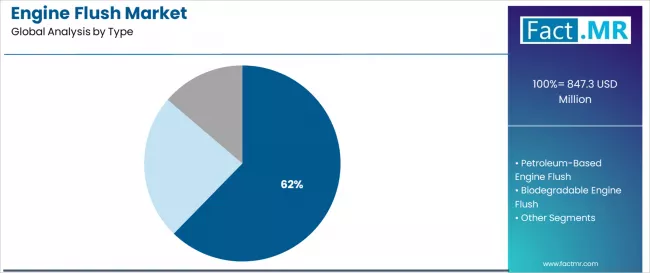
    Engine Flush Market Analysis By Type

    The synthetic-based engine flush segment is projected to account for 62.3% of the engine flush market in 2025, reaffirming its position as the leading category. Chemical manufacturers and service integrators increasingly utilize synthetic-based implementations for their superior cleaning protection when operating across diverse engine platforms, excellent processing properties, and widespread acceptance in applications ranging from basic automotive maintenance to premium service operations. Synthetic-based technology's established cleaning methods and proven deposit removal capabilities directly address the manufacturer requirements for dependable maintenance solutions in complex automotive environments.

    This type segment forms the foundation of modern maintenance adoption patterns, as it represents the implementation with the greatest market penetration and established mechanic acceptance across multiple vehicle categories and price segments. Investments in synthetic standardization and system consistency continue to strengthen adoption among service providers and maintenance companies. With brands prioritizing cleaning efficacy and engine protection, synthetic-based implementations align with both functionality preferences and cost expectations, making them the central component of comprehensive engine maintenance strategies.

    What makes the Passenger Vehicles Segment the Leading Application Area?
    Engine Flush Market Analysis By Application

    Passenger vehicle applications are projected to represent 69.0% of engine flush demand in 2025, underscoring their critical role as the primary application channel for engine maintenance across automotive service, retail maintenance operations, and consumer vehicle applications.

    Automotive manufacturers prefer engine flush for passenger vehicle use for their exceptional cleaning characteristics, scalable processing options, and ability to enhance engine performance while ensuring consistent maintenance quality throughout diverse vehicle platforms and service operations. Positioned as essential maintenance components for modern automotive production, engine flush solutions offer both technological advantages and service efficiency benefits.

    The segment is supported by continuous innovation in automotive maintenance technologies and the growing availability of specialized implementations that enable diverse vehicle requirements with enhanced cleaning uniformity and extended service life capabilities. Automotive manufacturers are investing in advanced technologies to support large-scale service integration and product development.

    As engine protection trends become more prevalent and maintenance performance awareness increases, passenger vehicle applications will continue to represent a major implementation market while supporting advanced automotive utilization and technology integration strategies.

    What are the Drivers, Restraints, and Key Trends of the Engine Flush Market?

    The engine flush market is advancing steadily due to increasing demand for advanced engine maintenance systems and growing adoption of flush technologies that provide superior deposit removal characteristics and cleaning efficacy benefits while enabling enhanced engine protection across diverse automotive service and fleet maintenance applications.

    The market faces challenges, including complex chemical formulation requirements, evolving automotive regulations, and the need for specialized processing expertise and performance programs. Innovation in chemical engineering and advanced cleaning systems continues to influence product development and market expansion patterns.

    Expansion of Engine Protection Technologies and Maintenance Integration

    The growing adoption of advanced engine protection, sophisticated cleaning management capabilities, and maintenance performance awareness is enabling system developers to produce advanced engine flush solutions with superior deposit positioning, enhanced cleaning profiles, and seamless integration functionalities.

    Advanced engine protection systems provide improved maintenance outcomes while allowing more efficient service workflows and reliable performance across various vehicle applications and operating conditions. Developers are increasingly recognizing the competitive advantages of maintenance integration capabilities for market differentiation and cleaning positioning.

    Integration of Advanced Chemical Methods and Cleaning Engineering

    Modern engine flush providers are incorporating advanced chemical technology, cleaning protocol integration, and sophisticated processing solutions to enhance product appeal, enable intelligent deposit removal features, and deliver value-added solutions to maintenance customers.

    These technologies improve cleaning performance while enabling new market opportunities, including multi-grade systems, optimized additive treatments, and enhanced contaminant resistance characteristics. Advanced cleaning integration also allows developers to support comprehensive maintenance technologies and market expansion beyond traditional automotive approaches.

    How is the Engine Flush Market Evolving across Key Countries?


    Country CAGR (2026-2036)
    China 7.8%
    India 7.2%
    Germany 6.6%
    Brazil 6.1%
    USA 5.5%
    UK 4.9%
    Japan 4.3%

    Engine Flush Market Cagr Analysis By Country

    The engine flush market is experiencing steady growth globally, with China leading at a 7.8% CAGR through 2036, driven by expanding automotive service capacity, growing maintenance modernization programs, and significant investment in chemical product development. India follows at 7.2%, supported by increasing automotive maintenance production expansion, growing service technology integration patterns, and expanding consumer vehicle infrastructure.

    Germany shows growth at 6.6%, emphasizing automotive technology leadership and chemical development. Brazil records 6.1%, focusing on expanding automotive service capabilities and maintenance technology modernization. The USA exhibits 5.5% growth, emphasizing automotive innovation excellence and premium chemical development. The UK demonstrates 4.9% growth, prioritizing advanced automotive technology development and engine protection trends. Japan shows 4.3% growth, supported by automotive technology initiatives and quality-focused production patterns.

    The report covers an in-depth analysis of 40+ countries; seven top-performing countries are highlighted below.

    How Is China Driving Global Leadership through Automotive Service Expansion?

    Revenue from engine flush sales in China is projected to grow at a robust CAGR of 7.8% through 2036, propelled by expanding automotive service infrastructure and strong government initiatives to modernize maintenance technologies. China’s push toward vehicle safety and cleaner engine operations has led to a significant surge in the adoption of synthetic and high-efficiency flush systems across passenger and commercial vehicles.

    As one of the world’s largest automotive manufacturing hubs, China benefits from a mature industrial ecosystem and increasing technological investments. The rise of electric and hybrid vehicles has further diversified engine flush requirements, encouraging the development of advanced formulations optimized for low-emission engines.

    Partnerships between domestic manufacturers and international maintenance solution providers are strengthening the country’s export potential. Together, they are creating a comprehensive value chain that integrates research, production, and service delivery—ensuring China retains its leadership in the global automotive maintenance space.

    • Government-backed modernization programs are boosting adoption of advanced cleaning systems across major automotive regions.
    • Rapid expansion of automotive workshops and technology-focused service providers is driving the integration of innovative flush formulations.

    Why Is India Emerging as a Key Growth Hub for Engine Flush Adoption?

    The engine flush market in India is expanding at a strong CAGR of 7.2%, supported by the country’s evolving automotive ecosystem and the growing focus on preventive maintenance. Rising vehicle ownership and increasing awareness of long-term engine protection have made flush treatments a preferred choice among modern car owners.

    India’s automotive service sector is witnessing rapid modernization, with a growing number of technology-integrated workshops and organized maintenance chains. Government campaigns promoting vehicular safety and cleaner emissions are further encouraging the use of quality flush systems in both two-wheeler and four-wheeler segments.

    The entry of global lubricant brands and collaborations with local distributors are also helping bridge the affordability gap. This synergy is positioning India not only as a key consumer base but also as a potential manufacturing hub for technologically advanced maintenance solutions.

    • Expanding automotive maintenance programs are fostering engine flush demand in urban and semi-urban service centers.
    • Rising emphasis on engine protection and modernization is accelerating the adoption of advanced flush technologies among domestic automakers.

    What Is Enabling Germany to Maintain its Automotive Technology Leadership?

    Revenue from engine flush in Germany is projected to grow at a CAGR of 6.6% through 2036, driven by the country’s legacy in precision automotive engineering and continued investment in vehicle maintenance innovation. German automakers’ focus on performance optimization and emission reduction has resulted in strong demand for sophisticated cleaning formulations.

    The nation’s well-developed network of service providers and OEM-integrated workshops ensures seamless adoption of advanced flush products. With an increasing share of hybrid and high-performance vehicles, Germany’s maintenance market is leaning toward eco-friendly formulations that deliver consistent results without damaging engine seals or coatings.

    Collaborations between chemical engineers, lubricant manufacturers, and automotive OEMs are producing next-generation cleaning technologies. These innovations are setting new benchmarks for quality assurance and process efficiency across both domestic and export markets.

    • Growing preference for precision maintenance solutions is supporting advanced flush system integration in Germany’s automotive sector.
    • Continuous R&D investment in cleaning technologies reinforces the country’s leadership in sustainable automotive maintenance practices.

    How Is Brazil Strengthening its Position in Automotive Service and Maintenance?

    The engine flush market in Brazil is estimated to expand at a CAGR of 6.1%, fueled by the growing demand for vehicle longevity and the modernization of automotive workshops. A steady rise in car ownership, combined with increased consumer awareness of preventive care, is driving the need for advanced cleaning systems in both passenger and light commercial vehicles.

    Brazil’s automotive service industry is undergoing a transformation as dealerships and independent garages adopt international-quality maintenance standards. This shift is supported by improved technician training, digital diagnostics, and growing adoption of high-performance flush products.

    As major global lubricant brands expand their footprint across Latin America, local manufacturers are collaborating to develop region-specific flush formulations. These efforts are creating a balanced market that combines affordability with technical sophistication.

    • Expanding urban automotive networks and professional workshops are boosting demand for integrated maintenance systems.
    • Rising consumer awareness and hybrid vehicle growth are driving adoption of high-quality flush products across major Brazilian cities.

    What is Driving the USA’s Focus on Advanced Engine Protection and Innovation?
    Engine Flush Market Country Value Analysis

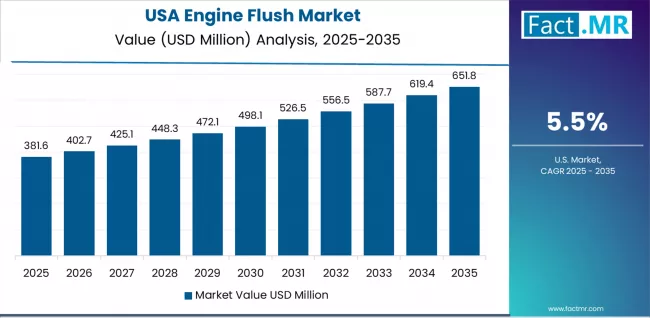
    The engine flush market in the USA is projected to grow at a CAGR of 5.5%, underpinned by the country’s advanced automotive R&D and its culture of performance optimization. American automakers and service providers are increasingly relying on high-efficiency cleaning systems to ensure engine durability, particularly in vehicles with advanced combustion and turbocharged technologies.

    Growing consumer awareness of long-term engine health has led to the integration of professional-grade flush treatments into scheduled servicing routines. Dealerships and independent garages are offering engine flush as part of preventive maintenance programs designed to improve efficiency and reduce emissions.

    The rise of digital diagnostics and connected vehicle platforms has further enhanced service precision, allowing flush applications to be timed accurately for maximum effect. This combination of innovation and precision keeps the USA at the forefront of engine protection advancements.

    • Technological advancements and AI-assisted diagnostics are driving adoption of flush treatments in modern maintenance systems.
    • Increasing consumer preference for high-performance maintenance solutions supports continued investment in advanced engine flush products.

    Why Is the UK Investing in Premium Automotive Maintenance Technologies?

    Revenue from engine flush in the UK is forecast to rise at a CAGR of 4.9%, driven by the nation’s focus on luxury vehicle maintenance and its commitment to sustainable automotive innovation. As British consumers increasingly favor premium vehicles, demand for top-tier engine cleaning solutions is gaining momentum.

    The country’s automotive technology base is evolving toward eco-efficient and low-residue formulations that meet strict regulatory and environmental standards. British manufacturers are also collaborating with European chemical innovators to develop flush systems designed for hybrid and electric vehicles.

    Furthermore, premium vehicle dealerships and service providers are emphasizing quality differentiation using advanced flush systems. This trend aligns with the UK’s broader push toward green mobility and superior service experiences.

    • Increasing premium car ownership and sustainable service initiatives are boosting demand for advanced flush formulations.
    • Ongoing R&D in eco-friendly cleaning solutions enhances the UK’s position in high-end automotive maintenance technology.

    How Is Japan Maintaining Its Edge in Quality Automotive Engineering?
    Engine Flush Market Japan Market Share Analysis By Type

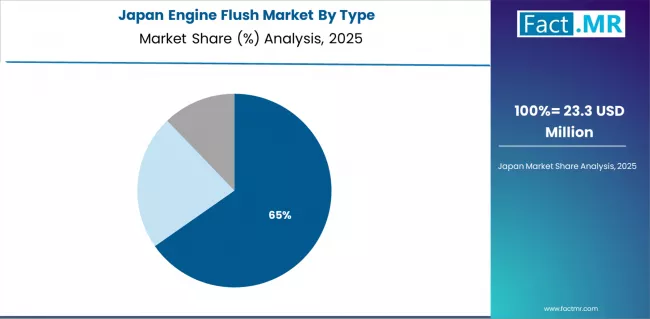
    The engine flush market in Japan is projected to expand at a CAGR of 4.3%, sustained by the country’s precision manufacturing ethos and commitment to long-term engine performance. Japanese automakers are known for integrating meticulous maintenance standards into their service networks, creating consistent demand for quality flush systems.

    With increasing hybrid and electric vehicle adoption, Japan’s maintenance sector is focusing on formulations that complement advanced engine technologies. These systems ensure optimal cleaning without compromising efficiency, particularly in vehicles that rely on lightweight materials and high-performance lubricants.

    Japan’s export-oriented approach also allows its chemical and lubricant manufacturers to influence standards across Asia. Through continuous innovation and collaboration with automotive OEMs, Japan remains a leader in quality-driven automotive maintenance.

    • Advanced quality control and R&D efforts support the integration of precision-engineered flush products in Japan’s automotive ecosystem.
    • Expanding hybrid and EV servicing requirements drive adoption of next-generation cleaning solutions with superior compatibility.

    Competitive Landscape of the Engine Flush Market
    Engine Flush Market Analysis By Company

    The engine flush market is characterized by competition among established automotive chemical companies, specialized cleaning technology developers, and integrated maintenance solution providers. Companies are investing in chemical formulation research, processing optimization, advanced cleaning system development, and comprehensive automotive portfolios to deliver consistent, high-quality, and application-specific engine flush solutions.

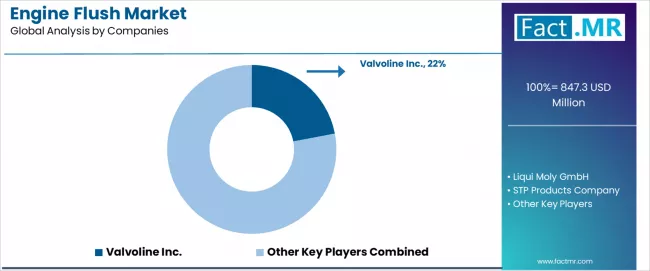
    Innovation in advanced cleaning integration, deposit removal enhancement, and maintenance compatibility improvement is central to strengthening market position and competitive advantage. Valvoline Inc. leads the market with a 22% market share, offering comprehensive automotive technology solutions including quality cleaning platforms and advanced integration systems with a focus on premium and automotive maintenance applications. Liqui Moly GmbH provides specialized chemical capabilities with an emphasis on advanced flush implementations and innovative maintenance solutions.

    STP Products delivers comprehensive automotive services with a focus on integrated platforms and large-scale service applications. Gunk specializes in advanced cleaning technologies and specialized flush implementations for premium applications. CRC Industries focuses on consumer-oriented maintenance integration and innovative technology solutions.

    Key Players in the Engine Flush Market

    • Valvoline Inc.
    • Liqui Moly GmbH
    • STP Products Company
    • Gunk (RSC Chemical Solutions)
    • CRC Industries, Inc.
    • Bardahl Manufacturing Corporation
    • Royal Purple LLC
    • Lucas Oil Products, Inc.
    • Rislone (Bar's Products, Inc.)
    • Sea Foam Sales Company
    • Wynn’s (ITW Global Brands)
    • Motul S.A.
    • Castrol Limited (a subsidiary of BP plc)
    • Mobil 1 (ExxonMobil Corporation)
    • Chevron Corporation

    Scope of the Report

    Engine Flush Market Breakdown By Type, Application, And Region

    Metric Value
    Quantitative Units USD 899.0 million to USD 1625.2 million, at a CAGR of 6.1%
    Market Definition The engine flush market covers chemical formulations designed to dissolve and remove sludge, varnish, carbon deposits, and accumulated contaminants from internal combustion engine lubrication systems. Products are added to existing engine oil before an oil change and circulated through the engine at idle speed for a specified dwell period, after which the contaminated oil and flush solution are drained together.
    Segmentation Type (Synthetic-Based Engine Flush, Petroleum-Based Engine Flush, Biodegradable Engine Flush), Application (Passenger Vehicles, Commercial Vehicles, Motorcycles, Marine Engines), End User (Automotive Service Centers, Fleet Operators, Individual Consumers, Industrial Maintenance)
    Regions Covered North America, Latin America, Europe, East Asia, South Asia, Oceania, Middle East & Africa
    Countries Covered China, India, Germany, Brazil, USA, UK, Japan, and 40 plus countries
    Key Companies Profiled Valvoline Inc., Liqui Moly GmbH, STP Products Company, CRC Industries, Inc., Bardahl Manufacturing Corporation, Royal Purple LLC, Lucas Oil Products, Inc., Sea Foam Sales Company, Motul S.A., Castrol Limited (BP plc), Chevron Corporation
    Forecast Period 2026 to 2036
    Approach Forecasting models apply a hybrid top-down and bottom-up methodology, calibrating global estimates against regional production data and verified shipment records to project market trajectory through 2036.

    Engine Flush Market by Segments

    • Type :

      • Synthetic-Based Engine Flush
      • Petroleum-Based Engine Flush
      • Biodegradable Engine Flush
    • Application :

      • Passenger Vehicles
      • Commercial Vehicles
      • Motorcycles
      • Marine Engines
    • End User:

      • Automotive Service Centers
      • Fleet Operators
      • Individual Consumers
      • Industrial Maintenance
    • Viscosity Grade :

      • 5W-30
      • 10W-40
      • 15W-50
      • Multi-Grade
    • Vehicle Type:

      • Gasoline Engines
      • Diesel Engines
      • Hybrid Engines
    • Distribution Channel:

      • Automotive Retailers
      • Online Sales
      • Direct Distribution
    • Price Segment :

      • Premium
      • Mid-range
      • Economy
    • Region :

      • North America
        • USA
        • Canada
        • Mexico
      • Europe
        • Germany
        • UK
        • France
        • Italy
        • Spain
        • Nordic
        • BENELUX
        • Rest of Europe
      • East Asia
        • China
        • Japan
        • South Korea
      • South Asia & Pacific
        • India
        • ASEAN
        • Australia & New Zealand
        • Rest of South Asia & Pacific
      • Latin America
        • Brazil
        • Chile
        • Argentina
        • Rest of Latin America
      • Middle East & Africa
        • Kingdom of Saudi Arabia
        • Other GCC Countries
        • Turkiye
        • South Africa
        • Other African Union
        • Rest of Middle East & Africa

    Bibliography

    • S&P Global Mobility. (2024). Average Age of Light Vehicles in Operation in the United States 2024. S&P Global.
    • European Automobile Manufacturers Association. (2024). Vehicles in Use: Europe 2024. ACEA.
    • Liqui Moly GmbH. (2024). Annual Report 2023. Liqui Moly.
    • Toyota Motor Corporation. (2024). Technical Service Bulletin TSB-0116-24: Hybrid Engine Oil Management. Toyota.
    • American Petroleum Institute. (2024). Motor Oil Guide 2024. API.
    • International Lubricant Standardization and Approval Committee. (2024). ILSAC GF-6B Engine Test Requirements. ILSAC.

    This bibliography is provided for reader reference. The full Fact.MR report contains the complete reference list with primary research documentation.

    This Report Addresses

    • Market sizing and quantitative forecast metrics detailing industry revenue projections for the engine flush market through 2036.
    • Segmentation analysis identifying adoption patterns across Type, Application, End User segments and evaluating structural demand drivers.
    • Regional deployment intelligence comparing growth dynamics across 7 key countries and broader geographic markets.
    • Regulatory compliance assessment analyzing policy frameworks and standards that affect market adoption and procurement specifications.
    • Competitive landscape evaluation profiling 11 companies and their strategic positioning across technology and geographic dimensions.
    • Strategic investment guidance identifying infrastructure requirements and procurement specifications for market participants.
    • Supply chain and operational analysis identifying capacity constraints, lead time factors, and sourcing patterns that influence market dynamics.
    • Data delivery formats including PDF narrative reports, Excel datasets, interactive dashboards, and presentation files.

    Table of Content

    1. Executive Summary
      • Global Market Outlook
      • Demand to side Trends
      • Supply to side Trends
      • Technology Roadmap Analysis
      • Analysis and Recommendations
    2. Market Overview
      • Market Coverage / Taxonomy
      • Market Definition / Scope / Limitations
    3. Research Methodology
      • Chapter Orientation
      • Analytical Lens and Working Hypotheses
        • Market Structure, Signals, and Trend Drivers
        • Benchmarking and Cross-market Comparability
        • Market Sizing, Forecasting, and Opportunity Mapping
      • Research Design and Evidence Framework
        • Desk Research Programme (Secondary Evidence)
          • Company Annual and Sustainability Reports
          • Peer-reviewed Journals and Academic Literature
          • Corporate Websites, Product Literature, and Technical Notes
          • Earnings Decks and Investor Briefings
          • Statutory Filings and Regulatory Disclosures
          • Technical White Papers and Standards Notes
          • Trade Journals, Industry Magazines, and Analyst Briefs
          • Conference Proceedings, Webinars, and Seminar Materials
          • Government Statistics Portals and Public Data Releases
          • Press Releases and Reputable Media Coverage
          • Specialist Newsletters and Curated Briefings
          • Sector Databases and Reference Repositories
          • Fact.MR Internal Proprietary Databases and Historical Market Datasets
          • Subscription Datasets and Paid Sources
          • Social Channels, Communities, and Digital Listening Inputs
          • Additional Desk Sources
        • Expert Input and Fieldwork (Primary Evidence)
          • Primary Modes
            • Qualitative Interviews and Expert Elicitation
            • Quantitative Surveys and Structured Data Capture
            • Blended Approach
          • Why Primary Evidence is Used
          • Field Techniques
            • Interviews
            • Surveys
            • Focus Groups
            • Observational and In-context Research
            • Social and Community Interactions
          • Stakeholder Universe Engaged
            • C-suite Leaders
            • Board Members
            • Presidents and Vice Presidents
            • R&D and Innovation Heads
            • Technical Specialists
            • Domain Subject-matter Experts
            • Scientists
            • Physicians and Other Healthcare Professionals
          • Governance, Ethics, and Data Stewardship
            • Research Ethics
            • Data Integrity and Handling
        • Tooling, Models, and Reference Databases
      • Data Engineering and Model Build
        • Data Acquisition and Ingestion
        • Cleaning, Normalisation, and Verification
        • Synthesis, Triangulation, and Analysis
      • Quality Assurance and Audit Trail
    4. Market Background
      • Market Dynamics
        • Drivers
        • Restraints
        • Opportunity
        • Trends
      • Scenario Forecast
        • Demand in Optimistic Scenario
        • Demand in Likely Scenario
        • Demand in Conservative Scenario
      • Opportunity Map Analysis
      • Product Life Cycle Analysis
      • Supply Chain Analysis
      • Investment Feasibility Matrix
      • Value Chain Analysis
      • PESTLE and Porter’s Analysis
      • Regulatory Landscape
      • Regional Parent Market Outlook
      • Production and Consumption Statistics
      • Import and Export Statistics
    5. Global Market Analysis 2021 to 2025 and Forecast, 2026 to 2036
      • Historical Market Size Value (USD Million) Analysis, 2021 to 2025
      • Current and Future Market Size Value (USD Million) Projections, 2026 to 2036
        • Y to o to Y Growth Trend Analysis
        • Absolute $ Opportunity Analysis
    6. Global Market Pricing Analysis 2021 to 2025 and Forecast 2026 to 2036
    7. Global Market Analysis 2021 to 2025 and Forecast 2026 to 2036, By Type
      • Introduction / Key Findings
      • Historical Market Size Value (USD Million) Analysis By Type , 2021 to 2025
      • Current and Future Market Size Value (USD Million) Analysis and Forecast By Type , 2026 to 2036
        • Synthetic-Based Engine Flush
        • Petroleum-Based Engine Flush
        • Biodegradable Engine Flush
      • Y to o to Y Growth Trend Analysis By Type , 2021 to 2025
      • Absolute $ Opportunity Analysis By Type , 2026 to 2036
    8. Global Market Analysis 2021 to 2025 and Forecast 2026 to 2036, By Application
      • Introduction / Key Findings
      • Historical Market Size Value (USD Million) Analysis By Application, 2021 to 2025
      • Current and Future Market Size Value (USD Million) Analysis and Forecast By Application, 2026 to 2036
        • Passenger Vehicles
        • Commercial Vehicles
        • Motorcycles
        • Marine Engines
      • Y to o to Y Growth Trend Analysis By Application, 2021 to 2025
      • Absolute $ Opportunity Analysis By Application, 2026 to 2036
    9. Global Market Analysis 2021 to 2025 and Forecast 2026 to 2036, By End User
      • Introduction / Key Findings
      • Historical Market Size Value (USD Million) Analysis By End User, 2021 to 2025
      • Current and Future Market Size Value (USD Million) Analysis and Forecast By End User, 2026 to 2036
        • Automotive Service Centers
        • Fleet Operators
        • Individual Consumers
        • Industrial Maintenance
      • Y to o to Y Growth Trend Analysis By End User, 2021 to 2025
      • Absolute $ Opportunity Analysis By End User, 2026 to 2036
    10. Global Market Analysis 2021 to 2025 and Forecast 2026 to 2036, By Viscosity Grade
      • Introduction / Key Findings
      • Historical Market Size Value (USD Million) Analysis By Viscosity Grade, 2021 to 2025
      • Current and Future Market Size Value (USD Million) Analysis and Forecast By Viscosity Grade, 2026 to 2036
        • 5W-30
        • 10W-40
        • 15W-50
        • Multi-Grade
      • Y to o to Y Growth Trend Analysis By Viscosity Grade, 2021 to 2025
      • Absolute $ Opportunity Analysis By Viscosity Grade, 2026 to 2036
    11. Global Market Analysis 2021 to 2025 and Forecast 2026 to 2036, By Vehicle Type
      • Introduction / Key Findings
      • Historical Market Size Value (USD Million) Analysis By Vehicle Type, 2021 to 2025
      • Current and Future Market Size Value (USD Million) Analysis and Forecast By Vehicle Type, 2026 to 2036
        • Gasoline Engines
        • Diesel Engines
        • Hybrid Engines
      • Y to o to Y Growth Trend Analysis By Vehicle Type, 2021 to 2025
      • Absolute $ Opportunity Analysis By Vehicle Type, 2026 to 2036
    12. Global Market Analysis 2021 to 2025 and Forecast 2026 to 2036, By Distribution Channel
      • Introduction / Key Findings
      • Historical Market Size Value (USD Million) Analysis By Distribution Channel, 2021 to 2025
      • Current and Future Market Size Value (USD Million) Analysis and Forecast By Distribution Channel, 2026 to 2036
        • Automotive Retailers
        • Online Sales
        • Direct Distribution
      • Y to o to Y Growth Trend Analysis By Distribution Channel, 2021 to 2025
      • Absolute $ Opportunity Analysis By Distribution Channel, 2026 to 2036
    13. Global Market Analysis 2021 to 2025 and Forecast 2026 to 2036, By Price Segment
      • Introduction / Key Findings
      • Historical Market Size Value (USD Million) Analysis By Price Segment, 2021 to 2025
      • Current and Future Market Size Value (USD Million) Analysis and Forecast By Price Segment, 2026 to 2036
        • Premium
        • Mid-range
        • Economy
      • Y to o to Y Growth Trend Analysis By Price Segment, 2021 to 2025
      • Absolute $ Opportunity Analysis By Price Segment, 2026 to 2036
    14. Global Market Analysis 2021 to 2025 and Forecast 2026 to 2036, By Region
      • Introduction
      • Historical Market Size Value (USD Million) Analysis By Region, 2021 to 2025
      • Current Market Size Value (USD Million) Analysis and Forecast By Region, 2026 to 2036
        • North America
        • Latin America
        • Western Europe
        • Eastern Europe
        • East Asia
        • South Asia and Pacific
        • Middle East & Africa
      • Market Attractiveness Analysis By Region
    15. North America Market Analysis 2021 to 2025 and Forecast 2026 to 2036, By Country
      • Historical Market Size Value (USD Million) Trend Analysis By Market Taxonomy, 2021 to 2025
      • Market Size Value (USD Million) Forecast By Market Taxonomy, 2026 to 2036
        • By Country
          • USA
          • Canada
          • Mexico
        • By Type
        • By Application
        • By End User
        • By Viscosity Grade
        • By Vehicle Type
        • By Distribution Channel
        • By Price Segment
      • Market Attractiveness Analysis
        • By Country
        • By Type
        • By Application
        • By End User
        • By Viscosity Grade
        • By Vehicle Type
        • By Distribution Channel
        • By Price Segment
      • Key Takeaways
    16. Latin America Market Analysis 2021 to 2025 and Forecast 2026 to 2036, By Country
      • Historical Market Size Value (USD Million) Trend Analysis By Market Taxonomy, 2021 to 2025
      • Market Size Value (USD Million) Forecast By Market Taxonomy, 2026 to 2036
        • By Country
          • Brazil
          • Chile
          • Rest of Latin America
        • By Type
        • By Application
        • By End User
        • By Viscosity Grade
        • By Vehicle Type
        • By Distribution Channel
        • By Price Segment
      • Market Attractiveness Analysis
        • By Country
        • By Type
        • By Application
        • By End User
        • By Viscosity Grade
        • By Vehicle Type
        • By Distribution Channel
        • By Price Segment
      • Key Takeaways
    17. Western Europe Market Analysis 2021 to 2025 and Forecast 2026 to 2036, By Country
      • Historical Market Size Value (USD Million) Trend Analysis By Market Taxonomy, 2021 to 2025
      • Market Size Value (USD Million) Forecast By Market Taxonomy, 2026 to 2036
        • By Country
          • Germany
          • UK
          • Italy
          • Spain
          • France
          • Nordic
          • BENELUX
          • Rest of Western Europe
        • By Type
        • By Application
        • By End User
        • By Viscosity Grade
        • By Vehicle Type
        • By Distribution Channel
        • By Price Segment
      • Market Attractiveness Analysis
        • By Country
        • By Type
        • By Application
        • By End User
        • By Viscosity Grade
        • By Vehicle Type
        • By Distribution Channel
        • By Price Segment
      • Key Takeaways
    18. Eastern Europe Market Analysis 2021 to 2025 and Forecast 2026 to 2036, By Country
      • Historical Market Size Value (USD Million) Trend Analysis By Market Taxonomy, 2021 to 2025
      • Market Size Value (USD Million) Forecast By Market Taxonomy, 2026 to 2036
        • By Country
          • Russia
          • Poland
          • Hungary
          • Balkan & Baltic
          • Rest of Eastern Europe
        • By Type
        • By Application
        • By End User
        • By Viscosity Grade
        • By Vehicle Type
        • By Distribution Channel
        • By Price Segment
      • Market Attractiveness Analysis
        • By Country
        • By Type
        • By Application
        • By End User
        • By Viscosity Grade
        • By Vehicle Type
        • By Distribution Channel
        • By Price Segment
      • Key Takeaways
    19. East Asia Market Analysis 2021 to 2025 and Forecast 2026 to 2036, By Country
      • Historical Market Size Value (USD Million) Trend Analysis By Market Taxonomy, 2021 to 2025
      • Market Size Value (USD Million) Forecast By Market Taxonomy, 2026 to 2036
        • By Country
          • China
          • Japan
          • South Korea
        • By Type
        • By Application
        • By End User
        • By Viscosity Grade
        • By Vehicle Type
        • By Distribution Channel
        • By Price Segment
      • Market Attractiveness Analysis
        • By Country
        • By Type
        • By Application
        • By End User
        • By Viscosity Grade
        • By Vehicle Type
        • By Distribution Channel
        • By Price Segment
      • Key Takeaways
    20. South Asia and Pacific Market Analysis 2021 to 2025 and Forecast 2026 to 2036, By Country
      • Historical Market Size Value (USD Million) Trend Analysis By Market Taxonomy, 2021 to 2025
      • Market Size Value (USD Million) Forecast By Market Taxonomy, 2026 to 2036
        • By Country
          • India
          • ASEAN
          • Australia & New Zealand
          • Rest of South Asia and Pacific
        • By Type
        • By Application
        • By End User
        • By Viscosity Grade
        • By Vehicle Type
        • By Distribution Channel
        • By Price Segment
      • Market Attractiveness Analysis
        • By Country
        • By Type
        • By Application
        • By End User
        • By Viscosity Grade
        • By Vehicle Type
        • By Distribution Channel
        • By Price Segment
      • Key Takeaways
    21. Middle East & Africa Market Analysis 2021 to 2025 and Forecast 2026 to 2036, By Country
      • Historical Market Size Value (USD Million) Trend Analysis By Market Taxonomy, 2021 to 2025
      • Market Size Value (USD Million) Forecast By Market Taxonomy, 2026 to 2036
        • By Country
          • Kingdom of Saudi Arabia
          • Other GCC Countries
          • Turkiye
          • South Africa
          • Other African Union
          • Rest of Middle East & Africa
        • By Type
        • By Application
        • By End User
        • By Viscosity Grade
        • By Vehicle Type
        • By Distribution Channel
        • By Price Segment
      • Market Attractiveness Analysis
        • By Country
        • By Type
        • By Application
        • By End User
        • By Viscosity Grade
        • By Vehicle Type
        • By Distribution Channel
        • By Price Segment
      • Key Takeaways
    22. Key Countries Market Analysis
      • USA
        • Pricing Analysis
        • Market Share Analysis, 2025
          • By Type
          • By Application
          • By End User
          • By Viscosity Grade
          • By Vehicle Type
          • By Distribution Channel
          • By Price Segment
      • Canada
        • Pricing Analysis
        • Market Share Analysis, 2025
          • By Type
          • By Application
          • By End User
          • By Viscosity Grade
          • By Vehicle Type
          • By Distribution Channel
          • By Price Segment
      • Mexico
        • Pricing Analysis
        • Market Share Analysis, 2025
          • By Type
          • By Application
          • By End User
          • By Viscosity Grade
          • By Vehicle Type
          • By Distribution Channel
          • By Price Segment
      • Brazil
        • Pricing Analysis
        • Market Share Analysis, 2025
          • By Type
          • By Application
          • By End User
          • By Viscosity Grade
          • By Vehicle Type
          • By Distribution Channel
          • By Price Segment
      • Chile
        • Pricing Analysis
        • Market Share Analysis, 2025
          • By Type
          • By Application
          • By End User
          • By Viscosity Grade
          • By Vehicle Type
          • By Distribution Channel
          • By Price Segment
      • Germany
        • Pricing Analysis
        • Market Share Analysis, 2025
          • By Type
          • By Application
          • By End User
          • By Viscosity Grade
          • By Vehicle Type
          • By Distribution Channel
          • By Price Segment
      • UK
        • Pricing Analysis
        • Market Share Analysis, 2025
          • By Type
          • By Application
          • By End User
          • By Viscosity Grade
          • By Vehicle Type
          • By Distribution Channel
          • By Price Segment
      • Italy
        • Pricing Analysis
        • Market Share Analysis, 2025
          • By Type
          • By Application
          • By End User
          • By Viscosity Grade
          • By Vehicle Type
          • By Distribution Channel
          • By Price Segment
      • Spain
        • Pricing Analysis
        • Market Share Analysis, 2025
          • By Type
          • By Application
          • By End User
          • By Viscosity Grade
          • By Vehicle Type
          • By Distribution Channel
          • By Price Segment
      • France
        • Pricing Analysis
        • Market Share Analysis, 2025
          • By Type
          • By Application
          • By End User
          • By Viscosity Grade
          • By Vehicle Type
          • By Distribution Channel
          • By Price Segment
      • India
        • Pricing Analysis
        • Market Share Analysis, 2025
          • By Type
          • By Application
          • By End User
          • By Viscosity Grade
          • By Vehicle Type
          • By Distribution Channel
          • By Price Segment
      • ASEAN
        • Pricing Analysis
        • Market Share Analysis, 2025
          • By Type
          • By Application
          • By End User
          • By Viscosity Grade
          • By Vehicle Type
          • By Distribution Channel
          • By Price Segment
      • Australia & New Zealand
        • Pricing Analysis
        • Market Share Analysis, 2025
          • By Type
          • By Application
          • By End User
          • By Viscosity Grade
          • By Vehicle Type
          • By Distribution Channel
          • By Price Segment
      • China
        • Pricing Analysis
        • Market Share Analysis, 2025
          • By Type
          • By Application
          • By End User
          • By Viscosity Grade
          • By Vehicle Type
          • By Distribution Channel
          • By Price Segment
      • Japan
        • Pricing Analysis
        • Market Share Analysis, 2025
          • By Type
          • By Application
          • By End User
          • By Viscosity Grade
          • By Vehicle Type
          • By Distribution Channel
          • By Price Segment
      • South Korea
        • Pricing Analysis
        • Market Share Analysis, 2025
          • By Type
          • By Application
          • By End User
          • By Viscosity Grade
          • By Vehicle Type
          • By Distribution Channel
          • By Price Segment
      • Russia
        • Pricing Analysis
        • Market Share Analysis, 2025
          • By Type
          • By Application
          • By End User
          • By Viscosity Grade
          • By Vehicle Type
          • By Distribution Channel
          • By Price Segment
      • Poland
        • Pricing Analysis
        • Market Share Analysis, 2025
          • By Type
          • By Application
          • By End User
          • By Viscosity Grade
          • By Vehicle Type
          • By Distribution Channel
          • By Price Segment
      • Hungary
        • Pricing Analysis
        • Market Share Analysis, 2025
          • By Type
          • By Application
          • By End User
          • By Viscosity Grade
          • By Vehicle Type
          • By Distribution Channel
          • By Price Segment
      • Kingdom of Saudi Arabia
        • Pricing Analysis
        • Market Share Analysis, 2025
          • By Type
          • By Application
          • By End User
          • By Viscosity Grade
          • By Vehicle Type
          • By Distribution Channel
          • By Price Segment
      • Turkiye
        • Pricing Analysis
        • Market Share Analysis, 2025
          • By Type
          • By Application
          • By End User
          • By Viscosity Grade
          • By Vehicle Type
          • By Distribution Channel
          • By Price Segment
      • South Africa
        • Pricing Analysis
        • Market Share Analysis, 2025
          • By Type
          • By Application
          • By End User
          • By Viscosity Grade
          • By Vehicle Type
          • By Distribution Channel
          • By Price Segment
    23. Market Structure Analysis
      • Competition Dashboard
      • Competition Benchmarking
      • Market Share Analysis of Top Players
        • By Regional
        • By Type
        • By Application
        • By End User
        • By Viscosity Grade
        • By Vehicle Type
        • By Distribution Channel
        • By Price Segment
    24. Competition Analysis
      • Competition Deep Dive
        • Valvoline Inc.
          • Overview
          • Product Portfolio
          • Profitability by Market Segments (Product/Age /Sales Channel/Region)
          • Sales Footprint
          • Strategy Overview
            • Marketing Strategy
            • Product Strategy
            • Channel Strategy
        • Liqui Moly GmbH
        • STP Products Company
        • Gunk (RSC Chemical Solutions)
        • CRC Industries, Inc.
        • Bardahl Manufacturing Corporation
        • Royal Purple LLC
        • Lucas Oil Products, Inc.
        • Rislone (Bar's Products, Inc.)
        • Sea Foam Sales Company
        • Wynn’s (ITW Global Brands)
        • Motul S.A.
        • Castrol Limited (a subsidiary of BP plc)
        • Mobil 1 (ExxonMobil Corporation)
        • Chevron Corporation
    25. Assumptions & Acronyms Used

    List Of Table

    • Table 1: Global Market Value (USD Million) Forecast by Region, 2021 to 2036
    • Table 2: Global Market Value (USD Million) Forecast by Type , 2021 to 2036
    • Table 3: Global Market Value (USD Million) Forecast by Application, 2021 to 2036
    • Table 4: Global Market Value (USD Million) Forecast by End User, 2021 to 2036
    • Table 5: Global Market Value (USD Million) Forecast by Viscosity Grade, 2021 to 2036
    • Table 6: Global Market Value (USD Million) Forecast by Vehicle Type, 2021 to 2036
    • Table 7: Global Market Value (USD Million) Forecast by Distribution Channel, 2021 to 2036
    • Table 8: Global Market Value (USD Million) Forecast by Price Segment, 2021 to 2036
    • Table 9: North America Market Value (USD Million) Forecast by Country, 2021 to 2036
    • Table 10: North America Market Value (USD Million) Forecast by Type , 2021 to 2036
    • Table 11: North America Market Value (USD Million) Forecast by Application, 2021 to 2036
    • Table 12: North America Market Value (USD Million) Forecast by End User, 2021 to 2036
    • Table 13: North America Market Value (USD Million) Forecast by Viscosity Grade, 2021 to 2036
    • Table 14: North America Market Value (USD Million) Forecast by Vehicle Type, 2021 to 2036
    • Table 15: North America Market Value (USD Million) Forecast by Distribution Channel, 2021 to 2036
    • Table 16: North America Market Value (USD Million) Forecast by Price Segment, 2021 to 2036
    • Table 17: Latin America Market Value (USD Million) Forecast by Country, 2021 to 2036
    • Table 18: Latin America Market Value (USD Million) Forecast by Type , 2021 to 2036
    • Table 19: Latin America Market Value (USD Million) Forecast by Application, 2021 to 2036
    • Table 20: Latin America Market Value (USD Million) Forecast by End User, 2021 to 2036
    • Table 21: Latin America Market Value (USD Million) Forecast by Viscosity Grade, 2021 to 2036
    • Table 22: Latin America Market Value (USD Million) Forecast by Vehicle Type, 2021 to 2036
    • Table 23: Latin America Market Value (USD Million) Forecast by Distribution Channel, 2021 to 2036
    • Table 24: Latin America Market Value (USD Million) Forecast by Price Segment, 2021 to 2036
    • Table 25: Western Europe Market Value (USD Million) Forecast by Country, 2021 to 2036
    • Table 26: Western Europe Market Value (USD Million) Forecast by Type , 2021 to 2036
    • Table 27: Western Europe Market Value (USD Million) Forecast by Application, 2021 to 2036
    • Table 28: Western Europe Market Value (USD Million) Forecast by End User, 2021 to 2036
    • Table 29: Western Europe Market Value (USD Million) Forecast by Viscosity Grade, 2021 to 2036
    • Table 30: Western Europe Market Value (USD Million) Forecast by Vehicle Type, 2021 to 2036
    • Table 31: Western Europe Market Value (USD Million) Forecast by Distribution Channel, 2021 to 2036
    • Table 32: Western Europe Market Value (USD Million) Forecast by Price Segment, 2021 to 2036
    • Table 33: Eastern Europe Market Value (USD Million) Forecast by Country, 2021 to 2036
    • Table 34: Eastern Europe Market Value (USD Million) Forecast by Type , 2021 to 2036
    • Table 35: Eastern Europe Market Value (USD Million) Forecast by Application, 2021 to 2036
    • Table 36: Eastern Europe Market Value (USD Million) Forecast by End User, 2021 to 2036
    • Table 37: Eastern Europe Market Value (USD Million) Forecast by Viscosity Grade, 2021 to 2036
    • Table 38: Eastern Europe Market Value (USD Million) Forecast by Vehicle Type, 2021 to 2036
    • Table 39: Eastern Europe Market Value (USD Million) Forecast by Distribution Channel, 2021 to 2036
    • Table 40: Eastern Europe Market Value (USD Million) Forecast by Price Segment, 2021 to 2036
    • Table 41: East Asia Market Value (USD Million) Forecast by Country, 2021 to 2036
    • Table 42: East Asia Market Value (USD Million) Forecast by Type , 2021 to 2036
    • Table 43: East Asia Market Value (USD Million) Forecast by Application, 2021 to 2036
    • Table 44: East Asia Market Value (USD Million) Forecast by End User, 2021 to 2036
    • Table 45: East Asia Market Value (USD Million) Forecast by Viscosity Grade, 2021 to 2036
    • Table 46: East Asia Market Value (USD Million) Forecast by Vehicle Type, 2021 to 2036
    • Table 47: East Asia Market Value (USD Million) Forecast by Distribution Channel, 2021 to 2036
    • Table 48: East Asia Market Value (USD Million) Forecast by Price Segment, 2021 to 2036
    • Table 49: South Asia and Pacific Market Value (USD Million) Forecast by Country, 2021 to 2036
    • Table 50: South Asia and Pacific Market Value (USD Million) Forecast by Type , 2021 to 2036
    • Table 51: South Asia and Pacific Market Value (USD Million) Forecast by Application, 2021 to 2036
    • Table 52: South Asia and Pacific Market Value (USD Million) Forecast by End User, 2021 to 2036
    • Table 53: South Asia and Pacific Market Value (USD Million) Forecast by Viscosity Grade, 2021 to 2036
    • Table 54: South Asia and Pacific Market Value (USD Million) Forecast by Vehicle Type, 2021 to 2036
    • Table 55: South Asia and Pacific Market Value (USD Million) Forecast by Distribution Channel, 2021 to 2036
    • Table 56: South Asia and Pacific Market Value (USD Million) Forecast by Price Segment, 2021 to 2036
    • Table 57: Middle East & Africa Market Value (USD Million) Forecast by Country, 2021 to 2036
    • Table 58: Middle East & Africa Market Value (USD Million) Forecast by Type , 2021 to 2036
    • Table 59: Middle East & Africa Market Value (USD Million) Forecast by Application, 2021 to 2036
    • Table 60: Middle East & Africa Market Value (USD Million) Forecast by End User, 2021 to 2036
    • Table 61: Middle East & Africa Market Value (USD Million) Forecast by Viscosity Grade, 2021 to 2036
    • Table 62: Middle East & Africa Market Value (USD Million) Forecast by Vehicle Type, 2021 to 2036
    • Table 63: Middle East & Africa Market Value (USD Million) Forecast by Distribution Channel, 2021 to 2036
    • Table 64: Middle East & Africa Market Value (USD Million) Forecast by Price Segment, 2021 to 2036

    List Of Figures

    • Figure 1: Global Market Pricing Analysis
    • Figure 2: Global Market Value (USD Million) Forecast 2021-2036
    • Figure 3: Global Market Value Share and BPS Analysis by Type, 2026 and 2036
    • Figure 4: Global Market Y-o-Y Growth Comparison by Type, 2026 to 2036
    • Figure 5: Global Market Attractiveness Analysis by Type
    • Figure 6: Global Market Value Share and BPS Analysis by Application, 2026 and 2036
    • Figure 7: Global Market Y-o-Y Growth Comparison by Application, 2026 to 2036
    • Figure 8: Global Market Attractiveness Analysis by Application
    • Figure 9: Global Market Value Share and BPS Analysis by End User, 2026 and 2036
    • Figure 10: Global Market Y-o-Y Growth Comparison by End User, 2026 to 2036
    • Figure 11: Global Market Attractiveness Analysis by End User
    • Figure 12: Global Market Value Share and BPS Analysis by Viscosity Grade, 2026 and 2036
    • Figure 13: Global Market Y-o-Y Growth Comparison by Viscosity Grade, 2026 to 2036
    • Figure 14: Global Market Attractiveness Analysis by Viscosity Grade
    • Figure 15: Global Market Value Share and BPS Analysis by Vehicle Type, 2026 and 2036
    • Figure 16: Global Market Y-o-Y Growth Comparison by Vehicle Type, 2026 to 2036
    • Figure 17: Global Market Attractiveness Analysis by Vehicle Type
    • Figure 18: Global Market Value Share and BPS Analysis by Distribution Channel, 2026 and 2036
    • Figure 19: Global Market Y-o-Y Growth Comparison by Distribution Channel, 2026 to 2036
    • Figure 20: Global Market Attractiveness Analysis by Distribution Channel
    • Figure 21: Global Market Value Share and BPS Analysis by Price Segment, 2026 and 2036
    • Figure 22: Global Market Y-o-Y Growth Comparison by Price Segment, 2026 to 2036
    • Figure 23: Global Market Attractiveness Analysis by Price Segment
    • Figure 24: Global Market Value (USD Million) Share and BPS Analysis by Region, 2026 and 2036
    • Figure 25: Global Market Y-o-Y Growth Comparison by Region, 2026 to 2036
    • Figure 26: Global Market Attractiveness Analysis by Region
    • Figure 27: North America Market Incremental Dollar Opportunity, 2026 to 2036
    • Figure 28: Latin America Market Incremental Dollar Opportunity, 2026 to 2036
    • Figure 29: Western Europe Market Incremental Dollar Opportunity, 2026 to 2036
    • Figure 30: Eastern Europe Market Incremental Dollar Opportunity, 2026 to 2036
    • Figure 31: East Asia Market Incremental Dollar Opportunity, 2026 to 2036
    • Figure 32: South Asia and Pacific Market Incremental Dollar Opportunity, 2026 to 2036
    • Figure 33: Middle East & Africa Market Incremental Dollar Opportunity, 2026 to 2036
    • Figure 34: North America Market Value Share and BPS Analysis by Country, 2026 and 2036
    • Figure 35: North America Market Value Share and BPS Analysis by Type, 2026 and 2036
    • Figure 36: North America Market Y-o-Y Growth Comparison by Type, 2026 to 2036
    • Figure 37: North America Market Attractiveness Analysis by Type
    • Figure 38: North America Market Value Share and BPS Analysis by Application, 2026 and 2036
    • Figure 39: North America Market Y-o-Y Growth Comparison by Application, 2026 to 2036
    • Figure 40: North America Market Attractiveness Analysis by Application
    • Figure 41: North America Market Value Share and BPS Analysis by End User, 2026 and 2036
    • Figure 42: North America Market Y-o-Y Growth Comparison by End User, 2026 to 2036
    • Figure 43: North America Market Attractiveness Analysis by End User
    • Figure 44: North America Market Value Share and BPS Analysis by Viscosity Grade, 2026 and 2036
    • Figure 45: North America Market Y-o-Y Growth Comparison by Viscosity Grade, 2026 to 2036
    • Figure 46: North America Market Attractiveness Analysis by Viscosity Grade
    • Figure 47: North America Market Value Share and BPS Analysis by Vehicle Type, 2026 and 2036
    • Figure 48: North America Market Y-o-Y Growth Comparison by Vehicle Type, 2026 to 2036
    • Figure 49: North America Market Attractiveness Analysis by Vehicle Type
    • Figure 50: North America Market Value Share and BPS Analysis by Distribution Channel, 2026 and 2036
    • Figure 51: North America Market Y-o-Y Growth Comparison by Distribution Channel, 2026 to 2036
    • Figure 52: North America Market Attractiveness Analysis by Distribution Channel
    • Figure 53: North America Market Value Share and BPS Analysis by Price Segment, 2026 and 2036
    • Figure 54: North America Market Y-o-Y Growth Comparison by Price Segment, 2026 to 2036
    • Figure 55: North America Market Attractiveness Analysis by Price Segment
    • Figure 56: Latin America Market Value Share and BPS Analysis by Country, 2026 and 2036
    • Figure 57: Latin America Market Value Share and BPS Analysis by Type, 2026 and 2036
    • Figure 58: Latin America Market Y-o-Y Growth Comparison by Type, 2026 to 2036
    • Figure 59: Latin America Market Attractiveness Analysis by Type
    • Figure 60: Latin America Market Value Share and BPS Analysis by Application, 2026 and 2036
    • Figure 61: Latin America Market Y-o-Y Growth Comparison by Application, 2026 to 2036
    • Figure 62: Latin America Market Attractiveness Analysis by Application
    • Figure 63: Latin America Market Value Share and BPS Analysis by End User, 2026 and 2036
    • Figure 64: Latin America Market Y-o-Y Growth Comparison by End User, 2026 to 2036
    • Figure 65: Latin America Market Attractiveness Analysis by End User
    • Figure 66: Latin America Market Value Share and BPS Analysis by Viscosity Grade, 2026 and 2036
    • Figure 67: Latin America Market Y-o-Y Growth Comparison by Viscosity Grade, 2026 to 2036
    • Figure 68: Latin America Market Attractiveness Analysis by Viscosity Grade
    • Figure 69: Latin America Market Value Share and BPS Analysis by Vehicle Type, 2026 and 2036
    • Figure 70: Latin America Market Y-o-Y Growth Comparison by Vehicle Type, 2026 to 2036
    • Figure 71: Latin America Market Attractiveness Analysis by Vehicle Type
    • Figure 72: Latin America Market Value Share and BPS Analysis by Distribution Channel, 2026 and 2036
    • Figure 73: Latin America Market Y-o-Y Growth Comparison by Distribution Channel, 2026 to 2036
    • Figure 74: Latin America Market Attractiveness Analysis by Distribution Channel
    • Figure 75: Latin America Market Value Share and BPS Analysis by Price Segment, 2026 and 2036
    • Figure 76: Latin America Market Y-o-Y Growth Comparison by Price Segment, 2026 to 2036
    • Figure 77: Latin America Market Attractiveness Analysis by Price Segment
    • Figure 78: Western Europe Market Value Share and BPS Analysis by Country, 2026 and 2036
    • Figure 79: Western Europe Market Value Share and BPS Analysis by Type, 2026 and 2036
    • Figure 80: Western Europe Market Y-o-Y Growth Comparison by Type, 2026 to 2036
    • Figure 81: Western Europe Market Attractiveness Analysis by Type
    • Figure 82: Western Europe Market Value Share and BPS Analysis by Application, 2026 and 2036
    • Figure 83: Western Europe Market Y-o-Y Growth Comparison by Application, 2026 to 2036
    • Figure 84: Western Europe Market Attractiveness Analysis by Application
    • Figure 85: Western Europe Market Value Share and BPS Analysis by End User, 2026 and 2036
    • Figure 86: Western Europe Market Y-o-Y Growth Comparison by End User, 2026 to 2036
    • Figure 87: Western Europe Market Attractiveness Analysis by End User
    • Figure 88: Western Europe Market Value Share and BPS Analysis by Viscosity Grade, 2026 and 2036
    • Figure 89: Western Europe Market Y-o-Y Growth Comparison by Viscosity Grade, 2026 to 2036
    • Figure 90: Western Europe Market Attractiveness Analysis by Viscosity Grade
    • Figure 91: Western Europe Market Value Share and BPS Analysis by Vehicle Type, 2026 and 2036
    • Figure 92: Western Europe Market Y-o-Y Growth Comparison by Vehicle Type, 2026 to 2036
    • Figure 93: Western Europe Market Attractiveness Analysis by Vehicle Type
    • Figure 94: Western Europe Market Value Share and BPS Analysis by Distribution Channel, 2026 and 2036
    • Figure 95: Western Europe Market Y-o-Y Growth Comparison by Distribution Channel, 2026 to 2036
    • Figure 96: Western Europe Market Attractiveness Analysis by Distribution Channel
    • Figure 97: Western Europe Market Value Share and BPS Analysis by Price Segment, 2026 and 2036
    • Figure 98: Western Europe Market Y-o-Y Growth Comparison by Price Segment, 2026 to 2036
    • Figure 99: Western Europe Market Attractiveness Analysis by Price Segment
    • Figure 100: Eastern Europe Market Value Share and BPS Analysis by Country, 2026 and 2036
    • Figure 101: Eastern Europe Market Value Share and BPS Analysis by Type, 2026 and 2036
    • Figure 102: Eastern Europe Market Y-o-Y Growth Comparison by Type, 2026 to 2036
    • Figure 103: Eastern Europe Market Attractiveness Analysis by Type
    • Figure 104: Eastern Europe Market Value Share and BPS Analysis by Application, 2026 and 2036
    • Figure 105: Eastern Europe Market Y-o-Y Growth Comparison by Application, 2026 to 2036
    • Figure 106: Eastern Europe Market Attractiveness Analysis by Application
    • Figure 107: Eastern Europe Market Value Share and BPS Analysis by End User, 2026 and 2036
    • Figure 108: Eastern Europe Market Y-o-Y Growth Comparison by End User, 2026 to 2036
    • Figure 109: Eastern Europe Market Attractiveness Analysis by End User
    • Figure 110: Eastern Europe Market Value Share and BPS Analysis by Viscosity Grade, 2026 and 2036
    • Figure 111: Eastern Europe Market Y-o-Y Growth Comparison by Viscosity Grade, 2026 to 2036
    • Figure 112: Eastern Europe Market Attractiveness Analysis by Viscosity Grade
    • Figure 113: Eastern Europe Market Value Share and BPS Analysis by Vehicle Type, 2026 and 2036
    • Figure 114: Eastern Europe Market Y-o-Y Growth Comparison by Vehicle Type, 2026 to 2036
    • Figure 115: Eastern Europe Market Attractiveness Analysis by Vehicle Type
    • Figure 116: Eastern Europe Market Value Share and BPS Analysis by Distribution Channel, 2026 and 2036
    • Figure 117: Eastern Europe Market Y-o-Y Growth Comparison by Distribution Channel, 2026 to 2036
    • Figure 118: Eastern Europe Market Attractiveness Analysis by Distribution Channel
    • Figure 119: Eastern Europe Market Value Share and BPS Analysis by Price Segment, 2026 and 2036
    • Figure 120: Eastern Europe Market Y-o-Y Growth Comparison by Price Segment, 2026 to 2036
    • Figure 121: Eastern Europe Market Attractiveness Analysis by Price Segment
    • Figure 122: East Asia Market Value Share and BPS Analysis by Country, 2026 and 2036
    • Figure 123: East Asia Market Value Share and BPS Analysis by Type, 2026 and 2036
    • Figure 124: East Asia Market Y-o-Y Growth Comparison by Type, 2026 to 2036
    • Figure 125: East Asia Market Attractiveness Analysis by Type
    • Figure 126: East Asia Market Value Share and BPS Analysis by Application, 2026 and 2036
    • Figure 127: East Asia Market Y-o-Y Growth Comparison by Application, 2026 to 2036
    • Figure 128: East Asia Market Attractiveness Analysis by Application
    • Figure 129: East Asia Market Value Share and BPS Analysis by End User, 2026 and 2036
    • Figure 130: East Asia Market Y-o-Y Growth Comparison by End User, 2026 to 2036
    • Figure 131: East Asia Market Attractiveness Analysis by End User
    • Figure 132: East Asia Market Value Share and BPS Analysis by Viscosity Grade, 2026 and 2036
    • Figure 133: East Asia Market Y-o-Y Growth Comparison by Viscosity Grade, 2026 to 2036
    • Figure 134: East Asia Market Attractiveness Analysis by Viscosity Grade
    • Figure 135: East Asia Market Value Share and BPS Analysis by Vehicle Type, 2026 and 2036
    • Figure 136: East Asia Market Y-o-Y Growth Comparison by Vehicle Type, 2026 to 2036
    • Figure 137: East Asia Market Attractiveness Analysis by Vehicle Type
    • Figure 138: East Asia Market Value Share and BPS Analysis by Distribution Channel, 2026 and 2036
    • Figure 139: East Asia Market Y-o-Y Growth Comparison by Distribution Channel, 2026 to 2036
    • Figure 140: East Asia Market Attractiveness Analysis by Distribution Channel
    • Figure 141: East Asia Market Value Share and BPS Analysis by Price Segment, 2026 and 2036
    • Figure 142: East Asia Market Y-o-Y Growth Comparison by Price Segment, 2026 to 2036
    • Figure 143: East Asia Market Attractiveness Analysis by Price Segment
    • Figure 144: South Asia and Pacific Market Value Share and BPS Analysis by Country, 2026 and 2036
    • Figure 145: South Asia and Pacific Market Value Share and BPS Analysis by Type, 2026 and 2036
    • Figure 146: South Asia and Pacific Market Y-o-Y Growth Comparison by Type, 2026 to 2036
    • Figure 147: South Asia and Pacific Market Attractiveness Analysis by Type
    • Figure 148: South Asia and Pacific Market Value Share and BPS Analysis by Application, 2026 and 2036
    • Figure 149: South Asia and Pacific Market Y-o-Y Growth Comparison by Application, 2026 to 2036
    • Figure 150: South Asia and Pacific Market Attractiveness Analysis by Application
    • Figure 151: South Asia and Pacific Market Value Share and BPS Analysis by End User, 2026 and 2036
    • Figure 152: South Asia and Pacific Market Y-o-Y Growth Comparison by End User, 2026 to 2036
    • Figure 153: South Asia and Pacific Market Attractiveness Analysis by End User
    • Figure 154: South Asia and Pacific Market Value Share and BPS Analysis by Viscosity Grade, 2026 and 2036
    • Figure 155: South Asia and Pacific Market Y-o-Y Growth Comparison by Viscosity Grade, 2026 to 2036
    • Figure 156: South Asia and Pacific Market Attractiveness Analysis by Viscosity Grade
    • Figure 157: South Asia and Pacific Market Value Share and BPS Analysis by Vehicle Type, 2026 and 2036
    • Figure 158: South Asia and Pacific Market Y-o-Y Growth Comparison by Vehicle Type, 2026 to 2036
    • Figure 159: South Asia and Pacific Market Attractiveness Analysis by Vehicle Type
    • Figure 160: South Asia and Pacific Market Value Share and BPS Analysis by Distribution Channel, 2026 and 2036
    • Figure 161: South Asia and Pacific Market Y-o-Y Growth Comparison by Distribution Channel, 2026 to 2036
    • Figure 162: South Asia and Pacific Market Attractiveness Analysis by Distribution Channel
    • Figure 163: South Asia and Pacific Market Value Share and BPS Analysis by Price Segment, 2026 and 2036
    • Figure 164: South Asia and Pacific Market Y-o-Y Growth Comparison by Price Segment, 2026 to 2036
    • Figure 165: South Asia and Pacific Market Attractiveness Analysis by Price Segment
    • Figure 166: Middle East & Africa Market Value Share and BPS Analysis by Country, 2026 and 2036
    • Figure 167: Middle East & Africa Market Value Share and BPS Analysis by Type, 2026 and 2036
    • Figure 168: Middle East & Africa Market Y-o-Y Growth Comparison by Type, 2026 to 2036
    • Figure 169: Middle East & Africa Market Attractiveness Analysis by Type
    • Figure 170: Middle East & Africa Market Value Share and BPS Analysis by Application, 2026 and 2036
    • Figure 171: Middle East & Africa Market Y-o-Y Growth Comparison by Application, 2026 to 2036
    • Figure 172: Middle East & Africa Market Attractiveness Analysis by Application
    • Figure 173: Middle East & Africa Market Value Share and BPS Analysis by End User, 2026 and 2036
    • Figure 174: Middle East & Africa Market Y-o-Y Growth Comparison by End User, 2026 to 2036
    • Figure 175: Middle East & Africa Market Attractiveness Analysis by End User
    • Figure 176: Middle East & Africa Market Value Share and BPS Analysis by Viscosity Grade, 2026 and 2036
    • Figure 177: Middle East & Africa Market Y-o-Y Growth Comparison by Viscosity Grade, 2026 to 2036
    • Figure 178: Middle East & Africa Market Attractiveness Analysis by Viscosity Grade
    • Figure 179: Middle East & Africa Market Value Share and BPS Analysis by Vehicle Type, 2026 and 2036
    • Figure 180: Middle East & Africa Market Y-o-Y Growth Comparison by Vehicle Type, 2026 to 2036
    • Figure 181: Middle East & Africa Market Attractiveness Analysis by Vehicle Type
    • Figure 182: Middle East & Africa Market Value Share and BPS Analysis by Distribution Channel, 2026 and 2036
    • Figure 183: Middle East & Africa Market Y-o-Y Growth Comparison by Distribution Channel, 2026 to 2036
    • Figure 184: Middle East & Africa Market Attractiveness Analysis by Distribution Channel
    • Figure 185: Middle East & Africa Market Value Share and BPS Analysis by Price Segment, 2026 and 2036
    • Figure 186: Middle East & Africa Market Y-o-Y Growth Comparison by Price Segment, 2026 to 2036
    • Figure 187: Middle East & Africa Market Attractiveness Analysis by Price Segment
    • Figure 188: Global Market - Tier Structure Analysis
    • Figure 189: Global Market - Company Share Analysis

    - Frequently Asked Questions -

    How large is the demand for Engine Flush Market in the global market in 2026?

    Demand for the engine flush market is estimated at USD 899.0 million in 2026.

    What will be the market size of Engine Flush Market by 2036?

    Market size for the engine flush market is projected to reach USD 1625.2 million by 2036.

    What is the expected demand growth for Engine Flush Market between 2026 and 2036?

    Demand is expected to grow at a CAGR of 6.1% between 2026 and 2036.

    Which Type is poised to lead global sales by 2026?

    Synthetic-Based Engine Flush accounts for 62.3% share in 2026, reflecting its dominant position across primary applications.

    How significant is the role of Passenger Vehicles in the Engine Flush Market?

    Passenger Vehicles represents 69.0% of the application segment in 2026, driven by structural demand from the largest buyer category.

    What is the growth outlook for China in this report?

    China is projected to grow at a CAGR of 7.8% during 2026 to 2036.

    What is the growth outlook for India?

    India is projected to expand at a CAGR of 7.2% during 2026 to 2036.

    Does the report cover USA in its regional analysis?

    Yes, USA is included within the regional scope of analysis.

    What is Engine Flush Market and what is it mainly used for?

    The engine flush market covers chemical formulations designed to dissolve and remove sludge, varnish, carbon deposits, and accumulated contaminants from internal combustion engine lubrication systems. Products are added to existing engine oil before an oil change and circulated through the engine at idle speed for a specified dwell period, after which the contaminated oil and flush solution are drained together.

    What is included in the scope of this report?

    The report covers global and regional market sizes for engine flush products, forecast projections from 2026 to 2036, segment breakdowns by type (synthetic-based, petroleum-based, biodegradable), application (passenger vehicles, commercial vehicles, motorcycles, marine engines), and end user (automotive service centers, fleet operators, individual consumers, industrial maintenance). Pricing and packaging format analysis are included.

    What is excluded from the scope of this report?

    Engine oil and base lubricants are excluded unless sold as a combined flush-and-refill package. Fuel system cleaners and fuel injector cleaning products that do not enter the engine lubrication circuit fall outside the scope.

    How does Fact.MR build and validate the Engine Flush Market forecast?

    Forecasting models apply a hybrid top-down and bottom-up methodology, cross-validated against publicly reported revenue figures and quarterly trade statistics.

    What regions are covered in this report?

    The report covers North America, Latin America, Europe, East Asia, South Asia, Oceania, and Middle East & Africa across 40 plus countries.

    Which companies are profiled in this report?

    Key companies profiled include Valvoline Inc., Liqui Moly GmbH, STP Products Company, CRC Industries, Inc., Bardahl Manufacturing Corporation, among others. Related Market Links • Engine Oil Market • Automotive Lubricants Market • Engine Cleaning Products Market • Fuel Additives Market • Automotive Aftermarket Chemicals Market • Synthetic Lubricants Market • Vehicle Maintenance Products Market • Industrial Cleaning Solvents Market

    How large is the demand for Engine Flush Market in the global market in 2026?

    Demand for the engine flush market is estimated at USD 899.0 million in 2026.

    What will be the market size of Engine Flush Market by 2036?

    Market size for the engine flush market is projected to reach USD 1625.2 million by 2036.

    What is the expected demand growth for Engine Flush Market between 2026 and 2036?

    Demand is expected to grow at a CAGR of 6.1% between 2026 and 2036.

    Which Type is poised to lead global sales by 2026?

    Synthetic-Based Engine Flush accounts for 62.3% share in 2026, reflecting its dominant position across primary applications.

    How significant is the role of Passenger Vehicles in the Engine Flush Market?

    Passenger Vehicles represents 69.0% of the application segment in 2026, driven by structural demand from the largest buyer category.

    What is the growth outlook for China in this report?

    China is projected to grow at a CAGR of 7.8% during 2026 to 2036.

    What is the growth outlook for India?

    India is projected to expand at a CAGR of 7.2% during 2026 to 2036.

    Does the report cover USA in its regional analysis?

    Yes, USA is included within the regional scope of analysis.

    What is Engine Flush Market and what is it mainly used for?

    The engine flush market covers chemical formulations designed to dissolve and remove sludge, varnish, carbon deposits, and accumulated contaminants from internal combustion engine lubrication systems. Products are added to existing engine oil before an oil change and circulated through the engine at idle speed for a specified dwell period, after which the contaminated oil and flush solution are drained together.

    What is included in the scope of this report?

    The report covers global and regional market sizes for engine flush products, forecast projections from 2026 to 2036, segment breakdowns by type (synthetic-based, petroleum-based, biodegradable), application (passenger vehicles, commercial vehicles, motorcycles, marine engines), and end user (automotive service centers, fleet operators, individual consumers, industrial maintenance). Pricing and packaging format analysis are included.

    What is excluded from the scope of this report?

    Engine oil and base lubricants are excluded unless sold as a combined flush-and-refill package. Fuel system cleaners and fuel injector cleaning products that do not enter the engine lubrication circuit fall outside the scope.

    How does Fact.MR build and validate the Engine Flush Market forecast?

    Forecasting models apply a hybrid top-down and bottom-up methodology, cross-validated against publicly reported revenue figures and quarterly trade statistics.

    What regions are covered in this report?

    The report covers North America, Latin America, Europe, East Asia, South Asia, Oceania, and Middle East & Africa across 40 plus countries.

    Which companies are profiled in this report?

    Key companies profiled include Valvoline Inc., Liqui Moly GmbH, STP Products Company, CRC Industries, Inc., Bardahl Manufacturing Corporation, among others.

    Engine Flush Market