- Base Value(2025): 4.7 Bn
- Forecast Value (2036): 14.4 Bn
- CAGR (2036): 10.7%
GLP-1 Companion Products Market Overview, Growth Outlook, and Forecast by Fact.MR
- In 2025, the global GLP-1 companion products market was valued at approximately USD 4.7 billion.
- Based on Fact.MR analysis, demand for GLP-1 companion products is estimated to grow to around USD 5.2 billion in 2026 and USD 14.4 billion by 2036.
- The market is projected to expand at a CAGR of around 10.7% during the forecast period.
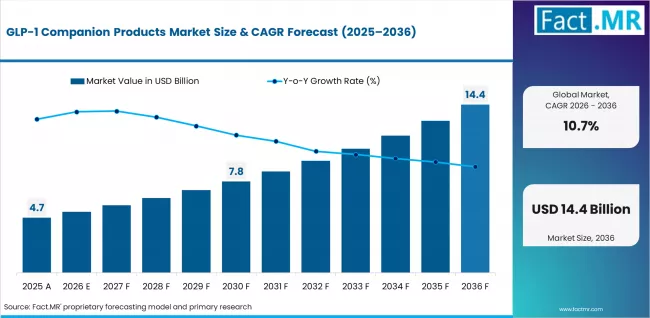
Glp 1 Companion Products Market Value Analysis | Source: Fact.MR
Summary of the GLP-1 Companion Products Market
- Market Snapshot
- In 2025, the global GLP-1 companion products market was valued at approximately USD 4.7 billion.
- The market is estimated to reach around USD 5.2 billion in 2026 and is projected to attain nearly USD 14.4 billion by 2036.
- The GLP-1 Companion Products Market is expected to expand at a CAGR of approximately 10.7% during the forecast period.
- The market is anticipated to create an absolute dollar opportunity of approximately USD 9.2 billion between 2026 and 2036.
- In terms of form, Powders hold the largest share of approximately 24.80% in 2026, driven by their versatility in mixing with beverages and foods, ease of dose customization, and longer shelf life compared to ready-to-drink formats.
- Based on target consumer, GLP-1 Users for Weight Management represent approximately 31.80% share in 2026, driven by the high adoption of GLP-1 agonists specifically for weight loss and the corresponding need for protein, hydration, and micronutrient support.
- Demand and Growth Drivers
- As a growing number of people use GLP-1 medications such as Ozempic, Wegovy and Mounjaro to manage weight loss, there is an increased need for companion products that will support these individuals in reaching their goals while following their medication regimen.
- With an ever-increasing number of individuals looking to manage their side effects of taking GLP-1 medication, including nausea and a reduced appetite, there is an increasing demand for nutritional supplements, hydration liquids, and products that can help with digestive health.
- As individualization of nutrition and a holistic approach to weight management become more common, the demand for protein supplements, vitamins and minerals, and meal plans specifically formulated for GLP-1 users continue to rise.
- Product and Segment View
- High-Protein Nutrition Products hold a 31.9% share, driven by their essential role in preserving lean muscle mass, enhancing satiety, and offsetting the appetite-suppressing effects of GLP-1 agonists during weight loss therapy.
- Home Consumption accounts for a 35.8% share, supported by the increasing preference for convenient, self-administered nutritional support among GLP-1 users who manage their therapy outside clinical or institutional settings.
- Powders command a 24.8% share, owing to their versatility in mixing with liquids and foods, ease of dose customization, longer shelf life, and lower cost per serving compared to ready-to-drink or solid formats.
- GLP-1 Users for Weight Management represent a 31.8% share, driven by the widespread adoption of GLP-1 receptor agonists specifically for obesity and weight management, along with the corresponding demand for protein, hydration, and micronutrient support to mitigate side effects and maintain nutritional balance.
- Geography and Competitive Outlook
- North America has the largest market share due to the high uptake of GLP-1 therapies like Ozempic, Wegovy, strong healthcare infrastructure, as well as many key pharma companies and digital health companies that are primarily located in the North American market.
- Europe is a growing market as growing obesity rates are leading to an increase in acceptance of GLP-1 therapies and an increased focus on integrated care solutions that include nutrition support and lifestyle support.
- The Asia Pacific Region, including China & India, is growing rapidly because of increasing populations of diabetic patients and those that are obese, better access to healthcare, and the growing awareness of available weight management therapies.
- The global GLP-1 Companion Products market includes key players such as Nestle Health Science, Herbalife, Abbott Laboratories, Conagra Brands, Huel, Glanbia Nutritionals, and others.
- Analyst Opinion
- Shambhu Nath Jha, Principal Consultant at Fact.MR, says, “With the rapidly growing adoption of GLP-1 therapies such as Ozempic and Mounjaro, the market is witnessing a parallel rise in demand for companion products that support patient adherence and overall treatment outcomes. As these therapies expand beyond diabetes into mainstream weight management, there is an increasing need for integrated solutions including nutritional support, side-effect management, and digital health monitoring.
GLP-1 Companion Products Market — At a Glance
| Metric | Value |
|---|---|
| Market Value 2025 | USD 4.7 Billion |
| Market Value 2026 | USD 5.2 Billion |
| Market Value 2036 | USD 14.4 Billion |
| Absolute Dollar Opportunity | USD 9.2 Billion (2026–2036) |
| CAGR | 10.70% |
| Growth Multiple | 3.1x |
| Key Demand Theme | Rising global adoption of GLP-1 agonists for weight management and type 2 diabetes, need for nutritional support to preserve muscle mass, manage GI side‑effects, and maintain hydration, and increasing demand for convenient home‑consumption formats |
| Leading Product Type | High‑Protein Nutrition Products |
| Product Type Share | 31.9% |
| Leading Form | Powders |
| Form Share | 24.8% |
| Leading End Use | Home Consumption |
| End Use Share | 35.8% |
| Leading Target Consumer | GLP‑1 Users for Weight Management |
| Target Consumer Share | 31.8% |
| Key Growth Regions | USA, China, Germany, UK, Japan |
| Fastest Growing Countries | China (11.7% CAGR), UK (11.4% CAGR), Germany (10.6% CAGR), Japan (10.2% CAGR), USA (9.9% CAGR) |
| Key Companies | Nestle Health Science, Herbalife, Abbott Laboratories, Conagra Brands, Friesland Campina Ingredients |
| Product Type Segmentation | High‑Protein Nutrition Products, Fiber & Digestive Health Products, Hydration & Electrolyte Products, Micronutrient & Supplement Products, Muscle Preservation Products, GI Side‑effect Management Products, Hair, Skin & Wellness Support Products |
| Form Segmentation | Powders, Tablets & Capsules, Ready‑to‑drink Beverages, Gummies, Bars, Sachets & Stick Packs, Frozen / Ready Meals, Liquid Shots |
| End Use Segmentation | Home Consumption, Weight Management Programs, Clinical Nutrition Programs, Fitness & Wellness Programs, Diabetes Care Programs |
| Target Consumer Segmentation | GLP‑1 Users for Weight Management, Obesity Management Patients, GLP‑1 Users with Type 2 Diabetes, Post‑weight‑loss Consumers, Health‑conscious Consumers, Fitness‑focused GLP‑1 Users, Clinically Supervised Patients |
| Region Segmentation | North America, Europe, Asia-Pacific, Middle East & Africa, Latin America |
Key Growth Drivers, Constraints, and Opportunities
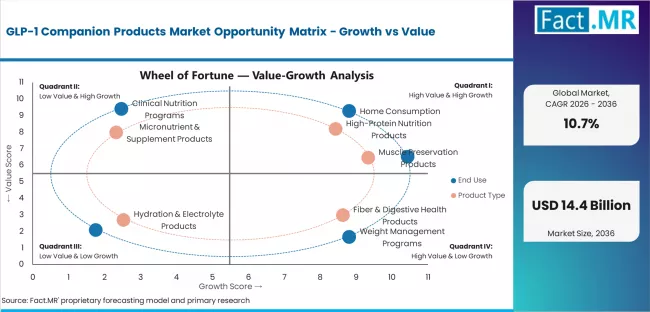
Glp 1 Companion Products Market Opportunity Matrix Growth Vs Value | Source: Fact.MR
Key Factors Driving Growth
- The soaring popularity of GLP-1 therapies for diabetes and obesity has led to a surge in demand for companion products to augment patient adherence and improve clinical outcomes.
- Focusing on improving side effects associated with glucagon-like peptide-1 agonist (GLP-1) therapies, there is an increased requirement for nutrition support products, hydration solutions, and educational materials.
- An increasing number of consumers are requesting comprehensive and personalized approaches to their health care needs. Systems to support these personalized and comprehensive approaches to care are rapidly emerging, such as integrated systems that include a range of nutrition-related components, and coaching/assistance services.
| Growth Driver | Demand Impact | Time Horizon | Key Impact Area | Fact.MR Insight |
|---|---|---|---|---|
| Increasing adoption of GLP-1 therapies for obesity and diabetes | High | Short–Mid Term | Adoption acceleration | Rapid rise in the use of GLP-1 treatments is significantly increasing demand for companion products that enhance adherence and overall treatment outcomes |
| Expansion of integrated patient support ecosystems | High | Short–Mid Term | System deployment & scaling | Growing collaboration between pharmaceutical, nutrition, and digital health providers is driving the development of bundled companion solutions at scale |
| Rising need for side-effect management and nutritional support | High | Mid Term | Product effectiveness | Patients undergoing GLP-1 therapy require targeted solutions to manage side effects and maintain nutritional balance, boosting demand for specialized products |
| Advancements in personalized healthcare and digital health platforms | High | Mid–Long Term | Technology advancement | Innovations in AI-driven coaching, monitoring tools, and personalized nutrition are enhancing patient engagement and improving treatment success rates |
| Shift toward holistic and long-term weight management solutions | High | Mid–Long Term | Patient-centric care | Increasing focus on sustainable weight management is driving adoption of comprehensive companion solutions that integrate lifestyle, nutrition, and behavioral support |
Key Market Constraints
- Since specialized companion products have a high price point as well as digital health products, this will be a limiting factor to adoption by price-sensitive consumers.
- In addition, lack of awareness and understanding of the role of companion products to help support GLP-1 therapies will be a barrier to growth in the market, particularly in developing markets.
- Due to the requirement for clinical validation and alignment with HCPs there will be barriers for new entrants resulting in slow product development and commercialization.
Key Opportunity Areas
- Opportunities for the development of companion products, which in turn promote long-term adherence to clinical therapy and enhance clinical outcomes in patients receiving GLP-1 Therapy for weight loss and diabetes, are increasing as the adoption of GLP-1 Therapies is becoming more widespread around the world.
- As pharmaceutical companies, digital health platforms, and Nutrition providers become increasingly involved in the establishment of integrated and scalable companion solutions, new revenue opportunities are created for companies in the market.
- The growing demand for personalized health care solutions creates opportunity for people with unique health care needs, such as Personalized Nutrition Plans, Artificial Intelligence (AI) driven Coaching Platforms, and Targeted Supplementation programs.
Segment-wise Analysis of the GLP-1 Companion Products Market
- High-Protein Nutrition Products hold a 31.90% share in the product type segment, driven by their essential role in preserving lean muscle mass, enhancing satiety, and offsetting the appetite-suppressing effects of GLP-1 agonists during weight loss therapy.
- Home Consumption accounts for a 35.80% share in the end use segment, supported by the growing preference for convenient, self-administered nutritional support among GLP-1 users who manage their therapy outside clinical or institutional settings.
- GLP-1 Users for Weight Management command a 31.80% share in the target consumer segment, driven by the widespread adoption of GLP-1 receptor agonists specifically for obesity and weight management and maintain nutritional balance.
The Global GLP-1 Companion Products Market is segmented by product type, form, end use, and target consumer.
Which Product Type Segment Dominates the Market?
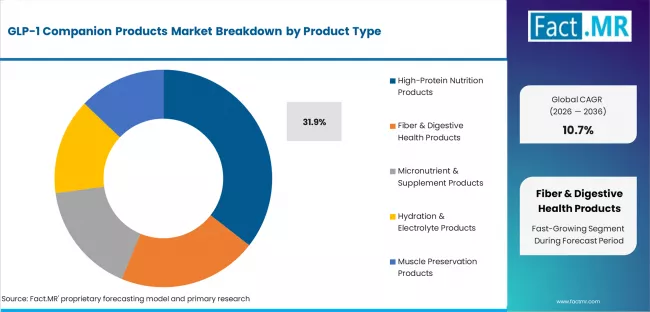
Glp 1 Companion Products Market Analysis By Product Type | Source: Fact.MR
The High-Protein Nutrition Products category will be able to sustain its market position due to its market share, which is predicted to be over 31.90%. The ability of these companies to offer high protein-based products, which help in retaining lean muscles, satiation, and combating GLP-1 agonist’s suppressive actions on appetite while undergoing weight-loss treatment, has made them dominate the market.
Which End Use Segment Dominates the Market?
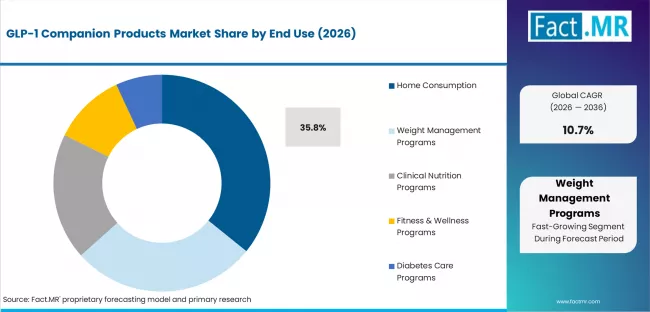
Glp 1 Companion Products Market Analysis By End Use | Source: Fact.MR
Home consumption is anticipated to continue leading with greater than 35.80% market share owing to increasing consumer inclination towards easy-to-consume self-delivery of nutrients among GLP-1 consumers, need to control treatment away from clinics and healthcare facilities, and the need for on-the-go companion products that counteract side effects while helping to lose weight.
Which Form Segment Dominates the Market?
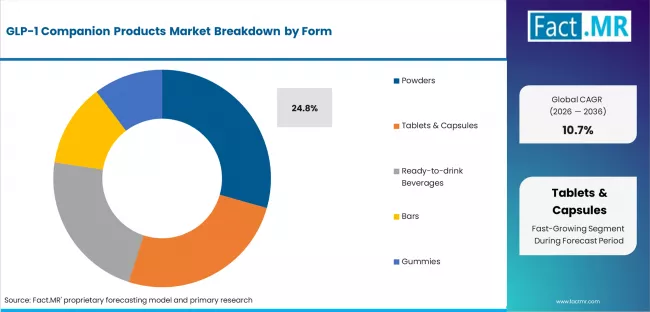
Glp 1 Companion Products Market Analysis By Form | Source: Fact.MR
The market share of Powders is predicted to remain the leader by staying above 24.80%. This is because of the special characteristics associated with powders, which allow them to be mixed with fluids and foodstuffs easily. The use of powder in the making of protein shakes and other hydration supplements among GLP-1 patients has contributed significantly to this success.
Which Target Consumer Segment Dominates the Market?
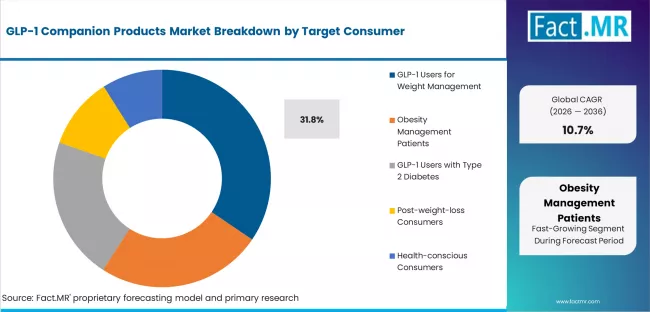
Glp 1 Companion Products Market Analysis By Target Consumer | Source: Fact.MR
GLP-1 Consumers for Weight Loss are projected to retain their commanding market position, having an approximate value more than 31.80%. Their requirement for maintaining muscle mass, promoting satiety, and dealing with adverse reactions associated with gastrointestinal symptoms during rapid weight loss is what makes them the main target audience for high protein nutrition supplements, hydrating drinks, and micro-nutrition supplements within the GLP-1 companion products market.
Regional Outlook Across Key Markets
The market analysis covers key global regions, including South Asia and Pacific, Middle East & Africa, North America, Latin America, Western Europe, and Eastern Europe. It is segmented geographically, with specific market dynamics for each region. The full report provides a detailed market attractiveness analysis.
.webp "Top Country Growth Comparison Glp 1 Companion Products Market Cagr (2026 2036)")
Top Country Growth Comparison Glp 1 Companion Products Market Cagr (2026 2036) | Source: Fact.MR
CAGR Table
| Country | CAGR (%) |
|---|---|
| U.S. | 9.9% |
| China | 11.7% |
| Germany | 10.6% |
| U.K. | 11.4% |
| Japan | 10.2% |
| Canada | 11.0% |
Source: Fact.MR (FMR) analysis, based on proprietary forecasting model and primary research.
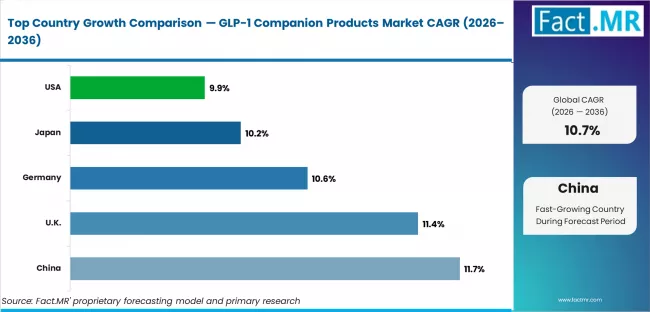
Glp 1 Companion Products Market Cagr Analysis By Country | Source: Fact.MR
North America – The GLP-1 Companion Products Hub
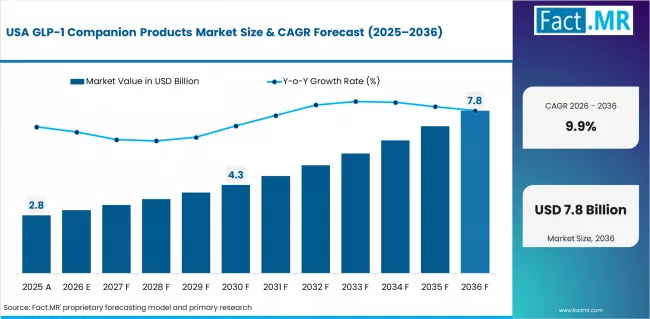
Glp 1 Companion Products Market Country Value Analysis | Source: Fact.MR
The North America GLP-1 Companion Products Market will experience a steady growth rate in the short-term, mid-term, and long-term with the emphasis placed on the reduction of gastrointestinal side effects as well as the preservation of lean muscle mass, given the significant adoption of GLP-1 receptor agonists for weight management and type 2 diabetes care.
- U.S.: Demand for GLP-1 companion products in the U.S. is projected to grow at around 9.9% CAGR, supported by rising GLP-1 prescription rates, increasing consumer awareness of nutritional support during therapy, and growing investments in product innovation such as ready-to-drink beverages, powders, and bars tailored for GLP-1 users.
Western Europe – The GLP-1 Nutritional Support & Digestive Health Hub
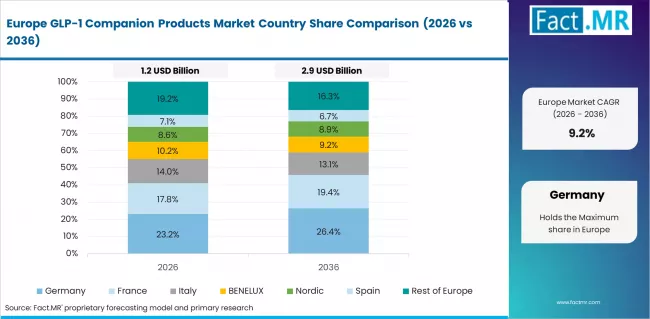
Glp 1 Companion Products Market Europe Country Market Share Analysis, 2026 & 2036 | Source: Fact.MR
Increased adoption of GLP-1 for weight management and the treatment of type 2 diabetes, increasing awareness of the importance of nutrition support, and the growth of the use of more complex and high-protein, digestive health and fiber-based drinks and foods in Western Europe are contributing to the market growth.
- Germany: Demand for GLP-1 companion products in Germany is projected to grow at a 10.6% CAGR through 2036, supported by its well‑established healthcare and nutraceutical industry, and focus on high‑quality formulations for muscle preservation, GI side-effect management, and post-weight-loss nutritional support.
East Asia – The High-Growth GLP-1 Nutritional Support & Wellness Hub
The market for GLP-1 companion products in East Asia is expanding at a fast pace, fueled by the increasing adoption of GLP-1 agonists for weight control and diabetes treatment, increasing preference for products for easy home consumption, and the rising adoption of high-protein powders and fiber-rich digestive supplements.
- China: Demand for GLP-1 companion products in China is projected to grow at around an 11.7% CAGR through 2036, supported by rapid expansion of domestic GLP-1 user base for weight management, and formulation technologies, and growing focus on high-quality and science-backed companion products for muscle preservation and GI side-effect management.
South Asia & Pacific – The Rapidly Growing GLP-1 Nutritional Support Expansion Region
The market in South Asia and the Pacific is registering early stage growth, propelled by increasing adoption of GLP-1 agonists for weight control and diabetes treatment, increasing investments in automation in the production of nutraceuticals, and increasing demand for high-protein powders and hydration drinks.
- India: Demand for GLP-1 companion products in India is projected to grow at around a 12.2% CAGR through 2036, driven by rapid expansion of the GLP-1 user base for obesity and type 2 diabetes management, increasing adoption of convenient home consumption formats such as sachets and ready-to-drink beverages.
Latin America – The Emerging GLP-1 Nutritional Support Market
Growth prospects for Latin American market are quite promising due to growing requirements for GLP-1 agonists in cases of weight management and type 2 diabetes, growing investments in nutraceuticals and manufacturing automation technologies, and fiber-containing digestive health supplements for home consumption and wellness purposes.
- Brazil: Demand for GLP-1 companion products in Brazil is projected to grow at around an 11.8% CAGR through 2036, supported by expanding GLP-1 user base for obesity management and diabetes care, and growing demand for high-quality and convenient companion product formats such as sachets, bars, and liquid shots.
Middle East & Africa – The Emerging GLP-1 Nutritional Support Expansion Zone
The GLP-1 Companion Products market in Middle East and Africa is projected to maintain steady growth trends throughout the forecast period thanks to growing capital spending on nutraceutical and functional food production, growing use of GLP-1 agonists for weight loss and treatment of diabetes, and growing demand for convenient and high-level home consumption formats including ready-to-drink beverages, powders, and sachets.
- KSA: Demand for GLP-1 companion products in Saudi Arabia is projected to grow at around an 11.6% CAGR through 2036, supported by improving healthcare and food manufacturing infrastructure, and increasing adoption of convenient formats such as high-protein bars, hydration solutions, and fiber-based digestive health products.
Fact.MR analysis of the GLP-1 Companion Products Market provides a comprehensive regional outlook covering North America, Western Europe, East Asia, South Asia & Pacific, Latin America, and Middle East & Africa. Readers can access country-wise insights, growth trends, and adoption patterns across both developed and emerging markets. Market expansion is driven by increasing adoption of GLP-1 therapies, rising awareness around obesity and metabolic health management, and growing demand for integrated support solutions including nutrition, digital health platforms, and personalized care programs.
Competitive Benchmarking and Company Positioning
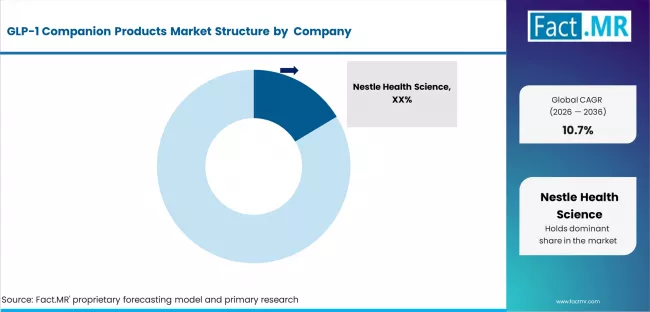
Glp 1 Companion Products Market Analysis By Company | Source: Fact.MR
Leading Companies Shaping the GLP-1 Companion Products Market
The global market structure for GLP-1 companion products has been observed to be somewhat fragmented. It consists of a combination of traditional nutraceutical, healthcare, and wellness organizations that operate along with new digital health and personalized nutrition organizations. Some of the leading organizations within this market have been seen to emphasize on the development of integrated products, which help in ensuring treatment adherence and weight management. Some of the key organizations like Nestlé Health Science, Herbalife, Abbott Laboratories, Conagra Brands, and Huel account for about 40-45% of the total market share.
Key Players of the GLP-1 Companion Products Market
- Nestle Health Science
- Herbalife
- Abbott Laboratories
- Conagra Brands
- Huel
- Glanbia Nutritionals
- Orgain
- Thorne HealthTech
- FrieslandCampina Ingredients
- Arla Foods Ingrdients
- Specialty Enzymes & Probiotics
Recent Industry Developments
- Arla Foods Ingredients targets GLP-1 companion nutrition at Vitafoods Europe (2026), Arla Foods Ingredients has developed new solutions to meet the needs of users of GLP-1 anti-obesity medications. (Arla Foods) [1]
- MyNetDiary Launches GLP-1 Companion for Ozempic, Wegovy, and Mounjaro (2026): GLP-1 Companion combines injection reminders, protein tracking, digestive symptom logging, and meal planning inside MyNetDiary Premium. (MyNetDiary) [2]
- HTBA to launch Leanara GLP-1 companion ingredient (2026): HealthTech Bio Actives will unveil Leanara at Vitafoods Europe, a new ingredient combining bioflavonoids with vitamin B12 to help GLP-1 medication users. (HealthTechBio) [3]
- Amazon launches GLP-1 weight loss program, promising ‘fast, convenient’ access (2026): Amazon is pushing deeper into the booming weight loss market, unveiling Tuesday a new program that aims to simplify access to popular GLP-1 treatments. (Buhler) [4]
- Brightseed Launches BioMetaControl™, a Nature-Inspired GLP-1 Companion for Metabolic Health (2025): Brightseed, the company unlocking the power of nature’s bioactives to elevate human health, today announced the commercial debut of BioMetaControl, its first bioactive ingredient. (Buhler) [5]
Sources and Research References
- [1] “Arla Foods Ingredients targets GLP-1 companion nutrition at Vitafoods Europe”, 2026
- [2] “MyNetDiary Launches GLP-1 Companion for Ozempic, Wegovy, and Mounjaro Users”, 2026
- [3] “HTBA to launch Leanara GLP-1 companion ingredient at Vitafoods Europe 2026”, 2026
- [4] “Amazon launches GLP-1 weight loss program, promising ‘fast, convenient’ access”, 2026
- [5] “Brightseed Launches BioMetaControl™, a Nature-Inspired GLP-1 Companion for Metabolic Health.”, 2025
GLP-1 Companion Products Market Definition
The GLP-1 companion products market is made up of a variety of complementary products and services aimed at improving the efficacy, safety, and overall success of GLP-1 receptor agonists like Ozempic, Wegovy, and Mounjaro. Such complementary products include nutritional supplements, rehydration fluids, digestive support products, customized dietary advice, and other technologies used by individuals to deal with adverse reactions and stay nutritionally balanced while using these medications.
GLP-1 Companion Products Market Inclusions
The GLP-1 companion products market refers to the total collection of products that have been specifically manufactured to serve the requirements of individuals who are taking GLP-1 receptor agonists. Nutritional products, hydration products, digestive health products, and custom diets are examples of companion products for GLP-1 agonists.
GLP-1 Companion Products Market Exclusions
The GLP-1 receptor agonist drugs, such as Ozempic, Wegovy, and Mounjaro, are not included in the market because they represent a different therapeutic market (pharmaceutical therapeutics).
GLP-1 Companion Products Market Research Methodology
- Primary Research
- The latest developments within the market have been identified through inputs from different stakeholders involved in the chain, from pharma companies producing GLP-1 drugs to nutritional supplement suppliers, digital health technology companies, and wellness service contractors.
- Desk Research
- The market for GLP-1 companion products has been analyzed by secondary research that includes studying the annual reports and presentations made to investors by firms engaged in the development and production of GLP-1 treatments and their companion products.
- Market-Sizing and Forecasting
- Nutritional supplements, hydration supplements, digestive wellness products, customized diets, and digital health care technologies have been used to measure the revenue from the GLP-1 Companion Products Market. All the above-mentioned products have been taken into consideration during market sizing and forecasting analysis.
- Data Validation and Update Cycle
- The process of validation is quite extensive when establishing the GLP-1 Companion Products Market; data collected from industry sources and key stakeholders has been properly cross-validated. Information gathered from pharmaceutical firms, nutrition firms, digital health firms, and healthcare practitioners has been verified to guarantee precision and authenticity.
Scope of Analysis
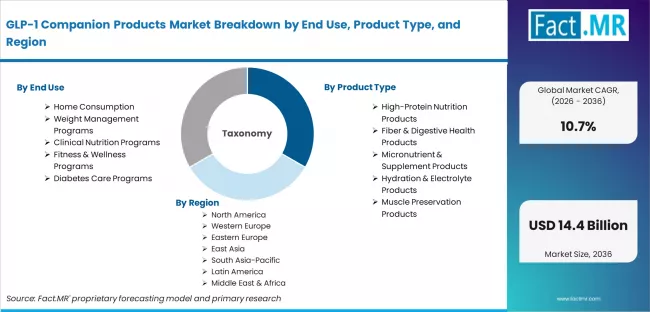
Glp 1 Companion Products Market Breakdown By End Use, Product Type, And Region | Source: Fact.MR
| Parameter | Details |
|---|---|
| Quantitative Units | USD 4.7 billion in 2025 to USD 14.4 billion in 2036, at a CAGR of 10.7% |
| Market Definition | The GLP-1 Companion Products Market comprises specialized nutritional supplements and functional foods designed to support individuals using GLP-1 receptor agonists for weight management and type 2 diabetes. These include high‑protein nutrition products, micronutrient supplements, GI side‑effect management products, and hair, skin & wellness support products across home consumption, fitness & wellness, and diabetes care programs. |
| Regions Covered | North America, Latin America, Western Europe, Eastern Europe, East Asia, South Asia & Pacific, Middle East & Africa |
| Countries Covered | USA, China, Germany, UK, Japan, India, Brazil, KSA, and 30+ countries |
| Key Companies | Nestle Health Science, Herbalife, Abbott Laboratories, Conagra Brands, Huel, and others |
| Forecast Period | 2026 to 2036 |
| Approach | Hybrid demand‑side and top‑down methodology based on GLP-1 agonist prescription trends, increasing adoption of weight management and diabetes care programs, rising consumer awareness of nutritional support during GLP-1 therapy, and advancements in convenient home‑consumption formats such as powders, sachets, and bars. |
Analysis by Product Type, by Form, by End Use, by Target Consumer, and by Region
-
GLP-1 Companion Products Market By Product Type:
- High-Protein Nutrition Products
- Protein Shakes
- Protein Bars
- Protein Powders
- Ready-to-drink Protein Beverages
- Fiber & Digestive Health Products
- Fiber Supplements
- Prebiotics
- Probiotics
- Gut Health Drinks
- Hydration & Electrolyte Products
- Electrolyte Powders
- Hydration Tablets
- Functional Water
- Oral Rehydration Solutions
- Micronutrient & Supplement Products
- Multivitamins
- Vitamin D Supplements
- Iron Supplements
- Calcium Supplements
- Magnesium Supplements
- Muscle Preservation Products
- GI Side-effect Management Products
- Hair, Skin & Wellness Support Products
- High-Protein Nutrition Products
-
GLP-1 Companion Products Market By Form:
- Powders
- Tablets & Capsules
- Ready-to-drink Beverages
- Gummies
- Bars
- Sachets & Stick Packs
- Frozen / Ready Meals
- Liquid Shots
-
GLP-1 Companion Products Market By End Use:
- Home Consumption
- Clinical Nutrition Programs
- Weight Management Programs
- Fitness & Wellness Programs
- Diabetes Care Programs
-
GLP-1 Companion Products Market By Target Consumer:
- GLP-1 Users for Weight Management
- GLP-1 Users with Type 2 Diabetes
- Obesity Management Patients
- Post-weight-loss Consumers
- Health-conscious Consumers
- Fitness-focused GLP-1 Users
- Clinically Supervised Patients
-
GLP-1 Companion Products Market By Region:
- North America
- USA
- Canada
- Mexico
- Latin America
- Brazil
- Chile
- Rest of LATAM
- East Asia
- China
- Japan
- South Korea
- Western Europe
- Germany
- Italy
- France
- U.K.
- Spain
- BENELUX
- Nordic
- Rest of W. Europe
- Eastern Europe
- Russia
- Hungary
- Poland
- Balkan & Baltics
- Rest of E. Europe
- Middle East and Africa
- Kingdom of Saudi Arabia
- United Arab Emirates
- South Africa
- Rest of Middle East and Africa
- North America