- Base Value(2025): 2.7 Bn
- Estimated Value(2026): 3 Bn
- Forecast Value (2036): 7.9 Bn
- CAGR (2026 - 2036): 11.7%
GLP-1 Receptor Agonist Market Forecast 2026 to 2036
In 2025, the GLP-1 receptor agonist market was valued at USD 2.7 billion. Based on Fact MR's analysis, demand for GLP-1 receptor agonists is estimated to grow to USD 3 billion in 2026 and USD 7.9 billion by 2036. FMR projects a CAGR of 11.7% during the forecast period.
The absolute dollar growth from 2026 to 2036 is USD 4.9 billion. This growth is driven by the increasing prevalence of type 2 diabetes and obesity, with GLP-1 receptor agonists offering effective treatment options that help manage blood sugar levels, promote weight loss, and reduce cardiovascular risks. As awareness of these benefits spreads and patient access improves, the market for GLP-1 receptor agonists is expected to expand. However, challenges such as high treatment costs and competition from alternative therapies may impact growth in some regions.
As Shreehas Tambe, Chief Executive Officer and Managing Director of Biocon Biologics Limited, noted regarding demand and growth potential for GLP-1 therapies, ‘There will be a requirement for significantly higher volumes… and Biocon’s fermentation capability will give us a significant advantage.’
India leads with a CAGR of 8.4%, driven by a large diabetic population and increasing demand for effective treatments. China follows with a 7.1% CAGR, fueled by a rapidly growing diabetes and obesity crisis and expanding healthcare infrastructure. Germany grows at 6.6%, supported by an aging population and increasing awareness of diabetes care. Japan grows at 6.4%, benefiting from advancements in diabetes management and increasing patient access to innovative therapies. The USA shows growth at 5.2%, reflecting a mature healthcare market but strong demand for advanced treatments.
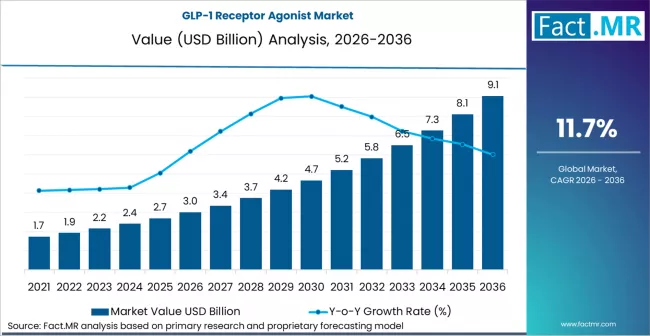
Glp 1 Receptor Agonist Market Market Value Analysis | Source: Fact.MR
GLP-1 Receptor Agonist Market
| Metric | Value |
|---|---|
| Estimated Value in (2026E) | USD 3 billion |
| Forecast Value in (2036F) | USD 7.9 billion |
| Forecast CAGR (2026 to 2036) | 11.7% |
GLP‑1 Receptor Agonist Market Definition
The GLP‑1 receptor agonist market involves the development and sale of drugs that activate the glucagon‑like peptide‑1 (GLP‑1) receptor to improve blood glucose control, reduce appetite, and support weight management in conditions such as type 2 diabetes and obesity.
Market Inclusions
This report covers global and regional market sizes for GLP‑1 receptor agonists over a defined forecast period, including drug classes (injectables, oral formulations), major therapeutic indications (type 2 diabetes, obesity), and distribution channels (hospitals, retail pharmacies, specialty clinics).
Market Exclusions
The scope excludes glucose‑lowering therapies that do not act via the GLP‑1 receptor (such as SGLT2 inhibitors, insulin, or DPP‑4 inhibitors), diagnostic tests, and devices. It also omits unrelated obesity or metabolic syndrome drugs not approved as GLP‑1 receptor agonists.
Research Methodology
- Primary Research: Interviews were conducted with endocrinologists, clinical pharmacologists, and pharmaceutical market experts.
- Desk Research: Data was sourced from clinical trial registries, regulatory filings, and industry reports.
- Market‑Sizing and Forecasting: A hybrid model combining top‑down therapeutic demand forecasts with bottom‑up drug sales and usage data was used.
- Data Validation and Update Cycle: Findings were validated through expert review and aligned with recent treatment, approval, and usage data.
Summary of the GLP-1 Receptor Agonist Market
- Market Definition
- The GLP-1 Receptor Agonist Market includes the development and sale of drugs that activate the glucagon-like peptide-1 (GLP-1) receptor, aimed at improving blood glucose control, reducing appetite, and supporting weight management in conditions such as type 2 diabetes and obesity.
- Demand Drivers
- Prevalence of Type 2 Diabetes and Obesity: The increasing global prevalence of type 2 diabetes and obesity drives the demand for GLP-1 receptor agonists as effective treatment options.
- Efficacy in Weight Loss and Glycemic Control: GLP-1 receptor agonists not only help regulate blood sugar levels but also aid in weight loss, making them a highly sought-after solution in both diabetes and obesity management.
- Regulatory Approvals and Expanded Indications: Growing regulatory approvals and treatment guidelines for GLP-1 therapies further enhance market adoption, particularly for patients with co-morbidities like obesity.
- Key Segments Analyzed
- Route of Administration: Parenteral administration is projected to dominate, capturing 80% of the market share by 2026. This method, primarily in the form of subcutaneous injections, ensures higher bioavailability and effectiveness.
- Indication: Diabetes is expected to account for 60% of the market share by 2026, driven by the rising prevalence of type 2 diabetes and the increasing use of GLP-1 therapies for glycemic and weight control.
- Drug: Semaglutide, Exenatide, and Liraglutide are the leading drugs in this market, with semaglutide particularly standing out due to its proven efficacy in both diabetes and obesity treatment.
- Analyst Opinion at Fact MR
- “The GLP-1 receptor agonist market is set to expand rapidly, driven by the rising prevalence of diabetes and obesity. As patient access improves and awareness spreads, the demand for these therapies will increase, despite challenges like high treatment costs and market competition.” - Shambhu Nath Jha, Principal Consultant at Fact MR.
- Strategic Implications/Executive Takeaways
- Focus on Multi-Condition Solutions: As GLP-1 receptor agonists gain traction in treating both type 2 diabetes and obesity, companies should emphasize these dual benefits to capture a broader patient base.
- Expand Patient Access: Addressing affordability and improving healthcare access, particularly in emerging markets like India and China, will be key to market penetration.
- Ongoing Innovation: Companies should continue to innovate and seek new indications and formulations (such as combination therapies) to broaden the scope of GLP-1 receptor agonists.
- Methodology
- Primary Research: Interviews with endocrinologists, clinical pharmacologists, and pharmaceutical market experts.
- Desk Research: Data sourced from clinical trial registries, regulatory filings, and industry reports.
Segmental Analysis
GLP-1 Receptor Agonist Market Analysis by Route of Administration
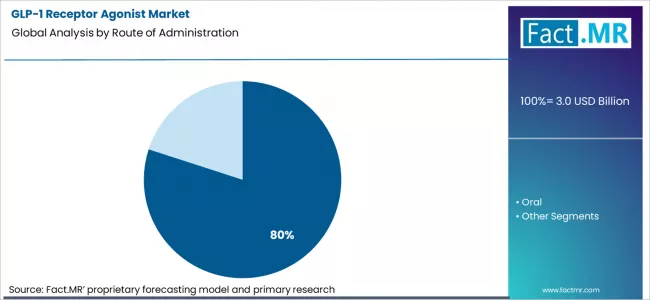
Glp 1 Receptor Agonist Market Analysis By Route Of Administration | Source: Fact.MR
- Market Overview: Parenteral administration is expected to hold 80% of the GLP-1 receptor agonist market by 2026. Parenteral administration, which includes subcutaneous injections, is the most common route for GLP-1 receptor agonists. This route allows for optimal bioavailability and effective delivery of the drug, particularly in managing conditions like diabetes and obesity.
- Demand Drivers:
- Efficacy and Bioavailability: Parenteral administration offers higher bioavailability, which is critical for the effectiveness of GLP-1 receptor agonists, particularly for the treatment of diabetes and obesity. This method ensures that the drug is delivered directly into the bloodstream, leading to quicker and more reliable therapeutic outcomes.
- Established Practice in Diabetes Management: Subcutaneous injections are well-established in diabetes treatment, especially for drugs like GLP-1 receptor agonists. The familiarity and long history of parenteral administration in this field contribute to its continued dominance.
- Growing Use in Obesity Treatment: As GLP-1 receptor agonists gain recognition as an effective treatment for obesity, the parenteral route remains the preferred method due to its efficiency in delivering the necessary dosage for weight management.
GLP-1 Receptor Agonist Market Analysis by Indication
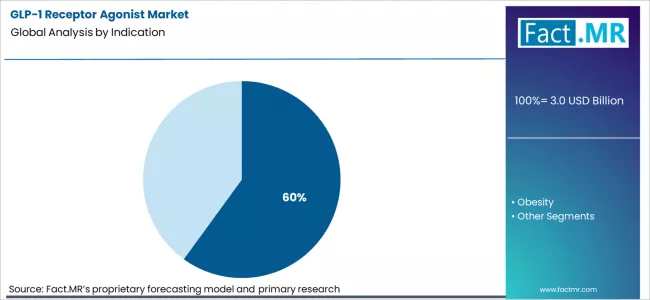
Glp 1 Receptor Agonist Market Analysis By Indication | Source: Fact.MR
- Market Overview: Diabetes is expected to account for 60% of the GLP-1 receptor agonist market by 2026. GLP-1 receptor agonists have become an integral part of diabetes management, especially for type 2 diabetes, due to their ability to regulate blood sugar levels, promote weight loss, and improve overall glycemic control.
- Demand Drivers:
- Increasing Prevalence of Diabetes: The growing global prevalence of type 2 diabetes is a major factor driving the demand for GLP-1 receptor agonists. These drugs offer effective treatment options for patients who need help with blood sugar control and weight management.
- Shift Towards Targeted, Multi-Benefit Medications: GLP-1 receptor agonists not only help regulate blood sugar but also promote weight loss, offering patients additional benefits beyond traditional diabetes medications. This makes them an attractive option for diabetes management, particularly for those who are overweight or obese.
- Regulatory Approvals and Guidelines: As GLP-1 receptor agonists receive more regulatory approvals and are recommended in treatment guidelines for diabetes management, their adoption in clinical practice continues to grow, further solidifying their position in the market.
GLP 1 Receptor Agonist Market Drivers, Restraints, and Opportunities
FMR analysts observe that the GLP‑1 receptor agonist market is a growth‑aligned, therapeutic necessity segment driven by the increasing prevalence of type 2 diabetes and obesity, with expanded clinical use in weight management. The market is projected to grow strongly as new products and indication expansions broaden patient access.
While early GLP‑1 drugs focused primarily on diabetes, newer agents, such as tirzepatide‑based therapies, have gained traction in treating obesity, raising efficacy expectations and increasing competitive dynamics. These advanced therapies often carry premium pricing, contributing to market growth even as generics and biosimilars enter the market.
- Chronic Disease Prevalence: Rising global rates of type 2 diabetes and obesity are expanding the patient pool for GLP‑1 therapies, increasing demand for both glycemic and weight management indications.
- Regulatory and Clinical Support: Guidelines recognizing obesity as a chronic disease and broader approval of GLP‑1 drugs are pushing adoption and reimbursement in healthcare systems.
- Regional Growth Trends: North America leads in market share due to the high prevalence of metabolic conditions and strong payer coverage, while Asia‑Pacific is growing rapidly as healthcare access improves.
Regional Analysis
The market analysis covers key global regions, including South Asia, East Asia, Western Europe, North America, and India. It is segmented geographically, with specific market dynamics for each region. The full report provides a detailed market attractiveness analysis.
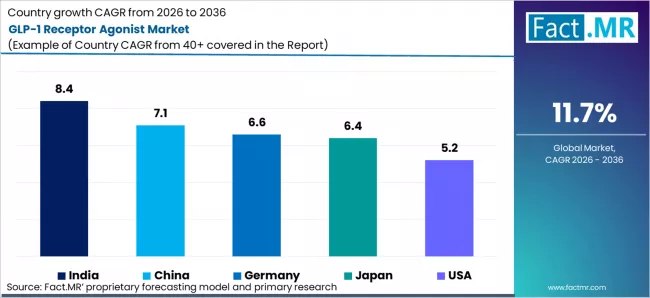
Glp 1 Receptor Agonist Market Cagr Analysis By Country | Source: Fact.MR
| Country | CAGR (%) |
|---|---|
| India | 8.4% |
| China | 7.1% |
| Germany | 6.6% |
| Japan | 6.4% |
| USA | 5.2% |
Source: Fact MR (FMR) analysis, based on proprietary forecasting model and primary research.
South Asia:
In South Asia, India leads the demand for GLP-1 receptor agonists, supported by a large diabetic patient population and increasing healthcare access.
- India: Demand for GLP-1 receptor agonists in India is projected to rise at 8.4% CAGR through 2036. India’s growing diabetic population and increased healthcare infrastructure continue to drive the demand for diabetes treatments like GLP-1 receptor agonists.
East Asia:
In East Asia, China and Japan are experiencing strong demand for GLP-1 receptor agonists, driven by an increasing prevalence of type 2 diabetes and expanding access to diabetes treatments.
- China: Demand for GLP-1 receptor agonists in China is projected to rise at 7.1% CAGR through 2036. China’s growing diabetic patient base and increased government initiatives for diabetes care contribute to market growth.
- Japan: Demand for GLP-1 receptor agonists in Japan is projected to rise at 6.4% CAGR through 2036. Japan’s aging population and focus on managing chronic diseases like diabetes continue to support market growth.
Western Europe:
In Western Europe, Germany is a key market for GLP-1 receptor agonists, driven by the growing demand for effective diabetes treatments and the country’s strong healthcare system.
- Germany: Demand for GLP-1 receptor agonists in Germany is projected to rise at 6.6% CAGR through 2036. Germany’s advanced healthcare infrastructure and focus on managing diabetes effectively continue to drive steady demand for these medications.
North America:
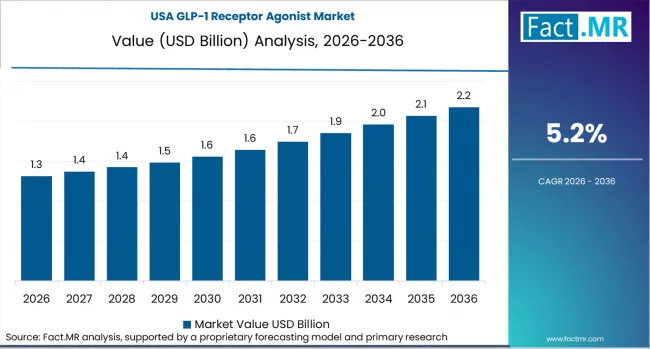
Glp 1 Receptor Agonist Market Country Value Analysis | Source: Fact.MR
In North America, the USA remains a dominant market for GLP-1 receptor agonists, fueled by the growing prevalence of type 2 diabetes and the increasing adoption of innovative therapies.
- USA: Demand for GLP-1 receptor agonists in the U.S. is projected to rise at 5.2% CAGR through 2036. The USA’s large diabetic population and the shift towards modern, effective diabetes treatments continue to drive the market for GLP-1 receptor agonists.
Fact MR's analysis of the GLP-1 Receptor Agonist Market in South Asia, East Asia, Western Europe, North America, and India consists of country-wise assessments that include India, China, Germany, Japan, and the USA. Readers can find detailed trends, regulatory updates, and company-specific investments shaping the market’s growth in these countries.
How Are Key Players Competing in the GLP-1 Receptor Agonist Market?
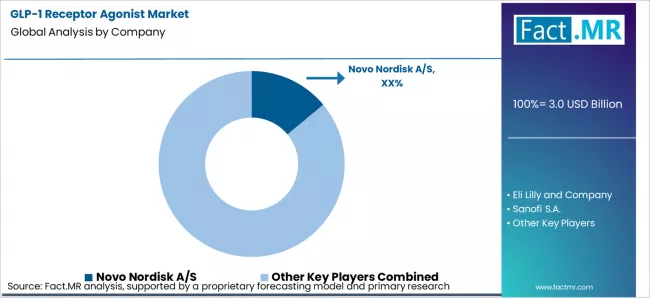
Glp 1 Receptor Agonist Market Analysis By Company | Source: Fact.MR
In the GLP-1 receptor agonist market, Novo Nordisk A/S leads with its market-dominating semaglutide, positioning itself as the frontrunner in diabetes and obesity treatments. Eli Lilly and Company closely follows with tirzepatide, which offers dual-action benefits for both diabetes and obesity, further strengthening its competitive edge. Sanofi S.A. and AstraZeneca PLC provide strong alternatives, focusing on expanding their respective portfolios of GLP-1 receptor agonists to treat type 2 diabetes and other related conditions. Pfizer Inc., Amgen Inc., and Boehringer Ingelheim International GmbH enhance their positions by developing novel therapies and collaborating with other companies for strategic market growth. Innovent Biologics, Inc., PegBio Co., Ltd., and Sun Pharmaceutical Industries Ltd. have also entered the field, aiming to carve out niches with region-specific products and competitive pricing strategies.
Recent Industry Developments
- FDA Approval of Oral Wegovy and Orforglipron (Regulatory): On December 22, 2025, the FDA approved the first oral GLP-1 specifically for chronic weight management (the Wegovy pill), which launched in January 2026; this is being followed by the anticipated Q2 2026 approval of Eli Lilly's orforglipron, the first non-peptide small-molecule pill in this class.
- Medicare Obesity Coverage Expansion (Regulatory): The Centers for Medicare & Medicaid Services (CMS) announced that beginning in April 2026, Medicare will cover GLP-1 medications for beneficiaries with obesity and qualifying comorbidities via the BALANCE Model and Section 402 demonstrations, marking a reversal of the long-standing statutory ban on weight-loss drug coverage.
- FDA Crackdown on Compounded GLP-1s (Regulatory): On February 6, 2026, the FDA announced a formal intent to restrict the use of active pharmaceutical ingredients (APIs) for non-approved compounded GLP-1 drugs, targeting "mass-marketed" alternatives from companies like Hims & Hers as the national supply of brand-name versions stabilized.
Key Players of the GLP-1 Receptor Agonist Market
- Novo Nordisk A/S
- Eli Lilly and Company
- Sanofi S.A.
- AstraZeneca PLC
- Pfizer Inc.
- Amgen Inc.
- Innovent Biologics, Inc.
- PegBio Co., Ltd.
- Sun Pharmaceutical Industries Ltd.
- Boehringer Ingelheim International GmbH
Report Scope
| Metric | Value |
|---|---|
| Quantitative Units | USD 3 billion (2026) to USD 7.9 billion (2036), at a CAGR of 11.7% |
| Market Definition | The GLP-1 receptor agonist market includes drugs used to treat diabetes and obesity by mimicking the action of GLP-1 (glucagon-like peptide-1), which regulates blood sugar levels and promotes weight loss. |
| By Drug | Semaglutide, Exenatide, Lixisenatide, Liraglutide, Dulaglutide, Others |
| By Route of Administration | Oral, Parenteral |
| By Indication | Diabetes, Obesity, Others |
| By Distribution Channel | Hospital Pharmacies, Retail Pharmacies, Online Pharmacies |
| Regions Covered | North America, Latin America, Europe, East Asia, South Asia, Oceania, Middle East and Africa |
| Countries Covered | United States, Canada, Mexico, Brazil, Argentina, Germany, France, United Kingdom, Italy, Spain, China, India, Japan, South Korea, Indonesia, Australia, and 40+ countries |
| Key Companies Profiled | Novo Nordisk A/S, Eli Lilly and Company, Sanofi S.A., AstraZeneca PLC, Pfizer Inc., Amgen Inc., Innovent Biologics, Inc., PegBio Co., Ltd., Sun Pharmaceutical Industries Ltd., Boehringer Ingelheim International GmbH |
| Forecast Period | 2026 to 2036 |
| Approach | Hybrid top-down and bottom-up market modeling validated through primary interviews with manufacturers and supported by trade data benchmarking and market research. |
Bibliographies
- AstraZeneca PLC. (2024). GLP-1 receptor agonist therapies for type 2 diabetes management. AstraZeneca PLC.
- Eli Lilly and Company. (2024). Tirzepatide and incretin-based therapies for diabetes and obesity. Eli Lilly and Company.
- Novo Nordisk A/S. (2024). GLP-1 receptor agonist therapies for diabetes and chronic weight management. Novo Nordisk A/S.
- Pfizer Inc. (2024). Metabolic disease pipeline including GLP-1 receptor agonist candidates. Pfizer Inc.
- Sanofi S.A. (2024). Diabetes care portfolio including GLP-1 receptor agonist therapies. Sanofi S.A.
- U.S. Food and Drug Administration. (2025). Drugs@FDA: Approval updates for GLP-1 receptor agonists for diabetes and chronic weight management. U.S. Food and Drug Administration.
- U.S. Food and Drug Administration. (2026, February 6). FDA statement on enforcement priorities regarding compounded GLP-1 receptor agonist products [Press release]. U.S. Food and Drug Administration.
- Centers for Medicare & Medicaid Services. (2026, April). Medicare coverage policies for anti-obesity medications under demonstration and value-based care models. Centers for Medicare & Medicaid Services.
This report addresses:
- Market Intelligence enabling comprehensive assessment of leading countries and service segments across the GLP-1 Receptor Agonist Market globally.
- Market Volume (Sales Units) estimates and 10-year revenue forecasts from 2026 to 2036, validated through manufacturer shipment data, channel partner surveys, and country-level demand modeling.
- Growth Opportunity Mapping across drug types (Semaglutide, Exenatide, Lixisenatide, Liraglutide, Dulaglutide, Others), routes of administration (Oral, Parenteral), indications (Diabetes, Obesity, Others), and regions.
- Segment and Regional Revenue Forecasts by drug, route of administration, indication, and geography across 40+ countries.
- Competition Strategy Analysis covering dealer network structure, recent developments, product portfolio, USPs, and market share analysis.
- Product and Regulatory Compliance Tracking aligned with pharmaceutical regulations and clinical trial approval standards for diabetes and obesity treatments.
- Regulatory Impact Analysis addressing global healthcare compliance, market access regulations, and evolving standards for pharmaceutical treatments in diabetes and obesity management.
- Report Delivery in PDF, Excel, PowerPoint, and interactive dashboard formats for executive, procurement, and operational planning use.
GLP-1 Receptor Agonist Market Key Segments
-
Drug :
- Semaglutide
- Exenatide
- Lixisenatide
- Liraglutide
- Dulaglutide
- Others
-
Route of Administration :
- Oral
- Parenteral
-
Indication :
- Diabetes
- Obesity
- Others
-
Distribution Channel :
- Hospital Pharmacies
- Retail Pharmacies
- Online Pharmacies
-
Region :
- North America
- USA
- Canada
- Mexico
- Europe
- Germany
- UK
- France
- Italy
- Spain
- Nordic Countries
- BENELUX
- Rest of Europe
- Asia Pacific
- China
- Japan
- South Korea
- India
- Australia
- Rest of Asia Pacific
- Latin America
- Brazil
- Argentina
- Rest of Latin America
- Middle East and Africa
- Kingdom of Saudi Arabia
- United Arab Emirates
- South Africa
- Rest of Middle East and Africa
- Other Regions
- Oceania
- Central Asia
- Other Markets
- North America