Graphic Design Market Size, Share, Growth and Forecast (2026 - 2036)
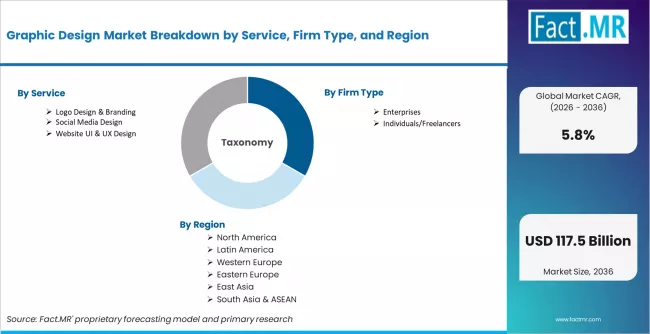
The Graphic Design Market is segmented by Service (Logo Design & Branding, Social Media Design, Website UI & UX Design, Mobile App Design, Presentation Design, E-book Design, and Others), Firm Type (Enterprises and Individuals/Freelancers), End-use Industry (BFSI, Retail and Consumer Goods, Business and Consumer Services, Healthcare, Manufacturing, Transportation and Mobility, Energy and Utility, Trading and Warehousing, Media & Entertainment, and Hospitality), Platform/Delivery Mode (Digital Design and Print Design), Pricing Model (Project-based Pricing, Subscription-based, and Hourly-based), and Region. Forecast for 2026 to 2036.
The graphic design market is entering a phase of platform-driven change. Enterprise brand spending is shifting away from traditional agency retainers. It is moving toward AI-enabled and subscription-based design platforms. This transition is putting pressure on margins for full-service agencies. At the same time, it is expanding overall demand. Freelancers and SaaS-based providers are benefiting the most from this shift.
Graphic Design Market Forecast and Outlook (2026 to 2036)
- In 2025, the graphic design market was valued at USD 59.7 billion.
- Based on Fact.MR analysis, demand for graphic design services is estimated to grow to USD 63.2 billion in 2026 and USD 110.5 billion by 2036.
- FACT.MR projects a CAGR of 5.8% during the forecast period.
- The market is set to generate an absolute opportunity of USD 47.3 billion between 2026 and 2036.
- Growth is structurally broad-based but moderated by AI-assisted design tool adoption, which compresses average project pricing while expanding the volume of design output procured.
- Structural growth is anchored by enterprise digital marketing expenditure, startup branding cycles, and mobile-first content demand across Asia Pacific.
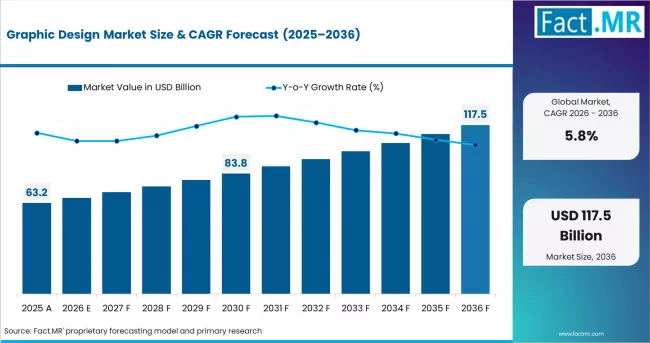
Summary of graphic design market
- Market Definition
- The market covers professional visual design services including brand identity, digital content, UI/UX, and print design delivered by agencies, in-house teams, and freelancers to enterprise and individual clients globally.
- Demand Drivers
- Enterprise digital marketing budget expansion is increasing recurring demand for social media and digital content design, with U.S. brands allocating a rising share of media spend to visual content production across owned channels.
- India's startup ecosystem growth, with over 1,400 tech startups funded in FY2024-25, is generating sustained demand for logo, branding, and app UI design from early-stage and growth-stage companies requiring brand identity at launch.
- China's live commerce and short-video platform growth on Douyin and Taobao Live is creating high-frequency demand for localised, mobile-first graphic assets from brands and sellers requiring rapid design turnaround at volume.
- Key Segments Analyzed
- By Service: Logo Design & Branding holds approximately 32% share in 2026, reflecting its role as the foundational design investment for enterprises, startups, and consumer brands entering new markets.
- By Firm Type: Enterprises account for approximately 58% share in 2026, driven by large-scale, recurring brand and marketing design procurement across global consumer goods, BFSI, and retail sectors.
- By End-use Industry: Retail and Consumer Goods leads with approximately 30% share in 2026, anchored by continuous packaging, promotional, and in-store visual design demand from global and regional consumer brands.
- By Platform/Delivery Mode: Digital Design holds approximately 78% share in 2026, driven by rapid growth in social media content, website design, mobile applications, and digital advertising assets.
- By Pricing Model: Project-based Pricing holds approximately 55% share in 2026, preferred by enterprises and mid-market clients commissioning defined-scope brand identity and campaign design assignments.
- Analyst Opinion at FACT.MR
- Shambhu Nath Jha, Senior Analyst at Fact.MR, opines, ' CXOs will see that AI-assisted design tools are not eliminating agency spending. They are redistributing it. Budgets are shifting away from execution tasks. They are moving toward strategic brand direction. Premium agencies continue to hold the strongest position in this space.’
- Strategic Implications
- Develop subscription-based design service tiers targeting mid-market enterprises seeking predictable brand output volumes without full in-house team investment, to capture the growing retainer-shift away from per-project procurement.
- Build AI-augmented workflows for social media and digital content design to reduce per-asset delivery cost while maintaining quality benchmarks, enabling competitive pricing against freelance platform alternatives.
- Establish localised delivery capabilities in India and China to serve regional enterprise clients demanding culturally adapted visual content at the scale and speed required by live commerce and mobile marketing channels.
- Methodology
- Market sizing uses agency revenue disclosures, design platform transaction volumes, and enterprise brand spend benchmarks validated with 2024-2025 digital advertising and freelance market data.
- Analysis includes IAB digital ad spend reports, WARC brand investment data, Fiverr and Upwork platform earnings disclosures, and agency filings from WPP, Publicis, and Omnicom subsidiaries.
- Forecasts account for AI design tool adoption rates, digital marketing budget growth projections, startup ecosystem funding trends, and platform-driven demand shifts across Asia Pacific and North America.
| Metric | Value |
|---|---|
| Estimated Value in 2026 | USD 63.2 billion |
| Forecast Value in 2036 | USD 110.5 billion |
| Forecast CAGR (2026 to 2036) | 5.8% |
Enterprise procurement of graphic design services is shifting toward platform-based subscription models. Large consumer brands and financial institutions are establishing preferred vendor panels for digital design, reducing reliance on open-tender project cycles. Agencies such as Landor & Fitch and AKQA are aligning service delivery with integrated brand management retainers to stabilize revenue against per-project pricing erosion.
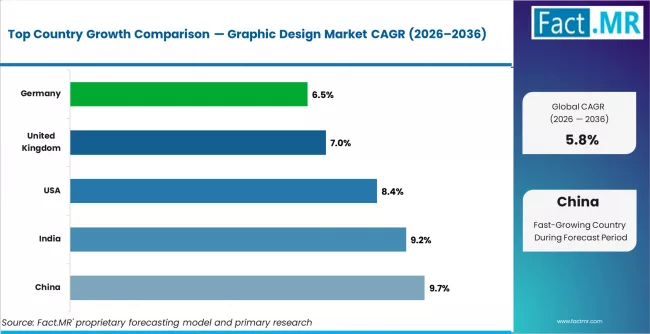
China leads with a projected CAGR of 9.7% through 2036, driven by e-commerce and live commerce platform demand for localized visual content at scale. India follows at 9.2%, supported by rapid startup ecosystem growth and a large English-language freelance design talent base. The United States registers 8.4%, sustained by high enterprise advertising spend and continuous brand refresh cycles. The United Kingdom grows at 7.0%, supported by an established creative agency sector and media industry design demand. Germany registers 6.5%, reflecting stable demand from manufacturing and publishing sectors where brand consistency and technical design standards are prioritized.
Segmental Analysis
Graphic Design Market Analysis by Service
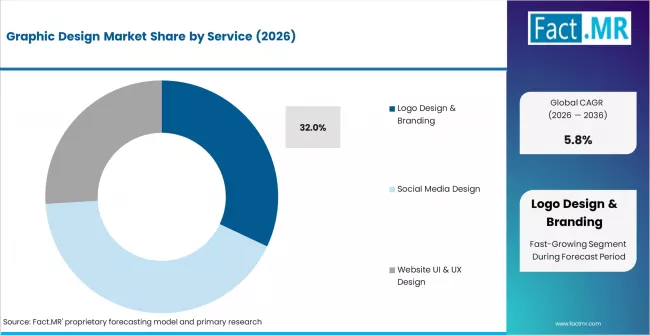
FACT.MR estimates that Logo Design & Branding will hold about 32% share in 2026. It leads because brand identity is the starting point for all businesses. It is also refreshed during rebranding cycles. Demand comes from startups, legacy brands, and expanding enterprises. Companies entering new markets also require localized brand assets.
- Landor & Fitch executed a global rebranding for TotalEnergies in Q2 2024. The work included logo systems, typography, and digital rollout across 130 countries. The project aligned with the company’s energy transition positioning. It involved full brand architecture restructuring. [4]
- Pentagram completed a visual identity and digital system for New York University in January 2025. The work covered UI design, templates, and publication standards. It was deployed across NYU’s global campuses. This reflects continued enterprise investment in integrated design systems. [5]
- Hootsuite reported that visual content volume is a key metric for brands. Around 68% of marketers plan to increase design output in 2025. Growth is driven by short-form video and static formats. This supports continued expansion in social media design demand. [6]
Graphic Design Market Analysis by Firm Type
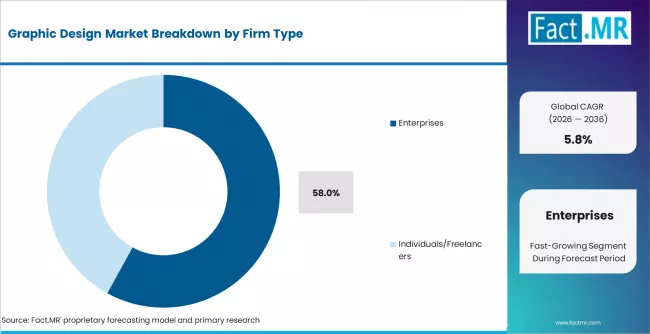
FACT.MR estimates Enterprises will hold about 58% share in 2026. Enterprises generate sustained demand due to brand consistency needs. They operate across markets, products, and digital channels. This creates continuous design workloads. Freelancers are the fastest-growing segment. Growth is supported by platforms such as Fiverr and Upwork.
- AKQA secured a multi-year design retainer with Nike in 2024. The work includes campaign design, app UI updates, and social content. It spans North America and Europe. This reflects enterprise preference for long-term agency partnerships. [7]
- Fiverr International reported graphic design as its top revenue category in Q3 2024. Logo and branding services contributed the most. The platform operates in over 160 countries. This highlights the global scale of freelance design delivery. [8]
- Google updated Material Design 3 in 2024. This reinforced the importance of enterprise design systems. It requires continuous UI and graphic design maintenance. This trend drives recurring design demand.
Graphic Design Market Analysis by End-use Industry
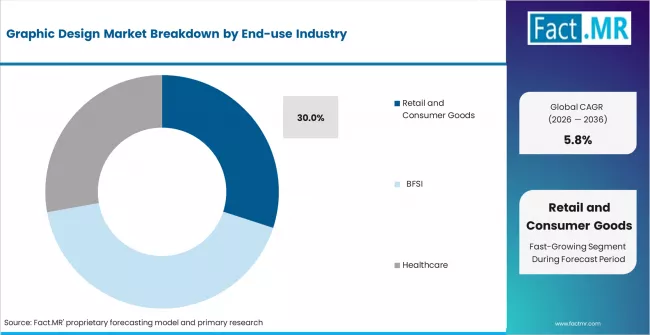
FACT.MR estimates Retail and Consumer Goods will hold about 30% share in 2026. This segment requires frequent design output. Demand includes packaging, promotions, e-commerce visuals, and in-store displays. BFSI, services, and healthcare follow with distinct needs. Each sector has different regulatory and digital requirements.
- Frog Design completed a retail design project in Q1 2025. The work covered packaging and digital shelf visuals. It was executed for a North American consumer goods company. This shows continued retail investment in design.
- MetaDesign delivered a digital redesign for a European bank in Q3 2024. The work included mobile UI, onboarding UX, and communication templates. Demand in BFSI is driven by digital transformation.
- U.S. Department of Health and Human Services updated accessibility standards in 2024. This required redesign of public health communication materials. Compliance with WCAG 2.2 drove new design demand.
Graphic Design Market Analysis by Platform/Delivery Mode
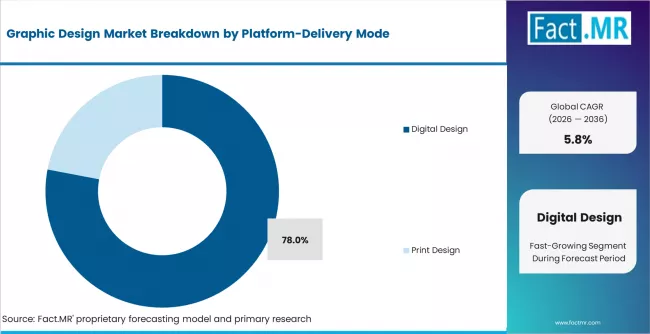
FACT.MR estimates Digital Design will hold about 78% share in 2026. Digital channels dominate brand communication. These include websites, apps, and social platforms. Continuous content output is now essential. Print design remains relevant but is losing share.
- Canva reported over 180 million monthly users by mid-2025. Enterprise subscriptions grew 40% in 2024. This reflects the democratization of design tools. It increases output but pressures pricing. [13]
- Adobe Inc. reported USD 5.47 billion in Creative Cloud revenue in 2024. Most growth came from digital design tools. This highlights the scale of global design activity. [14]
- Printing Industries of America reported a 4.2% decline in print revenue in 2024. This reflects budget shifts to digital channels. Print remains important but is losing share. [15]
Graphic Design Market Analysis by Pricing Model
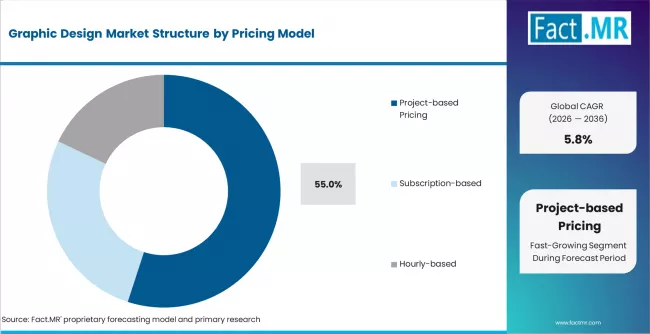
FACT.MR estimates Project-based Pricing will hold about 55% share in 2026. Most design work is commissioned as defined projects. These include branding, campaigns, and product launches. Subscription pricing is growing quickly. Enterprises are adopting retainer-based models. Hourly pricing is declining.
- Design Pickle reported a 35% rise in enterprise subscriptions in 2024. Retail and services firms drove most demand. This shows growing acceptance of subscription models.
- SuperUnion expanded its subscription offering in Q4 2024. Clients can access ongoing design services for a fixed fee. This supports multi-market brand management.
- Upwork reported that 62% of design contracts were fixed-price in 2024. Project-based hiring is increasing. Clients prefer cost certainty and defined outputs.
Drivers, Restraints, and Opportunities
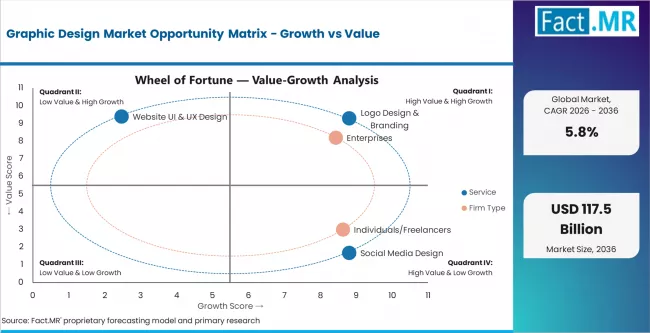
FACT.MR analysts note that the graphic design market has grown steadily across two structural phases. The first phase was the shift from print to web and mobile communication. The second phase was the rise of social media platforms requiring continuous visual content.
The market is now moving through a capability transition driven by AI design tools. Platforms such as Canva, Adobe Firefly, and Midjourney allow non-designers to create usable visual assets. This reduces demand for low-complexity design tasks. The impact is strongest at the freelance and entry-level agency tier.
- AI Tool Platform Growth: Adobe Inc. reported that Adobe Firefly generated over 9 billion images between its 2023 launch and mid-2025. This reflects large-scale adoption of AI-assisted design tools. Creative professionals and marketing teams are using these tools widely. This is changing workflow economics at agencies. Time per asset is decreasing. Pricing pressure on standard deliverables is increasing. [1]
- Digital Ad Spend Driver: Interactive Advertising Bureau reported U.S. digital advertising revenue at USD 258.6 billion in 2024. This marked a 15.6% increase from 2023. Social media and digital video are taking a larger share of spending. Higher ad spending directly increases demand for visual assets. These include display creatives, social content, and video thumbnails. [2]
- India Startup Demand Surge: Department for Promotion of Industry and Internal Trade recognized over 1,40,803 startups by December 2024. Each startup requires brand identity at launch. They also need ongoing digital design support. This creates a continuous demand pipeline. It supports growth of freelancers and boutique agencies in India. [3]
Regional Analysis
.webp)
The graphic design market is assessed across Asia Pacific, North America, Europe, Latin America, and Middle East and Africa, covering 40+ countries with demand profiles shaped by digital marketing maturity, startup ecosystem density, agency infrastructure, and platform-driven content creation requirements. The full report offers market attractiveness analysis by region and country.
| Country | CAGR (2026 to 2036) |
|---|---|
| China | 9.7% |
| India | 9.2% |
| United States | 8.4% |
| United Kingdom | 7.0% |
| Germany | 6.5% |
Source: Fact.MR (FACT.MR) analysis, based on proprietary forecasting model and primary research
Asia Pacific Graphic Design Market Analysis
Asia Pacific is the fastest-growing region, driven by China and India as the primary demand expansion markets. The region combines the world's highest e-commerce platform density with a large and cost-competitive freelance design talent base.
- China: China is projected to rise at 9.7% CAGR through 2036, the fastest among covered markets. The Ministry of Commerce reported that China's e-commerce transaction value exceeded RMB 46.8 trillion in 2024, with live commerce and short-video commerce generating continuous demand for mobile-first visual content design. Alibaba's Taobao Live and ByteDance's Douyin platform both introduced seller design service marketplaces in 2024, formalising design procurement within live commerce workflows.
- India: Demand for graphic design services in India is projected to rise at 9.2% CAGR through 2036. DPIIT recognised over 1,40,803 startups as of December 2024, each requiring brand identity and digital design at formation, representing a structurally expanding demand pipeline. The government's Digital India initiative, which allocated INR 14,903 crore in FY2024-25 for digital infrastructure, is expanding the addressable base for digital design services across government e-service portals, state communication campaigns, and public sector digital platforms.
FACT.MR's analysis of graphic design market in Asia Pacific covers China, India, Japan, South Korea, ASEAN, and Australia and New Zealand. Readers can find e-commerce-linked design demand benchmarks, startup ecosystem design spending data, platform-driven content design trends, and freelance talent market dynamics.
North America Graphic Design Market Analysis
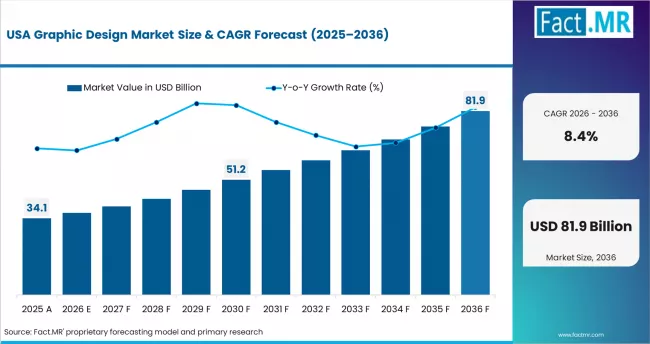
North America is the highest-revenue region and the global centre for enterprise brand design spending. The United States anchors demand through its concentration of Fortune 500 companies, technology firms, and media organisations with large recurring design budgets.
- United States: Graphic design services in the United States is projected to rise at 8.4% CAGR through 2036. The U.S. Bureau of Labor Statistics Occupational Outlook Handbook 2024 reported that graphic designers held approximately 281,000 positions, with digital design and UX roles showing the strongest employment growth trajectory. The Federal Trade Commission's updated guidance on digital advertising disclosure in 2024 required brands to standardise visual treatment of sponsored content, generating compliance-driven design procurement across consumer goods and financial services advertisers.
FACT.MR's analysis of graphic design market in North America covers the United States, Canada, and Mexico. Readers can find enterprise brand spend benchmarks, digital advertising-linked design demand, agency retainer model trends, and AI design tool adoption data.
Europe Graphic Design Market Analysis
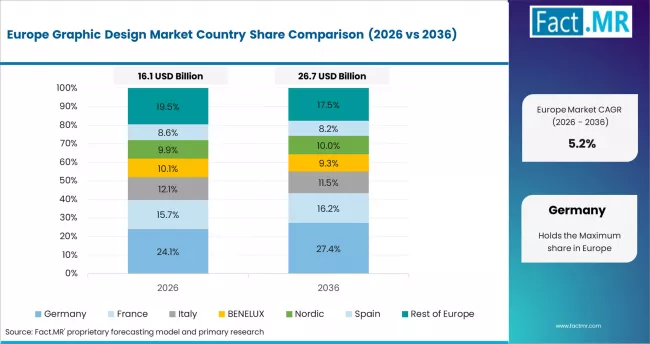
Europe is a mature but structurally active design market, characterised by a dense independent agency ecosystem in the United Kingdom and established corporate design culture in Germany and the Netherlands. Pentagram, Studio Dumbar, and SuperUnion hold strong positions through long-standing client relationships with European multinationals and public sector brand programmes.
- United Kingdom: United Kingdom is projected to rise at 7.0% CAGR through 2036. The UK's Creative Industries Council reported that the creative sector contributed GBP 124.8 billion to the UK economy in 2023, with graphic design embedded as a core professional service within advertising, publishing, and media. The BBC launched a brand refresh programme in Q1 2025, commissioning updated visual identity guidelines covering digital platform design, on-air graphics, and digital publication design across its domestic and international broadcasting services.
- Germany: Demand for graphic design services in Germany is projected to rise at 6.5% CAGR through 2036. Germany's Mittelstand manufacturing sector generates stable demand for product catalogue design, trade fair visual materials, and industrial brand identity, anchoring design procurement to B2B export marketing cycles. The Bundesverband Digitale Wirtschaft (BVDW) reported in 2024 that German digital advertising expenditure grew to EUR 13.3 billion, directly expanding demand for digital content and campaign design services.
FACT.MR's analysis of graphic design market in Europe covers Germany, France, the UK, Italy, Spain, and Rest of Europe. Readers can find creative industry revenue benchmarks, digital ad spend-linked design demand, agency market structure data, and post-Brexit brand compliance design trends.
Competitive Aligners for Market Players
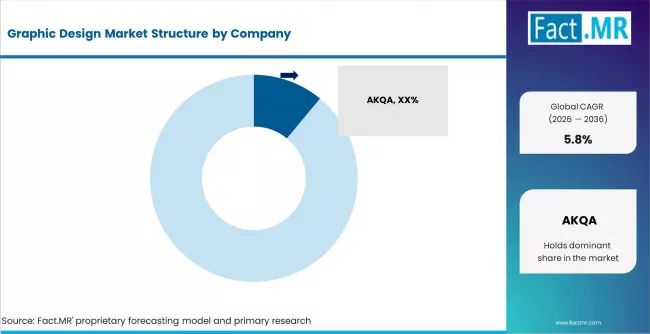
The graphic design market is highly fragmented. No single player dominates global revenue. The market operates across three clear tiers. Global brand consultancies like Landor & Fitch and Pentagram serve large multinational clients. Mid-tier agencies such as AKQA, Frog Design, and MetaDesign focus on enterprise and technology clients. The third tier includes freelancers working through platforms like Fiverr International, Upwork, and 99designs. Competition in agencies is not driven by price alone. It depends on creative reputation, sector expertise, and strong client relationships.
Agencies with long-term client relationships have a clear advantage. Landor & Fitch benefits from its global network within WPP. This helps deliver cross-market brand projects. AKQA works closely with technology platforms. This allows deeper integration into client digital programs. Frog Design benefits from its link with Capgemini Invent. It gains access to large digital transformation projects. These integrations reduce dependence on one-off project bidding.
Enterprise buying behavior is also changing. Large brands now prefer fewer agency partners. They are building vendor panels with selected agencies. Design budgets are concentrated with two or three key suppliers. This improves cost predictability for those agencies. However, competition to be included is intense. Freelance platforms continue to pressure pricing at the lower end. Smaller agencies face limits on rate growth. Established consultancies still maintain strong pricing power. They do this through strategy, creativity, and brand advisory strengths.
Key Players
- AKQA
- Chermayeff & Geismar & Haviv
- Dessein
- Frog Design
- Happy Cog
- House Industries
- Landor & Fitch
- Leo Burnett
- McFaul+Day
- MetaDesign
- Metalab
- Mucho
- Pentagram
- Sagmeister & Walsh
- Studio Dumbar
- SuperUnion
Scope of Report
| Attribute | Details |
|---|---|
| Quantitative Units | USD 63.2 billion (2026) to USD 110.5 billion (2036), at a CAGR of 5.8% |
| Market Definition | Market includes professional visual communication services including brand identity, digital content, UI/UX, mobile app, and print design delivered by agencies, in-house teams, and freelancers to enterprise and individual clients globally. |
| Service Segmentation | Logo Design & Branding, Social Media Design, Website UI & UX Design, Mobile App Design, Presentation Design, E-book Design, Others |
| Firm Type Segmentation | Enterprises, Individuals/Freelancers |
| End-use Industry Segmentation | BFSI, Retail and Consumer Goods, Business and Consumer Services, Healthcare, Manufacturing, Transportation and Mobility, Energy and Utility, Trading and Warehousing, Media & Entertainment, Hospitality |
| Platform/Delivery Mode | Digital Design, Print Design |
| Pricing Model Segmentation | Project-based Pricing, Subscription-based, Hourly-based |
| Regions Covered | North America, Europe, Asia Pacific, Latin America, Middle East and Africa |
| Countries Covered | USA, Canada, Mexico, Germany, UK, France, Italy, Spain, Nordic, BENELUX, China, Japan, South Korea, India, ASEAN, Australia and New Zealand, Brazil, Argentina, Saudi Arabia, UAE, Turkey, South Africa, Rest of MEA |
| Key Companies Profiled | AKQA, Chermayeff & Geismar & Haviv, Frog Design, Landor & Fitch, Leo Burnett, MetaDesign, Metalab, Pentagram, Sagmeister & Walsh, Studio Dumbar, SuperUnion |
| Forecast Period | 2026 to 2036 |
| Approach | Hybrid top-down and bottom-up model using agency revenue disclosures, design platform transaction data, enterprise brand spend benchmarks, average project pricing by service type, and primary interviews with brand procurement managers and creative directors. |
Graphic Design Market by Segments
-
By Service:
- Logo Design & Branding
- Social Media Design
- Website UI & UX Design
- Mobile App Design
- Presentation Design
- E-book Design
- Others
-
By Firm Type:
- Enterprises
- Individuals/Freelancers
-
By End-use Industry:
- BFSI
- Retail and Consumer Goods
- Business and Consumer Services
- Healthcare
- Manufacturing
- Transportation and Mobility
- Energy and Utility
- Trading and Warehousing
- Media & Entertainment
- Hospitality
-
By Platform/Delivery Mode:
- Digital Design
- Print Design
-
By Pricing Model:
- Project-based Pricing
- Subscription-based
- Hourly-based
-
By Region:
- North America
- United States
- Canada
- Mexico
- Latin America
- Brazil
- Argentina
- Rest of Latin America
- Western Europe
- Germany
- United Kingdom
- France
- Italy
- Spain
- Nordic Countries
- BENELUX
- Rest of Western Europe
- East Asia
- China
- Japan
- South Korea
- South Asia and Pacific
- India
- ASEAN
- Australia and New Zealand
- Rest of South Asia and Pacific
- Middle East and Africa
- Saudi Arabia
- UAE
- Turkey
- South Africa
- Rest of Middle East and Africa
- North America
This Report Addresses
- Strategic intelligence on graphic design service demand across brand identity, digital content, UI/UX, mobile app, and print design categories for enterprises and freelance channels globally.
- Market forecast from USD 63.2 billion in 2026 to USD 110.5 billion by 2036, at a CAGR of 5.8%.
- Growth opportunity mapping across China live commerce design demand, India startup ecosystem branding growth, U.S. enterprise digital marketing spend, and UK creative agency expansion.
- Segment analysis by service (logo, social media, UI/UX, mobile app, presentation, e-book), firm type (enterprises, freelancers), end-use industry, platform mode, and pricing model.
- Regional outlook covering Asia Pacific platform-driven design demand, North America enterprise brand spending, Europe creative agency dynamics, and Latin America and MEA digital design adoption trends.
- Competitive landscape of Landor & Fitch, AKQA, Pentagram, Frog Design, MetaDesign, and SuperUnion covering client positioning, retainer model adoption, and AI tool integration strategies.
- Regulatory and platform impact analysis covering U.S. FTC digital advertising disclosure standards, EU GDPR visual consent design requirements, India Digital India programme, and China e-commerce platform design marketplace expansion.
- Report delivered in PDF, Excel datasets, and presentation formats, supported by primary interviews, agency revenue disclosures, platform transaction data, and digital advertising expenditure benchmarks.
Graphic Design Market Definition
The graphic design market covers professional visual communication services including logo creation, brand identity development, digital content design, UI/UX design for websites and applications, and print design.
Graphic Design Market Inclusions
Covers global and regional forecasts from 2026 to 2036. Includes logo and branding, social media, UI/UX, mobile app, presentation, and e-book design services. Covers enterprise and freelance delivery channels. Encompasses digital and print delivery modes across project-based, subscription, and hourly pricing models.
Graphic Design Market Exclusions
Excludes advertising campaign planning, media buying, and copywriting services not tied to visual design output. Omits industrial product design and 3D modelling unless part of a graphic design workflow. Excludes proprietary design software platforms and SaaS tool revenues, focusing strictly on design service delivery and professional output.
Graphic Design Market Research Methodology
- Primary Research
- Interviews with creative directors, brand managers, freelance design platform operators, and procurement heads at enterprise clients across the United States, United Kingdom, India, China, and Germany.
- Desk Research
- Analysis of design platform filings, agency revenue disclosures, and brand spend reports from Canva, Adobe, Fiverr, and Upwork alongside digital advertising expenditure data from IAB and WARC (2024-2025).
- Market-Sizing and Forecasting
- Hybrid model combining top-down revenue estimates from leading design agency groups with bottom-up service volume estimates by design category and end-use industry, cross-referenced with average project pricing benchmarks.
- Data Validation and Update Cycle
- Validated using platform transaction data, agency revenue reports, freelancer earnings disclosures, and expert interviews with brand procurement specialists. Updated annually
Bibliography
- [1] Adobe Inc. (2025). Adobe Firefly Usage Milestone: 9 Billion Images Generated Since Launch. Adobe Newsroom, June 2025. news.adobe.com
- [2] Interactive Advertising Bureau (IAB). (2024). Internet Advertising Revenue Report: Full Year 2024 Results. IAB and PwC, April 2025. iab.com/insights/internet-advertising-revenue-report
- [3] Department for Promotion of Industry and Internal Trade (DPIIT). (2024). Startup India: Number of DPIIT-Recognised Startups as of December 2024. Government of India, December 2024. startupindia.gov.in
- [4] Landor & Fitch. (2024). Case Study: TotalEnergies Global Brand Identity Redesign. Landor & Fitch Client Portfolio, Q2 2024. landorfitch.com/work
- [5] Pentagram. (2025). Project: New York University Visual Identity and Digital Design System. Pentagram Project Archive, January 2025. pentagram.com/work
- [6] Hootsuite. (2025). Social Media Trends 2025 Report: Visual Content Volume and Design Asset Production Benchmarks. Hootsuite, January 2025. hootsuite.com/resources/social-media-trends
- [7] AKQA. (2024). Nike Digital Brand and Campaign Design Retainer Announcement. AKQA Agency News, 2024. akqa.com/news
- [8] Fiverr International Ltd. (2024). Q3 2024 Earnings Release: Graphic Design as Highest-Revenue Service Category and GMV Breakdown by Vertical. Fiverr Investor Relations, November 2024. investors.fiverr.com
- Frequently Asked Questions -
How large is the global graphic design market in 2025?
The global graphic design market was valued at USD 59.7 billion in 2025.
What will the market size be in 2026?
Based on Fact.MR analysis, demand for graphic design services is estimated to grow to USD 63.2 billion in 2026.
What is the projected market size by 2036?
The market is projected to reach USD 110.5 billion by 2036, generating USD 47.3 billion in absolute dollar opportunity over the forecast period.
What is the expected CAGR from 2026 to 2036?
FACT.MR projects a CAGR of 5.8% for the global graphic design market during the 2026 to 2036 forecast period.
Which service segment leads the market?
Logo Design & Branding leads with approximately 32% share in 2026, as brand identity creation remains the foundational design investment for enterprises, startups, and consumer brands across all markets.
Which firm type holds the largest share?
Enterprises account for approximately 58% share in 2026, driven by large-scale recurring brand design procurement across consumer goods, BFSI, and retail sectors globally.
Which end-use industry accounts for the highest demand?
Retail and Consumer Goods leads with approximately 30% share in 2026, anchored by continuous packaging, promotional, and digital shelf design demand from global and regional consumer brands.
Which country shows the fastest growth?
China leads at 9.7% CAGR through 2036, driven by e-commerce and live commerce platform demand for localised, mobile-first visual content at scale through platforms such as Douyin and Taobao Live.
Who are the key players in the market?
Major players include AKQA, Chermayeff & Geismar & Haviv, Frog Design, Landor & Fitch, Leo Burnett, MetaDesign, Metalab, Pentagram, Sagmeister & Walsh, Studio Dumbar, and SuperUnion.
Table of Content
- Executive Summary
- Global Market Outlook
- Demand to side Trends
- Supply to side Trends
- Technology Roadmap Analysis
- Analysis and Recommendations
- Market Overview
- Market Coverage / Taxonomy
- Market Definition / Scope / Limitations
- Research Methodology
- Chapter Orientation
- Analytical Lens and Working Hypotheses
- Market Structure, Signals, and Trend Drivers
- Benchmarking and Cross-market Comparability
- Market Sizing, Forecasting, and Opportunity Mapping
- Research Design and Evidence Framework
- Desk Research Programme (Secondary Evidence)
- Company Annual and Sustainability Reports
- Peer-reviewed Journals and Academic Literature
- Corporate Websites, Product Literature, and Technical Notes
- Earnings Decks and Investor Briefings
- Statutory Filings and Regulatory Disclosures
- Technical White Papers and Standards Notes
- Trade Journals, Industry Magazines, and Analyst Briefs
- Conference Proceedings, Webinars, and Seminar Materials
- Government Statistics Portals and Public Data Releases
- Press Releases and Reputable Media Coverage
- Specialist Newsletters and Curated Briefings
- Sector Databases and Reference Repositories
- Fact.MR Internal Proprietary Databases and Historical Market Datasets
- Subscription Datasets and Paid Sources
- Social Channels, Communities, and Digital Listening Inputs
- Additional Desk Sources
- Expert Input and Fieldwork (Primary Evidence)
- Primary Modes
- Qualitative Interviews and Expert Elicitation
- Quantitative Surveys and Structured Data Capture
- Blended Approach
- Why Primary Evidence is Used
- Field Techniques
- Interviews
- Surveys
- Focus Groups
- Observational and In-context Research
- Social and Community Interactions
- Stakeholder Universe Engaged
- C-suite Leaders
- Board Members
- Presidents and Vice Presidents
- R&D and Innovation Heads
- Technical Specialists
- Domain Subject-matter Experts
- Scientists
- Physicians and Other Healthcare Professionals
- Governance, Ethics, and Data Stewardship
- Research Ethics
- Data Integrity and Handling
- Primary Modes
- Tooling, Models, and Reference Databases
- Desk Research Programme (Secondary Evidence)
- Data Engineering and Model Build
- Data Acquisition and Ingestion
- Cleaning, Normalisation, and Verification
- Synthesis, Triangulation, and Analysis
- Quality Assurance and Audit Trail
- Market Background
- Market Dynamics
- Drivers
- Restraints
- Opportunity
- Trends
- Scenario Forecast
- Demand in Optimistic Scenario
- Demand in Likely Scenario
- Demand in Conservative Scenario
- Opportunity Map Analysis
- Product Life Cycle Analysis
- Supply Chain Analysis
- Investment Feasibility Matrix
- Value Chain Analysis
- PESTLE and Porter’s Analysis
- Regulatory Landscape
- Regional Parent Market Outlook
- Production and Consumption Statistics
- Import and Export Statistics
- Market Dynamics
- Global Market Analysis 2021 to 2025 and Forecast, 2026 to 2036
- Historical Market Size Value (USD Million) Analysis, 2021 to 2025
- Current and Future Market Size Value (USD Million) Projections, 2026 to 2036
- Y to o to Y Growth Trend Analysis
- Absolute $ Opportunity Analysis
- Global Market Pricing Analysis 2021 to 2025 and Forecast 2026 to 2036
- Global Market Analysis 2021 to 2025 and Forecast 2026 to 2036, By Product Type
- Introduction / Key Findings
- Historical Market Size Value (USD Million) Analysis By Product Type , 2021 to 2025
- Current and Future Market Size Value (USD Million) Analysis and Forecast By Product Type , 2026 to 2036
- Sterilization Equipment
- High-temperature Sterilizers
- Cleaning & Disinfectant Equipment
- Sterilization Equipment
- Y to o to Y Growth Trend Analysis By Product Type , 2021 to 2025
- Absolute $ Opportunity Analysis By Product Type , 2026 to 2036
- Global Market Analysis 2021 to 2025 and Forecast 2026 to 2036, By Technology Type
- Introduction / Key Findings
- Historical Market Size Value (USD Million) Analysis By Technology Type, 2021 to 2025
- Current and Future Market Size Value (USD Million) Analysis and Forecast By Technology Type, 2026 to 2036
- Steam Sterilization
- Dry Heat Sterilization
- Radiation Sterilization
- Steam Sterilization
- Y to o to Y Growth Trend Analysis By Technology Type, 2021 to 2025
- Absolute $ Opportunity Analysis By Technology Type, 2026 to 2036
- Global Market Analysis 2021 to 2025 and Forecast 2026 to 2036, By Service Type
- Introduction / Key Findings
- Historical Market Size Value (USD Million) Analysis By Service Type, 2021 to 2025
- Current and Future Market Size Value (USD Million) Analysis and Forecast By Service Type, 2026 to 2036
- Equipment Sales
- Maintenance & Repair Services
- Validation & Compliance Services
- Equipment Sales
- Y to o to Y Growth Trend Analysis By Service Type, 2021 to 2025
- Absolute $ Opportunity Analysis By Service Type, 2026 to 2036
- Global Market Analysis 2021 to 2025 and Forecast 2026 to 2036, By Distribution Channel
- Introduction / Key Findings
- Historical Market Size Value (USD Million) Analysis By Distribution Channel, 2021 to 2025
- Current and Future Market Size Value (USD Million) Analysis and Forecast By Distribution Channel, 2026 to 2036
- Distributors and Dealers
- Direct Sales
- Online Procurement
- Distributors and Dealers
- Y to o to Y Growth Trend Analysis By Distribution Channel, 2021 to 2025
- Absolute $ Opportunity Analysis By Distribution Channel, 2026 to 2036
- Global Market Analysis 2021 to 2025 and Forecast 2026 to 2036, By End User
- Introduction / Key Findings
- Historical Market Size Value (USD Million) Analysis By End User, 2021 to 2025
- Current and Future Market Size Value (USD Million) Analysis and Forecast By End User, 2026 to 2036
- Clinics
- Hospitals
- Dental Laboratories
- Clinics
- Y to o to Y Growth Trend Analysis By End User, 2021 to 2025
- Absolute $ Opportunity Analysis By End User, 2026 to 2036
- Global Market Analysis 2021 to 2025 and Forecast 2026 to 2036, By Region
- Introduction
- Historical Market Size Value (USD Million) Analysis By Region, 2021 to 2025
- Current Market Size Value (USD Million) Analysis and Forecast By Region, 2026 to 2036
- North America
- Latin America
- Western Europe
- Eastern Europe
- East Asia
- South Asia and Pacific
- Middle East & Africa
- Market Attractiveness Analysis By Region
- North America Market Analysis 2021 to 2025 and Forecast 2026 to 2036, By Country
- Historical Market Size Value (USD Million) Trend Analysis By Market Taxonomy, 2021 to 2025
- Market Size Value (USD Million) Forecast By Market Taxonomy, 2026 to 2036
- By Country
- USA
- Canada
- Mexico
- By Product Type
- By Technology Type
- By Service Type
- By Distribution Channel
- By End User
- By Country
- Market Attractiveness Analysis
- By Country
- By Product Type
- By Technology Type
- By Service Type
- By Distribution Channel
- By End User
- Key Takeaways
- Latin America Market Analysis 2021 to 2025 and Forecast 2026 to 2036, By Country
- Historical Market Size Value (USD Million) Trend Analysis By Market Taxonomy, 2021 to 2025
- Market Size Value (USD Million) Forecast By Market Taxonomy, 2026 to 2036
- By Country
- Brazil
- Chile
- Rest of Latin America
- By Product Type
- By Technology Type
- By Service Type
- By Distribution Channel
- By End User
- By Country
- Market Attractiveness Analysis
- By Country
- By Product Type
- By Technology Type
- By Service Type
- By Distribution Channel
- By End User
- Key Takeaways
- Western Europe Market Analysis 2021 to 2025 and Forecast 2026 to 2036, By Country
- Historical Market Size Value (USD Million) Trend Analysis By Market Taxonomy, 2021 to 2025
- Market Size Value (USD Million) Forecast By Market Taxonomy, 2026 to 2036
- By Country
- Germany
- UK
- Italy
- Spain
- France
- Nordic
- BENELUX
- Rest of Western Europe
- By Product Type
- By Technology Type
- By Service Type
- By Distribution Channel
- By End User
- By Country
- Market Attractiveness Analysis
- By Country
- By Product Type
- By Technology Type
- By Service Type
- By Distribution Channel
- By End User
- Key Takeaways
- Eastern Europe Market Analysis 2021 to 2025 and Forecast 2026 to 2036, By Country
- Historical Market Size Value (USD Million) Trend Analysis By Market Taxonomy, 2021 to 2025
- Market Size Value (USD Million) Forecast By Market Taxonomy, 2026 to 2036
- By Country
- Russia
- Poland
- Hungary
- Balkan & Baltic
- Rest of Eastern Europe
- By Product Type
- By Technology Type
- By Service Type
- By Distribution Channel
- By End User
- By Country
- Market Attractiveness Analysis
- By Country
- By Product Type
- By Technology Type
- By Service Type
- By Distribution Channel
- By End User
- Key Takeaways
- East Asia Market Analysis 2021 to 2025 and Forecast 2026 to 2036, By Country
- Historical Market Size Value (USD Million) Trend Analysis By Market Taxonomy, 2021 to 2025
- Market Size Value (USD Million) Forecast By Market Taxonomy, 2026 to 2036
- By Country
- China
- Japan
- South Korea
- By Product Type
- By Technology Type
- By Service Type
- By Distribution Channel
- By End User
- By Country
- Market Attractiveness Analysis
- By Country
- By Product Type
- By Technology Type
- By Service Type
- By Distribution Channel
- By End User
- Key Takeaways
- South Asia and Pacific Market Analysis 2021 to 2025 and Forecast 2026 to 2036, By Country
- Historical Market Size Value (USD Million) Trend Analysis By Market Taxonomy, 2021 to 2025
- Market Size Value (USD Million) Forecast By Market Taxonomy, 2026 to 2036
- By Country
- India
- ASEAN
- Australia & New Zealand
- Rest of South Asia and Pacific
- By Product Type
- By Technology Type
- By Service Type
- By Distribution Channel
- By End User
- By Country
- Market Attractiveness Analysis
- By Country
- By Product Type
- By Technology Type
- By Service Type
- By Distribution Channel
- By End User
- Key Takeaways
- Middle East & Africa Market Analysis 2021 to 2025 and Forecast 2026 to 2036, By Country
- Historical Market Size Value (USD Million) Trend Analysis By Market Taxonomy, 2021 to 2025
- Market Size Value (USD Million) Forecast By Market Taxonomy, 2026 to 2036
- By Country
- Kingdom of Saudi Arabia
- Other GCC Countries
- Turkiye
- South Africa
- Other African Union
- Rest of Middle East & Africa
- By Product Type
- By Technology Type
- By Service Type
- By Distribution Channel
- By End User
- By Country
- Market Attractiveness Analysis
- By Country
- By Product Type
- By Technology Type
- By Service Type
- By Distribution Channel
- By End User
- Key Takeaways
- Key Countries Market Analysis
- USA
- Pricing Analysis
- Market Share Analysis, 2025
- By Product Type
- By Technology Type
- By Service Type
- By Distribution Channel
- By End User
- Canada
- Pricing Analysis
- Market Share Analysis, 2025
- By Product Type
- By Technology Type
- By Service Type
- By Distribution Channel
- By End User
- Mexico
- Pricing Analysis
- Market Share Analysis, 2025
- By Product Type
- By Technology Type
- By Service Type
- By Distribution Channel
- By End User
- Brazil
- Pricing Analysis
- Market Share Analysis, 2025
- By Product Type
- By Technology Type
- By Service Type
- By Distribution Channel
- By End User
- Chile
- Pricing Analysis
- Market Share Analysis, 2025
- By Product Type
- By Technology Type
- By Service Type
- By Distribution Channel
- By End User
- Germany
- Pricing Analysis
- Market Share Analysis, 2025
- By Product Type
- By Technology Type
- By Service Type
- By Distribution Channel
- By End User
- UK
- Pricing Analysis
- Market Share Analysis, 2025
- By Product Type
- By Technology Type
- By Service Type
- By Distribution Channel
- By End User
- Italy
- Pricing Analysis
- Market Share Analysis, 2025
- By Product Type
- By Technology Type
- By Service Type
- By Distribution Channel
- By End User
- Spain
- Pricing Analysis
- Market Share Analysis, 2025
- By Product Type
- By Technology Type
- By Service Type
- By Distribution Channel
- By End User
- France
- Pricing Analysis
- Market Share Analysis, 2025
- By Product Type
- By Technology Type
- By Service Type
- By Distribution Channel
- By End User
- India
- Pricing Analysis
- Market Share Analysis, 2025
- By Product Type
- By Technology Type
- By Service Type
- By Distribution Channel
- By End User
- ASEAN
- Pricing Analysis
- Market Share Analysis, 2025
- By Product Type
- By Technology Type
- By Service Type
- By Distribution Channel
- By End User
- Australia & New Zealand
- Pricing Analysis
- Market Share Analysis, 2025
- By Product Type
- By Technology Type
- By Service Type
- By Distribution Channel
- By End User
- China
- Pricing Analysis
- Market Share Analysis, 2025
- By Product Type
- By Technology Type
- By Service Type
- By Distribution Channel
- By End User
- Japan
- Pricing Analysis
- Market Share Analysis, 2025
- By Product Type
- By Technology Type
- By Service Type
- By Distribution Channel
- By End User
- South Korea
- Pricing Analysis
- Market Share Analysis, 2025
- By Product Type
- By Technology Type
- By Service Type
- By Distribution Channel
- By End User
- Russia
- Pricing Analysis
- Market Share Analysis, 2025
- By Product Type
- By Technology Type
- By Service Type
- By Distribution Channel
- By End User
- Poland
- Pricing Analysis
- Market Share Analysis, 2025
- By Product Type
- By Technology Type
- By Service Type
- By Distribution Channel
- By End User
- Hungary
- Pricing Analysis
- Market Share Analysis, 2025
- By Product Type
- By Technology Type
- By Service Type
- By Distribution Channel
- By End User
- Kingdom of Saudi Arabia
- Pricing Analysis
- Market Share Analysis, 2025
- By Product Type
- By Technology Type
- By Service Type
- By Distribution Channel
- By End User
- Turkiye
- Pricing Analysis
- Market Share Analysis, 2025
- By Product Type
- By Technology Type
- By Service Type
- By Distribution Channel
- By End User
- South Africa
- Pricing Analysis
- Market Share Analysis, 2025
- By Product Type
- By Technology Type
- By Service Type
- By Distribution Channel
- By End User
- USA
- Market Structure Analysis
- Competition Dashboard
- Competition Benchmarking
- Market Share Analysis of Top Players
- By Regional
- By Product Type
- By Technology Type
- By Service Type
- By Distribution Channel
- By End User
- Competition Analysis
- Competition Deep Dive
- 3M Company
- Overview
- Product Portfolio
- Profitability by Market Segments (Product/Age /Sales Channel/Region)
- Sales Footprint
- Strategy Overview
- Marketing Strategy
- Product Strategy
- Channel Strategy
- STERIS plc
- Getinge AB
- Tuttnauer
- SciCan Ltd.
- Midmark Corporation
- Danaher Corporation
- 3M Company
- Competition Deep Dive
- Assumptions & Acronyms Used
List Of Table
- Table 1: Global Market Value (USD Million) Forecast by Region, 2021 to 2036
- Table 2: Global Market Value (USD Million) Forecast by Product Type , 2021 to 2036
- Table 3: Global Market Value (USD Million) Forecast by Technology Type, 2021 to 2036
- Table 4: Global Market Value (USD Million) Forecast by Service Type, 2021 to 2036
- Table 5: Global Market Value (USD Million) Forecast by Distribution Channel, 2021 to 2036
- Table 6: Global Market Value (USD Million) Forecast by End User, 2021 to 2036
- Table 7: North America Market Value (USD Million) Forecast by Country, 2021 to 2036
- Table 8: North America Market Value (USD Million) Forecast by Product Type , 2021 to 2036
- Table 9: North America Market Value (USD Million) Forecast by Technology Type, 2021 to 2036
- Table 10: North America Market Value (USD Million) Forecast by Service Type, 2021 to 2036
- Table 11: North America Market Value (USD Million) Forecast by Distribution Channel, 2021 to 2036
- Table 12: North America Market Value (USD Million) Forecast by End User, 2021 to 2036
- Table 13: Latin America Market Value (USD Million) Forecast by Country, 2021 to 2036
- Table 14: Latin America Market Value (USD Million) Forecast by Product Type , 2021 to 2036
- Table 15: Latin America Market Value (USD Million) Forecast by Technology Type, 2021 to 2036
- Table 16: Latin America Market Value (USD Million) Forecast by Service Type, 2021 to 2036
- Table 17: Latin America Market Value (USD Million) Forecast by Distribution Channel, 2021 to 2036
- Table 18: Latin America Market Value (USD Million) Forecast by End User, 2021 to 2036
- Table 19: Western Europe Market Value (USD Million) Forecast by Country, 2021 to 2036
- Table 20: Western Europe Market Value (USD Million) Forecast by Product Type , 2021 to 2036
- Table 21: Western Europe Market Value (USD Million) Forecast by Technology Type, 2021 to 2036
- Table 22: Western Europe Market Value (USD Million) Forecast by Service Type, 2021 to 2036
- Table 23: Western Europe Market Value (USD Million) Forecast by Distribution Channel, 2021 to 2036
- Table 24: Western Europe Market Value (USD Million) Forecast by End User, 2021 to 2036
- Table 25: Eastern Europe Market Value (USD Million) Forecast by Country, 2021 to 2036
- Table 26: Eastern Europe Market Value (USD Million) Forecast by Product Type , 2021 to 2036
- Table 27: Eastern Europe Market Value (USD Million) Forecast by Technology Type, 2021 to 2036
- Table 28: Eastern Europe Market Value (USD Million) Forecast by Service Type, 2021 to 2036
- Table 29: Eastern Europe Market Value (USD Million) Forecast by Distribution Channel, 2021 to 2036
- Table 30: Eastern Europe Market Value (USD Million) Forecast by End User, 2021 to 2036
- Table 31: East Asia Market Value (USD Million) Forecast by Country, 2021 to 2036
- Table 32: East Asia Market Value (USD Million) Forecast by Product Type , 2021 to 2036
- Table 33: East Asia Market Value (USD Million) Forecast by Technology Type, 2021 to 2036
- Table 34: East Asia Market Value (USD Million) Forecast by Service Type, 2021 to 2036
- Table 35: East Asia Market Value (USD Million) Forecast by Distribution Channel, 2021 to 2036
- Table 36: East Asia Market Value (USD Million) Forecast by End User, 2021 to 2036
- Table 37: South Asia and Pacific Market Value (USD Million) Forecast by Country, 2021 to 2036
- Table 38: South Asia and Pacific Market Value (USD Million) Forecast by Product Type , 2021 to 2036
- Table 39: South Asia and Pacific Market Value (USD Million) Forecast by Technology Type, 2021 to 2036
- Table 40: South Asia and Pacific Market Value (USD Million) Forecast by Service Type, 2021 to 2036
- Table 41: South Asia and Pacific Market Value (USD Million) Forecast by Distribution Channel, 2021 to 2036
- Table 42: South Asia and Pacific Market Value (USD Million) Forecast by End User, 2021 to 2036
- Table 43: Middle East & Africa Market Value (USD Million) Forecast by Country, 2021 to 2036
- Table 44: Middle East & Africa Market Value (USD Million) Forecast by Product Type , 2021 to 2036
- Table 45: Middle East & Africa Market Value (USD Million) Forecast by Technology Type, 2021 to 2036
- Table 46: Middle East & Africa Market Value (USD Million) Forecast by Service Type, 2021 to 2036
- Table 47: Middle East & Africa Market Value (USD Million) Forecast by Distribution Channel, 2021 to 2036
- Table 48: Middle East & Africa Market Value (USD Million) Forecast by End User, 2021 to 2036
List Of Figures
- Figure 1: Global Market Pricing Analysis
- Figure 2: Global Market Value (USD Million) Forecast 2021-2036
- Figure 3: Global Market Value Share and BPS Analysis by Product Type, 2026 and 2036
- Figure 4: Global Market Y-o-Y Growth Comparison by Product Type, 2026 to 2036
- Figure 5: Global Market Attractiveness Analysis by Product Type
- Figure 6: Global Market Value Share and BPS Analysis by Technology Type, 2026 and 2036
- Figure 7: Global Market Y-o-Y Growth Comparison by Technology Type, 2026 to 2036
- Figure 8: Global Market Attractiveness Analysis by Technology Type
- Figure 9: Global Market Value Share and BPS Analysis by Service Type, 2026 and 2036
- Figure 10: Global Market Y-o-Y Growth Comparison by Service Type, 2026 to 2036
- Figure 11: Global Market Attractiveness Analysis by Service Type
- Figure 12: Global Market Value Share and BPS Analysis by Distribution Channel, 2026 and 2036
- Figure 13: Global Market Y-o-Y Growth Comparison by Distribution Channel, 2026 to 2036
- Figure 14: Global Market Attractiveness Analysis by Distribution Channel
- Figure 15: Global Market Value Share and BPS Analysis by End User, 2026 and 2036
- Figure 16: Global Market Y-o-Y Growth Comparison by End User, 2026 to 2036
- Figure 17: Global Market Attractiveness Analysis by End User
- Figure 18: Global Market Value (USD Million) Share and BPS Analysis by Region, 2026 and 2036
- Figure 19: Global Market Y-o-Y Growth Comparison by Region, 2026 to 2036
- Figure 20: Global Market Attractiveness Analysis by Region
- Figure 21: North America Market Incremental Dollar Opportunity, 2026 to 2036
- Figure 22: Latin America Market Incremental Dollar Opportunity, 2026 to 2036
- Figure 23: Western Europe Market Incremental Dollar Opportunity, 2026 to 2036
- Figure 24: Eastern Europe Market Incremental Dollar Opportunity, 2026 to 2036
- Figure 25: East Asia Market Incremental Dollar Opportunity, 2026 to 2036
- Figure 26: South Asia and Pacific Market Incremental Dollar Opportunity, 2026 to 2036
- Figure 27: Middle East & Africa Market Incremental Dollar Opportunity, 2026 to 2036
- Figure 28: North America Market Value Share and BPS Analysis by Country, 2026 and 2036
- Figure 29: North America Market Value Share and BPS Analysis by Product Type, 2026 and 2036
- Figure 30: North America Market Y-o-Y Growth Comparison by Product Type, 2026 to 2036
- Figure 31: North America Market Attractiveness Analysis by Product Type
- Figure 32: North America Market Value Share and BPS Analysis by Technology Type, 2026 and 2036
- Figure 33: North America Market Y-o-Y Growth Comparison by Technology Type, 2026 to 2036
- Figure 34: North America Market Attractiveness Analysis by Technology Type
- Figure 35: North America Market Value Share and BPS Analysis by Service Type, 2026 and 2036
- Figure 36: North America Market Y-o-Y Growth Comparison by Service Type, 2026 to 2036
- Figure 37: North America Market Attractiveness Analysis by Service Type
- Figure 38: North America Market Value Share and BPS Analysis by Distribution Channel, 2026 and 2036
- Figure 39: North America Market Y-o-Y Growth Comparison by Distribution Channel, 2026 to 2036
- Figure 40: North America Market Attractiveness Analysis by Distribution Channel
- Figure 41: North America Market Value Share and BPS Analysis by End User, 2026 and 2036
- Figure 42: North America Market Y-o-Y Growth Comparison by End User, 2026 to 2036
- Figure 43: North America Market Attractiveness Analysis by End User
- Figure 44: Latin America Market Value Share and BPS Analysis by Country, 2026 and 2036
- Figure 45: Latin America Market Value Share and BPS Analysis by Product Type, 2026 and 2036
- Figure 46: Latin America Market Y-o-Y Growth Comparison by Product Type, 2026 to 2036
- Figure 47: Latin America Market Attractiveness Analysis by Product Type
- Figure 48: Latin America Market Value Share and BPS Analysis by Technology Type, 2026 and 2036
- Figure 49: Latin America Market Y-o-Y Growth Comparison by Technology Type, 2026 to 2036
- Figure 50: Latin America Market Attractiveness Analysis by Technology Type
- Figure 51: Latin America Market Value Share and BPS Analysis by Service Type, 2026 and 2036
- Figure 52: Latin America Market Y-o-Y Growth Comparison by Service Type, 2026 to 2036
- Figure 53: Latin America Market Attractiveness Analysis by Service Type
- Figure 54: Latin America Market Value Share and BPS Analysis by Distribution Channel, 2026 and 2036
- Figure 55: Latin America Market Y-o-Y Growth Comparison by Distribution Channel, 2026 to 2036
- Figure 56: Latin America Market Attractiveness Analysis by Distribution Channel
- Figure 57: Latin America Market Value Share and BPS Analysis by End User, 2026 and 2036
- Figure 58: Latin America Market Y-o-Y Growth Comparison by End User, 2026 to 2036
- Figure 59: Latin America Market Attractiveness Analysis by End User
- Figure 60: Western Europe Market Value Share and BPS Analysis by Country, 2026 and 2036
- Figure 61: Western Europe Market Value Share and BPS Analysis by Product Type, 2026 and 2036
- Figure 62: Western Europe Market Y-o-Y Growth Comparison by Product Type, 2026 to 2036
- Figure 63: Western Europe Market Attractiveness Analysis by Product Type
- Figure 64: Western Europe Market Value Share and BPS Analysis by Technology Type, 2026 and 2036
- Figure 65: Western Europe Market Y-o-Y Growth Comparison by Technology Type, 2026 to 2036
- Figure 66: Western Europe Market Attractiveness Analysis by Technology Type
- Figure 67: Western Europe Market Value Share and BPS Analysis by Service Type, 2026 and 2036
- Figure 68: Western Europe Market Y-o-Y Growth Comparison by Service Type, 2026 to 2036
- Figure 69: Western Europe Market Attractiveness Analysis by Service Type
- Figure 70: Western Europe Market Value Share and BPS Analysis by Distribution Channel, 2026 and 2036
- Figure 71: Western Europe Market Y-o-Y Growth Comparison by Distribution Channel, 2026 to 2036
- Figure 72: Western Europe Market Attractiveness Analysis by Distribution Channel
- Figure 73: Western Europe Market Value Share and BPS Analysis by End User, 2026 and 2036
- Figure 74: Western Europe Market Y-o-Y Growth Comparison by End User, 2026 to 2036
- Figure 75: Western Europe Market Attractiveness Analysis by End User
- Figure 76: Eastern Europe Market Value Share and BPS Analysis by Country, 2026 and 2036
- Figure 77: Eastern Europe Market Value Share and BPS Analysis by Product Type, 2026 and 2036
- Figure 78: Eastern Europe Market Y-o-Y Growth Comparison by Product Type, 2026 to 2036
- Figure 79: Eastern Europe Market Attractiveness Analysis by Product Type
- Figure 80: Eastern Europe Market Value Share and BPS Analysis by Technology Type, 2026 and 2036
- Figure 81: Eastern Europe Market Y-o-Y Growth Comparison by Technology Type, 2026 to 2036
- Figure 82: Eastern Europe Market Attractiveness Analysis by Technology Type
- Figure 83: Eastern Europe Market Value Share and BPS Analysis by Service Type, 2026 and 2036
- Figure 84: Eastern Europe Market Y-o-Y Growth Comparison by Service Type, 2026 to 2036
- Figure 85: Eastern Europe Market Attractiveness Analysis by Service Type
- Figure 86: Eastern Europe Market Value Share and BPS Analysis by Distribution Channel, 2026 and 2036
- Figure 87: Eastern Europe Market Y-o-Y Growth Comparison by Distribution Channel, 2026 to 2036
- Figure 88: Eastern Europe Market Attractiveness Analysis by Distribution Channel
- Figure 89: Eastern Europe Market Value Share and BPS Analysis by End User, 2026 and 2036
- Figure 90: Eastern Europe Market Y-o-Y Growth Comparison by End User, 2026 to 2036
- Figure 91: Eastern Europe Market Attractiveness Analysis by End User
- Figure 92: East Asia Market Value Share and BPS Analysis by Country, 2026 and 2036
- Figure 93: East Asia Market Value Share and BPS Analysis by Product Type, 2026 and 2036
- Figure 94: East Asia Market Y-o-Y Growth Comparison by Product Type, 2026 to 2036
- Figure 95: East Asia Market Attractiveness Analysis by Product Type
- Figure 96: East Asia Market Value Share and BPS Analysis by Technology Type, 2026 and 2036
- Figure 97: East Asia Market Y-o-Y Growth Comparison by Technology Type, 2026 to 2036
- Figure 98: East Asia Market Attractiveness Analysis by Technology Type
- Figure 99: East Asia Market Value Share and BPS Analysis by Service Type, 2026 and 2036
- Figure 100: East Asia Market Y-o-Y Growth Comparison by Service Type, 2026 to 2036
- Figure 101: East Asia Market Attractiveness Analysis by Service Type
- Figure 102: East Asia Market Value Share and BPS Analysis by Distribution Channel, 2026 and 2036
- Figure 103: East Asia Market Y-o-Y Growth Comparison by Distribution Channel, 2026 to 2036
- Figure 104: East Asia Market Attractiveness Analysis by Distribution Channel
- Figure 105: East Asia Market Value Share and BPS Analysis by End User, 2026 and 2036
- Figure 106: East Asia Market Y-o-Y Growth Comparison by End User, 2026 to 2036
- Figure 107: East Asia Market Attractiveness Analysis by End User
- Figure 108: South Asia and Pacific Market Value Share and BPS Analysis by Country, 2026 and 2036
- Figure 109: South Asia and Pacific Market Value Share and BPS Analysis by Product Type, 2026 and 2036
- Figure 110: South Asia and Pacific Market Y-o-Y Growth Comparison by Product Type, 2026 to 2036
- Figure 111: South Asia and Pacific Market Attractiveness Analysis by Product Type
- Figure 112: South Asia and Pacific Market Value Share and BPS Analysis by Technology Type, 2026 and 2036
- Figure 113: South Asia and Pacific Market Y-o-Y Growth Comparison by Technology Type, 2026 to 2036
- Figure 114: South Asia and Pacific Market Attractiveness Analysis by Technology Type
- Figure 115: South Asia and Pacific Market Value Share and BPS Analysis by Service Type, 2026 and 2036
- Figure 116: South Asia and Pacific Market Y-o-Y Growth Comparison by Service Type, 2026 to 2036
- Figure 117: South Asia and Pacific Market Attractiveness Analysis by Service Type
- Figure 118: South Asia and Pacific Market Value Share and BPS Analysis by Distribution Channel, 2026 and 2036
- Figure 119: South Asia and Pacific Market Y-o-Y Growth Comparison by Distribution Channel, 2026 to 2036
- Figure 120: South Asia and Pacific Market Attractiveness Analysis by Distribution Channel
- Figure 121: South Asia and Pacific Market Value Share and BPS Analysis by End User, 2026 and 2036
- Figure 122: South Asia and Pacific Market Y-o-Y Growth Comparison by End User, 2026 to 2036
- Figure 123: South Asia and Pacific Market Attractiveness Analysis by End User
- Figure 124: Middle East & Africa Market Value Share and BPS Analysis by Country, 2026 and 2036
- Figure 125: Middle East & Africa Market Value Share and BPS Analysis by Product Type, 2026 and 2036
- Figure 126: Middle East & Africa Market Y-o-Y Growth Comparison by Product Type, 2026 to 2036
- Figure 127: Middle East & Africa Market Attractiveness Analysis by Product Type
- Figure 128: Middle East & Africa Market Value Share and BPS Analysis by Technology Type, 2026 and 2036
- Figure 129: Middle East & Africa Market Y-o-Y Growth Comparison by Technology Type, 2026 to 2036
- Figure 130: Middle East & Africa Market Attractiveness Analysis by Technology Type
- Figure 131: Middle East & Africa Market Value Share and BPS Analysis by Service Type, 2026 and 2036
- Figure 132: Middle East & Africa Market Y-o-Y Growth Comparison by Service Type, 2026 to 2036
- Figure 133: Middle East & Africa Market Attractiveness Analysis by Service Type
- Figure 134: Middle East & Africa Market Value Share and BPS Analysis by Distribution Channel, 2026 and 2036
- Figure 135: Middle East & Africa Market Y-o-Y Growth Comparison by Distribution Channel, 2026 to 2036
- Figure 136: Middle East & Africa Market Attractiveness Analysis by Distribution Channel
- Figure 137: Middle East & Africa Market Value Share and BPS Analysis by End User, 2026 and 2036
- Figure 138: Middle East & Africa Market Y-o-Y Growth Comparison by End User, 2026 to 2036
- Figure 139: Middle East & Africa Market Attractiveness Analysis by End User
- Figure 140: Global Market - Tier Structure Analysis
- Figure 141: Global Market - Company Share Analysis