- Market Value (2025): USD 1.2 Bn
- Estimated Value (2026): USD 1.3 Bn
- Forecast Value (2036): USD 3.0 Bn
- CAGR (2026-2036): 8.8%
What is the HPV-Driven Tumor Growth Suppressor Market forecast to be worth by 2036?
USD 1.3 billion in 2026 to USD 3.0 billion by 2036, at an 8.8% CAGR.
- The market entered 2026 at USD 1.3 billion, up from a USD 1.2 billion reference in 2025, reflecting growing preclinical validation of p53 and Rb pathway restoration as a distinct therapeutic thesis from direct E6 inhibition.
- Demand is projected to increase from USD 1.3 billion in 2026 to USD 3.0 billion by 2036.
- The market is forecast to record an 8.8% CAGR from 2026 to 2036 as E6/E7 oncoprotein inhibition, tumor-suppressor reactivation, therapeutic vaccines, T-cell therapies and gene therapies mature from preclinical proof toward funded clinical development.
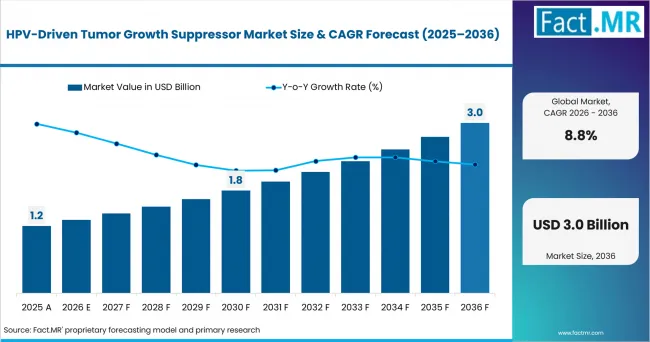
Hpv Driven Tumor Growth Suppressor Market Value Analysis | Source: Fact.MR
What are the defining numbers behind HPV-Driven Tumor Growth Suppressor Market growth?
USD 1.7 billion absolute opportunity is expected by 2036.
- Demand Drivers in the Market
- GLOBOCAN 2022 estimates published in CA: A Cancer Journal for Clinicians record 662,301 new cervical cancer cases and 348,874 deaths worldwide for 2022, keeping HPV-associated disease central to oncology demand, alongside WHO's 90-70-90 vaccination, screening, and treatment elimination targets that frame long-run demand.
- Structural and clinical-sample studies have established that E7-driven pRb degradation, mediated through the CUL2 ubiquitin ligase, becomes statistically more pronounced as cervical cancer advances from Stage I/II to Stage III/IV, giving developers a staging-linked biomarker rationale for pathway-restoration therapies.
- Academic proof-of-concept work shows that ectopic expression of a non-degradable, active RB allele is sufficient to induce cell-cycle arrest in HPV-positive cervical cancer cell lines, and that phage-display-derived E7-antagonist peptides can simultaneously degrade E7 and stabilize pRb protein, giving the category more than one validated route to pathway restoration.
- Key Segments Analyzed
- By Therapeutic Approach: E6/E7 Oncoprotein Inhibitors are expected to hold 25.0% share in 2026, supported by their direct focus on the viral proteins that drive HPV-related tumor growth.
- By Indication: Cervical Cancer is projected to account for 25.0% share in 2026 due to its strong clinical link with persistent high-risk HPV infection.
- By Mechanism of Action: p53 Restoration is anticipated to capture 25.0% share in 2026 as developers study ways to restore tumor-suppressor activity disrupted by HPV oncoproteins.
- By Development Stage: Preclinical programs are estimated to represent 30.0% share in 2026, reflecting the large number of candidates still undergoing early safety, delivery, and efficacy testing.
- By End User: Pharmaceutical Companies are forecast to hold 30.0% share in 2026 through their role in drug discovery, clinical development, regulatory work, and commercialization.
- Analyst Opinion at Fact.MR
- Shambhu Nath Jha, Senior Analyst at Fact.MR, notes, that funding will increasingly favor programs that can show a functional readout, tumor shrinkage, viral load decline, or restored p53 activity in patient tissue, rather than a mechanism-of-action story alone. Approaches that stop at demonstrating pathway correction in a laboratory marker, without a route to proving that correction actually slows tumor growth, are the ones most likely to lose licensing interest at the Phase I to Phase II transition.
- Strategic Implications
- Set the acceptance bar for 'pathway correction' before launch, not after: a marker-level change in p53 or Rb status is not the same evidence as a slower-growing tumor, and payers are increasingly asking for the latter.
- Recognize that direct inhibitors, gene silencing, therapeutic vaccines, T-cell therapy, and gene-based treatment carry materially different manufacturing and delivery demands; underfunding any single route tends to show up as a stalled trial rather than a failed mechanism.
- Require multi-site replication of viral-antigen expression and immune-escape data before expanding a programme, since antigen expression measured at one center often does not generalize to the broader population targeted at launch.
- Build growth- or survival-endpoint evidence, not biomarker-shift data alone, into trial design from the outset, since payers are moving away from accepting a laboratory marker change on its own.
Germany is projected to record the fastest pace at an 11.9% CAGR from 2026 to 2036, supported by its university-hospital base. Brazil is estimated to post an 11.0% CAGR through its large public-health cervical cancer burden. The USA is anticipated to advance at a 10.1% CAGR through its trial-dense ecosystem. South Korea is forecast to record a 9.2% CAGR through precision-medicine infrastructure. The U.K. is projected at 8.4%, while Japan is estimated to post the slowest pace at a 7.5% CAGR through combination-therapy validation requirements.
How does the HPV-Driven Tumor Growth Suppressor Market break down by segment?
E6/E7 Oncoprotein Inhibitors are expected to lead Therapeutic Approach at 25.0%, and Cervical Cancer is projected to lead Indication at 25.0% share in 2026.
Why does E6/E7 Oncoprotein Inhibitors lead Therapeutic Approach?
E6/E7 Oncoprotein Inhibitors leads the Therapeutic Approach segment at 25.0% of 2026 demand.
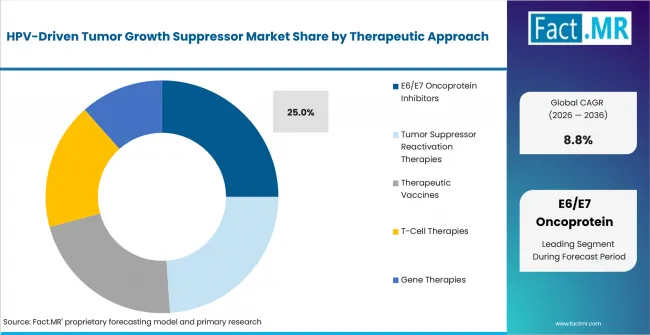
Hpv Driven Tumor Growth Suppressor Market Analysis By Therapeutic Approach | Source: Fact.MR
The therapeutic approach categories are E6/E7 Oncoprotein Inhibitors, Tumor Suppressor Reactivation Therapies, Therapeutic Vaccines, T-Cell Therapies, and Gene Therapies. Direct inhibitors and reactivation therapies aim at the same p53/Rb axis from opposite directions, while vaccines and T-cell therapies instead recruit the immune system, so the relevant comparison is which biological route a given tumor still depends on, not which approach ranks highest today.
Why does Cervical Cancer lead Indication?
Cervical Cancer leads the Indication segment at 25.0% of 2026 demand.
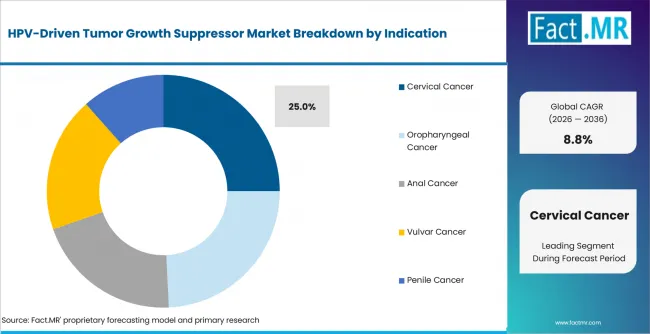
Hpv Driven Tumor Growth Suppressor Market Analysis By Indication | Source: Fact.MR
Indication coverage spans Cervical Cancer, Oropharyngeal Cancer, Anal Cancer, Vulvar Cancer, and Penile Cancer. Cervical cancer benefits from established screening and staging infrastructure that the rarer sites generally lack; clinical-sample studies specifically tracking E7/pRb expression across cervical cancer stages provide the biomarker foundation most trials still enroll cervical cohorts to generate first.
Why does p53 Restoration lead Mechanism of Action?
p53 Restoration leads the Mechanism of Action segment at 25.0% of 2026 demand.
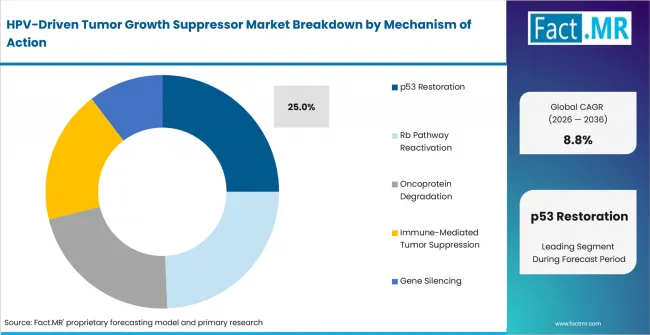
Hpv Driven Tumor Growth Suppressor Market Analysis By Mechanism Of Action | Source: Fact.MR
The mechanism of action categories are p53 Restoration, Rb Pathway Reactivation, Oncoprotein Degradation, Immune-Mediated Tumor Suppression, and Gene Silencing. The first three work inside the tumor cell itself, while immune-mediated suppression instead depends on recruiting and sustaining an external immune response; academic work repurposing HIV protease inhibitors as a route to indirect TP53 restoration illustrates the pharmacological breadth this category is exploring.
Why does Preclinical lead Development Stage?
Preclinical leads the Development Stage segment at 30.0% of 2026 demand.
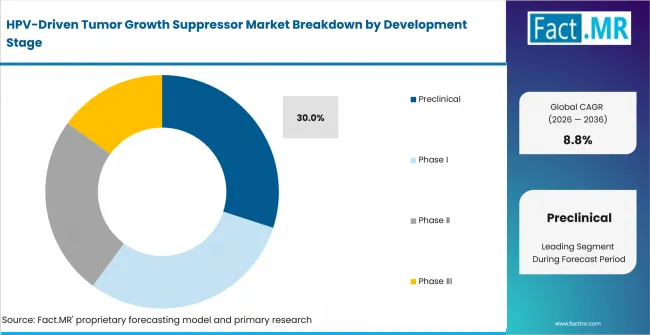
Hpv Driven Tumor Growth Suppressor Market Analysis By Development Stage | Source: Fact.MR
The development stage categories are Preclinical, Phase I, Phase II, and Phase III. The current concentration in preclinical work reflects that even the most advanced pathway-restoration proof-of-concept, ectopic active-RB expression causing cell-cycle arrest in cervical cancer cell lines, remains a cell-line-level finding rather than an in vivo or clinical result.
Why does Pharmaceutical Companies lead End User?
Pharmaceutical Companies leads the End User segment at 30.0% of 2026 demand.
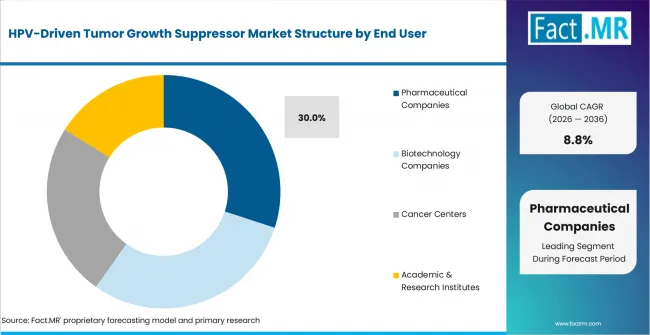
Hpv Driven Tumor Growth Suppressor Market Analysis By End User | Source: Fact.MR
End users covered are Pharmaceutical Companies, Biotechnology Companies, Cancer Centers, and Academic & Research Institutes. Pharmaceutical companies tend to license a mechanism once academic and cancer-center groups have already shown it changes tumor growth, not merely a laboratory marker such as p16INK4a expression, in a defined patient subset.
What is accelerating HPV-Driven Tumor Growth Suppressor Market adoption, and what is holding it back?
The E6/E7-p53-Rb axis is already well mapped biologically; the harder problem is proving that correcting it actually slows tumor growth rather than just shifting a laboratory marker. Funding follows developers who can pair E6/E7 suppression and p53/Rb restoration evidence with the infrastructure needed to generate a functional, not just mechanistic, readout.
Drivers Impact Analysis
| DRIVER | (~) % IMPACT ON CAGR | GEOGRAPHIC RELEVANCE | IMPACT TIMELINE |
|---|---|---|---|
| E6/E7 pathway validation | +1.3% | Germany and USA | Long term (>= 4 years) |
| Global HPV cancer burden | +1.0% | Global | Medium term (2-4 years) |
| Vaccination and screening evidence | +0.8% | U.K. and Germany | Medium term (2-4 years) |
| Therapeutic vaccine and T-cell pipeline | +0.6% | Brazil and Japan | Medium term (2-4 years) |
| Precision-medicine biomarker infrastructure | +0.4% | South Korea and USA | Long term (>= 4 years) |
Source: Fact.MR analysis. Updated Jul 21, 2026
- E6/E7 pathway validation: The leading Therapeutic Approach (E6/E7 Oncoprotein Inhibitors, 25%) and leading Mechanism of Action (p53 Restoration, 25%) both target interrupting E6/E7 activity while restoring p53 control.
- Global HPV cancer burden: GLOBOCAN 2022 estimates place cervical cancer at 662,301 new cases and 348,874 deaths per year, a burden WHO, NCI, and CDC track alongside vaccination and screening gaps.
- Vaccination and screening evidence: WHO's updates to vaccination schedules and IARC's prevention context are described as shaping future therapeutic demand, tied explicitly to the U.K.'s national-programme growth profile.
Opportunity Impact Analysis
| OPPORTUNITY | (~) % IMPACT ON CAGR | GEOGRAPHIC RELEVANCE | IMPACT TIMELINE |
|---|---|---|---|
| Non-cervical indication expansion | +0.6% | USA and Germany | Medium term (2-4 years) |
| Checkpoint combination regimens | +0.5% | Japan and USA | Medium term (2-4 years) |
| Biotech and academic partnerships | +0.4% | Germany and South Korea | Long term (>= 4 years) |
| Public-private access programs | +0.3% | Brazil | Long term (>= 4 years) |
Source: Fact.MR analysis. Updated Jul 21, 2026
- Non-cervical indication expansion: Cervical Cancer leads Indication at 25% of demand, but Oropharyngeal, Anal, Vulvar, and Penile Cancer remain open per CDC's coverage of non-cervical HPV disease.
- Checkpoint combination regimens: Japan's growth outlook is interpreted through combination with checkpoint blockade, radiation, or standard systemic treatment.
- Biotech and academic partnerships: Preclinical work holds the largest Development Stage share (30%), yet Biotechnology Companies and Academic & Research Institutes remain smaller End User categories than Pharmaceutical Companies.
Restraints Impact Analysis
| RESTRAINT | (~) % IMPACT ON CAGR | GEOGRAPHIC RELEVANCE | IMPACT TIMELINE |
|---|---|---|---|
| Preclinical-stage concentration | -0.5% | Global | Short term (<= 2 years) |
| Unproven growth-reduction translation | -0.4% | Global | Medium term (2-4 years) |
| Reimbursement and access gaps | -0.3% | Brazil and other mixed public-private markets | Medium term (2-4 years) |
| Limited multi-site validation | -0.2% | Global | Long term (>= 4 years) |
Source: Fact.MR analysis. Updated Jul 21, 2026
- Preclinical-stage concentration: Preclinical programs hold the largest Development Stage share at 30%; the central barrier names development-stage risk explicitly.
- Unproven growth-reduction translation: The stated central barrier is an incomplete pathway around proof that pathway correction reduces growth rather than merely changing a laboratory marker such as p16INK4a.
- Reimbursement and access gaps: WHO's tracked access gaps and Brazil's mixed public-private delivery system show how uneven infrastructure can stall the funded next step.
Which countries are scaling HPV-Driven Tumor Growth Suppressor Market fastest?
A global growth rate represents the weighted average of all markets included in the analysis. Germany and Brazil remain above the 8.8% global figure, while South Korea, U.K. and Japan remain below it. The six countries presented are illustrative examples, and their comparison with the worldwide rate makes this difference visible.
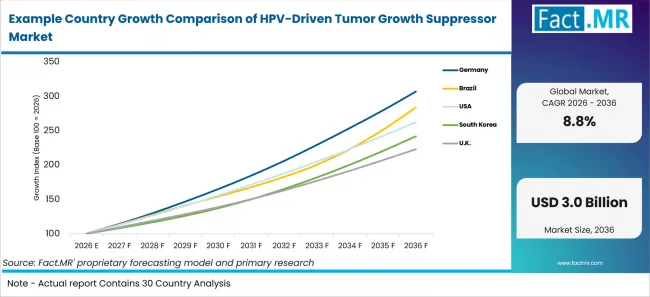
Example Country Growth Comparison Of Hpv Driven Tumor Growth Suppressor Market | Source: Fact.MR
| COUNTRY | CAGR 2026 to 2036 |
|---|---|
| Germany | 11.9% |
| Brazil | 11.0% |
| USA | 10.1% |
| South Korea | 9.2% |
| U.K. | 8.4% |
| Japan | 7.5% |
Source: Fact.MR analysis. Updated Jul 21, 2026
What shapes growth in Germany?
Germany: suppression of E6 and E7 oncogenic activity while restoring p53 and retinoblastoma control.
Germany is projected at 11.9% CAGR from 2026 to 2036, the fastest of the six countries tracked here. Its university-hospital and laboratory base, aligned EU-wide regulation, and established specialist referral networks favor candidates that can show suppression of E6 and E7 oncogenic activity alongside restoration of p53 and retinoblastoma control, more than they signal uniformly fast adoption across every German institution.
What shapes growth in Brazil?
Brazil: viral-antigen expression and immune escape across cervical and other HPV-positive tumors.
Brazil is projected at 11.0% CAGR from 2026 to 2036. A large, diverse patient population plus a substantial public-health cervical cancer burden gives Brazil real scale, but its mixed public-private delivery system means access, regional laboratory capacity, and affordability will decide how quickly pathway-restoration therapies reach patients outside major centers.
What shapes growth in USA?
USA: direct inhibitors, gene silencing, therapeutic vaccines, T-cell therapy, and gene-based treatment as distinct routes.
USA is projected at 10.1% CAGR from 2026 to 2036. Its dense concentration of clinical trials, specialised cancer centers, and venture-backed developers supports faster movement of E6/E7 pathway-restoration evidence from bench into early-phase trials than elsewhere in this group.
What shapes growth in South Korea?
South Korea: proof that pathway correction reduces growth rather than merely changing a laboratory marker.
South Korea is projected at 9.2% CAGR from 2026 to 2036. Advanced digital health infrastructure and active precision-medicine programs give South Korea an edge in generating the functional, growth-linked readouts that separate genuine pathway restoration from a biomarker shift alone.
What shapes growth in U.K.?
U.K.: vaccination and screening evidence shaping future therapeutic demand.
U.K. is projected at 8.4% CAGR from 2026 to 2036. Centralized NHS purchasing, national screening programs, and genomic laboratory networks let the United Kingdom coordinate population-level rollout once pathway-restoration evidence is confirmed, rather than relying on institution-by-institution uptake.
What shapes growth in Japan?
Japan: combination with checkpoint blockade, radiation, or standard systemic treatment.
Japan is projected at 7.5% CAGR from 2026 to 2036, the slowest of the six markets tracked here. Japan's specialist medicine and life-science base are strong, but adoption typically waits on local combination-therapy validation and domestic regulatory review before hospital pathways integrate a new tumor-suppressor-restoration approach.
Who leads the HPV-Driven Tumor Growth Suppressor Market?
BioNTech, Transgene and ISA Pharmaceuticals lead direct HPV-targeted therapeutic development. Precigen, PDS Biotechnology and Hookipa Pharma strengthen the market through specialized cancer immunotherapy platforms.
BioNTech develops HPV-targeted therapeutic vaccines for HPV-positive tumors. Transgene advances immunotherapies designed for HPV-associated cancers, while ISA Pharmaceuticals focuses on synthetic long-peptide treatments targeting HPV antigens. Precigen contributes therapeutic vaccine candidates for HPV-related malignancies. PDS Biotechnology develops HPV-targeted immunotherapies, while Hookipa Pharma applies arenavirus-based technology to HPV-positive cancers. Merck & Co. supports the market through checkpoint inhibitor therapies used in several HPV-associated cancer settings.
Competition is expected to depend on clinical response, treatment durability and compatibility with established oncology therapies. Hospitals will also assess patient selection, safety and the ability to connect HPV-specific findings with clear treatment decisions. Developers that provide convincing clinical evidence and practical treatment pathways may gain wider oncology-center adoption.
Which companies are the key providers?
- BioNTech SE
- Transgene SA
- ISA Pharmaceuticals B.V.
- Precigen, Inc.
- PDS Biotechnology Corporation
Bibliography
- Increased expression of HPV-E7 oncoprotein correlates with a reduced level of pRb proteins via high viral load in cervical cancer. Scientific Reports (Nature portfolio), 2023.
- Potent Anti-Tumor Effect Generated by a Novel Human Papillomavirus (HPV) Antagonist Peptide Reactivating the pRb/E2F Pathway. PMC.
- MicroRNA-154-5p regulates the HPV16 E7-pRb pathway in Cervical Carcinogenesis by targeting CUL2. PMC.
- Human Papillomavirus E6 and E7: The Cervical Cancer Hallmarks and Targets for Therapy. Frontiers in Microbiology, 2019.
- Activation of the Retinoblastoma Tumor Suppressor Mediates Cell Cycle Inhibition and Cell Death in Specific Cervical Cancer Cell Lines. PMC.
- Structural basis for recognition of the tumor suppressor protein PTPN14 by the oncoprotein E7 of human papillomavirus. PMC.
- Human Papillomavirus E6/E7-Specific siRNA Potentiates the Effect of Radiotherapy for Cervical Cancer in Vitro and in Vivo. PMC.
- Molecular Mechanisms of HIV Protease Inhibitors Against HPV-Associated Cervical Cancer: Restoration of TP53 Tumor Suppressor Activities. PMC.
- Bray, F. et al. (2024). Global Cancer Statistics 2022 (GLOBOCAN). CA: A Cancer Journal for Clinicians.
This Report Addresses
- The report provides strategic intelligence on the HPV-Driven Tumor Growth Suppressor Market across Therapeutic Approach and Indication choices that shape development decisions.
- Segment analysis covers E6/E7 Oncoprotein Inhibitors as the share leader within the 2026 market structure.
- Regional outlook evaluates Germany and Brazil alongside USA and South Korea, while U.K. and Japan complete the growth comparison.
- Use-case assessment covers the mechanisms and modalities that shape tumor-suppressor-restoration demand across the forecast period.
What does the HPV-Driven Tumor Growth Suppressor Market cover?
Therapeutic approaches that suppress E6/E7 oncogenic activity or reactivate the p53 and retinoblastoma tumor-suppressor pathways they disable are used across cervical and other HPV-positive tumors.
The HPV-Driven Tumor Growth Suppressor Market covers direct E6/E7 oncoprotein inhibitors, tumor-suppressor reactivation therapies, therapeutic vaccines, T-cell therapies, and gene therapies aimed at restoring p53 and retinoblastoma pathway function in HPV-positive tumors. Coverage includes small-molecule and peptide pathway-restoration candidates, RNA-interference and gene-silencing constructs, and immune-based approaches such as therapeutic vaccines and adoptive T-cell therapy.
The market differs from the E6 Oncoprotein Inhibitor Market because commercial value here comes from restoring downstream suppressor-pathway function (p53 reactivation, Rb pathway reactivation) rather than solely disabling the upstream viral oncoprotein, even though the two categories share biological ground. Prophylactic HPV vaccination and general cervical-cancer surgery, chemotherapy, or radiotherapy not tied to a suppressor-restoration mechanism remain outside the boundary.
What is included in the scope?
Included are the therapeutic approaches, indications, and development stages that define this pathway-restoration category.
The scope includes Therapeutic Approach, Indication, Mechanism of Action, Development Stage, and End User, the recorded country growth estimates, recent non-commercial and academic evidence on p53 and Rb pathway biology, clinical-trial protocol data, and long-term development considerations such as multi-site validation of growth-reduction endpoints.
What is excluded from the scope?
Prophylactic HPV vaccination, general cervical-cancer treatment, and unrelated oncology equipment remain outside the scope of this market.
Excluded are prophylactic HPV vaccines, general chemotherapy, radiotherapy and surgical treatment for cervical and other HPV-associated cancers not tied to a suppressor-pathway-restoration mechanism, broad-spectrum immunotherapies without a defined E6/E7-p53-Rb rationale, and claims that cannot be tied to a current named academic or clinical source.
How Was the Analysis Built?
The analysis draws on peer-reviewed structural-biology and pharmacology literature, epidemiological reporting, and academic pipeline surveys.
- Primary evidence base: peer-reviewed studies of E7-pRb, E6-p53, and PTPN14 pathway biology from PMC and Nature-indexed journals.
- Desk research: GLOBOCAN 2022 epidemiological estimates and WHO cervical-cancer elimination target tracking. Every source used is documented in the bibliography.
- Market sizing and forecasting: estimates combine segment taxonomy, country-level growth indicators, and development-stage mix across the 2025, 2026 and 2036 reference years.
- Data validation and update cycle: findings are validated by comparing primary academic literature with clinical-trial registry updates; updates review new preclinical data and modality shifts.
Segmentation
What is the report's scope and coverage?
| Attribute | Details |
|---|---|
| 2025 Market Size | USD 1.2 billion |
| 2026 Market Size | USD 1.3 billion |
| 2036 Market Size | USD 3.0 billion |
| Forecast CAGR | 8.8% |
| Forecast Period | 2026–2036 |
| Segmentation | Therapeutic Approach, Indication, Mechanism of Action, Development Stage, End User |
| Key Companies | BioNTech SE, Transgene SA, ISA Pharmaceuticals B.V., Precigen, Inc., PDS Biotechnology Corporation |
| Countries Analyzed | Germany, Brazil, USA, South Korea, U.K., Japan + 30 Countries |
Source: Fact.MR analysis. Updated Jul 21, 2026
How is the market segmented?
-
By Therapeutic Approach:
- E6/E7 Oncoprotein Inhibitors - 25.0% in 2026
- Tumor Suppressor Reactivation Therapies
- Therapeutic Vaccines
- T-Cell Therapies
- Gene Therapies
-
By Indication:
- Cervical Cancer - 25.0% in 2026
- Oropharyngeal Cancer
- Anal Cancer
- Vulvar Cancer
- Penile Cancer
-
By Mechanism of Action:
- p53 Restoration - 25.0% in 2026
- Rb Pathway Reactivation
- Oncoprotein Degradation
- Immune-Mediated Tumor Suppression
- Gene Silencing
-
By Development Stage:
- Preclinical - 30.0% in 2026
- Phase I
- Phase II
- Phase III
-
By End User:
- Pharmaceutical Companies - 30.0% in 2026
- Biotechnology Companies
- Cancer Centers
- Academic & Research Institutes
-
By Region:
- North America
- United States
- Europe
- Germany
- Brazil
- South Korea
- Asia Pacific
- Japan
Frequently Asked Questions
What exactly is included in the HPV-Driven Tumor Growth Suppressor Market?
What is the 2026 market size and 2036 outlook?
Why does E6/E7 Oncoprotein Inhibitors lead Therapeutic Approach?
What would cause a developer to prioritize Cervical Cancer over adjacent indications?
What is the central adoption barrier?
Why is Germany the fastest-growing country in this set?
How should evidence be shown to transfer beyond one research site?
Who worked on this report


Preview the report firsthand - request a free sample
Free SampleGet the brochure for pricing and purchase details
Download PDF